Employer Branding: A Tool for Talent in Retail Business
VerifiedAdded on 2020/03/28
|45
|12261
|47
Report
AI Summary
This report examines employer branding as a critical tool for attracting and retaining talent within the retail sector, focusing on the case of JYSK in Ukraine. The study delves into the background of employer branding, its significance, research aims, objectives, questions, and hypotheses. It reviews relevant literature on employer branding, theoretical perspectives, and best practices, exploring how companies differentiate themselves and become employers of choice. The research methodology includes primary and secondary data collection through interviews and analysis. The report investigates the effects of employer branding on employee attraction and retention, JYSK's specific strategies, and challenges faced in the competitive Ukrainian retail market. It concludes with recommendations for improving employee attraction and retention, providing valuable insights for businesses aiming to enhance their human resource strategies. The report highlights the importance of employee satisfaction and the impact of branding on business outcomes. The report is available on Desklib, a platform offering past papers and assignments.
Running head: EMPLOYER BRANDING
Employer branding as a tool for talent attraction and retention in retail business
Name of Student:
Student ID:
Name of University
Author’s Note:
Employer branding as a tool for talent attraction and retention in retail business
Name of Student:
Student ID:
Name of University
Author’s Note:

Paraphrase This Document
Need a fresh take? Get an instant paraphrase of this document with our AI Paraphraser
1
EMPLOYER BRANDING
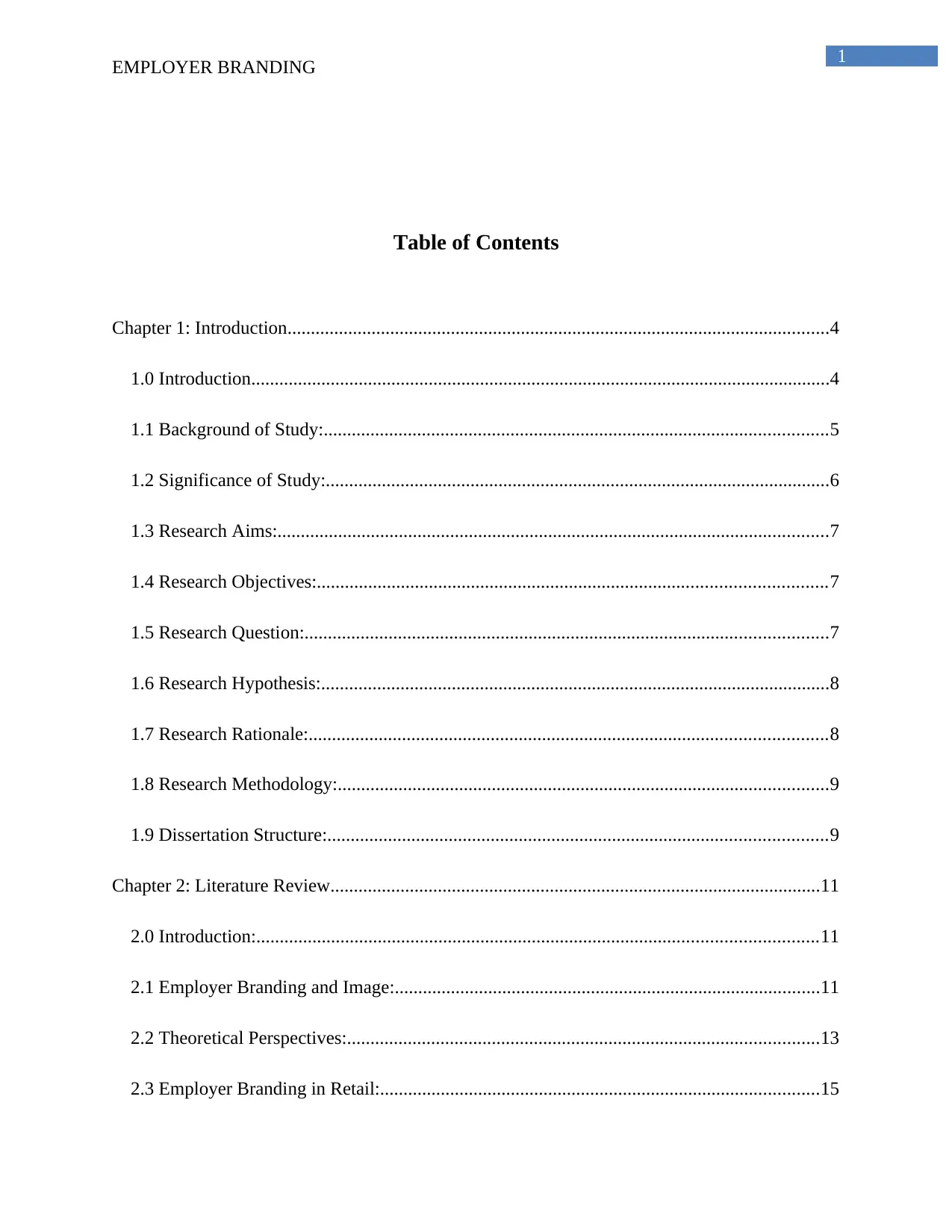
Table of Contents
Chapter 1: Introduction....................................................................................................................4
1.0 Introduction............................................................................................................................4
1.1 Background of Study:............................................................................................................5
1.2 Significance of Study:............................................................................................................6
1.3 Research Aims:......................................................................................................................7
1.4 Research Objectives:.............................................................................................................7
1.5 Research Question:................................................................................................................7
1.6 Research Hypothesis:.............................................................................................................8
1.7 Research Rationale:...............................................................................................................8
1.8 Research Methodology:.........................................................................................................9
1.9 Dissertation Structure:...........................................................................................................9
Chapter 2: Literature Review.........................................................................................................11
2.0 Introduction:........................................................................................................................11
2.1 Employer Branding and Image:...........................................................................................11
2.2 Theoretical Perspectives:.....................................................................................................13
2.3 Employer Branding in Retail:..............................................................................................15
EMPLOYER BRANDING
Table of Contents
Chapter 1: Introduction....................................................................................................................4
1.0 Introduction............................................................................................................................4
1.1 Background of Study:............................................................................................................5
1.2 Significance of Study:............................................................................................................6
1.3 Research Aims:......................................................................................................................7
1.4 Research Objectives:.............................................................................................................7
1.5 Research Question:................................................................................................................7
1.6 Research Hypothesis:.............................................................................................................8
1.7 Research Rationale:...............................................................................................................8
1.8 Research Methodology:.........................................................................................................9
1.9 Dissertation Structure:...........................................................................................................9
Chapter 2: Literature Review.........................................................................................................11
2.0 Introduction:........................................................................................................................11
2.1 Employer Branding and Image:...........................................................................................11
2.2 Theoretical Perspectives:.....................................................................................................13
2.3 Employer Branding in Retail:..............................................................................................15
2
EMPLOYER BRANDING
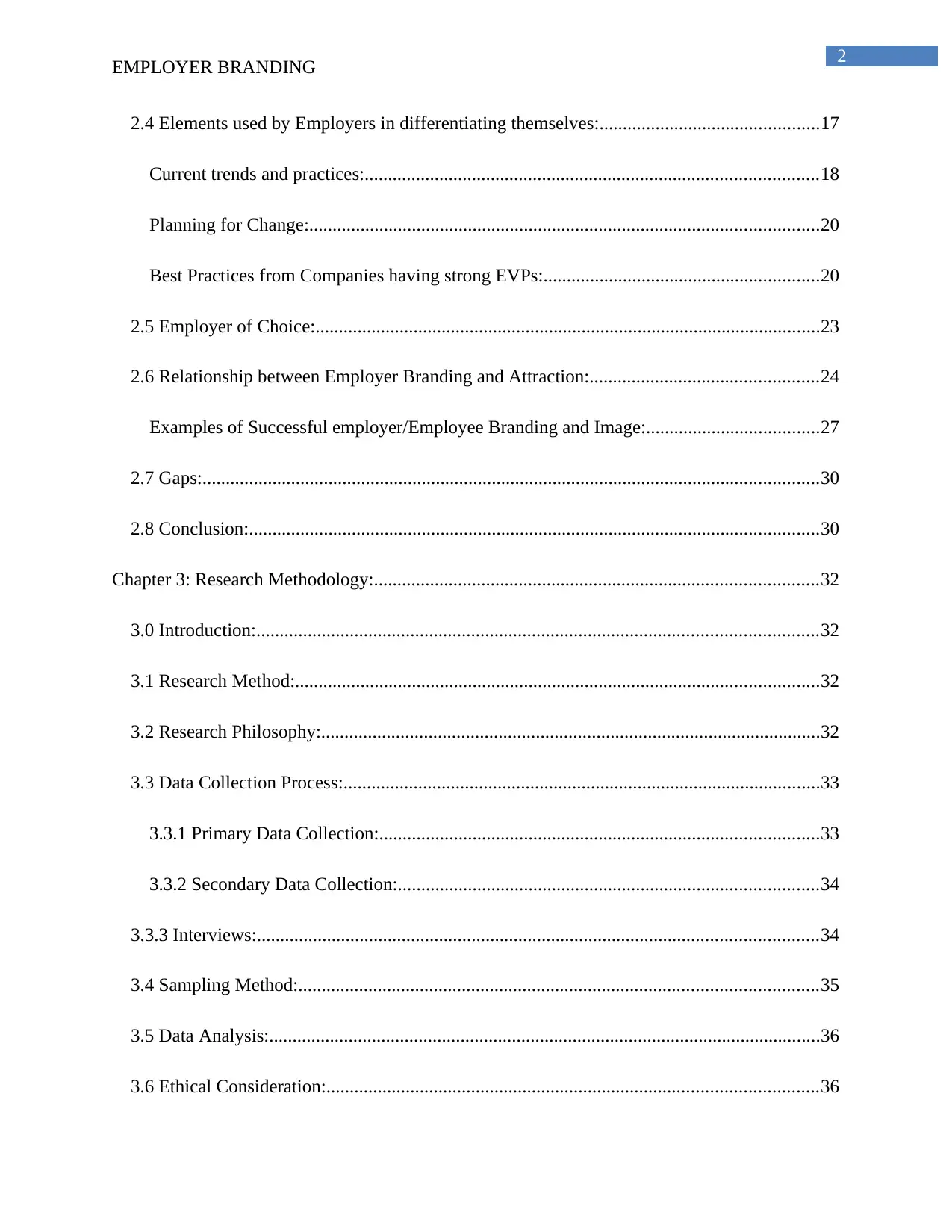
2.4 Elements used by Employers in differentiating themselves:...............................................17
Current trends and practices:.................................................................................................18
Planning for Change:.............................................................................................................20
Best Practices from Companies having strong EVPs:...........................................................20
2.5 Employer of Choice:............................................................................................................23
2.6 Relationship between Employer Branding and Attraction:.................................................24
Examples of Successful employer/Employee Branding and Image:.....................................27
2.7 Gaps:....................................................................................................................................30
2.8 Conclusion:..........................................................................................................................30
Chapter 3: Research Methodology:...............................................................................................32
3.0 Introduction:........................................................................................................................32
3.1 Research Method:................................................................................................................32
3.2 Research Philosophy:...........................................................................................................32
3.3 Data Collection Process:......................................................................................................33
3.3.1 Primary Data Collection:..............................................................................................33
3.3.2 Secondary Data Collection:..........................................................................................34
3.3.3 Interviews:........................................................................................................................34
3.4 Sampling Method:...............................................................................................................35
3.5 Data Analysis:......................................................................................................................36
3.6 Ethical Consideration:.........................................................................................................36
EMPLOYER BRANDING
2.4 Elements used by Employers in differentiating themselves:...............................................17
Current trends and practices:.................................................................................................18
Planning for Change:.............................................................................................................20
Best Practices from Companies having strong EVPs:...........................................................20
2.5 Employer of Choice:............................................................................................................23
2.6 Relationship between Employer Branding and Attraction:.................................................24
Examples of Successful employer/Employee Branding and Image:.....................................27
2.7 Gaps:....................................................................................................................................30
2.8 Conclusion:..........................................................................................................................30
Chapter 3: Research Methodology:...............................................................................................32
3.0 Introduction:........................................................................................................................32
3.1 Research Method:................................................................................................................32
3.2 Research Philosophy:...........................................................................................................32
3.3 Data Collection Process:......................................................................................................33
3.3.1 Primary Data Collection:..............................................................................................33
3.3.2 Secondary Data Collection:..........................................................................................34
3.3.3 Interviews:........................................................................................................................34
3.4 Sampling Method:...............................................................................................................35
3.5 Data Analysis:......................................................................................................................36
3.6 Ethical Consideration:.........................................................................................................36
⊘ This is a preview!⊘
Do you want full access?
Subscribe today to unlock all pages.

Trusted by 1+ million students worldwide

3
EMPLOYER BRANDING
3.7 Summary:.............................................................................................................................37
Reference:......................................................................................................................................38
EMPLOYER BRANDING
3.7 Summary:.............................................................................................................................37
Reference:......................................................................................................................................38
Paraphrase This Document
Need a fresh take? Get an instant paraphrase of this document with our AI Paraphraser
4
EMPLOYER BRANDING
Chapter 1: Introduction
1.0 Introduction
Employer branding has developed in consequence for the changes in the behavior of the
job seeker along with the augmented competition in the talent war. According to Leekha
Chhabra and Sharma (2014), the statistics are quite confounding with approximately 75 per cent
of the candidates expending over an hour researching on the organization and around 70 per cent
stating they would not be taking up job with a bad corporation even if staying unemployed.
LinkedIn found out that the prime reason for the candidates in not applying for a job is because
they do not know what it is going to be like in the organization once they get in.
Employer branding is mainly made of two segments; a) What the talent believes it would
be like working in a particular organization, and b) What it is in reality to work in that
organization. These two are stated to be similar, but are also different in understanding. The first
part takes in the ways the people identifies the company as a place for working, is mainly about
the information existing online about that particular company. The second segment is the one
that has an impact on the first. What that particular company is the basis for the brand identity of
the employer. If that particular company has a culture that is buttoned up along with clear
hierarchy, that is what would ultimately ooze out into the world. If the company is focusing on
working on game changing technology through creating a fun atmosphere, that would be the
thing that would define the company.
Thus paper would be dealing with the topic of employer branding as a tool for attraction
of talent and retention of the same in the retail business, where the company chosen by the
researcher is JYSK, a Danish retail chain in the Ukrainian backdrop. Organizations have been
EMPLOYER BRANDING
Chapter 1: Introduction
1.0 Introduction
Employer branding has developed in consequence for the changes in the behavior of the
job seeker along with the augmented competition in the talent war. According to Leekha
Chhabra and Sharma (2014), the statistics are quite confounding with approximately 75 per cent
of the candidates expending over an hour researching on the organization and around 70 per cent
stating they would not be taking up job with a bad corporation even if staying unemployed.
LinkedIn found out that the prime reason for the candidates in not applying for a job is because
they do not know what it is going to be like in the organization once they get in.
Employer branding is mainly made of two segments; a) What the talent believes it would
be like working in a particular organization, and b) What it is in reality to work in that
organization. These two are stated to be similar, but are also different in understanding. The first
part takes in the ways the people identifies the company as a place for working, is mainly about
the information existing online about that particular company. The second segment is the one
that has an impact on the first. What that particular company is the basis for the brand identity of
the employer. If that particular company has a culture that is buttoned up along with clear
hierarchy, that is what would ultimately ooze out into the world. If the company is focusing on
working on game changing technology through creating a fun atmosphere, that would be the
thing that would define the company.
Thus paper would be dealing with the topic of employer branding as a tool for attraction
of talent and retention of the same in the retail business, where the company chosen by the
researcher is JYSK, a Danish retail chain in the Ukrainian backdrop. Organizations have been
5
EMPLOYER BRANDING
making use of branding as strategic tools in the present business environment with increasing
reliability. Employer branding is something new towards the recruiting and retaining of the best
possible talent within the environment of recruitment that is becoming immensely competitive
(Theurer et al. 2016).
1.1 Background of Study:
JYSK is one of the global retail chains that are in the habit of selling everything for the
home. It is been owned by the founder Lars Larsen who took the initiative of opening the first
ever JYSK store in Aarhus, Denmark, in the year 1971. JYSK ventured into Ukraine in the year
2004 and has since then expanded in their desired way. Under the present circumstances, JYSK
has been operating in Ukraine through their 33 stores and is being boasted by 322 employees
who work hard for them in the best possible manner. In the year 2015/16, JYSK opened 3 new
stores in Ukraine. Such has been the popularity of JYSK that the company has been awarded
consumers’ desired retailer in Ukraine for four consecutive years starting from 2012. JYSK
believes that their customer service is the main reason for them being nominated for that title as
customers love what they provide. According to Batta (2016), JYSK had a record outcome in
Ukraine with the company witnessing a turnover of 125 million UAH along with the augmenting
earnings as well. The management of JYSK Ukraine believes in the fact that the Ukrainian
employees of theirs deserve all the recognition in the world for their excellent performance
resulting from their sheer hard work. They have been instrumental in JYSK becoming the most
accepted retailer over and over again, moving the company forward and making a difference for
their customers’ regular life. JYSK gives much importance to their employees; they are seen and
heard everytime at the workplace. This company puts much emphasis on strong teams along with
great engagement from the employees, getting on the job training along with joining the internal
EMPLOYER BRANDING
making use of branding as strategic tools in the present business environment with increasing
reliability. Employer branding is something new towards the recruiting and retaining of the best
possible talent within the environment of recruitment that is becoming immensely competitive
(Theurer et al. 2016).
1.1 Background of Study:
JYSK is one of the global retail chains that are in the habit of selling everything for the
home. It is been owned by the founder Lars Larsen who took the initiative of opening the first
ever JYSK store in Aarhus, Denmark, in the year 1971. JYSK ventured into Ukraine in the year
2004 and has since then expanded in their desired way. Under the present circumstances, JYSK
has been operating in Ukraine through their 33 stores and is being boasted by 322 employees
who work hard for them in the best possible manner. In the year 2015/16, JYSK opened 3 new
stores in Ukraine. Such has been the popularity of JYSK that the company has been awarded
consumers’ desired retailer in Ukraine for four consecutive years starting from 2012. JYSK
believes that their customer service is the main reason for them being nominated for that title as
customers love what they provide. According to Batta (2016), JYSK had a record outcome in
Ukraine with the company witnessing a turnover of 125 million UAH along with the augmenting
earnings as well. The management of JYSK Ukraine believes in the fact that the Ukrainian
employees of theirs deserve all the recognition in the world for their excellent performance
resulting from their sheer hard work. They have been instrumental in JYSK becoming the most
accepted retailer over and over again, moving the company forward and making a difference for
their customers’ regular life. JYSK gives much importance to their employees; they are seen and
heard everytime at the workplace. This company puts much emphasis on strong teams along with
great engagement from the employees, getting on the job training along with joining the internal
⊘ This is a preview!⊘
Do you want full access?
Subscribe today to unlock all pages.
Trusted by 1+ million students worldwide
6
EMPLOYER BRANDING
training programs designed by the company. The company is a firm believer of the fact that with
the growth of the employees, the company grows. The company has structured itself in a way
that generates opportunities. In the present scenario, employees give their best where they are
being looked after by their employers in the best possible manner and JYSK has done the same.
Their endeavor in being the best has brought out the best from their employees. Customers like
what they see and get and employees too love what they experience and deliver out there at the
workplace. This is the factor that is keeping the company going.
Managers can make use of employer branding as a shadow under which they can
channelize various recruitments of employees along with the activities of retention into a
coordinated strategy of human resource. Employers have the ability in controlling the power of
the brand in engaging their employees through emotional means in attaining the changes,
exceptional results or augmenting the factor of attraction and policy of retention (Al-Emadi,
Schwabenland and Wei 2015). Organizations have been able to found that efficient branding of
employees
1.2 Significance of Study:
The current study is significant within the present context as it is important in evaluating
the factor of employee branding as a tool for the attraction and retention of employees in JYSK.
The opportunities that is being made available to the adult population for developing and
maintaining their ability in skills over a period of lifetime, whether at the place of work or
outside of it, significant in attaining high extent of quality of labor force (Davis 2013). As
compared to the average functional literacy expertise among the adult population that is being
employed, Ukraine has been performing much worse than the other countries that have much
lower shares of the extremely educated people among the population that is adult.
EMPLOYER BRANDING
training programs designed by the company. The company is a firm believer of the fact that with
the growth of the employees, the company grows. The company has structured itself in a way
that generates opportunities. In the present scenario, employees give their best where they are
being looked after by their employers in the best possible manner and JYSK has done the same.
Their endeavor in being the best has brought out the best from their employees. Customers like
what they see and get and employees too love what they experience and deliver out there at the
workplace. This is the factor that is keeping the company going.
Managers can make use of employer branding as a shadow under which they can
channelize various recruitments of employees along with the activities of retention into a
coordinated strategy of human resource. Employers have the ability in controlling the power of
the brand in engaging their employees through emotional means in attaining the changes,
exceptional results or augmenting the factor of attraction and policy of retention (Al-Emadi,
Schwabenland and Wei 2015). Organizations have been able to found that efficient branding of
employees
1.2 Significance of Study:
The current study is significant within the present context as it is important in evaluating
the factor of employee branding as a tool for the attraction and retention of employees in JYSK.
The opportunities that is being made available to the adult population for developing and
maintaining their ability in skills over a period of lifetime, whether at the place of work or
outside of it, significant in attaining high extent of quality of labor force (Davis 2013). As
compared to the average functional literacy expertise among the adult population that is being
employed, Ukraine has been performing much worse than the other countries that have much
lower shares of the extremely educated people among the population that is adult.
Paraphrase This Document
Need a fresh take? Get an instant paraphrase of this document with our AI Paraphraser
7
EMPLOYER BRANDING
For big global companies like JYSK, it is important to make sure they have the best talent
on board, outsourcing skilled labor from other places would not be of any help to Ukraine. So it
is important to evaluate the ways JYSK has been dealing with the Ukrainian labor force and
making them efficient along with effective which is showcasing in their business results.
Therefore, it is relevant to study the effect of employee branding as a tool in the retail industry.
1.3 Research Aims:
The main aim of this research is in studying the positive and negative impacts of the
employee branding as a tool in the retention and attraction of employees in the retail industry.
The researcher would be making use of the exclusive literature in gathering the knowledge on
this subject matter and conducting a research on the application of the same by the organization,
JYSK. The research also aims in conducting primary research in recording the data along with
information related to the preference and satisfaction of the employees within the industry.
1.4 Research Objectives:
The main objectives of the researcher are being stated below:
a. To assess the effectiveness of employee branding as a tool
b. To analyze the ways JYSK brings employee branding into play for retention and attraction of
employees
c. To recommend certain plans and policies through which JYSK can better their employee
attraction and retention if required.
1.5 Research Question:
a. What are the effects of employee branding on employee attraction and retention?
EMPLOYER BRANDING
For big global companies like JYSK, it is important to make sure they have the best talent
on board, outsourcing skilled labor from other places would not be of any help to Ukraine. So it
is important to evaluate the ways JYSK has been dealing with the Ukrainian labor force and
making them efficient along with effective which is showcasing in their business results.
Therefore, it is relevant to study the effect of employee branding as a tool in the retail industry.
1.3 Research Aims:
The main aim of this research is in studying the positive and negative impacts of the
employee branding as a tool in the retention and attraction of employees in the retail industry.
The researcher would be making use of the exclusive literature in gathering the knowledge on
this subject matter and conducting a research on the application of the same by the organization,
JYSK. The research also aims in conducting primary research in recording the data along with
information related to the preference and satisfaction of the employees within the industry.
1.4 Research Objectives:
The main objectives of the researcher are being stated below:
a. To assess the effectiveness of employee branding as a tool
b. To analyze the ways JYSK brings employee branding into play for retention and attraction of
employees
c. To recommend certain plans and policies through which JYSK can better their employee
attraction and retention if required.
1.5 Research Question:
a. What are the effects of employee branding on employee attraction and retention?
8
EMPLOYER BRANDING
b. How JYSK employs employee branding on its employee selection and retention process?
c. What issues are being faced by JYSK in retaining its employees in face of extreme
competition?
d. What are the probable recommendations in improving the factor of employee retention and
attraction in the retail industry of Ukraine?
1.6 Research Hypothesis:
H0: Employee branding is an effective tool on the factor of employee retention and attraction of
the same in retail industry
H1: Employee branding is not an effective tool on the factor of employee retention and attraction
of the same in retail industry
1.7 Research Rationale:
This study research would take into consideration the tool of employee branding and
various other factors that plays their part in retaining and attracting the employees in the retail
sector. There are bound to be some issues and challenges that the management would find while
recruiting people in Ukraine and staying competitive within the industry. The chapter of
literature review would promote the understanding along with enthusiasm in monitoring the
approach of employee branding tool. The research rationale would be keeping its focus on the
ways it would help in evaluating the significance of employee branding as a tool for employee
retention and attraction in the retail industry, JYSK for this particular research study.
EMPLOYER BRANDING
b. How JYSK employs employee branding on its employee selection and retention process?
c. What issues are being faced by JYSK in retaining its employees in face of extreme
competition?
d. What are the probable recommendations in improving the factor of employee retention and
attraction in the retail industry of Ukraine?
1.6 Research Hypothesis:
H0: Employee branding is an effective tool on the factor of employee retention and attraction of
the same in retail industry
H1: Employee branding is not an effective tool on the factor of employee retention and attraction
of the same in retail industry
1.7 Research Rationale:
This study research would take into consideration the tool of employee branding and
various other factors that plays their part in retaining and attracting the employees in the retail
sector. There are bound to be some issues and challenges that the management would find while
recruiting people in Ukraine and staying competitive within the industry. The chapter of
literature review would promote the understanding along with enthusiasm in monitoring the
approach of employee branding tool. The research rationale would be keeping its focus on the
ways it would help in evaluating the significance of employee branding as a tool for employee
retention and attraction in the retail industry, JYSK for this particular research study.
⊘ This is a preview!⊘
Do you want full access?
Subscribe today to unlock all pages.
Trusted by 1+ million students worldwide
9
EMPLOYER BRANDING
1.8 Research Methodology:
Research methodology would be dealing with the sort of research approach that the
researcher would be using in completing this research study. This research would take in the
positivism approach along with interview process wherein the researcher would try and evaluate
the tool of employee branding within the organization and its effectiveness in the process. The
research would be of descriptive nature with the researcher depending on themes to discuss the
findings of his gathered data.
1.9 Dissertation Structure:
This dissertation study would be segregated into five possible chapters that have been described
below:
Introduction: This is stated to be the first chapter of the process of dissertation, where the
researcher would be taking the initiative in introducing the topic of the research to the reader
along with the importance of the current research topic. The chapter kicked off with a brief
element of introduction on the subject topic that is being followed by the study background. The
study background is about the company under discussion along with the current trend in the
country of its operation. This chapter also deals with the aims of the research along with the
objectives and research questions.
Literature Review: This chapter deals with the various scholarly literatures available over the
database that is related to the present study. The topics like the understanding of employee
branding, evaluating the impact of employer branding on the retention of employees and
attracting them, employer branding as employer of preference along with branding and
psychological contract are being discussed. It is one of the significant chapters as those chapters
EMPLOYER BRANDING
1.8 Research Methodology:
Research methodology would be dealing with the sort of research approach that the
researcher would be using in completing this research study. This research would take in the
positivism approach along with interview process wherein the researcher would try and evaluate
the tool of employee branding within the organization and its effectiveness in the process. The
research would be of descriptive nature with the researcher depending on themes to discuss the
findings of his gathered data.
1.9 Dissertation Structure:
This dissertation study would be segregated into five possible chapters that have been described
below:
Introduction: This is stated to be the first chapter of the process of dissertation, where the
researcher would be taking the initiative in introducing the topic of the research to the reader
along with the importance of the current research topic. The chapter kicked off with a brief
element of introduction on the subject topic that is being followed by the study background. The
study background is about the company under discussion along with the current trend in the
country of its operation. This chapter also deals with the aims of the research along with the
objectives and research questions.
Literature Review: This chapter deals with the various scholarly literatures available over the
database that is related to the present study. The topics like the understanding of employee
branding, evaluating the impact of employer branding on the retention of employees and
attracting them, employer branding as employer of preference along with branding and
psychological contract are being discussed. It is one of the significant chapters as those chapters
Paraphrase This Document
Need a fresh take? Get an instant paraphrase of this document with our AI Paraphraser
10
EMPLOYER BRANDING
would be playing the guiding role in choosing the variables along with the process of conducting
of the research.
Methodology: This is stated to be the third chapter of the dissertation that holds discussion about
the approaches of conducting the research work. The procedure of data analysis, philosophy of
the research, method of sampling along with the size of the sample has been conversed in this
segment. Primarily the method of the primary research has been highlighted within this research
study, also accompanying would be the ethical consideration for the research study while
conducting of the same.
Findings and Analysis: The data gathered would be summarized in this chapter which is stated
to be the fourth chapter of the dissertation study. The findings from the gathered information are
being evaluated in addressing the research question. The hypothesis of the research would either
be accepted or rejected depending upon the results. The evaluation has been done using the
perception and theories existing in the chapter of literature review.
Conclusion: This is generally the last chapter of the dissertation that discusses about the overall
dissertation summary and the analysis of the same. The findings along with the study results
have been associated with the objectives of the research. Recommendations are being provided
in improving the issues if any highlighted in the paper of research.
EMPLOYER BRANDING
would be playing the guiding role in choosing the variables along with the process of conducting
of the research.
Methodology: This is stated to be the third chapter of the dissertation that holds discussion about
the approaches of conducting the research work. The procedure of data analysis, philosophy of
the research, method of sampling along with the size of the sample has been conversed in this
segment. Primarily the method of the primary research has been highlighted within this research
study, also accompanying would be the ethical consideration for the research study while
conducting of the same.
Findings and Analysis: The data gathered would be summarized in this chapter which is stated
to be the fourth chapter of the dissertation study. The findings from the gathered information are
being evaluated in addressing the research question. The hypothesis of the research would either
be accepted or rejected depending upon the results. The evaluation has been done using the
perception and theories existing in the chapter of literature review.
Conclusion: This is generally the last chapter of the dissertation that discusses about the overall
dissertation summary and the analysis of the same. The findings along with the study results
have been associated with the objectives of the research. Recommendations are being provided
in improving the issues if any highlighted in the paper of research.
11
EMPLOYER BRANDING
Chapter 2: Literature Review
2.0 Introduction:
This literature review section would deal with various scholarly articles of the researches
being held previously on the same subject matter. It is important to focus on these researches to
understand what the previous researchers have found out on employee branding as a tool for
retention and attracting of employees. This segment would take into account such articles and
deal with it critically to illustrate the current situation of the overall scenario.
2.1 Employer Branding and Image:
In much the identical way that the brands of the organizations have been communicating
the advantages of using either a creation or service to the probable customers, employer brands
converse the employment benefits to their potential employees. According to Van Hoye and
Lievens (2015), the branding process generally involves in generating an exceptional name and
illustration for a product or service in the psyche of the consumers, largely through advertising
movements with a constant theme. Branding generally helps in influencing the beliefs that is
being held by the individual clients about the brand of service or product. These beliefs generally
comprise the brand representation of a business or a production that the individuals suggest when
its name is being heard. Illustration can thus be prejudiced by the activities of branding, but has
also been subject to the impact of the experience of consumers of a company, and is only partly
within the organizational control.
As per Bains (2015), for generalizing these perceptions to the context of magnetism and
enrollment, the brand assessment of the organization as an employer imitates the beliefs of the
probable employees that the needs of the employees would be convened by employer. It is more
EMPLOYER BRANDING
Chapter 2: Literature Review
2.0 Introduction:
This literature review section would deal with various scholarly articles of the researches
being held previously on the same subject matter. It is important to focus on these researches to
understand what the previous researchers have found out on employee branding as a tool for
retention and attracting of employees. This segment would take into account such articles and
deal with it critically to illustrate the current situation of the overall scenario.
2.1 Employer Branding and Image:
In much the identical way that the brands of the organizations have been communicating
the advantages of using either a creation or service to the probable customers, employer brands
converse the employment benefits to their potential employees. According to Van Hoye and
Lievens (2015), the branding process generally involves in generating an exceptional name and
illustration for a product or service in the psyche of the consumers, largely through advertising
movements with a constant theme. Branding generally helps in influencing the beliefs that is
being held by the individual clients about the brand of service or product. These beliefs generally
comprise the brand representation of a business or a production that the individuals suggest when
its name is being heard. Illustration can thus be prejudiced by the activities of branding, but has
also been subject to the impact of the experience of consumers of a company, and is only partly
within the organizational control.
As per Bains (2015), for generalizing these perceptions to the context of magnetism and
enrollment, the brand assessment of the organization as an employer imitates the beliefs of the
probable employees that the needs of the employees would be convened by employer. It is more
⊘ This is a preview!⊘
Do you want full access?
Subscribe today to unlock all pages.
Trusted by 1+ million students worldwide

1 out of 45


Related Documents


Your All-in-One AI-Powered Toolkit for Academic Success.
+13062052269
info@desklib.com
Available 24*7 on WhatsApp / Email
![[object Object]](/_next/static/media/star-bottom.7253800d.svg)
Unlock your academic potential
Copyright © 2020–2026 A2Z Services. All Rights Reserved. Developed and managed by ZUCOL.