ENGT 5214: Research Methods - Green Building Project Analysis
VerifiedAdded on 2023/05/27
|15
|4623
|435
Report
AI Summary
This report provides an in-depth analysis of energy-efficient green building projects, addressing their importance, benefits, and challenges. It begins by outlining the background and rationale for studying green buildings, emphasizing the need for sustainable construction practices due to environmental concerns and resource limitations. The literature review covers the concept of energy-efficient green buildings, highlighting their environmental, economic, and social advantages, while also acknowledging the challenges in achieving energy efficiency, such as cost and lack of expertise. The research methodology section details the study's approach, including the type of study (qualitative and quantitative), research philosophy (interpretivism), and data collection methods. Ethical considerations and limitations of the study are also discussed, followed by a work plan outlining the research process. This report contributes to understanding the significance of green buildings in promoting sustainability and mitigating the environmental impact of the construction industry. Desklib provides access to similar reports and study tools for students.

Study Skills and Research Methods

Paraphrase This Document
Need a fresh take? Get an instant paraphrase of this document with our AI Paraphraser
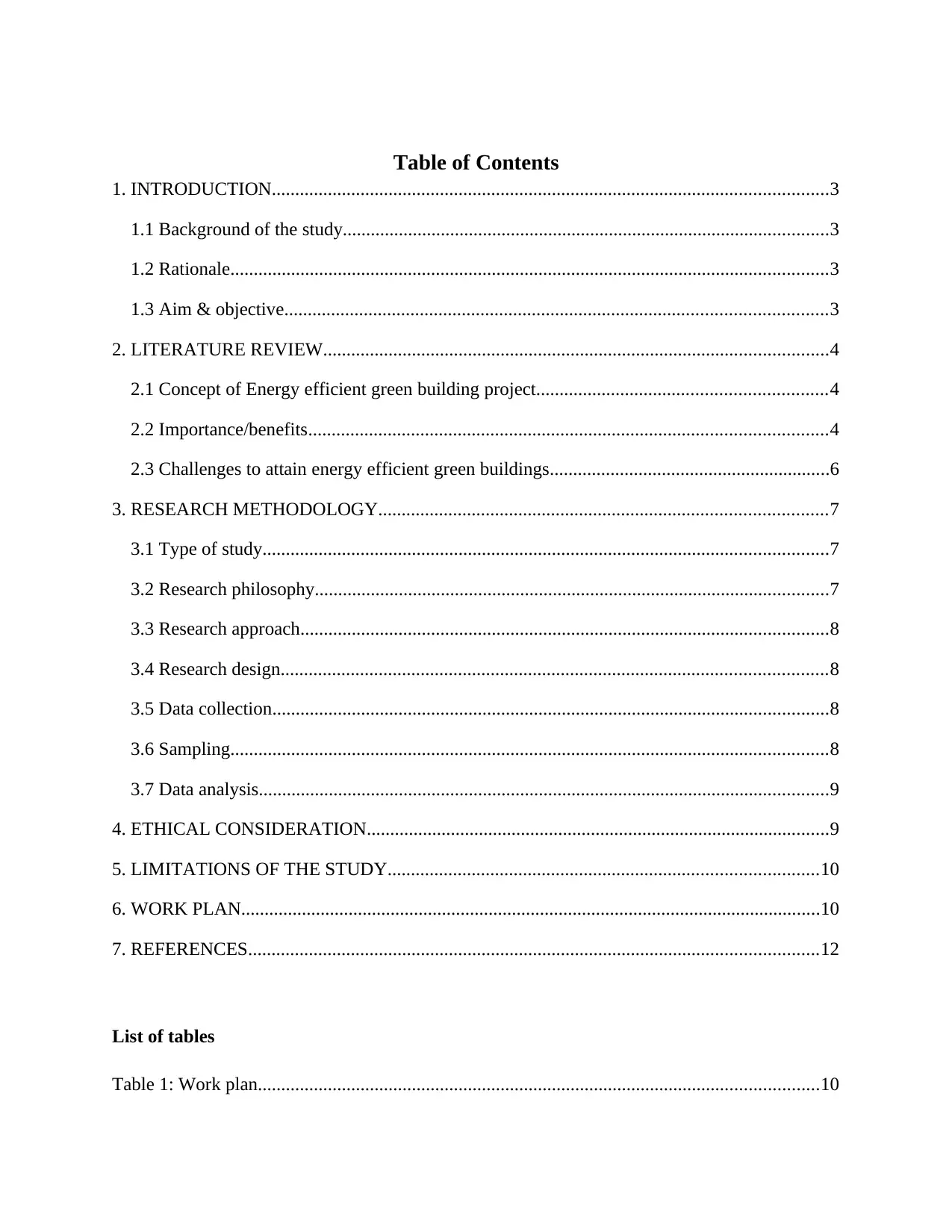
Table of Contents
1. INTRODUCTION.......................................................................................................................3
1.1 Background of the study........................................................................................................3
1.2 Rationale................................................................................................................................3
1.3 Aim & objective....................................................................................................................3
2. LITERATURE REVIEW............................................................................................................4
2.1 Concept of Energy efficient green building project..............................................................4
2.2 Importance/benefits...............................................................................................................4
2.3 Challenges to attain energy efficient green buildings............................................................6
3. RESEARCH METHODOLOGY................................................................................................7
3.1 Type of study.........................................................................................................................7
3.2 Research philosophy..............................................................................................................7
3.3 Research approach.................................................................................................................8
3.4 Research design.....................................................................................................................8
3.5 Data collection.......................................................................................................................8
3.6 Sampling................................................................................................................................8
3.7 Data analysis..........................................................................................................................9
4. ETHICAL CONSIDERATION...................................................................................................9
5. LIMITATIONS OF THE STUDY............................................................................................10
6. WORK PLAN............................................................................................................................10
7. REFERENCES..........................................................................................................................12
List of tables
Table 1: Work plan........................................................................................................................10
1. INTRODUCTION.......................................................................................................................3
1.1 Background of the study........................................................................................................3
1.2 Rationale................................................................................................................................3
1.3 Aim & objective....................................................................................................................3
2. LITERATURE REVIEW............................................................................................................4
2.1 Concept of Energy efficient green building project..............................................................4
2.2 Importance/benefits...............................................................................................................4
2.3 Challenges to attain energy efficient green buildings............................................................6
3. RESEARCH METHODOLOGY................................................................................................7
3.1 Type of study.........................................................................................................................7
3.2 Research philosophy..............................................................................................................7
3.3 Research approach.................................................................................................................8
3.4 Research design.....................................................................................................................8
3.5 Data collection.......................................................................................................................8
3.6 Sampling................................................................................................................................8
3.7 Data analysis..........................................................................................................................9
4. ETHICAL CONSIDERATION...................................................................................................9
5. LIMITATIONS OF THE STUDY............................................................................................10
6. WORK PLAN............................................................................................................................10
7. REFERENCES..........................................................................................................................12
List of tables
Table 1: Work plan........................................................................................................................10

⊘ This is a preview!⊘
Do you want full access?
Subscribe today to unlock all pages.

Trusted by 1+ million students worldwide
1. INTRODUCTION
1.1 Background of the study
The construction sector has an important part in the human life and at the same time, it is
harmful due to consumption of natural resources to a great extent (Gehl, 2011). In the present
scenario, high population demands larger construction of buildings and negatively influences the
environment (Goudie, 2018). Apart from this, it also increases the demands of energy because
the construction process and building need more energy (Blom, Itard and Meijer, 2011).
However, due to limited natural resources, it is difficult to fulfil the requirement of energy. On
the other hand, the construction process negatively affects the environment through
transportation activities and producing a large volume of waste (Morgan, 2012). Owing to this,
several real estate companies targets to construct the energy-efficient green building and
contribute to environmental protection. It helps to protect the ecosystem of construction affected
areas and increases the biodiversity.
1.2 Rationale
In the current era, the high competitiveness of the construction industry creates several
barriers due to increasing awareness of human being towards the environment and rising issues
of the natural environment due to high exploitation of resources. Similarly, strict regulatory
requirement from the government for the environment conservation enhances the negative
circumstances for construction companies because it creates that pressure on the firm. Apart
from this, high consumption of natural resources decreases the availability of raw material which
is the major issue faced by the construction companies. Owing to this, current study focuses on
energy efficient green building which helps in preserving the natural resources and reduces the ill
effect of the construction to a great extent. This study would be helpful in increasing the
competitiveness of the construction sector and provide the quality services.
1.3 Aim & objective
To analyze the importance of energy efficient green building project
To recognize the perception of green buildings
To understand the importance of environment friendly green buildings in the
contemporary era
To evaluate the relation between green building and energy consumption
1.1 Background of the study
The construction sector has an important part in the human life and at the same time, it is
harmful due to consumption of natural resources to a great extent (Gehl, 2011). In the present
scenario, high population demands larger construction of buildings and negatively influences the
environment (Goudie, 2018). Apart from this, it also increases the demands of energy because
the construction process and building need more energy (Blom, Itard and Meijer, 2011).
However, due to limited natural resources, it is difficult to fulfil the requirement of energy. On
the other hand, the construction process negatively affects the environment through
transportation activities and producing a large volume of waste (Morgan, 2012). Owing to this,
several real estate companies targets to construct the energy-efficient green building and
contribute to environmental protection. It helps to protect the ecosystem of construction affected
areas and increases the biodiversity.
1.2 Rationale
In the current era, the high competitiveness of the construction industry creates several
barriers due to increasing awareness of human being towards the environment and rising issues
of the natural environment due to high exploitation of resources. Similarly, strict regulatory
requirement from the government for the environment conservation enhances the negative
circumstances for construction companies because it creates that pressure on the firm. Apart
from this, high consumption of natural resources decreases the availability of raw material which
is the major issue faced by the construction companies. Owing to this, current study focuses on
energy efficient green building which helps in preserving the natural resources and reduces the ill
effect of the construction to a great extent. This study would be helpful in increasing the
competitiveness of the construction sector and provide the quality services.
1.3 Aim & objective
To analyze the importance of energy efficient green building project
To recognize the perception of green buildings
To understand the importance of environment friendly green buildings in the
contemporary era
To evaluate the relation between green building and energy consumption
Paraphrase This Document
Need a fresh take? Get an instant paraphrase of this document with our AI Paraphraser
To suggest different ways to explore energy efficient and environment friendly green
buildings
2. LITERATURE REVIEW
2.1 Concept of Energy efficient green building project
According to Pérez-Lombard, Ortiz and Pout (2008), the rapid growth of population is
continuously increasing need for energy which has puts lots of pressure on the construction
industry. This demand affects the environment severely. In this context, Cajias and Piazolo
(2013) found that compared to transportation and industrial, commercial and residential
buildings consume more energy. Due to several negative impacts on the environment makes the
energy efficiency reason for concern. To overcome these impacts civil organizations introduces
the concept of green buildings. In this context, Miller et al. (2009) asserted that green buildings
are the projects which consume low resource efficient and environment friendly. It consists of
planning to structure design, construction process, makeover and demolition etc. In this regards,
Council, (2008) stated that green buildings can be considered as the buildings which have more
health and environmental benefits than cost benefits. However, Popescu et al. (2012) argued that
the concept of the green building recently been used to make profits and it is not safe. Therefore,
green buildings projects are the most effective program to deal with the energy problems and
decreases the harmful impact of build environment on the natural environment.
2.2 Importance/benefits
In the present era, the commercialization of buildings generated the issue of higher
energy consumption which negatively affect the natural environment. In this context, Kok,
McGraw and Quigley (2011) asserted that the construction of green buildings is important for
increasing the utilization and saving the resources. Owing to this, they have several benefits like
environmental, economic and social etc. In this context, Hwang and Tan (2012) asserted that as
compared to conventional buildings, green buildings focus on the efficient uses of resources such
as energy, water, land and material. In this regard, Kibert (2016) stated that by using rainwater
and greywater harvesting method green buildings water could be saved which can be used in the
gardening and other household uses. Further, green buildings recycle and reuse waste material in
construction which reduces the waste and promotes energy efficiency in both phases of
construction before and after. Moreover, it focuses on providing better lighting and ventilation to
buildings
2. LITERATURE REVIEW
2.1 Concept of Energy efficient green building project
According to Pérez-Lombard, Ortiz and Pout (2008), the rapid growth of population is
continuously increasing need for energy which has puts lots of pressure on the construction
industry. This demand affects the environment severely. In this context, Cajias and Piazolo
(2013) found that compared to transportation and industrial, commercial and residential
buildings consume more energy. Due to several negative impacts on the environment makes the
energy efficiency reason for concern. To overcome these impacts civil organizations introduces
the concept of green buildings. In this context, Miller et al. (2009) asserted that green buildings
are the projects which consume low resource efficient and environment friendly. It consists of
planning to structure design, construction process, makeover and demolition etc. In this regards,
Council, (2008) stated that green buildings can be considered as the buildings which have more
health and environmental benefits than cost benefits. However, Popescu et al. (2012) argued that
the concept of the green building recently been used to make profits and it is not safe. Therefore,
green buildings projects are the most effective program to deal with the energy problems and
decreases the harmful impact of build environment on the natural environment.
2.2 Importance/benefits
In the present era, the commercialization of buildings generated the issue of higher
energy consumption which negatively affect the natural environment. In this context, Kok,
McGraw and Quigley (2011) asserted that the construction of green buildings is important for
increasing the utilization and saving the resources. Owing to this, they have several benefits like
environmental, economic and social etc. In this context, Hwang and Tan (2012) asserted that as
compared to conventional buildings, green buildings focus on the efficient uses of resources such
as energy, water, land and material. In this regard, Kibert (2016) stated that by using rainwater
and greywater harvesting method green buildings water could be saved which can be used in the
gardening and other household uses. Further, green buildings recycle and reuse waste material in
construction which reduces the waste and promotes energy efficiency in both phases of
construction before and after. Moreover, it focuses on providing better lighting and ventilation to
tenants in the infrastructure of buildings. This helps in reducing electrical consumption which is
more beneficial. In this regard, Ascione et al. (2013) stated contrast to traditional structure, green
buildings utilize water and other energy efficient innovation through the solar system, wind
turbine and daylighting etc. which further increases the energy efficiency in such a way through
which more sustainable and healthier environment can be created. It also reduces the hazard
emission in the environment which produced by fossil fuels. This reduces the air quality issues
such as acid rain and smog. It is evident that green buildings construction design is most
beneficial in increasing energy efficiency and a healthy environment.
The other stream is an economic sector where green buildings provide significant
benefits. In this regards, Yudelson, (2008) stated that in the unique construction design facilitate
the lot of day lightning features which reduces the power consumption of the user. This saves
water and energy bills which reduces the operational and maintenance cost. In addition to that,
for example, they do not need annual paintings which results in saving in time and money. This
reduces cost and also increases the income of buildings owner because the high public demands
for energy efficient green buildings which generate low maintenance and low utility bills.
However, Berardi (2012) mentioned that the construction of green buildings is costly affair but
comparison to traditional buildings it is low. In this regard, Clark, Adriaens and Talbot (2008)
proposed that although the construction cost of the green buildings projects is initially higher in
project lifecycle but reduced operational and maintenance cost of green buildings makes them
much cheaper in long run. Thus, the construction of green buildings is beneficial for both
constructor and public because it saves the financial expenditure of public which consumed in
higher maintenance cost and utility bills as well as it sells at primum price.
Green buildings are the futuristic approach which also has several social benefits. In this
regards Singh, Syal and et.al (2010) asserted that green building users enjoy many health
benefits. For instance, the eco-friendly construction avoids usage of plastic which found to be
toxic material. These toxic materials are not only cause skin and breathing issues but also
encourages very harmful diseases such as cancer. Further, Yudelson (2010) mentioned that green
building also enhances the natural air and light flow in the buildings by the installing operable
windows that sunlight and emits those elements which are harmful to the health. These indoor
environment qualities reduce the stress of the user and improve the quality of lifestyle.
more beneficial. In this regard, Ascione et al. (2013) stated contrast to traditional structure, green
buildings utilize water and other energy efficient innovation through the solar system, wind
turbine and daylighting etc. which further increases the energy efficiency in such a way through
which more sustainable and healthier environment can be created. It also reduces the hazard
emission in the environment which produced by fossil fuels. This reduces the air quality issues
such as acid rain and smog. It is evident that green buildings construction design is most
beneficial in increasing energy efficiency and a healthy environment.
The other stream is an economic sector where green buildings provide significant
benefits. In this regards, Yudelson, (2008) stated that in the unique construction design facilitate
the lot of day lightning features which reduces the power consumption of the user. This saves
water and energy bills which reduces the operational and maintenance cost. In addition to that,
for example, they do not need annual paintings which results in saving in time and money. This
reduces cost and also increases the income of buildings owner because the high public demands
for energy efficient green buildings which generate low maintenance and low utility bills.
However, Berardi (2012) mentioned that the construction of green buildings is costly affair but
comparison to traditional buildings it is low. In this regard, Clark, Adriaens and Talbot (2008)
proposed that although the construction cost of the green buildings projects is initially higher in
project lifecycle but reduced operational and maintenance cost of green buildings makes them
much cheaper in long run. Thus, the construction of green buildings is beneficial for both
constructor and public because it saves the financial expenditure of public which consumed in
higher maintenance cost and utility bills as well as it sells at primum price.
Green buildings are the futuristic approach which also has several social benefits. In this
regards Singh, Syal and et.al (2010) asserted that green building users enjoy many health
benefits. For instance, the eco-friendly construction avoids usage of plastic which found to be
toxic material. These toxic materials are not only cause skin and breathing issues but also
encourages very harmful diseases such as cancer. Further, Yudelson (2010) mentioned that green
building also enhances the natural air and light flow in the buildings by the installing operable
windows that sunlight and emits those elements which are harmful to the health. These indoor
environment qualities reduce the stress of the user and improve the quality of lifestyle.
⊘ This is a preview!⊘
Do you want full access?
Subscribe today to unlock all pages.
Trusted by 1+ million students worldwide
Therefore, green buildings need to be the most acknowledgeable approach in today's
globalization era which has several socio-economic and environmental benefits as above
mentioned.
2.3 Challenges to attain energy efficient green buildings
As above mentioned, by various researchers that green buildings are the most valuable
and energy efficient approach in changing global environmental scenario. However, according to
Eichholtz, Kok and Quigley (2010) in spite of green buildings sustainable energy performance
and various socio-economic benefits, it has significant challenges related to cost, operation and
maintenance etc. In this regard, Eichholtz, Kok and Quigley (2013) stated that cost is the most
significant challenge in the implementation of green buildings. However, as above researcher
mention that it covers the cost in long-term but the initial cost is the biggest challenge to attain
energy efficiency in green buildings. For example, installing solar panel devices is much costlier
because the device itself consumes a lot of money. Further, the material availability is the other
challenges which also influence the cost. In this regard, Chegut, Eichholtz and Kok (2014) stated
that the eco-friendly material has been used in the construction of the green building which is
very safe and healthy. However, it incurs an additional cost because the low availability of
environment friendly materials in several areas. Thus, the transportation of those materials
increases the construction cost of green buildings
Apart from the cost barrier, lack of information and expertise on energy efficiency is
more challenging for companies to attain energy efficiency in green buildings. In this regards,
Hwang and Tan (2012) stated that skill, competency and efficient labour are the most important
entity for green buildings. As green buildings have the unique infrastructure and equipped with
various devices need skilled workers which is difficult to get. For this purpose, users are advised
to get professional help in order to avoid any issue which also becomes a costly liability. In
addition to this, Sadineni, Madala and Boehm (2011) asserted that as the performance of energy
efficiency depends on the outside climate due to the changing environment it gets difficult to
achieve. Moreover, Hoffman and Henn (2008) mentioned that despite of construction cost and
maintenance issue several of bank or mortgage company offers the huge loan for the green
buildings in spite of traditional building. In addition to that, the environment-friendly location for
the green building is also a challenging job (Wolch, Byrne and Newell,2014). These are the
globalization era which has several socio-economic and environmental benefits as above
mentioned.
2.3 Challenges to attain energy efficient green buildings
As above mentioned, by various researchers that green buildings are the most valuable
and energy efficient approach in changing global environmental scenario. However, according to
Eichholtz, Kok and Quigley (2010) in spite of green buildings sustainable energy performance
and various socio-economic benefits, it has significant challenges related to cost, operation and
maintenance etc. In this regard, Eichholtz, Kok and Quigley (2013) stated that cost is the most
significant challenge in the implementation of green buildings. However, as above researcher
mention that it covers the cost in long-term but the initial cost is the biggest challenge to attain
energy efficiency in green buildings. For example, installing solar panel devices is much costlier
because the device itself consumes a lot of money. Further, the material availability is the other
challenges which also influence the cost. In this regard, Chegut, Eichholtz and Kok (2014) stated
that the eco-friendly material has been used in the construction of the green building which is
very safe and healthy. However, it incurs an additional cost because the low availability of
environment friendly materials in several areas. Thus, the transportation of those materials
increases the construction cost of green buildings
Apart from the cost barrier, lack of information and expertise on energy efficiency is
more challenging for companies to attain energy efficiency in green buildings. In this regards,
Hwang and Tan (2012) stated that skill, competency and efficient labour are the most important
entity for green buildings. As green buildings have the unique infrastructure and equipped with
various devices need skilled workers which is difficult to get. For this purpose, users are advised
to get professional help in order to avoid any issue which also becomes a costly liability. In
addition to this, Sadineni, Madala and Boehm (2011) asserted that as the performance of energy
efficiency depends on the outside climate due to the changing environment it gets difficult to
achieve. Moreover, Hoffman and Henn (2008) mentioned that despite of construction cost and
maintenance issue several of bank or mortgage company offers the huge loan for the green
buildings in spite of traditional building. In addition to that, the environment-friendly location for
the green building is also a challenging job (Wolch, Byrne and Newell,2014). These are the
Paraphrase This Document
Need a fresh take? Get an instant paraphrase of this document with our AI Paraphraser
several challenges stated by various researchers which influence the energy efficiency of green
buildings.
3. RESEARCH METHODOLOGY
The research methodology consists the different procedures which are used to collect and
evaluate the information which helps for enhancing the efficiency of research.
3.1 Type of study
For conducting research there are two types of studies including qualitative and
quantitative (Bruschi et al. 2011). The qualitative study helps the researcher to conduct an in-
depth analysis for the research which consequently drive the valid result. On the other hand, the
quantitative study considers the various techniques and statistical tools for achieving the
scientific result of research (Morgan, 2013). In this regard, the present study will be based on
both qualitative and quantitative study through which the researcher will able to do an in-depth
analysis of energy efficient green building project. Apart from this, it will help the researcher to
analyze the impact of green buildings project on the consumption of energy. Thus, both
approaches will be appropriate for current research.
3.2 Research philosophy
Research philosophy is a crucial portion of the research which represents the beliefs and
intuition of researcher. The two types of research philosophy including interpretivism and
positivism. The selection of research philosophy is based on the nature of the study (Morgan,
2013). In the interpretivism, the researcher is allowed to include own experience and knowledge
regarding the particular topic (Goldkuhl, 2012). On the other hand, in positivism, researcher does
not put own thoughts for gaining the outcome of research since the outcome derived from the
application of statistical tools are considered valid. Owing to this, researcher only focuses on
scientific outcome and generate the result of the study (Morgan, 2012). In this context, in the
present research researcher will use the interpretivism philosophy which would allow researcher
to be the active part of the study and derive the detailed information on the basis of analyzed
information.
buildings.
3. RESEARCH METHODOLOGY
The research methodology consists the different procedures which are used to collect and
evaluate the information which helps for enhancing the efficiency of research.
3.1 Type of study
For conducting research there are two types of studies including qualitative and
quantitative (Bruschi et al. 2011). The qualitative study helps the researcher to conduct an in-
depth analysis for the research which consequently drive the valid result. On the other hand, the
quantitative study considers the various techniques and statistical tools for achieving the
scientific result of research (Morgan, 2013). In this regard, the present study will be based on
both qualitative and quantitative study through which the researcher will able to do an in-depth
analysis of energy efficient green building project. Apart from this, it will help the researcher to
analyze the impact of green buildings project on the consumption of energy. Thus, both
approaches will be appropriate for current research.
3.2 Research philosophy
Research philosophy is a crucial portion of the research which represents the beliefs and
intuition of researcher. The two types of research philosophy including interpretivism and
positivism. The selection of research philosophy is based on the nature of the study (Morgan,
2013). In the interpretivism, the researcher is allowed to include own experience and knowledge
regarding the particular topic (Goldkuhl, 2012). On the other hand, in positivism, researcher does
not put own thoughts for gaining the outcome of research since the outcome derived from the
application of statistical tools are considered valid. Owing to this, researcher only focuses on
scientific outcome and generate the result of the study (Morgan, 2012). In this context, in the
present research researcher will use the interpretivism philosophy which would allow researcher
to be the active part of the study and derive the detailed information on the basis of analyzed
information.
3.3 Research approach
The research approach is the set pattern for completing the study by selecting an
approach out of inductive and deductive. The inductive approach starts with the specific
investigation of the research topic and ends with generalization. On the other hand, the deductive
approach starts with general facts which are related to the study topic and end up with the
specific information (Soiferman, 2010). By considering both approaches, the present research
will be carried out with the inductive approach wherein researcher will be able to enhance the
awareness for energy-efficient green buildings and will able to produce an effective result of the
research.
3.4 Research design
The research design is significant for the researcher to represent the information and data
related to study in an effective manner. In this regard, three types of research design including
exploratory, descriptive and explanatory are used in the research (Malhotra and Malhotra, 2012).
The exploratory design is focused on the new insight and facts of the research and works as an
initiative to drive the effective result of the study. Apart from this, explanatory research design
establishes the cause and effect relationships among two variables of study (Hakim, 2012).
Moreover, the descriptive research design engages researcher to bring out the specific outcome
regarding the aim and objectives. In this regard, the present research will be carried out with the
descriptive research design because it is more justifiable because it will increase the capabilities
of the investigator to understand the importance and barrier in constructing the green building
projects.
3.5 Data collection
Data collection is a process in which researcher collect the data and information from
different sources (Guentsch et al. 2011). The two types of data collection methods including
primary and secondary. In the present research both primary and secondary data will be used
wherein secondary data will be gathered from different published journals, books and published
news articles. Apart from this, the primary data will be gathered with the help of the close-ended
opinion poll because the green building is a broad topic and will help the researcher to focus on
the energy efficiency aspect of green buildings.
The research approach is the set pattern for completing the study by selecting an
approach out of inductive and deductive. The inductive approach starts with the specific
investigation of the research topic and ends with generalization. On the other hand, the deductive
approach starts with general facts which are related to the study topic and end up with the
specific information (Soiferman, 2010). By considering both approaches, the present research
will be carried out with the inductive approach wherein researcher will be able to enhance the
awareness for energy-efficient green buildings and will able to produce an effective result of the
research.
3.4 Research design
The research design is significant for the researcher to represent the information and data
related to study in an effective manner. In this regard, three types of research design including
exploratory, descriptive and explanatory are used in the research (Malhotra and Malhotra, 2012).
The exploratory design is focused on the new insight and facts of the research and works as an
initiative to drive the effective result of the study. Apart from this, explanatory research design
establishes the cause and effect relationships among two variables of study (Hakim, 2012).
Moreover, the descriptive research design engages researcher to bring out the specific outcome
regarding the aim and objectives. In this regard, the present research will be carried out with the
descriptive research design because it is more justifiable because it will increase the capabilities
of the investigator to understand the importance and barrier in constructing the green building
projects.
3.5 Data collection
Data collection is a process in which researcher collect the data and information from
different sources (Guentsch et al. 2011). The two types of data collection methods including
primary and secondary. In the present research both primary and secondary data will be used
wherein secondary data will be gathered from different published journals, books and published
news articles. Apart from this, the primary data will be gathered with the help of the close-ended
opinion poll because the green building is a broad topic and will help the researcher to focus on
the energy efficiency aspect of green buildings.
⊘ This is a preview!⊘
Do you want full access?
Subscribe today to unlock all pages.
Trusted by 1+ million students worldwide
3.6 Sampling
Sampling is a small part of the population targeted by study which are helpful in
providing the valid outcome (Guentsch et al., 2011). The two types of sampling method such as
probabilistic and non-probabilistic. In the probabilistic sampling, each respondent has chance to
become selected whereas in non-probabilistic sampling each respondent does not have equal
chances to become a part of the study (Suri, 2011). In this regard, purposive sampling of non-
probabilistic sampling will be used. At this juncture, data will be collected from the 10 civil
engineers who work leading construction companies of UK such as Skanska, ISG, Mitie,
Carillon and Galliford Try. For this purpose, specific criteria including experience and
knowledge of the specific aspects will be considered. This sampling method will be suitable for
current research because the sample has an association with the research topic.
3.7 Data analysis
Data analysis is a process of analyzing the collected data on the basis of specific purpose
of the study (McMillan and Schumacher, 2010). Basically, two types of data analysis methods
including qualitative and quantitative approaches are used. In this regard, the qualitative analysis
is helpful to convert the code into major themes which increase the effectiveness of the data
analysis process and generates the quality outcome (Cornfeld et al. 2011). In this context, the
current study will be carried out with the thematic analysis wherein different themes will be
created according to the objectives of the study. Apart from this, the frequency table will also be
created which will support the evaluation of themes. Thus, it is highly suitable for current
research.
4. ETHICAL CONSIDERATION
It is crucial for the researcher to sustain the ethical standards of the study because
effective research includes properly designed, ethically approved and well planned (Campbell
and Groundwater-Smith, 2007). In this context, for conducting the present study, participants of
the study will not be forced to provide the data rather their consent will be taken. However, if
respondents are selected forcefully then it reduces the quality of the research outcome because
the participants do not effectively contribute to the study (Miller et al. 2012). Apart from this, the
personal data of respondents will be secured with proper confidentiality because it is a major
issue in research wherein the personal information of researcher get leaked with third party and
Sampling is a small part of the population targeted by study which are helpful in
providing the valid outcome (Guentsch et al., 2011). The two types of sampling method such as
probabilistic and non-probabilistic. In the probabilistic sampling, each respondent has chance to
become selected whereas in non-probabilistic sampling each respondent does not have equal
chances to become a part of the study (Suri, 2011). In this regard, purposive sampling of non-
probabilistic sampling will be used. At this juncture, data will be collected from the 10 civil
engineers who work leading construction companies of UK such as Skanska, ISG, Mitie,
Carillon and Galliford Try. For this purpose, specific criteria including experience and
knowledge of the specific aspects will be considered. This sampling method will be suitable for
current research because the sample has an association with the research topic.
3.7 Data analysis
Data analysis is a process of analyzing the collected data on the basis of specific purpose
of the study (McMillan and Schumacher, 2010). Basically, two types of data analysis methods
including qualitative and quantitative approaches are used. In this regard, the qualitative analysis
is helpful to convert the code into major themes which increase the effectiveness of the data
analysis process and generates the quality outcome (Cornfeld et al. 2011). In this context, the
current study will be carried out with the thematic analysis wherein different themes will be
created according to the objectives of the study. Apart from this, the frequency table will also be
created which will support the evaluation of themes. Thus, it is highly suitable for current
research.
4. ETHICAL CONSIDERATION
It is crucial for the researcher to sustain the ethical standards of the study because
effective research includes properly designed, ethically approved and well planned (Campbell
and Groundwater-Smith, 2007). In this context, for conducting the present study, participants of
the study will not be forced to provide the data rather their consent will be taken. However, if
respondents are selected forcefully then it reduces the quality of the research outcome because
the participants do not effectively contribute to the study (Miller et al. 2012). Apart from this, the
personal data of respondents will be secured with proper confidentiality because it is a major
issue in research wherein the personal information of researcher get leaked with third party and
Paraphrase This Document
Need a fresh take? Get an instant paraphrase of this document with our AI Paraphraser
chances of misuse are enhanced. However, the copy of secondary data is also a major ethical
issue in research it shows the unethical behaviour of the researcher for conducting research
(Silverman, 2016). In this regard, in the current study secondary data will be properly rephrased
and will be associated with the accurate reference list. Therefore, present research will be carried
out with the high ethical standard by considering the interest of respondents, confidentiality of
their personal data and refreshed secondary data.
5. LIMITATIONS OF THE STUDY
The characteristics of study which influences the interpretation of findings and analysis
of research are considered as limitations of the study. Every research has some limitations which
are considered by the researcher and put the efforts to minimize the impact of the limitations. In
this regard, the data collection is most important for study. Due to this, in the present research
data will be collected from ten respondents of the five different companies which might cause
delay in research in a given time. For avoiding delay in the study, the research will follow the
specific timeline for completing each particular activity of the research. Apart from this, due to
the availability of respondents also might be a key limitation through which respondents might
not actively participate in the research and affect the quality of primary data. Owing to this, in
the current research data will be collected through questionnaire method which will help the
respondents to fill the questionnaire according to the availability of time. On the other hand,
restriction on the access of several academic resources, the in-depth analysis of research might
be affected because many facts and aspect might not be considered in the research. Thus, several
academic resources will be referred and considered that all the aspect of green buildings related
to energy efficiency will be analyzed in the present research.
6. WORK PLAN
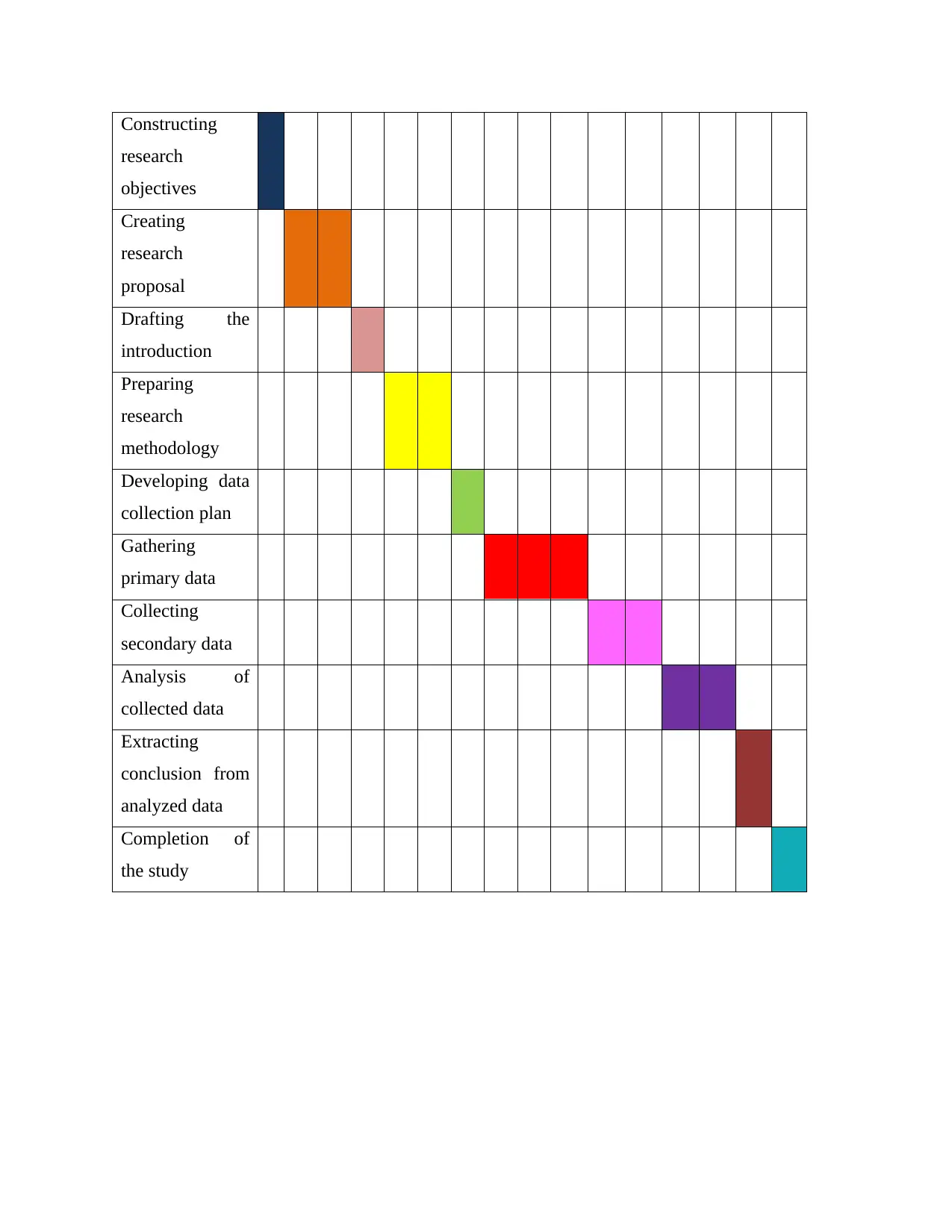
The work plan helps the researcher to effectively complete the research in allocated time.
In this context, the following table will help the researcher to carry out the study on the
exploration of energy efficient green buildings project in an effective time schedule.
Table 1: Work plan
Activities/Weeks 1 2 3 4 5 6 7 8 9 10 11 12 13 14 1
5
16
issue in research it shows the unethical behaviour of the researcher for conducting research
(Silverman, 2016). In this regard, in the current study secondary data will be properly rephrased
and will be associated with the accurate reference list. Therefore, present research will be carried
out with the high ethical standard by considering the interest of respondents, confidentiality of
their personal data and refreshed secondary data.
5. LIMITATIONS OF THE STUDY
The characteristics of study which influences the interpretation of findings and analysis
of research are considered as limitations of the study. Every research has some limitations which
are considered by the researcher and put the efforts to minimize the impact of the limitations. In
this regard, the data collection is most important for study. Due to this, in the present research
data will be collected from ten respondents of the five different companies which might cause
delay in research in a given time. For avoiding delay in the study, the research will follow the
specific timeline for completing each particular activity of the research. Apart from this, due to
the availability of respondents also might be a key limitation through which respondents might
not actively participate in the research and affect the quality of primary data. Owing to this, in
the current research data will be collected through questionnaire method which will help the
respondents to fill the questionnaire according to the availability of time. On the other hand,
restriction on the access of several academic resources, the in-depth analysis of research might
be affected because many facts and aspect might not be considered in the research. Thus, several
academic resources will be referred and considered that all the aspect of green buildings related
to energy efficiency will be analyzed in the present research.
6. WORK PLAN
The work plan helps the researcher to effectively complete the research in allocated time.
In this context, the following table will help the researcher to carry out the study on the
exploration of energy efficient green buildings project in an effective time schedule.
Table 1: Work plan
Activities/Weeks 1 2 3 4 5 6 7 8 9 10 11 12 13 14 1
5
16
Constructing
research
objectives
Creating
research
proposal
Drafting the
introduction
Preparing
research
methodology
Developing data
collection plan
Gathering
primary data
Collecting
secondary data
Analysis of
collected data
Extracting
conclusion from
analyzed data
Completion of
the study
research
objectives
Creating
research
proposal
Drafting the
introduction
Preparing
research
methodology
Developing data
collection plan
Gathering
primary data
Collecting
secondary data
Analysis of
collected data
Extracting
conclusion from
analyzed data
Completion of
the study
⊘ This is a preview!⊘
Do you want full access?
Subscribe today to unlock all pages.
Trusted by 1+ million students worldwide

1 out of 15


Related Documents


Your All-in-One AI-Powered Toolkit for Academic Success.
+13062052269
info@desklib.com
Available 24*7 on WhatsApp / Email
![[object Object]](/_next/static/media/star-bottom.7253800d.svg)
Unlock your academic potential
Copyright © 2020–2026 A2Z Services. All Rights Reserved. Developed and managed by ZUCOL.