Advanced Engines: Engine In-Cylinder Pressure Analysis

Verified

Added on  2022/09/18

|14
|1848
|25
Report
AI Summary
This report provides an in-depth analysis of engine in-cylinder pressure, focusing on the performance of gasoline and E50 fuels within advanced engine systems. The study investigates the physicochemical properties influencing the efficiency and output of both fuel types, examining factors such as calorific value and combustion rates. The methodology involves a descriptive and measured approach, utilizing secondary data to evaluate the combustion process, heat release rate, and mass fraction burned, with the Otto cycle and P-V diagrams used to represent combustion. Key findings highlight differences in combustion rates and fuel properties. The report concludes with a comparative analysis of gasoline and E50, emphasizing their distinct characteristics and their impact on engine performance. The report provides a comprehensive understanding of the fuels and their effect on engine performance.
Document Page
ADVANCED ENGINES AND POWER SYSTEMS
By Name
Course
Instructor
Institution
Location
Date
tabler-icon-diamond-filled.svg

Paraphrase This Document

Need a fresh take? Get an instant paraphrase of this document with our AI Paraphraser
Document Page
ENGINE IN-CYLINDER PRESSURE ANALYSIS
TABLE OF CONTENTS
Executive summary......................................................................................................................2
Introduction..................................................................................................................................3
Objectives of the study.................................................................................................................3
Study Hypothesis..........................................................................................................................3
Methodological study...................................................................................................................4
Heat Release Rate........................................................................................................................8
Results and discussion...............................................................................................................10
Conclusion.................................................................................................................................11
References..................................................................................................................................12
Document Page
Executive summary
Fuels are materials which have the potential to store and keep energy in systems that generates
heat energy when its combusted. The heat quantity that’s derived when combustion process has
occurred is called and the energy is fully burnt down is known as calorific fuel value.
Alternative fuels are essential in initiating ignition of sparks and compressing ignition engines.
Most of the research on alternative focuses on the performance as well as the properties of the
fuel in regards to advancement in engines and power systems. The reviewing process enhances
the analysis of alternative fuels such as gasoline and E50 (United States. Bureau of Naval
Personnel, 2014, p. 163).
Gasoline fuel is an alternative fuel that’s constituted from petroleum products and crude oil. It
generates power through power unit system and it’s majorly used by vehicle engines, it’s a
combination of unstable and combustible liquid hydrocarbons that’s derivative of petroleum
while E50 are alternative fuels used by vehicles and contains 85% ethanol.
The above alternative fuels and energy have different phychemical properties that makes it
stands out in the customer preference and choice. Gasoline tend to have higher calorific fuel
value compared to the E50 fuel energy, this initiates regulation of its temperature to moderate
while reducing the moisture content of the fuel. On the other hand, the E50 fuel is known for its
ability to fully burn down at a moderate velocity as well as its efficiency (United States. Office
of the Chief of Naval Operations, 2013, p. 2017).
Document Page
Introduction
Alternative fuels play an important role in the initiation and compressing of engines.
Alternative fuels are essential in initiating ignition of sparks and compressing ignition engines.
Most of the research on alternative focuses on the performance as well as the properties of the
fuel in regards to advancement in engines and power systems. The reviewing process enhances
the analysis of alternative fuels such as gasoline and E50 (Simonson, 2012, p. 2013).
Experimental investigations were performed on a particular cylinder four-stroke spark-ignition
engine that fueled using E50 blend of ethanol-gasoline. Tests were carried out on eight different
engines with speeds ranging from 1500 to 5000 rpm (Obert, 2014).
Notably, it was observed that with E50 fuel, the torque force was higher that the gasoline base.
When using ethanol-gasoline E50 blend, torque force increased due to various reasons. The low
heating value of ethanol, its density is high, it has a high latent evaporation heat and its oxygen
content is higher compared to the gasoline base (Simonson, 2015, p. 71).
Objectives of the study.
To determine factors that influences the performance of gasoline and E50.
To identify the physicochemical properties that affects the efficiencies, output and
performance of gasoline and E50.
Study Hypothesis
The possibility that the physicochemical properties impacted on the efficiencies.
That the performance of gasoline and E50 is dependent on the combustion of energy.
tabler-icon-diamond-filled.svg

Paraphrase This Document

Need a fresh take? Get an instant paraphrase of this document with our AI Paraphraser
Document Page
Methodological study
Research methodology is categorized as a descriptive and measured method which has assurance
on the analyst experts either to gather and bring together precise and suitable or to acknowledge
accept analysis linking on the subject through utilization of various diverse research strategies.
The data was collection through secondary data collection (Heil, 2015, p. 127).
The reserves of petroleum-based fuels are directly cor-
related with the increasing demands of humankind for
energy production. With growing world populations,
industries, vehicles, and equipment, energy demand
leads to the search for a substitute for petroleum fuels
which can cater to the need of people today. Consider-
ing the current global economic crisis, the curiosity in
alternative fuels is extremely high.[1] Alternative fuels
used as substitute petroleum-based fuels must be pro-
duced from renewable sources, and should be devised
to use this fuel without bringing any modifications in
the geometry of the engine. Alcohols have provided
an answer to this problem. Ethanol is thought to be
the most fitting fuel for spark ignition engines.[2]
Researchers have generated a few alternative and
cost-effectively viable fuels which are also environment
friendly.[3] One of the goals of researchers is the devel-
opment of high efficiency and clean fuels. Some of the
Document Page
most important fuels are natural gas, biogas, vegetable
oil, esters alcohols derived from vegetable oils and
hydrogen. Alcohol fuels such as methanol and ethanol
have emerged as alternative fuels for spark ignition
engines because they are flark and have physical and
combustion properties analogous to gasoline.[4] Major
research work on the evaluation of the performance
parameters of the engines, operated on alternative
fuel, has given us a food for thought to either replace
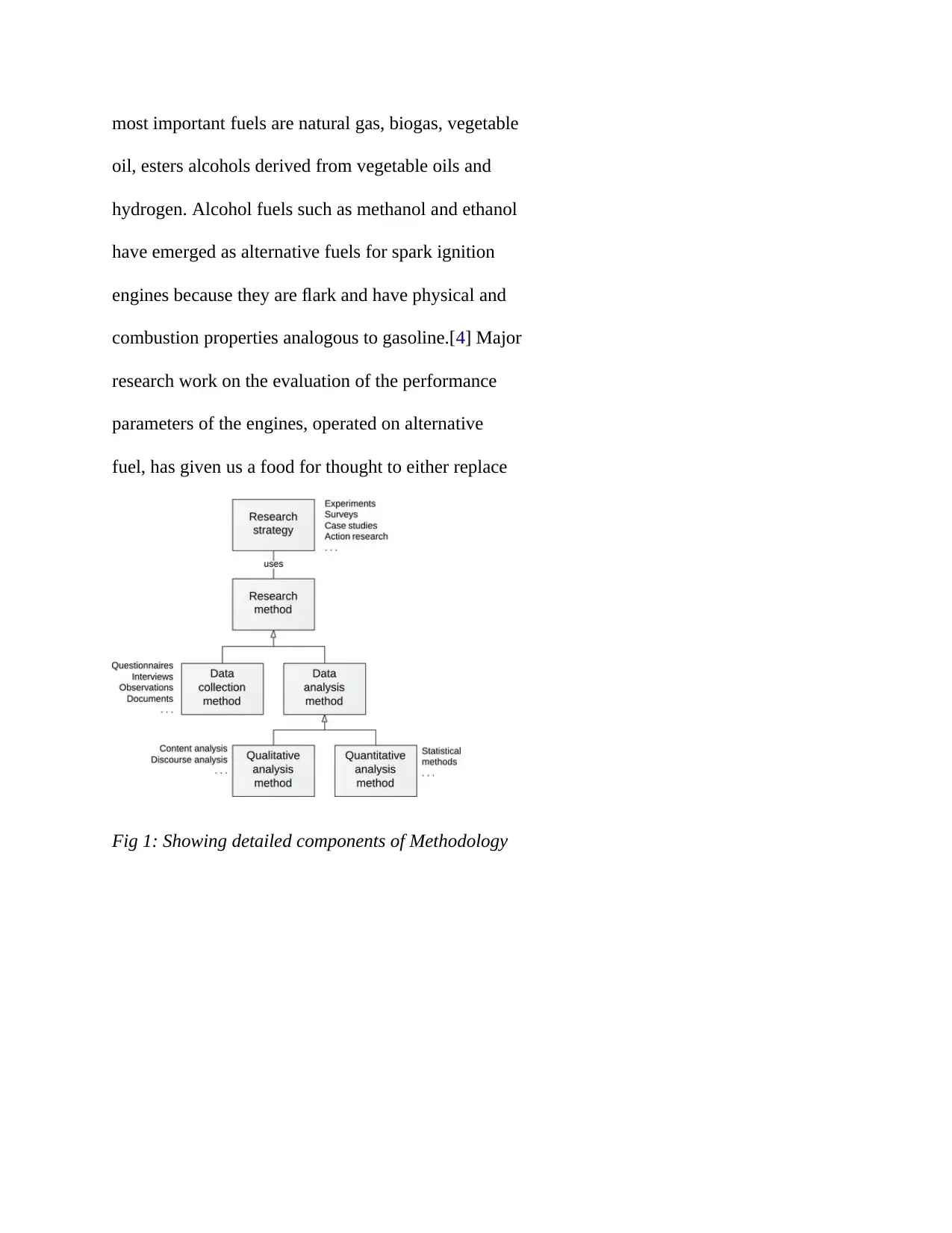
Fig 1: Showing detailed components of Methodology
Document Page
P-V diagram
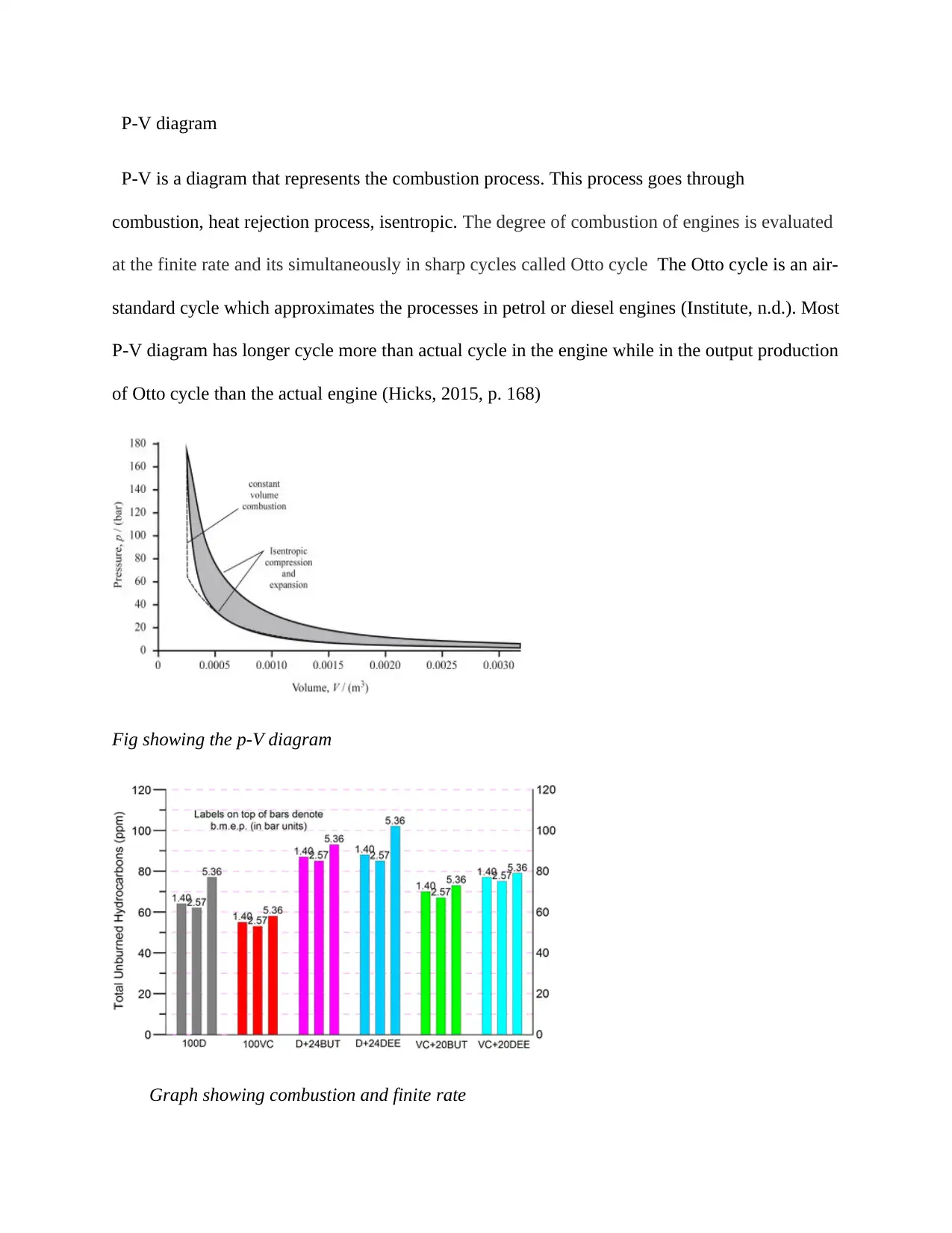
P-V is a diagram that represents the combustion process. This process goes through
combustion, heat rejection process, isentropic. The degree of combustion of engines is evaluated
at the finite rate and its simultaneously in sharp cycles called Otto cycle The Otto cycle is an air-
standard cycle which approximates the processes in petrol or diesel engines (Institute, n.d.). Most
P-V diagram has longer cycle more than actual cycle in the engine while in the output production
of Otto cycle than the actual engine (Hicks, 2015, p. 168)
Fig showing the p-V diagram
Graph showing combustion and finite rate
tabler-icon-diamond-filled.svg

Paraphrase This Document

Need a fresh take? Get an instant paraphrase of this document with our AI Paraphraser
Document Page
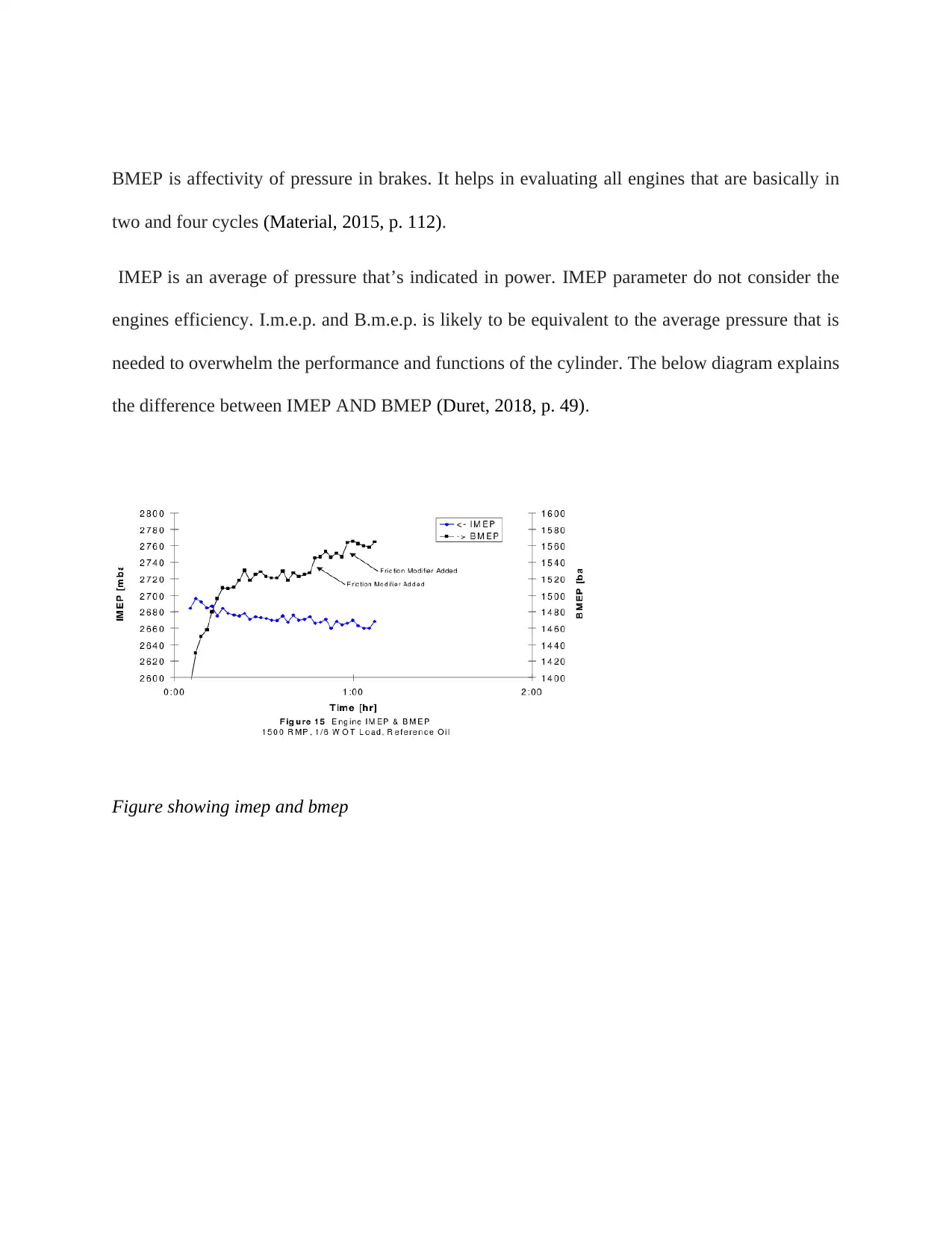
BMEP is affectivity of pressure in brakes. It helps in evaluating all engines that are basically in
two and four cycles (Material, 2015, p. 112).
IMEP is an average of pressure that’s indicated in power. IMEP parameter do not consider the
engines efficiency. I.m.e.p. and B.m.e.p. is likely to be equivalent to the average pressure that is
needed to overwhelm the performance and functions of the cylinder. The below diagram explains
the difference between IMEP AND BMEP (Duret, 2018, p. 49).
Figure showing imep and bmep
Document Page
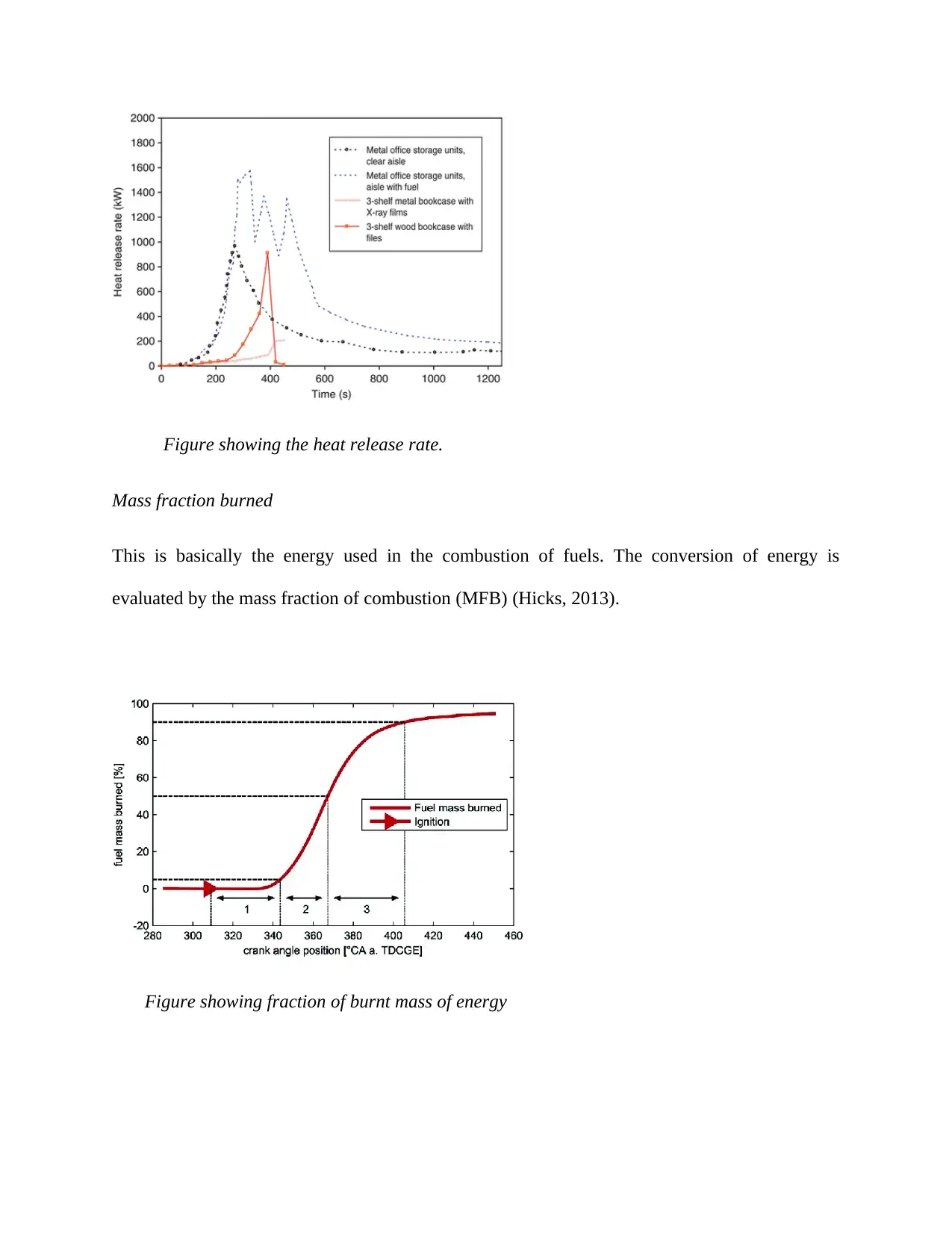
Heat Release Rate
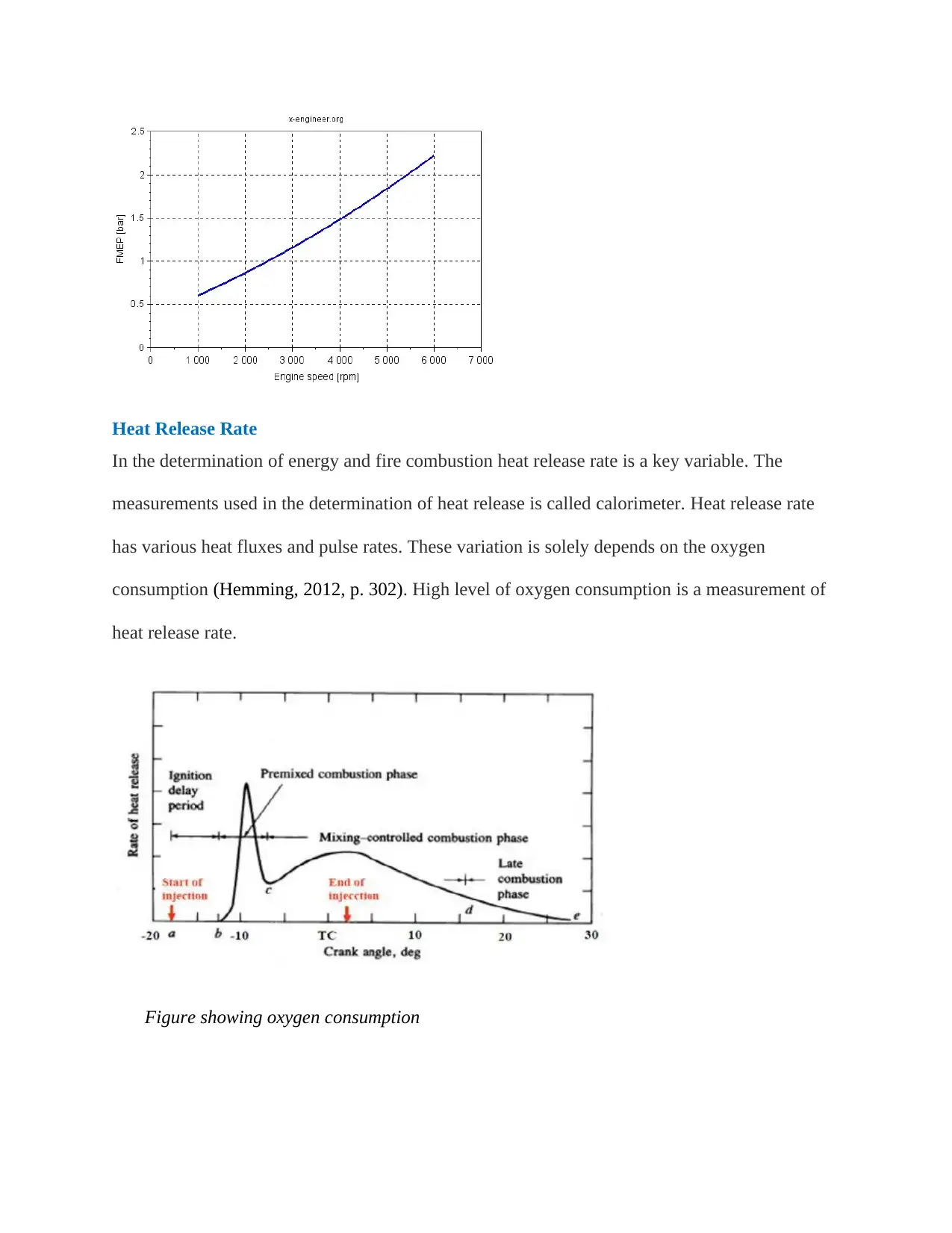
In the determination of energy and fire combustion heat release rate is a key variable. The
measurements used in the determination of heat release is called calorimeter. Heat release rate
has various heat fluxes and pulse rates. These variation is solely depends on the oxygen
consumption (Hemming, 2012, p. 302). High level of oxygen consumption is a measurement of
heat release rate.
Figure showing oxygen consumption
Document Page
Figure showing the heat release rate.
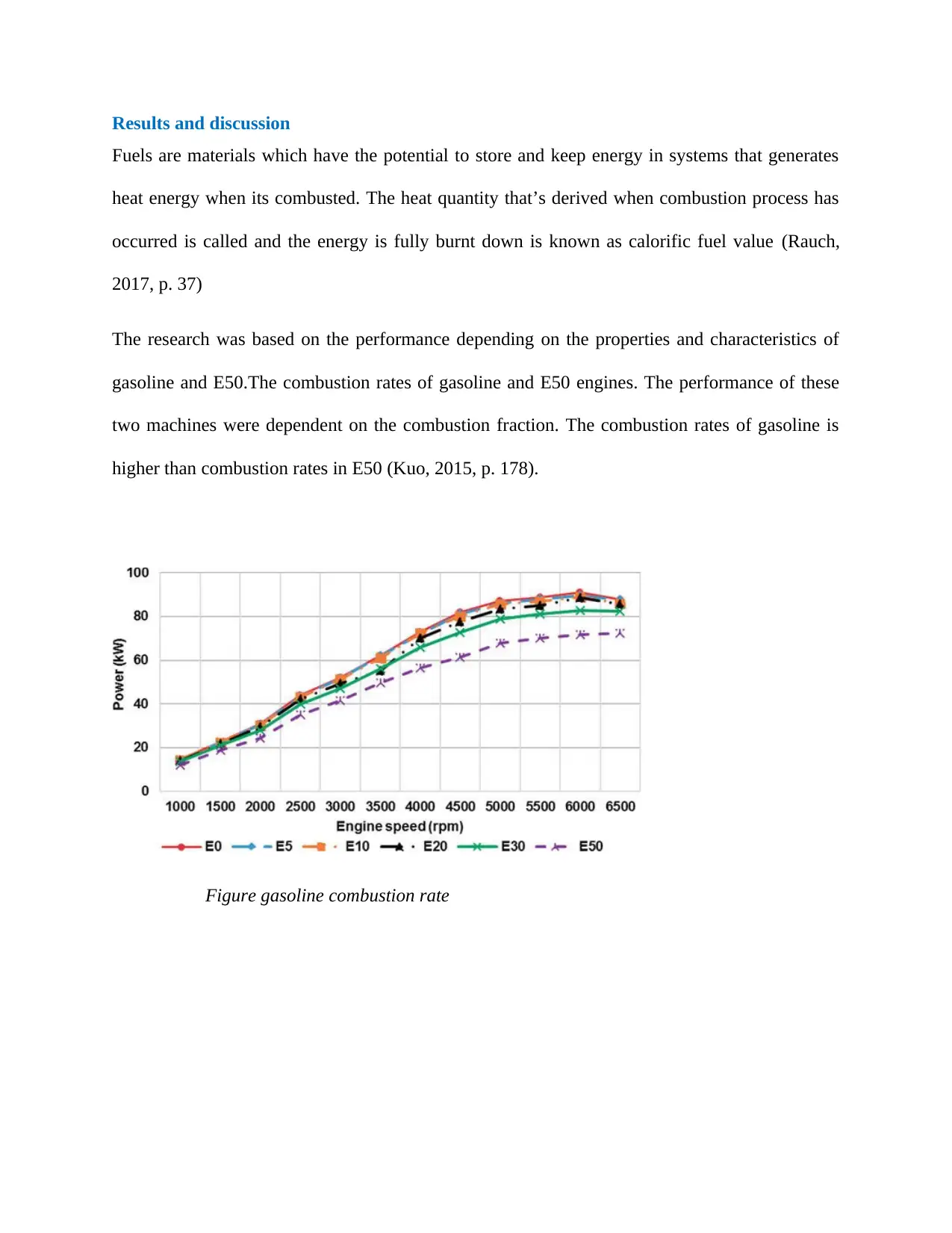
Mass fraction burned
This is basically the energy used in the combustion of fuels. The conversion of energy is
evaluated by the mass fraction of combustion (MFB) (Hicks, 2013).
Figure showing fraction of burnt mass of energy
tabler-icon-diamond-filled.svg

Paraphrase This Document

Need a fresh take? Get an instant paraphrase of this document with our AI Paraphraser
Document Page
Results and discussion
Fuels are materials which have the potential to store and keep energy in systems that generates
heat energy when its combusted. The heat quantity that’s derived when combustion process has
occurred is called and the energy is fully burnt down is known as calorific fuel value (Rauch,
2017, p. 37)
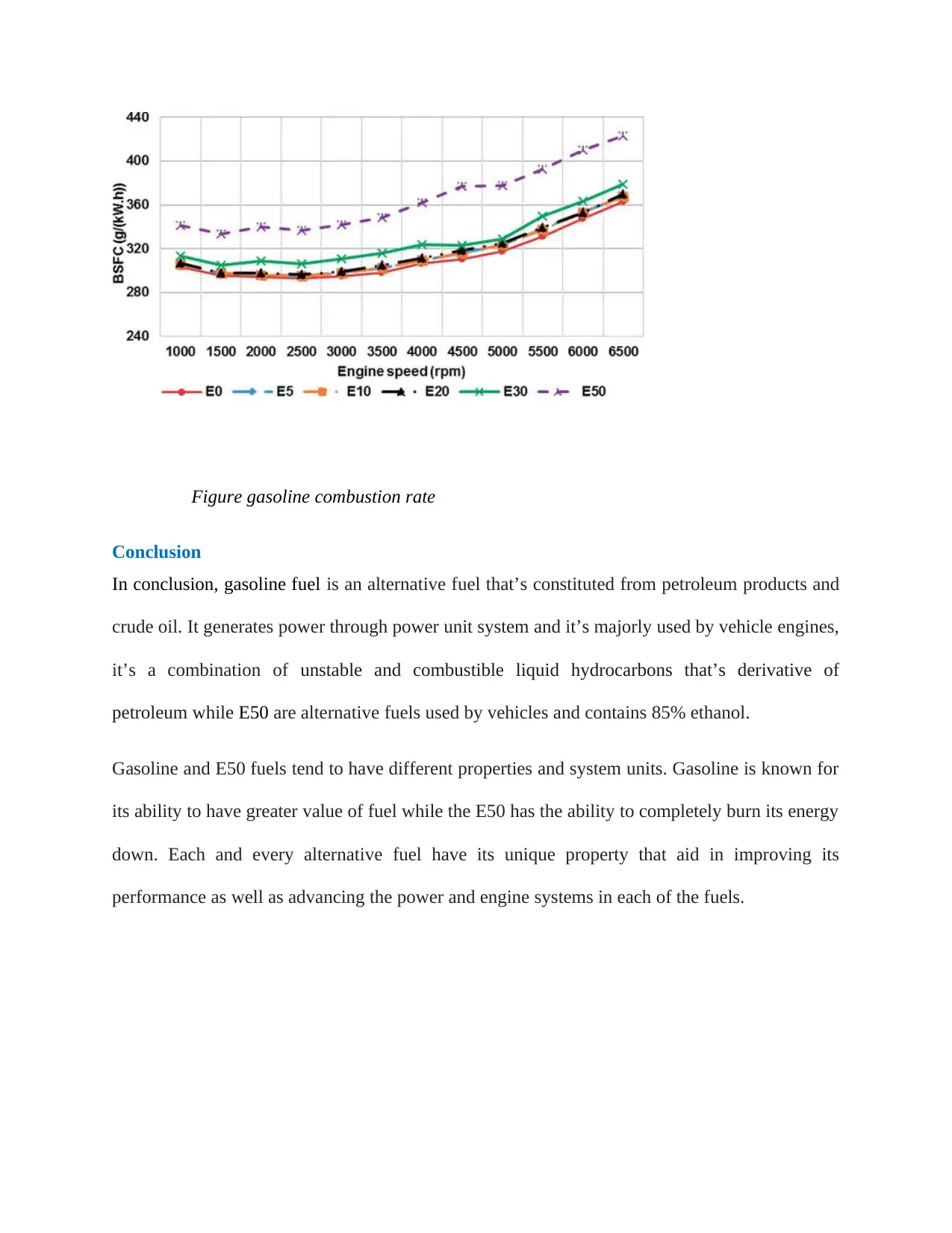
The research was based on the performance depending on the properties and characteristics of
gasoline and E50.The combustion rates of gasoline and E50 engines. The performance of these
two machines were dependent on the combustion fraction. The combustion rates of gasoline is
higher than combustion rates in E50 (Kuo, 2015, p. 178).
Figure gasoline combustion rate
Document Page
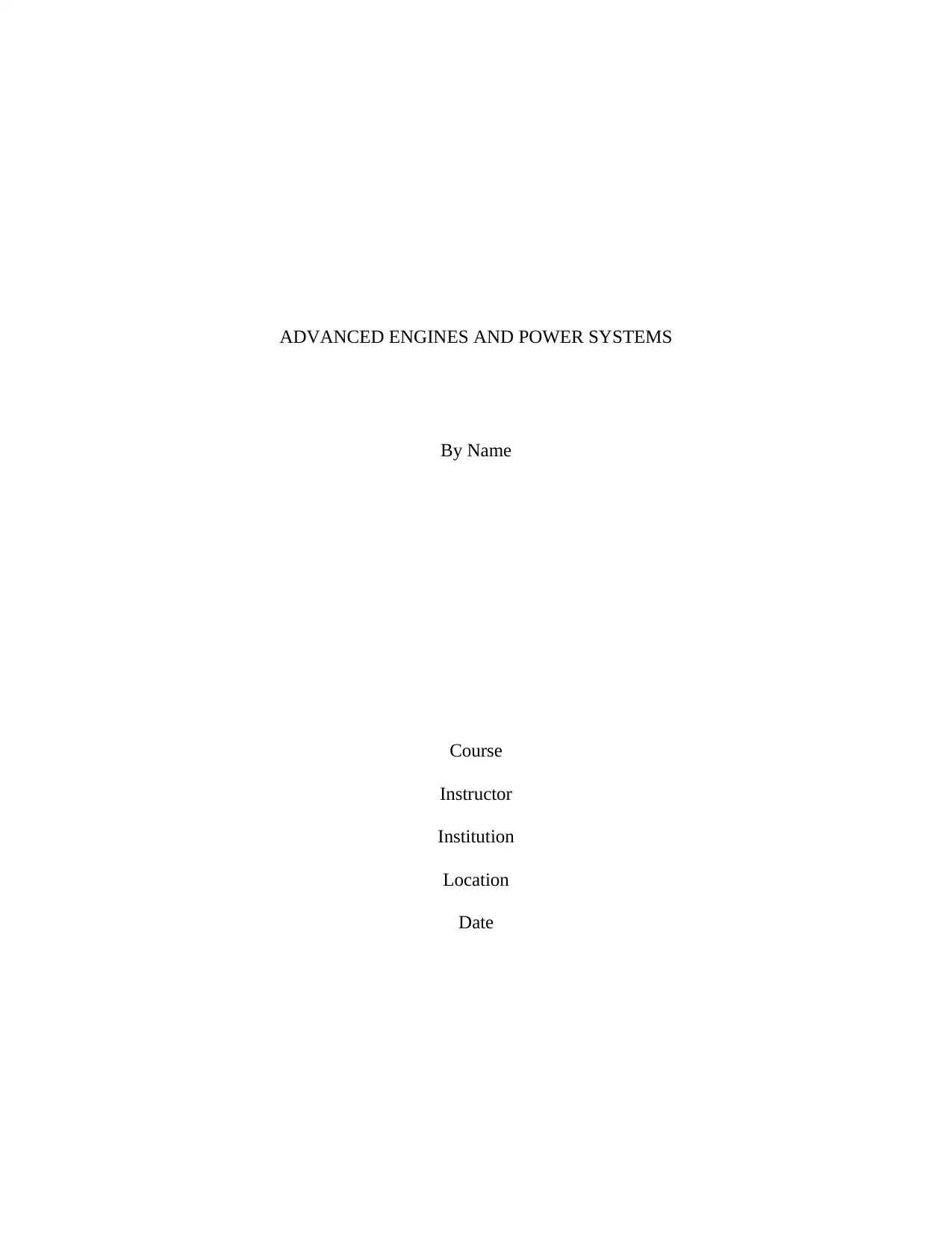
Figure gasoline combustion rate
Conclusion
In conclusion, gasoline fuel is an alternative fuel that’s constituted from petroleum products and
crude oil. It generates power through power unit system and it’s majorly used by vehicle engines,
it’s a combination of unstable and combustible liquid hydrocarbons that’s derivative of
petroleum while E50 are alternative fuels used by vehicles and contains 85% ethanol.
Gasoline and E50 fuels tend to have different properties and system units. Gasoline is known for
its ability to have greater value of fuel while the E50 has the ability to completely burn its energy
down. Each and every alternative fuel have its unique property that aid in improving its
performance as well as advancing the power and engine systems in each of the fuels.
chevron_up_icon
1 out of 14
circle_padding
hide_on_mobile
zoom_out_icon
[object Object]