Entrepreneurial Team & Entrepreneurial Leadership: Report Analysis
VerifiedAdded on 2020/05/04
|11
|3531
|262
Report
AI Summary
This report delves into the multifaceted attributes of entrepreneurship, specifically focusing on entrepreneurial teams and leadership. It contrasts individual entrepreneurs with entrepreneurial teams, evaluating their respective opportunities, effectiveness, and required skills. The report centers on small businesses, employing both primary and secondary data collection methods to analyze the topic. A case study of the start-up Mush: Let’s Do It Together is included, detailing its entrepreneurial ideas and challenges. The analysis incorporates charts and graphs to present findings and discussion points, examining the role of politics, organizational structure, and employee factors in influencing business success. The report also explores various entrepreneurial theories, such as economic, resource-based, psychological, sociological, and opportunity-based theories, to understand their application in fostering successful entrepreneurial teams and leadership within small and medium enterprises (SMEs). The report concludes by highlighting the importance of adapting to market trends and leveraging entrepreneurial opportunities for sustainable growth and development.
Entrepreneurship
Entrepreneurial Team & Entrepreneurial Leadership
Entrepreneurial Team & Entrepreneurial Leadership

Paraphrase This Document
Need a fresh take? Get an instant paraphrase of this document with our AI Paraphraser

Table of Contents
Introduction...........................................................................................................................................2
Literature review...............................................................................................................................2
Methodology.........................................................................................................................................3
Analysis and Findings...........................................................................................................................4
Conclusion.............................................................................................................................................8
References.............................................................................................................................................9
1
Introduction...........................................................................................................................................2
Literature review...............................................................................................................................2
Methodology.........................................................................................................................................3
Analysis and Findings...........................................................................................................................4
Conclusion.............................................................................................................................................8
References.............................................................................................................................................9
1
Introduction
The research report will be discussing the attributes of entrepreneurship. The topic
Entrepreneurial Teams and Entrepreneurial Leadership has been selected and the
opportunities, effectiveness and skills of individual entrepreneur and the entrepreneurial
teams have been compared. The focus on small business was paid and both the primary and
secondary method of data collection is adopted (Simba & Ojong, 2017). The start-up of
Mush: Let’s Do It Together was launched in 2016 whose entrepreneurial ideas are described
as well. Lastly the findings and discussion will be done where the charts and graph has been
presented as well.
Literature review
As per Kuratko (2016), entrepreneurship is the starting up the new business venture that
consists of the new ideas and values comprising of unique elements which attracts the
consumer. The entrepreneur analyses the market situation and move forward accordingly by
incorporating the risk factor within with the motive of earning profit and establishing the
benchmark in the era of business. The studies show that individual entrepreneur likely to fail
more than the entrepreneurial team where the minds of various people work together in
different directions and the wise business ideas and policies are adopted to ensure the success
of the business venture (Kuratko, 2016). The entrepreneurial leader along with the team could
create wonders by utilising their potential and evaluating the latent talent and giving their
talent the shape of business venture to create something new and investing their interpersonal
qualities within the business taking the business to new hikes. In the present scenario the
individual entrepreneur focuses less over the small and medium enterprises (SMEs);
moreover the large and medium enterprises are in the trend. According to Storey (2016), the
studies have been conducted and it was figured out that entrepreneurial team are not able to
handle the large business due to handling of team members as well. At one point where team
contributes in the growth of business and popping up of the new ideas on the other side there
arises ego problem as multi-talented people come together for the common cause (Storey,
2016). On researching the solutions have been derived to manage the teams as well as the
small and medium enterprises so that simultaneous development could be ensured. The
entrepreneurial teams and leadership learn more about start-ups and step in the field to learn
something new and introduce the world with uniqueness. Hsieh & Lee (2017) states that, the
2
The research report will be discussing the attributes of entrepreneurship. The topic
Entrepreneurial Teams and Entrepreneurial Leadership has been selected and the
opportunities, effectiveness and skills of individual entrepreneur and the entrepreneurial
teams have been compared. The focus on small business was paid and both the primary and
secondary method of data collection is adopted (Simba & Ojong, 2017). The start-up of
Mush: Let’s Do It Together was launched in 2016 whose entrepreneurial ideas are described
as well. Lastly the findings and discussion will be done where the charts and graph has been
presented as well.
Literature review
As per Kuratko (2016), entrepreneurship is the starting up the new business venture that
consists of the new ideas and values comprising of unique elements which attracts the
consumer. The entrepreneur analyses the market situation and move forward accordingly by
incorporating the risk factor within with the motive of earning profit and establishing the
benchmark in the era of business. The studies show that individual entrepreneur likely to fail
more than the entrepreneurial team where the minds of various people work together in
different directions and the wise business ideas and policies are adopted to ensure the success
of the business venture (Kuratko, 2016). The entrepreneurial leader along with the team could
create wonders by utilising their potential and evaluating the latent talent and giving their
talent the shape of business venture to create something new and investing their interpersonal
qualities within the business taking the business to new hikes. In the present scenario the
individual entrepreneur focuses less over the small and medium enterprises (SMEs);
moreover the large and medium enterprises are in the trend. According to Storey (2016), the
studies have been conducted and it was figured out that entrepreneurial team are not able to
handle the large business due to handling of team members as well. At one point where team
contributes in the growth of business and popping up of the new ideas on the other side there
arises ego problem as multi-talented people come together for the common cause (Storey,
2016). On researching the solutions have been derived to manage the teams as well as the
small and medium enterprises so that simultaneous development could be ensured. The
entrepreneurial teams and leadership learn more about start-ups and step in the field to learn
something new and introduce the world with uniqueness. Hsieh & Lee (2017) states that, the
2
⊘ This is a preview!⊘
Do you want full access?
Subscribe today to unlock all pages.

Trusted by 1+ million students worldwide
contribution of entrepreneurial teams adds on to the GDP of nation and financial status of
country rises along with the creation of job opportunity and corporate social responsibility is
focussed upon (Hsieh & Lee, 2016).
The overall report discusses upon the entrepreneurial teams and leadership in which
the team and individual working has been discussed. The difference between SME and large
venture is discussed followed by current situation in context of the prevailing situation in the
market. In the research a brief literature is quote along with primary and secondary
methodologies. Lastly the analysis and findings are made which is represented by charts and
graphs followed by the conclusion. Stage of entrepreneurship has been discussed to know the
prevailing situation of United Kingdom and how this start-up could be made more successful
and focussing over the small organisations so that hidden area could also flourish and
provides support to nation’s GDP.
Methodology
The research method adopted for this report is secondary and primary data. In primary data
collection questionnaire has been constructed and opinions of the entrepreneurs and experts
have been collected to record and compare the data for gaining authentic and reliable results.
The secondary data technique has also been used in which second hand information is
gathered from the newspaper, journal articles and other literary work already performed in
the similar field by experts (Fallon, 2016).
For the primary data collection the questionnaire has been constructed and the
feedback from the entrepreneurs, supplier, buyers, investors and other shareholder has been
taken. The sample size is been selected and based on that the research is processed. The study
has been conducted at the small level choosing the sample size of 100 people. Along with the
questionnaire, interviews are also conducted individually as well as the group focus interview
session to access the thinking of people individually and the working that takes place in the
teams (Patten, 2016). The effectiveness has been measured on analysing and evaluating the
data using the quantitative techniques. The observation method has also been selected where
the systematic viewing take place. Working of large enterprises and the impact of political
and legal strategies are seen along with their influence on the small enterprises. The
observation method helps the researcher in gaining the current and fresh information that
actually prevails (Morgan et al, 2017). The drawback of this method is that it’s costly in
3
country rises along with the creation of job opportunity and corporate social responsibility is
focussed upon (Hsieh & Lee, 2016).
The overall report discusses upon the entrepreneurial teams and leadership in which
the team and individual working has been discussed. The difference between SME and large
venture is discussed followed by current situation in context of the prevailing situation in the
market. In the research a brief literature is quote along with primary and secondary
methodologies. Lastly the analysis and findings are made which is represented by charts and
graphs followed by the conclusion. Stage of entrepreneurship has been discussed to know the
prevailing situation of United Kingdom and how this start-up could be made more successful
and focussing over the small organisations so that hidden area could also flourish and
provides support to nation’s GDP.
Methodology
The research method adopted for this report is secondary and primary data. In primary data
collection questionnaire has been constructed and opinions of the entrepreneurs and experts
have been collected to record and compare the data for gaining authentic and reliable results.
The secondary data technique has also been used in which second hand information is
gathered from the newspaper, journal articles and other literary work already performed in
the similar field by experts (Fallon, 2016).
For the primary data collection the questionnaire has been constructed and the
feedback from the entrepreneurs, supplier, buyers, investors and other shareholder has been
taken. The sample size is been selected and based on that the research is processed. The study
has been conducted at the small level choosing the sample size of 100 people. Along with the
questionnaire, interviews are also conducted individually as well as the group focus interview
session to access the thinking of people individually and the working that takes place in the
teams (Patten, 2016). The effectiveness has been measured on analysing and evaluating the
data using the quantitative techniques. The observation method has also been selected where
the systematic viewing take place. Working of large enterprises and the impact of political
and legal strategies are seen along with their influence on the small enterprises. The
observation method helps the researcher in gaining the current and fresh information that
actually prevails (Morgan et al, 2017). The drawback of this method is that it’s costly in
3
Paraphrase This Document
Need a fresh take? Get an instant paraphrase of this document with our AI Paraphraser
terms of time, though the current information is collected yet the data is limited and there are
some uncertainties that disrupt the procedures. The participant observation has been chosen
where the entrepreneurial teams and their behaviour towards the mate, attitude towards the
work has been observed. This method assists in collecting the hidden information within the
group and the measures are suggested to improvise the present situation.
For the secondary information both the internal and external sources of information
has been collected. For the internal data the sales report and financial statements of certain
entrepreneurial units have been identified and the data is evaluated. The customer details are
noted down and they are contacted to make a check over the information and promises that
the company provides in real. The feedback reports are also examined where revert from
stakeholders like distributor, retailer and brokers are collected. Focussing over the external
sources of secondary data collection the tax records have been collected to compare the actual
growth and what the company in real claims (Ellram & Tate, 2016). If the scene of evasion
has been aroused up or not is scrutinized. Along with it business journals are studied and
internet is always the source to gather the data from any corner of the world. The expert
readings are also preferred from the authentic e-libraries. The analysis of these data is done
using the qualitative technique in which the self-review and observations are noted down. It
is based on the perception of researcher and the thoughts they have regarding the
entrepreneurial teams and leadership that follows in the various small and medium enterprises
(Johnston, 2017).
Analysis and Findings
The studies stated that politics play a vital role in the establishment of the business,
when the organisation is large and continuing in the long run then policies are designed
according to them as they give business to the nation and heavily contributes in the increasing
GDP of the country. In such a situation the small and medium enterprises have to suffer as
many times the political situation do not favour them and to stay in the long run they have to
impress the leaders which create dependability and act as the barrier towards the start-up.
There are some other factors as well that highly affects the development of the small and
medium business enterprises. In structure the bureaucratic nature is defined in depth. The
structure basically defines the organisational structure of the company; better the structure
more will be the chances to follow the hierarchy (Kumar, 2017). The small business could
4
some uncertainties that disrupt the procedures. The participant observation has been chosen
where the entrepreneurial teams and their behaviour towards the mate, attitude towards the
work has been observed. This method assists in collecting the hidden information within the
group and the measures are suggested to improvise the present situation.
For the secondary information both the internal and external sources of information
has been collected. For the internal data the sales report and financial statements of certain
entrepreneurial units have been identified and the data is evaluated. The customer details are
noted down and they are contacted to make a check over the information and promises that
the company provides in real. The feedback reports are also examined where revert from
stakeholders like distributor, retailer and brokers are collected. Focussing over the external
sources of secondary data collection the tax records have been collected to compare the actual
growth and what the company in real claims (Ellram & Tate, 2016). If the scene of evasion
has been aroused up or not is scrutinized. Along with it business journals are studied and
internet is always the source to gather the data from any corner of the world. The expert
readings are also preferred from the authentic e-libraries. The analysis of these data is done
using the qualitative technique in which the self-review and observations are noted down. It
is based on the perception of researcher and the thoughts they have regarding the
entrepreneurial teams and leadership that follows in the various small and medium enterprises
(Johnston, 2017).
Analysis and Findings
The studies stated that politics play a vital role in the establishment of the business,
when the organisation is large and continuing in the long run then policies are designed
according to them as they give business to the nation and heavily contributes in the increasing
GDP of the country. In such a situation the small and medium enterprises have to suffer as
many times the political situation do not favour them and to stay in the long run they have to
impress the leaders which create dependability and act as the barrier towards the start-up.
There are some other factors as well that highly affects the development of the small and
medium business enterprises. In structure the bureaucratic nature is defined in depth. The
structure basically defines the organisational structure of the company; better the structure
more will be the chances to follow the hierarchy (Kumar, 2017). The small business could
4
not afford to maintain the high profile structures as the costing gets high and standard of
small and medium enterprise do not match the same thereby the small company lacks the
capacity to have the good structure. The employee factor also varies as the large organisation
involves and attracts those employees who demand for the job security, generally the
experienced people work over there (Franklin-Wallis, 2017). The fresher or people who
aspire for more and wanted to learn diverse things and work along with the distinct people
choose to be in the small and medium enterprises where there are variety of things that could
be learned and interpersonal development takes place. The other point that matters and brings
difference between small and large organisation is salary and culture as well. From the
perspective of individual and the group entrepreneurs there are several entrepreneurial
opportunities that rise up. There are competencies required in establishing the entrepreneur
and the skills, behaviour and value play the vital role in attempting the start-up and expanding
it further using the effective techniques to result in big success (Macaulay, 2017).
The entrepreneurship theories are focused upon by the small enterprises and the recent
trend of start-up is continuing. There are several businesses that came into existence with the
commencement of start-up which involve the crucial role of digitisation of the country
(Burton et al, 2016). There is the innovation of wireless Wi-Fi equipment which renders high
speed internet and enables quick downloading, the fresh juice machine has been introduced
that delivers fresh fruit juice and the uniqueness it carries is this that the equipment could be
operated using the Wi-Fi. Similarly, Uber has come up providing the rides facility to
customers at the minimal charges set as per the route and timely provide the discounts and
offers on every ride. Such a company adopts certain entrepreneurship theories to ensure
smooth working of the entrepreneurial teams and entrepreneurial leadership. The economic
theory is focussed which adjusts the budget of the leaders and team invests in them to take
high risks so that better return are received and the business venture gains the popularity.
Next thing that the entrepreneur concentrates is resource based theory where focus is paid
over the selection of allocation of resources at the adequate place. They ensure to utilise the
resources be it eth natural or human resources in the optimum manner .Then the
psychological theory is there where most of the clashes occur as it is solely depends upon the
mentality of the individual (Meri, 2016). The mind-set of one person cannot match the other
person. The perception and concept of things vary from person to person and this is the
reason that entrepreneurial teams and leadership face the conflicts but these could be resolved
if mutual understanding is perceived and view point of others are given the equal importance.
5
small and medium enterprise do not match the same thereby the small company lacks the
capacity to have the good structure. The employee factor also varies as the large organisation
involves and attracts those employees who demand for the job security, generally the
experienced people work over there (Franklin-Wallis, 2017). The fresher or people who
aspire for more and wanted to learn diverse things and work along with the distinct people
choose to be in the small and medium enterprises where there are variety of things that could
be learned and interpersonal development takes place. The other point that matters and brings
difference between small and large organisation is salary and culture as well. From the
perspective of individual and the group entrepreneurs there are several entrepreneurial
opportunities that rise up. There are competencies required in establishing the entrepreneur
and the skills, behaviour and value play the vital role in attempting the start-up and expanding
it further using the effective techniques to result in big success (Macaulay, 2017).
The entrepreneurship theories are focused upon by the small enterprises and the recent
trend of start-up is continuing. There are several businesses that came into existence with the
commencement of start-up which involve the crucial role of digitisation of the country
(Burton et al, 2016). There is the innovation of wireless Wi-Fi equipment which renders high
speed internet and enables quick downloading, the fresh juice machine has been introduced
that delivers fresh fruit juice and the uniqueness it carries is this that the equipment could be
operated using the Wi-Fi. Similarly, Uber has come up providing the rides facility to
customers at the minimal charges set as per the route and timely provide the discounts and
offers on every ride. Such a company adopts certain entrepreneurship theories to ensure
smooth working of the entrepreneurial teams and entrepreneurial leadership. The economic
theory is focussed which adjusts the budget of the leaders and team invests in them to take
high risks so that better return are received and the business venture gains the popularity.
Next thing that the entrepreneur concentrates is resource based theory where focus is paid
over the selection of allocation of resources at the adequate place. They ensure to utilise the
resources be it eth natural or human resources in the optimum manner .Then the
psychological theory is there where most of the clashes occur as it is solely depends upon the
mentality of the individual (Meri, 2016). The mind-set of one person cannot match the other
person. The perception and concept of things vary from person to person and this is the
reason that entrepreneurial teams and leadership face the conflicts but these could be resolved
if mutual understanding is perceived and view point of others are given the equal importance.
5
⊘ This is a preview!⊘
Do you want full access?
Subscribe today to unlock all pages.
Trusted by 1+ million students worldwide
There is a need to follow the sociological theory as well which states the corporate social
responsibility and fulfilment of the cultural norms as well. The last theory is opportunity
based theory in which the efficiency and effectiveness of entrepreneurs could be judged. The
entrepreneurs are those that figure out opportunity in every mishap or any uncertainty. The
social, economic, technological and culture challenges appear and the entrepreneurs are the
opportunists and they find out positivity in every off and ready to fill up the loopholes that
exists in the system (Dontigney, 2017).
Mush is the start-up that took place in the year 2016 for helping out the new mums to
handle the problems related to the babies. Being in the new phase the women feel isolated
and demand for all time help. The “Tinder for mums” app has been launched where the
parents could contact the experts and ask their query and seek resolution initially the
company too faced many challenges as it adopted short cuts to gain early success which lead
to the failure (Let’s do it world, 2017). The company has grown vast and spread its branches
in US, Canada and Australia. It is named as the parent-tech and has gain the hike which could
be figured out with the fact that the rivals have come up. Peanut has launched the same in
February 2017 (Wired, 2017). The slogan that the company carries is Mush: Let’s do it
together, the tagline itself conveys half the message that it collects the mums from all around
and bring them on the same platform to discuss the problems and have fun together. The
company initially faced many challenges but with the determination and fixed vision they
overcome the challenges and succeed to build up the image in positive manner. It focussed on
the social responsibility by caring for the mother and the child. It is the result of the
entrepreneurial team and leadership. The company has been founded by Sarah and Katie who
developed that there are many mothers that strive for help and company and there are many
children of the identical ages that could be collected and friends could be developed. The
people share their advice and experience through the site using the GPS. The app consists of
75000 members at present and the number is growing (Peck, 2017). The app helps in
rendering the information about the similar mums located near by having the similar age kids
so that the time gets well spend. Being the lonely mum Katie found out the opportunity and
introduced this app with the help of the friend Sarah and now many similar mums chat and
swap on the same page.
6
responsibility and fulfilment of the cultural norms as well. The last theory is opportunity
based theory in which the efficiency and effectiveness of entrepreneurs could be judged. The
entrepreneurs are those that figure out opportunity in every mishap or any uncertainty. The
social, economic, technological and culture challenges appear and the entrepreneurs are the
opportunists and they find out positivity in every off and ready to fill up the loopholes that
exists in the system (Dontigney, 2017).
Mush is the start-up that took place in the year 2016 for helping out the new mums to
handle the problems related to the babies. Being in the new phase the women feel isolated
and demand for all time help. The “Tinder for mums” app has been launched where the
parents could contact the experts and ask their query and seek resolution initially the
company too faced many challenges as it adopted short cuts to gain early success which lead
to the failure (Let’s do it world, 2017). The company has grown vast and spread its branches
in US, Canada and Australia. It is named as the parent-tech and has gain the hike which could
be figured out with the fact that the rivals have come up. Peanut has launched the same in
February 2017 (Wired, 2017). The slogan that the company carries is Mush: Let’s do it
together, the tagline itself conveys half the message that it collects the mums from all around
and bring them on the same platform to discuss the problems and have fun together. The
company initially faced many challenges but with the determination and fixed vision they
overcome the challenges and succeed to build up the image in positive manner. It focussed on
the social responsibility by caring for the mother and the child. It is the result of the
entrepreneurial team and leadership. The company has been founded by Sarah and Katie who
developed that there are many mothers that strive for help and company and there are many
children of the identical ages that could be collected and friends could be developed. The
people share their advice and experience through the site using the GPS. The app consists of
75000 members at present and the number is growing (Peck, 2017). The app helps in
rendering the information about the similar mums located near by having the similar age kids
so that the time gets well spend. Being the lonely mum Katie found out the opportunity and
introduced this app with the help of the friend Sarah and now many similar mums chat and
swap on the same page.
6
Paraphrase This Document
Need a fresh take? Get an instant paraphrase of this document with our AI Paraphraser
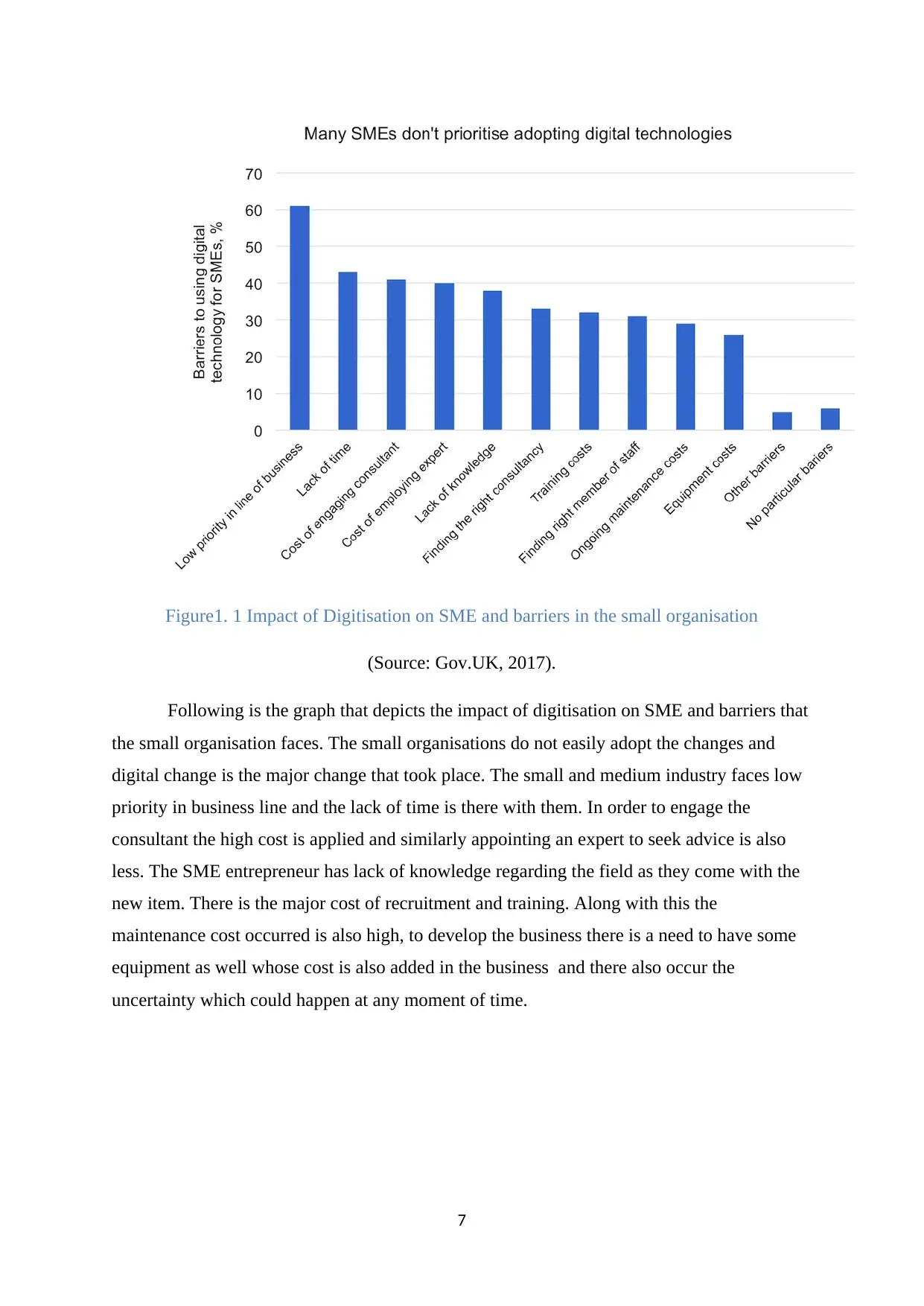
Figure1. 1 Impact of Digitisation on SME and barriers in the small organisation
(Source: Gov.UK, 2017).
Following is the graph that depicts the impact of digitisation on SME and barriers that
the small organisation faces. The small organisations do not easily adopt the changes and
digital change is the major change that took place. The small and medium industry faces low
priority in business line and the lack of time is there with them. In order to engage the
consultant the high cost is applied and similarly appointing an expert to seek advice is also
less. The SME entrepreneur has lack of knowledge regarding the field as they come with the
new item. There is the major cost of recruitment and training. Along with this the
maintenance cost occurred is also high, to develop the business there is a need to have some
equipment as well whose cost is also added in the business and there also occur the
uncertainty which could happen at any moment of time.
7
(Source: Gov.UK, 2017).
Following is the graph that depicts the impact of digitisation on SME and barriers that
the small organisation faces. The small organisations do not easily adopt the changes and
digital change is the major change that took place. The small and medium industry faces low
priority in business line and the lack of time is there with them. In order to engage the
consultant the high cost is applied and similarly appointing an expert to seek advice is also
less. The SME entrepreneur has lack of knowledge regarding the field as they come with the
new item. There is the major cost of recruitment and training. Along with this the
maintenance cost occurred is also high, to develop the business there is a need to have some
equipment as well whose cost is also added in the business and there also occur the
uncertainty which could happen at any moment of time.
7
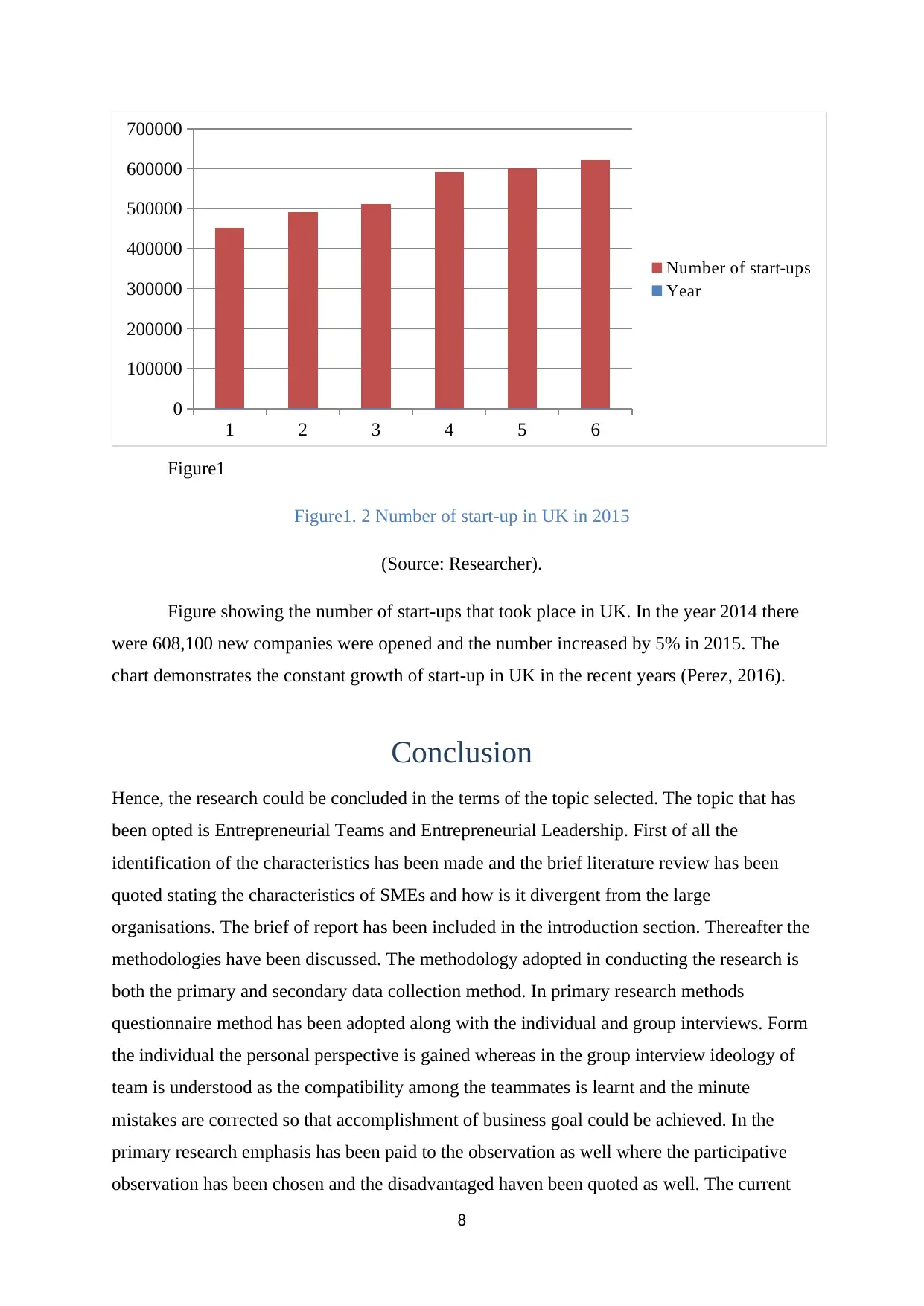
Figure1
Figure1. 2 Number of start-up in UK in 2015
(Source: Researcher).
Figure showing the number of start-ups that took place in UK. In the year 2014 there
were 608,100 new companies were opened and the number increased by 5% in 2015. The
chart demonstrates the constant growth of start-up in UK in the recent years (Perez, 2016).
Conclusion
Hence, the research could be concluded in the terms of the topic selected. The topic that has
been opted is Entrepreneurial Teams and Entrepreneurial Leadership. First of all the
identification of the characteristics has been made and the brief literature review has been
quoted stating the characteristics of SMEs and how is it divergent from the large
organisations. The brief of report has been included in the introduction section. Thereafter the
methodologies have been discussed. The methodology adopted in conducting the research is
both the primary and secondary data collection method. In primary research methods
questionnaire method has been adopted along with the individual and group interviews. Form
the individual the personal perspective is gained whereas in the group interview ideology of
team is understood as the compatibility among the teammates is learnt and the minute
mistakes are corrected so that accomplishment of business goal could be achieved. In the
primary research emphasis has been paid to the observation as well where the participative
observation has been chosen and the disadvantaged haven been quoted as well. The current
8
1 2 3 4 5 6
0
100000
200000
300000
400000
500000
600000
700000
Number of start-ups
Year
Figure1. 2 Number of start-up in UK in 2015
(Source: Researcher).
Figure showing the number of start-ups that took place in UK. In the year 2014 there
were 608,100 new companies were opened and the number increased by 5% in 2015. The
chart demonstrates the constant growth of start-up in UK in the recent years (Perez, 2016).
Conclusion
Hence, the research could be concluded in the terms of the topic selected. The topic that has
been opted is Entrepreneurial Teams and Entrepreneurial Leadership. First of all the
identification of the characteristics has been made and the brief literature review has been
quoted stating the characteristics of SMEs and how is it divergent from the large
organisations. The brief of report has been included in the introduction section. Thereafter the
methodologies have been discussed. The methodology adopted in conducting the research is
both the primary and secondary data collection method. In primary research methods
questionnaire method has been adopted along with the individual and group interviews. Form
the individual the personal perspective is gained whereas in the group interview ideology of
team is understood as the compatibility among the teammates is learnt and the minute
mistakes are corrected so that accomplishment of business goal could be achieved. In the
primary research emphasis has been paid to the observation as well where the participative
observation has been chosen and the disadvantaged haven been quoted as well. The current
8
1 2 3 4 5 6
0
100000
200000
300000
400000
500000
600000
700000
Number of start-ups
Year
⊘ This is a preview!⊘
Do you want full access?
Subscribe today to unlock all pages.
Trusted by 1+ million students worldwide
situation of the business in the market is studied as well. Arguing over the secondary research
the journals, books from e-library has been selected. Both the quantitative and qualitative
analyses have been made. Finally the findings and discussion over the theory of
entrepreneurship has been made which includes the start-up opportunity involving the
competencies and skills that are needed for the successful business. The start-up has been
discussed with the support of example of Mush: Let’s do it together, which is designed to
connect the new and lonely mothers to interact with each other. Lastly, the chart and graphs
related to the SME and start-up in UK has been quoted to present the facts and figures.
References
Burton, M.D., Sørensen, J.B. and Dobrev, S.D., 2016. Call for Papers–Entrepreneurship
Theory and Practice January 2016 Special Issue: Careers, Organizations and
Entrepreneurship. Entrepreneurship Theory and Practice.
Dontigney. E., 2017, What are the theories of Entrepreneurship? Viewed on 31st October
2017, < http://yourbusiness.azcentral.com/theories-entrepreneurship-23795.html>.
Ellram, L.M. and Tate, W.L., 2016. The use of secondary data in purchasing and supply
management (P/SM) research. Journal of Purchasing and Supply Management, 22(4),
pp.250-254.
Fallon, M., 2016. Primary Data Collection. In Writing up Quantitative Research in the Social
and Behavioral Sciences (pp. 147-155). SensePublishers.
Franklin-Wallis. O., 2017, The hottest startups in London, viewed on 31st October 2017,
<http://www.wired.co.uk/article/best-startups-in-london-2017>.
Gov.UK, 2017, UK digital strategy 2017, viewed on 31st October 2017,
<https://www.gov.uk/government/publications/uk-digital-strategy/uk-digital-strategy>.
Hsieh, C. and Lee, W., 2017. Effort perceptions versus autonomy concerns: How does
conflict dissatisfy members on nascent entrepreneurship teams?. In United States Association
for Small Business and Entrepreneurship. Conference Proceedings (p. 941). United States
Association for Small Business and Entrepreneurship.
9
the journals, books from e-library has been selected. Both the quantitative and qualitative
analyses have been made. Finally the findings and discussion over the theory of
entrepreneurship has been made which includes the start-up opportunity involving the
competencies and skills that are needed for the successful business. The start-up has been
discussed with the support of example of Mush: Let’s do it together, which is designed to
connect the new and lonely mothers to interact with each other. Lastly, the chart and graphs
related to the SME and start-up in UK has been quoted to present the facts and figures.
References
Burton, M.D., Sørensen, J.B. and Dobrev, S.D., 2016. Call for Papers–Entrepreneurship
Theory and Practice January 2016 Special Issue: Careers, Organizations and
Entrepreneurship. Entrepreneurship Theory and Practice.
Dontigney. E., 2017, What are the theories of Entrepreneurship? Viewed on 31st October
2017, < http://yourbusiness.azcentral.com/theories-entrepreneurship-23795.html>.
Ellram, L.M. and Tate, W.L., 2016. The use of secondary data in purchasing and supply
management (P/SM) research. Journal of Purchasing and Supply Management, 22(4),
pp.250-254.
Fallon, M., 2016. Primary Data Collection. In Writing up Quantitative Research in the Social
and Behavioral Sciences (pp. 147-155). SensePublishers.
Franklin-Wallis. O., 2017, The hottest startups in London, viewed on 31st October 2017,
<http://www.wired.co.uk/article/best-startups-in-london-2017>.
Gov.UK, 2017, UK digital strategy 2017, viewed on 31st October 2017,
<https://www.gov.uk/government/publications/uk-digital-strategy/uk-digital-strategy>.
Hsieh, C. and Lee, W., 2017. Effort perceptions versus autonomy concerns: How does
conflict dissatisfy members on nascent entrepreneurship teams?. In United States Association
for Small Business and Entrepreneurship. Conference Proceedings (p. 941). United States
Association for Small Business and Entrepreneurship.
9
Paraphrase This Document
Need a fresh take? Get an instant paraphrase of this document with our AI Paraphraser
Johnston, M.P., 2017. Secondary data analysis: A method of which the time has
come. Qualitative and Quantitative Methods in Libraries, 3(3), pp.619-626.
Kumar. V., 2017, Entrepreneurship & small business, viewed on 31st October 2017,
<https://sol.du.ac.in/mod/book/view.php?id=1240&chapterid=892>.
Kuratko, D.F., 2016. Entrepreneurship: Theory, process, and practice. Cengage Learning.
Let’s do it world, 2017, Let’s get things done together and make a difference! Viewed on 31st
October 2017, < https://www.letsdoitworld.org/about/foundation/our-projects-and/>.
Macaulay. T., 2017, Best travel tech startups in the UK, viewed on 31st October 2017,
<https://www.techworld.com/picture-gallery/startups/10-uk-travel-startups-watch-3660833/>.
Meri, M.M., 2016. The decisive role of strategic human resources management in the success
of entrepreneurship and innovation in the modern enterprise: a practical model. Zeszyty
Naukowe Politechniki Poznańskiej. Organizacja i Zarządzanie, (68), pp.111-133.
Morgan, S.J., Pullon, S.R., Macdonald, L.M., McKinlay, E.M. and Gray, B.V., 2017. Case
study observational research: a framework for conducting case study research where
observation data are the focus. Qualitative health research, 27(7), pp.1060-1068.
Patten, M.L., 2016. Questionnaire research: A practical guide. Routledge.
Peck. S, 2017, Meet the women who set up Mush: the new’Tinder for mums’, viewed on 31St
October 2017, < http://www.telegraph.co.uk/women/family/meet-women-set-mush-new-
tinder-mums/ >.
Perez. Y. B., 2016, Number of new UK startups increased 4.6% in 2015, viewed on 31st
October 2017, < https://www.uktech.news/news/number-of-new-uk-startups-increased-4-6-
in-2015-20160113>.
Simba, A., Simba, A., Ojong, N. and Ojong, N., 2017. Engaged scholarship: Encouraging
interactionism in entrepreneurship and small-to-medium enterprise (SME) research. Journal
of Small Business and Enterprise Development.
Storey, D.J. ed., 2016. Entrepreneurship and new firm. Routledge.
10
come. Qualitative and Quantitative Methods in Libraries, 3(3), pp.619-626.
Kumar. V., 2017, Entrepreneurship & small business, viewed on 31st October 2017,
<https://sol.du.ac.in/mod/book/view.php?id=1240&chapterid=892>.
Kuratko, D.F., 2016. Entrepreneurship: Theory, process, and practice. Cengage Learning.
Let’s do it world, 2017, Let’s get things done together and make a difference! Viewed on 31st
October 2017, < https://www.letsdoitworld.org/about/foundation/our-projects-and/>.
Macaulay. T., 2017, Best travel tech startups in the UK, viewed on 31st October 2017,
<https://www.techworld.com/picture-gallery/startups/10-uk-travel-startups-watch-3660833/>.
Meri, M.M., 2016. The decisive role of strategic human resources management in the success
of entrepreneurship and innovation in the modern enterprise: a practical model. Zeszyty
Naukowe Politechniki Poznańskiej. Organizacja i Zarządzanie, (68), pp.111-133.
Morgan, S.J., Pullon, S.R., Macdonald, L.M., McKinlay, E.M. and Gray, B.V., 2017. Case
study observational research: a framework for conducting case study research where
observation data are the focus. Qualitative health research, 27(7), pp.1060-1068.
Patten, M.L., 2016. Questionnaire research: A practical guide. Routledge.
Peck. S, 2017, Meet the women who set up Mush: the new’Tinder for mums’, viewed on 31St
October 2017, < http://www.telegraph.co.uk/women/family/meet-women-set-mush-new-
tinder-mums/ >.
Perez. Y. B., 2016, Number of new UK startups increased 4.6% in 2015, viewed on 31st
October 2017, < https://www.uktech.news/news/number-of-new-uk-startups-increased-4-6-
in-2015-20160113>.
Simba, A., Simba, A., Ojong, N. and Ojong, N., 2017. Engaged scholarship: Encouraging
interactionism in entrepreneurship and small-to-medium enterprise (SME) research. Journal
of Small Business and Enterprise Development.
Storey, D.J. ed., 2016. Entrepreneurship and new firm. Routledge.
10

1 out of 11


Related Documents


Your All-in-One AI-Powered Toolkit for Academic Success.
+13062052269
info@desklib.com
Available 24*7 on WhatsApp / Email
![[object Object]](/_next/static/media/star-bottom.7253800d.svg)
Unlock your academic potential
Copyright © 2020–2026 A2Z Services. All Rights Reserved. Developed and managed by ZUCOL.