HND Business - Entrepreneurship and Small Business Management Report
VerifiedAdded on 2023/03/24
|13
|4714
|30
Report
AI Summary
This report delves into the multifaceted world of entrepreneurship, examining various venture types such as small business entrepreneurship, scalable start-up entrepreneurship, large company entrepreneurship, and social entrepreneurship. It explores their similarities and differences, highlighting their impact on the UK economy, particularly the contributions of micro and small businesses. The report emphasizes the importance of small businesses in driving economic growth, providing employment opportunities, and fostering innovation. Furthermore, it investigates the key aspects of an entrepreneurial mindset, including essential traits, skills, and characteristics. The report also discusses the different environments that can either hinder or foster entrepreneurship, providing a comprehensive overview of the subject matter. The report includes an introduction, tasks covering different aspects of entrepreneurship and its impact on the economy, and a conclusion which discusses the future of entrepreneurship in the UK.
ENTREPRENEURSHIP AND ITS ASPECTS OF NEWLY
CREATED BUSINESS ENVIRONMENT
1
CREATED BUSINESS ENVIRONMENT
1

Paraphrase This Document
Need a fresh take? Get an instant paraphrase of this document with our AI Paraphraser
Table of contents
INTRODUCTION...........................................................................................................................3
TASK 1............................................................................................................................................3
TASK 2............................................................................................................................................5
Lo2. Impact of All Business On Economy......................................................................................5
TASK 3............................................................................................................................................9
Lo3. Key aspects of an entrepreneurial mindset..............................................................................9
TASK 4..........................................................................................................................................11
Lo4. Different Environments That Can Hinder or Foster Entrepreneurship.................................11
Reference list.................................................................................................................................13
Appendices....................................................................................................................................14
2
INTRODUCTION...........................................................................................................................3
TASK 1............................................................................................................................................3
TASK 2............................................................................................................................................5
Lo2. Impact of All Business On Economy......................................................................................5
TASK 3............................................................................................................................................9
Lo3. Key aspects of an entrepreneurial mindset..............................................................................9
TASK 4..........................................................................................................................................11
Lo4. Different Environments That Can Hinder or Foster Entrepreneurship.................................11
Reference list.................................................................................................................................13
Appendices....................................................................................................................................14
2
INTRODUCTION
Entrepreneurship is an aspect of business that deals with designing, developing and running a
small business. Entrepreneurship is playing a great role in business development from the 21st
century. There are some major impacts of entrepreneurship on the global economy but still, it is
an argumentative matter of fact. Introduction of entrepreneurship is designed to discuss the roles
and importance of entrepreneur in our society (Autio et al. 2014). Many countries have been
supporting entrepreneurship so that they can reduce sustainable poverty and the results show it is
actually beneficiary for economic growth. This unit will further discuss the scope of
entrepreneurship and also illustrated the barriers of business start-up. This assignment will
further discuss the balance of risk and reward of starting a new venture.
TASK 1
Lo1. Illustrating the Range Of Venture Types
P1 Examining Different Types of Entrepreneurial Ventures and Explanation Of How They
Related With Typology Of Entrepreneurship
Entrepreneurial ventures are mainly focused on providing services to the mid-stage and the
early-stage organizations. They also work with troubled companies to fix their problem and they
also help the company to reinforce in their business model. The role of entrepreneurial ventures
varies from company to company. Most of the time, the entrepreneurial ventures set their goal
considering the stage and size of the organization. Entrepreneurial ventures took an active role in
strategy development, implementation of plan and networking so that the small organizations can
grow and make maximum profit (Choi and Majumdar, 2014).
Entrepreneurs are the responsible person who creates entrepreneurial ventures. The main goal of
the organization is to make maximum profit and take maximum share in the marketplace.
There are mainly four types of entrepreneurial ventures exist. These are:
Small business entrepreneurship:
Small business organizations are mainly independently owned and operate on profitable
organizations. The goal of such organization is to grow their business in a long-term business.
They are also looking to making their business more profitable and sustainable. Restaurants,
agriculture, retail stores are under small business entrepreneurship. Banks, friends or family
members are mainly capital providers of such business. They invest in the company so that the
company can make maximum fund to run their business for a long time period (Ibrahim and
Lucky, 2014). Small companies also generate payroll taxes and they provide jobs but the number
of staffs hired by this company is comparatively small.
➢ Scalable start-up entrepreneurship
Scalable start-up companies are not like small business company, they make their
business in such a way so that they have the ability to change the whole world. The investors and
the employees of the company are knowledgeable enough about their goal and key
responsibilities. They tend to hire the brightest candidate for their company, as it is important
that the candidate should know about the vision and mission of the company. The main role is to
search for a repeatable and scalable business plan (Karadag, 2015).
Large company entrepreneurship
Large companies work under finite life cycle. As the large companies are facilitated with
funds from different investors, it is easy for them to grow with sustain innovation. Moreover,
they offer a large number of services and products to their customers. They have a large number
3
Entrepreneurship is an aspect of business that deals with designing, developing and running a
small business. Entrepreneurship is playing a great role in business development from the 21st
century. There are some major impacts of entrepreneurship on the global economy but still, it is
an argumentative matter of fact. Introduction of entrepreneurship is designed to discuss the roles
and importance of entrepreneur in our society (Autio et al. 2014). Many countries have been
supporting entrepreneurship so that they can reduce sustainable poverty and the results show it is
actually beneficiary for economic growth. This unit will further discuss the scope of
entrepreneurship and also illustrated the barriers of business start-up. This assignment will
further discuss the balance of risk and reward of starting a new venture.
TASK 1
Lo1. Illustrating the Range Of Venture Types
P1 Examining Different Types of Entrepreneurial Ventures and Explanation Of How They
Related With Typology Of Entrepreneurship
Entrepreneurial ventures are mainly focused on providing services to the mid-stage and the
early-stage organizations. They also work with troubled companies to fix their problem and they
also help the company to reinforce in their business model. The role of entrepreneurial ventures
varies from company to company. Most of the time, the entrepreneurial ventures set their goal
considering the stage and size of the organization. Entrepreneurial ventures took an active role in
strategy development, implementation of plan and networking so that the small organizations can
grow and make maximum profit (Choi and Majumdar, 2014).
Entrepreneurs are the responsible person who creates entrepreneurial ventures. The main goal of
the organization is to make maximum profit and take maximum share in the marketplace.
There are mainly four types of entrepreneurial ventures exist. These are:
Small business entrepreneurship:
Small business organizations are mainly independently owned and operate on profitable
organizations. The goal of such organization is to grow their business in a long-term business.
They are also looking to making their business more profitable and sustainable. Restaurants,
agriculture, retail stores are under small business entrepreneurship. Banks, friends or family
members are mainly capital providers of such business. They invest in the company so that the
company can make maximum fund to run their business for a long time period (Ibrahim and
Lucky, 2014). Small companies also generate payroll taxes and they provide jobs but the number
of staffs hired by this company is comparatively small.
➢ Scalable start-up entrepreneurship
Scalable start-up companies are not like small business company, they make their
business in such a way so that they have the ability to change the whole world. The investors and
the employees of the company are knowledgeable enough about their goal and key
responsibilities. They tend to hire the brightest candidate for their company, as it is important
that the candidate should know about the vision and mission of the company. The main role is to
search for a repeatable and scalable business plan (Karadag, 2015).
Large company entrepreneurship
Large companies work under finite life cycle. As the large companies are facilitated with
funds from different investors, it is easy for them to grow with sustain innovation. Moreover,
they offer a large number of services and products to their customers. They have a large number
3
⊘ This is a preview!⊘
Do you want full access?
Subscribe today to unlock all pages.

Trusted by 1+ million students worldwide
of employees. The aim of companies is to generate sustainable revenue and profit for their
company. Mainly corporate companies are under large company entrepreneurship.
Social entrepreneurship
Social good enterprises have the desires to make the world better place by providing their
services to the people. They aim to serve the maximum people by maximizing impact in a
sustainable way. This type of companies mainly dealt with global health organizations and the
companies who are working with a philanthropic mission for development of countries. The
entrepreneurs of this type of organization are capable to make improvement in life of people.
P2 Exploring the Similarities and Differences between Entrepreneurial Ventures
Key similarities in between the different ventures are as follows-
● Discovery and exploitation of business opportunities
● Implementation of new procedures and marketing strategies in order to gain maximum
profit (Kuratko et al. 2015)
● Making their business sustainable and profitable
● Offering new products and services
● Satisfying the customers by making plans for improvement
● Most of the organizations are based on economic rationality
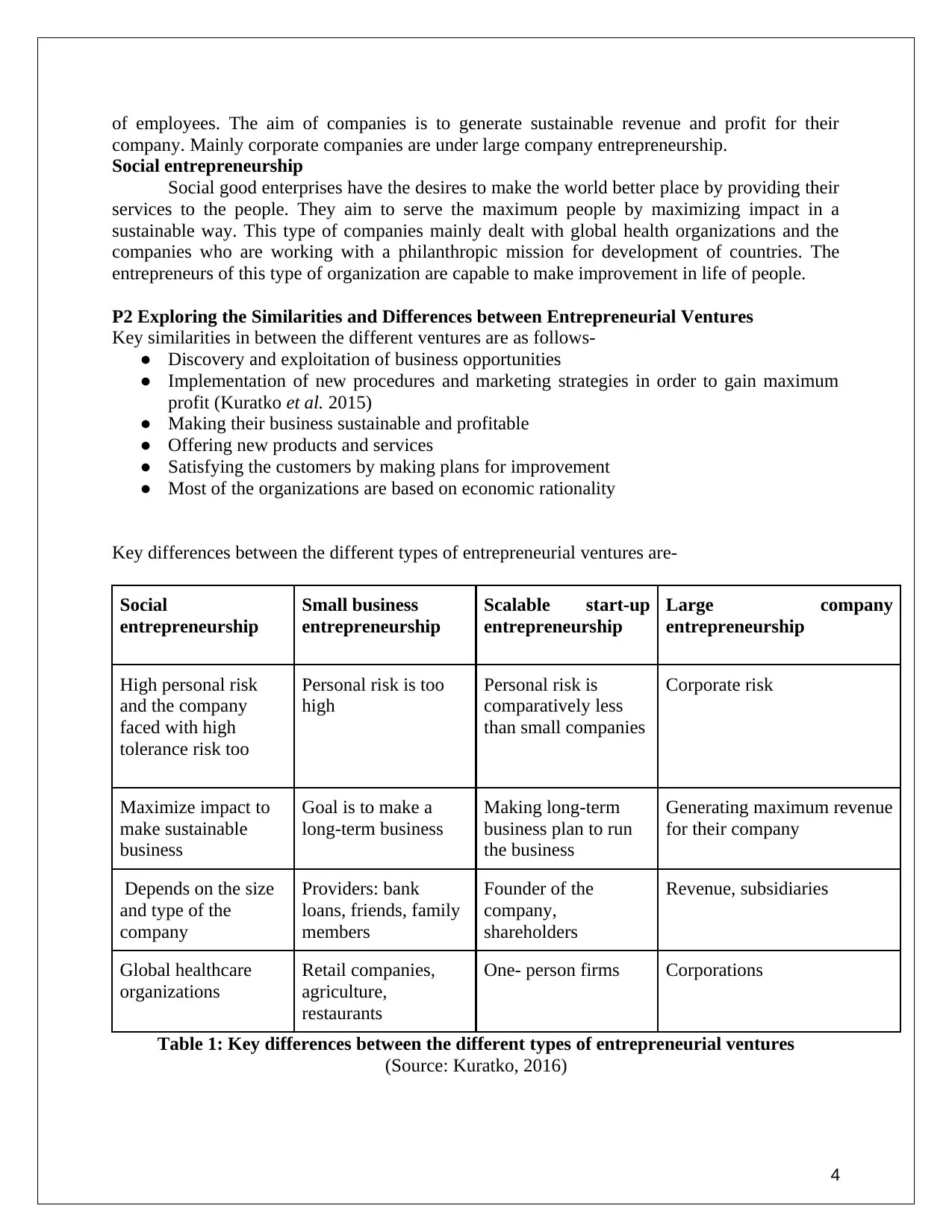
Key differences between the different types of entrepreneurial ventures are-
Social
entrepreneurship
Small business
entrepreneurship
Scalable start-up
entrepreneurship
Large company
entrepreneurship
High personal risk
and the company
faced with high
tolerance risk too
Personal risk is too
high
Personal risk is
comparatively less
than small companies
Corporate risk
Maximize impact to
make sustainable
business
Goal is to make a
long-term business
Making long-term
business plan to run
the business
Generating maximum revenue
for their company
Depends on the size
and type of the
company
Providers: bank
loans, friends, family
members
Founder of the
company,
shareholders
Revenue, subsidiaries
Global healthcare
organizations
Retail companies,
agriculture,
restaurants
One- person firms Corporations
Table 1: Key differences between the different types of entrepreneurial ventures
(Source: Kuratko, 2016)
4
company. Mainly corporate companies are under large company entrepreneurship.
Social entrepreneurship
Social good enterprises have the desires to make the world better place by providing their
services to the people. They aim to serve the maximum people by maximizing impact in a
sustainable way. This type of companies mainly dealt with global health organizations and the
companies who are working with a philanthropic mission for development of countries. The
entrepreneurs of this type of organization are capable to make improvement in life of people.
P2 Exploring the Similarities and Differences between Entrepreneurial Ventures
Key similarities in between the different ventures are as follows-
● Discovery and exploitation of business opportunities
● Implementation of new procedures and marketing strategies in order to gain maximum
profit (Kuratko et al. 2015)
● Making their business sustainable and profitable
● Offering new products and services
● Satisfying the customers by making plans for improvement
● Most of the organizations are based on economic rationality
Key differences between the different types of entrepreneurial ventures are-
Social
entrepreneurship
Small business
entrepreneurship
Scalable start-up
entrepreneurship
Large company
entrepreneurship
High personal risk
and the company
faced with high
tolerance risk too
Personal risk is too
high
Personal risk is
comparatively less
than small companies
Corporate risk
Maximize impact to
make sustainable
business
Goal is to make a
long-term business
Making long-term
business plan to run
the business
Generating maximum revenue
for their company
Depends on the size
and type of the
company
Providers: bank
loans, friends, family
members
Founder of the
company,
shareholders
Revenue, subsidiaries
Global healthcare
organizations
Retail companies,
agriculture,
restaurants
One- person firms Corporations
Table 1: Key differences between the different types of entrepreneurial ventures
(Source: Kuratko, 2016)
4
Paraphrase This Document
Need a fresh take? Get an instant paraphrase of this document with our AI Paraphraser
TASK 2
Lo2. Impact of All Business on Economy
P3 Illustrating Impact of Micro and Small Business on the Economy
Small businesses are driving the growth of UK economy. From creating new markets to
providing job to the job seeker, the small and micro business has major impact on UK economy.
New start-up companies are bringing new ideas that are helpful in order to survive in competitive
environment. Small business organizations are setting their goal to make their business
sustainable which indirectly helping UK economy. British enterprises are looking for new plans
and procedures to improve the economy. As SMEs thrives the business economy of UK, the
small companies are aware of it and they are continuously implementing plans and strategies to
compete with them. As per the report of a survey of 2013-2014, a record number of start-up
companies are starting their business in this academic year (Blundel et al. 2017). This trend is
still going on. The founders of the small business companies are trying to make their business
organization large. The attitude of the founder of those micro business organizations is there is
no better time to start a business in UK market. As the whole economy of UK is running in a
growing phase, the organizers are considering it the most favourable time to start the business. In
order to make a healthy economy, every country should take initiative to start more small
business company. These business companies are helping the UK economy in making more
sustainable and healthy economy. Small and medium companies are taking a major part of UK
economy.
Employment: Most of the small businesses are not employers- for instance; most of the traders
work independently in small business organizations. Small business is offering job over 24.3
million people of UK. More than 60% of people are employed in public sector of UK start-up
companies.
Turnover: this one is the first metrics that comes to mind while measuring economic
contribution. In the overall financial report of 2014 stated that small and medium-size business
organizations of UK had the turnover of 1.6 trillion. It is more impressive that, the small and
medium-size organizations are contributing a huge amount for economic growth (Kuratko,
2016).
Growth: small and medium companies are contributing large counterparts of in business
growth. Innovation is an important part of growth; the companies should bring innovative ideas
and strategic plans. The strategic plans will help the companies to gain a lump sum amount of
profit. No implementation of innovative ideas will result in a loss for the company and there is a
high chance of the market may go stagnant if this situation continues for a long time. UK
government should allow the small business organizations to participate actively so that the
companies can bring ideas that are more productive in their business environment. UK economy
is blessed with the birth of 47% of start-up companies in between the year of 2009 to 2013. This
actually recovers a major part of recession of economic growth of UK. The current economic
growth of UK takes the lead to recover the past economic condition. UK economy is now much
more stable than before. UK economy has never been so strong like now. The entrepreneurs are
trying hard to make grow economic condition.
Industry: retail, manufacturing, small business companies, start-up companies and repair of
motor vehicles are taking a large part of UK industry. 46% of total revenue comes from this
sector. British core industries are also taking a vital part in the growth of economy. The small
5
Lo2. Impact of All Business on Economy
P3 Illustrating Impact of Micro and Small Business on the Economy
Small businesses are driving the growth of UK economy. From creating new markets to
providing job to the job seeker, the small and micro business has major impact on UK economy.
New start-up companies are bringing new ideas that are helpful in order to survive in competitive
environment. Small business organizations are setting their goal to make their business
sustainable which indirectly helping UK economy. British enterprises are looking for new plans
and procedures to improve the economy. As SMEs thrives the business economy of UK, the
small companies are aware of it and they are continuously implementing plans and strategies to
compete with them. As per the report of a survey of 2013-2014, a record number of start-up
companies are starting their business in this academic year (Blundel et al. 2017). This trend is
still going on. The founders of the small business companies are trying to make their business
organization large. The attitude of the founder of those micro business organizations is there is
no better time to start a business in UK market. As the whole economy of UK is running in a
growing phase, the organizers are considering it the most favourable time to start the business. In
order to make a healthy economy, every country should take initiative to start more small
business company. These business companies are helping the UK economy in making more
sustainable and healthy economy. Small and medium companies are taking a major part of UK
economy.
Employment: Most of the small businesses are not employers- for instance; most of the traders
work independently in small business organizations. Small business is offering job over 24.3
million people of UK. More than 60% of people are employed in public sector of UK start-up
companies.
Turnover: this one is the first metrics that comes to mind while measuring economic
contribution. In the overall financial report of 2014 stated that small and medium-size business
organizations of UK had the turnover of 1.6 trillion. It is more impressive that, the small and
medium-size organizations are contributing a huge amount for economic growth (Kuratko,
2016).
Growth: small and medium companies are contributing large counterparts of in business
growth. Innovation is an important part of growth; the companies should bring innovative ideas
and strategic plans. The strategic plans will help the companies to gain a lump sum amount of
profit. No implementation of innovative ideas will result in a loss for the company and there is a
high chance of the market may go stagnant if this situation continues for a long time. UK
government should allow the small business organizations to participate actively so that the
companies can bring ideas that are more productive in their business environment. UK economy
is blessed with the birth of 47% of start-up companies in between the year of 2009 to 2013. This
actually recovers a major part of recession of economic growth of UK. The current economic
growth of UK takes the lead to recover the past economic condition. UK economy is now much
more stable than before. UK economy has never been so strong like now. The entrepreneurs are
trying hard to make grow economic condition.
Industry: retail, manufacturing, small business companies, start-up companies and repair of
motor vehicles are taking a large part of UK industry. 46% of total revenue comes from this
sector. British core industries are also taking a vital part in the growth of economy. The small
5
and medium-size firm of UK maintains a mutually symbiotic relationship to make improvement
in country's economic growth.
P4 Importance of Contribution to Small Business and Business Start-Ups on Growth of
Social Economy
A small business organization may not help the economy by providing a large amount of money
like large organization but the small companies are a major contributor in the growth of business
economy. As the profit rate is not high, as like large corporations, so the organizations have to
face many problems. The competition is quite tough for the start-up companies. The strength of
local economy is depending on the start-up companies. Small business organizations are also
presenting new employment opportunities (Kuratko, 2016).
Contributions: a small business is defined as a business with 200 employees or more. Most of
the small business is Limited Liability Company. According to the report of UK small business
administration, the small business is representing 99.7 percent of UK business.
Economic growth: small business organizations are contributing a major part in economic
growth of UK. By establishing the business, the small organizations are helping us for economic
growth. The small organizations are also providing opportunities to the unemployed. As the
competition is tough now, opportunities to work in Start-up Company are helpful. The business
organizations are attracting their customers by inventing new products and implementing new
ideas in their business plan. Many large companies are depending on the start-up companies to
do their business functions.
Adaptability: the small business organizations respond quickly to the change of economic
climate. As the small business is mostly customer oriented and run under individual ownership,
this is easy for them to adopt the changes in economic climate. The customers tend to be loyal to
the start-up companies even if the company is running through critical economic crisis. Profit
made by small companies are less than the larger corporations are, as a result, they have less to
lose in the time of economic crisis.
Future growth: small business also tries to grow their business so that they can participate in
national and international marketplace. Small business organizations are taking decision from
their entrepreneurs for further development. The entrepreneurs are designing new model and
plans for the company. The employees are implementing the plan in their business environment.
The small business organizations tend to work for the same community even after moving into
large business. Growing into large business organization enable more opportunities for the job
seekers. The local people get chance of employment and this stimulates the local economy of
UK.
School and government offices: the small business helps their community by providing money
and their services. They work for the people of their community. In case a small business is
generating high level of revenue in profit that means the company is paying higher taxes to the
government. The money comes from local taxes is used for development of schools, fire
departments.
6
in country's economic growth.
P4 Importance of Contribution to Small Business and Business Start-Ups on Growth of
Social Economy
A small business organization may not help the economy by providing a large amount of money
like large organization but the small companies are a major contributor in the growth of business
economy. As the profit rate is not high, as like large corporations, so the organizations have to
face many problems. The competition is quite tough for the start-up companies. The strength of
local economy is depending on the start-up companies. Small business organizations are also
presenting new employment opportunities (Kuratko, 2016).
Contributions: a small business is defined as a business with 200 employees or more. Most of
the small business is Limited Liability Company. According to the report of UK small business
administration, the small business is representing 99.7 percent of UK business.
Economic growth: small business organizations are contributing a major part in economic
growth of UK. By establishing the business, the small organizations are helping us for economic
growth. The small organizations are also providing opportunities to the unemployed. As the
competition is tough now, opportunities to work in Start-up Company are helpful. The business
organizations are attracting their customers by inventing new products and implementing new
ideas in their business plan. Many large companies are depending on the start-up companies to
do their business functions.
Adaptability: the small business organizations respond quickly to the change of economic
climate. As the small business is mostly customer oriented and run under individual ownership,
this is easy for them to adopt the changes in economic climate. The customers tend to be loyal to
the start-up companies even if the company is running through critical economic crisis. Profit
made by small companies are less than the larger corporations are, as a result, they have less to
lose in the time of economic crisis.
Future growth: small business also tries to grow their business so that they can participate in
national and international marketplace. Small business organizations are taking decision from
their entrepreneurs for further development. The entrepreneurs are designing new model and
plans for the company. The employees are implementing the plan in their business environment.
The small business organizations tend to work for the same community even after moving into
large business. Growing into large business organization enable more opportunities for the job
seekers. The local people get chance of employment and this stimulates the local economy of
UK.
School and government offices: the small business helps their community by providing money
and their services. They work for the people of their community. In case a small business is
generating high level of revenue in profit that means the company is paying higher taxes to the
government. The money comes from local taxes is used for development of schools, fire
departments.
6
⊘ This is a preview!⊘
Do you want full access?
Subscribe today to unlock all pages.
Trusted by 1+ million students worldwide
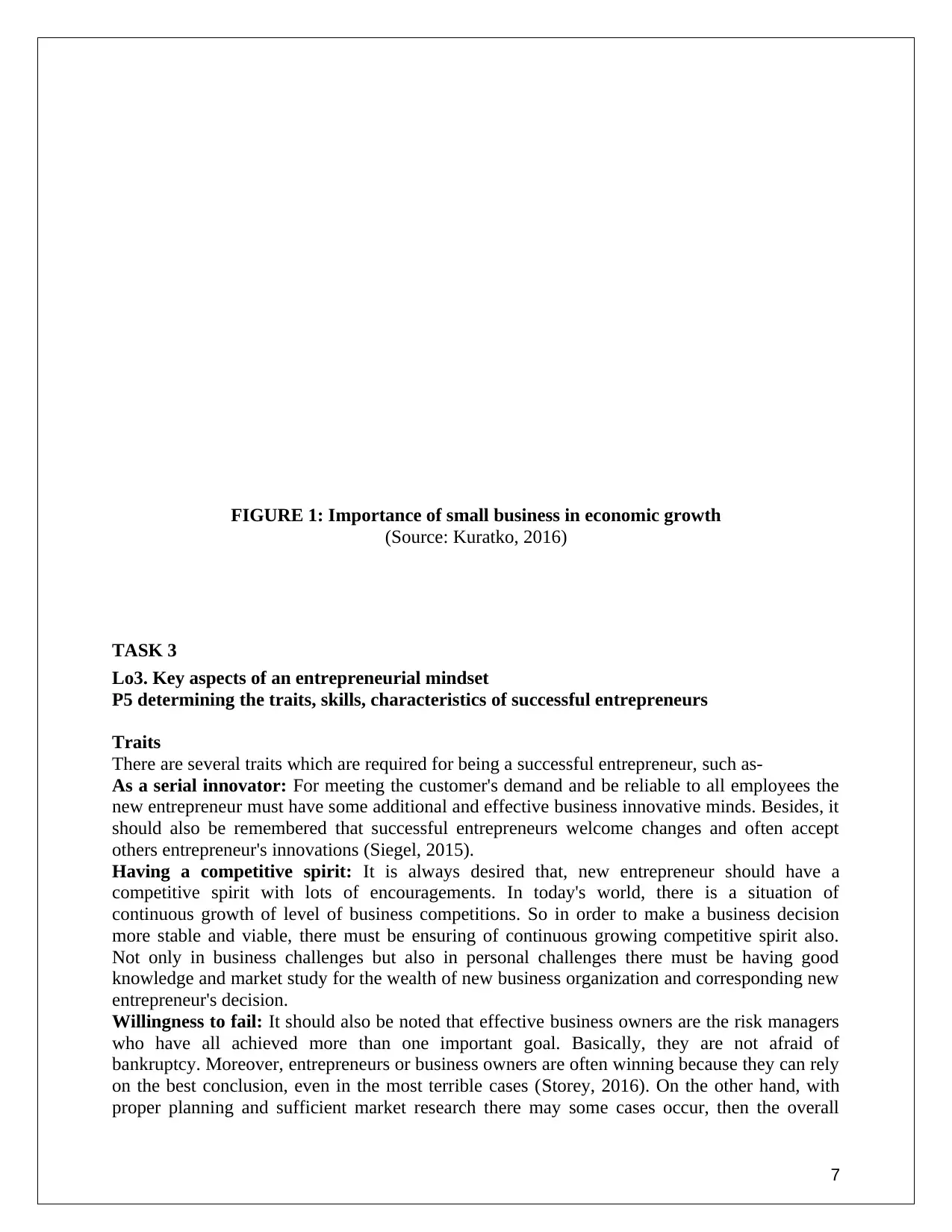
FIGURE 1: Importance of small business in economic growth
(Source: Kuratko, 2016)
TASK 3
Lo3. Key aspects of an entrepreneurial mindset
P5 determining the traits, skills, characteristics of successful entrepreneurs
Traits
There are several traits which are required for being a successful entrepreneur, such as-
As a serial innovator: For meeting the customer's demand and be reliable to all employees the
new entrepreneur must have some additional and effective business innovative minds. Besides, it
should also be remembered that successful entrepreneurs welcome changes and often accept
others entrepreneur's innovations (Siegel, 2015).
Having a competitive spirit: It is always desired that, new entrepreneur should have a
competitive spirit with lots of encouragements. In today's world, there is a situation of
continuous growth of level of business competitions. So in order to make a business decision
more stable and viable, there must be ensuring of continuous growing competitive spirit also.
Not only in business challenges but also in personal challenges there must be having good
knowledge and market study for the wealth of new business organization and corresponding new
entrepreneur's decision.
Willingness to fail: It should also be noted that effective business owners are the risk managers
who have all achieved more than one important goal. Basically, they are not afraid of
bankruptcy. Moreover, entrepreneurs or business owners are often winning because they can rely
on the best conclusion, even in the most terrible cases (Storey, 2016). On the other hand, with
proper planning and sufficient market research there may some cases occur, then the overall
7
Adaptability
(Source: Kuratko, 2016)
TASK 3
Lo3. Key aspects of an entrepreneurial mindset
P5 determining the traits, skills, characteristics of successful entrepreneurs
Traits
There are several traits which are required for being a successful entrepreneur, such as-
As a serial innovator: For meeting the customer's demand and be reliable to all employees the
new entrepreneur must have some additional and effective business innovative minds. Besides, it
should also be remembered that successful entrepreneurs welcome changes and often accept
others entrepreneur's innovations (Siegel, 2015).
Having a competitive spirit: It is always desired that, new entrepreneur should have a
competitive spirit with lots of encouragements. In today's world, there is a situation of
continuous growth of level of business competitions. So in order to make a business decision
more stable and viable, there must be ensuring of continuous growing competitive spirit also.
Not only in business challenges but also in personal challenges there must be having good
knowledge and market study for the wealth of new business organization and corresponding new
entrepreneur's decision.
Willingness to fail: It should also be noted that effective business owners are the risk managers
who have all achieved more than one important goal. Basically, they are not afraid of
bankruptcy. Moreover, entrepreneurs or business owners are often winning because they can rely
on the best conclusion, even in the most terrible cases (Storey, 2016). On the other hand, with
proper planning and sufficient market research there may some cases occur, then the overall
7
Adaptability
Paraphrase This Document
Need a fresh take? Get an instant paraphrase of this document with our AI Paraphraser
process may fail and there is situation occurs close to bankruptcy. So for effective and to be a
successful entrepreneur there must consider the above discussions (Autio et al. 2014).
The effective and strong sense of basic moral and integrity: Sustainable companies because
there is a global ethical rule based on the fundamentals that form the stock exchange stock
market. It is concluded that through cheaters and a short theft activity if someone wins, in the
long run, there is a failure. It will give you a sustainable and successful business and will
maintain a high level of honesty at the day's end if the corresponding personnel cannot prove to
be a trusted businessman. The importance of collaborating with clients or running a team is good
at acknowledging that mistakes have been made and tender solutions instead of lying, being
accused of having problems (Autio et al. 2014).
Extremely self-motivated: It should probably know from about that: some of the most well-
known entrepreneurs in history that executives are usually rather difficult personalities. Nobody
goes and waits until they meet. Successful people come from the world and usually change due
to their actions. In general, leaders have a challenge and will work untiringly to resolve the
trouble they face. They become accustomed well to the different circumstances without getting
rid of it and it is usually used for their teams to transform them to motivate them against
opportunities and new goals.
It should often learn that winning entrepreneurs are guided by a goal or a dream rather than a
task which should be more than universal level. Often they are also very fervent about the
thought and designs of achieving the final objective and it is particularly tricky to control them
naturally (Kuratko, 2016).
Muscular leadership quality: This is also a key trait of entrepreneurs. A leader who gives
people who appreciate the goal all the work they need to get what's unpleasant. Not only a leader
has the ability to motivate the team but also it has good communication skills for engaging the
employees as well as the management functionalities. A leader deserves confidence and respect
for his team, showing positive qualities and trust and promoting an environment that is spread by
the team. A leader like no one will follow a leader at all (Kuratko, 2016).
Skills
There are several skills which should be needed for a successful entrepreneur, such as-
- Desiring to improve the own business world
- Ability and dealing with the failure
- Related to ability to spot new trends in business environment
- Ability for closure of sale
- Ability to focus on own clients (Autio et al. 2014)
- Related to connecting ability via social networking
- Ability to A/B split test
- For conducting basic SEO operations
- Related to staff management
- Related to training schedule and process is training of new staffs
- Ability to recruit proper and effective employee
- Ability for determining the concept of strengths and weaknesses
- Related to the concept of the ability to make entrepreneur friends
- Ability to be supremely productive (Ibrahim and Lucky, 2014)
- Power to relieve stress
- Relate to the ability to make more money and business cash flow throughout the year
8
successful entrepreneur there must consider the above discussions (Autio et al. 2014).
The effective and strong sense of basic moral and integrity: Sustainable companies because
there is a global ethical rule based on the fundamentals that form the stock exchange stock
market. It is concluded that through cheaters and a short theft activity if someone wins, in the
long run, there is a failure. It will give you a sustainable and successful business and will
maintain a high level of honesty at the day's end if the corresponding personnel cannot prove to
be a trusted businessman. The importance of collaborating with clients or running a team is good
at acknowledging that mistakes have been made and tender solutions instead of lying, being
accused of having problems (Autio et al. 2014).
Extremely self-motivated: It should probably know from about that: some of the most well-
known entrepreneurs in history that executives are usually rather difficult personalities. Nobody
goes and waits until they meet. Successful people come from the world and usually change due
to their actions. In general, leaders have a challenge and will work untiringly to resolve the
trouble they face. They become accustomed well to the different circumstances without getting
rid of it and it is usually used for their teams to transform them to motivate them against
opportunities and new goals.
It should often learn that winning entrepreneurs are guided by a goal or a dream rather than a
task which should be more than universal level. Often they are also very fervent about the
thought and designs of achieving the final objective and it is particularly tricky to control them
naturally (Kuratko, 2016).
Muscular leadership quality: This is also a key trait of entrepreneurs. A leader who gives
people who appreciate the goal all the work they need to get what's unpleasant. Not only a leader
has the ability to motivate the team but also it has good communication skills for engaging the
employees as well as the management functionalities. A leader deserves confidence and respect
for his team, showing positive qualities and trust and promoting an environment that is spread by
the team. A leader like no one will follow a leader at all (Kuratko, 2016).
Skills
There are several skills which should be needed for a successful entrepreneur, such as-
- Desiring to improve the own business world
- Ability and dealing with the failure
- Related to ability to spot new trends in business environment
- Ability for closure of sale
- Ability to focus on own clients (Autio et al. 2014)
- Related to connecting ability via social networking
- Ability to A/B split test
- For conducting basic SEO operations
- Related to staff management
- Related to training schedule and process is training of new staffs
- Ability to recruit proper and effective employee
- Ability for determining the concept of strengths and weaknesses
- Related to the concept of the ability to make entrepreneur friends
- Ability to be supremely productive (Ibrahim and Lucky, 2014)
- Power to relieve stress
- Relate to the ability to make more money and business cash flow throughout the year
8
- Ability to money management aspects
Characteristics
There are several characteristics which should be needed for a successful entrepreneur, such as-
- Preparation for taking the practical exit
- Related to Networking abilities (Mueller and Shepherd, 2016)
- Concept of optimum planning not more than that
- Characteristics of the concept of money management
- Understand the business offering and related marketplace
- Characteristics of flexibility and adaptability
- Disciplined dedication, hard work and self-belief
- Related to risk-taking
- Motivation and passion (Karadag, 2015)
P6 Assessing how aspects of entrepreneurial personality reflects on entrepreneurial
mindset and motivation
Clearly, it is defined that there is a lot of influencing factors which should reflect on
entrepreneurial mindset and motivation, such as-
Flexible and open-minded behaviour: From the above traits, skills and characteristics it should
be concluded that there is a necessity for being open-minded and flexible in operational
performance.
Able to handle excessive stress: It should also be reflected that there is a development of
excessive stress handling strategy and also there is a reflection of additive stress handling
capability (Li and Rama, 2015).
Able to generate quick and effective decision: In this context, there is a reflection of
generating quick and effective decision on business and investment-oriented activities.
Able to self-motivate: Also there is a reflection of self-motivation which indirectly helps in
business performances (Autio et al. 2014).
TASK 4
Lo4. Different Environments That Can Hinder or Foster Entrepreneurship
P7 Examining How Background and Experience Can Hinder Entrepreneurship
Analyzing the case study of Elizabeth Gooch and e.g. solutions plc regarding operational
management plan of small companies, the factors that can hinder entrepreneurship are-
Lack of access: most of the small business company are facing problem due to poor design of
transportation infrastructure. It is difficult for the start-up companies to gather their products and
raw materials in the place where they need.
Lack of resources: The resource is limited to small business organizations. The companies
faced problem with customer satisfaction as most of the time they fail to satisfy the customers by
providing the products as per their requirements. They also face problem with launching new
product. As the fund is less, they are unable to do something useful. They have nothing new to
attract the customers (Siegel, 2015).
Poor strategic plan: the employees of small organizations are not experienced enough to make
useful strategic plan. Because of the companies run with the existing pan, this is actually making
the company stagnant in the marketplace. In recent time, as the competition is more the company
9
Characteristics
There are several characteristics which should be needed for a successful entrepreneur, such as-
- Preparation for taking the practical exit
- Related to Networking abilities (Mueller and Shepherd, 2016)
- Concept of optimum planning not more than that
- Characteristics of the concept of money management
- Understand the business offering and related marketplace
- Characteristics of flexibility and adaptability
- Disciplined dedication, hard work and self-belief
- Related to risk-taking
- Motivation and passion (Karadag, 2015)
P6 Assessing how aspects of entrepreneurial personality reflects on entrepreneurial
mindset and motivation
Clearly, it is defined that there is a lot of influencing factors which should reflect on
entrepreneurial mindset and motivation, such as-
Flexible and open-minded behaviour: From the above traits, skills and characteristics it should
be concluded that there is a necessity for being open-minded and flexible in operational
performance.
Able to handle excessive stress: It should also be reflected that there is a development of
excessive stress handling strategy and also there is a reflection of additive stress handling
capability (Li and Rama, 2015).
Able to generate quick and effective decision: In this context, there is a reflection of
generating quick and effective decision on business and investment-oriented activities.
Able to self-motivate: Also there is a reflection of self-motivation which indirectly helps in
business performances (Autio et al. 2014).
TASK 4
Lo4. Different Environments That Can Hinder or Foster Entrepreneurship
P7 Examining How Background and Experience Can Hinder Entrepreneurship
Analyzing the case study of Elizabeth Gooch and e.g. solutions plc regarding operational
management plan of small companies, the factors that can hinder entrepreneurship are-
Lack of access: most of the small business company are facing problem due to poor design of
transportation infrastructure. It is difficult for the start-up companies to gather their products and
raw materials in the place where they need.
Lack of resources: The resource is limited to small business organizations. The companies
faced problem with customer satisfaction as most of the time they fail to satisfy the customers by
providing the products as per their requirements. They also face problem with launching new
product. As the fund is less, they are unable to do something useful. They have nothing new to
attract the customers (Siegel, 2015).
Poor strategic plan: the employees of small organizations are not experienced enough to make
useful strategic plan. Because of the companies run with the existing pan, this is actually making
the company stagnant in the marketplace. In recent time, as the competition is more the company
9
⊘ This is a preview!⊘
Do you want full access?
Subscribe today to unlock all pages.
Trusted by 1+ million students worldwide
need to initiate more innovative plans. Otherwise, it will drag the company and it is impossible
for the company to achieve the goal.
Tom Mercer and MOMA foods case study is also highlights of some factors which are fostering
entrepreneurship. These are:
Lack of education: the entrepreneurs are trying to deliver maximum knowledge to the
subordinates. The problem comes when the subordinates are not able to gain knowledge from the
entrepreneurs. Most of the time the employees find it difficult to adapt to the situation or the
climate change. The employees need to inherit the knowledge and skills of the entrepreneurs.
Lack of customers: people can earn money from making business of any kind but they faced
problem when they fail to attract customers. The customers are not showing interest in affording
their services.
Lack of security: the customers may feel their personal information is not safe while they are
sharing with the authority of small business organizations. They feel that their data are not
secure. As the security process is not strict, the data can stole or damaged by another
unauthorized party. There are high chances of losing everything, and then the entrepreneurs need
to start from the beginning.
Corruption: the government officials have rights to revoke business license in case they find
anything miss usage of the products or services offered by the company. Therefore, working with
government is a kind of bureaucratic nightmare for the start-up companies. The government will
take steps against the company in case the company is dealing with illegal issues.
After analyzing the two above-mentioned two case studies, the factors that actually have major
impact on entrepreneurship are background of the company and experience of the employees.
Background: the strategies or procedures made by the company have to impact on the
environment and culture of the company. While implementing the new plans the employees face
problem with adopting new plans. The environment or the culture of organization helps for
further growth of business. Now if a company implements a plan and the plan fails then it
actually influences the business that causes loss. Therefore, the business plan can hinder
entrepreneurship.
Experience: experience is related with education of the employees. If the employees are
unskilled and inexperienced then it is impossible for them to gain knowledge from the
entrepreneurs and act as per his direction. The employees should be experienced enough to
understand the plan of entrepreneurs.
CONCLUSION
To be successful in sustainable business, the company needs to bring innovative ideas. This
assignment provides an overview of entrepreneurship, different venture of entrepreneurs, this
assignment will also illustrate on the skills, and mindset is needed to make business plan. The
discussion of this assignment is most relevant to sustainable business. Start-up companies can
use innovative ideas and entrepreneurship to establish their brand name in the marketplace.
10
for the company to achieve the goal.
Tom Mercer and MOMA foods case study is also highlights of some factors which are fostering
entrepreneurship. These are:
Lack of education: the entrepreneurs are trying to deliver maximum knowledge to the
subordinates. The problem comes when the subordinates are not able to gain knowledge from the
entrepreneurs. Most of the time the employees find it difficult to adapt to the situation or the
climate change. The employees need to inherit the knowledge and skills of the entrepreneurs.
Lack of customers: people can earn money from making business of any kind but they faced
problem when they fail to attract customers. The customers are not showing interest in affording
their services.
Lack of security: the customers may feel their personal information is not safe while they are
sharing with the authority of small business organizations. They feel that their data are not
secure. As the security process is not strict, the data can stole or damaged by another
unauthorized party. There are high chances of losing everything, and then the entrepreneurs need
to start from the beginning.
Corruption: the government officials have rights to revoke business license in case they find
anything miss usage of the products or services offered by the company. Therefore, working with
government is a kind of bureaucratic nightmare for the start-up companies. The government will
take steps against the company in case the company is dealing with illegal issues.
After analyzing the two above-mentioned two case studies, the factors that actually have major
impact on entrepreneurship are background of the company and experience of the employees.
Background: the strategies or procedures made by the company have to impact on the
environment and culture of the company. While implementing the new plans the employees face
problem with adopting new plans. The environment or the culture of organization helps for
further growth of business. Now if a company implements a plan and the plan fails then it
actually influences the business that causes loss. Therefore, the business plan can hinder
entrepreneurship.
Experience: experience is related with education of the employees. If the employees are
unskilled and inexperienced then it is impossible for them to gain knowledge from the
entrepreneurs and act as per his direction. The employees should be experienced enough to
understand the plan of entrepreneurs.
CONCLUSION
To be successful in sustainable business, the company needs to bring innovative ideas. This
assignment provides an overview of entrepreneurship, different venture of entrepreneurs, this
assignment will also illustrate on the skills, and mindset is needed to make business plan. The
discussion of this assignment is most relevant to sustainable business. Start-up companies can
use innovative ideas and entrepreneurship to establish their brand name in the marketplace.
10
Paraphrase This Document
Need a fresh take? Get an instant paraphrase of this document with our AI Paraphraser
Reference list
Autio, E., Kenney, M., Mustar, P., Siegel, D. and Wright, M., 2014. Entrepreneurial innovation:
The importance of context. Research Policy, 43(7), pp.1097-1108.
Blundel, R., Lockett, N. and Wang, C., 2017. Exploring entrepreneurship. SAGE.
Choi, N. and Majumdar, S., 2014. Social entrepreneurship as an essentially contested concept:
Opening a new avenue for systematic future research. Journal of Business Venturing, 29(3),
pp.363-376.
Ibrahim, N.A. and Lucky, E.O.I., 2014. Relationship between entrepreneurial orientation,
entrepreneurial skills, environmental factor and entrepreneurial intention among Nigerian
students in UUM. Entrepreneurship and Innovation Management Journal, 2(4), pp.203-213.
Karadag, H., 2015. Financial management challenges in small and medium-sized enterprises: A
strategic management approach. Emerging Markets Journal, 5(1), p.26.
Kuratko, D.F., 2016. Entrepreneurship: Theory, process, and practice. Cengage Learning.
Kuratko, D.F., 2016. Entrepreneurship: Theory, process, and practice. Cengage Learning.
Kuratko, D.F., Morris, M.H. and Schindehutte, M., 2015. Understanding the dynamics of
entrepreneurship through framework approaches. Small Business Economics, 45(1), pp.1-13.
Li, Y. and Rama, M., 2015. Firm Dynamics, Productivity Growth, and Job Creation in
Developing Countries: The Role of Micro-and Small Enterprises. The World Bank Research
Observer, 30(1), pp.3-38.
Mathias, B.D., Williams, D.W. and Smith, A.R., 2015. Entrepreneurial inception: The role of
imprinting in entrepreneurial action. Journal of Business Venturing, 30(1), pp.11-28.
Mueller, B.A. and Shepherd, D.A., 2016. Making the most of failure experiences: Exploring the
relationship between business failure and the identification of business
opportunities. Entrepreneurship Theory and Practice, 40(3), pp.457-487.
Siegel, D., 2015. Leaders in the shadows: the leadership qualities of municipal chief
administrative officers. University of Toronto Press.
Storey, D.J., 2016. Understanding the small business sector. Routledge.
van Werven, R., Bouwmeester, O. and Cornelissen, J.P., 2015. The power of arguments: How
entrepreneurs convince stakeholders of the legitimate distinctiveness of their ventures. Journal of
Business Venturing, 30(4), pp.616-631.
Zahra, S.A., Wright, M. and Abdelgawad, S.G., 2014. Contextualization and the advancement of
entrepreneurship research. International Small Business Journal, 32(5), pp.479-500.
11
Autio, E., Kenney, M., Mustar, P., Siegel, D. and Wright, M., 2014. Entrepreneurial innovation:
The importance of context. Research Policy, 43(7), pp.1097-1108.
Blundel, R., Lockett, N. and Wang, C., 2017. Exploring entrepreneurship. SAGE.
Choi, N. and Majumdar, S., 2014. Social entrepreneurship as an essentially contested concept:
Opening a new avenue for systematic future research. Journal of Business Venturing, 29(3),
pp.363-376.
Ibrahim, N.A. and Lucky, E.O.I., 2014. Relationship between entrepreneurial orientation,
entrepreneurial skills, environmental factor and entrepreneurial intention among Nigerian
students in UUM. Entrepreneurship and Innovation Management Journal, 2(4), pp.203-213.
Karadag, H., 2015. Financial management challenges in small and medium-sized enterprises: A
strategic management approach. Emerging Markets Journal, 5(1), p.26.
Kuratko, D.F., 2016. Entrepreneurship: Theory, process, and practice. Cengage Learning.
Kuratko, D.F., 2016. Entrepreneurship: Theory, process, and practice. Cengage Learning.
Kuratko, D.F., Morris, M.H. and Schindehutte, M., 2015. Understanding the dynamics of
entrepreneurship through framework approaches. Small Business Economics, 45(1), pp.1-13.
Li, Y. and Rama, M., 2015. Firm Dynamics, Productivity Growth, and Job Creation in
Developing Countries: The Role of Micro-and Small Enterprises. The World Bank Research
Observer, 30(1), pp.3-38.
Mathias, B.D., Williams, D.W. and Smith, A.R., 2015. Entrepreneurial inception: The role of
imprinting in entrepreneurial action. Journal of Business Venturing, 30(1), pp.11-28.
Mueller, B.A. and Shepherd, D.A., 2016. Making the most of failure experiences: Exploring the
relationship between business failure and the identification of business
opportunities. Entrepreneurship Theory and Practice, 40(3), pp.457-487.
Siegel, D., 2015. Leaders in the shadows: the leadership qualities of municipal chief
administrative officers. University of Toronto Press.
Storey, D.J., 2016. Understanding the small business sector. Routledge.
van Werven, R., Bouwmeester, O. and Cornelissen, J.P., 2015. The power of arguments: How
entrepreneurs convince stakeholders of the legitimate distinctiveness of their ventures. Journal of
Business Venturing, 30(4), pp.616-631.
Zahra, S.A., Wright, M. and Abdelgawad, S.G., 2014. Contextualization and the advancement of
entrepreneurship research. International Small Business Journal, 32(5), pp.479-500.
11
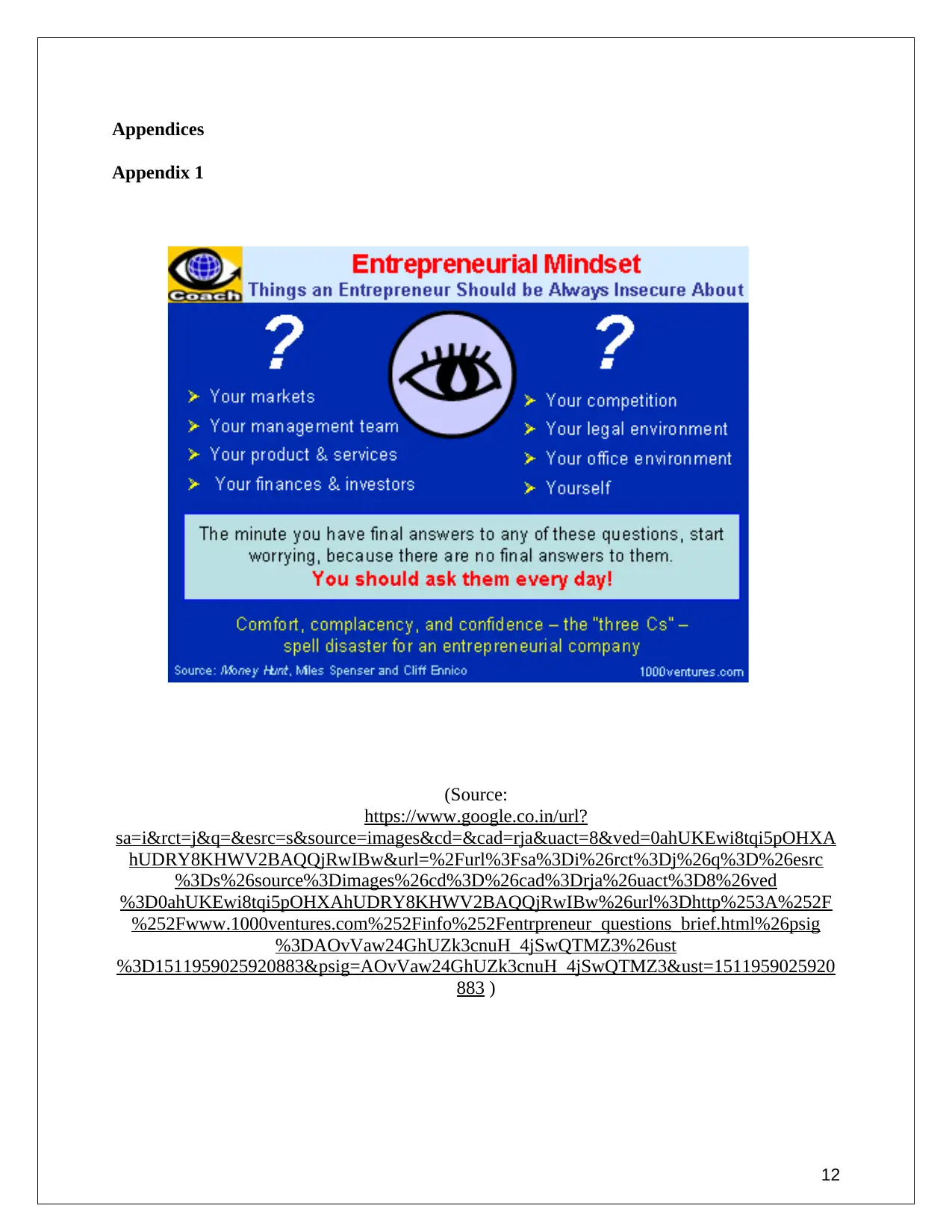
Appendices
Appendix 1
(Source:
https://www.google.co.in/url?
sa=i&rct=j&q=&esrc=s&source=images&cd=&cad=rja&uact=8&ved=0ahUKEwi8tqi5pOHXA
hUDRY8KHWV2BAQQjRwIBw&url=%2Furl%3Fsa%3Di%26rct%3Dj%26q%3D%26esrc
%3Ds%26source%3Dimages%26cd%3D%26cad%3Drja%26uact%3D8%26ved
%3D0ahUKEwi8tqi5pOHXAhUDRY8KHWV2BAQQjRwIBw%26url%3Dhttp%253A%252F
%252Fwww.1000ventures.com%252Finfo%252Fentrpreneur_questions_brief.html%26psig
%3DAOvVaw24GhUZk3cnuH_4jSwQTMZ3%26ust
%3D1511959025920883&psig=AOvVaw24GhUZk3cnuH_4jSwQTMZ3&ust=1511959025920
883 )
12
Appendix 1
(Source:
https://www.google.co.in/url?
sa=i&rct=j&q=&esrc=s&source=images&cd=&cad=rja&uact=8&ved=0ahUKEwi8tqi5pOHXA
hUDRY8KHWV2BAQQjRwIBw&url=%2Furl%3Fsa%3Di%26rct%3Dj%26q%3D%26esrc
%3Ds%26source%3Dimages%26cd%3D%26cad%3Drja%26uact%3D8%26ved
%3D0ahUKEwi8tqi5pOHXAhUDRY8KHWV2BAQQjRwIBw%26url%3Dhttp%253A%252F
%252Fwww.1000ventures.com%252Finfo%252Fentrpreneur_questions_brief.html%26psig
%3DAOvVaw24GhUZk3cnuH_4jSwQTMZ3%26ust
%3D1511959025920883&psig=AOvVaw24GhUZk3cnuH_4jSwQTMZ3&ust=1511959025920
883 )
12
⊘ This is a preview!⊘
Do you want full access?
Subscribe today to unlock all pages.
Trusted by 1+ million students worldwide

1 out of 13


Related Documents


Your All-in-One AI-Powered Toolkit for Academic Success.
+13062052269
info@desklib.com
Available 24*7 on WhatsApp / Email
![[object Object]](/_next/static/media/star-bottom.7253800d.svg)
Unlock your academic potential
Copyright © 2020–2026 A2Z Services. All Rights Reserved. Developed and managed by ZUCOL.