Environmental Impact Assessment and Soft Tools Assignment Report
VerifiedAdded on 2023/06/07
|16
|3800
|150
Report
AI Summary
This report presents a student's comprehensive analysis of Environmental Impact Assessment (EIA) and soft tools. The assignment addresses the limits to growth, exploring how Australia tackles these issues. It outlines the steps for project approval in South Australia, the selected state, and discusses how practitioners overcome EIA pitfalls, using journal articles. Furthermore, the report includes a detailed EIA for a hypothetical development site, covering study goals, screening, scoping, baseline conditions, impact prediction, analysis, evaluation, mitigation, and monitoring. Finally, the report examines design strategies for reducing carbon emissions from industries, using a case study from Houston, and provides relevant references.

ASSIGNMENT
1
Student Name:
Student ID Number:
Subject Title:
AQF Level:
Word count: 2500
1
Student Name:
Student ID Number:
Subject Title:
AQF Level:
Word count: 2500

Paraphrase This Document
Need a fresh take? Get an instant paraphrase of this document with our AI Paraphraser
ASSIGNMENT
2
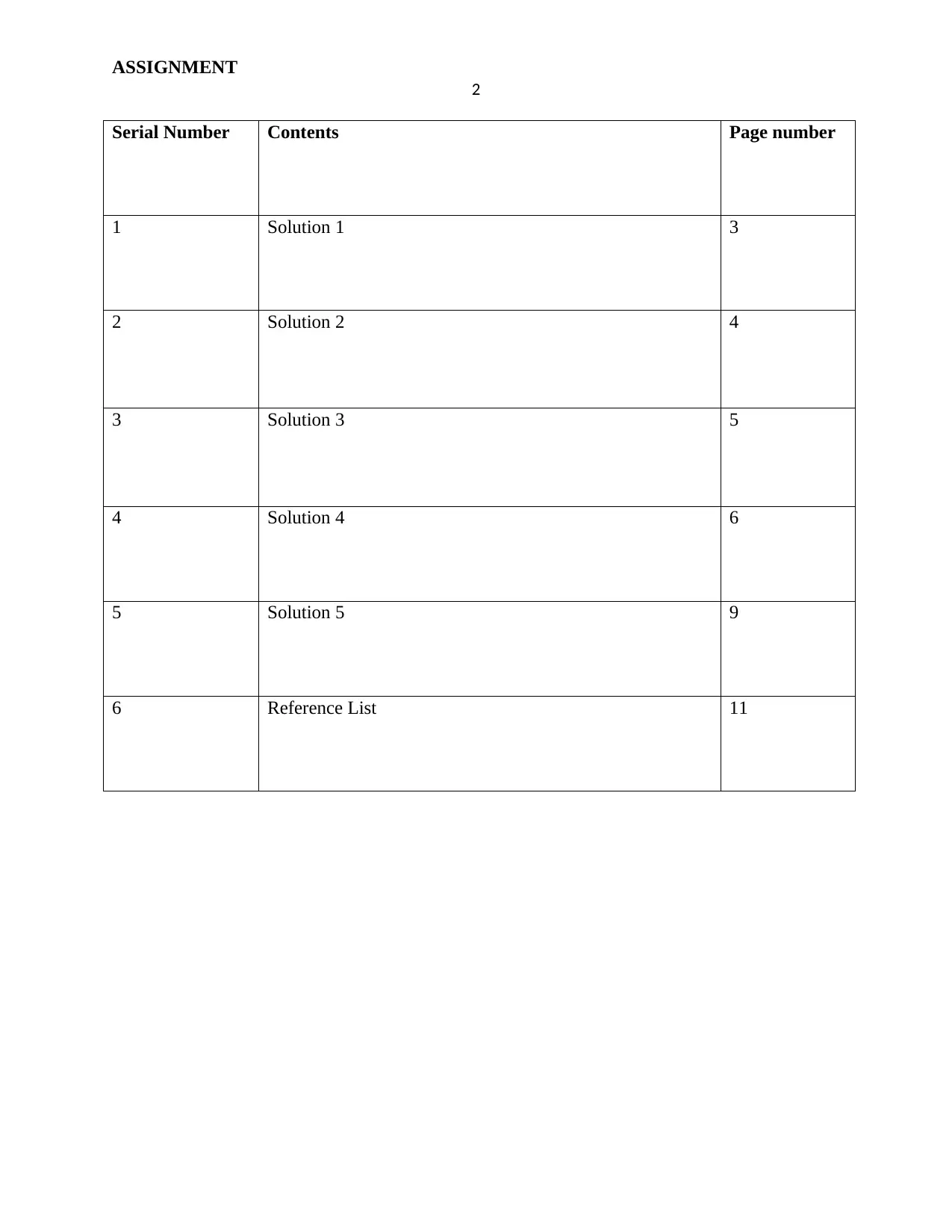
Serial Number Contents Page number
1 Solution 1 3
2 Solution 2 4
3 Solution 3 5
4 Solution 4 6
5 Solution 5 9
6 Reference List 11
2
Serial Number Contents Page number
1 Solution 1 3
2 Solution 2 4
3 Solution 3 5
4 Solution 4 6
5 Solution 5 9
6 Reference List 11
ASSIGNMENT
3
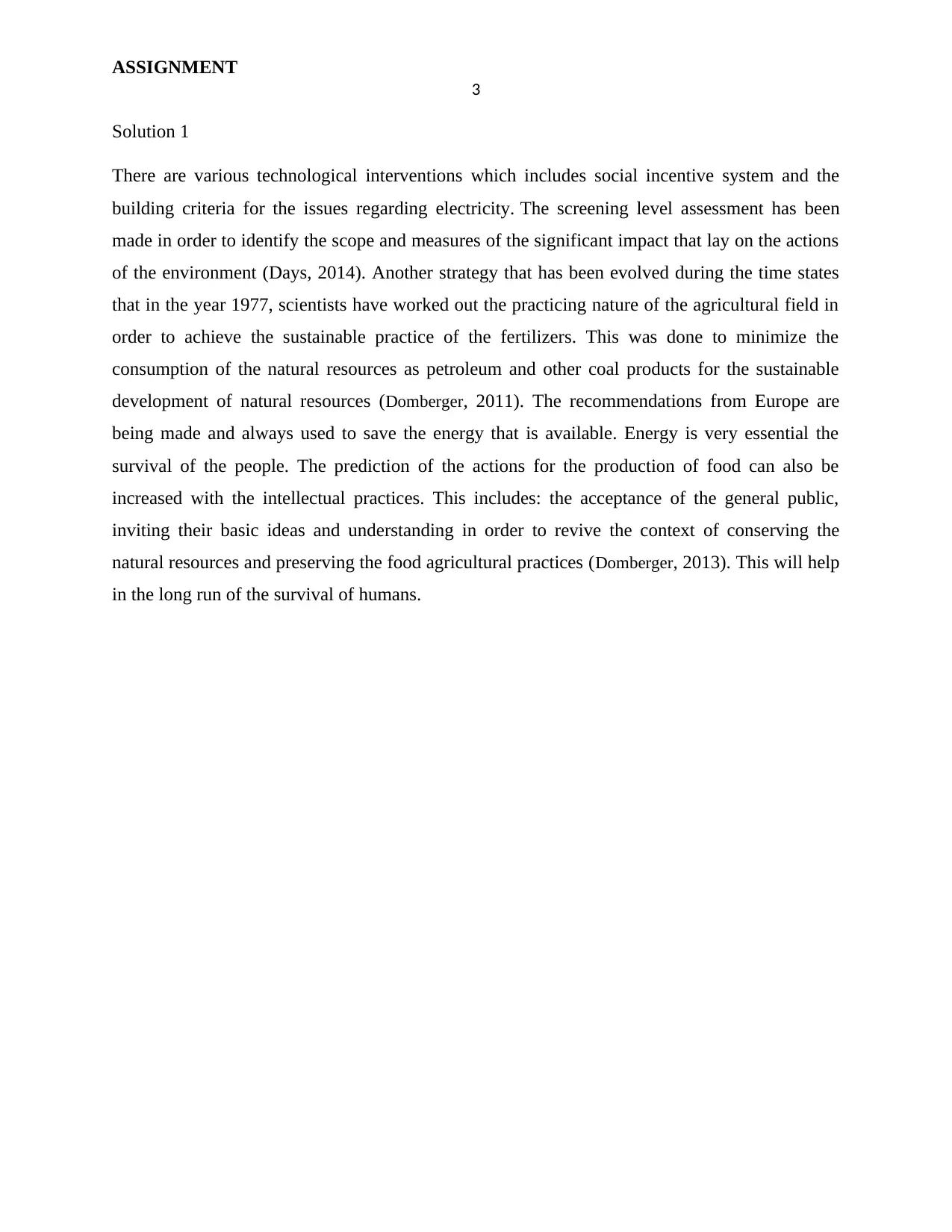
Solution 1
There are various technological interventions which includes social incentive system and the
building criteria for the issues regarding electricity. The screening level assessment has been
made in order to identify the scope and measures of the significant impact that lay on the actions
of the environment (Days, 2014). Another strategy that has been evolved during the time states
that in the year 1977, scientists have worked out the practicing nature of the agricultural field in
order to achieve the sustainable practice of the fertilizers. This was done to minimize the
consumption of the natural resources as petroleum and other coal products for the sustainable
development of natural resources (Domberger, 2011). The recommendations from Europe are
being made and always used to save the energy that is available. Energy is very essential the
survival of the people. The prediction of the actions for the production of food can also be
increased with the intellectual practices. This includes: the acceptance of the general public,
inviting their basic ideas and understanding in order to revive the context of conserving the
natural resources and preserving the food agricultural practices (Domberger, 2013). This will help
in the long run of the survival of humans.
3
Solution 1
There are various technological interventions which includes social incentive system and the
building criteria for the issues regarding electricity. The screening level assessment has been
made in order to identify the scope and measures of the significant impact that lay on the actions
of the environment (Days, 2014). Another strategy that has been evolved during the time states
that in the year 1977, scientists have worked out the practicing nature of the agricultural field in
order to achieve the sustainable practice of the fertilizers. This was done to minimize the
consumption of the natural resources as petroleum and other coal products for the sustainable
development of natural resources (Domberger, 2011). The recommendations from Europe are
being made and always used to save the energy that is available. Energy is very essential the
survival of the people. The prediction of the actions for the production of food can also be
increased with the intellectual practices. This includes: the acceptance of the general public,
inviting their basic ideas and understanding in order to revive the context of conserving the
natural resources and preserving the food agricultural practices (Domberger, 2013). This will help
in the long run of the survival of humans.
⊘ This is a preview!⊘
Do you want full access?
Subscribe today to unlock all pages.

Trusted by 1+ million students worldwide
ASSIGNMENT
4
Solution 2
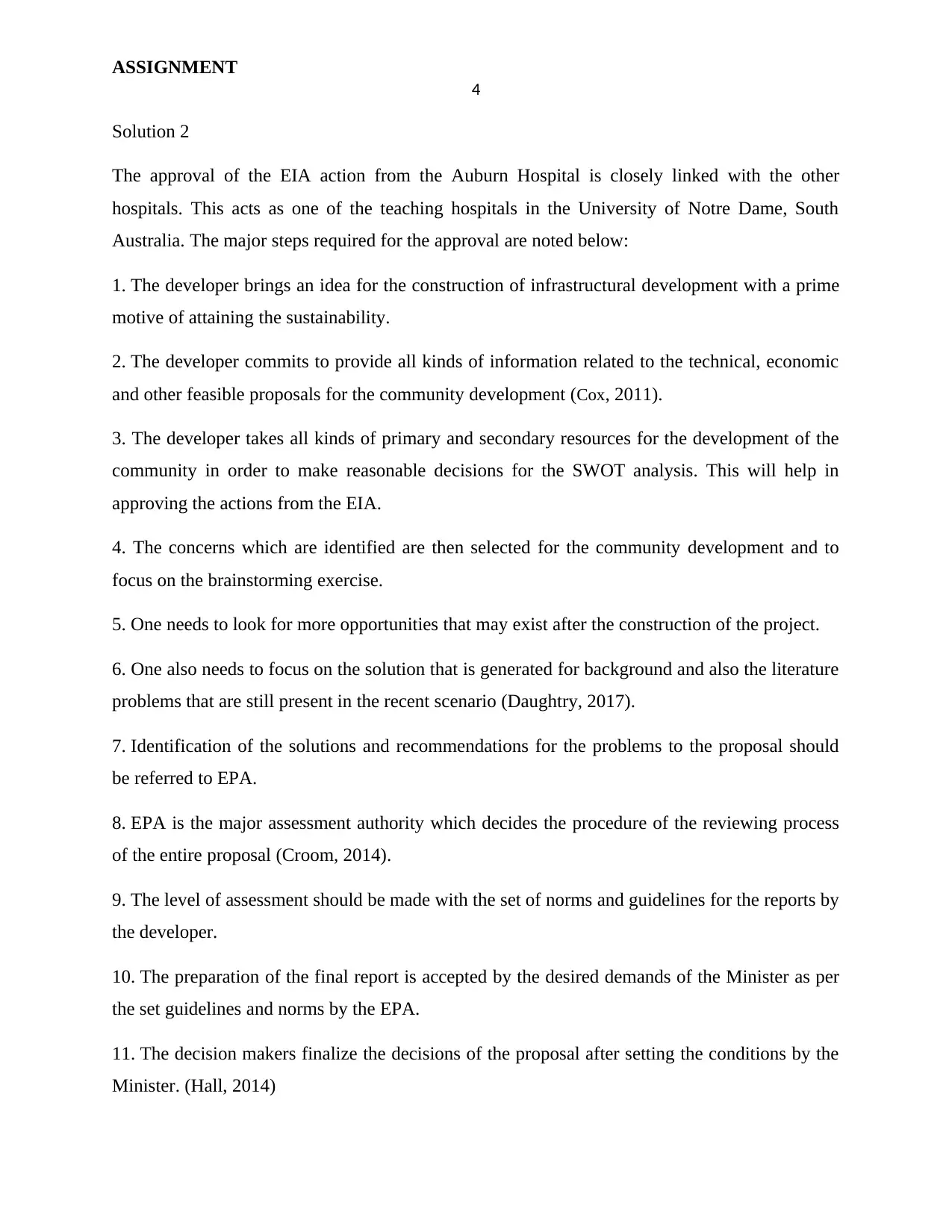
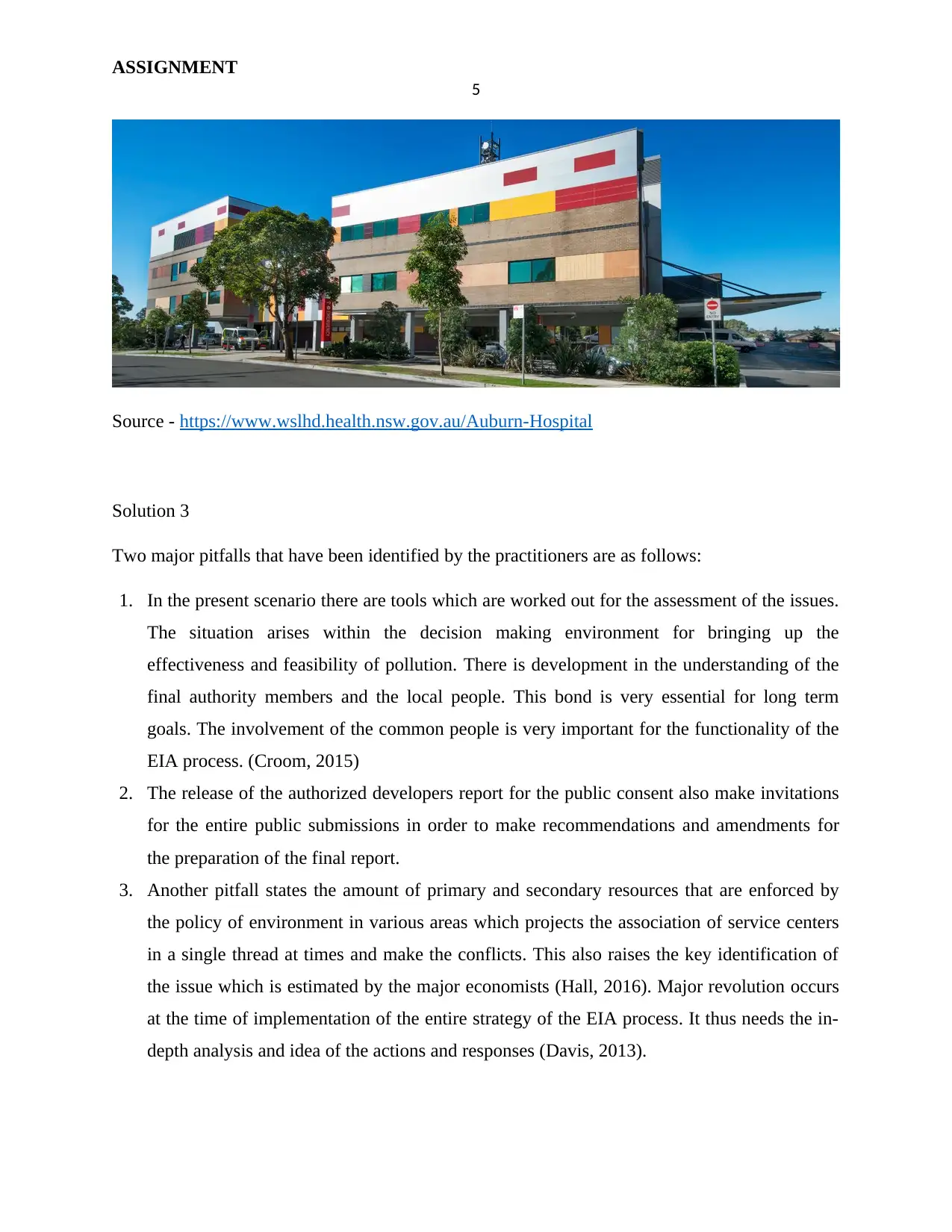
The approval of the EIA action from the Auburn Hospital is closely linked with the other
hospitals. This acts as one of the teaching hospitals in the University of Notre Dame, South
Australia. The major steps required for the approval are noted below:
1. The developer brings an idea for the construction of infrastructural development with a prime
motive of attaining the sustainability.
2. The developer commits to provide all kinds of information related to the technical, economic
and other feasible proposals for the community development (Cox, 2011).
3. The developer takes all kinds of primary and secondary resources for the development of the
community in order to make reasonable decisions for the SWOT analysis. This will help in
approving the actions from the EIA.
4. The concerns which are identified are then selected for the community development and to
focus on the brainstorming exercise.
5. One needs to look for more opportunities that may exist after the construction of the project.
6. One also needs to focus on the solution that is generated for background and also the literature
problems that are still present in the recent scenario (Daughtry, 2017).
7. Identification of the solutions and recommendations for the problems to the proposal should
be referred to EPA.
8. EPA is the major assessment authority which decides the procedure of the reviewing process
of the entire proposal (Croom, 2014).
9. The level of assessment should be made with the set of norms and guidelines for the reports by
the developer.
10. The preparation of the final report is accepted by the desired demands of the Minister as per
the set guidelines and norms by the EPA.
11. The decision makers finalize the decisions of the proposal after setting the conditions by the
Minister. (Hall, 2014)
4
Solution 2
The approval of the EIA action from the Auburn Hospital is closely linked with the other
hospitals. This acts as one of the teaching hospitals in the University of Notre Dame, South
Australia. The major steps required for the approval are noted below:
1. The developer brings an idea for the construction of infrastructural development with a prime
motive of attaining the sustainability.
2. The developer commits to provide all kinds of information related to the technical, economic
and other feasible proposals for the community development (Cox, 2011).
3. The developer takes all kinds of primary and secondary resources for the development of the
community in order to make reasonable decisions for the SWOT analysis. This will help in
approving the actions from the EIA.
4. The concerns which are identified are then selected for the community development and to
focus on the brainstorming exercise.
5. One needs to look for more opportunities that may exist after the construction of the project.
6. One also needs to focus on the solution that is generated for background and also the literature
problems that are still present in the recent scenario (Daughtry, 2017).
7. Identification of the solutions and recommendations for the problems to the proposal should
be referred to EPA.
8. EPA is the major assessment authority which decides the procedure of the reviewing process
of the entire proposal (Croom, 2014).
9. The level of assessment should be made with the set of norms and guidelines for the reports by
the developer.
10. The preparation of the final report is accepted by the desired demands of the Minister as per
the set guidelines and norms by the EPA.
11. The decision makers finalize the decisions of the proposal after setting the conditions by the
Minister. (Hall, 2014)
Paraphrase This Document
Need a fresh take? Get an instant paraphrase of this document with our AI Paraphraser
ASSIGNMENT
5
Source - https://www.wslhd.health.nsw.gov.au/Auburn-Hospital
Solution 3
Two major pitfalls that have been identified by the practitioners are as follows:
1. In the present scenario there are tools which are worked out for the assessment of the issues.
The situation arises within the decision making environment for bringing up the
effectiveness and feasibility of pollution. There is development in the understanding of the
final authority members and the local people. This bond is very essential for long term
goals. The involvement of the common people is very important for the functionality of the
EIA process. (Croom, 2015)
2. The release of the authorized developers report for the public consent also make invitations
for the entire public submissions in order to make recommendations and amendments for
the preparation of the final report.
3. Another pitfall states the amount of primary and secondary resources that are enforced by
the policy of environment in various areas which projects the association of service centers
in a single thread at times and make the conflicts. This also raises the key identification of
the issue which is estimated by the major economists (Hall, 2016). Major revolution occurs
at the time of implementation of the entire strategy of the EIA process. It thus needs the in-
depth analysis and idea of the actions and responses (Davis, 2013).
5
Source - https://www.wslhd.health.nsw.gov.au/Auburn-Hospital
Solution 3
Two major pitfalls that have been identified by the practitioners are as follows:
1. In the present scenario there are tools which are worked out for the assessment of the issues.
The situation arises within the decision making environment for bringing up the
effectiveness and feasibility of pollution. There is development in the understanding of the
final authority members and the local people. This bond is very essential for long term
goals. The involvement of the common people is very important for the functionality of the
EIA process. (Croom, 2015)
2. The release of the authorized developers report for the public consent also make invitations
for the entire public submissions in order to make recommendations and amendments for
the preparation of the final report.
3. Another pitfall states the amount of primary and secondary resources that are enforced by
the policy of environment in various areas which projects the association of service centers
in a single thread at times and make the conflicts. This also raises the key identification of
the issue which is estimated by the major economists (Hall, 2016). Major revolution occurs
at the time of implementation of the entire strategy of the EIA process. It thus needs the in-
depth analysis and idea of the actions and responses (Davis, 2013).
ASSIGNMENT
6
Solution 4
The study report is based on the proposed construction of the Auburn Hospital in South
Australia. The major objectives that are portrayed to develop the health system modernization
project are as follows:
1. Project work should keep hold of the additional number of physicians and doctors and also the
family nurses in order to support the medical system (Hall, 2015).
2. Basic infrastructure is required for primary health care facilities.
3. It should upgrade the regional hospital infrastructure in order to provide the basic amenities of
the medical equipment and strengthening the management of the hospital.
4. It should not harm the neighboring parts of the environment in order to improve the systems
of the adjacent areas that urges to the development of the economy.
The assessment impacts the support of the long scale project of the EIA.
Legal framework pertaining to the state independence of the Republic of Australia has been
drafted in order to follow several codes as per the legislative acts. Laws which should be
followed are as given below:
1. The law of the environmental protection act in the year 1991 is strictly followed.
2. The atmospheric layer protection and the sanitary epidemiological security of population in
1992 (Days, 2011).
3. Law on the environmental impact is also followed in order to focus on the flora and fauna of
the native environment in 1995.
4. The construction norms and regulations regarding the waste management for the environment.
5. Law especially designed for the natural areas and special economic zones. This legalized the
framework for the maintenance and development of the flora and fauna (Dothery 2011).
Departments and the bed capacity of the current scenario are presented as:
6
Solution 4
The study report is based on the proposed construction of the Auburn Hospital in South
Australia. The major objectives that are portrayed to develop the health system modernization
project are as follows:
1. Project work should keep hold of the additional number of physicians and doctors and also the
family nurses in order to support the medical system (Hall, 2015).
2. Basic infrastructure is required for primary health care facilities.
3. It should upgrade the regional hospital infrastructure in order to provide the basic amenities of
the medical equipment and strengthening the management of the hospital.
4. It should not harm the neighboring parts of the environment in order to improve the systems
of the adjacent areas that urges to the development of the economy.
The assessment impacts the support of the long scale project of the EIA.
Legal framework pertaining to the state independence of the Republic of Australia has been
drafted in order to follow several codes as per the legislative acts. Laws which should be
followed are as given below:
1. The law of the environmental protection act in the year 1991 is strictly followed.
2. The atmospheric layer protection and the sanitary epidemiological security of population in
1992 (Days, 2011).
3. Law on the environmental impact is also followed in order to focus on the flora and fauna of
the native environment in 1995.
4. The construction norms and regulations regarding the waste management for the environment.
5. Law especially designed for the natural areas and special economic zones. This legalized the
framework for the maintenance and development of the flora and fauna (Dothery 2011).
Departments and the bed capacity of the current scenario are presented as:
⊘ This is a preview!⊘
Do you want full access?
Subscribe today to unlock all pages.
Trusted by 1+ million students worldwide
ASSIGNMENT
7
1. There is a requirement of 60 beds as per the regional hospital in order to maintain the 53% bed
occupancy which will cover the area of 8000 sq meters and the utility expenses will be around
$14,000.
2. The hospital also requires 170 additional beds for the casual department for the estimation of
the 90 percentage of the adult surgery as well as ENT, vascular, neurosurgery. (Cox, 2016)
Other estimations are as follows:
1. The basement will be around the area 1300 sq meters.
2. First floor will be around 2800 sq meters.
3. Second floor will be around 2500 sq meters.
4. The third floor will be around 2800 sq meters. (Daughtery, 2013)
The compensation of the adequate conditions also ensures the medical equipment and furniture
of the entire building. It is adopted with the quality improvement of the services and
amenities. According to the environmental impact the norms have been considered in order to
make the decisions as per the Ministries. (Cox, 2014)
Particular location has been selected near the hydrological centers and the other ecological areas
which can safeguard the adjacent infrastructures. The water quality monitoring stations have
been installed near the river beside the hospital construction.
Special considerations have been made with regard to the flora conservation and protection. This
includes the native species and the deserted climate for their survival. The mandatory concern
detects the protection of the flora and fauna provided in the native area. The land allocated for
the construction of the new hospital do not contain any kind of endangered areas which will not
harm the migratory birds as well as the wild animals living in the forest.
The potential impacts and the mitigation measures are as follows:
1. General constructed waste as well as the excavation of the materials, the associated
infrastructure also detected several environmental impacts and thus the disposal procedures are
being adopted.
7
1. There is a requirement of 60 beds as per the regional hospital in order to maintain the 53% bed
occupancy which will cover the area of 8000 sq meters and the utility expenses will be around
$14,000.
2. The hospital also requires 170 additional beds for the casual department for the estimation of
the 90 percentage of the adult surgery as well as ENT, vascular, neurosurgery. (Cox, 2016)
Other estimations are as follows:
1. The basement will be around the area 1300 sq meters.
2. First floor will be around 2800 sq meters.
3. Second floor will be around 2500 sq meters.
4. The third floor will be around 2800 sq meters. (Daughtery, 2013)
The compensation of the adequate conditions also ensures the medical equipment and furniture
of the entire building. It is adopted with the quality improvement of the services and
amenities. According to the environmental impact the norms have been considered in order to
make the decisions as per the Ministries. (Cox, 2014)
Particular location has been selected near the hydrological centers and the other ecological areas
which can safeguard the adjacent infrastructures. The water quality monitoring stations have
been installed near the river beside the hospital construction.
Special considerations have been made with regard to the flora conservation and protection. This
includes the native species and the deserted climate for their survival. The mandatory concern
detects the protection of the flora and fauna provided in the native area. The land allocated for
the construction of the new hospital do not contain any kind of endangered areas which will not
harm the migratory birds as well as the wild animals living in the forest.
The potential impacts and the mitigation measures are as follows:
1. General constructed waste as well as the excavation of the materials, the associated
infrastructure also detected several environmental impacts and thus the disposal procedures are
being adopted.
Paraphrase This Document
Need a fresh take? Get an instant paraphrase of this document with our AI Paraphraser
ASSIGNMENT
8
2. The up gradation of landscape and the soil erosion problems (Armstrong , 2013)
3. Impact assessment of the temporary accessible roads and the work sites.
4. Care of the quality of the water as well as soil after the construction runoff.
5. Alleviation of the disturbance is caused due to noise and vibration during the infrastructural
construction (Allan , 2011).
6. Adoption of the safety measures for the constructive activities and extraction of the thread has
been generated for materials during the construction and material excavation.
8
2. The up gradation of landscape and the soil erosion problems (Armstrong , 2013)
3. Impact assessment of the temporary accessible roads and the work sites.
4. Care of the quality of the water as well as soil after the construction runoff.
5. Alleviation of the disturbance is caused due to noise and vibration during the infrastructural
construction (Allan , 2011).
6. Adoption of the safety measures for the constructive activities and extraction of the thread has
been generated for materials during the construction and material excavation.
ASSIGNMENT
9
Solution 5
The design strategies for reducing the carbon emission from industries are mentioned below. The
case study is taken from the country of Houston which has the same population as that of South
Australia. The design of the soft tools for the reduction of the carbon emission in factories is as
follows:
1. The direct sources of emissions are to be avoided so that the greenhouse emissions that are
produced in the industries and factories can be controlled (Coyle, 2013). Various organizations
are working on the reduction of the carbon emission by measuring the carbon footprint
(Hubbert , 2013). Footprint is undertaken for implementation by measuring the amount of
greenhouse gases which are emitted on the carbon reduction strategy in order to devise a plan
using the management strategies.
2. Carbon capping is used in Houston. This is one of the essential techniques required to reduce
the price of the vehicles and automobiles (Forrester, 2011). The strategy permits only the safe
gases to escape from the chimneys of factories. Clean air Act of year 1990 also proposed that
less pollution should be caused and the convenient methods should be adopted in order to reduce
the carbon dioxide (Hubbert , 2013).
3. Another strategy is the reduction of the energy that is used abundantly in the huge buildings.
The organizations can adopt the standards which can reduce the energy used by the buildings and
can also switch to the efficient use of the energy resources. LEED is used for the construction of
the new buildings which is in operation and which in future would use the biggest energy
resources (Hubbert., 2013). The high performance building programmers are also adopted by
ICLEI in order to increase the efficiency of usages of energy (Coyle, 2011).
4. Rewards of the green commuters is another strategy which encourages the floating population
to the public transportation. Other methods includes: carpooling, biking, telecommunicating and
creative ways to save energy which contributes in the reduction of greenhouse gases so that the
people can easily communicate from work places to their homes without creating damage to the
environment.
9
Solution 5
The design strategies for reducing the carbon emission from industries are mentioned below. The
case study is taken from the country of Houston which has the same population as that of South
Australia. The design of the soft tools for the reduction of the carbon emission in factories is as
follows:
1. The direct sources of emissions are to be avoided so that the greenhouse emissions that are
produced in the industries and factories can be controlled (Coyle, 2013). Various organizations
are working on the reduction of the carbon emission by measuring the carbon footprint
(Hubbert , 2013). Footprint is undertaken for implementation by measuring the amount of
greenhouse gases which are emitted on the carbon reduction strategy in order to devise a plan
using the management strategies.
2. Carbon capping is used in Houston. This is one of the essential techniques required to reduce
the price of the vehicles and automobiles (Forrester, 2011). The strategy permits only the safe
gases to escape from the chimneys of factories. Clean air Act of year 1990 also proposed that
less pollution should be caused and the convenient methods should be adopted in order to reduce
the carbon dioxide (Hubbert , 2013).
3. Another strategy is the reduction of the energy that is used abundantly in the huge buildings.
The organizations can adopt the standards which can reduce the energy used by the buildings and
can also switch to the efficient use of the energy resources. LEED is used for the construction of
the new buildings which is in operation and which in future would use the biggest energy
resources (Hubbert., 2013). The high performance building programmers are also adopted by
ICLEI in order to increase the efficiency of usages of energy (Coyle, 2011).
4. Rewards of the green commuters is another strategy which encourages the floating population
to the public transportation. Other methods includes: carpooling, biking, telecommunicating and
creative ways to save energy which contributes in the reduction of greenhouse gases so that the
people can easily communicate from work places to their homes without creating damage to the
environment.
⊘ This is a preview!⊘
Do you want full access?
Subscribe today to unlock all pages.
Trusted by 1+ million students worldwide
ASSIGNMENT
10
5. Standing up against the excessive resource consumption is another strategy which is used for
the reduction of excessive use of fossil fuels. This is adopted in the factories and industries
which are promoting the use of sustainable energy resources such as solar energy, use of
equipments generating wind energy and tidal energy. This particular strategy is known as carbon
offsetting which an organization can adopt in their resources by installing solar plants on the
buildings for reducing the consumption of coal and fossil fuels.
6. Climatic changes in metro cities and towns are heavily populated where many municipalities
are mainly working (Cowbrel, 2015). Deduction of carbon dioxide will lead to the assessment of
the climatic changes. Social economic changes can limit the production and emission of the
harmful greenhouse gases which would automatically reduce the earth’s surface temperature and
would increase the livability of mankind on the earth.
10
5. Standing up against the excessive resource consumption is another strategy which is used for
the reduction of excessive use of fossil fuels. This is adopted in the factories and industries
which are promoting the use of sustainable energy resources such as solar energy, use of
equipments generating wind energy and tidal energy. This particular strategy is known as carbon
offsetting which an organization can adopt in their resources by installing solar plants on the
buildings for reducing the consumption of coal and fossil fuels.
6. Climatic changes in metro cities and towns are heavily populated where many municipalities
are mainly working (Cowbrel, 2015). Deduction of carbon dioxide will lead to the assessment of
the climatic changes. Social economic changes can limit the production and emission of the
harmful greenhouse gases which would automatically reduce the earth’s surface temperature and
would increase the livability of mankind on the earth.
Paraphrase This Document
Need a fresh take? Get an instant paraphrase of this document with our AI Paraphraser
ASSIGNMENT
11
References:
Ackerman, K. B. (1996) Pitfalls in Logistics Partnerships International Journal of
Physical Distribution & Environmental Management, Vol. 26, pp 132.
Allan, G and Skinner, C. (1991) Handbook for Research Students in Social Sciences and Environmental
Planning. Edited by Allan, G and Skinner, C., Routledge, pp 235.
Anderson, H. (2001) A History of Reductionism versus Holistic Approaches to Scientific Research.
Endeavour, Vol. 25, No. 4, pp 153-156.
Armstrong, E. (2008) Exceeding Expectations. The Journal of Commerce, pp. 82-85.
Ayers, J. (2001) Handbook of Supply Chain Management. Boca Raton: St Lucie Press
Bagchi, P. K. and Virum, H. (1998) European Logistics Alliances: A Management Environmental
Model. Int. Journal of Logistics Management. Vol. 7, No. 1, pp. 93-108.
Baily, P and Farmer, D. (1977) Purchasing Principles and Management, 3rd Edition,
Pitman Publishing, London, pp 201-213.
Baily, P. and Farmer, D. (1990) Purchasing Principles and Management. 6th Edition,
Pitman Publishing, London, pp 235.
Ballou, R. H. (2004) Business Logistics / Supply Chain Management: Planning, Organizing and
Controlling the Supply Chain. Upper Saddle River, New
Jersey, Pearson Prentice Hall, Vol 2, pp 368.
Barney, J. (1991) Firm Resources and Sustained Competitive Advantage”, Journal of
Management, Vol. 17, No. 1, pp. 99-120
11
References:
Ackerman, K. B. (1996) Pitfalls in Logistics Partnerships International Journal of
Physical Distribution & Environmental Management, Vol. 26, pp 132.
Allan, G and Skinner, C. (1991) Handbook for Research Students in Social Sciences and Environmental
Planning. Edited by Allan, G and Skinner, C., Routledge, pp 235.
Anderson, H. (2001) A History of Reductionism versus Holistic Approaches to Scientific Research.
Endeavour, Vol. 25, No. 4, pp 153-156.
Armstrong, E. (2008) Exceeding Expectations. The Journal of Commerce, pp. 82-85.
Ayers, J. (2001) Handbook of Supply Chain Management. Boca Raton: St Lucie Press
Bagchi, P. K. and Virum, H. (1998) European Logistics Alliances: A Management Environmental
Model. Int. Journal of Logistics Management. Vol. 7, No. 1, pp. 93-108.
Baily, P and Farmer, D. (1977) Purchasing Principles and Management, 3rd Edition,
Pitman Publishing, London, pp 201-213.
Baily, P. and Farmer, D. (1990) Purchasing Principles and Management. 6th Edition,
Pitman Publishing, London, pp 235.
Ballou, R. H. (2004) Business Logistics / Supply Chain Management: Planning, Organizing and
Controlling the Supply Chain. Upper Saddle River, New
Jersey, Pearson Prentice Hall, Vol 2, pp 368.
Barney, J. (1991) Firm Resources and Sustained Competitive Advantage”, Journal of
Management, Vol. 17, No. 1, pp. 99-120
ASSIGNMENT
12
Barratt, M (2004), Understanding the Meaning of Collaboration in the Supply Chain,
Supply Chain Management: An International Journal, Vol. 9, No. 1 pp. 30-42
Barratt, M. A. and Green, M. (2001) the Cultural Shift: the Need for a Collaborative
Culture. Conference Proceedings of Supply Chain Knowledge, Cranfield School of Management,
November, pp 458.
Bask, A. H. (2001) Relationships among TPL providers and members of supply chains - a strategic
perspective. Journal of Business and Industrial Marketing,Volume 16, No. 6, pp. 470-486
Bask, A. H., Tinnila, M. and Rajahonka, M. (2008) Matching Service Strategies and Business Models.
Proceedings from NOFOMA 2008, pp. 53-6
Becher, A. (1998) Academic Tribes and Territories: Intellectual Enquiry and the Cultures of Disciplines.
The Society for Research into Higher Education and the Open University Press, Milton Keynes, pp 158.
Beier, F. J. (1989) Transportation Contracts and the Experience Effect: A Framework for Future
Research. Journal of Business Logistics, Vol. 10, No. 2, pp. 73-89
Bennett, R. (1991). What is Management Research? In Smith, N. C. and Dainty, P. (editors), The
Management Research Handbook, London, Routledge, pp. 67- 77
Berglund, M., van Laarhoven, P., Sharman, G. and Wandel, S. (1999) Third-Party Logistics: Is There a
Future? International Journal of Logistics Management, Vol. 10, No. l,p p . 59-70
Berry, D., Towill, D. T., and Wadsley, N. (1994) Supply Chain Management in the Electronics Products
Industry. International Journal of Physical Distribution and Logistics Management, Vol. 24, No. 10,
pp20-32
Biglan, A. (1973a) The Characteristics of Subject Matter in different Academic Areas,
Journal of Applied Psychology, Vol. 57, No. 3, pp. 195-203
12
Barratt, M (2004), Understanding the Meaning of Collaboration in the Supply Chain,
Supply Chain Management: An International Journal, Vol. 9, No. 1 pp. 30-42
Barratt, M. A. and Green, M. (2001) the Cultural Shift: the Need for a Collaborative
Culture. Conference Proceedings of Supply Chain Knowledge, Cranfield School of Management,
November, pp 458.
Bask, A. H. (2001) Relationships among TPL providers and members of supply chains - a strategic
perspective. Journal of Business and Industrial Marketing,Volume 16, No. 6, pp. 470-486
Bask, A. H., Tinnila, M. and Rajahonka, M. (2008) Matching Service Strategies and Business Models.
Proceedings from NOFOMA 2008, pp. 53-6
Becher, A. (1998) Academic Tribes and Territories: Intellectual Enquiry and the Cultures of Disciplines.
The Society for Research into Higher Education and the Open University Press, Milton Keynes, pp 158.
Beier, F. J. (1989) Transportation Contracts and the Experience Effect: A Framework for Future
Research. Journal of Business Logistics, Vol. 10, No. 2, pp. 73-89
Bennett, R. (1991). What is Management Research? In Smith, N. C. and Dainty, P. (editors), The
Management Research Handbook, London, Routledge, pp. 67- 77
Berglund, M., van Laarhoven, P., Sharman, G. and Wandel, S. (1999) Third-Party Logistics: Is There a
Future? International Journal of Logistics Management, Vol. 10, No. l,p p . 59-70
Berry, D., Towill, D. T., and Wadsley, N. (1994) Supply Chain Management in the Electronics Products
Industry. International Journal of Physical Distribution and Logistics Management, Vol. 24, No. 10,
pp20-32
Biglan, A. (1973a) The Characteristics of Subject Matter in different Academic Areas,
Journal of Applied Psychology, Vol. 57, No. 3, pp. 195-203
⊘ This is a preview!⊘
Do you want full access?
Subscribe today to unlock all pages.
Trusted by 1+ million students worldwide

1 out of 16


Related Documents


Your All-in-One AI-Powered Toolkit for Academic Success.
+13062052269
info@desklib.com
Available 24*7 on WhatsApp / Email
![[object Object]](/_next/static/media/star-bottom.7253800d.svg)
Unlock your academic potential
Copyright © 2020–2026 A2Z Services. All Rights Reserved. Developed and managed by ZUCOL.