ERP System Implementation Proposal for Sichuan Jiuzhou Electronic
VerifiedAdded on 2023/04/23
|34
|5531
|264
Report
AI Summary
This report provides a comprehensive implementation guide for a CRM system at Sichuan Jiuzhou Electronic Co., Ltd., a Chinese digital electronics manufacturer. It addresses the competitive market and the need for improved customer service by outlining a 7-step System Development Life Cycle (SDLC). The report covers the planning phase, including system identification and feasibility assessment through cost-benefit analysis, the analysis phase focused on gathering business requirements, the design phase involving IT infrastructure design, the development phase detailing implementation approaches, the testing phase for ensuring software quality, the implementation phase including user documentation and training, and the post-implementation maintenance phase. The report emphasizes the importance of a well-defined project plan, resource allocation, and budget to ensure successful ERP implementation, aiming to enhance market position, customer base, and profitability for Sichuan Jiuzhou Electronic Co., Ltd. Desklib offers similar solved assignments for students.

Implementation of ERP system
Project report
Implementation of ERP system
Author’s Note
Project report
Implementation of ERP system
Author’s Note

Paraphrase This Document
Need a fresh take? Get an instant paraphrase of this document with our AI Paraphraser
1
Implementation of ERP system
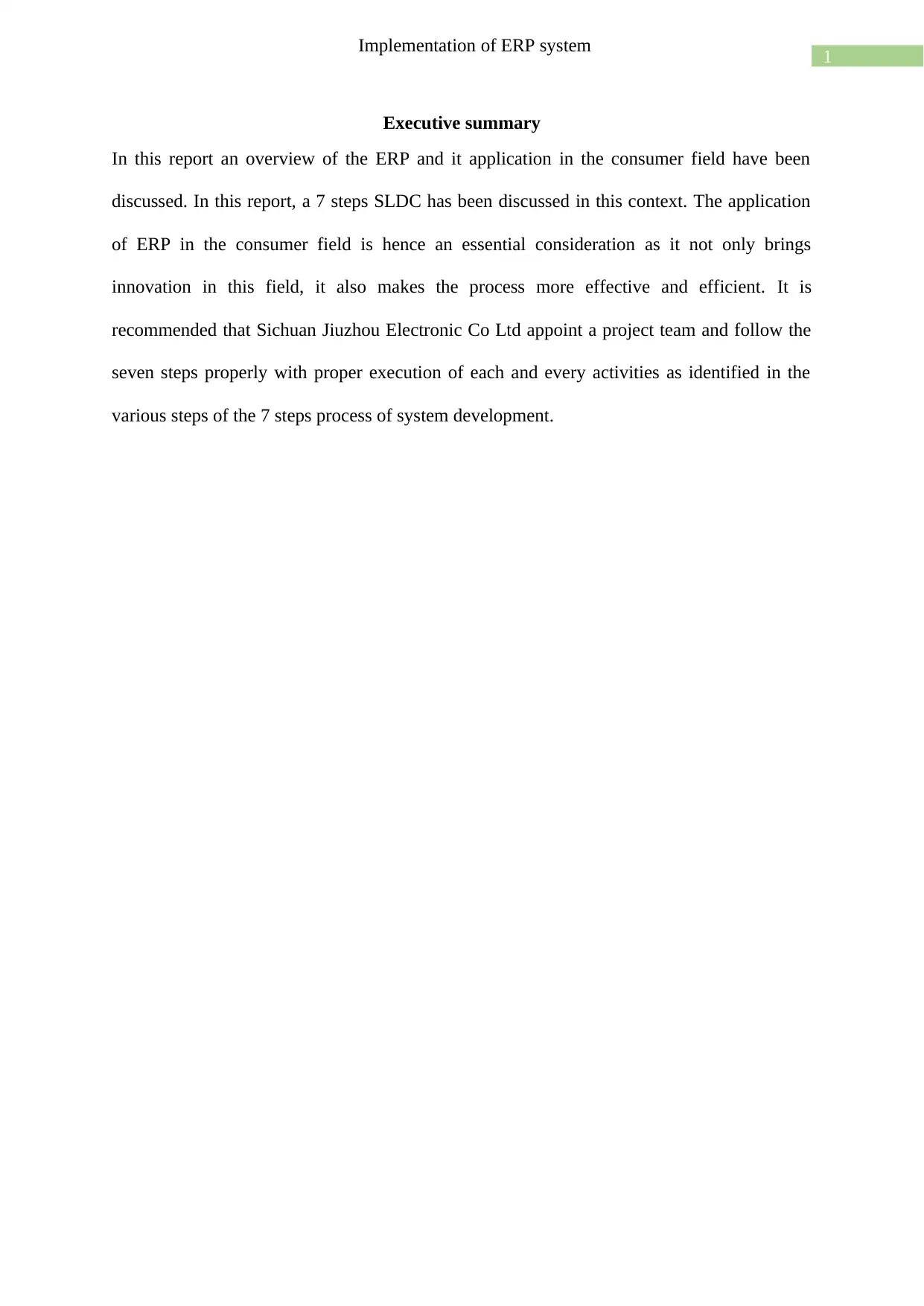
Executive summary
In this report an overview of the ERP and it application in the consumer field have been
discussed. In this report, a 7 steps SLDC has been discussed in this context. The application
of ERP in the consumer field is hence an essential consideration as it not only brings
innovation in this field, it also makes the process more effective and efficient. It is
recommended that Sichuan Jiuzhou Electronic Co Ltd appoint a project team and follow the
seven steps properly with proper execution of each and every activities as identified in the
various steps of the 7 steps process of system development.
Implementation of ERP system
Executive summary
In this report an overview of the ERP and it application in the consumer field have been
discussed. In this report, a 7 steps SLDC has been discussed in this context. The application
of ERP in the consumer field is hence an essential consideration as it not only brings
innovation in this field, it also makes the process more effective and efficient. It is
recommended that Sichuan Jiuzhou Electronic Co Ltd appoint a project team and follow the
seven steps properly with proper execution of each and every activities as identified in the
various steps of the 7 steps process of system development.
2
Implementation of ERP system
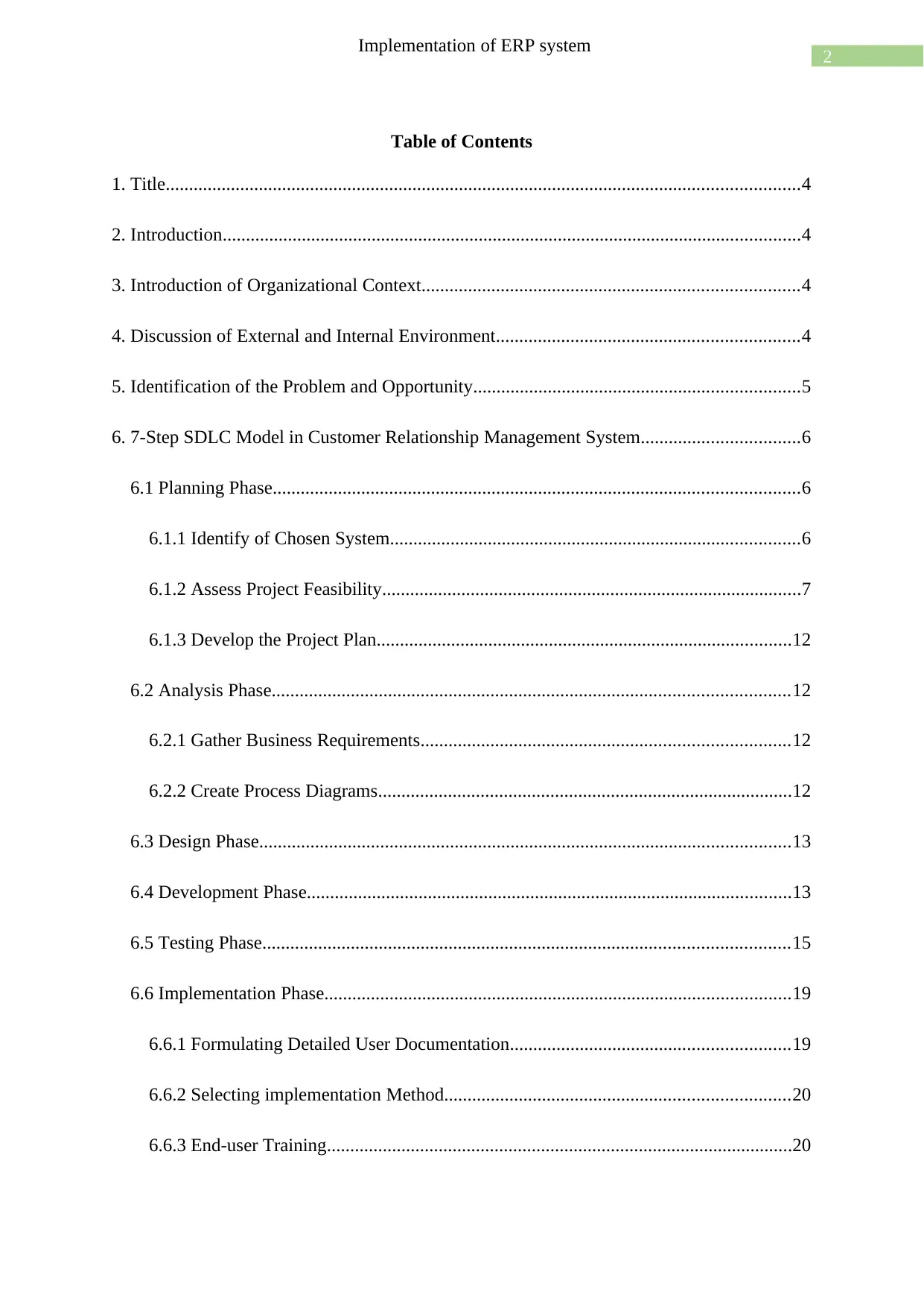
Table of Contents
1. Title........................................................................................................................................4
2. Introduction............................................................................................................................4
3. Introduction of Organizational Context.................................................................................4
4. Discussion of External and Internal Environment.................................................................4
5. Identification of the Problem and Opportunity......................................................................5
6. 7-Step SDLC Model in Customer Relationship Management System..................................6
6.1 Planning Phase.................................................................................................................6
6.1.1 Identify of Chosen System........................................................................................6
6.1.2 Assess Project Feasibility..........................................................................................7
6.1.3 Develop the Project Plan.........................................................................................12
6.2 Analysis Phase...............................................................................................................12
6.2.1 Gather Business Requirements...............................................................................12
6.2.2 Create Process Diagrams.........................................................................................12
6.3 Design Phase..................................................................................................................13
6.4 Development Phase........................................................................................................13
6.5 Testing Phase.................................................................................................................15
6.6 Implementation Phase....................................................................................................19
6.6.1 Formulating Detailed User Documentation............................................................19
6.6.2 Selecting implementation Method..........................................................................20
6.6.3 End-user Training....................................................................................................20
Implementation of ERP system
Table of Contents
1. Title........................................................................................................................................4
2. Introduction............................................................................................................................4
3. Introduction of Organizational Context.................................................................................4
4. Discussion of External and Internal Environment.................................................................4
5. Identification of the Problem and Opportunity......................................................................5
6. 7-Step SDLC Model in Customer Relationship Management System..................................6
6.1 Planning Phase.................................................................................................................6
6.1.1 Identify of Chosen System........................................................................................6
6.1.2 Assess Project Feasibility..........................................................................................7
6.1.3 Develop the Project Plan.........................................................................................12
6.2 Analysis Phase...............................................................................................................12
6.2.1 Gather Business Requirements...............................................................................12
6.2.2 Create Process Diagrams.........................................................................................12
6.3 Design Phase..................................................................................................................13
6.4 Development Phase........................................................................................................13
6.5 Testing Phase.................................................................................................................15
6.6 Implementation Phase....................................................................................................19
6.6.1 Formulating Detailed User Documentation............................................................19
6.6.2 Selecting implementation Method..........................................................................20
6.6.3 End-user Training....................................................................................................20
⊘ This is a preview!⊘
Do you want full access?
Subscribe today to unlock all pages.

Trusted by 1+ million students worldwide
3
Implementation of ERP system
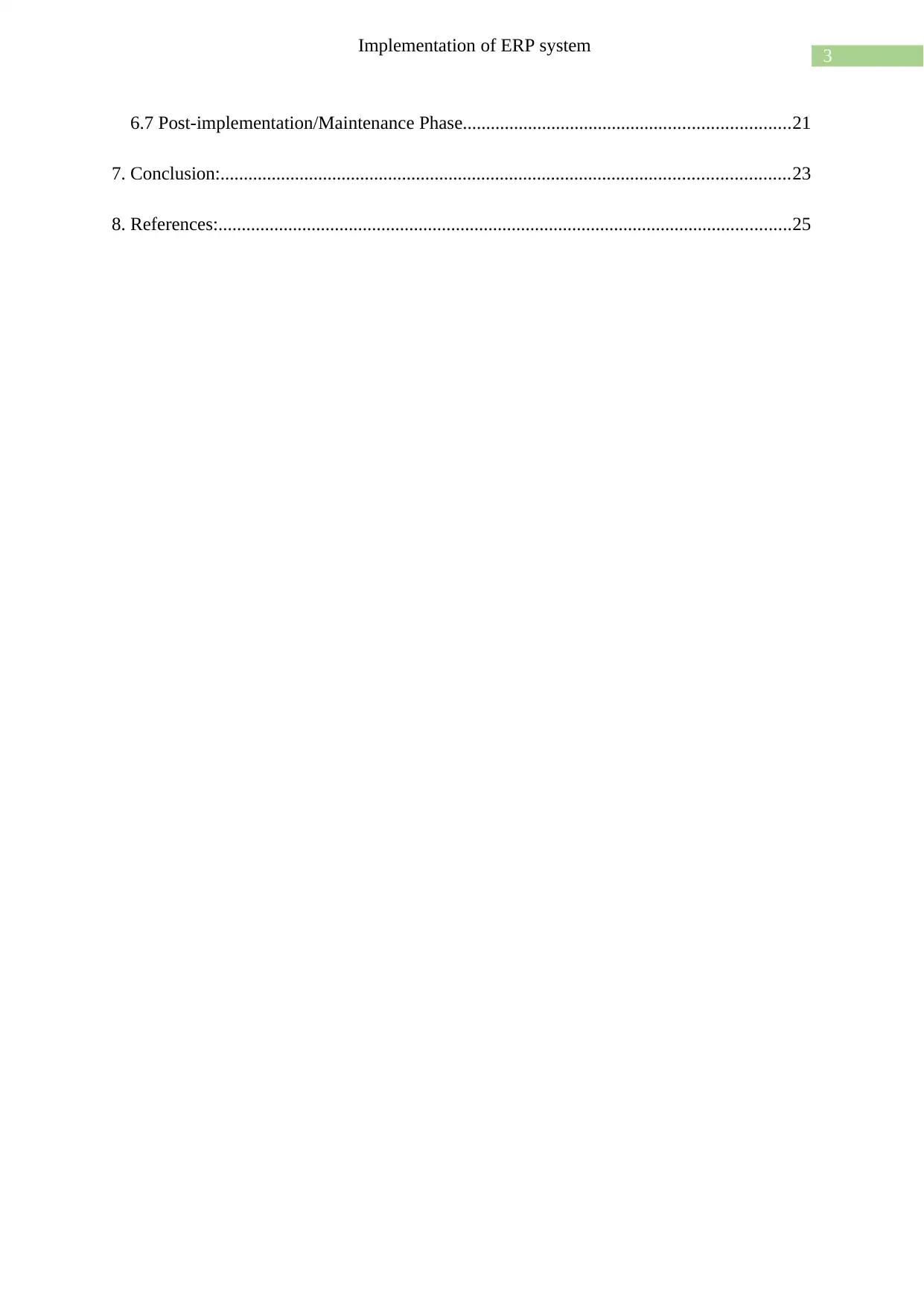
6.7 Post-implementation/Maintenance Phase......................................................................21
7. Conclusion:..........................................................................................................................23
8. References:...........................................................................................................................25
Implementation of ERP system
6.7 Post-implementation/Maintenance Phase......................................................................21
7. Conclusion:..........................................................................................................................23
8. References:...........................................................................................................................25
Paraphrase This Document
Need a fresh take? Get an instant paraphrase of this document with our AI Paraphraser
4
Implementation of ERP system
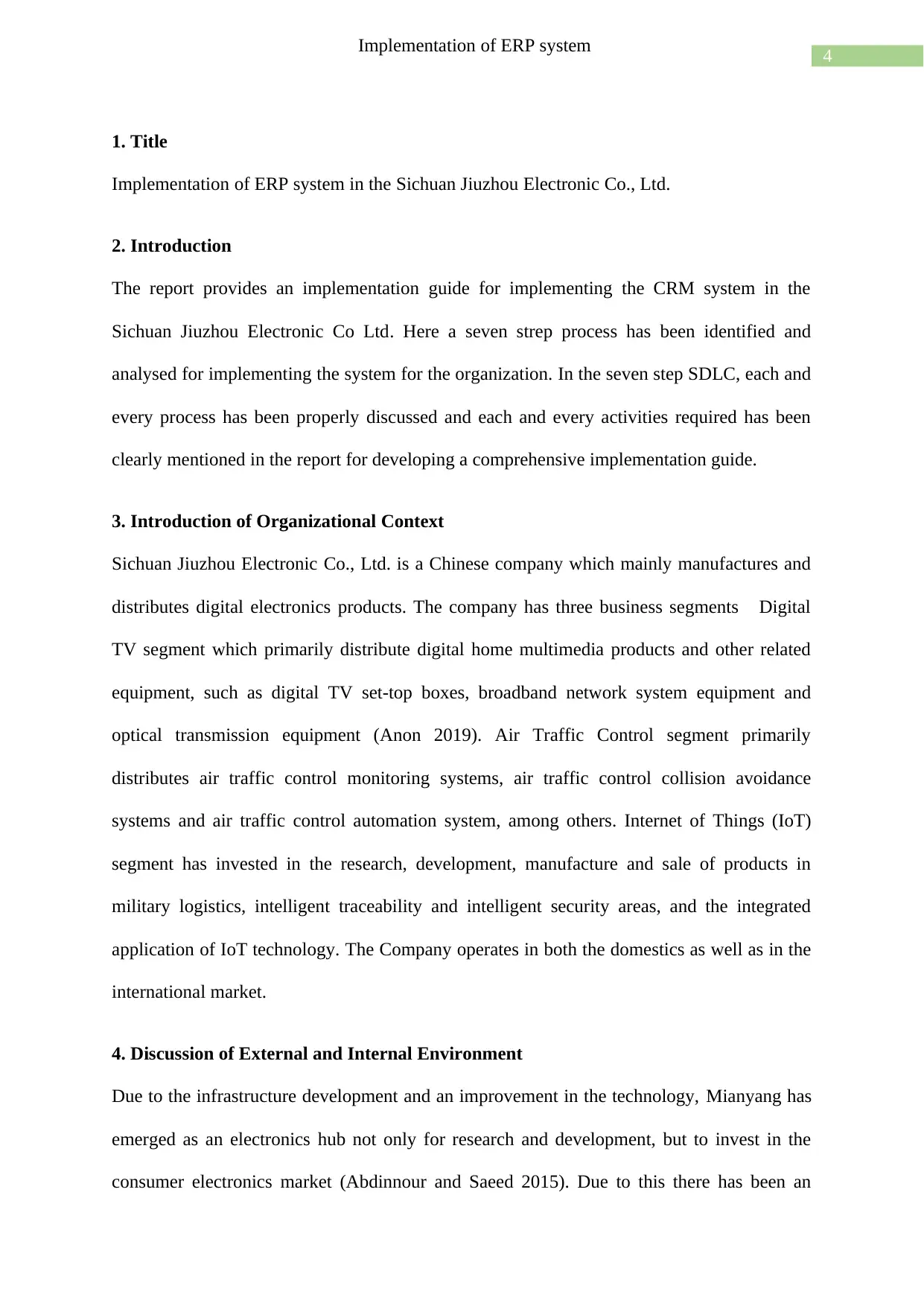
1. Title
Implementation of ERP system in the Sichuan Jiuzhou Electronic Co., Ltd.
2. Introduction
The report provides an implementation guide for implementing the CRM system in the
Sichuan Jiuzhou Electronic Co Ltd. Here a seven strep process has been identified and
analysed for implementing the system for the organization. In the seven step SDLC, each and
every process has been properly discussed and each and every activities required has been
clearly mentioned in the report for developing a comprehensive implementation guide.
3. Introduction of Organizational Context
Sichuan Jiuzhou Electronic Co., Ltd. is a Chinese company which mainly manufactures and
distributes digital electronics products. The company has three business segments Digital
TV segment which primarily distribute digital home multimedia products and other related
equipment, such as digital TV set-top boxes, broadband network system equipment and
optical transmission equipment (Anon 2019). Air Traffic Control segment primarily
distributes air traffic control monitoring systems, air traffic control collision avoidance
systems and air traffic control automation system, among others. Internet of Things (IoT)
segment has invested in the research, development, manufacture and sale of products in
military logistics, intelligent traceability and intelligent security areas, and the integrated
application of IoT technology. The Company operates in both the domestics as well as in the
international market.
4. Discussion of External and Internal Environment
Due to the infrastructure development and an improvement in the technology, Mianyang has
emerged as an electronics hub not only for research and development, but to invest in the
consumer electronics market (Abdinnour and Saeed 2015). Due to this there has been an
Implementation of ERP system
1. Title
Implementation of ERP system in the Sichuan Jiuzhou Electronic Co., Ltd.
2. Introduction
The report provides an implementation guide for implementing the CRM system in the
Sichuan Jiuzhou Electronic Co Ltd. Here a seven strep process has been identified and
analysed for implementing the system for the organization. In the seven step SDLC, each and
every process has been properly discussed and each and every activities required has been
clearly mentioned in the report for developing a comprehensive implementation guide.
3. Introduction of Organizational Context
Sichuan Jiuzhou Electronic Co., Ltd. is a Chinese company which mainly manufactures and
distributes digital electronics products. The company has three business segments Digital
TV segment which primarily distribute digital home multimedia products and other related
equipment, such as digital TV set-top boxes, broadband network system equipment and
optical transmission equipment (Anon 2019). Air Traffic Control segment primarily
distributes air traffic control monitoring systems, air traffic control collision avoidance
systems and air traffic control automation system, among others. Internet of Things (IoT)
segment has invested in the research, development, manufacture and sale of products in
military logistics, intelligent traceability and intelligent security areas, and the integrated
application of IoT technology. The Company operates in both the domestics as well as in the
international market.
4. Discussion of External and Internal Environment
Due to the infrastructure development and an improvement in the technology, Mianyang has
emerged as an electronics hub not only for research and development, but to invest in the
consumer electronics market (Abdinnour and Saeed 2015). Due to this there has been an
5
Implementation of ERP system
increase in the number of consumer Electronics Company which operates out of Mianyang.
Hence there is a strong consumer bargain in the market due to lot of product availability.
Hence in order to maintain an effective market position, Sichuan Jiuzhou Electronic Co., Ltd.
needs to recognize this competition (Abu-Shanab, Abu-Shehab and Khairallah 2015).
Sichuan Jiuzhou Electronic Co., Ltd. needs to first recognize this domestic competition to
excel in the international market. In order to do this the organization needs close assessment
of its strength and weakness and innovate accordingly through effective product delivery and
consumer service.
5. Identification of the Problem and Opportunity
Problems:
Strong market completion
Strong consumer bargain power
Proper consumer service
Opportunities:
Create a strong market position and retain it
Attract a lot of consumer for developing strong consumer base
Maximizing profit through effective product distribution
Increasing brand value and retaining consumer
Expanding in the international market
Implementation of ERP system
increase in the number of consumer Electronics Company which operates out of Mianyang.
Hence there is a strong consumer bargain in the market due to lot of product availability.
Hence in order to maintain an effective market position, Sichuan Jiuzhou Electronic Co., Ltd.
needs to recognize this competition (Abu-Shanab, Abu-Shehab and Khairallah 2015).
Sichuan Jiuzhou Electronic Co., Ltd. needs to first recognize this domestic competition to
excel in the international market. In order to do this the organization needs close assessment
of its strength and weakness and innovate accordingly through effective product delivery and
consumer service.
5. Identification of the Problem and Opportunity
Problems:
Strong market completion
Strong consumer bargain power
Proper consumer service
Opportunities:
Create a strong market position and retain it
Attract a lot of consumer for developing strong consumer base
Maximizing profit through effective product distribution
Increasing brand value and retaining consumer
Expanding in the international market
⊘ This is a preview!⊘
Do you want full access?
Subscribe today to unlock all pages.
Trusted by 1+ million students worldwide
6
Implementation of ERP system
6. 7-Step SDLC Model in Customer Relationship Management System
6.1 Planning Phase
6.1.1 Identify of Chosen System
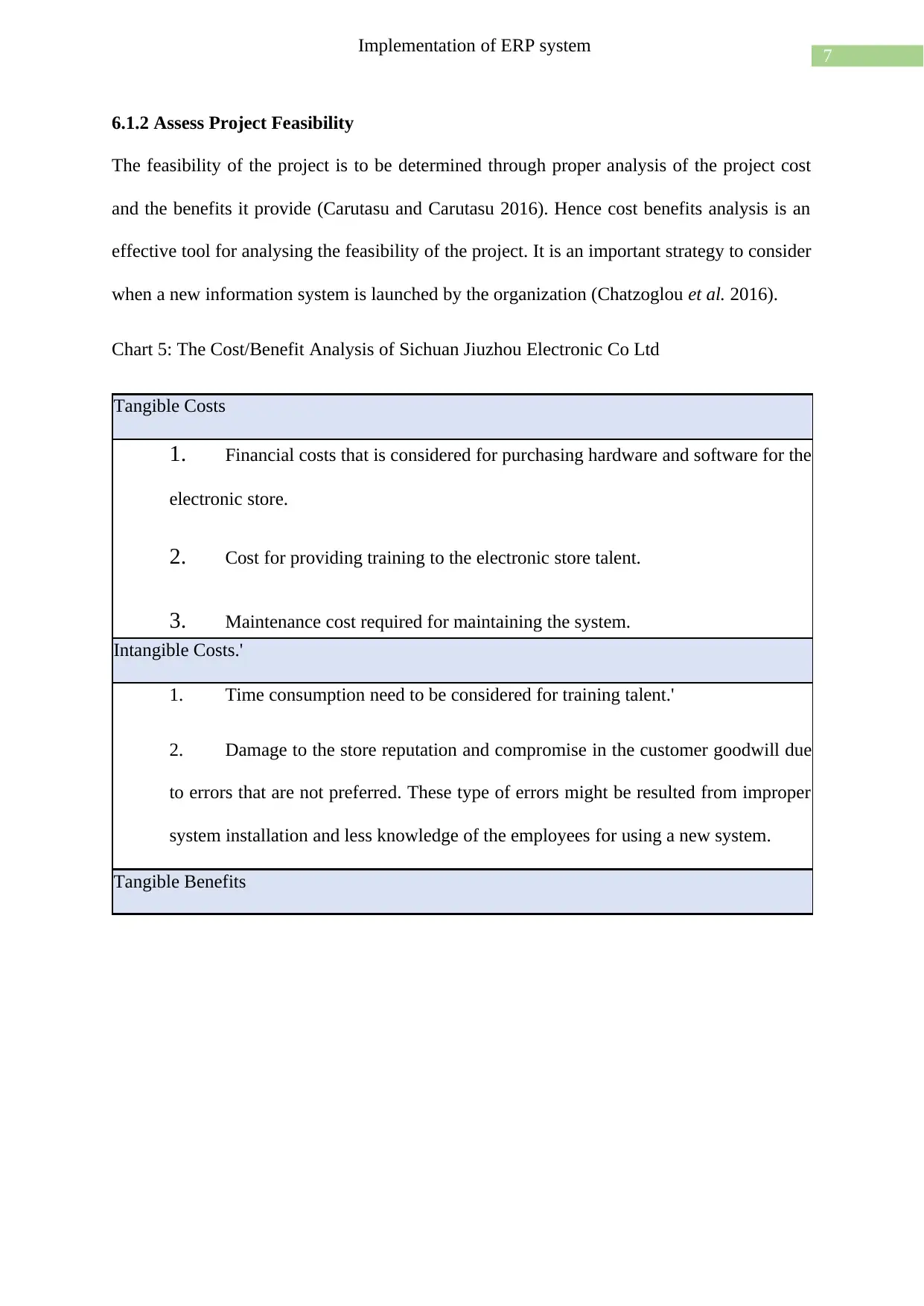
The system that has been considered here is the commercial CRM. Some of the popular
commercial CRM in the market are Siebel, SAP and so on. A typical CRM system has the
following components: operational, analytical, collaborative, and portal-base (Ahmadi et al.
2015).
Operational CRM part oversees daily business activities through the service and products
delivery. It provides effective means for the salespersons to record information about sales
call, telemarketing, and road show to track sales activities easily (Ali and Miller 2017). Sales
staffs are responsible for providing customers' requirements and preferences as input into the
system. Analytical CRM helps in analyzing customer demands and also review market trend
through proper analysis of the input data and provide suggestion about the strategies for
optimizing sales performance and provide maximum benefits through sales of the products
(Bintoro et al. 2015).
Implementation of ERP system
6. 7-Step SDLC Model in Customer Relationship Management System
6.1 Planning Phase
6.1.1 Identify of Chosen System
The system that has been considered here is the commercial CRM. Some of the popular
commercial CRM in the market are Siebel, SAP and so on. A typical CRM system has the
following components: operational, analytical, collaborative, and portal-base (Ahmadi et al.
2015).
Operational CRM part oversees daily business activities through the service and products
delivery. It provides effective means for the salespersons to record information about sales
call, telemarketing, and road show to track sales activities easily (Ali and Miller 2017). Sales
staffs are responsible for providing customers' requirements and preferences as input into the
system. Analytical CRM helps in analyzing customer demands and also review market trend
through proper analysis of the input data and provide suggestion about the strategies for
optimizing sales performance and provide maximum benefits through sales of the products
(Bintoro et al. 2015).
Paraphrase This Document
Need a fresh take? Get an instant paraphrase of this document with our AI Paraphraser
7
Implementation of ERP system
6.1.2 Assess Project Feasibility
The feasibility of the project is to be determined through proper analysis of the project cost
and the benefits it provide (Carutasu and Carutasu 2016). Hence cost benefits analysis is an
effective tool for analysing the feasibility of the project. It is an important strategy to consider
when a new information system is launched by the organization (Chatzoglou et al. 2016).
Chart 5: The Cost/Benefit Analysis of Sichuan Jiuzhou Electronic Co Ltd
Tangible Costs
1. Financial costs that is considered for purchasing hardware and software for the
electronic store.
2. Cost for providing training to the electronic store talent.
3. Maintenance cost required for maintaining the system.
Intangible Costs.'
1. Time consumption need to be considered for training talent.'
2. Damage to the store reputation and compromise in the customer goodwill due
to errors that are not preferred. These type of errors might be resulted from improper
system installation and less knowledge of the employees for using a new system.
Tangible Benefits
Implementation of ERP system
6.1.2 Assess Project Feasibility
The feasibility of the project is to be determined through proper analysis of the project cost
and the benefits it provide (Carutasu and Carutasu 2016). Hence cost benefits analysis is an
effective tool for analysing the feasibility of the project. It is an important strategy to consider
when a new information system is launched by the organization (Chatzoglou et al. 2016).
Chart 5: The Cost/Benefit Analysis of Sichuan Jiuzhou Electronic Co Ltd
Tangible Costs
1. Financial costs that is considered for purchasing hardware and software for the
electronic store.
2. Cost for providing training to the electronic store talent.
3. Maintenance cost required for maintaining the system.
Intangible Costs.'
1. Time consumption need to be considered for training talent.'
2. Damage to the store reputation and compromise in the customer goodwill due
to errors that are not preferred. These type of errors might be resulted from improper
system installation and less knowledge of the employees for using a new system.
Tangible Benefits
8
Implementation of ERP system
1. Increasing in the hotel sales and profits with proper analysis of customer
needs through appropriate knowledge.
2. Reduction in the costs required for the information processing.
3. Reduction in the operating cost.
4. Improvement in the working efficiency with proper utilization of the digital
technology in the store.
Intangible Benefits
1. Improvement and enhancement in the quality of the customer service
provided.
2. Improvement in the information availability through data mining.
3. Improvement in the reputation of the electronic store through proper customer
relationship.
Cost-Benefit - INPUT VALUES
Hardware
$ 28,000.00
Software
$ 40,000.00
Development team salaries
$ 8,000.00
Training
$ 9,500.00
Total Development Cost
$ 85,500.00
Hardware
$ 30,000.00
Software
$ 10,000.00
Operational labour $ 10,065.00
Implementation of ERP system
1. Increasing in the hotel sales and profits with proper analysis of customer
needs through appropriate knowledge.
2. Reduction in the costs required for the information processing.
3. Reduction in the operating cost.
4. Improvement in the working efficiency with proper utilization of the digital
technology in the store.
Intangible Benefits
1. Improvement and enhancement in the quality of the customer service
provided.
2. Improvement in the information availability through data mining.
3. Improvement in the reputation of the electronic store through proper customer
relationship.
Cost-Benefit - INPUT VALUES
Hardware
$ 28,000.00
Software
$ 40,000.00
Development team salaries
$ 8,000.00
Training
$ 9,500.00
Total Development Cost
$ 85,500.00
Hardware
$ 30,000.00
Software
$ 10,000.00
Operational labour $ 10,065.00
⊘ This is a preview!⊘
Do you want full access?
Subscribe today to unlock all pages.
Trusted by 1+ million students worldwide
9
Implementation of ERP system
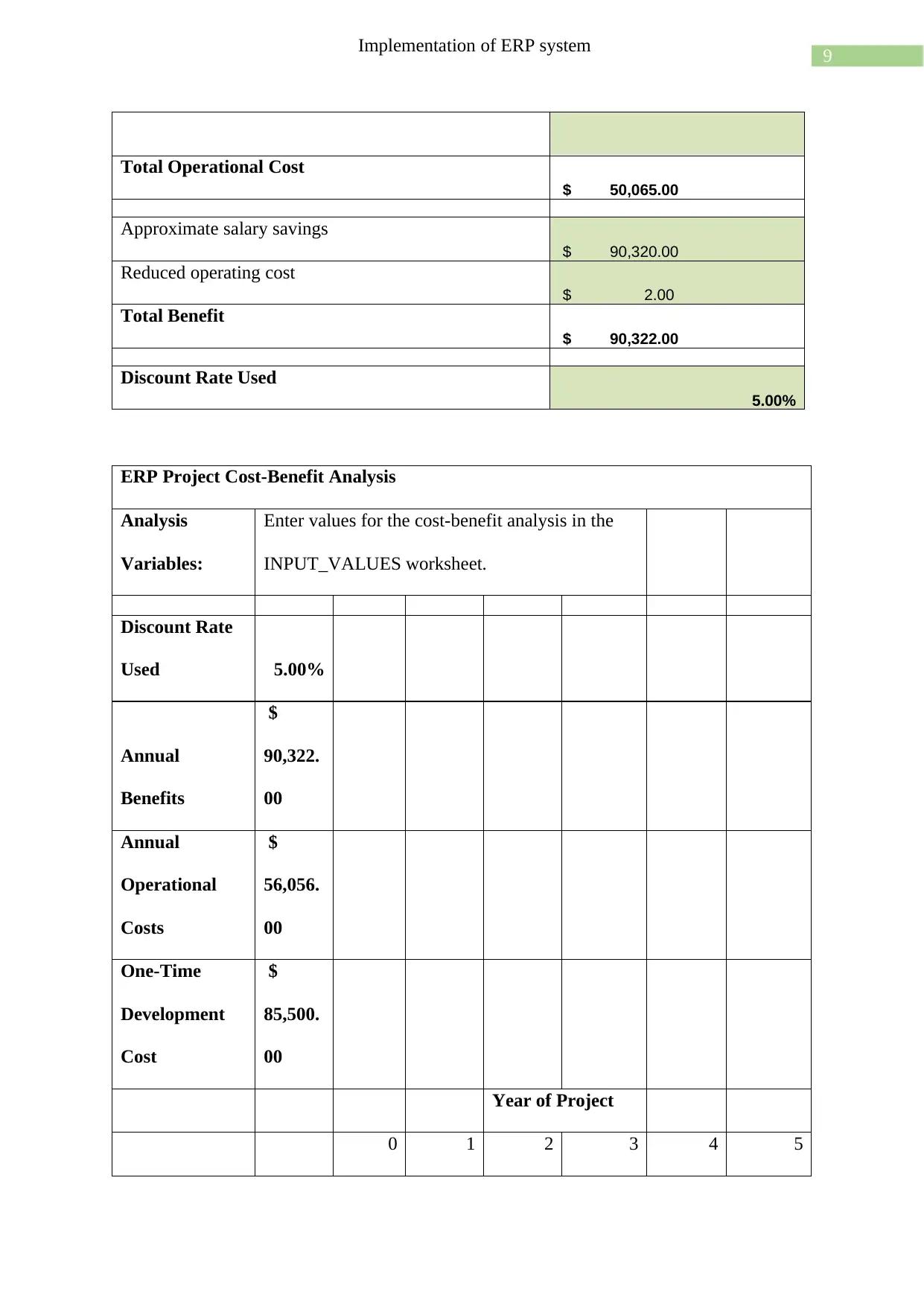
Total Operational Cost
$ 50,065.00
Approximate salary savings
$ 90,320.00
Reduced operating cost
$ 2.00
Total Benefit
$ 90,322.00
Discount Rate Used
5.00%
ERP Project Cost-Benefit Analysis
Analysis
Variables:
Enter values for the cost-benefit analysis in the
INPUT_VALUES worksheet.
Discount Rate
Used 5.00%
Annual
Benefits
$
90,322.
00
Annual
Operational
Costs
$
56,056.
00
One-Time
Development
Cost
$
85,500.
00
Year of Project
0 1 2 3 4 5
Implementation of ERP system
Total Operational Cost
$ 50,065.00
Approximate salary savings
$ 90,320.00
Reduced operating cost
$ 2.00
Total Benefit
$ 90,322.00
Discount Rate Used
5.00%
ERP Project Cost-Benefit Analysis
Analysis
Variables:
Enter values for the cost-benefit analysis in the
INPUT_VALUES worksheet.
Discount Rate
Used 5.00%
Annual
Benefits
$
90,322.
00
Annual
Operational
Costs
$
56,056.
00
One-Time
Development
Cost
$
85,500.
00
Year of Project
0 1 2 3 4 5
Paraphrase This Document
Need a fresh take? Get an instant paraphrase of this document with our AI Paraphraser
10
Implementation of ERP system
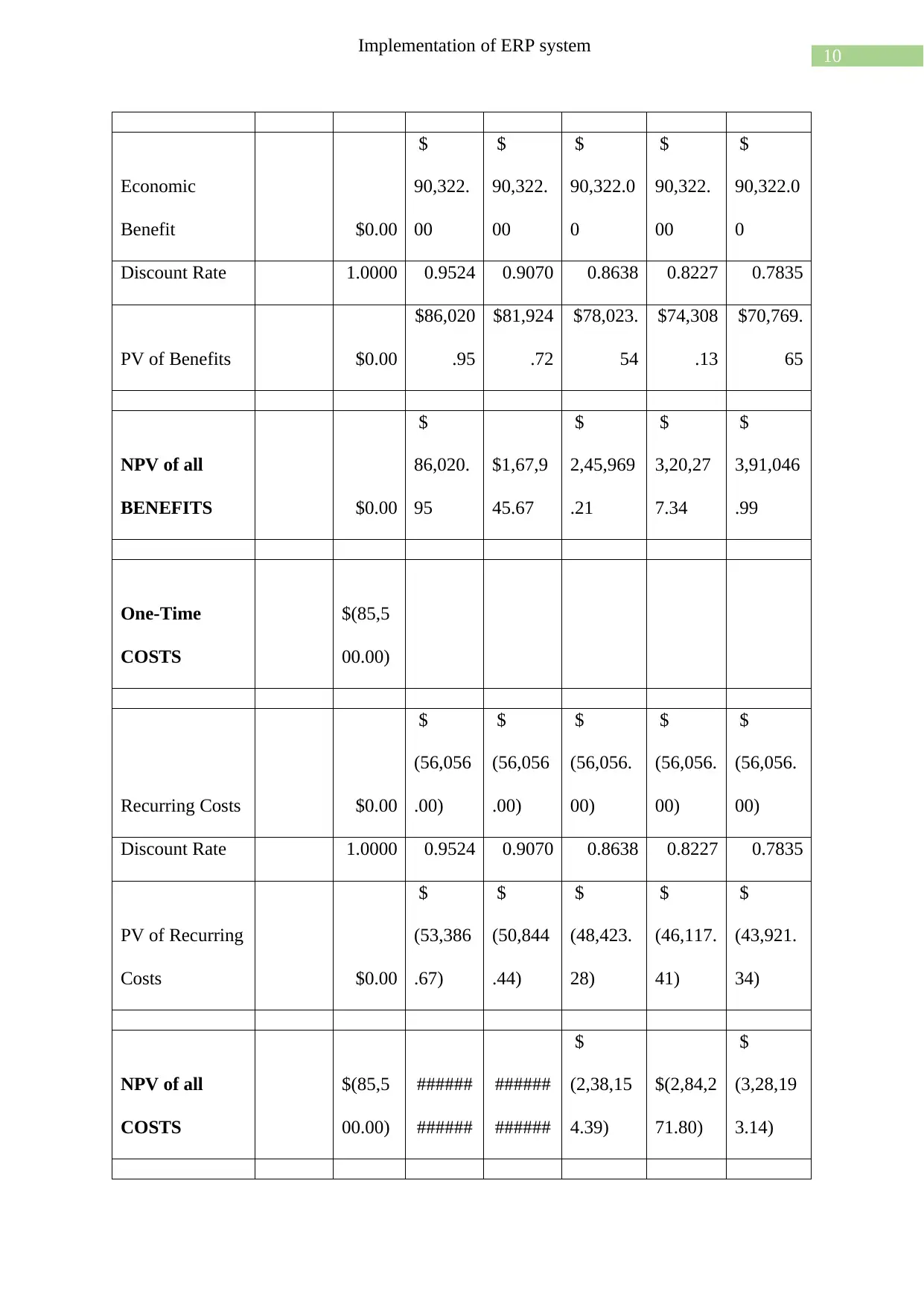
Economic
Benefit $0.00
$
90,322.
00
$
90,322.
00
$
90,322.0
0
$
90,322.
00
$
90,322.0
0
Discount Rate 1.0000 0.9524 0.9070 0.8638 0.8227 0.7835
PV of Benefits $0.00
$86,020
.95
$81,924
.72
$78,023.
54
$74,308
.13
$70,769.
65
NPV of all
BENEFITS $0.00
$
86,020.
95
$1,67,9
45.67
$
2,45,969
.21
$
3,20,27
7.34
$
3,91,046
.99
One-Time
COSTS
$(85,5
00.00)
Recurring Costs $0.00
$
(56,056
.00)
$
(56,056
.00)
$
(56,056.
00)
$
(56,056.
00)
$
(56,056.
00)
Discount Rate 1.0000 0.9524 0.9070 0.8638 0.8227 0.7835
PV of Recurring
Costs $0.00
$
(53,386
.67)
$
(50,844
.44)
$
(48,423.
28)
$
(46,117.
41)
$
(43,921.
34)
NPV of all
COSTS
$(85,5
00.00)
######
######
######
######
$
(2,38,15
4.39)
$(2,84,2
71.80)
$
(3,28,19
3.14)
Implementation of ERP system
Economic
Benefit $0.00
$
90,322.
00
$
90,322.
00
$
90,322.0
0
$
90,322.
00
$
90,322.0
0
Discount Rate 1.0000 0.9524 0.9070 0.8638 0.8227 0.7835
PV of Benefits $0.00
$86,020
.95
$81,924
.72
$78,023.
54
$74,308
.13
$70,769.
65
NPV of all
BENEFITS $0.00
$
86,020.
95
$1,67,9
45.67
$
2,45,969
.21
$
3,20,27
7.34
$
3,91,046
.99
One-Time
COSTS
$(85,5
00.00)
Recurring Costs $0.00
$
(56,056
.00)
$
(56,056
.00)
$
(56,056.
00)
$
(56,056.
00)
$
(56,056.
00)
Discount Rate 1.0000 0.9524 0.9070 0.8638 0.8227 0.7835
PV of Recurring
Costs $0.00
$
(53,386
.67)
$
(50,844
.44)
$
(48,423.
28)
$
(46,117.
41)
$
(43,921.
34)
NPV of all
COSTS
$(85,5
00.00)
######
######
######
######
$
(2,38,15
4.39)
$(2,84,2
71.80)
$
(3,28,19
3.14)
11
Implementation of ERP system
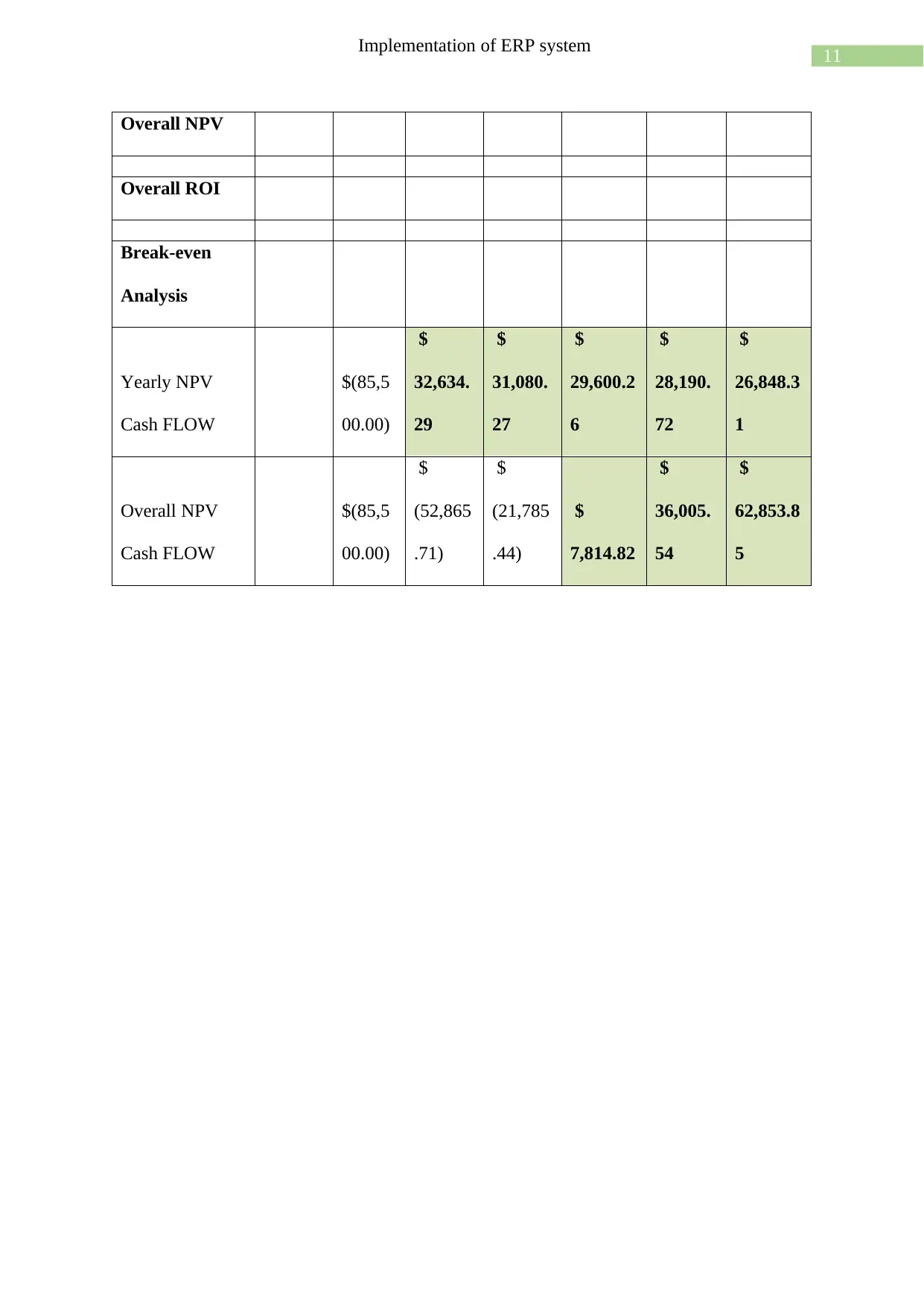
Overall NPV
Overall ROI
Break-even
Analysis
Yearly NPV
Cash FLOW
$(85,5
00.00)
$
32,634.
29
$
31,080.
27
$
29,600.2
6
$
28,190.
72
$
26,848.3
1
Overall NPV
Cash FLOW
$(85,5
00.00)
$
(52,865
.71)
$
(21,785
.44)
$
7,814.82
$
36,005.
54
$
62,853.8
5
Implementation of ERP system
Overall NPV
Overall ROI
Break-even
Analysis
Yearly NPV
Cash FLOW
$(85,5
00.00)
$
32,634.
29
$
31,080.
27
$
29,600.2
6
$
28,190.
72
$
26,848.3
1
Overall NPV
Cash FLOW
$(85,5
00.00)
$
(52,865
.71)
$
(21,785
.44)
$
7,814.82
$
36,005.
54
$
62,853.8
5
⊘ This is a preview!⊘
Do you want full access?
Subscribe today to unlock all pages.
Trusted by 1+ million students worldwide

1 out of 34


Your All-in-One AI-Powered Toolkit for Academic Success.
+13062052269
info@desklib.com
Available 24*7 on WhatsApp / Email
![[object Object]](/_next/static/media/star-bottom.7253800d.svg)
Unlock your academic potential
Copyright © 2020–2026 A2Z Services. All Rights Reserved. Developed and managed by ZUCOL.