Patient Confidentiality: Ethical and Practical Challenges for Nurses
VerifiedAdded on 2021/06/14
|8
|1735
|132
Essay
AI Summary
This essay provides an in-depth analysis of patient confidentiality within the nursing profession. It emphasizes the importance of maintaining patient privacy as both a moral and legal obligation, crucial for building trust and ensuring effective healthcare delivery. The essay explores the ethical frameworks, including Catholic Social Teaching, that underpin confidentiality and discusses potential breaches, such as unsecured data storage and unauthorized information sharing. It outlines strategies for addressing these challenges, including developing comprehensive policies, securing confidential information through secure systems, providing confidentiality training for nurses, establishing clear procedures for handling patient data, and enforcing these measures through disciplinary actions. The essay highlights the significant role nurses play in upholding patient rights and promoting the common good by safeguarding sensitive medical information.
Running Head: PATIENT CONFIDENTIALITY 1
PATIENT CONFIDENTIALITY
Name
Institutional Affiliation
PATIENT CONFIDENTIALITY
Name
Institutional Affiliation
Paraphrase This Document
Need a fresh take? Get an instant paraphrase of this document with our AI Paraphraser

PATIENT CONFIDENTIALITY 2
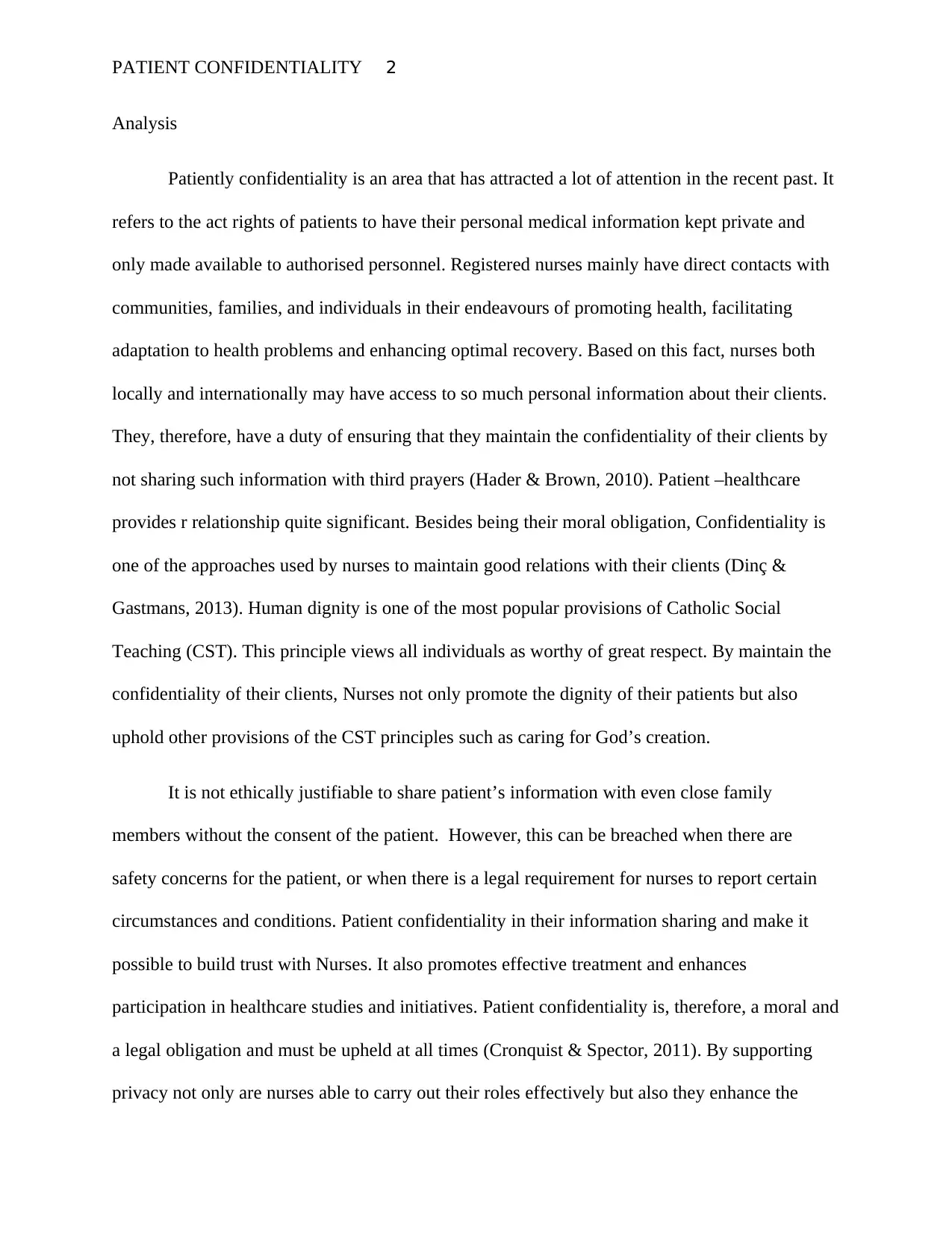
Analysis
Patiently confidentiality is an area that has attracted a lot of attention in the recent past. It
refers to the act rights of patients to have their personal medical information kept private and
only made available to authorised personnel. Registered nurses mainly have direct contacts with
communities, families, and individuals in their endeavours of promoting health, facilitating
adaptation to health problems and enhancing optimal recovery. Based on this fact, nurses both
locally and internationally may have access to so much personal information about their clients.
They, therefore, have a duty of ensuring that they maintain the confidentiality of their clients by
not sharing such information with third prayers (Hader & Brown, 2010). Patient –healthcare
provides r relationship quite significant. Besides being their moral obligation, Confidentiality is
one of the approaches used by nurses to maintain good relations with their clients (Dinç &
Gastmans, 2013). Human dignity is one of the most popular provisions of Catholic Social
Teaching (CST). This principle views all individuals as worthy of great respect. By maintain the
confidentiality of their clients, Nurses not only promote the dignity of their patients but also
uphold other provisions of the CST principles such as caring for God’s creation.
It is not ethically justifiable to share patient’s information with even close family
members without the consent of the patient. However, this can be breached when there are
safety concerns for the patient, or when there is a legal requirement for nurses to report certain
circumstances and conditions. Patient confidentiality in their information sharing and make it
possible to build trust with Nurses. It also promotes effective treatment and enhances
participation in healthcare studies and initiatives. Patient confidentiality is, therefore, a moral and
a legal obligation and must be upheld at all times (Cronquist & Spector, 2011). By supporting
privacy not only are nurses able to carry out their roles effectively but also they enhance the
Analysis
Patiently confidentiality is an area that has attracted a lot of attention in the recent past. It
refers to the act rights of patients to have their personal medical information kept private and
only made available to authorised personnel. Registered nurses mainly have direct contacts with
communities, families, and individuals in their endeavours of promoting health, facilitating
adaptation to health problems and enhancing optimal recovery. Based on this fact, nurses both
locally and internationally may have access to so much personal information about their clients.
They, therefore, have a duty of ensuring that they maintain the confidentiality of their clients by
not sharing such information with third prayers (Hader & Brown, 2010). Patient –healthcare
provides r relationship quite significant. Besides being their moral obligation, Confidentiality is
one of the approaches used by nurses to maintain good relations with their clients (Dinç &
Gastmans, 2013). Human dignity is one of the most popular provisions of Catholic Social
Teaching (CST). This principle views all individuals as worthy of great respect. By maintain the
confidentiality of their clients, Nurses not only promote the dignity of their patients but also
uphold other provisions of the CST principles such as caring for God’s creation.
It is not ethically justifiable to share patient’s information with even close family
members without the consent of the patient. However, this can be breached when there are
safety concerns for the patient, or when there is a legal requirement for nurses to report certain
circumstances and conditions. Patient confidentiality in their information sharing and make it
possible to build trust with Nurses. It also promotes effective treatment and enhances
participation in healthcare studies and initiatives. Patient confidentiality is, therefore, a moral and
a legal obligation and must be upheld at all times (Cronquist & Spector, 2011). By supporting
privacy not only are nurses able to carry out their roles effectively but also they enhance the

PATIENT CONFIDENTIALITY 3
effectiveness of the mediation process. It, therefore, promotes the common good for patients and
Nurses.
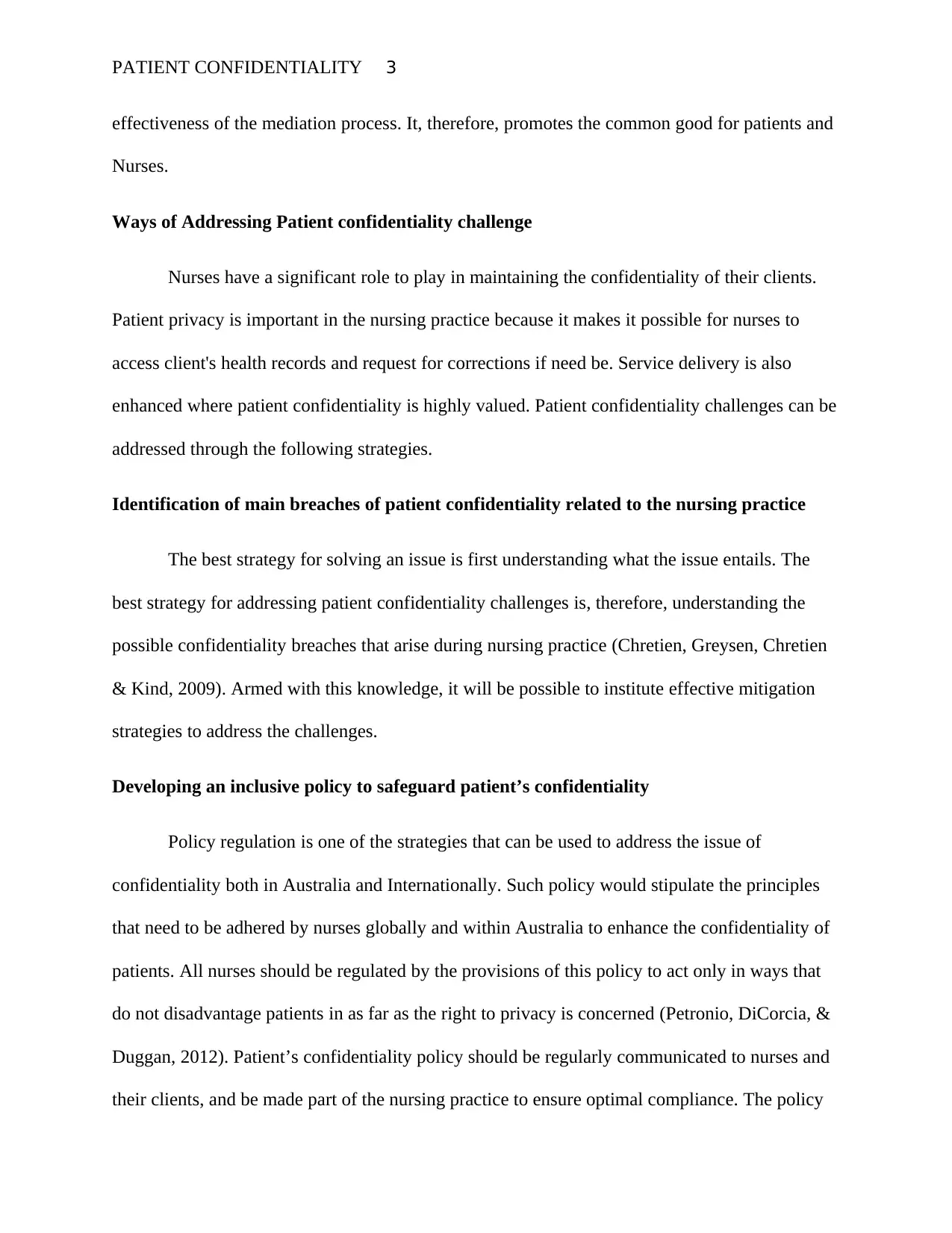
Ways of Addressing Patient confidentiality challenge
Nurses have a significant role to play in maintaining the confidentiality of their clients.
Patient privacy is important in the nursing practice because it makes it possible for nurses to
access client's health records and request for corrections if need be. Service delivery is also
enhanced where patient confidentiality is highly valued. Patient confidentiality challenges can be
addressed through the following strategies.
Identification of main breaches of patient confidentiality related to the nursing practice
The best strategy for solving an issue is first understanding what the issue entails. The
best strategy for addressing patient confidentiality challenges is, therefore, understanding the
possible confidentiality breaches that arise during nursing practice (Chretien, Greysen, Chretien
& Kind, 2009). Armed with this knowledge, it will be possible to institute effective mitigation
strategies to address the challenges.
Developing an inclusive policy to safeguard patient’s confidentiality
Policy regulation is one of the strategies that can be used to address the issue of
confidentiality both in Australia and Internationally. Such policy would stipulate the principles
that need to be adhered by nurses globally and within Australia to enhance the confidentiality of
patients. All nurses should be regulated by the provisions of this policy to act only in ways that
do not disadvantage patients in as far as the right to privacy is concerned (Petronio, DiCorcia, &
Duggan, 2012). Patient’s confidentiality policy should be regularly communicated to nurses and
their clients, and be made part of the nursing practice to ensure optimal compliance. The policy
effectiveness of the mediation process. It, therefore, promotes the common good for patients and
Nurses.
Ways of Addressing Patient confidentiality challenge
Nurses have a significant role to play in maintaining the confidentiality of their clients.
Patient privacy is important in the nursing practice because it makes it possible for nurses to
access client's health records and request for corrections if need be. Service delivery is also
enhanced where patient confidentiality is highly valued. Patient confidentiality challenges can be
addressed through the following strategies.
Identification of main breaches of patient confidentiality related to the nursing practice
The best strategy for solving an issue is first understanding what the issue entails. The
best strategy for addressing patient confidentiality challenges is, therefore, understanding the
possible confidentiality breaches that arise during nursing practice (Chretien, Greysen, Chretien
& Kind, 2009). Armed with this knowledge, it will be possible to institute effective mitigation
strategies to address the challenges.
Developing an inclusive policy to safeguard patient’s confidentiality
Policy regulation is one of the strategies that can be used to address the issue of
confidentiality both in Australia and Internationally. Such policy would stipulate the principles
that need to be adhered by nurses globally and within Australia to enhance the confidentiality of
patients. All nurses should be regulated by the provisions of this policy to act only in ways that
do not disadvantage patients in as far as the right to privacy is concerned (Petronio, DiCorcia, &
Duggan, 2012). Patient’s confidentiality policy should be regularly communicated to nurses and
their clients, and be made part of the nursing practice to ensure optimal compliance. The policy
⊘ This is a preview!⊘
Do you want full access?
Subscribe today to unlock all pages.

Trusted by 1+ million students worldwide

PATIENT CONFIDENTIALITY 4
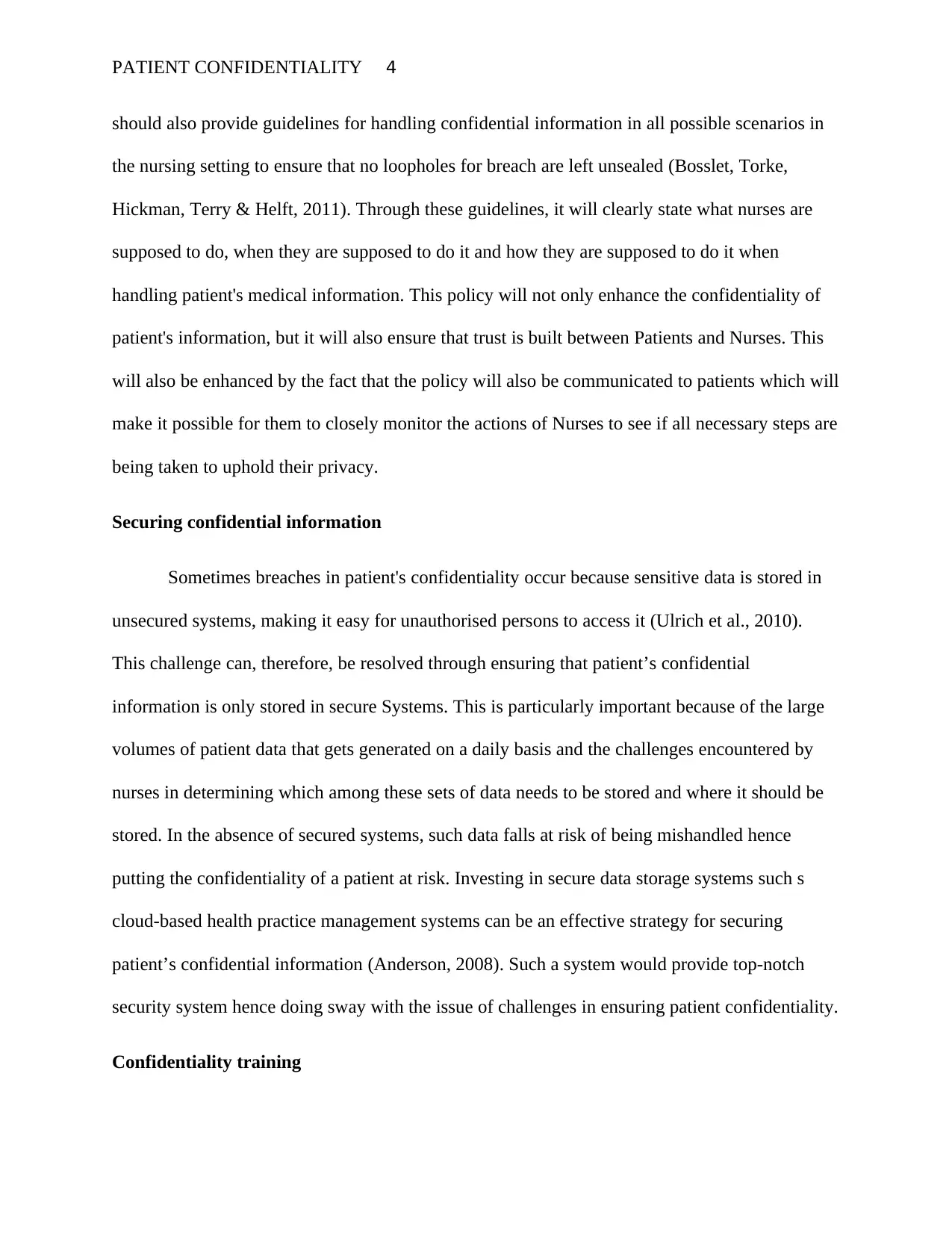
should also provide guidelines for handling confidential information in all possible scenarios in
the nursing setting to ensure that no loopholes for breach are left unsealed (Bosslet, Torke,
Hickman, Terry & Helft, 2011). Through these guidelines, it will clearly state what nurses are
supposed to do, when they are supposed to do it and how they are supposed to do it when
handling patient's medical information. This policy will not only enhance the confidentiality of
patient's information, but it will also ensure that trust is built between Patients and Nurses. This
will also be enhanced by the fact that the policy will also be communicated to patients which will
make it possible for them to closely monitor the actions of Nurses to see if all necessary steps are
being taken to uphold their privacy.
Securing confidential information
Sometimes breaches in patient's confidentiality occur because sensitive data is stored in
unsecured systems, making it easy for unauthorised persons to access it (Ulrich et al., 2010).
This challenge can, therefore, be resolved through ensuring that patient’s confidential
information is only stored in secure Systems. This is particularly important because of the large
volumes of patient data that gets generated on a daily basis and the challenges encountered by
nurses in determining which among these sets of data needs to be stored and where it should be
stored. In the absence of secured systems, such data falls at risk of being mishandled hence
putting the confidentiality of a patient at risk. Investing in secure data storage systems such s
cloud-based health practice management systems can be an effective strategy for securing
patient’s confidential information (Anderson, 2008). Such a system would provide top-notch
security system hence doing sway with the issue of challenges in ensuring patient confidentiality.
Confidentiality training
should also provide guidelines for handling confidential information in all possible scenarios in
the nursing setting to ensure that no loopholes for breach are left unsealed (Bosslet, Torke,
Hickman, Terry & Helft, 2011). Through these guidelines, it will clearly state what nurses are
supposed to do, when they are supposed to do it and how they are supposed to do it when
handling patient's medical information. This policy will not only enhance the confidentiality of
patient's information, but it will also ensure that trust is built between Patients and Nurses. This
will also be enhanced by the fact that the policy will also be communicated to patients which will
make it possible for them to closely monitor the actions of Nurses to see if all necessary steps are
being taken to uphold their privacy.
Securing confidential information
Sometimes breaches in patient's confidentiality occur because sensitive data is stored in
unsecured systems, making it easy for unauthorised persons to access it (Ulrich et al., 2010).
This challenge can, therefore, be resolved through ensuring that patient’s confidential
information is only stored in secure Systems. This is particularly important because of the large
volumes of patient data that gets generated on a daily basis and the challenges encountered by
nurses in determining which among these sets of data needs to be stored and where it should be
stored. In the absence of secured systems, such data falls at risk of being mishandled hence
putting the confidentiality of a patient at risk. Investing in secure data storage systems such s
cloud-based health practice management systems can be an effective strategy for securing
patient’s confidential information (Anderson, 2008). Such a system would provide top-notch
security system hence doing sway with the issue of challenges in ensuring patient confidentiality.
Confidentiality training
Paraphrase This Document
Need a fresh take? Get an instant paraphrase of this document with our AI Paraphraser

PATIENT CONFIDENTIALITY 5
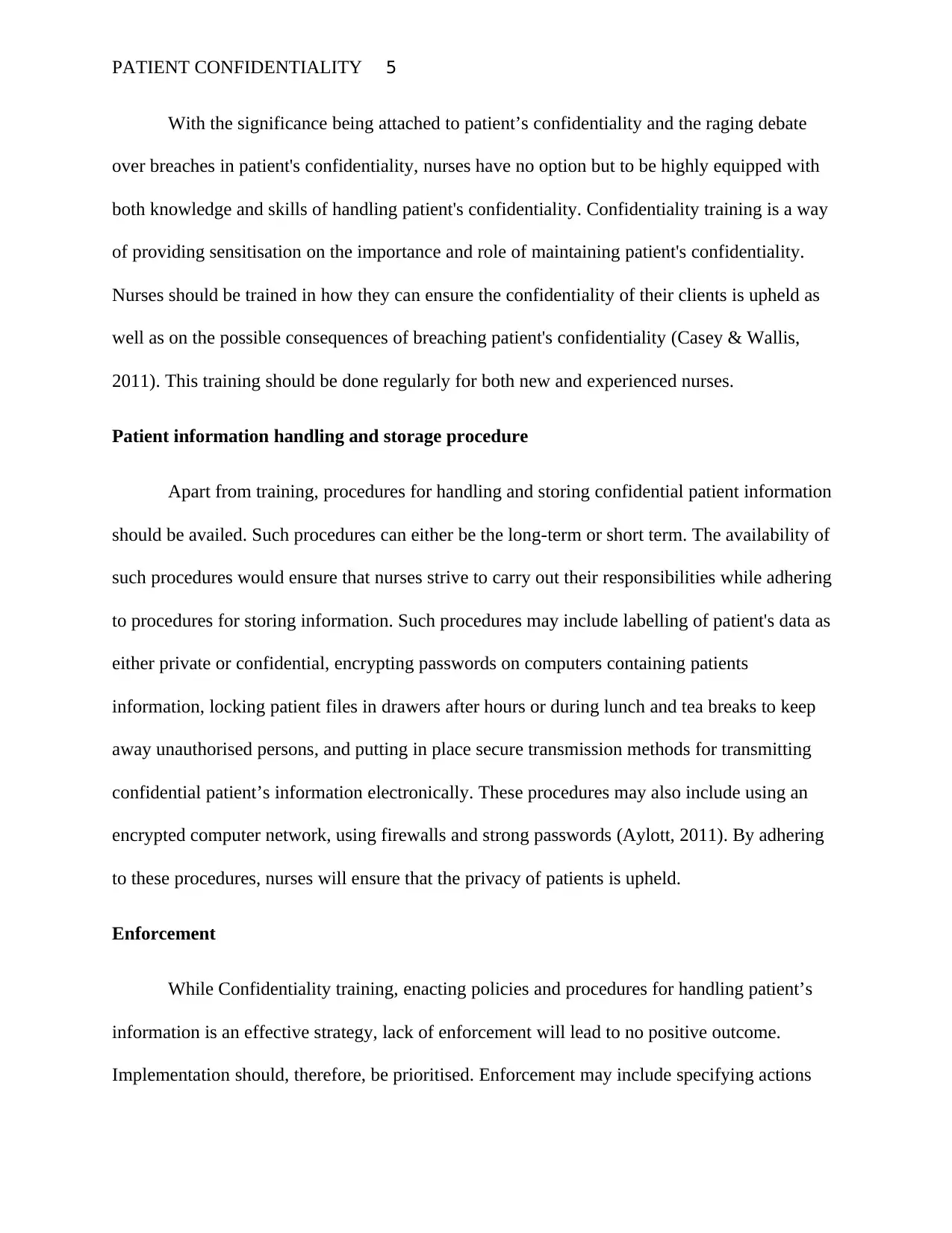
With the significance being attached to patient’s confidentiality and the raging debate
over breaches in patient's confidentiality, nurses have no option but to be highly equipped with
both knowledge and skills of handling patient's confidentiality. Confidentiality training is a way
of providing sensitisation on the importance and role of maintaining patient's confidentiality.
Nurses should be trained in how they can ensure the confidentiality of their clients is upheld as
well as on the possible consequences of breaching patient's confidentiality (Casey & Wallis,
2011). This training should be done regularly for both new and experienced nurses.
Patient information handling and storage procedure
Apart from training, procedures for handling and storing confidential patient information
should be availed. Such procedures can either be the long-term or short term. The availability of
such procedures would ensure that nurses strive to carry out their responsibilities while adhering
to procedures for storing information. Such procedures may include labelling of patient's data as
either private or confidential, encrypting passwords on computers containing patients
information, locking patient files in drawers after hours or during lunch and tea breaks to keep
away unauthorised persons, and putting in place secure transmission methods for transmitting
confidential patient’s information electronically. These procedures may also include using an
encrypted computer network, using firewalls and strong passwords (Aylott, 2011). By adhering
to these procedures, nurses will ensure that the privacy of patients is upheld.
Enforcement
While Confidentiality training, enacting policies and procedures for handling patient’s
information is an effective strategy, lack of enforcement will lead to no positive outcome.
Implementation should, therefore, be prioritised. Enforcement may include specifying actions
With the significance being attached to patient’s confidentiality and the raging debate
over breaches in patient's confidentiality, nurses have no option but to be highly equipped with
both knowledge and skills of handling patient's confidentiality. Confidentiality training is a way
of providing sensitisation on the importance and role of maintaining patient's confidentiality.
Nurses should be trained in how they can ensure the confidentiality of their clients is upheld as
well as on the possible consequences of breaching patient's confidentiality (Casey & Wallis,
2011). This training should be done regularly for both new and experienced nurses.
Patient information handling and storage procedure
Apart from training, procedures for handling and storing confidential patient information
should be availed. Such procedures can either be the long-term or short term. The availability of
such procedures would ensure that nurses strive to carry out their responsibilities while adhering
to procedures for storing information. Such procedures may include labelling of patient's data as
either private or confidential, encrypting passwords on computers containing patients
information, locking patient files in drawers after hours or during lunch and tea breaks to keep
away unauthorised persons, and putting in place secure transmission methods for transmitting
confidential patient’s information electronically. These procedures may also include using an
encrypted computer network, using firewalls and strong passwords (Aylott, 2011). By adhering
to these procedures, nurses will ensure that the privacy of patients is upheld.
Enforcement
While Confidentiality training, enacting policies and procedures for handling patient’s
information is an effective strategy, lack of enforcement will lead to no positive outcome.
Implementation should, therefore, be prioritised. Enforcement may include specifying actions

PATIENT CONFIDENTIALITY 6
that constitute a violation of patient confidentiality by Nurses and the possible disciplinary action
for such violations. Enforcement should also include installation of event and log management
software to identify and regulate logins to computers containing crucial patient’s information.
that constitute a violation of patient confidentiality by Nurses and the possible disciplinary action
for such violations. Enforcement should also include installation of event and log management
software to identify and regulate logins to computers containing crucial patient’s information.
⊘ This is a preview!⊘
Do you want full access?
Subscribe today to unlock all pages.

Trusted by 1+ million students worldwide

PATIENT CONFIDENTIALITY 7
References
Anderson, R. (2008). Patient confidentiality and central databases. Br J Gen Pract, 58(547), 75-
76.
Aylott, M. (2011). Blurring the boundaries: Technology and the nurse-patient relationship.
British Journal of Nursing, 20(13), 810-816.
Bosslet, G. T., Torke, A. M., Hickman, S. E., Terry, C. L., & Helft, P. R. (2011). The patient-
doctor relationship and online social networks: results of a national survey. Journal of
general internal medicine, 26(10), 1168-1174.
Casey, A., & Wallis, A. (2011). Effective communication: the principle of nursing practice E.
Nursing Standard (through 2013), 25(32), 35.
Chretien, K. C., Greysen, S. R., Chretien, J. P., & Kind, T. (2009). Online posting of
unprofessional content by medical students. Jama, 302(12), 1309-1315.
Cronquist, R., & Spector, N. (2011). Nurses and social media: Regulatory concerns and
guidelines. Journal of Nursing Regulation, 2(3), 37-40.
Dinç, L., & Gastmans, C. (2013). Trust in nurse-patient relationships: A literature review.
Nursing Ethics, 20(5), 501-516.
Hader, A. L., & Brown, E. D. (2010). LEGAL BRIEFS. Patient Privacy and Social Media.
AANA journal, 78(4).
Petronio, S., DiCorcia, M. J., & Duggan, A. (2012). Navigating ethics of physician-patient
confidentiality: a communication privacy management analysis. The Permanente
Journal, 16(4), 41.
References
Anderson, R. (2008). Patient confidentiality and central databases. Br J Gen Pract, 58(547), 75-
76.
Aylott, M. (2011). Blurring the boundaries: Technology and the nurse-patient relationship.
British Journal of Nursing, 20(13), 810-816.
Bosslet, G. T., Torke, A. M., Hickman, S. E., Terry, C. L., & Helft, P. R. (2011). The patient-
doctor relationship and online social networks: results of a national survey. Journal of
general internal medicine, 26(10), 1168-1174.
Casey, A., & Wallis, A. (2011). Effective communication: the principle of nursing practice E.
Nursing Standard (through 2013), 25(32), 35.
Chretien, K. C., Greysen, S. R., Chretien, J. P., & Kind, T. (2009). Online posting of
unprofessional content by medical students. Jama, 302(12), 1309-1315.
Cronquist, R., & Spector, N. (2011). Nurses and social media: Regulatory concerns and
guidelines. Journal of Nursing Regulation, 2(3), 37-40.
Dinç, L., & Gastmans, C. (2013). Trust in nurse-patient relationships: A literature review.
Nursing Ethics, 20(5), 501-516.
Hader, A. L., & Brown, E. D. (2010). LEGAL BRIEFS. Patient Privacy and Social Media.
AANA journal, 78(4).
Petronio, S., DiCorcia, M. J., & Duggan, A. (2012). Navigating ethics of physician-patient
confidentiality: a communication privacy management analysis. The Permanente
Journal, 16(4), 41.
Paraphrase This Document
Need a fresh take? Get an instant paraphrase of this document with our AI Paraphraser

PATIENT CONFIDENTIALITY 8
Ulrich, C. M., Taylor, C., Soeken, K., O’Donnell, P., Farrar, A., Danis, M., & Grady, C. (2010).
Everyday ethics: ethical issues and stress in nursing practice. Journal of advanced
nursing, 66(11), 2510-2519.
Ulrich, C. M., Taylor, C., Soeken, K., O’Donnell, P., Farrar, A., Danis, M., & Grady, C. (2010).
Everyday ethics: ethical issues and stress in nursing practice. Journal of advanced
nursing, 66(11), 2510-2519.
1 out of 8
Related Documents
Your All-in-One AI-Powered Toolkit for Academic Success.
+13062052269
info@desklib.com
Available 24*7 on WhatsApp / Email
Unlock your academic potential
Copyright © 2020–2025 A2Z Services. All Rights Reserved. Developed and managed by ZUCOL.