Electricity: Evolution, Transmission, and Consumption Report
VerifiedAdded on 2020/03/02
|9
|1789
|46
Report
AI Summary
This report provides a comprehensive overview of the evolution of electricity, tracing its development from early experiments by Benjamin Franklin to the modern power grid. It highlights key milestones such as Michael Faraday's discovery of electromagnetic induction and the subsequent advancements in power generation and transmission, including the adoption of alternating current and high-voltage transmission lines. The report explores the widespread usage of electricity across various sectors, including industrial, residential, and public, and discusses the significant role electricity plays in modern life. Furthermore, it examines the differences in electricity consumption between rural and urban areas, citing studies that compare consumption patterns and potential contributing factors such as housing stock, billing, and demographics. The report concludes by emphasizing the critical importance of sustainable energy practices to mitigate global warming and ensure the long-term availability of electricity.
Evolution of Electricity 1
THE EVOLUTION, THE SPREAD AND THE USAGE OF ELECTRICITY
Name
Course
Tutor
University
City/State
Date
THE EVOLUTION, THE SPREAD AND THE USAGE OF ELECTRICITY
Name
Course
Tutor
University
City/State
Date

Paraphrase This Document
Need a fresh take? Get an instant paraphrase of this document with our AI Paraphraser
Evolution of Electricity 2
The evolution, the spread and the usage of electricity
Affordable and reliable electricity is important in modern life. It is essential to our daily lives and
supports our economy in various aspects. We use electricity to power devices, in homes, in
medicine, in engineering, and in agriculture. The modern electric world began with appliances
like the telegraph, light bulb, as well as telephone and continued with radio, television, and many
appliances (Jakovac 2012, p. 316). This paper focuses on following the evolution of electricity,
its transmission, usage, and the difference in consumption between the rural and urban residents.
Although electricity has been known since the ancient times, it has only been harnessed its power
for about 250 years. Benjamin Franklin’s electricity experiments-including the kite
experimenting 1752- showed how little electricity was known in the era of the American
Revolution and the first industrial revolution (Matthew 2004, p. 2). Since Franklin`s
experiments, the grasp of electricity has grown tremendously and new ways of its usage to
improve our lives (Institute for energy research 2014). One of the first primary breakthroughs in
electricity occurred in 1832 when a British scientist Michael Faraday discovered the basic
principles of electricity generation.
Building on the experiments of Franklin and others, he found that he could create or induce an
electric current by moving magnets inside coils of copper wire. This discovery of
electromagnetic induction revolutionized the use of energy. Ideally, Faraday`s process is used in
modern power production. The Institute of energy research (2014) suggests that in the modern
era of power plants, coal has always generated more electricity in the U.S. than any other fuel
sources. In the recent years, we have seen other sources of electricity- hydroelectricity, nuclear
power and natural gas competing for the second place. The energy is also used primarily in
The evolution, the spread and the usage of electricity
Affordable and reliable electricity is important in modern life. It is essential to our daily lives and
supports our economy in various aspects. We use electricity to power devices, in homes, in
medicine, in engineering, and in agriculture. The modern electric world began with appliances
like the telegraph, light bulb, as well as telephone and continued with radio, television, and many
appliances (Jakovac 2012, p. 316). This paper focuses on following the evolution of electricity,
its transmission, usage, and the difference in consumption between the rural and urban residents.
Although electricity has been known since the ancient times, it has only been harnessed its power
for about 250 years. Benjamin Franklin’s electricity experiments-including the kite
experimenting 1752- showed how little electricity was known in the era of the American
Revolution and the first industrial revolution (Matthew 2004, p. 2). Since Franklin`s
experiments, the grasp of electricity has grown tremendously and new ways of its usage to
improve our lives (Institute for energy research 2014). One of the first primary breakthroughs in
electricity occurred in 1832 when a British scientist Michael Faraday discovered the basic
principles of electricity generation.
Building on the experiments of Franklin and others, he found that he could create or induce an
electric current by moving magnets inside coils of copper wire. This discovery of
electromagnetic induction revolutionized the use of energy. Ideally, Faraday`s process is used in
modern power production. The Institute of energy research (2014) suggests that in the modern
era of power plants, coal has always generated more electricity in the U.S. than any other fuel
sources. In the recent years, we have seen other sources of electricity- hydroelectricity, nuclear
power and natural gas competing for the second place. The energy is also used primarily in
Evolution of Electricity 3
driving the transport and communication industry. For instance, the transport industry depends
on energy in driving trains, airplanes, and automobile machines among other transportation
machines. Communication as well depends on sensor a system that as well depends on energy.
The 19th-century inventors who began to harness electricity to useful purpose put their small
generators right next to the machines that used the electricity as pointed out by Tolis (2015). The
earliest distribution system was by Thomas Edison`s 1882 Pearl street station in Manhattan, and
another that Edison built in Menlo Park, New Jersey. Like many others that were constructed
during the next few years, they distributed power over copper lines using direct current.
However, the method of distribution was so ineffective forcing most power plants had to be
located within a mile of the place using the power known as the “load” (Matthew et al. p. 4). All
the early power systems were what most people now refer to as distributed generation systems
where the generators were located close to machines that used electricity. By the 1890s other
inventors further developed this system of power distribution. Mastropietro, Batlle, Barroso, and
Rodilla (2016) denote that the most important development was high- voltage power
transmission lines that adopted the use of alternating current. In addition, alternating current
allowed power lines, to transmit power over much longer distances than the direct current
system.
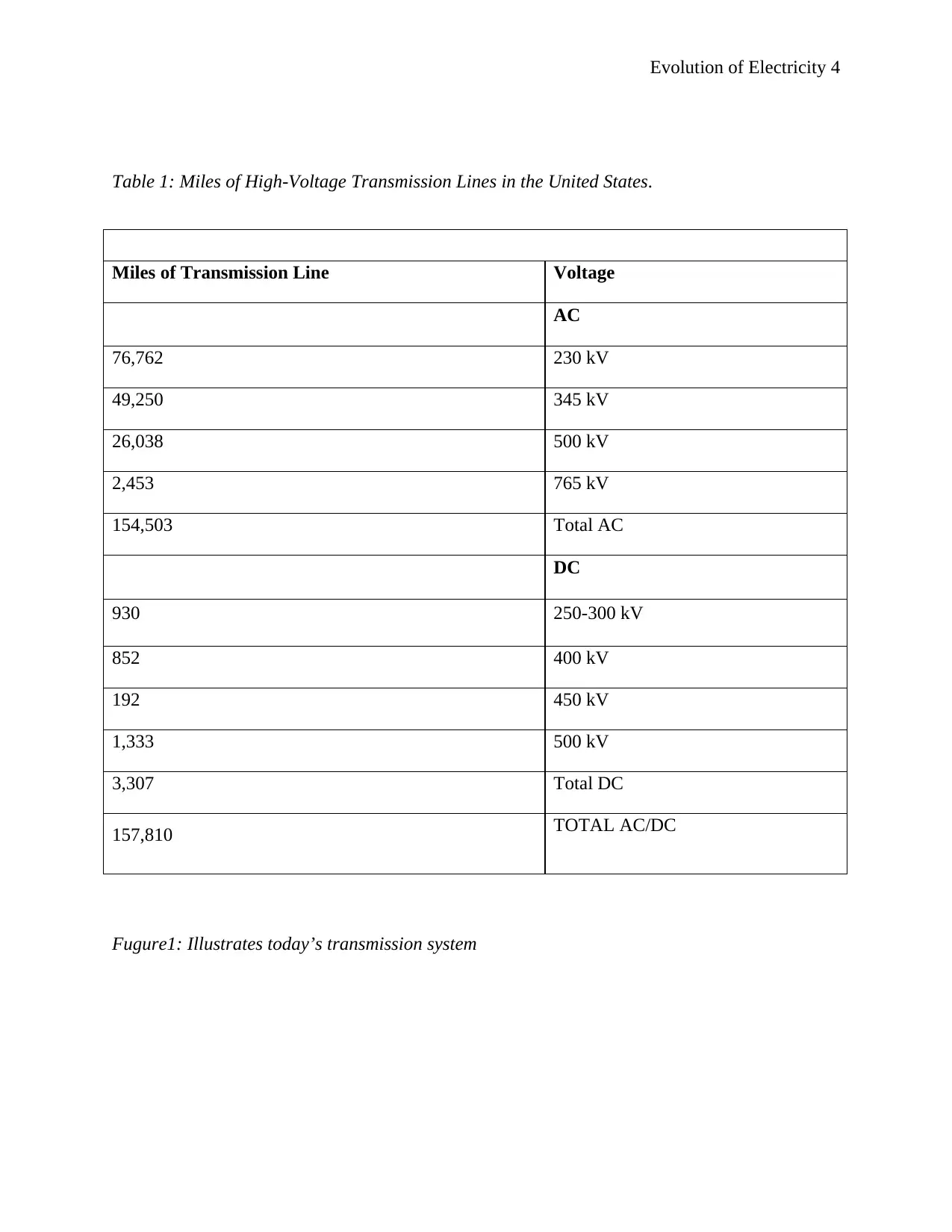
At the beginning of the 21stcentury, the transmission system is a truly interconnected network
with more than 150,000 miles of high voltage transmission lines. Matthew et al. (2004) also
points out that with the increasingly technology-dependent society, people depend upon the
network itself as much as on the power plants that use and feed the network. It hence called for
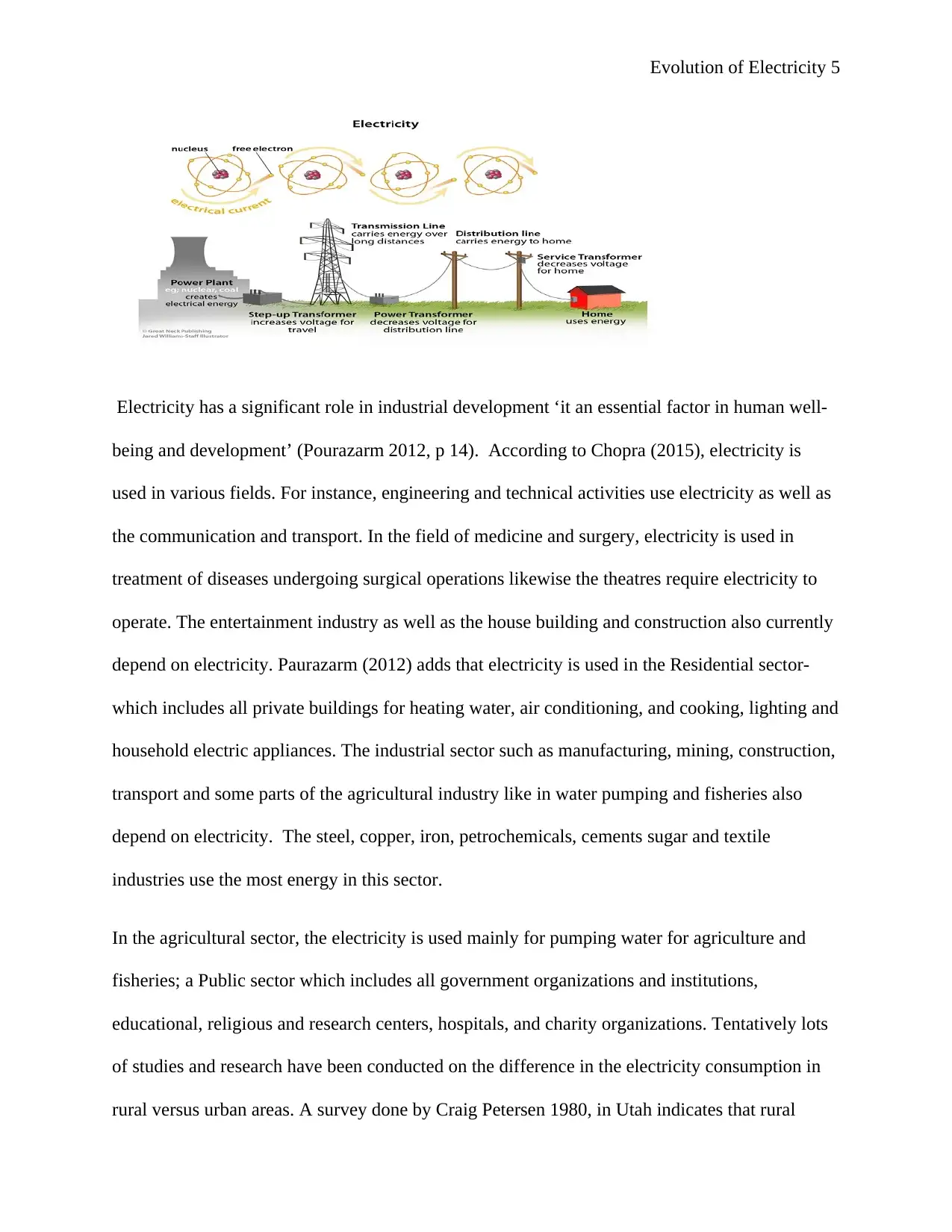
the development of a sophisticated network system that involves interconnected power plants
and power lines that operated at many different voltages as shown in figure 1.
driving the transport and communication industry. For instance, the transport industry depends
on energy in driving trains, airplanes, and automobile machines among other transportation
machines. Communication as well depends on sensor a system that as well depends on energy.
The 19th-century inventors who began to harness electricity to useful purpose put their small
generators right next to the machines that used the electricity as pointed out by Tolis (2015). The
earliest distribution system was by Thomas Edison`s 1882 Pearl street station in Manhattan, and
another that Edison built in Menlo Park, New Jersey. Like many others that were constructed
during the next few years, they distributed power over copper lines using direct current.
However, the method of distribution was so ineffective forcing most power plants had to be
located within a mile of the place using the power known as the “load” (Matthew et al. p. 4). All
the early power systems were what most people now refer to as distributed generation systems
where the generators were located close to machines that used electricity. By the 1890s other
inventors further developed this system of power distribution. Mastropietro, Batlle, Barroso, and
Rodilla (2016) denote that the most important development was high- voltage power
transmission lines that adopted the use of alternating current. In addition, alternating current
allowed power lines, to transmit power over much longer distances than the direct current
system.
At the beginning of the 21stcentury, the transmission system is a truly interconnected network
with more than 150,000 miles of high voltage transmission lines. Matthew et al. (2004) also
points out that with the increasingly technology-dependent society, people depend upon the
network itself as much as on the power plants that use and feed the network. It hence called for
the development of a sophisticated network system that involves interconnected power plants
and power lines that operated at many different voltages as shown in figure 1.
⊘ This is a preview!⊘
Do you want full access?
Subscribe today to unlock all pages.

Trusted by 1+ million students worldwide
Evolution of Electricity 4
Table 1: Miles of High-Voltage Transmission Lines in the United States.
Miles of Transmission Line Voltage
AC
76,762 230 kV
49,250 345 kV
26,038 500 kV
2,453 765 kV
154,503 Total AC
DC
930 250-300 kV
852 400 kV
192 450 kV
1,333 500 kV
3,307 Total DC
157,810 TOTAL AC/DC
Fugure1: Illustrates today’s transmission system
Table 1: Miles of High-Voltage Transmission Lines in the United States.
Miles of Transmission Line Voltage
AC
76,762 230 kV
49,250 345 kV
26,038 500 kV
2,453 765 kV
154,503 Total AC
DC
930 250-300 kV
852 400 kV
192 450 kV
1,333 500 kV
3,307 Total DC
157,810 TOTAL AC/DC
Fugure1: Illustrates today’s transmission system
Paraphrase This Document
Need a fresh take? Get an instant paraphrase of this document with our AI Paraphraser
Evolution of Electricity 5
Electricity has a significant role in industrial development ‘it an essential factor in human well-
being and development’ (Pourazarm 2012, p 14). According to Chopra (2015), electricity is
used in various fields. For instance, engineering and technical activities use electricity as well as
the communication and transport. In the field of medicine and surgery, electricity is used in
treatment of diseases undergoing surgical operations likewise the theatres require electricity to
operate. The entertainment industry as well as the house building and construction also currently
depend on electricity. Paurazarm (2012) adds that electricity is used in the Residential sector-
which includes all private buildings for heating water, air conditioning, and cooking, lighting and
household electric appliances. The industrial sector such as manufacturing, mining, construction,
transport and some parts of the agricultural industry like in water pumping and fisheries also
depend on electricity. The steel, copper, iron, petrochemicals, cements sugar and textile
industries use the most energy in this sector.
In the agricultural sector, the electricity is used mainly for pumping water for agriculture and
fisheries; a Public sector which includes all government organizations and institutions,
educational, religious and research centers, hospitals, and charity organizations. Tentatively lots
of studies and research have been conducted on the difference in the electricity consumption in
rural versus urban areas. A survey done by Craig Petersen 1980, in Utah indicates that rural
Electricity has a significant role in industrial development ‘it an essential factor in human well-
being and development’ (Pourazarm 2012, p 14). According to Chopra (2015), electricity is
used in various fields. For instance, engineering and technical activities use electricity as well as
the communication and transport. In the field of medicine and surgery, electricity is used in
treatment of diseases undergoing surgical operations likewise the theatres require electricity to
operate. The entertainment industry as well as the house building and construction also currently
depend on electricity. Paurazarm (2012) adds that electricity is used in the Residential sector-
which includes all private buildings for heating water, air conditioning, and cooking, lighting and
household electric appliances. The industrial sector such as manufacturing, mining, construction,
transport and some parts of the agricultural industry like in water pumping and fisheries also
depend on electricity. The steel, copper, iron, petrochemicals, cements sugar and textile
industries use the most energy in this sector.
In the agricultural sector, the electricity is used mainly for pumping water for agriculture and
fisheries; a Public sector which includes all government organizations and institutions,
educational, religious and research centers, hospitals, and charity organizations. Tentatively lots
of studies and research have been conducted on the difference in the electricity consumption in
rural versus urban areas. A survey done by Craig Petersen 1980, in Utah indicates that rural
Evolution of Electricity 6
dwellers use more electricity than urban dweller. Craig suggests that the difference could be that
urban housing stock may be more efficient; the difference in the billing of electricity; rural
locations may be colder than urban locations and those rural residents had a different
demographic as it relates to electricity usage (Petersen 1982, p. 1).
Michael Barnard (2013), states that the rural dwellers use more electricity (and more of every
other form of energy) than urban dwellers where the ratio for electricity consumption alone is in
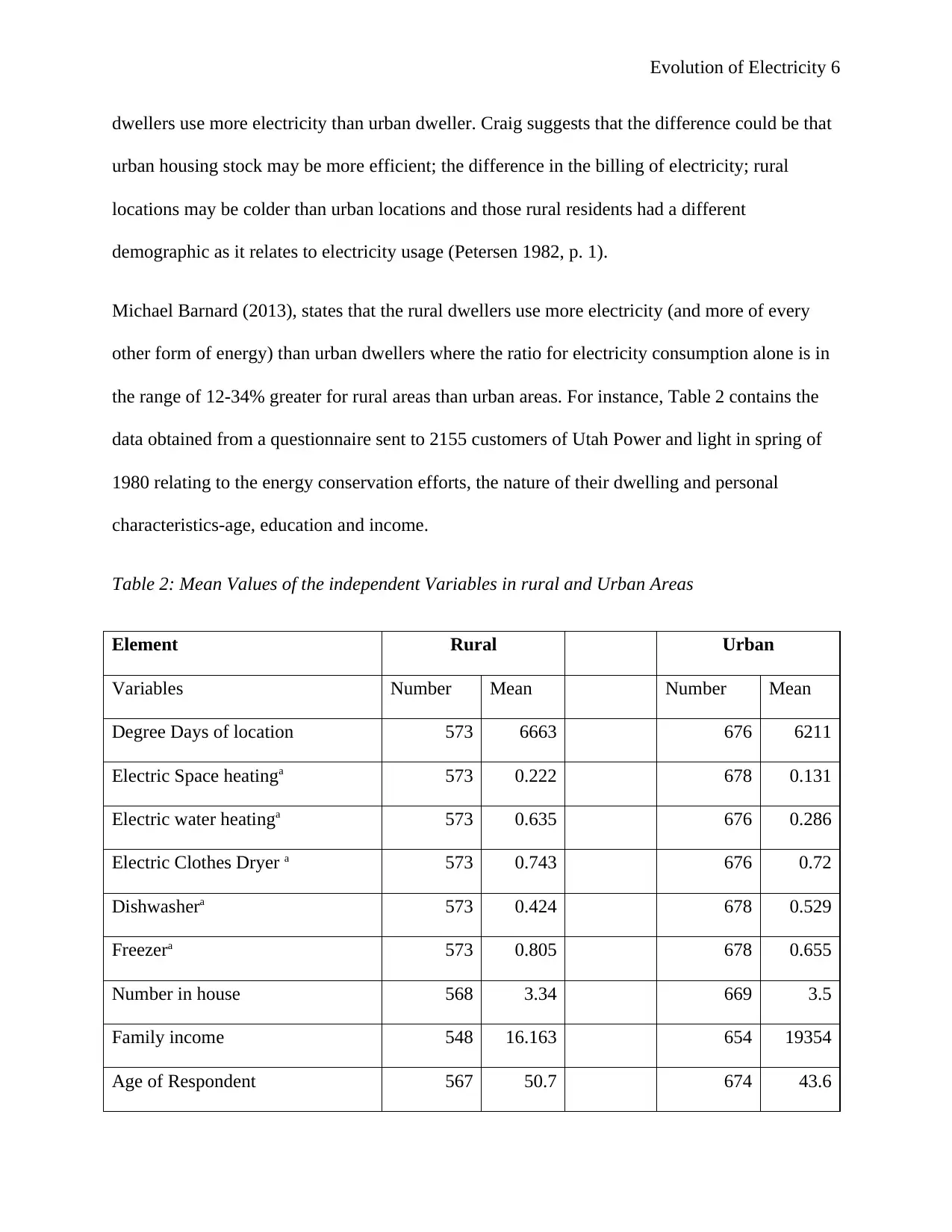
the range of 12-34% greater for rural areas than urban areas. For instance, Table 2 contains the
data obtained from a questionnaire sent to 2155 customers of Utah Power and light in spring of
1980 relating to the energy conservation efforts, the nature of their dwelling and personal
characteristics-age, education and income.
Table 2: Mean Values of the independent Variables in rural and Urban Areas
Element Rural Urban
Variables Number Mean Number Mean
Degree Days of location 573 6663 676 6211
Electric Space heatinga 573 0.222 678 0.131
Electric water heatinga 573 0.635 676 0.286
Electric Clothes Dryer a 573 0.743 676 0.72
Dishwashera 573 0.424 678 0.529
Freezera 573 0.805 678 0.655
Number in house 568 3.34 669 3.5
Family income 548 16.163 654 19354
Age of Respondent 567 50.7 674 43.6
dwellers use more electricity than urban dweller. Craig suggests that the difference could be that
urban housing stock may be more efficient; the difference in the billing of electricity; rural
locations may be colder than urban locations and those rural residents had a different
demographic as it relates to electricity usage (Petersen 1982, p. 1).
Michael Barnard (2013), states that the rural dwellers use more electricity (and more of every
other form of energy) than urban dwellers where the ratio for electricity consumption alone is in
the range of 12-34% greater for rural areas than urban areas. For instance, Table 2 contains the
data obtained from a questionnaire sent to 2155 customers of Utah Power and light in spring of
1980 relating to the energy conservation efforts, the nature of their dwelling and personal
characteristics-age, education and income.
Table 2: Mean Values of the independent Variables in rural and Urban Areas
Element Rural Urban
Variables Number Mean Number Mean
Degree Days of location 573 6663 676 6211
Electric Space heatinga 573 0.222 678 0.131
Electric water heatinga 573 0.635 676 0.286
Electric Clothes Dryer a 573 0.743 676 0.72
Dishwashera 573 0.424 678 0.529
Freezera 573 0.805 678 0.655
Number in house 568 3.34 669 3.5
Family income 548 16.163 654 19354
Age of Respondent 567 50.7 674 43.6
⊘ This is a preview!⊘
Do you want full access?
Subscribe today to unlock all pages.
Trusted by 1+ million students worldwide
Evolution of Electricity 7
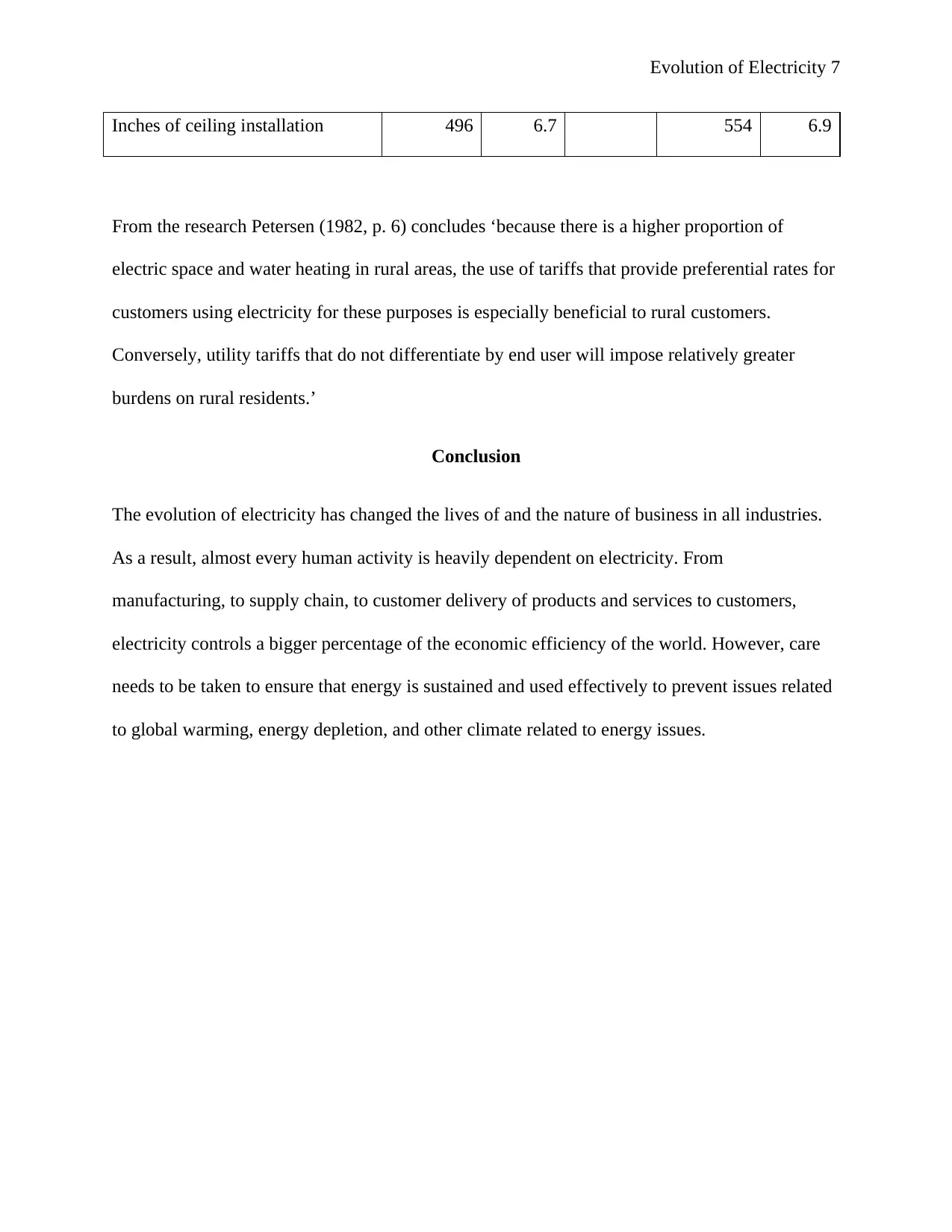
Inches of ceiling installation 496 6.7 554 6.9
From the research Petersen (1982, p. 6) concludes ‘because there is a higher proportion of
electric space and water heating in rural areas, the use of tariffs that provide preferential rates for
customers using electricity for these purposes is especially beneficial to rural customers.
Conversely, utility tariffs that do not differentiate by end user will impose relatively greater
burdens on rural residents.’
Conclusion
The evolution of electricity has changed the lives of and the nature of business in all industries.
As a result, almost every human activity is heavily dependent on electricity. From
manufacturing, to supply chain, to customer delivery of products and services to customers,
electricity controls a bigger percentage of the economic efficiency of the world. However, care
needs to be taken to ensure that energy is sustained and used effectively to prevent issues related
to global warming, energy depletion, and other climate related to energy issues.
Inches of ceiling installation 496 6.7 554 6.9
From the research Petersen (1982, p. 6) concludes ‘because there is a higher proportion of
electric space and water heating in rural areas, the use of tariffs that provide preferential rates for
customers using electricity for these purposes is especially beneficial to rural customers.
Conversely, utility tariffs that do not differentiate by end user will impose relatively greater
burdens on rural residents.’
Conclusion
The evolution of electricity has changed the lives of and the nature of business in all industries.
As a result, almost every human activity is heavily dependent on electricity. From
manufacturing, to supply chain, to customer delivery of products and services to customers,
electricity controls a bigger percentage of the economic efficiency of the world. However, care
needs to be taken to ensure that energy is sustained and used effectively to prevent issues related
to global warming, energy depletion, and other climate related to energy issues.
Paraphrase This Document
Need a fresh take? Get an instant paraphrase of this document with our AI Paraphraser
Evolution of Electricity 8
List of References
Barnard, M. (2013, January 9). Quora. Retrieved from https://www.quora.com/Power-usage-of-
a-city-vs-rural-areas
Chopra, A. (2015, April 22). Short Essay on Uses of Electricity. Retrieved August 23, 2017,
from importantindia.com.
Doren, C. V. (n.d.). instituteforenergyresearch.org/history-electricity/. Retrieved 8 29, 2014,
from http://www.ushistory.org/franklin/info/kite.htm
Jakovac, P 2012, 'Electricity Directives and Evolution of the Eu Internal Electricity
Market', Medianali, 11, pp. 315-338, Communication & Mass Media Complete, EBSCOhost,
viewed 25 August 2017.
Mastropietro, P, Batlle, C, Barroso, L, & Rodilla, P 2016, 'The evolution of electricity auctions
in South America', Energy Sources Part B: Economics, Planning & Policy, 11, 12, pp. 1103-
1110, Academic Search Premier, EBSCOhost, viewed 25 August 2017.
Matthew, H, Brown, N, Ednin, D, & Ulman, K, 2004, 'Electricity Directives and Evolution of the
Eu Internal Electricity Market', National Conference of State Legislatures, Medianali, 11, pp.
315-338
Richard P. Sedano, The Regulatory Assistance Projec. (2004). Electricity Transmission. National
Council on Electricity Policy , 2,6,.
Pourazarm, E 2012, Doctor of philosophy thesis, school of economics, University of Wollongong.
Retrieved from Elecricity demand analysis in different sectors: a case study of Iran: http:/?
ro.uow.edu.au/thesis/3786
List of References
Barnard, M. (2013, January 9). Quora. Retrieved from https://www.quora.com/Power-usage-of-
a-city-vs-rural-areas
Chopra, A. (2015, April 22). Short Essay on Uses of Electricity. Retrieved August 23, 2017,
from importantindia.com.
Doren, C. V. (n.d.). instituteforenergyresearch.org/history-electricity/. Retrieved 8 29, 2014,
from http://www.ushistory.org/franklin/info/kite.htm
Jakovac, P 2012, 'Electricity Directives and Evolution of the Eu Internal Electricity
Market', Medianali, 11, pp. 315-338, Communication & Mass Media Complete, EBSCOhost,
viewed 25 August 2017.
Mastropietro, P, Batlle, C, Barroso, L, & Rodilla, P 2016, 'The evolution of electricity auctions
in South America', Energy Sources Part B: Economics, Planning & Policy, 11, 12, pp. 1103-
1110, Academic Search Premier, EBSCOhost, viewed 25 August 2017.
Matthew, H, Brown, N, Ednin, D, & Ulman, K, 2004, 'Electricity Directives and Evolution of the
Eu Internal Electricity Market', National Conference of State Legislatures, Medianali, 11, pp.
315-338
Richard P. Sedano, The Regulatory Assistance Projec. (2004). Electricity Transmission. National
Council on Electricity Policy , 2,6,.
Pourazarm, E 2012, Doctor of philosophy thesis, school of economics, University of Wollongong.
Retrieved from Elecricity demand analysis in different sectors: a case study of Iran: http:/?
ro.uow.edu.au/thesis/3786
Evolution of Electricity 9
Tolis, A 2015, 'The effect of long-term expansion on the evolution of electricity price: numerical
analysis of a theoretically optimised electricity market', European Journal Of Operational
Research, 244, 3, pp. 939-954, Business Source Premier, EBSCOhost, viewed 25 August 2017.
Tolis, A 2015, 'The effect of long-term expansion on the evolution of electricity price: numerical
analysis of a theoretically optimised electricity market', European Journal Of Operational
Research, 244, 3, pp. 939-954, Business Source Premier, EBSCOhost, viewed 25 August 2017.
⊘ This is a preview!⊘
Do you want full access?
Subscribe today to unlock all pages.
Trusted by 1+ million students worldwide

1 out of 9


Your All-in-One AI-Powered Toolkit for Academic Success.
+13062052269
info@desklib.com
Available 24*7 on WhatsApp / Email
![[object Object]](/_next/static/media/star-bottom.7253800d.svg)
Unlock your academic potential
Copyright © 2020–2026 A2Z Services. All Rights Reserved. Developed and managed by ZUCOL.