EWB Challenge Project: Soil and Crop Protection in East Timor
VerifiedAdded on  2023/01/19
|12
|1640
|36
Project
AI Summary
This project addresses the Engineers Without Borders (EWB) challenge, focusing on soil and crop protection in East Timor. The project begins with an introduction to the EWB challenge and the context of East Timor, highlighting its reliance on foreign aid and the need for sustainable agriculture. The core of the project involves proposing a design solution to protect soils and crops, with specific criteria including soil erosion control, soil fertility improvement, and pest control. The project explores alternative design solutions, such as terrace construction and a water management system, before proposing a cost-effective waste composting system for organic manure as the preferred solution. The proposed solution is evaluated using a decision matrix, and an action plan outlines the steps for development. The report concludes that the waste composting system is the most effective solution for addressing soil and crop protection challenges in East Timor, providing a sustainable approach to enhance soil quality and crop yields. References and an appendix with a schematic diagram of the composting system are also included.
1
ENGINEERING COMMUNICATION
By Name
Course
Instructor
Institution
Location
Date
ENGINEERING COMMUNICATION
By Name
Course
Instructor
Institution
Location
Date
Paraphrase This Document
Need a fresh take? Get an instant paraphrase of this document with our AI Paraphraser

2
CROP AND SOIL PROTECTION IN EAST TIMOR
TABLE OF CONTENTS
Introduction......................................................................................................................................2
Background......................................................................................................................................2
EWB challenge Design opportunity................................................................................................3
Design criteria.................................................................................................................................3
Scope of the project.........................................................................................................................4
Alternative Design Solutions...........................................................................................................4
Proposed Design Solution................................................................................................................5
Action plan.......................................................................................................................................7
Conclusion.......................................................................................................................................7
References........................................................................................................................................8
Appendix..........................................................................................................................................9
CROP AND SOIL PROTECTION IN EAST TIMOR
TABLE OF CONTENTS
Introduction......................................................................................................................................2
Background......................................................................................................................................2
EWB challenge Design opportunity................................................................................................3
Design criteria.................................................................................................................................3
Scope of the project.........................................................................................................................4
Alternative Design Solutions...........................................................................................................4
Proposed Design Solution................................................................................................................5
Action plan.......................................................................................................................................7
Conclusion.......................................................................................................................................7
References........................................................................................................................................8
Appendix..........................................................................................................................................9

3
Introduction
Engineers without Borders (EWB) is a non-profit organization which works with different
communities in offering them with the required resources, technology, and knowledge to
enhance their living standards. ‘The Engineers Without Borders challenge’ is a project run in
collaboration with the Australian Universities which gives students an opportunity to work on
sustainable development projects recognized by EWB with its community-based partners’
organizations. This year’s Engineers without Borders challenge is based in East Timor. The
design brief of the project is to:
‘Develop an innovative and sustainable project solution which can make a real contribution
toward soil and crop protection in East Timor’.
Background
East Timor, which is officially the Democratic Republic of Timor- Leste, is a nation in Maritime
Southeast Asia. The country is made up of the eastern half of the Island of Timor. It gained its
independence in 2002 from Indonesia and since then it has had many challenges in achieving
political stability. East Timor remains to be one of the poorest countries in Asia and greatly
depends on foreign aid. Gas and oil are the largest sources of revenue in East Timor, with that
there is need to come up with through which the soils and crops can be protected to ensure stable
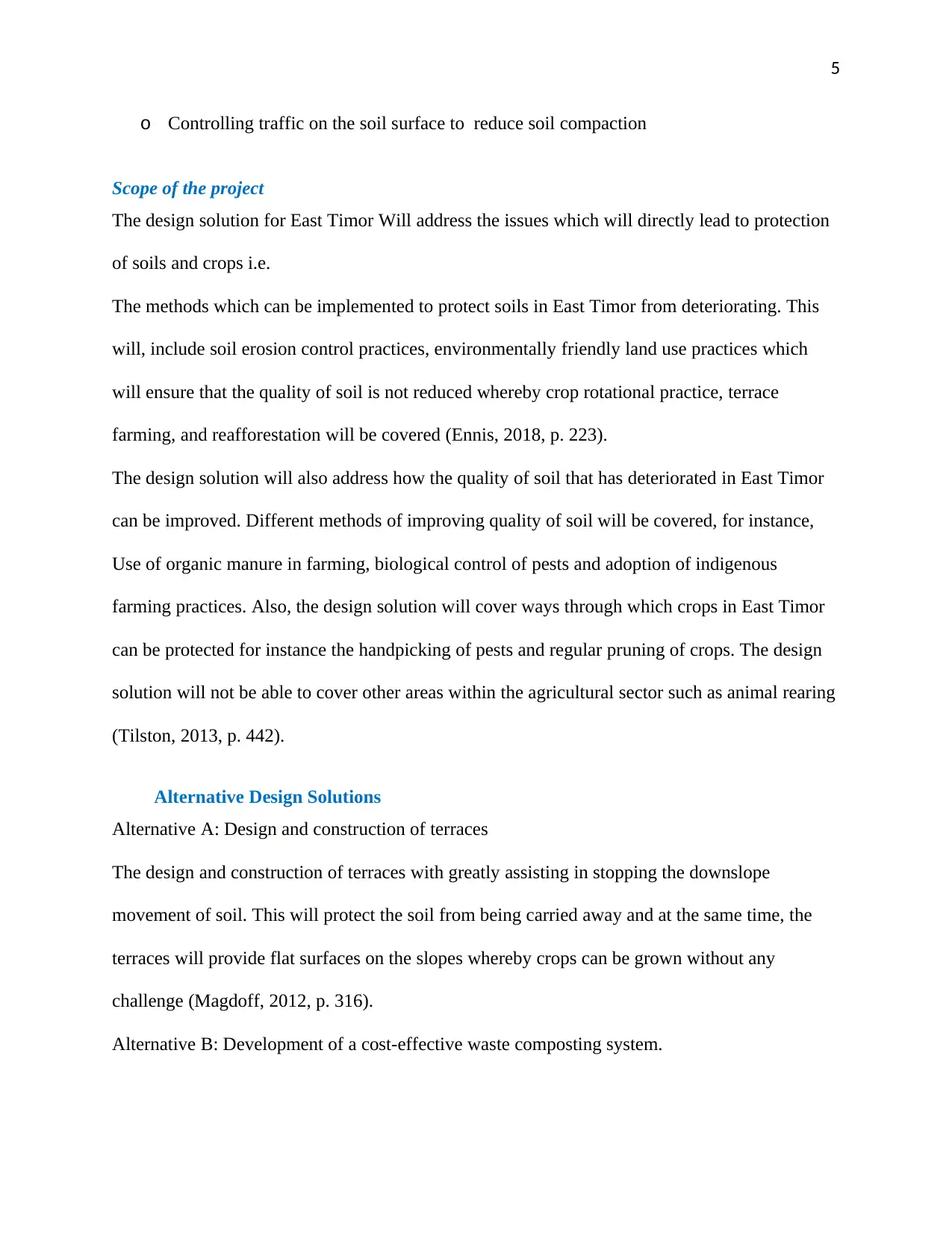
food supply within its borders. The figure below shows the location of East Timor.
Introduction
Engineers without Borders (EWB) is a non-profit organization which works with different
communities in offering them with the required resources, technology, and knowledge to
enhance their living standards. ‘The Engineers Without Borders challenge’ is a project run in
collaboration with the Australian Universities which gives students an opportunity to work on
sustainable development projects recognized by EWB with its community-based partners’
organizations. This year’s Engineers without Borders challenge is based in East Timor. The
design brief of the project is to:
‘Develop an innovative and sustainable project solution which can make a real contribution
toward soil and crop protection in East Timor’.
Background
East Timor, which is officially the Democratic Republic of Timor- Leste, is a nation in Maritime
Southeast Asia. The country is made up of the eastern half of the Island of Timor. It gained its
independence in 2002 from Indonesia and since then it has had many challenges in achieving
political stability. East Timor remains to be one of the poorest countries in Asia and greatly
depends on foreign aid. Gas and oil are the largest sources of revenue in East Timor, with that
there is need to come up with through which the soils and crops can be protected to ensure stable
food supply within its borders. The figure below shows the location of East Timor.
⊘ This is a preview!⊘
Do you want full access?
Subscribe today to unlock all pages.

Trusted by 1+ million students worldwide

4
Fig 1: East Timor
Soil protection/management is an important part as far as land management is concerned, the
process will focus different types of soil and soil properties to find out precise actions which will
be aimed on improving the quality of soil for agriculture purposed. Specific practices and
management will be required to conserve and protect soil resources (Magdoff, 2015, p. 32).
EWB challenge Design opportunity
The Design area is East Timor and the design topic will be protecting soils and crops within East
Timor.
Design criteria
Soil and crop protection will include the following:
o Soil erosion control practices
o Soil fertility improvement practices
o Pest control
o Crop rotation practices
o Soil nutrient management
Fig 1: East Timor
Soil protection/management is an important part as far as land management is concerned, the
process will focus different types of soil and soil properties to find out precise actions which will
be aimed on improving the quality of soil for agriculture purposed. Specific practices and
management will be required to conserve and protect soil resources (Magdoff, 2015, p. 32).
EWB challenge Design opportunity
The Design area is East Timor and the design topic will be protecting soils and crops within East
Timor.
Design criteria
Soil and crop protection will include the following:
o Soil erosion control practices
o Soil fertility improvement practices
o Pest control
o Crop rotation practices
o Soil nutrient management
Paraphrase This Document
Need a fresh take? Get an instant paraphrase of this document with our AI Paraphraser

5
o Controlling traffic on the soil surface to reduce soil compaction
Scope of the project
The design solution for East Timor Will address the issues which will directly lead to protection
of soils and crops i.e.
The methods which can be implemented to protect soils in East Timor from deteriorating. This
will, include soil erosion control practices, environmentally friendly land use practices which
will ensure that the quality of soil is not reduced whereby crop rotational practice, terrace
farming, and reafforestation will be covered (Ennis, 2018, p. 223).
The design solution will also address how the quality of soil that has deteriorated in East Timor
can be improved. Different methods of improving quality of soil will be covered, for instance,
Use of organic manure in farming, biological control of pests and adoption of indigenous
farming practices. Also, the design solution will cover ways through which crops in East Timor
can be protected for instance the handpicking of pests and regular pruning of crops. The design
solution will not be able to cover other areas within the agricultural sector such as animal rearing
(Tilston, 2013, p. 442).
Alternative Design Solutions
Alternative A: Design and construction of terraces
The design and construction of terraces with greatly assisting in stopping the downslope
movement of soil. This will protect the soil from being carried away and at the same time, the
terraces will provide flat surfaces on the slopes whereby crops can be grown without any
challenge (Magdoff, 2012, p. 316).
Alternative B: Development of a cost-effective waste composting system.
o Controlling traffic on the soil surface to reduce soil compaction
Scope of the project
The design solution for East Timor Will address the issues which will directly lead to protection
of soils and crops i.e.
The methods which can be implemented to protect soils in East Timor from deteriorating. This
will, include soil erosion control practices, environmentally friendly land use practices which
will ensure that the quality of soil is not reduced whereby crop rotational practice, terrace
farming, and reafforestation will be covered (Ennis, 2018, p. 223).
The design solution will also address how the quality of soil that has deteriorated in East Timor
can be improved. Different methods of improving quality of soil will be covered, for instance,
Use of organic manure in farming, biological control of pests and adoption of indigenous
farming practices. Also, the design solution will cover ways through which crops in East Timor
can be protected for instance the handpicking of pests and regular pruning of crops. The design
solution will not be able to cover other areas within the agricultural sector such as animal rearing
(Tilston, 2013, p. 442).
Alternative Design Solutions
Alternative A: Design and construction of terraces
The design and construction of terraces with greatly assisting in stopping the downslope
movement of soil. This will protect the soil from being carried away and at the same time, the
terraces will provide flat surfaces on the slopes whereby crops can be grown without any
challenge (Magdoff, 2012, p. 316).
Alternative B: Development of a cost-effective waste composting system.

6
In East Timor, currently, there is no sustainable and environmental sound system of handling
solid wastes which have greatly contributed to the soil degradation. With the use of this system
the wastes will be collected, treated and disposed of effectively which will facilities the
protection of soil and crops. The system will have the ability to convert organic wastes into
manure which will be used in the cultivation of crops, while the system will be able to recycle
the inorganic wastes within East Timor (Van, 2016, p. 43).
Alternative C: Development of a water and waste management system
This design solution will be of great address the challenge of inadequate water for irrigation in
East Timor. In this design, different options will be adopted to ensure that the designed system
will be able to address the issues. For instance, the system will utilize the rainwater whereby the
rainwater will be harvested by using different methods and be used in irrigation purposes within
East Timor (Thurairajan, 2018, p. 174).
Proposed Design Solution
The proposed design was arrived at after preparing a decision matric, to determine the most
effective design solution which will be able to address soil and crop protection in East Timor.
Below are the available alternatives;
Alternative A: Design and construction of terraces
Alternative B: Development of a cost-effective waste composting system for organic manure.
Alternative C: Development of a water and waste management system
In East Timor, currently, there is no sustainable and environmental sound system of handling
solid wastes which have greatly contributed to the soil degradation. With the use of this system
the wastes will be collected, treated and disposed of effectively which will facilities the
protection of soil and crops. The system will have the ability to convert organic wastes into
manure which will be used in the cultivation of crops, while the system will be able to recycle
the inorganic wastes within East Timor (Van, 2016, p. 43).
Alternative C: Development of a water and waste management system
This design solution will be of great address the challenge of inadequate water for irrigation in
East Timor. In this design, different options will be adopted to ensure that the designed system
will be able to address the issues. For instance, the system will utilize the rainwater whereby the
rainwater will be harvested by using different methods and be used in irrigation purposes within
East Timor (Thurairajan, 2018, p. 174).
Proposed Design Solution
The proposed design was arrived at after preparing a decision matric, to determine the most
effective design solution which will be able to address soil and crop protection in East Timor.
Below are the available alternatives;
Alternative A: Design and construction of terraces
Alternative B: Development of a cost-effective waste composting system for organic manure.
Alternative C: Development of a water and waste management system
⊘ This is a preview!⊘
Do you want full access?
Subscribe today to unlock all pages.

Trusted by 1+ million students worldwide

7
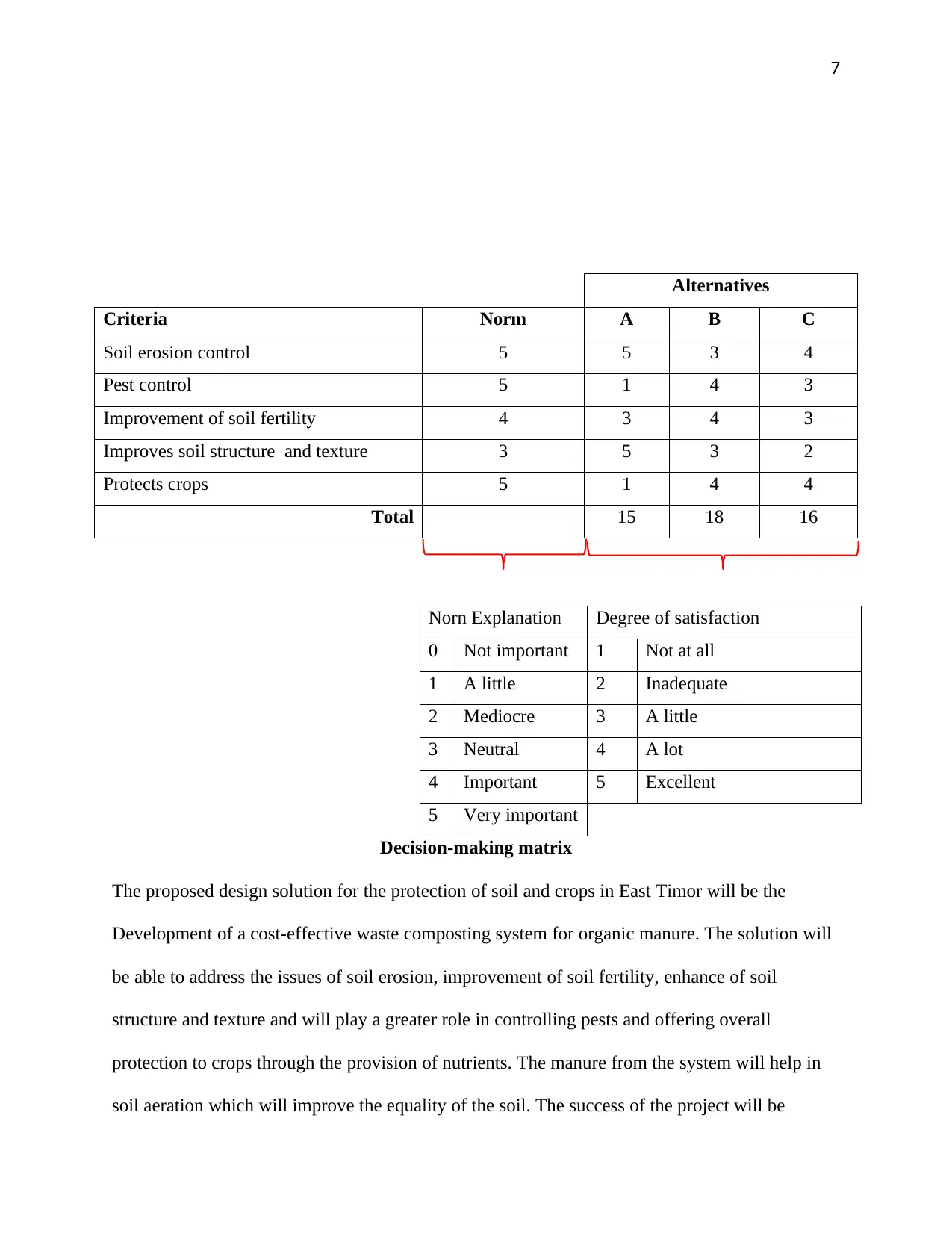
Alternatives
Criteria Norm A B C
Soil erosion control 5 5 3 4
Pest control 5 1 4 3
Improvement of soil fertility 4 3 4 3
Improves soil structure and texture 3 5 3 2
Protects crops 5 1 4 4
Total 15 18 16
Norn Explanation Degree of satisfaction
0 Not important 1 Not at all
1 A little 2 Inadequate
2 Mediocre 3 A little
3 Neutral 4 A lot
4 Important 5 Excellent
5 Very important
Decision-making matrix
The proposed design solution for the protection of soil and crops in East Timor will be the
Development of a cost-effective waste composting system for organic manure. The solution will
be able to address the issues of soil erosion, improvement of soil fertility, enhance of soil
structure and texture and will play a greater role in controlling pests and offering overall
protection to crops through the provision of nutrients. The manure from the system will help in
soil aeration which will improve the equality of the soil. The success of the project will be
Alternatives
Criteria Norm A B C
Soil erosion control 5 5 3 4
Pest control 5 1 4 3
Improvement of soil fertility 4 3 4 3
Improves soil structure and texture 3 5 3 2
Protects crops 5 1 4 4
Total 15 18 16
Norn Explanation Degree of satisfaction
0 Not important 1 Not at all
1 A little 2 Inadequate
2 Mediocre 3 A little
3 Neutral 4 A lot
4 Important 5 Excellent
5 Very important
Decision-making matrix
The proposed design solution for the protection of soil and crops in East Timor will be the
Development of a cost-effective waste composting system for organic manure. The solution will
be able to address the issues of soil erosion, improvement of soil fertility, enhance of soil
structure and texture and will play a greater role in controlling pests and offering overall
protection to crops through the provision of nutrients. The manure from the system will help in
soil aeration which will improve the equality of the soil. The success of the project will be
Paraphrase This Document
Need a fresh take? Get an instant paraphrase of this document with our AI Paraphraser

8
determined by the number of design criterions that will be achieved. The design solution will be
evaluated against the design criteria by comparing what was achieved and what was not
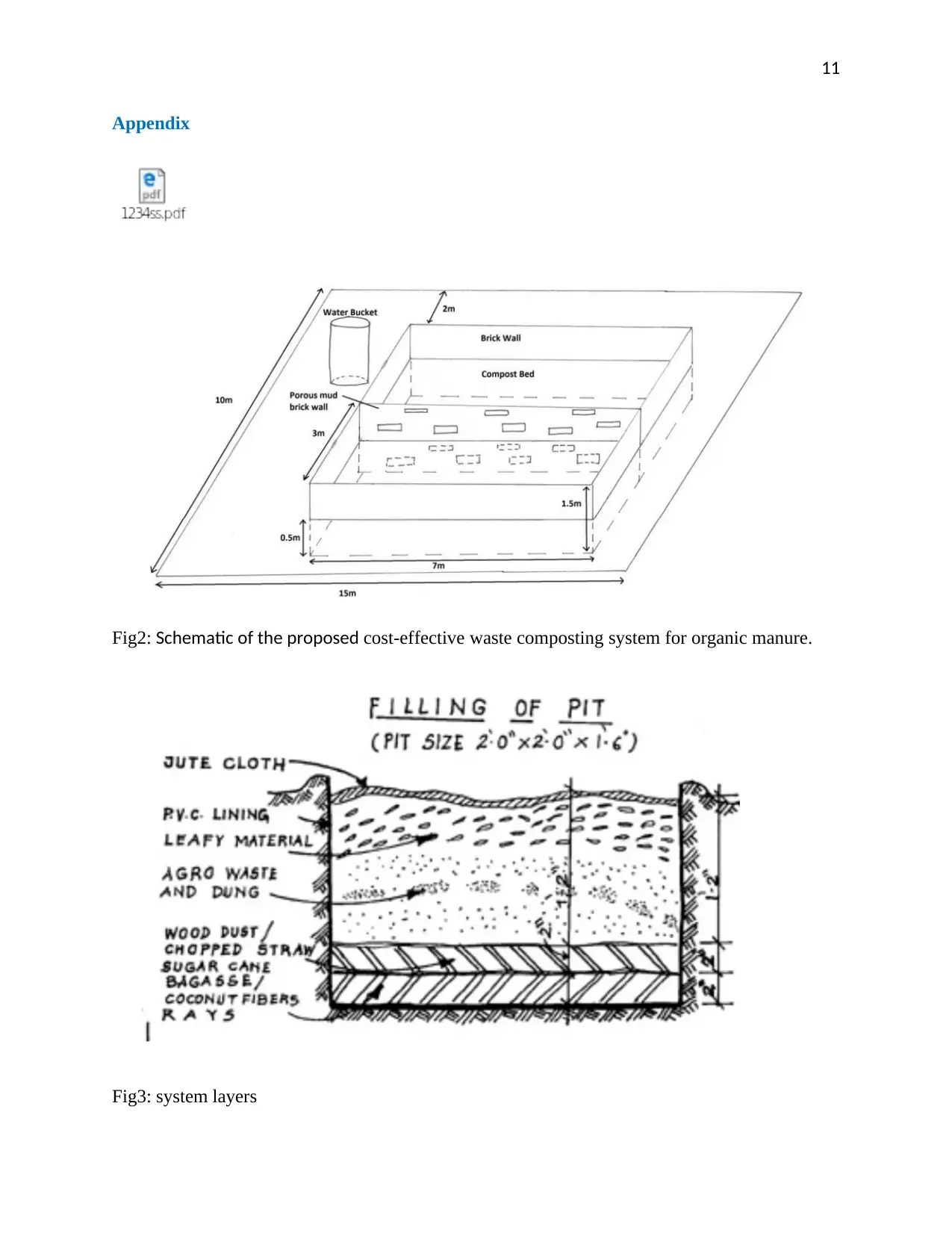
achieved. Attached is the appendix the proposed cost-effective waste composting system for
organic manure (Clark, 2016, p. 73).
Action plan
The design solution will be developed as follows:
Data collection
Carrying out background research about the development of a cost-effective waste composting
system for organic manure.
Carrying out a literature review about the cost-effective waste composting system for organic
manure. To get a better understanding of the system
Gathering all the required resources to carry out the design and development of a cost-effective
waste composting system for organic manure.
Recording the collected data
Analysing the collected data and making conclusions.
Conclusion
In conclusion, this year's Engineers without Borders challenge is based in East Timor. The
design brief of the project is to develop an innovative and sustainable project solution which can
make a real contribution toward soil and crop protection in East Timor. By using the decision-
making matrix it was concluded that the proposed design solution for the protection of soil and
crops in East Timor will be the Development of a cost-effective waste composting system for
organic manure. The solution will be able to address the issues of soil erosion, improvement of
determined by the number of design criterions that will be achieved. The design solution will be
evaluated against the design criteria by comparing what was achieved and what was not
achieved. Attached is the appendix the proposed cost-effective waste composting system for
organic manure (Clark, 2016, p. 73).
Action plan
The design solution will be developed as follows:
Data collection
Carrying out background research about the development of a cost-effective waste composting
system for organic manure.
Carrying out a literature review about the cost-effective waste composting system for organic
manure. To get a better understanding of the system
Gathering all the required resources to carry out the design and development of a cost-effective
waste composting system for organic manure.
Recording the collected data
Analysing the collected data and making conclusions.
Conclusion
In conclusion, this year's Engineers without Borders challenge is based in East Timor. The
design brief of the project is to develop an innovative and sustainable project solution which can
make a real contribution toward soil and crop protection in East Timor. By using the decision-
making matrix it was concluded that the proposed design solution for the protection of soil and
crops in East Timor will be the Development of a cost-effective waste composting system for
organic manure. The solution will be able to address the issues of soil erosion, improvement of

9
soil fertility, enhance of soil structure and texture and will play a greater role in controlling pests
and offering overall protection to crops through the provision of nutrients.
References
soil fertility, enhance of soil structure and texture and will play a greater role in controlling pests
and offering overall protection to crops through the provision of nutrients.
References
⊘ This is a preview!⊘
Do you want full access?
Subscribe today to unlock all pages.

Trusted by 1+ million students worldwide

10
Clark, A., 2016. Managing Cover Crops Profitably. 3rd ed. London: DIANE Publishing.
Ennis, W. B., 2018. Introduction to Crop Protection. 4th ed. Sydney: American Society of
Agronomy.
Magdoff, F., 2012. Building Soils for Better Crops: Sustainable Soil Management. 5th ed.
London: SARE.
Magdoff, F., 2015. Sustainable Soil Management. 4th ed. London: National Academies Press.
Thurairajan, G. K., 2018. Soil Management: Compost Production and Use in Tropical and
Subtropical Environments. 3rd ed. Sydney: Food & Agriculture Org..
Tilston, E. L., 2013. Soil and Water Quality: An Agenda for Agriculture. 1st ed. Texas: Springer
Science & Business Media.
Van, H., 2016. Soil and Water Quality: An Agenda for Agriculture. 2nd ed. Chicago: National
Academies Press.
Clark, A., 2016. Managing Cover Crops Profitably. 3rd ed. London: DIANE Publishing.
Ennis, W. B., 2018. Introduction to Crop Protection. 4th ed. Sydney: American Society of
Agronomy.
Magdoff, F., 2012. Building Soils for Better Crops: Sustainable Soil Management. 5th ed.
London: SARE.
Magdoff, F., 2015. Sustainable Soil Management. 4th ed. London: National Academies Press.
Thurairajan, G. K., 2018. Soil Management: Compost Production and Use in Tropical and
Subtropical Environments. 3rd ed. Sydney: Food & Agriculture Org..
Tilston, E. L., 2013. Soil and Water Quality: An Agenda for Agriculture. 1st ed. Texas: Springer
Science & Business Media.
Van, H., 2016. Soil and Water Quality: An Agenda for Agriculture. 2nd ed. Chicago: National
Academies Press.
Paraphrase This Document
Need a fresh take? Get an instant paraphrase of this document with our AI Paraphraser

11
Appendix
Fig2: Schematic of the proposed cost-effective waste composting system for organic manure.
Fig3: system layers
Appendix
Fig2: Schematic of the proposed cost-effective waste composting system for organic manure.
Fig3: system layers

12
⊘ This is a preview!⊘
Do you want full access?
Subscribe today to unlock all pages.

Trusted by 1+ million students worldwide
1 out of 12
Your All-in-One AI-Powered Toolkit for Academic Success.
 +13062052269
info@desklib.com
Available 24*7 on WhatsApp / Email
Unlock your academic potential
Copyright © 2020–2026 A2Z Services. All Rights Reserved. Developed and managed by ZUCOL.