The Effect of Exchange Rate Fluctuations on US Economic Growth
VerifiedAdded on 2022/08/19
|14
|3214
|12
Report
AI Summary
This research paper examines the impact of exchange rate movements between the United States and the Eurozone on US economic growth. Utilizing data from 1999 to 2018, the study employs quantitative research methods, including descriptive statistics, scatter plots, correlation analysis, and regression analysis, to investigate the relationship between the Euro/USD exchange rate and real GDP. The findings reveal an inverse correlation, suggesting that an increase in the Euro/USD exchange rate (USD appreciation) negatively affects US real GDP. The regression analysis indicates that the exchange rate explains 21% of the variation in real GDP, and the coefficient estimate confirms a statistically significant adverse effect. The study concludes that fluctuations in the exchange rate have a statistically significant adverse effect on real GDP.
Running head: IMPACT OF EXCHNAGE RATE MOVEMENT ON ECONOMIC GROWTH
Impact of Exchnage Rate Movement on Economic Growth
Name of the Student
Name of the University
Course ID
Impact of Exchnage Rate Movement on Economic Growth
Name of the Student
Name of the University
Course ID

Paraphrase This Document
Need a fresh take? Get an instant paraphrase of this document with our AI Paraphraser
1IMPACT OF EXCHNAGE RATE MOVEMENT ON ECONOMIC GROWTH
Table of Contents
Introduction......................................................................................................................................2
Literature Review............................................................................................................................2
Impact of exchange rate movement of economic activity...........................................................2
Exchange rate and economic growth...........................................................................................3
Exchange rate and long term economic growth..........................................................................3
Impact of exchange rate on output growth..................................................................................4
Data..................................................................................................................................................4
Methodology....................................................................................................................................5
Result and Analysis.........................................................................................................................6
Descriptive Statistics...................................................................................................................6
Scatter plot...................................................................................................................................7
Correlation Analysis....................................................................................................................7
Regression Analysis.....................................................................................................................8
Conclusion.....................................................................................................................................10
References......................................................................................................................................11
Table of Contents
Introduction......................................................................................................................................2
Literature Review............................................................................................................................2
Impact of exchange rate movement of economic activity...........................................................2
Exchange rate and economic growth...........................................................................................3
Exchange rate and long term economic growth..........................................................................3
Impact of exchange rate on output growth..................................................................................4
Data..................................................................................................................................................4
Methodology....................................................................................................................................5
Result and Analysis.........................................................................................................................6
Descriptive Statistics...................................................................................................................6
Scatter plot...................................................................................................................................7
Correlation Analysis....................................................................................................................7
Regression Analysis.....................................................................................................................8
Conclusion.....................................................................................................................................10
References......................................................................................................................................11
2IMPACT OF EXCHNAGE RATE MOVEMENT ON ECONOMIC GROWTH
Introduction
It is since the introduction of idea of globalization that countries become interdependent
on each other either by means of trade or any other cross border activities. The degree of
openness of a nation is reflected in terms of openness towards international trade. In establishing
integration of domestic market of an economy with the international market exchange rate plays
a critical role. Exchange rate formally represents price of currency of one country relative to
other country (Uribe & Schmitt-Grohe, 2017). It is an important determinant of real value of
currency of a nation. Since exchange rate determines relative price of export and import in the
international market volume of trade and economic activities depend on exchange rate between
nations. United States is one of the biggest and most open economy in the world (ustr.gov,
2020). The nation is the largest importer and exporter of goods and services. In driving economic
growth of United States international trade plays a crucial role. A significant portion of total
trade of United States takes place with different countries in Euro area. Considering this
background, the research paper aims to find the impact of movement of exchange rate between
United States and Euro on economic growth of United States.
Literature Review
Impact of exchange rate movement of economic activity
There are both theoretical and empirical literatures to assess the impact of exchange rate
movement on economic growth of a nation. There are studies which conclude a largely volatile
exchange rate is harmful for domestic economic activities. As against these findings, there are
studies showing that impact of a volatility in exchange rate on the domestic economy is subject
to the manner following which prices in the international market are set. There exit two sets of
Introduction
It is since the introduction of idea of globalization that countries become interdependent
on each other either by means of trade or any other cross border activities. The degree of
openness of a nation is reflected in terms of openness towards international trade. In establishing
integration of domestic market of an economy with the international market exchange rate plays
a critical role. Exchange rate formally represents price of currency of one country relative to
other country (Uribe & Schmitt-Grohe, 2017). It is an important determinant of real value of
currency of a nation. Since exchange rate determines relative price of export and import in the
international market volume of trade and economic activities depend on exchange rate between
nations. United States is one of the biggest and most open economy in the world (ustr.gov,
2020). The nation is the largest importer and exporter of goods and services. In driving economic
growth of United States international trade plays a crucial role. A significant portion of total
trade of United States takes place with different countries in Euro area. Considering this
background, the research paper aims to find the impact of movement of exchange rate between
United States and Euro on economic growth of United States.
Literature Review
Impact of exchange rate movement of economic activity
There are both theoretical and empirical literatures to assess the impact of exchange rate
movement on economic growth of a nation. There are studies which conclude a largely volatile
exchange rate is harmful for domestic economic activities. As against these findings, there are
studies showing that impact of a volatility in exchange rate on the domestic economy is subject
to the manner following which prices in the international market are set. There exit two sets of
⊘ This is a preview!⊘
Do you want full access?
Subscribe today to unlock all pages.

Trusted by 1+ million students worldwide
3IMPACT OF EXCHNAGE RATE MOVEMENT ON ECONOMIC GROWTH
argument regarding benefits of depreciation or appreciation of a currency. According to the first
view, depreciation of exchange rate has a beneficial impact on real output of the nation. This is
known as expansionary view related to depreciation of currency. There is however another view
arguing that depreciation of a currency has a contractionary impact which is harmful for real
output of the nation (Lubis et al., 2017). Like theory, ambiguity also exits among empirical
literatures regarding the impact of exchange rate movement on economic growth of a nation.
Exchange rate and economic growth
One paper attempted to investigate the impact of volatility in exchange rate on economic
growth by taking 95 sample developing nations. The paper concluded that the relation between
exchange rate movement and economic growth is negative. In support of this finding, another
paper showed that economic growth is likely to fall with volatility in real exchange rate through
the channel of a lower growth in total factor productivity (Alagidede & Ibrahim, 2017). A similar
study based on 22 sample nations attempted to find the association between exchange rate
volatility and growth of real output and inflation. Authors of the paper arrived at the conclusion
that given degree of openness, volatility in the exchange rate particularly depreciation harms
economic performance of a nation by adversely affecting growth of output and movement of
price level (Isola et al., 2016). In the long run an anticipated fluctuation in the exchange rate was
found to considerably increase inflation and decreases growth of output.
Exchange rate and long term economic growth
In the paper developed by Holland et al. (2011), the impact of volatility in exchange rate
on economic growth in the long run was examined considering developed and advanced
countries. The sample period for this paper was between 1970 and 2009. This paper showed that
argument regarding benefits of depreciation or appreciation of a currency. According to the first
view, depreciation of exchange rate has a beneficial impact on real output of the nation. This is
known as expansionary view related to depreciation of currency. There is however another view
arguing that depreciation of a currency has a contractionary impact which is harmful for real
output of the nation (Lubis et al., 2017). Like theory, ambiguity also exits among empirical
literatures regarding the impact of exchange rate movement on economic growth of a nation.
Exchange rate and economic growth
One paper attempted to investigate the impact of volatility in exchange rate on economic
growth by taking 95 sample developing nations. The paper concluded that the relation between
exchange rate movement and economic growth is negative. In support of this finding, another
paper showed that economic growth is likely to fall with volatility in real exchange rate through
the channel of a lower growth in total factor productivity (Alagidede & Ibrahim, 2017). A similar
study based on 22 sample nations attempted to find the association between exchange rate
volatility and growth of real output and inflation. Authors of the paper arrived at the conclusion
that given degree of openness, volatility in the exchange rate particularly depreciation harms
economic performance of a nation by adversely affecting growth of output and movement of
price level (Isola et al., 2016). In the long run an anticipated fluctuation in the exchange rate was
found to considerably increase inflation and decreases growth of output.
Exchange rate and long term economic growth
In the paper developed by Holland et al. (2011), the impact of volatility in exchange rate
on economic growth in the long run was examined considering developed and advanced
countries. The sample period for this paper was between 1970 and 2009. This paper showed that
Paraphrase This Document
Need a fresh take? Get an instant paraphrase of this document with our AI Paraphraser
4IMPACT OF EXCHNAGE RATE MOVEMENT ON ECONOMIC GROWTH
a highly volatile exchange rate has a positive impact on economic growth while a low volatility
in exchange rate adversely affects economic growth (Holland et al., 2011). However, when
controlled for volatility in exchange rate in model that contains misalignment in exchange rate
and level of exchange rate it was found that maintaining a stable exchange rate is more crucial
rather than misalignment of exchange rate for ensuring long term economic growth. There are
studies concluding that no significant connection exists between the volatility in the exchange
rate and productivity growth in the long run. In a recent study conducted by Gadanecz &
Mehrotra in 2013, expressed that there exists a non-linear relationship between volatility in
output and that in exchange rate for emerging economies (Gadanecz & Mehrotra, 2013). Finding
of this paper suggested that volatility in exchange rate help to absorb shocks and limits volatility
in output however too much fluctuation in exchange rate may contribute to volatility in output.
Impact of exchange rate on output growth
Another paper published in 2012 and developed by Tarawalie et al. attempted to
investigate implication of a volatile exchange rate regime on inflation and output growth in the
monetary zone of West Africa (Tarawalie et al., 2012). The study found that the impact of a
volatile exchange rate has an inflationary impact across the countries. The impact of fluctuation
in exchange rate differ when considered for output growth. In a research paper published in 2016
and developed by Habib, Mileva and Stracca, the authors argued that in case of developing and
advanced countries movement of exchange rates has a substantially less impact and even no
impact in some cases on economic growth (Habib, Mileva & Stracca, 2016)
Data
a highly volatile exchange rate has a positive impact on economic growth while a low volatility
in exchange rate adversely affects economic growth (Holland et al., 2011). However, when
controlled for volatility in exchange rate in model that contains misalignment in exchange rate
and level of exchange rate it was found that maintaining a stable exchange rate is more crucial
rather than misalignment of exchange rate for ensuring long term economic growth. There are
studies concluding that no significant connection exists between the volatility in the exchange
rate and productivity growth in the long run. In a recent study conducted by Gadanecz &
Mehrotra in 2013, expressed that there exists a non-linear relationship between volatility in
output and that in exchange rate for emerging economies (Gadanecz & Mehrotra, 2013). Finding
of this paper suggested that volatility in exchange rate help to absorb shocks and limits volatility
in output however too much fluctuation in exchange rate may contribute to volatility in output.
Impact of exchange rate on output growth
Another paper published in 2012 and developed by Tarawalie et al. attempted to
investigate implication of a volatile exchange rate regime on inflation and output growth in the
monetary zone of West Africa (Tarawalie et al., 2012). The study found that the impact of a
volatile exchange rate has an inflationary impact across the countries. The impact of fluctuation
in exchange rate differ when considered for output growth. In a research paper published in 2016
and developed by Habib, Mileva and Stracca, the authors argued that in case of developing and
advanced countries movement of exchange rates has a substantially less impact and even no
impact in some cases on economic growth (Habib, Mileva & Stracca, 2016)
Data
5IMPACT OF EXCHNAGE RATE MOVEMENT ON ECONOMIC GROWTH
The paper is developed to evaluate the relation between Euro/USD and economic growth.
For measuring economic growth of US, data are collected on real GDP valued at constant 2010
dollar. In order to capture the movement of exchange rate between Euro and USD data are
collected on relative price of Euro against USD. Data on exchange rate and real GDP are
collected from the official website of world bank consisting world development indicators. The
selected sample period for the analysis ranged from 1999 to 2018. Before estimating the model
capturing the relation between exchange rate and economic growth log transformation of the data
are made to scale down the value of real GDP consisting billion dollar figures.
Methodology
The paper uses technique of quantitative research method where collected data are
analyzed using computational statistical techniques to test the research hypothesis. The statistical
techniques used for the analysis are descriptive statistics, correlation, scatter plot and regression
analysis (Queiros, Faria & Almeida, 2017). Descriptive statistics which include measures like
mean, SD, maximum and minimum help to understand central tendency and dispersion of the
data set. The scatter plot gives a graphical presentation for movement of one variable against
another. The correlation estimate gives a measure of bivariate association between the two
variables. Correlation however does not estimate causal relation between the two variables. For
this regression analysis is needed. The regression analysis has been used to develop a model
showing relation between exchange rate and real GDP. The following simple regression model is
used to develop a simple linear relation between the two indicators.
Y =α+ βX
Y: Dependent variable: Ln (Real GDP)
The paper is developed to evaluate the relation between Euro/USD and economic growth.
For measuring economic growth of US, data are collected on real GDP valued at constant 2010
dollar. In order to capture the movement of exchange rate between Euro and USD data are
collected on relative price of Euro against USD. Data on exchange rate and real GDP are
collected from the official website of world bank consisting world development indicators. The
selected sample period for the analysis ranged from 1999 to 2018. Before estimating the model
capturing the relation between exchange rate and economic growth log transformation of the data
are made to scale down the value of real GDP consisting billion dollar figures.
Methodology
The paper uses technique of quantitative research method where collected data are
analyzed using computational statistical techniques to test the research hypothesis. The statistical
techniques used for the analysis are descriptive statistics, correlation, scatter plot and regression
analysis (Queiros, Faria & Almeida, 2017). Descriptive statistics which include measures like
mean, SD, maximum and minimum help to understand central tendency and dispersion of the
data set. The scatter plot gives a graphical presentation for movement of one variable against
another. The correlation estimate gives a measure of bivariate association between the two
variables. Correlation however does not estimate causal relation between the two variables. For
this regression analysis is needed. The regression analysis has been used to develop a model
showing relation between exchange rate and real GDP. The following simple regression model is
used to develop a simple linear relation between the two indicators.
Y =α+ βX
Y: Dependent variable: Ln (Real GDP)
⊘ This is a preview!⊘
Do you want full access?
Subscribe today to unlock all pages.
Trusted by 1+ million students worldwide
6IMPACT OF EXCHNAGE RATE MOVEMENT ON ECONOMIC GROWTH
X: Independent variable: Ln (Euro/USD)
α: Y intercept
β: Slope coefficient
Result and Analysis
This section discusses the results obtained from the statistical analysis of the sample data.
As discussed in the methodology section result of statistical analysis include summary statistics,
correlation, scatter plot and regression analysis.
Descriptive Statistics
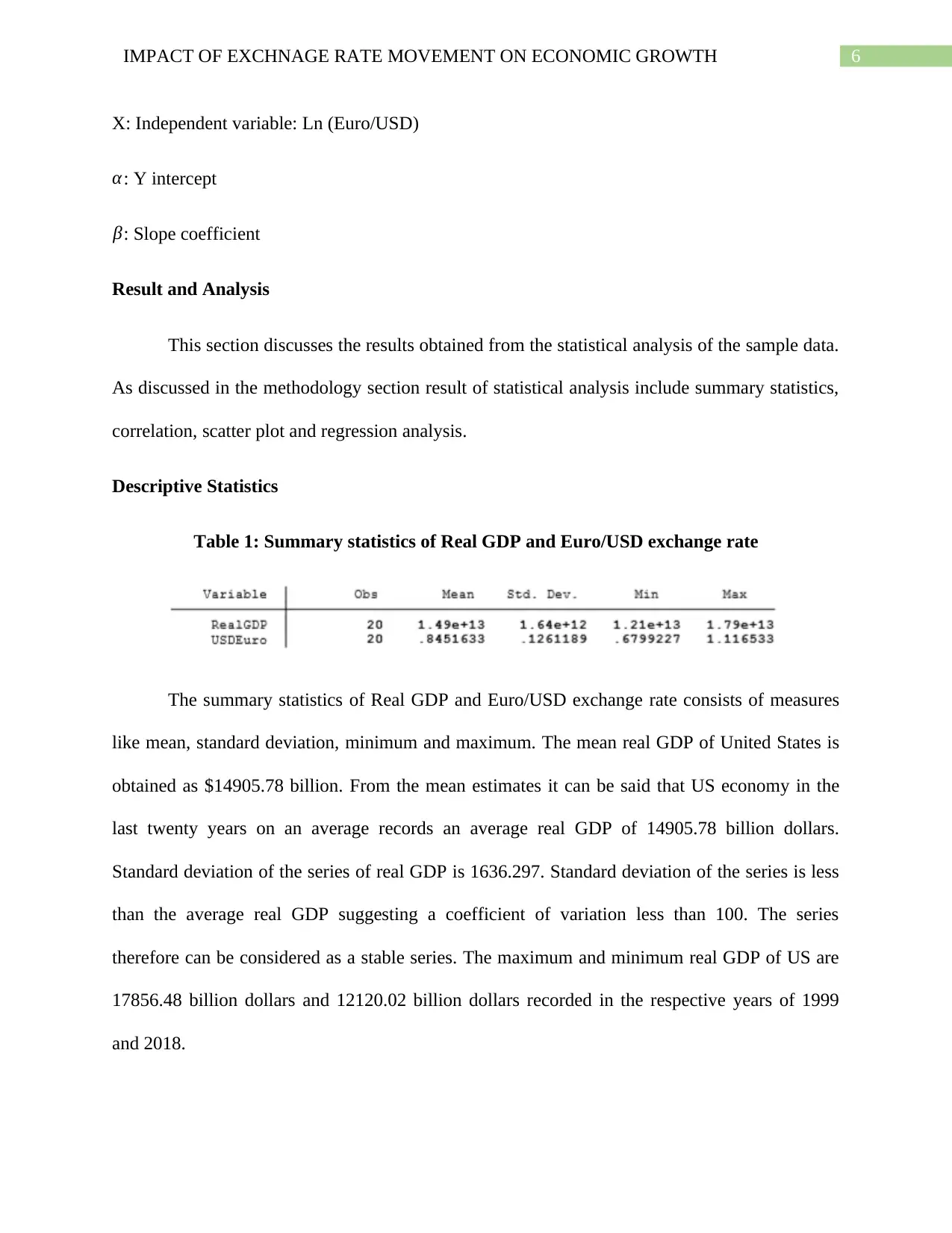
Table 1: Summary statistics of Real GDP and Euro/USD exchange rate
The summary statistics of Real GDP and Euro/USD exchange rate consists of measures
like mean, standard deviation, minimum and maximum. The mean real GDP of United States is
obtained as $14905.78 billion. From the mean estimates it can be said that US economy in the
last twenty years on an average records an average real GDP of 14905.78 billion dollars.
Standard deviation of the series of real GDP is 1636.297. Standard deviation of the series is less
than the average real GDP suggesting a coefficient of variation less than 100. The series
therefore can be considered as a stable series. The maximum and minimum real GDP of US are
17856.48 billion dollars and 12120.02 billion dollars recorded in the respective years of 1999
and 2018.
X: Independent variable: Ln (Euro/USD)
α: Y intercept
β: Slope coefficient
Result and Analysis
This section discusses the results obtained from the statistical analysis of the sample data.
As discussed in the methodology section result of statistical analysis include summary statistics,
correlation, scatter plot and regression analysis.
Descriptive Statistics
Table 1: Summary statistics of Real GDP and Euro/USD exchange rate
The summary statistics of Real GDP and Euro/USD exchange rate consists of measures
like mean, standard deviation, minimum and maximum. The mean real GDP of United States is
obtained as $14905.78 billion. From the mean estimates it can be said that US economy in the
last twenty years on an average records an average real GDP of 14905.78 billion dollars.
Standard deviation of the series of real GDP is 1636.297. Standard deviation of the series is less
than the average real GDP suggesting a coefficient of variation less than 100. The series
therefore can be considered as a stable series. The maximum and minimum real GDP of US are
17856.48 billion dollars and 12120.02 billion dollars recorded in the respective years of 1999
and 2018.
Paraphrase This Document
Need a fresh take? Get an instant paraphrase of this document with our AI Paraphraser
7IMPACT OF EXCHNAGE RATE MOVEMENT ON ECONOMIC GROWTH
Considering the descriptive statistics of Euro/USD exchange rate the mean exchange rate
is 0.8451. From the mean measure of exchange rate, it is obtained that average price of Euro
against USD is 0.85. Standard deviation of the exchange rate series is 0.1261. The estimated
standard deviation is smaller than the average estimates suggesting relatively smaller variability
of series (Holcomb, 2016). The highest price of Euro against USD is 1.12 as recorded in 2001.
The lowest price of the Euro against USD is 0.68 recorded in 2008.
Scatter plot
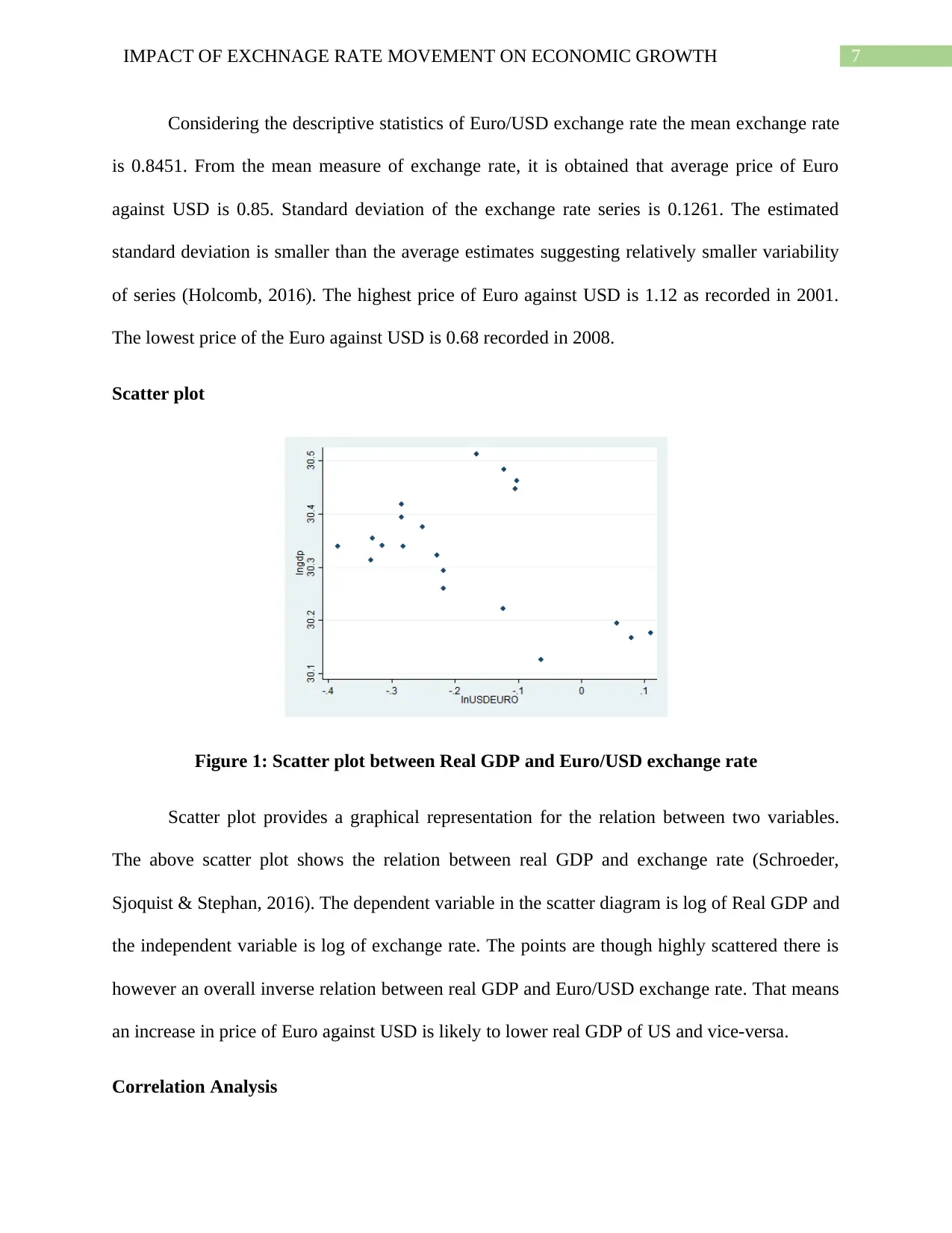
Figure 1: Scatter plot between Real GDP and Euro/USD exchange rate
Scatter plot provides a graphical representation for the relation between two variables.
The above scatter plot shows the relation between real GDP and exchange rate (Schroeder,
Sjoquist & Stephan, 2016). The dependent variable in the scatter diagram is log of Real GDP and
the independent variable is log of exchange rate. The points are though highly scattered there is
however an overall inverse relation between real GDP and Euro/USD exchange rate. That means
an increase in price of Euro against USD is likely to lower real GDP of US and vice-versa.
Correlation Analysis
Considering the descriptive statistics of Euro/USD exchange rate the mean exchange rate
is 0.8451. From the mean measure of exchange rate, it is obtained that average price of Euro
against USD is 0.85. Standard deviation of the exchange rate series is 0.1261. The estimated
standard deviation is smaller than the average estimates suggesting relatively smaller variability
of series (Holcomb, 2016). The highest price of Euro against USD is 1.12 as recorded in 2001.
The lowest price of the Euro against USD is 0.68 recorded in 2008.
Scatter plot
Figure 1: Scatter plot between Real GDP and Euro/USD exchange rate
Scatter plot provides a graphical representation for the relation between two variables.
The above scatter plot shows the relation between real GDP and exchange rate (Schroeder,
Sjoquist & Stephan, 2016). The dependent variable in the scatter diagram is log of Real GDP and
the independent variable is log of exchange rate. The points are though highly scattered there is
however an overall inverse relation between real GDP and Euro/USD exchange rate. That means
an increase in price of Euro against USD is likely to lower real GDP of US and vice-versa.
Correlation Analysis
8IMPACT OF EXCHNAGE RATE MOVEMENT ON ECONOMIC GROWTH
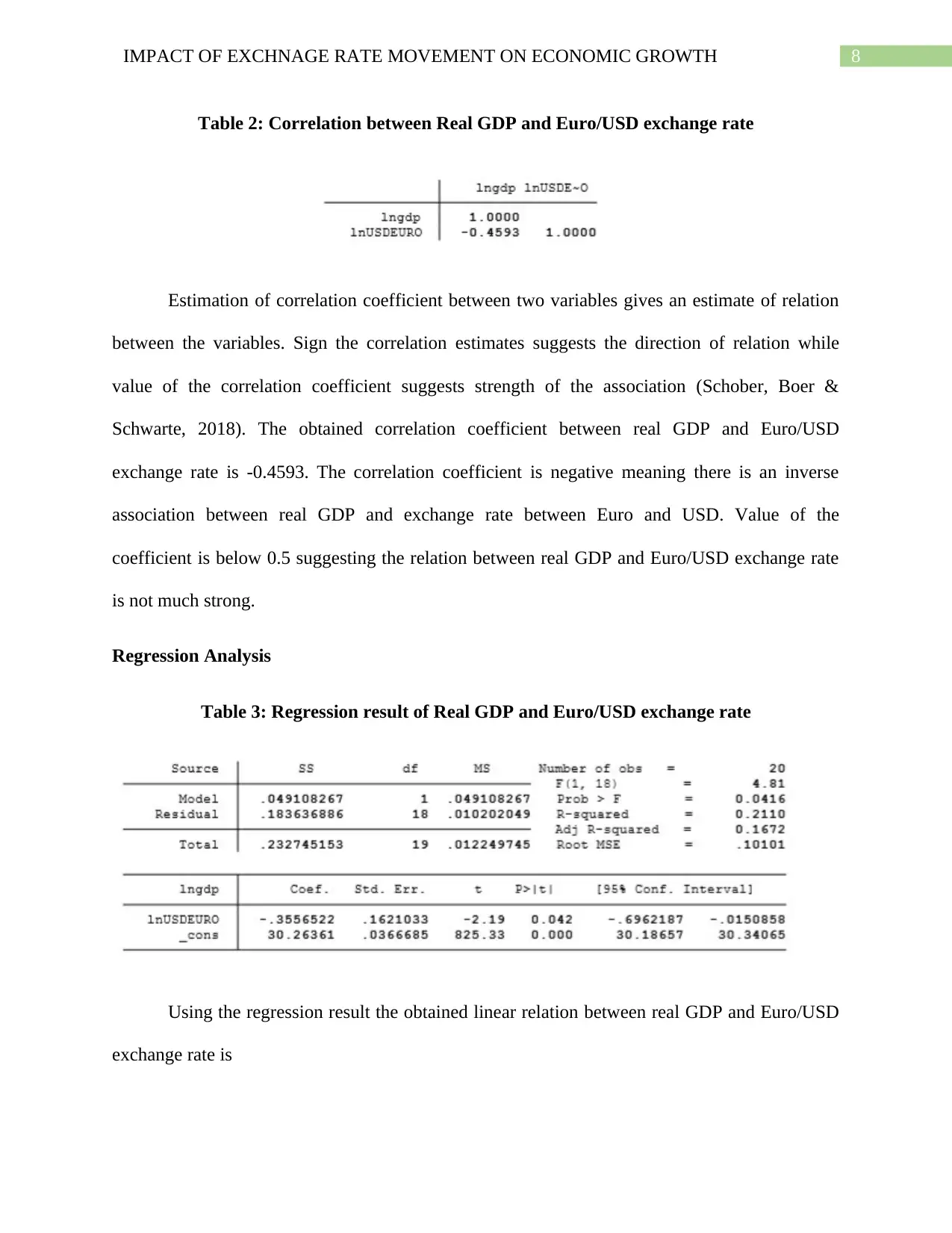
Table 2: Correlation between Real GDP and Euro/USD exchange rate
Estimation of correlation coefficient between two variables gives an estimate of relation
between the variables. Sign the correlation estimates suggests the direction of relation while
value of the correlation coefficient suggests strength of the association (Schober, Boer &
Schwarte, 2018). The obtained correlation coefficient between real GDP and Euro/USD
exchange rate is -0.4593. The correlation coefficient is negative meaning there is an inverse
association between real GDP and exchange rate between Euro and USD. Value of the
coefficient is below 0.5 suggesting the relation between real GDP and Euro/USD exchange rate
is not much strong.
Regression Analysis
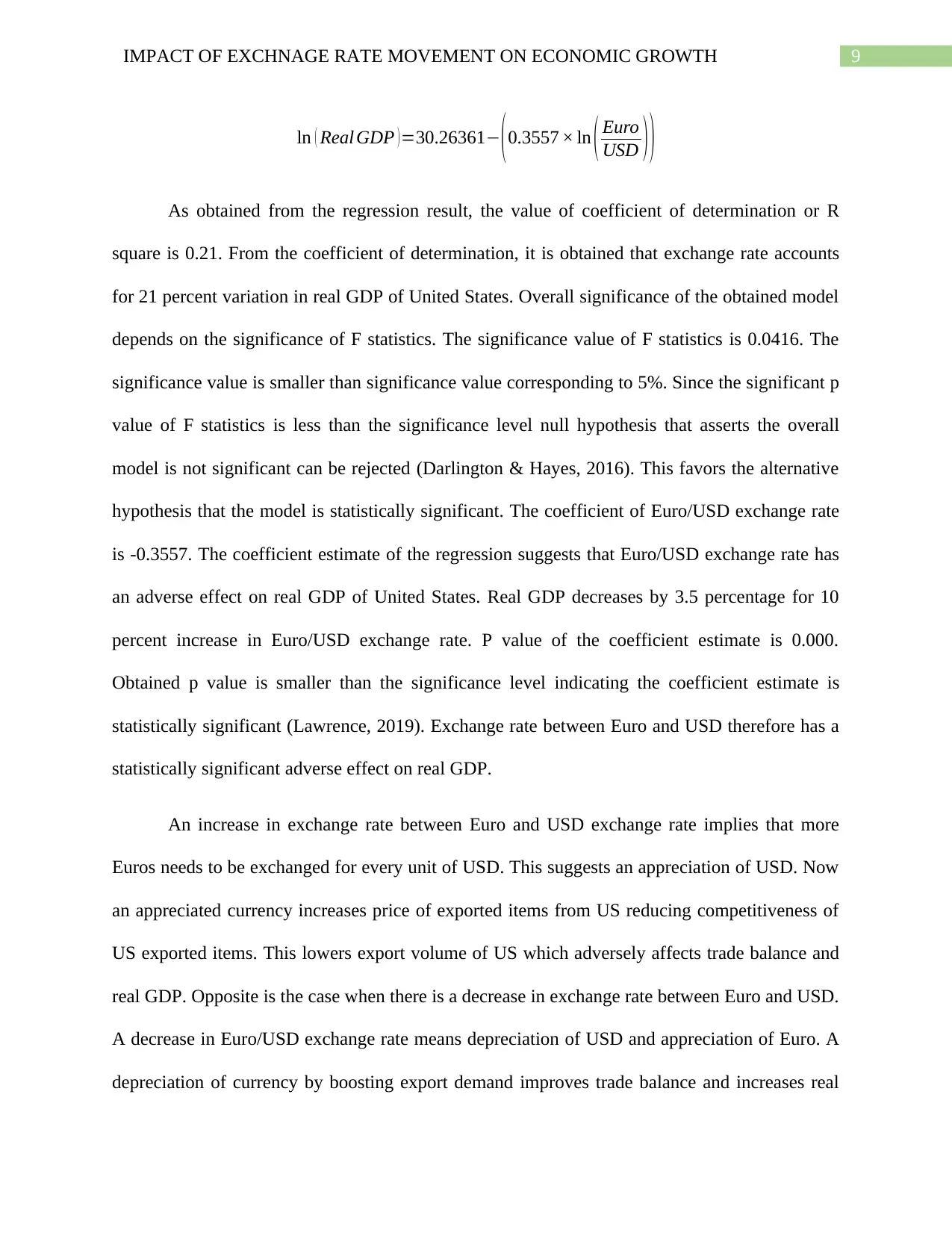
Table 3: Regression result of Real GDP and Euro/USD exchange rate
Using the regression result the obtained linear relation between real GDP and Euro/USD
exchange rate is
Table 2: Correlation between Real GDP and Euro/USD exchange rate
Estimation of correlation coefficient between two variables gives an estimate of relation
between the variables. Sign the correlation estimates suggests the direction of relation while
value of the correlation coefficient suggests strength of the association (Schober, Boer &
Schwarte, 2018). The obtained correlation coefficient between real GDP and Euro/USD
exchange rate is -0.4593. The correlation coefficient is negative meaning there is an inverse
association between real GDP and exchange rate between Euro and USD. Value of the
coefficient is below 0.5 suggesting the relation between real GDP and Euro/USD exchange rate
is not much strong.
Regression Analysis
Table 3: Regression result of Real GDP and Euro/USD exchange rate
Using the regression result the obtained linear relation between real GDP and Euro/USD
exchange rate is
⊘ This is a preview!⊘
Do you want full access?
Subscribe today to unlock all pages.
Trusted by 1+ million students worldwide
9IMPACT OF EXCHNAGE RATE MOVEMENT ON ECONOMIC GROWTH
ln ( Real GDP )=30.26361− (0.3557 × ln ( Euro
USD ) )
As obtained from the regression result, the value of coefficient of determination or R
square is 0.21. From the coefficient of determination, it is obtained that exchange rate accounts
for 21 percent variation in real GDP of United States. Overall significance of the obtained model
depends on the significance of F statistics. The significance value of F statistics is 0.0416. The
significance value is smaller than significance value corresponding to 5%. Since the significant p
value of F statistics is less than the significance level null hypothesis that asserts the overall
model is not significant can be rejected (Darlington & Hayes, 2016). This favors the alternative
hypothesis that the model is statistically significant. The coefficient of Euro/USD exchange rate
is -0.3557. The coefficient estimate of the regression suggests that Euro/USD exchange rate has
an adverse effect on real GDP of United States. Real GDP decreases by 3.5 percentage for 10
percent increase in Euro/USD exchange rate. P value of the coefficient estimate is 0.000.
Obtained p value is smaller than the significance level indicating the coefficient estimate is
statistically significant (Lawrence, 2019). Exchange rate between Euro and USD therefore has a
statistically significant adverse effect on real GDP.
An increase in exchange rate between Euro and USD exchange rate implies that more
Euros needs to be exchanged for every unit of USD. This suggests an appreciation of USD. Now
an appreciated currency increases price of exported items from US reducing competitiveness of
US exported items. This lowers export volume of US which adversely affects trade balance and
real GDP. Opposite is the case when there is a decrease in exchange rate between Euro and USD.
A decrease in Euro/USD exchange rate means depreciation of USD and appreciation of Euro. A
depreciation of currency by boosting export demand improves trade balance and increases real
ln ( Real GDP )=30.26361− (0.3557 × ln ( Euro
USD ) )
As obtained from the regression result, the value of coefficient of determination or R
square is 0.21. From the coefficient of determination, it is obtained that exchange rate accounts
for 21 percent variation in real GDP of United States. Overall significance of the obtained model
depends on the significance of F statistics. The significance value of F statistics is 0.0416. The
significance value is smaller than significance value corresponding to 5%. Since the significant p
value of F statistics is less than the significance level null hypothesis that asserts the overall
model is not significant can be rejected (Darlington & Hayes, 2016). This favors the alternative
hypothesis that the model is statistically significant. The coefficient of Euro/USD exchange rate
is -0.3557. The coefficient estimate of the regression suggests that Euro/USD exchange rate has
an adverse effect on real GDP of United States. Real GDP decreases by 3.5 percentage for 10
percent increase in Euro/USD exchange rate. P value of the coefficient estimate is 0.000.
Obtained p value is smaller than the significance level indicating the coefficient estimate is
statistically significant (Lawrence, 2019). Exchange rate between Euro and USD therefore has a
statistically significant adverse effect on real GDP.
An increase in exchange rate between Euro and USD exchange rate implies that more
Euros needs to be exchanged for every unit of USD. This suggests an appreciation of USD. Now
an appreciated currency increases price of exported items from US reducing competitiveness of
US exported items. This lowers export volume of US which adversely affects trade balance and
real GDP. Opposite is the case when there is a decrease in exchange rate between Euro and USD.
A decrease in Euro/USD exchange rate means depreciation of USD and appreciation of Euro. A
depreciation of currency by boosting export demand improves trade balance and increases real
Paraphrase This Document
Need a fresh take? Get an instant paraphrase of this document with our AI Paraphraser
10IMPACT OF EXCHNAGE RATE MOVEMENT ON ECONOMIC GROWTH
GDP (Jakob 2016). This explains the inverse relation between relative price of currency and real
GDP. The study therefore supports earlier literatures the relate depreciation of currency with an
increase in economic growth and appreciation of currency with a decrease in economic growth.
This finding opposes previous studies suggesting no significant or positive association between
exchange rate and economic growth (Habib et al., 2016).
GDP (Jakob 2016). This explains the inverse relation between relative price of currency and real
GDP. The study therefore supports earlier literatures the relate depreciation of currency with an
increase in economic growth and appreciation of currency with a decrease in economic growth.
This finding opposes previous studies suggesting no significant or positive association between
exchange rate and economic growth (Habib et al., 2016).
11IMPACT OF EXCHNAGE RATE MOVEMENT ON ECONOMIC GROWTH
Conclusion
Objective of the paper is to assess the impact of movement of relative price of currency
between Euro and USD on economic growth of US. Different past literatures provide
contradictory result regarding the impact of exchange rate movement on economic growth. Some
of these studies suggest a positive association between the two while some suggests an inverse
relation. There are also studies indicating no significant association between growth and
movement of relative price of currency. Euro area accounts for a significant portion of trade of
United States. Therefore, movement of Euro/USD exchange rate likely to impact economic
growth of United States. Result of the paper has found a statistically significant inverse
association between exchange rate between Euro and USD and that of movement of real GDP.
An increase in exchange rate indicating an appreciation of USD lowers real GDP and growth
while depreciation of currency indicated by a decrease in the exchange rate enhances real GDP
of the nation. The finding suggests Federal Reserve can consider devaluation of USD as a policy
option in times of slow economic growth.
The paper considers only exchange rate as a determinant of economic growth. In real
world, real GDP or economic growth of a nation depends on several factors. For this reason, the
model accounts only a smaller proportion of variation in real GDP. Since, most of variation
remains unexplained in the model there is scope to improve the model either by considering a
longer sample period or by incorporating more variables affecting real GDP in the model.
Conclusion
Objective of the paper is to assess the impact of movement of relative price of currency
between Euro and USD on economic growth of US. Different past literatures provide
contradictory result regarding the impact of exchange rate movement on economic growth. Some
of these studies suggest a positive association between the two while some suggests an inverse
relation. There are also studies indicating no significant association between growth and
movement of relative price of currency. Euro area accounts for a significant portion of trade of
United States. Therefore, movement of Euro/USD exchange rate likely to impact economic
growth of United States. Result of the paper has found a statistically significant inverse
association between exchange rate between Euro and USD and that of movement of real GDP.
An increase in exchange rate indicating an appreciation of USD lowers real GDP and growth
while depreciation of currency indicated by a decrease in the exchange rate enhances real GDP
of the nation. The finding suggests Federal Reserve can consider devaluation of USD as a policy
option in times of slow economic growth.
The paper considers only exchange rate as a determinant of economic growth. In real
world, real GDP or economic growth of a nation depends on several factors. For this reason, the
model accounts only a smaller proportion of variation in real GDP. Since, most of variation
remains unexplained in the model there is scope to improve the model either by considering a
longer sample period or by incorporating more variables affecting real GDP in the model.
⊘ This is a preview!⊘
Do you want full access?
Subscribe today to unlock all pages.
Trusted by 1+ million students worldwide

1 out of 14


Related Documents


Your All-in-One AI-Powered Toolkit for Academic Success.
+13062052269
info@desklib.com
Available 24*7 on WhatsApp / Email
![[object Object]](/_next/static/media/star-bottom.7253800d.svg)
Unlock your academic potential
Copyright © 2020–2026 A2Z Services. All Rights Reserved. Developed and managed by ZUCOL.