NRS-451VN, Week 5: Executive Summary Quality Improvement Report

Verified

Added on  2022/12/14

|5
|1033
|239
Report
AI Summary
This report presents an executive summary of a quality improvement initiative focused on enhancing patient satisfaction by improving long-stay and short-stay experiences in a healthcare setting. The initiative aims to reduce potential patient harm, minimize unnecessary costs, and combat issues like sleep deprivation and hospital-acquired infections associated with prolonged hospital stays. The target population includes patients with moderate cognitive disorders and frailty, who are particularly vulnerable to the negative impacts of long hospital stays. The report emphasizes the importance of this initiative in reducing muscle aging, decreasing hospital congestion, and improving the overall patient experience. Inter-professional collaboration between doctors, nurses, and nursing assistants is highlighted as crucial for successful implementation, with clear roles and responsibilities for each team member. The report concludes that inter-professional collaboration improves the quality of care and consumer satisfaction, thus improving long and short stay satisfaction in the workplace by at least 10%.
Document Page
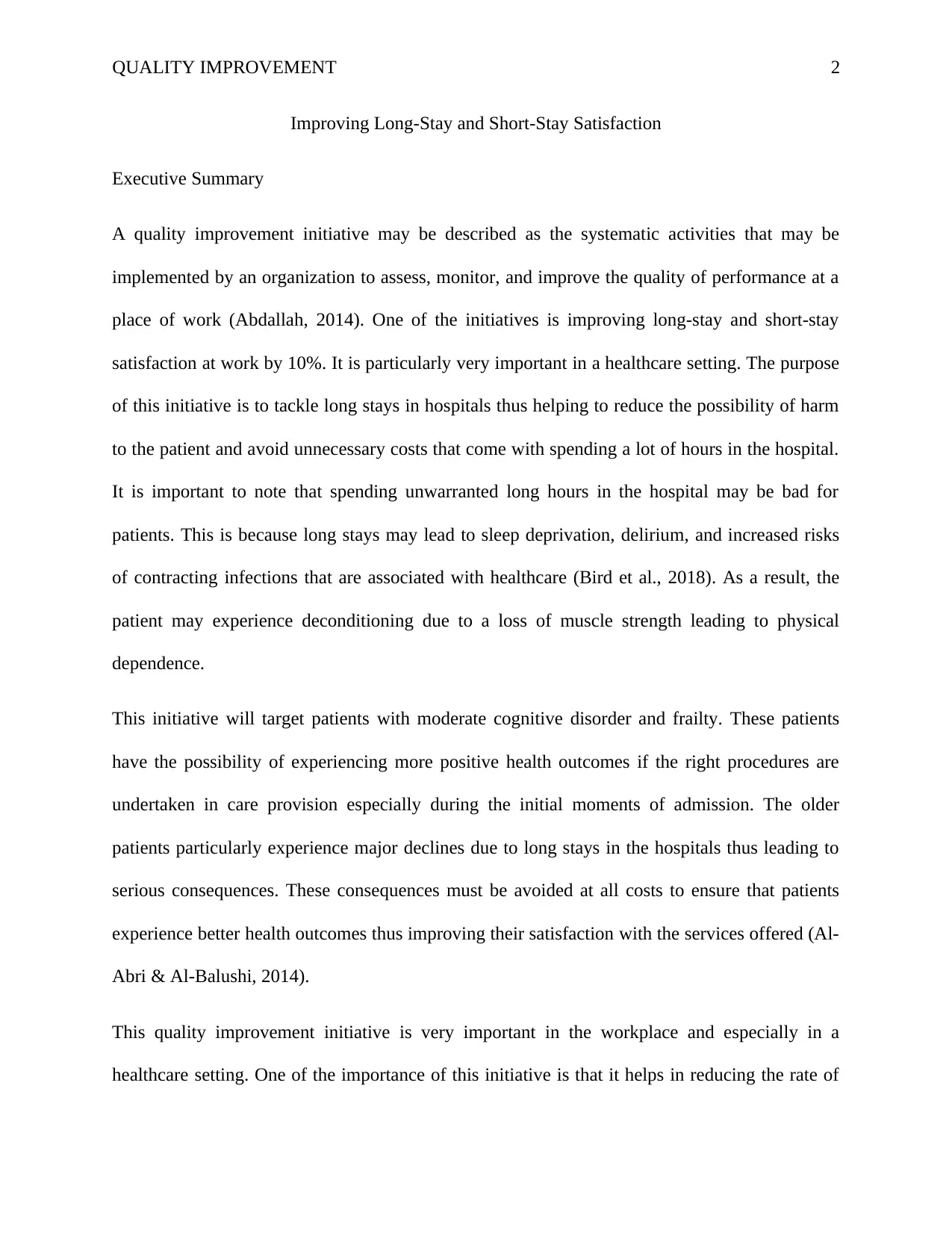
Running head: QUALITY IMPROVEMENT 1
Quality Improvement
Name
Institution
tabler-icon-diamond-filled.svg

Paraphrase This Document

Need a fresh take? Get an instant paraphrase of this document with our AI Paraphraser
Document Page
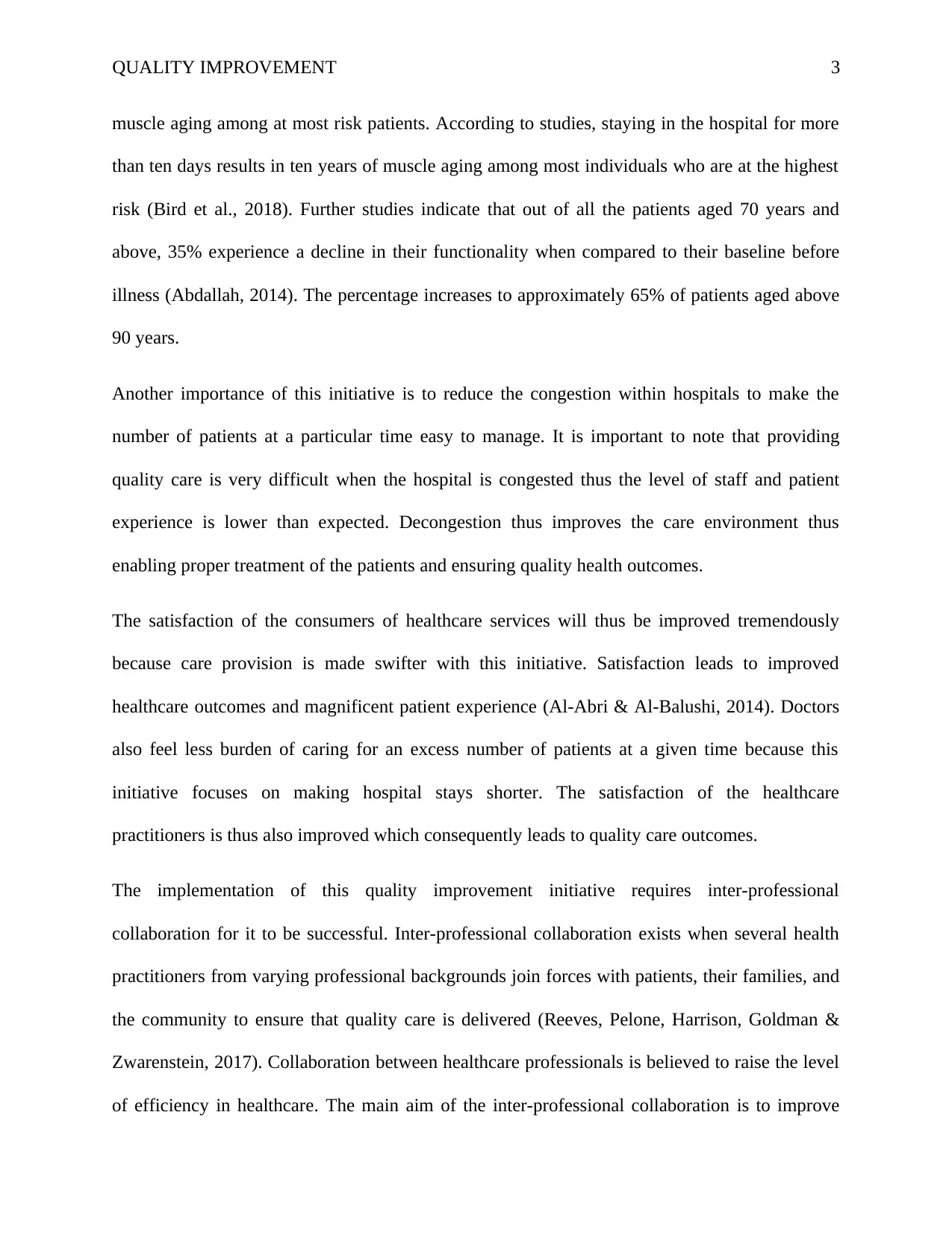
QUALITY IMPROVEMENT 2
Improving Long-Stay and Short-Stay Satisfaction
Executive Summary
A quality improvement initiative may be described as the systematic activities that may be
implemented by an organization to assess, monitor, and improve the quality of performance at a
place of work (Abdallah, 2014). One of the initiatives is improving long-stay and short-stay
satisfaction at work by 10%. It is particularly very important in a healthcare setting. The purpose
of this initiative is to tackle long stays in hospitals thus helping to reduce the possibility of harm
to the patient and avoid unnecessary costs that come with spending a lot of hours in the hospital.
It is important to note that spending unwarranted long hours in the hospital may be bad for
patients. This is because long stays may lead to sleep deprivation, delirium, and increased risks
of contracting infections that are associated with healthcare (Bird et al., 2018). As a result, the
patient may experience deconditioning due to a loss of muscle strength leading to physical
dependence.
This initiative will target patients with moderate cognitive disorder and frailty. These patients
have the possibility of experiencing more positive health outcomes if the right procedures are
undertaken in care provision especially during the initial moments of admission. The older
patients particularly experience major declines due to long stays in the hospitals thus leading to
serious consequences. These consequences must be avoided at all costs to ensure that patients
experience better health outcomes thus improving their satisfaction with the services offered (Al-
Abri & Al-Balushi, 2014).
This quality improvement initiative is very important in the workplace and especially in a
healthcare setting. One of the importance of this initiative is that it helps in reducing the rate of
Document Page
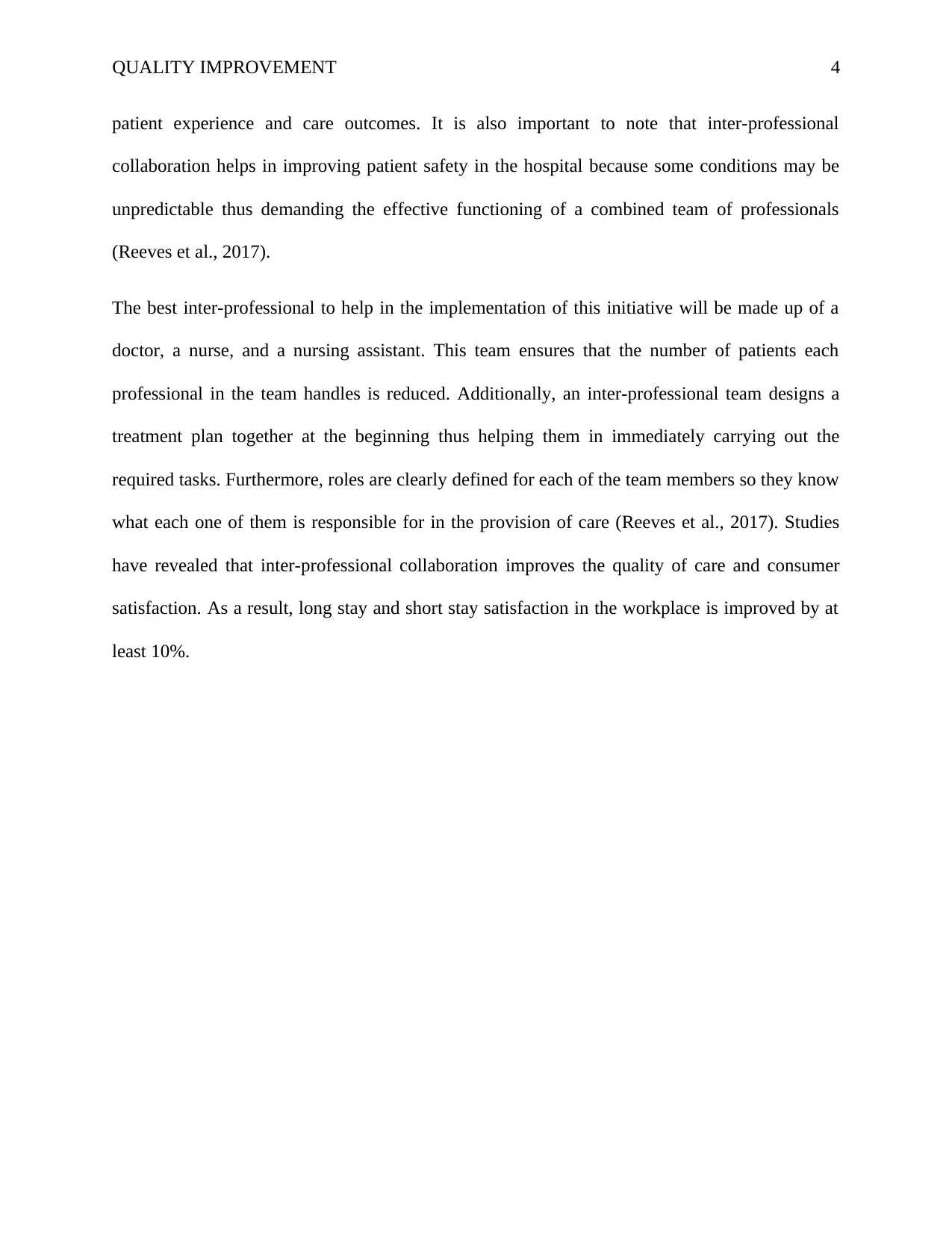
QUALITY IMPROVEMENT 3
muscle aging among at most risk patients. According to studies, staying in the hospital for more
than ten days results in ten years of muscle aging among most individuals who are at the highest
risk (Bird et al., 2018). Further studies indicate that out of all the patients aged 70 years and
above, 35% experience a decline in their functionality when compared to their baseline before
illness (Abdallah, 2014). The percentage increases to approximately 65% of patients aged above
90 years.
Another importance of this initiative is to reduce the congestion within hospitals to make the
number of patients at a particular time easy to manage. It is important to note that providing
quality care is very difficult when the hospital is congested thus the level of staff and patient
experience is lower than expected. Decongestion thus improves the care environment thus
enabling proper treatment of the patients and ensuring quality health outcomes.
The satisfaction of the consumers of healthcare services will thus be improved tremendously
because care provision is made swifter with this initiative. Satisfaction leads to improved
healthcare outcomes and magnificent patient experience (Al-Abri & Al-Balushi, 2014). Doctors
also feel less burden of caring for an excess number of patients at a given time because this
initiative focuses on making hospital stays shorter. The satisfaction of the healthcare
practitioners is thus also improved which consequently leads to quality care outcomes.
The implementation of this quality improvement initiative requires inter-professional
collaboration for it to be successful. Inter-professional collaboration exists when several health
practitioners from varying professional backgrounds join forces with patients, their families, and
the community to ensure that quality care is delivered (Reeves, Pelone, Harrison, Goldman &
Zwarenstein, 2017). Collaboration between healthcare professionals is believed to raise the level
of efficiency in healthcare. The main aim of the inter-professional collaboration is to improve
Document Page
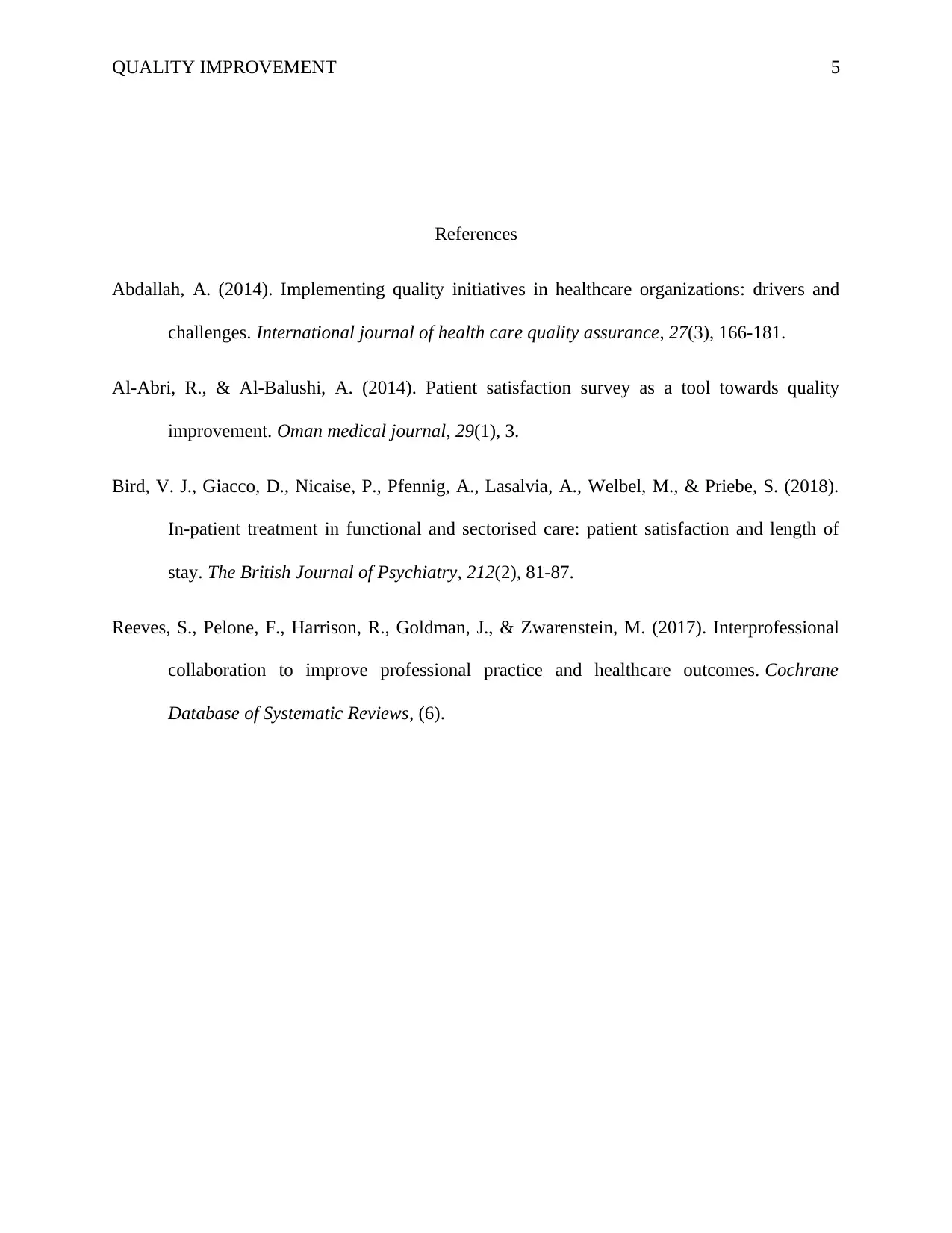
QUALITY IMPROVEMENT 4
patient experience and care outcomes. It is also important to note that inter-professional
collaboration helps in improving patient safety in the hospital because some conditions may be
unpredictable thus demanding the effective functioning of a combined team of professionals
(Reeves et al., 2017).
The best inter-professional to help in the implementation of this initiative will be made up of a
doctor, a nurse, and a nursing assistant. This team ensures that the number of patients each
professional in the team handles is reduced. Additionally, an inter-professional team designs a
treatment plan together at the beginning thus helping them in immediately carrying out the
required tasks. Furthermore, roles are clearly defined for each of the team members so they know
what each one of them is responsible for in the provision of care (Reeves et al., 2017). Studies
have revealed that inter-professional collaboration improves the quality of care and consumer
satisfaction. As a result, long stay and short stay satisfaction in the workplace is improved by at
least 10%.
tabler-icon-diamond-filled.svg

Paraphrase This Document

Need a fresh take? Get an instant paraphrase of this document with our AI Paraphraser
Document Page
QUALITY IMPROVEMENT 5
References
Abdallah, A. (2014). Implementing quality initiatives in healthcare organizations: drivers and
challenges. International journal of health care quality assurance, 27(3), 166-181.
Al-Abri, R., & Al-Balushi, A. (2014). Patient satisfaction survey as a tool towards quality
improvement. Oman medical journal, 29(1), 3.
Bird, V. J., Giacco, D., Nicaise, P., Pfennig, A., Lasalvia, A., Welbel, M., & Priebe, S. (2018).
In-patient treatment in functional and sectorised care: patient satisfaction and length of
stay. The British Journal of Psychiatry, 212(2), 81-87.
Reeves, S., Pelone, F., Harrison, R., Goldman, J., & Zwarenstein, M. (2017). Interprofessional
collaboration to improve professional practice and healthcare outcomes. Cochrane
Database of Systematic Reviews, (6).
chevron_up_icon
1 out of 5
circle_padding
hide_on_mobile
zoom_out_icon
[object Object]