Expectancy Theory and Employee Motivation: A Comprehensive Analysis

Verified

Added on  2021/04/17

|6
|464
|74
Report
AI Summary
This report examines the application of expectancy theory to understand the causes of poor motivation in the workplace. It begins by defining expectancy theory and its core principles, explaining how employees' expectations of rewards and outcomes influence their motivation levels. The report identifies primary and secondary problems resulting from the theory, such as lack of promotional opportunities, inadequate pay increases, unfavorable working conditions, and lack of coordination between workgroups. Additionally, the report includes a SWOT analysis to assess the strengths, weaknesses, opportunities, and threats related to employee motivation within an organization. The analysis covers aspects such as the importance of assessing workforce problems, effective governance, and strategies to mitigate demotivating factors. Finally, the report provides a list of references supporting the analysis.

Document Page
1
Management and Governance
Name
Institution
tabler-icon-diamond-filled.svg

Paraphrase This Document

Need a fresh take? Get an instant paraphrase of this document with our AI Paraphraser
Document Page
2
Causes of Poor Motivation through the Application of the Expectancy Theory
Expectancy Theory
Expectancy theory is best described as a process theory. The primary idea behind this theory is
that workers expect their actions to help them achieve their desired outcomes which they
perceive as their source of motivation.1 One’s motivation in a specific task depends on the
relationship between their input to the particular function and the resultant outcome. Employees
tend to modify their behavior based on desired results. It has helped leaders in the creation of
motivation programs in their workstations thus; it has a potential power of improving motivation.
One of the major causes of poor motivation in expectancy theory is lack of recourse that
results into poor performance. When one goes to work, they always like to be rewarded
according to their contributions. If that is not the case, well-performing employees reduce their
efforts to the level of others employees since they feel that that their efforts are not being
rewarded. Failure to reorganize workers efforts reduces overall department performance.2
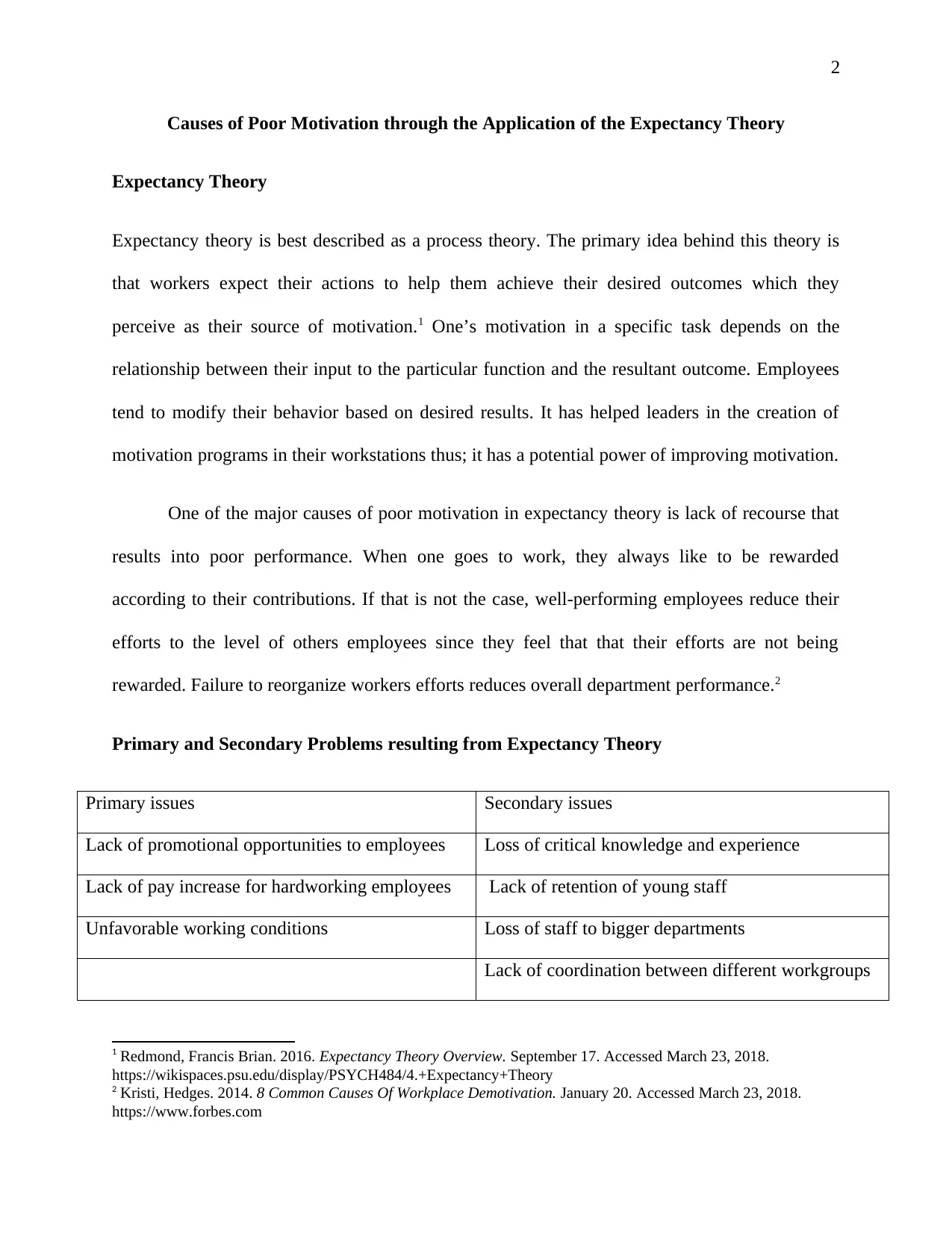
Primary and Secondary Problems resulting from Expectancy Theory
Primary issues Secondary issues
Lack of promotional opportunities to employees Loss of critical knowledge and experience
Lack of pay increase for hardworking employees Lack of retention of young staff
Unfavorable working conditions Loss of staff to bigger departments
Lack of coordination between different workgroups
1 Redmond, Francis Brian. 2016. Expectancy Theory Overview. September 17. Accessed March 23, 2018.
https://wikispaces.psu.edu/display/PSYCH484/4.+Expectancy+Theory
2 Kristi, Hedges. 2014. 8 Common Causes Of Workplace Demotivation. January 20. Accessed March 23, 2018.
https://www.forbes.com
Document Page
3
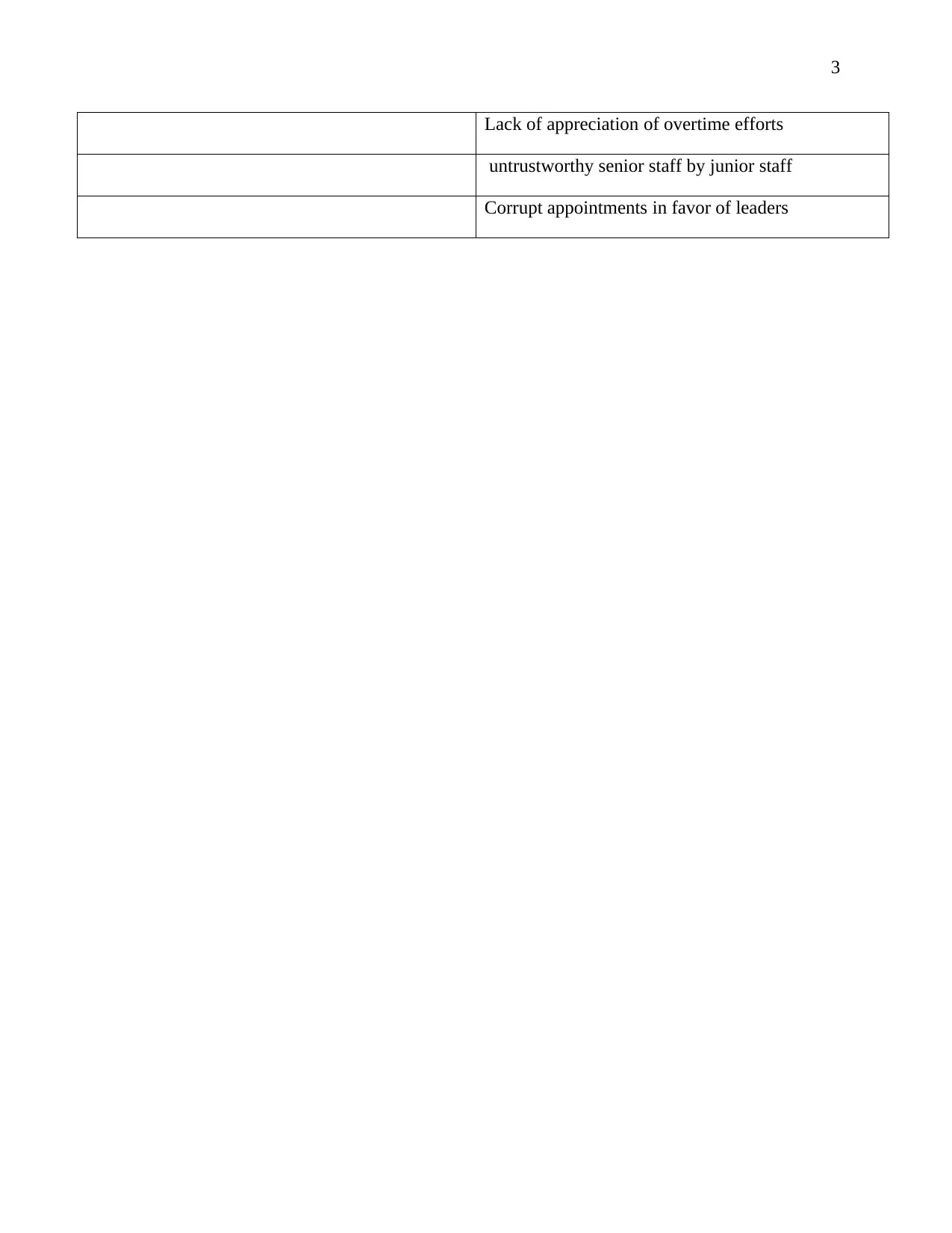
Lack of appreciation of overtime efforts
untrustworthy senior staff by junior staff
Corrupt appointments in favor of leaders
Document Page
4
Bibliography
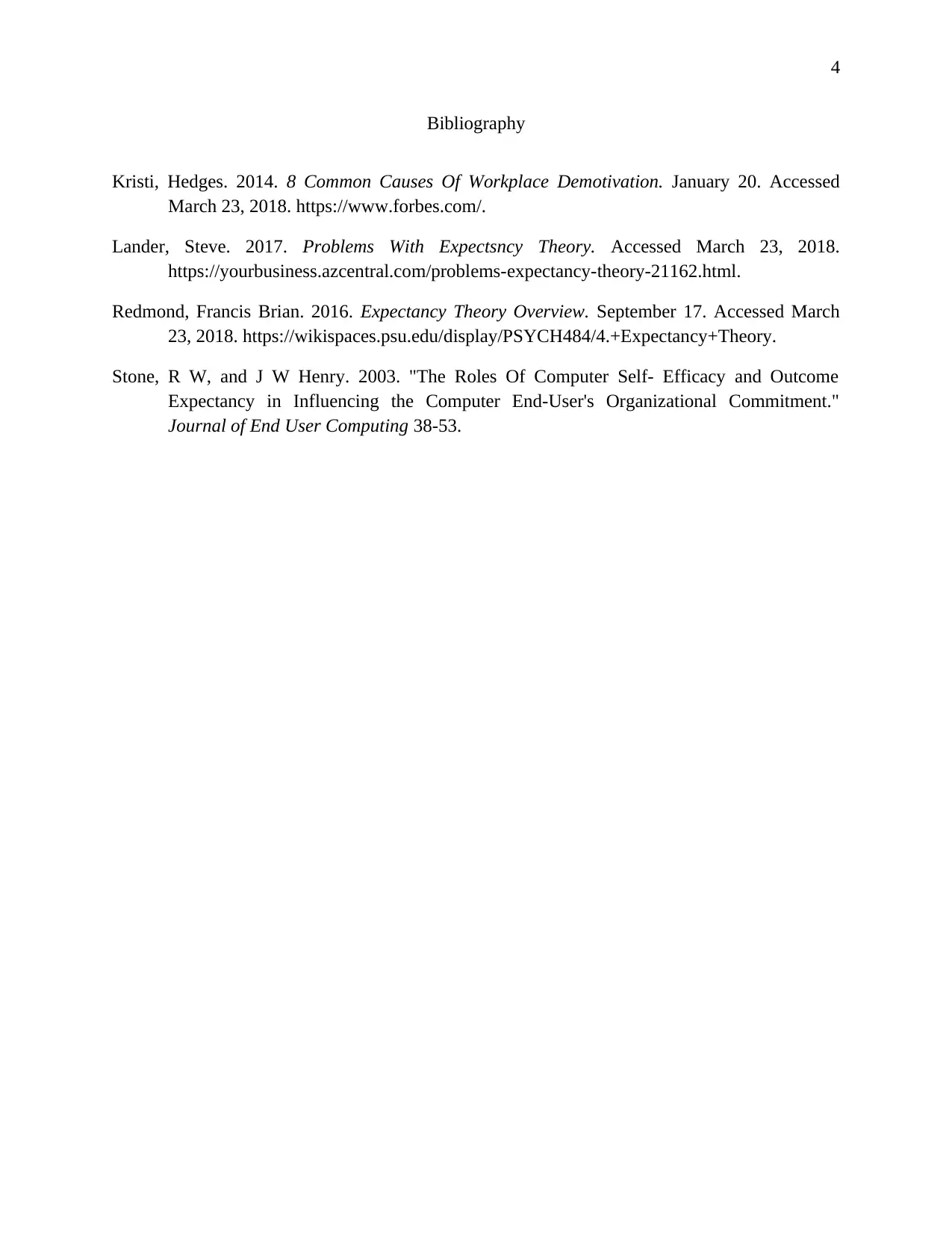
Kristi, Hedges. 2014. 8 Common Causes Of Workplace Demotivation. January 20. Accessed
March 23, 2018. https://www.forbes.com/.
Lander, Steve. 2017. Problems With Expectsncy Theory. Accessed March 23, 2018.
https://yourbusiness.azcentral.com/problems-expectancy-theory-21162.html.
Redmond, Francis Brian. 2016. Expectancy Theory Overview. September 17. Accessed March
23, 2018. https://wikispaces.psu.edu/display/PSYCH484/4.+Expectancy+Theory.
Stone, R W, and J W Henry. 2003. "The Roles Of Computer Self- Efficacy and Outcome
Expectancy in Influencing the Computer End-User's Organizational Commitment."
Journal of End User Computing 38-53.
tabler-icon-diamond-filled.svg

Paraphrase This Document

Need a fresh take? Get an instant paraphrase of this document with our AI Paraphraser
Document Page
5
Appendix
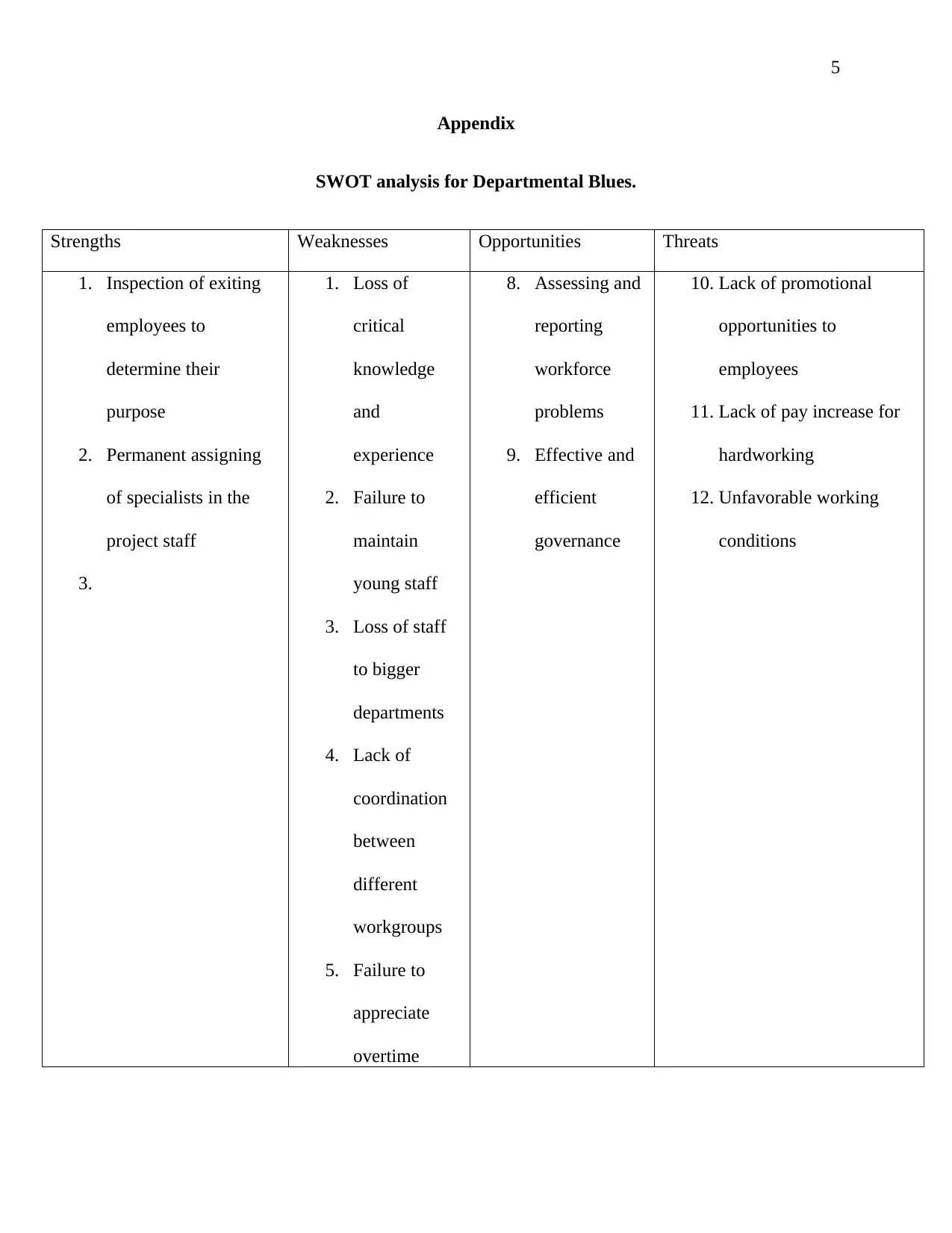
SWOT analysis for Departmental Blues.
Strengths Weaknesses Opportunities Threats
1. Inspection of exiting
employees to
determine their
purpose
2. Permanent assigning
of specialists in the
project staff
3.
1. Loss of
critical
knowledge
and
experience
2. Failure to
maintain
young staff
3. Loss of staff
to bigger
departments
4. Lack of
coordination
between
different
workgroups
5. Failure to
appreciate
overtime
8. Assessing and
reporting
workforce
problems
9. Effective and
efficient
governance
10. Lack of promotional
opportunities to
employees
11. Lack of pay increase for
hardworking
12. Unfavorable working
conditions
Document Page
6
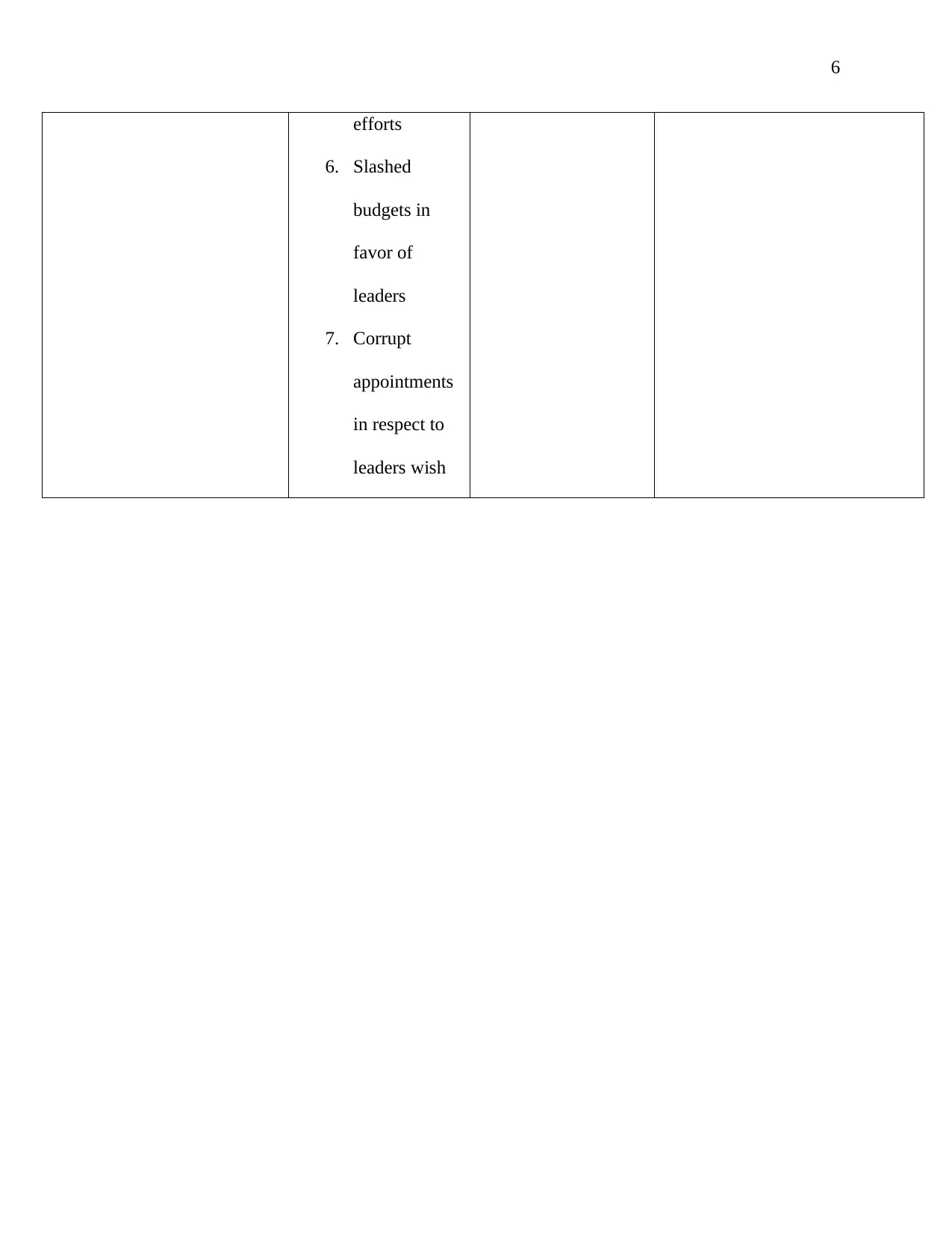
efforts
6. Slashed
budgets in
favor of
leaders
7. Corrupt
appointments
in respect to
leaders wish
chevron_up_icon
1 out of 6
circle_padding
hide_on_mobile
zoom_out_icon
[object Object]