Eye Care in Intensive Care: Effects and Improvement Strategies
VerifiedAdded on 2023/01/16
|11
|2359
|29
Report
AI Summary
This report delves into the critical aspects of eye care within the intensive care unit (ICU) setting. It begins with an overview of ocular surface disease, highlighting the increased risk of corneal abrasions and infections among ICU patients due to compromised ocular defense mechanisms. The report then explores the background, rationale, and objectives of the study, focusing on the effects of intensive care on eye health and the importance of proper care to mitigate risks. It covers the literature search strategy, including key search terms and databases used, followed by a detailed literature review organized around themes such as effective assessment procedures, quality improvement practices for eye hygiene, the use of autologous serum-based eye drops, and the effectiveness of eye covers. The implementation section outlines the research design, approach, and methods used for data collection and analysis, including ethical considerations and limitations. The report also includes a data section, encompassing questionnaires and data interpretation, along with a final evaluation and a comprehensive list of references. The report aims to provide a thorough understanding of the challenges and best practices in eye care within the ICU, offering insights into diagnosis, treatment, and prevention strategies for ocular surface complications.
Eye Care In
Intensive Care
Intensive Care

Paraphrase This Document
Need a fresh take? Get an instant paraphrase of this document with our AI Paraphraser
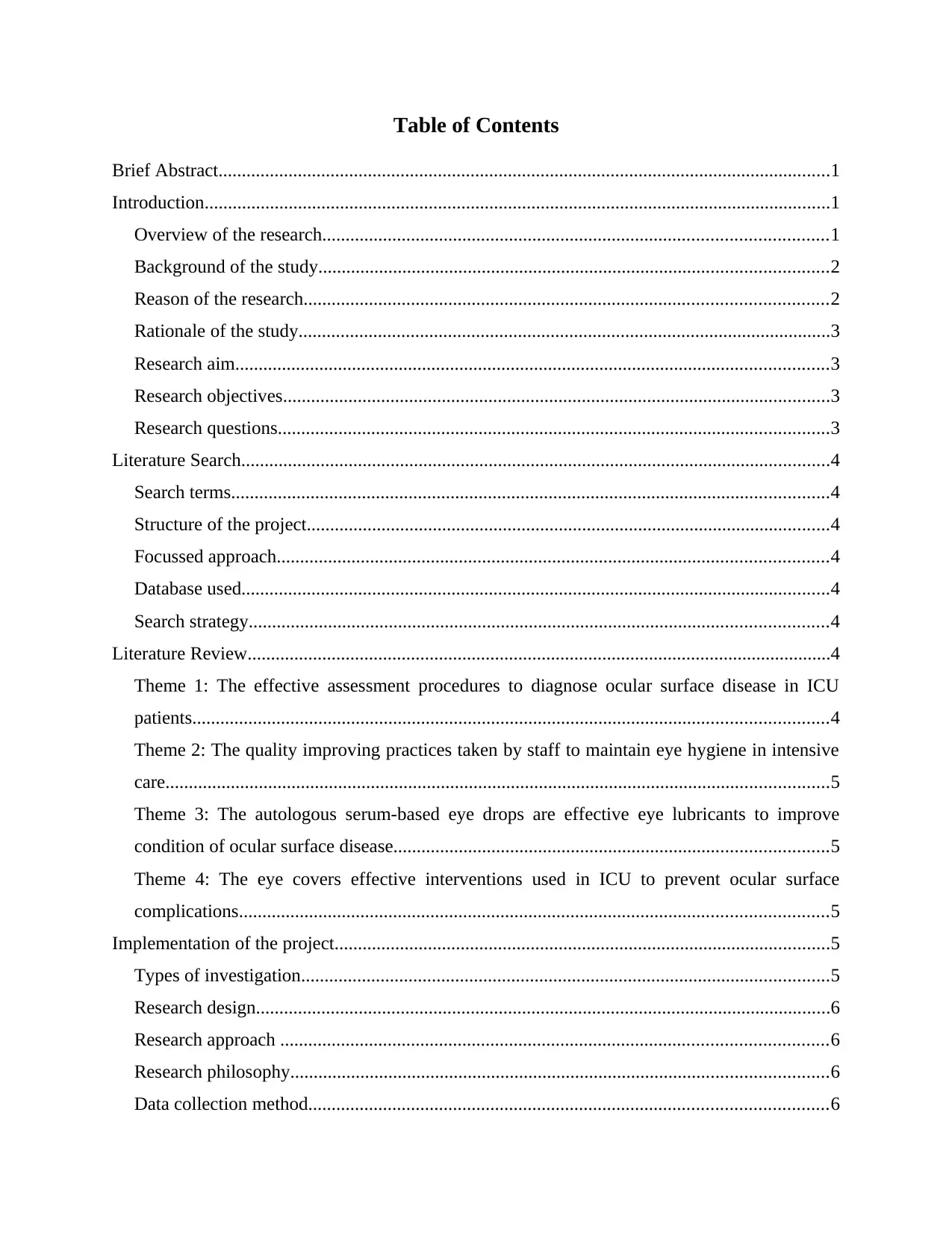
Table of Contents
Brief Abstract...................................................................................................................................1
Introduction......................................................................................................................................1
Overview of the research............................................................................................................1
Background of the study.............................................................................................................2
Reason of the research................................................................................................................2
Rationale of the study..................................................................................................................3
Research aim...............................................................................................................................3
Research objectives.....................................................................................................................3
Research questions......................................................................................................................3
Literature Search..............................................................................................................................4
Search terms................................................................................................................................4
Structure of the project................................................................................................................4
Focussed approach......................................................................................................................4
Database used..............................................................................................................................4
Search strategy............................................................................................................................4
Literature Review.............................................................................................................................4
Theme 1: The effective assessment procedures to diagnose ocular surface disease in ICU
patients........................................................................................................................................4
Theme 2: The quality improving practices taken by staff to maintain eye hygiene in intensive
care..............................................................................................................................................5
Theme 3: The autologous serum-based eye drops are effective eye lubricants to improve
condition of ocular surface disease.............................................................................................5
Theme 4: The eye covers effective interventions used in ICU to prevent ocular surface
complications..............................................................................................................................5
Implementation of the project..........................................................................................................5
Types of investigation.................................................................................................................5
Research design...........................................................................................................................6
Research approach .....................................................................................................................6
Research philosophy...................................................................................................................6
Data collection method...............................................................................................................6
Brief Abstract...................................................................................................................................1
Introduction......................................................................................................................................1
Overview of the research............................................................................................................1
Background of the study.............................................................................................................2
Reason of the research................................................................................................................2
Rationale of the study..................................................................................................................3
Research aim...............................................................................................................................3
Research objectives.....................................................................................................................3
Research questions......................................................................................................................3
Literature Search..............................................................................................................................4
Search terms................................................................................................................................4
Structure of the project................................................................................................................4
Focussed approach......................................................................................................................4
Database used..............................................................................................................................4
Search strategy............................................................................................................................4
Literature Review.............................................................................................................................4
Theme 1: The effective assessment procedures to diagnose ocular surface disease in ICU
patients........................................................................................................................................4
Theme 2: The quality improving practices taken by staff to maintain eye hygiene in intensive
care..............................................................................................................................................5
Theme 3: The autologous serum-based eye drops are effective eye lubricants to improve
condition of ocular surface disease.............................................................................................5
Theme 4: The eye covers effective interventions used in ICU to prevent ocular surface
complications..............................................................................................................................5
Implementation of the project..........................................................................................................5
Types of investigation.................................................................................................................5
Research design...........................................................................................................................6
Research approach .....................................................................................................................6
Research philosophy...................................................................................................................6
Data collection method...............................................................................................................6
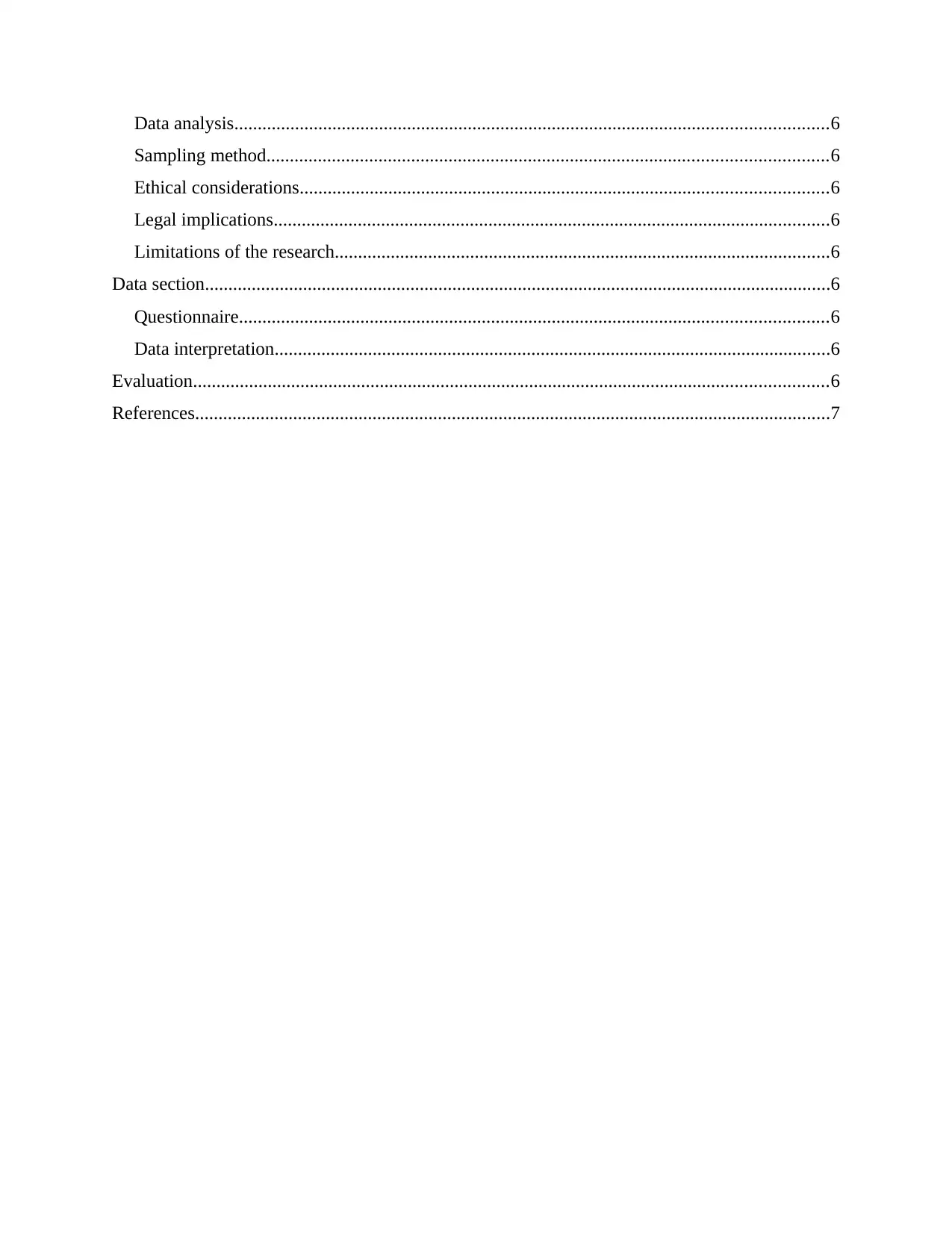
Data analysis...............................................................................................................................6
Sampling method........................................................................................................................6
Ethical considerations.................................................................................................................6
Legal implications.......................................................................................................................6
Limitations of the research..........................................................................................................6
Data section......................................................................................................................................6
Questionnaire..............................................................................................................................6
Data interpretation.......................................................................................................................6
Evaluation........................................................................................................................................6
References........................................................................................................................................7
Sampling method........................................................................................................................6
Ethical considerations.................................................................................................................6
Legal implications.......................................................................................................................6
Limitations of the research..........................................................................................................6
Data section......................................................................................................................................6
Questionnaire..............................................................................................................................6
Data interpretation.......................................................................................................................6
Evaluation........................................................................................................................................6
References........................................................................................................................................7
⊘ This is a preview!⊘
Do you want full access?
Subscribe today to unlock all pages.

Trusted by 1+ million students worldwide

Paraphrase This Document
Need a fresh take? Get an instant paraphrase of this document with our AI Paraphraser
Brief Abstract
Introduction
Overview of the research
Ocular surface disease is more likely to be occur in patients who are stayed in ICU
because the risk of corneal abrasions and infectious keratitis due to impalements in ocular
defence mechanisms including Bell's phenomenon, reduced blink reflex, decreased tear
production, increased exposure to pathogenic microbes and poor eyelid closure. It is essential for
staff to provide proper care to these patients for reducing risk of ocular surface problems.
However, patients kept under intensive care are required to be consulted by ophthalmologist
regarding early diagnosis of ocular surface disorder for preventing them (Abt and et. al., 2017).
Intensive care has several negative effects on eye care in terms of developing certain issues or
infections in eyes. It is observed that ocular surface disease is most commonly observed in
patient kept in intensive care while creating corneal epithelial defects. However, it has been
analysed that ocular surface remain protected due to capability of producing tears, to blink and
close eye for sleep or rest. These aspects of eyes get disturbed in intensive care which is
responsible developing increased risk of creating ocular surface disease. Ocular surface disease
can involve several areas get infected like exposure keratopathy, chemosis (conjunctival
swelling), microbial conjunctivitis & keratitis and direct damage to cornea which is known to be
most often a superficial corneal abrasion (scratch).
On the other hand, eye care at clinical level can be consider as very careful process which
must be carried out with proper concentration and efforts. It is essential for doctors to convey
patient about to avoid habit of smoking, wear sunglasses, utilise safety wear for eye, etc.
However, it is necessary to ensure that patient should not look at the computer screen because it
is responsible for developing various diseases or infections, meanwhile, it may cause blurry
vision, dry eyes, headaches, neck, back or shoulder pain, eye strain and trouble focussing at a
distance (Hu and et. al., 2016). Eye care requires proper handling of clinical equipments by
medical staff in order to avoid infections by using gloves and washed hands. In context of given
investigation, eye care in intensive care is focussed which consist the effects of intensive care on
eyes of patients. It has been analysed that intensive carte has various side effects on eyes in terms
of develop several infections.
1
Introduction
Overview of the research
Ocular surface disease is more likely to be occur in patients who are stayed in ICU
because the risk of corneal abrasions and infectious keratitis due to impalements in ocular
defence mechanisms including Bell's phenomenon, reduced blink reflex, decreased tear
production, increased exposure to pathogenic microbes and poor eyelid closure. It is essential for
staff to provide proper care to these patients for reducing risk of ocular surface problems.
However, patients kept under intensive care are required to be consulted by ophthalmologist
regarding early diagnosis of ocular surface disorder for preventing them (Abt and et. al., 2017).
Intensive care has several negative effects on eye care in terms of developing certain issues or
infections in eyes. It is observed that ocular surface disease is most commonly observed in
patient kept in intensive care while creating corneal epithelial defects. However, it has been
analysed that ocular surface remain protected due to capability of producing tears, to blink and
close eye for sleep or rest. These aspects of eyes get disturbed in intensive care which is
responsible developing increased risk of creating ocular surface disease. Ocular surface disease
can involve several areas get infected like exposure keratopathy, chemosis (conjunctival
swelling), microbial conjunctivitis & keratitis and direct damage to cornea which is known to be
most often a superficial corneal abrasion (scratch).
On the other hand, eye care at clinical level can be consider as very careful process which
must be carried out with proper concentration and efforts. It is essential for doctors to convey
patient about to avoid habit of smoking, wear sunglasses, utilise safety wear for eye, etc.
However, it is necessary to ensure that patient should not look at the computer screen because it
is responsible for developing various diseases or infections, meanwhile, it may cause blurry
vision, dry eyes, headaches, neck, back or shoulder pain, eye strain and trouble focussing at a
distance (Hu and et. al., 2016). Eye care requires proper handling of clinical equipments by
medical staff in order to avoid infections by using gloves and washed hands. In context of given
investigation, eye care in intensive care is focussed which consist the effects of intensive care on
eyes of patients. It has been analysed that intensive carte has various side effects on eyes in terms
of develop several infections.
1
Background of the study
In context of given report, it will focus on the effects of intensive care on eyes while
providing eye treatment to patient. It includes risks of occurring various eye relate infections at
the time of patient kept in intensive care unit. However, the study consist the information about
basic understanding of eye and eye care which consist parts of eyes and relevant measures of
caring eyes. It consist number of parts such as retina, cornea, iris, ciliary fibres, fovea, optic
nerve, aqueous humour, lens and vitreous humour & sclera. Meanwhile, it will also consist
effects on eyes of intensive care and related disease or infections that may occur in eyes of a
human being (Stewart and et. al., 2017). It involves conjunctivitis or pink eye, keratitis,
endophthalmitis, blepharitis, sty, uveitis, cellulitis, ocular herpes etc. It contains various eye
infections like pain, eye discharge, watery eyes, dry eyes, light sensitivity, swollen eyes, swelling
around the eyes, itching, blurry eyes and red eyes.
Eye care refers to healthy eating and protect eyes from external factors like sun rays,
dust, pollution and so on. Eyes are known to be very important part of health which allows an
individual to observe the world around to make sense of it. However, there are various habits
which are required to be adopt by people in order to maintain their eye sight appropriate. It
consist to intake balanced diet, maintain healthy eight, use regular physical work out, wear
protective eye wear, avoid smoking, know about relevant family history to take precautions etc.
It is necessary to make an attempt effective steps in order to avoid eye infections while using
contact lenses. However, eye care requires immediate medical consult if an individual face
relevant problem (Saddki, Mohamad Sani, and Tin‐Oo, 2017). It is necessary for medical
professionals to remain prepare for providing information to people regarding eating habits and
other related precautions for maintain eyes in proper condition. It includes to encourage
individuals for having green leafy vegetables in their meal like spinach, collards & kale and tuna,
salmon & other oily fishes which contain important nutrition for well-being of eyes. It consist
eating habit of eggs, nuts, beans, non meat proteins sources, oranges, citrus fruits, pork, oyster
and so on.
Reason of the research
The purpose of this study is to understanding the cause and developing ocular surface
which is helpful to create effective treatments for solving it.
2
In context of given report, it will focus on the effects of intensive care on eyes while
providing eye treatment to patient. It includes risks of occurring various eye relate infections at
the time of patient kept in intensive care unit. However, the study consist the information about
basic understanding of eye and eye care which consist parts of eyes and relevant measures of
caring eyes. It consist number of parts such as retina, cornea, iris, ciliary fibres, fovea, optic
nerve, aqueous humour, lens and vitreous humour & sclera. Meanwhile, it will also consist
effects on eyes of intensive care and related disease or infections that may occur in eyes of a
human being (Stewart and et. al., 2017). It involves conjunctivitis or pink eye, keratitis,
endophthalmitis, blepharitis, sty, uveitis, cellulitis, ocular herpes etc. It contains various eye
infections like pain, eye discharge, watery eyes, dry eyes, light sensitivity, swollen eyes, swelling
around the eyes, itching, blurry eyes and red eyes.
Eye care refers to healthy eating and protect eyes from external factors like sun rays,
dust, pollution and so on. Eyes are known to be very important part of health which allows an
individual to observe the world around to make sense of it. However, there are various habits
which are required to be adopt by people in order to maintain their eye sight appropriate. It
consist to intake balanced diet, maintain healthy eight, use regular physical work out, wear
protective eye wear, avoid smoking, know about relevant family history to take precautions etc.
It is necessary to make an attempt effective steps in order to avoid eye infections while using
contact lenses. However, eye care requires immediate medical consult if an individual face
relevant problem (Saddki, Mohamad Sani, and Tin‐Oo, 2017). It is necessary for medical
professionals to remain prepare for providing information to people regarding eating habits and
other related precautions for maintain eyes in proper condition. It includes to encourage
individuals for having green leafy vegetables in their meal like spinach, collards & kale and tuna,
salmon & other oily fishes which contain important nutrition for well-being of eyes. It consist
eating habit of eggs, nuts, beans, non meat proteins sources, oranges, citrus fruits, pork, oyster
and so on.
Reason of the research
The purpose of this study is to understanding the cause and developing ocular surface
which is helpful to create effective treatments for solving it.
2
⊘ This is a preview!⊘
Do you want full access?
Subscribe today to unlock all pages.
Trusted by 1+ million students worldwide
Rationale of the study
Research aim
“To examine the eye care in intensive care unit and relevant effects on patient in health &
social care.”
Research objectives
To identify the basic understanding of eye and eye care.
To analyse the effects of intensive care on eye care.
To determine the various disease and infections related to eye.
To examine the risk of developing eye complications in intensive care.
To evaluate the ways of improvement to provide effective eye care.
Research questions
What is the basic understanding of eye and eye care?
How to analyse the effects of intensive care on eye care?
What are the various disease and infections related to eye?
How to examine the risk of developing eye complications in intensive care?
What are the ways of improvement to provide effective eye care?
Literature Search
Search terms
Structure of the project
Focussed approach
Database used
Search strategy
Literature Review
Theme 1: The effective assessment procedures to diagnose ocular surface disease in ICU
patients.
There are various ways to diagnose the ocular surface disease (OSD) in ICU are
mentioned here. Initially, Meibography is the way of diagnosis of ocular surface disease in ICU,
in which imagination study formed to directly figure out as well as visualise the morphology of
3
Research aim
“To examine the eye care in intensive care unit and relevant effects on patient in health &
social care.”
Research objectives
To identify the basic understanding of eye and eye care.
To analyse the effects of intensive care on eye care.
To determine the various disease and infections related to eye.
To examine the risk of developing eye complications in intensive care.
To evaluate the ways of improvement to provide effective eye care.
Research questions
What is the basic understanding of eye and eye care?
How to analyse the effects of intensive care on eye care?
What are the various disease and infections related to eye?
How to examine the risk of developing eye complications in intensive care?
What are the ways of improvement to provide effective eye care?
Literature Search
Search terms
Structure of the project
Focussed approach
Database used
Search strategy
Literature Review
Theme 1: The effective assessment procedures to diagnose ocular surface disease in ICU
patients.
There are various ways to diagnose the ocular surface disease (OSD) in ICU are
mentioned here. Initially, Meibography is the way of diagnosis of ocular surface disease in ICU,
in which imagination study formed to directly figure out as well as visualise the morphology of
3
Paraphrase This Document
Need a fresh take? Get an instant paraphrase of this document with our AI Paraphraser
meibomian glands in vivo. In this, the brands consider the Lipician Dynamic Meibom ian imager
or Lipiview ocular aboveground interferometer. As per views given by McKinney S. (2020), it is
a measuring instrument. Moreover, the Ketograph 5M and HD analyser or tear Film detector are
used to determine OSD. Secondly, Osmolarity Testing is known as latest method to diagnose
current disorder that happen in the ICU. In the Tear film in eyes of a patient, the tear lab
osmolarity system is measures. When the tear film is explosive, the osmolarity in which a
biomarker of ocular health is systematically above 300 mOsm/L as well as when the reading of
osmolarity in only one eye is 8 mOsm/L or more various from a interpretation in the other eye.
This test conduct to measure the dryness of eyes. The higher concentration leads to high level of
dryness. This test is used to measure all types of solutions in the eyes. The different diagnostic
technologies can be used in this. In this method, the testing occur by freezing point of depression
method in which the sample is cooled up to its freezing point.
On the other hand, Schirmer's test is the diagnostic way to tear those patients who are
suffering issues in eyes at ICU. It is define, if in the eye is bring forth a adequate quantity of
tears. This test in utilized when a individual experiences very dry eyes or immoderate watering
of the eyes. Offering by a number of companies. Meanwhile, Ocular surface staining is used with
a lamp of slit to diagnose and measuring the effects of OSD. Fluorescein can check harm to
cornea. Lissamine Green, applied to the bulbar conjunctiva, stains dead and degeneration tissue
and can detect primal clue of diseases. However, Corneal topography is a technique that is used
in the lab to diagnose the three dimensional surface curvature of the cornea. According to
Katherine Kostroun and Sumitra S. Khandelwal. (2017), the irregular mires refer to as irregular
ocular surface which show the present condition with issue in tears. The condition occur such as
epithelial basement membrane dystrophy. The result of this test shows the missing of mires
which resembles the dryness of the eyes. Moreover. Tear film breakup time is used in lab by
using appropriate traditional test in which fluorescein is used to measure the dryness in eyes. But
after the use of keratograph, the detection of dryness of eye can be improved. This test is used to
identify the issues in eyes who have higher problem of dryness in their eyes. Additionally,
Optical coherence tomography consist that there are several devices occur of optical coherence
tomography that helps in identifying the reduction volume of tear by non invasively. This
techniques help the doctors in diagnosing the issues of eyes in the lab.
4
or Lipiview ocular aboveground interferometer. As per views given by McKinney S. (2020), it is
a measuring instrument. Moreover, the Ketograph 5M and HD analyser or tear Film detector are
used to determine OSD. Secondly, Osmolarity Testing is known as latest method to diagnose
current disorder that happen in the ICU. In the Tear film in eyes of a patient, the tear lab
osmolarity system is measures. When the tear film is explosive, the osmolarity in which a
biomarker of ocular health is systematically above 300 mOsm/L as well as when the reading of
osmolarity in only one eye is 8 mOsm/L or more various from a interpretation in the other eye.
This test conduct to measure the dryness of eyes. The higher concentration leads to high level of
dryness. This test is used to measure all types of solutions in the eyes. The different diagnostic
technologies can be used in this. In this method, the testing occur by freezing point of depression
method in which the sample is cooled up to its freezing point.
On the other hand, Schirmer's test is the diagnostic way to tear those patients who are
suffering issues in eyes at ICU. It is define, if in the eye is bring forth a adequate quantity of
tears. This test in utilized when a individual experiences very dry eyes or immoderate watering
of the eyes. Offering by a number of companies. Meanwhile, Ocular surface staining is used with
a lamp of slit to diagnose and measuring the effects of OSD. Fluorescein can check harm to
cornea. Lissamine Green, applied to the bulbar conjunctiva, stains dead and degeneration tissue
and can detect primal clue of diseases. However, Corneal topography is a technique that is used
in the lab to diagnose the three dimensional surface curvature of the cornea. According to
Katherine Kostroun and Sumitra S. Khandelwal. (2017), the irregular mires refer to as irregular
ocular surface which show the present condition with issue in tears. The condition occur such as
epithelial basement membrane dystrophy. The result of this test shows the missing of mires
which resembles the dryness of the eyes. Moreover. Tear film breakup time is used in lab by
using appropriate traditional test in which fluorescein is used to measure the dryness in eyes. But
after the use of keratograph, the detection of dryness of eye can be improved. This test is used to
identify the issues in eyes who have higher problem of dryness in their eyes. Additionally,
Optical coherence tomography consist that there are several devices occur of optical coherence
tomography that helps in identifying the reduction volume of tear by non invasively. This
techniques help the doctors in diagnosing the issues of eyes in the lab.
4
Theme 2: The quality improving practices taken by staff to maintain eye hygiene in intensive
care.
Theme 3: The autologous serum-based eye drops are effective eye lubricants to improve
condition of ocular surface disease.
Theme 4: The eye covers effective interventions used in ICU to prevent ocular surface
complications.
Implementation of the project
Types of investigation
The investigation types consist main two methods like quantitative and qualitative in
which suitable one technique can be used by investigator in order to gain appropriate findings.
Initially, the qualitative project can be described as a method in which the information related to
project problem has been taken through open ended questions and conversational communication
(Small, Robertson and Runcie, 2019). However, this technique can be consider to be concerned
with behaviour of human from the perspectives of information provider along with focussing of
dynamic assumptions as well as negotiated reality. In this methods, the relevant data collection
can be carrying out with the help of gathered information on the basis of observation and views
of respondents.
5
care.
Theme 3: The autologous serum-based eye drops are effective eye lubricants to improve
condition of ocular surface disease.
Theme 4: The eye covers effective interventions used in ICU to prevent ocular surface
complications.
Implementation of the project
Types of investigation
The investigation types consist main two methods like quantitative and qualitative in
which suitable one technique can be used by investigator in order to gain appropriate findings.
Initially, the qualitative project can be described as a method in which the information related to
project problem has been taken through open ended questions and conversational communication
(Small, Robertson and Runcie, 2019). However, this technique can be consider to be concerned
with behaviour of human from the perspectives of information provider along with focussing of
dynamic assumptions as well as negotiated reality. In this methods, the relevant data collection
can be carrying out with the help of gathered information on the basis of observation and views
of respondents.
5
⊘ This is a preview!⊘
Do you want full access?
Subscribe today to unlock all pages.
Trusted by 1+ million students worldwide
Research design
Research approach
Research philosophy
Data collection method
Data analysis
Sampling method
Ethical considerations
Legal implications
Limitations of the research
Data section
Questionnaire
Data interpretation
Evaluation
6
Research approach
Research philosophy
Data collection method
Data analysis
Sampling method
Ethical considerations
Legal implications
Limitations of the research
Data section
Questionnaire
Data interpretation
Evaluation
6
Paraphrase This Document
Need a fresh take? Get an instant paraphrase of this document with our AI Paraphraser
References
Books and journals
Abt, N.B. and et. al., 2017. Frailty index: Intensive care unit complications in head and neck
oncologic regional and free flap reconstruction. Head & neck, 39(8), pp.1578-1585.
Hu, R.F. and et. al., 2016. An investigation of light and sound levels on intensive care units in
China. Australian Critical Care, 29(2), pp.62-67.
Stewart, J.A. and et. al., 2017. Factors influencing quality of sleep among non-mechanically
ventilated patients in the Intensive Care Unit. Australian Critical Care, 30(2), pp.85-90.
Saddki, N., Mohamad Sani, F.E. and Tin‐Oo, M.M., 2017. Oral care for intubated patients: a
survey of intensive care unit nurses. Nursing in critical care, 22(2), pp.89-98.
Small, J., Robertson, E. and Runcie, C., 2019. Care of the eye during anaesthesia and intensive
care. Anaesthesia & Intensive Care Medicine.
Online
McKinney S., 2020. Diagnosing Ocular Surface Disease. [Online]. Available
through:<https://www.reviewofophthalmology.com/article/diagnosing-ocular-surface-
disease>
Kostroun K. and Sumitra S. Khandelwal., 2017. New Diagnostics in Ocular Surface Disease.
[Online]. Available
through:<https://journals.lww.com/internat-ophthalmology/Citation/2017/05730/
New_Diagnostics_in_Ocular_Surface_Disease.4.aspx>
7
Books and journals
Abt, N.B. and et. al., 2017. Frailty index: Intensive care unit complications in head and neck
oncologic regional and free flap reconstruction. Head & neck, 39(8), pp.1578-1585.
Hu, R.F. and et. al., 2016. An investigation of light and sound levels on intensive care units in
China. Australian Critical Care, 29(2), pp.62-67.
Stewart, J.A. and et. al., 2017. Factors influencing quality of sleep among non-mechanically
ventilated patients in the Intensive Care Unit. Australian Critical Care, 30(2), pp.85-90.
Saddki, N., Mohamad Sani, F.E. and Tin‐Oo, M.M., 2017. Oral care for intubated patients: a
survey of intensive care unit nurses. Nursing in critical care, 22(2), pp.89-98.
Small, J., Robertson, E. and Runcie, C., 2019. Care of the eye during anaesthesia and intensive
care. Anaesthesia & Intensive Care Medicine.
Online
McKinney S., 2020. Diagnosing Ocular Surface Disease. [Online]. Available
through:<https://www.reviewofophthalmology.com/article/diagnosing-ocular-surface-
disease>
Kostroun K. and Sumitra S. Khandelwal., 2017. New Diagnostics in Ocular Surface Disease.
[Online]. Available
through:<https://journals.lww.com/internat-ophthalmology/Citation/2017/05730/
New_Diagnostics_in_Ocular_Surface_Disease.4.aspx>
7

1 out of 11


Your All-in-One AI-Powered Toolkit for Academic Success.
+13062052269
info@desklib.com
Available 24*7 on WhatsApp / Email
![[object Object]](/_next/static/media/star-bottom.7253800d.svg)
Unlock your academic potential
Copyright © 2020–2026 A2Z Services. All Rights Reserved. Developed and managed by ZUCOL.