Investigating Plant Transpiration: Environmental Factors and Results

Verified

Added on  2023/03/20

|9
|1447
|89
Report
AI Summary
This report provides an overview of plant transpiration, the process by which plants lose excess water through stomata. It discusses the importance of transpiration in gas exchange, photosynthesis, and the water cycle. The report examines various environmental and internal factors influencing transpiration rates, including temperature, humidity, and wind speed. Results from experiments, including thermographic images and tables, are presented and discussed. The discussion covers driving forces and resistance to water movement, as well as the impact of relative humidity, wind, and temperature on transpiration. The report concludes by summarizing the key findings and reiterating the factors affecting transpiration, such as stomata resistance and environmental conditions. References to relevant literature are also included.
Document Page
1
PLANT GROWTH
By Name
Course
Instructor
Institution
Location
Date
tabler-icon-diamond-filled.svg

Paraphrase This Document

Need a fresh take? Get an instant paraphrase of this document with our AI Paraphraser
Document Page
2
Introduction
Transpiration is the process through which plants losses excess water through the stomata. The
stomata refer to small pores or opening which are present on the upper part of the leaves, stems
or flowers (Pallas, 2011, p. 782). But mostly the stomata are found in the leaves Transpiration is
Avery essential process not only for the plant but also for the environment in the following ways;
transpiration greatly assists in the process of exchange of gases and photosynthesis.
Transpiration plays a very crucial role in balancing the carbon IV Oxide levels in the
atmosphere. Also, transpiration plays a major role in the water cycle since the total water
available in the atmosphere is due to transpiration. There are many factors both environmental
and internal factors which affect the rate at which transpiration takes place, some of the factors
include; High temperatures which result to the opening of stomata thus increased rate of
transpiration (Rutter, 2016, p. 271). The relative humidity also plays a very crucial role in the
process of transpiration since the amount of water vapor in the atmospheres determines the rate
at which transpiration takes place. The increase in the amount of water vapor in the atmosphere
the decrease at the rate at which transpiration takes place. Also, the rate of transpiration takes
increases with the increase in the speed of the wind, but in some conditions, the high speed of
winds leads to the closure of the stomata.
Results
Document Page
3
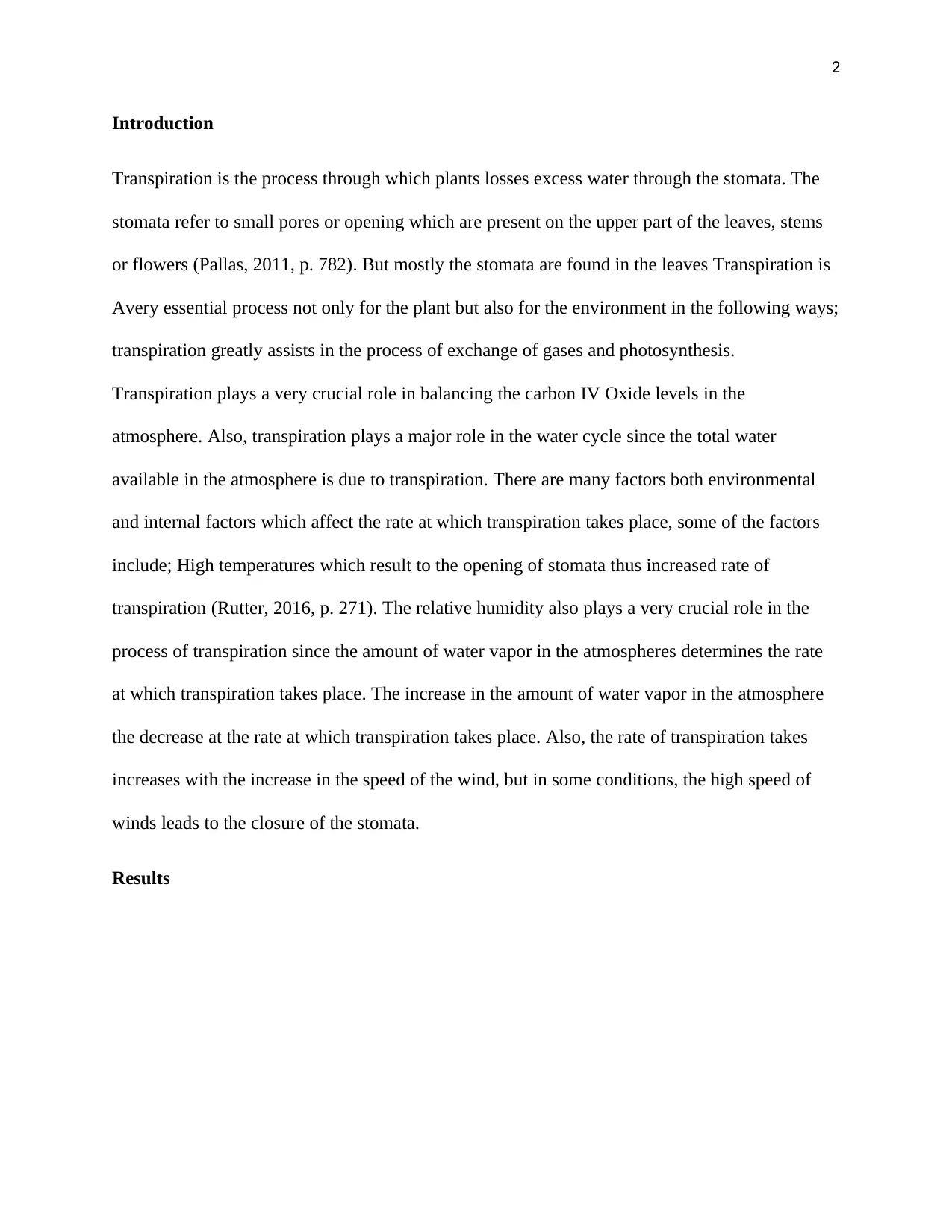
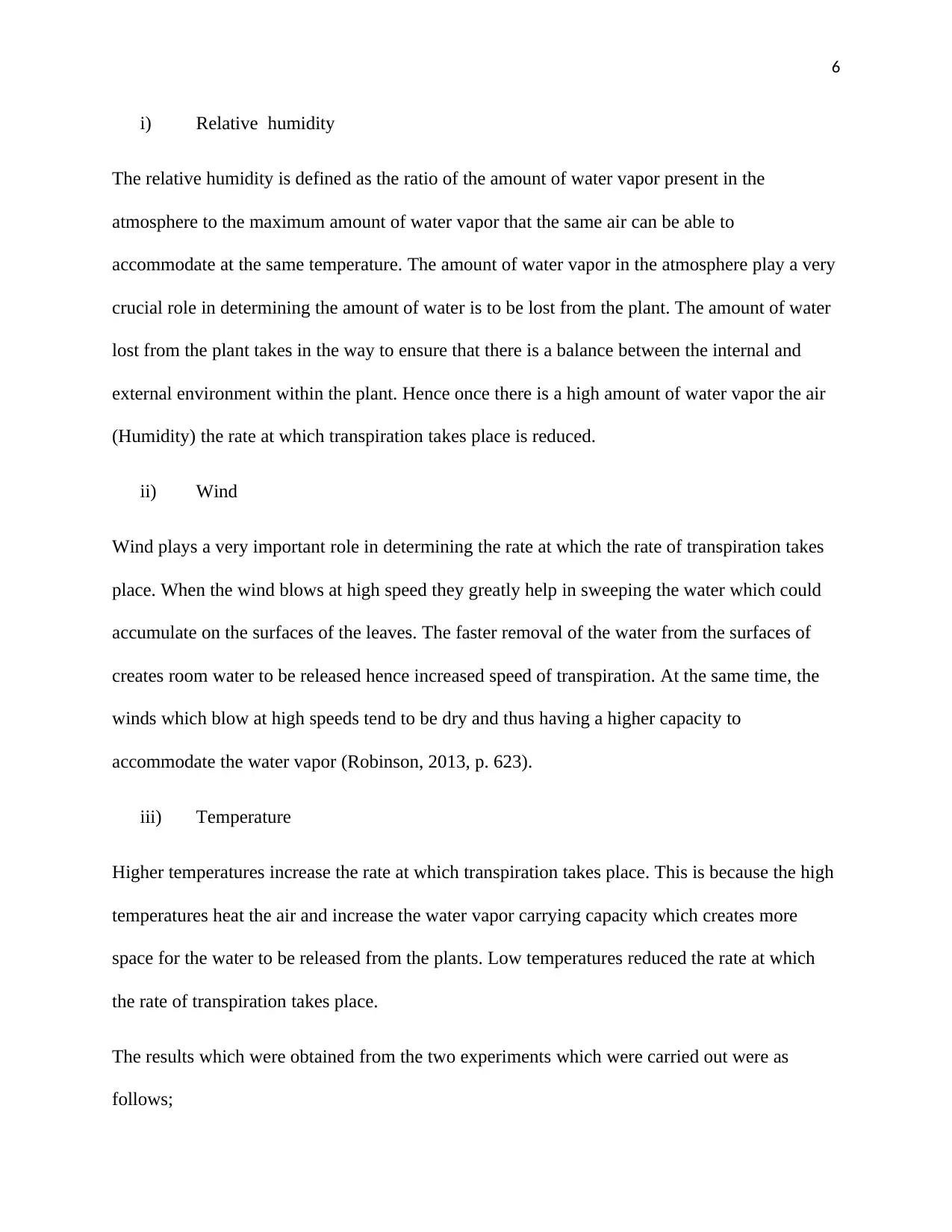
Fig 1: Thermographic images from practical 3 EB non-watered watered (Pallas, 2011, p. 672)
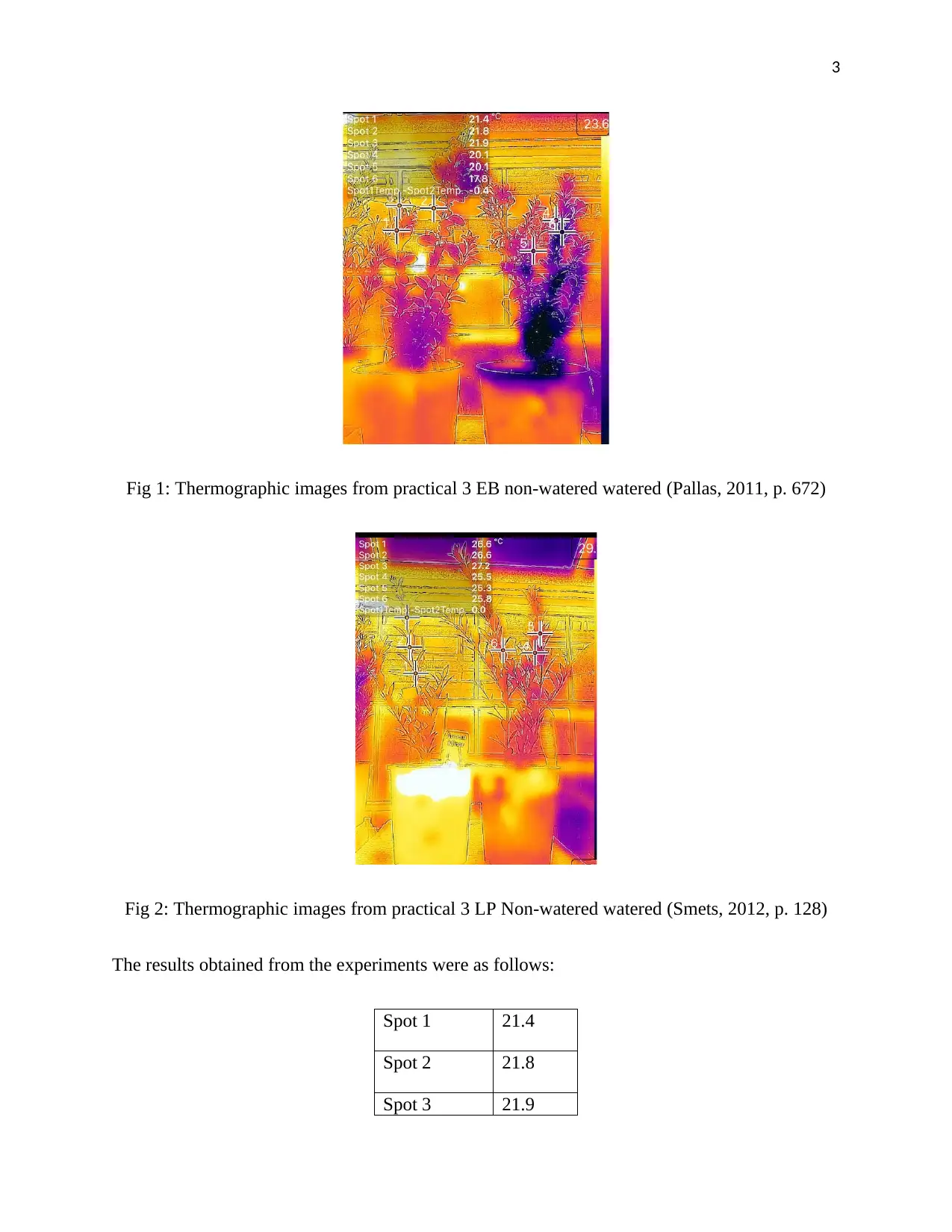
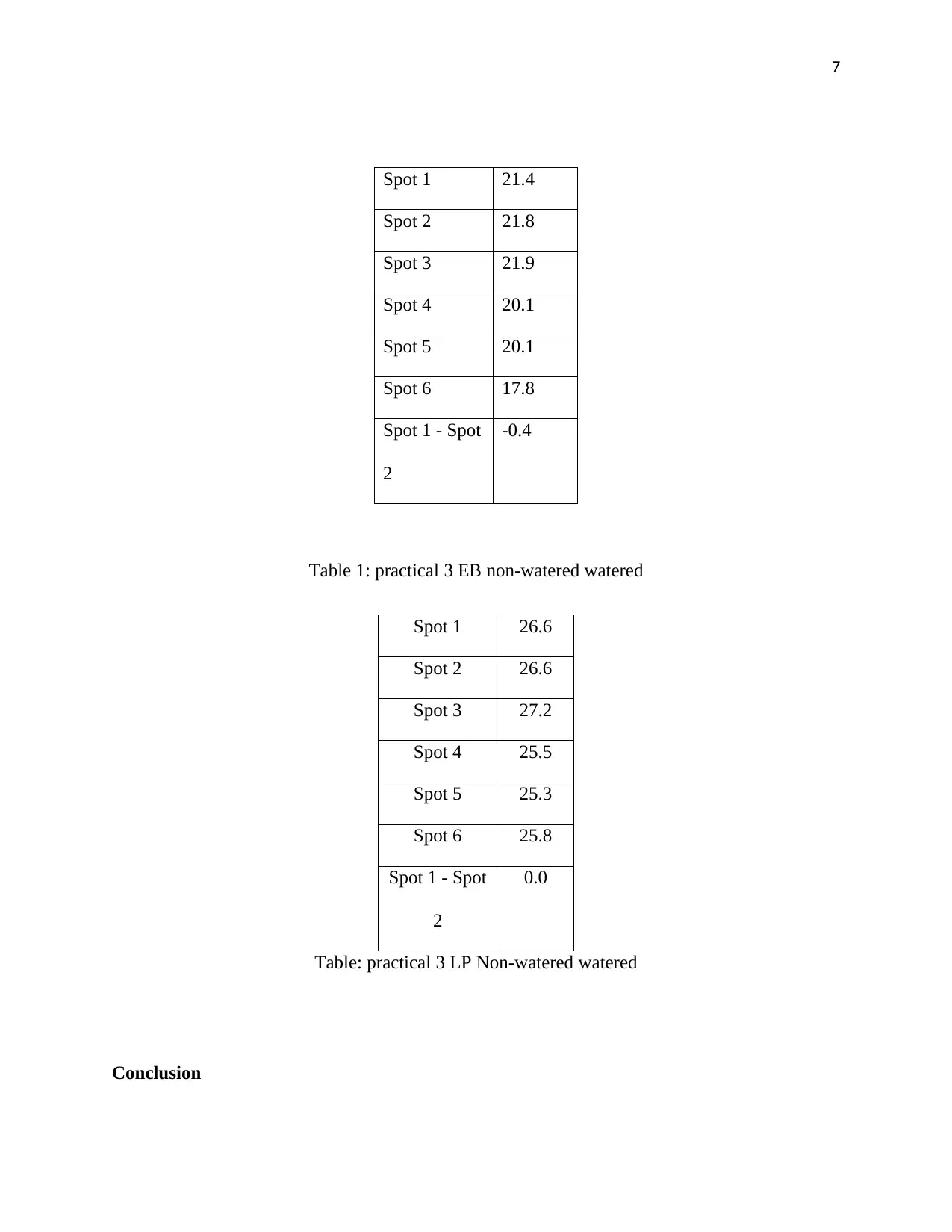
Fig 2: Thermographic images from practical 3 LP Non-watered watered (Smets, 2012, p. 128)
The results obtained from the experiments were as follows:
Spot 1 21.4
Spot 2 21.8
Spot 3 21.9
Document Page
4
Spot 4 20.1
Spot 5 20.1
Spot 6 17.8
Spot 1 - Spot
2
-0.4
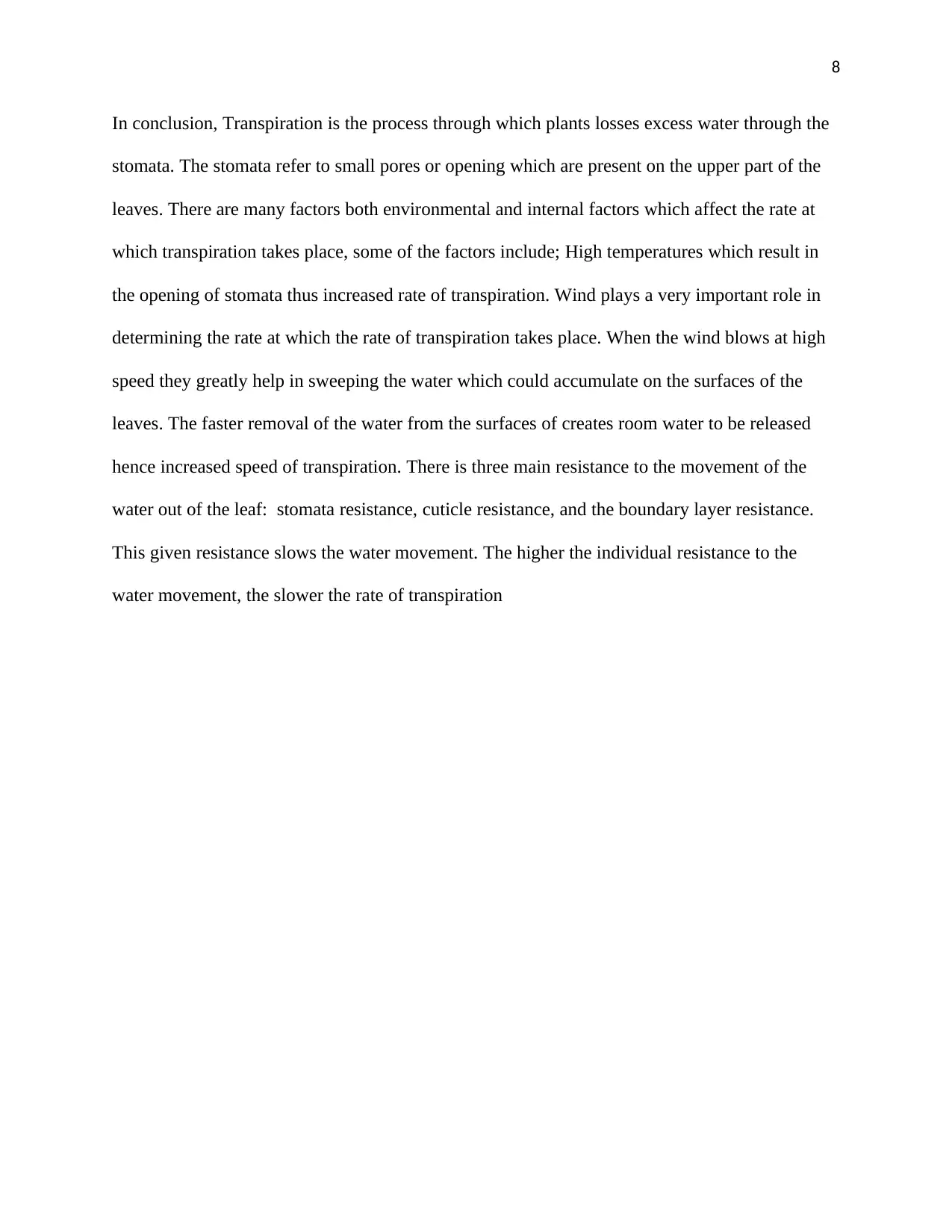
Table 1: practical 3 EB non-watered watered
Spot 1 26.6
Spot 2 26.6
Spot 3 27.2
Spot 4 25.5
Spot 5 25.3
Spot 6 25.8
Spot 1 - Spot
2
0.0
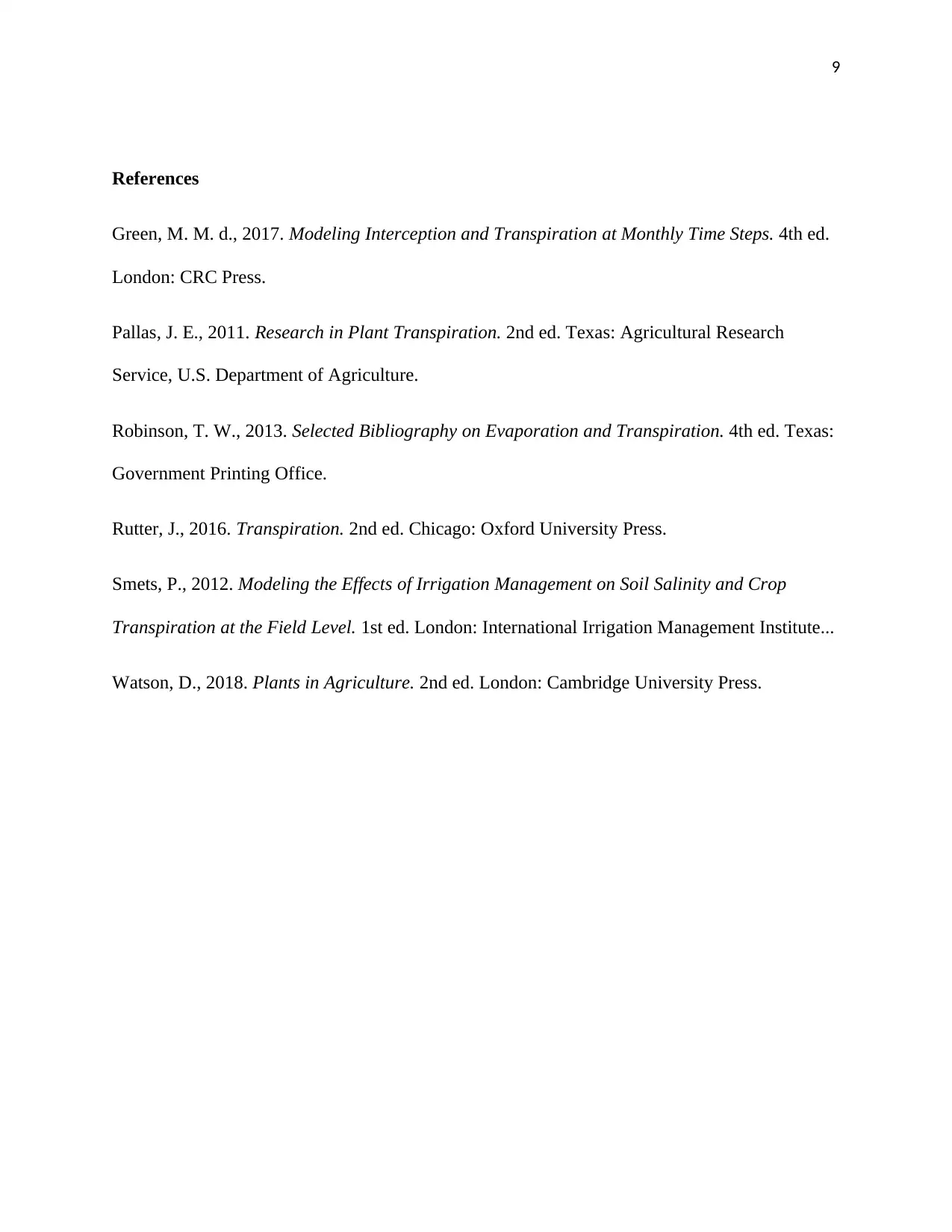
Table: practical 3 LP Non-watered watered
Discussion
The rate of transpiration depends on two major factors i.e. force for the water movement from
the soil to the atmosphere and the resistance to the water movement in the plant.
Driving force: The driving force for the transpiration is the difference in the water potential
between the soil and the atmosphere which surrounds the plant. The difference usually creates a
tabler-icon-diamond-filled.svg

Paraphrase This Document

Need a fresh take? Get an instant paraphrase of this document with our AI Paraphraser
Document Page
5
gradient, hence forcing the water to move upwards areas with less water. The drier the air around
the plant, the greater the driving force is created hence the faster the water moves up the plant
resulting to the faster rate of transpiration (Groen, 2017, p. 54)
Resistance: There is three main resistance to the movement of the water out of the leaf: stomata
resistance, cuticle resistance, and the boundary layer resistance. This given resistance slows the
water movement. The higher the individual resistance to the water movement, the slower the rate
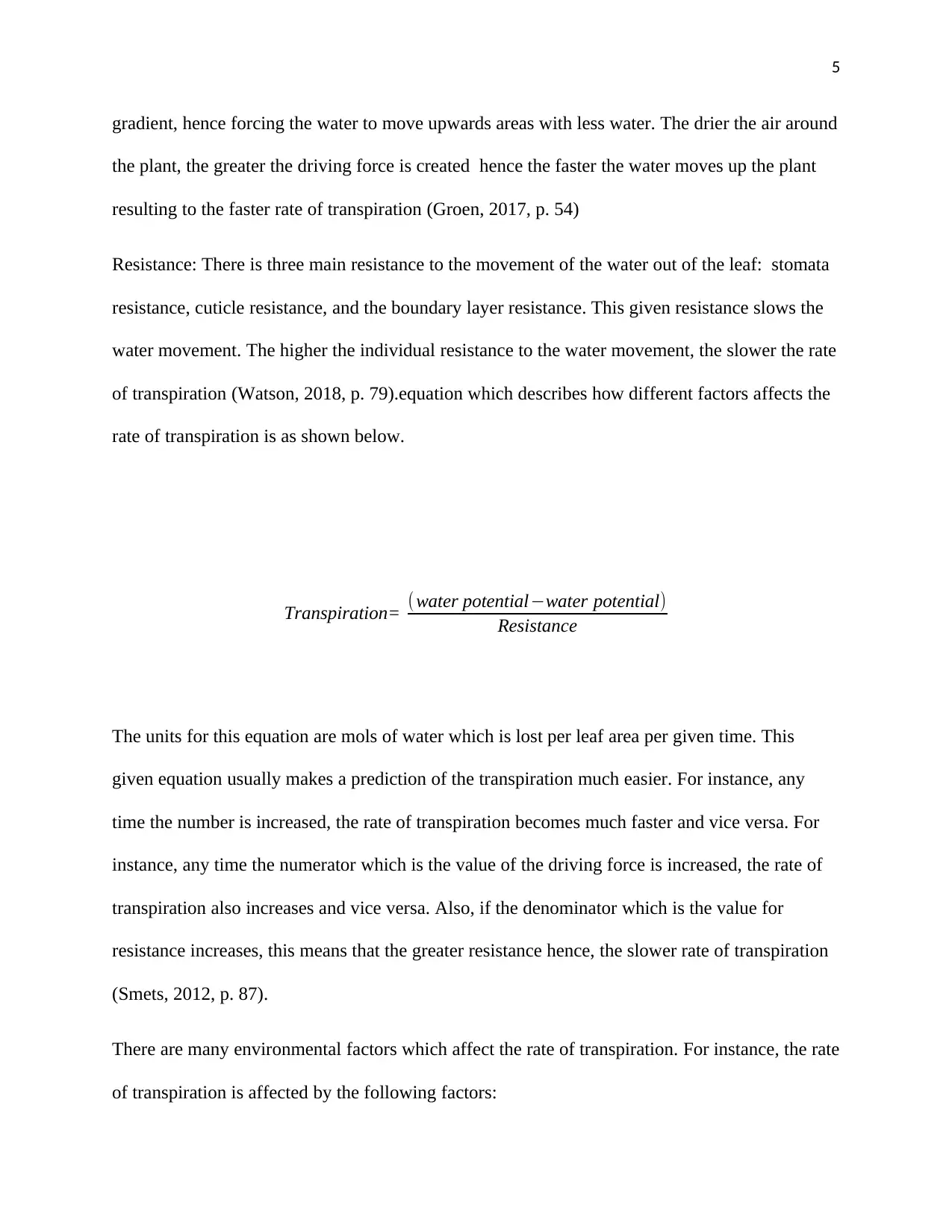
of transpiration (Watson, 2018, p. 79).equation which describes how different factors affects the
rate of transpiration is as shown below.
Transpiration= ( water potentialwater potential)
Resistance
The units for this equation are mols of water which is lost per leaf area per given time. This
given equation usually makes a prediction of the transpiration much easier. For instance, any
time the number is increased, the rate of transpiration becomes much faster and vice versa. For
instance, any time the numerator which is the value of the driving force is increased, the rate of
transpiration also increases and vice versa. Also, if the denominator which is the value for
resistance increases, this means that the greater resistance hence, the slower rate of transpiration
(Smets, 2012, p. 87).
There are many environmental factors which affect the rate of transpiration. For instance, the rate
of transpiration is affected by the following factors:
Document Page
6
i) Relative humidity
The relative humidity is defined as the ratio of the amount of water vapor present in the
atmosphere to the maximum amount of water vapor that the same air can be able to
accommodate at the same temperature. The amount of water vapor in the atmosphere play a very
crucial role in determining the amount of water is to be lost from the plant. The amount of water
lost from the plant takes in the way to ensure that there is a balance between the internal and
external environment within the plant. Hence once there is a high amount of water vapor the air
(Humidity) the rate at which transpiration takes place is reduced.
ii) Wind
Wind plays a very important role in determining the rate at which the rate of transpiration takes
place. When the wind blows at high speed they greatly help in sweeping the water which could
accumulate on the surfaces of the leaves. The faster removal of the water from the surfaces of
creates room water to be released hence increased speed of transpiration. At the same time, the
winds which blow at high speeds tend to be dry and thus having a higher capacity to
accommodate the water vapor (Robinson, 2013, p. 623).
iii) Temperature
Higher temperatures increase the rate at which transpiration takes place. This is because the high
temperatures heat the air and increase the water vapor carrying capacity which creates more
space for the water to be released from the plants. Low temperatures reduced the rate at which
the rate of transpiration takes place.
The results which were obtained from the two experiments which were carried out were as
follows;
Document Page
7
Spot 1 21.4
Spot 2 21.8
Spot 3 21.9
Spot 4 20.1
Spot 5 20.1
Spot 6 17.8
Spot 1 - Spot
2
-0.4
Table 1: practical 3 EB non-watered watered
Spot 1 26.6
Spot 2 26.6
Spot 3 27.2
Spot 4 25.5
Spot 5 25.3
Spot 6 25.8
Spot 1 - Spot
2
0.0
Table: practical 3 LP Non-watered watered
Conclusion
tabler-icon-diamond-filled.svg

Paraphrase This Document

Need a fresh take? Get an instant paraphrase of this document with our AI Paraphraser
Document Page
8
In conclusion, Transpiration is the process through which plants losses excess water through the
stomata. The stomata refer to small pores or opening which are present on the upper part of the
leaves. There are many factors both environmental and internal factors which affect the rate at
which transpiration takes place, some of the factors include; High temperatures which result in
the opening of stomata thus increased rate of transpiration. Wind plays a very important role in
determining the rate at which the rate of transpiration takes place. When the wind blows at high
speed they greatly help in sweeping the water which could accumulate on the surfaces of the
leaves. The faster removal of the water from the surfaces of creates room water to be released
hence increased speed of transpiration. There is three main resistance to the movement of the
water out of the leaf: stomata resistance, cuticle resistance, and the boundary layer resistance.
This given resistance slows the water movement. The higher the individual resistance to the
water movement, the slower the rate of transpiration
Document Page
9
References
Green, M. M. d., 2017. Modeling Interception and Transpiration at Monthly Time Steps. 4th ed.
London: CRC Press.
Pallas, J. E., 2011. Research in Plant Transpiration. 2nd ed. Texas: Agricultural Research
Service, U.S. Department of Agriculture.
Robinson, T. W., 2013. Selected Bibliography on Evaporation and Transpiration. 4th ed. Texas:
Government Printing Office.
Rutter, J., 2016. Transpiration. 2nd ed. Chicago: Oxford University Press.
Smets, P., 2012. Modeling the Effects of Irrigation Management on Soil Salinity and Crop
Transpiration at the Field Level. 1st ed. London: International Irrigation Management Institute...
Watson, D., 2018. Plants in Agriculture. 2nd ed. London: Cambridge University Press.
chevron_up_icon
1 out of 9
circle_padding
hide_on_mobile
zoom_out_icon
[object Object]