A Comparative Study of Figurative and Abstract Art in Architecture
VerifiedAdded on 2023/06/15
|17
|4444
|479
Essay
AI Summary
This essay provides a comprehensive analysis of figurative and abstract art within the context of architecture. It begins by establishing the historical significance of art and architecture, highlighting how traditional styles have influenced modern architecture. The essay then delves into the distinct characteristics of figurative and abstract art, explaining how figurative art represents real-world objects and figures, while abstract art focuses on colors, forms, and emotions. Key artists and movements, such as Abstract Expressionism, are discussed to illustrate the impact of these art forms on architectural design. The essay also explores viewers' emotional responses to different art styles and concludes by addressing the ongoing debate about the preference between figurative and abstract art in architecture, noting that non-expert viewers often prefer figurative art due to its representational nature. Desklib offers a vast collection of study resources for students.
Figurative and Abstract Art in Architecture 1
FIGURATIVE AND ABSTRACT ART IN ARCHITECTURE
Name
Course
Professor
University
City/state
Date
FIGURATIVE AND ABSTRACT ART IN ARCHITECTURE
Name
Course
Professor
University
City/state
Date

Paraphrase This Document
Need a fresh take? Get an instant paraphrase of this document with our AI Paraphraser
Figurative and Abstract Art in Architecture 2
Figurative and Abstract Art in Architecture
Every architectural style or theme has a purpose. The art phenomenon appeared about
30,000 years ago and since then, human beings have constantly created and appreciated artworks
(Aviv, 2014). In general, the history of art and architecture is very diverse. What stands out is
that most of the architectural styles used in modern architecture originated from traditional styles
developed in previous centuries. Figurative and abstract art were a trend in sculpture and
painting in the 20th century. The two represented different architectural styles and have had a
great impact on contemporary art. The relationship between art and architecture cannot be
overemphasized. As a matter of fact, architecture can be said to be art. Artwork, including
sculpture, painting, installation or visualization, increases aesthetic value of architectural
drawings or spaces. Therefore the combination of art and architecture beautifies structures.
Figurative and abstract art are both visual arts, which have been in existence throughout
history. Nevertheless, these two forms of art are different in a wide range of ways. One of these
ways is the conceptual processes used by figurative (representational) and abstract (non-
representational) artists when preparing or describing their artwork (Sullivan, 2009). It must also
be understood that people have different emotional responses to any kind of artwork, whether
visual or otherwise. This is why people find some artworks to be more compelling or beautiful
than others (van Paasschen, et al., 2015). The visual elements of artworks are the ones that
trigger the viewers’ emotions. The viewers usually have emotional responses to a variety of
features of the artwork, including simple geometric shapes that have no particular context. For
example, sharp angles such as triangles and arrows were deemed to be threatening, whereas
round shapes like circles were considered to be pleasant (Larson, et al., 2012); (Silvia & Barona,
2009).
Figurative and Abstract Art in Architecture
Every architectural style or theme has a purpose. The art phenomenon appeared about
30,000 years ago and since then, human beings have constantly created and appreciated artworks
(Aviv, 2014). In general, the history of art and architecture is very diverse. What stands out is
that most of the architectural styles used in modern architecture originated from traditional styles
developed in previous centuries. Figurative and abstract art were a trend in sculpture and
painting in the 20th century. The two represented different architectural styles and have had a
great impact on contemporary art. The relationship between art and architecture cannot be
overemphasized. As a matter of fact, architecture can be said to be art. Artwork, including
sculpture, painting, installation or visualization, increases aesthetic value of architectural
drawings or spaces. Therefore the combination of art and architecture beautifies structures.
Figurative and abstract art are both visual arts, which have been in existence throughout
history. Nevertheless, these two forms of art are different in a wide range of ways. One of these
ways is the conceptual processes used by figurative (representational) and abstract (non-
representational) artists when preparing or describing their artwork (Sullivan, 2009). It must also
be understood that people have different emotional responses to any kind of artwork, whether
visual or otherwise. This is why people find some artworks to be more compelling or beautiful
than others (van Paasschen, et al., 2015). The visual elements of artworks are the ones that
trigger the viewers’ emotions. The viewers usually have emotional responses to a variety of
features of the artwork, including simple geometric shapes that have no particular context. For
example, sharp angles such as triangles and arrows were deemed to be threatening, whereas
round shapes like circles were considered to be pleasant (Larson, et al., 2012); (Silvia & Barona,
2009).
Figurative and Abstract Art in Architecture 3
Figurative art is a form of representational artwork, mainly comprising of sculptures and
paintings, whose sources are derived from real world objects or figures particularly human
forms. Figurative art is dependent on several formal elements, including shape, light, color, line,
mass, volume, perspective and texture of people, objects and landscapes. These elements are
design elements that create aesthetic effects i.e. illusion or impression of space and form. . An
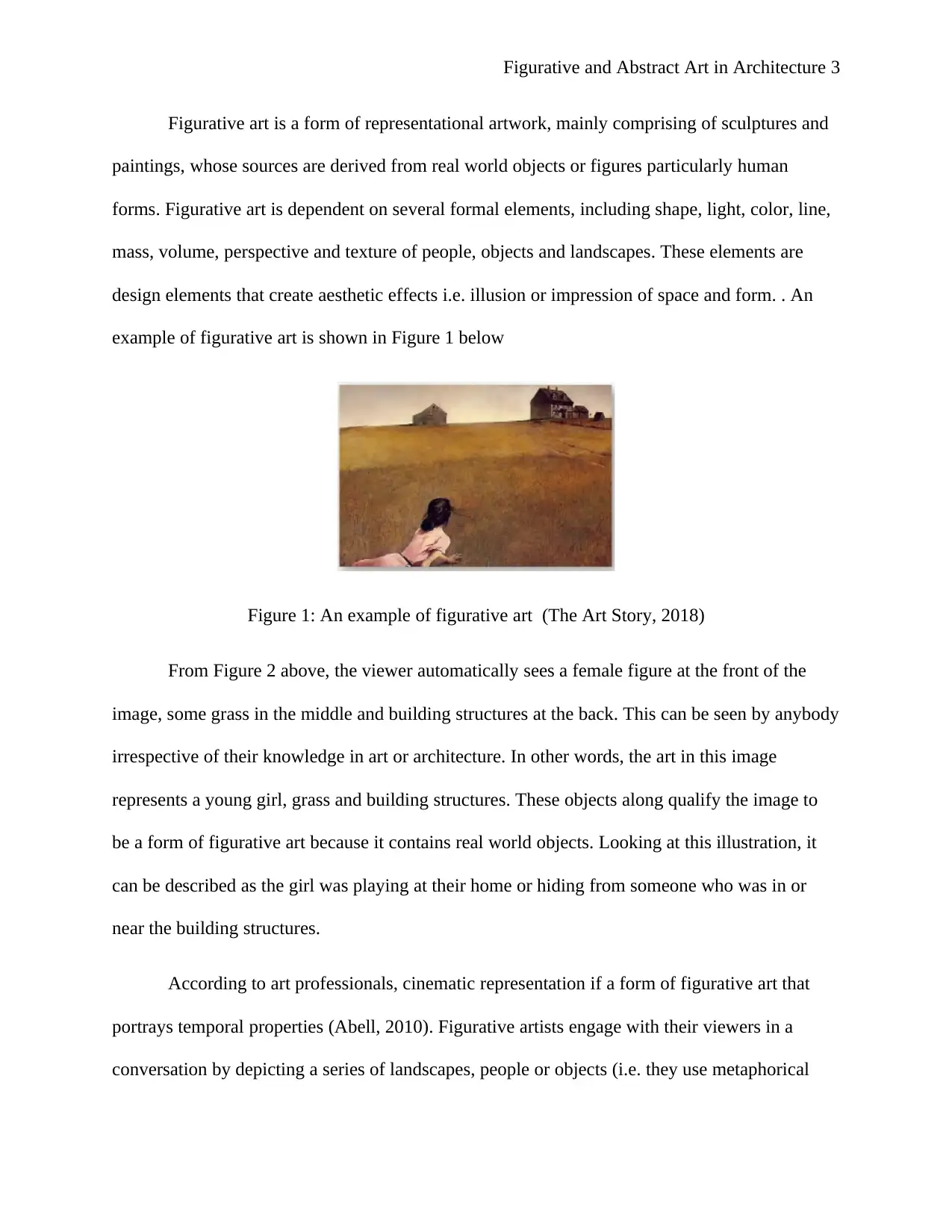
example of figurative art is shown in Figure 1 below
Figure 1: An example of figurative art (The Art Story, 2018)
From Figure 2 above, the viewer automatically sees a female figure at the front of the
image, some grass in the middle and building structures at the back. This can be seen by anybody
irrespective of their knowledge in art or architecture. In other words, the art in this image
represents a young girl, grass and building structures. These objects along qualify the image to
be a form of figurative art because it contains real world objects. Looking at this illustration, it
can be described as the girl was playing at their home or hiding from someone who was in or
near the building structures.
According to art professionals, cinematic representation if a form of figurative art that
portrays temporal properties (Abell, 2010). Figurative artists engage with their viewers in a
conversation by depicting a series of landscapes, people or objects (i.e. they use metaphorical
Figurative art is a form of representational artwork, mainly comprising of sculptures and
paintings, whose sources are derived from real world objects or figures particularly human
forms. Figurative art is dependent on several formal elements, including shape, light, color, line,
mass, volume, perspective and texture of people, objects and landscapes. These elements are
design elements that create aesthetic effects i.e. illusion or impression of space and form. . An
example of figurative art is shown in Figure 1 below
Figure 1: An example of figurative art (The Art Story, 2018)
From Figure 2 above, the viewer automatically sees a female figure at the front of the
image, some grass in the middle and building structures at the back. This can be seen by anybody
irrespective of their knowledge in art or architecture. In other words, the art in this image
represents a young girl, grass and building structures. These objects along qualify the image to
be a form of figurative art because it contains real world objects. Looking at this illustration, it
can be described as the girl was playing at their home or hiding from someone who was in or
near the building structures.
According to art professionals, cinematic representation if a form of figurative art that
portrays temporal properties (Abell, 2010). Figurative artists engage with their viewers in a
conversation by depicting a series of landscapes, people or objects (i.e. they use metaphorical
⊘ This is a preview!⊘
Do you want full access?
Subscribe today to unlock all pages.

Trusted by 1+ million students worldwide
Figurative and Abstract Art in Architecture 4
expressions or terms). These systems are illustrated by considering elements such as symmetry,
balance, composition and dimensions, which are very essential in architecture.
Abstract is non-representational form of artwork. This form of art is not derived from real
objects or figures. The main objective of abstract art was to secede from the old-style illustration
of physical objects. This was achieved by exploring the relationships of colors and forms.
Therefore abstract art went against the traditional rules of art. Instead of focusing on
representational and figurative depictions, abstract artists and painters emphasized on
composition, color and emotion. Additionally, abstract artists and painters put more emphasis in
the process rather than the completed works. Some of the artists who played a key role in
promoting abstract art and significantly changed how people looked at painting include: Wassily
Kandinsky (Russian painter), Piet Mondrian (Dutch artist), Robert Delaunay, Jackson Pollock
(American artist), Clyfford Still, Franz Kline, among others (Richman-Abdou, 2017). These
artists and painters focused more on geometric shapes, vibrant colors and floating lines. An
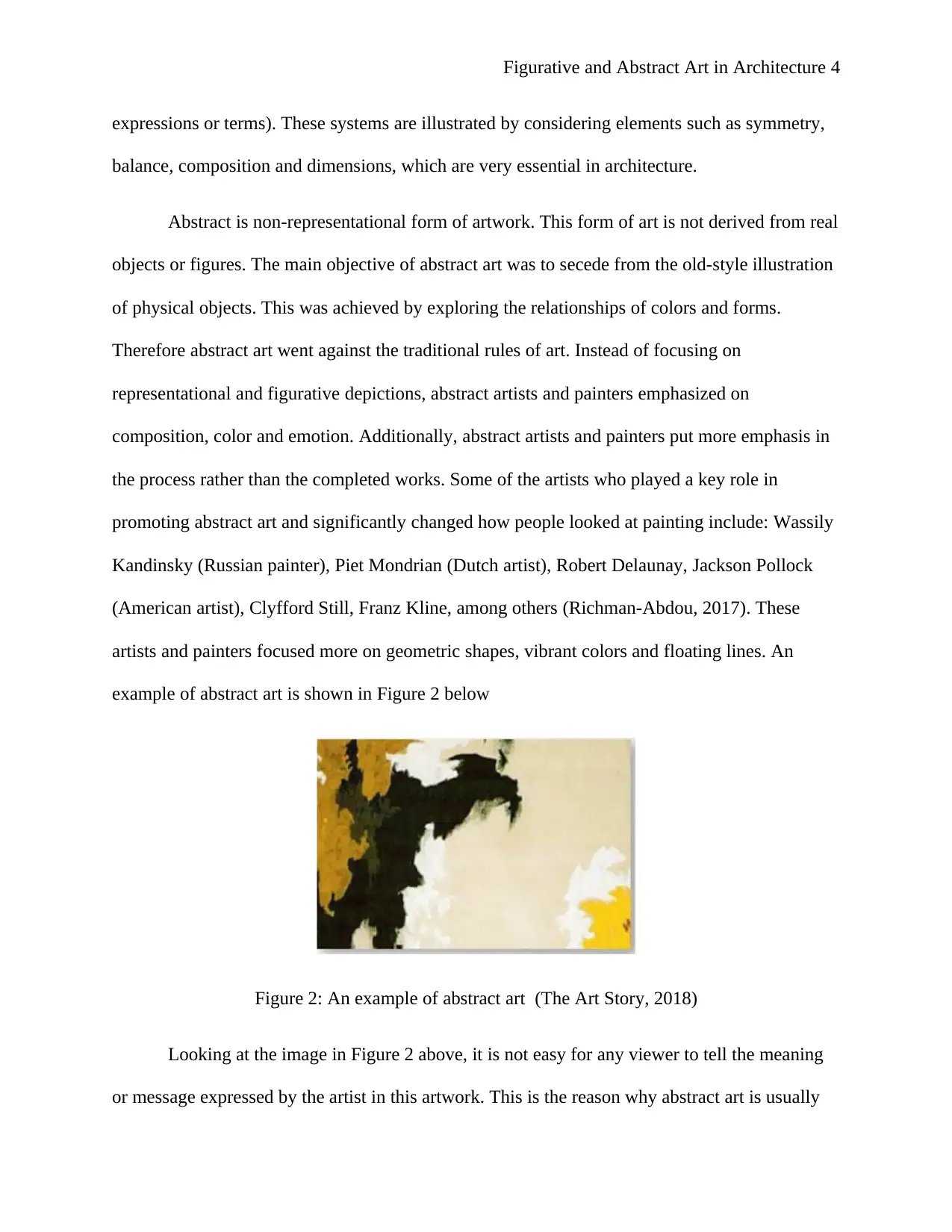
example of abstract art is shown in Figure 2 below
Figure 2: An example of abstract art (The Art Story, 2018)
Looking at the image in Figure 2 above, it is not easy for any viewer to tell the meaning
or message expressed by the artist in this artwork. This is the reason why abstract art is usually
expressions or terms). These systems are illustrated by considering elements such as symmetry,
balance, composition and dimensions, which are very essential in architecture.
Abstract is non-representational form of artwork. This form of art is not derived from real
objects or figures. The main objective of abstract art was to secede from the old-style illustration
of physical objects. This was achieved by exploring the relationships of colors and forms.
Therefore abstract art went against the traditional rules of art. Instead of focusing on
representational and figurative depictions, abstract artists and painters emphasized on
composition, color and emotion. Additionally, abstract artists and painters put more emphasis in
the process rather than the completed works. Some of the artists who played a key role in
promoting abstract art and significantly changed how people looked at painting include: Wassily
Kandinsky (Russian painter), Piet Mondrian (Dutch artist), Robert Delaunay, Jackson Pollock
(American artist), Clyfford Still, Franz Kline, among others (Richman-Abdou, 2017). These
artists and painters focused more on geometric shapes, vibrant colors and floating lines. An
example of abstract art is shown in Figure 2 below
Figure 2: An example of abstract art (The Art Story, 2018)
Looking at the image in Figure 2 above, it is not easy for any viewer to tell the meaning
or message expressed by the artist in this artwork. This is the reason why abstract art is usually
Paraphrase This Document
Need a fresh take? Get an instant paraphrase of this document with our AI Paraphraser
Figurative and Abstract Art in Architecture 5
said to be non-representational. In other words, the painting does not represent any definite
object unless the artist him/herself explains the message behind it.
Abstract art was one of the greatest catalysts of contemporary art or modernism. The
forward-thinking and celebrated artists of the 20th century who were the pioneers of abstract art
started movements against traditional rules of art. These movements led to what was referred to
as Abstract Expressionism that started in 1943 and ended in 1965 (TheArtStory.org, 2018).
Abstract Expressionism completely changed the art industry not only in America but all over the
world. The Abstract Expressionists mainly pushed for freedom of expression, and this earned
them international recognition (Butler, 2014). Their argument was that art is a form of expression
and therefore artists needed to have that of freedom of expressing their inner feelings and
creativity without being limited with rules taught in class (academic art) (Zucker, 2014). Some of
the notable leaders of Abstract Expressionism included Willem de Kooning, Jackson Pollock,
Lee Krasner, Clyfford Still, Mark Rothko, Robert Motherwell, Helen Frankenthaler, Barnett
Newman and Elaine de Kooning (Mann, 2018). The dominance of Abstract Expressionism in the
U.S. increased during 1950s when the U.S. government embraced the style and promoted it as a
reflection of her individualism, democracy and cultural achievement. Abstract Expressionists
created their artworks by using paint to create canvasses through which they expressed their
emotional character without using real world representation (Hajali, 2016). Just like figurative
artists, abstract artists also engage with their viewers in a conversation but by using canvasses or
materials.
Abstract artists do not make any attempt to represent accurate illustration of visual reality
but they use forms, colors, gestural marks and shapes to attain its effect. In most cases, abstract
art is inclined to painting. This makes it quite difficult for viewers to understand and appreciate
said to be non-representational. In other words, the painting does not represent any definite
object unless the artist him/herself explains the message behind it.
Abstract art was one of the greatest catalysts of contemporary art or modernism. The
forward-thinking and celebrated artists of the 20th century who were the pioneers of abstract art
started movements against traditional rules of art. These movements led to what was referred to
as Abstract Expressionism that started in 1943 and ended in 1965 (TheArtStory.org, 2018).
Abstract Expressionism completely changed the art industry not only in America but all over the
world. The Abstract Expressionists mainly pushed for freedom of expression, and this earned
them international recognition (Butler, 2014). Their argument was that art is a form of expression
and therefore artists needed to have that of freedom of expressing their inner feelings and
creativity without being limited with rules taught in class (academic art) (Zucker, 2014). Some of
the notable leaders of Abstract Expressionism included Willem de Kooning, Jackson Pollock,
Lee Krasner, Clyfford Still, Mark Rothko, Robert Motherwell, Helen Frankenthaler, Barnett
Newman and Elaine de Kooning (Mann, 2018). The dominance of Abstract Expressionism in the
U.S. increased during 1950s when the U.S. government embraced the style and promoted it as a
reflection of her individualism, democracy and cultural achievement. Abstract Expressionists
created their artworks by using paint to create canvasses through which they expressed their
emotional character without using real world representation (Hajali, 2016). Just like figurative
artists, abstract artists also engage with their viewers in a conversation but by using canvasses or
materials.
Abstract artists do not make any attempt to represent accurate illustration of visual reality
but they use forms, colors, gestural marks and shapes to attain its effect. In most cases, abstract
art is inclined to painting. This makes it quite difficult for viewers to understand and appreciate
Figurative and Abstract Art in Architecture 6
the art because it does not have any discernable subject nor depict a specific object. Therefore
the art does not communicate with the viewer directly. Nevertheless, this does not in any way
mean that abstract art has no meaning. It is only that it requires viewers to move away from the
traditional notion of painting where it usually represents an image of somebody or something.
Abstract art does not imitate real world objects. Therefore for one to understand the concept
behind a particular abstract artwork, he/she will be able to appreciate what the painting actually
is – shapes, color, emotions and surface on canvas.
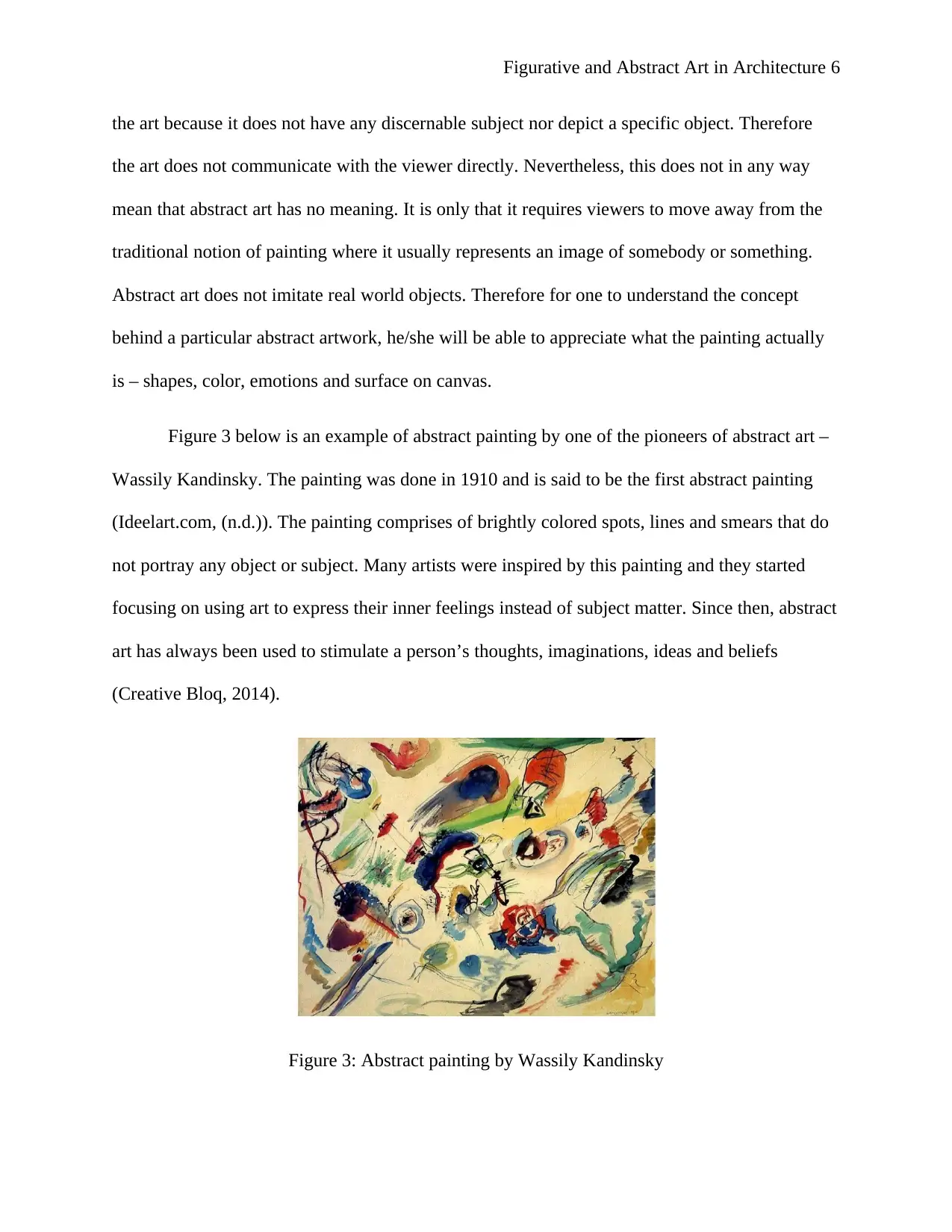
Figure 3 below is an example of abstract painting by one of the pioneers of abstract art –
Wassily Kandinsky. The painting was done in 1910 and is said to be the first abstract painting
(Ideelart.com, (n.d.)). The painting comprises of brightly colored spots, lines and smears that do
not portray any object or subject. Many artists were inspired by this painting and they started
focusing on using art to express their inner feelings instead of subject matter. Since then, abstract
art has always been used to stimulate a person’s thoughts, imaginations, ideas and beliefs
(Creative Bloq, 2014).
Figure 3: Abstract painting by Wassily Kandinsky
the art because it does not have any discernable subject nor depict a specific object. Therefore
the art does not communicate with the viewer directly. Nevertheless, this does not in any way
mean that abstract art has no meaning. It is only that it requires viewers to move away from the
traditional notion of painting where it usually represents an image of somebody or something.
Abstract art does not imitate real world objects. Therefore for one to understand the concept
behind a particular abstract artwork, he/she will be able to appreciate what the painting actually
is – shapes, color, emotions and surface on canvas.
Figure 3 below is an example of abstract painting by one of the pioneers of abstract art –
Wassily Kandinsky. The painting was done in 1910 and is said to be the first abstract painting
(Ideelart.com, (n.d.)). The painting comprises of brightly colored spots, lines and smears that do
not portray any object or subject. Many artists were inspired by this painting and they started
focusing on using art to express their inner feelings instead of subject matter. Since then, abstract
art has always been used to stimulate a person’s thoughts, imaginations, ideas and beliefs
(Creative Bloq, 2014).
Figure 3: Abstract painting by Wassily Kandinsky
⊘ This is a preview!⊘
Do you want full access?
Subscribe today to unlock all pages.
Trusted by 1+ million students worldwide
Figurative and Abstract Art in Architecture 7
To appreciate abstract art, one must understand abstract art’s general objective.
According to abstract artists, it is not mandatory to have a definite traditional subject for one to
create art but instead what is required are colors, geometrical shapes and lines (Gersh-Nesic,
2017). The works of abstract artists are usually influenced or inspired by their experiences,
immediate surroundings and emotions. The biggest task of these artists is to ensure that the
canvasses they create are able to effectively reflect the situation so as to stir viewers’ emotions.
Another unique characteristic of abstract art is that viewers are not expected to comprehend the
intentions of the artist. For them to understand the intentions of the artist, they must talk to the
artist for explanation. For this reason, viewers of abstract art are advised to stop attempting to
understand what the artwork is or means but instead focus on figuring out how it makes them
feel.
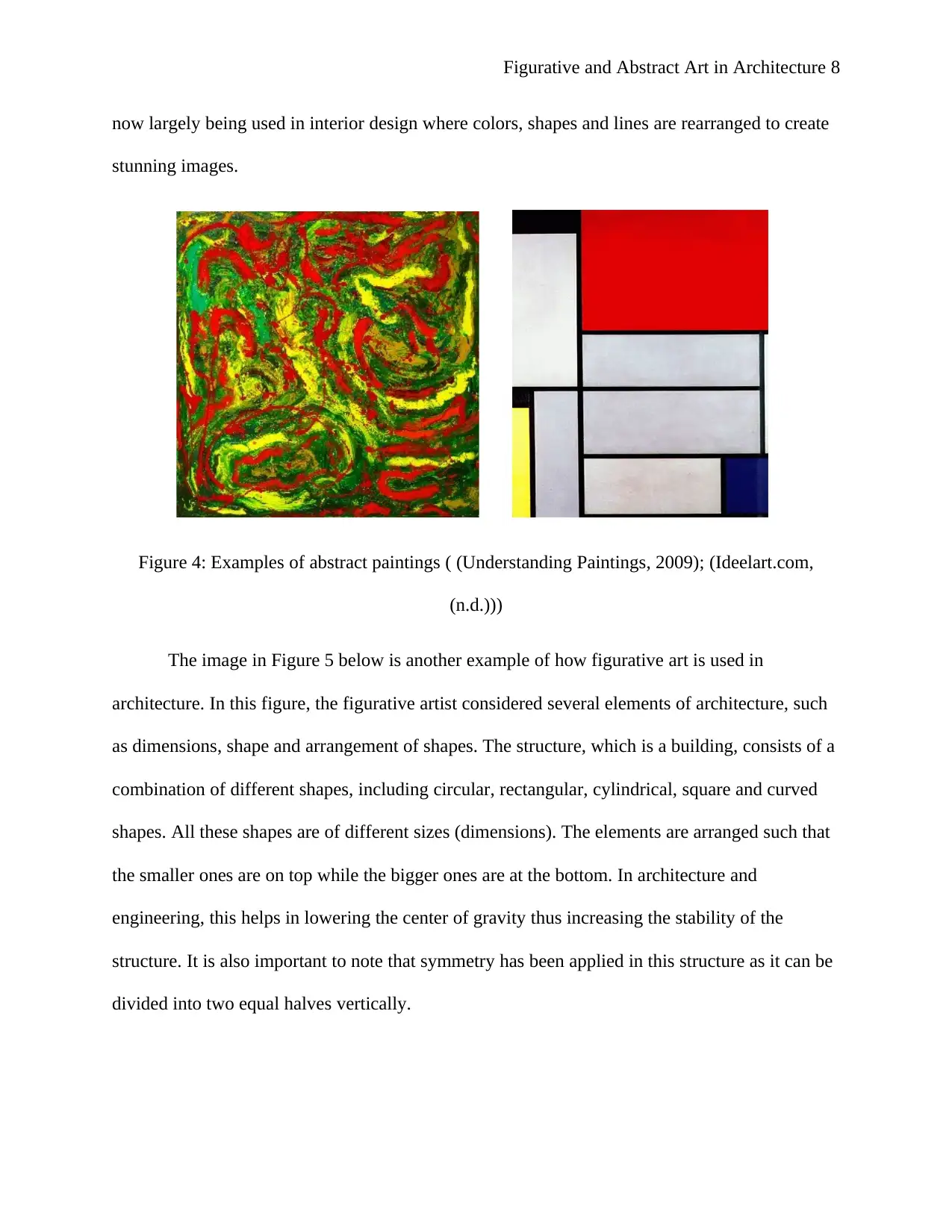
The images in Figure 4 below are examples of abstract paintings that were done by
different artists. The painting on the left was done by R.B Murari in 2009 while the one on the
right was done by Piet Mondrian in 1921. The painting on the left is just by harmonious and
glorious intermingling of red, yellow and green colors. There also seems to be rivalry of colors
where yellow dominates some parts of the painting while other parts are dominated by red. The
tussle between colors is also brought out clearly by the paint layers. In this painting, color is the
only and main subject. The painting on the right demonstrates a relatively different style of
abstract art. Looking at this painting, hard black lines have been used to divide the painting into
compartments of different color fields. The main subject of this painting is mathematical
precision and geometry, which make reference to line, color and form. Unlike in the painting on
the left, this painting does not depict any rivalry between colors, forms or lines. Abstract art is
To appreciate abstract art, one must understand abstract art’s general objective.
According to abstract artists, it is not mandatory to have a definite traditional subject for one to
create art but instead what is required are colors, geometrical shapes and lines (Gersh-Nesic,
2017). The works of abstract artists are usually influenced or inspired by their experiences,
immediate surroundings and emotions. The biggest task of these artists is to ensure that the
canvasses they create are able to effectively reflect the situation so as to stir viewers’ emotions.
Another unique characteristic of abstract art is that viewers are not expected to comprehend the
intentions of the artist. For them to understand the intentions of the artist, they must talk to the
artist for explanation. For this reason, viewers of abstract art are advised to stop attempting to
understand what the artwork is or means but instead focus on figuring out how it makes them
feel.
The images in Figure 4 below are examples of abstract paintings that were done by
different artists. The painting on the left was done by R.B Murari in 2009 while the one on the
right was done by Piet Mondrian in 1921. The painting on the left is just by harmonious and
glorious intermingling of red, yellow and green colors. There also seems to be rivalry of colors
where yellow dominates some parts of the painting while other parts are dominated by red. The
tussle between colors is also brought out clearly by the paint layers. In this painting, color is the
only and main subject. The painting on the right demonstrates a relatively different style of
abstract art. Looking at this painting, hard black lines have been used to divide the painting into
compartments of different color fields. The main subject of this painting is mathematical
precision and geometry, which make reference to line, color and form. Unlike in the painting on
the left, this painting does not depict any rivalry between colors, forms or lines. Abstract art is
Paraphrase This Document
Need a fresh take? Get an instant paraphrase of this document with our AI Paraphraser
Figurative and Abstract Art in Architecture 8
now largely being used in interior design where colors, shapes and lines are rearranged to create
stunning images.
Figure 4: Examples of abstract paintings ( (Understanding Paintings, 2009); (Ideelart.com,
(n.d.)))
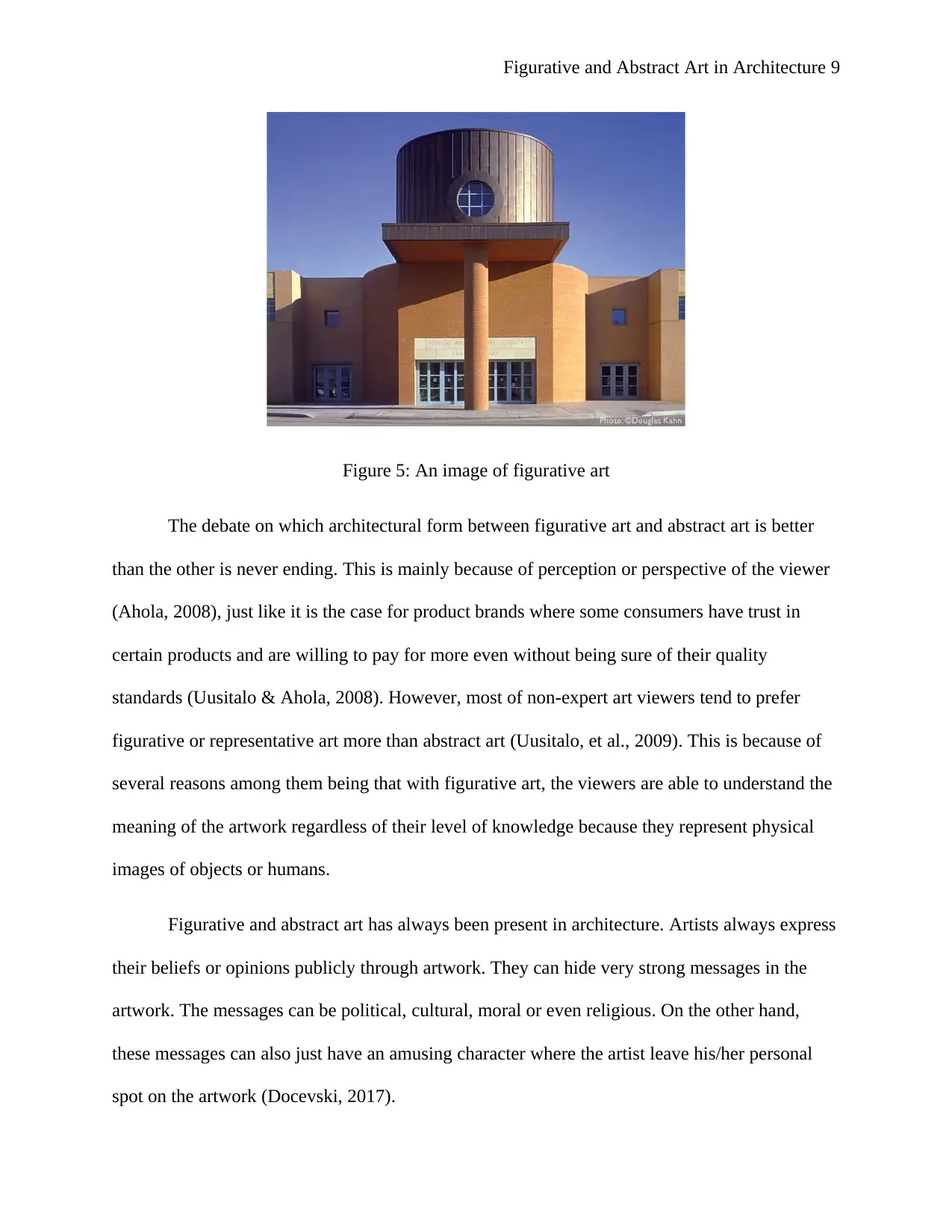
The image in Figure 5 below is another example of how figurative art is used in
architecture. In this figure, the figurative artist considered several elements of architecture, such
as dimensions, shape and arrangement of shapes. The structure, which is a building, consists of a
combination of different shapes, including circular, rectangular, cylindrical, square and curved
shapes. All these shapes are of different sizes (dimensions). The elements are arranged such that
the smaller ones are on top while the bigger ones are at the bottom. In architecture and
engineering, this helps in lowering the center of gravity thus increasing the stability of the
structure. It is also important to note that symmetry has been applied in this structure as it can be
divided into two equal halves vertically.
now largely being used in interior design where colors, shapes and lines are rearranged to create
stunning images.
Figure 4: Examples of abstract paintings ( (Understanding Paintings, 2009); (Ideelart.com,
(n.d.)))
The image in Figure 5 below is another example of how figurative art is used in
architecture. In this figure, the figurative artist considered several elements of architecture, such
as dimensions, shape and arrangement of shapes. The structure, which is a building, consists of a
combination of different shapes, including circular, rectangular, cylindrical, square and curved
shapes. All these shapes are of different sizes (dimensions). The elements are arranged such that
the smaller ones are on top while the bigger ones are at the bottom. In architecture and
engineering, this helps in lowering the center of gravity thus increasing the stability of the
structure. It is also important to note that symmetry has been applied in this structure as it can be
divided into two equal halves vertically.
Figurative and Abstract Art in Architecture 9
Figure 5: An image of figurative art
The debate on which architectural form between figurative art and abstract art is better
than the other is never ending. This is mainly because of perception or perspective of the viewer
(Ahola, 2008), just like it is the case for product brands where some consumers have trust in
certain products and are willing to pay for more even without being sure of their quality
standards (Uusitalo & Ahola, 2008). However, most of non-expert art viewers tend to prefer
figurative or representative art more than abstract art (Uusitalo, et al., 2009). This is because of
several reasons among them being that with figurative art, the viewers are able to understand the
meaning of the artwork regardless of their level of knowledge because they represent physical
images of objects or humans.
Figurative and abstract art has always been present in architecture. Artists always express
their beliefs or opinions publicly through artwork. They can hide very strong messages in the
artwork. The messages can be political, cultural, moral or even religious. On the other hand,
these messages can also just have an amusing character where the artist leave his/her personal
spot on the artwork (Docevski, 2017).
Figure 5: An image of figurative art
The debate on which architectural form between figurative art and abstract art is better
than the other is never ending. This is mainly because of perception or perspective of the viewer
(Ahola, 2008), just like it is the case for product brands where some consumers have trust in
certain products and are willing to pay for more even without being sure of their quality
standards (Uusitalo & Ahola, 2008). However, most of non-expert art viewers tend to prefer
figurative or representative art more than abstract art (Uusitalo, et al., 2009). This is because of
several reasons among them being that with figurative art, the viewers are able to understand the
meaning of the artwork regardless of their level of knowledge because they represent physical
images of objects or humans.
Figurative and abstract art has always been present in architecture. Artists always express
their beliefs or opinions publicly through artwork. They can hide very strong messages in the
artwork. The messages can be political, cultural, moral or even religious. On the other hand,
these messages can also just have an amusing character where the artist leave his/her personal
spot on the artwork (Docevski, 2017).
⊘ This is a preview!⊘
Do you want full access?
Subscribe today to unlock all pages.
Trusted by 1+ million students worldwide
Figurative and Abstract Art in Architecture 10
Architectural works since the ancient times have been seen as works of art and cultural
symbols. Today, architecture is being seen and used as art (both figurative and abstract art).
Architects are now using art to express their beliefs, opinions and emotions. This has created a
harmonious relationship between art and architecture. When most of the buildings found in the
built environment are scrutinized closely, they reveal how architecture is a form of art. This art is
visual art, which can be figurative art or abstract art. The artworks integrated onto or into the
buildings only feel integral if they are properly suited to the space.
Modern architecture is fundamentally a combination of figurative and abstract art, that is,
it combines abstraction and representation. When people walk into buildings, whether residential
or commercial, it is very common to see painting hanging or pinned on interior surfaces. These
paintings may be impacted by natural or artificial light sources, changing their depictions and
impacts. These artworks are usually used for decorative purposes both inside and outside
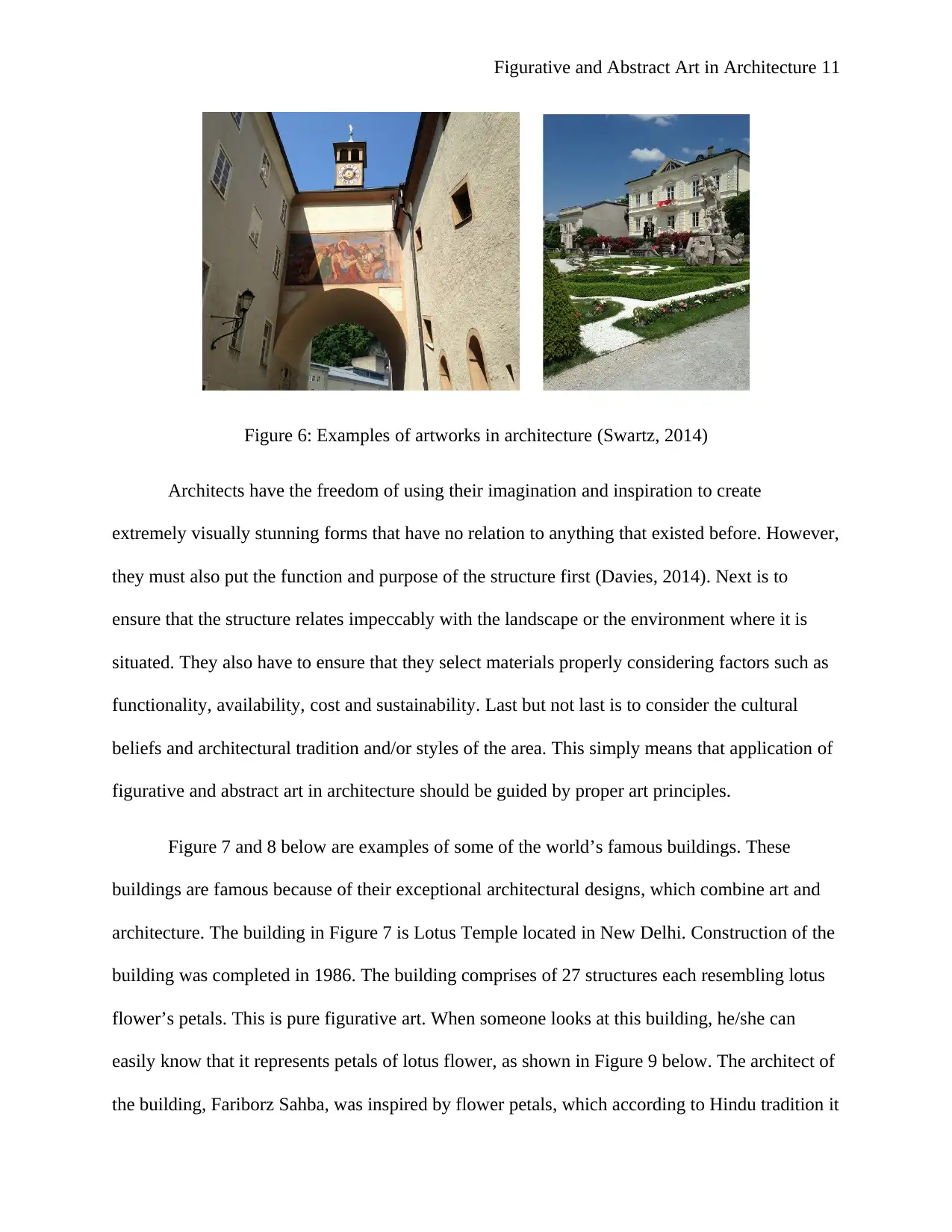
buildings. The photos in Figure 6 below are examples of artworks in architecture. The mages
portray a variety of artworks, mainly of figurative art. These artworks make the indoor and
outdoor spaces look more beautiful, which is the main objective of architecture. The figurative
art in the image on the left is located where it is directly impacted by natural lighting to make it
more visible to people entering the building. The various figurative artworks in the image on the
right also make the outdoor space of the building more attractive and pleasing. Color is the main
element of abstract art that has been used in the figure on the right. An expected, green is
dominant in landscaping to make the building more compatible with the external environment.
Architectural works since the ancient times have been seen as works of art and cultural
symbols. Today, architecture is being seen and used as art (both figurative and abstract art).
Architects are now using art to express their beliefs, opinions and emotions. This has created a
harmonious relationship between art and architecture. When most of the buildings found in the
built environment are scrutinized closely, they reveal how architecture is a form of art. This art is
visual art, which can be figurative art or abstract art. The artworks integrated onto or into the
buildings only feel integral if they are properly suited to the space.
Modern architecture is fundamentally a combination of figurative and abstract art, that is,
it combines abstraction and representation. When people walk into buildings, whether residential
or commercial, it is very common to see painting hanging or pinned on interior surfaces. These
paintings may be impacted by natural or artificial light sources, changing their depictions and
impacts. These artworks are usually used for decorative purposes both inside and outside
buildings. The photos in Figure 6 below are examples of artworks in architecture. The mages
portray a variety of artworks, mainly of figurative art. These artworks make the indoor and
outdoor spaces look more beautiful, which is the main objective of architecture. The figurative
art in the image on the left is located where it is directly impacted by natural lighting to make it
more visible to people entering the building. The various figurative artworks in the image on the
right also make the outdoor space of the building more attractive and pleasing. Color is the main
element of abstract art that has been used in the figure on the right. An expected, green is
dominant in landscaping to make the building more compatible with the external environment.
Paraphrase This Document
Need a fresh take? Get an instant paraphrase of this document with our AI Paraphraser
Figurative and Abstract Art in Architecture 11
Figure 6: Examples of artworks in architecture (Swartz, 2014)
Architects have the freedom of using their imagination and inspiration to create
extremely visually stunning forms that have no relation to anything that existed before. However,
they must also put the function and purpose of the structure first (Davies, 2014). Next is to
ensure that the structure relates impeccably with the landscape or the environment where it is
situated. They also have to ensure that they select materials properly considering factors such as
functionality, availability, cost and sustainability. Last but not last is to consider the cultural
beliefs and architectural tradition and/or styles of the area. This simply means that application of
figurative and abstract art in architecture should be guided by proper art principles.
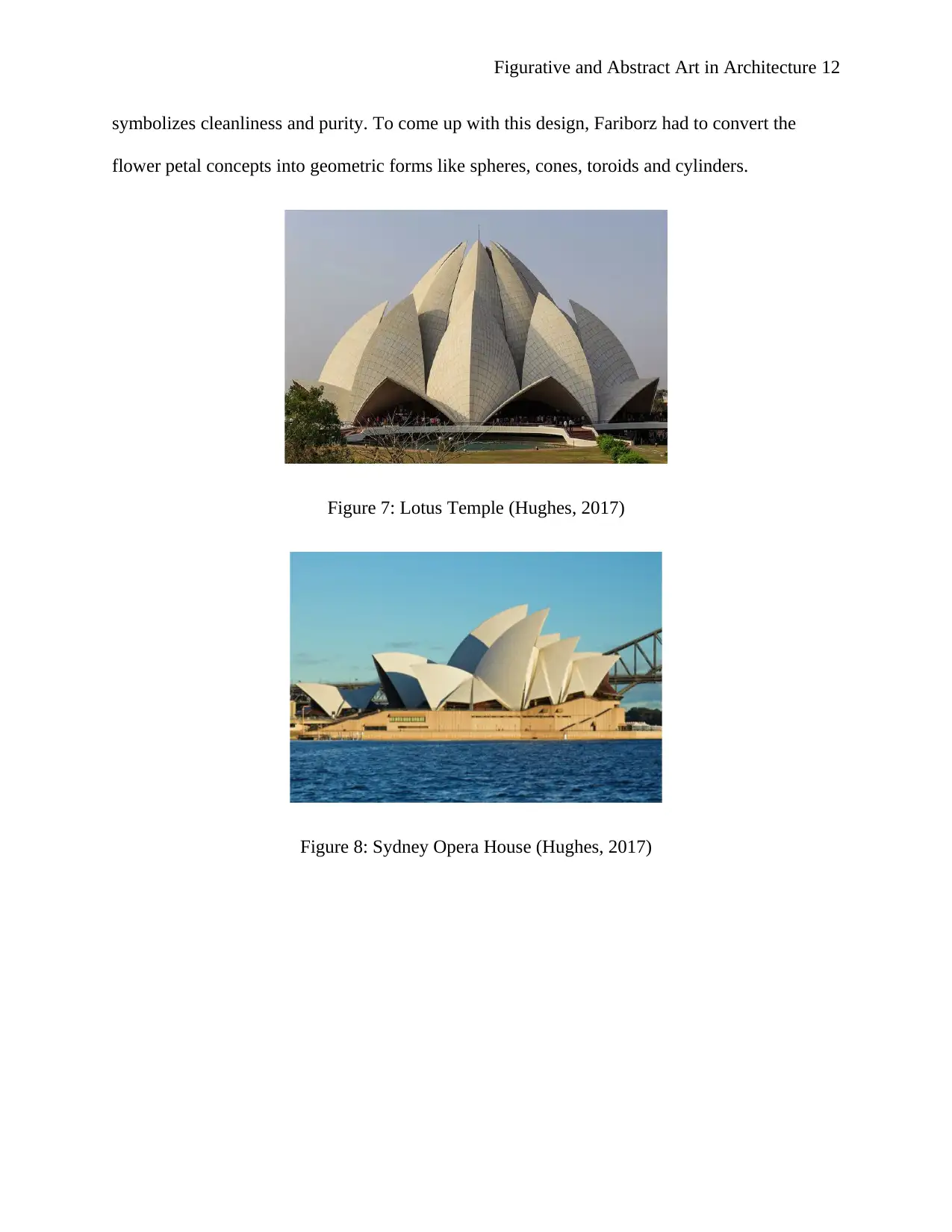
Figure 7 and 8 below are examples of some of the world’s famous buildings. These
buildings are famous because of their exceptional architectural designs, which combine art and
architecture. The building in Figure 7 is Lotus Temple located in New Delhi. Construction of the
building was completed in 1986. The building comprises of 27 structures each resembling lotus
flower’s petals. This is pure figurative art. When someone looks at this building, he/she can
easily know that it represents petals of lotus flower, as shown in Figure 9 below. The architect of
the building, Fariborz Sahba, was inspired by flower petals, which according to Hindu tradition it
Figure 6: Examples of artworks in architecture (Swartz, 2014)
Architects have the freedom of using their imagination and inspiration to create
extremely visually stunning forms that have no relation to anything that existed before. However,
they must also put the function and purpose of the structure first (Davies, 2014). Next is to
ensure that the structure relates impeccably with the landscape or the environment where it is
situated. They also have to ensure that they select materials properly considering factors such as
functionality, availability, cost and sustainability. Last but not last is to consider the cultural
beliefs and architectural tradition and/or styles of the area. This simply means that application of
figurative and abstract art in architecture should be guided by proper art principles.
Figure 7 and 8 below are examples of some of the world’s famous buildings. These
buildings are famous because of their exceptional architectural designs, which combine art and
architecture. The building in Figure 7 is Lotus Temple located in New Delhi. Construction of the
building was completed in 1986. The building comprises of 27 structures each resembling lotus
flower’s petals. This is pure figurative art. When someone looks at this building, he/she can
easily know that it represents petals of lotus flower, as shown in Figure 9 below. The architect of
the building, Fariborz Sahba, was inspired by flower petals, which according to Hindu tradition it
Figurative and Abstract Art in Architecture 12
symbolizes cleanliness and purity. To come up with this design, Fariborz had to convert the
flower petal concepts into geometric forms like spheres, cones, toroids and cylinders.
Figure 7: Lotus Temple (Hughes, 2017)
Figure 8: Sydney Opera House (Hughes, 2017)
symbolizes cleanliness and purity. To come up with this design, Fariborz had to convert the
flower petal concepts into geometric forms like spheres, cones, toroids and cylinders.
Figure 7: Lotus Temple (Hughes, 2017)
Figure 8: Sydney Opera House (Hughes, 2017)
⊘ This is a preview!⊘
Do you want full access?
Subscribe today to unlock all pages.
Trusted by 1+ million students worldwide

1 out of 17


Related Documents


Your All-in-One AI-Powered Toolkit for Academic Success.
+13062052269
info@desklib.com
Available 24*7 on WhatsApp / Email
![[object Object]](/_next/static/media/star-bottom.7253800d.svg)
Unlock your academic potential
Copyright © 2020–2026 A2Z Services. All Rights Reserved. Developed and managed by ZUCOL.