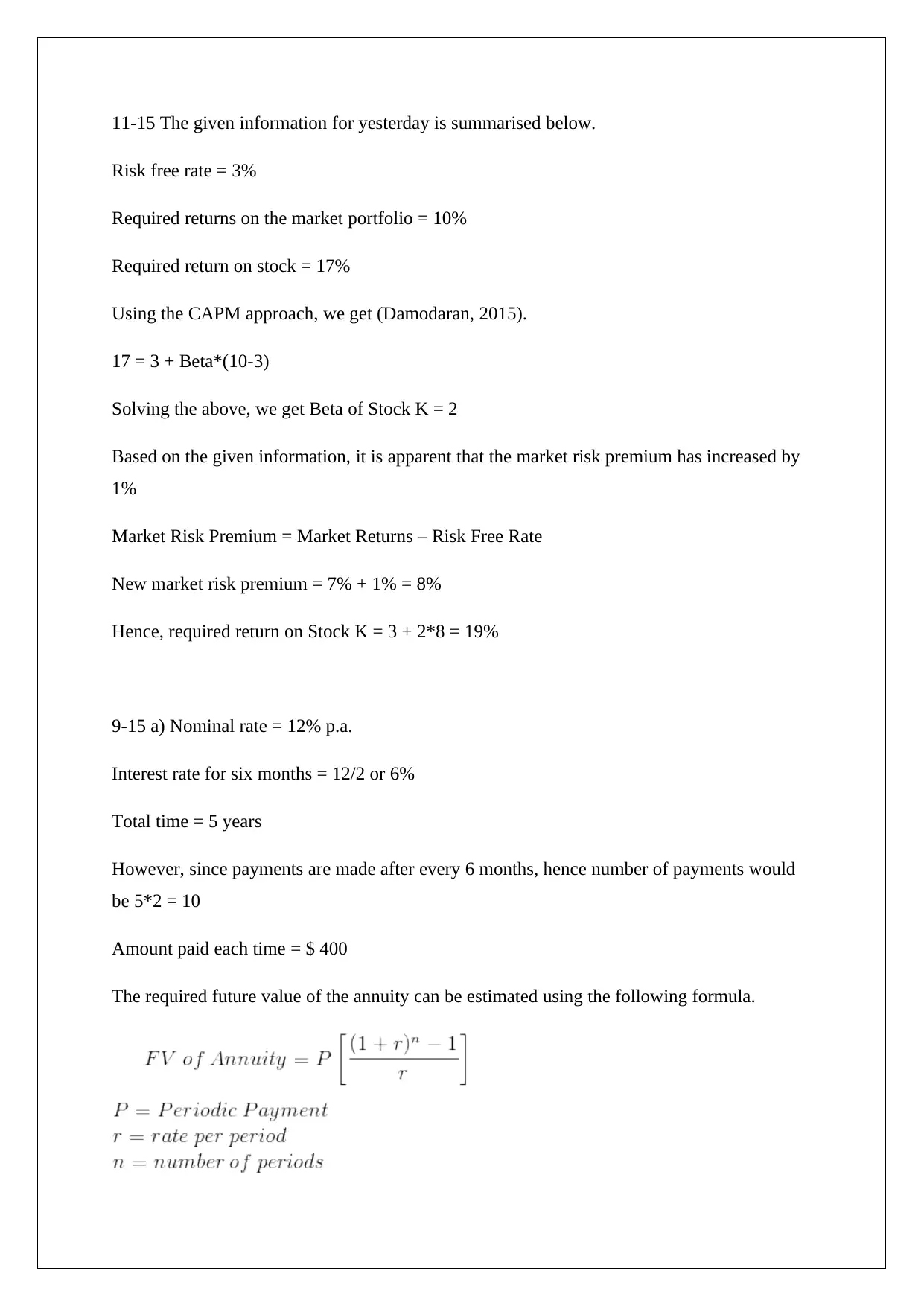
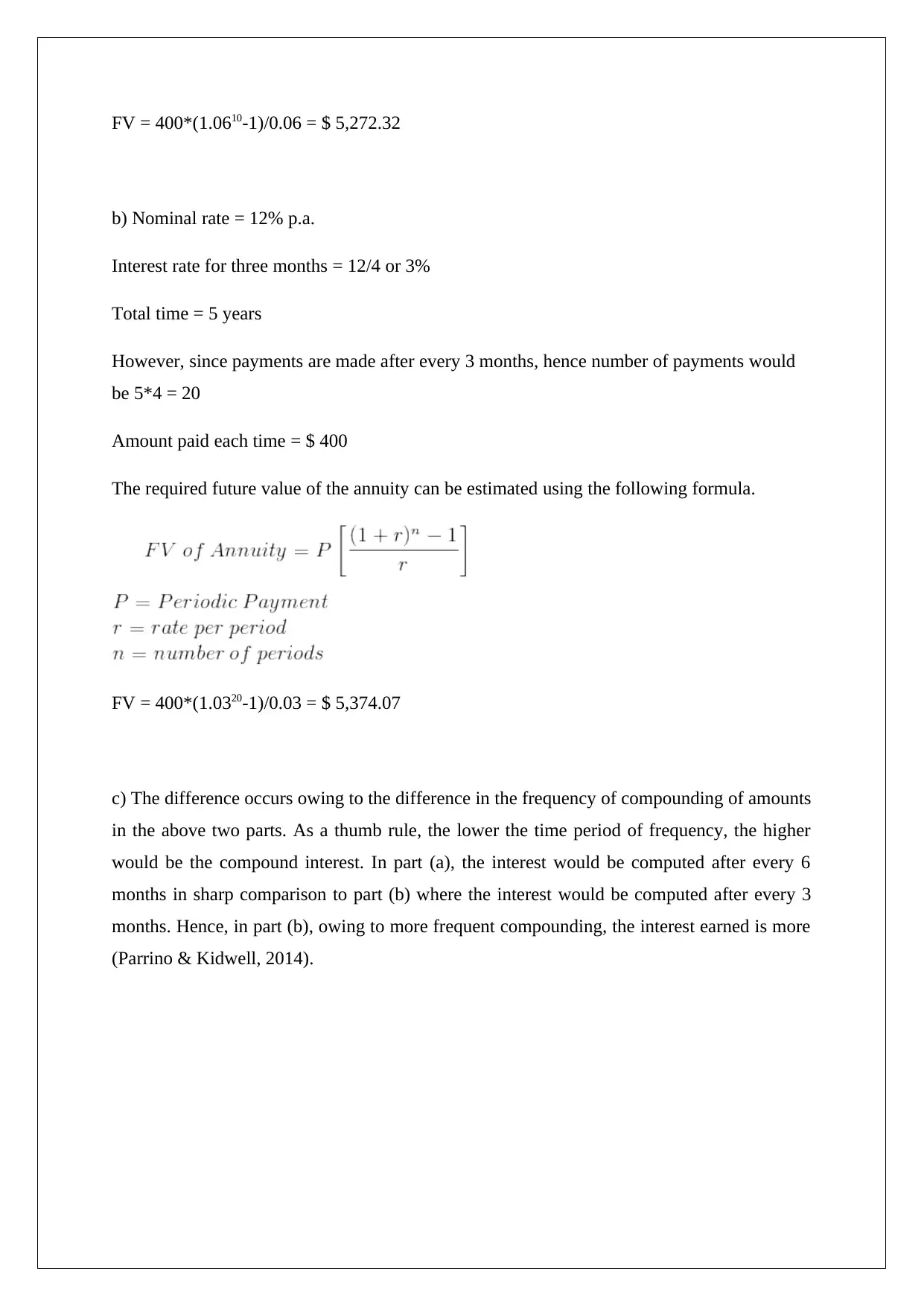
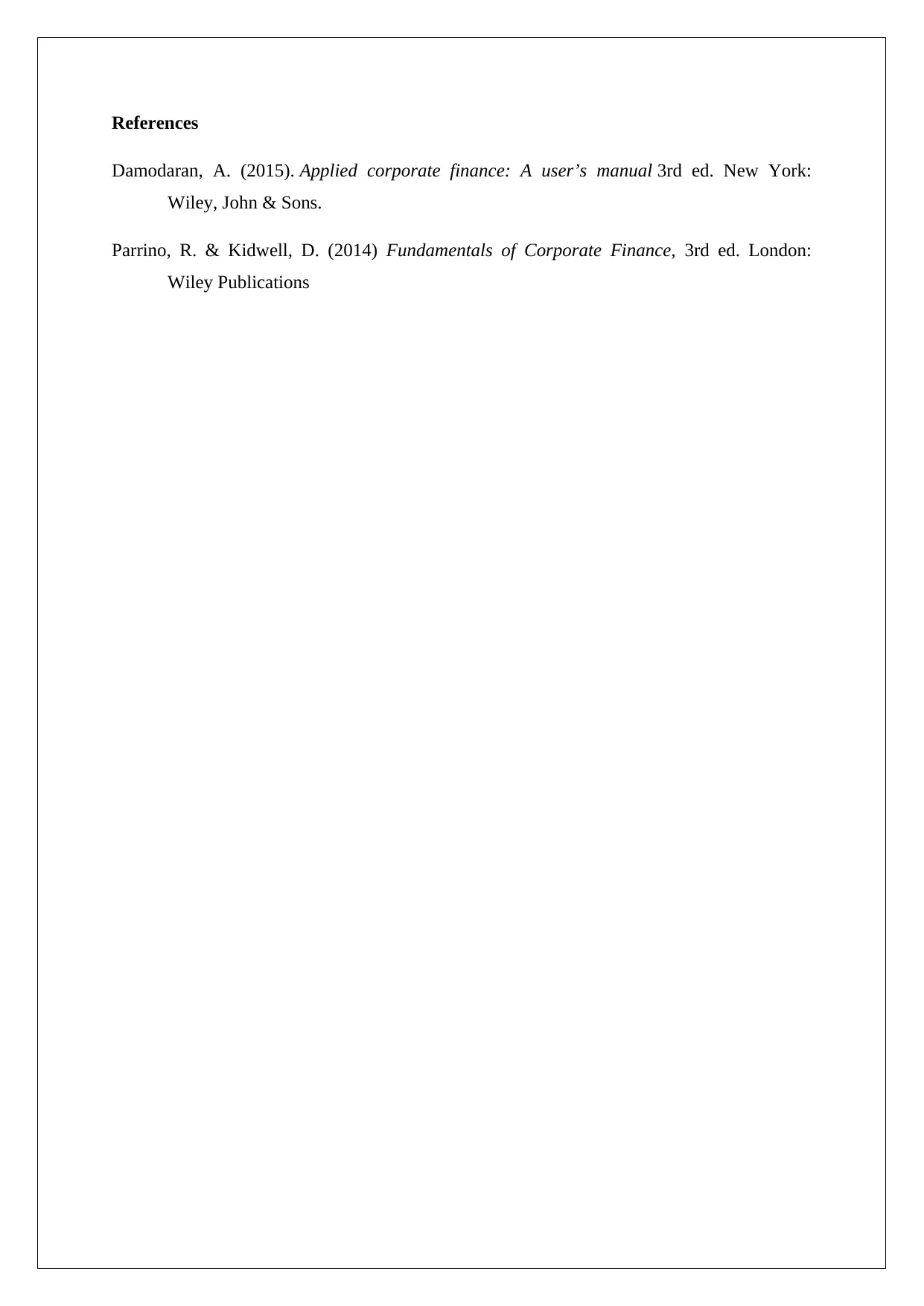
Finance Assignment: CAPM, Annuity Calculations and Compound Interest

Verified

Added on  2021/11/12

|4
|439
|19
Homework Assignment
AI Summary
This finance assignment solution provides a detailed analysis of the Capital Asset Pricing Model (CAPM) and annuity calculations. The assignment begins by calculating the required return on a stock using CAPM, considering the risk-free rate, market risk premium, and the stock's beta. It then explores how changes in the market risk premium affect the required return. The second part of the assignment involves calculating the future value of an annuity under different compounding frequencies (semi-annual and quarterly) and explaining the impact of these frequency differences on the final compound interest. The solution highlights how more frequent compounding leads to higher interest earned, providing insights into time value of money concepts. The assignment references key finance texts to support its calculations and analysis.

Document Page
FINANCE
STUDENT ID:
[Pick the date]
tabler-icon-diamond-filled.svg

Paraphrase This Document

Need a fresh take? Get an instant paraphrase of this document with our AI Paraphraser
Document Page
11-15 The given information for yesterday is summarised below.
Risk free rate = 3%
Required returns on the market portfolio = 10%
Required return on stock = 17%
Using the CAPM approach, we get (Damodaran, 2015).
17 = 3 + Beta*(10-3)
Solving the above, we get Beta of Stock K = 2
Based on the given information, it is apparent that the market risk premium has increased by
1%
Market Risk Premium = Market Returns – Risk Free Rate
New market risk premium = 7% + 1% = 8%
Hence, required return on Stock K = 3 + 2*8 = 19%
9-15 a) Nominal rate = 12% p.a.
Interest rate for six months = 12/2 or 6%
Total time = 5 years
However, since payments are made after every 6 months, hence number of payments would
be 5*2 = 10
Amount paid each time = $ 400
The required future value of the annuity can be estimated using the following formula.
Document Page
FV = 400*(1.0610-1)/0.06 = $ 5,272.32
b) Nominal rate = 12% p.a.
Interest rate for three months = 12/4 or 3%
Total time = 5 years
However, since payments are made after every 3 months, hence number of payments would
be 5*4 = 20
Amount paid each time = $ 400
The required future value of the annuity can be estimated using the following formula.
FV = 400*(1.0320-1)/0.03 = $ 5,374.07
c) The difference occurs owing to the difference in the frequency of compounding of amounts
in the above two parts. As a thumb rule, the lower the time period of frequency, the higher
would be the compound interest. In part (a), the interest would be computed after every 6
months in sharp comparison to part (b) where the interest would be computed after every 3
months. Hence, in part (b), owing to more frequent compounding, the interest earned is more
(Parrino & Kidwell, 2014).
Document Page
References
Damodaran, A. (2015). Applied corporate finance: A user’s manual 3rd ed. New York:
Wiley, John & Sons.
Parrino, R. & Kidwell, D. (2014) Fundamentals of Corporate Finance, 3rd ed. London:
Wiley Publications
chevron_up_icon
1 out of 4
circle_padding
hide_on_mobile
zoom_out_icon
[object Object]