Financial Accounting Project: Preparation of Financial Statements

Verified

Added on  2020/10/22

|15
|1177
|294
Project
AI Summary
This financial accounting project provides a comprehensive overview of key accounting concepts and processes. It begins with an introduction to financial accounting and its importance in organizations. The project covers the preparation of journal entries and ledger accounts, essential for recording financial transactions. It then progresses to the formulation of a trial balance, ensuring the accuracy of the accounting data. Furthermore, the project delves into the preparation of income statements and balance sheets, crucial for assessing a company's financial performance and position. The project also includes the preparation of final accounts for both sole traders and limited companies, demonstrating the application of accounting principles in diverse business structures. The report includes illustrative examples of these financial statements, providing a practical understanding of their components and purpose, and concludes with a summary of the key takeaways and references used. The project covers the core concepts of financial accounting and its application in the real world.
Document Page
FINANCIAL
ACCOUNTING
Project 1
tabler-icon-diamond-filled.svg

Paraphrase This Document

Need a fresh take? Get an instant paraphrase of this document with our AI Paraphraser
Document Page
Table of Contents
INTRODUCTION...........................................................................................................................1
PROJECT 1 .....................................................................................................................................1
P1 Preparation of Journal and Ledger accounts..........................................................................1
P2: Formulation of trail balance..................................................................................................6
P3: Preparation of Income statement and balance sheet.............................................................7
P4: Preparation of final accounts for sole trader and limited companies....................................8
CONCLUSION..............................................................................................................................11
REFERENCES..............................................................................................................................12
Document Page
INTRODUCTION
Financial accounting is the core concept of an organisation as it involves recording of
every transactions. In this report, various accounts are prepared which are important to reflect a
true picture of an organisation such as journal entries, ledger accounts, trial balance, profit and
loss account and balance sheet. Every transaction which is recorded has few evidences such as
receipts and vouchers which help in creating a base for financial accounts. This project report is
providing valuable information about various stages of financial analyses.
PROJECT 1
P1 Preparation of Journal and Ledger accounts
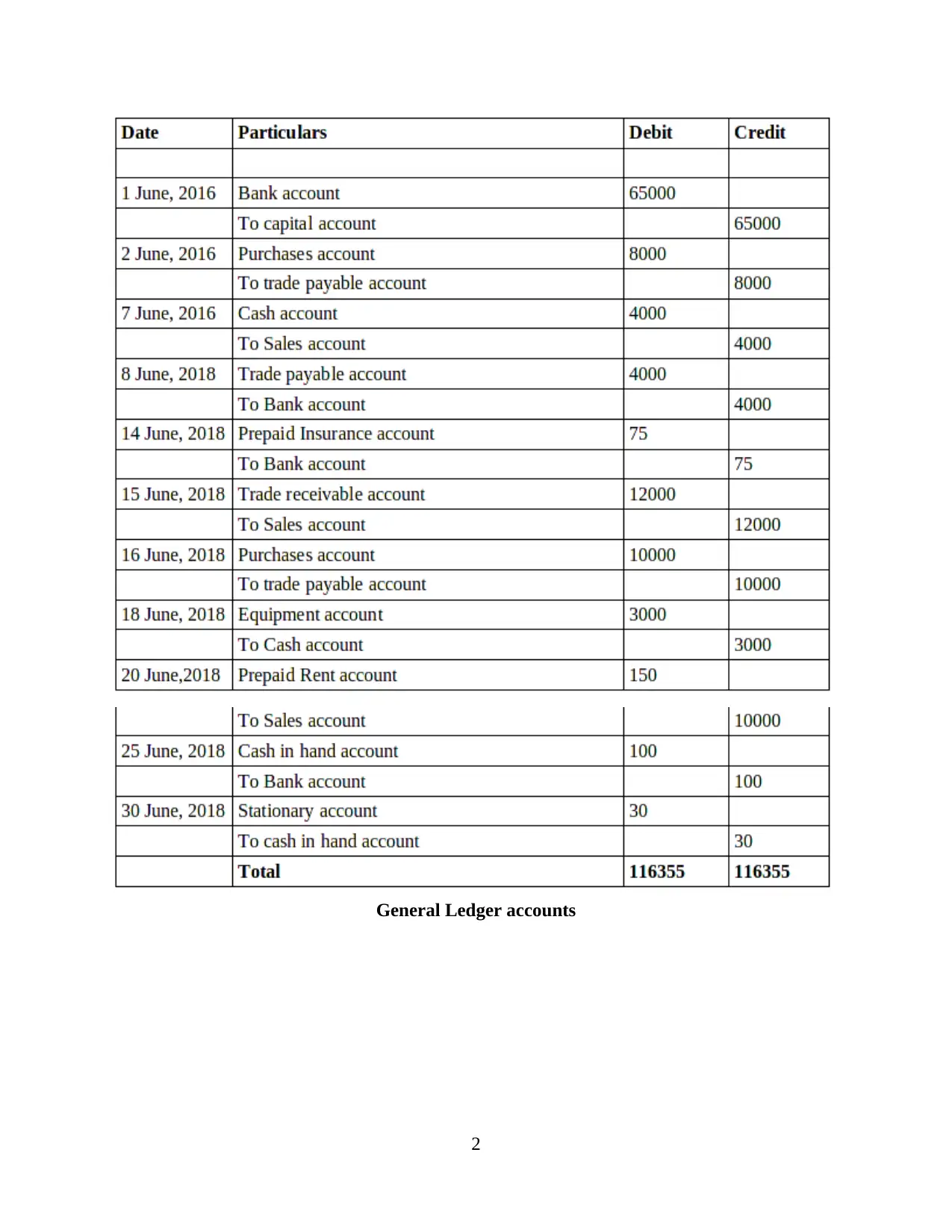
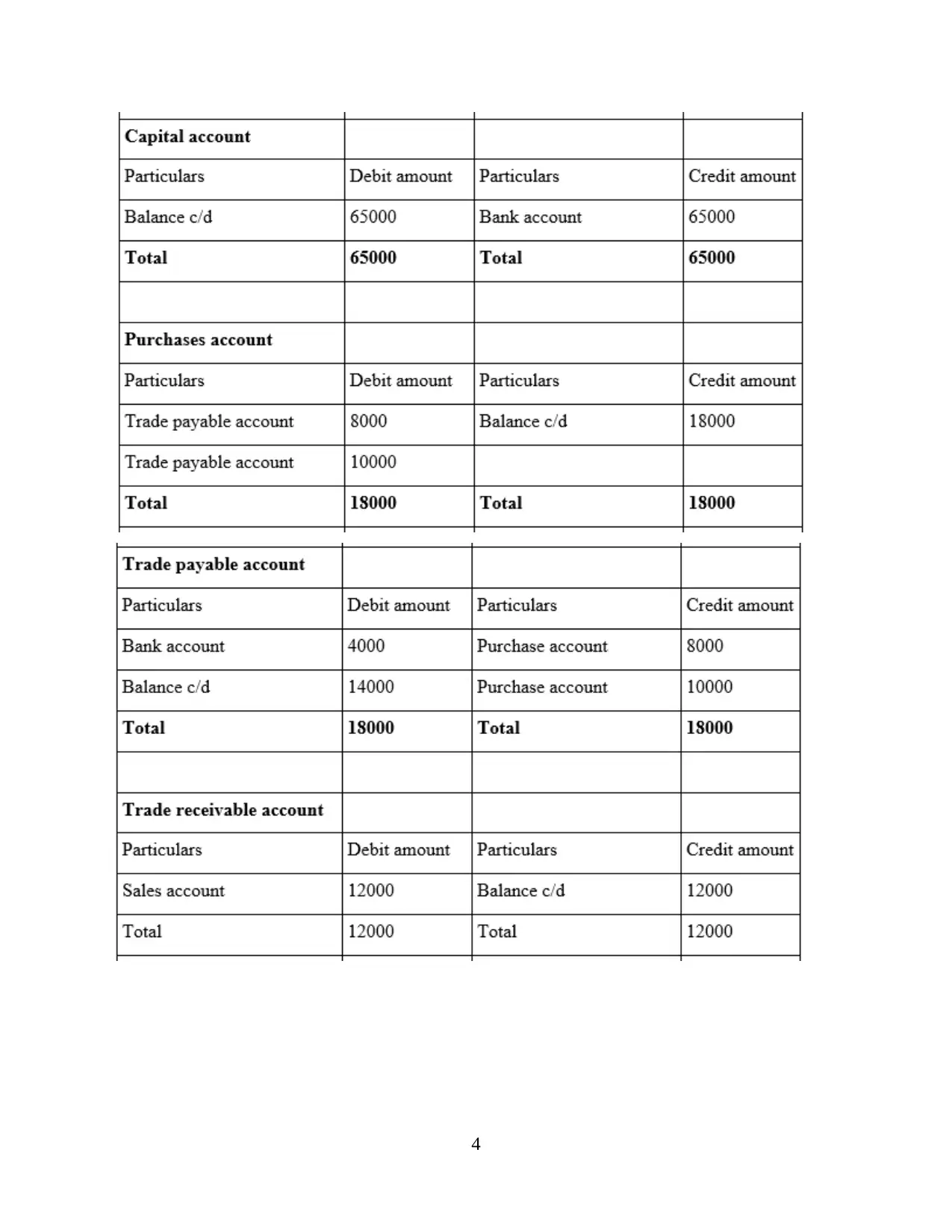
Journal entries is a logging system of accountancy which record each and every
transaction related to cash and credit. Every transaction which is logged in journal entries are
either debited or credited and the total of these two sides must be equal. Transactions which are
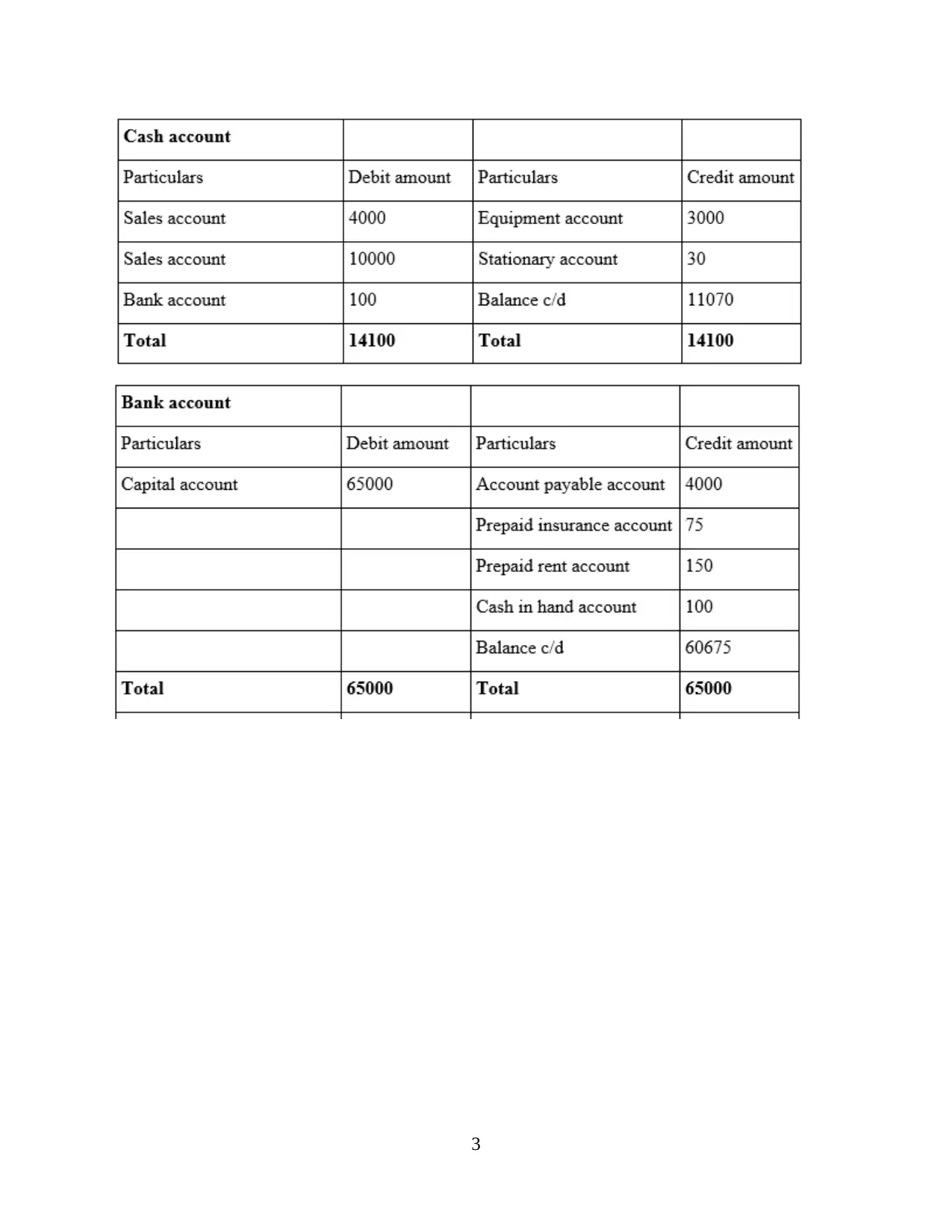
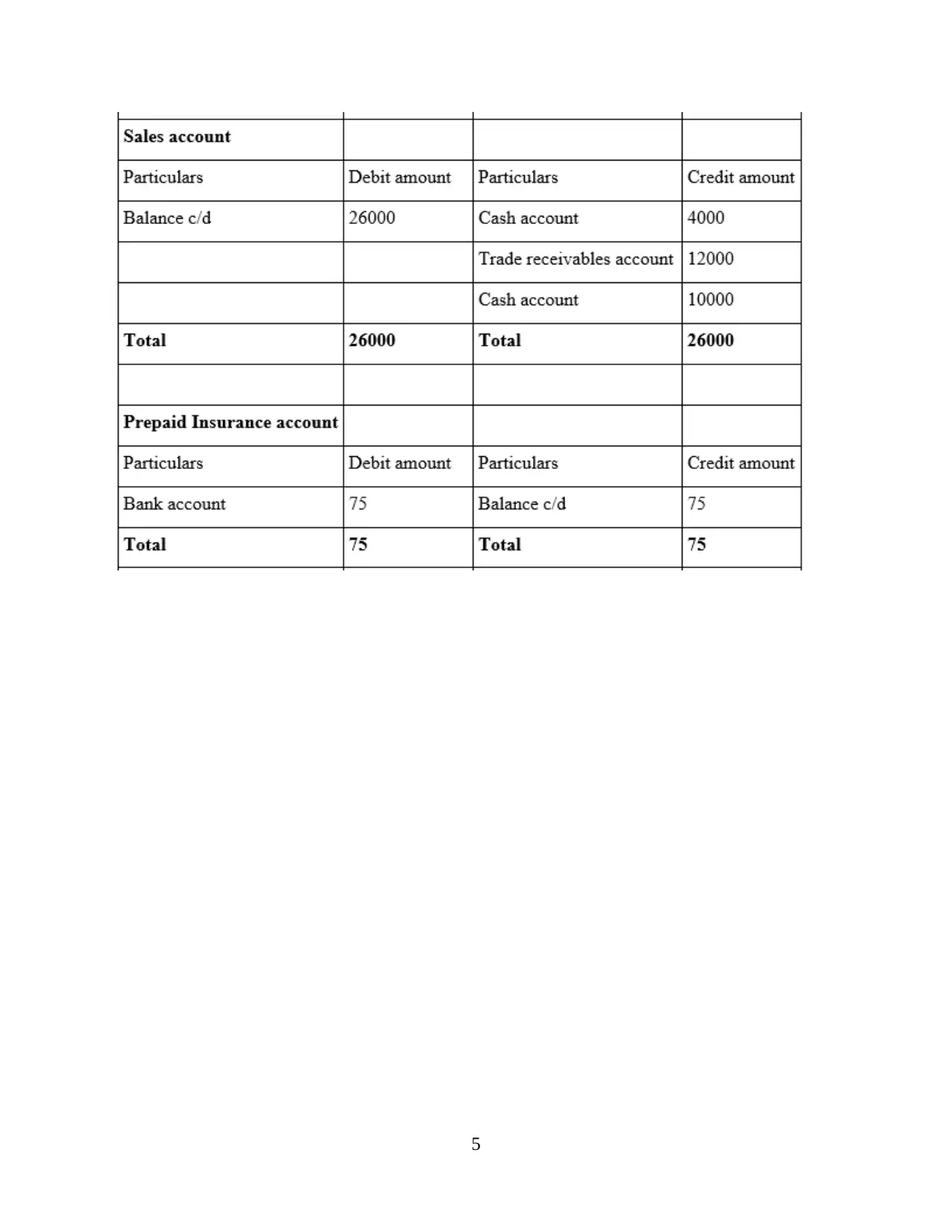
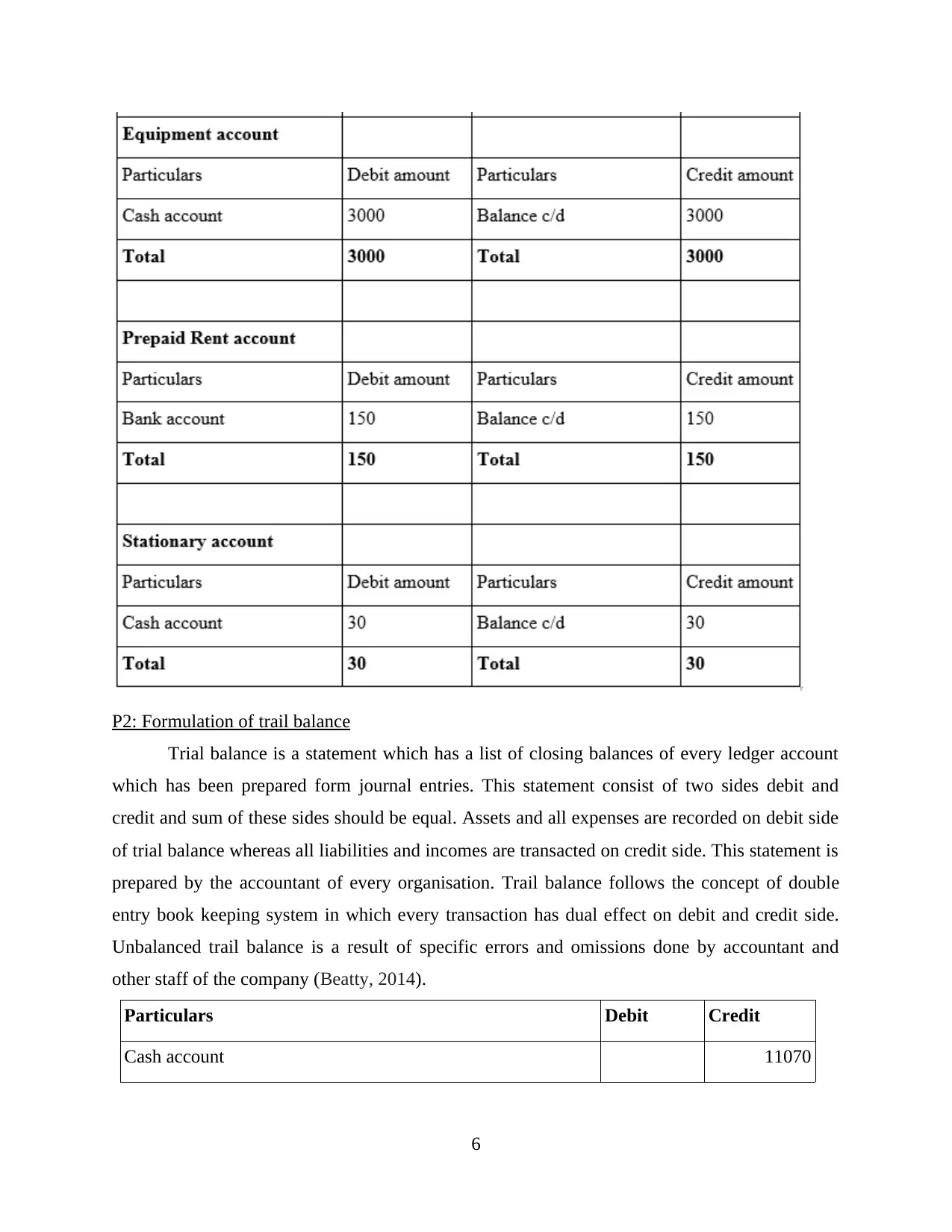
recorded in journal are further sorted in ledger accounts according to the nature. These accounts
can be cash account, account receivables account, inventory account and many more (Edwards,
2013).
Preparation of these accounts and journal entries are collectively known as book keeping.
Recording and transacting is necessary for every organisation whether small, medium or large
organisation. These books records all financial transactions on regular basis to avoid any chaos
and unmanaged data. Main aim of recording these transactions is to serve organisation, so that
they can further prepare final accounts which are necessary to reflect true and fair picture of the
business (Weil, 2013).
1
Document Page
General Ledger accounts
2
tabler-icon-diamond-filled.svg

Paraphrase This Document

Need a fresh take? Get an instant paraphrase of this document with our AI Paraphraser
Document Page
3
Document Page
4
Document Page
5
tabler-icon-diamond-filled.svg

Paraphrase This Document

Need a fresh take? Get an instant paraphrase of this document with our AI Paraphraser
Document Page
P2: Formulation of trail balance
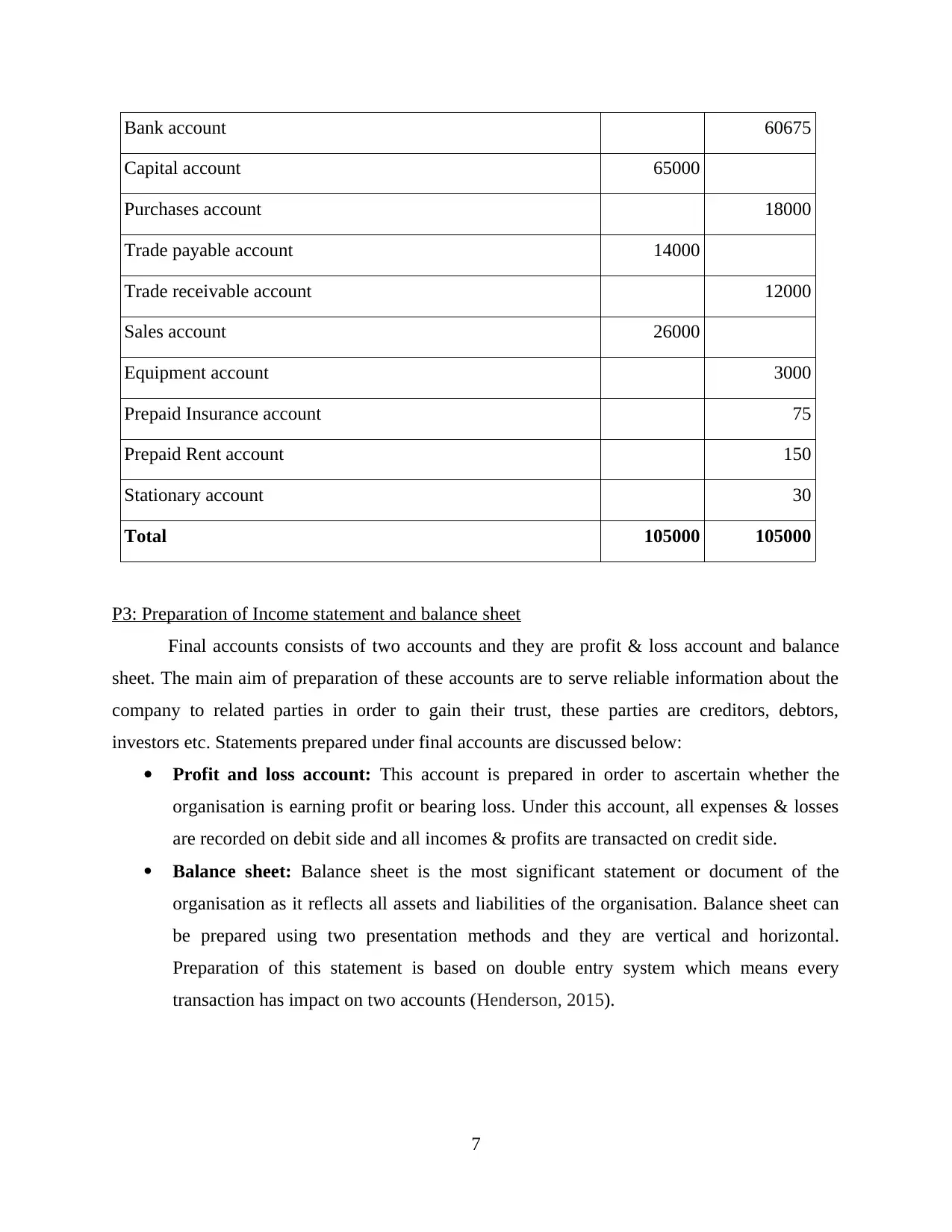
Trial balance is a statement which has a list of closing balances of every ledger account
which has been prepared form journal entries. This statement consist of two sides debit and
credit and sum of these sides should be equal. Assets and all expenses are recorded on debit side
of trial balance whereas all liabilities and incomes are transacted on credit side. This statement is
prepared by the accountant of every organisation. Trail balance follows the concept of double
entry book keeping system in which every transaction has dual effect on debit and credit side.
Unbalanced trail balance is a result of specific errors and omissions done by accountant and
other staff of the company (Beatty, 2014).
Particulars Debit Credit
Cash account 11070
6
Document Page
Bank account 60675
Capital account 65000
Purchases account 18000
Trade payable account 14000
Trade receivable account 12000
Sales account 26000
Equipment account 3000
Prepaid Insurance account 75
Prepaid Rent account 150
Stationary account 30
Total 105000 105000
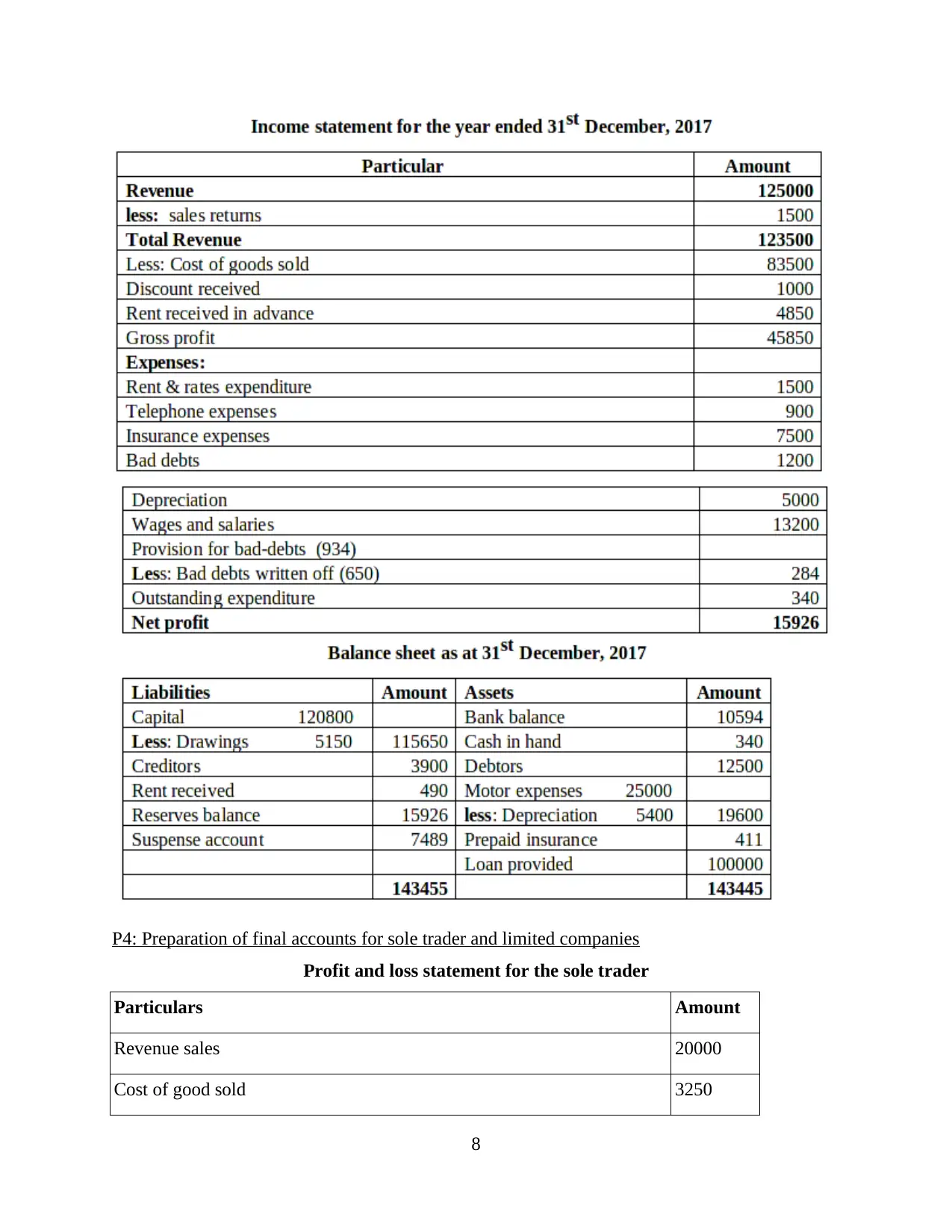
P3: Preparation of Income statement and balance sheet
Final accounts consists of two accounts and they are profit & loss account and balance
sheet. The main aim of preparation of these accounts are to serve reliable information about the
company to related parties in order to gain their trust, these parties are creditors, debtors,
investors etc. Statements prepared under final accounts are discussed below:
Profit and loss account: This account is prepared in order to ascertain whether the
organisation is earning profit or bearing loss. Under this account, all expenses & losses
are recorded on debit side and all incomes & profits are transacted on credit side.
Balance sheet: Balance sheet is the most significant statement or document of the
organisation as it reflects all assets and liabilities of the organisation. Balance sheet can
be prepared using two presentation methods and they are vertical and horizontal.
Preparation of this statement is based on double entry system which means every
transaction has impact on two accounts (Henderson, 2015).
7
Document Page
P4: Preparation of final accounts for sole trader and limited companies
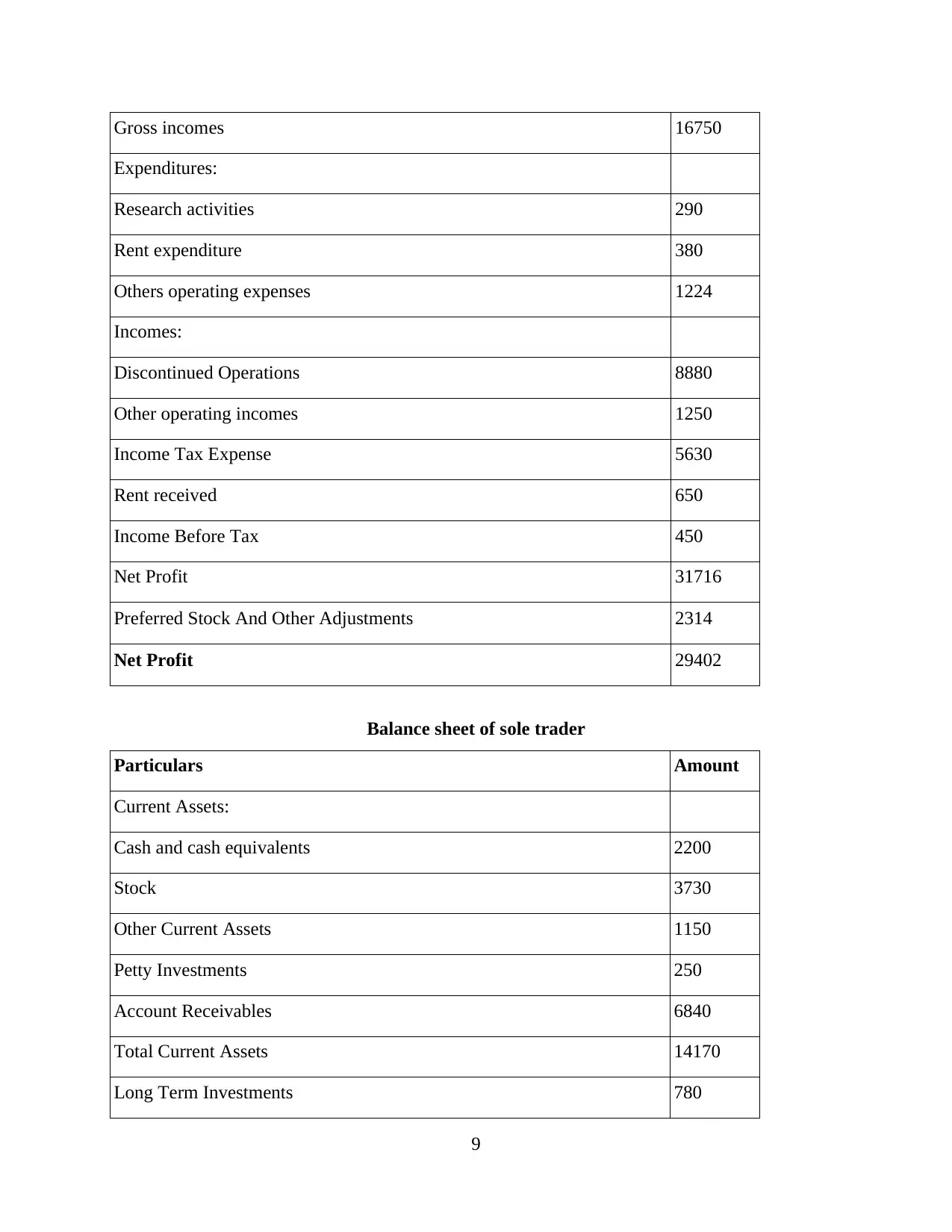
Profit and loss statement for the sole trader
Particulars Amount
Revenue sales 20000
Cost of good sold 3250
8
tabler-icon-diamond-filled.svg

Paraphrase This Document

Need a fresh take? Get an instant paraphrase of this document with our AI Paraphraser
Document Page
Gross incomes 16750
Expenditures:
Research activities 290
Rent expenditure 380
Others operating expenses 1224
Incomes:
Discontinued Operations 8880
Other operating incomes 1250
Income Tax Expense 5630
Rent received 650
Income Before Tax 450
Net Profit 31716
Preferred Stock And Other Adjustments 2314
Net Profit 29402
Balance sheet of sole trader
Particulars Amount
Current Assets:
Cash and cash equivalents 2200
Stock 3730
Other Current Assets 1150
Petty Investments 250
Account Receivables 6840
Total Current Assets 14170
Long Term Investments 780
9
Document Page
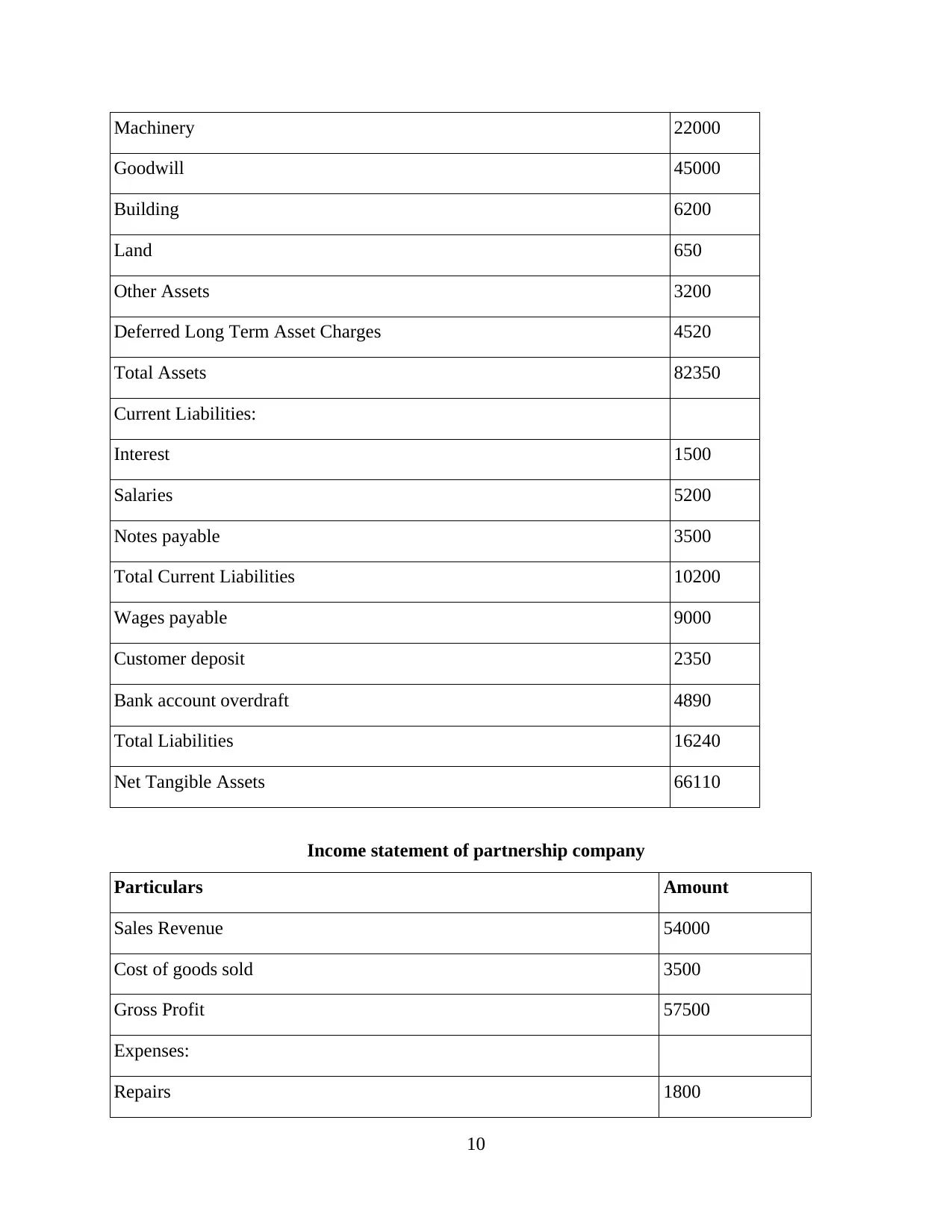
Machinery 22000
Goodwill 45000
Building 6200
Land 650
Other Assets 3200
Deferred Long Term Asset Charges 4520
Total Assets 82350
Current Liabilities:
Interest 1500
Salaries 5200
Notes payable 3500
Total Current Liabilities 10200
Wages payable 9000
Customer deposit 2350
Bank account overdraft 4890
Total Liabilities 16240
Net Tangible Assets 66110
Income statement of partnership company
Particulars Amount
Sales Revenue 54000
Cost of goods sold 3500
Gross Profit 57500
Expenses:
Repairs 1800
10
chevron_up_icon
1 out of 15
circle_padding
hide_on_mobile
zoom_out_icon
[object Object]