BM414 Financial Decision Making: Ratio Analysis and Interpretation
VerifiedAdded on 2022/12/05
|11
|3575
|263
Report
AI Summary
This report delves into the intricacies of financial decision-making within a business context, emphasizing the roles of accounting and finance functions. The introduction establishes the significance of these functions in ensuring long-term profitability and sustainability. Task 1 meticulously outlines the accounting functions, including financial accounting, management accounting, auditing, and taxation, highlighting their crucial roles in recording, classifying, and interpreting financial transactions, as well as providing insights for internal management decisions and external stakeholder evaluations. The finance functions, encompassing investment decisions, financial decisions, dividend decisions, and liquidity decisions, are also thoroughly examined, illustrating their impact on capital allocation, financing strategies, dividend policies, and working capital management. Task 2 then introduces ratio analysis, using data from Skanska plc to calculate and interpret key financial ratios such as Return on Capital Employed, Net Profit Margin, Current Ratio, and various turnover ratios. The report concludes with an analysis of the implications of these ratios, offering suggestions for investors and providing a comprehensive overview of the company's financial health and performance.

FINANCIAL DECISION
MAKING
MAKING

Paraphrase This Document
Need a fresh take? Get an instant paraphrase of this document with our AI Paraphraser
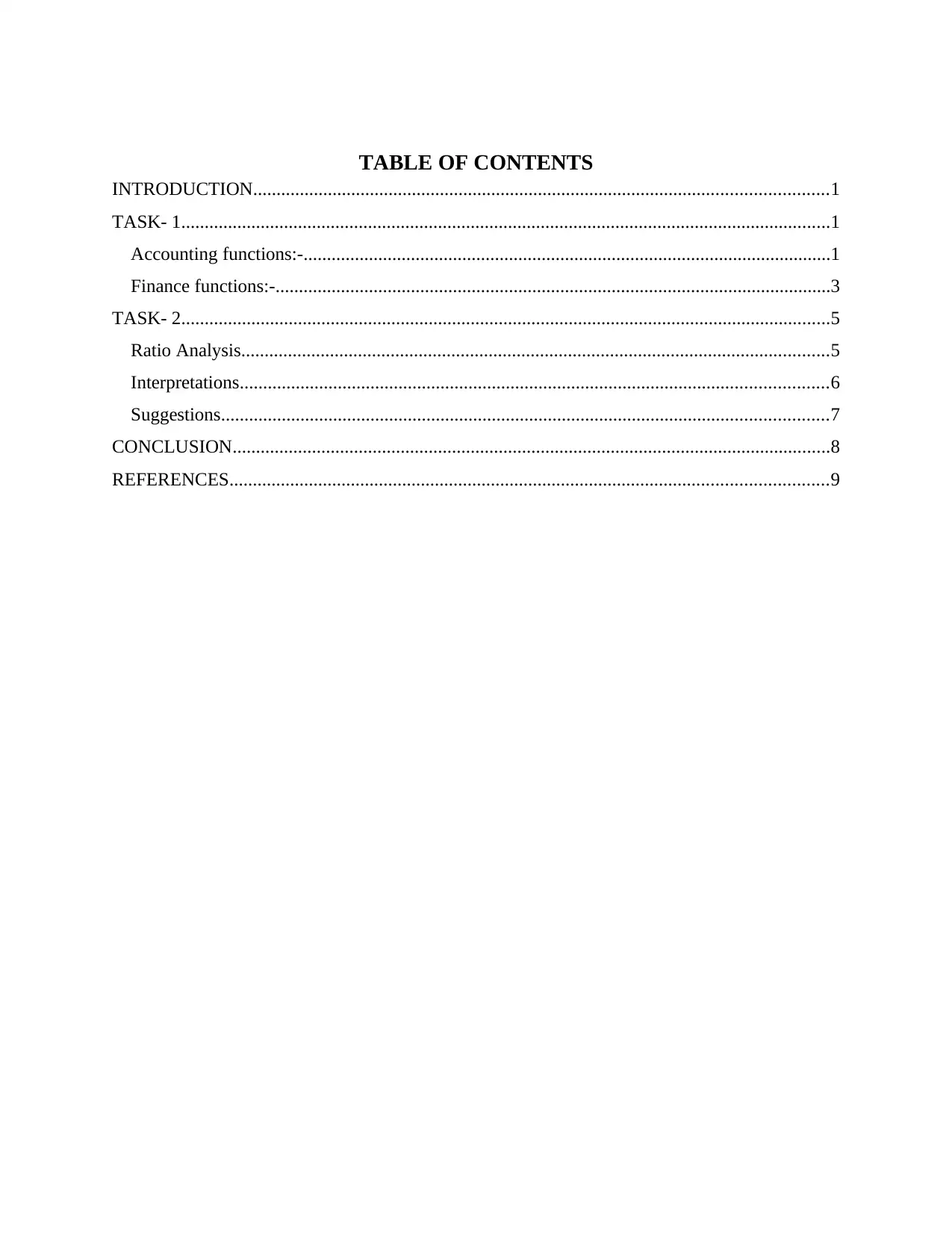
TABLE OF CONTENTS
INTRODUCTION...........................................................................................................................1
TASK- 1...........................................................................................................................................1
Accounting functions:-.................................................................................................................1
Finance functions:-.......................................................................................................................3
TASK- 2...........................................................................................................................................5
Ratio Analysis..............................................................................................................................5
Interpretations..............................................................................................................................6
Suggestions..................................................................................................................................7
CONCLUSION................................................................................................................................8
REFERENCES................................................................................................................................9
INTRODUCTION...........................................................................................................................1
TASK- 1...........................................................................................................................................1
Accounting functions:-.................................................................................................................1
Finance functions:-.......................................................................................................................3
TASK- 2...........................................................................................................................................5
Ratio Analysis..............................................................................................................................5
Interpretations..............................................................................................................................6
Suggestions..................................................................................................................................7
CONCLUSION................................................................................................................................8
REFERENCES................................................................................................................................9
INTRODUCTION
Financial decision-making is the process in which the internal management of the
company indulge to ensure the long term profitability and sustainability of the business
organization. It can be ascertained that these decisions can be related to the capital structure,
choice of investments, capacity of taking the financial risks, dividend decisions, working capital
decisions and the various budgeting requirements of the company. The current project that is
undertaken by the company shall be disclosing the importance of the accounting and the finance
functions in the organization. The accounting function is associated with representing the true
and fair view of the business. Whereas the finance function involves the decisions related to
acquisition and the utilization within the organizations. The project report shall be highlighting
the variants of the accounting and finance function in the company that are used for facilitating
the various decisions. Apart from that the second part of the report shall be demonstrating the
ratio analysis that is undertaken to assist in comparisons and finding out the deviations in the
current policy. Further the interpretation is driven from these ratios to suggest the investors
whether to choose the company for the investments or to reject the proposal for the same.
TASK- 1
The accounting and finance functions play significant role in the organization and have
some crucial variants that are helpful in assisting the decision-making process by the internal
management of the company for its welfare and long term survival in the market. Apart from that
these functions can be used by the other stakeholders of the business who have some or the other
interest associated with the company. The accounting and finance functions, duties and their
roles in the businesses are:-
Accounting functions:- Financial accounting- This process is concerned with the recording, classifying, posting,
summarizing and interpreting the financial transactions that are undertaken by the
business. It is associated with the preparation of the financial statements like the income
statement, balance sheet, cash flow statement and the statement of equity which is then
used to depict the financial results and performance of the business in a particular period.
These financial statements are prepared in accordance with the universally accepted
accounting standards, accounting policies, procedures, norms and methods. This shall be
facilitating the process of comparison among the statement of the two entities and making
1
Financial decision-making is the process in which the internal management of the
company indulge to ensure the long term profitability and sustainability of the business
organization. It can be ascertained that these decisions can be related to the capital structure,
choice of investments, capacity of taking the financial risks, dividend decisions, working capital
decisions and the various budgeting requirements of the company. The current project that is
undertaken by the company shall be disclosing the importance of the accounting and the finance
functions in the organization. The accounting function is associated with representing the true
and fair view of the business. Whereas the finance function involves the decisions related to
acquisition and the utilization within the organizations. The project report shall be highlighting
the variants of the accounting and finance function in the company that are used for facilitating
the various decisions. Apart from that the second part of the report shall be demonstrating the
ratio analysis that is undertaken to assist in comparisons and finding out the deviations in the
current policy. Further the interpretation is driven from these ratios to suggest the investors
whether to choose the company for the investments or to reject the proposal for the same.
TASK- 1
The accounting and finance functions play significant role in the organization and have
some crucial variants that are helpful in assisting the decision-making process by the internal
management of the company for its welfare and long term survival in the market. Apart from that
these functions can be used by the other stakeholders of the business who have some or the other
interest associated with the company. The accounting and finance functions, duties and their
roles in the businesses are:-
Accounting functions:- Financial accounting- This process is concerned with the recording, classifying, posting,
summarizing and interpreting the financial transactions that are undertaken by the
business. It is associated with the preparation of the financial statements like the income
statement, balance sheet, cash flow statement and the statement of equity which is then
used to depict the financial results and performance of the business in a particular period.
These financial statements are prepared in accordance with the universally accepted
accounting standards, accounting policies, procedures, norms and methods. This shall be
facilitating the process of comparison among the statement of the two entities and making
1
⊘ This is a preview!⊘
Do you want full access?
Subscribe today to unlock all pages.

Trusted by 1+ million students worldwide
the improvements in the deviations in accordance with that comparative analysis. The
financial accounting proves to be of major significance to the internal and external users
of the financial statements who base their decisions on the results that are depicted in
these statements. The representations and disclosure policies that are followed by the
business are the major compliance requirements that are mandatory for the business. The
results are oriented to show the profitability, liquidity, operational efficiency, solvency
and market performance of the company (Klačmer Čalopa, 2017). Based on these
positions of the organization the future growth prospects of the business can be defined
and formulating the long term goals and objectives that can derive competencies in the
market. Management accounting- The management accounting is one of the essential functions
of accounting wherein the internal management of the company formulates various
decisions like organizational objectives, future budgets in respect of operating capacity,
sales level, cost control, production techniques etc. This is done with the help of
communicating the financial information of the business to the managers who then take
the future based on it. The major responsibility of the management is in respect of
budgeting which quantifies the various decisions that are to be executed in the routine
operations of the business. This step is taken post the financial statement of the company
are framed by the accountants as this information is only communicated to the
management. One of the most significant roles that are played by the management
accountants are that they formulate the short term and the long term goals and objectives
of the business and in response to that also rightly directs the workforce in the
achievement of the same. This leads to successful and target oriented operations in the
business and in sync with that the company is able to build the competitive advantage in
the industry. Auditing- The auditing function of accounting also plays crucial roles in the business as
the examination of the books of accounts shall be governing the true and fair view
pertaining to the financial statements that are prepared by the business. The auditing and
assurance monitors that the accounts of the company are free from any kind of material
misstatements and is representing the rightful view as to the position of the business. The
auditing is one of the essential requirements of the business in order to build the
2
financial accounting proves to be of major significance to the internal and external users
of the financial statements who base their decisions on the results that are depicted in
these statements. The representations and disclosure policies that are followed by the
business are the major compliance requirements that are mandatory for the business. The
results are oriented to show the profitability, liquidity, operational efficiency, solvency
and market performance of the company (Klačmer Čalopa, 2017). Based on these
positions of the organization the future growth prospects of the business can be defined
and formulating the long term goals and objectives that can derive competencies in the
market. Management accounting- The management accounting is one of the essential functions
of accounting wherein the internal management of the company formulates various
decisions like organizational objectives, future budgets in respect of operating capacity,
sales level, cost control, production techniques etc. This is done with the help of
communicating the financial information of the business to the managers who then take
the future based on it. The major responsibility of the management is in respect of
budgeting which quantifies the various decisions that are to be executed in the routine
operations of the business. This step is taken post the financial statement of the company
are framed by the accountants as this information is only communicated to the
management. One of the most significant roles that are played by the management
accountants are that they formulate the short term and the long term goals and objectives
of the business and in response to that also rightly directs the workforce in the
achievement of the same. This leads to successful and target oriented operations in the
business and in sync with that the company is able to build the competitive advantage in
the industry. Auditing- The auditing function of accounting also plays crucial roles in the business as
the examination of the books of accounts shall be governing the true and fair view
pertaining to the financial statements that are prepared by the business. The auditing and
assurance monitors that the accounts of the company are free from any kind of material
misstatements and is representing the rightful view as to the position of the business. The
auditing is one of the essential requirements of the business in order to build the
2
Paraphrase This Document
Need a fresh take? Get an instant paraphrase of this document with our AI Paraphraser
confidence and trustworthiness of the various stakeholders in the company. As if the
external auditors provide the consent regarding the rightful accounting and compliances
by the company, it proves to be an evidence for the others to believe that no
manipulations, fraudulent practices or the misrepresentations are being made by the
management of the company. This will be boosting the loyalty and trust of the
prospective investors and the potential customers of the business. It will be playing
effective responsibility in generating the growth and development of the business through
an effective compliance of the auditing requirements that are imposed on the business
entities.
Taxation- The tax liability of the business that is ascertained over the income that is
generated by the company is also important function of the accounting. It can be assessed
that the company ascertains the advance tax liability that shall be pertaining to the period
as per their assessment which is then further evaluated by the taxation authorities who
will convey that whether the liability paid is excess or undervalued by the company. The
balance is then either remitted or paid by the company (Sedliačiková and et.al., 2020).
The other important responsibility attached to this function of accounting is the
ascertaining the deductions and exemptions that the business can avail against some
permitted incomes of the company. This shall be reducing the liability of tax for the
business and increase the profitability available for the shareholders to be provided as the
dividend or retain in the business to finance the growth and development of the business.
The compliance of the taxation requirements as per the income tax act will help the
company portray a better image in front of the external world and also ensure that the
interference of the government is being avoided by the company and the smooth and
fluency of the operations is maintained.
Finance functions:- Investment decision- The investment decision is very crucial for determining the long
term profitability and growth prospects pertaining to the business. This is related to the
allocation of the finance in the various investment proposals that are available with the
business post they are evaluated through the different investment appraisal techniques.
This will help in knowing the returns that are provided by the various opportunities and
accordingly the best among them shall be selected and applied in the business (Finance
3
external auditors provide the consent regarding the rightful accounting and compliances
by the company, it proves to be an evidence for the others to believe that no
manipulations, fraudulent practices or the misrepresentations are being made by the
management of the company. This will be boosting the loyalty and trust of the
prospective investors and the potential customers of the business. It will be playing
effective responsibility in generating the growth and development of the business through
an effective compliance of the auditing requirements that are imposed on the business
entities.
Taxation- The tax liability of the business that is ascertained over the income that is
generated by the company is also important function of the accounting. It can be assessed
that the company ascertains the advance tax liability that shall be pertaining to the period
as per their assessment which is then further evaluated by the taxation authorities who
will convey that whether the liability paid is excess or undervalued by the company. The
balance is then either remitted or paid by the company (Sedliačiková and et.al., 2020).
The other important responsibility attached to this function of accounting is the
ascertaining the deductions and exemptions that the business can avail against some
permitted incomes of the company. This shall be reducing the liability of tax for the
business and increase the profitability available for the shareholders to be provided as the
dividend or retain in the business to finance the growth and development of the business.
The compliance of the taxation requirements as per the income tax act will help the
company portray a better image in front of the external world and also ensure that the
interference of the government is being avoided by the company and the smooth and
fluency of the operations is maintained.
Finance functions:- Investment decision- The investment decision is very crucial for determining the long
term profitability and growth prospects pertaining to the business. This is related to the
allocation of the finance in the various investment proposals that are available with the
business post they are evaluated through the different investment appraisal techniques.
This will help in knowing the returns that are provided by the various opportunities and
accordingly the best among them shall be selected and applied in the business (Finance
3
Functions, 2021). The responsibility with these decisions increases because they are
irreversible in nature, are for the long period of time, involves huge sum of money and
are the core to decide regarding the future prosperity of the business. Such decisions must
be taken with utmost care as finance is the blood of the business and the management
cant afford to lose it. The investment must be such that covers the cost and is capable of
generating high returns for the business. Financial decision- This refers to the decision regarding the acquisition of finance from
the various sources that are available with business. This can also be referred to as the
capital structure decision which comprises of the debt and equity sources of finance. The
company has to acquire the funds in the balance manner from the both sources that are
debt and equity. The debt which shall be imposing the fixed financial charges and the
equity that shall be diluting the control of the business. The capital structure of the
company must be rightfully designed in such a manner that the risks of the business are
minimized and the returns pertaining to the company are maximized for the business.
Apart from that the other source for the business which is the most appropriate one is the
retained earnings that are possessed by the business from the remaining profits of the
business. This is the cheapest source as there are no costs pertaining to it. Dividend decision- The dividend decision in respect of the finance function is about the
proportion of the profits whose benefits shall be extended to the shareholders of the
business in the manner of the dividends the remaining shall be forming the part of the
retained earnings of the business which are used to finance the future growth prospects of
the business (Lichtenberg and et.al., 2018). This decision is very significant for the
company in the sense that a proper percentage is to be decided of how much amount is to
be paid to the shareholders, this is because the liquidity is also to be maintained in the
business in case of emergency that can arise. Also, it can be assessed that a decent
amount is to be paid to the shareholders of the business for boosting their confidence and
meeting their expectations in respect of the investments made by the company.
Liquidity decision- This decision is also known as the working capital decision of the
company which is taken with respect and motive of the business to meet the short term
obligations of the business. This can be done with the reference to the maintenance of
current assets over the current liabilities of the business. The working capital is the
4
irreversible in nature, are for the long period of time, involves huge sum of money and
are the core to decide regarding the future prosperity of the business. Such decisions must
be taken with utmost care as finance is the blood of the business and the management
cant afford to lose it. The investment must be such that covers the cost and is capable of
generating high returns for the business. Financial decision- This refers to the decision regarding the acquisition of finance from
the various sources that are available with business. This can also be referred to as the
capital structure decision which comprises of the debt and equity sources of finance. The
company has to acquire the funds in the balance manner from the both sources that are
debt and equity. The debt which shall be imposing the fixed financial charges and the
equity that shall be diluting the control of the business. The capital structure of the
company must be rightfully designed in such a manner that the risks of the business are
minimized and the returns pertaining to the company are maximized for the business.
Apart from that the other source for the business which is the most appropriate one is the
retained earnings that are possessed by the business from the remaining profits of the
business. This is the cheapest source as there are no costs pertaining to it. Dividend decision- The dividend decision in respect of the finance function is about the
proportion of the profits whose benefits shall be extended to the shareholders of the
business in the manner of the dividends the remaining shall be forming the part of the
retained earnings of the business which are used to finance the future growth prospects of
the business (Lichtenberg and et.al., 2018). This decision is very significant for the
company in the sense that a proper percentage is to be decided of how much amount is to
be paid to the shareholders, this is because the liquidity is also to be maintained in the
business in case of emergency that can arise. Also, it can be assessed that a decent
amount is to be paid to the shareholders of the business for boosting their confidence and
meeting their expectations in respect of the investments made by the company.
Liquidity decision- This decision is also known as the working capital decision of the
company which is taken with respect and motive of the business to meet the short term
obligations of the business. This can be done with the reference to the maintenance of
current assets over the current liabilities of the business. The working capital is the
4
⊘ This is a preview!⊘
Do you want full access?
Subscribe today to unlock all pages.
Trusted by 1+ million students worldwide
difference between the current assets and the current liabilities of the business. It should
be maintained in the effective manner such that the operating cycle of the business can be
run smoothly by the business and the target motives of the business are attained with the
economies of scale and lowering down the costs of the business. It can be ascertained that
maintaining the surplus balance of cash which is idle in the business shall be not
benefiting but will be posing the unnecessary costs of acquiring such finance.
TASK- 2
Ratio Analysis
S.NO RATIOS FORMULA
CALCULA
TIONS
2018 2019
1
Return on Capital
Employed
Earnings before interest and tax/ Capital
employed (total assets – current
liabilities)*100
19.60
%
16.70
%
Earnings before interest and
tax 750 975
Total assets 4470 8070
Current Liabilities 645 2220
2 Net Profit Margin Net profit/ Revenue from operations*100
12.50
%
11.25
%
Net Profit 600 675
Revenue from operations 4800 6000
3 Current Ratio Current assets/ Current liabilities 2.348 0.932
Current assets 1515 2070
Current Liabilities 645 2220
4
Average Receivable Days/
Debtors Collection Period
Accounts Receivable/ Revenue from
operations*365
68.43
75 73
Accounts Receivable 900 1200
Revenue from operations 4800 6000
5
Average Payable Days/
Creditors Collection
Period Accounts payable/ Purchases*365
77.05
5
159.6
875
Accounts Payable 570 2100
Purchases 2700 4800
5
be maintained in the effective manner such that the operating cycle of the business can be
run smoothly by the business and the target motives of the business are attained with the
economies of scale and lowering down the costs of the business. It can be ascertained that
maintaining the surplus balance of cash which is idle in the business shall be not
benefiting but will be posing the unnecessary costs of acquiring such finance.
TASK- 2
Ratio Analysis
S.NO RATIOS FORMULA
CALCULA
TIONS
2018 2019
1
Return on Capital
Employed
Earnings before interest and tax/ Capital
employed (total assets – current
liabilities)*100
19.60
%
16.70
%
Earnings before interest and
tax 750 975
Total assets 4470 8070
Current Liabilities 645 2220
2 Net Profit Margin Net profit/ Revenue from operations*100
12.50
%
11.25
%
Net Profit 600 675
Revenue from operations 4800 6000
3 Current Ratio Current assets/ Current liabilities 2.348 0.932
Current assets 1515 2070
Current Liabilities 645 2220
4
Average Receivable Days/
Debtors Collection Period
Accounts Receivable/ Revenue from
operations*365
68.43
75 73
Accounts Receivable 900 1200
Revenue from operations 4800 6000
5
Average Payable Days/
Creditors Collection
Period Accounts payable/ Purchases*365
77.05
5
159.6
875
Accounts Payable 570 2100
Purchases 2700 4800
5
Paraphrase This Document
Need a fresh take? Get an instant paraphrase of this document with our AI Paraphraser
Interpretations Return on capital employed- The return on capital employed of the business is the
financial ratio that is measuring the efficiency with which the capital resources in the
business are applied to generate the returns for the same. It can be assessed that if the
capital is allocated wisely then such ratio will be higher and vice versa. As per the data
provided in the financial statements of the Skanska plc it can be assessed that in the
financial year 2018 it earned a return of 19.60% on the capital that was invested in the
company. On the contrary in the year 2019 there is fall in the efficiency with which the
capital is invested in the business as in this term the profitability of 16.67% is only
earned. Therefore, it can be assessed that the investments are to be rethought and invested
by the business so that efficiency can be regenerated by the business. Net profit margin- The net profit margin of the company is the returns or the margin that
is earned on the sales that are executed by the company in the particular financial year
(Cook and Sadeghein, 2018). If such ratio is high it means that the cost of sales are lower
which shall be benefiting the company and also the shareholders who can get the
proportion of such profits as dividend. The above table showing the ratio analysis of the
Skanska plc shows that in the financial year 2018 the company is earning the profit of
12.50% over the sales that are made in the year. But consequently in the next year it can
be noticed that the profitability have been reduced to 11.25% which shows that there are
some inefficiencies and loss making ventures in the business that needs to be tackled by
the management at the earliest. Also, it can be witnessed that the efficiency with which
the capital has been employed has deducted significantly which is one reason that
profitability has reduced over the years. Current ratio- The current ratio of the company shall be showing the ability of the
business to meet the short term liabilities and obligations of the company. The
availability of the current assets more than the current liabilities of the company in that
period is a positive sign whereas if the same is not the situation the organization shall be
facing a tight liquidity spot. In the financial statements the ratios of the Skanska plc are
depicting that the availability of the current assets in the year 2018 is 2.3 times the
liabilities that are arising in the current year. This shows highly efficient liquidity position
of the business. Moreover, the same ratio in the coming year has been significantly
6
financial ratio that is measuring the efficiency with which the capital resources in the
business are applied to generate the returns for the same. It can be assessed that if the
capital is allocated wisely then such ratio will be higher and vice versa. As per the data
provided in the financial statements of the Skanska plc it can be assessed that in the
financial year 2018 it earned a return of 19.60% on the capital that was invested in the
company. On the contrary in the year 2019 there is fall in the efficiency with which the
capital is invested in the business as in this term the profitability of 16.67% is only
earned. Therefore, it can be assessed that the investments are to be rethought and invested
by the business so that efficiency can be regenerated by the business. Net profit margin- The net profit margin of the company is the returns or the margin that
is earned on the sales that are executed by the company in the particular financial year
(Cook and Sadeghein, 2018). If such ratio is high it means that the cost of sales are lower
which shall be benefiting the company and also the shareholders who can get the
proportion of such profits as dividend. The above table showing the ratio analysis of the
Skanska plc shows that in the financial year 2018 the company is earning the profit of
12.50% over the sales that are made in the year. But consequently in the next year it can
be noticed that the profitability have been reduced to 11.25% which shows that there are
some inefficiencies and loss making ventures in the business that needs to be tackled by
the management at the earliest. Also, it can be witnessed that the efficiency with which
the capital has been employed has deducted significantly which is one reason that
profitability has reduced over the years. Current ratio- The current ratio of the company shall be showing the ability of the
business to meet the short term liabilities and obligations of the company. The
availability of the current assets more than the current liabilities of the company in that
period is a positive sign whereas if the same is not the situation the organization shall be
facing a tight liquidity spot. In the financial statements the ratios of the Skanska plc are
depicting that the availability of the current assets in the year 2018 is 2.3 times the
liabilities that are arising in the current year. This shows highly efficient liquidity position
of the business. Moreover, the same ratio in the coming year has been significantly
6
dropped which is 0.93 not even sufficient to cover the amounts of current liabilities that
are there in the following year. If the liabilities are not met on time then the credibility
and the operations of the business shall be affected. Debtors collection period- This is the time period taken by the recovery agents to receive
the sum that is due on the debtors or the trade receivable of the business. The sooner it is
the better it shall be for the business of the company. This shall be regulating the
operating a cycle and will be governing its smoothness in the conduct of the business
operations (Kim, Gutter and Spangler, 2017). As per the statistics available of the
Skanska plc it can be witnessed that in the year 2018 the company is providing the credit
period of 68 days whereas the same has increased for the company in the next year in
2019 with a small margin that is up to 73 days. The margin of the recovery days has
increased a little showing the lesser efficiency which has certainly delayed the
functioning of the operating cycle in the business.
Creditors collection period- This is the period that is provided by the creditors of the
business as leverage to the company for paying off its dues. This period must be in sync
with the debtor's collection period but the same cannot be observed in the case of
Skanska plc. In 2019 the days allotted to the debtors are 73 but instead received from the
creditors is 160 which high inefficiency in the credibility. Also, it can be ascertained that
the company's itself has increased this period in the past two years.
Suggestions
The investor who is about to invest in the Skanska plc shall be studying regarding their
performance in the present and the results or the growth tht can be undertaken in the future. This
is because they are also expecting the returns from the investments that they have made to be
highest among all the opportunities that they are probably considering. In reference to this
company and the data provided in the above table of ratio analysis that is comparing the results
of the two financial years that are 2018 and 2019 (Eberhardt, de Bruin and Strough, 2019). it can
be assessed that the company is at the declining stage in the market where they are having the
decreased profits, lack of operational efficiency, dimmed growth prospects pertaining to the
future of the company and the poor policies that are designed by the management of the
company and the top level authorities of the business.
7
are there in the following year. If the liabilities are not met on time then the credibility
and the operations of the business shall be affected. Debtors collection period- This is the time period taken by the recovery agents to receive
the sum that is due on the debtors or the trade receivable of the business. The sooner it is
the better it shall be for the business of the company. This shall be regulating the
operating a cycle and will be governing its smoothness in the conduct of the business
operations (Kim, Gutter and Spangler, 2017). As per the statistics available of the
Skanska plc it can be witnessed that in the year 2018 the company is providing the credit
period of 68 days whereas the same has increased for the company in the next year in
2019 with a small margin that is up to 73 days. The margin of the recovery days has
increased a little showing the lesser efficiency which has certainly delayed the
functioning of the operating cycle in the business.
Creditors collection period- This is the period that is provided by the creditors of the
business as leverage to the company for paying off its dues. This period must be in sync
with the debtor's collection period but the same cannot be observed in the case of
Skanska plc. In 2019 the days allotted to the debtors are 73 but instead received from the
creditors is 160 which high inefficiency in the credibility. Also, it can be ascertained that
the company's itself has increased this period in the past two years.
Suggestions
The investor who is about to invest in the Skanska plc shall be studying regarding their
performance in the present and the results or the growth tht can be undertaken in the future. This
is because they are also expecting the returns from the investments that they have made to be
highest among all the opportunities that they are probably considering. In reference to this
company and the data provided in the above table of ratio analysis that is comparing the results
of the two financial years that are 2018 and 2019 (Eberhardt, de Bruin and Strough, 2019). it can
be assessed that the company is at the declining stage in the market where they are having the
decreased profits, lack of operational efficiency, dimmed growth prospects pertaining to the
future of the company and the poor policies that are designed by the management of the
company and the top level authorities of the business.
7
⊘ This is a preview!⊘
Do you want full access?
Subscribe today to unlock all pages.
Trusted by 1+ million students worldwide
It shall be suggested to the potential investor that he must avoid investing in the company
that can be possibly having a dull future and much chances of incurring losses. Investing in this
company shall be increasing the level of the risks that are assumed by the company and
significantly reducing the share of profits which will dissatisfy the investor. From the data of the
above table it can be ascertained that the company is facing difficulties in all the three major
positions that is of profitability, liquidity and the operational efficiency. So it can be analysed
that the company is a bad idea to be invested in currently, unless the management of the
company takes rightful actions or implement plans in order to remove the inefficiencies that are
pertaining to the business.
CONCLUSION
It can be summarised from the above project that the accounting and finance functions of
the business are very crucial for determining the performance of the business and generating the
future prospects of the business. The financial statements that are prepared by the business
reflect the profitability and the financial health and well-being of the business. Also, the
management accounting is very significant for the business in the manner that it shall be defining
the goals and objectives of the business that shall be fulfilled by providing the proper guidance
and support to the company. The finance functions are in respect of the funds that are there with
the business and requires that the proper allocation and its utilization is undertaken by the
business so that the necessary returns are able to be derived and due to this sufficient growth and
prosperity can be drawn by the business. The other part shows the ratio analysis which is
considering the evaluation of the financial results of the company. It can be assessed that this
shall be facilitating the comparison of the performance that is undertaken by the company.
8
that can be possibly having a dull future and much chances of incurring losses. Investing in this
company shall be increasing the level of the risks that are assumed by the company and
significantly reducing the share of profits which will dissatisfy the investor. From the data of the
above table it can be ascertained that the company is facing difficulties in all the three major
positions that is of profitability, liquidity and the operational efficiency. So it can be analysed
that the company is a bad idea to be invested in currently, unless the management of the
company takes rightful actions or implement plans in order to remove the inefficiencies that are
pertaining to the business.
CONCLUSION
It can be summarised from the above project that the accounting and finance functions of
the business are very crucial for determining the performance of the business and generating the
future prospects of the business. The financial statements that are prepared by the business
reflect the profitability and the financial health and well-being of the business. Also, the
management accounting is very significant for the business in the manner that it shall be defining
the goals and objectives of the business that shall be fulfilled by providing the proper guidance
and support to the company. The finance functions are in respect of the funds that are there with
the business and requires that the proper allocation and its utilization is undertaken by the
business so that the necessary returns are able to be derived and due to this sufficient growth and
prosperity can be drawn by the business. The other part shows the ratio analysis which is
considering the evaluation of the financial results of the company. It can be assessed that this
shall be facilitating the comparison of the performance that is undertaken by the company.
8
Paraphrase This Document
Need a fresh take? Get an instant paraphrase of this document with our AI Paraphraser
REFERENCES
Books and Journals
Cook, L. A. and Sadeghein, R., 2018. Effects of perceived scarcity on financial decision
making. Journal of Public Policy & Marketing. 37(1). pp.68-87.
Eberhardt, W., de Bruin, W. B. and Strough, J., 2019. Age differences in financial decision
making: The benefits of more experience and less negative emotions. Journal of
behavioral decision making. 32(1). pp.79-93.
Kim, J., Gutter, M. S. and Spangler, T., 2017. Review of family financial decision making:
Suggestions for future research and implications for financial education. Journal of
Financial Counseling and Planning. 28(2). pp.253-267.
Klačmer Čalopa, M., 2017. Business owner and manager’s attitudes towards financial decision-
making and strategic planning: Evidence from Croatian SMEs. Management: journal of
contemporary management issues. 22(1). pp.103-116.
Lichtenberg, P. A. And et.al., 2018. Conceptual and empirical approaches to financial decision-
making by older adults: Results from a financial decision-making rating scale. Clinical
gerontologist. 41(1). pp.42-65.
Sedliačiková, M. and et.al., 2020. Impacts of behavioral aspects on financial decision-making of
owners of woodworking and furniture manufacturing and trading enterprises. Acta
Facultatis Xylologiae Zvolen res Publica Slovaca. 62(1). pp.165-176.
Online
Finance Functions. 2021. [Online] Available through:
<https://www.managementstudyguide.com/finance-functions.htm>
9
Books and Journals
Cook, L. A. and Sadeghein, R., 2018. Effects of perceived scarcity on financial decision
making. Journal of Public Policy & Marketing. 37(1). pp.68-87.
Eberhardt, W., de Bruin, W. B. and Strough, J., 2019. Age differences in financial decision
making: The benefits of more experience and less negative emotions. Journal of
behavioral decision making. 32(1). pp.79-93.
Kim, J., Gutter, M. S. and Spangler, T., 2017. Review of family financial decision making:
Suggestions for future research and implications for financial education. Journal of
Financial Counseling and Planning. 28(2). pp.253-267.
Klačmer Čalopa, M., 2017. Business owner and manager’s attitudes towards financial decision-
making and strategic planning: Evidence from Croatian SMEs. Management: journal of
contemporary management issues. 22(1). pp.103-116.
Lichtenberg, P. A. And et.al., 2018. Conceptual and empirical approaches to financial decision-
making by older adults: Results from a financial decision-making rating scale. Clinical
gerontologist. 41(1). pp.42-65.
Sedliačiková, M. and et.al., 2020. Impacts of behavioral aspects on financial decision-making of
owners of woodworking and furniture manufacturing and trading enterprises. Acta
Facultatis Xylologiae Zvolen res Publica Slovaca. 62(1). pp.165-176.
Online
Finance Functions. 2021. [Online] Available through:
<https://www.managementstudyguide.com/finance-functions.htm>
9

1 out of 11


Related Documents


Your All-in-One AI-Powered Toolkit for Academic Success.
+13062052269
info@desklib.com
Available 24*7 on WhatsApp / Email
![[object Object]](/_next/static/media/star-bottom.7253800d.svg)
Unlock your academic potential
Copyright © 2020–2026 A2Z Services. All Rights Reserved. Developed and managed by ZUCOL.