Comprehensive Business Financial Analysis and Report
VerifiedAdded on 2022/08/15
|14
|2832
|14
Report
AI Summary
This report presents a comprehensive financial analysis of a sample business, utilizing financial statements and ratio analysis to evaluate its performance. The analysis includes an examination of the income statement, balance sheet, and key financial ratios such as profitability, liquidity, and efficiency ratios. The report assesses the company's turnover, cost of sales, expenses, and ultimately, its net profit. Furthermore, it delves into the company's liquidity and efficiency by analyzing its current and quick ratios, as well as return on equity. The analysis highlights the company's strengths, such as increased net profit and improved customer satisfaction, while also recommending measures for further improvement in financial performance. This report provides a detailed overview of the company's financial health and offers insights into its operational efficiency and financial strategies.
Running head: BUSINESS MANAGEMENT
Business Management
Name of the Student:
Name of the University:
Author’s Note:
Business Management
Name of the Student:
Name of the University:
Author’s Note:

Paraphrase This Document
Need a fresh take? Get an instant paraphrase of this document with our AI Paraphraser
1BUSINESS MANAGEMENT
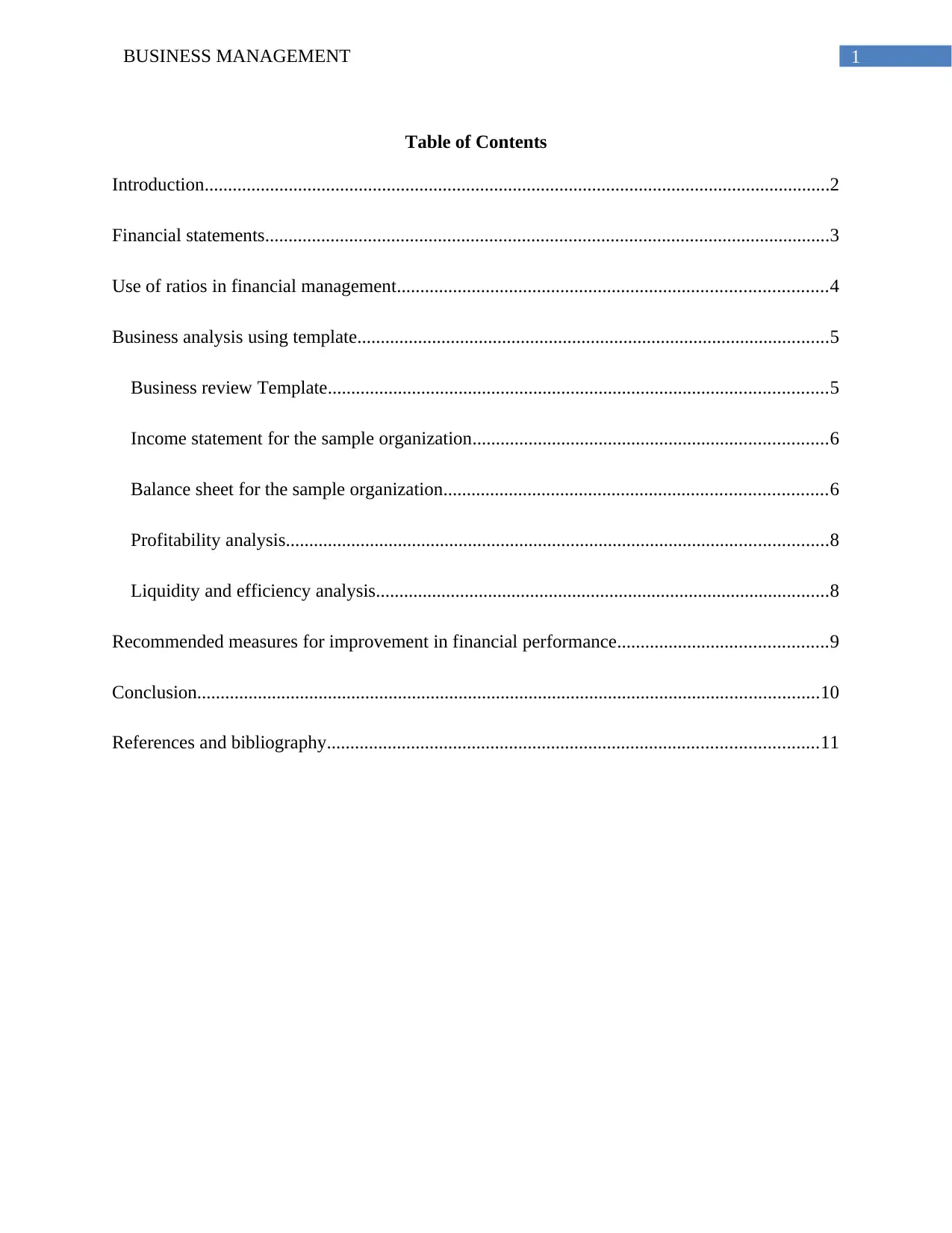
Table of Contents
Introduction......................................................................................................................................2
Financial statements.........................................................................................................................3
Use of ratios in financial management............................................................................................4
Business analysis using template.....................................................................................................5
Business review Template...........................................................................................................5
Income statement for the sample organization............................................................................6
Balance sheet for the sample organization..................................................................................6
Profitability analysis....................................................................................................................8
Liquidity and efficiency analysis.................................................................................................8
Recommended measures for improvement in financial performance.............................................9
Conclusion.....................................................................................................................................10
References and bibliography.........................................................................................................11
Table of Contents
Introduction......................................................................................................................................2
Financial statements.........................................................................................................................3
Use of ratios in financial management............................................................................................4
Business analysis using template.....................................................................................................5
Business review Template...........................................................................................................5
Income statement for the sample organization............................................................................6
Balance sheet for the sample organization..................................................................................6
Profitability analysis....................................................................................................................8
Liquidity and efficiency analysis.................................................................................................8
Recommended measures for improvement in financial performance.............................................9
Conclusion.....................................................................................................................................10
References and bibliography.........................................................................................................11
2BUSINESS MANAGEMENT
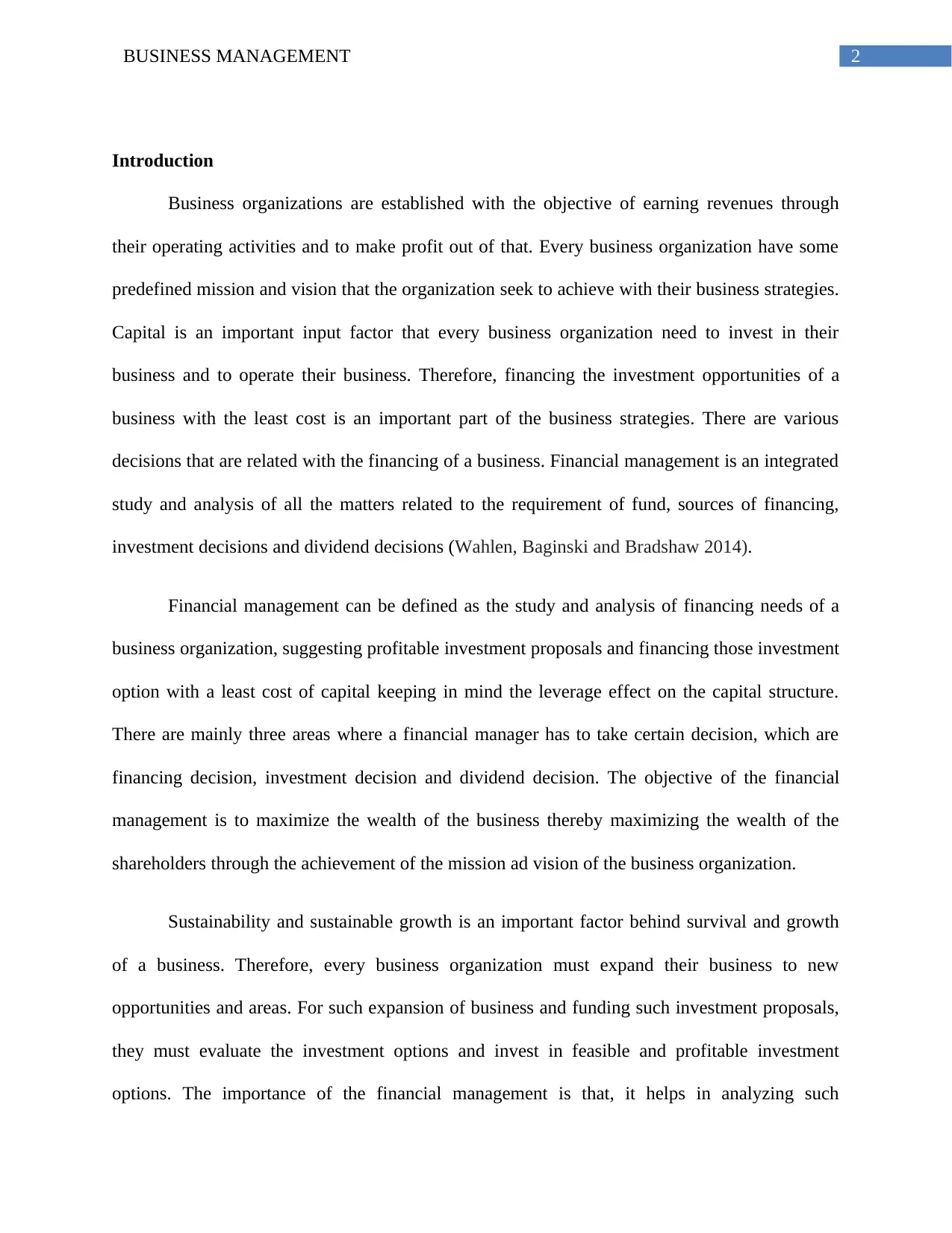
Introduction
Business organizations are established with the objective of earning revenues through
their operating activities and to make profit out of that. Every business organization have some
predefined mission and vision that the organization seek to achieve with their business strategies.
Capital is an important input factor that every business organization need to invest in their
business and to operate their business. Therefore, financing the investment opportunities of a
business with the least cost is an important part of the business strategies. There are various
decisions that are related with the financing of a business. Financial management is an integrated
study and analysis of all the matters related to the requirement of fund, sources of financing,
investment decisions and dividend decisions (Wahlen, Baginski and Bradshaw 2014).
Financial management can be defined as the study and analysis of financing needs of a
business organization, suggesting profitable investment proposals and financing those investment
option with a least cost of capital keeping in mind the leverage effect on the capital structure.
There are mainly three areas where a financial manager has to take certain decision, which are
financing decision, investment decision and dividend decision. The objective of the financial
management is to maximize the wealth of the business thereby maximizing the wealth of the
shareholders through the achievement of the mission ad vision of the business organization.
Sustainability and sustainable growth is an important factor behind survival and growth
of a business. Therefore, every business organization must expand their business to new
opportunities and areas. For such expansion of business and funding such investment proposals,
they must evaluate the investment options and invest in feasible and profitable investment
options. The importance of the financial management is that, it helps in analyzing such
Introduction
Business organizations are established with the objective of earning revenues through
their operating activities and to make profit out of that. Every business organization have some
predefined mission and vision that the organization seek to achieve with their business strategies.
Capital is an important input factor that every business organization need to invest in their
business and to operate their business. Therefore, financing the investment opportunities of a
business with the least cost is an important part of the business strategies. There are various
decisions that are related with the financing of a business. Financial management is an integrated
study and analysis of all the matters related to the requirement of fund, sources of financing,
investment decisions and dividend decisions (Wahlen, Baginski and Bradshaw 2014).
Financial management can be defined as the study and analysis of financing needs of a
business organization, suggesting profitable investment proposals and financing those investment
option with a least cost of capital keeping in mind the leverage effect on the capital structure.
There are mainly three areas where a financial manager has to take certain decision, which are
financing decision, investment decision and dividend decision. The objective of the financial
management is to maximize the wealth of the business thereby maximizing the wealth of the
shareholders through the achievement of the mission ad vision of the business organization.
Sustainability and sustainable growth is an important factor behind survival and growth
of a business. Therefore, every business organization must expand their business to new
opportunities and areas. For such expansion of business and funding such investment proposals,
they must evaluate the investment options and invest in feasible and profitable investment
options. The importance of the financial management is that, it helps in analyzing such
⊘ This is a preview!⊘
Do you want full access?
Subscribe today to unlock all pages.

Trusted by 1+ million students worldwide
3BUSINESS MANAGEMENT
investment options and help in most feasible investment opportunities. It also helps in selecting
the optimal capital structure which will minimize the overall cost of capital and to maximize the
shareholders wealth. Therefore, the importance of the financial management can be well noticed
in building business strategies, making investment plans and financing those investment
opportunities.
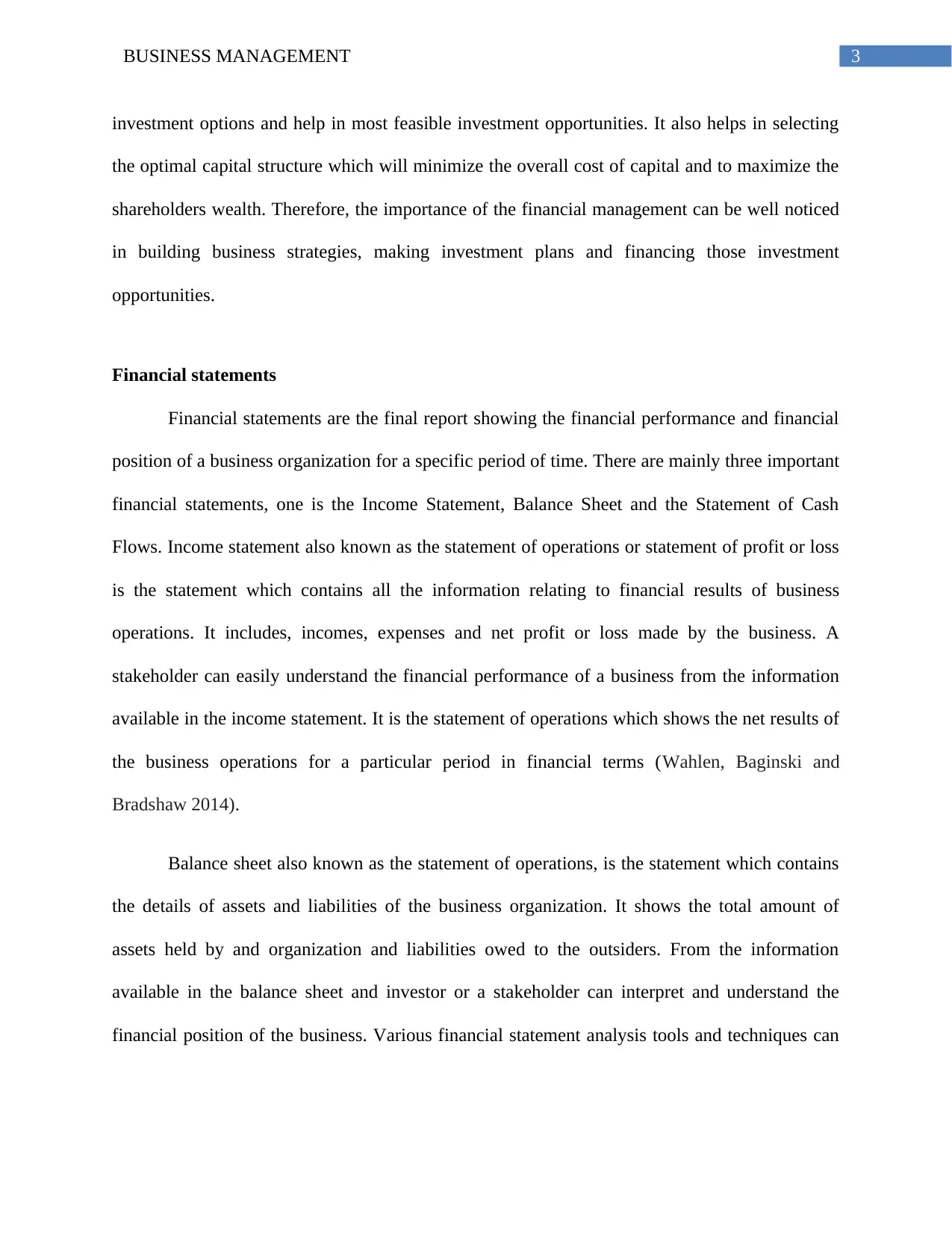
Financial statements
Financial statements are the final report showing the financial performance and financial
position of a business organization for a specific period of time. There are mainly three important
financial statements, one is the Income Statement, Balance Sheet and the Statement of Cash
Flows. Income statement also known as the statement of operations or statement of profit or loss
is the statement which contains all the information relating to financial results of business
operations. It includes, incomes, expenses and net profit or loss made by the business. A
stakeholder can easily understand the financial performance of a business from the information
available in the income statement. It is the statement of operations which shows the net results of
the business operations for a particular period in financial terms (Wahlen, Baginski and
Bradshaw 2014).
Balance sheet also known as the statement of operations, is the statement which contains
the details of assets and liabilities of the business organization. It shows the total amount of
assets held by and organization and liabilities owed to the outsiders. From the information
available in the balance sheet and investor or a stakeholder can interpret and understand the
financial position of the business. Various financial statement analysis tools and techniques can
investment options and help in most feasible investment opportunities. It also helps in selecting
the optimal capital structure which will minimize the overall cost of capital and to maximize the
shareholders wealth. Therefore, the importance of the financial management can be well noticed
in building business strategies, making investment plans and financing those investment
opportunities.
Financial statements
Financial statements are the final report showing the financial performance and financial
position of a business organization for a specific period of time. There are mainly three important
financial statements, one is the Income Statement, Balance Sheet and the Statement of Cash
Flows. Income statement also known as the statement of operations or statement of profit or loss
is the statement which contains all the information relating to financial results of business
operations. It includes, incomes, expenses and net profit or loss made by the business. A
stakeholder can easily understand the financial performance of a business from the information
available in the income statement. It is the statement of operations which shows the net results of
the business operations for a particular period in financial terms (Wahlen, Baginski and
Bradshaw 2014).
Balance sheet also known as the statement of operations, is the statement which contains
the details of assets and liabilities of the business organization. It shows the total amount of
assets held by and organization and liabilities owed to the outsiders. From the information
available in the balance sheet and investor or a stakeholder can interpret and understand the
financial position of the business. Various financial statement analysis tools and techniques can
Paraphrase This Document
Need a fresh take? Get an instant paraphrase of this document with our AI Paraphraser
4BUSINESS MANAGEMENT
be applied to analyze the financial position of the business and to make various decision related
with the business based on such analysis.
Statement of cash flow is another important statement which shows the inflows and
outflows of cash for a given period of time. It helps in understanding the cash management
policies and the cash position of a business organization. In the statement of cash flow, all the
inflows and outflows of cash are shown under three different heads, cash flow from operating
activities, cash flow from investing activities and cash flow from financing activities. Hence,
information available in the statement of cash flow can help in understanding the cash
conversion cycle, cash management efficiency and cash profit of the business, based on such
information investors and suppliers can make various important business decisions (Wahlen,
Baginski and Bradshaw 2014).
Another important financial statement that helps in understanding the movement in
equity is known as the statement of changes in equity. It shows the increase or decrease in total
equity of a company for an accounting year and any other changes and impact on the total equity
of the company. Notes to the financial statement also plays an important role in analyzing and
interpreting the financial statements as it shows detail calculations supported with the respective
accounting policies and principles.
Use of ratios in financial management
Ratio is the mathematical comparison of two figures. Financial ratios are some ratios
calculated based on the information provided in the financial statement of a company. Financial
ratio includes liquidity ratio, activity ratio, debt ratio, profitability ratio and market ratios. As the
main objective of the financial management is to mage the financial aspect of the business with
be applied to analyze the financial position of the business and to make various decision related
with the business based on such analysis.
Statement of cash flow is another important statement which shows the inflows and
outflows of cash for a given period of time. It helps in understanding the cash management
policies and the cash position of a business organization. In the statement of cash flow, all the
inflows and outflows of cash are shown under three different heads, cash flow from operating
activities, cash flow from investing activities and cash flow from financing activities. Hence,
information available in the statement of cash flow can help in understanding the cash
conversion cycle, cash management efficiency and cash profit of the business, based on such
information investors and suppliers can make various important business decisions (Wahlen,
Baginski and Bradshaw 2014).
Another important financial statement that helps in understanding the movement in
equity is known as the statement of changes in equity. It shows the increase or decrease in total
equity of a company for an accounting year and any other changes and impact on the total equity
of the company. Notes to the financial statement also plays an important role in analyzing and
interpreting the financial statements as it shows detail calculations supported with the respective
accounting policies and principles.
Use of ratios in financial management
Ratio is the mathematical comparison of two figures. Financial ratios are some ratios
calculated based on the information provided in the financial statement of a company. Financial
ratio includes liquidity ratio, activity ratio, debt ratio, profitability ratio and market ratios. As the
main objective of the financial management is to mage the financial aspect of the business with
5BUSINESS MANAGEMENT
efficiency to achieve the overall goals of the organization, ratio analysis can help a financial
manager to understand the current financial position of the business and to find the areas which
need improvement and accordingly to make financial decision. Such as, from the debt ratio the
financial manager can understand the current leverage in the capital structure of the company and
accordingly they can make such financing decision which aims at minimizing the overall cost of
capital and can take the benefits of the financial leverage in the capital structure. Hence, financial
ratios play and important role in financial management to help the financial manager to make
various important business strategies and decisions.
Business analysis using template
Business review Template
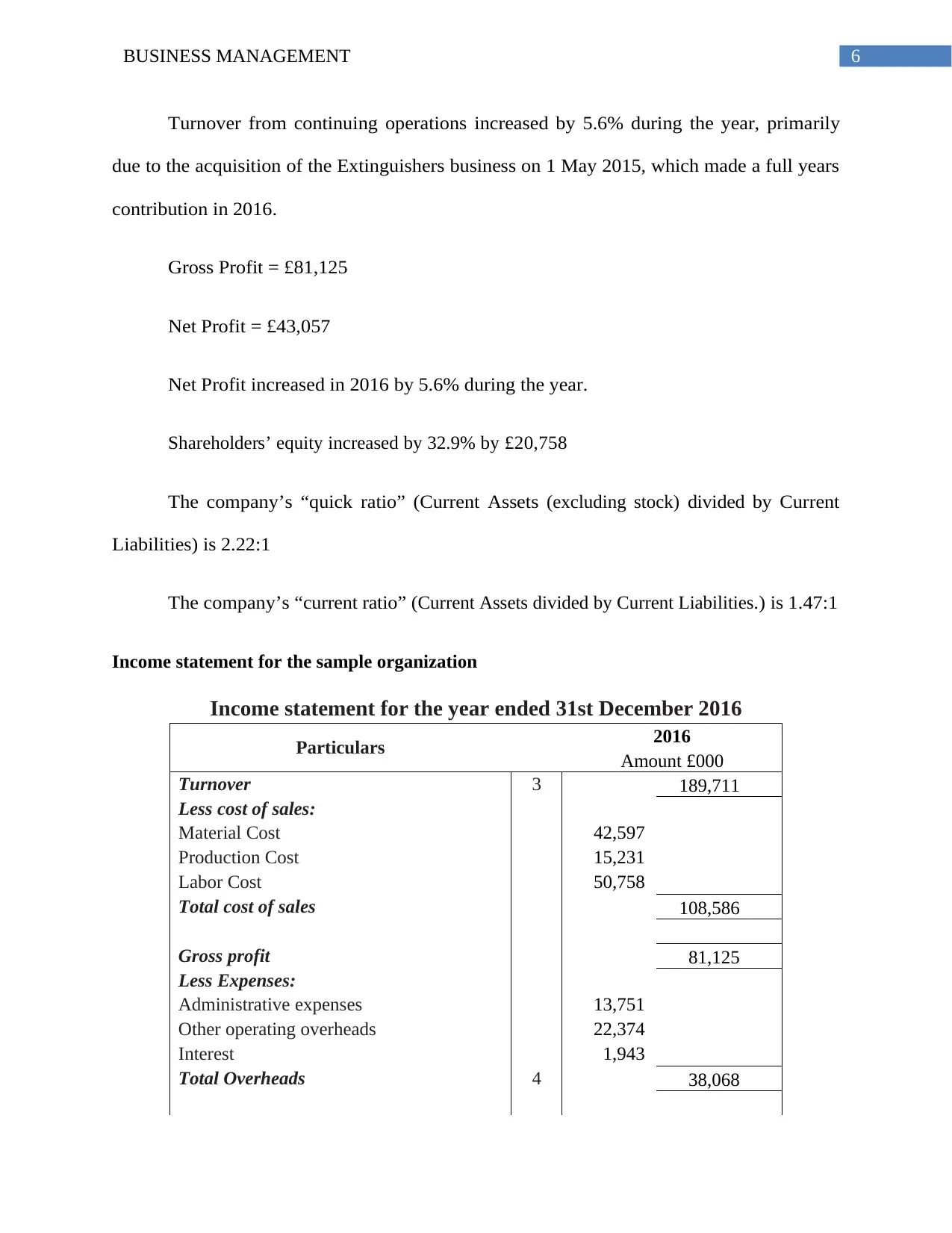
The Net Profit for the year 2016, is £43,057 (2015: £18,987,000).
The Company’s key financial and other performance indicators during the year were as
follows:
efficiency to achieve the overall goals of the organization, ratio analysis can help a financial
manager to understand the current financial position of the business and to find the areas which
need improvement and accordingly to make financial decision. Such as, from the debt ratio the
financial manager can understand the current leverage in the capital structure of the company and
accordingly they can make such financing decision which aims at minimizing the overall cost of
capital and can take the benefits of the financial leverage in the capital structure. Hence, financial
ratios play and important role in financial management to help the financial manager to make
various important business strategies and decisions.
Business analysis using template
Business review Template
The Net Profit for the year 2016, is £43,057 (2015: £18,987,000).
The Company’s key financial and other performance indicators during the year were as
follows:
⊘ This is a preview!⊘
Do you want full access?
Subscribe today to unlock all pages.
Trusted by 1+ million students worldwide
6BUSINESS MANAGEMENT
Turnover from continuing operations increased by 5.6% during the year, primarily
due to the acquisition of the Extinguishers business on 1 May 2015, which made a full years
contribution in 2016.
Gross Profit = £81,125
Net Profit = £43,057
Net Profit increased in 2016 by 5.6% during the year.
Shareholders’ equity increased by 32.9% by £20,758
The company’s “quick ratio” (Current Assets (excluding stock) divided by Current
Liabilities) is 2.22:1
The company’s “current ratio” (Current Assets divided by Current Liabilities. ) is 1.47:1
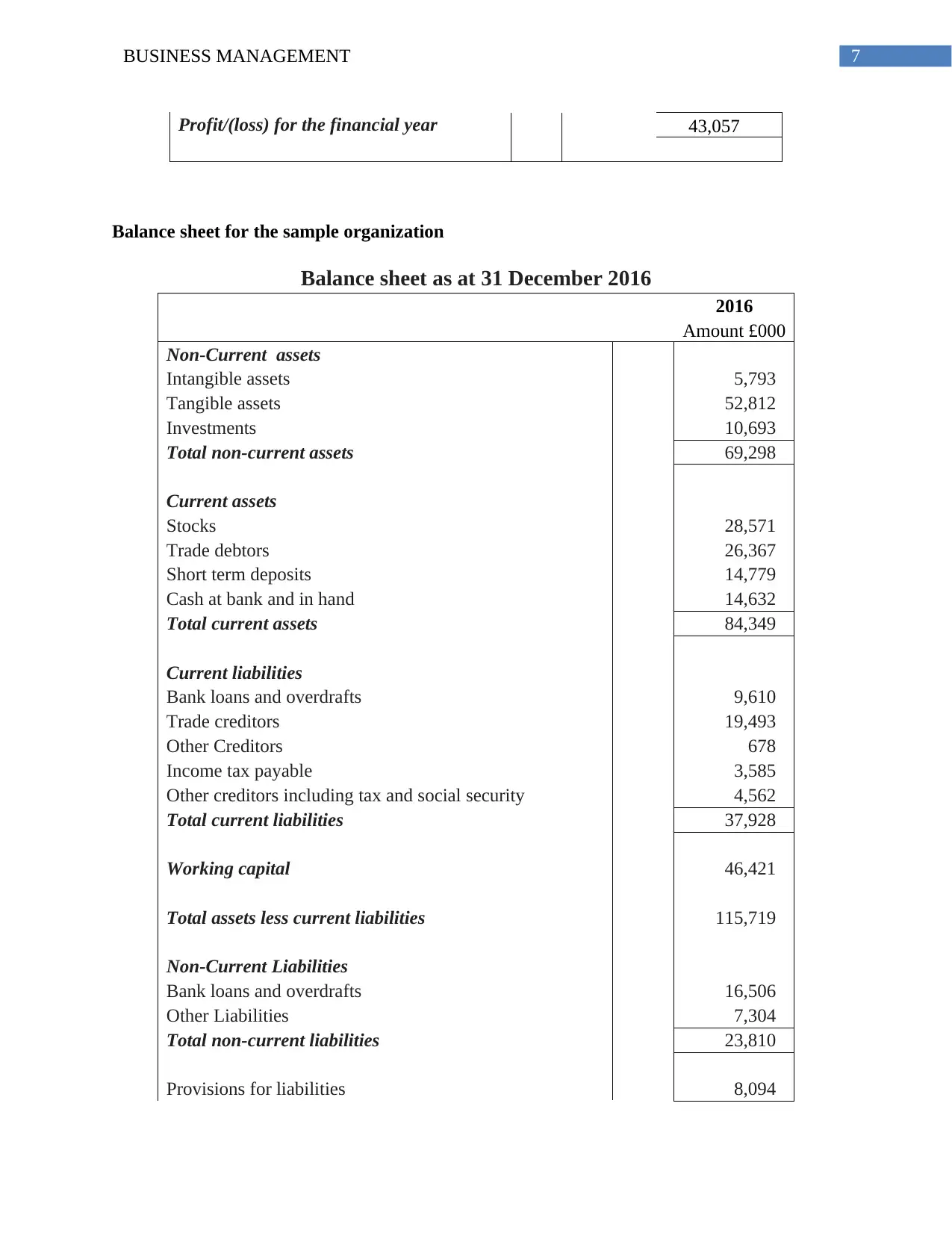
Income statement for the sample organization
Income statement for the year ended 31st December 2016
Particulars 2016
Amount £000
Turnover 3 189,711
Less cost of sales:
Material Cost 42,597
Production Cost 15,231
Labor Cost 50,758
Total cost of sales 108,586
Gross profit 81,125
Less Expenses:
Administrative expenses 13,751
Other operating overheads 22,374
Interest 1,943
Total Overheads 4 38,068
Turnover from continuing operations increased by 5.6% during the year, primarily
due to the acquisition of the Extinguishers business on 1 May 2015, which made a full years
contribution in 2016.
Gross Profit = £81,125
Net Profit = £43,057
Net Profit increased in 2016 by 5.6% during the year.
Shareholders’ equity increased by 32.9% by £20,758
The company’s “quick ratio” (Current Assets (excluding stock) divided by Current
Liabilities) is 2.22:1
The company’s “current ratio” (Current Assets divided by Current Liabilities. ) is 1.47:1
Income statement for the sample organization
Income statement for the year ended 31st December 2016
Particulars 2016
Amount £000
Turnover 3 189,711
Less cost of sales:
Material Cost 42,597
Production Cost 15,231
Labor Cost 50,758
Total cost of sales 108,586
Gross profit 81,125
Less Expenses:
Administrative expenses 13,751
Other operating overheads 22,374
Interest 1,943
Total Overheads 4 38,068
Paraphrase This Document
Need a fresh take? Get an instant paraphrase of this document with our AI Paraphraser
7BUSINESS MANAGEMENT
Profit/(loss) for the financial year 43,057
Balance sheet for the sample organization
Balance sheet as at 31 December 2016
2016
Amount £000
Non-Current assets
Intangible assets 5,793
Tangible assets 52,812
Investments 10,693
Total non-current assets 69,298
Current assets
Stocks 28,571
Trade debtors 26,367
Short term deposits 14,779
Cash at bank and in hand 14,632
Total current assets 84,349
Current liabilities
Bank loans and overdrafts 9,610
Trade creditors 19,493
Other Creditors 678
Income tax payable 3,585
Other creditors including tax and social security 4,562
Total current liabilities 37,928
Working capital 46,421
Total assets less current liabilities 115,719
Non-Current Liabilities
Bank loans and overdrafts 16,506
Other Liabilities 7,304
Total non-current liabilities 23,810
Provisions for liabilities 8,094
Profit/(loss) for the financial year 43,057
Balance sheet for the sample organization
Balance sheet as at 31 December 2016
2016
Amount £000
Non-Current assets
Intangible assets 5,793
Tangible assets 52,812
Investments 10,693
Total non-current assets 69,298
Current assets
Stocks 28,571
Trade debtors 26,367
Short term deposits 14,779
Cash at bank and in hand 14,632
Total current assets 84,349
Current liabilities
Bank loans and overdrafts 9,610
Trade creditors 19,493
Other Creditors 678
Income tax payable 3,585
Other creditors including tax and social security 4,562
Total current liabilities 37,928
Working capital 46,421
Total assets less current liabilities 115,719
Non-Current Liabilities
Bank loans and overdrafts 16,506
Other Liabilities 7,304
Total non-current liabilities 23,810
Provisions for liabilities 8,094
8BUSINESS MANAGEMENT
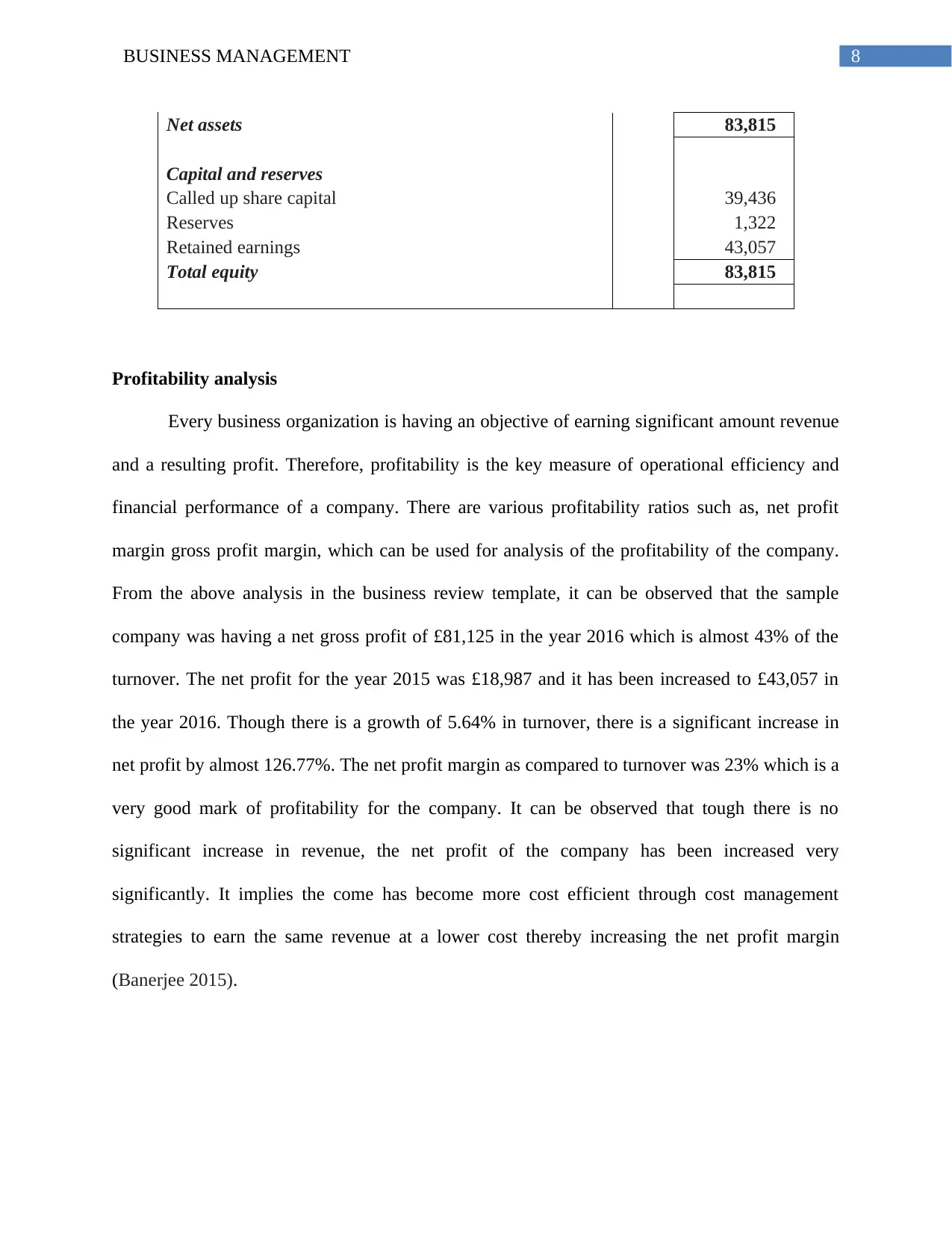
Net assets 83,815
Capital and reserves
Called up share capital 39,436
Reserves 1,322
Retained earnings 43,057
Total equity 83,815
Profitability analysis
Every business organization is having an objective of earning significant amount revenue
and a resulting profit. Therefore, profitability is the key measure of operational efficiency and
financial performance of a company. There are various profitability ratios such as, net profit
margin gross profit margin, which can be used for analysis of the profitability of the company.
From the above analysis in the business review template, it can be observed that the sample
company was having a net gross profit of £81,125 in the year 2016 which is almost 43% of the
turnover. The net profit for the year 2015 was £18,987 and it has been increased to £43,057 in
the year 2016. Though there is a growth of 5.64% in turnover, there is a significant increase in
net profit by almost 126.77%. The net profit margin as compared to turnover was 23% which is a
very good mark of profitability for the company. It can be observed that tough there is no
significant increase in revenue, the net profit of the company has been increased very
significantly. It implies the come has become more cost efficient through cost management
strategies to earn the same revenue at a lower cost thereby increasing the net profit margin
(Banerjee 2015).
Net assets 83,815
Capital and reserves
Called up share capital 39,436
Reserves 1,322
Retained earnings 43,057
Total equity 83,815
Profitability analysis
Every business organization is having an objective of earning significant amount revenue
and a resulting profit. Therefore, profitability is the key measure of operational efficiency and
financial performance of a company. There are various profitability ratios such as, net profit
margin gross profit margin, which can be used for analysis of the profitability of the company.
From the above analysis in the business review template, it can be observed that the sample
company was having a net gross profit of £81,125 in the year 2016 which is almost 43% of the
turnover. The net profit for the year 2015 was £18,987 and it has been increased to £43,057 in
the year 2016. Though there is a growth of 5.64% in turnover, there is a significant increase in
net profit by almost 126.77%. The net profit margin as compared to turnover was 23% which is a
very good mark of profitability for the company. It can be observed that tough there is no
significant increase in revenue, the net profit of the company has been increased very
significantly. It implies the come has become more cost efficient through cost management
strategies to earn the same revenue at a lower cost thereby increasing the net profit margin
(Banerjee 2015).
⊘ This is a preview!⊘
Do you want full access?
Subscribe today to unlock all pages.
Trusted by 1+ million students worldwide
9BUSINESS MANAGEMENT
Liquidity and efficiency analysis
Liquidity is the measure of ability of a business organization to pay off the short term
obligations and payables using the current assets. Current ratio and the Quick ratio can be used
for measuring the liquidity of the company. For the given case study, the current ratio is 2.22:1.
The standard of the current ratio is 2:1, while the current ratio for the given company in the case
study is higher than the standard current ratio. Liquid ratio or the quick ratio is another measure
of the liquidity of the company. It measures the ability of the company to pay off its current
obligations with the readily available assets. The standard for the quick ratio is 1:1 while the
quick ratio for the given company is 1.47:1. Therefore, it can be concluded that the company is
having a good liquidity in terms of current ratio and the quick ratio, though there is a decrease in
liquidity of the company for the year 2016 as compared to the previous year (Puri 2014).
Efficiency of a company in managing the resources or fixed assets can be measured by
the return on equity or return on assets. The net impact of efficient management of resources will
result in an increase in the net assets of total equity of the company. It can be observed from the
above analysis that the total equity of the company has been increased by £20,758 which is
almost 32.9% of the last year’s total equity. Therefore, it can be commented that the company
was able to manage their resources and assets with an objective of shareholders wealth
maximization and in reality they have achieved the same with a significant increase in
shareholders’ equity (Karadag 2015).
It can further be observed that the customer satisfaction score of the company has been
increased from 4.10 to 4.50 which is almost an increase of 9.76%. It implies that the company
has become more efficient in delivering quality products to the customers and to retain their
customer. On the other hand, in terms of employee retention also a significant increase can be
Liquidity and efficiency analysis
Liquidity is the measure of ability of a business organization to pay off the short term
obligations and payables using the current assets. Current ratio and the Quick ratio can be used
for measuring the liquidity of the company. For the given case study, the current ratio is 2.22:1.
The standard of the current ratio is 2:1, while the current ratio for the given company in the case
study is higher than the standard current ratio. Liquid ratio or the quick ratio is another measure
of the liquidity of the company. It measures the ability of the company to pay off its current
obligations with the readily available assets. The standard for the quick ratio is 1:1 while the
quick ratio for the given company is 1.47:1. Therefore, it can be concluded that the company is
having a good liquidity in terms of current ratio and the quick ratio, though there is a decrease in
liquidity of the company for the year 2016 as compared to the previous year (Puri 2014).
Efficiency of a company in managing the resources or fixed assets can be measured by
the return on equity or return on assets. The net impact of efficient management of resources will
result in an increase in the net assets of total equity of the company. It can be observed from the
above analysis that the total equity of the company has been increased by £20,758 which is
almost 32.9% of the last year’s total equity. Therefore, it can be commented that the company
was able to manage their resources and assets with an objective of shareholders wealth
maximization and in reality they have achieved the same with a significant increase in
shareholders’ equity (Karadag 2015).
It can further be observed that the customer satisfaction score of the company has been
increased from 4.10 to 4.50 which is almost an increase of 9.76%. It implies that the company
has become more efficient in delivering quality products to the customers and to retain their
customer. On the other hand, in terms of employee retention also a significant increase can be
Paraphrase This Document
Need a fresh take? Get an instant paraphrase of this document with our AI Paraphraser
10BUSINESS MANAGEMENT
observed. Therefore, it can be concluded that, the company showed a good mark in terms of
efficiency in all the aspects (Banerjee 2015).
Recommended measures for improvement in financial performance
Financial performance is the result of operating activities of a business organization in
financial terms. It is measured by net profit or net loss generated from the operating activities of
a business organization. From the 2016 income statement of the sample company as given in the
case study, it can be observed that the company is having a marginal increase in the turnover
though the customer satisfaction has been increased in the same direction. A significant increase
in net profit margin can also be observed. Therefore, it can be realized that the company is
having a good cost management policy and an improved quality control strategies which resulted
into improved customer satisfaction (Bekaert and Hodrick 2017).
Though there is an increase in customer satisfaction and net profit margin, there are
ample scope of improvement and increase in revenue of the company. As the shareholders equity
or the net assets of the business has been increased significantly, the revenue of the company has
not yet been increased with the same pace. Therefore, it can be recommended to investment on
the marketing strategies and build such promotional and marketing strategies which will be
increasing the revenue of the company (Bekaert and Hodrick 2017).
On the other hand, though the liquidity is higher than the standard, there is a significant
decrease in liquidity as compared to the last year. Hence, it can be suggested for the company to
manage their current assets and resources more efficiently to improve their short term solvency
or liquidity (Banerjee 2015).
observed. Therefore, it can be concluded that, the company showed a good mark in terms of
efficiency in all the aspects (Banerjee 2015).
Recommended measures for improvement in financial performance
Financial performance is the result of operating activities of a business organization in
financial terms. It is measured by net profit or net loss generated from the operating activities of
a business organization. From the 2016 income statement of the sample company as given in the
case study, it can be observed that the company is having a marginal increase in the turnover
though the customer satisfaction has been increased in the same direction. A significant increase
in net profit margin can also be observed. Therefore, it can be realized that the company is
having a good cost management policy and an improved quality control strategies which resulted
into improved customer satisfaction (Bekaert and Hodrick 2017).
Though there is an increase in customer satisfaction and net profit margin, there are
ample scope of improvement and increase in revenue of the company. As the shareholders equity
or the net assets of the business has been increased significantly, the revenue of the company has
not yet been increased with the same pace. Therefore, it can be recommended to investment on
the marketing strategies and build such promotional and marketing strategies which will be
increasing the revenue of the company (Bekaert and Hodrick 2017).
On the other hand, though the liquidity is higher than the standard, there is a significant
decrease in liquidity as compared to the last year. Hence, it can be suggested for the company to
manage their current assets and resources more efficiently to improve their short term solvency
or liquidity (Banerjee 2015).
11BUSINESS MANAGEMENT
Conclusion
From the above discussion and analysis it can be concluded that, the financial
management is an important part of the business strategies which aims at maximizing the
shareholders wealth. Ratios or other financial statement analysis tools can help the financial
management to large extend in meeting the objective of the financial management. It helps in
identifying the areas which needs due care and improvement and corrective measures can be
taken for such improvement.
Conclusion
From the above discussion and analysis it can be concluded that, the financial
management is an important part of the business strategies which aims at maximizing the
shareholders wealth. Ratios or other financial statement analysis tools can help the financial
management to large extend in meeting the objective of the financial management. It helps in
identifying the areas which needs due care and improvement and corrective measures can be
taken for such improvement.
⊘ This is a preview!⊘
Do you want full access?
Subscribe today to unlock all pages.
Trusted by 1+ million students worldwide

1 out of 14


Related Documents


Your All-in-One AI-Powered Toolkit for Academic Success.
+13062052269
info@desklib.com
Available 24*7 on WhatsApp / Email
![[object Object]](/_next/static/media/star-bottom.7253800d.svg)
Unlock your academic potential
Copyright © 2020–2026 A2Z Services. All Rights Reserved. Developed and managed by ZUCOL.