Diploma of Finance and Mortgage Broking - Financial Services
VerifiedAdded on 2022/08/18
|24
|3757
|14
Homework Assignment
AI Summary
This document presents a detailed solution for a Diploma of Finance and Mortgage Broking assignment. It covers a range of topics, including the influence of external factors on interest rates, the role of financial services sectors like banking and corporate sectors, and the Australian Financial Complaints Authority (AFCA). The assignment explores communication strategies related to AFCA, the impact of the Comprehensive Credit Reporting (CCR), and the implications of credit representative appointments. It also addresses aspects such as ABN/ACN, GST, performance objectives, training requirements, and role-modeling within the finance and mortgage broking context. The document includes various tasks and questions providing a comprehensive overview of the financial services landscape, relevant legislation, and compliance requirements.
Running head: DIPLOMA OF FINANCE AND MORTGAGE BROKING
Diploma of Finance and Mortgage Broking
Name of the Student
Name of the University
Author Note
Diploma of Finance and Mortgage Broking
Name of the Student
Name of the University
Author Note

Paraphrase This Document
Need a fresh take? Get an instant paraphrase of this document with our AI Paraphraser
1DIPLOMA OF FINANCE AND MORTGAGE BROKING
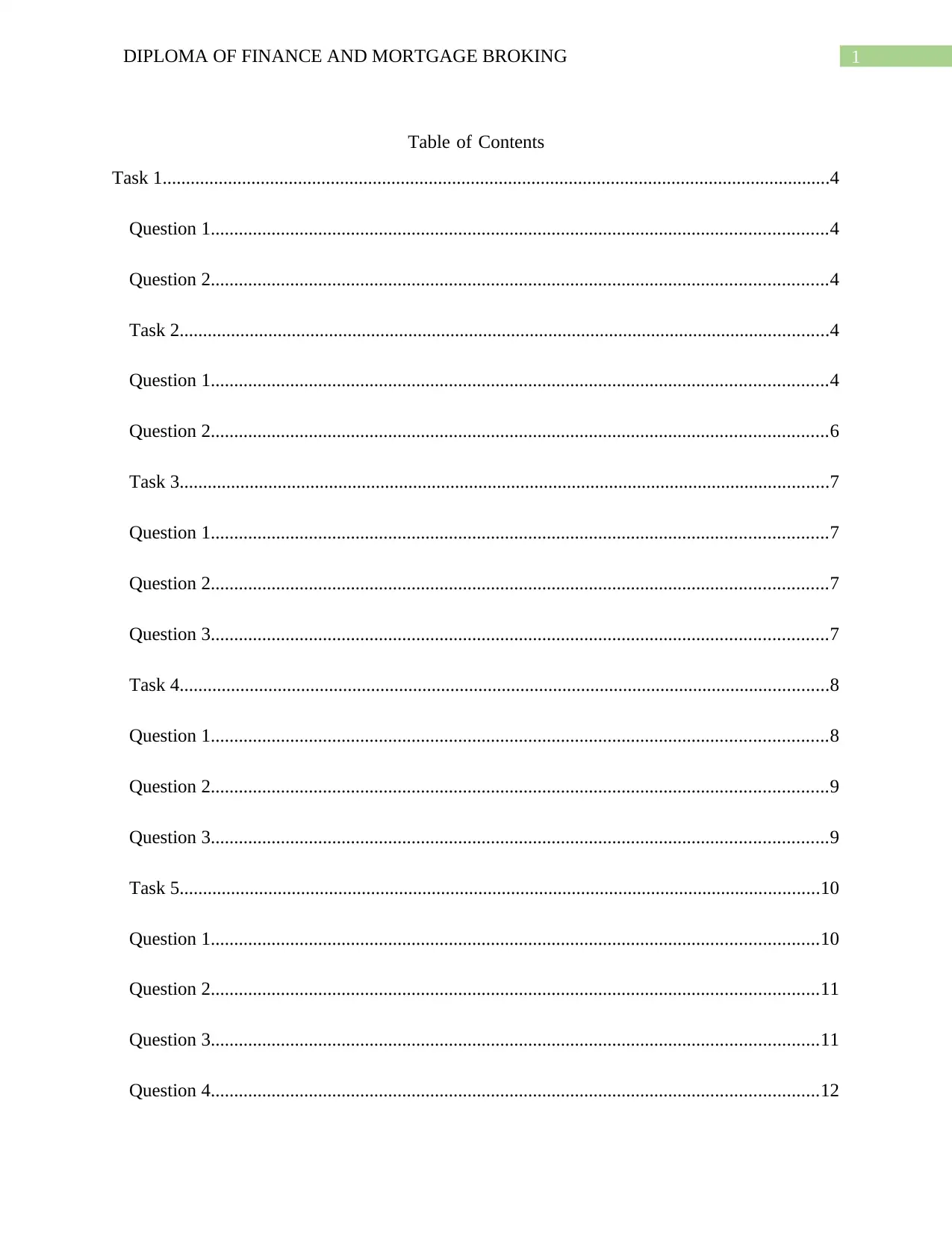
Table of Contents
Task 1...............................................................................................................................................4
Question 1....................................................................................................................................4
Question 2....................................................................................................................................4
Task 2...........................................................................................................................................4
Question 1....................................................................................................................................4
Question 2....................................................................................................................................6
Task 3...........................................................................................................................................7
Question 1....................................................................................................................................7
Question 2....................................................................................................................................7
Question 3....................................................................................................................................7
Task 4...........................................................................................................................................8
Question 1....................................................................................................................................8
Question 2....................................................................................................................................9
Question 3....................................................................................................................................9
Task 5.........................................................................................................................................10
Question 1..................................................................................................................................10
Question 2..................................................................................................................................11
Question 3..................................................................................................................................11
Question 4..................................................................................................................................12
Table of Contents
Task 1...............................................................................................................................................4
Question 1....................................................................................................................................4
Question 2....................................................................................................................................4
Task 2...........................................................................................................................................4
Question 1....................................................................................................................................4
Question 2....................................................................................................................................6
Task 3...........................................................................................................................................7
Question 1....................................................................................................................................7
Question 2....................................................................................................................................7
Question 3....................................................................................................................................7
Task 4...........................................................................................................................................8
Question 1....................................................................................................................................8
Question 2....................................................................................................................................9
Question 3....................................................................................................................................9
Task 5.........................................................................................................................................10
Question 1..................................................................................................................................10
Question 2..................................................................................................................................11
Question 3..................................................................................................................................11
Question 4..................................................................................................................................12
2DIPLOMA OF FINANCE AND MORTGAGE BROKING
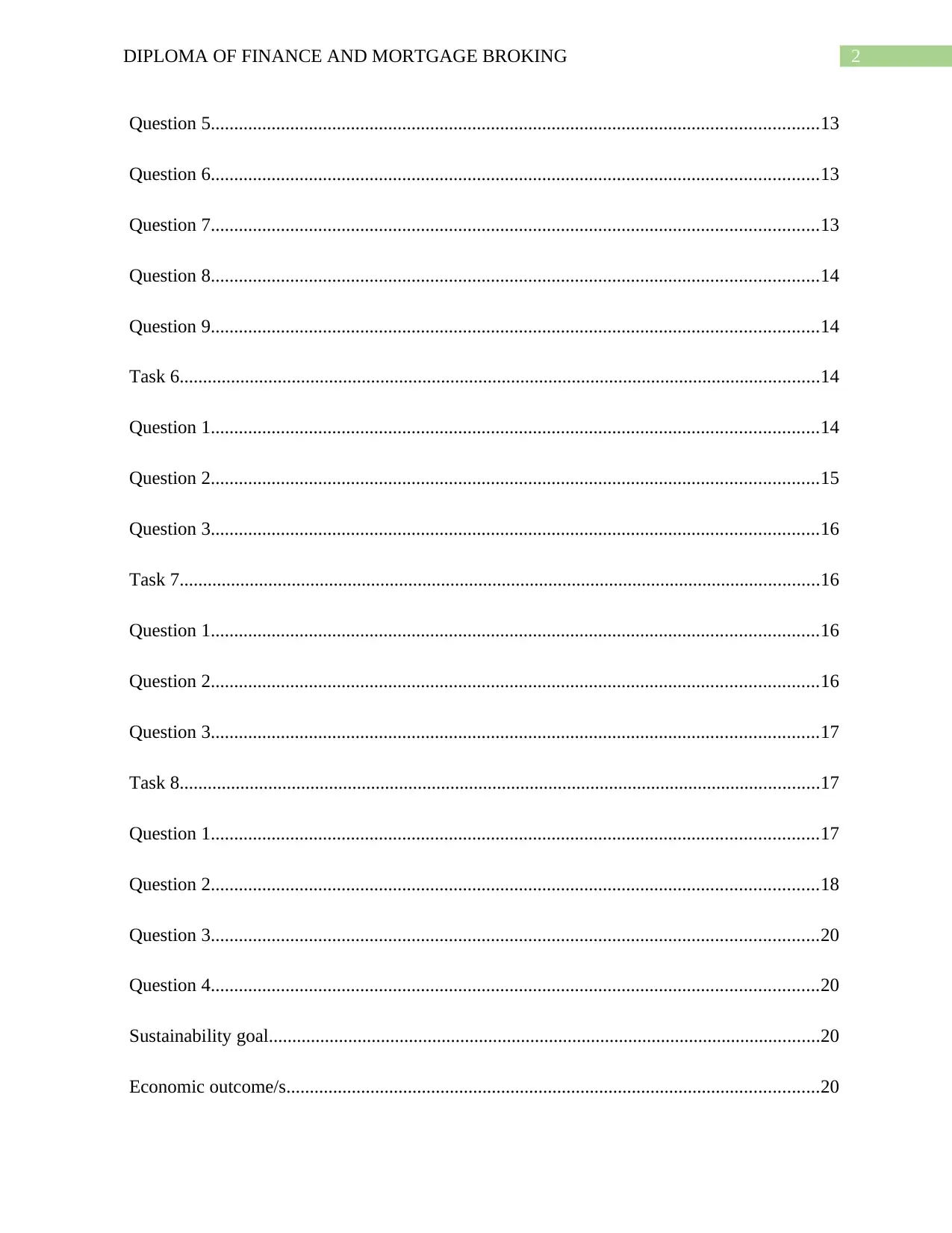
Question 5..................................................................................................................................13
Question 6..................................................................................................................................13
Question 7..................................................................................................................................13
Question 8..................................................................................................................................14
Question 9..................................................................................................................................14
Task 6.........................................................................................................................................14
Question 1..................................................................................................................................14
Question 2..................................................................................................................................15
Question 3..................................................................................................................................16
Task 7.........................................................................................................................................16
Question 1..................................................................................................................................16
Question 2..................................................................................................................................16
Question 3..................................................................................................................................17
Task 8.........................................................................................................................................17
Question 1..................................................................................................................................17
Question 2..................................................................................................................................18
Question 3..................................................................................................................................20
Question 4..................................................................................................................................20
Sustainability goal......................................................................................................................20
Economic outcome/s..................................................................................................................20
Question 5..................................................................................................................................13
Question 6..................................................................................................................................13
Question 7..................................................................................................................................13
Question 8..................................................................................................................................14
Question 9..................................................................................................................................14
Task 6.........................................................................................................................................14
Question 1..................................................................................................................................14
Question 2..................................................................................................................................15
Question 3..................................................................................................................................16
Task 7.........................................................................................................................................16
Question 1..................................................................................................................................16
Question 2..................................................................................................................................16
Question 3..................................................................................................................................17
Task 8.........................................................................................................................................17
Question 1..................................................................................................................................17
Question 2..................................................................................................................................18
Question 3..................................................................................................................................20
Question 4..................................................................................................................................20
Sustainability goal......................................................................................................................20
Economic outcome/s..................................................................................................................20
⊘ This is a preview!⊘
Do you want full access?
Subscribe today to unlock all pages.

Trusted by 1+ million students worldwide
3DIPLOMA OF FINANCE AND MORTGAGE BROKING
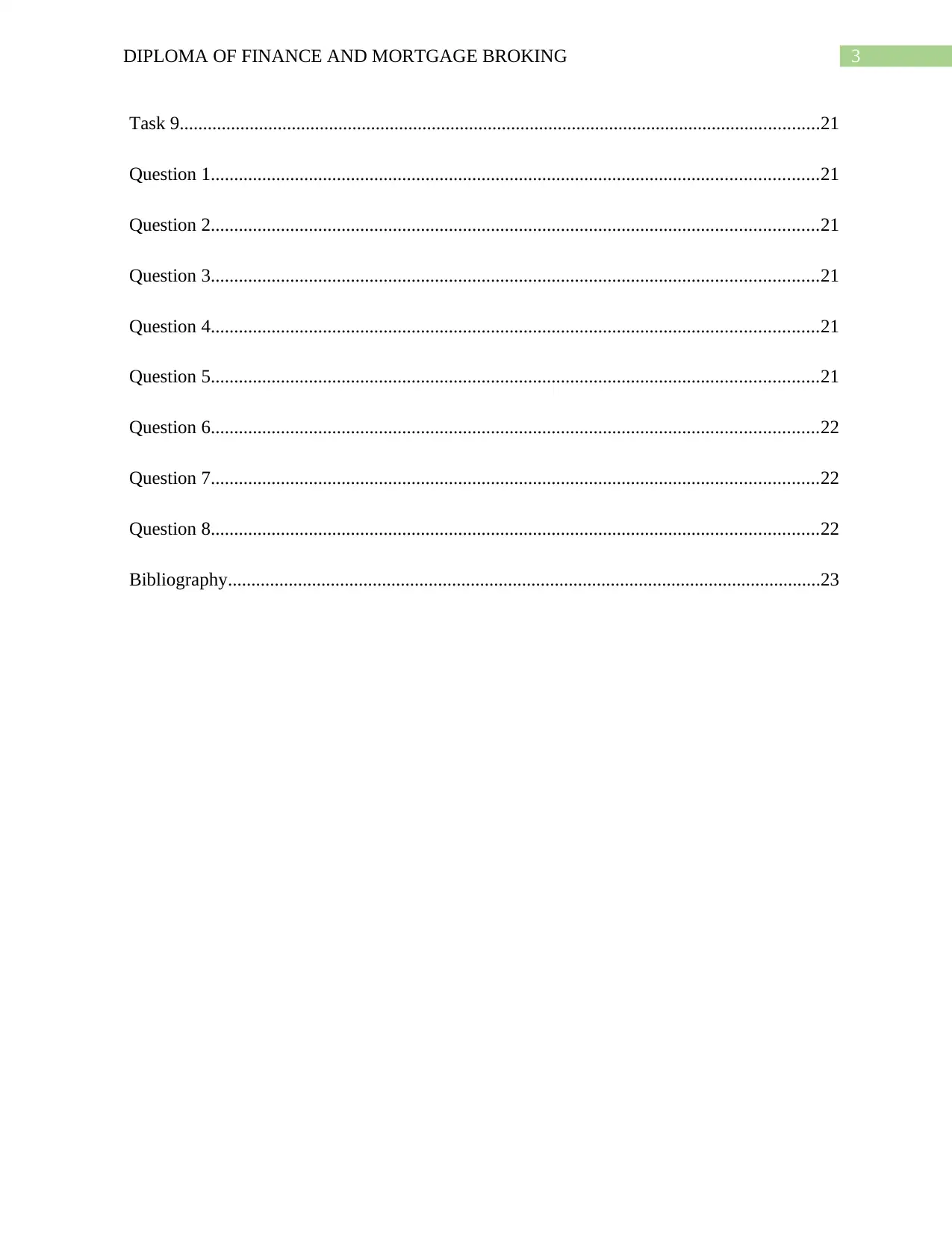
Task 9.........................................................................................................................................21
Question 1..................................................................................................................................21
Question 2..................................................................................................................................21
Question 3..................................................................................................................................21
Question 4..................................................................................................................................21
Question 5..................................................................................................................................21
Question 6..................................................................................................................................22
Question 7..................................................................................................................................22
Question 8..................................................................................................................................22
Bibliography...............................................................................................................................23
Task 9.........................................................................................................................................21
Question 1..................................................................................................................................21
Question 2..................................................................................................................................21
Question 3..................................................................................................................................21
Question 4..................................................................................................................................21
Question 5..................................................................................................................................21
Question 6..................................................................................................................................22
Question 7..................................................................................................................................22
Question 8..................................................................................................................................22
Bibliography...............................................................................................................................23
Paraphrase This Document
Need a fresh take? Get an instant paraphrase of this document with our AI Paraphraser
4DIPLOMA OF FINANCE AND MORTGAGE BROKING
Task 1
Question 1
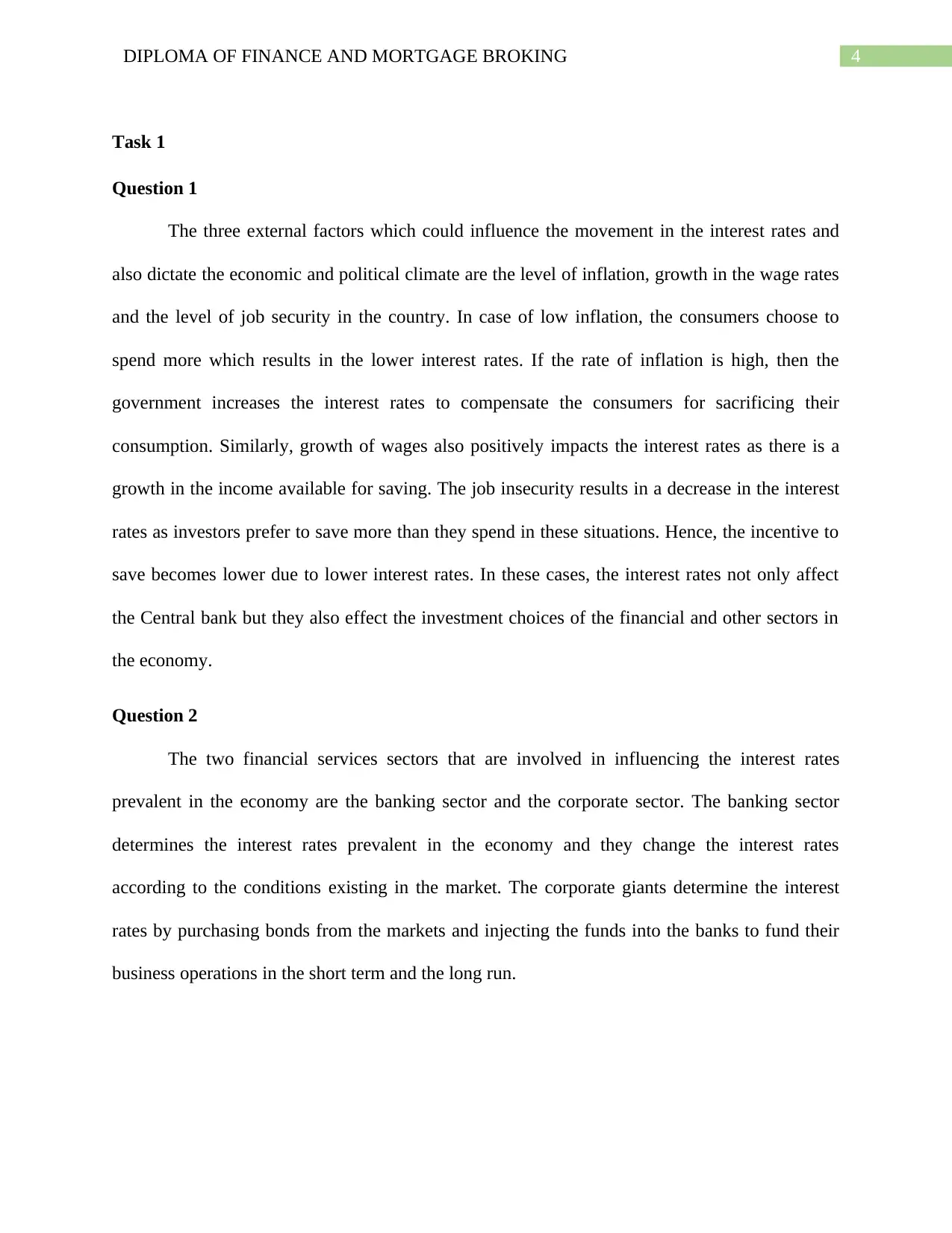
The three external factors which could influence the movement in the interest rates and
also dictate the economic and political climate are the level of inflation, growth in the wage rates
and the level of job security in the country. In case of low inflation, the consumers choose to
spend more which results in the lower interest rates. If the rate of inflation is high, then the
government increases the interest rates to compensate the consumers for sacrificing their
consumption. Similarly, growth of wages also positively impacts the interest rates as there is a
growth in the income available for saving. The job insecurity results in a decrease in the interest
rates as investors prefer to save more than they spend in these situations. Hence, the incentive to
save becomes lower due to lower interest rates. In these cases, the interest rates not only affect
the Central bank but they also effect the investment choices of the financial and other sectors in
the economy.
Question 2
The two financial services sectors that are involved in influencing the interest rates
prevalent in the economy are the banking sector and the corporate sector. The banking sector
determines the interest rates prevalent in the economy and they change the interest rates
according to the conditions existing in the market. The corporate giants determine the interest
rates by purchasing bonds from the markets and injecting the funds into the banks to fund their
business operations in the short term and the long run.
Task 1
Question 1
The three external factors which could influence the movement in the interest rates and
also dictate the economic and political climate are the level of inflation, growth in the wage rates
and the level of job security in the country. In case of low inflation, the consumers choose to
spend more which results in the lower interest rates. If the rate of inflation is high, then the
government increases the interest rates to compensate the consumers for sacrificing their
consumption. Similarly, growth of wages also positively impacts the interest rates as there is a
growth in the income available for saving. The job insecurity results in a decrease in the interest
rates as investors prefer to save more than they spend in these situations. Hence, the incentive to
save becomes lower due to lower interest rates. In these cases, the interest rates not only affect
the Central bank but they also effect the investment choices of the financial and other sectors in
the economy.
Question 2
The two financial services sectors that are involved in influencing the interest rates
prevalent in the economy are the banking sector and the corporate sector. The banking sector
determines the interest rates prevalent in the economy and they change the interest rates
according to the conditions existing in the market. The corporate giants determine the interest
rates by purchasing bonds from the markets and injecting the funds into the banks to fund their
business operations in the short term and the long run.
5DIPLOMA OF FINANCE AND MORTGAGE BROKING
Task 2
Question 1
Dear Colleagues,
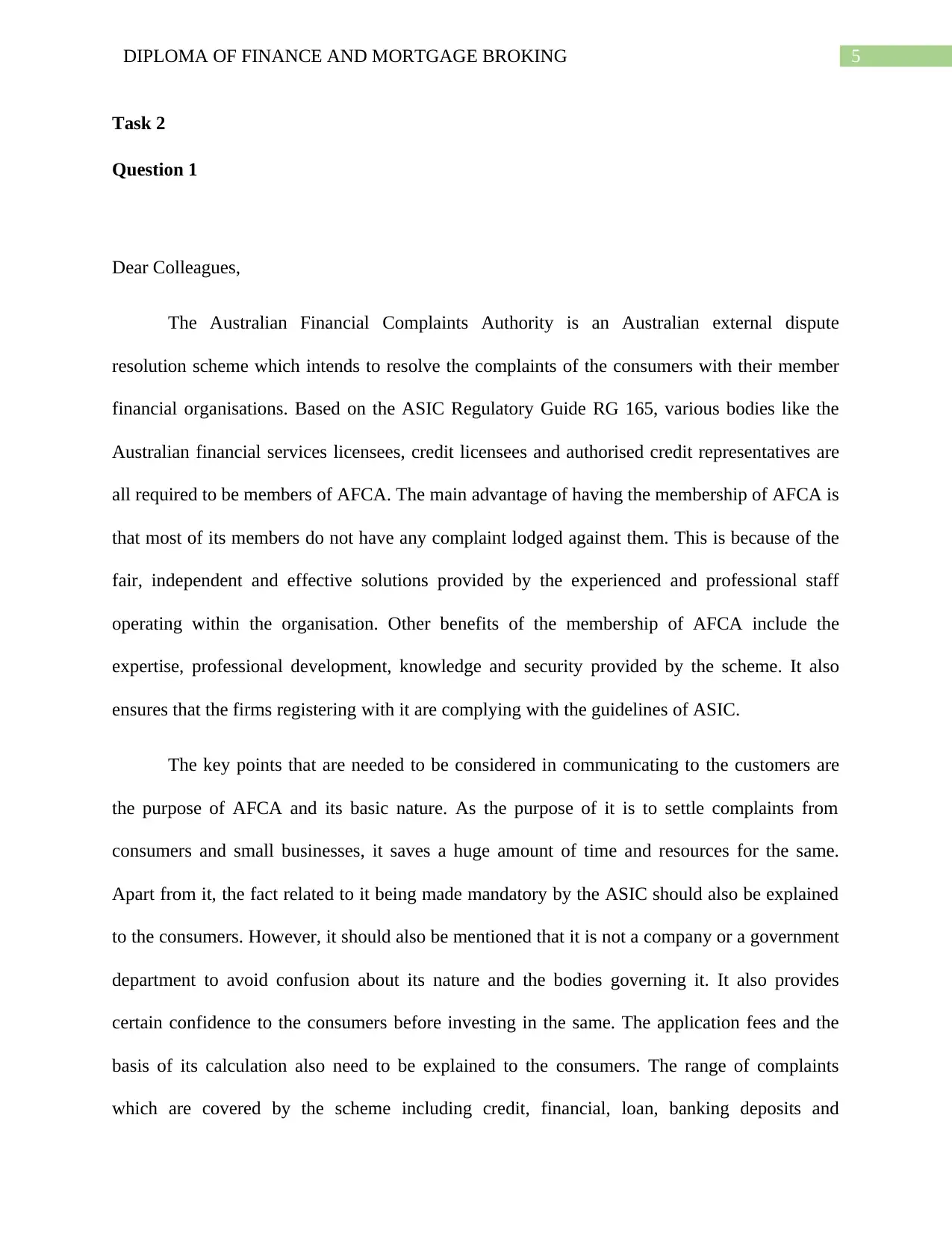
The Australian Financial Complaints Authority is an Australian external dispute
resolution scheme which intends to resolve the complaints of the consumers with their member
financial organisations. Based on the ASIC Regulatory Guide RG 165, various bodies like the
Australian financial services licensees, credit licensees and authorised credit representatives are
all required to be members of AFCA. The main advantage of having the membership of AFCA is
that most of its members do not have any complaint lodged against them. This is because of the
fair, independent and effective solutions provided by the experienced and professional staff
operating within the organisation. Other benefits of the membership of AFCA include the
expertise, professional development, knowledge and security provided by the scheme. It also
ensures that the firms registering with it are complying with the guidelines of ASIC.
The key points that are needed to be considered in communicating to the customers are
the purpose of AFCA and its basic nature. As the purpose of it is to settle complaints from
consumers and small businesses, it saves a huge amount of time and resources for the same.
Apart from it, the fact related to it being made mandatory by the ASIC should also be explained
to the consumers. However, it should also be mentioned that it is not a company or a government
department to avoid confusion about its nature and the bodies governing it. It also provides
certain confidence to the consumers before investing in the same. The application fees and the
basis of its calculation also need to be explained to the consumers. The range of complaints
which are covered by the scheme including credit, financial, loan, banking deposits and
Task 2
Question 1
Dear Colleagues,
The Australian Financial Complaints Authority is an Australian external dispute
resolution scheme which intends to resolve the complaints of the consumers with their member
financial organisations. Based on the ASIC Regulatory Guide RG 165, various bodies like the
Australian financial services licensees, credit licensees and authorised credit representatives are
all required to be members of AFCA. The main advantage of having the membership of AFCA is
that most of its members do not have any complaint lodged against them. This is because of the
fair, independent and effective solutions provided by the experienced and professional staff
operating within the organisation. Other benefits of the membership of AFCA include the
expertise, professional development, knowledge and security provided by the scheme. It also
ensures that the firms registering with it are complying with the guidelines of ASIC.
The key points that are needed to be considered in communicating to the customers are
the purpose of AFCA and its basic nature. As the purpose of it is to settle complaints from
consumers and small businesses, it saves a huge amount of time and resources for the same.
Apart from it, the fact related to it being made mandatory by the ASIC should also be explained
to the consumers. However, it should also be mentioned that it is not a company or a government
department to avoid confusion about its nature and the bodies governing it. It also provides
certain confidence to the consumers before investing in the same. The application fees and the
basis of its calculation also need to be explained to the consumers. The range of complaints
which are covered by the scheme including credit, financial, loan, banking deposits and
⊘ This is a preview!⊘
Do you want full access?
Subscribe today to unlock all pages.
Trusted by 1+ million students worldwide
6DIPLOMA OF FINANCE AND MORTGAGE BROKING
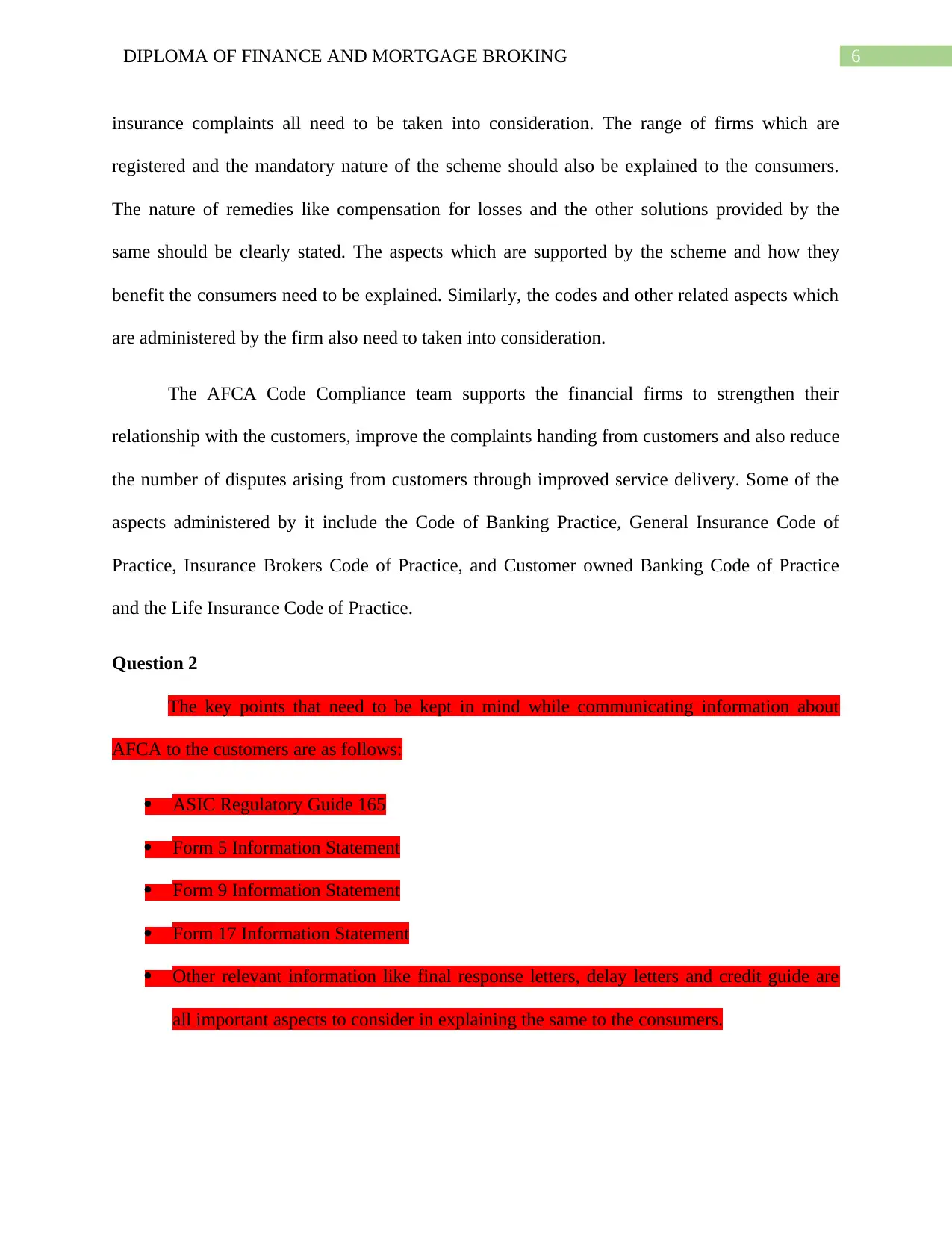
insurance complaints all need to be taken into consideration. The range of firms which are
registered and the mandatory nature of the scheme should also be explained to the consumers.
The nature of remedies like compensation for losses and the other solutions provided by the
same should be clearly stated. The aspects which are supported by the scheme and how they
benefit the consumers need to be explained. Similarly, the codes and other related aspects which
are administered by the firm also need to taken into consideration.
The AFCA Code Compliance team supports the financial firms to strengthen their
relationship with the customers, improve the complaints handing from customers and also reduce
the number of disputes arising from customers through improved service delivery. Some of the
aspects administered by it include the Code of Banking Practice, General Insurance Code of
Practice, Insurance Brokers Code of Practice, and Customer owned Banking Code of Practice
and the Life Insurance Code of Practice.
Question 2
The key points that need to be kept in mind while communicating information about
AFCA to the customers are as follows:
ASIC Regulatory Guide 165
Form 5 Information Statement
Form 9 Information Statement
Form 17 Information Statement
Other relevant information like final response letters, delay letters and credit guide are
all important aspects to consider in explaining the same to the consumers.
insurance complaints all need to be taken into consideration. The range of firms which are
registered and the mandatory nature of the scheme should also be explained to the consumers.
The nature of remedies like compensation for losses and the other solutions provided by the
same should be clearly stated. The aspects which are supported by the scheme and how they
benefit the consumers need to be explained. Similarly, the codes and other related aspects which
are administered by the firm also need to taken into consideration.
The AFCA Code Compliance team supports the financial firms to strengthen their
relationship with the customers, improve the complaints handing from customers and also reduce
the number of disputes arising from customers through improved service delivery. Some of the
aspects administered by it include the Code of Banking Practice, General Insurance Code of
Practice, Insurance Brokers Code of Practice, and Customer owned Banking Code of Practice
and the Life Insurance Code of Practice.
Question 2
The key points that need to be kept in mind while communicating information about
AFCA to the customers are as follows:
ASIC Regulatory Guide 165
Form 5 Information Statement
Form 9 Information Statement
Form 17 Information Statement
Other relevant information like final response letters, delay letters and credit guide are
all important aspects to consider in explaining the same to the consumers.
Paraphrase This Document
Need a fresh take? Get an instant paraphrase of this document with our AI Paraphraser
7DIPLOMA OF FINANCE AND MORTGAGE BROKING
Task 3
Question 1
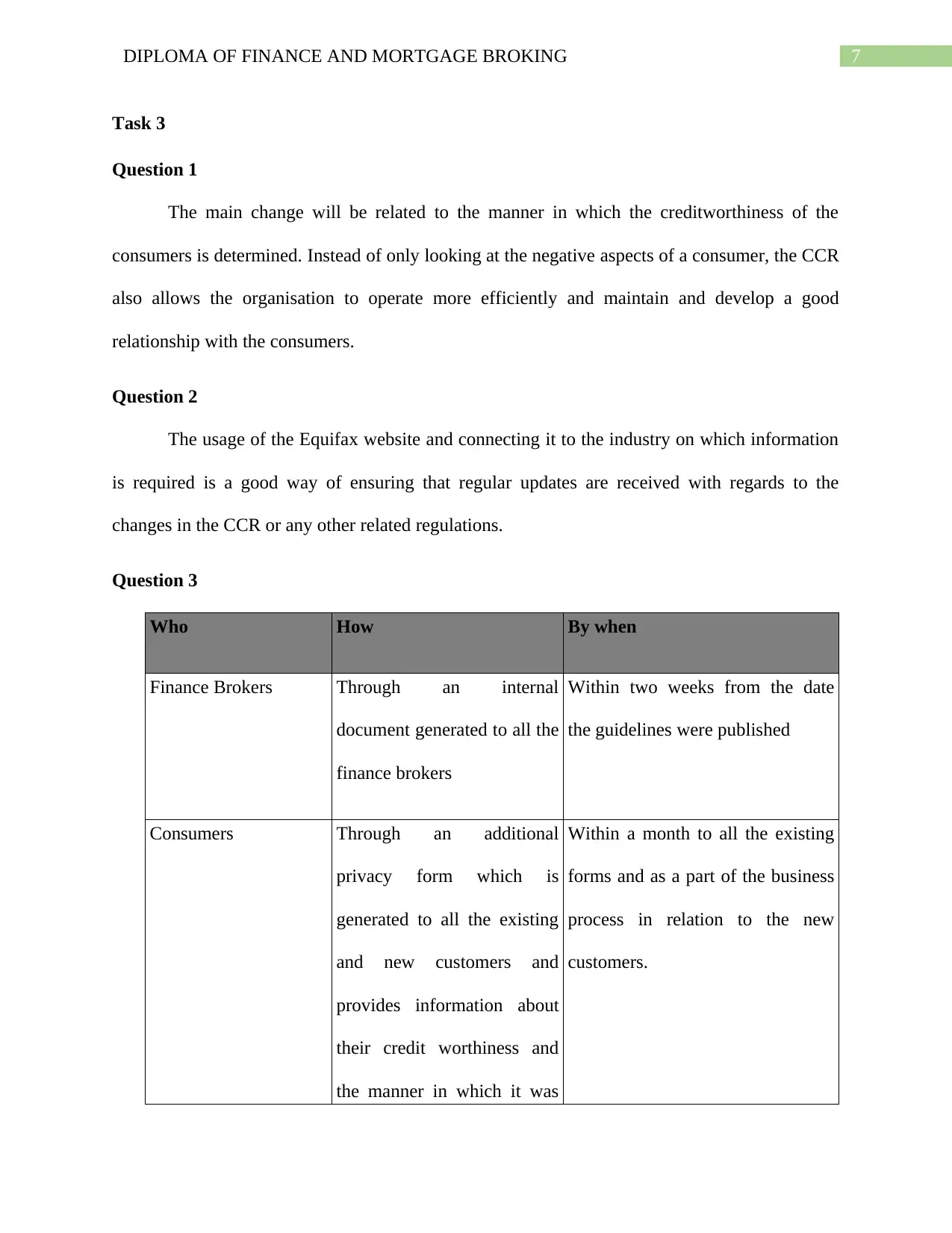
The main change will be related to the manner in which the creditworthiness of the
consumers is determined. Instead of only looking at the negative aspects of a consumer, the CCR
also allows the organisation to operate more efficiently and maintain and develop a good
relationship with the consumers.
Question 2
The usage of the Equifax website and connecting it to the industry on which information
is required is a good way of ensuring that regular updates are received with regards to the
changes in the CCR or any other related regulations.
Question 3
Who How By when
Finance Brokers Through an internal
document generated to all the
finance brokers
Within two weeks from the date
the guidelines were published
Consumers Through an additional
privacy form which is
generated to all the existing
and new customers and
provides information about
their credit worthiness and
the manner in which it was
Within a month to all the existing
forms and as a part of the business
process in relation to the new
customers.
Task 3
Question 1
The main change will be related to the manner in which the creditworthiness of the
consumers is determined. Instead of only looking at the negative aspects of a consumer, the CCR
also allows the organisation to operate more efficiently and maintain and develop a good
relationship with the consumers.
Question 2
The usage of the Equifax website and connecting it to the industry on which information
is required is a good way of ensuring that regular updates are received with regards to the
changes in the CCR or any other related regulations.
Question 3
Who How By when
Finance Brokers Through an internal
document generated to all the
finance brokers
Within two weeks from the date
the guidelines were published
Consumers Through an additional
privacy form which is
generated to all the existing
and new customers and
provides information about
their credit worthiness and
the manner in which it was
Within a month to all the existing
forms and as a part of the business
process in relation to the new
customers.
8DIPLOMA OF FINANCE AND MORTGAGE BROKING
determined.
Task 4
Question 1
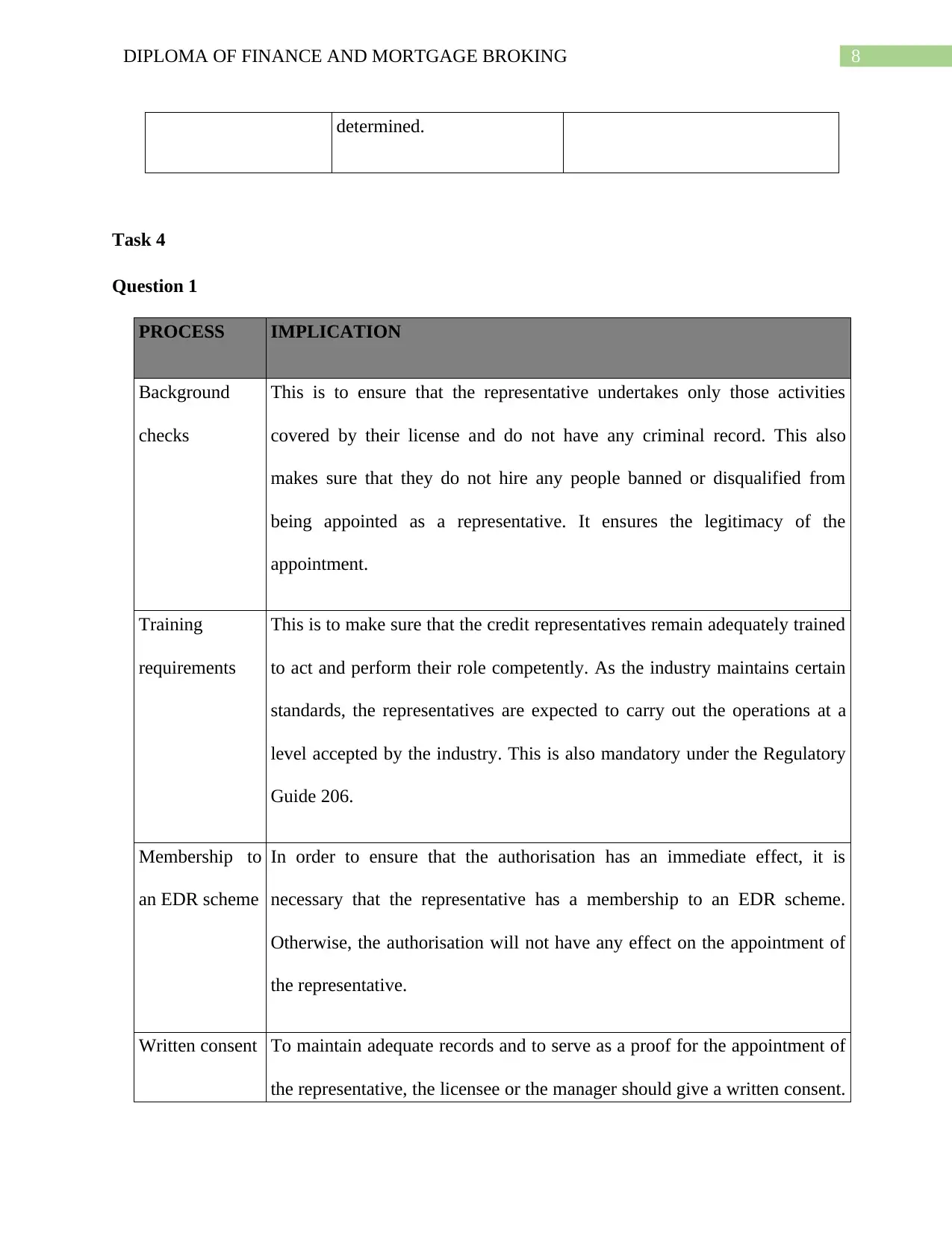
PROCESS IMPLICATION
Background
checks
This is to ensure that the representative undertakes only those activities
covered by their license and do not have any criminal record. This also
makes sure that they do not hire any people banned or disqualified from
being appointed as a representative. It ensures the legitimacy of the
appointment.
Training
requirements
This is to make sure that the credit representatives remain adequately trained
to act and perform their role competently. As the industry maintains certain
standards, the representatives are expected to carry out the operations at a
level accepted by the industry. This is also mandatory under the Regulatory
Guide 206.
Membership to
an EDR scheme
In order to ensure that the authorisation has an immediate effect, it is
necessary that the representative has a membership to an EDR scheme.
Otherwise, the authorisation will not have any effect on the appointment of
the representative.
Written consent To maintain adequate records and to serve as a proof for the appointment of
the representative, the licensee or the manager should give a written consent.
determined.
Task 4
Question 1
PROCESS IMPLICATION
Background
checks
This is to ensure that the representative undertakes only those activities
covered by their license and do not have any criminal record. This also
makes sure that they do not hire any people banned or disqualified from
being appointed as a representative. It ensures the legitimacy of the
appointment.
Training
requirements
This is to make sure that the credit representatives remain adequately trained
to act and perform their role competently. As the industry maintains certain
standards, the representatives are expected to carry out the operations at a
level accepted by the industry. This is also mandatory under the Regulatory
Guide 206.
Membership to
an EDR scheme
In order to ensure that the authorisation has an immediate effect, it is
necessary that the representative has a membership to an EDR scheme.
Otherwise, the authorisation will not have any effect on the appointment of
the representative.
Written consent To maintain adequate records and to serve as a proof for the appointment of
the representative, the licensee or the manager should give a written consent.
⊘ This is a preview!⊘
Do you want full access?
Subscribe today to unlock all pages.
Trusted by 1+ million students worldwide
9DIPLOMA OF FINANCE AND MORTGAGE BROKING
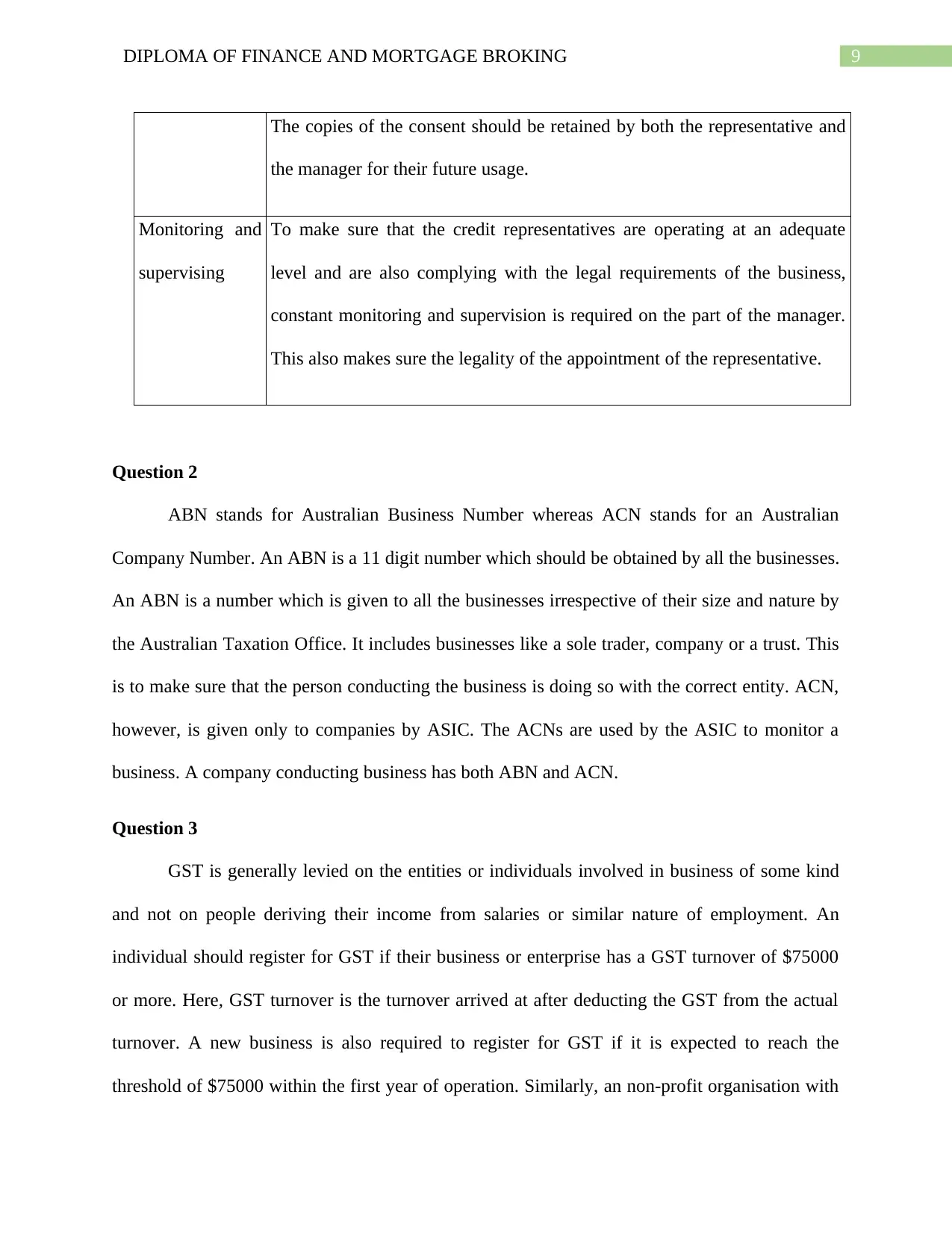
The copies of the consent should be retained by both the representative and
the manager for their future usage.
Monitoring and
supervising
To make sure that the credit representatives are operating at an adequate
level and are also complying with the legal requirements of the business,
constant monitoring and supervision is required on the part of the manager.
This also makes sure the legality of the appointment of the representative.
Question 2
ABN stands for Australian Business Number whereas ACN stands for an Australian
Company Number. An ABN is a 11 digit number which should be obtained by all the businesses.
An ABN is a number which is given to all the businesses irrespective of their size and nature by
the Australian Taxation Office. It includes businesses like a sole trader, company or a trust. This
is to make sure that the person conducting the business is doing so with the correct entity. ACN,
however, is given only to companies by ASIC. The ACNs are used by the ASIC to monitor a
business. A company conducting business has both ABN and ACN.
Question 3
GST is generally levied on the entities or individuals involved in business of some kind
and not on people deriving their income from salaries or similar nature of employment. An
individual should register for GST if their business or enterprise has a GST turnover of $75000
or more. Here, GST turnover is the turnover arrived at after deducting the GST from the actual
turnover. A new business is also required to register for GST if it is expected to reach the
threshold of $75000 within the first year of operation. Similarly, an non-profit organisation with
The copies of the consent should be retained by both the representative and
the manager for their future usage.
Monitoring and
supervising
To make sure that the credit representatives are operating at an adequate
level and are also complying with the legal requirements of the business,
constant monitoring and supervision is required on the part of the manager.
This also makes sure the legality of the appointment of the representative.
Question 2
ABN stands for Australian Business Number whereas ACN stands for an Australian
Company Number. An ABN is a 11 digit number which should be obtained by all the businesses.
An ABN is a number which is given to all the businesses irrespective of their size and nature by
the Australian Taxation Office. It includes businesses like a sole trader, company or a trust. This
is to make sure that the person conducting the business is doing so with the correct entity. ACN,
however, is given only to companies by ASIC. The ACNs are used by the ASIC to monitor a
business. A company conducting business has both ABN and ACN.
Question 3
GST is generally levied on the entities or individuals involved in business of some kind
and not on people deriving their income from salaries or similar nature of employment. An
individual should register for GST if their business or enterprise has a GST turnover of $75000
or more. Here, GST turnover is the turnover arrived at after deducting the GST from the actual
turnover. A new business is also required to register for GST if it is expected to reach the
threshold of $75000 within the first year of operation. Similarly, an non-profit organisation with
Paraphrase This Document
Need a fresh take? Get an instant paraphrase of this document with our AI Paraphraser
10DIPLOMA OF FINANCE AND MORTGAGE BROKING
a turnover exceeding $150000 is also required to register for GST. A person providing taxi or
limousine travel for passengers is also required to register for GST regardless of the turnover of
the business in order to claim fuel tax credits for the business or the enterprise.
Task 5
Question 1
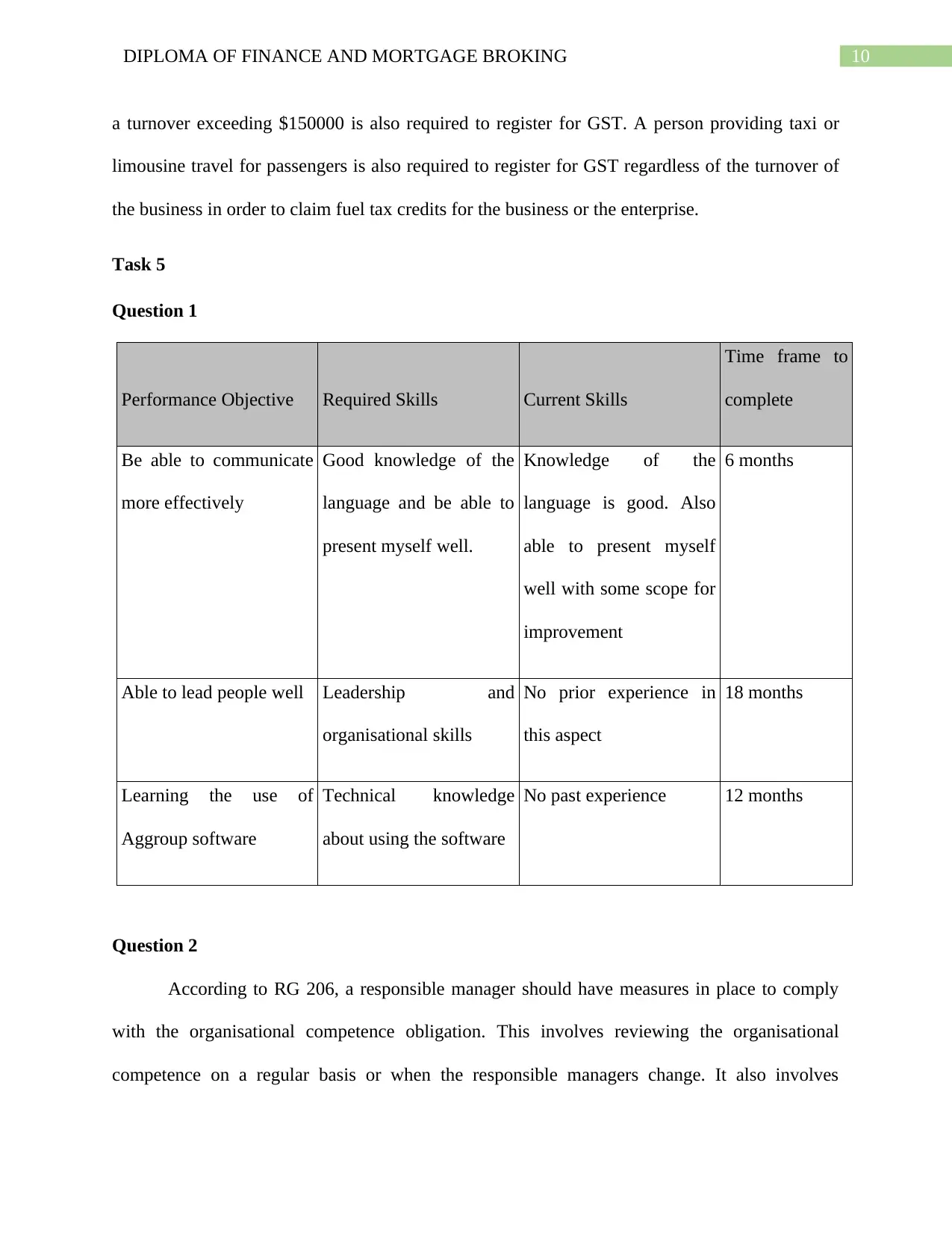
Performance Objective Required Skills Current Skills
Time frame to
complete
Be able to communicate
more effectively
Good knowledge of the
language and be able to
present myself well.
Knowledge of the
language is good. Also
able to present myself
well with some scope for
improvement
6 months
Able to lead people well Leadership and
organisational skills
No prior experience in
this aspect
18 months
Learning the use of
Aggroup software
Technical knowledge
about using the software
No past experience 12 months
Question 2
According to RG 206, a responsible manager should have measures in place to comply
with the organisational competence obligation. This involves reviewing the organisational
competence on a regular basis or when the responsible managers change. It also involves
a turnover exceeding $150000 is also required to register for GST. A person providing taxi or
limousine travel for passengers is also required to register for GST regardless of the turnover of
the business in order to claim fuel tax credits for the business or the enterprise.
Task 5
Question 1
Performance Objective Required Skills Current Skills
Time frame to
complete
Be able to communicate
more effectively
Good knowledge of the
language and be able to
present myself well.
Knowledge of the
language is good. Also
able to present myself
well with some scope for
improvement
6 months
Able to lead people well Leadership and
organisational skills
No prior experience in
this aspect
18 months
Learning the use of
Aggroup software
Technical knowledge
about using the software
No past experience 12 months
Question 2
According to RG 206, a responsible manager should have measures in place to comply
with the organisational competence obligation. This involves reviewing the organisational
competence on a regular basis or when the responsible managers change. It also involves
11DIPLOMA OF FINANCE AND MORTGAGE BROKING
undertaking at least 20 hours of Continuing Professional Development (CPD) and have records
which were used in measuring the organisational competence and also record the steps used in
maintaining the organisational competence.
Question 3
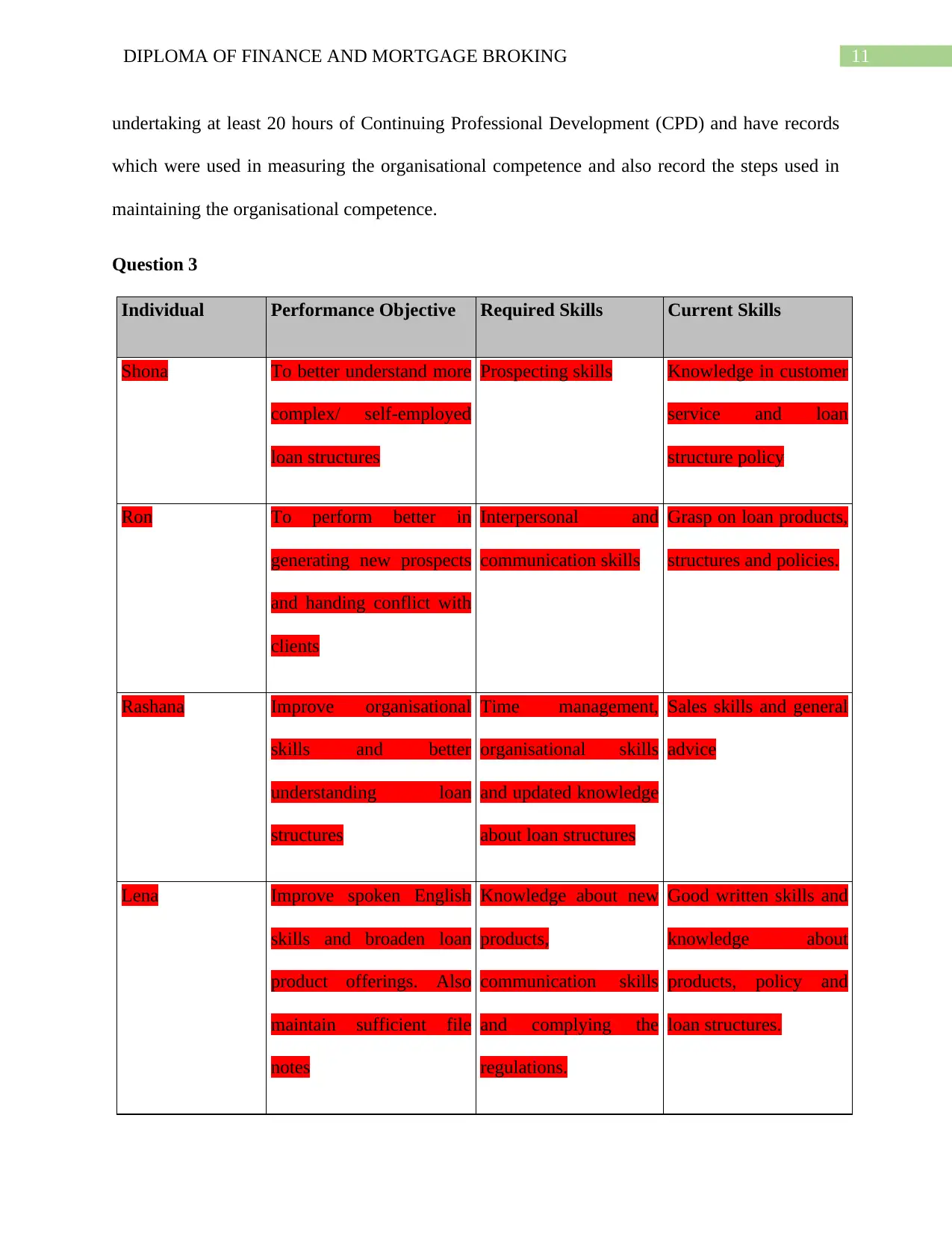
Individual Performance Objective Required Skills Current Skills
Shona To better understand more
complex/ self-employed
loan structures
Prospecting skills Knowledge in customer
service and loan
structure policy
Ron To perform better in
generating new prospects
and handing conflict with
clients
Interpersonal and
communication skills
Grasp on loan products,
structures and policies.
Rashana Improve organisational
skills and better
understanding loan
structures
Time management,
organisational skills
and updated knowledge
about loan structures
Sales skills and general
advice
Lena Improve spoken English
skills and broaden loan
product offerings. Also
maintain sufficient file
notes
Knowledge about new
products,
communication skills
and complying the
regulations.
Good written skills and
knowledge about
products, policy and
loan structures.
undertaking at least 20 hours of Continuing Professional Development (CPD) and have records
which were used in measuring the organisational competence and also record the steps used in
maintaining the organisational competence.
Question 3
Individual Performance Objective Required Skills Current Skills
Shona To better understand more
complex/ self-employed
loan structures
Prospecting skills Knowledge in customer
service and loan
structure policy
Ron To perform better in
generating new prospects
and handing conflict with
clients
Interpersonal and
communication skills
Grasp on loan products,
structures and policies.
Rashana Improve organisational
skills and better
understanding loan
structures
Time management,
organisational skills
and updated knowledge
about loan structures
Sales skills and general
advice
Lena Improve spoken English
skills and broaden loan
product offerings. Also
maintain sufficient file
notes
Knowledge about new
products,
communication skills
and complying the
regulations.
Good written skills and
knowledge about
products, policy and
loan structures.
⊘ This is a preview!⊘
Do you want full access?
Subscribe today to unlock all pages.
Trusted by 1+ million students worldwide

1 out of 24


Related Documents


Your All-in-One AI-Powered Toolkit for Academic Success.
+13062052269
info@desklib.com
Available 24*7 on WhatsApp / Email
![[object Object]](/_next/static/media/star-bottom.7253800d.svg)
Unlock your academic potential
Copyright © 2020–2026 A2Z Services. All Rights Reserved. Developed and managed by ZUCOL.