BSc BMP3005: Financial Management, Statements & Ratio Analysis
VerifiedAdded on 2023/06/15
|15
|2911
|106
Report
AI Summary
This report provides an in-depth analysis of applied business finance, focusing on the concept and importance of financial management within organizations. It explores the main financial statements—balance sheets, income statements, and cash flow statements—and discusses the application of financial ratios in managing a company's financial health. Using a case study, the report calculates profitability, liquidity, and efficiency ratios to assess the company's financial standing. Furthermore, it recommends processes that the business can implement to enhance its financial performance, emphasizing the role of strategic financial planning, informed decision-making, and effective financial control in achieving sustainable growth and success. This document is available on Desklib, a platform offering a wide range of study resources, including past papers and solved assignments, to support students' learning and academic success.
BSc (Hons) Business Management with
Foundation
BMP3005
Applied Business Finance
The concept and importance of financial
management and the processes
businesses might use to improve their
financial performance
Submitted by:
Name:
ID:
0
Foundation
BMP3005
Applied Business Finance
The concept and importance of financial
management and the processes
businesses might use to improve their
financial performance
Submitted by:
Name:
ID:
0

Paraphrase This Document
Need a fresh take? Get an instant paraphrase of this document with our AI Paraphraser
Contents
Introduction 3
Section 1: Definition and discussion of the concept and
importance of financial management 3
Section 2: Description and discussion of the main
financial statements and explain the use of ratios in
financial management
4
Section 3: Using the template provided 4-8
i. Completing the Information on the ‘Business Review Template
(Ensure that you display your calculations for this detail)
7
ii. Using Excel producing an Income Statement for the Sample
Organisation (see Case Study). This should be included within
your appendices 7
iii. Using Excel completing the Balance Sheet 7
iv. Using the Case study information describing the profitability,
liquidity and efficiency of the company based on the results of
ratio analysis 7
Section 4: Using examples from the case study describing
and discussing the processes this business might use to
improve their financial performance 9
Conclusion 9
References
Appendix 10
1
Introduction 3
Section 1: Definition and discussion of the concept and
importance of financial management 3
Section 2: Description and discussion of the main
financial statements and explain the use of ratios in
financial management
4
Section 3: Using the template provided 4-8
i. Completing the Information on the ‘Business Review Template
(Ensure that you display your calculations for this detail)
7
ii. Using Excel producing an Income Statement for the Sample
Organisation (see Case Study). This should be included within
your appendices 7
iii. Using Excel completing the Balance Sheet 7
iv. Using the Case study information describing the profitability,
liquidity and efficiency of the company based on the results of
ratio analysis 7
Section 4: Using examples from the case study describing
and discussing the processes this business might use to
improve their financial performance 9
Conclusion 9
References
Appendix 10
1

2
⊘ This is a preview!⊘
Do you want full access?
Subscribe today to unlock all pages.

Trusted by 1+ million students worldwide
Introduction
Financial function please in important role in businesses because it helps the organization in
maintaining financial health and acquire financial resources to gain success. The finance
function is significant to long term success and survival of a company because financial
strength is the lifeblood of a corporate which supports and sustains development of the
company. This report focuses on applied business finance and discuss the importance and
concept that are there in the financial management (Goutte and Nguyen, 2020). In addition
to this mean financial statements and raitos in context of financial management are
explained and discussed in this report. Income statement, balance sheet end financial
issues of the company are calculated in this report using case study information. Process
which can help the company improve financial health are also recommended.
Section 1: Definition and discussion of the concept and
importance of financial management
Financial management refers to the process of organizing, planning, directing and further
controlling the financial aspects and activities of a company such as allotment and usage of
funds of the company. This is done by applying general management principle to the
financial assets of the company with the aim of contributing to progress of the organization.
The scope of financial management is huge cause it involves decision-making related to
investment in fixed assets in current assets along with making dividend decisions and the
amount of profit which can be retained. Financial management affects every activity and
future pathways of a company by controlling the funding available at the organization. This
means that financial management please an active role in overall business planning for the
company which ensures that business objectives are attained profitably (Hidayat and et. al.,
2018).
The primary objectives of financial management are two assured that sufficient funding is
supplied to the company regularly, to oversee that sufficient returns are given to the
shareholders through financial control and optimally utilize financial resources of the
organization in a way that the resources qre being utilized in a maximum possible way at
least cost. In addition to this financial management also focuses on securing investment bye
recognizing safe investment and risks associated with financial resources.
3
Financial function please in important role in businesses because it helps the organization in
maintaining financial health and acquire financial resources to gain success. The finance
function is significant to long term success and survival of a company because financial
strength is the lifeblood of a corporate which supports and sustains development of the
company. This report focuses on applied business finance and discuss the importance and
concept that are there in the financial management (Goutte and Nguyen, 2020). In addition
to this mean financial statements and raitos in context of financial management are
explained and discussed in this report. Income statement, balance sheet end financial
issues of the company are calculated in this report using case study information. Process
which can help the company improve financial health are also recommended.
Section 1: Definition and discussion of the concept and
importance of financial management
Financial management refers to the process of organizing, planning, directing and further
controlling the financial aspects and activities of a company such as allotment and usage of
funds of the company. This is done by applying general management principle to the
financial assets of the company with the aim of contributing to progress of the organization.
The scope of financial management is huge cause it involves decision-making related to
investment in fixed assets in current assets along with making dividend decisions and the
amount of profit which can be retained. Financial management affects every activity and
future pathways of a company by controlling the funding available at the organization. This
means that financial management please an active role in overall business planning for the
company which ensures that business objectives are attained profitably (Hidayat and et. al.,
2018).
The primary objectives of financial management are two assured that sufficient funding is
supplied to the company regularly, to oversee that sufficient returns are given to the
shareholders through financial control and optimally utilize financial resources of the
organization in a way that the resources qre being utilized in a maximum possible way at
least cost. In addition to this financial management also focuses on securing investment bye
recognizing safe investment and risks associated with financial resources.
3
Paraphrase This Document
Need a fresh take? Get an instant paraphrase of this document with our AI Paraphraser
Financial management the complete different functions in a business firm. Estimating the
capital requirements of the company on the basis of expected costs and profit so that
earning capacity of the company can be increased is one of the primary functions of
financial management (Korbi and Lleshaj, 2020). Determining capital composition along
with appropriate choices for funding is a necessary function of financial management.
Investing in appropriate funds to gain high returns and disposing surplus either through
dividend declarations or profit retention is the responsibility our financial management.
Finally managing cash and supervising financial control is another important aspect of
financial management which supports growth of the company. This book is is that financial
management plays a crucial role in daily functioning of the company and help with the
organization effectively utilize financial resources for continuous success.
The importance of financial management is further explained below:
Strategizing: Financial management plays a key role in identification of which steps
need to be taken financially for the company to achieve its short and long term goals.
The leadership gains insight from financial management practices into current
performance for developing an appropriate future strategy for the company.
Decision-making: Daily business decision-making is supported by financial
management as it helps leaders make decisions in the best way to implement various
plans by providing them updated financial reports and information on useful key
performance indicators (Leshchinskii and Maksy, 2019).
Maintaining control: Financial management is needed for controlling the company
because it helps the firm ensure that each department is contributing to the vision an
operating bringing the budget of the company. Through this information various
conclusions can be drawn such as the financial impact of human resources and chronicle
contribution of various business activities.
Section 2: Description and discussion of the main
financial statements and explain the use of ratios in
financial management
Financial statements refers as the documented records which showcase the business
activities and financial position of a company. Every company makes financial statements to
4
capital requirements of the company on the basis of expected costs and profit so that
earning capacity of the company can be increased is one of the primary functions of
financial management (Korbi and Lleshaj, 2020). Determining capital composition along
with appropriate choices for funding is a necessary function of financial management.
Investing in appropriate funds to gain high returns and disposing surplus either through
dividend declarations or profit retention is the responsibility our financial management.
Finally managing cash and supervising financial control is another important aspect of
financial management which supports growth of the company. This book is is that financial
management plays a crucial role in daily functioning of the company and help with the
organization effectively utilize financial resources for continuous success.
The importance of financial management is further explained below:
Strategizing: Financial management plays a key role in identification of which steps
need to be taken financially for the company to achieve its short and long term goals.
The leadership gains insight from financial management practices into current
performance for developing an appropriate future strategy for the company.
Decision-making: Daily business decision-making is supported by financial
management as it helps leaders make decisions in the best way to implement various
plans by providing them updated financial reports and information on useful key
performance indicators (Leshchinskii and Maksy, 2019).
Maintaining control: Financial management is needed for controlling the company
because it helps the firm ensure that each department is contributing to the vision an
operating bringing the budget of the company. Through this information various
conclusions can be drawn such as the financial impact of human resources and chronicle
contribution of various business activities.
Section 2: Description and discussion of the main
financial statements and explain the use of ratios in
financial management
Financial statements refers as the documented records which showcase the business
activities and financial position of a company. Every company makes financial statements to
4
support financial management and utilize the statements during government audit how to
ensure accuracy for taxation financing or investment purposes (Marak and Pillai, 2019).
Keeping and maintaining financial statements is beneficial for businesses because they help
the business in gaining an insight on the position of the company and the different aspects
such as revenue, expenditure and overall profitability of the business. Through this the
company determine the assets and financial obligations that the company hold towards the
market.
The three main financial statements of a company are balance sheet income statement and
cash flow statement (San-Jose and Retolaza, 2018). A balance sheet refers to the financial
statement which showcases assets liabilities and capital of a company four different time
periods. A balance sheet is supposed to depict the ownership and owes of a company in a
simple manner. The primary elements of a balance sheet are assets and liabilities.
Maintaining a balance sheet is important because it provides understanding of financial
health of a company it can be used by stakeholders to understand the liquidity position and
business performance of the enterprise. in addition to this a balance sheet also provides
other important information such as the ability of the company to undertake expansions
projects and unforeseen expenses. balance sheet is used in some of the most common
business activities such as applying for a business loan which makes this a crucial financial
statement.
The definition of an income statement states that it is a financial statement which provides
information about the income and expenditures of the company. apart from this it also
showcases if the company is gaining profit or loss for specific time. The four key elements of
an income statement are revenue expenses gains and losses. It is an important piece of
financial statement because it provides summary of the company’s revenue in a given and
showcases the amount of money spent to generate that revenue. In this way the income
statement helps understand the financial outcome of various activities of a company. The
income statement helps management take various decisions such as whether or not to
expand business activities. It also helps identify if the profits need to be increased by
decreasing costs, increasing revenues or both. Therefore the usage of income statement in
financial management helps in future planning of the company. the information provided
by an income statement helps the company recover from financial crisis.
5
ensure accuracy for taxation financing or investment purposes (Marak and Pillai, 2019).
Keeping and maintaining financial statements is beneficial for businesses because they help
the business in gaining an insight on the position of the company and the different aspects
such as revenue, expenditure and overall profitability of the business. Through this the
company determine the assets and financial obligations that the company hold towards the
market.
The three main financial statements of a company are balance sheet income statement and
cash flow statement (San-Jose and Retolaza, 2018). A balance sheet refers to the financial
statement which showcases assets liabilities and capital of a company four different time
periods. A balance sheet is supposed to depict the ownership and owes of a company in a
simple manner. The primary elements of a balance sheet are assets and liabilities.
Maintaining a balance sheet is important because it provides understanding of financial
health of a company it can be used by stakeholders to understand the liquidity position and
business performance of the enterprise. in addition to this a balance sheet also provides
other important information such as the ability of the company to undertake expansions
projects and unforeseen expenses. balance sheet is used in some of the most common
business activities such as applying for a business loan which makes this a crucial financial
statement.
The definition of an income statement states that it is a financial statement which provides
information about the income and expenditures of the company. apart from this it also
showcases if the company is gaining profit or loss for specific time. The four key elements of
an income statement are revenue expenses gains and losses. It is an important piece of
financial statement because it provides summary of the company’s revenue in a given and
showcases the amount of money spent to generate that revenue. In this way the income
statement helps understand the financial outcome of various activities of a company. The
income statement helps management take various decisions such as whether or not to
expand business activities. It also helps identify if the profits need to be increased by
decreasing costs, increasing revenues or both. Therefore the usage of income statement in
financial management helps in future planning of the company. the information provided
by an income statement helps the company recover from financial crisis.
5
⊘ This is a preview!⊘
Do you want full access?
Subscribe today to unlock all pages.
Trusted by 1+ million students worldwide
The cash flow statement of a company refers to a financial statement which describes the
changes in balance sheet and income along with their impact on Cash and cash equivalents.
This is an important financial statement because the timing of non cash financial
transactions does not affect this statement which makes it more accurate in measuring the
financial performance of a company over a given time (Tallaki and Bracci, 2021). By looking
at this statement the cash position and management of this position for a specific company
can be determined. This means that the ability of the organization to pay its cash
obligations and other debts is determined through this financial statement.
A financial ratio is defined as the relative magnitude of two specific quantitative values
taken from the financial statement of a company. financial ratio play an important role in
financial management of an organization. These ratios are used for measuring the
relationship between two or more components of financial statements. The most effective
usage of financial issues in financial management is too effectively compare financial
statements of different time. This type of competition helps the company determine
changes in company performance over a specific time period and identify areas which
require immediate attention for ensuring continuous financial growth of the company
(Marak and Pillai, 2019). Apart from this financial ratios also help the company and
management in making daily business decisions by providing a quick look on the financial
position of the organization or competing businesses. In this way the financial issues can be
used to understand the strengths and weaknesses of the company in context of financial
health to make effective decisions and ensure accurate financial management of the
establishment. This showcases that financial issues are a key part of financial analysis and
support effective financial management at the company.
Section 3: Description and discussion of the main
financial statements and explain the use of ratios in
financial management
Section 3: Using the template provided: refer to appendix
v. Completing the Information on the ‘Business Review Template
(Ensure that you display your calculations for this detail)
6
changes in balance sheet and income along with their impact on Cash and cash equivalents.
This is an important financial statement because the timing of non cash financial
transactions does not affect this statement which makes it more accurate in measuring the
financial performance of a company over a given time (Tallaki and Bracci, 2021). By looking
at this statement the cash position and management of this position for a specific company
can be determined. This means that the ability of the organization to pay its cash
obligations and other debts is determined through this financial statement.
A financial ratio is defined as the relative magnitude of two specific quantitative values
taken from the financial statement of a company. financial ratio play an important role in
financial management of an organization. These ratios are used for measuring the
relationship between two or more components of financial statements. The most effective
usage of financial issues in financial management is too effectively compare financial
statements of different time. This type of competition helps the company determine
changes in company performance over a specific time period and identify areas which
require immediate attention for ensuring continuous financial growth of the company
(Marak and Pillai, 2019). Apart from this financial ratios also help the company and
management in making daily business decisions by providing a quick look on the financial
position of the organization or competing businesses. In this way the financial issues can be
used to understand the strengths and weaknesses of the company in context of financial
health to make effective decisions and ensure accurate financial management of the
establishment. This showcases that financial issues are a key part of financial analysis and
support effective financial management at the company.
Section 3: Description and discussion of the main
financial statements and explain the use of ratios in
financial management
Section 3: Using the template provided: refer to appendix
v. Completing the Information on the ‘Business Review Template
(Ensure that you display your calculations for this detail)
6
Paraphrase This Document
Need a fresh take? Get an instant paraphrase of this document with our AI Paraphraser
vi. Using Excel producing an Income Statement for the Sample
Organisation (see Case Study)
vii. Using Excel completing the Balance Sheet
viii. Using the Case study information describing the profitability,
liquidity and efficiency of the company based on the results of
ratio analysis
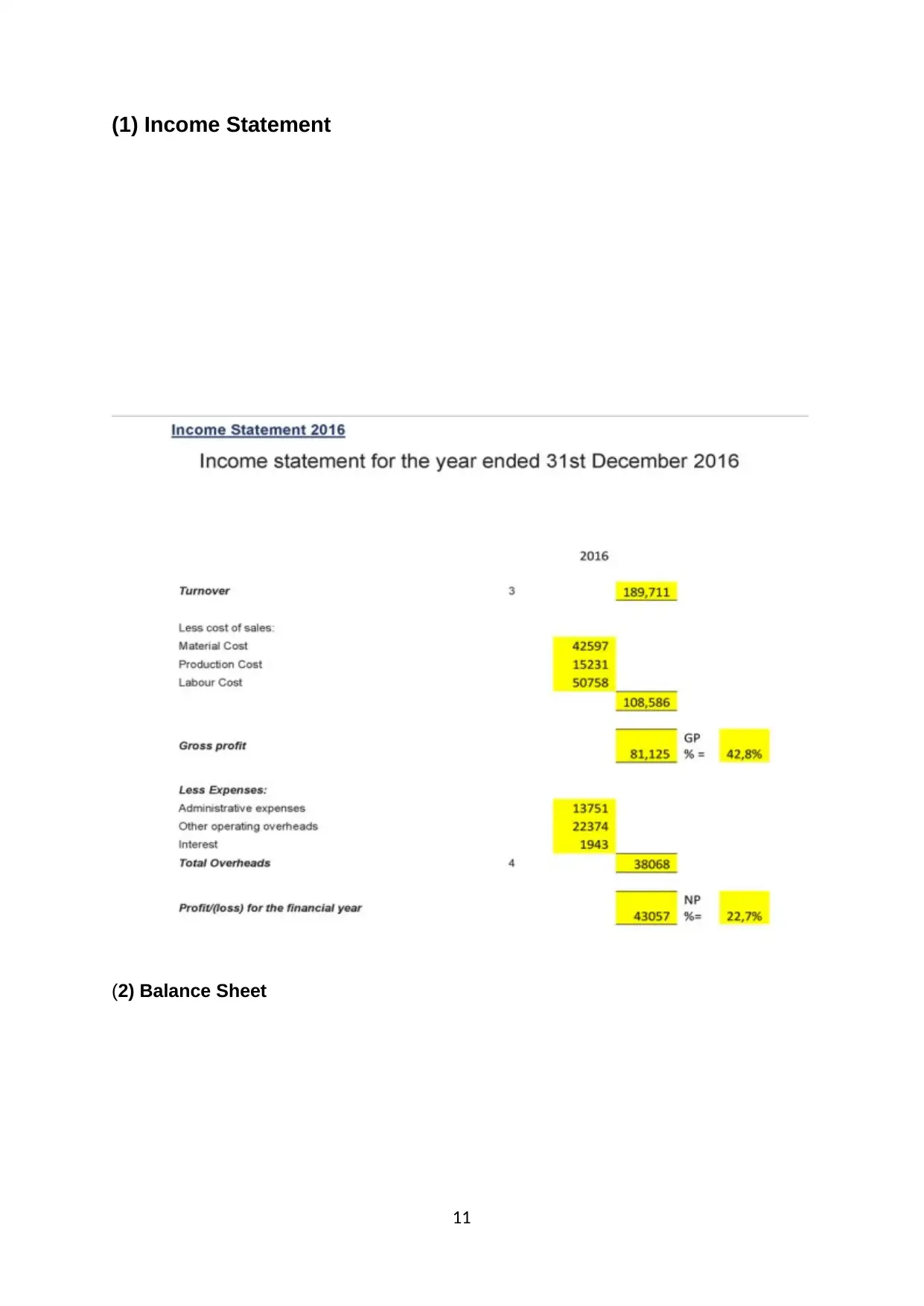
Profitability Ratios :
Net Profit Ratio: Gross profit/Net sales*100
Formula Calculation
Gross profit/Net sales*100 (2015): 18,987/179,587*100=10.57 %
(2016): 43,057/19,711*100 =22.69 %
Gross Profit Ratio:
Formula Calculation
Net profit/Net sales*100 (2015): 81,125/189,711*100=42.76%
(2016): 1650-675/6000*100= 16.25%
Liquidity Ratios
Current ratio: Current Assets/Current Liabilities
Formula Calculation
Current Assets/Current Liabilities 54,549 / 57,928 = 2.22:1
Quick Ratio: Quick ratio/current liabilities
Formula Calculation
Quick ratio/current liabilities 84,349-2,571/37,928 = =1.47:1
Efficiency Ratios
Formula Calculation
7
Organisation (see Case Study)
vii. Using Excel completing the Balance Sheet
viii. Using the Case study information describing the profitability,
liquidity and efficiency of the company based on the results of
ratio analysis
Profitability Ratios :
Net Profit Ratio: Gross profit/Net sales*100
Formula Calculation
Gross profit/Net sales*100 (2015): 18,987/179,587*100=10.57 %
(2016): 43,057/19,711*100 =22.69 %
Gross Profit Ratio:
Formula Calculation
Net profit/Net sales*100 (2015): 81,125/189,711*100=42.76%
(2016): 1650-675/6000*100= 16.25%
Liquidity Ratios
Current ratio: Current Assets/Current Liabilities
Formula Calculation
Current Assets/Current Liabilities 54,549 / 57,928 = 2.22:1
Quick Ratio: Quick ratio/current liabilities
Formula Calculation
Quick ratio/current liabilities 84,349-2,571/37,928 = =1.47:1
Efficiency Ratios
Formula Calculation
7
SaIes revenue / number of
employee
(2016)= 189,711/649=292
(2015)= 179.587/618= 290
A profitability ratio refers to the financial ratio which helps in
evaluating the ability of the company to generate Revenue in comparison to the
expenditure of the company under cross awaited with the revenue generation for a specific
time. This financial issue is important because Profitability represents the overall
performance of the company. It also represents how profitable owner’s funds have been
utilized in the company.
A liquidity ratio helps determine the ability of a company to complete it short term debts
and other obligations. The three types of ratios which are important in applied finance and
are considered important are current ratio, quick ratio and the liquidity ratio. When the
liquidity ratio of a company is more than 1.0A it is considered to be investable. Creditors use
this as an indicator for investment. (McDonald and Jordan, 2021) This showcases that the
usage of liquidity ratios not only helps the company in internal decision making but also
outside parties in external decision making. This means that the value of various liquidity
ratios affect the external environment of the company and it is important to know the
liquidity ratios so that the company can effectively navigate in the changing external
environment.
The efficiency ratio is a financial result which helps understand the internal usage of assets
and liabilities by a company (Osmani and et. al., 2020). This financial ratio helps in the
calculation of turnover of receivables repayment of liabilities, the utilization of equity in
specific quantities along with the daily usage of machinery and equipment at the company.
Apart from this the efficiency ratio can also be used for analysis and tracking of performance
of Financial institutions. It also provides a quantifiable measurement of business operations
of a company.
Section 4: Using examples from the case study describing
and discussing the processes this business might use to
improve their financial performance.
8
employee
(2016)= 189,711/649=292
(2015)= 179.587/618= 290
A profitability ratio refers to the financial ratio which helps in
evaluating the ability of the company to generate Revenue in comparison to the
expenditure of the company under cross awaited with the revenue generation for a specific
time. This financial issue is important because Profitability represents the overall
performance of the company. It also represents how profitable owner’s funds have been
utilized in the company.
A liquidity ratio helps determine the ability of a company to complete it short term debts
and other obligations. The three types of ratios which are important in applied finance and
are considered important are current ratio, quick ratio and the liquidity ratio. When the
liquidity ratio of a company is more than 1.0A it is considered to be investable. Creditors use
this as an indicator for investment. (McDonald and Jordan, 2021) This showcases that the
usage of liquidity ratios not only helps the company in internal decision making but also
outside parties in external decision making. This means that the value of various liquidity
ratios affect the external environment of the company and it is important to know the
liquidity ratios so that the company can effectively navigate in the changing external
environment.
The efficiency ratio is a financial result which helps understand the internal usage of assets
and liabilities by a company (Osmani and et. al., 2020). This financial ratio helps in the
calculation of turnover of receivables repayment of liabilities, the utilization of equity in
specific quantities along with the daily usage of machinery and equipment at the company.
Apart from this the efficiency ratio can also be used for analysis and tracking of performance
of Financial institutions. It also provides a quantifiable measurement of business operations
of a company.
Section 4: Using examples from the case study describing
and discussing the processes this business might use to
improve their financial performance.
8
⊘ This is a preview!⊘
Do you want full access?
Subscribe today to unlock all pages.
Trusted by 1+ million students worldwide
A commonly conducted activity through which the company can improve its financial
performance is by rearranging or reducing expenditure (Qi and et. al., 2020). This can be
completed by the application of financial statements to understand weak areas of business
operations and cutting down unnecessary expenditure and wastage at the company. Different
tactics such as operation management techniques and quality control techniques can be used for
reducing wastage and expenditure. In this way cost of the company will reduce and the
company will be able to stabilize the financial performance and focus on future growth. This is a
simplistic process as it does not require any additional activity such as hiring a professional.
Conclusion
From the above report it can be determined that financial management is
significant for growth and success of a company. This is because it plays an important role
in handling financial resources of the company effectively. constructing and maintaining
financial statements is an important part of financial management. The primary financial
statements which help the company in effective financial management are income
statement balance sheet and cash flow statement. Financial issues are used for financial
management earn support financial analysis as well as comparison. The three different
types of financial issues which are commonly used in financial management are liquidity
ratio efficiency ratio and profitability ratio. The simplest ways of improving financial health
of the company is to rearrange expenses.
References
Goutte, S. and Nguyen, D. K. eds., 2020. Handbook of Energy Finance: Theories, Practices
and Simulations. World Scientific.
Hidayat and et. al., 2018. Impacts of Basel III on Islamic finance. Journal of Islamic Financial
Studies, 4(02). pp.123-133.
Korbi, A. and Lleshaj, L., 2020. Finance leasing and arma forecasting: Evidence from
albania. European Journal of Business and Management Research, 5(6).
Leshchinskii, D. and Maksy, M. M., 2019. Factors Associated with Student Performance in
Finance Electives: An Empirical Study at a US Private College. Journal of Applied Business &
Economics, 21(7).
Marak, Z. R. and Pillai, D., 2019. Factors, outcome, and the solutions of supply chain finance:
review and the future directions. Journal of Risk and Financial Management, 12(1). p.3.
Marak, Z.R. and Pillai, D., 2019. Factors, outcome, and the solutions of supply chain finance:
Review and the future directions. Journal of Risk and Financial Management, 12(1). pp.1-23.
McDonald III, B. D. and Jordan, M. M. eds., 2021. Teaching public budgeting and finance: A
practical guide. Routledge.
9
performance is by rearranging or reducing expenditure (Qi and et. al., 2020). This can be
completed by the application of financial statements to understand weak areas of business
operations and cutting down unnecessary expenditure and wastage at the company. Different
tactics such as operation management techniques and quality control techniques can be used for
reducing wastage and expenditure. In this way cost of the company will reduce and the
company will be able to stabilize the financial performance and focus on future growth. This is a
simplistic process as it does not require any additional activity such as hiring a professional.
Conclusion
From the above report it can be determined that financial management is
significant for growth and success of a company. This is because it plays an important role
in handling financial resources of the company effectively. constructing and maintaining
financial statements is an important part of financial management. The primary financial
statements which help the company in effective financial management are income
statement balance sheet and cash flow statement. Financial issues are used for financial
management earn support financial analysis as well as comparison. The three different
types of financial issues which are commonly used in financial management are liquidity
ratio efficiency ratio and profitability ratio. The simplest ways of improving financial health
of the company is to rearrange expenses.
References
Goutte, S. and Nguyen, D. K. eds., 2020. Handbook of Energy Finance: Theories, Practices
and Simulations. World Scientific.
Hidayat and et. al., 2018. Impacts of Basel III on Islamic finance. Journal of Islamic Financial
Studies, 4(02). pp.123-133.
Korbi, A. and Lleshaj, L., 2020. Finance leasing and arma forecasting: Evidence from
albania. European Journal of Business and Management Research, 5(6).
Leshchinskii, D. and Maksy, M. M., 2019. Factors Associated with Student Performance in
Finance Electives: An Empirical Study at a US Private College. Journal of Applied Business &
Economics, 21(7).
Marak, Z. R. and Pillai, D., 2019. Factors, outcome, and the solutions of supply chain finance:
review and the future directions. Journal of Risk and Financial Management, 12(1). p.3.
Marak, Z.R. and Pillai, D., 2019. Factors, outcome, and the solutions of supply chain finance:
Review and the future directions. Journal of Risk and Financial Management, 12(1). pp.1-23.
McDonald III, B. D. and Jordan, M. M. eds., 2021. Teaching public budgeting and finance: A
practical guide. Routledge.
9
Paraphrase This Document
Need a fresh take? Get an instant paraphrase of this document with our AI Paraphraser

Osmani and et. al., 2020. Blockchain for next generation services in banking and finance:
cost, benefit, risk and opportunity analysis. Journal of Enterprise Information Management.
Qi and et. al., 2020. The exploration of internet finance by using neural network. Journal of
Computational and Applied Mathematics, 369. p.112630.
San-Jose, L. and Retolaza, J. L., 2018. Ethics in finance research: recommendations from an
academic experts Delphi panel. Journal of Academic Ethics, 16(1). pp.19-38.
Tallaki, M. and Bracci, E., 2021. Risk allocation, transfer and management in public–private
partnership and private finance initiatives: A systematic literature review. International
Journal of Public Sector Management.
Appendix:
10
cost, benefit, risk and opportunity analysis. Journal of Enterprise Information Management.
Qi and et. al., 2020. The exploration of internet finance by using neural network. Journal of
Computational and Applied Mathematics, 369. p.112630.
San-Jose, L. and Retolaza, J. L., 2018. Ethics in finance research: recommendations from an
academic experts Delphi panel. Journal of Academic Ethics, 16(1). pp.19-38.
Tallaki, M. and Bracci, E., 2021. Risk allocation, transfer and management in public–private
partnership and private finance initiatives: A systematic literature review. International
Journal of Public Sector Management.
Appendix:
10
(1) Income Statement
(2) Balance Sheet
11
(2) Balance Sheet
11
⊘ This is a preview!⊘
Do you want full access?
Subscribe today to unlock all pages.
Trusted by 1+ million students worldwide

1 out of 15


Related Documents


Your All-in-One AI-Powered Toolkit for Academic Success.
+13062052269
info@desklib.com
Available 24*7 on WhatsApp / Email
![[object Object]](/_next/static/media/star-bottom.7253800d.svg)
Unlock your academic potential
Copyright © 2020–2026 A2Z Services. All Rights Reserved. Developed and managed by ZUCOL.