HRM4002 People in Organisations: FitFlop Case Study on Motivation

Verified

Added on  2023/06/14

|8
|788
|336
Case Study
AI Summary
This case study examines FitFlop's strategies for building effective teams and motivating employees, drawing upon theories such as Maslow's Hierarchy of Needs and the T7 model of team effectiveness. It highlights the importance of clear direction, recognition, and reward in team development, and discusses FitFlop's current 'Feel Good Five' strategy, which focuses on employee well-being across finance, community, relationships, mental health, and physical health. The analysis concludes that implementing these theories and attributes can enhance team performance and contribute to FitFlop's overall business success, recommending their adoption for continued improvement and growth.
Document Page
PEOPLE IN
ORGANISATIONS
A CASE STUDY OF FITFLOP COMPANY
tabler-icon-diamond-filled.svg

Paraphrase This Document

Need a fresh take? Get an instant paraphrase of this document with our AI Paraphraser
Document Page
TABLE OF CONTENT
Introduction
Ways for building effective team within FitFlop using theory
Team development attributes for FitFlop success
Current strategies used by FitFlop company
Conclusion
References
Document Page
INTRODUCTION
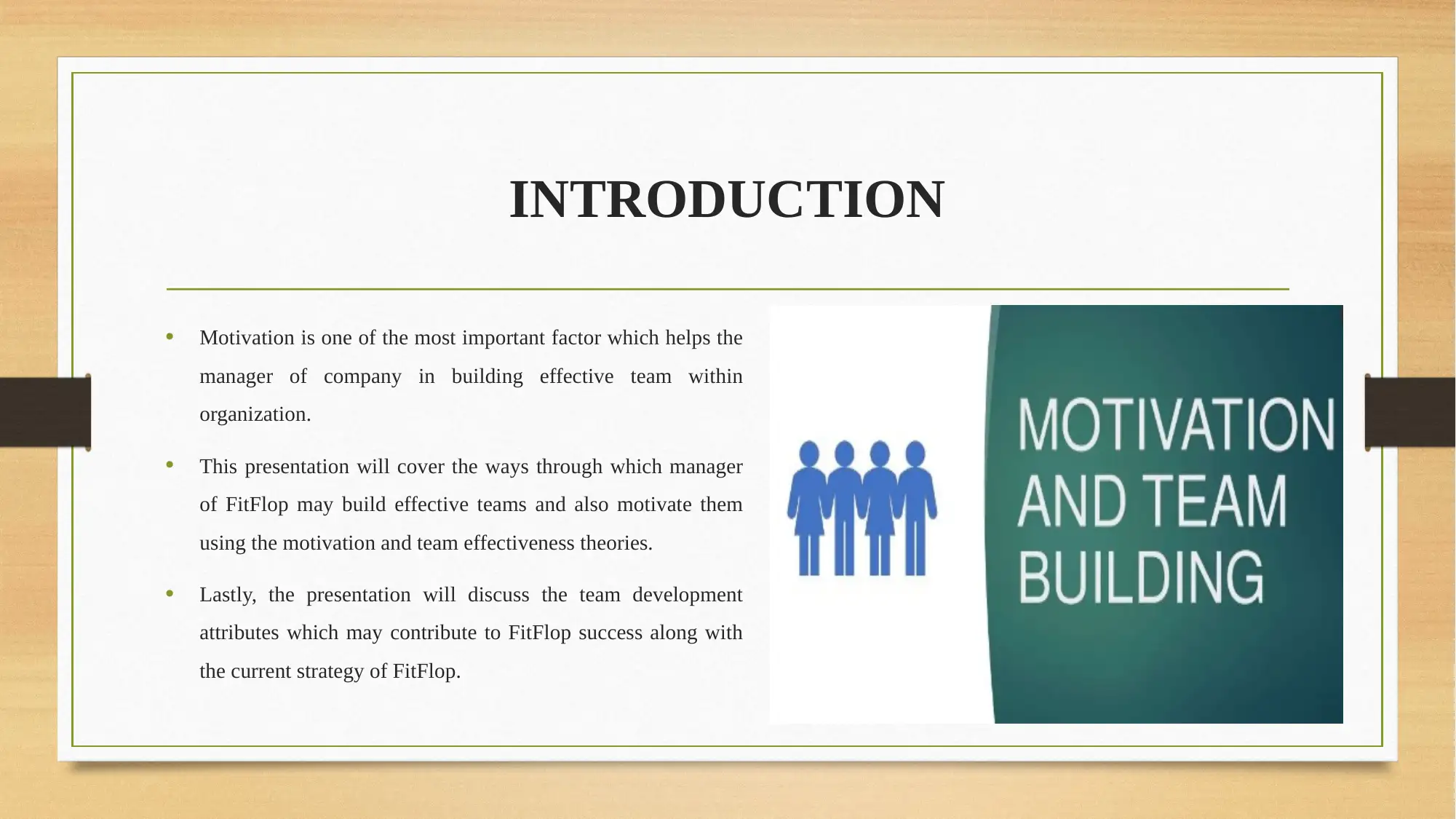
Motivation is one of the most important factor which helps the
manager of company in building effective team within
organization.
This presentation will cover the ways through which manager
of FitFlop may build effective teams and also motivate them
using the motivation and team effectiveness theories.
Lastly, the presentation will discuss the team development
attributes which may contribute to FitFlop success along with
the current strategy of FitFlop.
Document Page
WAYS FOR BUILDING EFFECTIVE
TEAM WITHIN FITFLOP USING
THEORY
In order to build the effective team and motivate the people of the
organization, the manager of Filflop need to adopt the two main theories of
motivation and team effectiveness. This includes:
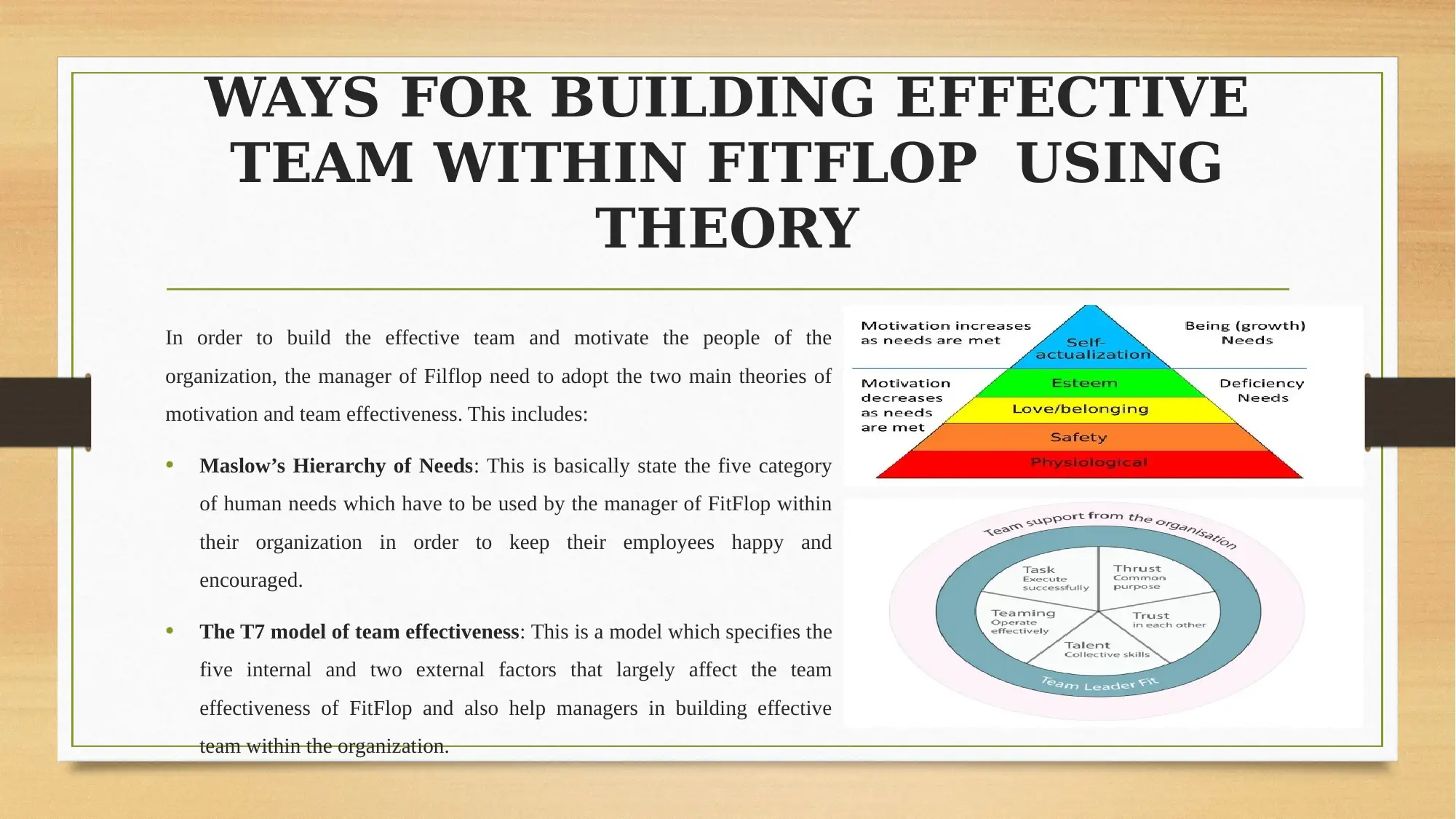
Maslow’s Hierarchy of Needs: This is basically state the five category
of human needs which have to be used by the manager of FitFlop within
their organization in order to keep their employees happy and
encouraged.
The T7 model of team effectiveness: This is a model which specifies the
five internal and two external factors that largely affect the team
effectiveness of FitFlop and also help managers in building effective
team within the organization.
tabler-icon-diamond-filled.svg

Paraphrase This Document

Need a fresh take? Get an instant paraphrase of this document with our AI Paraphraser
Document Page
TEAM DEVELOPMENT ATTRIBUTES FOR
FITFLOP SUCCESS
Clear direction:
The first attributes of team development which help the manager of FitFlop can not only improve
productivity of employees but also contribute towards the success of company.
For example, at the time of staring any new projects, the managers have to decide the goals and
desired outcomes of the project with the team.
Recognition and reward:
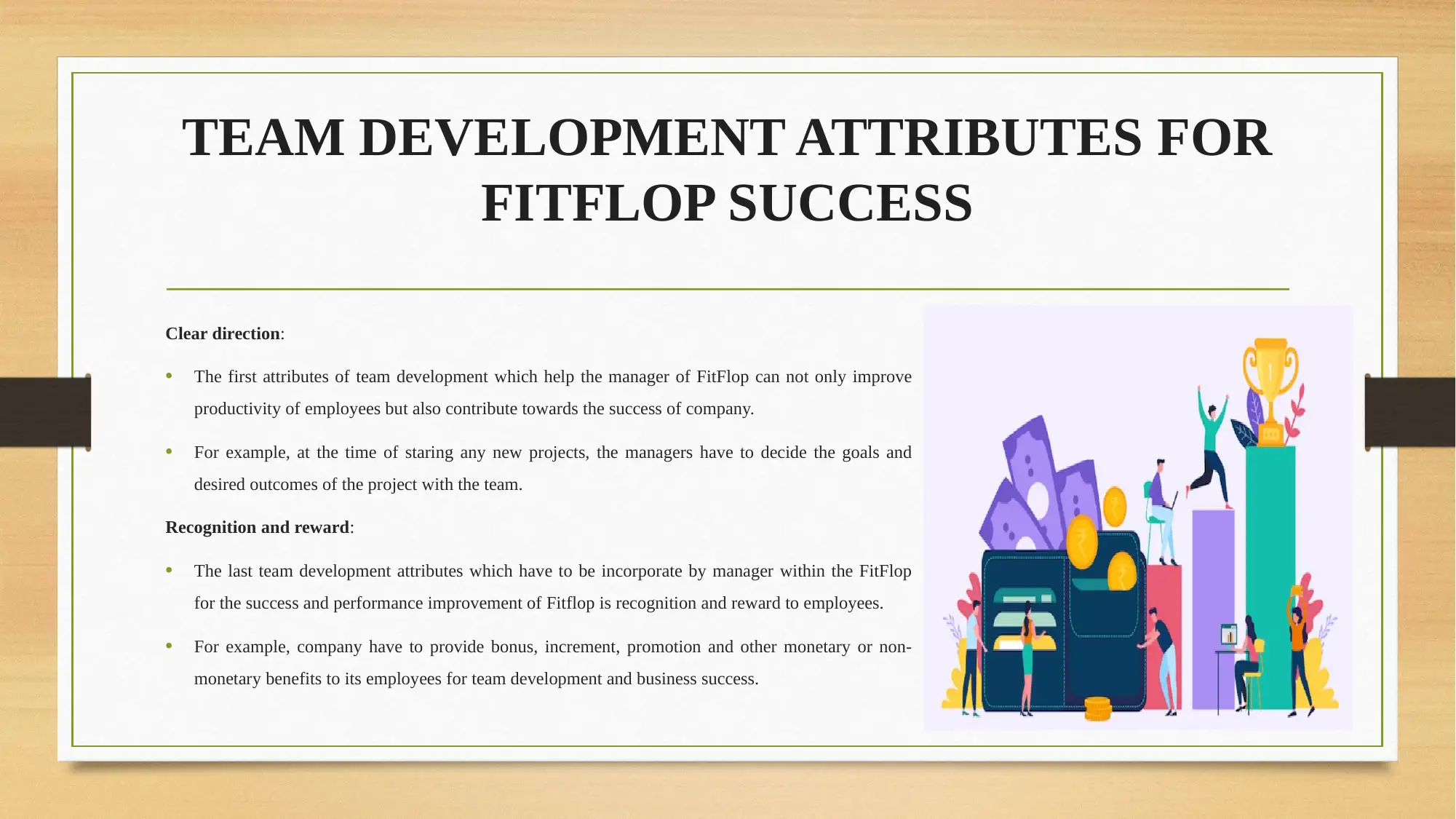
The last team development attributes which have to be incorporate by manager within the FitFlop
for the success and performance improvement of Fitflop is recognition and reward to employees.
For example, company have to provide bonus, increment, promotion and other monetary or non-
monetary benefits to its employees for team development and business success.
Document Page
CURRENT STRATEGIES USED BY FITFLOP
COMPANY
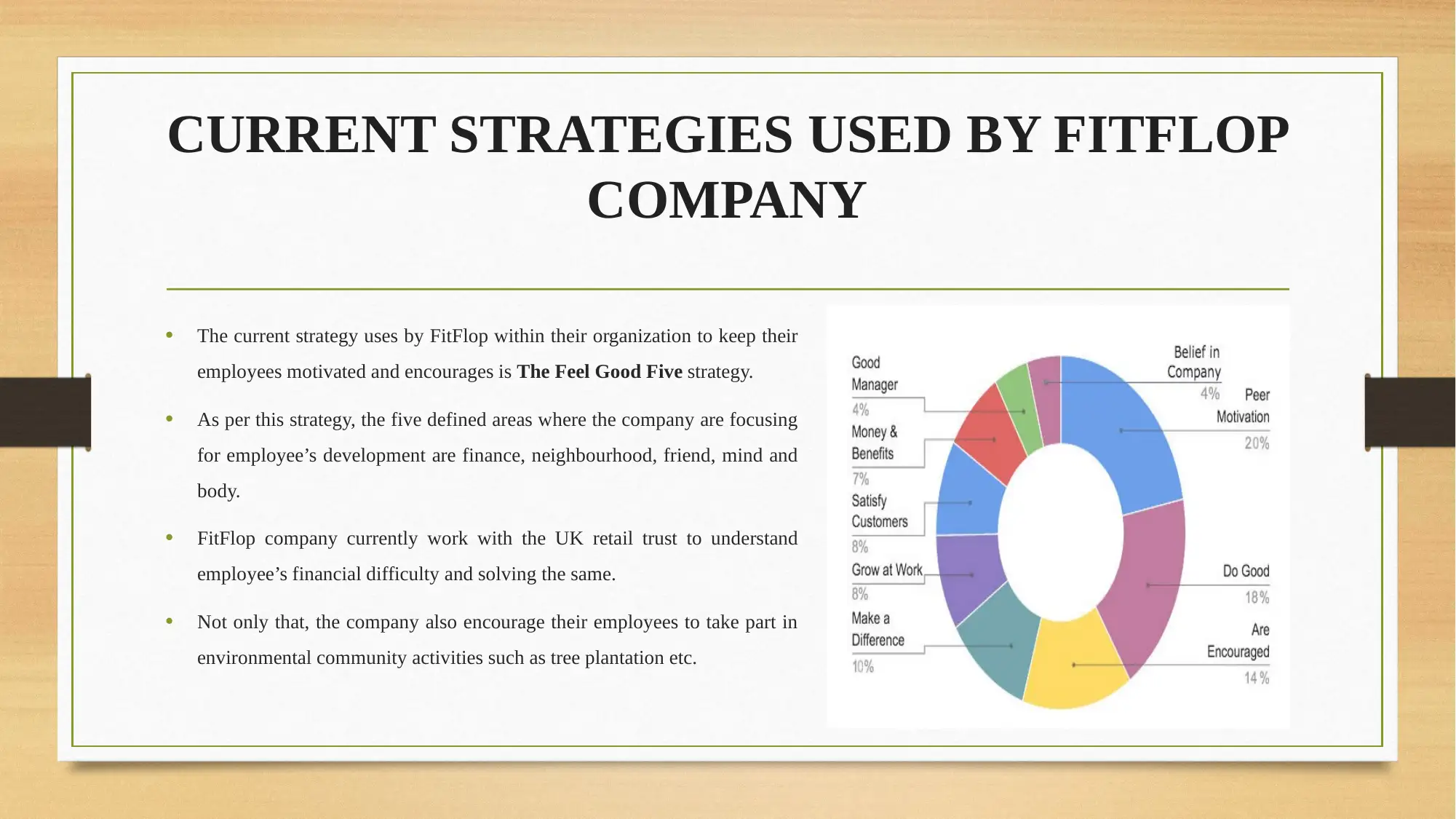
The current strategy uses by FitFlop within their organization to keep their
employees motivated and encourages is The Feel Good Five strategy.
As per this strategy, the five defined areas where the company are focusing
for employee’s development are finance, neighbourhood, friend, mind and
body.
FitFlop company currently work with the UK retail trust to understand
employee’s financial difficulty and solving the same.
Not only that, the company also encourage their employees to take part in
environmental community activities such as tree plantation etc.
Document Page
CONCLUSION
The presentation has stated the strategy currently used by FitFlop in order to motivate its employees such as The Feel Good
Five.
The presentation has also concluded the Maslow’s Hierarchy of needs and T7 model of team effectiveness theory which help
manager of FitFlop to further motivate and build strong team within the organization.
These theories are recommendable to company along with the team development attributes.
It is because with the implementation of this theory and attributes FitFlop company not only build effective team and
workforce but also able to improve their business success.
tabler-icon-diamond-filled.svg

Paraphrase This Document

Need a fresh take? Get an instant paraphrase of this document with our AI Paraphraser
Document Page
REFERENCES
Books and Journals
Martín Hernández, P. and et.al., 2018. Enhancing motivation, engagement and team building among psychology undergraduates through game base learning.
Heystek, J. and Emekako, R., 2020. Leadership and motivation for improved academic performance in schools in low socio-economic contexts. International
Journal of Educational Management.
Khaleeva, O. and et.al., 2021. The Motivation as a Way of Students’ Involvement in the Distance Learning of Foreign Languages. In 13 th International
Conference Innovation in Language Learning Virtual Edition (p. 154).
Joynt, M., 2019. Motivation of School Board Members to Support Equity and Social Justice in Public Education.
Yamada, K., 2020. Is Team Unity a Predictor of Athletes’ Competitive Motivation?. The Japan Journal of Coaching Studies. 33(2). pp.207-217.
Chen, C. H. and et.al., 2020. Augmented reality and competition in robotics education: Effects on 21st century competencies, group collaboration and learning
motivation. Journal of Computer Assisted Learning. 36(6). pp.1052-1062.
chevron_up_icon
1 out of 8
circle_padding
hide_on_mobile
zoom_out_icon
[object Object]