AMSC700: Fonterra's Supply Chain and Logistics - Market Impact
VerifiedAdded on 2023/05/30
|29
|8171
|158
Report
AI Summary
This report provides a comprehensive analysis of Fonterra's supply chain and logistics, focusing on its impact on the international market. The analysis is divided into three key areas: integration and value generation, risk and conflict management, and transportation and logistics. The report uses visual stream maps to analyze each stage of the supply chain, primarily focusing on Fonterra's plant in Sydney. It highlights Fonterra's vertical supply chain management, diversification strategies, and integration efforts, including joint ventures and strategic alliances. The report also addresses sustainability aspects, including economic, environmental, and social considerations, as well as reverse logistics. The conclusion summarizes the findings and their implications for Fonterra's international market presence.

Contemporary issue
1 | P a g e
Supply chain and
logistics
1 | P a g e
Supply chain and
logistics

Paraphrase This Document
Need a fresh take? Get an instant paraphrase of this document with our AI Paraphraser

Contemporary issue
Executive Summary
This report is primarily discussing, about Logistic and Supply chain related with Fonterra’s dairy
cooperative limited. The Whole supply chain is divided into three parts and discussed each step
separately. The basis of discussion is on Integration and value generation, risk and conflict, and
transportation and logistics. In each step there is at least one visual stream map is provided and
analyzed. Most of the analysis done on plant based in Sydney. And some inbound and outbound
supply chain is analyzed as whole. The complex logistic system of Fonterra is and example of
how a vertical supply chain is managed and exhales. The answering to the research question is
being done in part of the question, the whole company is analyzed and followed by conclusion.
2 | P a g e
Executive Summary
This report is primarily discussing, about Logistic and Supply chain related with Fonterra’s dairy
cooperative limited. The Whole supply chain is divided into three parts and discussed each step
separately. The basis of discussion is on Integration and value generation, risk and conflict, and
transportation and logistics. In each step there is at least one visual stream map is provided and
analyzed. Most of the analysis done on plant based in Sydney. And some inbound and outbound
supply chain is analyzed as whole. The complex logistic system of Fonterra is and example of
how a vertical supply chain is managed and exhales. The answering to the research question is
being done in part of the question, the whole company is analyzed and followed by conclusion.
2 | P a g e

Contemporary issue
Contents
Introduction......................................................................................................................................5
Industries background..................................................................................................................5
Organizational background..........................................................................................................6
Solution 4.........................................................................................................................................7
Integration and Value Generation....................................................................................................9
Integration....................................................................................................................................9
Value generation............................................................................................................................11
Risk and conflict............................................................................................................................12
Risk Identification.....................................................................................................................12
Risk Assessment........................................................................................................................12
Risk Controlling.........................................................................................................................12
Transportation and Logistics (For students 1)...............................................................................13
Integration and Value Generation..................................................................................................15
Risks and Conflicts........................................................................................................................18
Risk Identification.....................................................................................................................18
Risk Assessment........................................................................................................................18
Risk Controlling.........................................................................................................................18
Transportation and Logistics.........................................................................................................19
Transportation............................................................................................................................19
Logistics.....................................................................................................................................20
Integration and Value Generation..................................................................................................20
Risks and Conflicts........................................................................................................................22
Risks identification....................................................................................................................22
Risks assessment........................................................................................................................23
Risks controlling........................................................................................................................23
Conflict......................................................................................................................................23
Transportation and Logistics.........................................................................................................24
Transportation............................................................................................................................24
Logistic......................................................................................................................................24
Sustainability Aspects....................................................................................................................25
3 | P a g e
Contents
Introduction......................................................................................................................................5
Industries background..................................................................................................................5
Organizational background..........................................................................................................6
Solution 4.........................................................................................................................................7
Integration and Value Generation....................................................................................................9
Integration....................................................................................................................................9
Value generation............................................................................................................................11
Risk and conflict............................................................................................................................12
Risk Identification.....................................................................................................................12
Risk Assessment........................................................................................................................12
Risk Controlling.........................................................................................................................12
Transportation and Logistics (For students 1)...............................................................................13
Integration and Value Generation..................................................................................................15
Risks and Conflicts........................................................................................................................18
Risk Identification.....................................................................................................................18
Risk Assessment........................................................................................................................18
Risk Controlling.........................................................................................................................18
Transportation and Logistics.........................................................................................................19
Transportation............................................................................................................................19
Logistics.....................................................................................................................................20
Integration and Value Generation..................................................................................................20
Risks and Conflicts........................................................................................................................22
Risks identification....................................................................................................................22
Risks assessment........................................................................................................................23
Risks controlling........................................................................................................................23
Conflict......................................................................................................................................23
Transportation and Logistics.........................................................................................................24
Transportation............................................................................................................................24
Logistic......................................................................................................................................24
Sustainability Aspects....................................................................................................................25
3 | P a g e
⊘ This is a preview!⊘
Do you want full access?
Subscribe today to unlock all pages.

Trusted by 1+ million students worldwide

Contemporary issue
Economic Sustainability............................................................................................................25
Environmental Sustainability.....................................................................................................25
Social sustainability...................................................................................................................26
Reverse logistic..............................................................................................................................26
Conclusion.....................................................................................................................................26
References......................................................................................................................................28
4 | P a g e
Economic Sustainability............................................................................................................25
Environmental Sustainability.....................................................................................................25
Social sustainability...................................................................................................................26
Reverse logistic..............................................................................................................................26
Conclusion.....................................................................................................................................26
References......................................................................................................................................28
4 | P a g e
Paraphrase This Document
Need a fresh take? Get an instant paraphrase of this document with our AI Paraphraser

Contemporary issue
Introduction
Industries background
Just few decades back, People started to own dairy animals and milk them to supply the milk for
their families and their communities. At that time those people are not having large number of
animals and milk their animals manually. After industrialisation of villages, which become cities
now are not in a position to keep large herd of animals and do manual work, but necessity of
milk rose as the city grows, and this necessity powers the development of milk supply system in
cities. To increase the supply, the numbers of animals were also increase with the help of
farming the herd. The farmers changed their attitudes from amateur way to professional milk
supplier in an organised way (quiroz, 2012).
The application of technology also helped the framers to assists in milking the animals and
processes the milk into various products. Initially they process their milk in farm itself, milked
product such as butter and cheese, after some time they utilized the technology to separate the
cream from milk, these separated creams can be further processed in factory to get the different
product like, butter, consumer milk, butter, cheese, yoghurt, condensed milk and dried milk.
Initially it was very difficult because, logistic and transportation was not easy due to road system
and lack of refrigeration system during movement. After 1950’s when refrigeration system
started in logistics, these milk products started to travel intercontinental distances and
industrialisation of dairy product happened. Todays, the dairy product is available in one corner
of the world which is made in some other corner of the world (Gomes, 2011).
The current global dairy industries are recorded as USD 421.2 billion at the end of 2017. In in
the current year it is expected to grow up with 10% increase. The most consumable product in
this sector is Milk. The global dairy market is measuring volume growth of 1.8% during the last
5 years. The dairy product is operated and trans ported by some world renown organisation,
some of them are top organisation in this sector, and in this sector one famous name is Fonterra’s
Cooperative group
5 | P a g e
Introduction
Industries background
Just few decades back, People started to own dairy animals and milk them to supply the milk for
their families and their communities. At that time those people are not having large number of
animals and milk their animals manually. After industrialisation of villages, which become cities
now are not in a position to keep large herd of animals and do manual work, but necessity of
milk rose as the city grows, and this necessity powers the development of milk supply system in
cities. To increase the supply, the numbers of animals were also increase with the help of
farming the herd. The farmers changed their attitudes from amateur way to professional milk
supplier in an organised way (quiroz, 2012).
The application of technology also helped the framers to assists in milking the animals and
processes the milk into various products. Initially they process their milk in farm itself, milked
product such as butter and cheese, after some time they utilized the technology to separate the
cream from milk, these separated creams can be further processed in factory to get the different
product like, butter, consumer milk, butter, cheese, yoghurt, condensed milk and dried milk.
Initially it was very difficult because, logistic and transportation was not easy due to road system
and lack of refrigeration system during movement. After 1950’s when refrigeration system
started in logistics, these milk products started to travel intercontinental distances and
industrialisation of dairy product happened. Todays, the dairy product is available in one corner
of the world which is made in some other corner of the world (Gomes, 2011).
The current global dairy industries are recorded as USD 421.2 billion at the end of 2017. In in
the current year it is expected to grow up with 10% increase. The most consumable product in
this sector is Milk. The global dairy market is measuring volume growth of 1.8% during the last
5 years. The dairy product is operated and trans ported by some world renown organisation,
some of them are top organisation in this sector, and in this sector one famous name is Fonterra’s
Cooperative group
5 | P a g e

Contemporary issue
Organizational background
The formation of Fonterra was taken place 2001, by the merger of two largest cooperative group,
in which one is New Zealand dairy group, and another is Kiwi Cooperative dairy. The mergers
process was handled by New Zealand dairy board. The annual turnover for this cooperative
group is around NZ$ 18 billion, as most of the company in New Zealand, has export-based
company, and Fonterra is one of them. There are numbers of subsidiaries companies which is
associated with Fonterra group, some of them are Dairy farmers, National food Australia. Only
in Australia alone the revenues generated from Australia is NZ $ 1 billion, In 2015, Fonterra
acquisition of yogurt and dairy desert from Nestle (Simon Israel, 2018).
Now we will come to the question that, how this company is making more impact on
International market by value addition in Supply chain. As we discussed earlier acquisition is the
prime strategy for this company, the activity is not limited to Australia only, it goes beyond
Asian and American market. The volume, value and velocity, signifies, the strategical approach
for this company. As far as its supply chain strategy is concerned, its diversified geographic
presence is the main
impact tool for global market. So, risk of operating as a single company is insulated by doing this
approach. The overall revenue generation from china is 17.58%, Similarly, from Australia it is
around 6.5 %, the New Zealand itself providing around 11% of revenue, the portion from US and
6 | P a g e
Figure 1- Overall Strategic approach for Fonterra's
Organizational background
The formation of Fonterra was taken place 2001, by the merger of two largest cooperative group,
in which one is New Zealand dairy group, and another is Kiwi Cooperative dairy. The mergers
process was handled by New Zealand dairy board. The annual turnover for this cooperative
group is around NZ$ 18 billion, as most of the company in New Zealand, has export-based
company, and Fonterra is one of them. There are numbers of subsidiaries companies which is
associated with Fonterra group, some of them are Dairy farmers, National food Australia. Only
in Australia alone the revenues generated from Australia is NZ $ 1 billion, In 2015, Fonterra
acquisition of yogurt and dairy desert from Nestle (Simon Israel, 2018).
Now we will come to the question that, how this company is making more impact on
International market by value addition in Supply chain. As we discussed earlier acquisition is the
prime strategy for this company, the activity is not limited to Australia only, it goes beyond
Asian and American market. The volume, value and velocity, signifies, the strategical approach
for this company. As far as its supply chain strategy is concerned, its diversified geographic
presence is the main
impact tool for global market. So, risk of operating as a single company is insulated by doing this
approach. The overall revenue generation from china is 17.58%, Similarly, from Australia it is
around 6.5 %, the New Zealand itself providing around 11% of revenue, the portion from US and
6 | P a g e
Figure 1- Overall Strategic approach for Fonterra's
⊘ This is a preview!⊘
Do you want full access?
Subscribe today to unlock all pages.
Trusted by 1+ million students worldwide

Contemporary issue
Europe is 6.48% and 4.38% respectively, rest are earned from other part of the world (Dunn,
2012).
The second strategic approach which is related with supply chain is growth in revenue, the
average annual growth for this company is around 10.1 %. The sustained revenue growth is
acclaimed by high liquidity position, keeps the companies in advantageous position. The current
ratio for liquidity is 1.28 higher than its competitors Nestle. It is a clear indication of company’s
strong liquidity position as compared to its competitors. In such stage company always trying to
fund any potential market opportunity in the world. The cash and equivalent for the company is
around NZ$ 400 and increasing by 6.1% per annum. As we said earlier its diversification policy
is its main approach for integrating supply chain. The current joint venture with Tillamook,
County creamery association (TCCA), Three-mile Canyon farms, helped this company to expand
its network in all over USA, which provides the reliable and efficient supply chain (Simon Israel,
2018).
Solution 4
The figure given below is about the raw material movement in Australia for different Fonterra
plant.
7 | P a g e
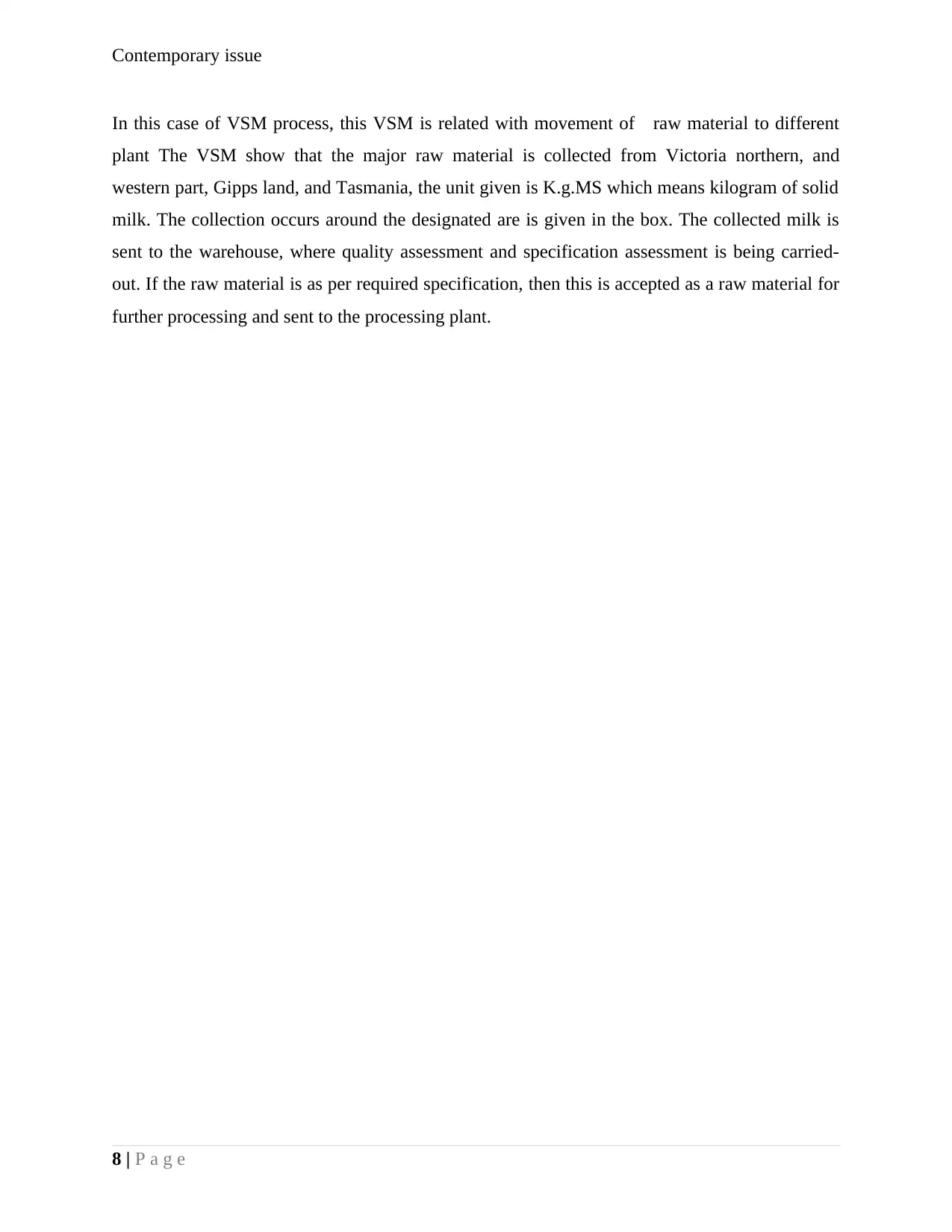
Figure 2 VSM for Raw material Supply in Fonterra's Australia
Europe is 6.48% and 4.38% respectively, rest are earned from other part of the world (Dunn,
2012).
The second strategic approach which is related with supply chain is growth in revenue, the
average annual growth for this company is around 10.1 %. The sustained revenue growth is
acclaimed by high liquidity position, keeps the companies in advantageous position. The current
ratio for liquidity is 1.28 higher than its competitors Nestle. It is a clear indication of company’s
strong liquidity position as compared to its competitors. In such stage company always trying to
fund any potential market opportunity in the world. The cash and equivalent for the company is
around NZ$ 400 and increasing by 6.1% per annum. As we said earlier its diversification policy
is its main approach for integrating supply chain. The current joint venture with Tillamook,
County creamery association (TCCA), Three-mile Canyon farms, helped this company to expand
its network in all over USA, which provides the reliable and efficient supply chain (Simon Israel,
2018).
Solution 4
The figure given below is about the raw material movement in Australia for different Fonterra
plant.
7 | P a g e
Figure 2 VSM for Raw material Supply in Fonterra's Australia
Paraphrase This Document
Need a fresh take? Get an instant paraphrase of this document with our AI Paraphraser
Contemporary issue
In this case of VSM process, this VSM is related with movement of raw material to different
plant The VSM show that the major raw material is collected from Victoria northern, and
western part, Gipps land, and Tasmania, the unit given is K.g.MS which means kilogram of solid
milk. The collection occurs around the designated are is given in the box. The collected milk is
sent to the warehouse, where quality assessment and specification assessment is being carried-
out. If the raw material is as per required specification, then this is accepted as a raw material for
further processing and sent to the processing plant.
8 | P a g e
In this case of VSM process, this VSM is related with movement of raw material to different
plant The VSM show that the major raw material is collected from Victoria northern, and
western part, Gipps land, and Tasmania, the unit given is K.g.MS which means kilogram of solid
milk. The collection occurs around the designated are is given in the box. The collected milk is
sent to the warehouse, where quality assessment and specification assessment is being carried-
out. If the raw material is as per required specification, then this is accepted as a raw material for
further processing and sent to the processing plant.
8 | P a g e

Contemporary issue
Integration and Value Generation
(For students 1)
Integration
The integration of Fonterra organisation is vertically integrated supply chain, this means that,
each stage of supply chain is being owned by the same company. As we know that it is
cooperative company, most of the local dairy farmers has left the own production and started to
delivery their milk to the giant company there is benefit it. They are getting fair price and they
own some ownership with this company, in the other way consumer get ensured low price of
dairy product. This kind of corporate investment in dairy business results reduces cost of
products across all stage of supply chain and has high presence of raw material supplier like
dairy farmers. As far as legal implication is concern, this vertical integration is safe for any
organisation, this is due to the reason that the shareholder are owners are getting optimum
amount of benefits in this kind of model (Gordon, 2012).
In case of company like Fonterra, integration of supply chain means more benefit, because this is
supported by government as well as global milk pools. The integration provides strong
foundation to growth strategy. The vertical integration lead to lowest cost production for any
place in this globe. The foundation is so strong that, it leads to great impact on global business.
The one more benefit to Fonterra for being vertically integrated supply chain is that, it has end to
end supply chain which provides greater level of quality and traceability. The Fonterra
cooperative developed seven integration strategy to develop themselves into global and they are
strictly associated with these rules (Gulc, 2017).
Cheapest supplier of dairy products with highest quality-
It is one of the most important believe that, they must reduce yearly 3% of cost across its supply
chain to gain main competitive advantage.
Capable to setting price and top inventory management in global commodity
market
9 | P a g e
Integration and Value Generation
(For students 1)
Integration
The integration of Fonterra organisation is vertically integrated supply chain, this means that,
each stage of supply chain is being owned by the same company. As we know that it is
cooperative company, most of the local dairy farmers has left the own production and started to
delivery their milk to the giant company there is benefit it. They are getting fair price and they
own some ownership with this company, in the other way consumer get ensured low price of
dairy product. This kind of corporate investment in dairy business results reduces cost of
products across all stage of supply chain and has high presence of raw material supplier like
dairy farmers. As far as legal implication is concern, this vertical integration is safe for any
organisation, this is due to the reason that the shareholder are owners are getting optimum
amount of benefits in this kind of model (Gordon, 2012).
In case of company like Fonterra, integration of supply chain means more benefit, because this is
supported by government as well as global milk pools. The integration provides strong
foundation to growth strategy. The vertical integration lead to lowest cost production for any
place in this globe. The foundation is so strong that, it leads to great impact on global business.
The one more benefit to Fonterra for being vertically integrated supply chain is that, it has end to
end supply chain which provides greater level of quality and traceability. The Fonterra
cooperative developed seven integration strategy to develop themselves into global and they are
strictly associated with these rules (Gulc, 2017).
Cheapest supplier of dairy products with highest quality-
It is one of the most important believe that, they must reduce yearly 3% of cost across its supply
chain to gain main competitive advantage.
Capable to setting price and top inventory management in global commodity
market
9 | P a g e
⊘ This is a preview!⊘
Do you want full access?
Subscribe today to unlock all pages.
Trusted by 1+ million students worldwide

Contemporary issue
This organisation always in search of opportunity to increase its global market with the help of
accessing improved information. In result Fonterra developed enhanced analytical system to
supply chain management and product development.
Partnership with top developer of dairy product in global market
There is team in Fonterra who always trying to find the improved integration and collaboration
with key customers. These improved interactions further strengthen the relationship with
customers and provide opportunity with relationship with other customers.
World class nutritional milk marketer.
As per forecast done by company, there is certain increased demand for nutritional milk product,
in this condition providing the innovative product could create a new customer and niche market.
World class dairy marketer for food services in markets
Fonterra is providing premium services in food market industries by supplying dairy product in
best available price.
Leading dairy marketer to food services in key markets.
It is a Fonterra believes that, there are lot of opportunity which could be identified and grabbed
in global market but doing this there is need of integrated strategies across the value chain.
Vertical integration in four key regional market
Fonterra’s one of the initial projects which was named as Jedi. This project was group of about
forty interconnected projects, which aims to enhance the strategic goals to be world leader in
their sectors. Now it has in place (Laing, 2012).
These are the advantages which is related to integration of Fonterra supply chain which is
identified as vertical integration, but this kind of integration also has some major disadvantage
which is stated below.
10 | P a g e
This organisation always in search of opportunity to increase its global market with the help of
accessing improved information. In result Fonterra developed enhanced analytical system to
supply chain management and product development.
Partnership with top developer of dairy product in global market
There is team in Fonterra who always trying to find the improved integration and collaboration
with key customers. These improved interactions further strengthen the relationship with
customers and provide opportunity with relationship with other customers.
World class nutritional milk marketer.
As per forecast done by company, there is certain increased demand for nutritional milk product,
in this condition providing the innovative product could create a new customer and niche market.
World class dairy marketer for food services in markets
Fonterra is providing premium services in food market industries by supplying dairy product in
best available price.
Leading dairy marketer to food services in key markets.
It is a Fonterra believes that, there are lot of opportunity which could be identified and grabbed
in global market but doing this there is need of integrated strategies across the value chain.
Vertical integration in four key regional market
Fonterra’s one of the initial projects which was named as Jedi. This project was group of about
forty interconnected projects, which aims to enhance the strategic goals to be world leader in
their sectors. Now it has in place (Laing, 2012).
These are the advantages which is related to integration of Fonterra supply chain which is
identified as vertical integration, but this kind of integration also has some major disadvantage
which is stated below.
10 | P a g e
Paraphrase This Document
Need a fresh take? Get an instant paraphrase of this document with our AI Paraphraser

Contemporary issue
It is not possible to do all the integration vertically, because we cannot own all the services
around the globe. Ata some point and some product we need to procure from other supplier or
marketed by other retailers, in this condition the vertical integration also consist of some part by
horizontal integration. Vertical integration is more likely to occur where there is chance of
market failure, and transaction cost is high. The food market especially dairy market is
susceptible to this problem (Rydberg, 2012).
Value generation
(For students 1)
The value generation related with raw material concern, there is not much difference in Fonterra
and other leading industries in this sector. But still it is not zero marks for Fonterra cooperatives,
from least 10 years they started container system for grabbing milk from dairy farm and removed
the use of plastic. Fonterra is a global company, and it is liable to face national as well as
international market in the whole world, the regulation imparted by different countries,
agreement and treaties for gaining access to the market of other countries food system,
environmental safety and quality. Keeping all this in mind Fonterra established world class
research lab with the cost $100 million. The research is being carried out in this laboratory is
categorised in six level, Food and environment assurance, Food system, Bioactive and health,
Process technology, On farm productivity and intellectual property. Fonterra is a company who
wants to lead the race to explore the health and nutritional potential of raw milk and to strive
through innovation to develop products to meet the needs of an increasingly health conscious
world and it ranges from quality ingredient of the food to fast moving consumer goods. The
company also established a PAN analytical ‘MiniPal’ system by which they can test the milk in
very frequently, so that action can be taken immediately. The company is responsible for entire
cow to customer value chain addition stating from milk collection through logistics and
marketing of quality ingredients to international food industries (Anvar, 2013).
11 | P a g e
It is not possible to do all the integration vertically, because we cannot own all the services
around the globe. Ata some point and some product we need to procure from other supplier or
marketed by other retailers, in this condition the vertical integration also consist of some part by
horizontal integration. Vertical integration is more likely to occur where there is chance of
market failure, and transaction cost is high. The food market especially dairy market is
susceptible to this problem (Rydberg, 2012).
Value generation
(For students 1)
The value generation related with raw material concern, there is not much difference in Fonterra
and other leading industries in this sector. But still it is not zero marks for Fonterra cooperatives,
from least 10 years they started container system for grabbing milk from dairy farm and removed
the use of plastic. Fonterra is a global company, and it is liable to face national as well as
international market in the whole world, the regulation imparted by different countries,
agreement and treaties for gaining access to the market of other countries food system,
environmental safety and quality. Keeping all this in mind Fonterra established world class
research lab with the cost $100 million. The research is being carried out in this laboratory is
categorised in six level, Food and environment assurance, Food system, Bioactive and health,
Process technology, On farm productivity and intellectual property. Fonterra is a company who
wants to lead the race to explore the health and nutritional potential of raw milk and to strive
through innovation to develop products to meet the needs of an increasingly health conscious
world and it ranges from quality ingredient of the food to fast moving consumer goods. The
company also established a PAN analytical ‘MiniPal’ system by which they can test the milk in
very frequently, so that action can be taken immediately. The company is responsible for entire
cow to customer value chain addition stating from milk collection through logistics and
marketing of quality ingredients to international food industries (Anvar, 2013).
11 | P a g e

Contemporary issue
Risk and conflict
(For students 1)
The risk associated with raw material for Fonterra company enlist various risk associated with
farmers and price of milk.
Risk Identification
The uncertainty related with price of milk, is a significant risk for their business, because of 95%
of new eland milk is exported to other countries and there is always ups and downs for milk price
in global market. Like other countries there is no provision for domestic demand dependability
and subsidies given by government in the time of trouble.
Risk Assessment
The farmers of New Zealand are not able to clearly predict the fluctuations in price. The
government is also restructuring the Global supply and demand dynamics along with the
Fonterra cooperatives.
Risk Controlling
Many farmers are trained/under training to use the risk management tools, the use of insurance
fixed interest, fix price contract management by Fonterra is very supportive tools for Farmers.
Fonterra cooperative also in development of risk management plan which is very important for
procurement of raw material and their suppliers. The availability of various risk management
tools ensures the resilience in price of milk volatility and provide strong base for price. After
initiation of future & option in New Zealand milk industries also going to help to their farmers.
The company is always trying to establish the information flow between farmers and market
problem, so that they can understand the whole scenario easily (Oscar Dowson, 2018).
The conflict for any organisation is a kind of friction, or discord arising within an organisation,
when the belief or action by people of organisation are either resisted by or unacceptable one or
more members of same or other organisation. The rises of conflict can be within same
organisation or different organisation. In Fonterra Cooperatives, conflict can arise, when a
related person in company during work gets information or influence by company and uses it for
12 | P a g e
Risk and conflict
(For students 1)
The risk associated with raw material for Fonterra company enlist various risk associated with
farmers and price of milk.
Risk Identification
The uncertainty related with price of milk, is a significant risk for their business, because of 95%
of new eland milk is exported to other countries and there is always ups and downs for milk price
in global market. Like other countries there is no provision for domestic demand dependability
and subsidies given by government in the time of trouble.
Risk Assessment
The farmers of New Zealand are not able to clearly predict the fluctuations in price. The
government is also restructuring the Global supply and demand dynamics along with the
Fonterra cooperatives.
Risk Controlling
Many farmers are trained/under training to use the risk management tools, the use of insurance
fixed interest, fix price contract management by Fonterra is very supportive tools for Farmers.
Fonterra cooperative also in development of risk management plan which is very important for
procurement of raw material and their suppliers. The availability of various risk management
tools ensures the resilience in price of milk volatility and provide strong base for price. After
initiation of future & option in New Zealand milk industries also going to help to their farmers.
The company is always trying to establish the information flow between farmers and market
problem, so that they can understand the whole scenario easily (Oscar Dowson, 2018).
The conflict for any organisation is a kind of friction, or discord arising within an organisation,
when the belief or action by people of organisation are either resisted by or unacceptable one or
more members of same or other organisation. The rises of conflict can be within same
organisation or different organisation. In Fonterra Cooperatives, conflict can arise, when a
related person in company during work gets information or influence by company and uses it for
12 | P a g e
⊘ This is a preview!⊘
Do you want full access?
Subscribe today to unlock all pages.
Trusted by 1+ million students worldwide

1 out of 29


Your All-in-One AI-Powered Toolkit for Academic Success.
+13062052269
info@desklib.com
Available 24*7 on WhatsApp / Email
![[object Object]](/_next/static/media/star-bottom.7253800d.svg)
Unlock your academic potential
Copyright © 2020–2026 A2Z Services. All Rights Reserved. Developed and managed by ZUCOL.