Food Safety Management: Contamination, Spoilage, and Storage
VerifiedAdded on 2020/12/10
|22
|6924
|374
Report
AI Summary
This report provides a comprehensive overview of food safety management, covering critical aspects such as the controls available to prevent food contamination, including biological, physical, and chemical sources. It analyzes agents of food spoilage and evaluates the effectiveness of various food preservation methods. Furthermore, the report details methods for the safe storage of food, emphasizing temperature control systems and the importance of personal hygiene in maintaining food safety. The introduction highlights the significance of food safety in the growing food industry and sets the stage for a detailed examination of these crucial elements. The report also differentiates between food poisoning and foodborne illness and provides insights into the sources and prevention of food contamination.
FOOD SAFETY
MANAGEMENT
MANAGEMENT

Paraphrase This Document
Need a fresh take? Get an instant paraphrase of this document with our AI Paraphraser
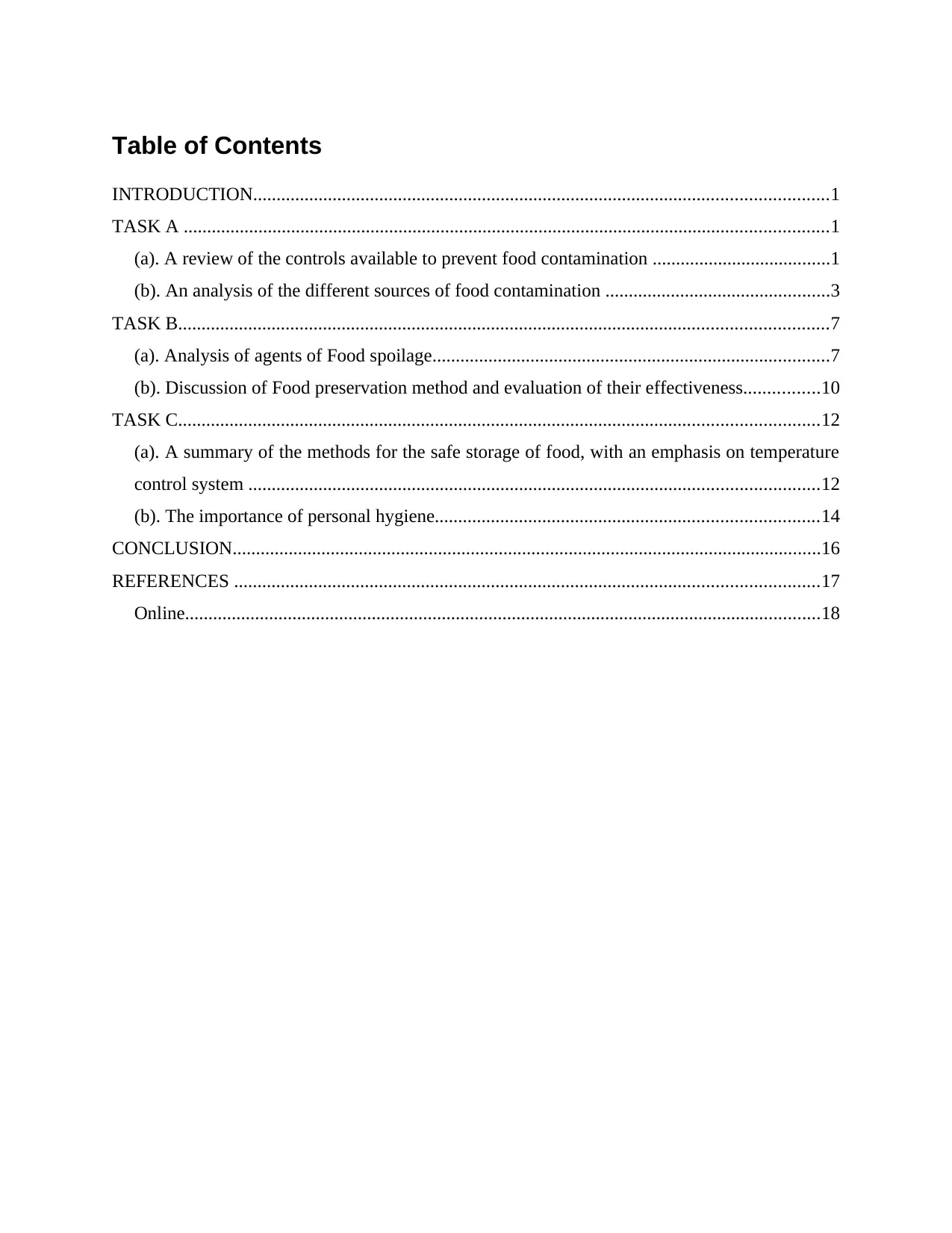
Table of Contents
INTRODUCTION...........................................................................................................................1
TASK A ..........................................................................................................................................1
(a). A review of the controls available to prevent food contamination ......................................1
(b). An analysis of the different sources of food contamination ................................................3
TASK B...........................................................................................................................................7
(a). Analysis of agents of Food spoilage.....................................................................................7
(b). Discussion of Food preservation method and evaluation of their effectiveness................10
TASK C.........................................................................................................................................12
(a). A summary of the methods for the safe storage of food, with an emphasis on temperature
control system ..........................................................................................................................12
(b). The importance of personal hygiene..................................................................................14
CONCLUSION..............................................................................................................................16
REFERENCES .............................................................................................................................17
Online........................................................................................................................................18
INTRODUCTION...........................................................................................................................1
TASK A ..........................................................................................................................................1
(a). A review of the controls available to prevent food contamination ......................................1
(b). An analysis of the different sources of food contamination ................................................3
TASK B...........................................................................................................................................7
(a). Analysis of agents of Food spoilage.....................................................................................7
(b). Discussion of Food preservation method and evaluation of their effectiveness................10
TASK C.........................................................................................................................................12
(a). A summary of the methods for the safe storage of food, with an emphasis on temperature
control system ..........................................................................................................................12
(b). The importance of personal hygiene..................................................................................14
CONCLUSION..............................................................................................................................16
REFERENCES .............................................................................................................................17
Online........................................................................................................................................18
INTRODUCTION
One of the fastest and biggest growing industry in recent times is food industry.
Consumers expectations are moving higher and their safety and well being is the priority of
every organization. Food safety management is the administration group made for the safety of
consumer well being. A food organization that holds the certification for such system of
management shows the assurance that organization is concerned the appropriate direction of
managing this process. Present assignment is based on the process of managing safety of various
foods. The report will include the review of the controls available to prevent food contamination.
Assignment will also consist of different sources of food contaminations. Present study will
provide the deep insight of analysis of the agents of food spoilage. It will also give the
information about the food preservation method and an evaluation of their effectiveness. Later,
the report will present the methods for the safe storage of foods with an emphasis on temperature
control systems along with the importance of personal hygiene.
TASK A
(a). A review of the controls available to prevent food contamination
Food contamination is the harmful chemicals and microorganism in the foods, which
cause consumer illness. There is risk founds in every type food to be get contaminated which
increases the chance of affecting the health of individual. Food can be contaminated by various
way like chemical, in this the food has been infected by some type of material substance as
chemicals seems to be useful when cleaning in the kitchen so they can easily affect food. To
minimise the risk of contamination such poisonous stuff must be properly labelled and stored
separately for food stuff (Lahou and et.al., 2015). Another is biological contamination which is
cause due to substance produced by living creatures such as rodents , pests , human etc. and the
last is physical contamination in which food is contaminated by foreign object at some stage of
production process.
Following are review of the controls available to prevent food contamination
Before handling food
Wash the hands with the uses of hand wash properly for the 15-20 seconds.
1
One of the fastest and biggest growing industry in recent times is food industry.
Consumers expectations are moving higher and their safety and well being is the priority of
every organization. Food safety management is the administration group made for the safety of
consumer well being. A food organization that holds the certification for such system of
management shows the assurance that organization is concerned the appropriate direction of
managing this process. Present assignment is based on the process of managing safety of various
foods. The report will include the review of the controls available to prevent food contamination.
Assignment will also consist of different sources of food contaminations. Present study will
provide the deep insight of analysis of the agents of food spoilage. It will also give the
information about the food preservation method and an evaluation of their effectiveness. Later,
the report will present the methods for the safe storage of foods with an emphasis on temperature
control systems along with the importance of personal hygiene.
TASK A
(a). A review of the controls available to prevent food contamination
Food contamination is the harmful chemicals and microorganism in the foods, which
cause consumer illness. There is risk founds in every type food to be get contaminated which
increases the chance of affecting the health of individual. Food can be contaminated by various
way like chemical, in this the food has been infected by some type of material substance as
chemicals seems to be useful when cleaning in the kitchen so they can easily affect food. To
minimise the risk of contamination such poisonous stuff must be properly labelled and stored
separately for food stuff (Lahou and et.al., 2015). Another is biological contamination which is
cause due to substance produced by living creatures such as rodents , pests , human etc. and the
last is physical contamination in which food is contaminated by foreign object at some stage of
production process.
Following are review of the controls available to prevent food contamination
Before handling food
Wash the hands with the uses of hand wash properly for the 15-20 seconds.
1
⊘ This is a preview!⊘
Do you want full access?
Subscribe today to unlock all pages.

Trusted by 1+ million students worldwide
Before and after processing the food thoroughly clean the surface that comes into contact
with food (Chen and et.al., 2015). During and after the food preparation utensils like
knives , chopping board and bench tops should also be cleaned .
Wash all the fruits and vegetable properly before cooking or eating them.
Do not rinse raw poultry or meat before cooking it. Removal raw meat under moving
water can origin the juices from the meat to splash and contaminate benches, utensils or
other food.
Whilst handling food
Do not permit people who are suffering form any type disease to handle food as it is very
dangerous. It can affect particular person by transfer of disease from one person to
another. Ideally, someone is suffering from food poisoning should not handle food until
48 hours after symptoms subside
Take the use of different cutting boards of meat and meat juices and fruits and vegetables
(Jacxsens and et.al., 2017).
They must use disposal gloves and change them as per the task.
Cooking
Bacteria can cause the contamination of food and can reproduce rapidly if they are left at
room temperature for more than two hours. So make sure foods are refrigerated before
cooking as soon as possible afterwards.
To prevent other food from cross- contamination keep raw meat separate.
Take the use of meat thermometer to check internal temperature of cooked meat. Once it
has been cooked it should be kept below 5 degree celcious above 60 degree celecious to
save it from growing bacteria.
Reheating
While reheating soups , marinades and gravies they should be well cooked or boiled.
Food must be reheated at a minimum of 60 degree celcious as soon as possible and
within two hours of being takes from fridge (Castro-Ibañez and et.al., 2015).
Serving food
Do not keep food out side the refrigerator for the too long time because at the room
temperature bacteria begin to multiply rapidly after two hours at room temperature.
2
with food (Chen and et.al., 2015). During and after the food preparation utensils like
knives , chopping board and bench tops should also be cleaned .
Wash all the fruits and vegetable properly before cooking or eating them.
Do not rinse raw poultry or meat before cooking it. Removal raw meat under moving
water can origin the juices from the meat to splash and contaminate benches, utensils or
other food.
Whilst handling food
Do not permit people who are suffering form any type disease to handle food as it is very
dangerous. It can affect particular person by transfer of disease from one person to
another. Ideally, someone is suffering from food poisoning should not handle food until
48 hours after symptoms subside
Take the use of different cutting boards of meat and meat juices and fruits and vegetables
(Jacxsens and et.al., 2017).
They must use disposal gloves and change them as per the task.
Cooking
Bacteria can cause the contamination of food and can reproduce rapidly if they are left at
room temperature for more than two hours. So make sure foods are refrigerated before
cooking as soon as possible afterwards.
To prevent other food from cross- contamination keep raw meat separate.
Take the use of meat thermometer to check internal temperature of cooked meat. Once it
has been cooked it should be kept below 5 degree celcious above 60 degree celecious to
save it from growing bacteria.
Reheating
While reheating soups , marinades and gravies they should be well cooked or boiled.
Food must be reheated at a minimum of 60 degree celcious as soon as possible and
within two hours of being takes from fridge (Castro-Ibañez and et.al., 2015).
Serving food
Do not keep food out side the refrigerator for the too long time because at the room
temperature bacteria begin to multiply rapidly after two hours at room temperature.
2
Paraphrase This Document
Need a fresh take? Get an instant paraphrase of this document with our AI Paraphraser
People standing in line to serve food may sneeze or cough, and this can contaminate the
food.
Food storage
To prevent the contact between raw meat and other food put the raw meat into origin
container.
To prevent it from the cross contamination from any drips that spill from container put it
at bottom of the fridge.
Food items that will not be baked or reheated should never be defrosted at room
temperature (Motarjemi and Lelieveld, 2014.). Always unfreeze them in the fridge.
Always check the expiry dates of the products before buying it.
Utensils
Use the cutting boards until they are in good conditions without scratches on their
surface.
Use plastic and glass cutting boards for raw meat and replaced them periodically.
Use the hot water and scrubs to clean the boards and other utensils.
Other guidelines
If one is having any doubt regarding the food is safe or not , throw it away.
Be aware of environmental conditions which can effect food , do not use the
contaminated food because this will cause food poisoning.
Assure there is adequate food formulation space to alter safe planning, particularly the
separate preparation of raw and cooked food.
Ensure you have enough containers to store raw and cooked foods individually
Make sure you have sufficient room in the refrigerator to enable cold foods to be
refrigerated.
Avoiding physical contamination of food
It is essential to keep utensils in a good condition clear and regularly maintained to avoid
food contamination.
The ingredients of the food must be prepared carefully along with this salad, fruits and
vegetables should be washed properly to avoid physical contamination.
3
food.
Food storage
To prevent the contact between raw meat and other food put the raw meat into origin
container.
To prevent it from the cross contamination from any drips that spill from container put it
at bottom of the fridge.
Food items that will not be baked or reheated should never be defrosted at room
temperature (Motarjemi and Lelieveld, 2014.). Always unfreeze them in the fridge.
Always check the expiry dates of the products before buying it.
Utensils
Use the cutting boards until they are in good conditions without scratches on their
surface.
Use plastic and glass cutting boards for raw meat and replaced them periodically.
Use the hot water and scrubs to clean the boards and other utensils.
Other guidelines
If one is having any doubt regarding the food is safe or not , throw it away.
Be aware of environmental conditions which can effect food , do not use the
contaminated food because this will cause food poisoning.
Assure there is adequate food formulation space to alter safe planning, particularly the
separate preparation of raw and cooked food.
Ensure you have enough containers to store raw and cooked foods individually
Make sure you have sufficient room in the refrigerator to enable cold foods to be
refrigerated.
Avoiding physical contamination of food
It is essential to keep utensils in a good condition clear and regularly maintained to avoid
food contamination.
The ingredients of the food must be prepared carefully along with this salad, fruits and
vegetables should be washed properly to avoid physical contamination.
3
Xray machine can be used for detecting metal detection. As it will flag the product as
having physical contaminant so production can be bracketed to determine upcoming step.
Banning jewellery, pen tops, buttons, etc that contains chemicals anwhich come in touch
with food physically that may cause contamination.
Controlling pest is also essential to prevent contamination. This is because pest is used to
avoid germs and orgnasims and may come in contact with food.
Smoking must also be prohibited to avoid contamination physically.
Avoiding chemical contamination of food
Checking of the food packaging is also necessary to prevent any kind of chemical
contamination.
Environmental testing is also very important to avoid to any kind of food contamination,
for example areas such as storage units, transports, door handles etc must be clean and
tested to avoid any type of food hazard or contamination.
Food must be stored at proper place that may avoid germs to come in contact with it.
While growing and breeding of food, chemicals must be controlled. They must allow
them to grow naturally.
They must also provide with essential training related to COSHH that may lead them to
know about chemicals that are hazardous to health.
(b). An analysis of the different sources of food contamination
Fruits and vegetables are the integral part of our diet. Since years, the usage of pesticides
and insecticides have been increased drastically with which end number of risks number of
health problems are also increased. Apart from these insecticides and pesticides there are many
other scenarios which leads the food contaminated. People are becoming extra cautious when it
comes to tackling food items, only rinsing it from plain water does not serves the purposes. Some
4
having physical contaminant so production can be bracketed to determine upcoming step.
Banning jewellery, pen tops, buttons, etc that contains chemicals anwhich come in touch
with food physically that may cause contamination.
Controlling pest is also essential to prevent contamination. This is because pest is used to
avoid germs and orgnasims and may come in contact with food.
Smoking must also be prohibited to avoid contamination physically.
Avoiding chemical contamination of food
Checking of the food packaging is also necessary to prevent any kind of chemical
contamination.
Environmental testing is also very important to avoid to any kind of food contamination,
for example areas such as storage units, transports, door handles etc must be clean and
tested to avoid any type of food hazard or contamination.
Food must be stored at proper place that may avoid germs to come in contact with it.
While growing and breeding of food, chemicals must be controlled. They must allow
them to grow naturally.
They must also provide with essential training related to COSHH that may lead them to
know about chemicals that are hazardous to health.
(b). An analysis of the different sources of food contamination
Fruits and vegetables are the integral part of our diet. Since years, the usage of pesticides
and insecticides have been increased drastically with which end number of risks number of
health problems are also increased. Apart from these insecticides and pesticides there are many
other scenarios which leads the food contaminated. People are becoming extra cautious when it
comes to tackling food items, only rinsing it from plain water does not serves the purposes. Some
4
⊘ This is a preview!⊘
Do you want full access?
Subscribe today to unlock all pages.
Trusted by 1+ million students worldwide
people do not know that sources of contaminations are divided into four various parts and all
causes a disease like food poisoning, liver damage, lungs damager etc. food products are rich in
nutrients needed by microorganism and they may causes contamination. The important sources
of contaminations of foods are water, air equipment’s, sewage , as well as human beings.
Contamination of raw materials occurs due to live animals, sewage, soil and other internal organs
from animal’s meat. This contamination developed from the diseased animals. Mixing of
chemicals supply accidentally causes contaminations from the chemical sources. It can be
reduced trough effectiveness of extra care towards food items. Following are the sources of food
contaminations
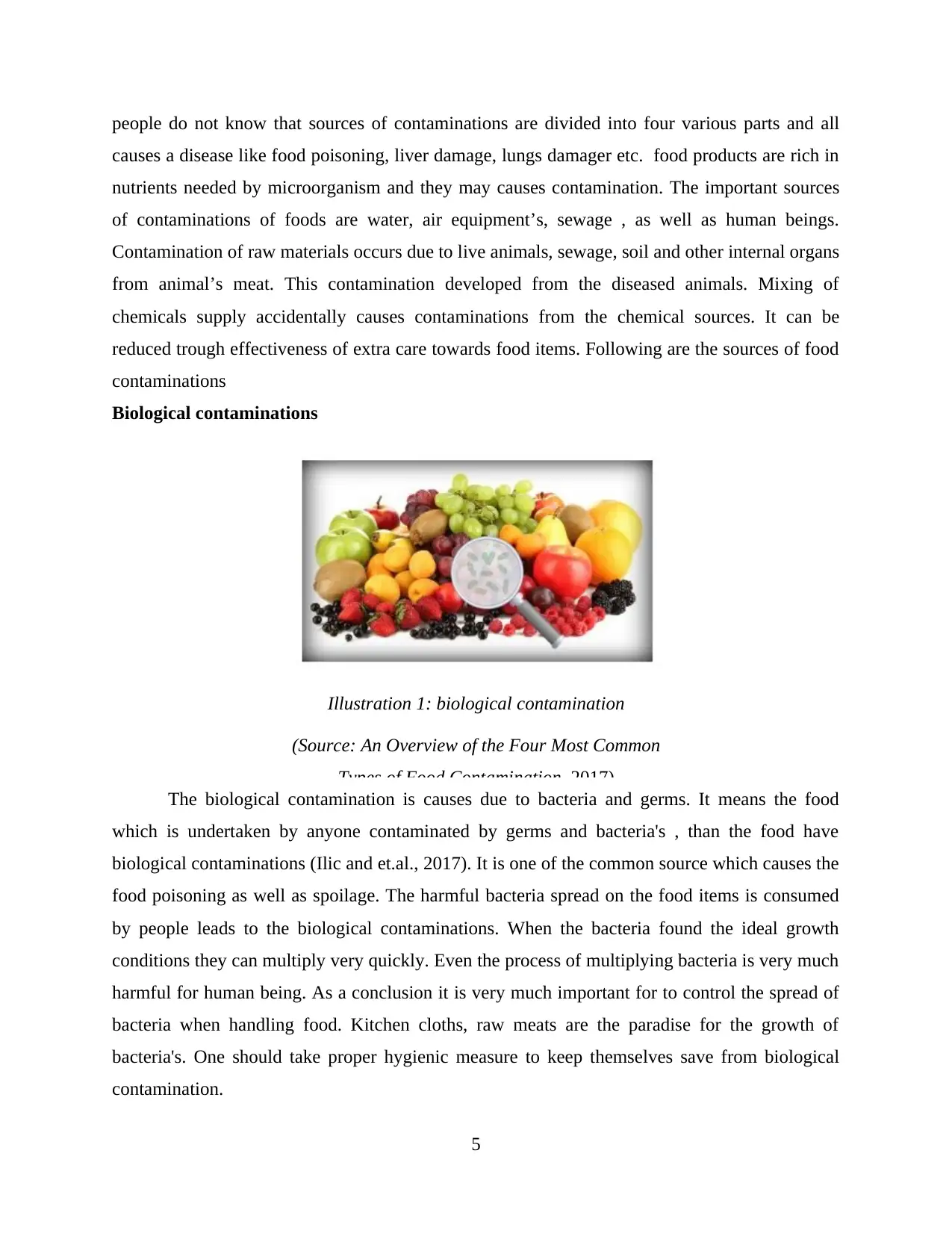
Biological contaminations
Illustration 1: biological contamination
(Source: An Overview of the Four Most Common
Types of Food Contamination, 2017)
The biological contamination is causes due to bacteria and germs. It means the food
which is undertaken by anyone contaminated by germs and bacteria's , than the food have
biological contaminations (Ilic and et.al., 2017). It is one of the common source which causes the
food poisoning as well as spoilage. The harmful bacteria spread on the food items is consumed
by people leads to the biological contaminations. When the bacteria found the ideal growth
conditions they can multiply very quickly. Even the process of multiplying bacteria is very much
harmful for human being. As a conclusion it is very much important for to control the spread of
bacteria when handling food. Kitchen cloths, raw meats are the paradise for the growth of
bacteria's. One should take proper hygienic measure to keep themselves save from biological
contamination.
5
causes a disease like food poisoning, liver damage, lungs damager etc. food products are rich in
nutrients needed by microorganism and they may causes contamination. The important sources
of contaminations of foods are water, air equipment’s, sewage , as well as human beings.
Contamination of raw materials occurs due to live animals, sewage, soil and other internal organs
from animal’s meat. This contamination developed from the diseased animals. Mixing of
chemicals supply accidentally causes contaminations from the chemical sources. It can be
reduced trough effectiveness of extra care towards food items. Following are the sources of food
contaminations
Biological contaminations
Illustration 1: biological contamination
(Source: An Overview of the Four Most Common
Types of Food Contamination, 2017)
The biological contamination is causes due to bacteria and germs. It means the food
which is undertaken by anyone contaminated by germs and bacteria's , than the food have
biological contaminations (Ilic and et.al., 2017). It is one of the common source which causes the
food poisoning as well as spoilage. The harmful bacteria spread on the food items is consumed
by people leads to the biological contaminations. When the bacteria found the ideal growth
conditions they can multiply very quickly. Even the process of multiplying bacteria is very much
harmful for human being. As a conclusion it is very much important for to control the spread of
bacteria when handling food. Kitchen cloths, raw meats are the paradise for the growth of
bacteria's. One should take proper hygienic measure to keep themselves save from biological
contamination.
5
Paraphrase This Document
Need a fresh take? Get an instant paraphrase of this document with our AI Paraphraser
Physical contaminations
6
6
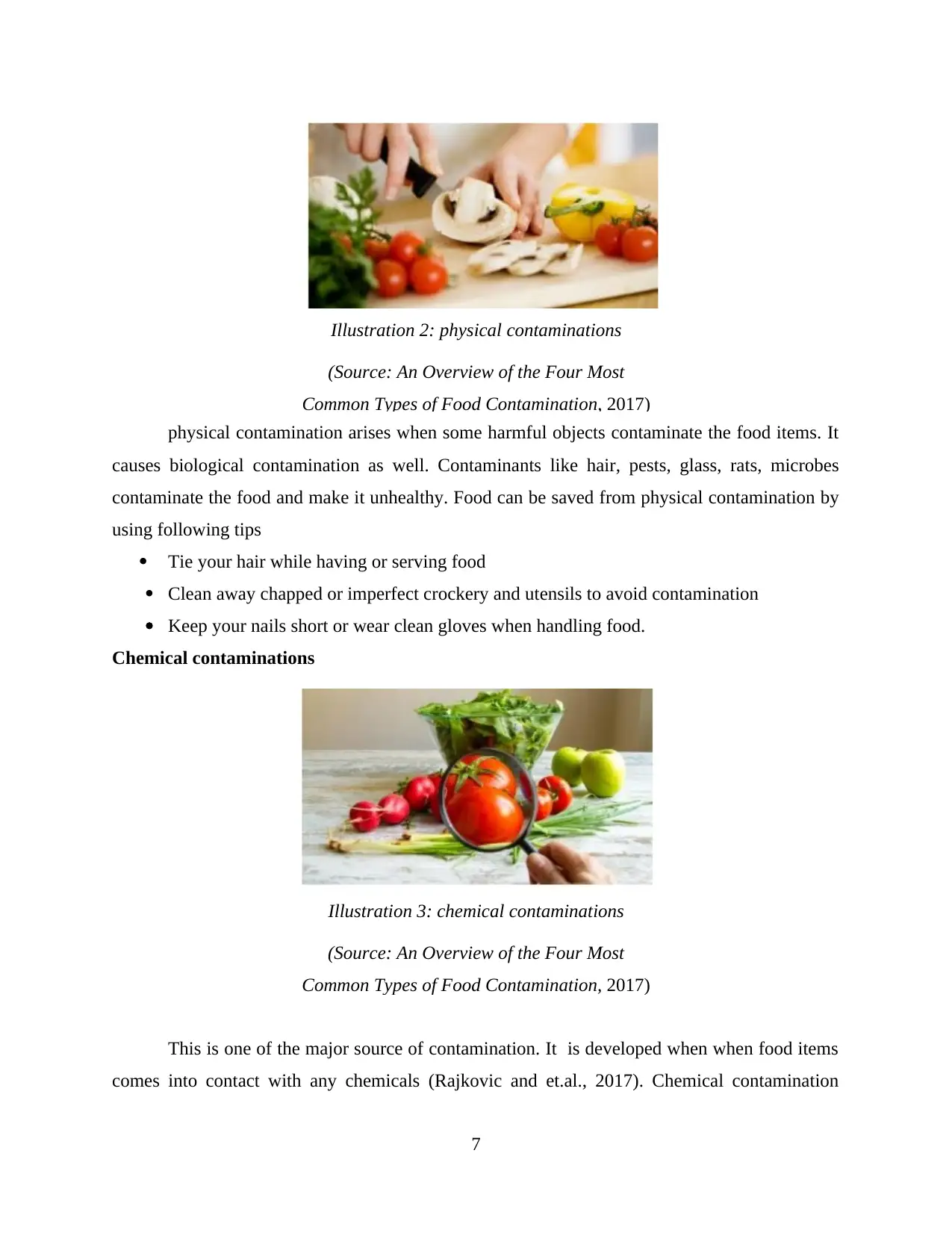
Illustration 2: physical contaminations
(Source: An Overview of the Four Most
Common Types of Food Contamination, 2017)
physical contamination arises when some harmful objects contaminate the food items. It
causes biological contamination as well. Contaminants like hair, pests, glass, rats, microbes
contaminate the food and make it unhealthy. Food can be saved from physical contamination by
using following tips
Tie your hair while having or serving food
Clean away chapped or imperfect crockery and utensils to avoid contamination
Keep your nails short or wear clean gloves when handling food.
Chemical contaminations
Illustration 3: chemical contaminations
(Source: An Overview of the Four Most
Common Types of Food Contamination, 2017)
This is one of the major source of contamination. It is developed when when food items
comes into contact with any chemicals (Rajkovic and et.al., 2017). Chemical contamination
7
(Source: An Overview of the Four Most
Common Types of Food Contamination, 2017)
physical contamination arises when some harmful objects contaminate the food items. It
causes biological contamination as well. Contaminants like hair, pests, glass, rats, microbes
contaminate the food and make it unhealthy. Food can be saved from physical contamination by
using following tips
Tie your hair while having or serving food
Clean away chapped or imperfect crockery and utensils to avoid contamination
Keep your nails short or wear clean gloves when handling food.
Chemical contaminations
Illustration 3: chemical contaminations
(Source: An Overview of the Four Most
Common Types of Food Contamination, 2017)
This is one of the major source of contamination. It is developed when when food items
comes into contact with any chemicals (Rajkovic and et.al., 2017). Chemical contamination
7
⊘ This is a preview!⊘
Do you want full access?
Subscribe today to unlock all pages.
Trusted by 1+ million students worldwide
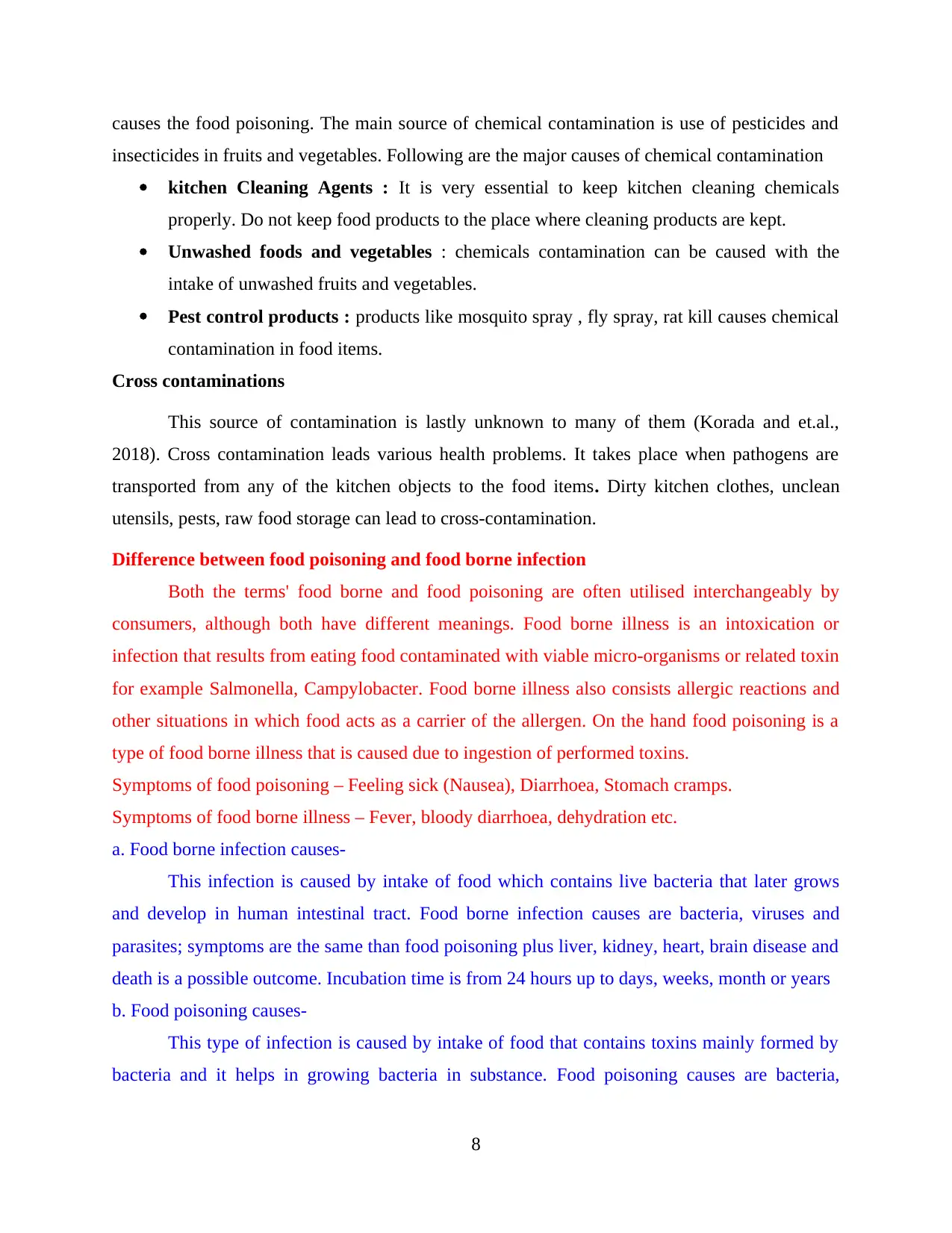
causes the food poisoning. The main source of chemical contamination is use of pesticides and
insecticides in fruits and vegetables. Following are the major causes of chemical contamination
kitchen Cleaning Agents : It is very essential to keep kitchen cleaning chemicals
properly. Do not keep food products to the place where cleaning products are kept.
Unwashed foods and vegetables : chemicals contamination can be caused with the
intake of unwashed fruits and vegetables.
Pest control products : products like mosquito spray , fly spray, rat kill causes chemical
contamination in food items.
Cross contaminations
This source of contamination is lastly unknown to many of them (Korada and et.al.,
2018). Cross contamination leads various health problems. It takes place when pathogens are
transported from any of the kitchen objects to the food items. Dirty kitchen clothes, unclean
utensils, pests, raw food storage can lead to cross-contamination.
Difference between food poisoning and food borne infection
Both the terms' food borne and food poisoning are often utilised interchangeably by
consumers, although both have different meanings. Food borne illness is an intoxication or
infection that results from eating food contaminated with viable micro-organisms or related toxin
for example Salmonella, Campylobacter. Food borne illness also consists allergic reactions and
other situations in which food acts as a carrier of the allergen. On the hand food poisoning is a
type of food borne illness that is caused due to ingestion of performed toxins.
Symptoms of food poisoning – Feeling sick (Nausea), Diarrhoea, Stomach cramps.
Symptoms of food borne illness – Fever, bloody diarrhoea, dehydration etc.
a. Food borne infection causes-
This infection is caused by intake of food which contains live bacteria that later grows
and develop in human intestinal tract. Food borne infection causes are bacteria, viruses and
parasites; symptoms are the same than food poisoning plus liver, kidney, heart, brain disease and
death is a possible outcome. Incubation time is from 24 hours up to days, weeks, month or years
b. Food poisoning causes-
This type of infection is caused by intake of food that contains toxins mainly formed by
bacteria and it helps in growing bacteria in substance. Food poisoning causes are bacteria,
8
insecticides in fruits and vegetables. Following are the major causes of chemical contamination
kitchen Cleaning Agents : It is very essential to keep kitchen cleaning chemicals
properly. Do not keep food products to the place where cleaning products are kept.
Unwashed foods and vegetables : chemicals contamination can be caused with the
intake of unwashed fruits and vegetables.
Pest control products : products like mosquito spray , fly spray, rat kill causes chemical
contamination in food items.
Cross contaminations
This source of contamination is lastly unknown to many of them (Korada and et.al.,
2018). Cross contamination leads various health problems. It takes place when pathogens are
transported from any of the kitchen objects to the food items. Dirty kitchen clothes, unclean
utensils, pests, raw food storage can lead to cross-contamination.
Difference between food poisoning and food borne infection
Both the terms' food borne and food poisoning are often utilised interchangeably by
consumers, although both have different meanings. Food borne illness is an intoxication or
infection that results from eating food contaminated with viable micro-organisms or related toxin
for example Salmonella, Campylobacter. Food borne illness also consists allergic reactions and
other situations in which food acts as a carrier of the allergen. On the hand food poisoning is a
type of food borne illness that is caused due to ingestion of performed toxins.
Symptoms of food poisoning – Feeling sick (Nausea), Diarrhoea, Stomach cramps.
Symptoms of food borne illness – Fever, bloody diarrhoea, dehydration etc.
a. Food borne infection causes-
This infection is caused by intake of food which contains live bacteria that later grows
and develop in human intestinal tract. Food borne infection causes are bacteria, viruses and
parasites; symptoms are the same than food poisoning plus liver, kidney, heart, brain disease and
death is a possible outcome. Incubation time is from 24 hours up to days, weeks, month or years
b. Food poisoning causes-
This type of infection is caused by intake of food that contains toxins mainly formed by
bacteria and it helps in growing bacteria in substance. Food poisoning causes are bacteria,
8
Paraphrase This Document
Need a fresh take? Get an instant paraphrase of this document with our AI Paraphraser
mould, chemical, metallic, plants, maritime toxins, poisonous fish; and symptoms are nausea,
diarrhoea, vomiting, stomach cramps. Average incubation time is 12 hours up to a few days.
Thus, following conditions must be present to occur food poisoning i.e.
Microorganisms or toxins are presented in food items.
The item must be suitable to grow such poisonous organisms.
Temperature must suitable so that organism can grow easily.
They must be provided with enough time.
Human being must eat that contaminated food.
TASK B
(a). Analysis of agents of Food spoilage
Food spoilage is caused mainly because of micro organisms that produces enzymes and
lead objectionable by-products in food (Chopra and et.al., 2015). Spoilage of food may occur
chemically also as when food consist of different components which react with each other and
alter foods sensory characteristics. Hence, it also states that if there is disagreeable change in
normal state of food which can be detected by smell, taste, touch or sight (Hammond and et.al.,
2015). Thus, this type of changes occurs because of many reasons like air, oxygen, moisture,
light, microbial growth and high temperature. Agents that can occur food spoilage are discussed
as per below context-
1. Micro organisms- There are various types of micro organisms that can spoil foods and
cause contamination of food. (Vaclavik and Christian, 2014). These types of micro-
organisms may grow without any change in colour, odour or taste in food. Some micro-
organisms that are spoilage which also includes kind of bacteria, yeasts and moulds,
Thus, it becomes impossible for determining about contamination of food with
pathogenic microorganisms without testing.
2. Yeast- Basically oxygen causes food spoilage and it can provide the condition to grown
up micro-organisms. It can damage foods with the help of enzymes.
3. Mould and Enzymes- As the mould grows on food it produces enzymes that break
down the food resulting to spoilage. Enzymes that are present are mainly responsible to
ripe fruits and vegetables. They mainly change texture, colour and flavour of food
9
diarrhoea, vomiting, stomach cramps. Average incubation time is 12 hours up to a few days.
Thus, following conditions must be present to occur food poisoning i.e.
Microorganisms or toxins are presented in food items.
The item must be suitable to grow such poisonous organisms.
Temperature must suitable so that organism can grow easily.
They must be provided with enough time.
Human being must eat that contaminated food.
TASK B
(a). Analysis of agents of Food spoilage
Food spoilage is caused mainly because of micro organisms that produces enzymes and
lead objectionable by-products in food (Chopra and et.al., 2015). Spoilage of food may occur
chemically also as when food consist of different components which react with each other and
alter foods sensory characteristics. Hence, it also states that if there is disagreeable change in
normal state of food which can be detected by smell, taste, touch or sight (Hammond and et.al.,
2015). Thus, this type of changes occurs because of many reasons like air, oxygen, moisture,
light, microbial growth and high temperature. Agents that can occur food spoilage are discussed
as per below context-
1. Micro organisms- There are various types of micro organisms that can spoil foods and
cause contamination of food. (Vaclavik and Christian, 2014). These types of micro-
organisms may grow without any change in colour, odour or taste in food. Some micro-
organisms that are spoilage which also includes kind of bacteria, yeasts and moulds,
Thus, it becomes impossible for determining about contamination of food with
pathogenic microorganisms without testing.
2. Yeast- Basically oxygen causes food spoilage and it can provide the condition to grown
up micro-organisms. It can damage foods with the help of enzymes.
3. Mould and Enzymes- As the mould grows on food it produces enzymes that break
down the food resulting to spoilage. Enzymes that are present are mainly responsible to
ripe fruits and vegetables. They mainly change texture, colour and flavour of food
9
(Abida, Rayees and Masoodi, 2014). They work as a catalyst as they are protein
molecules present in cells. Enzymatic reactions with respiration at the tissue surface can
lesser oxygen concentration & indirectly promote non-enzymatic oxidation of myoglobin.
Proteinases & lipases formed by psychotropic bacteria in raw milk can cause noticeable
hydrolysis of proteins and lipids within 3 to 7 days.
4. Air- When air reacts with food components, it causes oxidation which is a chemical
process that results in producing weird change in colour, flavour and content of nutrients.
Thus, oxidation becomes responsible for the fats in foods becomes stinky. Hence,
antioxidants ascorbic acid and citric acid can help in reducing discolouration of light
coloured fruits. Oxidation can also be reduced or avoided with vapour proof packaging of
substance.
5. Moisture- This is a significant requirement of micro organisms to grow in an item as it is
composed of 80% water. These requirements vary between every species as bacteria
needs more water than yeast but yeast requires more than molds. Thus, micro organisms
may not grow or multiply it will remain constant if there is no water available in food
items. Thus, if food contains certain components that help in reducing availability of
water then there is no chance of micro organisms to grow.
6. Time- Microorganisms needs enough time to grow and multiply. They get multiplied by
every 20 to 30 minutes and this time is a generation time. Thus, enzymes also requires
time
7. Bacteria- Bacteria are the elements which are highly responsible for the food spoilage or
contamination. There are certain types of bacteria that develops and grows in different
ways as discussed below -
Psychrophilic bacteria have optimum growth temperature of 68-77 degree F and a having
growth range of 32-77 degree F.
Mesophilic bacteria have optimum growth temperature of 68-113 degree F and having
growth range of 68-110 degree F.
Thermophilic bacteria have optimum growth temperature of 122-131 degree F and
having growth range of 113-158 degree F.
8. Antimicrobials- there are natural components that are involved in some foods that
exhibit inhibitory action on growth of micro organisms (Josephson, 2018). For example,
10
molecules present in cells. Enzymatic reactions with respiration at the tissue surface can
lesser oxygen concentration & indirectly promote non-enzymatic oxidation of myoglobin.
Proteinases & lipases formed by psychotropic bacteria in raw milk can cause noticeable
hydrolysis of proteins and lipids within 3 to 7 days.
4. Air- When air reacts with food components, it causes oxidation which is a chemical
process that results in producing weird change in colour, flavour and content of nutrients.
Thus, oxidation becomes responsible for the fats in foods becomes stinky. Hence,
antioxidants ascorbic acid and citric acid can help in reducing discolouration of light
coloured fruits. Oxidation can also be reduced or avoided with vapour proof packaging of
substance.
5. Moisture- This is a significant requirement of micro organisms to grow in an item as it is
composed of 80% water. These requirements vary between every species as bacteria
needs more water than yeast but yeast requires more than molds. Thus, micro organisms
may not grow or multiply it will remain constant if there is no water available in food
items. Thus, if food contains certain components that help in reducing availability of
water then there is no chance of micro organisms to grow.
6. Time- Microorganisms needs enough time to grow and multiply. They get multiplied by
every 20 to 30 minutes and this time is a generation time. Thus, enzymes also requires
time
7. Bacteria- Bacteria are the elements which are highly responsible for the food spoilage or
contamination. There are certain types of bacteria that develops and grows in different
ways as discussed below -
Psychrophilic bacteria have optimum growth temperature of 68-77 degree F and a having
growth range of 32-77 degree F.
Mesophilic bacteria have optimum growth temperature of 68-113 degree F and having
growth range of 68-110 degree F.
Thermophilic bacteria have optimum growth temperature of 122-131 degree F and
having growth range of 113-158 degree F.
8. Antimicrobials- there are natural components that are involved in some foods that
exhibit inhibitory action on growth of micro organisms (Josephson, 2018). For example,
10
⊘ This is a preview!⊘
Do you want full access?
Subscribe today to unlock all pages.
Trusted by 1+ million students worldwide

1 out of 22


Related Documents


Your All-in-One AI-Powered Toolkit for Academic Success.
+13062052269
info@desklib.com
Available 24*7 on WhatsApp / Email
![[object Object]](/_next/static/media/star-bottom.7253800d.svg)
Unlock your academic potential
Copyright © 2020–2026 A2Z Services. All Rights Reserved. Developed and managed by ZUCOL.