Frozen Food: Techniques, Preservatives, and Technology Overview

Verified

Added on  2022/08/21

|16
|390
|22
Report
AI Summary
This report delves into the realm of food preservation, focusing on freezing techniques and storage methods. It begins by highlighting the importance of food preservation and the historical context of preserving food, transitioning from the use of unheated buildings in winter to modern methods. The report then explores the science behind freezing, differentiating between mechanical and cryogenic freezing, and emphasizing the significance of freezing kinetics in preserving food quality. Furthermore, it explores the role of temperature and preservatives, such as carboxy methyl cellulose (CMC), in maintaining food quality and preventing spoilage. Finally, the report highlights the evolution of freezing technology, from mechanical freezers to cryogenic freezing, and briefly touches upon the chilling and freezing of fruits and vegetables. This report provides a comprehensive overview of food preservation and its role in modern food systems.

Document Page
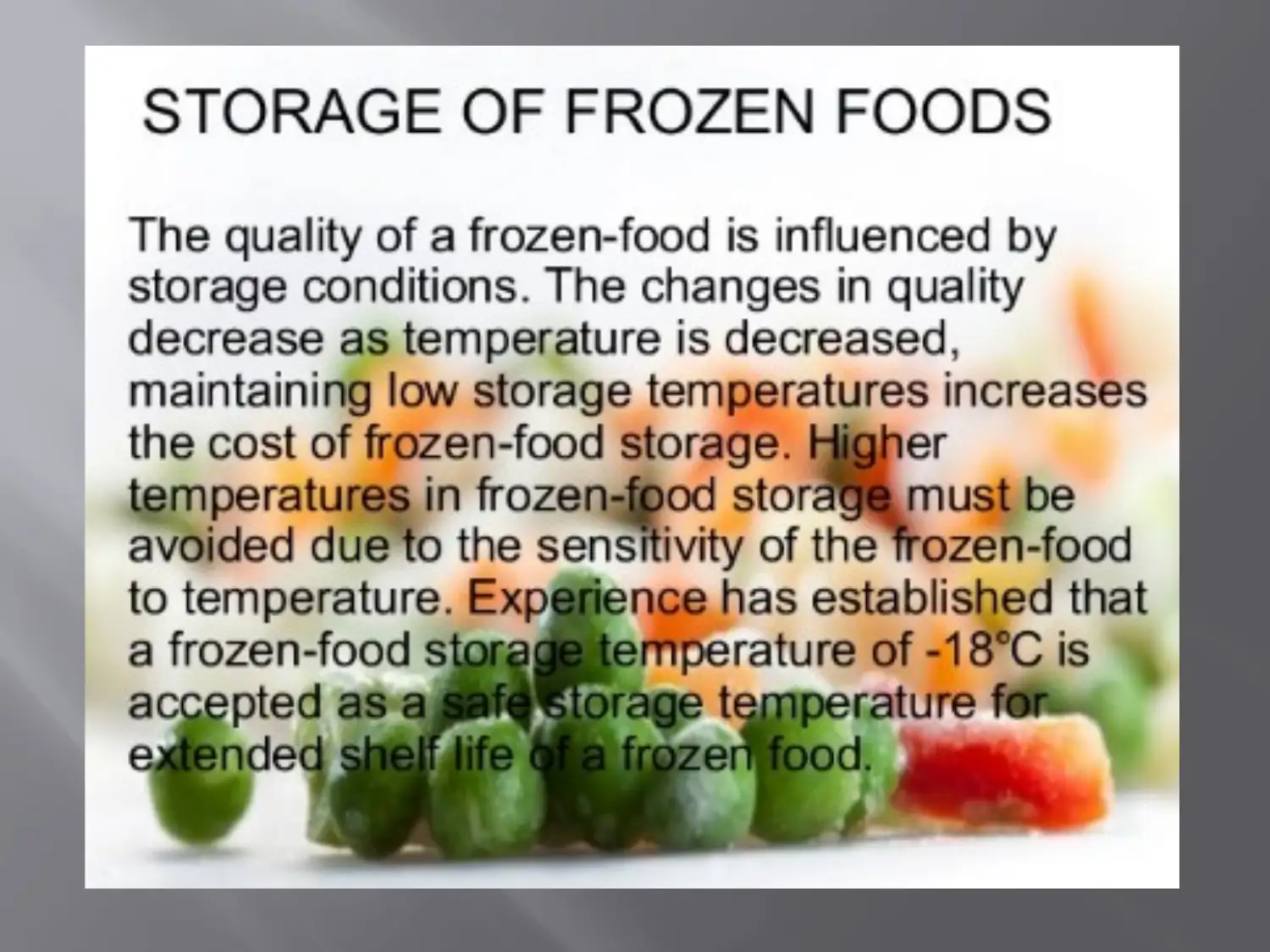
STORING FROZEN
FOOD
tabler-icon-diamond-filled.svg

Paraphrase This Document

Need a fresh take? Get an instant paraphrase of this document with our AI Paraphraser
Document Page
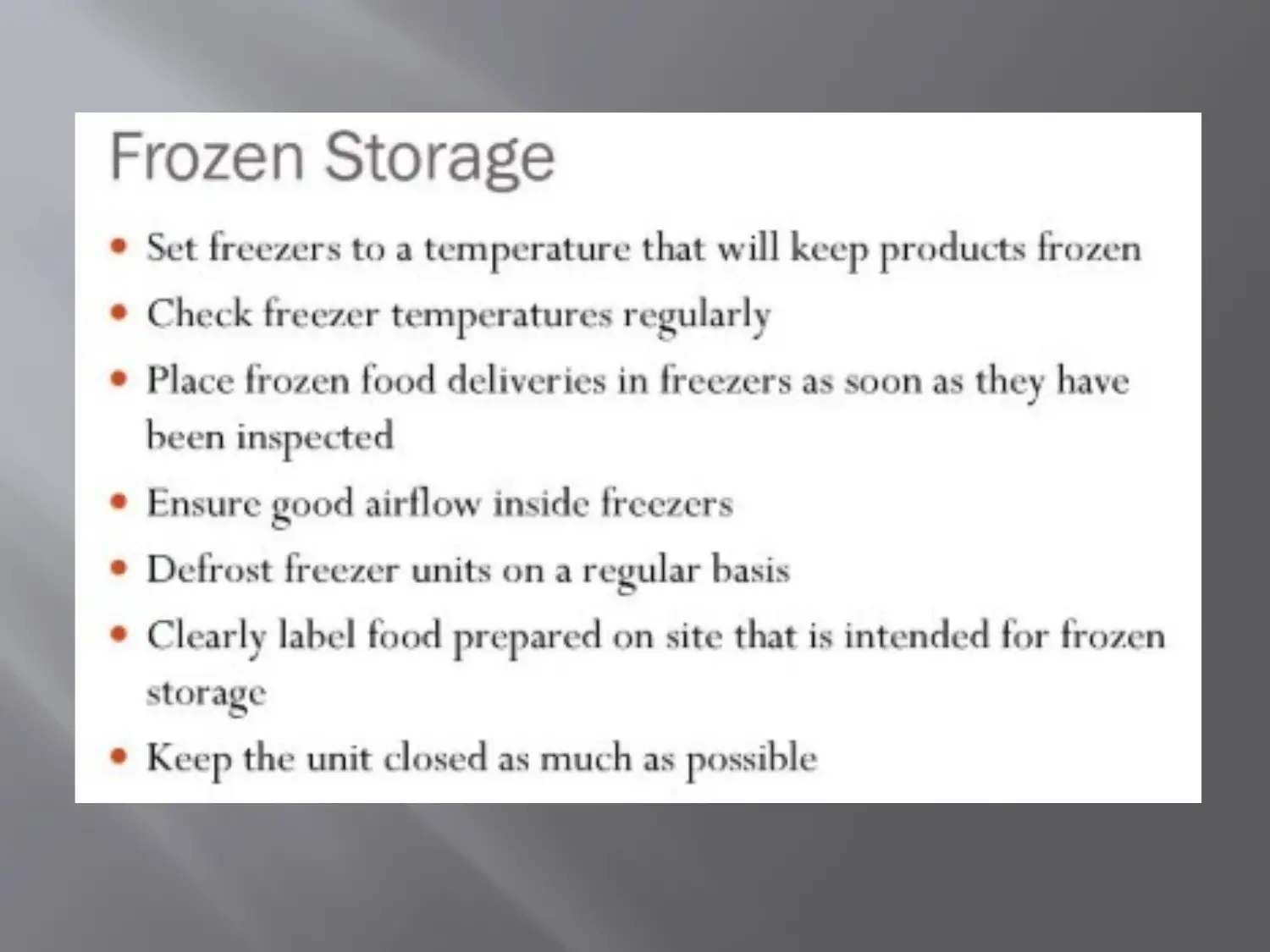
Food Storage
Document Page
Frozen Food
Freezing food stores it from the very time
it’s made to the time it’s consumed
(Russell and Grahame, 2003).
From early times individuals have
preserved produce and grains within
unheated buildings in winter season
(Gould, 2000).
Decreases decomposition via converting
residual moisture into ice, evading
growth of several bacteria.
Document Page
Frozen Food
Two processes include mechanical and
cryogenic.
Freezing kinetics is vital for preserving
the food texture and quality .
Cryogenic freezing- speediest freezing
approach because of ultra less liquid
nitrogen temperature i.e. −196 °C
(−320 °F) (Gould, 2000).
tabler-icon-diamond-filled.svg

Paraphrase This Document

Need a fresh take? Get an instant paraphrase of this document with our AI Paraphraser
Document Page
Document Page
Document Page
tabler-icon-diamond-filled.svg

Paraphrase This Document

Need a fresh take? Get an instant paraphrase of this document with our AI Paraphraser
Document Page
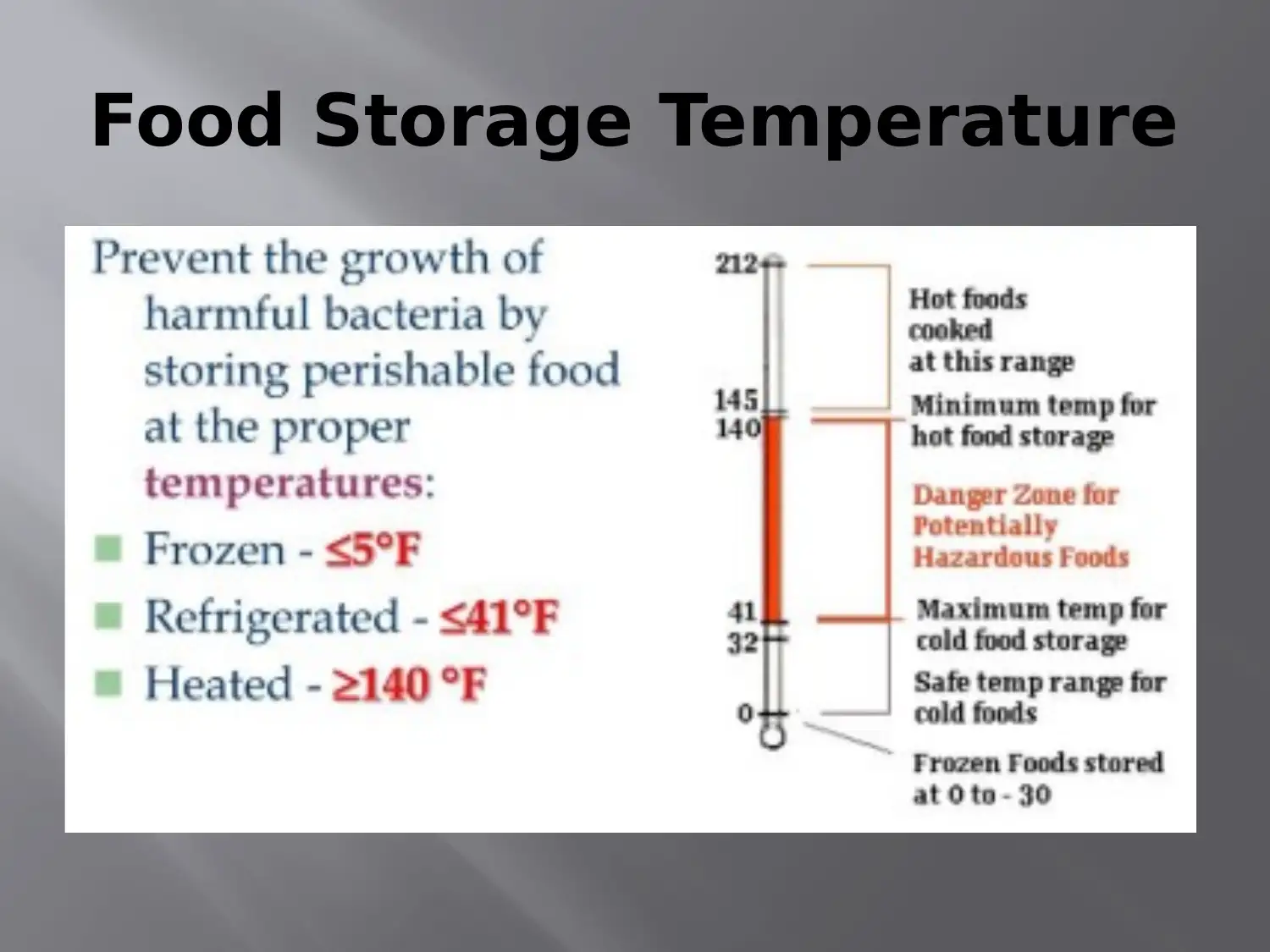
Food Storage Temperature
Document Page
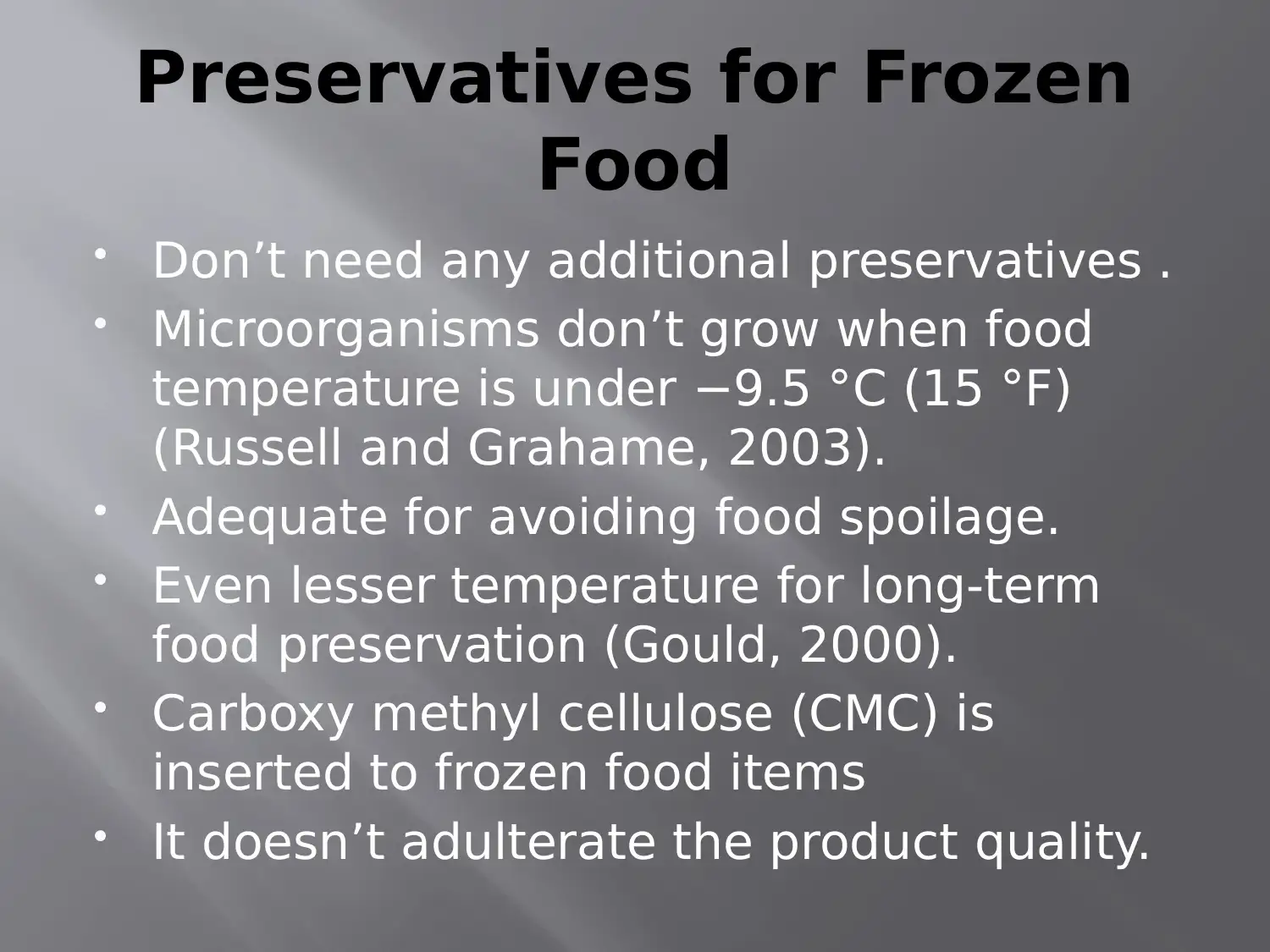
Preservatives for Frozen
Food
Don’t need any additional preservatives .
Microorganisms don’t grow when food
temperature is under −9.5 °C (15 °F)
(Russell and Grahame, 2003).
Adequate for avoiding food spoilage.
Even lesser temperature for long-term
food preservation (Gould, 2000).
Carboxy methyl cellulose (CMC) is
inserted to frozen food items
It doesn’t adulterate the product quality.
Document Page
Freezing Technology
Progressing to become faster, highly
effective and more lucrative.
Mechanical freezers were firstly utilized
within the food sector.
Operate through circulating a refrigerant,
usually ammonia, that withdraws heat from
food items.
Heat is after that transferred into the
condenser.
Dissipated in the water or air (Russell and
Grahame, 2003).
tabler-icon-diamond-filled.svg

Paraphrase This Document

Need a fresh take? Get an instant paraphrase of this document with our AI Paraphraser
Document Page
Technology
A high pressure, hot liquid, is moved to
an evaporator (Gould, 2000).
When moving through the expansion
valve, it’s cooled.
After that it vaporises into gaseous form.
Cryogenic (or flash freezing) of items is a
highly recent development.
Document Page
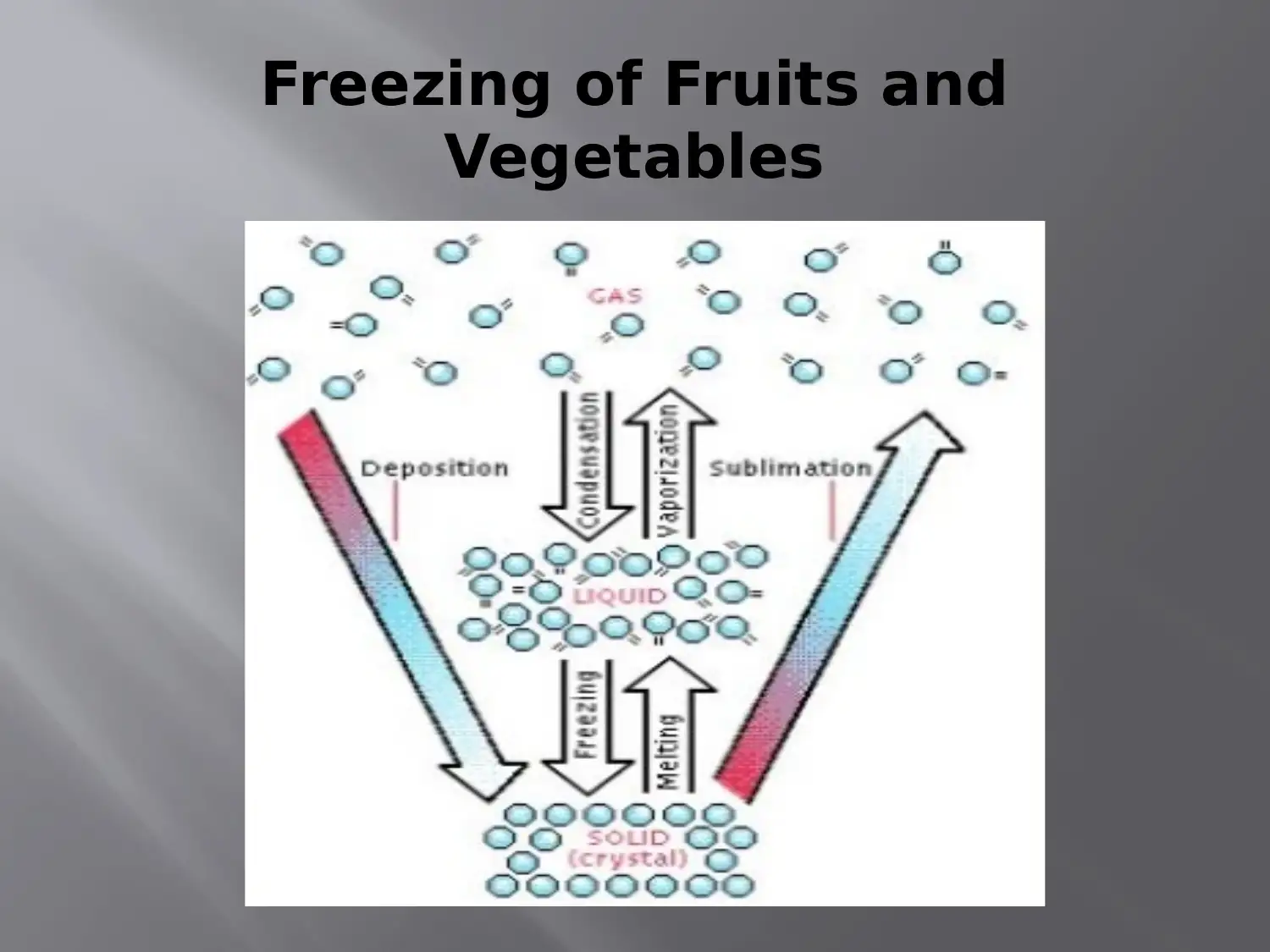
Freezing of Fruits and
Vegetables
chevron_up_icon
1 out of 16
circle_padding
hide_on_mobile
zoom_out_icon
[object Object]