Impact of Media on Gender Roles and Stereotypes in Modern Society

Verified

Added on  2024/06/28

|10
|605
|471
Essay
AI Summary
This essay delves into the societal expectations of masculine and feminine personality traits, shaped by cultural norms and beliefs. It examines how contemporary media, particularly television, reinforces these traditional gender roles through advertising and programming, often leading to gender stereotyping. The essay highlights the conflict between modern feminist ideals and the persistence of these stereotypes, discussing the potential negative consequences, such as the abuse of women displaying masculine traits and the perpetuation of hypermasculinity, which can lead to the domination and abuse of women. Ultimately, the essay concludes that media-driven gender stereotyping can negatively affect the mentality of children and reinforce harmful societal expectations.
Document Page
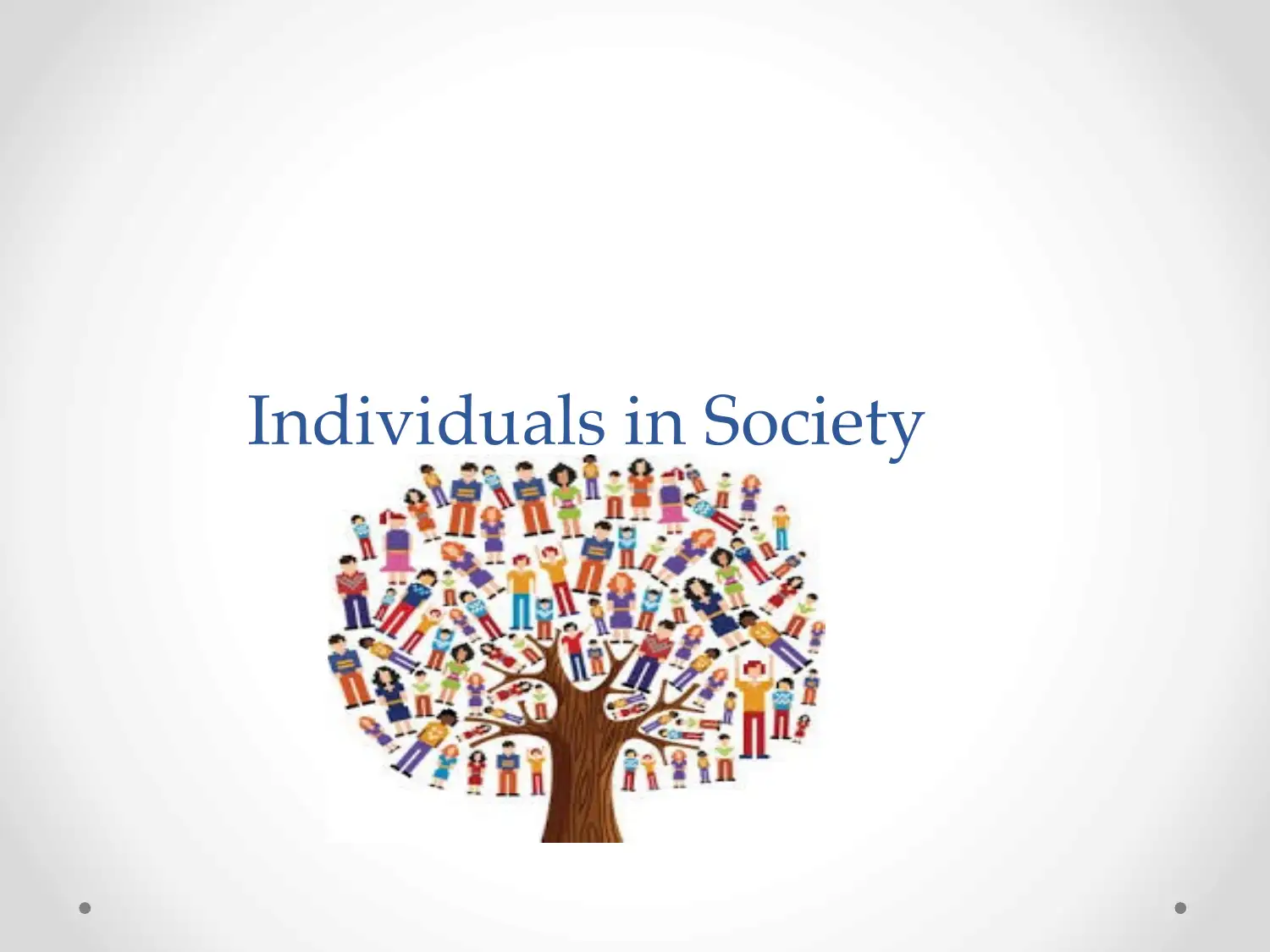
Individuals in Society
tabler-icon-diamond-filled.svg

Paraphrase This Document

Need a fresh take? Get an instant paraphrase of this document with our AI Paraphraser
Document Page
Table of Contents
Introduction
Key differences between Masculine and Feminine
societies.

Showcasing Masculinity and Femininity on TV
Gender Roles
Gender stereotyping on Television
Issues of Gender Stereotyping
Conclusion
References
Document Page
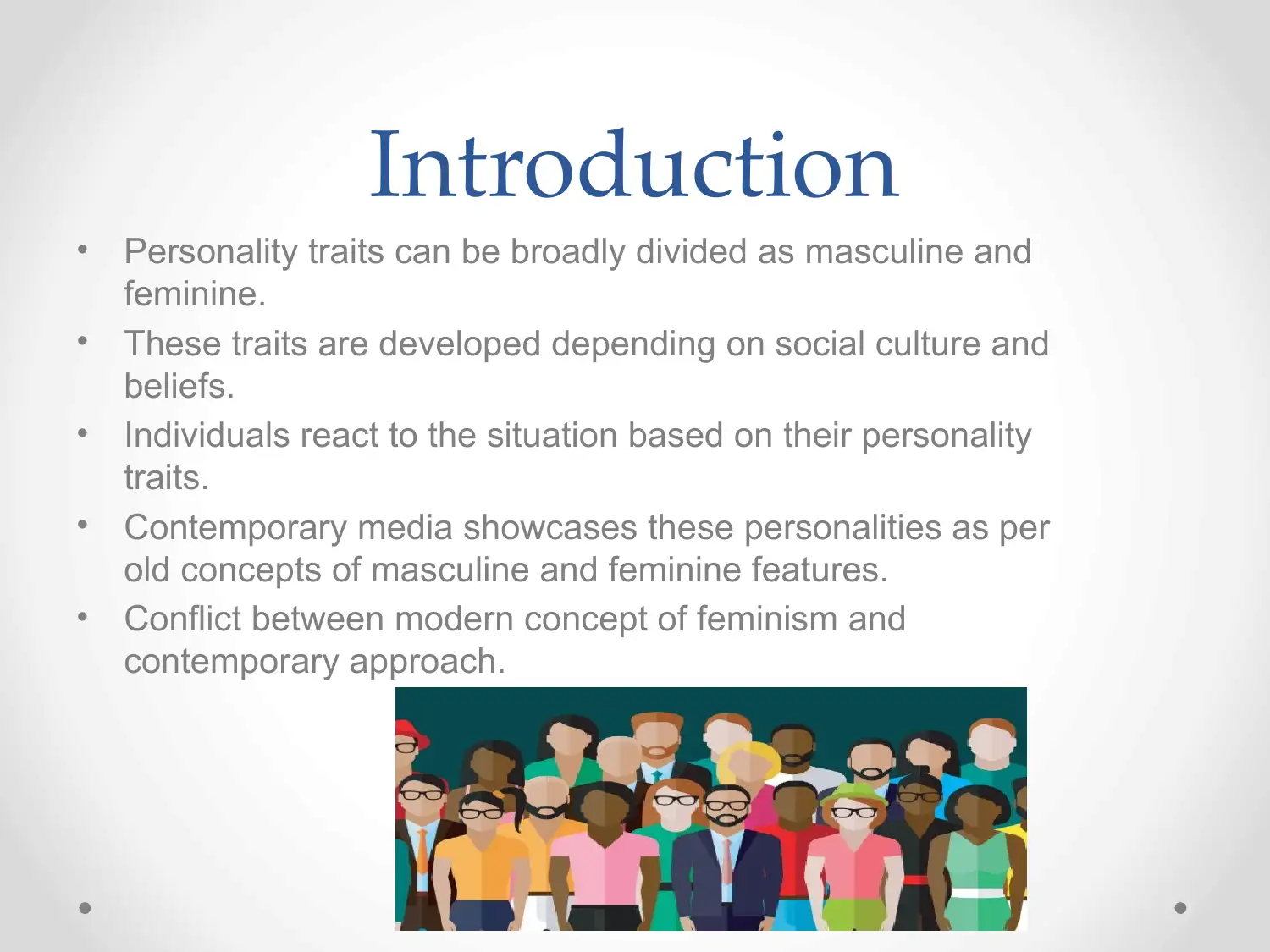
Introduction
Personality traits can be broadly divided as masculine and
feminine.

These traits are developed depending on social culture and
beliefs.

Individuals react to the situation based on their personality
traits.

Contemporary media showcases these personalities as per
old concepts of masculine and feminine features.

Conflict between modern concept of feminism and
contemporary approach.
Document Page
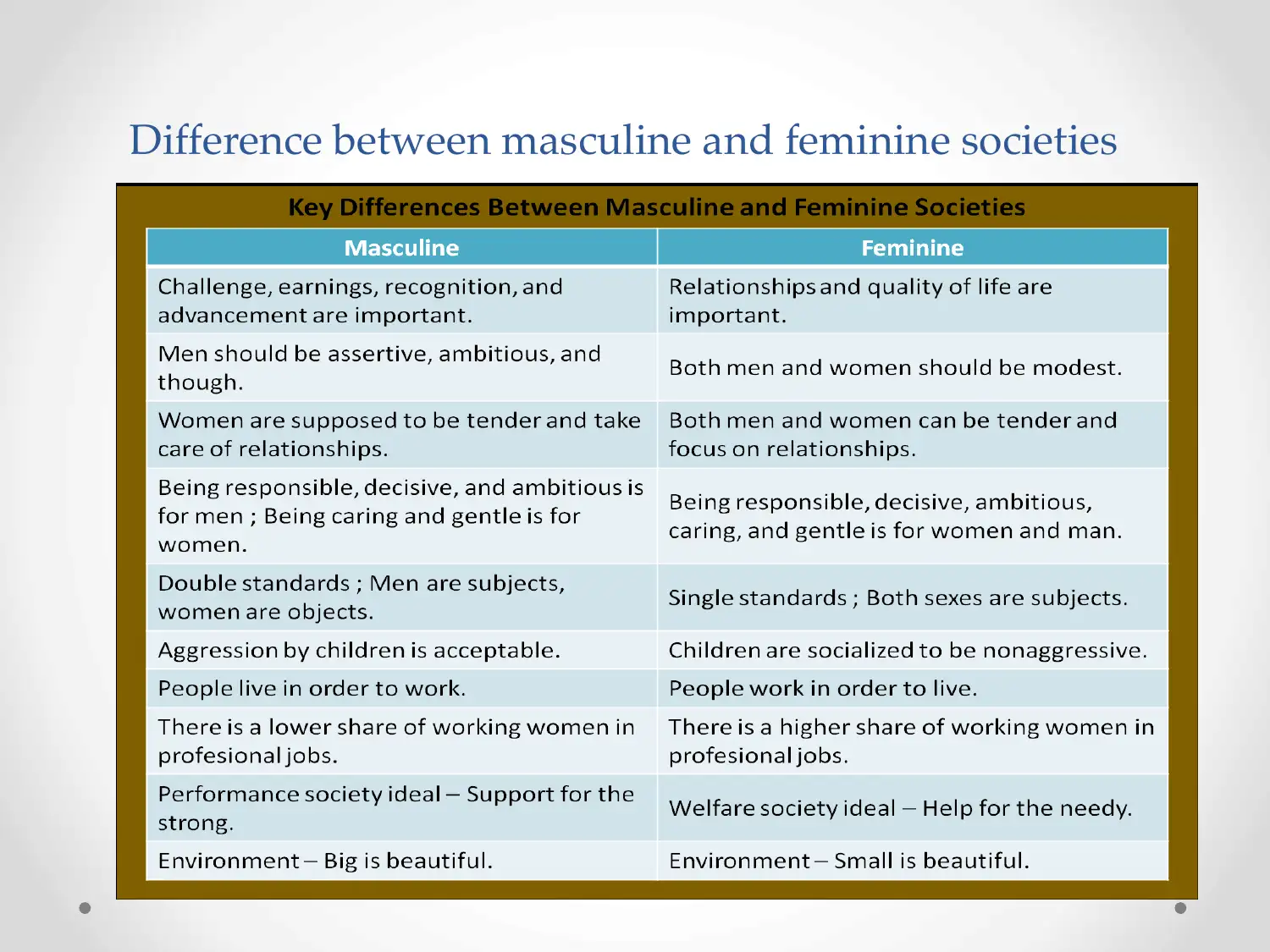
Difference between masculine and feminine societies
tabler-icon-diamond-filled.svg

Paraphrase This Document

Need a fresh take? Get an instant paraphrase of this document with our AI Paraphraser
Document Page
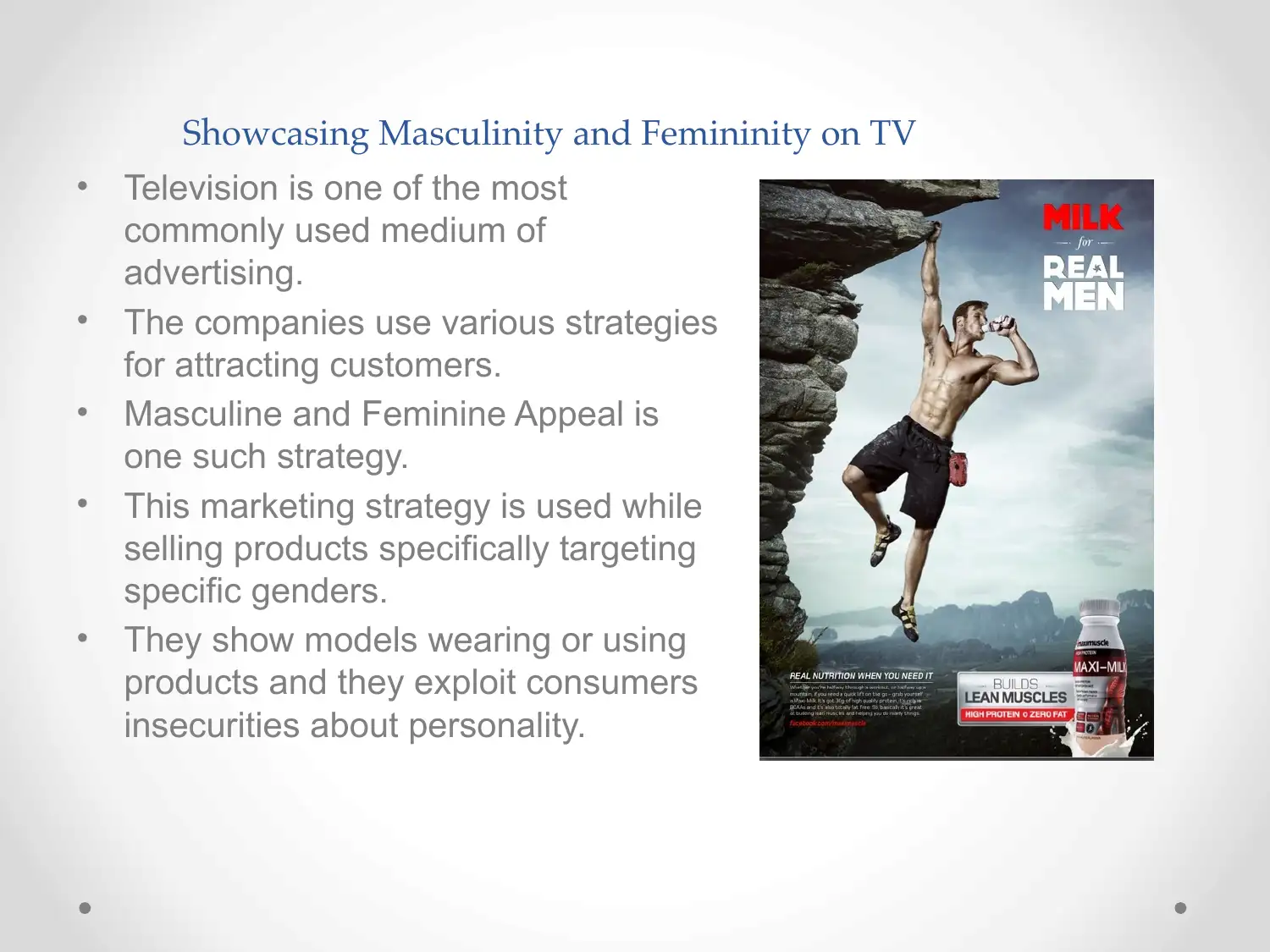
Showcasing Masculinity and Femininity on TV
Television is one of the most
commonly used medium of
advertising.

The companies use various strategies
for attracting customers.

Masculine and Feminine Appeal is
one such strategy.

This marketing strategy is used while
selling products specifically targeting
specific genders.

They show models wearing or using
products and they exploit consumers
insecurities about personality.
Document Page
Gender Roles
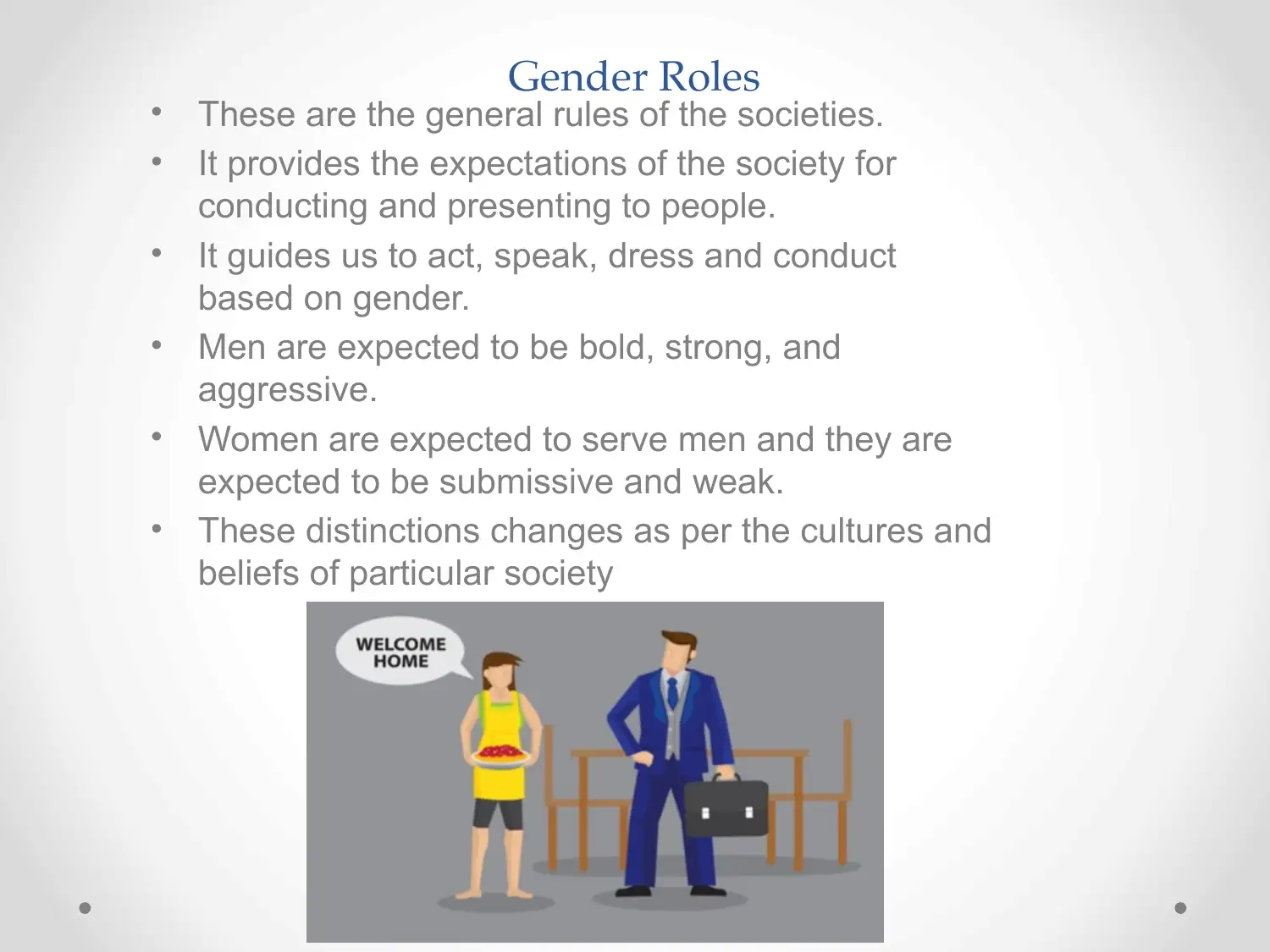
These are the general rules of the societies.
It provides the expectations of the society for
conducting and presenting to people.

It guides us to act, speak, dress and conduct
based on gender.

Men are expected to be bold, strong, and
aggressive.

Women are expected to serve men and they are
expected to be submissive and weak.

These distinctions changes as per the cultures and
beliefs of particular society
Document Page
Gender stereotyping on Television
Gender stereotyping is the major concern as television has high
stereotyping content.

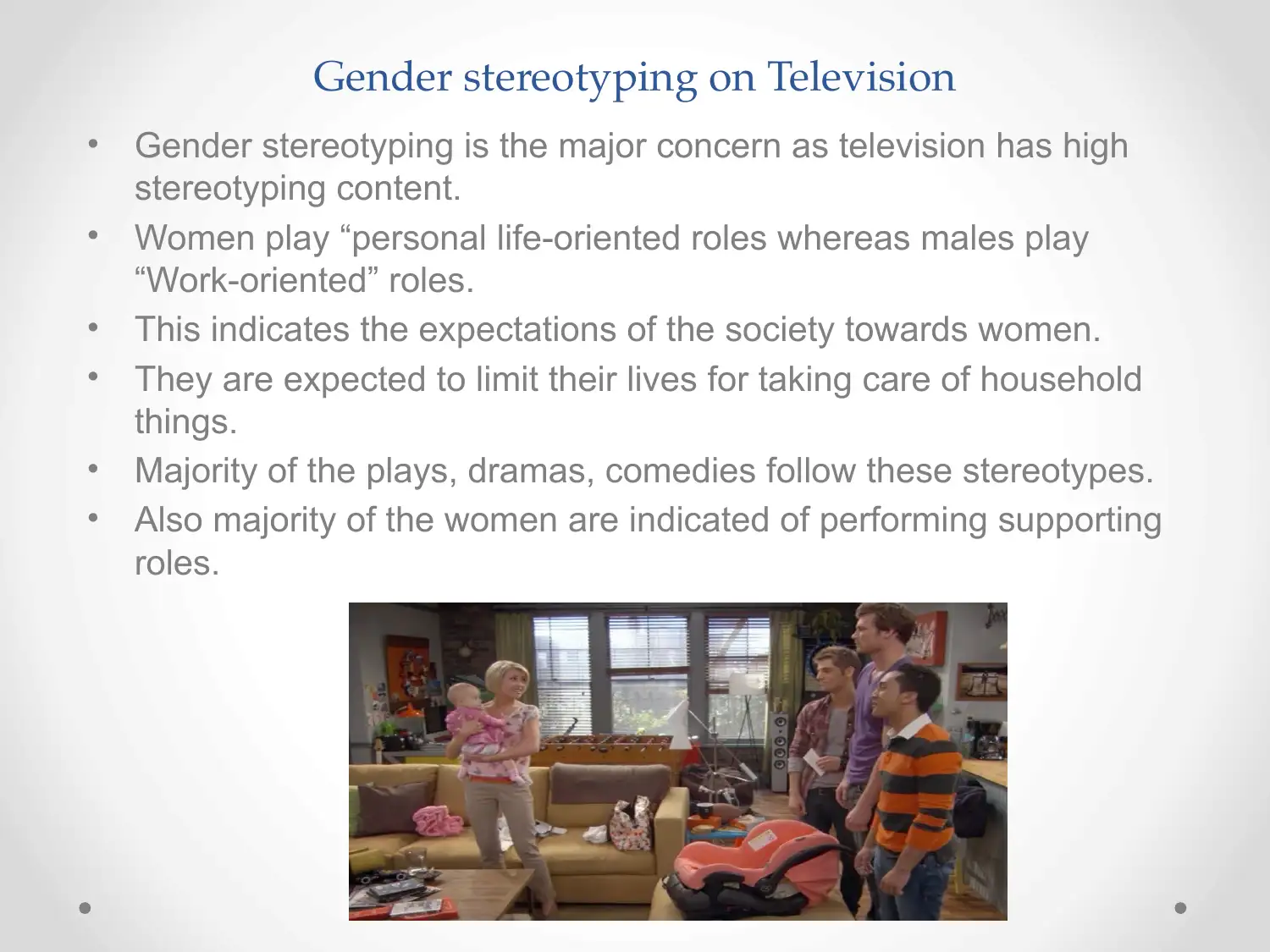
Women play “personal life-oriented roles whereas males play
“Work-oriented” roles.

This indicates the expectations of the society towards women.
They are expected to limit their lives for taking care of household
things.

Majority of the plays, dramas, comedies follow these stereotypes.
Also majority of the women are indicated of performing supporting
roles.
tabler-icon-diamond-filled.svg

Paraphrase This Document

Need a fresh take? Get an instant paraphrase of this document with our AI Paraphraser
Document Page
Issues of Gender Stereotyping
Women are abused if they have masculine
personality traits.

Issue escalates to the higher levels in the case of
hypermasculinity as men are expected to
dominate women.

There may be cases of men physically abusing
women at workplace.

Television provides guidance to its audience and
stereotyping affects mentality of children.
Document Page
Conclusion
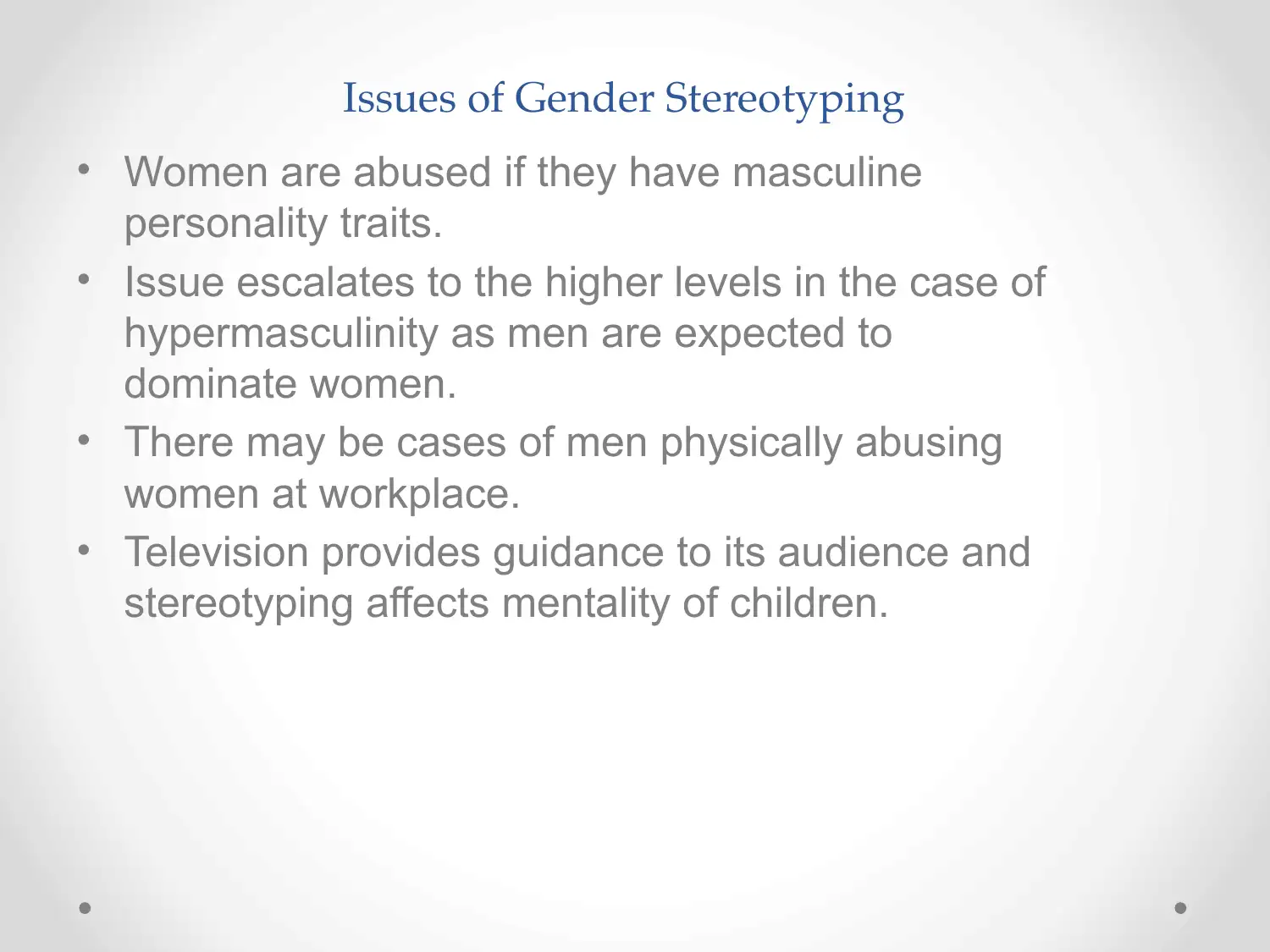
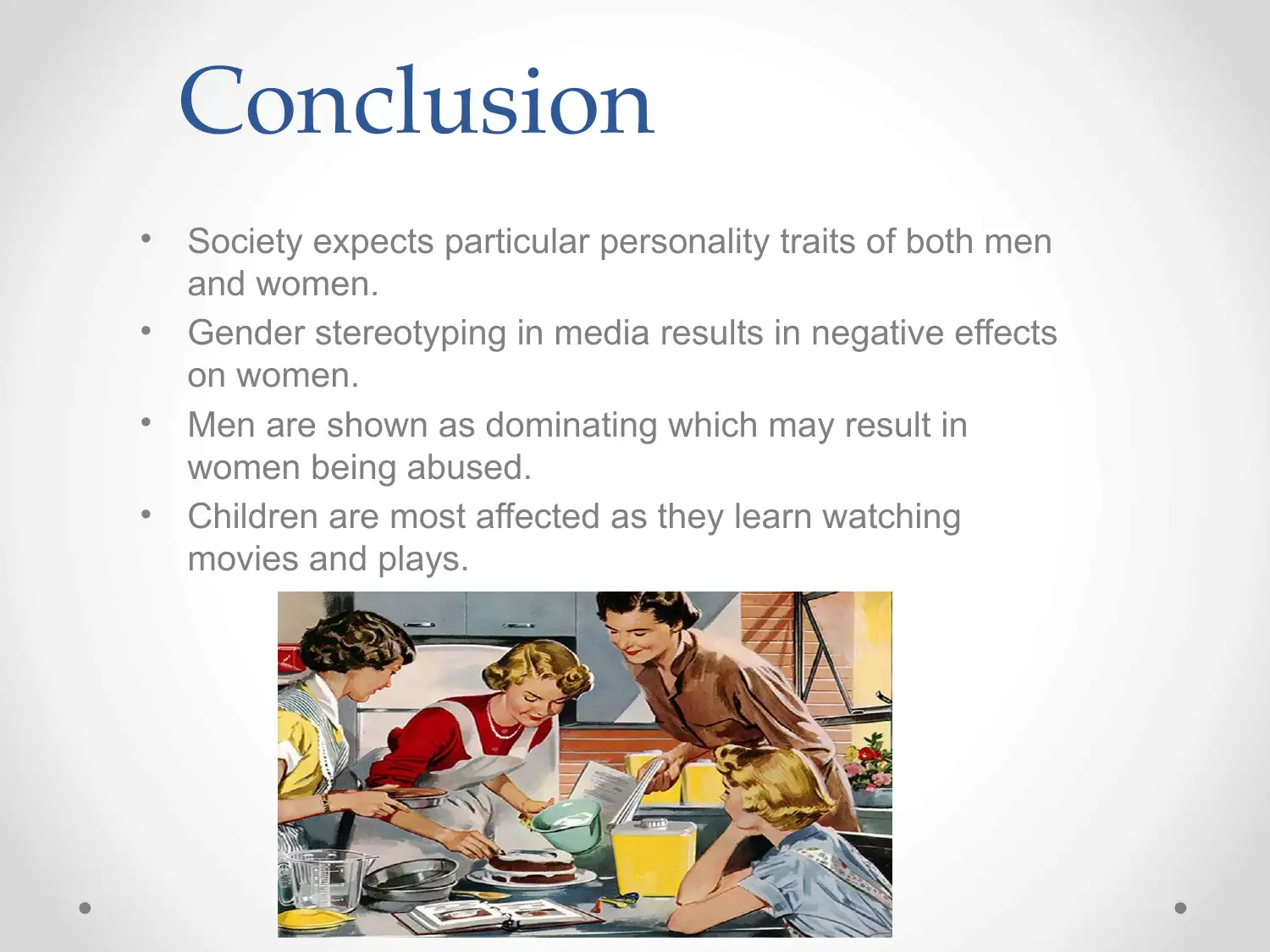
Society expects particular personality traits of both men
and women.

Gender stereotyping in media results in negative effects
on women.

Men are shown as dominating which may result in
women being abused.

Children are most affected as they learn watching
movies and plays.
Document Page
References
Grau, S.L. and Zotos, Y.C., 2016. Gender stereotypes in
advertising: a review of current research. International
Journal of Advertising, 35(5), pp.761-770.

Iyer, E.S. and Debevec, K., 2015. Gender stereotyping of
products: are products like people?. In Proceedings of the
1986 Academy of Marketing Science (AMS) Annual
Conference (pp. 40-45). Springer, Cham.

Shoemaker, R.B., 2014. Gender in English Society 1650-
1850: The Emergence of Separate Spheres?. Routledge.

Sink, A. and Mastro, D., 2017. Depictions of gender on
primetime television: A quantitative content analysis. Mass
Communication and Society, 20(1), pp.3-22.
chevron_up_icon
1 out of 10
circle_padding
hide_on_mobile
zoom_out_icon
[object Object]