Detailed Comparison of Eukaryotic and Prokaryotic Gene Expression

Verified

Added on  2023/05/28

|23
|1356
|154
Essay
AI Summary
This essay provides a comprehensive comparison of gene expression and regulation in prokaryotic and eukaryotic systems. It begins by highlighting the similarities in gene structure, particularly the promoter regions, while emphasizing the compartmentalized nature of eukaryotic gene expression. The essay details the structure of prokaryotic genes, including open reading frames, promoter sequences, and regulatory elements like operators, enhancers, and silencers. It explains the function of the lac operon as an example of inducible gene regulation. The essay then transitions to eukaryotic gene structure, discussing promoter elements, chromatin remodeling, and pre-mRNA processing, including 5’ capping, 3’ polyadenylation, and alternative splicing. Key differences are highlighted, such as the monocistronic nature of eukaryotic transcripts and the role of chromatin structure. The essay concludes by summarizing the key differences in gene regulation and expression between the two systems, emphasizing the complexity of eukaryotic gene expression and the mechanisms that contribute to protein diversity.
Document Page
Contrast between eukaryotic and
prokaryotic gene expression and
regulation
tabler-icon-diamond-filled.svg

Paraphrase This Document

Need a fresh take? Get an instant paraphrase of this document with our AI Paraphraser
Document Page
Introduction
The gene structure of prokaryotic and eukaryotic system share similarity,
the promoter regions are similar in their respective functions.
Prokaryotic gene expression occur in cytosol
Eukaryotic system is compartmentalized with respect to genetic expression
The following provides an elaborate understanding of eukaryotic and
prokaryotic gene expression system with a focus on the regulatory partners.
Document Page
Prokaryotic gene structure
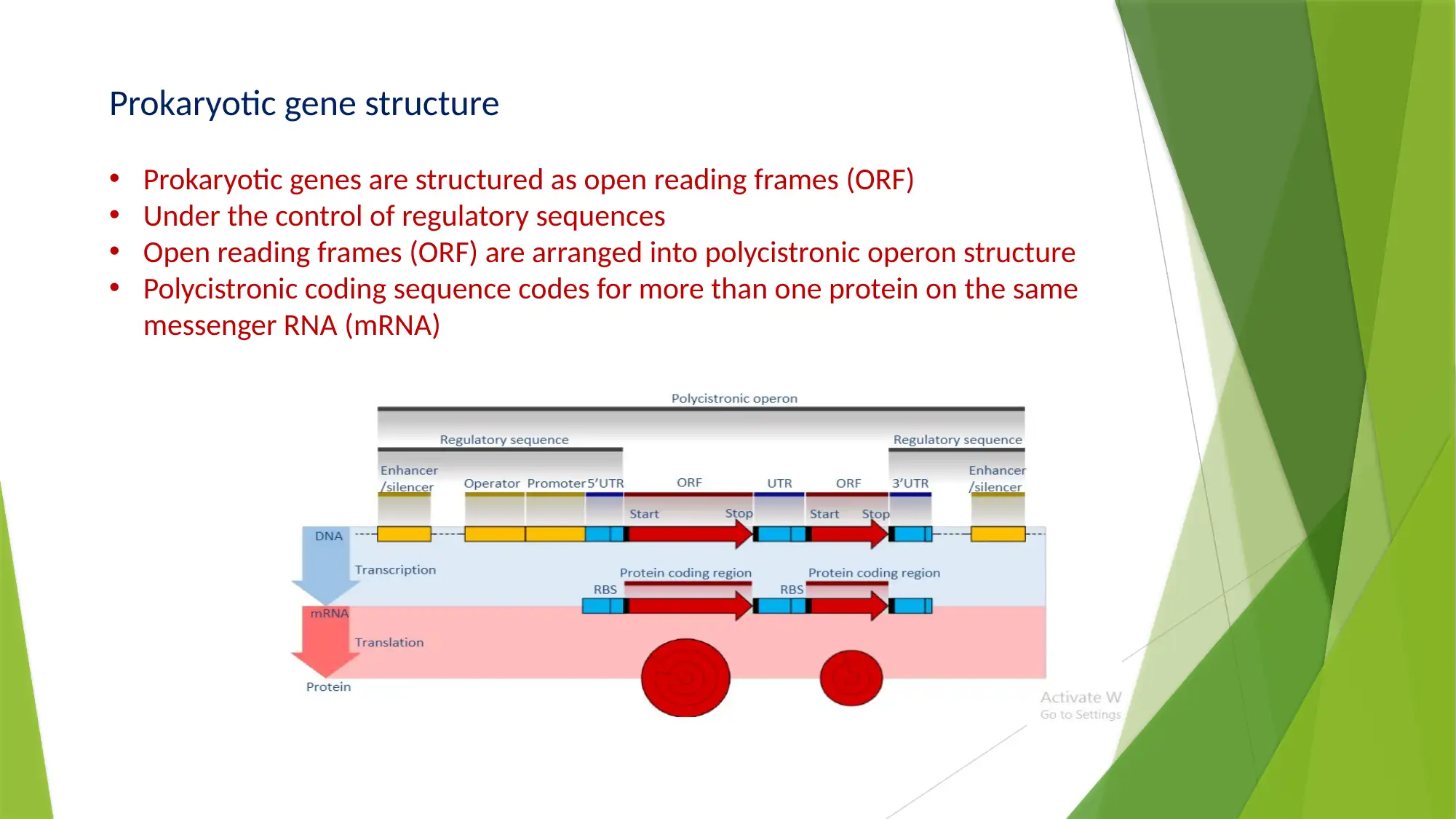
Prokaryotic genes are structured as open reading frames (ORF)
Under the control of regulatory sequences
Open reading frames (ORF) are arranged into polycistronic operon structure
Polycistronic coding sequence codes for more than one protein on the same
messenger RNA (mRNA)
Document Page
Promoter structure
The regulatory sequences are promoter, operator, silencer, 5’-UTR and 3’-UTR (Un-Translated
region)
Promoter sequence is a regulatory sequence of DNA
Located at the upstream (5’ end) of a gene
It is the main control region of gene regulation
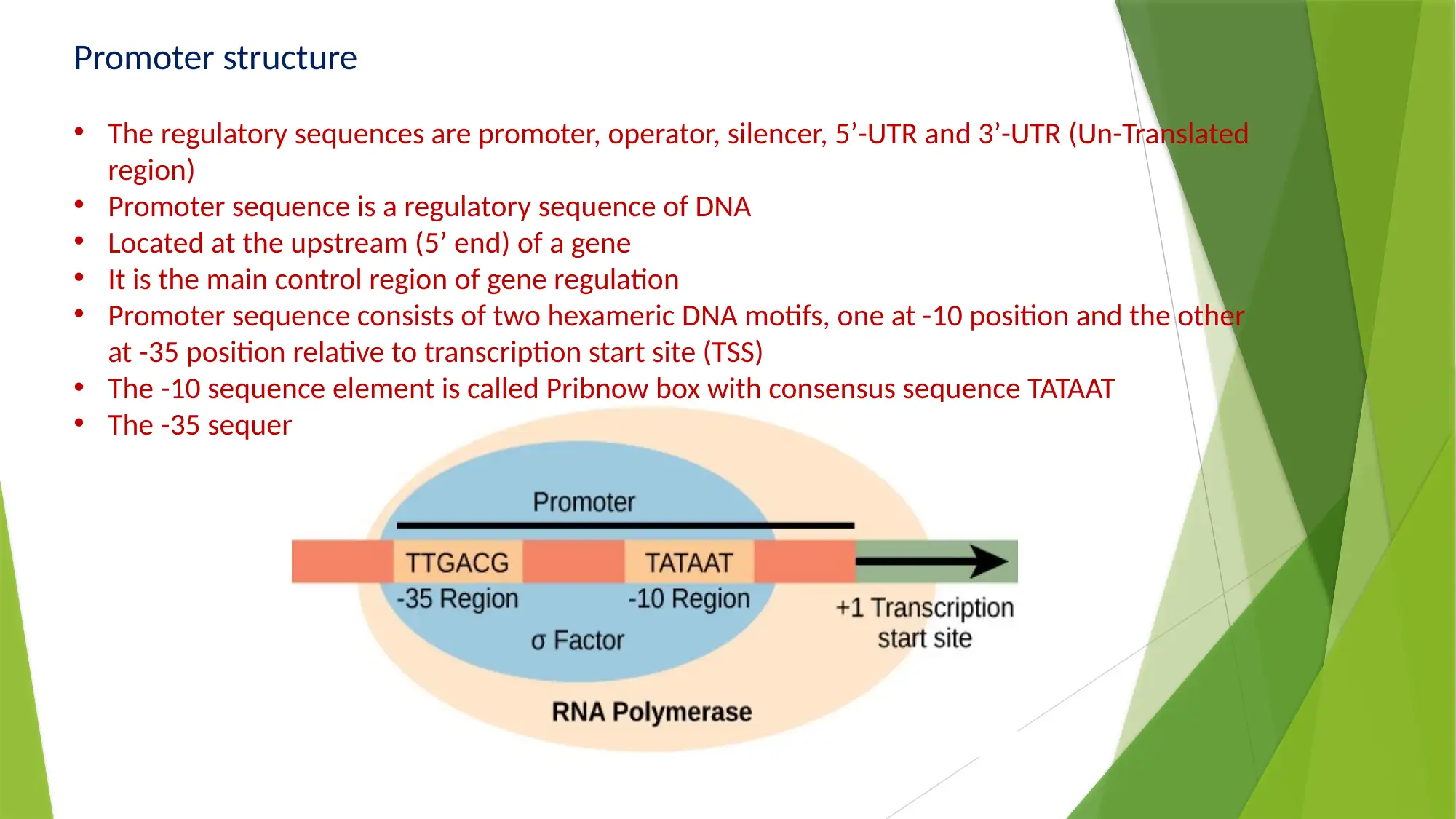
Promoter sequence consists of two hexameric DNA motifs, one at -10 position and the other
at -35 position relative to transcription start site (TSS)
The -10 sequence element is called Pribnow box with consensus sequence TATAAT
The -35 sequence element has the consensus sequence TTGACA
tabler-icon-diamond-filled.svg

Paraphrase This Document

Need a fresh take? Get an instant paraphrase of this document with our AI Paraphraser
Document Page
Regulatory sequences
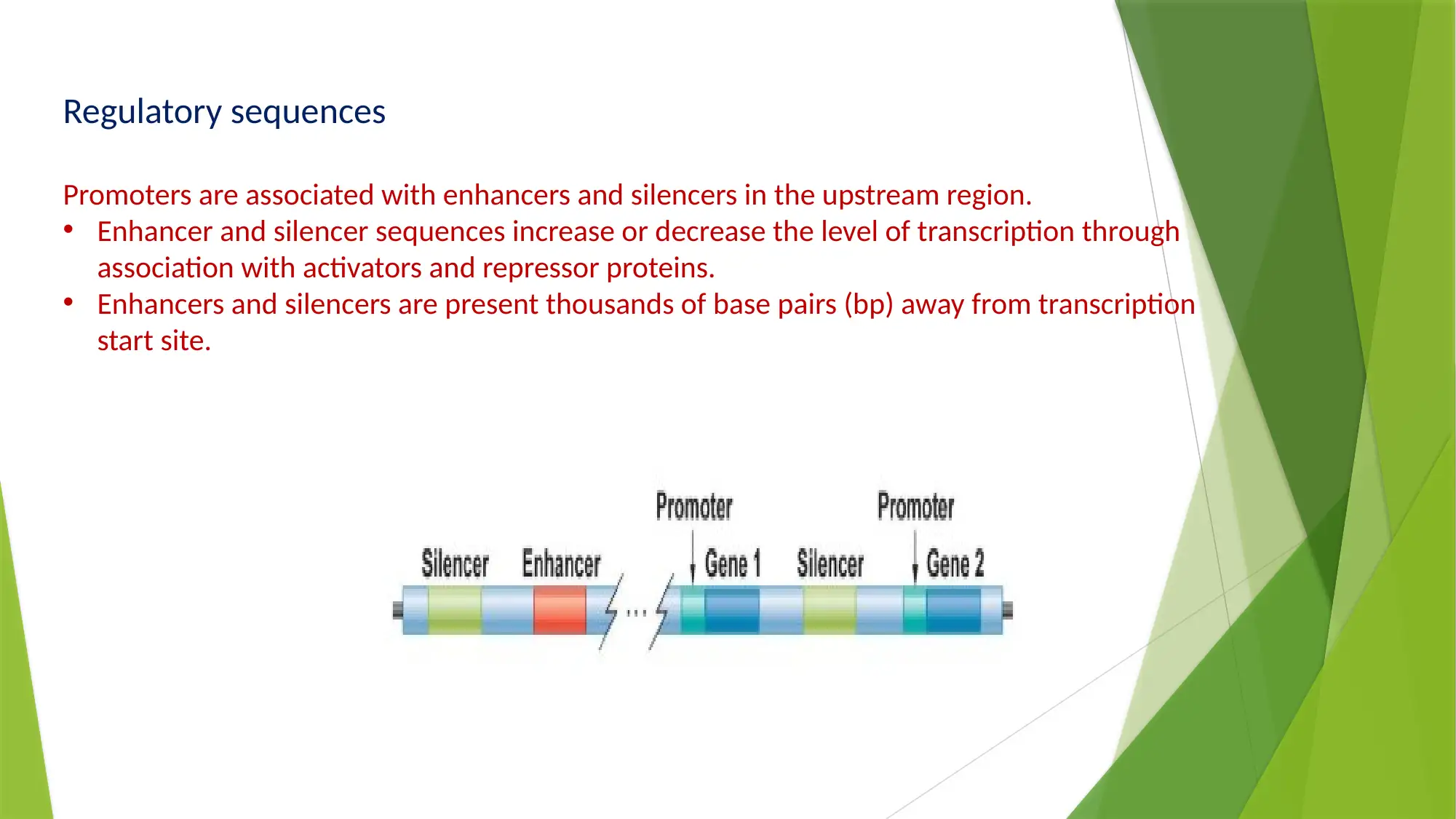
Promoters are associated with enhancers and silencers in the upstream region.
Enhancer and silencer sequences increase or decrease the level of transcription through
association with activators and repressor proteins.
Enhancers and silencers are present thousands of base pairs (bp) away from transcription
start site.
Document Page
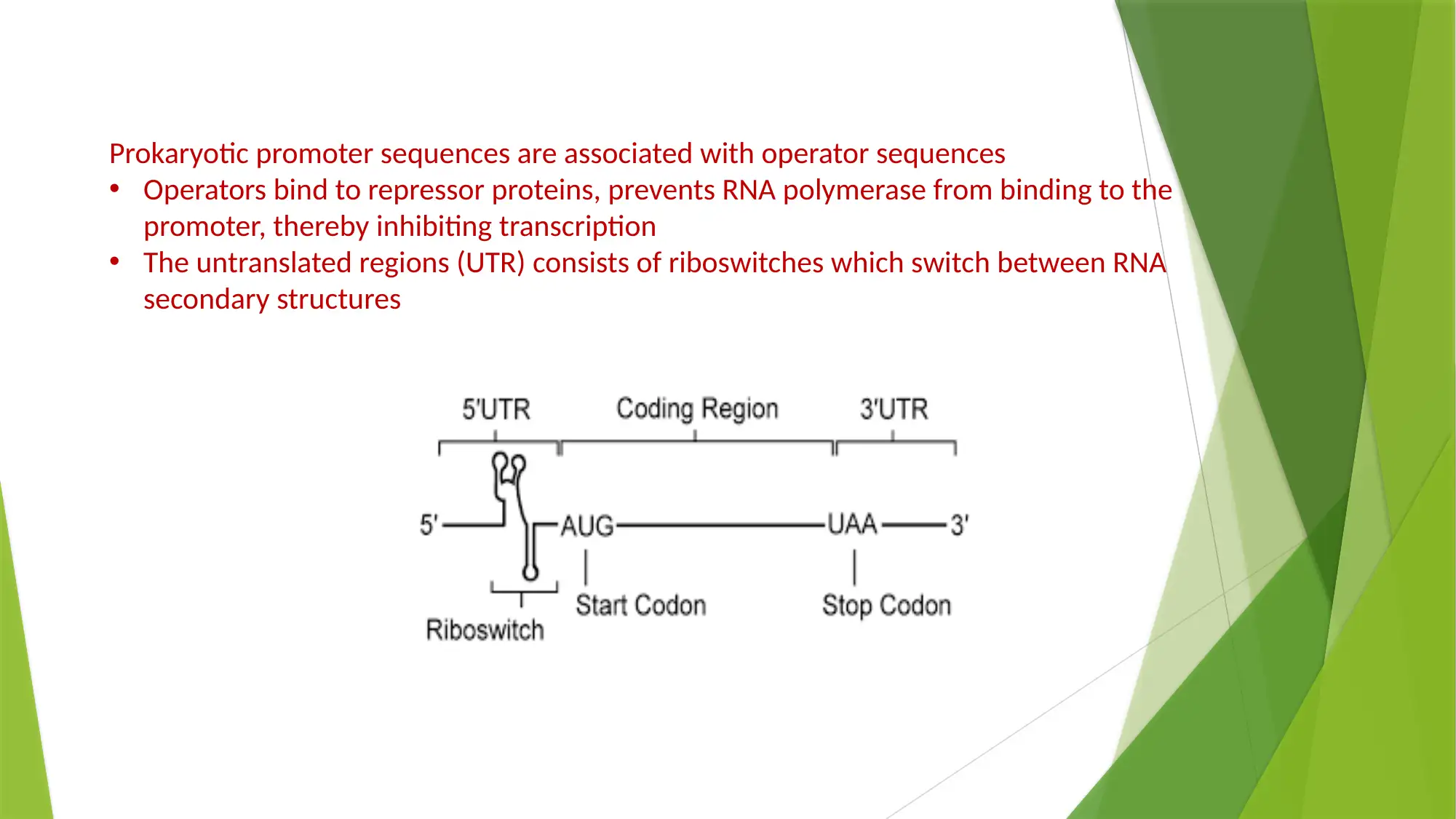
Prokaryotic promoter sequences are associated with operator sequences
Operators bind to repressor proteins, prevents RNA polymerase from binding to the
promoter, thereby inhibiting transcription
The untranslated regions (UTR) consists of riboswitches which switch between RNA
secondary structures
Document Page
The enhancers can be located upstream to the promoter (Proximal) or within
the adjacent genes and intergenic regions (distal)
Strength of a promoter depends on the nucleotide sequence in the -10 and -35
consensus region.
Higher the conservation of sequences in the -10 and -35 region of promoter,
higher is the binding affinity of RNA polymerase to the promoter and higher is
the rate of gene transcription
tabler-icon-diamond-filled.svg

Paraphrase This Document

Need a fresh take? Get an instant paraphrase of this document with our AI Paraphraser
Document Page
DNA-protein interactions are core to
transcriptional regulation in
prokaryotes.
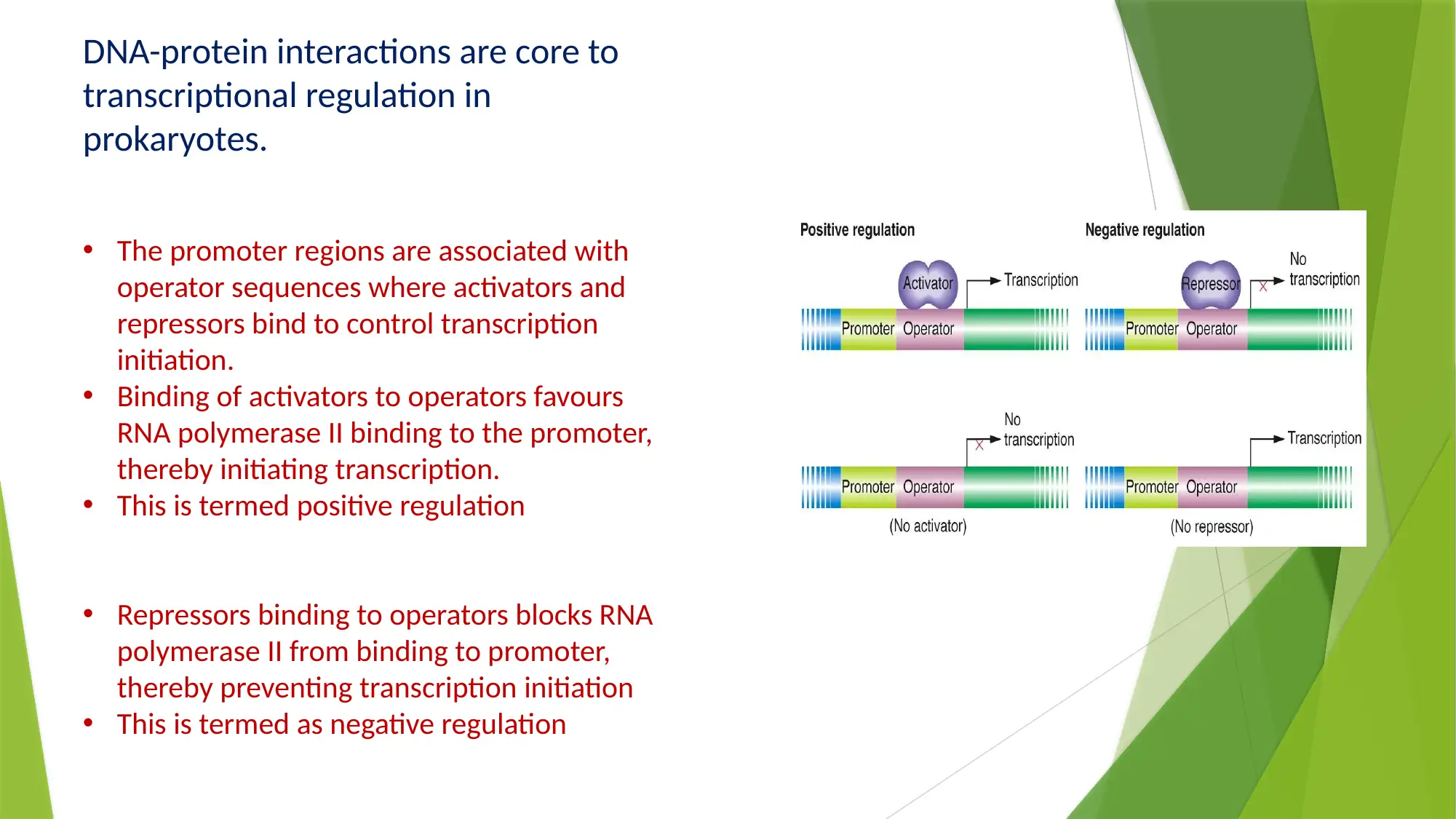
The promoter regions are associated with
operator sequences where activators and
repressors bind to control transcription
initiation.
Binding of activators to operators favours
RNA polymerase II binding to the promoter,
thereby initiating transcription.
This is termed positive regulation
Repressors binding to operators blocks RNA
polymerase II from binding to promoter,
thereby preventing transcription initiation
This is termed as negative regulation
Document Page
Document Page
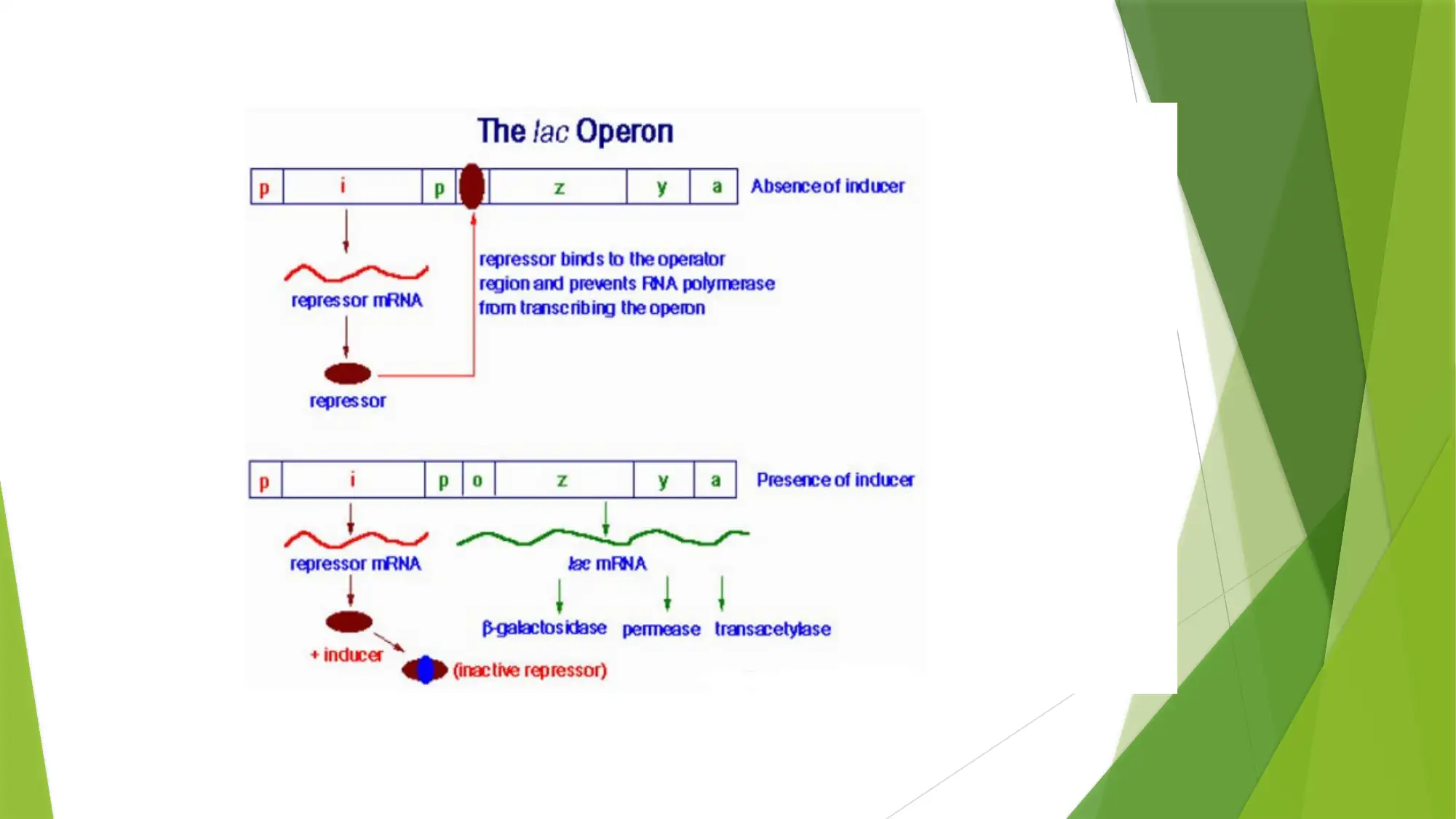
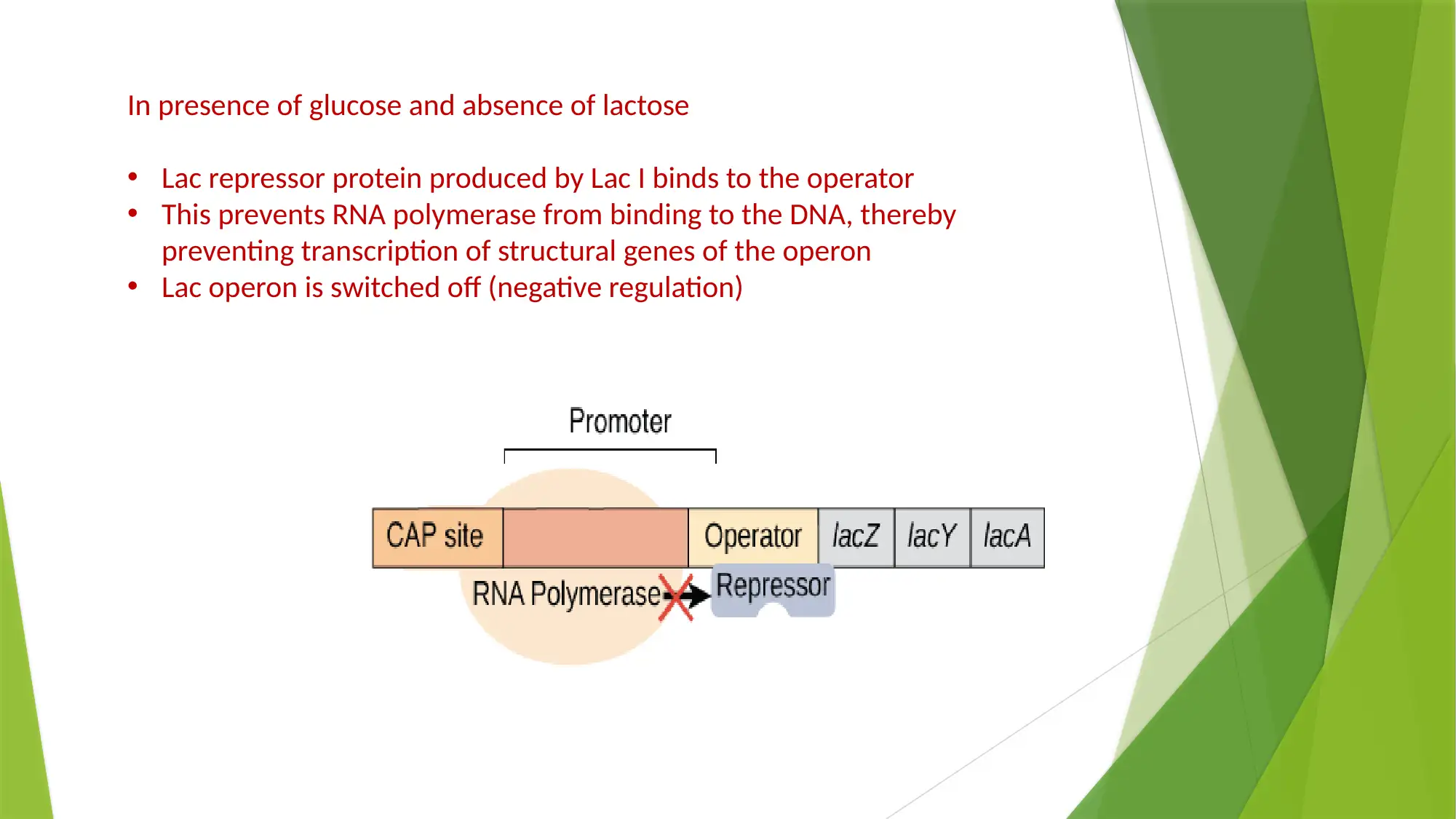
In presence of glucose and absence of lactose
Lac repressor protein produced by Lac I binds to the operator
This prevents RNA polymerase from binding to the DNA, thereby
preventing transcription of structural genes of the operon
Lac operon is switched off (negative regulation)
tabler-icon-diamond-filled.svg

Paraphrase This Document

Need a fresh take? Get an instant paraphrase of this document with our AI Paraphraser
Document Page
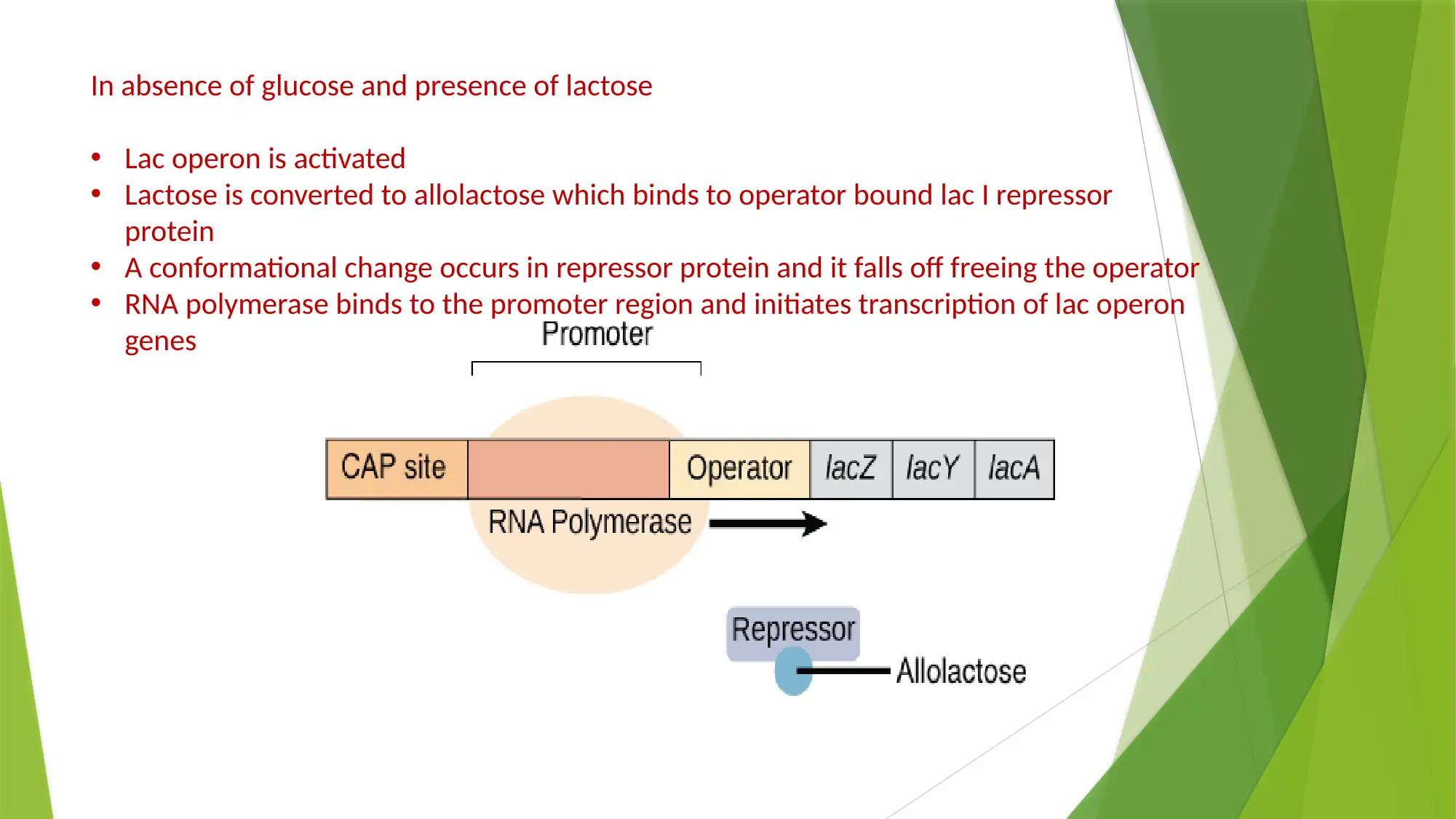
In absence of glucose and presence of lactose
Lac operon is activated
Lactose is converted to allolactose which binds to operator bound lac I repressor
protein
A conformational change occurs in repressor protein and it falls off freeing the operator
RNA polymerase binds to the promoter region and initiates transcription of lac operon
genes
Document Page
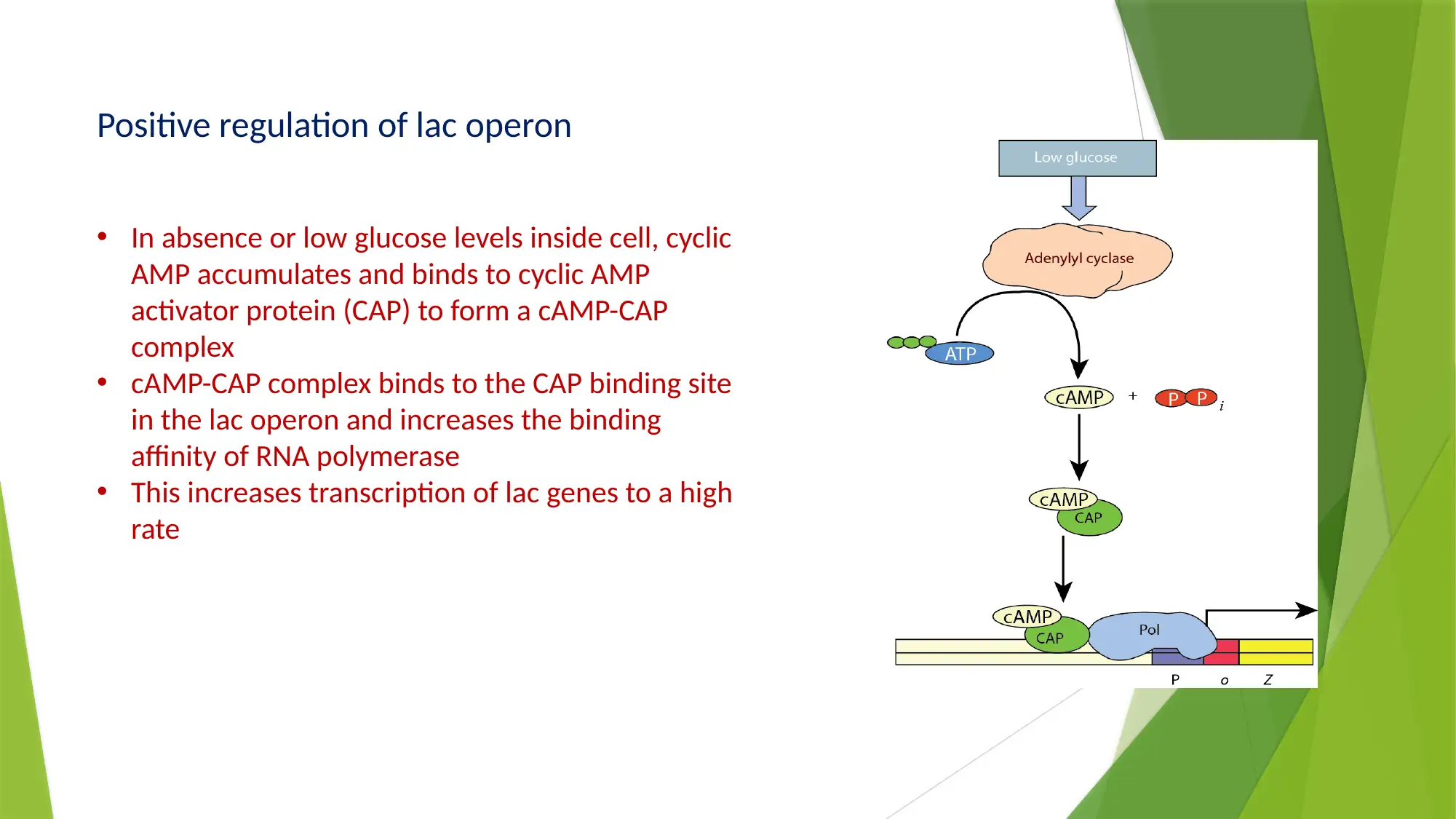
Positive regulation of lac operon
In absence or low glucose levels inside cell, cyclic
AMP accumulates and binds to cyclic AMP
activator protein (CAP) to form a cAMP-CAP
complex
cAMP-CAP complex binds to the CAP binding site
in the lac operon and increases the binding
affinity of RNA polymerase
This increases transcription of lac genes to a high
rate
chevron_up_icon
1 out of 23
circle_padding
hide_on_mobile
zoom_out_icon
[object Object]