Genetic Testing in Infertility: Understanding Male and Female Factors
VerifiedAdded on 2023/06/03
|12
|1361
|159
Report
AI Summary
This report provides a comprehensive overview of genetic testing in couples experiencing infertility, addressing both male and female factors. It begins with an introduction to infertility as a reproductive system illness, highlighting that 40-50% of cases are attributed to female infertility, 30-40% to male infertility, and the remaining 30% are unexplained. The report then delves into overall reflections on genetic testing, including molecular cytogenetics, chromosome analysis, and molecular analysis of DNA for conditions like aneuploidy. In male infertility, it discusses chromosomal aberrations detected through karyotype analysis, Klinefelter syndrome, and Y-chromosomal microdeletions. For female infertility, the report covers polycystic ovary syndrome (PCOS), repeated pregnancy loss, and premature ovarian failure, including related gene mutations. The conclusion emphasizes the increasing use of assisted reproductive technology (ART) and the importance of genetic testing for early risk detection and expert counseling. The report references various studies to support its findings, providing a detailed exploration of the genetic aspects of infertility.
Genetics Testing in Couples with
Infertility
Presented by:
Infertility
Presented by:
Paraphrase This Document
Need a fresh take? Get an instant paraphrase of this document with our AI Paraphraser

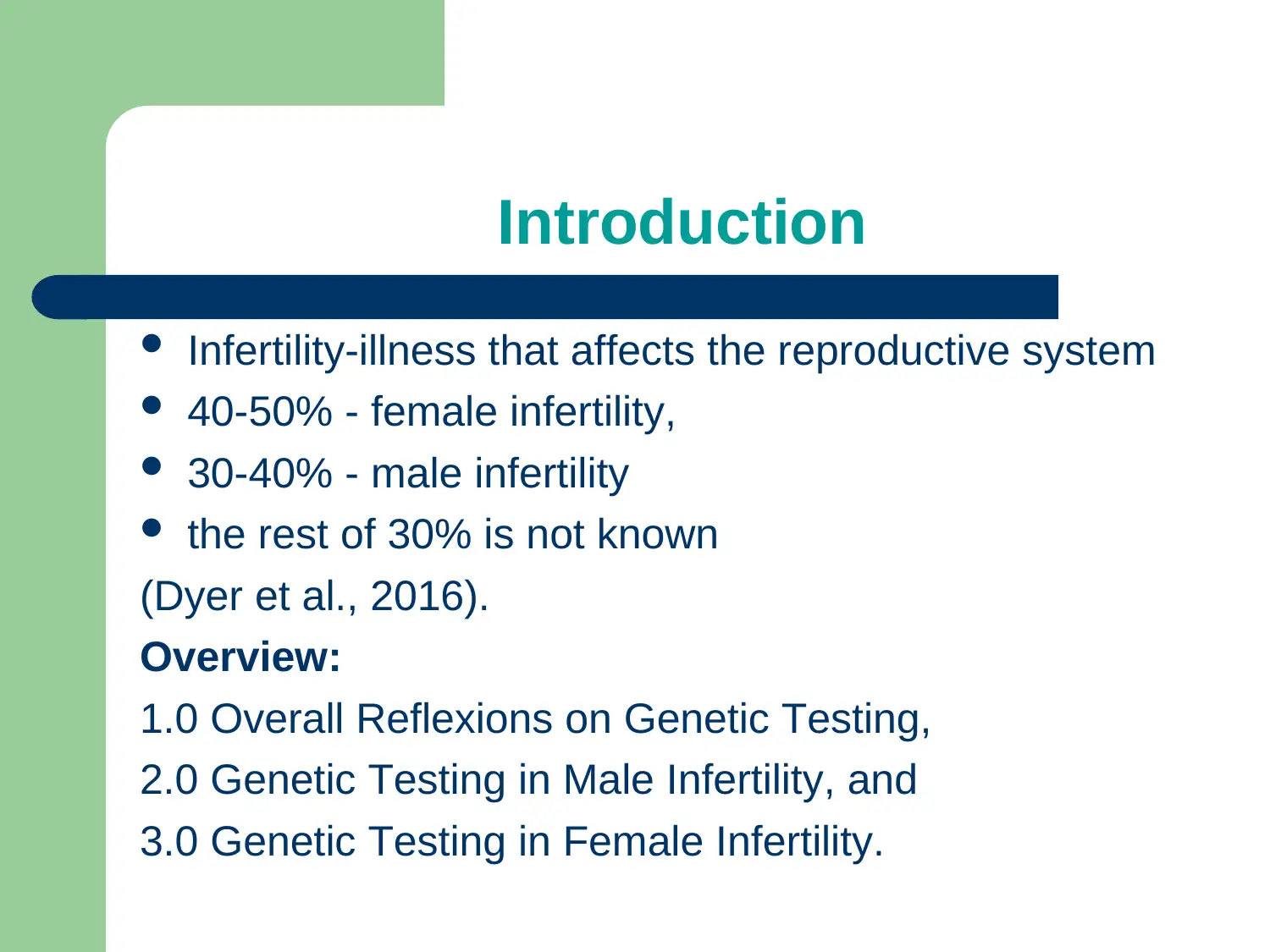
Introduction
Infertility-illness that affects the reproductive system
40-50% - female infertility,
30-40% - male infertility
the rest of 30% is not known
(Dyer et al., 2016).
Overview:
1.0 Overall Reflexions on Genetic Testing,
2.0 Genetic Testing in Male Infertility, and
3.0 Genetic Testing in Female Infertility.
Infertility-illness that affects the reproductive system
40-50% - female infertility,
30-40% - male infertility
the rest of 30% is not known
(Dyer et al., 2016).
Overview:
1.0 Overall Reflexions on Genetic Testing,
2.0 Genetic Testing in Male Infertility, and
3.0 Genetic Testing in Female Infertility.

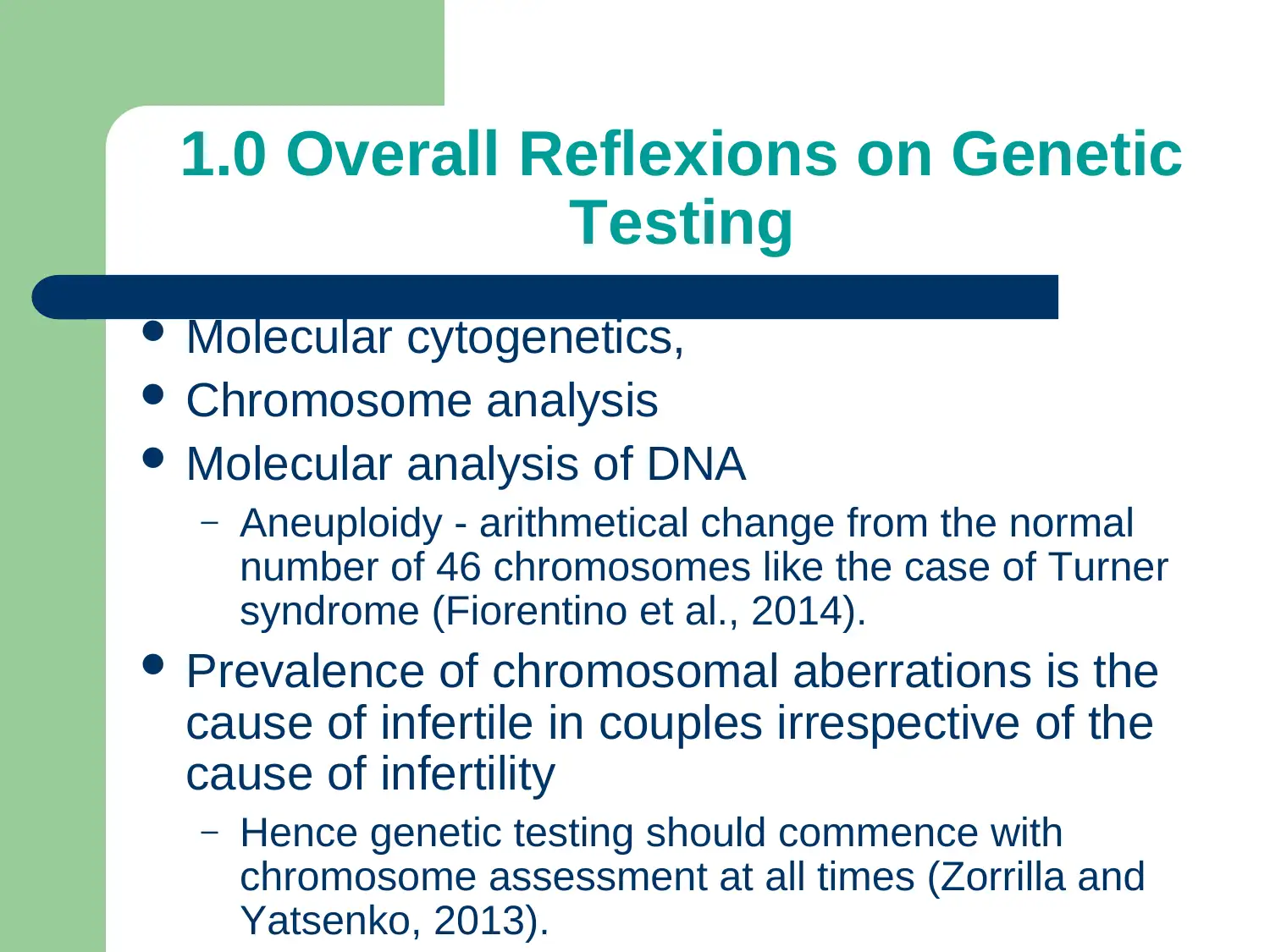
1.0 Overall Reflexions on Genetic
Testing
Molecular cytogenetics,
Chromosome analysis
Molecular analysis of DNA
– Aneuploidy - arithmetical change from the normal
number of 46 chromosomes like the case of Turner
syndrome (Fiorentino et al., 2014).
Prevalence of chromosomal aberrations is the
cause of infertile in couples irrespective of the
cause of infertility
– Hence genetic testing should commence with
chromosome assessment at all times (Zorrilla and
Yatsenko, 2013).
Testing
Molecular cytogenetics,
Chromosome analysis
Molecular analysis of DNA
– Aneuploidy - arithmetical change from the normal
number of 46 chromosomes like the case of Turner
syndrome (Fiorentino et al., 2014).
Prevalence of chromosomal aberrations is the
cause of infertile in couples irrespective of the
cause of infertility
– Hence genetic testing should commence with
chromosome assessment at all times (Zorrilla and
Yatsenko, 2013).
⊘ This is a preview!⊘
Do you want full access?
Subscribe today to unlock all pages.

Trusted by 1+ million students worldwide

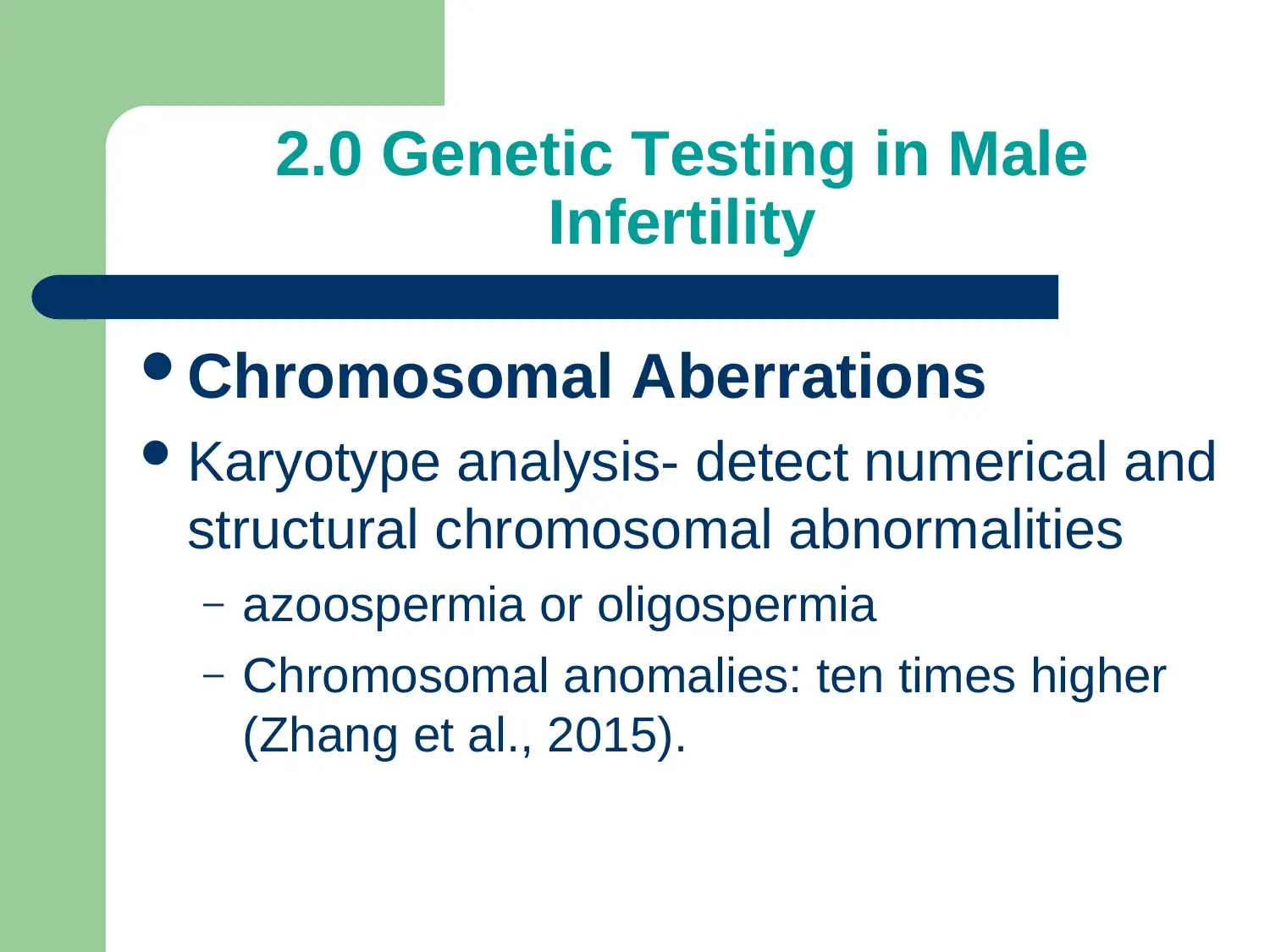
2.0 Genetic Testing in Male
Infertility
Chromosomal Aberrations
Karyotype analysis- detect numerical and
structural chromosomal abnormalities
– azoospermia or oligospermia
– Chromosomal anomalies: ten times higher
(Zhang et al., 2015).
Infertility
Chromosomal Aberrations
Karyotype analysis- detect numerical and
structural chromosomal abnormalities
– azoospermia or oligospermia
– Chromosomal anomalies: ten times higher
(Zhang et al., 2015).
Paraphrase This Document
Need a fresh take? Get an instant paraphrase of this document with our AI Paraphraser

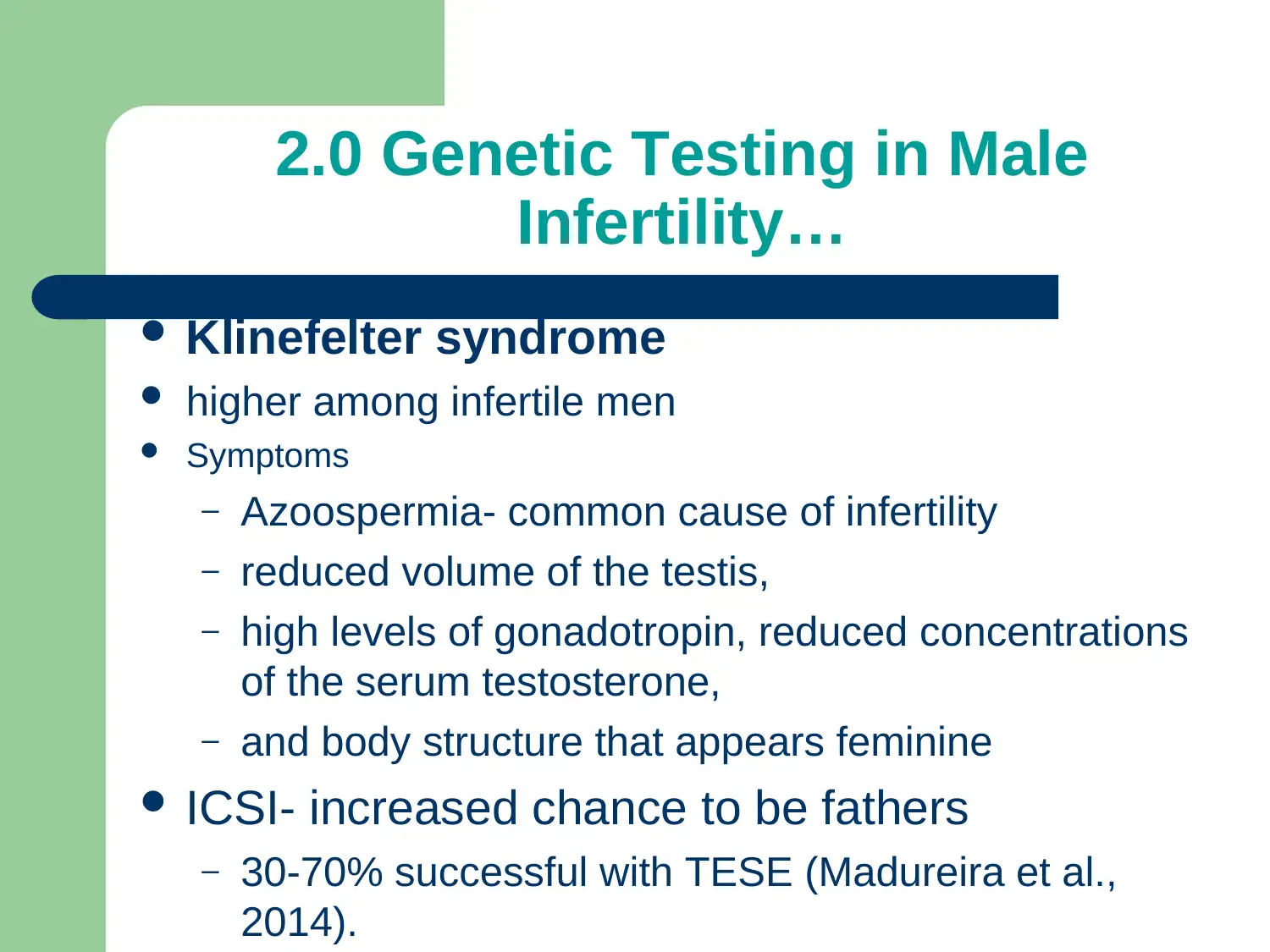
2.0 Genetic Testing in Male
Infertility…
Klinefelter syndrome
higher among infertile men
Symptoms
– Azoospermia- common cause of infertility
– reduced volume of the testis,
– high levels of gonadotropin, reduced concentrations
of the serum testosterone,
– and body structure that appears feminine
ICSI- increased chance to be fathers
– 30-70% successful with TESE (Madureira et al.,
2014).
Infertility…
Klinefelter syndrome
higher among infertile men
Symptoms
– Azoospermia- common cause of infertility
– reduced volume of the testis,
– high levels of gonadotropin, reduced concentrations
of the serum testosterone,
– and body structure that appears feminine
ICSI- increased chance to be fathers
– 30-70% successful with TESE (Madureira et al.,
2014).

2.0 Genetic Testing in Male
Infertility…
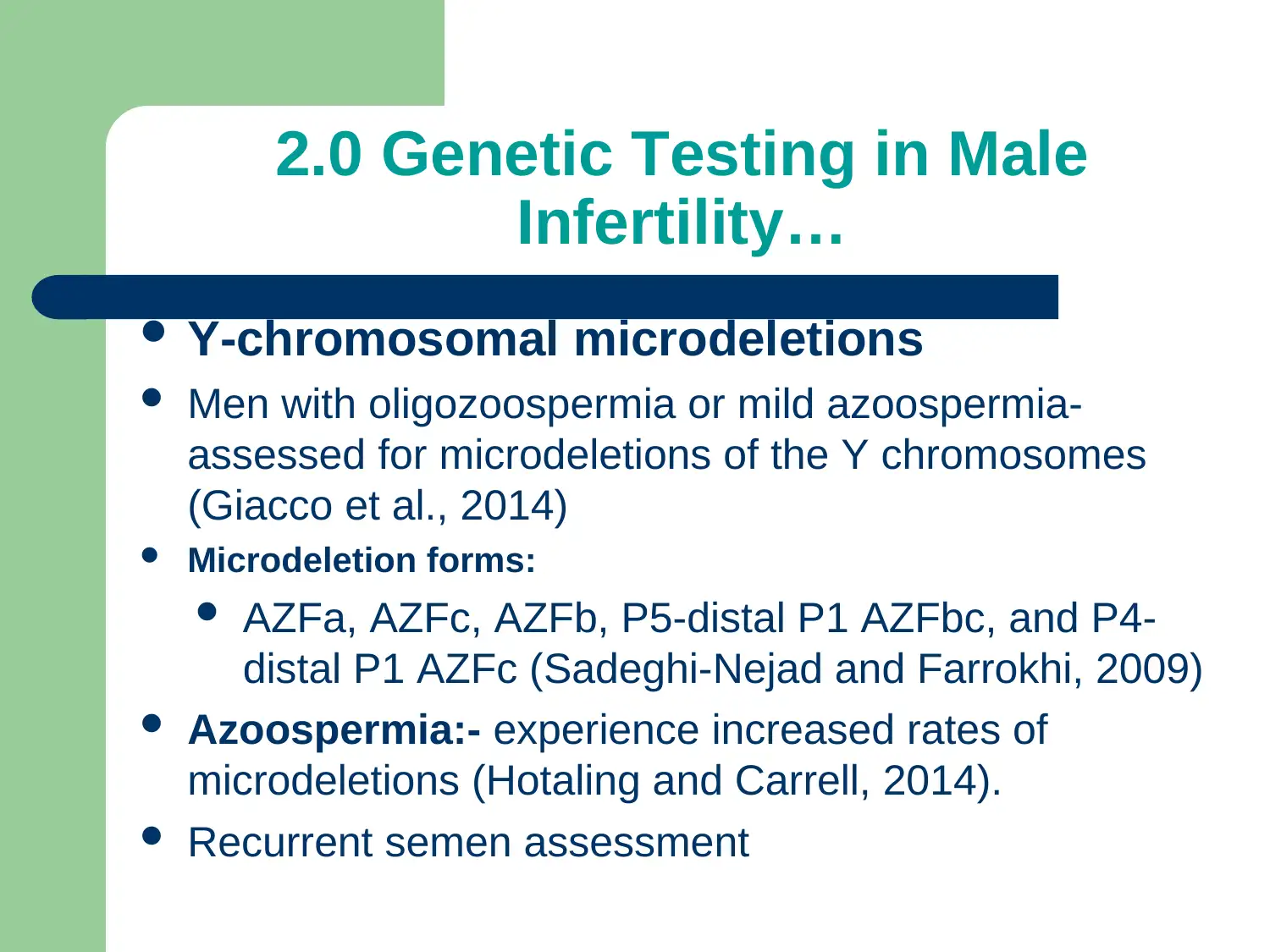
Y-chromosomal microdeletions
Men with oligozoospermia or mild azoospermia-
assessed for microdeletions of the Y chromosomes
(Giacco et al., 2014)
Microdeletion forms:
AZFa, AZFc, AZFb, P5-distal P1 AZFbc, and P4-
distal P1 AZFc (Sadeghi-Nejad and Farrokhi, 2009)
Azoospermia:- experience increased rates of
microdeletions (Hotaling and Carrell, 2014).
Recurrent semen assessment
Infertility…
Y-chromosomal microdeletions
Men with oligozoospermia or mild azoospermia-
assessed for microdeletions of the Y chromosomes
(Giacco et al., 2014)
Microdeletion forms:
AZFa, AZFc, AZFb, P5-distal P1 AZFbc, and P4-
distal P1 AZFc (Sadeghi-Nejad and Farrokhi, 2009)
Azoospermia:- experience increased rates of
microdeletions (Hotaling and Carrell, 2014).
Recurrent semen assessment
⊘ This is a preview!⊘
Do you want full access?
Subscribe today to unlock all pages.

Trusted by 1+ million students worldwide

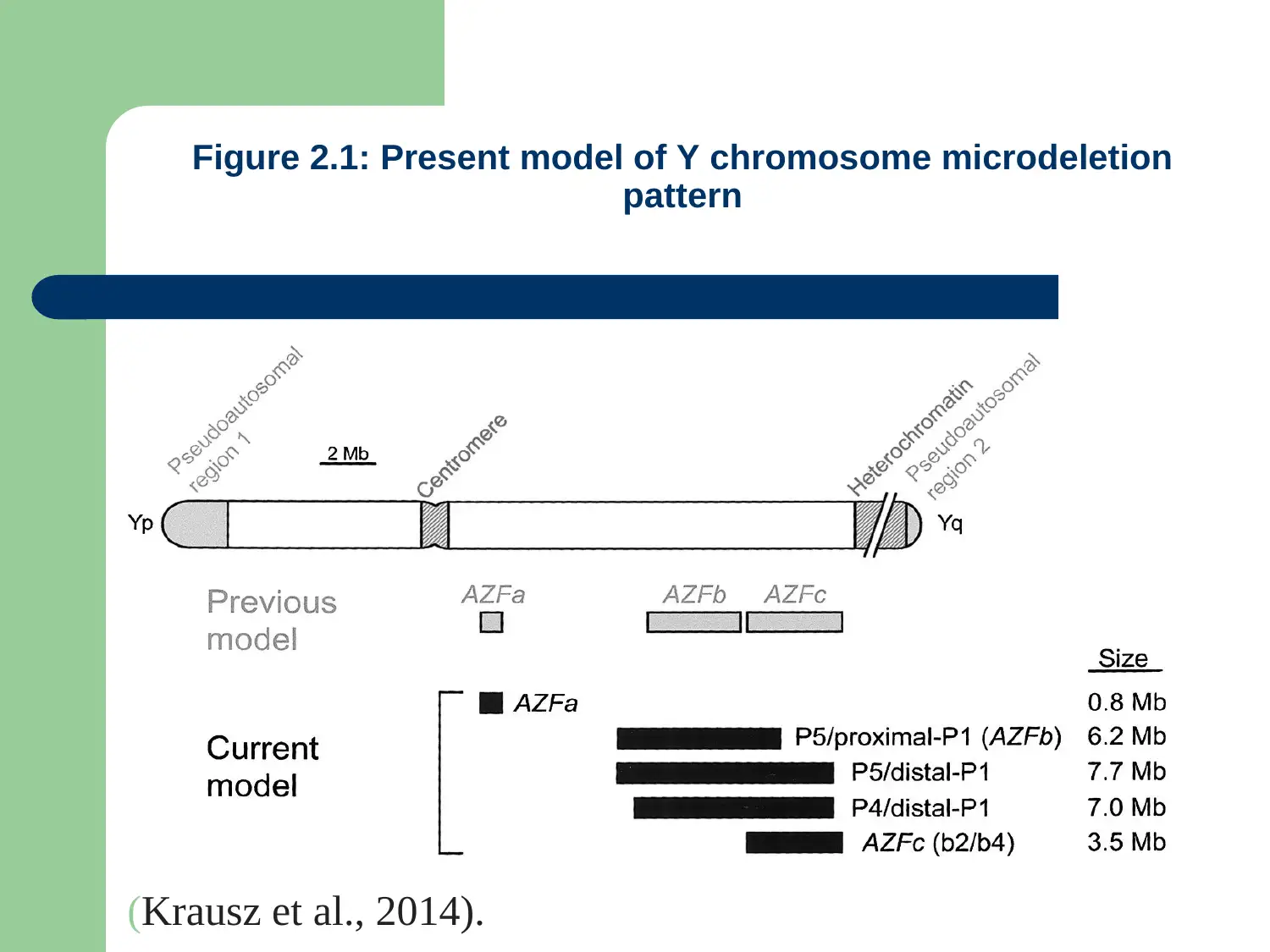
Figure 2.1: Present model of Y chromosome microdeletion
pattern
(Krausz et al., 2014).
pattern
(Krausz et al., 2014).
Paraphrase This Document
Need a fresh take? Get an instant paraphrase of this document with our AI Paraphraser

3.0 Genetic Testing in Female
infertility
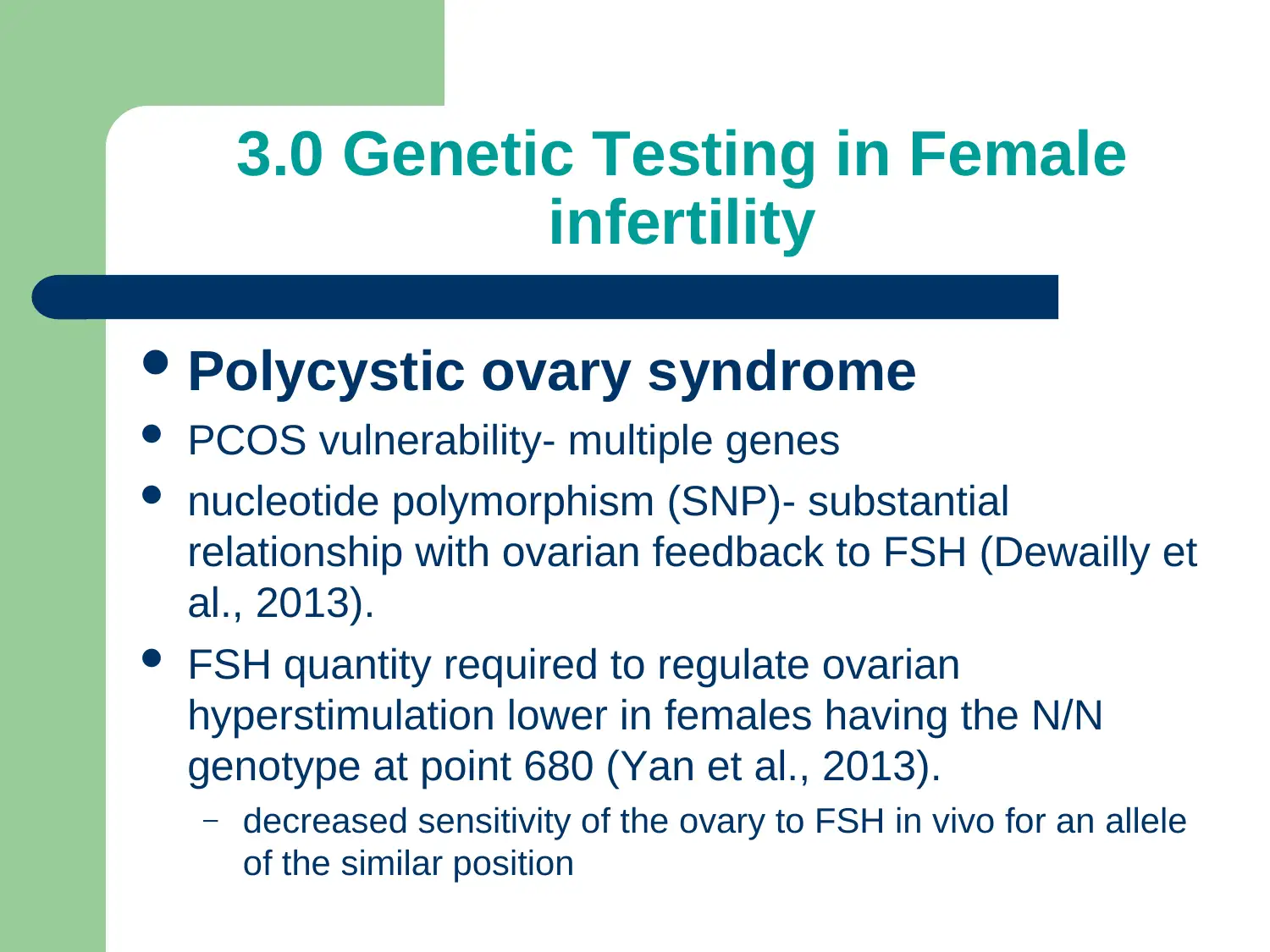
Polycystic ovary syndrome
PCOS vulnerability- multiple genes
nucleotide polymorphism (SNP)- substantial
relationship with ovarian feedback to FSH (Dewailly et
al., 2013).
FSH quantity required to regulate ovarian
hyperstimulation lower in females having the N/N
genotype at point 680 (Yan et al., 2013).
– decreased sensitivity of the ovary to FSH in vivo for an allele
of the similar position
infertility
Polycystic ovary syndrome
PCOS vulnerability- multiple genes
nucleotide polymorphism (SNP)- substantial
relationship with ovarian feedback to FSH (Dewailly et
al., 2013).
FSH quantity required to regulate ovarian
hyperstimulation lower in females having the N/N
genotype at point 680 (Yan et al., 2013).
– decreased sensitivity of the ovary to FSH in vivo for an allele
of the similar position

3.0 Genetic Testing in Female
infertility…
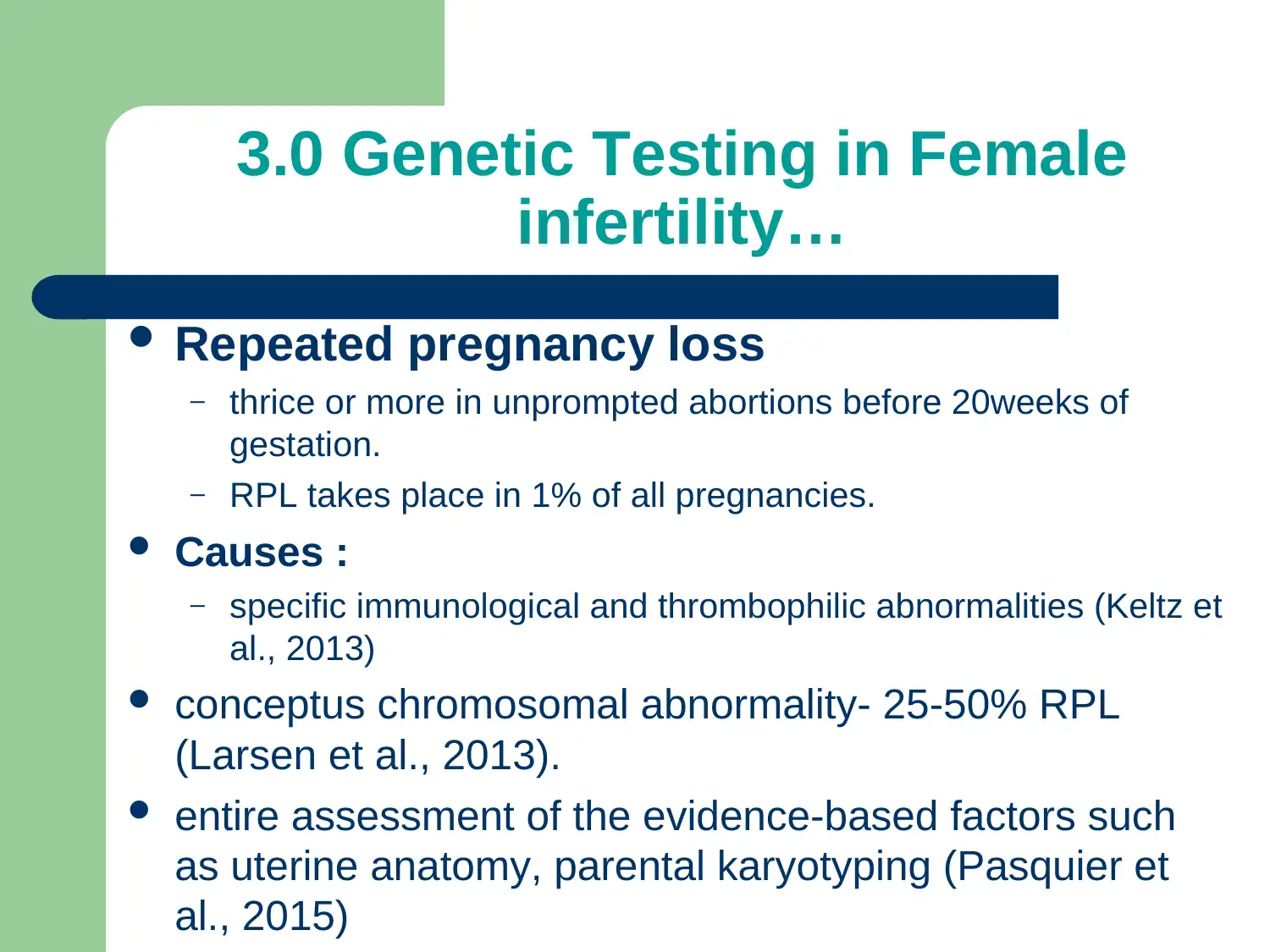
Repeated pregnancy loss
– thrice or more in unprompted abortions before 20weeks of
gestation.
– RPL takes place in 1% of all pregnancies.
Causes :
– specific immunological and thrombophilic abnormalities (Keltz et
al., 2013)
conceptus chromosomal abnormality- 25-50% RPL
(Larsen et al., 2013).
entire assessment of the evidence-based factors such
as uterine anatomy, parental karyotyping (Pasquier et
al., 2015)
infertility…
Repeated pregnancy loss
– thrice or more in unprompted abortions before 20weeks of
gestation.
– RPL takes place in 1% of all pregnancies.
Causes :
– specific immunological and thrombophilic abnormalities (Keltz et
al., 2013)
conceptus chromosomal abnormality- 25-50% RPL
(Larsen et al., 2013).
entire assessment of the evidence-based factors such
as uterine anatomy, parental karyotyping (Pasquier et
al., 2015)
⊘ This is a preview!⊘
Do you want full access?
Subscribe today to unlock all pages.

Trusted by 1+ million students worldwide

3.0 Genetic Testing in Female
infertility…
Premature ovarian failure
– defect of the primary ovary characterized by primary amenorrhea or
early exhaustion of the ovarian follicles before forty years
(secondary amenorrhea) (Chapman et al., 2015).
Karyotype assessments – in primary amenorrhea at
tender age
Gene mutations affect functions of hormone and follicle in
humans, but they are not mutual (Tejada et al., 2008).
Credible mutations cause POF
Pre-mutations or mutations of gene FMR1
linked with secondary amenorrhea in women relatives of
males diagnosed with mental problems.
infertility…
Premature ovarian failure
– defect of the primary ovary characterized by primary amenorrhea or
early exhaustion of the ovarian follicles before forty years
(secondary amenorrhea) (Chapman et al., 2015).
Karyotype assessments – in primary amenorrhea at
tender age
Gene mutations affect functions of hormone and follicle in
humans, but they are not mutual (Tejada et al., 2008).
Credible mutations cause POF
Pre-mutations or mutations of gene FMR1
linked with secondary amenorrhea in women relatives of
males diagnosed with mental problems.
Paraphrase This Document
Need a fresh take? Get an instant paraphrase of this document with our AI Paraphraser

Conclusion
Aided reproductive technology (ART)
Delaying childbirth favors the use of ART
efficacy of CSI treatment has led to concerns such as
pregnancy complications and congenital disabilities
need for genetic testing which enables early detection of
risks and mitigations through expert guidance and
counseling
Aided reproductive technology (ART)
Delaying childbirth favors the use of ART
efficacy of CSI treatment has led to concerns such as
pregnancy complications and congenital disabilities
need for genetic testing which enables early detection of
risks and mitigations through expert guidance and
counseling

References
Dyer, S., Chambers, G.M., de Mouzon, J., Nygren, K.G., Zegers-Hochschild, F., Mansour, R., Ishihara, O., Banker, M. and Adamson, G.D., 2016.
International Committee for Monitoring Assisted Reproductive Technologies world report: assisted reproductive technology 2008, 2009 and
2010. Human reproduction, 31(7), pp.1588-1609.
Fiorentino, F., Biricik, A., Bono, S., Spizzichino, L., Cotroneo, E., Cottone, G., Kokocinski, F. and Michel, C.E., 2014. Development and validation of a next-
generation sequencing–based protocol for 24-chromosome aneuploidy screening of embryos. Fertility and sterility, 101(5), pp.1375-1382.
Giacco, D.L., Chianese, C., Sánchez-Curbelo, J., Bassas, L., Ruiz, P., Rajmil, O., Sarquella, J., Vives, A., Ruiz-Castañé, E., Oliva, R. and Ars, E., 2014.
Clinical relevance of Y-linked CNV screening in male infertility: new insights based on the 8-year experience of a diagnostic genetic
laboratory. European Journal of Human Genetics, 22(6), p.754.
Hotaling, J. and Carrell, D.T., 2014. Clinical genetic testing for male factor infertility: current applications and future directions. Andrology, 2(3), pp.339-350.
Keltz, M.D., Vega, M., Sirota, I., Lederman, M., Moshier, E.L., Gonzales, E. and Stein, D., 2013. Preimplantation genetic screening (PGS) with comparative
genomic hybridization (CGH) following day 3 single cell blastomere biopsy markedly improves IVF outcomes while lowering multiple pregnancies and
miscarriages. Journal of assisted reproduction and genetics, 30(10), pp.1333-1339.
Krausz, C., Hoefsloot, L., Simoni, M. and Tüttelmann, F., 2014. EAA/EMQN best practice guidelines for molecular diagnosis of Y‐chromosomal
microdeletions: state‐of‐the‐art 2013. Andrology, 2(1), pp.5-19.
Larsen, E.C., Christiansen, O.B., Kolte, A.M. and Macklon, N., 2013. New insights into mechanisms behind miscarriage. BMC medicine, 11(1), p.154.
Madureira, C., Cunha, M., Sousa, M., Neto, A.P., Pinho, M.J., Viana, P., Gonçalves, A., Silva, J., Teixeira da Silva, J., Oliveira, C. and Ferraz, L., 2014.
Treatment by testicular sperm extraction and intracytoplasmic sperm injection of 65 azoospermic patients with non‐mosaic Klinefelter syndrome with
birth of 17 healthy children. Andrology, 2(4), pp.623-631.
Pasquier, E., de Saint Martin, L., Bohec, C., Chauleur, C., Bretelle, F., Marhic, G., Le Gal, G., Debarge, V., Lecomte, F., Denoual-Ziad, C. and Lejeune-
Saada, V., 2015. Enoxaparin for prevention of unexplained recurrent miscarriage: a multicenter randomized double-blind placebo-controlled
trial. Blood, pp.blood-2014.
Yan, Y., Gong, Z., Zhang, L., Li, Y., Li, X., Zhu, L. and Sun, L., 2013. Association of follicle-stimulating hormone receptor polymorphisms with ovarian
response in Chinese women: a prospective clinical study. PloS one, 8(10), p.e78138.
Zhang, M., Fan, H.T., Zhang, Q.S., Wang, X.Y., Yang, X., Tian, W.J. and Li, R.W., 2015. Genetic screening and evaluation for chromosomal abnormalities
of infertile males in Jilin Province, China. Genet Mol Res, 14(4), pp.16178-16184.
Zorrilla, M. and Yatsenko, A.N., 2013. The genetics of infertility: current status of the field. Current genetic medicine reports, 1(4), pp.247-260.
Dyer, S., Chambers, G.M., de Mouzon, J., Nygren, K.G., Zegers-Hochschild, F., Mansour, R., Ishihara, O., Banker, M. and Adamson, G.D., 2016.
International Committee for Monitoring Assisted Reproductive Technologies world report: assisted reproductive technology 2008, 2009 and
2010. Human reproduction, 31(7), pp.1588-1609.
Fiorentino, F., Biricik, A., Bono, S., Spizzichino, L., Cotroneo, E., Cottone, G., Kokocinski, F. and Michel, C.E., 2014. Development and validation of a next-
generation sequencing–based protocol for 24-chromosome aneuploidy screening of embryos. Fertility and sterility, 101(5), pp.1375-1382.
Giacco, D.L., Chianese, C., Sánchez-Curbelo, J., Bassas, L., Ruiz, P., Rajmil, O., Sarquella, J., Vives, A., Ruiz-Castañé, E., Oliva, R. and Ars, E., 2014.
Clinical relevance of Y-linked CNV screening in male infertility: new insights based on the 8-year experience of a diagnostic genetic
laboratory. European Journal of Human Genetics, 22(6), p.754.
Hotaling, J. and Carrell, D.T., 2014. Clinical genetic testing for male factor infertility: current applications and future directions. Andrology, 2(3), pp.339-350.
Keltz, M.D., Vega, M., Sirota, I., Lederman, M., Moshier, E.L., Gonzales, E. and Stein, D., 2013. Preimplantation genetic screening (PGS) with comparative
genomic hybridization (CGH) following day 3 single cell blastomere biopsy markedly improves IVF outcomes while lowering multiple pregnancies and
miscarriages. Journal of assisted reproduction and genetics, 30(10), pp.1333-1339.
Krausz, C., Hoefsloot, L., Simoni, M. and Tüttelmann, F., 2014. EAA/EMQN best practice guidelines for molecular diagnosis of Y‐chromosomal
microdeletions: state‐of‐the‐art 2013. Andrology, 2(1), pp.5-19.
Larsen, E.C., Christiansen, O.B., Kolte, A.M. and Macklon, N., 2013. New insights into mechanisms behind miscarriage. BMC medicine, 11(1), p.154.
Madureira, C., Cunha, M., Sousa, M., Neto, A.P., Pinho, M.J., Viana, P., Gonçalves, A., Silva, J., Teixeira da Silva, J., Oliveira, C. and Ferraz, L., 2014.
Treatment by testicular sperm extraction and intracytoplasmic sperm injection of 65 azoospermic patients with non‐mosaic Klinefelter syndrome with
birth of 17 healthy children. Andrology, 2(4), pp.623-631.
Pasquier, E., de Saint Martin, L., Bohec, C., Chauleur, C., Bretelle, F., Marhic, G., Le Gal, G., Debarge, V., Lecomte, F., Denoual-Ziad, C. and Lejeune-
Saada, V., 2015. Enoxaparin for prevention of unexplained recurrent miscarriage: a multicenter randomized double-blind placebo-controlled
trial. Blood, pp.blood-2014.
Yan, Y., Gong, Z., Zhang, L., Li, Y., Li, X., Zhu, L. and Sun, L., 2013. Association of follicle-stimulating hormone receptor polymorphisms with ovarian
response in Chinese women: a prospective clinical study. PloS one, 8(10), p.e78138.
Zhang, M., Fan, H.T., Zhang, Q.S., Wang, X.Y., Yang, X., Tian, W.J. and Li, R.W., 2015. Genetic screening and evaluation for chromosomal abnormalities
of infertile males in Jilin Province, China. Genet Mol Res, 14(4), pp.16178-16184.
Zorrilla, M. and Yatsenko, A.N., 2013. The genetics of infertility: current status of the field. Current genetic medicine reports, 1(4), pp.247-260.
⊘ This is a preview!⊘
Do you want full access?
Subscribe today to unlock all pages.

Trusted by 1+ million students worldwide
1 out of 12
Your All-in-One AI-Powered Toolkit for Academic Success.
+13062052269
info@desklib.com
Available 24*7 on WhatsApp / Email
Unlock your academic potential
Copyright © 2020–2025 A2Z Services. All Rights Reserved. Developed and managed by ZUCOL.