Engineering Ethics (ENGR 302) - Ghostwriting of Research Results
VerifiedAdded on 2022/08/23
|5
|862
|16
Case Study
AI Summary
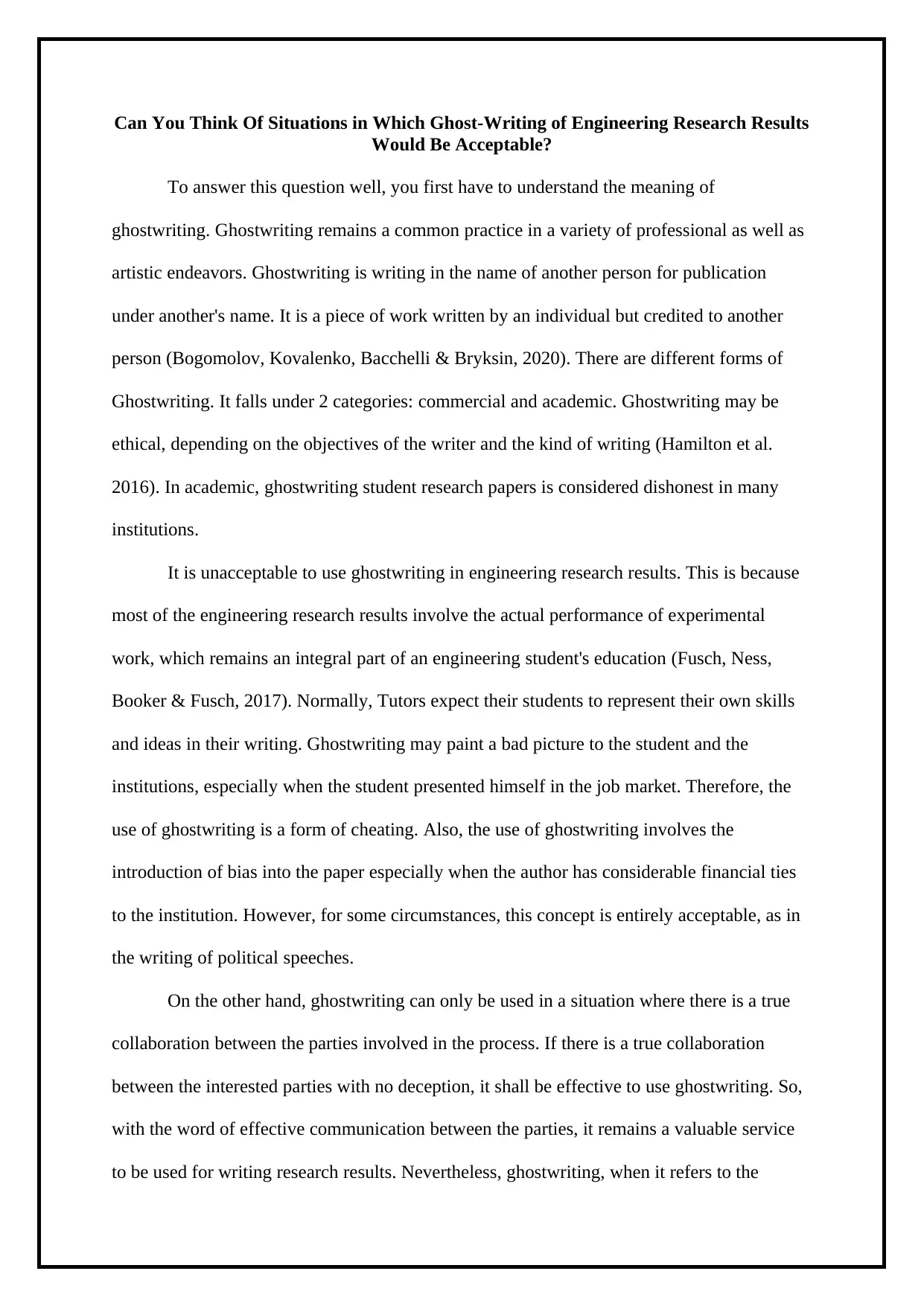
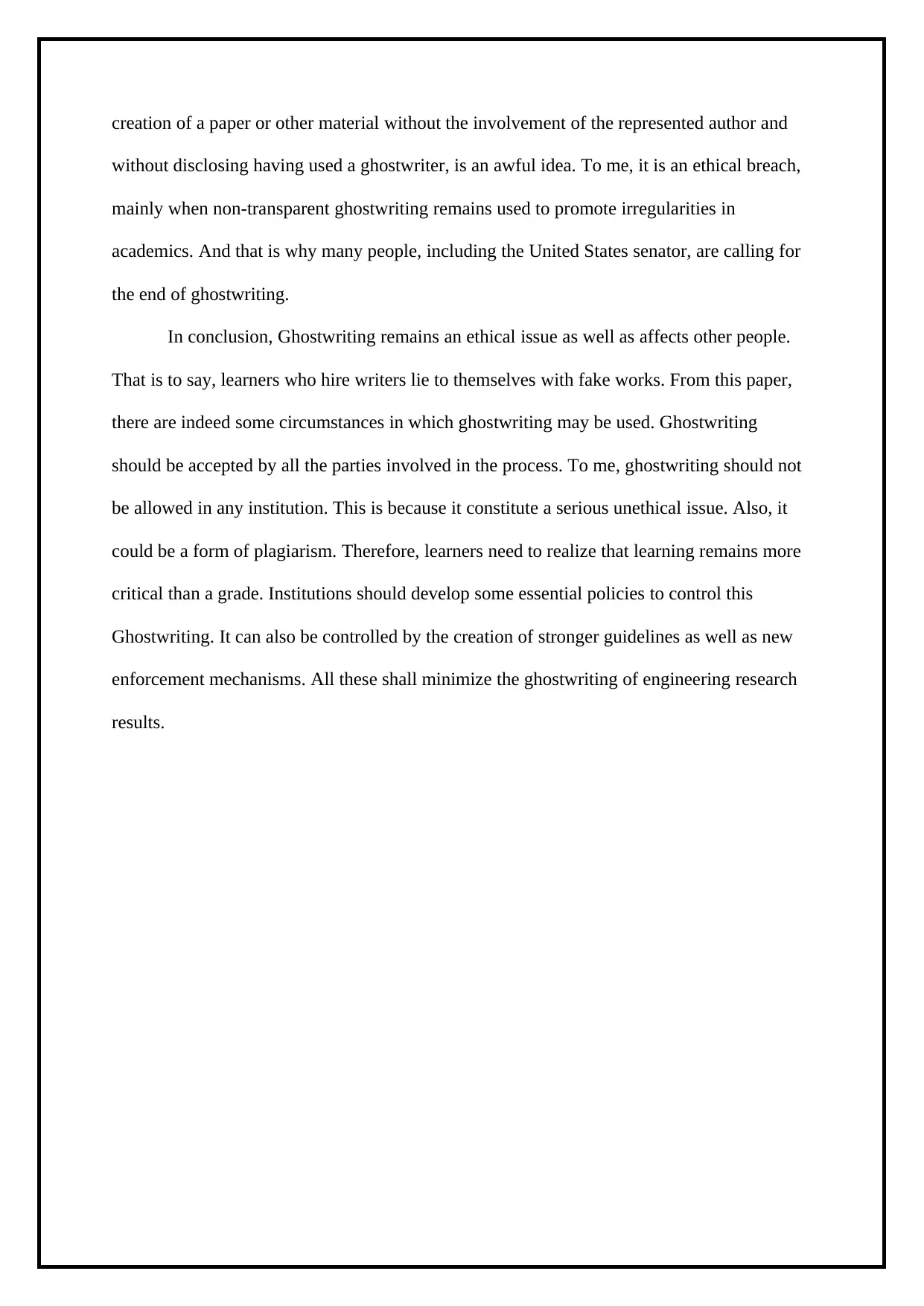
This case study from Islamic University, ENGR 302 Engineering Ethics, explores the ethical implications of ghostwriting in engineering research, focusing on the acceptability of this practice. The assignment begins by defining ghostwriting and its different forms, distinguishing between commercial and academic contexts. It emphasizes that ghostwriting in engineering research, particularly when it involves experimental work, is generally considered unethical due to the importance of students demonstrating their own skills and ideas. The study highlights the potential for bias and the importance of transparency in collaborative efforts. The author concludes that while some situations might allow ghostwriting if all parties are involved and informed, it should not be permitted in academic settings due to ethical concerns and the potential for plagiarism. The paper underscores the importance of learning over grades and suggests that institutions should develop policies and guidelines to control ghostwriting practices. References are provided to support the arguments presented.




1 out of 5


Related Documents


Your All-in-One AI-Powered Toolkit for Academic Success.
+13062052269
info@desklib.com
Available 24*7 on WhatsApp / Email
![[object Object]](/_next/static/media/star-bottom.7253800d.svg)
Copyright © 2020–2026 A2Z Services. All Rights Reserved. Developed and managed by ZUCOL.