Policy and Regulation of the Gig Economy in the United Kingdom

Verified

Added on  2023/06/13

|16
|747
|130
Essay
AI Summary
This essay provides an overview of the gig economy, highlighting its growth and characteristics, including the rise of independent contractors and freelancers. It discusses both the positive aspects, such as flexibility and independence for workers, and the negative aspects, like lack of benefits and tax implications. The essay emphasizes the absence of comprehensive policies and regulations to protect gig economy workers in the UK, referencing the IR35 rule and a Supreme Court decision granting certain rights to ride-sharing app drivers. It suggests the need for proper regulations to define work conditions, payment methods, and access to benefits like wages, sick pay, and holiday pay, concluding that recognizing and legitimizing gig economy work is essential in today's evolving labor market. Find more solved assignments and resources on Desklib.
Document Page
Gig Economy and lack
of policy
tabler-icon-diamond-filled.svg

Paraphrase This Document

Need a fresh take? Get an instant paraphrase of this document with our AI Paraphraser
Document Page
Table of content
Introduction
Gig economy
Positive aspects
Negative aspects
lack of policy and regulations
Suggestions
Conclusion
References
Document Page
Introduction
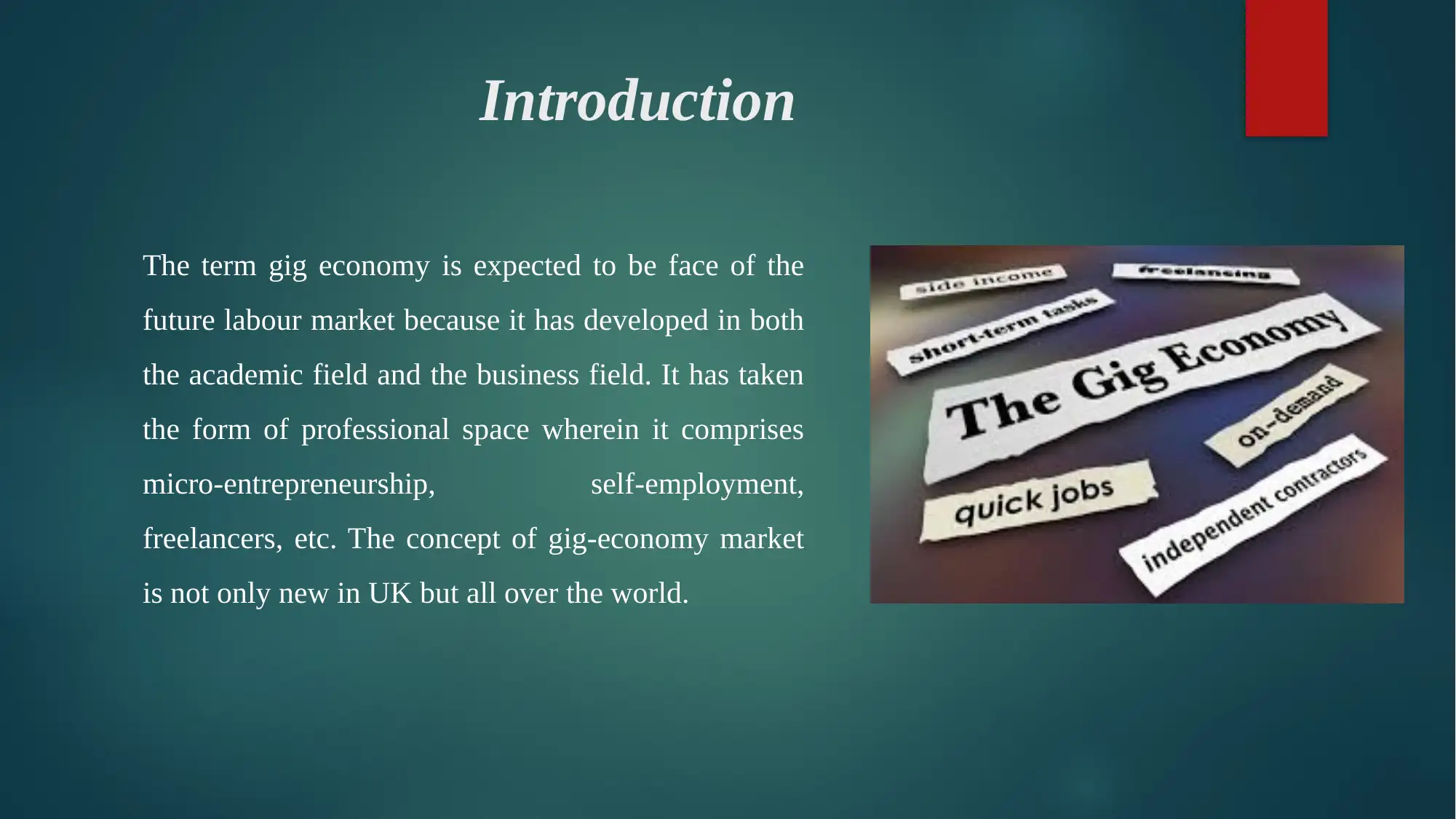
The term gig economy is expected to be face of the
future labour market because it has developed in both
the academic field and the business field. It has taken
the form of professional space wherein it comprises
micro-entrepreneurship, self-employment,
freelancers, etc. The concept of gig-economy market
is not only new in UK but all over the world.
Document Page
Gig economy
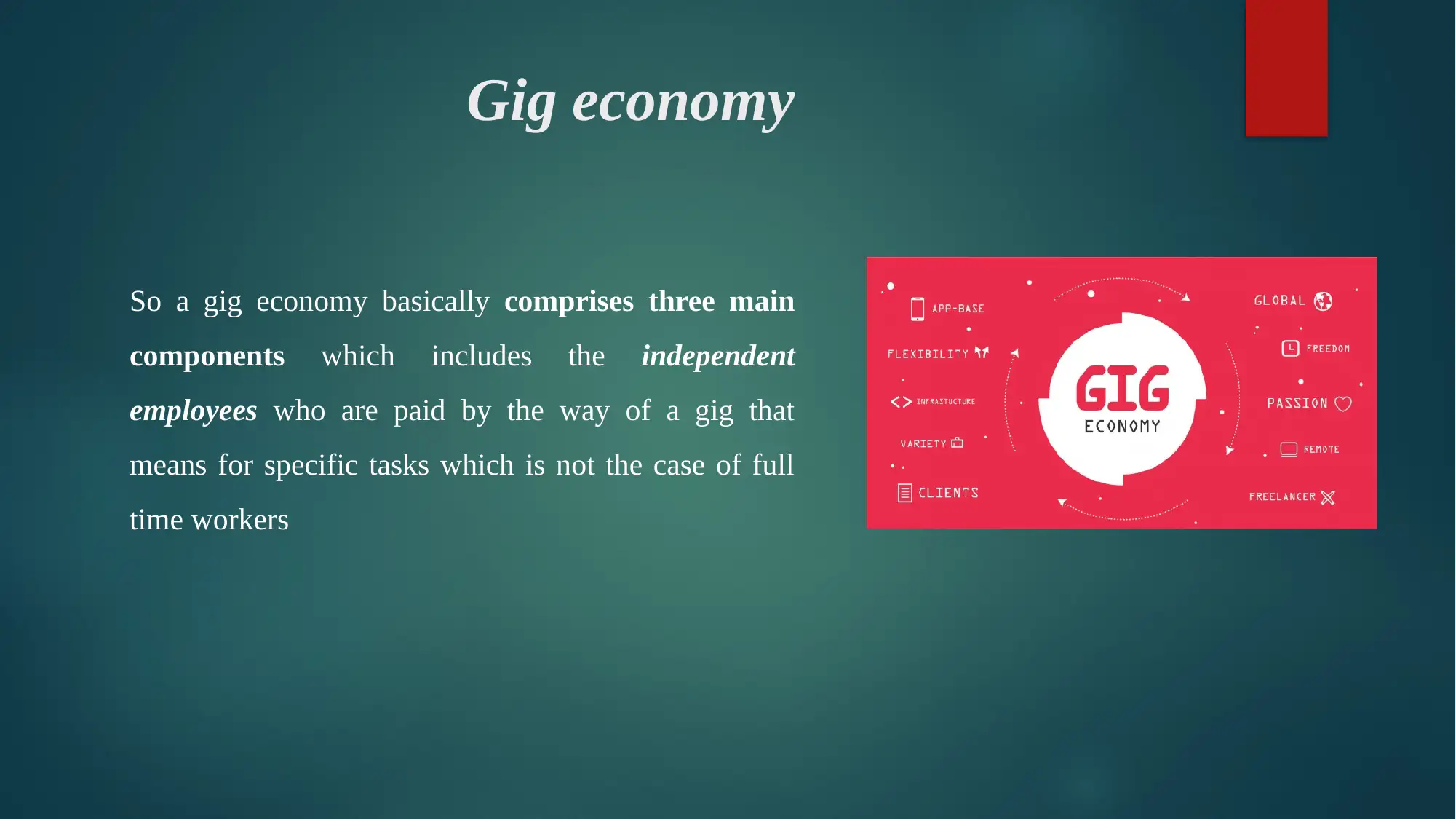
So a gig economy basically comprises three main
components which includes the independent
employees who are paid by the way of a gig that
means for specific tasks which is not the case of full
time workers
tabler-icon-diamond-filled.svg

Paraphrase This Document

Need a fresh take? Get an instant paraphrase of this document with our AI Paraphraser
Document Page
Continued…
Gig economy can be defined as a labour market which is characterized by the
existence of contracts which are of temporary nature or are for a shorter duration. It
also comprises freelance works by the individuals in the economy.
Document Page
Positive aspects
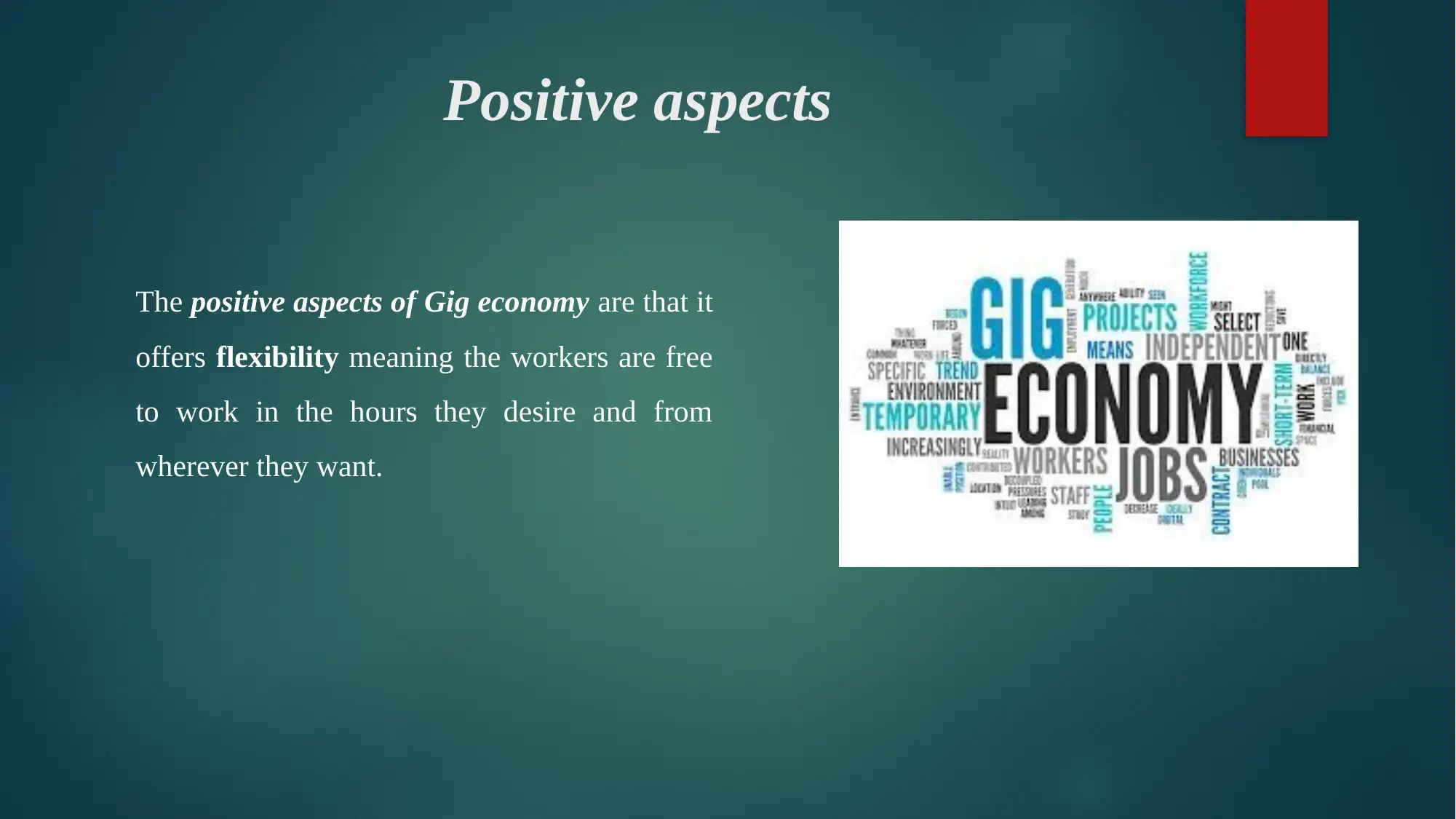
The positive aspects of Gig economy are that it
offers flexibility meaning the workers are free
to work in the hours they desire and from
wherever they want.
Document Page
Continued…
Next is Greater independence, it helps the workers have a greater control on their
work. And what adds to this advantage is that the workers are not bound to work
from a office.
tabler-icon-diamond-filled.svg

Paraphrase This Document

Need a fresh take? Get an instant paraphrase of this document with our AI Paraphraser
Document Page
Negative aspects
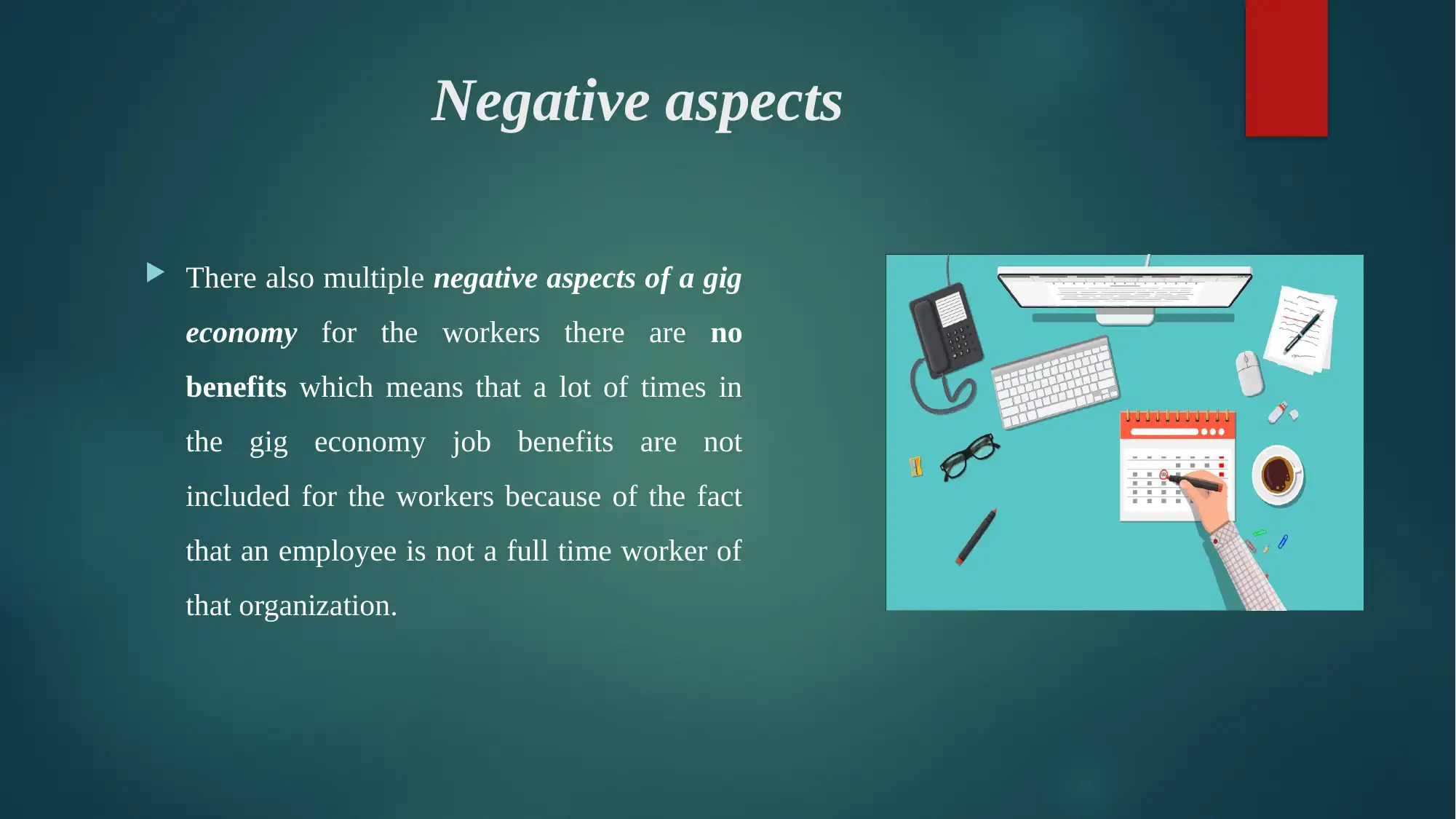
There also multiple negative aspects of a gig
economy for the workers there are no
benefits which means that a lot of times in
the gig economy job benefits are not
included for the workers because of the fact
that an employee is not a full time worker of
that organization.
Document Page
Continued…
Another negative aspect is tax and personal expenses which should be carefully
planned by the workers because there are a lot of situations when the gig economy
workers have to bear the expense of a laptop or any other thing personally.
Document Page
Legislations on Gig Economy
In current times the major legislation which govern the conduct of the self employed people or the
freelancers is the IR35 rule. It was placed in the system since 2017 has now revolutioned to an great
extent including the freelancers and independent workers in its ambit. Generally is the set of UK tax
measures which focuses on fighting the masked employment in the country.
tabler-icon-diamond-filled.svg

Paraphrase This Document

Need a fresh take? Get an instant paraphrase of this document with our AI Paraphraser
Document Page
Lack of policy and regulations
There have been situations which have arisen due to the fact that
there is lack of policy and regulations for the workers of Gig
economy in UK.
The employment laws governing the employees and workers in
the country now stand outdated because they do not cover the gig
economy which is expanding rapidly not only in UK but all over
the world.
Document Page
Continued…
Due to this rising concern the Supreme Court of UK held in a recent decision that
the drivers who work on a ride sharing app shall not be considered as independent
contractors in the gig economy rather as workers so that they get entitled to the basic
employment, and wage rights.
chevron_up_icon
1 out of 16
circle_padding
hide_on_mobile
zoom_out_icon
[object Object]