Acute Kidney Diseases: Prevalence, Risk Factors, and Symptoms Analysis
VerifiedAdded on 2022/10/17
|17
|1742
|319
Report
AI Summary
This report provides a comprehensive overview of acute kidney diseases (AKD), beginning with a global perspective on prevalence and incidence, including variations across different populations and the United States. It delves into the etiology of AKD, outlining various diseases and conditions that can lead to kidney injury, such as acute tubular necrosis, autoimmune diseases, and complications from pregnancy. The report identifies key risk factors like liver disease, diabetes, and heart failure, followed by a discussion of the signs and symptoms of AKD, including fatigue, nausea, and changes in urine output. The pathophysiology section explains glomerular and tubular dysfunction. Diagnostic tests, including urine and blood tests, imaging, and biopsies, are described, along with various treatment methods, such as dietary modifications, medications, and dialysis. Furthermore, the report addresses the role of vaccinations and preventive measures, emphasizing lifestyle changes, diet, exercise, and medication management. The report concludes with a list of references.
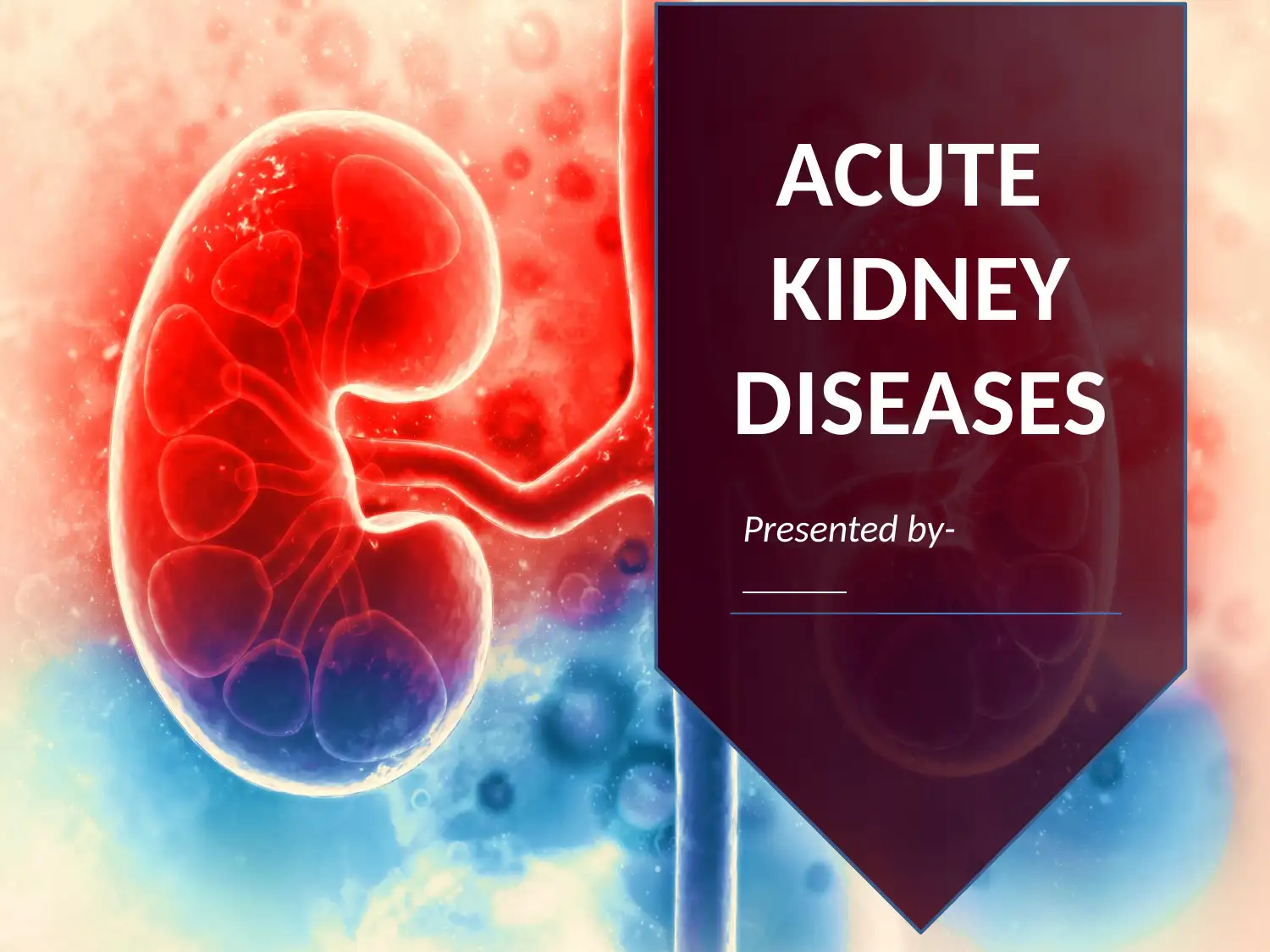
ACUTE
KIDNEY
DISEASES
Presented by-
KIDNEY
DISEASES
Presented by-
Paraphrase This Document
Need a fresh take? Get an instant paraphrase of this document with our AI Paraphraser

GLOBAL PREVALENCE OF THE DISEASE
Fig: This picture represents global variation in the incidence of Acute
Kidney Diseases(AKD). The percentages represent the amount of the
population hospitalized with AKD.
Fig: This picture represents global variation in the incidence of Acute
Kidney Diseases(AKD). The percentages represent the amount of the
population hospitalized with AKD.

PREVALENCE OF THE DISEASE IN USA
Fig: This picture represents the incidence of Acute Kidney
Diseases(AKD) in USA.
Source: (Cdc.gov,2019)
Fig: This picture represents the incidence of Acute Kidney
Diseases(AKD) in USA.
Source: (Cdc.gov,2019)
⊘ This is a preview!⊘
Do you want full access?
Subscribe today to unlock all pages.

Trusted by 1+ million students worldwide

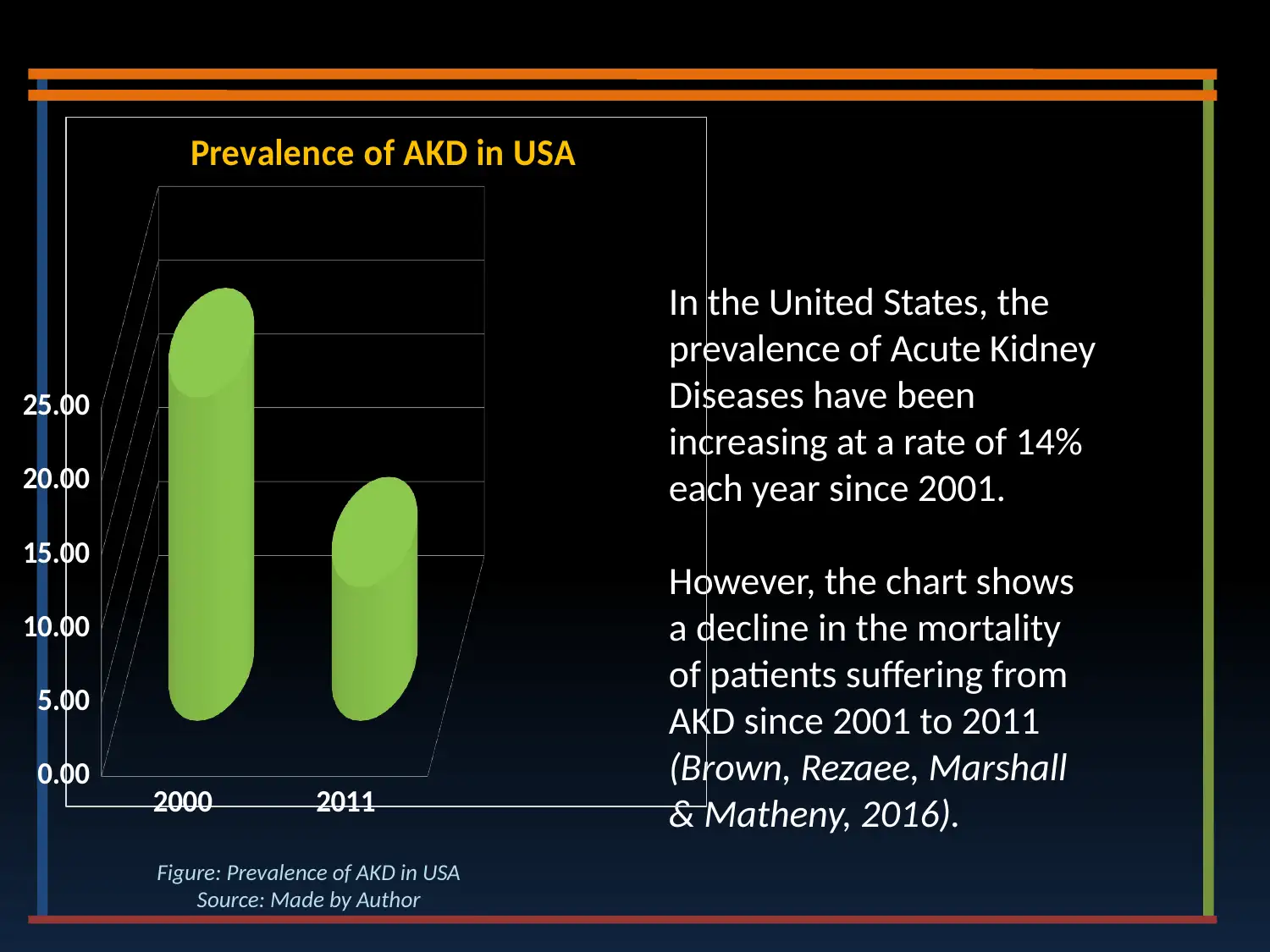
In the United States, the
prevalence of Acute Kidney
Diseases have been
increasing at a rate of 14%
each year since 2001.
However, the chart shows
a decline in the mortality
of patients suffering from
AKD since 2001 to 2011
(Brown, Rezaee, Marshall
& Matheny, 2016).2000 2011
0.00
5.00
10.00
15.00
20.00
25.00
Prevalence of AKD in USA
Figure: Prevalence of AKD in USA
Source: Made by Author
prevalence of Acute Kidney
Diseases have been
increasing at a rate of 14%
each year since 2001.
However, the chart shows
a decline in the mortality
of patients suffering from
AKD since 2001 to 2011
(Brown, Rezaee, Marshall
& Matheny, 2016).2000 2011
0.00
5.00
10.00
15.00
20.00
25.00
Prevalence of AKD in USA
Figure: Prevalence of AKD in USA
Source: Made by Author
Paraphrase This Document
Need a fresh take? Get an instant paraphrase of this document with our AI Paraphraser

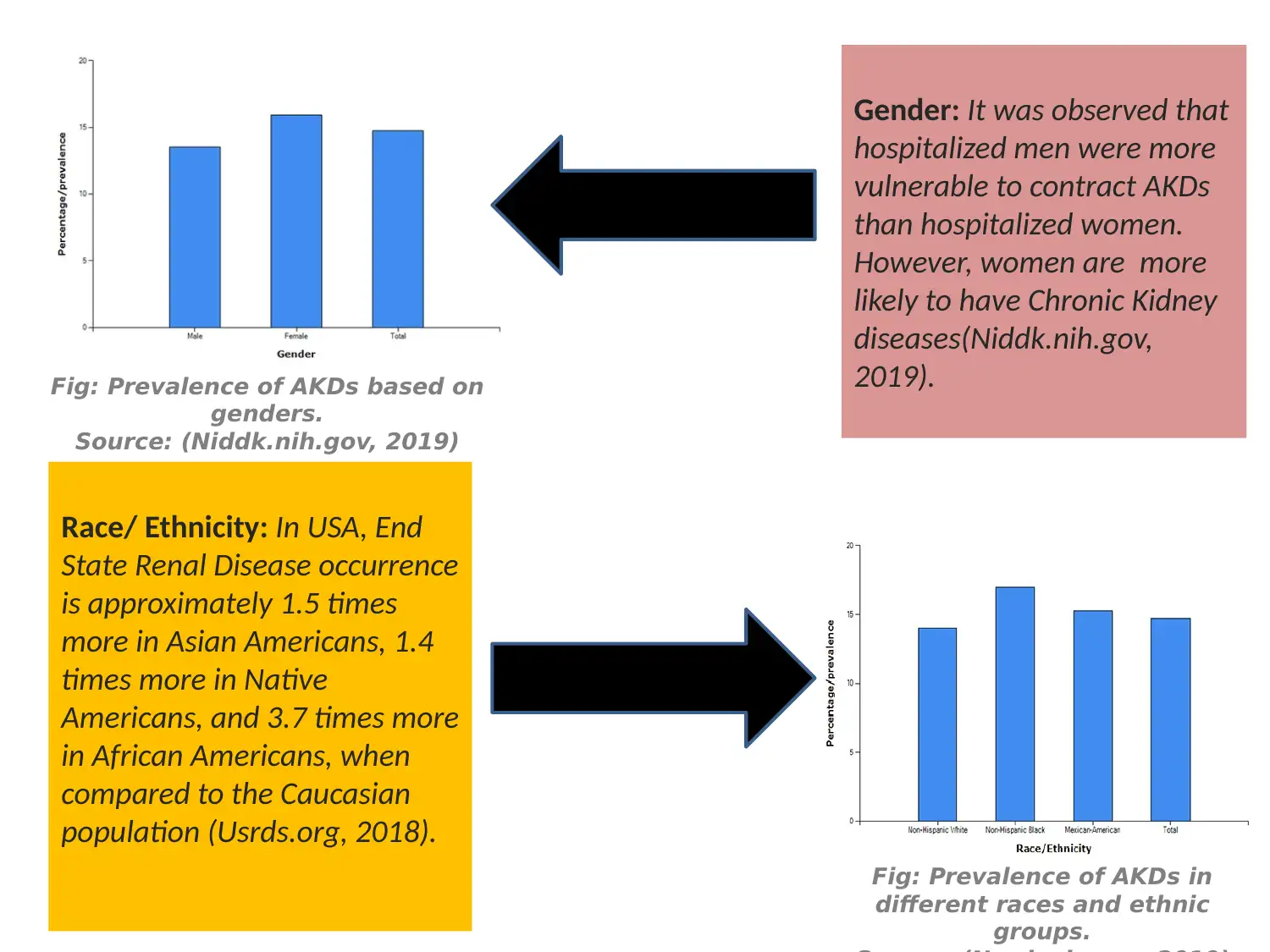
Gender: It was observed that
hospitalized men were more
vulnerable to contract AKDs
than hospitalized women.
However, women are more
likely to have Chronic Kidney
diseases(Niddk.nih.gov,
2019).
Race/ Ethnicity: In USA, End
State Renal Disease occurrence
is approximately 1.5 times
more in Asian Americans, 1.4
times more in Native
Americans, and 3.7 times more
in African Americans, when
compared to the Caucasian
population (Usrds.org, 2018).
Fig: Prevalence of AKDs in
different races and ethnic
groups.
Fig: Prevalence of AKDs based on
genders.
Source: (Niddk.nih.gov, 2019)
hospitalized men were more
vulnerable to contract AKDs
than hospitalized women.
However, women are more
likely to have Chronic Kidney
diseases(Niddk.nih.gov,
2019).
Race/ Ethnicity: In USA, End
State Renal Disease occurrence
is approximately 1.5 times
more in Asian Americans, 1.4
times more in Native
Americans, and 3.7 times more
in African Americans, when
compared to the Caucasian
population (Usrds.org, 2018).
Fig: Prevalence of AKDs in
different races and ethnic
groups.
Fig: Prevalence of AKDs based on
genders.
Source: (Niddk.nih.gov, 2019)

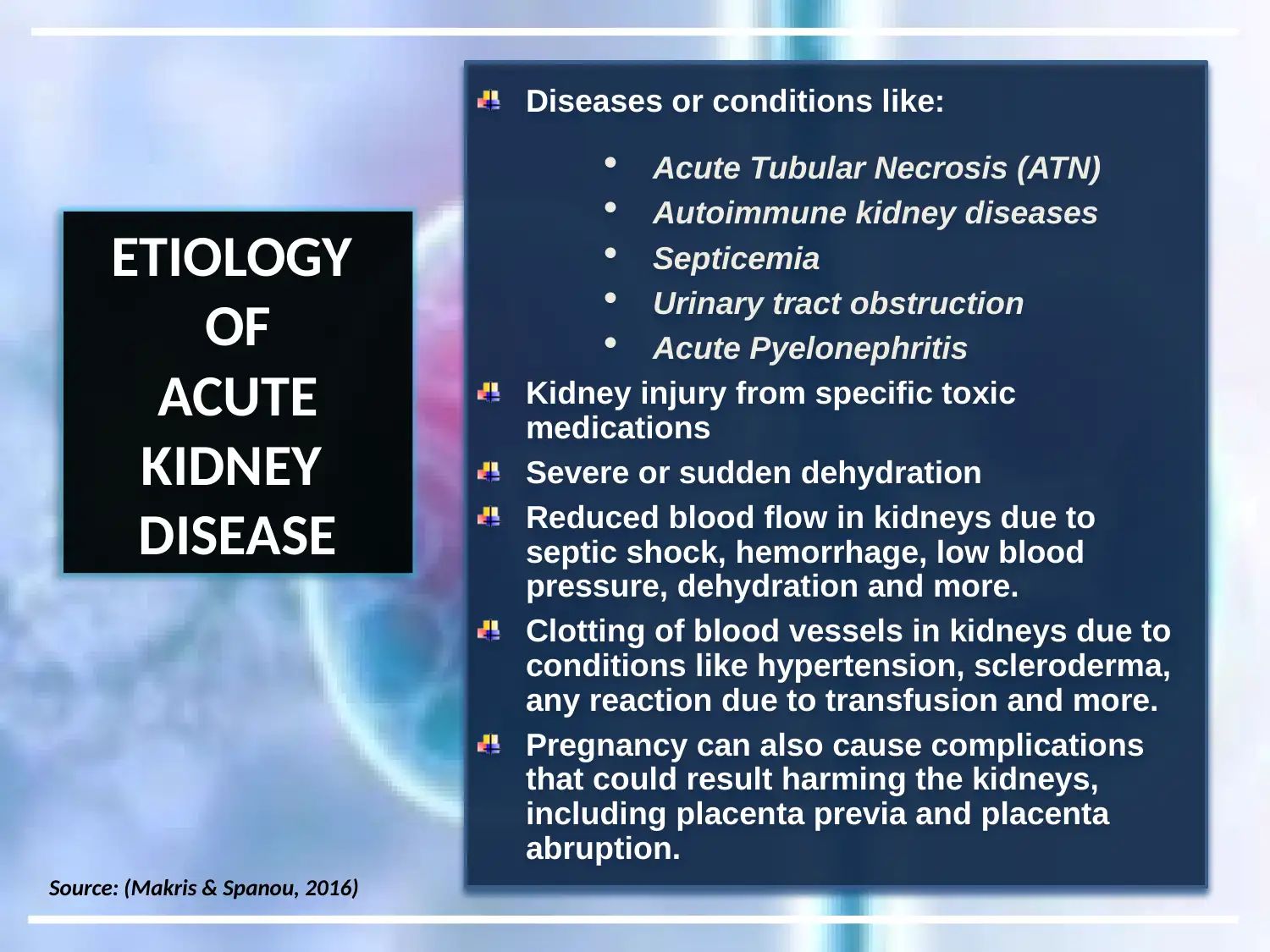
ETIOLOGY
OF
ACUTE
KIDNEY
DISEASE
Diseases or conditions like:
Acute Tubular Necrosis (ATN)
Autoimmune kidney diseases
Septicemia
Urinary tract obstruction
Acute Pyelonephritis
Kidney injury from specific toxic
medications
Severe or sudden dehydration
Reduced blood flow in kidneys due to
septic shock, hemorrhage, low blood
pressure, dehydration and more.
Clotting of blood vessels in kidneys due to
conditions like hypertension, scleroderma,
any reaction due to transfusion and more.
Pregnancy can also cause complications
that could result harming the kidneys,
including placenta previa and placenta
abruption.
Source: (Makris & Spanou, 2016)
OF
ACUTE
KIDNEY
DISEASE
Diseases or conditions like:
Acute Tubular Necrosis (ATN)
Autoimmune kidney diseases
Septicemia
Urinary tract obstruction
Acute Pyelonephritis
Kidney injury from specific toxic
medications
Severe or sudden dehydration
Reduced blood flow in kidneys due to
septic shock, hemorrhage, low blood
pressure, dehydration and more.
Clotting of blood vessels in kidneys due to
conditions like hypertension, scleroderma,
any reaction due to transfusion and more.
Pregnancy can also cause complications
that could result harming the kidneys,
including placenta previa and placenta
abruption.
Source: (Makris & Spanou, 2016)
⊘ This is a preview!⊘
Do you want full access?
Subscribe today to unlock all pages.

Trusted by 1+ million students worldwide

RISK
FACTORS
OF
THE
DISEASE
The risk factors governing the incidence of acute
kidney diseases in an individual.
Liver disease
Diabetes, especially uncontrolled Diabetes
High blood pressure
Heart failure
Morbid Obesity
FACTORS
OF
THE
DISEASE
The risk factors governing the incidence of acute
kidney diseases in an individual.
Liver disease
Diabetes, especially uncontrolled Diabetes
High blood pressure
Heart failure
Morbid Obesity
Paraphrase This Document
Need a fresh take? Get an instant paraphrase of this document with our AI Paraphraser

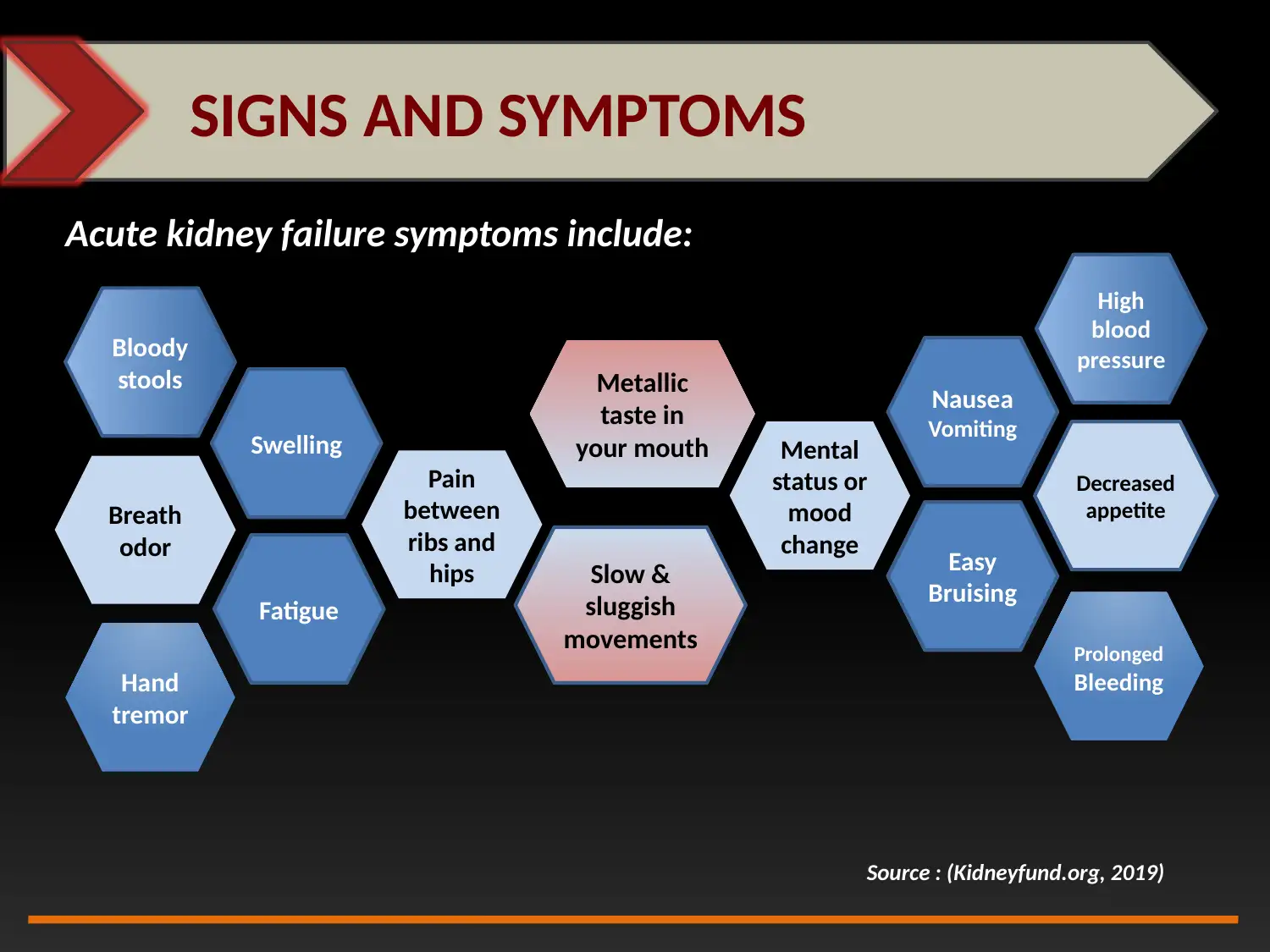
SIGNS AND SYMPTOMS
Acute kidney failure symptoms include:
Breath
odor
Swelling
Bloody
stools
Fatigue
Hand
tremor
Nausea
Vomiting
Decreased
appetite
Easy
Bruising
Pain
between
ribs and
hips Slow &
sluggish
movements
Metallic
taste in
your mouth
High
blood
pressure
Prolonged
Bleeding
Mental
status or
mood
change
Source : (Kidneyfund.org, 2019)
Acute kidney failure symptoms include:
Breath
odor
Swelling
Bloody
stools
Fatigue
Hand
tremor
Nausea
Vomiting
Decreased
appetite
Easy
Bruising
Pain
between
ribs and
hips Slow &
sluggish
movements
Metallic
taste in
your mouth
High
blood
pressure
Prolonged
Bleeding
Mental
status or
mood
change
Source : (Kidneyfund.org, 2019)

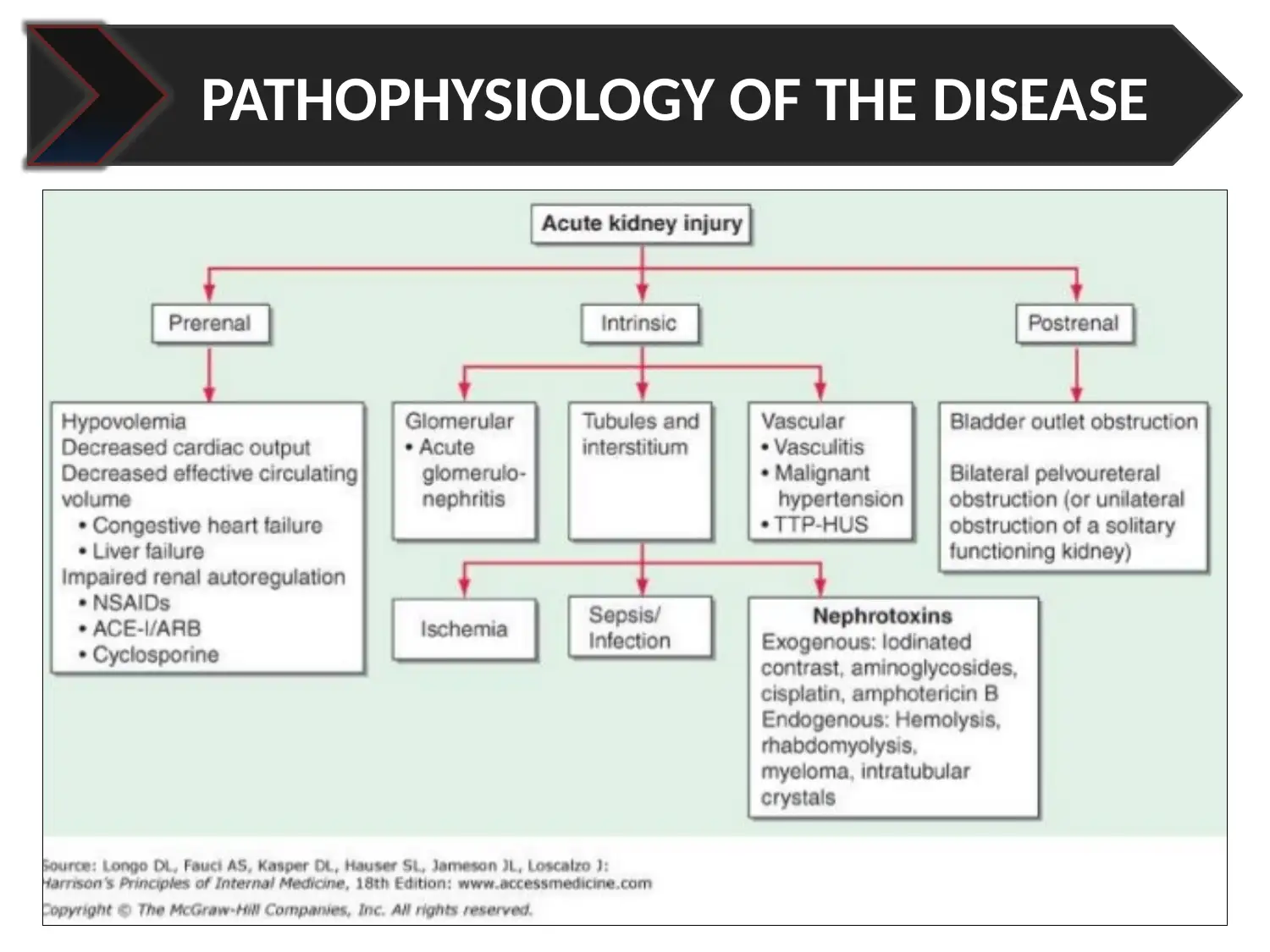
PATHOPHYSIOLOGY OF THE DISEASE
• Glomerular dysfunction
The main function of glomeruli is filtration that is by eliminating electrolytes,
excess fluid, and waste from the bloodstream and pass them into your urine. But
Glomerulonephritis or glomerular dysfunction can cause reduced glomerular
filtration rate [GFR]), and water retention and renal salt, which is usually
controlled or balanced by its filtration (Niddk.nih.gov, 2019).
• Tubular Dysfunction
The main function of tubules is reabsorption. Thus, the incidence of tubular failure
can result in the inability to produce a proper concentration of urine in response
to any physiologic stimulus. Hence, it results in the production of large volumes of
dilute urine, also known as polyuria, along with electrolytes and nutrients
(Niddk.nih.gov, 2019).
• Glomerular dysfunction
The main function of glomeruli is filtration that is by eliminating electrolytes,
excess fluid, and waste from the bloodstream and pass them into your urine. But
Glomerulonephritis or glomerular dysfunction can cause reduced glomerular
filtration rate [GFR]), and water retention and renal salt, which is usually
controlled or balanced by its filtration (Niddk.nih.gov, 2019).
• Tubular Dysfunction
The main function of tubules is reabsorption. Thus, the incidence of tubular failure
can result in the inability to produce a proper concentration of urine in response
to any physiologic stimulus. Hence, it results in the production of large volumes of
dilute urine, also known as polyuria, along with electrolytes and nutrients
(Niddk.nih.gov, 2019).
⊘ This is a preview!⊘
Do you want full access?
Subscribe today to unlock all pages.

Trusted by 1+ million students worldwide

PATHOPHYSIOLOGY OF THE DISEASE
Paraphrase This Document
Need a fresh take? Get an instant paraphrase of this document with our AI Paraphraser

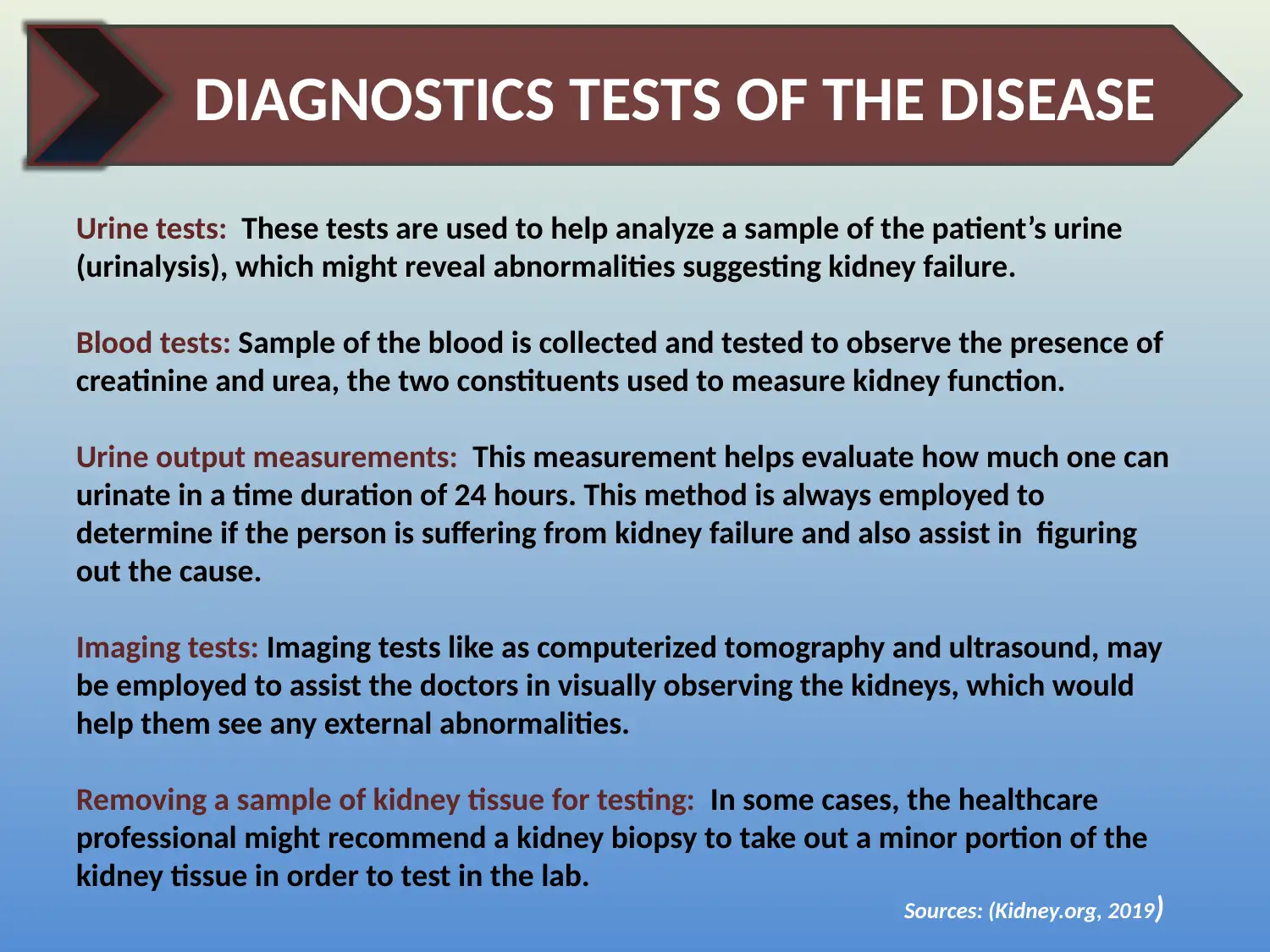
DIAGNOSTICS TESTS OF THE DISEASE
Urine tests: These tests are used to help analyze a sample of the patient’s urine
(urinalysis), which might reveal abnormalities suggesting kidney failure.
Blood tests: Sample of the blood is collected and tested to observe the presence of
creatinine and urea, the two constituents used to measure kidney function.
Urine output measurements: This measurement helps evaluate how much one can
urinate in a time duration of 24 hours. This method is always employed to
determine if the person is suffering from kidney failure and also assist in figuring
out the cause.
Imaging tests: Imaging tests like as computerized tomography and ultrasound, may
be employed to assist the doctors in visually observing the kidneys, which would
help them see any external abnormalities.
Removing a sample of kidney tissue for testing: In some cases, the healthcare
professional might recommend a kidney biopsy to take out a minor portion of the
kidney tissue in order to test in the lab.
Sources: (Kidney.org, 2019)
Urine tests: These tests are used to help analyze a sample of the patient’s urine
(urinalysis), which might reveal abnormalities suggesting kidney failure.
Blood tests: Sample of the blood is collected and tested to observe the presence of
creatinine and urea, the two constituents used to measure kidney function.
Urine output measurements: This measurement helps evaluate how much one can
urinate in a time duration of 24 hours. This method is always employed to
determine if the person is suffering from kidney failure and also assist in figuring
out the cause.
Imaging tests: Imaging tests like as computerized tomography and ultrasound, may
be employed to assist the doctors in visually observing the kidneys, which would
help them see any external abnormalities.
Removing a sample of kidney tissue for testing: In some cases, the healthcare
professional might recommend a kidney biopsy to take out a minor portion of the
kidney tissue in order to test in the lab.
Sources: (Kidney.org, 2019)

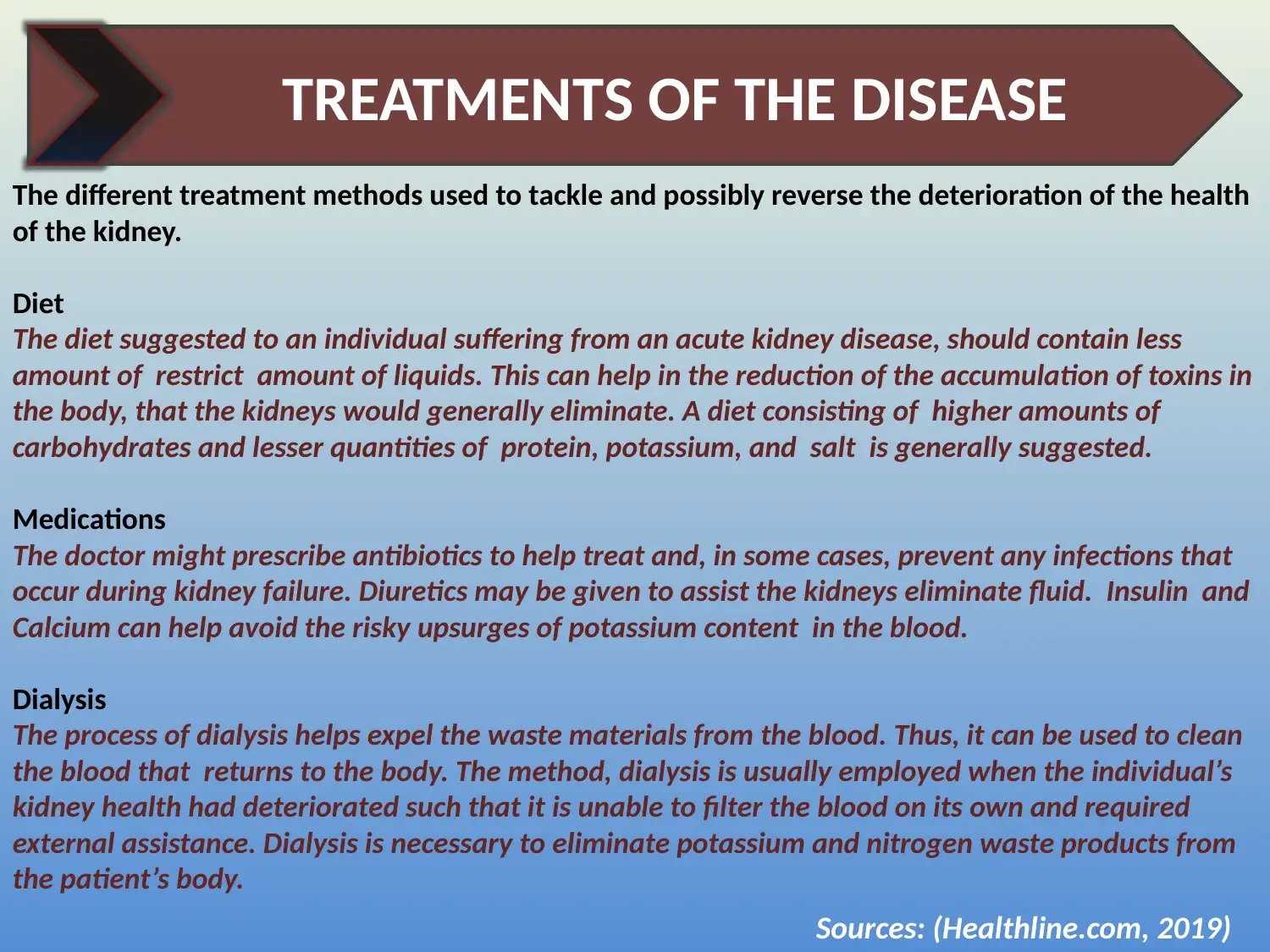
TREATMENTS OF THE DISEASE
The different treatment methods used to tackle and possibly reverse the deterioration of the health
of the kidney.
Diet
The diet suggested to an individual suffering from an acute kidney disease, should contain less
amount of restrict amount of liquids. This can help in the reduction of the accumulation of toxins in
the body, that the kidneys would generally eliminate. A diet consisting of higher amounts of
carbohydrates and lesser quantities of protein, potassium, and salt is generally suggested.
Medications
The doctor might prescribe antibiotics to help treat and, in some cases, prevent any infections that
occur during kidney failure. Diuretics may be given to assist the kidneys eliminate fluid. Insulin and
Calcium can help avoid the risky upsurges of potassium content in the blood.
Dialysis
The process of dialysis helps expel the waste materials from the blood. Thus, it can be used to clean
the blood that returns to the body. The method, dialysis is usually employed when the individual’s
kidney health had deteriorated such that it is unable to filter the blood on its own and required
external assistance. Dialysis is necessary to eliminate potassium and nitrogen waste products from
the patient’s body.
Sources: (Healthline.com, 2019)
The different treatment methods used to tackle and possibly reverse the deterioration of the health
of the kidney.
Diet
The diet suggested to an individual suffering from an acute kidney disease, should contain less
amount of restrict amount of liquids. This can help in the reduction of the accumulation of toxins in
the body, that the kidneys would generally eliminate. A diet consisting of higher amounts of
carbohydrates and lesser quantities of protein, potassium, and salt is generally suggested.
Medications
The doctor might prescribe antibiotics to help treat and, in some cases, prevent any infections that
occur during kidney failure. Diuretics may be given to assist the kidneys eliminate fluid. Insulin and
Calcium can help avoid the risky upsurges of potassium content in the blood.
Dialysis
The process of dialysis helps expel the waste materials from the blood. Thus, it can be used to clean
the blood that returns to the body. The method, dialysis is usually employed when the individual’s
kidney health had deteriorated such that it is unable to filter the blood on its own and required
external assistance. Dialysis is necessary to eliminate potassium and nitrogen waste products from
the patient’s body.
Sources: (Healthline.com, 2019)
⊘ This is a preview!⊘
Do you want full access?
Subscribe today to unlock all pages.

Trusted by 1+ million students worldwide
1 out of 17
Related Documents
Your All-in-One AI-Powered Toolkit for Academic Success.
+13062052269
info@desklib.com
Available 24*7 on WhatsApp / Email
Unlock your academic potential
Copyright © 2020–2026 A2Z Services. All Rights Reserved. Developed and managed by ZUCOL.