PRS4510 Global Sustainability Issues: Deforestation in India Essay
VerifiedAdded on 2023/04/21
|21
|5790
|500
Essay
AI Summary
This essay provides a comprehensive analysis of deforestation in India, examining its historical context, current status, and the various factors contributing to forest loss. It delves into the impacts of deforestation, including environmental degradation, climate change, and socioeconomic consequences for local communities. The essay also discusses the role of government policies, industrialization, and population growth in driving deforestation. Furthermore, it explores potential strategies for reconciling economic growth with environmental sustainability, considering sustainable development goals and conservation efforts. The paper highlights the urgency of addressing deforestation as a global concern, emphasizing the need for collaborative action to protect India's forests and mitigate the adverse effects of forest loss.
Deforestation in India 1
DEFORESTATION IN INDIA
Name:
Department:
School:
Date:
DEFORESTATION IN INDIA
Name:
Department:
School:
Date:

Paraphrase This Document
Need a fresh take? Get an instant paraphrase of this document with our AI Paraphraser
Deforestation in India 2
Introduction
Just like many of the world’s less developed nations, India is experiencing increasing
deterioration of its natural environment. Agricultural modernisation, rapid industrialisation, and
burgeoning populace are combining in numerous less developed countries, including India, to
hurt the natural environment so severely that its continued carrying capacity is in jeopardy.
During the last two decades, the Indian regime has pledged to protect its surrounding and avert
the depletion of its natural resource base. In spite of apparent regimen resolve to address India’s
ecological concerns, merely modest progress has been achieved. Concerns such as water and air
pollution, soil erosion and waterlogging, salinisation and deforestation continue at a fast rate. Of
the above concerns, deforestation has plagued India since the days before its independence. A
greater deal of Indian deforestation is the legacy of colonialism. Forest loss had reached a critical
point by the period India gained independence in 1947. Deforestation, nevertheless, continues at
an ever-growing rate, and thus figures as essential aspects in India’s present and future. This
essay will discuss to what extent can global growth can be reconciled with sustainability.
Additionally, the paper will debate different strategies for attaining a range of sustainable
development goals in the case of deforestation in India.
Deforestation is a menace to the contemporary world which generates concerns to the millions of
social scientists and environmentalists in India as well as throughout the sphere. Deforestation
means decreases in the numbers of trees due to the various anthropogenic and natural aspects
which build severe impacts on the environmental and human society as well. Forest is well
recognised as globe’s lungs. They absorb carbon dioxide which is a greenhouse gas.
Deforestations slow down the absorption speed, speeding up the pace of global warming.
Enormous deforestation continues, the forest zone of the sphere is reducing, which is very
Introduction
Just like many of the world’s less developed nations, India is experiencing increasing
deterioration of its natural environment. Agricultural modernisation, rapid industrialisation, and
burgeoning populace are combining in numerous less developed countries, including India, to
hurt the natural environment so severely that its continued carrying capacity is in jeopardy.
During the last two decades, the Indian regime has pledged to protect its surrounding and avert
the depletion of its natural resource base. In spite of apparent regimen resolve to address India’s
ecological concerns, merely modest progress has been achieved. Concerns such as water and air
pollution, soil erosion and waterlogging, salinisation and deforestation continue at a fast rate. Of
the above concerns, deforestation has plagued India since the days before its independence. A
greater deal of Indian deforestation is the legacy of colonialism. Forest loss had reached a critical
point by the period India gained independence in 1947. Deforestation, nevertheless, continues at
an ever-growing rate, and thus figures as essential aspects in India’s present and future. This
essay will discuss to what extent can global growth can be reconciled with sustainability.
Additionally, the paper will debate different strategies for attaining a range of sustainable
development goals in the case of deforestation in India.
Deforestation is a menace to the contemporary world which generates concerns to the millions of
social scientists and environmentalists in India as well as throughout the sphere. Deforestation
means decreases in the numbers of trees due to the various anthropogenic and natural aspects
which build severe impacts on the environmental and human society as well. Forest is well
recognised as globe’s lungs. They absorb carbon dioxide which is a greenhouse gas.
Deforestations slow down the absorption speed, speeding up the pace of global warming.
Enormous deforestation continues, the forest zone of the sphere is reducing, which is very
Deforestation in India 3
troublesome from an ecological viewpoint. Widespread cutting down of trees has upsurge to
unstable weather phase, which has also affected human existence. The newest report from the
global forest resource assessment (GFRA) suggest that in 1990 and 2015, the entire forest zone
has reduced by 3% and the zone of more than 102,000lakh acres has minimised to 98,810 lakh
acres1. Due to the fast deforestation occurring on the Himalayas, land destruction is growing
quickly. According to study, the erosion rate in the Himalayan area has reached up to 7 mm per
annum. With regard to World Bank approximations, the forest offers occupation for nearly two-
thirds of all the earth classes, and gathering to tropical rainforest can hurt the biodiversity of
around 100 types daily2. Since India implemented the growth model of 8 and 9%, a human
invention has improved in nature. As soon as Uttarakhand was created, the action of excavating,
bidding and spoiling the rivers arose3. According to the forest position report-2011 given by the
1 Tian, Hanqin, Kamaljit Banger, Tao Bo, and Vinay K. Dadhwal. "History of land use in
India during 1880–2010: Large-scale land transformations reconstructed from satellite
data and historical archives." Global and Planetary Change 121 (2014): 78-88. [Online].
Retrieved from: https://www.sciencedirect.com/science/article/pii/S0921818114001283; ,
[Accessed on 6 January 2019].
2 Paul, Supantha, Subimal Ghosh, Robert Oglesby, Amey Pathak, Anita Chandrasekharan,
and R. A. A. J. Ramsankaran. "Weakening of Indian summer monsoon rainfall due to
changes in land use land cover." Scientific Reports 6 (2016): 32177. [Online]. Retrieved
from: https://www.nature.com/articles/srep32177, [Accessed on 6 January 2019].
3 Ahmad, Firoz, and Laxmi Goparaju. "Long term deforestation assessment in Jharkhand
state, India: A grid based geospatial approach." In Biological Forum, vol. 9, no. 1, pp.
183-188. 2017. [Online]. Retrieved from:
troublesome from an ecological viewpoint. Widespread cutting down of trees has upsurge to
unstable weather phase, which has also affected human existence. The newest report from the
global forest resource assessment (GFRA) suggest that in 1990 and 2015, the entire forest zone
has reduced by 3% and the zone of more than 102,000lakh acres has minimised to 98,810 lakh
acres1. Due to the fast deforestation occurring on the Himalayas, land destruction is growing
quickly. According to study, the erosion rate in the Himalayan area has reached up to 7 mm per
annum. With regard to World Bank approximations, the forest offers occupation for nearly two-
thirds of all the earth classes, and gathering to tropical rainforest can hurt the biodiversity of
around 100 types daily2. Since India implemented the growth model of 8 and 9%, a human
invention has improved in nature. As soon as Uttarakhand was created, the action of excavating,
bidding and spoiling the rivers arose3. According to the forest position report-2011 given by the
1 Tian, Hanqin, Kamaljit Banger, Tao Bo, and Vinay K. Dadhwal. "History of land use in
India during 1880–2010: Large-scale land transformations reconstructed from satellite
data and historical archives." Global and Planetary Change 121 (2014): 78-88. [Online].
Retrieved from: https://www.sciencedirect.com/science/article/pii/S0921818114001283; ,
[Accessed on 6 January 2019].
2 Paul, Supantha, Subimal Ghosh, Robert Oglesby, Amey Pathak, Anita Chandrasekharan,
and R. A. A. J. Ramsankaran. "Weakening of Indian summer monsoon rainfall due to
changes in land use land cover." Scientific Reports 6 (2016): 32177. [Online]. Retrieved
from: https://www.nature.com/articles/srep32177, [Accessed on 6 January 2019].
3 Ahmad, Firoz, and Laxmi Goparaju. "Long term deforestation assessment in Jharkhand
state, India: A grid based geospatial approach." In Biological Forum, vol. 9, no. 1, pp.
183-188. 2017. [Online]. Retrieved from:
⊘ This is a preview!⊘
Do you want full access?
Subscribe today to unlock all pages.

Trusted by 1+ million students worldwide
Deforestation in India 4
ministry of environment and forests, the tree and forest parts are spread over 78.29 million
hectares in the nation, which is 23.81% of the nation's geographical part, whereas wood ought to
be 33% of any state4.
India has been trying to realize its target of keeping 33% of its topographical zone under forest
cover for years, but the 2017 state of forest report depicts that it is still stressed to go beyond
22%. India has seen swift deforestation in latest years, chiefly due to its attention on economic
growth. According to the regime statistics, 14,000 sq. Km of forests was cleared to house 23,716
industrial schemes through India over the previous 30 years5. While market-friendly changes
https://www.researchgate.net/profile/Firoz_Ahmad3/publication/318109980_Long_term_
deforestation_assessment_in_Jharkhand_state_India_A_grid_based_geospatial_approach
/links/595aaa89aca272f3c083f935/Long-term-deforestation-assessment-in-Jharkhand-
state-India-A-grid-based-geospatial-approach.pdf, [Accessed on 6 January 2019].
4 Reddy, C. Sudhakar, C. S. Jha, and V. K. Dadhwal. "Spatial dynamics of deforestation
and forest fragmentation (1930-2013) in Eastern Ghats, India." The International
Archives of Photogrammetry, Remote Sensing and Spatial Information Sciences 40, no. 8
(2014): 637. [Online]. Retrieved from:
https://www.researchgate.net/profile/Sudhakar_Reddy_C/publication/
269407719_Spatial_dynamics_of_deforestation_and_forest_fragmentation_1930-
2013_in_Eastern_Ghats_India/links/548b1ebd0cf214269f1dd097.pdf, [Accessed on 6
January 2019].
5 Gadgil, Madhav, and Ramachandra Guha. Ecology and equity: The use and abuse of
nature in contemporary India. Routledge, 2013. [Online]. Retrieved from:
https://www.taylorfrancis.com/books/9781135634889, [Accessed on 6 January 2019].
ministry of environment and forests, the tree and forest parts are spread over 78.29 million
hectares in the nation, which is 23.81% of the nation's geographical part, whereas wood ought to
be 33% of any state4.
India has been trying to realize its target of keeping 33% of its topographical zone under forest
cover for years, but the 2017 state of forest report depicts that it is still stressed to go beyond
22%. India has seen swift deforestation in latest years, chiefly due to its attention on economic
growth. According to the regime statistics, 14,000 sq. Km of forests was cleared to house 23,716
industrial schemes through India over the previous 30 years5. While market-friendly changes
https://www.researchgate.net/profile/Firoz_Ahmad3/publication/318109980_Long_term_
deforestation_assessment_in_Jharkhand_state_India_A_grid_based_geospatial_approach
/links/595aaa89aca272f3c083f935/Long-term-deforestation-assessment-in-Jharkhand-
state-India-A-grid-based-geospatial-approach.pdf, [Accessed on 6 January 2019].
4 Reddy, C. Sudhakar, C. S. Jha, and V. K. Dadhwal. "Spatial dynamics of deforestation
and forest fragmentation (1930-2013) in Eastern Ghats, India." The International
Archives of Photogrammetry, Remote Sensing and Spatial Information Sciences 40, no. 8
(2014): 637. [Online]. Retrieved from:
https://www.researchgate.net/profile/Sudhakar_Reddy_C/publication/
269407719_Spatial_dynamics_of_deforestation_and_forest_fragmentation_1930-
2013_in_Eastern_Ghats_India/links/548b1ebd0cf214269f1dd097.pdf, [Accessed on 6
January 2019].
5 Gadgil, Madhav, and Ramachandra Guha. Ecology and equity: The use and abuse of
nature in contemporary India. Routledge, 2013. [Online]. Retrieved from:
https://www.taylorfrancis.com/books/9781135634889, [Accessed on 6 January 2019].
Paraphrase This Document
Need a fresh take? Get an instant paraphrase of this document with our AI Paraphraser
Deforestation in India 5
have prospered in drawing millions of Indians out of dearth, economists say a considerable
portion of the populace is not gaining the economic growth paybacks.
Closely to 275 million deprived persons in India, particularly tribal communities, rely on the
forest for existence and incomes. Nearly 50% of the food needs of forest inhabitants are offered
by forest. Several of the above groups suffer from inadequate access to educational and health
services and benefits little from the regime’s economics’ growth programs. Thus, abolishing
forest has overwhelming concerns for them6.
Estimate of India’s forest resources and rates of depletion are varied and many. According to the
Indian regime, 23% of India’s territory is covered by forest, and 40-50 % of that zone has good
forest cover. As with the forest department statistics in most developing nations, however, those
provided by Indian forest department at both central and state levels are frequently questionable.
According to national remote sensing agency (NRSA) statistics, forests covered merely 14.1% of
Indian Territory in 1980-1982 and closed forest cover reduced by 22.4% in the last decade.
India, being the sevenths largest nations in the areas and the second most populated nations,
possess a little amount of the forest cover. According to the national forest policy in 1953,
suggested for the importance of an overall 33% forest cover for the nations as a whole (60% in
hilly parts and 25% in plains). The above is hardly available except in Nagaland, Mizoram,
Andaman’s, Manipur, Pradesh and Arunachal (in hills) and Assam, Madhya Pradesh and Orissa
(in plains). In India, the per capita average of forest land is merely 0.11 ha which is much lower
than the world average of 1.08 ha. The greatest deforestation has happened in Madhya Pradesh,
6 Gadgil, Madhav, and Ramachandra Guha. Ecology and equity: The use and abuse of
nature in contemporary India. Routledge, 2013. [Online]. Retrieved from:
https://www.taylorfrancis.com/books/9781135634889, [Accessed on 6 January 2019].
have prospered in drawing millions of Indians out of dearth, economists say a considerable
portion of the populace is not gaining the economic growth paybacks.
Closely to 275 million deprived persons in India, particularly tribal communities, rely on the
forest for existence and incomes. Nearly 50% of the food needs of forest inhabitants are offered
by forest. Several of the above groups suffer from inadequate access to educational and health
services and benefits little from the regime’s economics’ growth programs. Thus, abolishing
forest has overwhelming concerns for them6.
Estimate of India’s forest resources and rates of depletion are varied and many. According to the
Indian regime, 23% of India’s territory is covered by forest, and 40-50 % of that zone has good
forest cover. As with the forest department statistics in most developing nations, however, those
provided by Indian forest department at both central and state levels are frequently questionable.
According to national remote sensing agency (NRSA) statistics, forests covered merely 14.1% of
Indian Territory in 1980-1982 and closed forest cover reduced by 22.4% in the last decade.
India, being the sevenths largest nations in the areas and the second most populated nations,
possess a little amount of the forest cover. According to the national forest policy in 1953,
suggested for the importance of an overall 33% forest cover for the nations as a whole (60% in
hilly parts and 25% in plains). The above is hardly available except in Nagaland, Mizoram,
Andaman’s, Manipur, Pradesh and Arunachal (in hills) and Assam, Madhya Pradesh and Orissa
(in plains). In India, the per capita average of forest land is merely 0.11 ha which is much lower
than the world average of 1.08 ha. The greatest deforestation has happened in Madhya Pradesh,
6 Gadgil, Madhav, and Ramachandra Guha. Ecology and equity: The use and abuse of
nature in contemporary India. Routledge, 2013. [Online]. Retrieved from:
https://www.taylorfrancis.com/books/9781135634889, [Accessed on 6 January 2019].
Deforestation in India 6
which lost approximately two millions ha. Deforestation has been disastrous in the western
Himalayas where the forests below 2000m have almost been eradicated.
Several causes of massive deforestation in India exist. One of them is the faulty government
forest policy. The first forest policy established with the forest act of 1865 encouraged the people
living near the forest to clear them for cultivation. The above had disastrous effects over the
woods paralysing the old community management structure and promoting the individual's
commercial interests centred on loss and profit. Secondly, extensive damage to a forest is caused
by open grazing of cattle by local people. The animals not only hurt the novel saplings but make
the topsoil under their hoof compact and prevent new sprouting. In Uttaranchal alone, there are
more than 25,000 such as grazers owning a flock of over 1.2 million goats and sheep. Thirdly,
many tribes of the north-east practice Jhuming, burn the forest lands, cultivate crops and move to
other parts when the topsoil fertility is lost. The increasing pressure of populace has reduced the
time of jhum cycle from 12 to 6 years disrupting the action of forest recover. Fourthly, with the
rapid growing of populace and increasing demand for food and more areas is being reclaimed for
agriculture. About 50lakh hectares of forest land of the nation has been brought under cultivation
during the previous 25 years. Fifth, the construction routines in the form of human settlements,
means of communication and transport, reservoirs and dams and quarrying and mining have a
severe effect on the forest land. The constructions of houses in the tourist centres such have
Darjeeling, Nainital, Ooty and Mussoorie have depleted the forest cover. The Chinese invasion
of 1962 has led to massive road building activity in Himalayan region which now has over
30,000km of roads making the whole area more vulnerable landslides. The large multipurpose
projects like Tehri and Sarovar are going to submerge thousands of forest land leading to the
extinction of some of the rare species of plants. Finally, commercial acuities like oil and resin
which lost approximately two millions ha. Deforestation has been disastrous in the western
Himalayas where the forests below 2000m have almost been eradicated.
Several causes of massive deforestation in India exist. One of them is the faulty government
forest policy. The first forest policy established with the forest act of 1865 encouraged the people
living near the forest to clear them for cultivation. The above had disastrous effects over the
woods paralysing the old community management structure and promoting the individual's
commercial interests centred on loss and profit. Secondly, extensive damage to a forest is caused
by open grazing of cattle by local people. The animals not only hurt the novel saplings but make
the topsoil under their hoof compact and prevent new sprouting. In Uttaranchal alone, there are
more than 25,000 such as grazers owning a flock of over 1.2 million goats and sheep. Thirdly,
many tribes of the north-east practice Jhuming, burn the forest lands, cultivate crops and move to
other parts when the topsoil fertility is lost. The increasing pressure of populace has reduced the
time of jhum cycle from 12 to 6 years disrupting the action of forest recover. Fourthly, with the
rapid growing of populace and increasing demand for food and more areas is being reclaimed for
agriculture. About 50lakh hectares of forest land of the nation has been brought under cultivation
during the previous 25 years. Fifth, the construction routines in the form of human settlements,
means of communication and transport, reservoirs and dams and quarrying and mining have a
severe effect on the forest land. The constructions of houses in the tourist centres such have
Darjeeling, Nainital, Ooty and Mussoorie have depleted the forest cover. The Chinese invasion
of 1962 has led to massive road building activity in Himalayan region which now has over
30,000km of roads making the whole area more vulnerable landslides. The large multipurpose
projects like Tehri and Sarovar are going to submerge thousands of forest land leading to the
extinction of some of the rare species of plants. Finally, commercial acuities like oil and resin
⊘ This is a preview!⊘
Do you want full access?
Subscribe today to unlock all pages.
Trusted by 1+ million students worldwide
Deforestation in India 7
extraction have led to massive deforestation. Paper factories of Tamil, Karnataka and Assam are
consuming bamboo forests of the western Ghat and the north-east. In Himachal Pradesh, about
50,000 pine trees were used in 1986 to manufacture one million chests to transport apple fruits.
In the last 20 years, by establishing an effective trade strategy and advancing its monetary
marketplace growth, India has been capable to realise remarkable fiscal advancement78. The
nation's GDP development level in the last one decade and half has averaged 7% and in certain
years surpassed 9%9. Even at the time of the global fiscal drop of 2008 and 2011, nation's budget
averaged development rates of 7%10. The quick economic development encountered by state over
the last 15 years has come with certain undesirable effects. The quick economic growth and
7 Agrawal, Pradeep. "The role of exports in India's economic growth." The Journal of
International Trade & Economic Development 24, no. 6 (2015): 835-859. [Online].
Retrieved from: https://www.tandfonline.com/doi/abs/10.1080/09638199.2014.968192 ,
[Accessed on 6 January 2019].
8 Pradhan, Rudra P., Mak B. Arvin, and Neville R. Norman. "A quantitative assessment of
the trade openness–economic growth nexus in India." International Journal of Commerce
and Management 25, no. 3 (2015): 267-293. [Online]. Retrieved from:
https://www.emeraldinsight.com/doi/abs/10.1108/IJCoMA-08-2013-0075, [Accessed on
6 January 2019].
9 The World Bank, "World Economic Statistics," [Online]. Retrieved from:
http://www.worldbank.org , [Accessed on 6 January 2019].
10 Ibid
extraction have led to massive deforestation. Paper factories of Tamil, Karnataka and Assam are
consuming bamboo forests of the western Ghat and the north-east. In Himachal Pradesh, about
50,000 pine trees were used in 1986 to manufacture one million chests to transport apple fruits.
In the last 20 years, by establishing an effective trade strategy and advancing its monetary
marketplace growth, India has been capable to realise remarkable fiscal advancement78. The
nation's GDP development level in the last one decade and half has averaged 7% and in certain
years surpassed 9%9. Even at the time of the global fiscal drop of 2008 and 2011, nation's budget
averaged development rates of 7%10. The quick economic development encountered by state over
the last 15 years has come with certain undesirable effects. The quick economic growth and
7 Agrawal, Pradeep. "The role of exports in India's economic growth." The Journal of
International Trade & Economic Development 24, no. 6 (2015): 835-859. [Online].
Retrieved from: https://www.tandfonline.com/doi/abs/10.1080/09638199.2014.968192 ,
[Accessed on 6 January 2019].
8 Pradhan, Rudra P., Mak B. Arvin, and Neville R. Norman. "A quantitative assessment of
the trade openness–economic growth nexus in India." International Journal of Commerce
and Management 25, no. 3 (2015): 267-293. [Online]. Retrieved from:
https://www.emeraldinsight.com/doi/abs/10.1108/IJCoMA-08-2013-0075, [Accessed on
6 January 2019].
9 The World Bank, "World Economic Statistics," [Online]. Retrieved from:
http://www.worldbank.org , [Accessed on 6 January 2019].
10 Ibid
Paraphrase This Document
Need a fresh take? Get an instant paraphrase of this document with our AI Paraphraser
Deforestation in India 8
industrialisation resulted in to massive deforestation11. The unsuccessfulness of the forest
regulation could be drawn to the weak official setting and lack of execution of the laws. The
strain between the monetary growth and the imperative to limit deforestation remains the chief
test for India12.
India is not merely nations facing deforestation problems. Certainly, deforestations are more
universal concerns that need united exertions by all countries to resolve. A report by the
Intergovernmental Panel on Climate Change (IPCC) in “environment change science
compendium 2009”, claims that the sphere will be subjected to more deforestation much sooner
than ever believed off13. Even though deforestation concerns are international, every nation is in
11 Chen, Yuyu, Avraham Ebenstein, Michael Greenstone, and Hongbin Li. "Evidence on
the impact of sustained exposure to air pollution on life expectancy from China’s Huai
River policy." Proceedings of the National Academy of Sciences 110, no. 32 (2013):
12936-12941. [Online]. Retrieved from:
http://www.pnas.org/content/early/2013/07/03/1300018110.short, [Accessed on 6
January 2019].
12 Agrawal, Pravin, Alok Kumar, S. S. Hooda, N. R. Sudheendra, and Santhamani
Sudheendra. "Anthropogenic carbon emissions in India: An econometric
analysis." Vision 14, no. 1-2 (2010): 79-83. [Online]. Retrieved from:
http://journals.sagepub.com/doi/abs/10.1177/097226291001400108, [Accessed on 6
January 2019].
13 Parks, Noreen. "UN update: climate change hitting sooner and stronger." (2009): 8475-
8476. [Online]. Retrieved from: https://pubs.acs.org/doi/full/10.1021/es903062g,
[Accessed on 6 January 2019].
industrialisation resulted in to massive deforestation11. The unsuccessfulness of the forest
regulation could be drawn to the weak official setting and lack of execution of the laws. The
strain between the monetary growth and the imperative to limit deforestation remains the chief
test for India12.
India is not merely nations facing deforestation problems. Certainly, deforestations are more
universal concerns that need united exertions by all countries to resolve. A report by the
Intergovernmental Panel on Climate Change (IPCC) in “environment change science
compendium 2009”, claims that the sphere will be subjected to more deforestation much sooner
than ever believed off13. Even though deforestation concerns are international, every nation is in
11 Chen, Yuyu, Avraham Ebenstein, Michael Greenstone, and Hongbin Li. "Evidence on
the impact of sustained exposure to air pollution on life expectancy from China’s Huai
River policy." Proceedings of the National Academy of Sciences 110, no. 32 (2013):
12936-12941. [Online]. Retrieved from:
http://www.pnas.org/content/early/2013/07/03/1300018110.short, [Accessed on 6
January 2019].
12 Agrawal, Pravin, Alok Kumar, S. S. Hooda, N. R. Sudheendra, and Santhamani
Sudheendra. "Anthropogenic carbon emissions in India: An econometric
analysis." Vision 14, no. 1-2 (2010): 79-83. [Online]. Retrieved from:
http://journals.sagepub.com/doi/abs/10.1177/097226291001400108, [Accessed on 6
January 2019].
13 Parks, Noreen. "UN update: climate change hitting sooner and stronger." (2009): 8475-
8476. [Online]. Retrieved from: https://pubs.acs.org/doi/full/10.1021/es903062g,
[Accessed on 6 January 2019].
Deforestation in India 9
regulation of its individual ecological with the authority over its region and therefore, should be
managing, observing and passing laws in protecting its forest14. The above is factual for India
too. The Copenhagen Accord creates it apparent that it is up to distinct nations to divide and
impose the rules essential to accomplish their nationwide pledges to combats global warming by
minimising GHG emission.
Because of the state-specific role of governing and observing the ecology, it is hard to impose
deforestation principles on nations from an international viewpoint. Each republic ought to be
eager to deliberate deforestation concerns as a likely backer to the general worldwide
dilapidation of the forest and partaking in monitoring it over its rules and involvement by its
industrial segment15. Similarly, every nation can take part of an international link that utilises the
international network, resources and technical know-how to be a backing cohort to this set in
assisting the above concern such as Copenhagen Accord of 2009 in climate change and Kyoto
protocol of 1997. When an international organisation and non-governmental organisation
14 Environmental laws of India. " C.P.R. Environmental Education Center. [Online].
Retrieved from: www.cpreec.org.[Accessed on 6 January 2019].
15 Wiengarten, Frank, Mark Pagell, and Brian Fynes. "Supply chain environmental
investments in dynamic industries: Comparing investment and performance differences
with static industries." International Journal of Production Economics135, no. 2 (2012):
541-551. [Online]. Retrieved from:
https://www.sciencedirect.com/science/article/pii/S0925527311001320, [Accessed on 6
January 2019].
regulation of its individual ecological with the authority over its region and therefore, should be
managing, observing and passing laws in protecting its forest14. The above is factual for India
too. The Copenhagen Accord creates it apparent that it is up to distinct nations to divide and
impose the rules essential to accomplish their nationwide pledges to combats global warming by
minimising GHG emission.
Because of the state-specific role of governing and observing the ecology, it is hard to impose
deforestation principles on nations from an international viewpoint. Each republic ought to be
eager to deliberate deforestation concerns as a likely backer to the general worldwide
dilapidation of the forest and partaking in monitoring it over its rules and involvement by its
industrial segment15. Similarly, every nation can take part of an international link that utilises the
international network, resources and technical know-how to be a backing cohort to this set in
assisting the above concern such as Copenhagen Accord of 2009 in climate change and Kyoto
protocol of 1997. When an international organisation and non-governmental organisation
14 Environmental laws of India. " C.P.R. Environmental Education Center. [Online].
Retrieved from: www.cpreec.org.[Accessed on 6 January 2019].
15 Wiengarten, Frank, Mark Pagell, and Brian Fynes. "Supply chain environmental
investments in dynamic industries: Comparing investment and performance differences
with static industries." International Journal of Production Economics135, no. 2 (2012):
541-551. [Online]. Retrieved from:
https://www.sciencedirect.com/science/article/pii/S0925527311001320, [Accessed on 6
January 2019].
⊘ This is a preview!⊘
Do you want full access?
Subscribe today to unlock all pages.
Trusted by 1+ million students worldwide
Deforestation in India 10
attempt to help individuals nationals on deforestation concerns, in some instances it build
challenges16.
Environmental deprivation such as deforestation happens when unmonitored and unmanageable
removal of natural resources occurs rapidly. The speedily developing trend of industrialisation,
populace and economic growth and uncontrolled growth in an organisation is a significant
apprehension for forest deprivation. Forest dilapidation can be local, regional and global. Local
and international deforestation difficulties affect needy individuals most. The local ecological
concerns such as deforestation have a direct effect on a human being17. The united nations
conferences on the Human environment (UNCHD) at Stockholm in 1972 and later, the united
nation conference on environmental and development (UNCED) which was held in Rio de
Janeiro reiterated the necessity to defend the veracity of the international atmosphere18.
16 Gillis, Justin and Somini Sengupta, (2015), "Limited progress seen even as more nations
step up on climate" New York Times, (September 28, 2015): 1. [Online]. Retrieved from:
https://www.nytimes.com/2015/09/28/world/limited-progress-seen-even-as-more-
nations-step-up-on-climate.html\, [Accessed on 6 January 2019].
17 Coady, David; Ian Parry; Louis Sears; and Baoping Shang, (2015), "How large are
global energy subsidies? Act local, solve global: The $5.3 Trillion energy subsidy
problem," Subsidies? IMF Working Paper Series (May), [Online]. Retrieved from:
http://www.imf.org/external/pubs/ft/wp/2015/wpl5105.pdf, [Accessed on 6 January
2019].
18 Madhurima, Chowdhury, and Atrayee Banerjee. "Forest degradation and livelihood of
local communities in India: A human rights approach." Journal of Horticulture and
attempt to help individuals nationals on deforestation concerns, in some instances it build
challenges16.
Environmental deprivation such as deforestation happens when unmonitored and unmanageable
removal of natural resources occurs rapidly. The speedily developing trend of industrialisation,
populace and economic growth and uncontrolled growth in an organisation is a significant
apprehension for forest deprivation. Forest dilapidation can be local, regional and global. Local
and international deforestation difficulties affect needy individuals most. The local ecological
concerns such as deforestation have a direct effect on a human being17. The united nations
conferences on the Human environment (UNCHD) at Stockholm in 1972 and later, the united
nation conference on environmental and development (UNCED) which was held in Rio de
Janeiro reiterated the necessity to defend the veracity of the international atmosphere18.
16 Gillis, Justin and Somini Sengupta, (2015), "Limited progress seen even as more nations
step up on climate" New York Times, (September 28, 2015): 1. [Online]. Retrieved from:
https://www.nytimes.com/2015/09/28/world/limited-progress-seen-even-as-more-
nations-step-up-on-climate.html\, [Accessed on 6 January 2019].
17 Coady, David; Ian Parry; Louis Sears; and Baoping Shang, (2015), "How large are
global energy subsidies? Act local, solve global: The $5.3 Trillion energy subsidy
problem," Subsidies? IMF Working Paper Series (May), [Online]. Retrieved from:
http://www.imf.org/external/pubs/ft/wp/2015/wpl5105.pdf, [Accessed on 6 January
2019].
18 Madhurima, Chowdhury, and Atrayee Banerjee. "Forest degradation and livelihood of
local communities in India: A human rights approach." Journal of Horticulture and
Paraphrase This Document
Need a fresh take? Get an instant paraphrase of this document with our AI Paraphraser
Deforestation in India 11
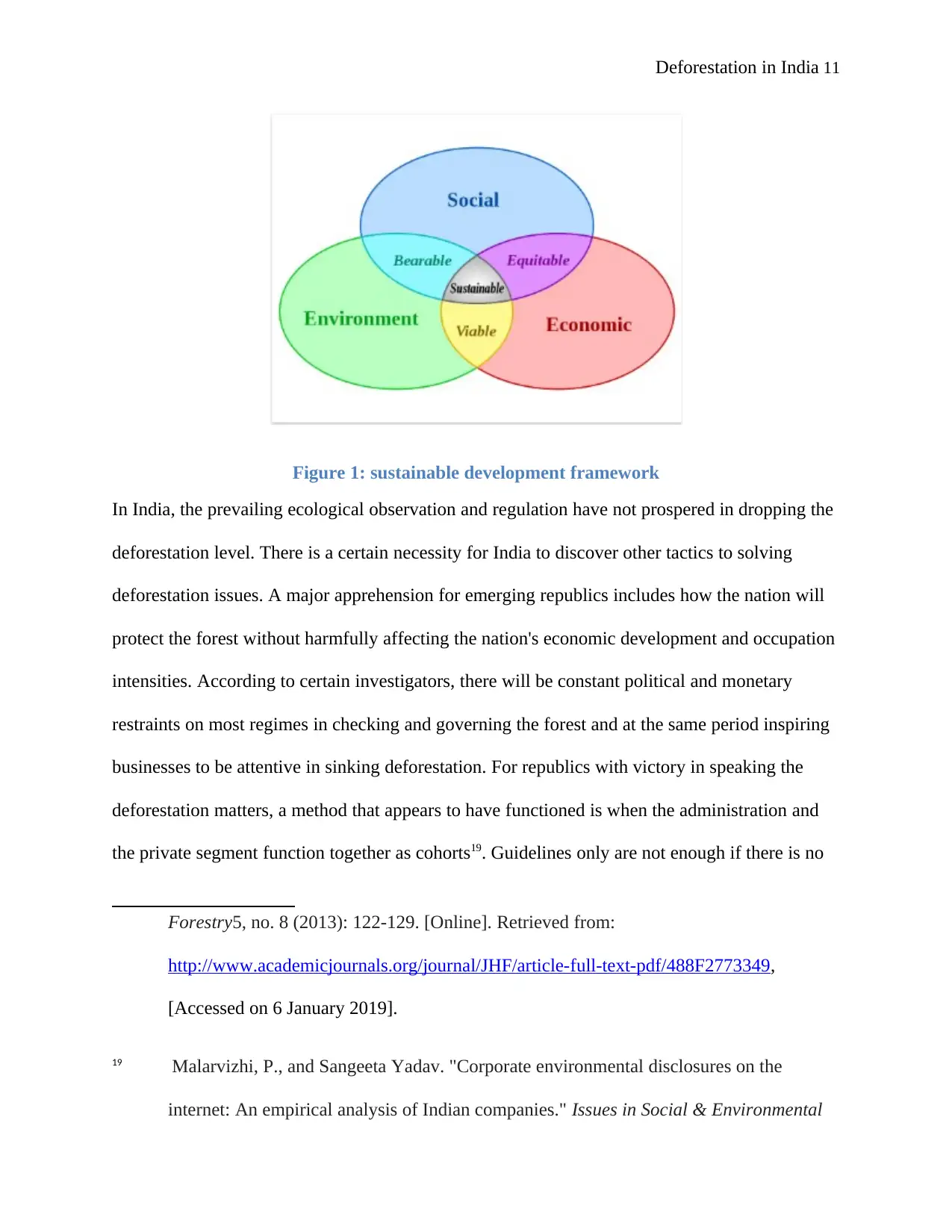
Figure 1: sustainable development framework
In India, the prevailing ecological observation and regulation have not prospered in dropping the
deforestation level. There is a certain necessity for India to discover other tactics to solving
deforestation issues. A major apprehension for emerging republics includes how the nation will
protect the forest without harmfully affecting the nation's economic development and occupation
intensities. According to certain investigators, there will be constant political and monetary
restraints on most regimes in checking and governing the forest and at the same period inspiring
businesses to be attentive in sinking deforestation. For republics with victory in speaking the
deforestation matters, a method that appears to have functioned is when the administration and
the private segment function together as cohorts19. Guidelines only are not enough if there is no
Forestry5, no. 8 (2013): 122-129. [Online]. Retrieved from:
http://www.academicjournals.org/journal/JHF/article-full-text-pdf/488F2773349,
[Accessed on 6 January 2019].
19 Malarvizhi, P., and Sangeeta Yadav. "Corporate environmental disclosures on the
internet: An empirical analysis of Indian companies." Issues in Social & Environmental
Figure 1: sustainable development framework
In India, the prevailing ecological observation and regulation have not prospered in dropping the
deforestation level. There is a certain necessity for India to discover other tactics to solving
deforestation issues. A major apprehension for emerging republics includes how the nation will
protect the forest without harmfully affecting the nation's economic development and occupation
intensities. According to certain investigators, there will be constant political and monetary
restraints on most regimes in checking and governing the forest and at the same period inspiring
businesses to be attentive in sinking deforestation. For republics with victory in speaking the
deforestation matters, a method that appears to have functioned is when the administration and
the private segment function together as cohorts19. Guidelines only are not enough if there is no
Forestry5, no. 8 (2013): 122-129. [Online]. Retrieved from:
http://www.academicjournals.org/journal/JHF/article-full-text-pdf/488F2773349,
[Accessed on 6 January 2019].
19 Malarvizhi, P., and Sangeeta Yadav. "Corporate environmental disclosures on the
internet: An empirical analysis of Indian companies." Issues in Social & Environmental
Deforestation in India 12
external support or assistance to the manufacturing segment. It is very clear that many people are
ignorant about the government’s initiative and role in a bid to combatting deforestation and
helping the victims.
Many income earners will greatly be affected by the government’s guidelines on matters of
deforestation. In such circumstances, it is prudent to engage the victims of these new guidelines
in order to bring the needed changes in lifestyles. Subsequently, there are instances that illustrate
the drawbacks associated with the introduction of guidelines in the environmental sector aimed
at bringing about improvement.
Policy makers, international organisations, and academicians all have concluded that it is
impossible to sustain the process by laid down guidelines only as they are not sustainable in
ending or even decreasing the deforestation rate. Additionally, to law, literacy and financial
power of people in any given country is more likely to impact the environment. A survey carried
out on Indian homes on ecological trepidations, literacy levels and amount earned by the people
showed great response about deforestation issues. On this basis of these accomplishments of
limited nations in combatting deforestation issues, it is very clear that regulations alone are not
enough, only when there is mutual partnership by the manufacturing and private segments in
sharing responsibility with state-owned institutions that brings about prudent management of the
forest20.
Accounting 2, no. 2 (2008): 211-232. [Online]. Retrieved from:
http://citeseerx.ist.psu.edu/viewdoc/download?doi=10.1.1.867.732&rep=rep1&type=pdf,
[Accessed on 6 January 2019].
external support or assistance to the manufacturing segment. It is very clear that many people are
ignorant about the government’s initiative and role in a bid to combatting deforestation and
helping the victims.
Many income earners will greatly be affected by the government’s guidelines on matters of
deforestation. In such circumstances, it is prudent to engage the victims of these new guidelines
in order to bring the needed changes in lifestyles. Subsequently, there are instances that illustrate
the drawbacks associated with the introduction of guidelines in the environmental sector aimed
at bringing about improvement.
Policy makers, international organisations, and academicians all have concluded that it is
impossible to sustain the process by laid down guidelines only as they are not sustainable in
ending or even decreasing the deforestation rate. Additionally, to law, literacy and financial
power of people in any given country is more likely to impact the environment. A survey carried
out on Indian homes on ecological trepidations, literacy levels and amount earned by the people
showed great response about deforestation issues. On this basis of these accomplishments of
limited nations in combatting deforestation issues, it is very clear that regulations alone are not
enough, only when there is mutual partnership by the manufacturing and private segments in
sharing responsibility with state-owned institutions that brings about prudent management of the
forest20.
Accounting 2, no. 2 (2008): 211-232. [Online]. Retrieved from:
http://citeseerx.ist.psu.edu/viewdoc/download?doi=10.1.1.867.732&rep=rep1&type=pdf,
[Accessed on 6 January 2019].
⊘ This is a preview!⊘
Do you want full access?
Subscribe today to unlock all pages.
Trusted by 1+ million students worldwide

1 out of 21


Related Documents


Your All-in-One AI-Powered Toolkit for Academic Success.
+13062052269
info@desklib.com
Available 24*7 on WhatsApp / Email
![[object Object]](/_next/static/media/star-bottom.7253800d.svg)
Unlock your academic potential
Copyright © 2020–2026 A2Z Services. All Rights Reserved. Developed and managed by ZUCOL.