The 2019 GM Workers Strike: A Microeconomic Perspective

Verified

Added on  2022/10/31

|3
|403
|86
Report
AI Summary
This report analyzes the 2019 General Motors (GM) workers strike from a microeconomic perspective. The strike, initiated by the United Automobile Workers (UAW) union, involved 50,000 workers and aimed to secure wage increases, reopen idled factories, create more jobs, and reduce the wage gap. The report explores the microeconomic factors influencing the strike, such as the impact of wage negotiations on both workers' purchasing power and GM's revenue. It highlights the significance of the automobile industry to the U.S. economy, citing its substantial contribution to employment and GDP. The analysis references the New York Times article and examines the conflict between the union's demands and the company's objectives, providing a comprehensive understanding of the economic implications of the labor dispute.
Document Page
Surname 1
Professor’s Name
Student Name
Course
Date
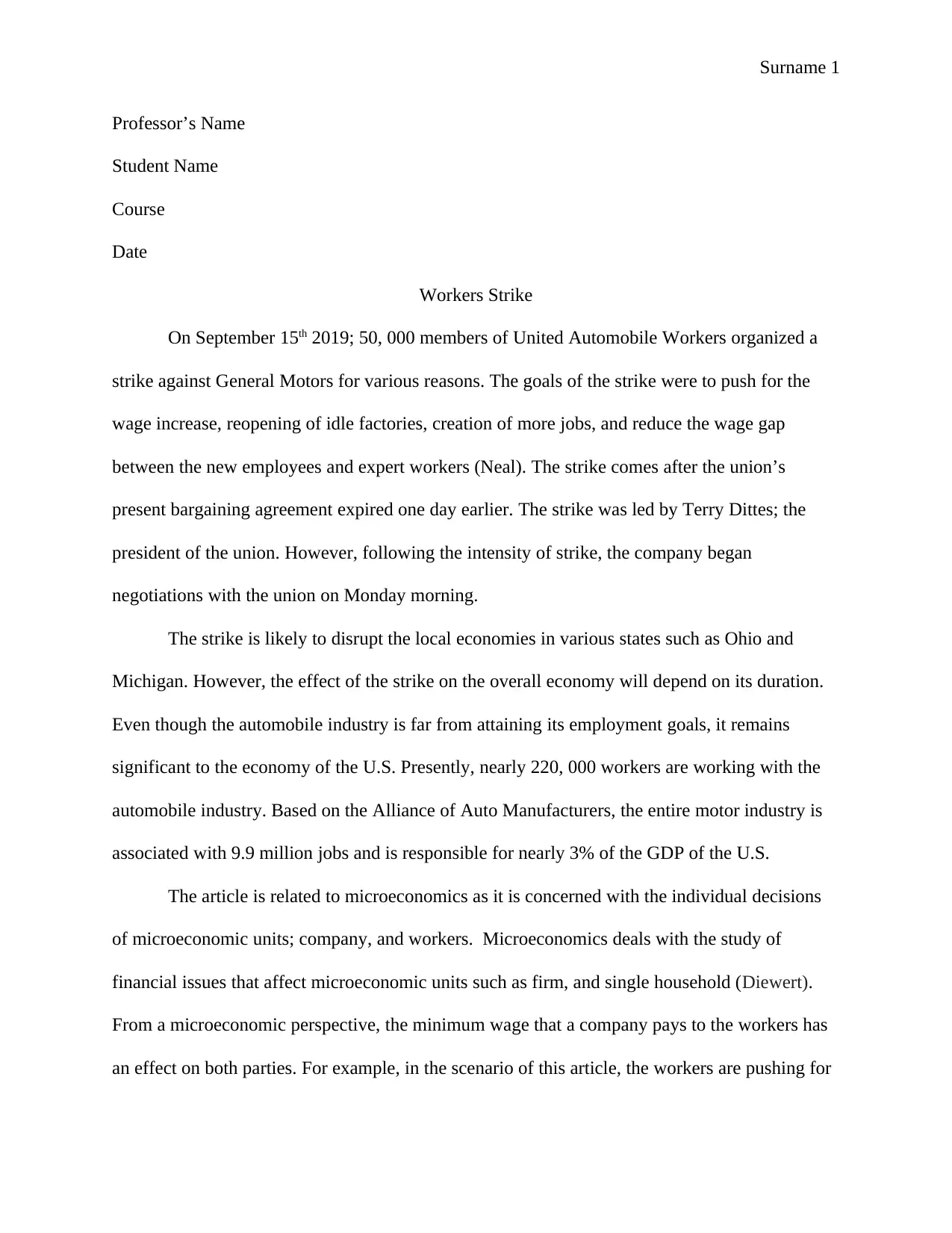
Workers Strike
On September 15th 2019; 50, 000 members of United Automobile Workers organized a
strike against General Motors for various reasons. The goals of the strike were to push for the
wage increase, reopening of idle factories, creation of more jobs, and reduce the wage gap
between the new employees and expert workers (Neal). The strike comes after the union’s
present bargaining agreement expired one day earlier. The strike was led by Terry Dittes; the
president of the union. However, following the intensity of strike, the company began
negotiations with the union on Monday morning.
The strike is likely to disrupt the local economies in various states such as Ohio and
Michigan. However, the effect of the strike on the overall economy will depend on its duration.
Even though the automobile industry is far from attaining its employment goals, it remains
significant to the economy of the U.S. Presently, nearly 220, 000 workers are working with the
automobile industry. Based on the Alliance of Auto Manufacturers, the entire motor industry is
associated with 9.9 million jobs and is responsible for nearly 3% of the GDP of the U.S.
The article is related to microeconomics as it is concerned with the individual decisions
of microeconomic units; company, and workers. Microeconomics deals with the study of
financial issues that affect microeconomic units such as firm, and single household (Diewert).
From a microeconomic perspective, the minimum wage that a company pays to the workers has
an effect on both parties. For example, in the scenario of this article, the workers are pushing for
tabler-icon-diamond-filled.svg

Paraphrase This Document

Need a fresh take? Get an instant paraphrase of this document with our AI Paraphraser
Document Page
Surname 2
a wage increase for them to increase their purchasing power that will enable them to maximize
consumption. However, the company wants to keep the minimum wage for it to increase
revenues.
Document Page
Surname 3
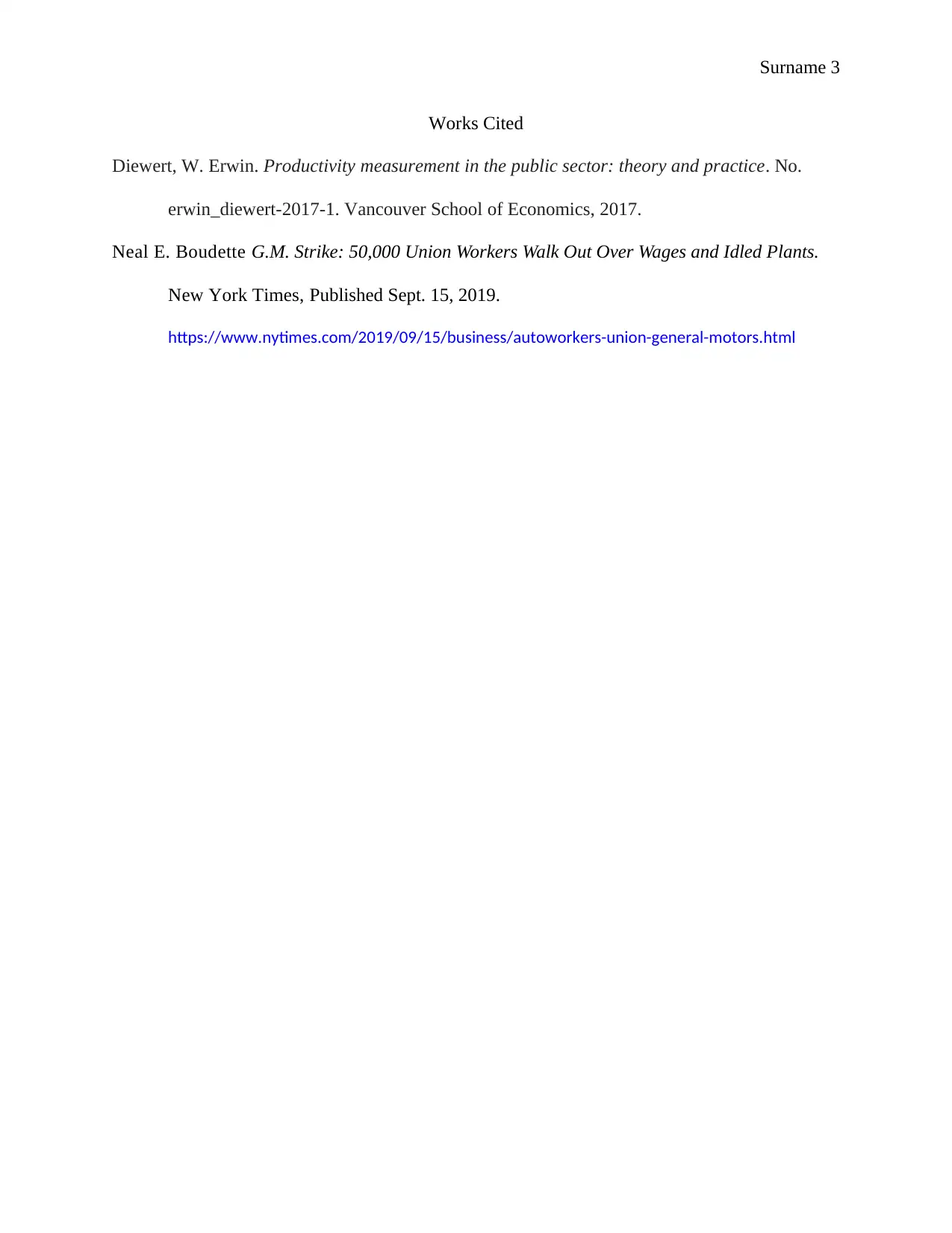
Works Cited
Diewert, W. Erwin. Productivity measurement in the public sector: theory and practice. No.
erwin_diewert-2017-1. Vancouver School of Economics, 2017.
Neal E. Boudette G.M. Strike: 50,000 Union Workers Walk Out Over Wages and Idled Plants.
New York Times, Published Sept. 15, 2019.
https://www.nytimes.com/2019/09/15/business/autoworkers-union-general-motors.html
chevron_up_icon
1 out of 3
circle_padding
hide_on_mobile
zoom_out_icon
[object Object]