Report: Government Policy in Relation to Current Health Issues
VerifiedAdded on 2023/06/14
|11
|2728
|257
Report
AI Summary
This report examines government policies in the United Kingdom related to current health issues, focusing primarily on diabetes. It highlights the increasing prevalence of diabetes, particularly type 2, and its associated risk factors such as obesity, age, and ethnicity. The report illustrates variations in diabetes data with respect to age and ethnicity, noting higher prevalence among ethnic minorities and older populations. It details government policies like the National Health Service (NHS) Diabetes Prevention Programme, outlining its aims to reduce diabetes incidence and related complications through behavioral interventions and lifestyle changes. The report also presents the views of charities like Diabetes UK on these policies, emphasizing their role in providing funding, raising awareness, and campaigning for better diabetes care. The author reflects on their learning experience, highlighting the importance of time management and the challenges faced during the assignment, while also acknowledging the knowledge gained about diabetes prevention and management.

Government Policy in Relation to Current
Health Issues – Report.
Health Issues – Report.

Paraphrase This Document
Need a fresh take? Get an instant paraphrase of this document with our AI Paraphraser

Table of Contents
INTRODUCTION...........................................................................................................................3
MAIN BODY...................................................................................................................................3
Current health issue and its effects..............................................................................................3
Illustrate variations in data with respect to age and ethnicity.....................................................3
Government policies linked with current health issue................................................................3
Illustrate aims of policy with respect to age and ethnicity..........................................................3
Explain views on the policy from relevant charities and or the pressure groups........................3
Q1. What did you know about this topic before you started the assignment and what are the
new things you have learnt after completing this assignment?...................................................3
Q2. What have you learnt about yourself regarding time management and how do you feel
about your performance?.............................................................................................................3
Q3. What part(s)of this assignment did you find most challenging and what would you do
differently?..................................................................................................................................3
CONCLUSION................................................................................................................................3
REFERENCES................................................................................................................................4
INTRODUCTION...........................................................................................................................3
MAIN BODY...................................................................................................................................3
Current health issue and its effects..............................................................................................3
Illustrate variations in data with respect to age and ethnicity.....................................................3
Government policies linked with current health issue................................................................3
Illustrate aims of policy with respect to age and ethnicity..........................................................3
Explain views on the policy from relevant charities and or the pressure groups........................3
Q1. What did you know about this topic before you started the assignment and what are the
new things you have learnt after completing this assignment?...................................................3
Q2. What have you learnt about yourself regarding time management and how do you feel
about your performance?.............................................................................................................3
Q3. What part(s)of this assignment did you find most challenging and what would you do
differently?..................................................................................................................................3
CONCLUSION................................................................................................................................3
REFERENCES................................................................................................................................4
INTRODUCTION
The health issue such as diabetes is generally a state in which people are unable to
perform body function effectively. In United Kingdom, there are nearly about 25% of all
population are at a greater risk of various underlying health issues such as obesity,
cardiovascular illness, diabetes, excessive smoking and many more (Health matters: public
health issues, 2020). The report will cover diabetes as a health issues that is an increasing
concern across United Kingdom and to overcome such effects, there are some specific steps that
are taken by government towards the public health issues to effectively reduce it. In addition to
this, there will be a discussion about specific aims of the policies which are associated with
current well-being issues within population of UK. The government aid to stop the increased
prevalence of type 2 diabetes among population by simply concentrating upon education
initiatives and establishing the effective policies that encourages enhanced dietary choices and
lifestyle as well.
MAIN BODY
Current health issue and its effects.
The current public health issues across UK are such as cardiovascular illness, diabetes
illness, cold weather and the virus outbreak impacts and many more. The health issues such as
diabetes has been increasing day by day across country as many people do not perform physical
activities in their daily life routine which can make them fall under obese category. As
performing daily physical activities can benefit the health of an individual and can able to reduce
the various impacts on health such as cardiovascular illness, obesity, diabetes and many more
(diabetes statistics, 2022). There are about 1 in every 40 people across UK are generally living
with a diagnosis of diabetes type II. In this, the dramatic enhancement among the rates of obesity
is generally the main driver behind multiple people living with the type II diabetes across the
UK. Within England, there are about 3 in every 5 people are fall under an obese category and is
an highest risk element for improving such conditions. In addition, there are the two associated
risk factors such as obesity and overweight that can develop type 2 diabetes among people with
increasing age, their ineffective lifestyles such as lack of physical activity, the unhealthy diet and
many more factors (Agarwal et. al., 2021). In addition to this, history of a family, age as well as
ethnicity are also the contributing components to the developing risk of diabetes with the people
The health issue such as diabetes is generally a state in which people are unable to
perform body function effectively. In United Kingdom, there are nearly about 25% of all
population are at a greater risk of various underlying health issues such as obesity,
cardiovascular illness, diabetes, excessive smoking and many more (Health matters: public
health issues, 2020). The report will cover diabetes as a health issues that is an increasing
concern across United Kingdom and to overcome such effects, there are some specific steps that
are taken by government towards the public health issues to effectively reduce it. In addition to
this, there will be a discussion about specific aims of the policies which are associated with
current well-being issues within population of UK. The government aid to stop the increased
prevalence of type 2 diabetes among population by simply concentrating upon education
initiatives and establishing the effective policies that encourages enhanced dietary choices and
lifestyle as well.
MAIN BODY
Current health issue and its effects.
The current public health issues across UK are such as cardiovascular illness, diabetes
illness, cold weather and the virus outbreak impacts and many more. The health issues such as
diabetes has been increasing day by day across country as many people do not perform physical
activities in their daily life routine which can make them fall under obese category. As
performing daily physical activities can benefit the health of an individual and can able to reduce
the various impacts on health such as cardiovascular illness, obesity, diabetes and many more
(diabetes statistics, 2022). There are about 1 in every 40 people across UK are generally living
with a diagnosis of diabetes type II. In this, the dramatic enhancement among the rates of obesity
is generally the main driver behind multiple people living with the type II diabetes across the
UK. Within England, there are about 3 in every 5 people are fall under an obese category and is
an highest risk element for improving such conditions. In addition, there are the two associated
risk factors such as obesity and overweight that can develop type 2 diabetes among people with
increasing age, their ineffective lifestyles such as lack of physical activity, the unhealthy diet and
many more factors (Agarwal et. al., 2021). In addition to this, history of a family, age as well as
ethnicity are also the contributing components to the developing risk of diabetes with the people
⊘ This is a preview!⊘
Do you want full access?
Subscribe today to unlock all pages.

Trusted by 1+ million students worldwide
of African-Caribbean, South Asian or Black African descent the 2 or 4 times higher and more
likely to enhance the type 2 diabetes other than the white people. Furthermore, the potential
complications of diabetes can involve illness of blood and heart vessels. It is linked with an
enhanced risk of stroke, elevated blood pressure levels, cardiovascular illness, narrowing of the
blood vessels and many more. It can also cause damage to nerve within the limbs.
Illustrate variations in data with respect to age and ethnicity.
The prevalence of pre-diabetes and type II Diabetes can enhance the risk with advancing
age group. In this, the most essential factors are leading to hyperglycaemia such as deficiency of
insulin secretion are improving with age and rising insulin resistance is generally caused by
alterations in the composition and sarcopaenia within human body. The type 2 diabetes are more
common in the ethnic minorities group of people residing in the more developed countries such
as South Asian and African-Caribbean groups from age of 25 years within United Kingdom and
are in a particular high prevalence. The figure of the people who are improving the diabetes is
enhancing across the nation. Within England, there are various people who are diagnosed with
diabetes as well as the number can continue to grow. Whilst the risk of improving the diabetes
enhances with age, anyone can get it. The burden of the illness can fall disproportionately on the
people from the minority ethnic groups as well as those from the socially excluded groups of the
people. The type II diabetes is generally about 6 times more common among the people of South
Asian descent as well as up to 3 times more prevalent among those of African and African-
Caribbean origin. It is quite younger than the white population, as their risk can enhances from
40 years. In addition, the people who belongs to South Asian background are more likely to
develop the risk of having type 2 diabetes as they are more prone towards insulin resistance at
the younger age group. Insulin resistance is when the insulin cannot work properly and leading to
an enhanced chance of having elevated blood sugar levels. If it is left untreated over time, the
high blood sugar levels can lead to various well-being complications. Among old age group,
prevalence of type 2 diabetes is quite common and due to its combined impacts of increasing
insulin resistance as well as damaged pancreatic islet cells functioning with ageing. To cope with
this, government has developed programs and policies for the population such as conducted
education programs about healthy eating, promoting healthy well-being and so on (Chan et. al.,
2020).
likely to enhance the type 2 diabetes other than the white people. Furthermore, the potential
complications of diabetes can involve illness of blood and heart vessels. It is linked with an
enhanced risk of stroke, elevated blood pressure levels, cardiovascular illness, narrowing of the
blood vessels and many more. It can also cause damage to nerve within the limbs.
Illustrate variations in data with respect to age and ethnicity.
The prevalence of pre-diabetes and type II Diabetes can enhance the risk with advancing
age group. In this, the most essential factors are leading to hyperglycaemia such as deficiency of
insulin secretion are improving with age and rising insulin resistance is generally caused by
alterations in the composition and sarcopaenia within human body. The type 2 diabetes are more
common in the ethnic minorities group of people residing in the more developed countries such
as South Asian and African-Caribbean groups from age of 25 years within United Kingdom and
are in a particular high prevalence. The figure of the people who are improving the diabetes is
enhancing across the nation. Within England, there are various people who are diagnosed with
diabetes as well as the number can continue to grow. Whilst the risk of improving the diabetes
enhances with age, anyone can get it. The burden of the illness can fall disproportionately on the
people from the minority ethnic groups as well as those from the socially excluded groups of the
people. The type II diabetes is generally about 6 times more common among the people of South
Asian descent as well as up to 3 times more prevalent among those of African and African-
Caribbean origin. It is quite younger than the white population, as their risk can enhances from
40 years. In addition, the people who belongs to South Asian background are more likely to
develop the risk of having type 2 diabetes as they are more prone towards insulin resistance at
the younger age group. Insulin resistance is when the insulin cannot work properly and leading to
an enhanced chance of having elevated blood sugar levels. If it is left untreated over time, the
high blood sugar levels can lead to various well-being complications. Among old age group,
prevalence of type 2 diabetes is quite common and due to its combined impacts of increasing
insulin resistance as well as damaged pancreatic islet cells functioning with ageing. To cope with
this, government has developed programs and policies for the population such as conducted
education programs about healthy eating, promoting healthy well-being and so on (Chan et. al.,
2020).
Paraphrase This Document
Need a fresh take? Get an instant paraphrase of this document with our AI Paraphraser
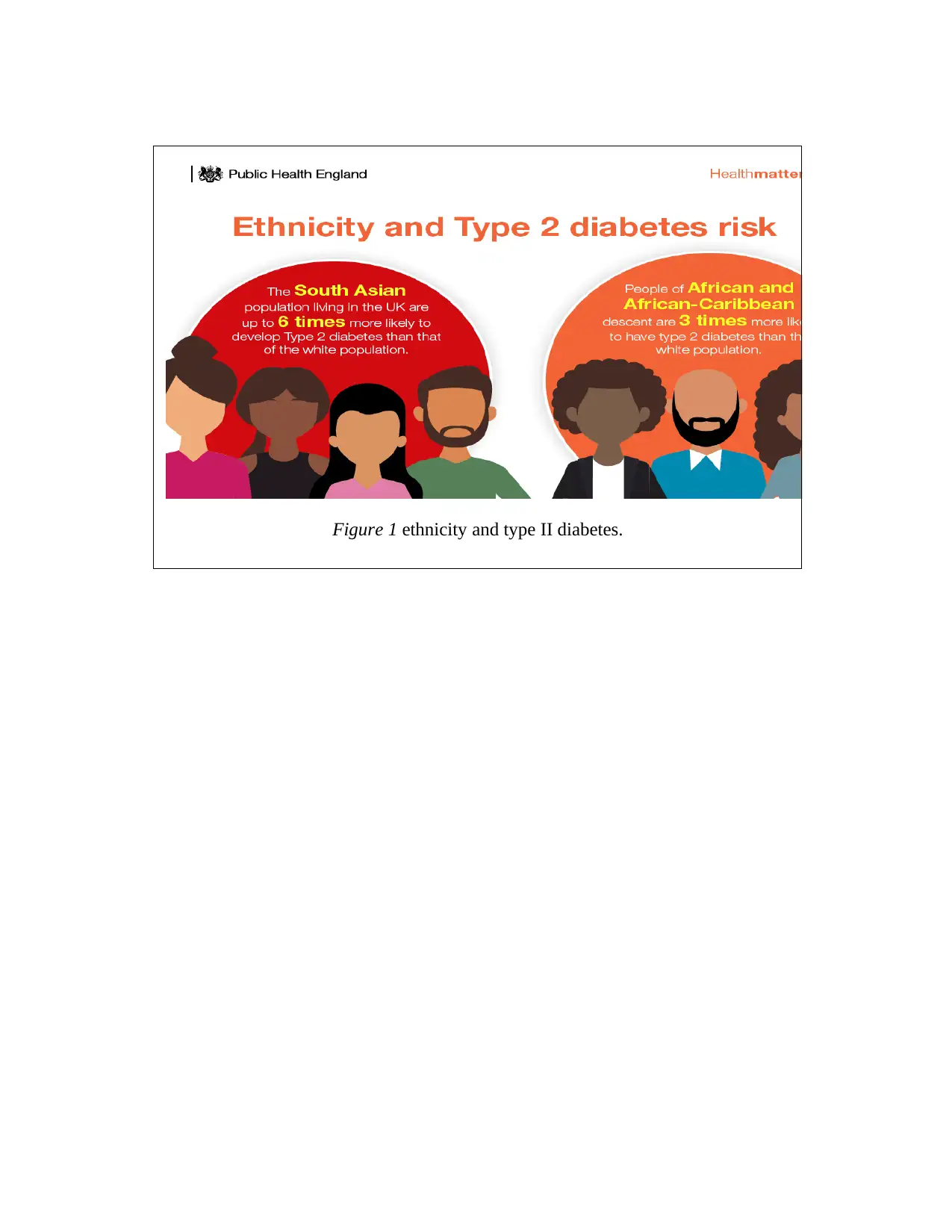
Figure 1 ethnicity and type II diabetes.
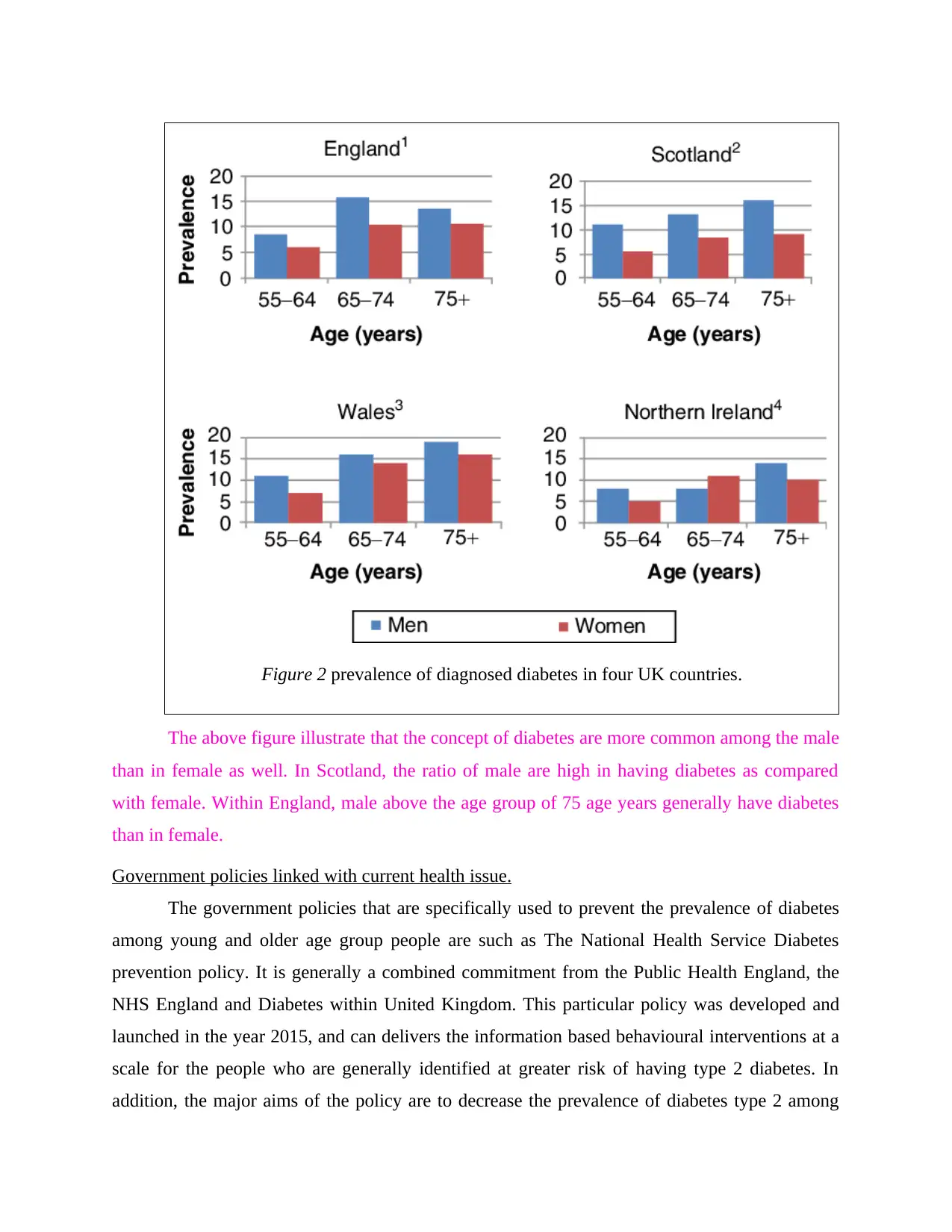
The above figure illustrate that the concept of diabetes are more common among the male
than in female as well. In Scotland, the ratio of male are high in having diabetes as compared
with female. Within England, male above the age group of 75 age years generally have diabetes
than in female.
Government policies linked with current health issue.
The government policies that are specifically used to prevent the prevalence of diabetes
among young and older age group people are such as The National Health Service Diabetes
prevention policy. It is generally a combined commitment from the Public Health England, the
NHS England and Diabetes within United Kingdom. This particular policy was developed and
launched in the year 2015, and can delivers the information based behavioural interventions at a
scale for the people who are generally identified at greater risk of having type 2 diabetes. In
addition, the major aims of the policy are to decrease the prevalence of diabetes type 2 among
Figure 2 prevalence of diagnosed diabetes in four UK countries.
than in female as well. In Scotland, the ratio of male are high in having diabetes as compared
with female. Within England, male above the age group of 75 age years generally have diabetes
than in female.
Government policies linked with current health issue.
The government policies that are specifically used to prevent the prevalence of diabetes
among young and older age group people are such as The National Health Service Diabetes
prevention policy. It is generally a combined commitment from the Public Health England, the
NHS England and Diabetes within United Kingdom. This particular policy was developed and
launched in the year 2015, and can delivers the information based behavioural interventions at a
scale for the people who are generally identified at greater risk of having type 2 diabetes. In
addition, the major aims of the policy are to decrease the prevalence of diabetes type 2 among
Figure 2 prevalence of diagnosed diabetes in four UK countries.
⊘ This is a preview!⊘
Do you want full access?
Subscribe today to unlock all pages.
Trusted by 1+ million students worldwide
population, decreases the incidence of complication linked with Diabetes type 2 such as stroke,
heart, kidney, eye as well as the foot issues associated with diabetes type 2. the program can also
decrease the well-being disparities linked with the incidence of the Diabetes with long term
effects. Furthermore, there is some of the strong international evidences which exhibit how the
behavioural interventions with a concentration can encourage people in order to maintain a
healthy weight and can be able to more physically active (Health matters: preventing Type 2
Diabetes, 2018). The Diabetes prevention programs developed by the NHS can reflect this
information, as it is underpinned by the basic three goals: accomplishing a healthy weight,
achievements of the dietary recommendations, achievements of the Chief Medical Officers'
physical activity recommendations (Nieto et. al., 2020). In addition to this, there are the NHS
diabetes prevention programme that is a joint commitment from the Public Health England, NHS
England as well as the diabetes UK. The programme was launched in the year 2015, can deliver
an evidence based behavioural interventions at a scale for a person determined as being at an
elevated risk of improving the type II diabetes.
Illustrate aims of policy with respect to age and ethnicity.
The people from the South Asian backgrounds for example are more likely to experience
insulin resistance at a younger age. In this, the African-American people generally tends to
involve reduced potassium in their bodies than the white people do. The deficiency of potassium
is generally linked towards a greater risk for improving the diabetes type 2. The aims of
developing the policies with respect to age and ethnicity is generally involves that people can
effectively able to improve their healthy lifestyle so that they can reduce the impacts of diabetes
among people. In this, the early result information as well as the provisional analysis can suggest
that about 50% of the people which started the interventions completed it. In this, the completion
is specifically defined as an attendance to 62% or more of the programme sessions, that is about
8 out of total 13 sessions, aligning towards the financial incentives for providers in order to
retain the participants on the provided programme. Furthermore, there are the six aims of the
public policy such as protecting the nation from public well-being hazards, preparing for and
responding to the public well-being emergencies, enhancing the well-being of overall
populations by simply sharing the information’s and expertise as well as by determining and
preparing for future public well-being challenges (Weisman, A. and et. al., 2018). In addition to
this, the main aim or goal of the NHS diabetes prevention programme are to: decrease the
heart, kidney, eye as well as the foot issues associated with diabetes type 2. the program can also
decrease the well-being disparities linked with the incidence of the Diabetes with long term
effects. Furthermore, there is some of the strong international evidences which exhibit how the
behavioural interventions with a concentration can encourage people in order to maintain a
healthy weight and can be able to more physically active (Health matters: preventing Type 2
Diabetes, 2018). The Diabetes prevention programs developed by the NHS can reflect this
information, as it is underpinned by the basic three goals: accomplishing a healthy weight,
achievements of the dietary recommendations, achievements of the Chief Medical Officers'
physical activity recommendations (Nieto et. al., 2020). In addition to this, there are the NHS
diabetes prevention programme that is a joint commitment from the Public Health England, NHS
England as well as the diabetes UK. The programme was launched in the year 2015, can deliver
an evidence based behavioural interventions at a scale for a person determined as being at an
elevated risk of improving the type II diabetes.
Illustrate aims of policy with respect to age and ethnicity.
The people from the South Asian backgrounds for example are more likely to experience
insulin resistance at a younger age. In this, the African-American people generally tends to
involve reduced potassium in their bodies than the white people do. The deficiency of potassium
is generally linked towards a greater risk for improving the diabetes type 2. The aims of
developing the policies with respect to age and ethnicity is generally involves that people can
effectively able to improve their healthy lifestyle so that they can reduce the impacts of diabetes
among people. In this, the early result information as well as the provisional analysis can suggest
that about 50% of the people which started the interventions completed it. In this, the completion
is specifically defined as an attendance to 62% or more of the programme sessions, that is about
8 out of total 13 sessions, aligning towards the financial incentives for providers in order to
retain the participants on the provided programme. Furthermore, there are the six aims of the
public policy such as protecting the nation from public well-being hazards, preparing for and
responding to the public well-being emergencies, enhancing the well-being of overall
populations by simply sharing the information’s and expertise as well as by determining and
preparing for future public well-being challenges (Weisman, A. and et. al., 2018). In addition to
this, the main aim or goal of the NHS diabetes prevention programme are to: decrease the
Paraphrase This Document
Need a fresh take? Get an instant paraphrase of this document with our AI Paraphraser
incidence of diabetes type 2, decreases the incidence of complications linked with the diabetes
type 2 such as kidney, stroke as well as the foot issues associated with diabetes. It can also aim in
decreasing the well-being disparities linked with the incidence of diabetes type 2, over the longer
terms.
Explain views on the policy from relevant charities and or the pressure groups.
The Diabetes UK generally works to help the people who are suffering from Diabetes and
can providing funding for the study, increasing awareness as well as campaigning. In this, the
diabetes charity is known as Diabetes Research and Wellness Foundation. The developed policy
and programs can significantly help the young as well as the older adults to effectively reduce
the prevalence of diabetes (Action for Diabetes NHS England, 2014). People can reduce the
impact of illness by doing daily physical activity as it can help to make the body healthier. In
addition to this, the diabetes UK can effectively work to aid the public who are having diabetes
as an illness, and giving the funding for the research, improving awareness as well as effective
campaign. The view points of the charity regarding the prevention policies like attaining a
healthy weight, accomplishing the dietary recommendations and many more.
Q1. What did you know about this topic before you started the assignment and what are the new
things you have learnt after completing this assignment?
The topic generally provides more information as well as knowledge about diabetes.
Doing this topic can make people to aware about the things that significantly impact over their
well-being more adversely.
Q2. What have you learnt about yourself regarding time management and how do you feel about
your performance?
It is learnt by me that while researching about the topics, it takes not long hours to do and
it feels so nice to develop report such that it can effectively enhance my skills and knowledge as
well. Through searching about the topic, I can get to know about the things that can affect and
causes diabetes among people. The search tells me about the importance of regular physical
activities can significantly reduce various developing risk of illness not only diabetes but it can
also reduce the risk of having cardiovascular illness, obesity and many more among population
as well. Through this report, I can get to know about how I can overcome the leading cause of
diabetes among people as it can more adversely affect the older people.
type 2 such as kidney, stroke as well as the foot issues associated with diabetes. It can also aim in
decreasing the well-being disparities linked with the incidence of diabetes type 2, over the longer
terms.
Explain views on the policy from relevant charities and or the pressure groups.
The Diabetes UK generally works to help the people who are suffering from Diabetes and
can providing funding for the study, increasing awareness as well as campaigning. In this, the
diabetes charity is known as Diabetes Research and Wellness Foundation. The developed policy
and programs can significantly help the young as well as the older adults to effectively reduce
the prevalence of diabetes (Action for Diabetes NHS England, 2014). People can reduce the
impact of illness by doing daily physical activity as it can help to make the body healthier. In
addition to this, the diabetes UK can effectively work to aid the public who are having diabetes
as an illness, and giving the funding for the research, improving awareness as well as effective
campaign. The view points of the charity regarding the prevention policies like attaining a
healthy weight, accomplishing the dietary recommendations and many more.
Q1. What did you know about this topic before you started the assignment and what are the new
things you have learnt after completing this assignment?
The topic generally provides more information as well as knowledge about diabetes.
Doing this topic can make people to aware about the things that significantly impact over their
well-being more adversely.
Q2. What have you learnt about yourself regarding time management and how do you feel about
your performance?
It is learnt by me that while researching about the topics, it takes not long hours to do and
it feels so nice to develop report such that it can effectively enhance my skills and knowledge as
well. Through searching about the topic, I can get to know about the things that can affect and
causes diabetes among people. The search tells me about the importance of regular physical
activities can significantly reduce various developing risk of illness not only diabetes but it can
also reduce the risk of having cardiovascular illness, obesity and many more among population
as well. Through this report, I can get to know about how I can overcome the leading cause of
diabetes among people as it can more adversely affect the older people.
Q3. What part(s)of this assignment did you find most challenging and what would you do
differently?
The most challenging part of this assignment which I found to be difficult is searching
about policies and its aims. This turn out to be quite challenging for me to complete this report.
CONCLUSION
From the above discussion, it is concluded that diabetes type 2 is significantly making
major impacts over the health on the population across United Kingdom. There are the policies
and programs developed for the population to improve their well-being by providing enough
knowledge about its prevalence. In this, it is concluded from the report that illness is more
common among the old age group people and to reduce such, the people need to do daily
physical activity so that their body can remain healthy.
differently?
The most challenging part of this assignment which I found to be difficult is searching
about policies and its aims. This turn out to be quite challenging for me to complete this report.
CONCLUSION
From the above discussion, it is concluded that diabetes type 2 is significantly making
major impacts over the health on the population across United Kingdom. There are the policies
and programs developed for the population to improve their well-being by providing enough
knowledge about its prevalence. In this, it is concluded from the report that illness is more
common among the old age group people and to reduce such, the people need to do daily
physical activity so that their body can remain healthy.
⊘ This is a preview!⊘
Do you want full access?
Subscribe today to unlock all pages.
Trusted by 1+ million students worldwide
REFERENCES
Books and Journals:
Agarwal, S. and et. al., 2021. Racial–ethnic disparities in diabetes technology use among young
adults with type 1 diabetes. Diabetes Technology & Therapeutics, 23(4), pp.306-313.
Chan, J.C. and et. al., 2020. The Lancet Commission on diabetes: using data to transform
diabetes care and patient lives. The Lancet, 396(10267), pp.2019-2082.
Kivipelto, M., Mangialasche, F. and Ngandu, T., 2018. Lifestyle interventions to prevent
cognitive impairment, dementia and Alzheimer disease. Nature Reviews
Neurology, 14(11), pp.653-666.
Mostafa, S.A. and et. al., 2018. Modelling incremental benefits on complications rates when
targeting lower HbA1c levels in people with Type 2 diabetes and cardiovascular
disease. Diabetic Medicine, 35(1), pp.72-77.
Nieto, C. and et. al., 2020. Nutrition label use is related to chronic conditions among Mexicans:
data from the Mexican National Health and Nutrition Survey 2016. Journal of the
Academy of Nutrition and Dietetics, 120(5), pp.804-814.
Savage, M.J. and et. al., 2020. Mental health and movement behaviour during the COVID-19
pandemic in UK university students: Prospective cohort study. Mental Health and
Physical Activity, 19, p.100357.
Weisman, A. and et. al., 2018. Evolving trends in the epidemiology, risk factors, and prevention
of type 2 diabetes: a review. Canadian Journal of Cardiology, 34(5), pp.552-564.
Books and Journals:
Agarwal, S. and et. al., 2021. Racial–ethnic disparities in diabetes technology use among young
adults with type 1 diabetes. Diabetes Technology & Therapeutics, 23(4), pp.306-313.
Chan, J.C. and et. al., 2020. The Lancet Commission on diabetes: using data to transform
diabetes care and patient lives. The Lancet, 396(10267), pp.2019-2082.
Kivipelto, M., Mangialasche, F. and Ngandu, T., 2018. Lifestyle interventions to prevent
cognitive impairment, dementia and Alzheimer disease. Nature Reviews
Neurology, 14(11), pp.653-666.
Mostafa, S.A. and et. al., 2018. Modelling incremental benefits on complications rates when
targeting lower HbA1c levels in people with Type 2 diabetes and cardiovascular
disease. Diabetic Medicine, 35(1), pp.72-77.
Nieto, C. and et. al., 2020. Nutrition label use is related to chronic conditions among Mexicans:
data from the Mexican National Health and Nutrition Survey 2016. Journal of the
Academy of Nutrition and Dietetics, 120(5), pp.804-814.
Savage, M.J. and et. al., 2020. Mental health and movement behaviour during the COVID-19
pandemic in UK university students: Prospective cohort study. Mental Health and
Physical Activity, 19, p.100357.
Weisman, A. and et. al., 2018. Evolving trends in the epidemiology, risk factors, and prevention
of type 2 diabetes: a review. Canadian Journal of Cardiology, 34(5), pp.552-564.
Paraphrase This Document
Need a fresh take? Get an instant paraphrase of this document with our AI Paraphraser
Online:
Health matters: public health issues, 2020 [Online] Available through:
<https://www.gov.uk/government/collections/health-matters-public-health-issues>
Health matters: preventing Type 2 Diabetes, 2018
<https://www.gov.uk/government/publications/health-matters-preventing-type-2-diabetes/health-
matters-preventing-type-2-diabetes>
Action for Diabetes NHS England, 2014 [Online] Available through:
<https://www.england.nhs.uk/rightcare/wp-content/uploads/sites/40/2016/08/act-for-diabetes-31-
01.pdf>
diabetes statistics, 2022 [Online] Available through:
<https://www.diabetes.org.uk/professionals/position-statements-reports/statistics>
Health matters: public health issues, 2020 [Online] Available through:
<https://www.gov.uk/government/collections/health-matters-public-health-issues>
Health matters: preventing Type 2 Diabetes, 2018
<https://www.gov.uk/government/publications/health-matters-preventing-type-2-diabetes/health-
matters-preventing-type-2-diabetes>
Action for Diabetes NHS England, 2014 [Online] Available through:
<https://www.england.nhs.uk/rightcare/wp-content/uploads/sites/40/2016/08/act-for-diabetes-31-
01.pdf>
diabetes statistics, 2022 [Online] Available through:
<https://www.diabetes.org.uk/professionals/position-statements-reports/statistics>

1 out of 11


Related Documents


Your All-in-One AI-Powered Toolkit for Academic Success.
+13062052269
info@desklib.com
Available 24*7 on WhatsApp / Email
![[object Object]](/_next/static/media/star-bottom.7253800d.svg)
Unlock your academic potential
Copyright © 2020–2026 A2Z Services. All Rights Reserved. Developed and managed by ZUCOL.