Business Analysis Report: Griffith University, Course XYZ, Semester 1
VerifiedAdded on 2020/02/24
|55
|11267
|46
Report
AI Summary
This business analysis report examines the Human Activity System (HAS) used for learning management at Griffith University, identifying issues and proposing solutions. The report begins with an executive summary and table of contents, followed by an introduction that outlines the scope and objectives. It identifies business problems related to data access and the Griffith model for higher education, along with the need for effective IT systems. The report includes stakeholder analysis, detailing roles, responsibilities, attitudes, and influence, and provides a stakeholder matrix and onion diagram. It outlines the approach to requirements life cycle management, change strategy, and recommended solutions, including potential benefits and risk assessments. Requirements analysis covers business, stakeholder, functional, and non-functional requirements. The report utilizes various analytical tools like SWOT, Five Whys, PEST, and decision tree analysis to support its findings and recommendations. Appendices provide detailed supporting information, including goal lists, SMART analysis, and organizational structures. The report concludes with a summary of findings and recommendations for improving the HAS and enhancing the quality of higher education services at Griffith University.
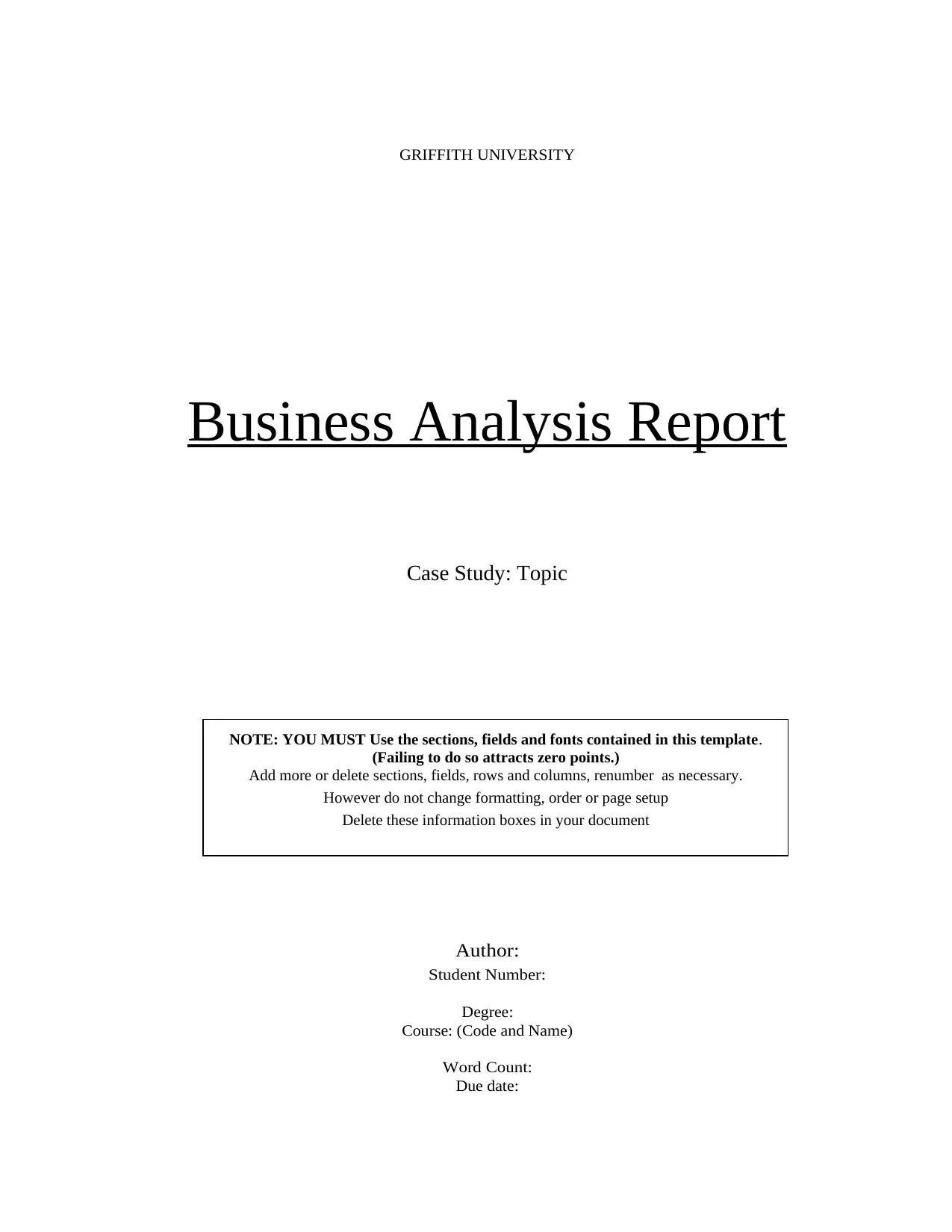
GRIFFITH UNIVERSITY
Business Analysis Report
Case Study: Topic
Author:
Student Number:
Degree:
Course: (Code and Name)
Word Count:
Due date:
NOTE: YOU MUST Use the sections, fields and fonts contained in this template.
(Failing to do so attracts zero points.)
Add more or delete sections, fields, rows and columns, renumber as necessary.
However do not change formatting, order or page setup
Delete these information boxes in your document
Business Analysis Report
Case Study: Topic
Author:
Student Number:
Degree:
Course: (Code and Name)
Word Count:
Due date:
NOTE: YOU MUST Use the sections, fields and fonts contained in this template.
(Failing to do so attracts zero points.)
Add more or delete sections, fields, rows and columns, renumber as necessary.
However do not change formatting, order or page setup
Delete these information boxes in your document

Paraphrase This Document
Need a fresh take? Get an instant paraphrase of this document with our AI Paraphraser
Client Name
Address 1 (Number / Unit Street)
Address 2 (Suburb State Code)
Dear Title and Client Name ,
“A cover letter, covering letter, motivation letter, motivational letter or a letter of motivation is a
letter of introduction attached to, or accompanying another document.” (Wikipedia)
Describe why you are contacting the recipient
Describe very briefly what you have accomplished, what is attached etc.
See e.g. http://www.melbourneresumes.com.au/cover-letters/cover-letter-examples/ for cover letter
samples.
Please do not hesitate to contact me should you require any clarifications or additional information.
Thank you for your time and consideration.
Kind / Best Regards,
Author Name
dd/mm/yyyy
Address 1 (Number / Unit Street)
Address 2 (Suburb State Code)
Dear Title and Client Name ,
“A cover letter, covering letter, motivation letter, motivational letter or a letter of motivation is a
letter of introduction attached to, or accompanying another document.” (Wikipedia)
Describe why you are contacting the recipient
Describe very briefly what you have accomplished, what is attached etc.
See e.g. http://www.melbourneresumes.com.au/cover-letters/cover-letter-examples/ for cover letter
samples.
Please do not hesitate to contact me should you require any clarifications or additional information.
Thank you for your time and consideration.
Kind / Best Regards,
Author Name
dd/mm/yyyy
Page 1 of 52
Business Analysis
Report
Author
Executive Summary
The topic was concerned with the identification of issues related to the
Human activity system used for the learning management at Griffith University.
The various stakeholders have been identified along with the management of
various business activities to resolve the kind of issue faced. The need for
implementing an effective IT system has been fulfilled and the various study
materials have been accesses by the students with the help of new online student
portal made available for them,. The flexible options available along with the
enhancement of quality of higher educations services have further helped in
attracting more students and retained the existing ones too.
Business Analysis
Report
Author
Executive Summary
The topic was concerned with the identification of issues related to the
Human activity system used for the learning management at Griffith University.
The various stakeholders have been identified along with the management of
various business activities to resolve the kind of issue faced. The need for
implementing an effective IT system has been fulfilled and the various study
materials have been accesses by the students with the help of new online student
portal made available for them,. The flexible options available along with the
enhancement of quality of higher educations services have further helped in
attracting more students and retained the existing ones too.
⊘ This is a preview!⊘
Do you want full access?
Subscribe today to unlock all pages.

Trusted by 1+ million students worldwide
Page 2 of 52
Business Analysis
Report
Author
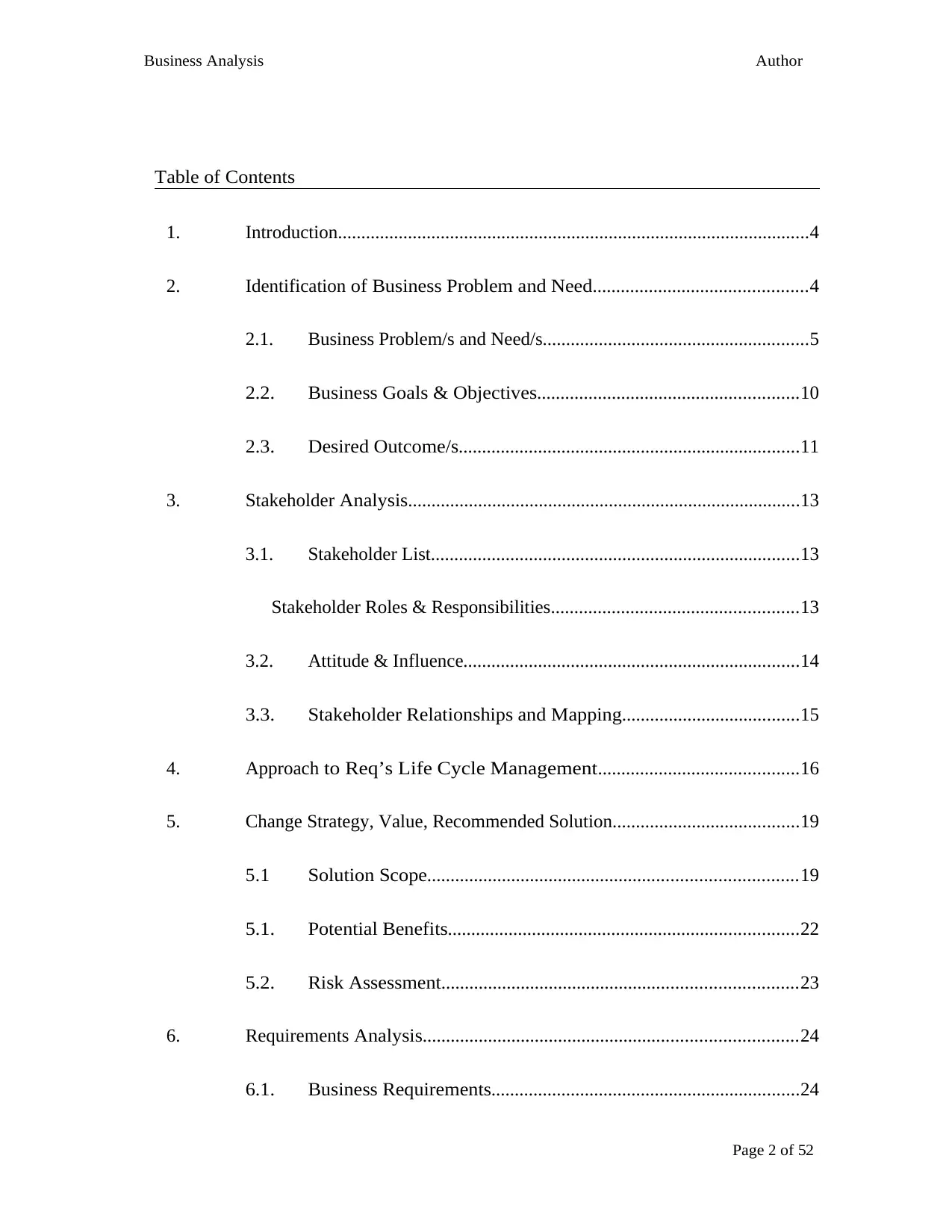
Table of Contents
1. Introduction.....................................................................................................4
2. Identification of Business Problem and Need..............................................4
2.1. Business Problem/s and Need/s.........................................................5
2.2. Business Goals & Objectives........................................................10
2.3. Desired Outcome/s.........................................................................11
3. Stakeholder Analysis....................................................................................13
3.1. Stakeholder List...............................................................................13
Stakeholder Roles & Responsibilities.....................................................13
3.2. Attitude & Influence........................................................................14
3.3. Stakeholder Relationships and Mapping......................................15
4. Approach to Req’s Life Cycle Management...........................................16
5. Change Strategy, Value, Recommended Solution........................................19
5.1 Solution Scope...............................................................................19
5.1. Potential Benefits...........................................................................22
5.2. Risk Assessment............................................................................23
6. Requirements Analysis................................................................................24
6.1. Business Requirements..................................................................24
Business Analysis
Report
Author
Table of Contents
1. Introduction.....................................................................................................4
2. Identification of Business Problem and Need..............................................4
2.1. Business Problem/s and Need/s.........................................................5
2.2. Business Goals & Objectives........................................................10
2.3. Desired Outcome/s.........................................................................11
3. Stakeholder Analysis....................................................................................13
3.1. Stakeholder List...............................................................................13
Stakeholder Roles & Responsibilities.....................................................13
3.2. Attitude & Influence........................................................................14
3.3. Stakeholder Relationships and Mapping......................................15
4. Approach to Req’s Life Cycle Management...........................................16
5. Change Strategy, Value, Recommended Solution........................................19
5.1 Solution Scope...............................................................................19
5.1. Potential Benefits...........................................................................22
5.2. Risk Assessment............................................................................23
6. Requirements Analysis................................................................................24
6.1. Business Requirements..................................................................24
Paraphrase This Document
Need a fresh take? Get an instant paraphrase of this document with our AI Paraphraser
Page 3 of 52
Business Analysis
Report
Author
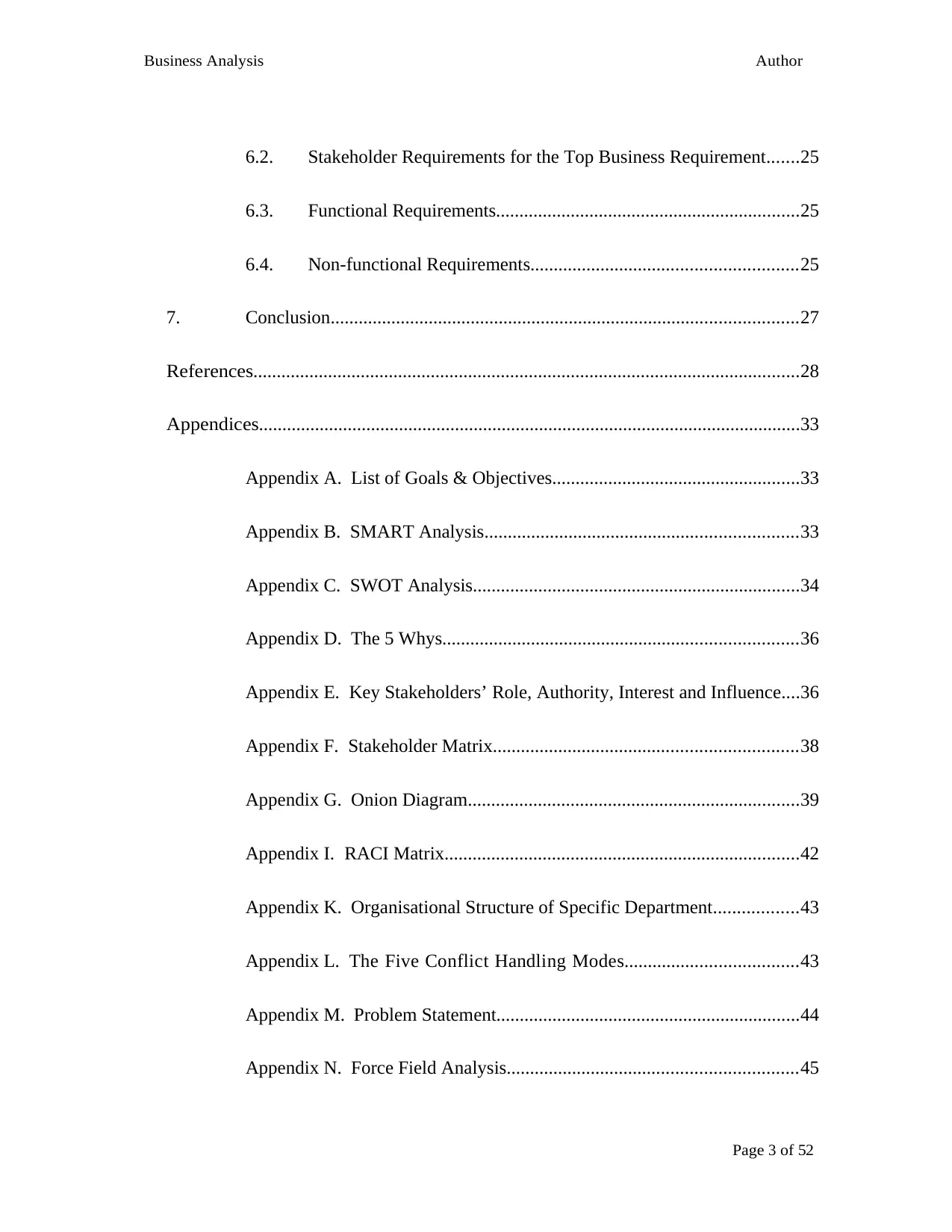
6.2. Stakeholder Requirements for the Top Business Requirement.......25
6.3. Functional Requirements.................................................................25
6.4. Non-functional Requirements.........................................................25
7. Conclusion....................................................................................................27
References.....................................................................................................................28
Appendices....................................................................................................................33
Appendix A. List of Goals & Objectives.....................................................33
Appendix B. SMART Analysis...................................................................33
Appendix C. SWOT Analysis......................................................................34
Appendix D. The 5 Whys............................................................................36
Appendix E. Key Stakeholders’ Role, Authority, Interest and Influence....36
Appendix F. Stakeholder Matrix.................................................................38
Appendix G. Onion Diagram.......................................................................39
Appendix I. RACI Matrix............................................................................42
Appendix K. Organisational Structure of Specific Department..................43
Appendix L. The Five Conflict Handling Modes.....................................43
Appendix M. Problem Statement.................................................................44
Appendix N. Force Field Analysis..............................................................45
Business Analysis
Report
Author
6.2. Stakeholder Requirements for the Top Business Requirement.......25
6.3. Functional Requirements.................................................................25
6.4. Non-functional Requirements.........................................................25
7. Conclusion....................................................................................................27
References.....................................................................................................................28
Appendices....................................................................................................................33
Appendix A. List of Goals & Objectives.....................................................33
Appendix B. SMART Analysis...................................................................33
Appendix C. SWOT Analysis......................................................................34
Appendix D. The 5 Whys............................................................................36
Appendix E. Key Stakeholders’ Role, Authority, Interest and Influence....36
Appendix F. Stakeholder Matrix.................................................................38
Appendix G. Onion Diagram.......................................................................39
Appendix I. RACI Matrix............................................................................42
Appendix K. Organisational Structure of Specific Department..................43
Appendix L. The Five Conflict Handling Modes.....................................43
Appendix M. Problem Statement.................................................................44
Appendix N. Force Field Analysis..............................................................45
Page 4 of 52
Business Analysis
Report
Author
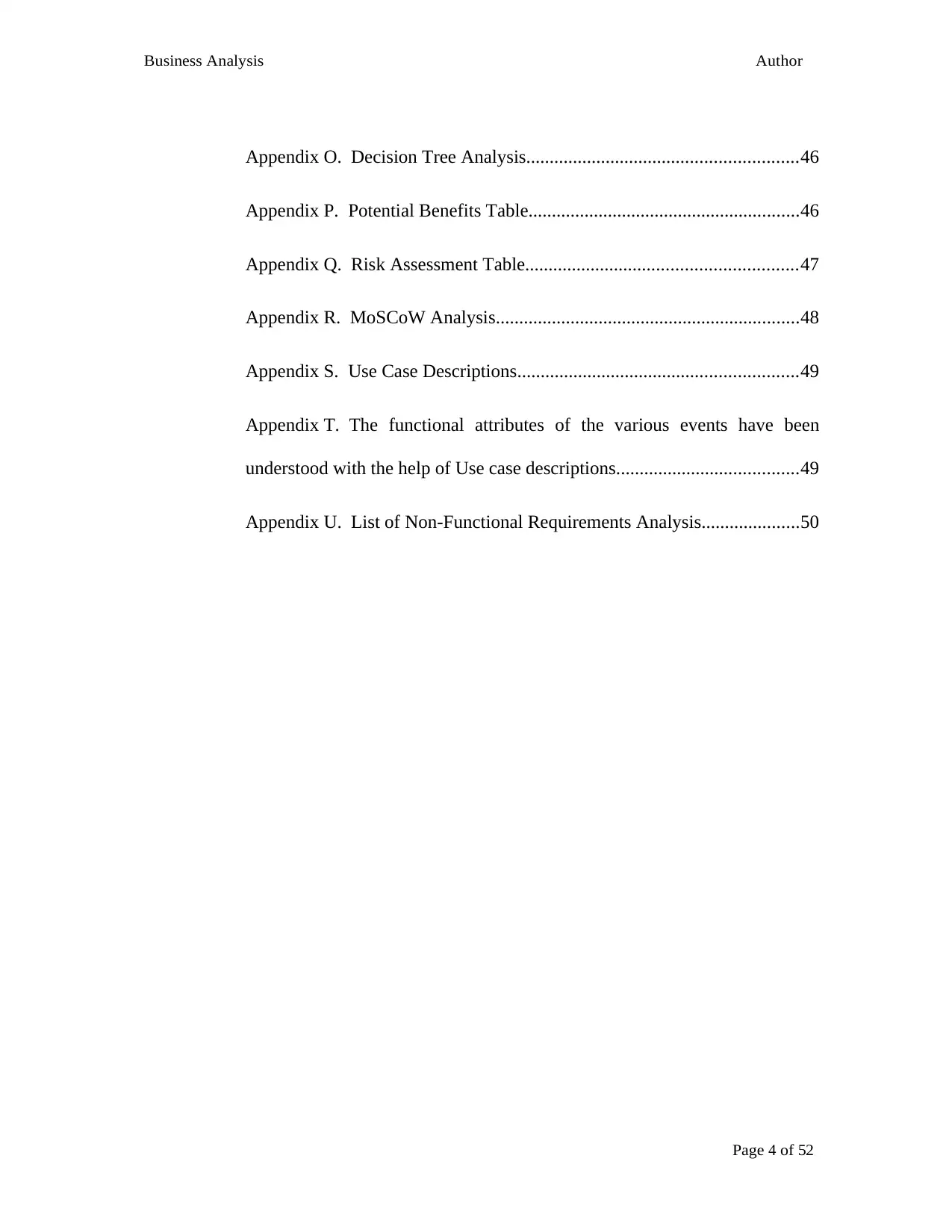
Appendix O. Decision Tree Analysis..........................................................46
Appendix P. Potential Benefits Table..........................................................46
Appendix Q. Risk Assessment Table..........................................................47
Appendix R. MoSCoW Analysis.................................................................48
Appendix S. Use Case Descriptions............................................................49
Appendix T. The functional attributes of the various events have been
understood with the help of Use case descriptions.......................................49
Appendix U. List of Non-Functional Requirements Analysis.....................50
Business Analysis
Report
Author
Appendix O. Decision Tree Analysis..........................................................46
Appendix P. Potential Benefits Table..........................................................46
Appendix Q. Risk Assessment Table..........................................................47
Appendix R. MoSCoW Analysis.................................................................48
Appendix S. Use Case Descriptions............................................................49
Appendix T. The functional attributes of the various events have been
understood with the help of Use case descriptions.......................................49
Appendix U. List of Non-Functional Requirements Analysis.....................50
⊘ This is a preview!⊘
Do you want full access?
Subscribe today to unlock all pages.
Trusted by 1+ million students worldwide
Page 4 of 52
Business Analysis
Report
Author
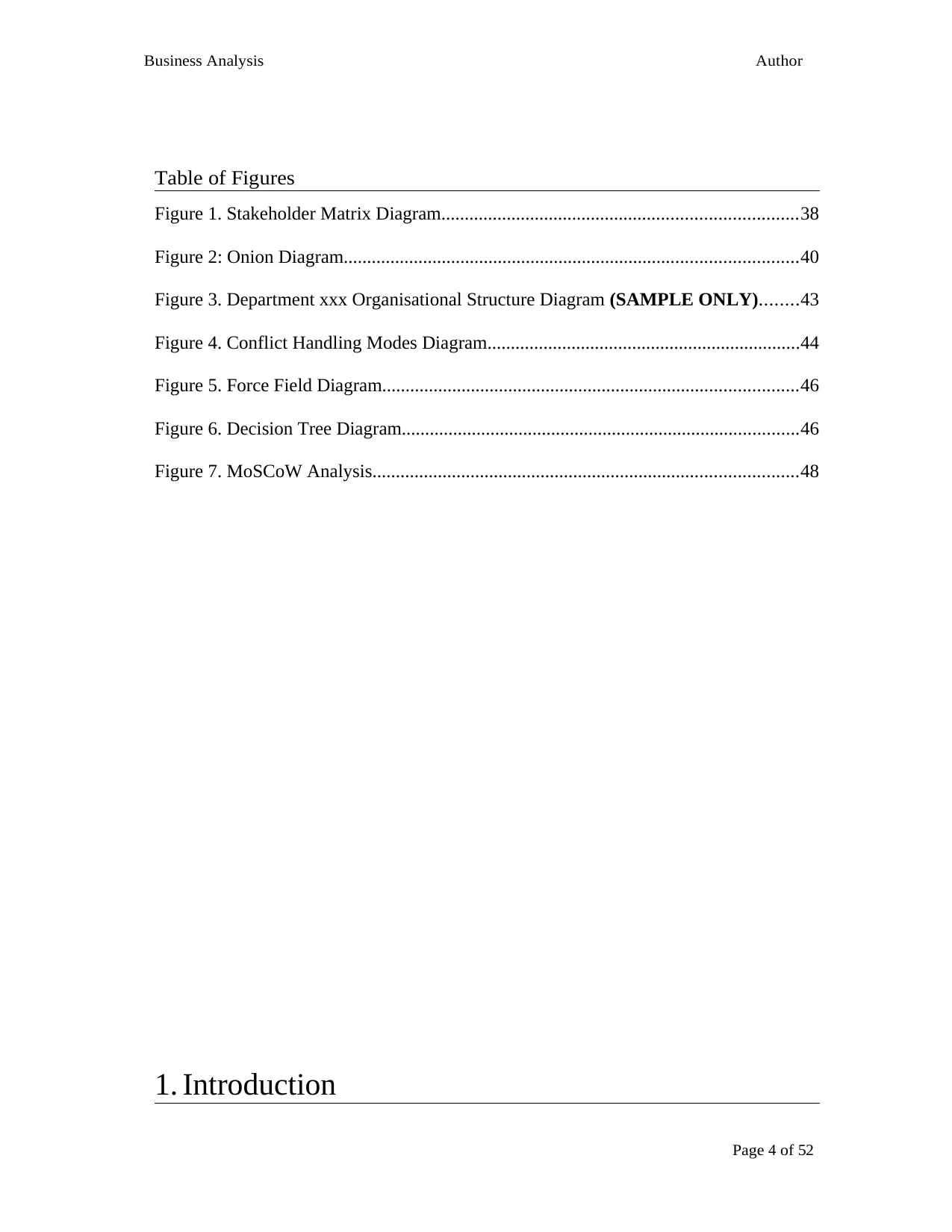
Table of Figures
Figure 1. Stakeholder Matrix Diagram............................................................................38
Figure 2: Onion Diagram.................................................................................................40
Figure 3. Department xxx Organisational Structure Diagram (SAMPLE ONLY)........43
Figure 4. Conflict Handling Modes Diagram...................................................................44
Figure 5. Force Field Diagram.........................................................................................46
Figure 6. Decision Tree Diagram.....................................................................................46
Figure 7. MoSCoW Analysis...........................................................................................48
1. Introduction
Business Analysis
Report
Author
Table of Figures
Figure 1. Stakeholder Matrix Diagram............................................................................38
Figure 2: Onion Diagram.................................................................................................40
Figure 3. Department xxx Organisational Structure Diagram (SAMPLE ONLY)........43
Figure 4. Conflict Handling Modes Diagram...................................................................44
Figure 5. Force Field Diagram.........................................................................................46
Figure 6. Decision Tree Diagram.....................................................................................46
Figure 7. MoSCoW Analysis...........................................................................................48
1. Introduction
Paraphrase This Document
Need a fresh take? Get an instant paraphrase of this document with our AI Paraphraser
Page 5 of 52
Business Analysis
Report
Author
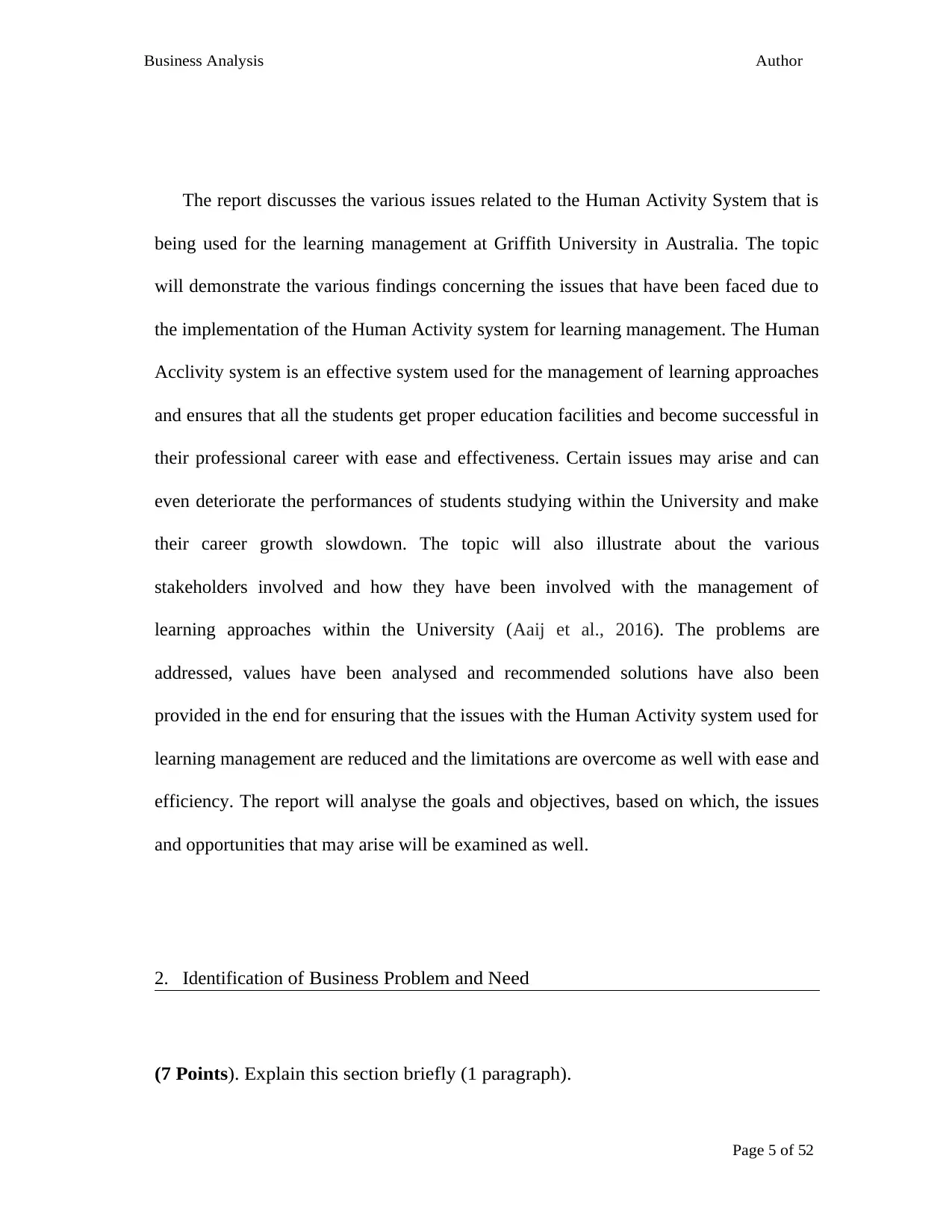
The report discusses the various issues related to the Human Activity System that is
being used for the learning management at Griffith University in Australia. The topic
will demonstrate the various findings concerning the issues that have been faced due to
the implementation of the Human Activity system for learning management. The Human
Acclivity system is an effective system used for the management of learning approaches
and ensures that all the students get proper education facilities and become successful in
their professional career with ease and effectiveness. Certain issues may arise and can
even deteriorate the performances of students studying within the University and make
their career growth slowdown. The topic will also illustrate about the various
stakeholders involved and how they have been involved with the management of
learning approaches within the University (Aaij et al., 2016). The problems are
addressed, values have been analysed and recommended solutions have also been
provided in the end for ensuring that the issues with the Human Activity system used for
learning management are reduced and the limitations are overcome as well with ease and
efficiency. The report will analyse the goals and objectives, based on which, the issues
and opportunities that may arise will be examined as well.
2. Identification of Business Problem and Need
(7 Points). Explain this section briefly (1 paragraph).
Business Analysis
Report
Author
The report discusses the various issues related to the Human Activity System that is
being used for the learning management at Griffith University in Australia. The topic
will demonstrate the various findings concerning the issues that have been faced due to
the implementation of the Human Activity system for learning management. The Human
Acclivity system is an effective system used for the management of learning approaches
and ensures that all the students get proper education facilities and become successful in
their professional career with ease and effectiveness. Certain issues may arise and can
even deteriorate the performances of students studying within the University and make
their career growth slowdown. The topic will also illustrate about the various
stakeholders involved and how they have been involved with the management of
learning approaches within the University (Aaij et al., 2016). The problems are
addressed, values have been analysed and recommended solutions have also been
provided in the end for ensuring that the issues with the Human Activity system used for
learning management are reduced and the limitations are overcome as well with ease and
efficiency. The report will analyse the goals and objectives, based on which, the issues
and opportunities that may arise will be examined as well.
2. Identification of Business Problem and Need
(7 Points). Explain this section briefly (1 paragraph).
Page 6 of 52
Business Analysis
Report
Author
2.1. Business Problem/s and Need/s
The issue is mainly related to the Human Activity system used within Griffith
University for the management of learning approaches for the students. The other issues
that are concerned with the implementation of Human Activity system used for the
purpose of Learning Management include inability to access data and information while
doing researches and creating difficulties for the students to study and obtain relevant
skills and knowledge to succeed in their career in an effective manner (Armstrong &
Taylor, 2014). Due to the inability of accessing relevant data and information, it can
become difficult for obtaining good amount of knowledge and skills and furthermore
learn to succeed in the future through completion of course or degree.
The Griffith model is an effective and appropriate model used for the structuring
and formation of the higher education system in Australia. The Griffith model is used for
ensuring that the higher educational institutions in Australia an abide the rules,
regulations and norms of a research intensive, campus based university to ensure that the
Human Activity system is managed properly and issues regarding the learning
management are overcome with ease and effectiveness (Burke, 2013). The Griffith
model allows the educational institutions to enhance the teaching performances of
individuals and deliver good quality services to the students by implementing new IT
systems, Human activity system for monitoring the activities of individuals and manage
institutional performance funds too. To evaluate the various findings related to the
problems faced in business long with the scopes and opportunities, it is important to use
the root cause analysis techniques such as SWOT analysis, Interview and also by using
Business Analysis
Report
Author
2.1. Business Problem/s and Need/s
The issue is mainly related to the Human Activity system used within Griffith
University for the management of learning approaches for the students. The other issues
that are concerned with the implementation of Human Activity system used for the
purpose of Learning Management include inability to access data and information while
doing researches and creating difficulties for the students to study and obtain relevant
skills and knowledge to succeed in their career in an effective manner (Armstrong &
Taylor, 2014). Due to the inability of accessing relevant data and information, it can
become difficult for obtaining good amount of knowledge and skills and furthermore
learn to succeed in the future through completion of course or degree.
The Griffith model is an effective and appropriate model used for the structuring
and formation of the higher education system in Australia. The Griffith model is used for
ensuring that the higher educational institutions in Australia an abide the rules,
regulations and norms of a research intensive, campus based university to ensure that the
Human Activity system is managed properly and issues regarding the learning
management are overcome with ease and effectiveness (Burke, 2013). The Griffith
model allows the educational institutions to enhance the teaching performances of
individuals and deliver good quality services to the students by implementing new IT
systems, Human activity system for monitoring the activities of individuals and manage
institutional performance funds too. To evaluate the various findings related to the
problems faced in business long with the scopes and opportunities, it is important to use
the root cause analysis techniques such as SWOT analysis, Interview and also by using
⊘ This is a preview!⊘
Do you want full access?
Subscribe today to unlock all pages.
Trusted by 1+ million students worldwide

Page 7 of 52
Business Analysis
Report
Author
the Five Whys technique (Card, 2016).
The SWOT analysis is used for identifying the strengths, weaknesses, opportunities
and threats experienced within the University in Australia. The SWOT analysis can also
help in determining the issues that have arisen considering the Human Activity system
used for Learning management at Griffith University. The strengths include affordable
educational facilities, location in the state capital, presence of full time faculties who
teach the classes most of the time (Conde et al., 2014). The relationship between the
teachers and students are quite good that has helped in managing the learning
approaches with much ease and efficiency. The organisation has also implemented new
systems of Information technology for the purpose of delivering comprehensive and user
friendly online education system. The Human activity system used for the learning
management has also been beneficial for handling the interdisciplinary and experimental
education at both the under graduate and post graduate levels. Enhanced faculty services
provided to the University and larger community is also considered as major strengths
here (Davis et al., 2012).
The weaknesses include lack of funding in several departments of the organisation,
lack of financial support, thin cultural and ethnic diversity, decline of students
enrolment, under staffing at various levels of the organisation, lack of implementation
and utilisation of resources for the purpose of managing the process of recruitment and
selection. Due to the lack of resources, there could be lesser expenditures on the IT
system and Human activity system, that might further result in inability to retain the
existing students and lack of skills to recruit and select individuals who can work for the
Business Analysis
Report
Author
the Five Whys technique (Card, 2016).
The SWOT analysis is used for identifying the strengths, weaknesses, opportunities
and threats experienced within the University in Australia. The SWOT analysis can also
help in determining the issues that have arisen considering the Human Activity system
used for Learning management at Griffith University. The strengths include affordable
educational facilities, location in the state capital, presence of full time faculties who
teach the classes most of the time (Conde et al., 2014). The relationship between the
teachers and students are quite good that has helped in managing the learning
approaches with much ease and efficiency. The organisation has also implemented new
systems of Information technology for the purpose of delivering comprehensive and user
friendly online education system. The Human activity system used for the learning
management has also been beneficial for handling the interdisciplinary and experimental
education at both the under graduate and post graduate levels. Enhanced faculty services
provided to the University and larger community is also considered as major strengths
here (Davis et al., 2012).
The weaknesses include lack of funding in several departments of the organisation,
lack of financial support, thin cultural and ethnic diversity, decline of students
enrolment, under staffing at various levels of the organisation, lack of implementation
and utilisation of resources for the purpose of managing the process of recruitment and
selection. Due to the lack of resources, there could be lesser expenditures on the IT
system and Human activity system, that might further result in inability to retain the
existing students and lack of skills to recruit and select individuals who can work for the
Paraphrase This Document
Need a fresh take? Get an instant paraphrase of this document with our AI Paraphraser
Page 8 of 52
Business Analysis
Report
Author
organisation (de Souza & Márcio de Almeida, 2013). Few other areas of weaknesses are
lack of proper infrastructure, underdeveloped campus life and issues with the HAS that
has created difficulties for the students to adopt the right learning approaches and access
information for their learning.
The opportunities that have arisen can help in creating a sustainable place in the
market and derive positive outcomes. Griffith University has used the HAS to deliver
online opportunities all over the world and ensure that good undergraduate experienced
is achieved by using the best learning management practices. The conversations and
partnerships are managed more easily with the employers (Department of Education and
Training, 2011). The Humana activity has not only enhanced the scopes for enhancing
the effectiveness of learning management approaches but also has developed various
international and off-campus study and exchange programs to deliver excellence and
become a leader in the field of interdisciplinary and integrated learning.
The threats that have risen due to the Human Activity system issues for learning
management are lack of funding for higher education faculties, more risks related to the
high turnover of faculties and staff members (Engeström, 2014). The huge amount of
competition in the market from the other Universities and presence of other private
educational institutions has created issues for sustaining in the competitive business
environment as well.
The interviews are conducted for gaining the feedbacks an responses of the students
about whether the students have been getting proper learning materials to access data
and information properly or not. As the topic revolved around the issue concerned with
Business Analysis
Report
Author
organisation (de Souza & Márcio de Almeida, 2013). Few other areas of weaknesses are
lack of proper infrastructure, underdeveloped campus life and issues with the HAS that
has created difficulties for the students to adopt the right learning approaches and access
information for their learning.
The opportunities that have arisen can help in creating a sustainable place in the
market and derive positive outcomes. Griffith University has used the HAS to deliver
online opportunities all over the world and ensure that good undergraduate experienced
is achieved by using the best learning management practices. The conversations and
partnerships are managed more easily with the employers (Department of Education and
Training, 2011). The Humana activity has not only enhanced the scopes for enhancing
the effectiveness of learning management approaches but also has developed various
international and off-campus study and exchange programs to deliver excellence and
become a leader in the field of interdisciplinary and integrated learning.
The threats that have risen due to the Human Activity system issues for learning
management are lack of funding for higher education faculties, more risks related to the
high turnover of faculties and staff members (Engeström, 2014). The huge amount of
competition in the market from the other Universities and presence of other private
educational institutions has created issues for sustaining in the competitive business
environment as well.
The interviews are conducted for gaining the feedbacks an responses of the students
about whether the students have been getting proper learning materials to access data
and information properly or not. As the topic revolved around the issue concerned with
Page 9 of 52
Business Analysis
Report
Author
the Human Activity system for learning management, so few cause effect diagrams are
also suitable for gaining an in-depth detailed information about the causes of issues and
how those can be resolved as well (Fraser, 2012).
The ‘Five Why’s’ tool acts as an interview technique for exploring the cause and
effect relationships based on a particular issue and furthermore develop iterations to
resolve the problems effectively. The five whys approach can be useful for defining,
measuring, analysing, improving and controlling the various issues related to the Human
Activity system for learning management. The issues with the HAS must be overcome
by identifying the root causes at first and then take any necessary approaches for
overcoming those with ease and effectiveness (Goetsch & Davis, 2014).
The PEST analysis is used to identify the political factors, economic, social and
technological factors that can create an impact on the functioning of the organisation.
The implementation of various rules, regulations and laws for enhancing the higher
education and learning efficiency within Griffith University is one of the major political
factors that has created an impact on the functioning of business. The economic factors
include contribution of the organisation for the growth in economy of Australia, making
ways for accessing the study materials by students and even effectively manage the
processes of selection and recruitment (Griffith, 2012). The processes can ensure
workforce efficacy by recruiting skilled and knowledgeable workers within the
workforce and contribute largely to the organisational effectiveness. The productivity of
the organisation will increase and this will in turn result in successful management of
resources and contribute to the economic environment of business too. The social factors
Business Analysis
Report
Author
the Human Activity system for learning management, so few cause effect diagrams are
also suitable for gaining an in-depth detailed information about the causes of issues and
how those can be resolved as well (Fraser, 2012).
The ‘Five Why’s’ tool acts as an interview technique for exploring the cause and
effect relationships based on a particular issue and furthermore develop iterations to
resolve the problems effectively. The five whys approach can be useful for defining,
measuring, analysing, improving and controlling the various issues related to the Human
Activity system for learning management. The issues with the HAS must be overcome
by identifying the root causes at first and then take any necessary approaches for
overcoming those with ease and effectiveness (Goetsch & Davis, 2014).
The PEST analysis is used to identify the political factors, economic, social and
technological factors that can create an impact on the functioning of the organisation.
The implementation of various rules, regulations and laws for enhancing the higher
education and learning efficiency within Griffith University is one of the major political
factors that has created an impact on the functioning of business. The economic factors
include contribution of the organisation for the growth in economy of Australia, making
ways for accessing the study materials by students and even effectively manage the
processes of selection and recruitment (Griffith, 2012). The processes can ensure
workforce efficacy by recruiting skilled and knowledgeable workers within the
workforce and contribute largely to the organisational effectiveness. The productivity of
the organisation will increase and this will in turn result in successful management of
resources and contribute to the economic environment of business too. The social factors
⊘ This is a preview!⊘
Do you want full access?
Subscribe today to unlock all pages.
Trusted by 1+ million students worldwide

1 out of 55


Related Documents


Your All-in-One AI-Powered Toolkit for Academic Success.
+13062052269
info@desklib.com
Available 24*7 on WhatsApp / Email
![[object Object]](/_next/static/media/star-bottom.7253800d.svg)
Unlock your academic potential
Copyright © 2020–2026 A2Z Services. All Rights Reserved. Developed and managed by ZUCOL.