Systematic Review of HAI Prevention
VerifiedAdded on 2019/09/30
|18
|7798
|264
Report
AI Summary
This systematic review assesses the quality and economic impact of interventions designed to prevent healthcare-associated infections (HAIs). The study analyzed 24 research papers, finding that HAI prevention interventions generally lead to cost savings for hospitals. The review utilized the PRISMA guidelines for reporting and the CHEERS statement for quality assessment. Key findings include increased savings with longer intervention durations and multiple HAI targets. However, the review also highlighted the need for improved reporting quality in economic evaluations of HAI prevention strategies, as many studies lacked comprehensive cost analysis and adherence to CHEERS guidelines. The study concludes that while HAI prevention interventions offer significant cost savings, improvements in research reporting are crucial for better decision-making.

Systematic Review
A systematic review of Economic evaluations of Healthcare-associated infection prevention
interventions.
A systematic review of Economic evaluations of Healthcare-associated infection prevention
interventions.

Paraphrase This Document
Need a fresh take? Get an instant paraphrase of this document with our AI Paraphraser
Abstract
Research Objective
The objective of this systematic review is to assess the quality of the economic evaluations that
were done for the infection prevention interventions that were introduced to improve health
outcomes and reduce the costs associated with the treatment occurring due to HAIs. The key
focus was to understand that whether introducing solutions to prevent the infection helps in the
reduction of the infections and also the incurred costs for the hospitals.
Research Methods
The systematic review has been considered for this study. The researcher referred to various peer
and non-peer reviewed research papers on economic evaluation in HAIs from the sources such as
PubMed, Medline, and Google Scholar. Google Scholar was used to search through authentic
internet sources to pick relevant research studies. The PRISMA guidelines have been used to
report the paper and the research papers were evaluated using CHEERS statement for its quality
of reporting.
Results
The systematic review led to the identification of 24 research papers based on certain inclusion
criteria. The study led to the understanding that the interventions lead to the increase in the
savings ratio for the hospitals. Moreover, the increase in the intervention duration also improves
the savings ratio. Other than that, implementation of intervention of multiple HAIs lead to higher
savings ration than otherwise. Also, only few of the research studies (n=7) have been found to be
following most of the CHEERS items (~70%) whereas most of the papers followed about 50%
of the items.
Conclusions
If the interventions are implemented in the hospitals for preventing HAIs, then it can have
positive impact on the cost savings. Also, the research papers should focus on improving the
quality of reporting as per CHEERS checklist.
Introduction
The current paper is concerned with the systematic review of economic evaluations of healthcare
associated infection prevention interventions between January 2010 and January 2016. Hospital
Acquired Infections or the nosomical infections are one of the harm that can be prevented.
However, at present it has become a major challenge to the life of the patients and has become a
resultant of reduced health care safety measures (Kohn et al, 1999). The study conducted by
Klevens et al (2002) has led to the finding that the hospital acquired infections are considered the
major health challenges. There are enough evidences presented by the researchers that states that
Research Objective
The objective of this systematic review is to assess the quality of the economic evaluations that
were done for the infection prevention interventions that were introduced to improve health
outcomes and reduce the costs associated with the treatment occurring due to HAIs. The key
focus was to understand that whether introducing solutions to prevent the infection helps in the
reduction of the infections and also the incurred costs for the hospitals.
Research Methods
The systematic review has been considered for this study. The researcher referred to various peer
and non-peer reviewed research papers on economic evaluation in HAIs from the sources such as
PubMed, Medline, and Google Scholar. Google Scholar was used to search through authentic
internet sources to pick relevant research studies. The PRISMA guidelines have been used to
report the paper and the research papers were evaluated using CHEERS statement for its quality
of reporting.
Results
The systematic review led to the identification of 24 research papers based on certain inclusion
criteria. The study led to the understanding that the interventions lead to the increase in the
savings ratio for the hospitals. Moreover, the increase in the intervention duration also improves
the savings ratio. Other than that, implementation of intervention of multiple HAIs lead to higher
savings ration than otherwise. Also, only few of the research studies (n=7) have been found to be
following most of the CHEERS items (~70%) whereas most of the papers followed about 50%
of the items.
Conclusions
If the interventions are implemented in the hospitals for preventing HAIs, then it can have
positive impact on the cost savings. Also, the research papers should focus on improving the
quality of reporting as per CHEERS checklist.
Introduction
The current paper is concerned with the systematic review of economic evaluations of healthcare
associated infection prevention interventions between January 2010 and January 2016. Hospital
Acquired Infections or the nosomical infections are one of the harm that can be prevented.
However, at present it has become a major challenge to the life of the patients and has become a
resultant of reduced health care safety measures (Kohn et al, 1999). The study conducted by
Klevens et al (2002) has led to the finding that the hospital acquired infections are considered the
major health challenges. There are enough evidences presented by the researchers that states that
if handled properly, then the HAIs can be handled effectively (Yokoe et al, 2008). The study
conducted by CDCP (2012), and Pronovost et al (2006) asserted that more than 50% of the
hospital acquired infections can be prevented through appropriate measures. The individuals or
the institutions who are willing to save thousands of lives and reduce the invested extra costs,
can turn towards implementing measures that can reduce the instances of hospital acquired
infections.
The solutions that can help resolve the HAIs challenge are available. Also, there is the
understanding that if the effort is made towards saving the lives, then it is more likely to save the
added cost that is invested on curing the infections. Despite these two, the progresses towards
fighting the HAI challenges are very slow. It is the researcher’s understanding that if the costs
associated with HAIs can be evaluated properly, then the payers can be motivated to take
actions. Moreover, the policy makers can be motivated to make proper investment in this aspect
to reduce HAIs if they witness major cost savings. The focus is to understand that whether the
introduction of infection prevention solutions help in reducing infections along with saving the
money for the hospitals. If the finding of this question is assertive, then it can be an appreciable
news for the policymakers and all the other direct and indirect stakeholders engaged in the
healthcare activities.
Rationale
HAIs contribute to morbidity and mortality in a significant manner. It also has huge impact on
the healthcare system and the patients in terms of costs associated with it. The study has found
that the healthcare contributes heavily to the expenses in the healthcare (Jarvis, 1996).
Statistically, 4.1 million patients develop HAI in Western Europe. This leads to the addition of
16 million hospital days and around 37,000 attributable deaths. These costs more than € 5.48
billion. In the US, the cost HAIs for the year was $9.8 billion. The governments in various
countries are make continued effort to ensure that the expenses on the healthcare aspects are
reduced (Pittet et al, 1994). This is the reason they are willing to implement protocols for the
reduction of HAIs that can save costs. The institutions are looking forward to the technologies
that are less costly and help in reducing the burden that are caused due to the HAIs. Researchers
from various countries are studying this aspect in order to understand the necessary measures
that can be taken to manage the regularly increasing costs (Plowman et al, 2001). It is important
that this burden should be understood. Also, it is necessary to understand the incremental costs
that occurs due to the HAIs which is entirely different from the costs incurred for the diagnosis
of the patients at the time of their admission. It has been asserted by researchers that the costs
associated with the HAIs varies among different hospitals. Also, it varies among different
countries.
Objectives
The objective of this systematic review is to assess the quality of the economic evaluations that
were done for the infection prevention interventions that were introduced to improve health
conducted by CDCP (2012), and Pronovost et al (2006) asserted that more than 50% of the
hospital acquired infections can be prevented through appropriate measures. The individuals or
the institutions who are willing to save thousands of lives and reduce the invested extra costs,
can turn towards implementing measures that can reduce the instances of hospital acquired
infections.
The solutions that can help resolve the HAIs challenge are available. Also, there is the
understanding that if the effort is made towards saving the lives, then it is more likely to save the
added cost that is invested on curing the infections. Despite these two, the progresses towards
fighting the HAI challenges are very slow. It is the researcher’s understanding that if the costs
associated with HAIs can be evaluated properly, then the payers can be motivated to take
actions. Moreover, the policy makers can be motivated to make proper investment in this aspect
to reduce HAIs if they witness major cost savings. The focus is to understand that whether the
introduction of infection prevention solutions help in reducing infections along with saving the
money for the hospitals. If the finding of this question is assertive, then it can be an appreciable
news for the policymakers and all the other direct and indirect stakeholders engaged in the
healthcare activities.
Rationale
HAIs contribute to morbidity and mortality in a significant manner. It also has huge impact on
the healthcare system and the patients in terms of costs associated with it. The study has found
that the healthcare contributes heavily to the expenses in the healthcare (Jarvis, 1996).
Statistically, 4.1 million patients develop HAI in Western Europe. This leads to the addition of
16 million hospital days and around 37,000 attributable deaths. These costs more than € 5.48
billion. In the US, the cost HAIs for the year was $9.8 billion. The governments in various
countries are make continued effort to ensure that the expenses on the healthcare aspects are
reduced (Pittet et al, 1994). This is the reason they are willing to implement protocols for the
reduction of HAIs that can save costs. The institutions are looking forward to the technologies
that are less costly and help in reducing the burden that are caused due to the HAIs. Researchers
from various countries are studying this aspect in order to understand the necessary measures
that can be taken to manage the regularly increasing costs (Plowman et al, 2001). It is important
that this burden should be understood. Also, it is necessary to understand the incremental costs
that occurs due to the HAIs which is entirely different from the costs incurred for the diagnosis
of the patients at the time of their admission. It has been asserted by researchers that the costs
associated with the HAIs varies among different hospitals. Also, it varies among different
countries.
Objectives
The objective of this systematic review is to assess the quality of the economic evaluations that
were done for the infection prevention interventions that were introduced to improve health
⊘ This is a preview!⊘
Do you want full access?
Subscribe today to unlock all pages.

Trusted by 1+ million students worldwide
outcomes and reduce the costs associated with the treatment occurring due to HAIs. The key
focus would be to understand that whether introducing the solutions to prevent the infection
helps in the reduction of the infections and also the incurred costs for the hospitals.
Methods
The current paper has considered systematic review as the method of study. Various peer
reviewed and non-peer reviewed research papers on economic evaluations in HAIs has been
considered. Through the systematic literature review, various research studies are picked based
on specific criteria and then these papers are studied to reach specific goals. The current section
is concerned with detailing the methods that are applied to conduct the entire research. The entire
report is in accordance with PRISMA (Preferred Reporting Items for Systematic Reviews and
Meta-analysis) guidelines (Moher et al, 2009). Few additional analysis undertaken to conduct
this research have also been discussed in the last sub-section of this section.
Protocol and Registration
A protocol in the case of systematic review is concerned with the describing the rationale,
assumptions, and method plan for the review. It is generally prepared prior to beginning the
review process. In this sub-section, a brief research rationale has been provided along with the
assumptions. As per the method plan is concerned, the other sub-sections of this Method section
will amply cover the various associated aspects.
Systematic Review Rationales
The studies in the field of Hospital Acquired Infections have been many. The researchers have
tried to cover various infections such as surgical site infections, blood stream infections, and
others. Few of them have also covered the costs that are being incurred by the hospitals to
contain this issue. After going through various studies, the researcher of this current paper
reached the conclusion that there is the need to bring together the studies from past few years
that are associated with the economic evaluations of HAIs. The contribution of HAIs to the cost
is substantial, either it is to the hospital or to the whole country Also, this issue can be observed
in many countries, either it is a developed nations like USA or underdeveloped economies in
other parts of the world (Jarvis, 1996). The researchers from various parts of the world have
contributed to this field of study. However, the studies are more distracted and bringing them
together would be of great help for future studies in this field. This is the reason the researcher of
this paper has took on the effort to conduct the systematic review of the research papers of past
few years that are related to the selected research topic.
Hypothesis
focus would be to understand that whether introducing the solutions to prevent the infection
helps in the reduction of the infections and also the incurred costs for the hospitals.
Methods
The current paper has considered systematic review as the method of study. Various peer
reviewed and non-peer reviewed research papers on economic evaluations in HAIs has been
considered. Through the systematic literature review, various research studies are picked based
on specific criteria and then these papers are studied to reach specific goals. The current section
is concerned with detailing the methods that are applied to conduct the entire research. The entire
report is in accordance with PRISMA (Preferred Reporting Items for Systematic Reviews and
Meta-analysis) guidelines (Moher et al, 2009). Few additional analysis undertaken to conduct
this research have also been discussed in the last sub-section of this section.
Protocol and Registration
A protocol in the case of systematic review is concerned with the describing the rationale,
assumptions, and method plan for the review. It is generally prepared prior to beginning the
review process. In this sub-section, a brief research rationale has been provided along with the
assumptions. As per the method plan is concerned, the other sub-sections of this Method section
will amply cover the various associated aspects.
Systematic Review Rationales
The studies in the field of Hospital Acquired Infections have been many. The researchers have
tried to cover various infections such as surgical site infections, blood stream infections, and
others. Few of them have also covered the costs that are being incurred by the hospitals to
contain this issue. After going through various studies, the researcher of this current paper
reached the conclusion that there is the need to bring together the studies from past few years
that are associated with the economic evaluations of HAIs. The contribution of HAIs to the cost
is substantial, either it is to the hospital or to the whole country Also, this issue can be observed
in many countries, either it is a developed nations like USA or underdeveloped economies in
other parts of the world (Jarvis, 1996). The researchers from various parts of the world have
contributed to this field of study. However, the studies are more distracted and bringing them
together would be of great help for future studies in this field. This is the reason the researcher of
this paper has took on the effort to conduct the systematic review of the research papers of past
few years that are related to the selected research topic.
Hypothesis
Paraphrase This Document
Need a fresh take? Get an instant paraphrase of this document with our AI Paraphraser
Prior to beginning the systematic review, the researcher have formed certain hypotheses. These
hypotheses will be tested against the systematic review findings. The hypotheses associated with
the current research topic is given below:
- The introduction of infection prevention solutions help reduce infections.
- The infection prevention efforts help the hospitals in reducing the costs.
- The quality of the economic evaluations are considerable in terms of decision making.
Eligibility Criteria
The studies that have been identified as eligible are those that evaluated the healthcare
interventions for the reduction of Hospital Acquired Infections. In addition, the other criteria
were that the paper reported on the clinical effectiveness regarding the implementation, and
assessed the involved costs. Also, the research papers compared the alternatives associated with
prevention implementation, and mentioned the costs associated with the program and the
infections. The studies are either peer reviewed or non-peer reviewed research papers. Though
both the types of research papers will be in consideration, however the peer reviewed will be of
major focus. The reason is that it increases the reliability of the study as the peer reviewed papers
are assessed on various grounds such as research methods, citations, integration with previous
studies, and others.
Information Sources
The research papers have been sourced from various online repositories. Some of the sources
that were referred to find the papers are Medline, Pubmed, Econolit, and Cochrane Library. Only
those research papers have been picked that were published between 2010 and 2016, including
both the years.
Search
The search on Pubmed was conducted using the search bar given at the top of the webpage. Few
keywords were used to identify the relevant research papers. The keywords that were used to
conduct the search were “hospital acquired infections”, “cost effectiveness”, “economic
evaluation”, “hospital infection prevention cost”. The use of keywords in the search bar resulted
into various research papers on the related topic. The papers were from different years, but only
those were picked that were published within 2010 to 2016. The study focused on search and
identification of English language papers only.
Study Selection
The study selection was conducted based on certain key criteria. There were four key aspects that
were taken into consideration. The first criteria was to pick only those research papers that
evaluated healthcare interventions designed to reduce or prevent HAIs and these also reported
clinical effectiveness, showed cost measurement of the intervention. The paper should also
conduct comparison and reflected outcomes of the interventions. Those studies were included in
which the intervention was to handle the common hospital acquired infections, namely,
hypotheses will be tested against the systematic review findings. The hypotheses associated with
the current research topic is given below:
- The introduction of infection prevention solutions help reduce infections.
- The infection prevention efforts help the hospitals in reducing the costs.
- The quality of the economic evaluations are considerable in terms of decision making.
Eligibility Criteria
The studies that have been identified as eligible are those that evaluated the healthcare
interventions for the reduction of Hospital Acquired Infections. In addition, the other criteria
were that the paper reported on the clinical effectiveness regarding the implementation, and
assessed the involved costs. Also, the research papers compared the alternatives associated with
prevention implementation, and mentioned the costs associated with the program and the
infections. The studies are either peer reviewed or non-peer reviewed research papers. Though
both the types of research papers will be in consideration, however the peer reviewed will be of
major focus. The reason is that it increases the reliability of the study as the peer reviewed papers
are assessed on various grounds such as research methods, citations, integration with previous
studies, and others.
Information Sources
The research papers have been sourced from various online repositories. Some of the sources
that were referred to find the papers are Medline, Pubmed, Econolit, and Cochrane Library. Only
those research papers have been picked that were published between 2010 and 2016, including
both the years.
Search
The search on Pubmed was conducted using the search bar given at the top of the webpage. Few
keywords were used to identify the relevant research papers. The keywords that were used to
conduct the search were “hospital acquired infections”, “cost effectiveness”, “economic
evaluation”, “hospital infection prevention cost”. The use of keywords in the search bar resulted
into various research papers on the related topic. The papers were from different years, but only
those were picked that were published within 2010 to 2016. The study focused on search and
identification of English language papers only.
Study Selection
The study selection was conducted based on certain key criteria. There were four key aspects that
were taken into consideration. The first criteria was to pick only those research papers that
evaluated healthcare interventions designed to reduce or prevent HAIs and these also reported
clinical effectiveness, showed cost measurement of the intervention. The paper should also
conduct comparison and reflected outcomes of the interventions. Those studies were included in
which the intervention was to handle the common hospital acquired infections, namely,
bloodstream infection, surgical infection, urinary infection, and pneumonia which is caused in
the hospital setting. The next criteria for the selection was methods of interventions used. That is,
the intervention should be able to prevent any kind of one person to another transfer of
infections, infections from environment, and the intervention steps that showed any kind of
improvement after implementation.
Data collection process and Data items
The data collection has been conducted by one individual. The individual or the reviewer used
various predefined criteria to analyze the papers by going through the key sections of the paper.
The initial focus was on title and abstracts. In the next stage, whole texts were reviewed and
elimination activities continued further. The data extraction has been done on the cost incurred
on the prevention intervention and the monetary benefits achieved by the clinic or the investing
stakeholder. As per the costs are concerned, it has been ensured that the direct and the indirect
costs are taken into consideration. However, major focus has been on extracting and
understanding the direct costs and there were only very few that showed indirect costs in their
research.
Risk of bias in individual studies
The reviewer has considered three key areas while judging the individual studies for the risk of
bias, namely, selection bias, classification bias, and confounding bias (Lambert, 2011). The
selection bias has been assessed by understanding that whether the population selected is the true
representation of the target population. Also, if there is difference in the patient selection method
between the groups, then it can be sign of selection bias. The classification bias has been
assessed in the papers through understanding that whether the researchers have recorded
information inadequately or at differing scales. The confound bias will be assessed by
understanding that whether there exists any effort to spuriously associate the result of the study
with the elements that are not the actual cause. These biases will be assessed by the reviewer on
the individual level and then the paper will be picked for further assessment. The papers showing
bias outcomes will be completely eliminated from the study and no inclusion of such papers will
take place in this study in any form and at any stage.
Summary measures
To standardize the data, the infection rate ratio has been used in the paper. The infection rate
ratio is calculated by dividing the infection rate in the intervention group by the rate in the
comparison group. This will be done for the papers in which the relevant data are available. This
will be done to ensure that the studies are compared with one metric. For all the selected studies,
program and infection costs were standardized by converting to the 2015 US dollars. Infection
related costs were based on number of infections averted multiplied by the cost per infection.
Synthesis of results and Quality
The results will be synthesized and the quality will be assessed using the Consolidated Health
Economic Evaluation Standards (CHEERS) criteria. It has been used to understand the quality of
the hospital setting. The next criteria for the selection was methods of interventions used. That is,
the intervention should be able to prevent any kind of one person to another transfer of
infections, infections from environment, and the intervention steps that showed any kind of
improvement after implementation.
Data collection process and Data items
The data collection has been conducted by one individual. The individual or the reviewer used
various predefined criteria to analyze the papers by going through the key sections of the paper.
The initial focus was on title and abstracts. In the next stage, whole texts were reviewed and
elimination activities continued further. The data extraction has been done on the cost incurred
on the prevention intervention and the monetary benefits achieved by the clinic or the investing
stakeholder. As per the costs are concerned, it has been ensured that the direct and the indirect
costs are taken into consideration. However, major focus has been on extracting and
understanding the direct costs and there were only very few that showed indirect costs in their
research.
Risk of bias in individual studies
The reviewer has considered three key areas while judging the individual studies for the risk of
bias, namely, selection bias, classification bias, and confounding bias (Lambert, 2011). The
selection bias has been assessed by understanding that whether the population selected is the true
representation of the target population. Also, if there is difference in the patient selection method
between the groups, then it can be sign of selection bias. The classification bias has been
assessed in the papers through understanding that whether the researchers have recorded
information inadequately or at differing scales. The confound bias will be assessed by
understanding that whether there exists any effort to spuriously associate the result of the study
with the elements that are not the actual cause. These biases will be assessed by the reviewer on
the individual level and then the paper will be picked for further assessment. The papers showing
bias outcomes will be completely eliminated from the study and no inclusion of such papers will
take place in this study in any form and at any stage.
Summary measures
To standardize the data, the infection rate ratio has been used in the paper. The infection rate
ratio is calculated by dividing the infection rate in the intervention group by the rate in the
comparison group. This will be done for the papers in which the relevant data are available. This
will be done to ensure that the studies are compared with one metric. For all the selected studies,
program and infection costs were standardized by converting to the 2015 US dollars. Infection
related costs were based on number of infections averted multiplied by the cost per infection.
Synthesis of results and Quality
The results will be synthesized and the quality will be assessed using the Consolidated Health
Economic Evaluation Standards (CHEERS) criteria. It has been used to understand the quality of
⊘ This is a preview!⊘
Do you want full access?
Subscribe today to unlock all pages.
Trusted by 1+ million students worldwide
the reporting. It will help the researcher in achieving the key goal of the paper which is to assess
the quality of the economic evaluations. The criteria that have been listed in the CHEERS were
assigned values, which are, one, two, and three. The one represented reporting quality of above
expectation. Two was given to the papers that showed poor reporting quality. Three was given to
the papers that ignored any criteria of quality reporting as per CHEERS.
Results
The current section is concerned with understanding the results after the assessment of all the
research papers picked for the study. This section has been divided into several subsections that
looks into different aspects such as selection of the papers, its characteristics, discussion of
individual studies, and others.
Study Selection
The current sub-section details the papers that were identified after the systematic study as per
the methods discussed in the previous section. The search led to the finding of 453 relevant
research papers that were associated with the current topic of study in some way or the other. Of
the total 563 papers, only 24 of them made to the list. These were eliminated as per the earlier
mentioned exclusion factors. A flow diagram has been shown below that briefs on the strategy of
selection and elimination of the papers.
Figure 1: Flow Diagram showing research paper selection
the quality of the economic evaluations. The criteria that have been listed in the CHEERS were
assigned values, which are, one, two, and three. The one represented reporting quality of above
expectation. Two was given to the papers that showed poor reporting quality. Three was given to
the papers that ignored any criteria of quality reporting as per CHEERS.
Results
The current section is concerned with understanding the results after the assessment of all the
research papers picked for the study. This section has been divided into several subsections that
looks into different aspects such as selection of the papers, its characteristics, discussion of
individual studies, and others.
Study Selection
The current sub-section details the papers that were identified after the systematic study as per
the methods discussed in the previous section. The search led to the finding of 453 relevant
research papers that were associated with the current topic of study in some way or the other. Of
the total 563 papers, only 24 of them made to the list. These were eliminated as per the earlier
mentioned exclusion factors. A flow diagram has been shown below that briefs on the strategy of
selection and elimination of the papers.
Figure 1: Flow Diagram showing research paper selection
Paraphrase This Document
Need a fresh take? Get an instant paraphrase of this document with our AI Paraphraser
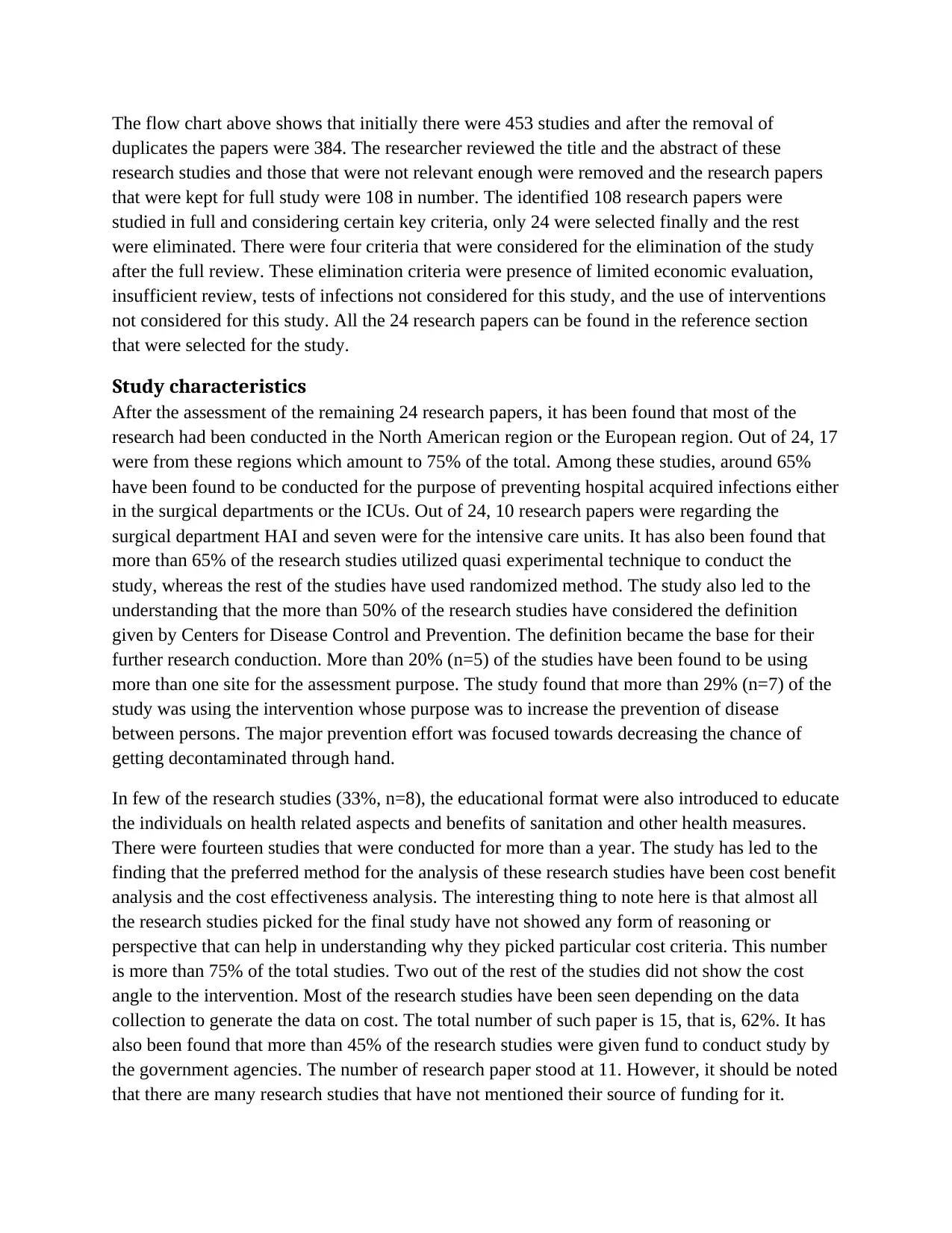
The flow chart above shows that initially there were 453 studies and after the removal of
duplicates the papers were 384. The researcher reviewed the title and the abstract of these
research studies and those that were not relevant enough were removed and the research papers
that were kept for full study were 108 in number. The identified 108 research papers were
studied in full and considering certain key criteria, only 24 were selected finally and the rest
were eliminated. There were four criteria that were considered for the elimination of the study
after the full review. These elimination criteria were presence of limited economic evaluation,
insufficient review, tests of infections not considered for this study, and the use of interventions
not considered for this study. All the 24 research papers can be found in the reference section
that were selected for the study.
Study characteristics
After the assessment of the remaining 24 research papers, it has been found that most of the
research had been conducted in the North American region or the European region. Out of 24, 17
were from these regions which amount to 75% of the total. Among these studies, around 65%
have been found to be conducted for the purpose of preventing hospital acquired infections either
in the surgical departments or the ICUs. Out of 24, 10 research papers were regarding the
surgical department HAI and seven were for the intensive care units. It has also been found that
more than 65% of the research studies utilized quasi experimental technique to conduct the
study, whereas the rest of the studies have used randomized method. The study also led to the
understanding that the more than 50% of the research studies have considered the definition
given by Centers for Disease Control and Prevention. The definition became the base for their
further research conduction. More than 20% (n=5) of the studies have been found to be using
more than one site for the assessment purpose. The study found that more than 29% (n=7) of the
study was using the intervention whose purpose was to increase the prevention of disease
between persons. The major prevention effort was focused towards decreasing the chance of
getting decontaminated through hand.
In few of the research studies (33%, n=8), the educational format were also introduced to educate
the individuals on health related aspects and benefits of sanitation and other health measures.
There were fourteen studies that were conducted for more than a year. The study has led to the
finding that the preferred method for the analysis of these research studies have been cost benefit
analysis and the cost effectiveness analysis. The interesting thing to note here is that almost all
the research studies picked for the final study have not showed any form of reasoning or
perspective that can help in understanding why they picked particular cost criteria. This number
is more than 75% of the total studies. Two out of the rest of the studies did not show the cost
angle to the intervention. Most of the research studies have been seen depending on the data
collection to generate the data on cost. The total number of such paper is 15, that is, 62%. It has
also been found that more than 45% of the research studies were given fund to conduct study by
the government agencies. The number of research paper stood at 11. However, it should be noted
that there are many research studies that have not mentioned their source of funding for it.
duplicates the papers were 384. The researcher reviewed the title and the abstract of these
research studies and those that were not relevant enough were removed and the research papers
that were kept for full study were 108 in number. The identified 108 research papers were
studied in full and considering certain key criteria, only 24 were selected finally and the rest
were eliminated. There were four criteria that were considered for the elimination of the study
after the full review. These elimination criteria were presence of limited economic evaluation,
insufficient review, tests of infections not considered for this study, and the use of interventions
not considered for this study. All the 24 research papers can be found in the reference section
that were selected for the study.
Study characteristics
After the assessment of the remaining 24 research papers, it has been found that most of the
research had been conducted in the North American region or the European region. Out of 24, 17
were from these regions which amount to 75% of the total. Among these studies, around 65%
have been found to be conducted for the purpose of preventing hospital acquired infections either
in the surgical departments or the ICUs. Out of 24, 10 research papers were regarding the
surgical department HAI and seven were for the intensive care units. It has also been found that
more than 65% of the research studies utilized quasi experimental technique to conduct the
study, whereas the rest of the studies have used randomized method. The study also led to the
understanding that the more than 50% of the research studies have considered the definition
given by Centers for Disease Control and Prevention. The definition became the base for their
further research conduction. More than 20% (n=5) of the studies have been found to be using
more than one site for the assessment purpose. The study found that more than 29% (n=7) of the
study was using the intervention whose purpose was to increase the prevention of disease
between persons. The major prevention effort was focused towards decreasing the chance of
getting decontaminated through hand.
In few of the research studies (33%, n=8), the educational format were also introduced to educate
the individuals on health related aspects and benefits of sanitation and other health measures.
There were fourteen studies that were conducted for more than a year. The study has led to the
finding that the preferred method for the analysis of these research studies have been cost benefit
analysis and the cost effectiveness analysis. The interesting thing to note here is that almost all
the research studies picked for the final study have not showed any form of reasoning or
perspective that can help in understanding why they picked particular cost criteria. This number
is more than 75% of the total studies. Two out of the rest of the studies did not show the cost
angle to the intervention. Most of the research studies have been seen depending on the data
collection to generate the data on cost. The total number of such paper is 15, that is, 62%. It has
also been found that more than 45% of the research studies were given fund to conduct study by
the government agencies. The number of research paper stood at 11. However, it should be noted
that there are many research studies that have not mentioned their source of funding for it.
Other than above, it has been found that the few of the research papers (n=4) has also referred to
the database to collect the data related to cost. The methods used for calculating the costs for the
studies varied between the research papers. It has been found that two research studies used
accounting method, seven used mixed method, and the rest used other methods. As per the
discounting is concerned, only seven research studies have been found depicting this, the rest of
them either not stated explicitly or they did not use this approach. Therefore surety can be placed
only on the 29% of the papers. Moreover, other than the hand hygiene and educational approach
of intervention mentioned above, there were few that have been utilized by various research
studies such as antibiotic prophylaxis, skin preparation, and others. The age group that were
picked for the interventions were mostly of the mixed category as thirteen research paper (54%)
showed. However, few of the research paper had specific focus with either children or adult. Few
of the research studies did not state the age group of their respondents. The duration of the
intervention varied drastically from one research study to another. It varied from less than five
months to the maximum of more than two years.
Quality as per CHEERS statement
The CHEERs statement was used to understand the quality of the 24 research studies selected for
the assessment. The study helped identify that not all the research papers were based on the
CHEERS criteria. Moreover, it has been found that few were partially fitting the criteria while
few were complete unfit. Few of the research studies have been found completely fitting the
criteria. The researcher was able to identify the 50% of the research studies as economic
evaluation just through their titles. Along with that, around 80% (n=19) of the research studies
have been found using the clear research questions. Also, the same percentage of research papers
also mentioned background related to the research. Near to 70% of the research papers (n=16)
have mentioned the target population or the groups considered for the studies. It has been found
that out of the 24 studies, there were many that had not shown their orientation of the study. In
addition, many of them had missing cost perspective. The number of such papers stood at 11
(45%). Though it has been found that few of the research studies did mention these two aspects,
but the quality of the report were not up to the mark.
From the total 24 studies, it has been found that there were nine research studies (37.5%) that
discussed appropriately about the approach they considered for the resource estimation and cost
calculation. Along with this, it has been found that more than 40% of the studies did not consider
the use of price adjustment in their studies. Also, more than half of the research studies had not
discussed any aspect covering the conflicts of interest scenario. The table given below
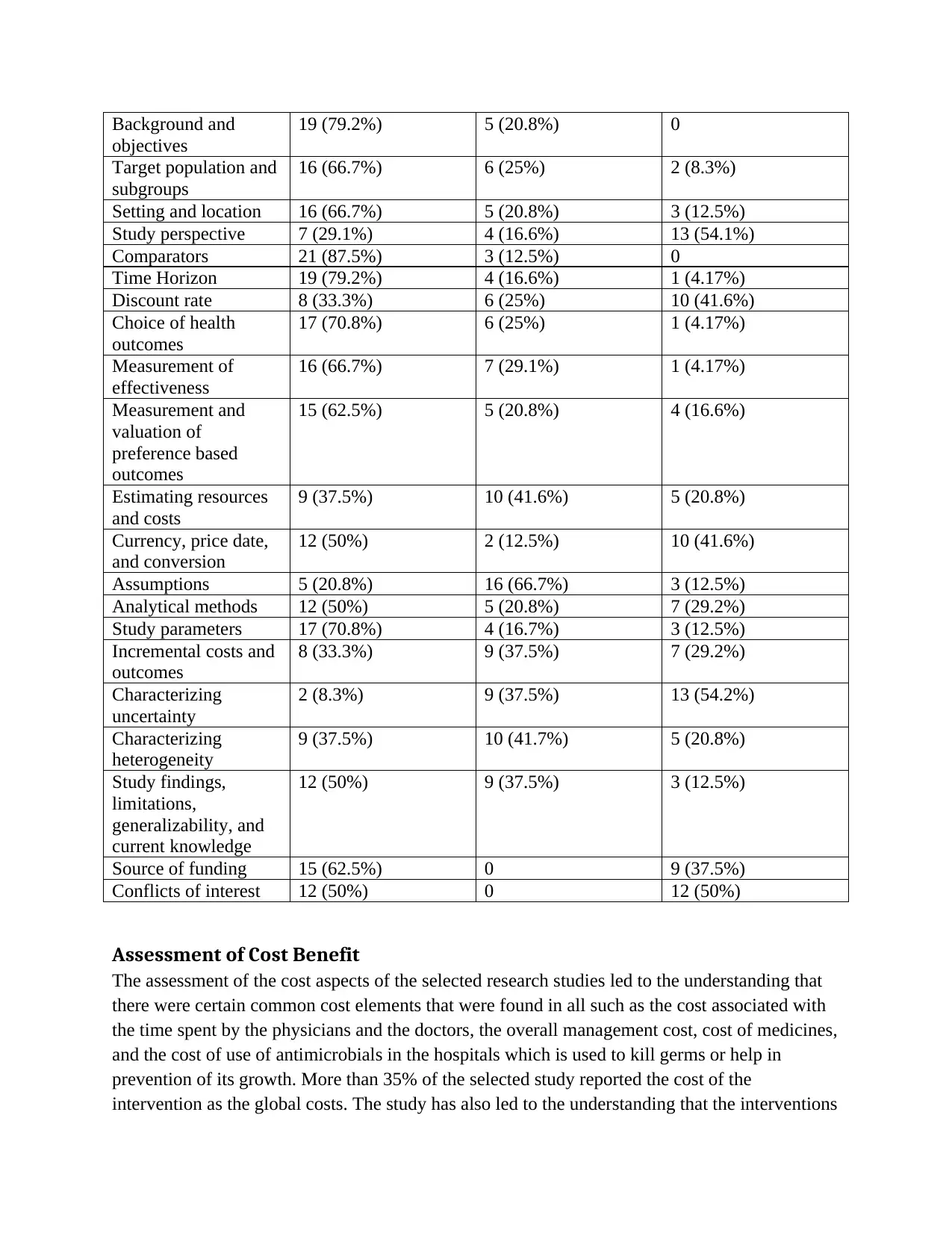
summarizes the examination of report quality of the selected research studies as per the CHEERS
statement (Husereau et al, 2013):
Number of Research Studies
Section/Item Good Reporting Not Good Reporting Completely Absent
Title 8 (33.3%) 4 (16.6%) 12 (50.0%)
Abstract 8 (33.3%) 13 (54.1%) 3 (12.5%)
the database to collect the data related to cost. The methods used for calculating the costs for the
studies varied between the research papers. It has been found that two research studies used
accounting method, seven used mixed method, and the rest used other methods. As per the
discounting is concerned, only seven research studies have been found depicting this, the rest of
them either not stated explicitly or they did not use this approach. Therefore surety can be placed
only on the 29% of the papers. Moreover, other than the hand hygiene and educational approach
of intervention mentioned above, there were few that have been utilized by various research
studies such as antibiotic prophylaxis, skin preparation, and others. The age group that were
picked for the interventions were mostly of the mixed category as thirteen research paper (54%)
showed. However, few of the research paper had specific focus with either children or adult. Few
of the research studies did not state the age group of their respondents. The duration of the
intervention varied drastically from one research study to another. It varied from less than five
months to the maximum of more than two years.
Quality as per CHEERS statement
The CHEERs statement was used to understand the quality of the 24 research studies selected for
the assessment. The study helped identify that not all the research papers were based on the
CHEERS criteria. Moreover, it has been found that few were partially fitting the criteria while
few were complete unfit. Few of the research studies have been found completely fitting the
criteria. The researcher was able to identify the 50% of the research studies as economic
evaluation just through their titles. Along with that, around 80% (n=19) of the research studies
have been found using the clear research questions. Also, the same percentage of research papers
also mentioned background related to the research. Near to 70% of the research papers (n=16)
have mentioned the target population or the groups considered for the studies. It has been found
that out of the 24 studies, there were many that had not shown their orientation of the study. In
addition, many of them had missing cost perspective. The number of such papers stood at 11
(45%). Though it has been found that few of the research studies did mention these two aspects,
but the quality of the report were not up to the mark.
From the total 24 studies, it has been found that there were nine research studies (37.5%) that
discussed appropriately about the approach they considered for the resource estimation and cost
calculation. Along with this, it has been found that more than 40% of the studies did not consider
the use of price adjustment in their studies. Also, more than half of the research studies had not
discussed any aspect covering the conflicts of interest scenario. The table given below
summarizes the examination of report quality of the selected research studies as per the CHEERS
statement (Husereau et al, 2013):
Number of Research Studies
Section/Item Good Reporting Not Good Reporting Completely Absent
Title 8 (33.3%) 4 (16.6%) 12 (50.0%)
Abstract 8 (33.3%) 13 (54.1%) 3 (12.5%)
⊘ This is a preview!⊘
Do you want full access?
Subscribe today to unlock all pages.
Trusted by 1+ million students worldwide
Background and
objectives
19 (79.2%) 5 (20.8%) 0
Target population and
subgroups
16 (66.7%) 6 (25%) 2 (8.3%)
Setting and location 16 (66.7%) 5 (20.8%) 3 (12.5%)
Study perspective 7 (29.1%) 4 (16.6%) 13 (54.1%)
Comparators 21 (87.5%) 3 (12.5%) 0
Time Horizon 19 (79.2%) 4 (16.6%) 1 (4.17%)
Discount rate 8 (33.3%) 6 (25%) 10 (41.6%)
Choice of health
outcomes
17 (70.8%) 6 (25%) 1 (4.17%)
Measurement of
effectiveness
16 (66.7%) 7 (29.1%) 1 (4.17%)
Measurement and
valuation of
preference based
outcomes
15 (62.5%) 5 (20.8%) 4 (16.6%)
Estimating resources
and costs
9 (37.5%) 10 (41.6%) 5 (20.8%)
Currency, price date,
and conversion
12 (50%) 2 (12.5%) 10 (41.6%)
Assumptions 5 (20.8%) 16 (66.7%) 3 (12.5%)
Analytical methods 12 (50%) 5 (20.8%) 7 (29.2%)
Study parameters 17 (70.8%) 4 (16.7%) 3 (12.5%)
Incremental costs and
outcomes
8 (33.3%) 9 (37.5%) 7 (29.2%)
Characterizing
uncertainty
2 (8.3%) 9 (37.5%) 13 (54.2%)
Characterizing
heterogeneity
9 (37.5%) 10 (41.7%) 5 (20.8%)
Study findings,
limitations,
generalizability, and
current knowledge
12 (50%) 9 (37.5%) 3 (12.5%)
Source of funding 15 (62.5%) 0 9 (37.5%)
Conflicts of interest 12 (50%) 0 12 (50%)
Assessment of Cost Benefit
The assessment of the cost aspects of the selected research studies led to the understanding that
there were certain common cost elements that were found in all such as the cost associated with
the time spent by the physicians and the doctors, the overall management cost, cost of medicines,
and the cost of use of antimicrobials in the hospitals which is used to kill germs or help in
prevention of its growth. More than 35% of the selected study reported the cost of the
intervention as the global costs. The study has also led to the understanding that the interventions
objectives
19 (79.2%) 5 (20.8%) 0
Target population and
subgroups
16 (66.7%) 6 (25%) 2 (8.3%)
Setting and location 16 (66.7%) 5 (20.8%) 3 (12.5%)
Study perspective 7 (29.1%) 4 (16.6%) 13 (54.1%)
Comparators 21 (87.5%) 3 (12.5%) 0
Time Horizon 19 (79.2%) 4 (16.6%) 1 (4.17%)
Discount rate 8 (33.3%) 6 (25%) 10 (41.6%)
Choice of health
outcomes
17 (70.8%) 6 (25%) 1 (4.17%)
Measurement of
effectiveness
16 (66.7%) 7 (29.1%) 1 (4.17%)
Measurement and
valuation of
preference based
outcomes
15 (62.5%) 5 (20.8%) 4 (16.6%)
Estimating resources
and costs
9 (37.5%) 10 (41.6%) 5 (20.8%)
Currency, price date,
and conversion
12 (50%) 2 (12.5%) 10 (41.6%)
Assumptions 5 (20.8%) 16 (66.7%) 3 (12.5%)
Analytical methods 12 (50%) 5 (20.8%) 7 (29.2%)
Study parameters 17 (70.8%) 4 (16.7%) 3 (12.5%)
Incremental costs and
outcomes
8 (33.3%) 9 (37.5%) 7 (29.2%)
Characterizing
uncertainty
2 (8.3%) 9 (37.5%) 13 (54.2%)
Characterizing
heterogeneity
9 (37.5%) 10 (41.7%) 5 (20.8%)
Study findings,
limitations,
generalizability, and
current knowledge
12 (50%) 9 (37.5%) 3 (12.5%)
Source of funding 15 (62.5%) 0 9 (37.5%)
Conflicts of interest 12 (50%) 0 12 (50%)
Assessment of Cost Benefit
The assessment of the cost aspects of the selected research studies led to the understanding that
there were certain common cost elements that were found in all such as the cost associated with
the time spent by the physicians and the doctors, the overall management cost, cost of medicines,
and the cost of use of antimicrobials in the hospitals which is used to kill germs or help in
prevention of its growth. More than 35% of the selected study reported the cost of the
intervention as the global costs. The study has also led to the understanding that the interventions
Paraphrase This Document
Need a fresh take? Get an instant paraphrase of this document with our AI Paraphraser
for the prevention of HAIs help in savings as it has been reported by 19 of the 24 selected papers.
It has been found that on average USD12.5 thousands is being saved on monthly basis. In
addition, as per the savings to cost ratio is concerned, it has been identified that most of the
research studies have reached positive results, that is, greater than one. It shows that the
interventions to ensure control of the infections can be considered as the justified as per the
economic aspect is concerned. In addition to this, it has been identified that the research studies
that have considered various infections under its study showed greater ratio in comparison to the
studies that have used only one form of Hospital Acquired Infection. Moreover, the same
difference can be seen if the number of patients are considered. The study where the number of
patients were low, identified high savings ratio than otherwise. It has also been found that the
programs that were targeted towards preventing the infections in the surgical sites identified high
savings ratio in comparison to the studies that were focused towards clinic wide study. The same
result is found in terms of surgical sites vs the ICUs. Apart from these identifications, it has been
found that the studies that did not consider appropriate measures to evaluate the costs, showed
very high savings ratios. One thing can be inferred from here is that if the appropriate
measurements are not in place during the studies, then it leads to the overestimation.
The graph below compares the cost incurred in various research studies for the prevention of
HAIs. In the graph below, all the research papers have been represented by a unique paper id
which has been added to all the 24 research papers in the reference section. The research paper
begins with 01 to 24. While generating the cost data from these research papers it has been found
that only 16 of the papers have both the costs, that is, intervention and the saving costs. In the
rest of the rest of the 8 research papers, either one of the costs were missing or the cost element
was not applicable. The bar graph below shows the comparison between the intervention cost
and saving costs collected from 16 research papers. Here, it is clearly visible that out of the 16
research papers, only two of them has shown negative cost savings. The rest have shown positive
cost savings. In some cases, such as paper id 08, 15, and 17, significant cost savings can be
found.
It has been found that on average USD12.5 thousands is being saved on monthly basis. In
addition, as per the savings to cost ratio is concerned, it has been identified that most of the
research studies have reached positive results, that is, greater than one. It shows that the
interventions to ensure control of the infections can be considered as the justified as per the
economic aspect is concerned. In addition to this, it has been identified that the research studies
that have considered various infections under its study showed greater ratio in comparison to the
studies that have used only one form of Hospital Acquired Infection. Moreover, the same
difference can be seen if the number of patients are considered. The study where the number of
patients were low, identified high savings ratio than otherwise. It has also been found that the
programs that were targeted towards preventing the infections in the surgical sites identified high
savings ratio in comparison to the studies that were focused towards clinic wide study. The same
result is found in terms of surgical sites vs the ICUs. Apart from these identifications, it has been
found that the studies that did not consider appropriate measures to evaluate the costs, showed
very high savings ratios. One thing can be inferred from here is that if the appropriate
measurements are not in place during the studies, then it leads to the overestimation.
The graph below compares the cost incurred in various research studies for the prevention of
HAIs. In the graph below, all the research papers have been represented by a unique paper id
which has been added to all the 24 research papers in the reference section. The research paper
begins with 01 to 24. While generating the cost data from these research papers it has been found
that only 16 of the papers have both the costs, that is, intervention and the saving costs. In the
rest of the rest of the 8 research papers, either one of the costs were missing or the cost element
was not applicable. The bar graph below shows the comparison between the intervention cost
and saving costs collected from 16 research papers. Here, it is clearly visible that out of the 16
research papers, only two of them has shown negative cost savings. The rest have shown positive
cost savings. In some cases, such as paper id 08, 15, and 17, significant cost savings can be
found.
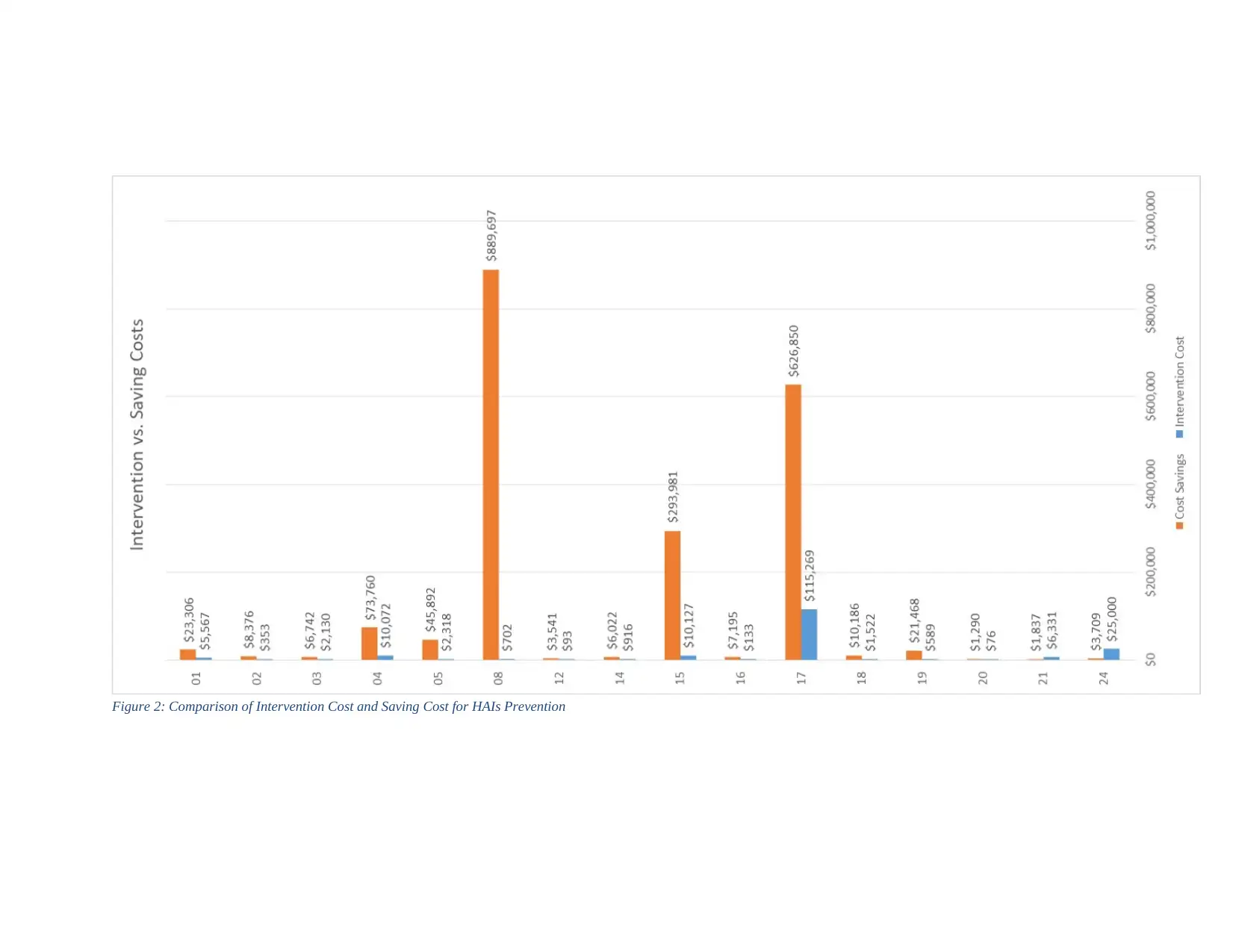
Figure 2: Comparison of Intervention Cost and Saving Cost for HAIs Prevention
⊘ This is a preview!⊘
Do you want full access?
Subscribe today to unlock all pages.
Trusted by 1+ million students worldwide

1 out of 18


Related Documents


Your All-in-One AI-Powered Toolkit for Academic Success.
+13062052269
info@desklib.com
Available 24*7 on WhatsApp / Email
![[object Object]](/_next/static/media/star-bottom.7253800d.svg)
Unlock your academic potential
Copyright © 2020–2026 A2Z Services. All Rights Reserved. Developed and managed by ZUCOL.