Halal Tourism: Strategies for Non-Muslim Countries, Hotels
VerifiedAdded on 2022/09/27
|32
|8501
|30
Report
AI Summary
This report delves into the multifaceted realm of halal tourism, focusing on the experiences of Muslim travelers and the strategies employed by hotels in non-Muslim countries. It begins by defining halal and its significance in Islamic culture, highlighting the increasing importance of halal services within the global travel industry. The report identifies key issues faced by Muslim travelers, such as access to halal food, prayer facilities, and culturally sensitive services. It then explores the current perceptions of hotels regarding halal services and the demand from Muslim tourists. A comprehensive literature review examines Islamic perspectives on tourism, halal hotel services, and the perception of tourists. The research methodology includes a proposed research model, hypotheses, and sampling techniques. The results section presents data analysis, findings from hypotheses testing, and managerial implications. The report concludes with a discussion of limitations, future research suggestions, and ethical standards for conducting research, providing a valuable resource for understanding and improving halal tourism practices.
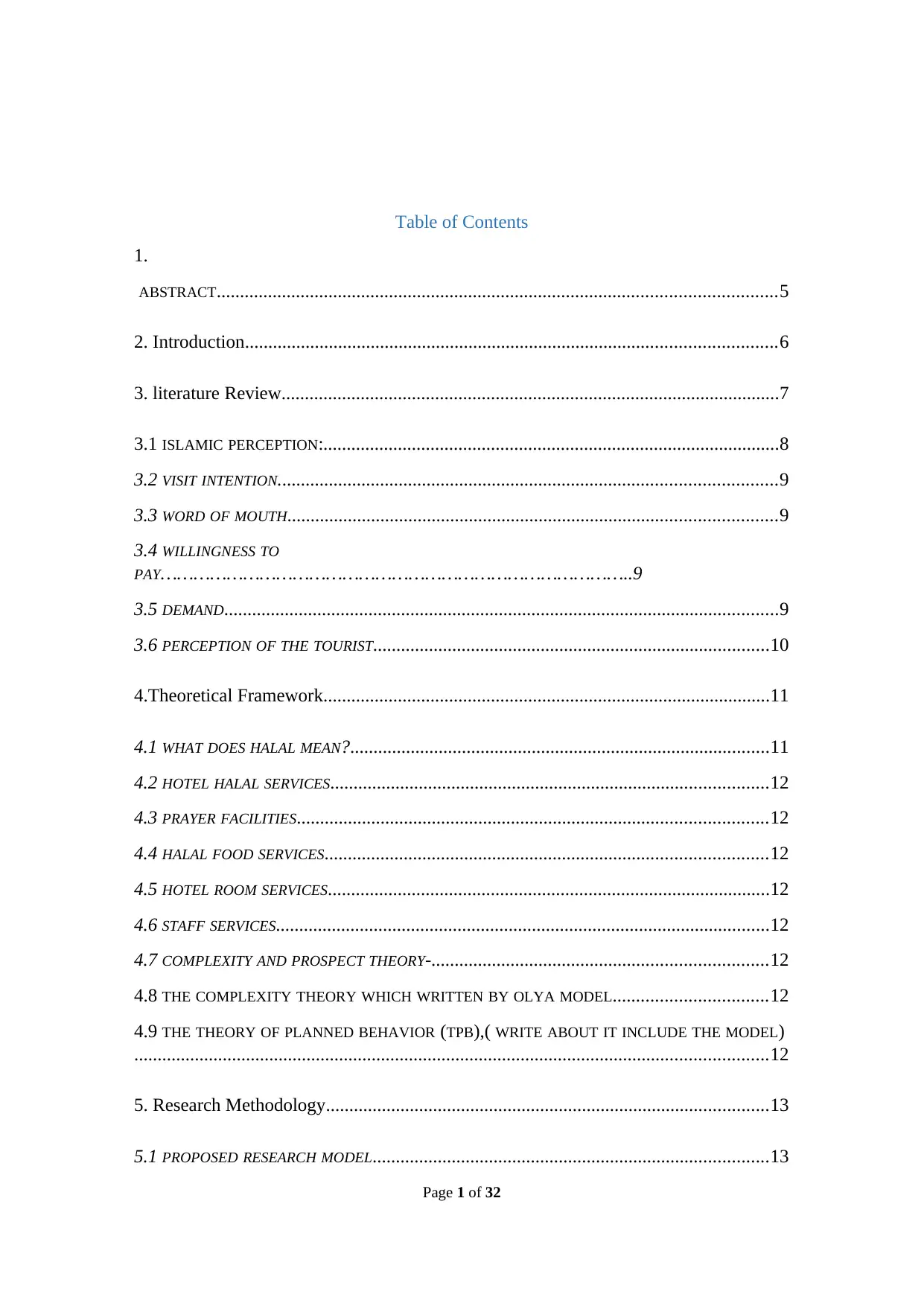
Table of Contents
1.
ABSTRACT........................................................................................................................5
2. Introduction..................................................................................................................6
3. literature Review...........................................................................................................7
3.1 ISLAMIC PERCEPTION:..................................................................................................8
3.2 VISIT INTENTION...........................................................................................................9
3.3 WORD OF MOUTH.........................................................................................................9
3.4 WILLINGNESS TO
PAY…………………………………………………………………………..9
3.5 DEMAND.......................................................................................................................9
3.6 PERCEPTION OF THE TOURIST.....................................................................................10
4.Theoretical Framework................................................................................................11
4.1 WHAT DOES HALAL MEAN?..........................................................................................11
4.2 HOTEL HALAL SERVICES..............................................................................................12
4.3 PRAYER FACILITIES.....................................................................................................12
4.4 HALAL FOOD SERVICES...............................................................................................12
4.5 HOTEL ROOM SERVICES...............................................................................................12
4.6 STAFF SERVICES..........................................................................................................12
4.7 COMPLEXITY AND PROSPECT THEORY-........................................................................12
4.8 THE COMPLEXITY THEORY WHICH WRITTEN BY OLYA MODEL.................................12
4.9 THE THEORY OF PLANNED BEHAVIOR (TPB),( WRITE ABOUT IT INCLUDE THE MODEL)
........................................................................................................................................12
5. Research Methodology...............................................................................................13
5.1 PROPOSED RESEARCH MODEL.....................................................................................13
Page 1 of 32
1.
ABSTRACT........................................................................................................................5
2. Introduction..................................................................................................................6
3. literature Review...........................................................................................................7
3.1 ISLAMIC PERCEPTION:..................................................................................................8
3.2 VISIT INTENTION...........................................................................................................9
3.3 WORD OF MOUTH.........................................................................................................9
3.4 WILLINGNESS TO
PAY…………………………………………………………………………..9
3.5 DEMAND.......................................................................................................................9
3.6 PERCEPTION OF THE TOURIST.....................................................................................10
4.Theoretical Framework................................................................................................11
4.1 WHAT DOES HALAL MEAN?..........................................................................................11
4.2 HOTEL HALAL SERVICES..............................................................................................12
4.3 PRAYER FACILITIES.....................................................................................................12
4.4 HALAL FOOD SERVICES...............................................................................................12
4.5 HOTEL ROOM SERVICES...............................................................................................12
4.6 STAFF SERVICES..........................................................................................................12
4.7 COMPLEXITY AND PROSPECT THEORY-........................................................................12
4.8 THE COMPLEXITY THEORY WHICH WRITTEN BY OLYA MODEL.................................12
4.9 THE THEORY OF PLANNED BEHAVIOR (TPB),( WRITE ABOUT IT INCLUDE THE MODEL)
........................................................................................................................................12
5. Research Methodology...............................................................................................13
5.1 PROPOSED RESEARCH MODEL.....................................................................................13
Page 1 of 32

Paraphrase This Document
Need a fresh take? Get an instant paraphrase of this document with our AI Paraphraser
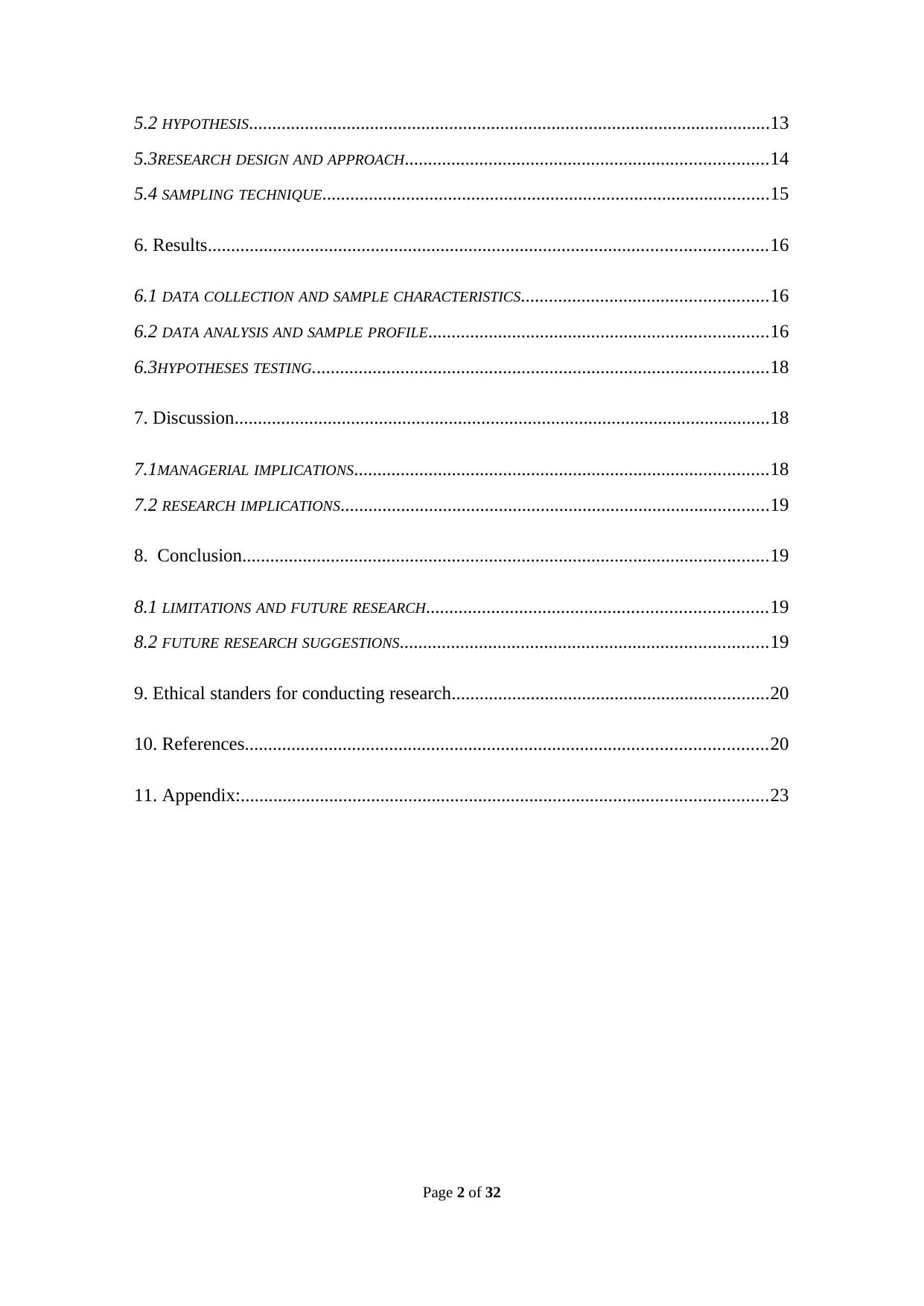
5.2 HYPOTHESIS................................................................................................................13
5.3RESEARCH DESIGN AND APPROACH..............................................................................14
5.4 SAMPLING TECHNIQUE................................................................................................15
6. Results........................................................................................................................16
6.1 DATA COLLECTION AND SAMPLE CHARACTERISTICS.....................................................16
6.2 DATA ANALYSIS AND SAMPLE PROFILE.........................................................................16
6.3HYPOTHESES TESTING..................................................................................................18
7. Discussion...................................................................................................................18
7.1MANAGERIAL IMPLICATIONS.........................................................................................18
7.2 RESEARCH IMPLICATIONS............................................................................................19
8. Conclusion.................................................................................................................19
8.1 LIMITATIONS AND FUTURE RESEARCH.........................................................................19
8.2 FUTURE RESEARCH SUGGESTIONS...............................................................................19
9. Ethical standers for conducting research....................................................................20
10. References................................................................................................................20
11. Appendix:.................................................................................................................23
Page 2 of 32
5.3RESEARCH DESIGN AND APPROACH..............................................................................14
5.4 SAMPLING TECHNIQUE................................................................................................15
6. Results........................................................................................................................16
6.1 DATA COLLECTION AND SAMPLE CHARACTERISTICS.....................................................16
6.2 DATA ANALYSIS AND SAMPLE PROFILE.........................................................................16
6.3HYPOTHESES TESTING..................................................................................................18
7. Discussion...................................................................................................................18
7.1MANAGERIAL IMPLICATIONS.........................................................................................18
7.2 RESEARCH IMPLICATIONS............................................................................................19
8. Conclusion.................................................................................................................19
8.1 LIMITATIONS AND FUTURE RESEARCH.........................................................................19
8.2 FUTURE RESEARCH SUGGESTIONS...............................................................................19
9. Ethical standers for conducting research....................................................................20
10. References................................................................................................................20
11. Appendix:.................................................................................................................23
Page 2 of 32

Page 3 of 32
⊘ This is a preview!⊘
Do you want full access?
Subscribe today to unlock all pages.

Trusted by 1+ million students worldwide
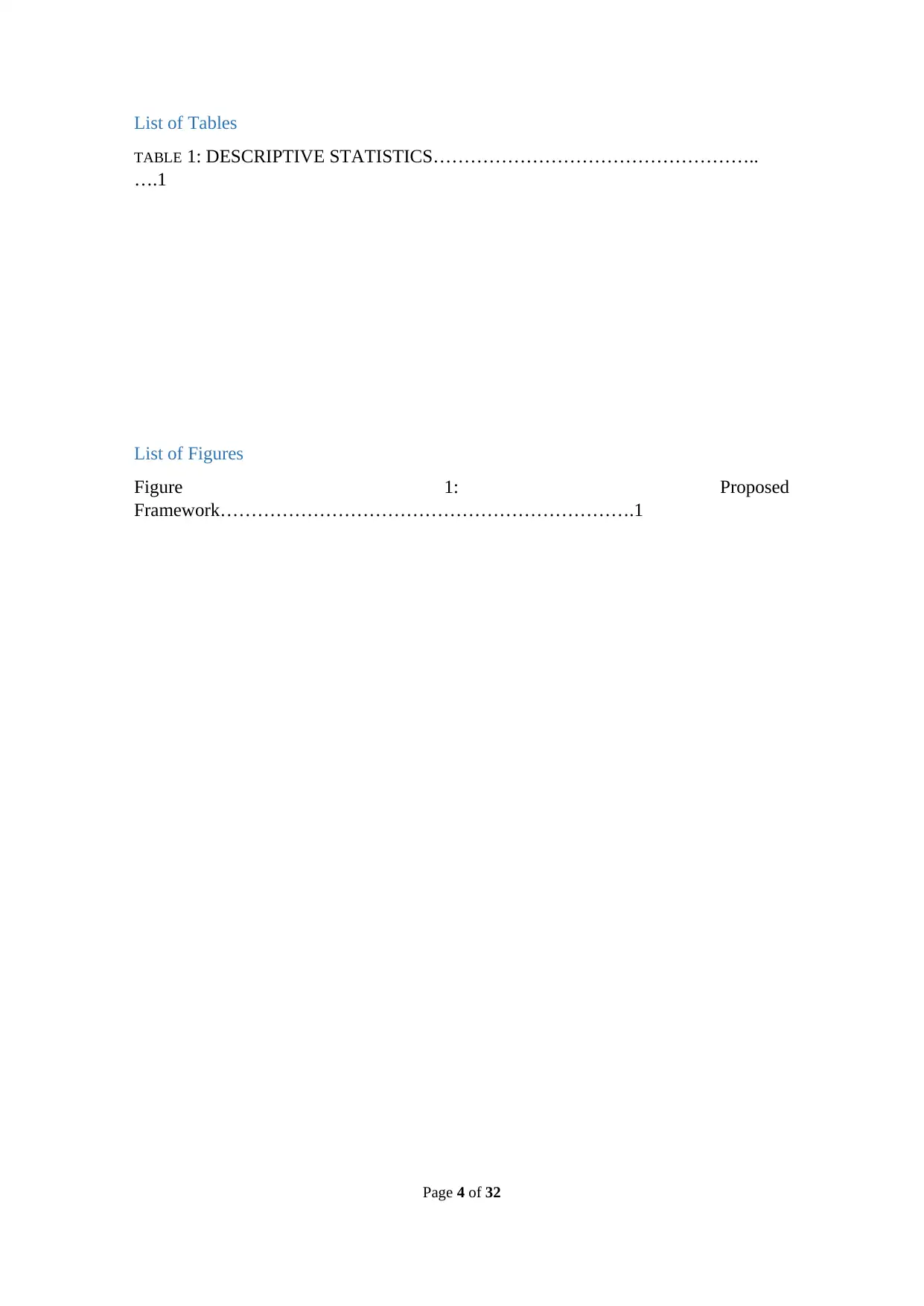
List of Tables
TABLE 1: DESCRIPTIVE STATISTICS……………………………………………..
….1
List of Figures
Figure 1: Proposed
Framework………………………………………………………….1
Page 4 of 32
TABLE 1: DESCRIPTIVE STATISTICS……………………………………………..
….1
List of Figures
Figure 1: Proposed
Framework………………………………………………………….1
Page 4 of 32
Paraphrase This Document
Need a fresh take? Get an instant paraphrase of this document with our AI Paraphraser
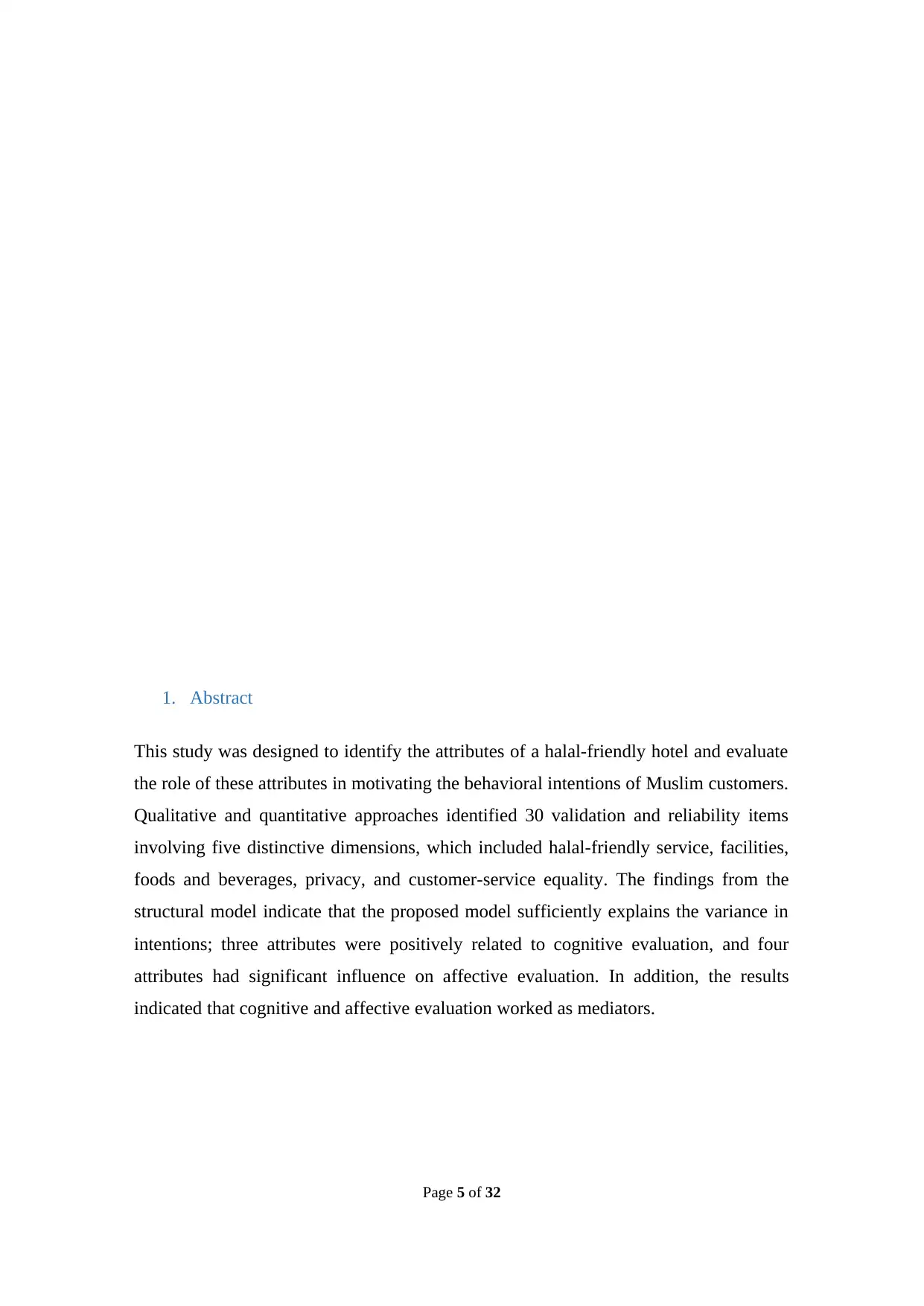
1. Abstract
This study was designed to identify the attributes of a halal-friendly hotel and evaluate
the role of these attributes in motivating the behavioral intentions of Muslim customers.
Qualitative and quantitative approaches identified 30 validation and reliability items
involving five distinctive dimensions, which included halal-friendly service, facilities,
foods and beverages, privacy, and customer-service equality. The findings from the
structural model indicate that the proposed model sufficiently explains the variance in
intentions; three attributes were positively related to cognitive evaluation, and four
attributes had significant influence on affective evaluation. In addition, the results
indicated that cognitive and affective evaluation worked as mediators.
Page 5 of 32
This study was designed to identify the attributes of a halal-friendly hotel and evaluate
the role of these attributes in motivating the behavioral intentions of Muslim customers.
Qualitative and quantitative approaches identified 30 validation and reliability items
involving five distinctive dimensions, which included halal-friendly service, facilities,
foods and beverages, privacy, and customer-service equality. The findings from the
structural model indicate that the proposed model sufficiently explains the variance in
intentions; three attributes were positively related to cognitive evaluation, and four
attributes had significant influence on affective evaluation. In addition, the results
indicated that cognitive and affective evaluation worked as mediators.
Page 5 of 32
2. Introduction
Considering the fact that religion is the key fundamental features of the human
culture which is very much directed with our lifestyle as well as our preferences. While
considering the religious aspects of Islam it is noticed that, Muslims are very much
influenced by the concept of halal services and by knowing the fact the Muslims make
up one of the wildest developing divisions of the world travel industry it is very
essential to effectively analyze the significance of the halal services into the hotel and
travel industry (Han et al., 2019).
Followed by these identifications it is noticed that among the Muslims halal
culture is very much the essential as they rely too much on the halal services. Making
allowance to this concern it is noticed that among the other service sectors tourism
sector is one of the largest growing sectors with respect to profits, business growth and
staffing opportunities. Statistics has proven that tourism industries contributes almost of
9% of total domestic products however, while focusing on the contribution of Muslim
nations it is noticed that they only contributes 10% to the global tourism growth
(Battour & Ismail, 2016). However, considering the fact the Muslim populations are
increasing day by day thus it is very essential for the hotel industries to catch the
Page 6 of 32
Considering the fact that religion is the key fundamental features of the human
culture which is very much directed with our lifestyle as well as our preferences. While
considering the religious aspects of Islam it is noticed that, Muslims are very much
influenced by the concept of halal services and by knowing the fact the Muslims make
up one of the wildest developing divisions of the world travel industry it is very
essential to effectively analyze the significance of the halal services into the hotel and
travel industry (Han et al., 2019).
Followed by these identifications it is noticed that among the Muslims halal
culture is very much the essential as they rely too much on the halal services. Making
allowance to this concern it is noticed that among the other service sectors tourism
sector is one of the largest growing sectors with respect to profits, business growth and
staffing opportunities. Statistics has proven that tourism industries contributes almost of
9% of total domestic products however, while focusing on the contribution of Muslim
nations it is noticed that they only contributes 10% to the global tourism growth
(Battour & Ismail, 2016). However, considering the fact the Muslim populations are
increasing day by day thus it is very essential for the hotel industries to catch the
Page 6 of 32
⊘ This is a preview!⊘
Do you want full access?
Subscribe today to unlock all pages.
Trusted by 1+ million students worldwide
market of Muslim travelers. Followed by these identifications it is noticed that the
Muslim traveler faces several problems whenever they visit any non-Muslim country.
Among those issues, conflicts related to the halal services are one of the most
significant issues that is faced by the Muslim people while travelling to non-Muslim
countries.
Followed by the identifications while analyzing the concept of halal for
Muslims it is noticed that Muslim people follows the culture as per the instructions
mentioned in Quran and according to the Shariah which is an Islamic law halal is
nothing but the lawful way of doing something. Along with these identifications it is
also noticed that similar to halal, haram is also one of the significant concepts for the
Muslims as haram is the opposite concept of halal. Considering these aspects, it is
identified that in order to perform lawful activities the Muslim people takes the
initiative towards halal services. Moreover, from this identifications it is noticed that
when Muslim people visits non-Muslim countries they expects halal services by the
hotels with the purpose to maintain their halal activities (Waehama et al., 2018).
Research Objectives:
Followed by these identifications the aim of this research is to discuss about the
key areas that are related to this research. The objectives of this research paper are
listed below:
To determine the current perceptions of hotel about halal services.
To identify the issues faced by Muslim traveler from non-Muslim countries.
To recommend effective strategies that will help to address the identified issues.
Research questions:
Identify the current perception of hotels in non-Muslim country about the
demand of halal services by Muslim tourist?
What are the issues faced by the Muslim tourists while travelling to any non-
Muslim country?
What strategy will help to address the identified issues with the purpose to meet
the demand of the Muslim tourists?
Page 7 of 32
Muslim traveler faces several problems whenever they visit any non-Muslim country.
Among those issues, conflicts related to the halal services are one of the most
significant issues that is faced by the Muslim people while travelling to non-Muslim
countries.
Followed by the identifications while analyzing the concept of halal for
Muslims it is noticed that Muslim people follows the culture as per the instructions
mentioned in Quran and according to the Shariah which is an Islamic law halal is
nothing but the lawful way of doing something. Along with these identifications it is
also noticed that similar to halal, haram is also one of the significant concepts for the
Muslims as haram is the opposite concept of halal. Considering these aspects, it is
identified that in order to perform lawful activities the Muslim people takes the
initiative towards halal services. Moreover, from this identifications it is noticed that
when Muslim people visits non-Muslim countries they expects halal services by the
hotels with the purpose to maintain their halal activities (Waehama et al., 2018).
Research Objectives:
Followed by these identifications the aim of this research is to discuss about the
key areas that are related to this research. The objectives of this research paper are
listed below:
To determine the current perceptions of hotel about halal services.
To identify the issues faced by Muslim traveler from non-Muslim countries.
To recommend effective strategies that will help to address the identified issues.
Research questions:
Identify the current perception of hotels in non-Muslim country about the
demand of halal services by Muslim tourist?
What are the issues faced by the Muslim tourists while travelling to any non-
Muslim country?
What strategy will help to address the identified issues with the purpose to meet
the demand of the Muslim tourists?
Page 7 of 32
Paraphrase This Document
Need a fresh take? Get an instant paraphrase of this document with our AI Paraphraser
3. Literature review
This literature review will focus of the discussion of all aspects that are relatable
with the selected research topic. The discussion will consist of a discussion on Islamic
perception, halal tourism as well as the discussion on the perception of non-Muslim
countries on the selected area of the research.
WHAT DOES HALAL MEAN?
The term Halal is an Islamic word used in the holy Quran which means any act
that is permitted by Islamic Law. Haram on the other hand is just opposite to the Halal,
meaning something illegal, unlawful and prohibited by the Islamic law. The items
which are included in the Haram are the pork meat, carrion, blood, and any type of
inconsumable intoxicants. As per the Islamic law, the act of halal and haram must be
applied on all the objects such that the right and the wrong can be disintegrated
accordingly (Battour & Ismail, 2016). The Islamic law or the Sariah stares that the holy
Quran along with the Halal and Haram concept is highly effective as it provides a
direction and guidance to all the greater aspects of the life. It has been seen that by
abiding by the rules and regulations imposed by the Halal and Haram, it has been
possible for the people to avoid the impurities and toxic objects and stay safe and
healthy. According to the holy Sunnah, the prophetic tradition of the religion, by
following the halal and the haram one’s religion is saved along with his or her honor.
3.1 ISLAMIC PERCEPTION
According to the authors (Gabdrakhmanov et al., 2016), Muslim tourists are
attracted by several Muslim as well as non-Muslim countries offering services of Halal
tourism. Malaysia is considered as first country which initiated such type of tourism.
The halal tours need separate pools, food, entertainment, halal drinks, no music,
announcing of prayer time and prayer rooms. Work is done by whole industry for the
segment: cosmetics and food. Individual storehouses are used, so that halal products do
not come in contact to prohibited goods (Kamaruddin et al., 2012). It is remarkable that
still there is no certain definition of halal tourism. The product implies usually
accommodation services with respect to Islam norms. Though there are more clients of
hotel group who are non-Muslims, the halal hotels observe usually strict code for dress
and men cannot encounter with women in the public places. If institution gives services
Page 8 of 32
This literature review will focus of the discussion of all aspects that are relatable
with the selected research topic. The discussion will consist of a discussion on Islamic
perception, halal tourism as well as the discussion on the perception of non-Muslim
countries on the selected area of the research.
WHAT DOES HALAL MEAN?
The term Halal is an Islamic word used in the holy Quran which means any act
that is permitted by Islamic Law. Haram on the other hand is just opposite to the Halal,
meaning something illegal, unlawful and prohibited by the Islamic law. The items
which are included in the Haram are the pork meat, carrion, blood, and any type of
inconsumable intoxicants. As per the Islamic law, the act of halal and haram must be
applied on all the objects such that the right and the wrong can be disintegrated
accordingly (Battour & Ismail, 2016). The Islamic law or the Sariah stares that the holy
Quran along with the Halal and Haram concept is highly effective as it provides a
direction and guidance to all the greater aspects of the life. It has been seen that by
abiding by the rules and regulations imposed by the Halal and Haram, it has been
possible for the people to avoid the impurities and toxic objects and stay safe and
healthy. According to the holy Sunnah, the prophetic tradition of the religion, by
following the halal and the haram one’s religion is saved along with his or her honor.
3.1 ISLAMIC PERCEPTION
According to the authors (Gabdrakhmanov et al., 2016), Muslim tourists are
attracted by several Muslim as well as non-Muslim countries offering services of Halal
tourism. Malaysia is considered as first country which initiated such type of tourism.
The halal tours need separate pools, food, entertainment, halal drinks, no music,
announcing of prayer time and prayer rooms. Work is done by whole industry for the
segment: cosmetics and food. Individual storehouses are used, so that halal products do
not come in contact to prohibited goods (Kamaruddin et al., 2012). It is remarkable that
still there is no certain definition of halal tourism. The product implies usually
accommodation services with respect to Islam norms. Though there are more clients of
hotel group who are non-Muslims, the halal hotels observe usually strict code for dress
and men cannot encounter with women in the public places. If institution gives services
Page 8 of 32
to both Muslims as well as non-Muslims, every equipment, food supplies and personnel
must be divided in two sections (Nisthar & Mustafa, 2019). Against background of
such trend, several hotels tend in tailoring the services for the Muslim visitors.
Intentions for developing halal hotel extend beyond Muslim countries. Untapped and
huge market is ceasing slowly for being purely niche market. In 2009, enterprising
Muslims’ team, top managers of leading travel organizations and largest companies of
world, proposed idea to arrange tourism along with recreation with respect to Islam’s
rules (Olya & Al-ansi, 2018). Halal resorts give separate swimming pools, beaches and
spa facilities for men as well as women, along with swimming pools and beaches for
the families with dress code of Islam. Every food complies with the halal standards,
restaurants and cafes offer soft drinks only and there is availability of prayer premises.
Entertainment programs also are consistent with Islam’s norms and the villas are
designed specifically for the Muslim families. Additionally with comfortable interior,
there are huge swimming pools along with the sun decks that are fully protected from
the prying eyes, which allows Muslim families relaxation as well as enjoy the beautiful
view of nature and sea (Ainin et al., 2020). Halal tourism is new product within tourism
industry that is geared for Muslim families abiding by Islam’s rules.
3.2 HOTEL HALAL SERVICES
3.3 PRAYER FACILITIES
3.4 HALAL FOOD SERVICES
3.5 PERCEPTION OF THE TOURIST
According to the paper by authors (Shakona et al., 2015), there are seven beliefs
of Islam. These beliefs are; belief in Allah, belief in Allah’s messengers, belief in
Angels, belief in Allah’s books, belief in the last day, belief in the divine decree and
Page 9 of 32
must be divided in two sections (Nisthar & Mustafa, 2019). Against background of
such trend, several hotels tend in tailoring the services for the Muslim visitors.
Intentions for developing halal hotel extend beyond Muslim countries. Untapped and
huge market is ceasing slowly for being purely niche market. In 2009, enterprising
Muslims’ team, top managers of leading travel organizations and largest companies of
world, proposed idea to arrange tourism along with recreation with respect to Islam’s
rules (Olya & Al-ansi, 2018). Halal resorts give separate swimming pools, beaches and
spa facilities for men as well as women, along with swimming pools and beaches for
the families with dress code of Islam. Every food complies with the halal standards,
restaurants and cafes offer soft drinks only and there is availability of prayer premises.
Entertainment programs also are consistent with Islam’s norms and the villas are
designed specifically for the Muslim families. Additionally with comfortable interior,
there are huge swimming pools along with the sun decks that are fully protected from
the prying eyes, which allows Muslim families relaxation as well as enjoy the beautiful
view of nature and sea (Ainin et al., 2020). Halal tourism is new product within tourism
industry that is geared for Muslim families abiding by Islam’s rules.
3.2 HOTEL HALAL SERVICES
3.3 PRAYER FACILITIES
3.4 HALAL FOOD SERVICES
3.5 PERCEPTION OF THE TOURIST
According to the paper by authors (Shakona et al., 2015), there are seven beliefs
of Islam. These beliefs are; belief in Allah, belief in Allah’s messengers, belief in
Angels, belief in Allah’s books, belief in the last day, belief in the divine decree and
Page 9 of 32
⊘ This is a preview!⊘
Do you want full access?
Subscribe today to unlock all pages.
Trusted by 1+ million students worldwide
belief in the resurrection. A crucial role is played by behavioral practices to determine
where, how and when Muslims in USA will travel as well as use leisure time. Within
seven themes which reflect influences of the Islamic doctrines as well as practices on
travel behavior of Muslims, no difference was there in responses among those born in
USA and immigrant Muslims. The authors recognized ideological and political nature
of negative stereotypes that are associated with Muslims within USA (Michael et al.,
2017). It is observed that there is concern of Muslims about safety, especially while
travelling with woman wearing Hijab. From destination perspective, USA’s tourist
places should access viability to be Muslim friendly depending on ability for
accommodating religious beliefs as well as safety concerns of Muslim.
In spite of considerable growth in travel industry and tourist in Malaysia, few
barriers could be seen. Malaysia lags still behind all other leading destinations in
region, especially with respect to design appropriate strategy as well as being
concerned of satisfaction of halal tourist. Measuring satisfaction of halal tourist in
Malaysia is essential as satisfaction of halal tourist is quite crucial for successful
marketing (Stephens Balakrishnan et al., 2011). It is essential in ensuring that industry
of halal tourism gain significant development. This could be achieved through
managing quality of services for maintaining sustainable environment for halal tourism
as well as measuring satisfaction of Muslim tourists.
In the paper by (Butler, 2003), it is becoming totally clear that success within
growing halal tourism both internationally and domestically, results is issues of few
destinations not able in handling increase number at satisfactory level of Muslim
tourists. Muslim tourists avoid generally destinations which have risk of safety and
personal security issues (Alrwajfah et al., 2020). As for lack of awareness, there is no
trust upon big supermarkets which give halal meat, however they like to purchase the
halal meat from the smaller shops of local Muslim.
Muslim travelers of countries of Middle East like UAE, Qatar, Oman and Saudi
Arabia are top paying tourists within South Korea. Due to halal tourism’s growth
within South Korea, demands as well as needs of Muslim travelers while traveling
within South Korea also have been increased substantially with difficulties that are
related to facilities, accommodations, social environment and food (Han et al., 2019).
Halal restaurants as well as praying rooms gradually have increased in few tourism
Page 10 of 32
where, how and when Muslims in USA will travel as well as use leisure time. Within
seven themes which reflect influences of the Islamic doctrines as well as practices on
travel behavior of Muslims, no difference was there in responses among those born in
USA and immigrant Muslims. The authors recognized ideological and political nature
of negative stereotypes that are associated with Muslims within USA (Michael et al.,
2017). It is observed that there is concern of Muslims about safety, especially while
travelling with woman wearing Hijab. From destination perspective, USA’s tourist
places should access viability to be Muslim friendly depending on ability for
accommodating religious beliefs as well as safety concerns of Muslim.
In spite of considerable growth in travel industry and tourist in Malaysia, few
barriers could be seen. Malaysia lags still behind all other leading destinations in
region, especially with respect to design appropriate strategy as well as being
concerned of satisfaction of halal tourist. Measuring satisfaction of halal tourist in
Malaysia is essential as satisfaction of halal tourist is quite crucial for successful
marketing (Stephens Balakrishnan et al., 2011). It is essential in ensuring that industry
of halal tourism gain significant development. This could be achieved through
managing quality of services for maintaining sustainable environment for halal tourism
as well as measuring satisfaction of Muslim tourists.
In the paper by (Butler, 2003), it is becoming totally clear that success within
growing halal tourism both internationally and domestically, results is issues of few
destinations not able in handling increase number at satisfactory level of Muslim
tourists. Muslim tourists avoid generally destinations which have risk of safety and
personal security issues (Alrwajfah et al., 2020). As for lack of awareness, there is no
trust upon big supermarkets which give halal meat, however they like to purchase the
halal meat from the smaller shops of local Muslim.
Muslim travelers of countries of Middle East like UAE, Qatar, Oman and Saudi
Arabia are top paying tourists within South Korea. Due to halal tourism’s growth
within South Korea, demands as well as needs of Muslim travelers while traveling
within South Korea also have been increased substantially with difficulties that are
related to facilities, accommodations, social environment and food (Han et al., 2019).
Halal restaurants as well as praying rooms gradually have increased in few tourism
Page 10 of 32
Paraphrase This Document
Need a fresh take? Get an instant paraphrase of this document with our AI Paraphraser
sites within South Korea. There are regulations of food labeling in most nations for
protecting the Halal certifications. After attacks on World Trade Center, Western
tourists’ number visiting the Islamic countries like Egypt, Jordan or Malaysia decreased
significantly. From perspective of economy, tourism’s expansion is assisted by Islamic
tourism in both Muslim as well as non-Muslim communities. From perspective of
culture, focus of Islamic tourism is on provision of tourism programs, facilities and
services that are Islamic friendly. Fancy fashion of tourism and Islam has reflected in
several directions of the geographic mobility within halal tourism.
4. Theoretical Framework
4.1 The theory of planned behavior (TPB),
According to (Jeaheng,2017) the behavioral intention is one of the most
important goals in hospitality which identify the tourist evaluation regarding the
services and products.
The behavioral intention had been indicated by Oliver (1999) which was
looking for a deeper level in tourist loyalty to repurchase the service or the product and
recommend it to others. Moreover, behavioral intention is a conception came from the
theory of planned behavior (TPB), the theory used to recognize the Muslim individual
behavior and to know their motivations regarding the product and the services provided
by non-Muslim country (Jeaheng,2017).
As Stated by (Jeaheng,2017), the behavioral intentions relate to consumer
repurchasing the same product and services and how the consumer have negative or
positive information, and their willingness to pay for the product or the services even if
it with higher amounts (Jeaheng,2017). In hotel halal tourism services, the behavioral
intention is used to indicate the Muslim loyalty in different filed for instant hotels and
restaurants. Therefore, behavior intention is important in hospitality productiveness, its
very important to understand the Muslims behavioral to deliver stronger understandings
of Muslims predilections.
Page 11 of 32
protecting the Halal certifications. After attacks on World Trade Center, Western
tourists’ number visiting the Islamic countries like Egypt, Jordan or Malaysia decreased
significantly. From perspective of economy, tourism’s expansion is assisted by Islamic
tourism in both Muslim as well as non-Muslim communities. From perspective of
culture, focus of Islamic tourism is on provision of tourism programs, facilities and
services that are Islamic friendly. Fancy fashion of tourism and Islam has reflected in
several directions of the geographic mobility within halal tourism.
4. Theoretical Framework
4.1 The theory of planned behavior (TPB),
According to (Jeaheng,2017) the behavioral intention is one of the most
important goals in hospitality which identify the tourist evaluation regarding the
services and products.
The behavioral intention had been indicated by Oliver (1999) which was
looking for a deeper level in tourist loyalty to repurchase the service or the product and
recommend it to others. Moreover, behavioral intention is a conception came from the
theory of planned behavior (TPB), the theory used to recognize the Muslim individual
behavior and to know their motivations regarding the product and the services provided
by non-Muslim country (Jeaheng,2017).
As Stated by (Jeaheng,2017), the behavioral intentions relate to consumer
repurchasing the same product and services and how the consumer have negative or
positive information, and their willingness to pay for the product or the services even if
it with higher amounts (Jeaheng,2017). In hotel halal tourism services, the behavioral
intention is used to indicate the Muslim loyalty in different filed for instant hotels and
restaurants. Therefore, behavior intention is important in hospitality productiveness, its
very important to understand the Muslims behavioral to deliver stronger understandings
of Muslims predilections.
Page 11 of 32
4.2 VISIT INTENTION.
According to (Som,2012), Intention to visit comes from consumption process’s
perspective, where the behavior was divided into three phases which is: pre-visit,
during the visit, and post visit. The behavioral of Muslins depend on the choice of their
destination to visit, following their evaluations which refer to their experience and
satisfaction, and the upcoming behavioral intentions to revisit which refer to the
Muslim judgment and the likeness of the same destination and willingness to
recommend it to their friends.
Several studies which had been mentioned by (Som,2012), indicate that the
tourism with positive satisfaction, which had positive traveling experience can
influence the tourism to repurchasing intention. The Satisfaction of Muslims is very
important for the Hotels which provide halal services in non-Muslims country’s it had a
positive impact on Muslims to revisit intention (Som,2012). According to (Zabkar et al.
(2010) he found that the complex relationship between both constructs and behavioral
intentions. Based on his model, he found that destination attribution can affect the
perceived quality which affects the satisfaction which can lead to revisit intention
(Zabkar et al. (2010). Both (Mostafavi Shirazi & Mat Som (2010) tested the effect of
destination attributes on the revisit intention. That repeating the visit is sign of the
tourist loyalty which is affected by the destination attributes. They found that the
diversification of attractions one of the most important condition to revisit (Mostafavi
Shirazi & Mat Som (2010).
4.3 WORD OF MOUTH
According to Shanka et al. (2002) confirmed that there is a positive effect on the
word of mouth on the destination chosen. For the Muslim who are interesting in
traveling they are interest in the recommendation of other Muslims who visit non-
Muslims hotels. The word of mouth is very critical in tourism marketing since the
words is reliable and this comes after the source of the potential tourists (Yoon &
Uysal, 2005).
Page 12 of 32
According to (Som,2012), Intention to visit comes from consumption process’s
perspective, where the behavior was divided into three phases which is: pre-visit,
during the visit, and post visit. The behavioral of Muslins depend on the choice of their
destination to visit, following their evaluations which refer to their experience and
satisfaction, and the upcoming behavioral intentions to revisit which refer to the
Muslim judgment and the likeness of the same destination and willingness to
recommend it to their friends.
Several studies which had been mentioned by (Som,2012), indicate that the
tourism with positive satisfaction, which had positive traveling experience can
influence the tourism to repurchasing intention. The Satisfaction of Muslims is very
important for the Hotels which provide halal services in non-Muslims country’s it had a
positive impact on Muslims to revisit intention (Som,2012). According to (Zabkar et al.
(2010) he found that the complex relationship between both constructs and behavioral
intentions. Based on his model, he found that destination attribution can affect the
perceived quality which affects the satisfaction which can lead to revisit intention
(Zabkar et al. (2010). Both (Mostafavi Shirazi & Mat Som (2010) tested the effect of
destination attributes on the revisit intention. That repeating the visit is sign of the
tourist loyalty which is affected by the destination attributes. They found that the
diversification of attractions one of the most important condition to revisit (Mostafavi
Shirazi & Mat Som (2010).
4.3 WORD OF MOUTH
According to Shanka et al. (2002) confirmed that there is a positive effect on the
word of mouth on the destination chosen. For the Muslim who are interesting in
traveling they are interest in the recommendation of other Muslims who visit non-
Muslims hotels. The word of mouth is very critical in tourism marketing since the
words is reliable and this comes after the source of the potential tourists (Yoon &
Uysal, 2005).
Page 12 of 32
⊘ This is a preview!⊘
Do you want full access?
Subscribe today to unlock all pages.
Trusted by 1+ million students worldwide

1 out of 32


Related Documents


Your All-in-One AI-Powered Toolkit for Academic Success.
+13062052269
info@desklib.com
Available 24*7 on WhatsApp / Email
![[object Object]](/_next/static/media/star-bottom.7253800d.svg)
Unlock your academic potential
Copyright © 2020–2026 A2Z Services. All Rights Reserved. Developed and managed by ZUCOL.