Health Protection, Prevention, and Promotion Plan for Family

Verified

Added on  2021/04/17

|13
|670
|51
Project
AI Summary
This project outlines a comprehensive health protection, prevention, and promotion plan, addressing health disparities through a family-focused approach. The plan incorporates routine health checkups, telehealth applications, and referrals to specialists like heart specialists and nutritionists. It includes strategies to prevent alcohol consumption, utilizing programs like Alcoholics Anonymous and motivational techniques, alongside referrals for medication and addressing spiritual concerns. Communication strategies emphasize the use of interpreters and cultural sensitivity to improve health information dissemination. Collaboration with interdisciplinary teams, including social workers and nutritionists, is highlighted. Cultural considerations involve identifying behaviors, customs, and practices to strengthen family relationships. The plan emphasizes education on healthy eating, hygiene, PPE use, regular checkups, and exercise. Adherence is maintained through surveys, interviews, and addressing transportation issues, with educational resources including technology, DVDs, and checklists to stimulate interest. The plan references several key academic sources.

Document Page
HEALTH
PROTECTION,
PREVENTION, AND
PROMOTION PLAN
Name of the student
Name of the university
Author Note
tabler-icon-diamond-filled.svg

Paraphrase This Document

Need a fresh take? Get an instant paraphrase of this document with our AI Paraphraser
Document Page
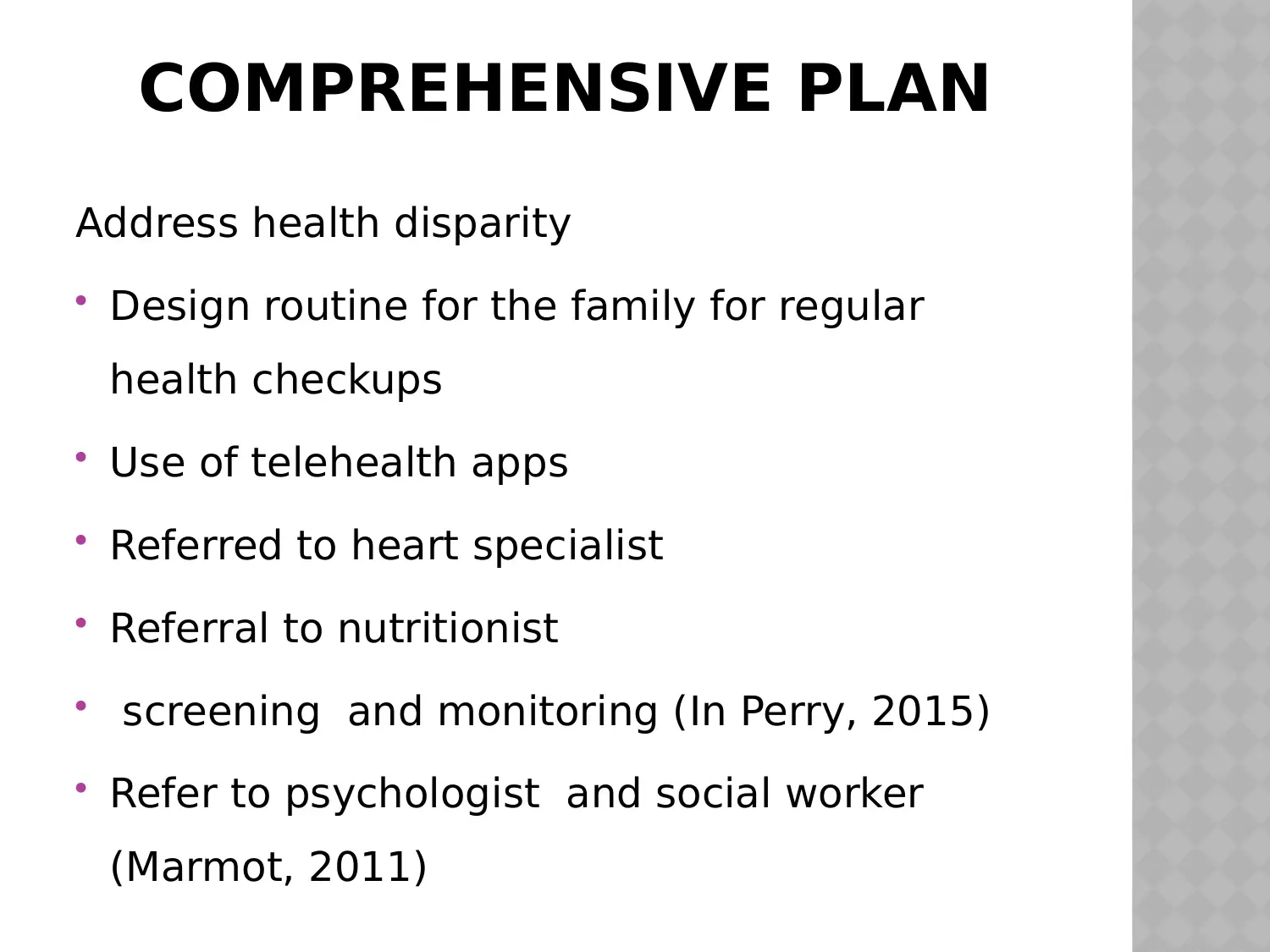
COMPREHENSIVE PLAN
Address health disparity
Design routine for the family for regular
health checkups
Use of telehealth apps
Referred to heart specialist
Referral to nutritionist
screening and monitoring (In Perry, 2015)
Refer to psychologist and social worker
(Marmot, 2011)
Document Page
Document Page
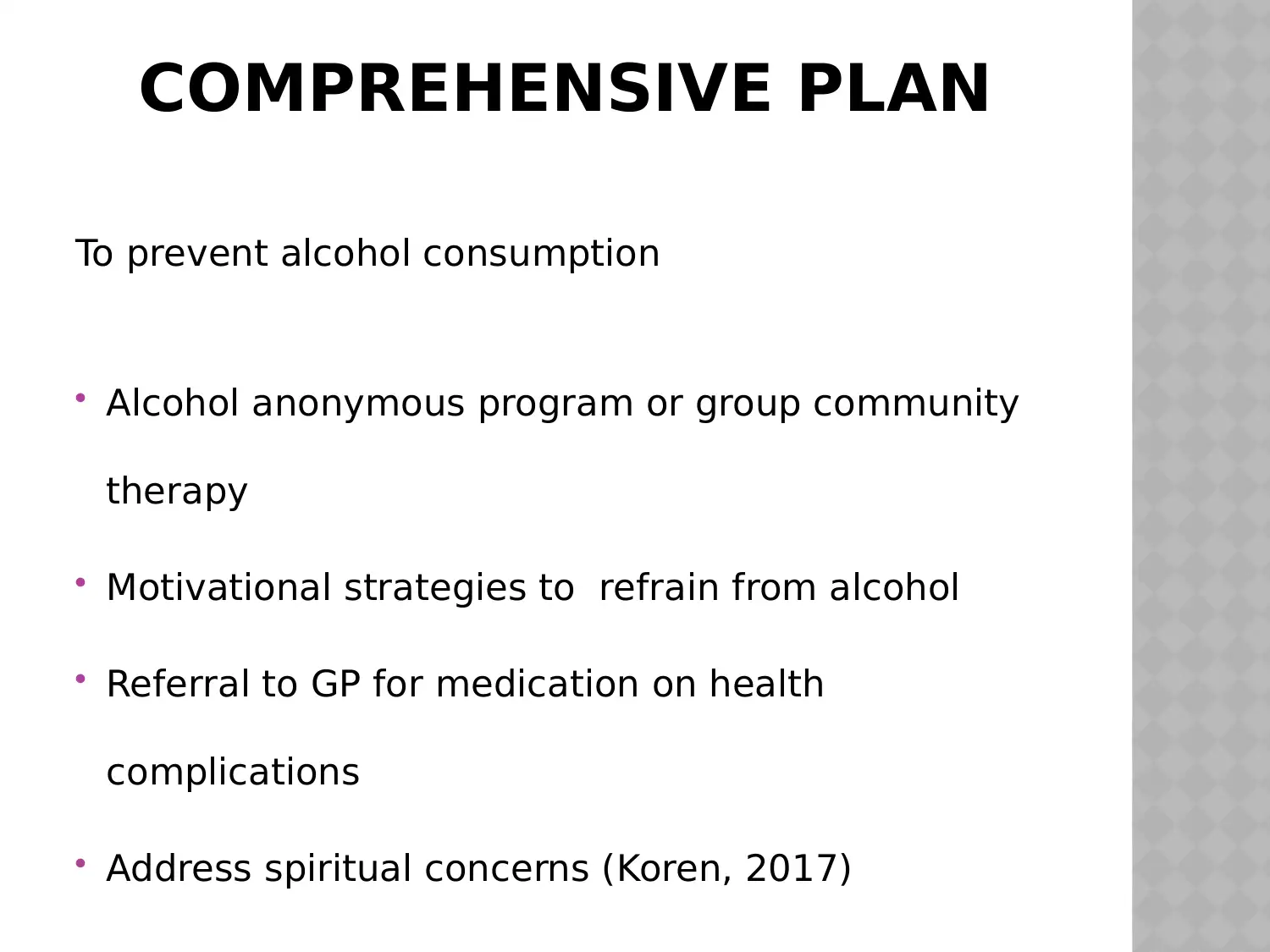
COMPREHENSIVE PLAN
To prevent alcohol consumption
Alcohol anonymous program or group community
therapy
Motivational strategies to refrain from alcohol
Referral to GP for medication on health
complications
Address spiritual concerns (Koren, 2017)
tabler-icon-diamond-filled.svg

Paraphrase This Document

Need a fresh take? Get an instant paraphrase of this document with our AI Paraphraser
Document Page
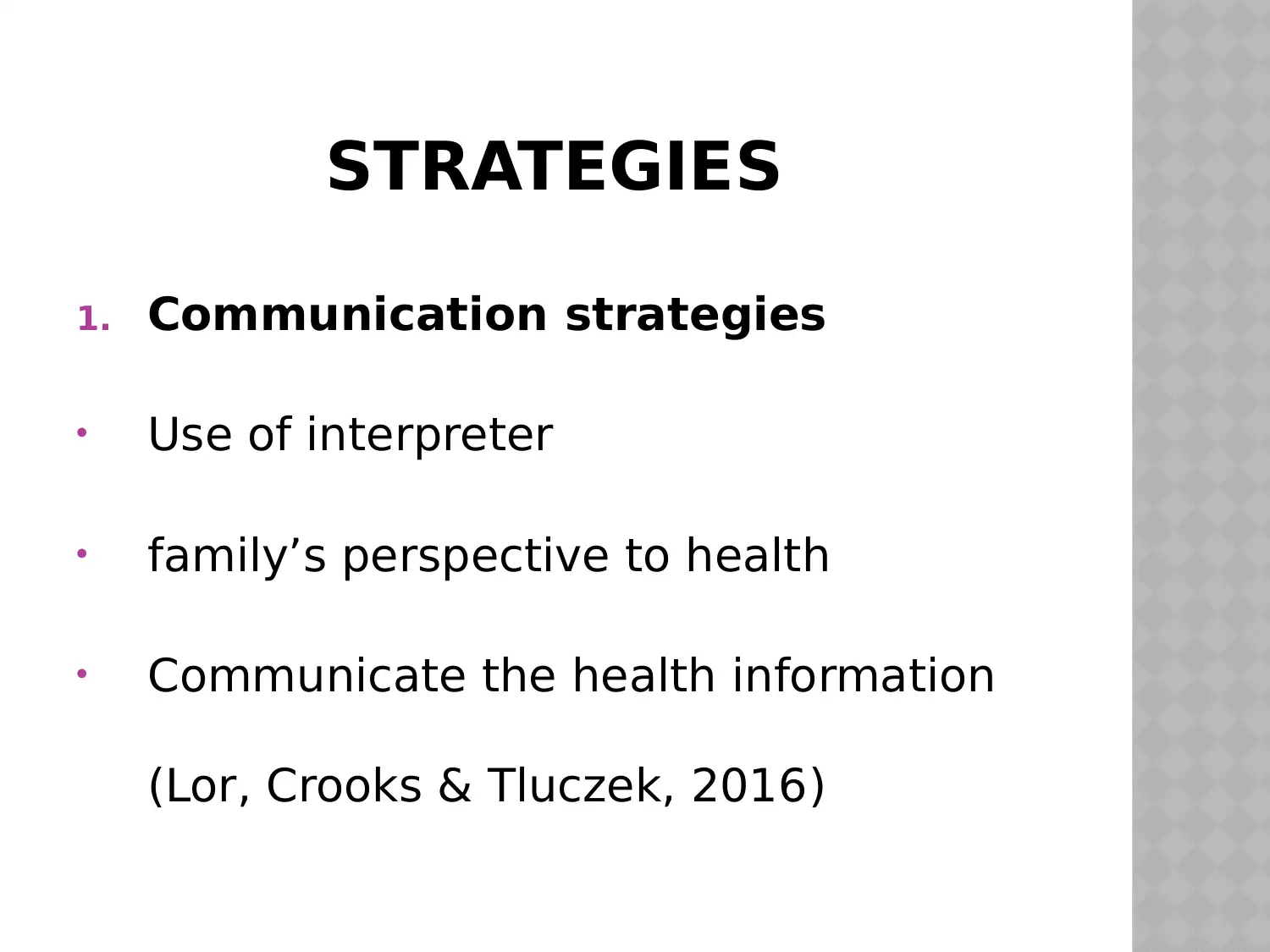
STRATEGIES
1. Communication strategies
Use of interpreter
family’s perspective to health
Communicate the health information
(Lor, Crooks & Tluczek, 2016)
Document Page
STRATEGIES
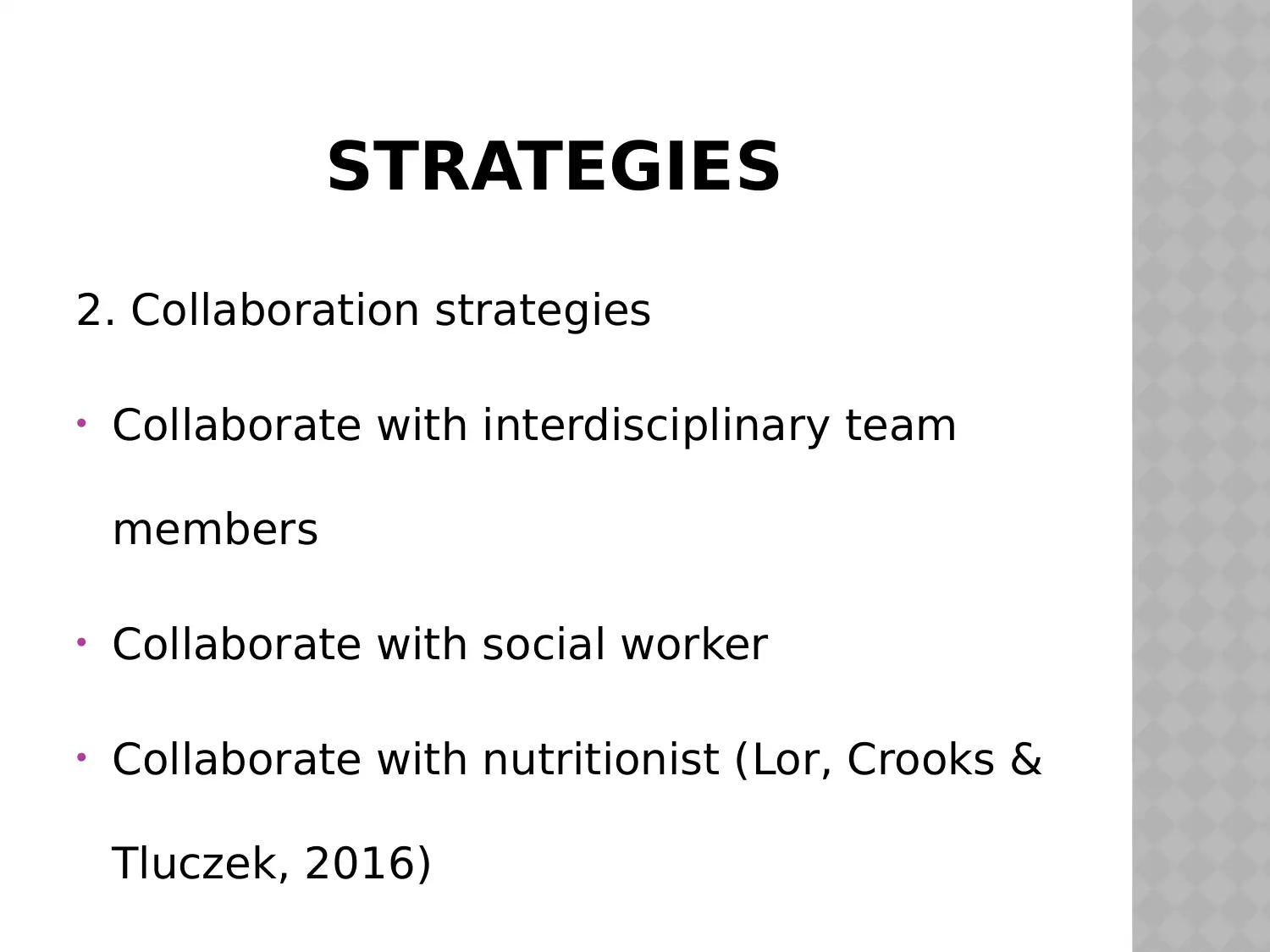
2. Collaboration strategies
Collaborate with interdisciplinary team
members
Collaborate with social worker
Collaborate with nutritionist (Lor, Crooks &
Tluczek, 2016)
Document Page
STRATEGIES
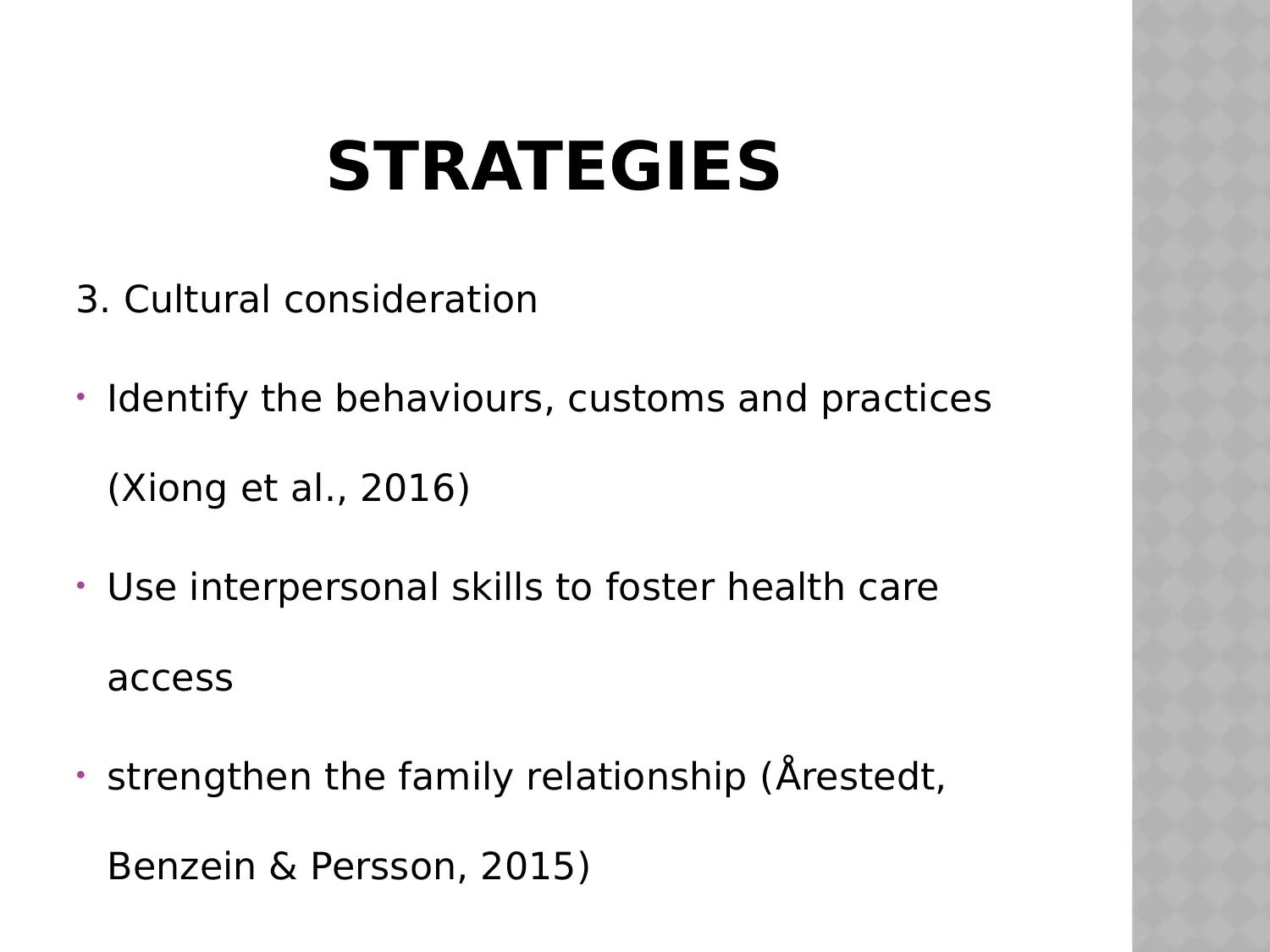
3. Cultural consideration
Identify the behaviours, customs and practices
(Xiong et al., 2016)
Use interpersonal skills to foster health care
access
strengthen the family relationship (Årestedt,
Benzein & Persson, 2015)
tabler-icon-diamond-filled.svg

Paraphrase This Document

Need a fresh take? Get an instant paraphrase of this document with our AI Paraphraser
Document Page
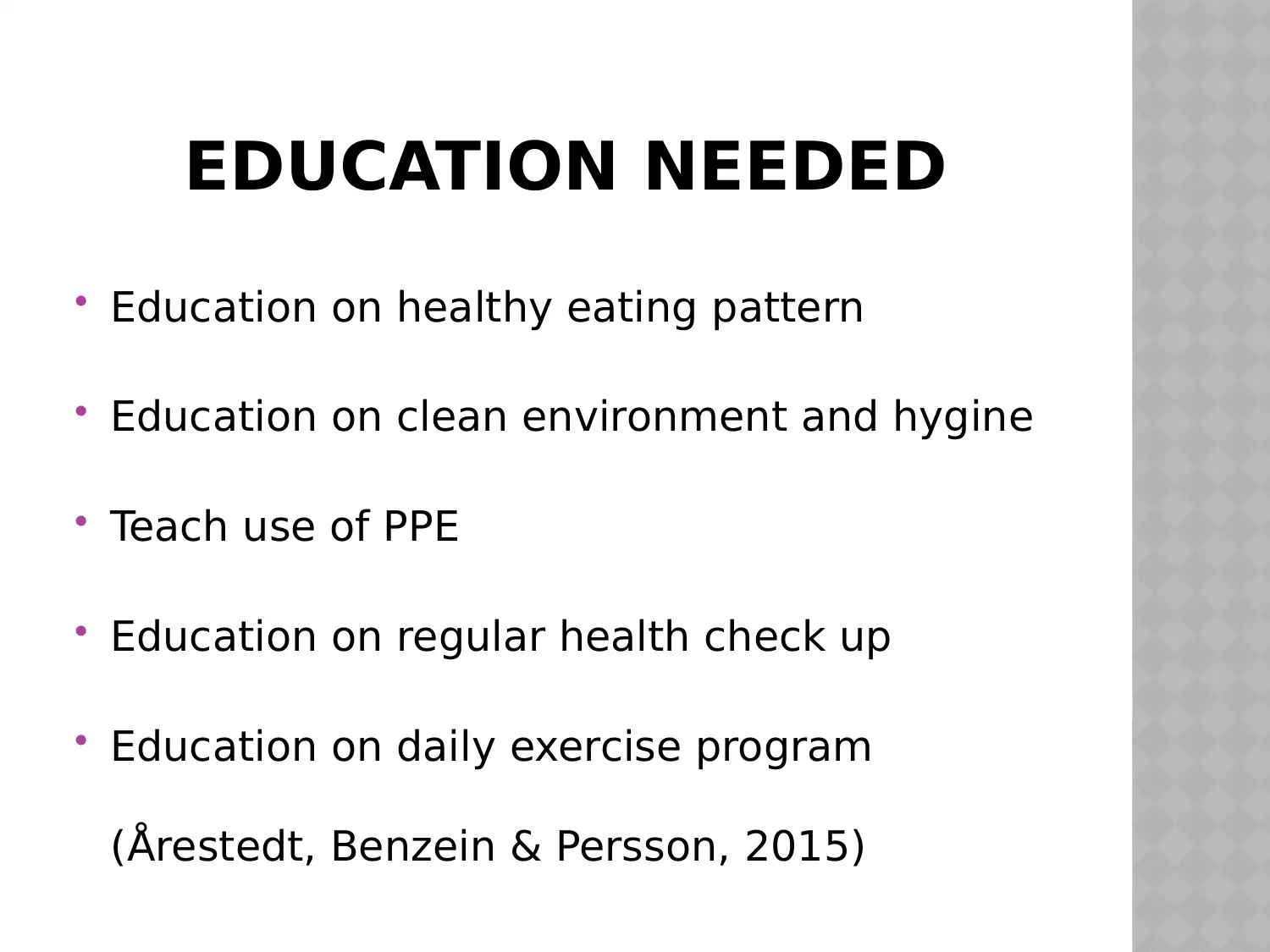
EDUCATION NEEDED
Education on healthy eating pattern
Education on clean environment and hygine
Teach use of PPE
Education on regular health check up
Education on daily exercise program
(Årestedt, Benzein & Persson, 2015)
Document Page
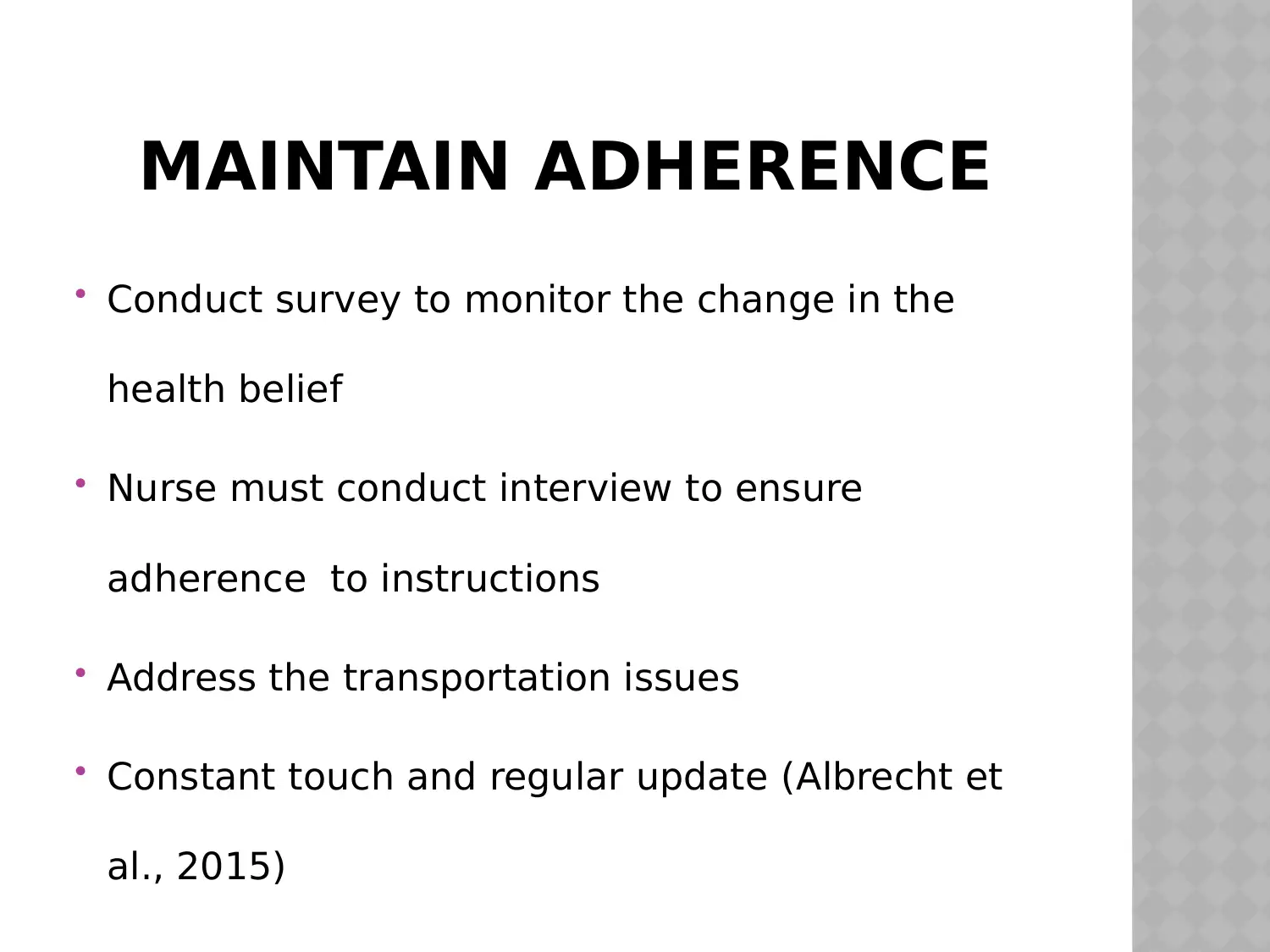
MAINTAIN ADHERENCE
Conduct survey to monitor the change in the
health belief
Nurse must conduct interview to ensure
adherence to instructions
Address the transportation issues
Constant touch and regular update (Albrecht et
al., 2015)
Document Page
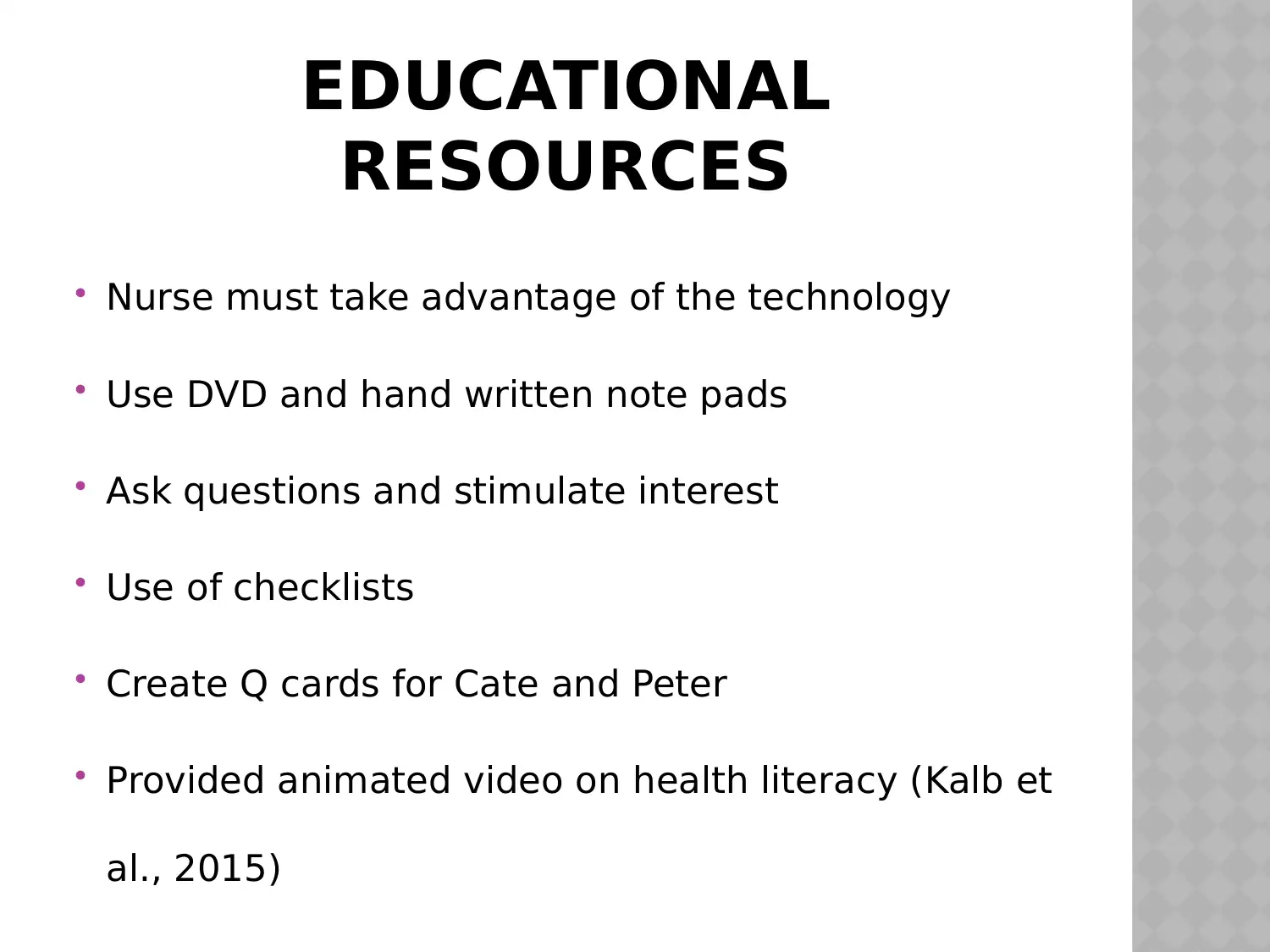
EDUCATIONAL
RESOURCES
Nurse must take advantage of the technology
Use DVD and hand written note pads
Ask questions and stimulate interest
Use of checklists
Create Q cards for Cate and Peter
Provided animated video on health literacy (Kalb et
al., 2015)
tabler-icon-diamond-filled.svg

Paraphrase This Document

Need a fresh take? Get an instant paraphrase of this document with our AI Paraphraser
Document Page
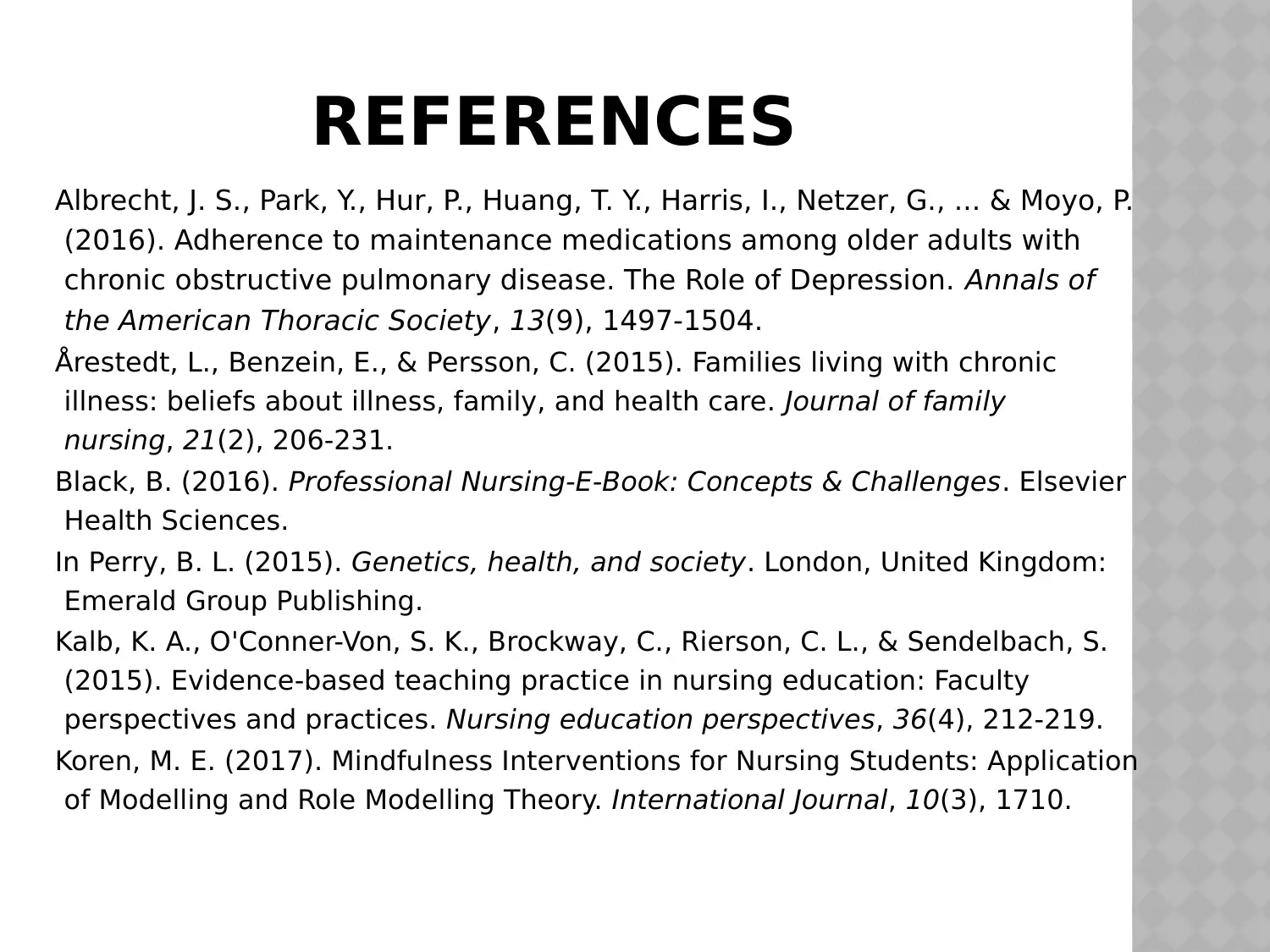
REFERENCES
Albrecht, J. S., Park, Y., Hur, P., Huang, T. Y., Harris, I., Netzer, G., ... & Moyo, P.
(2016). Adherence to maintenance medications among older adults with
chronic obstructive pulmonary disease. The Role of Depression. Annals of
the American Thoracic Society, 13(9), 1497-1504.
Årestedt, L., Benzein, E., & Persson, C. (2015). Families living with chronic
illness: beliefs about illness, family, and health care. Journal of family
nursing, 21(2), 206-231.
Black, B. (2016). Professional Nursing-E-Book: Concepts & Challenges. Elsevier
Health Sciences.
In Perry, B. L. (2015). Genetics, health, and society. London, United Kingdom:
Emerald Group Publishing.
Kalb, K. A., O'Conner-Von, S. K., Brockway, C., Rierson, C. L., & Sendelbach, S.
(2015). Evidence-based teaching practice in nursing education: Faculty
perspectives and practices. Nursing education perspectives, 36(4), 212-219.
Koren, M. E. (2017). Mindfulness Interventions for Nursing Students: Application
of Modelling and Role Modelling Theory. International Journal, 10(3), 1710.
Document Page
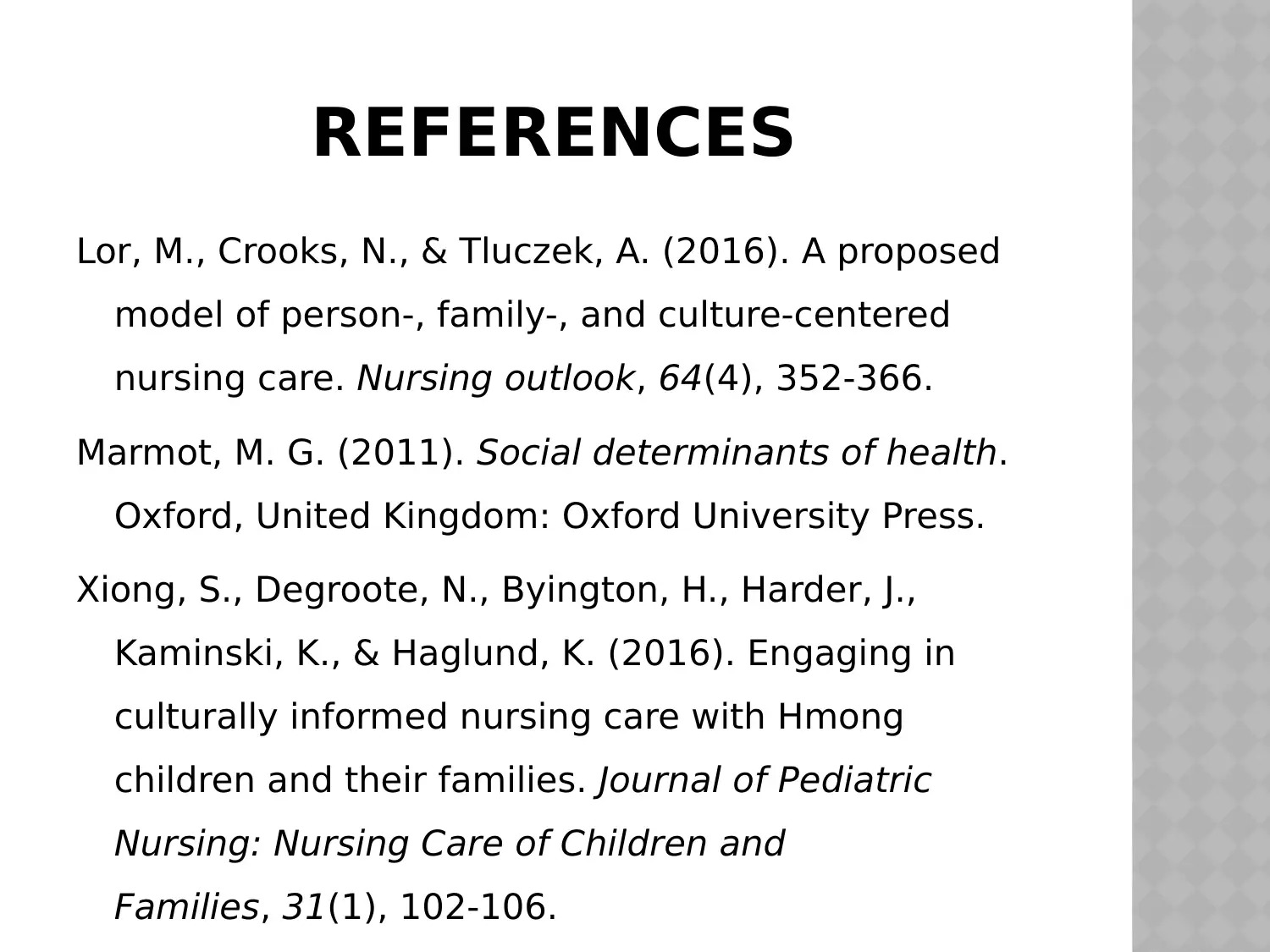
REFERENCES
Lor, M., Crooks, N., & Tluczek, A. (2016). A proposed
model of person-, family-, and culture-centered
nursing care. Nursing outlook, 64(4), 352-366.
Marmot, M. G. (2011). Social determinants of health.
Oxford, United Kingdom: Oxford University Press.
Xiong, S., Degroote, N., Byington, H., Harder, J.,
Kaminski, K., & Haglund, K. (2016). Engaging in
culturally informed nursing care with Hmong
children and their families. Journal of Pediatric
Nursing: Nursing Care of Children and
Families, 31(1), 102-106.
chevron_up_icon
1 out of 13
circle_padding
hide_on_mobile
zoom_out_icon
[object Object]