Analyzing Health and Safety Legislation in Health & Social Care

Verified

Added on  2023/06/07

|10
|614
|167
Report
AI Summary
This report provides an overview of health and safety legislation within the health and social care sector, focusing on the legislative framework, roles of employers and employees, consequences of non-compliance, and the importance of record keeping. It highlights the strategic principles guiding health and safety measures, emphasizing risk assessment and consultation. The report also details the potential penalties and reputational damage resulting from non-compliance, alongside the benefits of maintaining thorough records for information sharing and identifying long-term health effects. The conclusion underscores the importance of these measures in maintaining and regulating health and social care laws. Desklib provides similar solved assignments and study resources for students.
Document Page
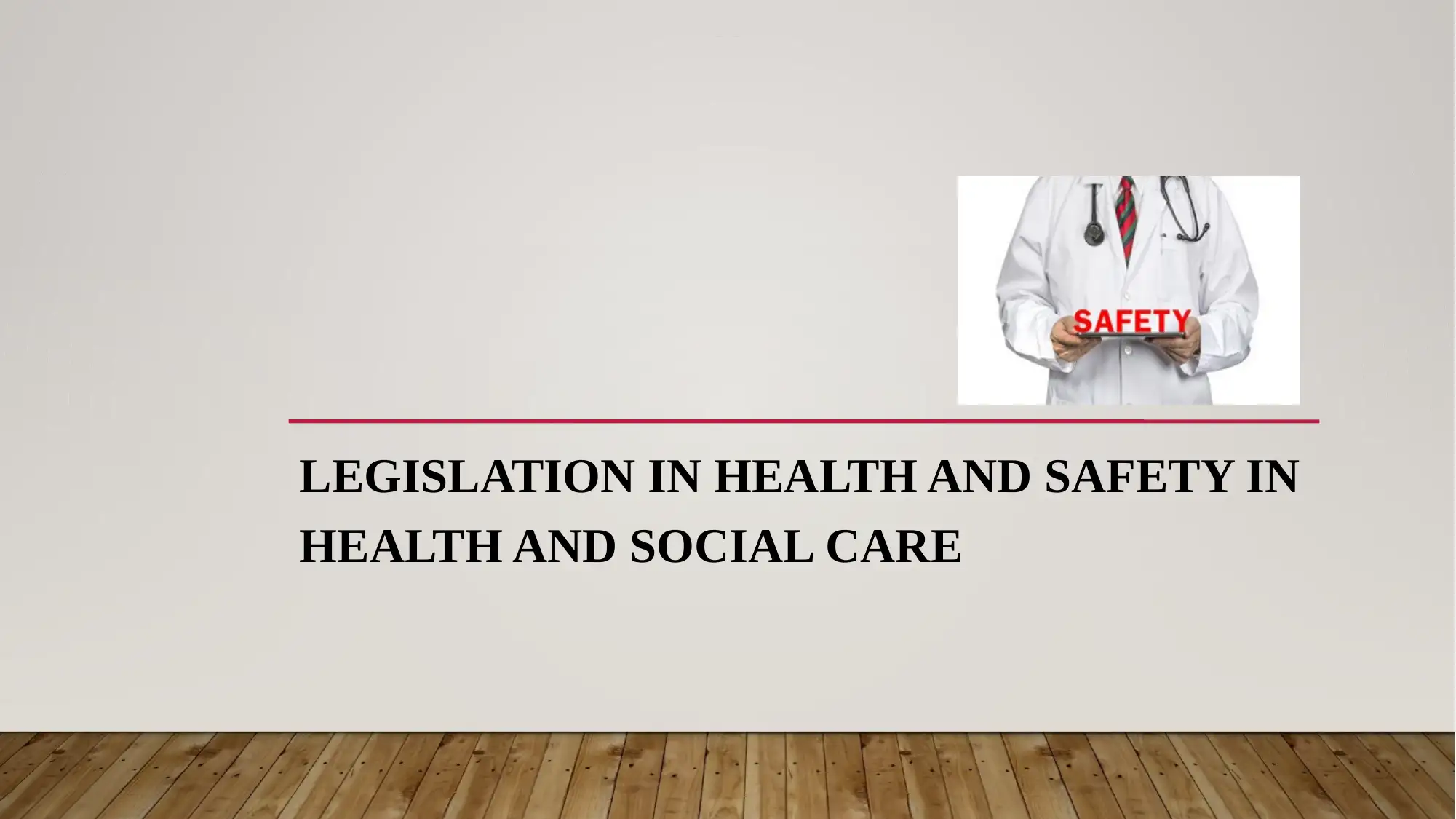
LEGISLATION IN HEALTH AND SAFETY IN
HEALTH AND SOCIAL CARE
tabler-icon-diamond-filled.svg

Paraphrase This Document

Need a fresh take? Get an instant paraphrase of this document with our AI Paraphraser
Document Page
TABLE OF CONTENT
Introduction
legislative frame work for health and safety
Role of employer and employees in health and safety process:
Consequences of the non compliance in health and safety requirements
Importance of the record keeping in health and safety:
Conclusion
References
Document Page
INTRODUCTION
The health and safety in the health and social care practice is define as the set of laws, procedures
and measures which focus on the health of the peoples and provides the safety measures which
prevent from the different kinds of injuries, accidents, harms in the workplace.
The main aim of the health and safety procedures is to describes the different safety programs
which mitigate the injuries and harms of the people
The health and safety measures provides the specific, measurable, realistic and achievable risk
assessment to the people for improving their health (Pribad and et. al., 2022).
Document Page
Legislative frame work for health and safety
The legislative framework is defines as the set of guidance and process which structures the
accountability of the governance in taking the decision and action which is helpful in the health and
safety measures (Ariosti, 2022).
The legislative framework follow the following steps:
Strategic principles
Focus on the risk
Challenge the myths of the health and safety
tabler-icon-diamond-filled.svg

Paraphrase This Document

Need a fresh take? Get an instant paraphrase of this document with our AI Paraphraser
Document Page
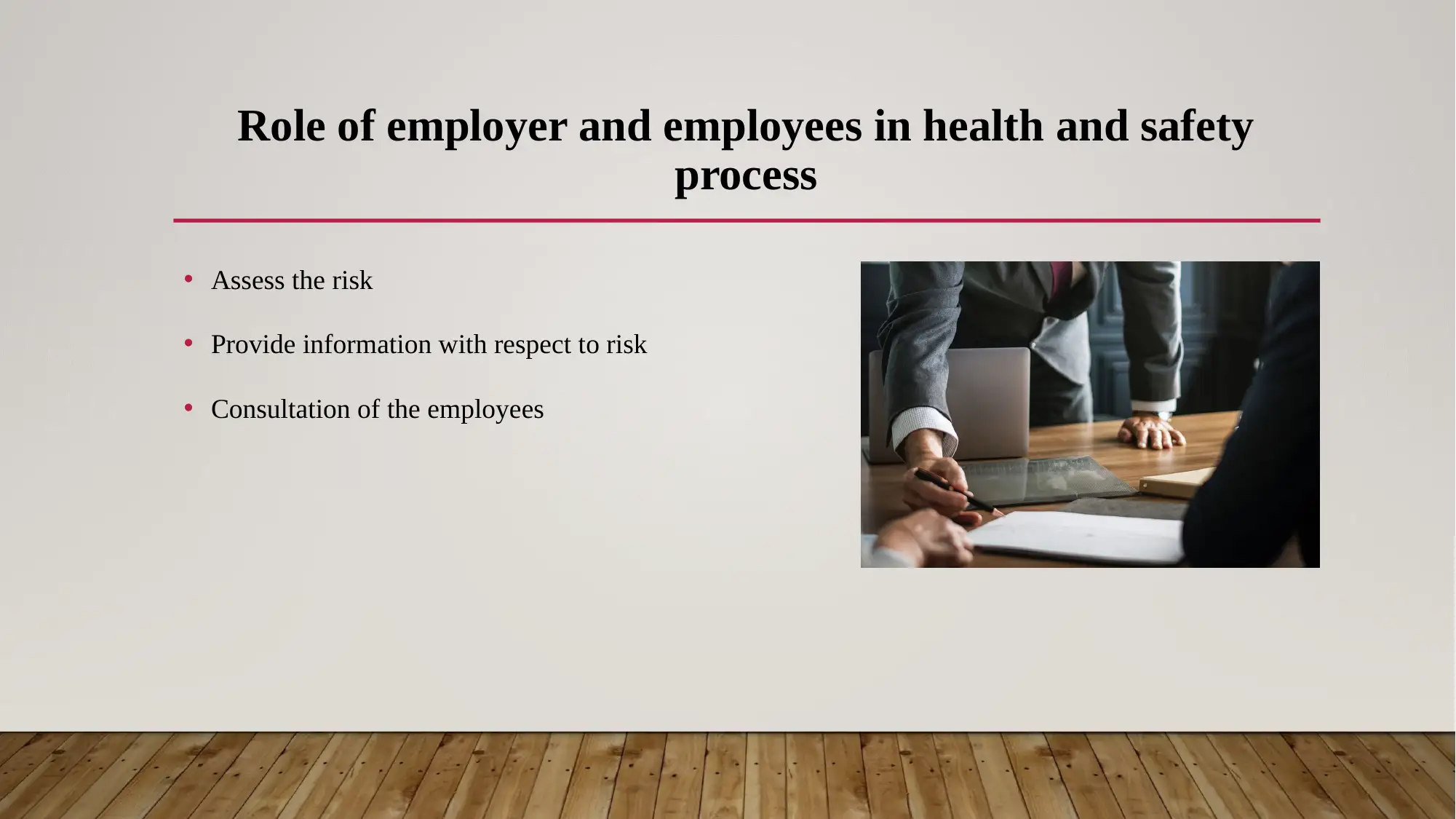
Role of employer and employees in health and safety
process
Assess the risk
Provide information with respect to risk
Consultation of the employees
Document Page
Consequences of the non compliance in health and
safety requirements
The non compliance in the health and safety includes the following consequences:
Penalties in terms of financial and infringement.
Damage of the reputation and disqualification of the industry.
Keep the business in trouble
Endanger the lives of the people (Boscaneanu, 2020).
Document Page
Importance of the record keeping in health and safety
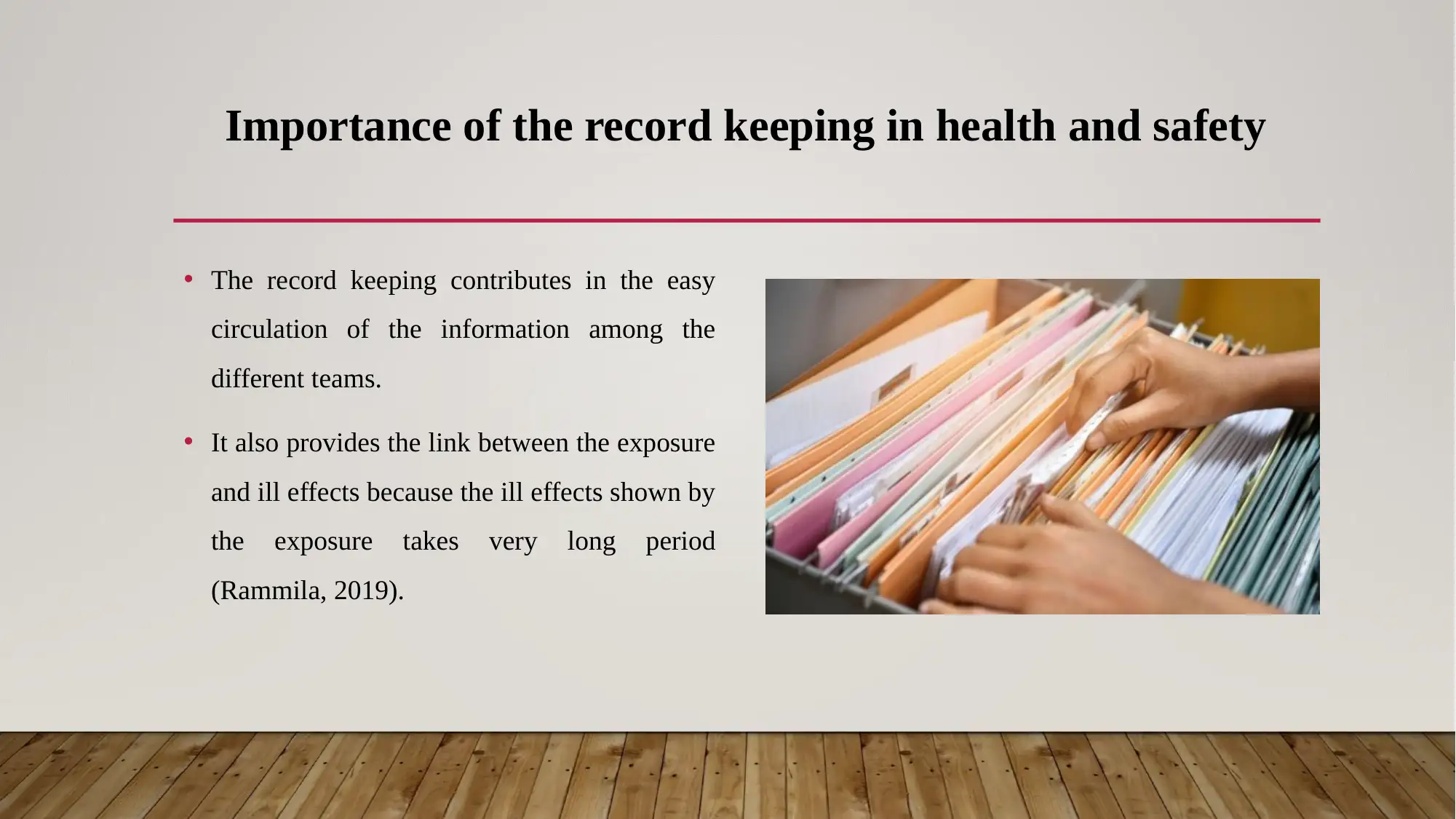
The record keeping contributes in the easy
circulation of the information among the
different teams.
It also provides the link between the exposure
and ill effects because the ill effects shown by
the exposure takes very long period
(Rammila, 2019).
tabler-icon-diamond-filled.svg

Paraphrase This Document

Need a fresh take? Get an instant paraphrase of this document with our AI Paraphraser
Document Page
CONCLUSION
The report has describes the health and safety measures and framework of legislation which help
the people in maintaining and regulating the laws and orders of the health and social care.
The report has also focused on the work of the employers and employees in the legislation
framework.
Document Page
REFERENCES
Ariosti, A., 2022. Food contact materials legislation: sanitary aspects. In Ensuring Global Food
Safety (pp. 275-324). Academic Press.
Boscaneanu, M., 2020. Water Quality Assurance: Legislative, Organizational and Administrative
Problems. Sci. Annals Stefan cel Mare Acad. Ministry Internal Aff. Republic Mold., 12, p.18.
Meemken, E.M and et. al., 2019. Effects of Fairtrade on the livelihoods of poor rural
workers. Nature Sustainability, 2(7), pp.635-642.
Pribadi, K.S and et. al., 2022. Construction Industry and Governing Legislation. In Construction in
Indonesia (pp. 19-36). Routledge.
Rammila, D., 2019. Dismissal for Operational Requirements in South Africa: Redesigning the
Current Legislative Framework for the Fourth Industrial Age (Doctoral dissertation, University of
Johannesburg (South Africa)).
Document Page
THANK YOU!
chevron_up_icon
1 out of 10
circle_padding
hide_on_mobile
zoom_out_icon
[object Object]