Management Challenges in Healthcare Information System Implementation
VerifiedAdded on 2023/06/14
|13
|2487
|175
Thesis and Dissertation
AI Summary
This dissertation proposal identifies management issues causing poor implementation of Healthcare Information Systems (HIS), contributing to medical errors. It aims to analyze the current structural processes and implementation plans of HIS to provide recommendations for enhancing skills and awareness among stakeholders. The study uses an inductive approach and descriptive research design, collecting primary data from healthcare workers through interviews and surveys, and secondary data from healthcare databases. Ethical considerations are addressed by obtaining consent and validating data before publication. The research questions focus on identifying management issues within HIS, the causes of medical errors associated with its implementation, and recommendations for improving management plans. The literature review emphasizes the importance of HIS in healthcare decision-making and the challenges related to data privacy, security, and cost optimization. The proposal includes a timeline for the research activities, from topic selection to final submission.

Running head: DISSERTATION PROPOSAL
Dissertation proposal
Name of the Student
Name of the University
Author Notes
Dissertation proposal
Name of the Student
Name of the University
Author Notes

Paraphrase This Document
Need a fresh take? Get an instant paraphrase of this document with our AI Paraphraser
1DISSERTATION PROPOSAL
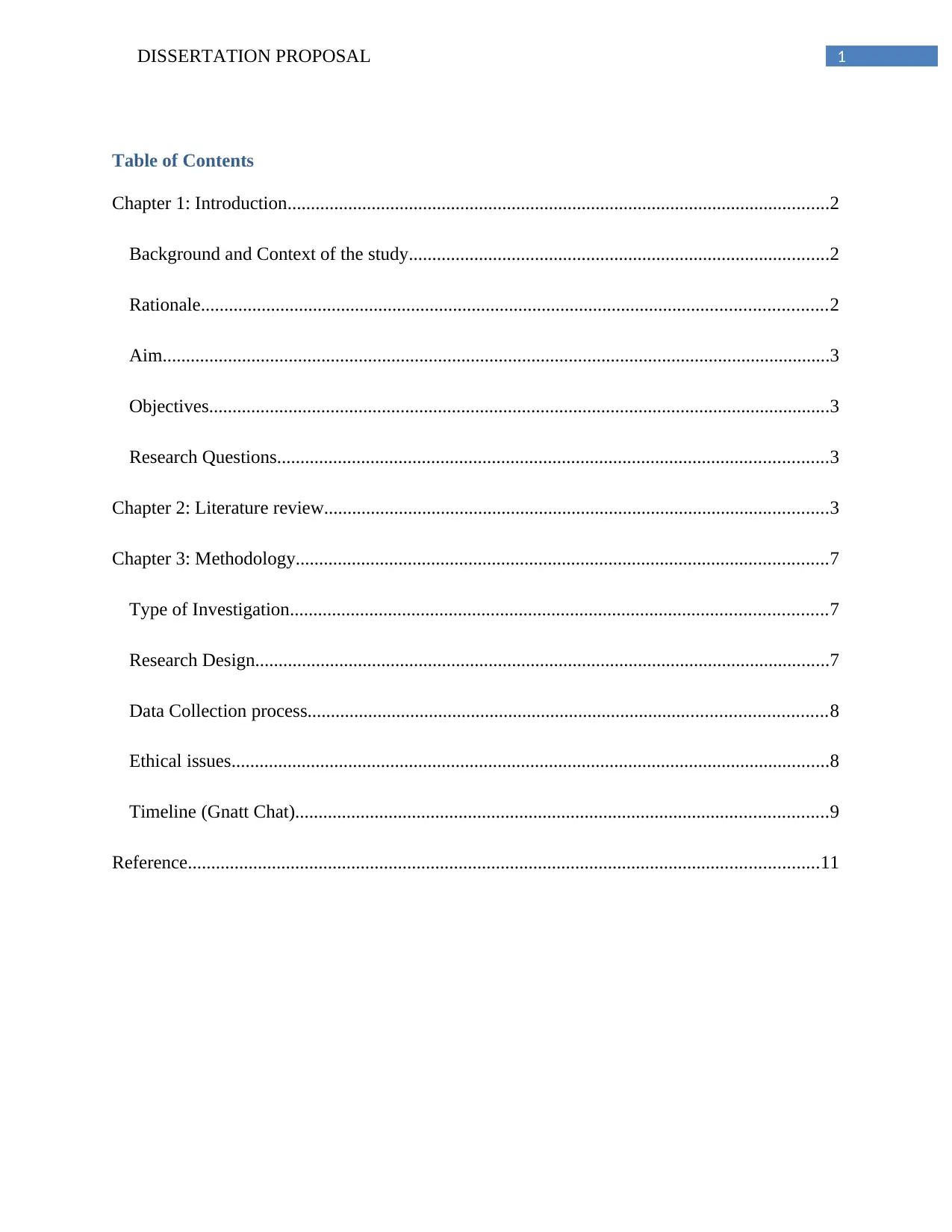
Table of Contents
Chapter 1: Introduction....................................................................................................................2
Background and Context of the study..........................................................................................2
Rationale......................................................................................................................................2
Aim...............................................................................................................................................3
Objectives.....................................................................................................................................3
Research Questions......................................................................................................................3
Chapter 2: Literature review............................................................................................................3
Chapter 3: Methodology..................................................................................................................7
Type of Investigation...................................................................................................................7
Research Design...........................................................................................................................7
Data Collection process...............................................................................................................8
Ethical issues................................................................................................................................8
Timeline (Gnatt Chat)..................................................................................................................9
Reference.......................................................................................................................................11
Table of Contents
Chapter 1: Introduction....................................................................................................................2
Background and Context of the study..........................................................................................2
Rationale......................................................................................................................................2
Aim...............................................................................................................................................3
Objectives.....................................................................................................................................3
Research Questions......................................................................................................................3
Chapter 2: Literature review............................................................................................................3
Chapter 3: Methodology..................................................................................................................7
Type of Investigation...................................................................................................................7
Research Design...........................................................................................................................7
Data Collection process...............................................................................................................8
Ethical issues................................................................................................................................8
Timeline (Gnatt Chat)..................................................................................................................9
Reference.......................................................................................................................................11
2DISSERTATION PROPOSAL
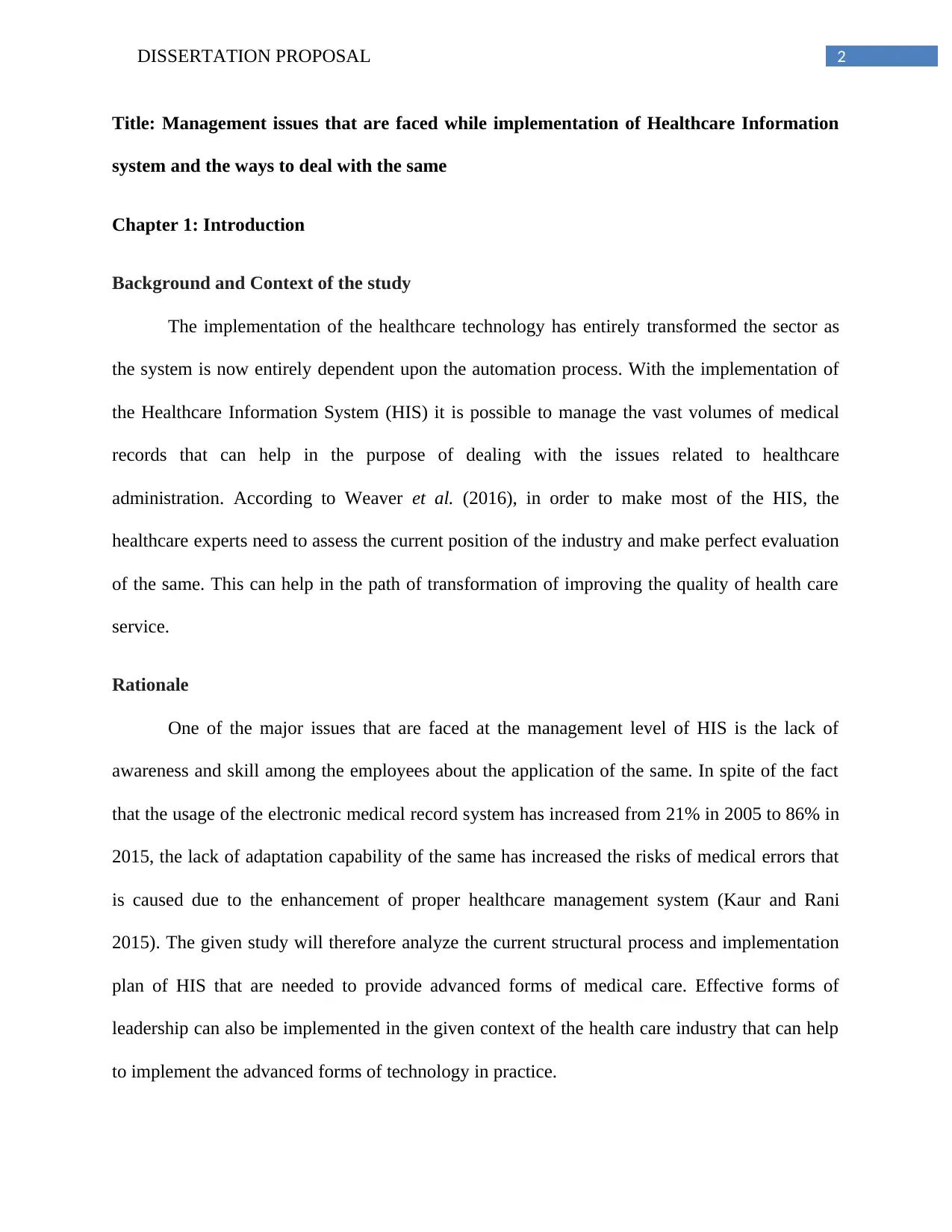
Title: Management issues that are faced while implementation of Healthcare Information
system and the ways to deal with the same
Chapter 1: Introduction
Background and Context of the study
The implementation of the healthcare technology has entirely transformed the sector as
the system is now entirely dependent upon the automation process. With the implementation of
the Healthcare Information System (HIS) it is possible to manage the vast volumes of medical
records that can help in the purpose of dealing with the issues related to healthcare
administration. According to Weaver et al. (2016), in order to make most of the HIS, the
healthcare experts need to assess the current position of the industry and make perfect evaluation
of the same. This can help in the path of transformation of improving the quality of health care
service.
Rationale
One of the major issues that are faced at the management level of HIS is the lack of
awareness and skill among the employees about the application of the same. In spite of the fact
that the usage of the electronic medical record system has increased from 21% in 2005 to 86% in
2015, the lack of adaptation capability of the same has increased the risks of medical errors that
is caused due to the enhancement of proper healthcare management system (Kaur and Rani
2015). The given study will therefore analyze the current structural process and implementation
plan of HIS that are needed to provide advanced forms of medical care. Effective forms of
leadership can also be implemented in the given context of the health care industry that can help
to implement the advanced forms of technology in practice.
Title: Management issues that are faced while implementation of Healthcare Information
system and the ways to deal with the same
Chapter 1: Introduction
Background and Context of the study
The implementation of the healthcare technology has entirely transformed the sector as
the system is now entirely dependent upon the automation process. With the implementation of
the Healthcare Information System (HIS) it is possible to manage the vast volumes of medical
records that can help in the purpose of dealing with the issues related to healthcare
administration. According to Weaver et al. (2016), in order to make most of the HIS, the
healthcare experts need to assess the current position of the industry and make perfect evaluation
of the same. This can help in the path of transformation of improving the quality of health care
service.
Rationale
One of the major issues that are faced at the management level of HIS is the lack of
awareness and skill among the employees about the application of the same. In spite of the fact
that the usage of the electronic medical record system has increased from 21% in 2005 to 86% in
2015, the lack of adaptation capability of the same has increased the risks of medical errors that
is caused due to the enhancement of proper healthcare management system (Kaur and Rani
2015). The given study will therefore analyze the current structural process and implementation
plan of HIS that are needed to provide advanced forms of medical care. Effective forms of
leadership can also be implemented in the given context of the health care industry that can help
to implement the advanced forms of technology in practice.
⊘ This is a preview!⊘
Do you want full access?
Subscribe today to unlock all pages.

Trusted by 1+ million students worldwide
3DISSERTATION PROPOSAL
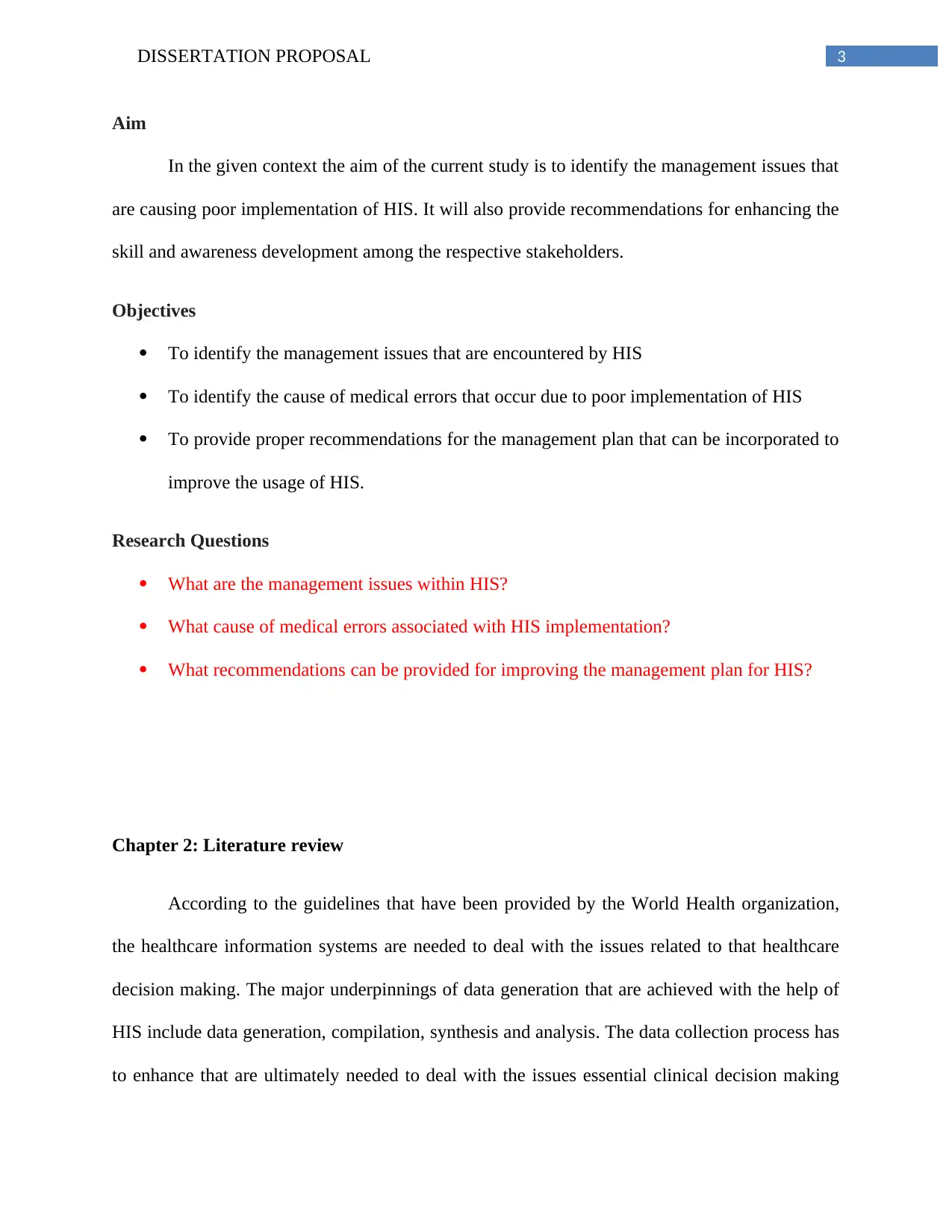
Aim
In the given context the aim of the current study is to identify the management issues that
are causing poor implementation of HIS. It will also provide recommendations for enhancing the
skill and awareness development among the respective stakeholders.
Objectives
To identify the management issues that are encountered by HIS
To identify the cause of medical errors that occur due to poor implementation of HIS
To provide proper recommendations for the management plan that can be incorporated to
improve the usage of HIS.
Research Questions
What are the management issues within HIS?
What cause of medical errors associated with HIS implementation?
What recommendations can be provided for improving the management plan for HIS?
Chapter 2: Literature review
According to the guidelines that have been provided by the World Health organization,
the healthcare information systems are needed to deal with the issues related to that healthcare
decision making. The major underpinnings of data generation that are achieved with the help of
HIS include data generation, compilation, synthesis and analysis. The data collection process has
to enhance that are ultimately needed to deal with the issues essential clinical decision making
Aim
In the given context the aim of the current study is to identify the management issues that
are causing poor implementation of HIS. It will also provide recommendations for enhancing the
skill and awareness development among the respective stakeholders.
Objectives
To identify the management issues that are encountered by HIS
To identify the cause of medical errors that occur due to poor implementation of HIS
To provide proper recommendations for the management plan that can be incorporated to
improve the usage of HIS.
Research Questions
What are the management issues within HIS?
What cause of medical errors associated with HIS implementation?
What recommendations can be provided for improving the management plan for HIS?
Chapter 2: Literature review
According to the guidelines that have been provided by the World Health organization,
the healthcare information systems are needed to deal with the issues related to that healthcare
decision making. The major underpinnings of data generation that are achieved with the help of
HIS include data generation, compilation, synthesis and analysis. The data collection process has
to enhance that are ultimately needed to deal with the issues essential clinical decision making
Paraphrase This Document
Need a fresh take? Get an instant paraphrase of this document with our AI Paraphraser
4DISSERTATION PROPOSAL
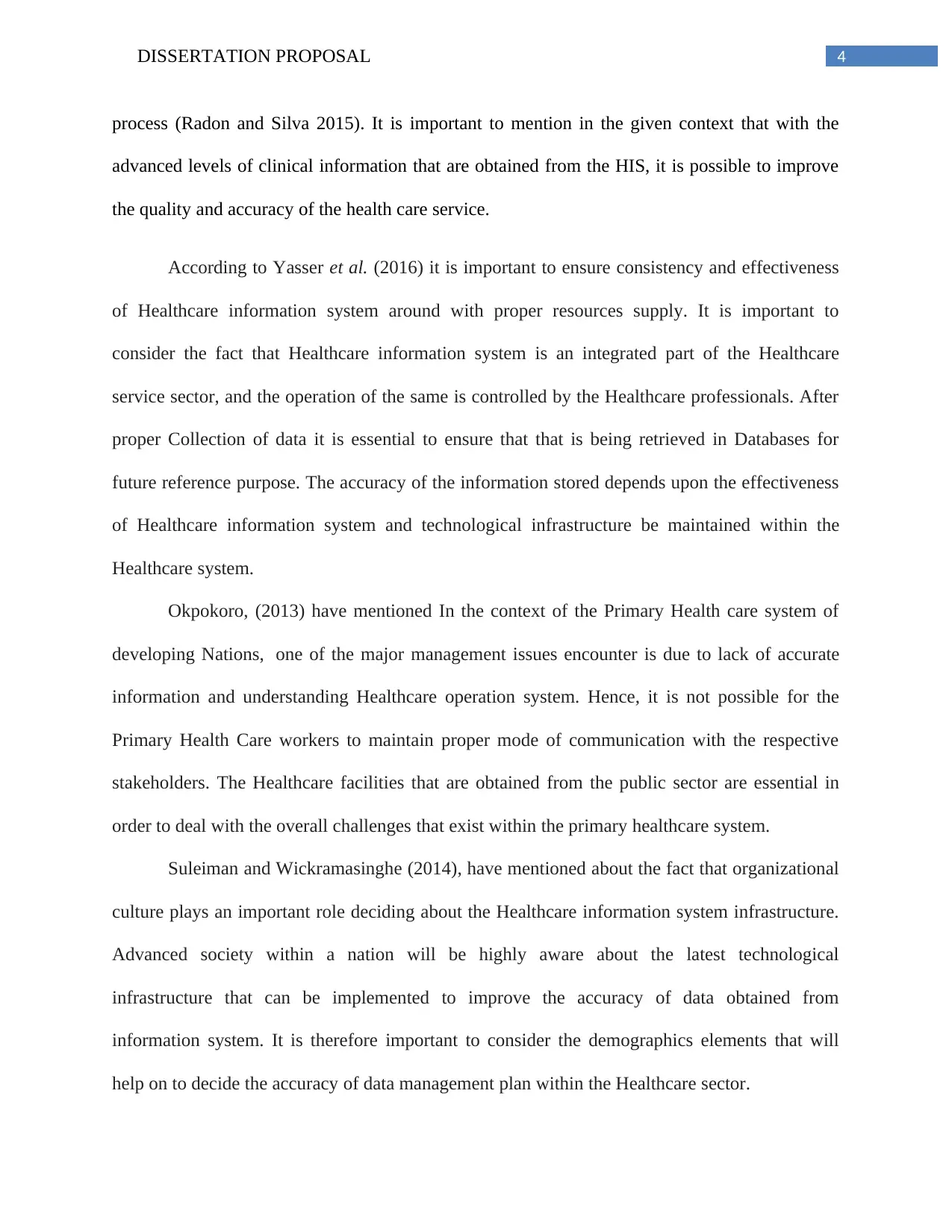
process (Radon and Silva 2015). It is important to mention in the given context that with the
advanced levels of clinical information that are obtained from the HIS, it is possible to improve
the quality and accuracy of the health care service.
According to Yasser et al. (2016) it is important to ensure consistency and effectiveness
of Healthcare information system around with proper resources supply. It is important to
consider the fact that Healthcare information system is an integrated part of the Healthcare
service sector, and the operation of the same is controlled by the Healthcare professionals. After
proper Collection of data it is essential to ensure that that is being retrieved in Databases for
future reference purpose. The accuracy of the information stored depends upon the effectiveness
of Healthcare information system and technological infrastructure be maintained within the
Healthcare system.
Okpokoro, (2013) have mentioned In the context of the Primary Health care system of
developing Nations, one of the major management issues encounter is due to lack of accurate
information and understanding Healthcare operation system. Hence, it is not possible for the
Primary Health Care workers to maintain proper mode of communication with the respective
stakeholders. The Healthcare facilities that are obtained from the public sector are essential in
order to deal with the overall challenges that exist within the primary healthcare system.
Suleiman and Wickramasinghe (2014), have mentioned about the fact that organizational
culture plays an important role deciding about the Healthcare information system infrastructure.
Advanced society within a nation will be highly aware about the latest technological
infrastructure that can be implemented to improve the accuracy of data obtained from
information system. It is therefore important to consider the demographics elements that will
help on to decide the accuracy of data management plan within the Healthcare sector.
process (Radon and Silva 2015). It is important to mention in the given context that with the
advanced levels of clinical information that are obtained from the HIS, it is possible to improve
the quality and accuracy of the health care service.
According to Yasser et al. (2016) it is important to ensure consistency and effectiveness
of Healthcare information system around with proper resources supply. It is important to
consider the fact that Healthcare information system is an integrated part of the Healthcare
service sector, and the operation of the same is controlled by the Healthcare professionals. After
proper Collection of data it is essential to ensure that that is being retrieved in Databases for
future reference purpose. The accuracy of the information stored depends upon the effectiveness
of Healthcare information system and technological infrastructure be maintained within the
Healthcare system.
Okpokoro, (2013) have mentioned In the context of the Primary Health care system of
developing Nations, one of the major management issues encounter is due to lack of accurate
information and understanding Healthcare operation system. Hence, it is not possible for the
Primary Health Care workers to maintain proper mode of communication with the respective
stakeholders. The Healthcare facilities that are obtained from the public sector are essential in
order to deal with the overall challenges that exist within the primary healthcare system.
Suleiman and Wickramasinghe (2014), have mentioned about the fact that organizational
culture plays an important role deciding about the Healthcare information system infrastructure.
Advanced society within a nation will be highly aware about the latest technological
infrastructure that can be implemented to improve the accuracy of data obtained from
information system. It is therefore important to consider the demographics elements that will
help on to decide the accuracy of data management plan within the Healthcare sector.
5DISSERTATION PROPOSAL
Privacy is another issue that is related with the Healthcare management system. As
important information is being stored in Healthcare database, there are high levels of risks for the
same to be leaked in public domain. Hence, in the given context, Wager et al. (2017) have
mentioned about the security issues, which is another major challenge of the healthcare
information system. Optimizing the huge volume of Healthcare information is also another major
challenge that is required to accurately diagnose the condition of critically ill patients. Due to
lack of effective management planning, in most of the Healthcare organization higher levels of
cost are being involved that can compromise on the healthcare infrastructural system. In the
given context, it is essential to make use of specific optimizing software related to Healthcare
information system that is implemented using the specific protocol of World Health Organization
(Carvalho et al. 2016). The overall cost process can be optimized by installing fixed package of
the software system package of the software system.
Majchrzak et al. (2016), have mentioned up on the fact that the future of information
system is highly dependent upon the swiftness of innovation application in the Healthcare sector.
Technological advancement need to be improved in Holistic way in order to ensure that proper
interconnections between define department within the Healthcare sector can be made. This will
help to ensure that the Healthcare information system can help to secure the needs of the
healthcare organization.
Nevertheless the major gap in the existing literature about health care information system
is due to the fact that it has not discussed in details about the ethical principles that need to be
followed by the Healthcare organization while implementing the advanced form of HIS. It is
important to implement the Data Protection Act, which will ensure proper confidentiality of
Privacy is another issue that is related with the Healthcare management system. As
important information is being stored in Healthcare database, there are high levels of risks for the
same to be leaked in public domain. Hence, in the given context, Wager et al. (2017) have
mentioned about the security issues, which is another major challenge of the healthcare
information system. Optimizing the huge volume of Healthcare information is also another major
challenge that is required to accurately diagnose the condition of critically ill patients. Due to
lack of effective management planning, in most of the Healthcare organization higher levels of
cost are being involved that can compromise on the healthcare infrastructural system. In the
given context, it is essential to make use of specific optimizing software related to Healthcare
information system that is implemented using the specific protocol of World Health Organization
(Carvalho et al. 2016). The overall cost process can be optimized by installing fixed package of
the software system package of the software system.
Majchrzak et al. (2016), have mentioned up on the fact that the future of information
system is highly dependent upon the swiftness of innovation application in the Healthcare sector.
Technological advancement need to be improved in Holistic way in order to ensure that proper
interconnections between define department within the Healthcare sector can be made. This will
help to ensure that the Healthcare information system can help to secure the needs of the
healthcare organization.
Nevertheless the major gap in the existing literature about health care information system
is due to the fact that it has not discussed in details about the ethical principles that need to be
followed by the Healthcare organization while implementing the advanced form of HIS. It is
important to implement the Data Protection Act, which will ensure proper confidentiality of
⊘ This is a preview!⊘
Do you want full access?
Subscribe today to unlock all pages.
Trusted by 1+ million students worldwide

6DISSERTATION PROPOSAL
private information of application that is being stored in the medical databases (Liu and Wang
2016). It is also important to focus on the advanced training that is needed to accurately
implement the Healthcare information system in practice mostly in the primary system.
private information of application that is being stored in the medical databases (Liu and Wang
2016). It is also important to focus on the advanced training that is needed to accurately
implement the Healthcare information system in practice mostly in the primary system.
Paraphrase This Document
Need a fresh take? Get an instant paraphrase of this document with our AI Paraphraser
7DISSERTATION PROPOSAL
Chapter 3: Methodology
Research methodology section provides a blueprint for all type of steps that need to be
followed in order to obtain necessary information related to the topic and analyze the same for
drawing upon conclusion.
Type of Investigation
For the given research work there are two type of approach or investigation type that can
be implemented. The deductive approach of Investigation helps to ensure that proper and
accurate knowledge are being applied in order to use a top bottom framework. In a given
process, it helps to devise a particular hypothesis that are needed for the understanding the
current situation of the research problem (Silverman 2016). Nevertheless, the current research
implements the inductive approach, but the investigator will focus on creating new theory and
hypothesis related to the implication of Healthcare information system.
Research Design
Three types of Research Design are implemented in order to setup the protocol that is
needed for the data collection. The given research work will mainly focus on implementing
descriptive Research Design, where the data will be collected about the usages of the healthcare
information system (Flick 2015). The data collection process will be done specific to the
objective, which was not possible in the case of both explanatory and exploratory research
design. The major disadvantage of the later two types of research design is due to the fact that it
does not consider the positive and negative aspect of data that are being collected. Hence, quality
of the research for can be highly compromised.
Chapter 3: Methodology
Research methodology section provides a blueprint for all type of steps that need to be
followed in order to obtain necessary information related to the topic and analyze the same for
drawing upon conclusion.
Type of Investigation
For the given research work there are two type of approach or investigation type that can
be implemented. The deductive approach of Investigation helps to ensure that proper and
accurate knowledge are being applied in order to use a top bottom framework. In a given
process, it helps to devise a particular hypothesis that are needed for the understanding the
current situation of the research problem (Silverman 2016). Nevertheless, the current research
implements the inductive approach, but the investigator will focus on creating new theory and
hypothesis related to the implication of Healthcare information system.
Research Design
Three types of Research Design are implemented in order to setup the protocol that is
needed for the data collection. The given research work will mainly focus on implementing
descriptive Research Design, where the data will be collected about the usages of the healthcare
information system (Flick 2015). The data collection process will be done specific to the
objective, which was not possible in the case of both explanatory and exploratory research
design. The major disadvantage of the later two types of research design is due to the fact that it
does not consider the positive and negative aspect of data that are being collected. Hence, quality
of the research for can be highly compromised.
8DISSERTATION PROPOSAL
Data Collection process
There are two types of Data Collection process which includes primary and secondary
data needed for the analysis of different investigation work. In a primary mode of Data
Collection the investigators directly collect information from the sample size of the research
work (Taylor et al. 2015). In the given case the research strategy of interview and survey can be
implemented.
For the given research work primary data will be collected from the Stakeholders of
Healthcare sector, which will mainly include the workers at primary department of Health Care.
The investigators will randomly choose a few of the major Health Care Centre, where
technicians will be invited for the interview process. A minimum of 10 technicians will be
chosen for the interview, and 50 other Healthcare workers and different levels for the entire
process of primary data collection. The survey and the interview questions will be defined
accordingly to obtain optimized information from the given source.
Secondary data will be collected from the respective Healthcare data bases, which will
provide information related to the importance and challenges that are faced while implementing
the primary healthcare information system.
Ethical issues
In order to collect essential data from the given primary sources in the form of interview
or survey, the investigators need to follow the ethical protocols by taking proper consent from
the same. Proper validation of the collected data will be done before they are published finally
(Artal and Rubenfeld 2017). This will increase the reliability of the given collected data.
Data Collection process
There are two types of Data Collection process which includes primary and secondary
data needed for the analysis of different investigation work. In a primary mode of Data
Collection the investigators directly collect information from the sample size of the research
work (Taylor et al. 2015). In the given case the research strategy of interview and survey can be
implemented.
For the given research work primary data will be collected from the Stakeholders of
Healthcare sector, which will mainly include the workers at primary department of Health Care.
The investigators will randomly choose a few of the major Health Care Centre, where
technicians will be invited for the interview process. A minimum of 10 technicians will be
chosen for the interview, and 50 other Healthcare workers and different levels for the entire
process of primary data collection. The survey and the interview questions will be defined
accordingly to obtain optimized information from the given source.
Secondary data will be collected from the respective Healthcare data bases, which will
provide information related to the importance and challenges that are faced while implementing
the primary healthcare information system.
Ethical issues
In order to collect essential data from the given primary sources in the form of interview
or survey, the investigators need to follow the ethical protocols by taking proper consent from
the same. Proper validation of the collected data will be done before they are published finally
(Artal and Rubenfeld 2017). This will increase the reliability of the given collected data.
⊘ This is a preview!⊘
Do you want full access?
Subscribe today to unlock all pages.
Trusted by 1+ million students worldwide

9DISSERTATION PROPOSAL
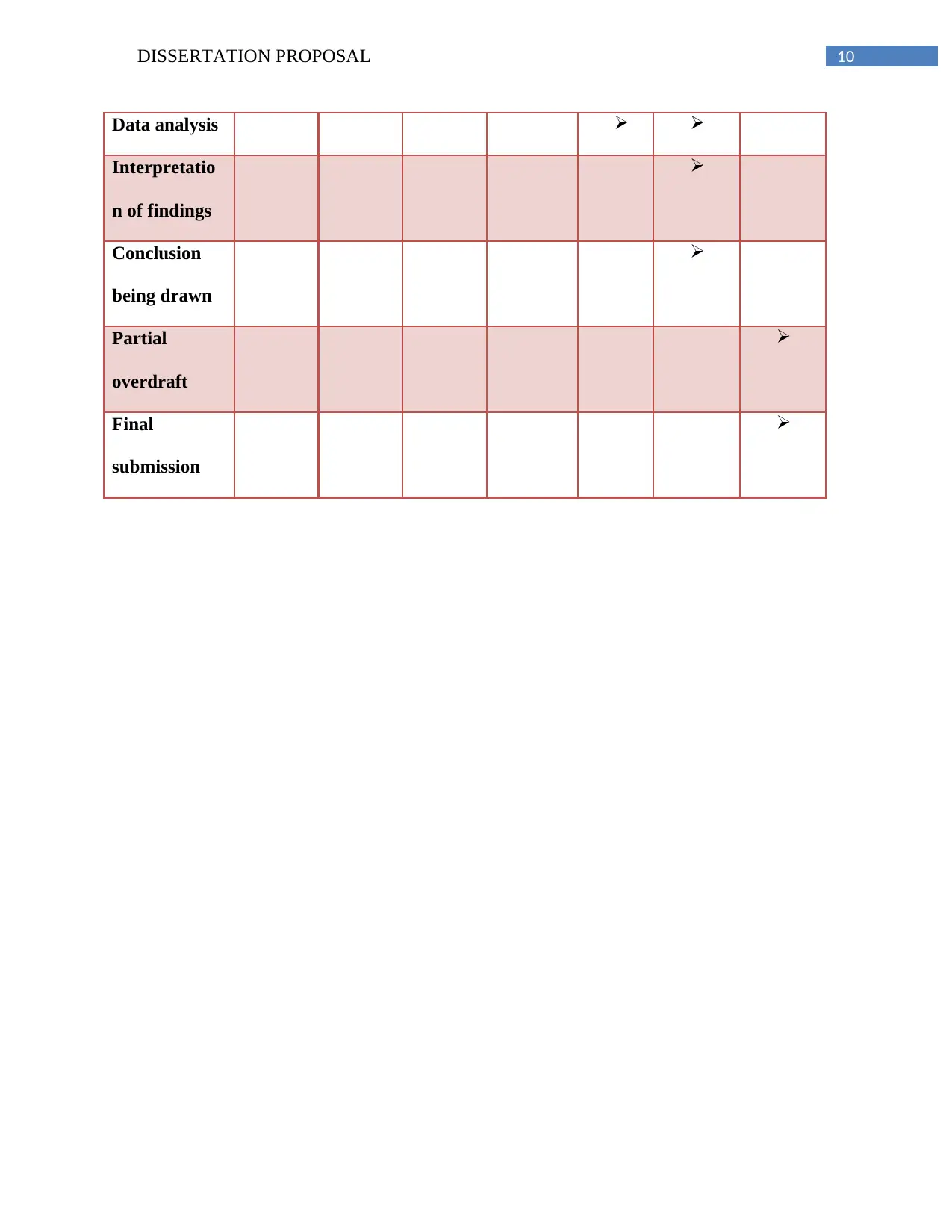
Timeline (Gnatt Chat)
Main
activities and
stages
Week 1 Week 2
to 3
Week 3
to 5
Week 5
to 8
Week
9
Week 10 Week 11
Selection of
the topic
Literature
Review
Planning the
proper layout
Data
collection
through
survey
Development
of research
methods
Selecting
research
approach
Gathering
Secondary
data
Timeline (Gnatt Chat)
Main
activities and
stages
Week 1 Week 2
to 3
Week 3
to 5
Week 5
to 8
Week
9
Week 10 Week 11
Selection of
the topic
Literature
Review
Planning the
proper layout
Data
collection
through
survey
Development
of research
methods
Selecting
research
approach
Gathering
Secondary
data
Paraphrase This Document
Need a fresh take? Get an instant paraphrase of this document with our AI Paraphraser
10DISSERTATION PROPOSAL
Data analysis
Interpretatio
n of findings
Conclusion
being drawn
Partial
overdraft
Final
submission
Data analysis
Interpretatio
n of findings
Conclusion
being drawn
Partial
overdraft
Final
submission
11DISSERTATION PROPOSAL
Reference
Ahmadian, L., Nejad, S.S. and Khajouei, R., 2015. Evaluation methods used on health
information systems (HISs) in Iran and the effects of HISs on Iranian healthcare: A systematic
review. International journal of medical informatics, 84(6), pp.444-453.
Artal, R. and Rubenfeld, S., 2017. Ethical issues in research. Best Practice & Research Clinical
Obstetrics & Gynaecology, 43, pp.107-114.
Carvalho, J.V., Rocha, Á. and Abreu, A., 2016. Maturity models of healthcare information
systems and technologies: A literature review. Journal of medical systems, 40(6), p.131.
Flick, U., 2015. Introducing research methodology: A beginner's guide to doing a research
project. Sage.
Kaur, K. and Rani, R., 2015. Managing data in healthcare information systems: many models,
one solution. Computer, 48(3), pp.52-59.
Liu, S. and Wang, L., 2016. Influence of managerial control on performance in medical
information system projects: the moderating role of organizational environment and team risks.
International Journal of Project Management, 34(1), pp.102-116.
Majchrzak, A., Markus, M.L. and Wareham, J., 2016. Designing for digital transformation:
Lessons for information systems research from the study of ICT and societal challenges. MIS
Quarterly, 40(2), pp.267-277.
Okpokoro, E., 2013. Primary health care: a necessity in developing countries?. Journal of public
health in Africa, 4(2).
Rodon, J. and Silva, L., 2015. Exploring the formation of a healthcare information infrastructure:
hierarchy or meshwork?. Journal of the Association for Information Systems, 16(5), p.394.
Silverman, D. ed., 2016. Qualitative research. Sage.
Reference
Ahmadian, L., Nejad, S.S. and Khajouei, R., 2015. Evaluation methods used on health
information systems (HISs) in Iran and the effects of HISs on Iranian healthcare: A systematic
review. International journal of medical informatics, 84(6), pp.444-453.
Artal, R. and Rubenfeld, S., 2017. Ethical issues in research. Best Practice & Research Clinical
Obstetrics & Gynaecology, 43, pp.107-114.
Carvalho, J.V., Rocha, Á. and Abreu, A., 2016. Maturity models of healthcare information
systems and technologies: A literature review. Journal of medical systems, 40(6), p.131.
Flick, U., 2015. Introducing research methodology: A beginner's guide to doing a research
project. Sage.
Kaur, K. and Rani, R., 2015. Managing data in healthcare information systems: many models,
one solution. Computer, 48(3), pp.52-59.
Liu, S. and Wang, L., 2016. Influence of managerial control on performance in medical
information system projects: the moderating role of organizational environment and team risks.
International Journal of Project Management, 34(1), pp.102-116.
Majchrzak, A., Markus, M.L. and Wareham, J., 2016. Designing for digital transformation:
Lessons for information systems research from the study of ICT and societal challenges. MIS
Quarterly, 40(2), pp.267-277.
Okpokoro, E., 2013. Primary health care: a necessity in developing countries?. Journal of public
health in Africa, 4(2).
Rodon, J. and Silva, L., 2015. Exploring the formation of a healthcare information infrastructure:
hierarchy or meshwork?. Journal of the Association for Information Systems, 16(5), p.394.
Silverman, D. ed., 2016. Qualitative research. Sage.
⊘ This is a preview!⊘
Do you want full access?
Subscribe today to unlock all pages.
Trusted by 1+ million students worldwide

1 out of 13


Related Documents


Your All-in-One AI-Powered Toolkit for Academic Success.
+13062052269
info@desklib.com
Available 24*7 on WhatsApp / Email
![[object Object]](/_next/static/media/star-bottom.7253800d.svg)
Unlock your academic potential
Copyright © 2020–2026 A2Z Services. All Rights Reserved. Developed and managed by ZUCOL.