Henkel's Supply Chain Strategy: A Sourcing and Procurement Case Study
VerifiedAdded on 2023/01/04
|12
|2256
|84
Report
AI Summary
This report presents a case study analysis of Henkel's supply chain, focusing on its sourcing and procurement strategies. It begins with an introduction to Henkel's new supply chain strategy, emphasizing agility, customer centricity, and sustainability. The report then critically discusses the requirements for this new strategy, highlighting the importance of aligning business goals with sales and operations planning, and integrating sustainability. The analysis continues by evaluating the significance of sourcing and supply chain relationships in meeting customer demand, emphasizing cost management, supply stability, quality improvements, and risk management. The report also examines the complexities and potential risk factors within Henkel's new supply chain, including operational, administrative, and logical complexities, as well as internal and external risks. Finally, the report discusses the 'Triple Bottom Line' approach and the sustainability challenges Henkel faces, such as strains in control, supply chain complexity, and cost increases, concluding with a summary of the key findings and recommendations.

Sourcing and procurement: A case study of Henkel

Paraphrase This Document
Need a fresh take? Get an instant paraphrase of this document with our AI Paraphraser
Contents
Introduction................................................................................................................................2
Section A....................................................................................................................................2
Q1: Critical discussion on the new supply chain strategy and the requirements for the new
supply chain strategy of Henkel.............................................................................................2
Section B....................................................................................................................................4
Q2: Critical evaluation on the importance of sourcing and supply chain relationships for
meeting customer demand......................................................................................................4
Q3: Critical discussion on the supply chain complexity and risk factors faced by the new
supply chain of Henkel...........................................................................................................5
Q4: Critical discussion on the ‘Triple bottom line’ and possible sustainability challenges
faced by the new supply chain of Henkel..............................................................................6
Conclusion..................................................................................................................................7
Reference List............................................................................................................................8
Appendices...............................................................................................................................10
1
Introduction................................................................................................................................2
Section A....................................................................................................................................2
Q1: Critical discussion on the new supply chain strategy and the requirements for the new
supply chain strategy of Henkel.............................................................................................2
Section B....................................................................................................................................4
Q2: Critical evaluation on the importance of sourcing and supply chain relationships for
meeting customer demand......................................................................................................4
Q3: Critical discussion on the supply chain complexity and risk factors faced by the new
supply chain of Henkel...........................................................................................................5
Q4: Critical discussion on the ‘Triple bottom line’ and possible sustainability challenges
faced by the new supply chain of Henkel..............................................................................6
Conclusion..................................................................................................................................7
Reference List............................................................................................................................8
Appendices...............................................................................................................................10
1
Introduction
In this present competitive business field, the organizations are sustaining with effective
strategies in multiple areas such as business operation, value chain and supply chain. This
study focuses on the supply chain sourcing and procurement of Henkel, a leading brand from
Germany as the business organization has recently renovated its supply chain strategy.
Section A
Q1: Critical discussion on the new supply chain strategy and the requirements for the new
supply chain strategy of Henkel
New supply chain strategy of Henkel
In order to develop more customer centric and efficient supply chain, the organization,
Henkel needs to develop new strategic dimension so that the present situation of turmoil can
be overcome. Based on the present scenario provided in the case study the new supply chain
strategies are being described below.
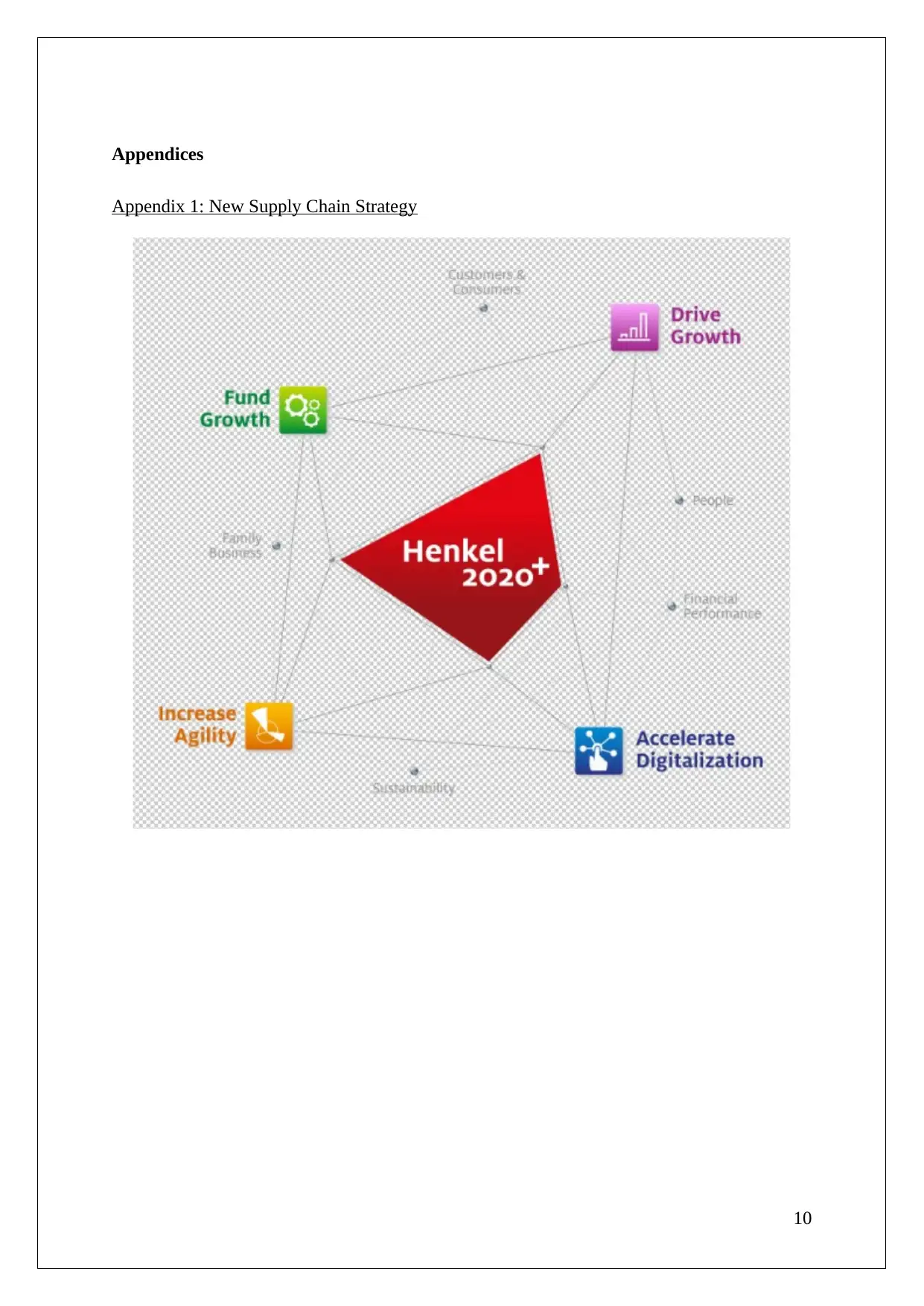
Strategy 1: The primary supply chain strategy the organization requires is the proper
development of agile and adaptive supply chain with effective planning as well as execution.
Once, the supply chain management become able to understand and shape the factor of
demand as well as the potential risks, the organization must adopt the supply chain
management considering the changing market (Hugos, 2018). The main theme of this
strategy is to respond and understand the changing nature of market demand as well as
customer requirement (Refer to Appendix 1).
Strategy 2: The second strategy the organization needs to develop for better alignment with
the business goals with effective integration of sales and operation planning considering the
2
In this present competitive business field, the organizations are sustaining with effective
strategies in multiple areas such as business operation, value chain and supply chain. This
study focuses on the supply chain sourcing and procurement of Henkel, a leading brand from
Germany as the business organization has recently renovated its supply chain strategy.
Section A
Q1: Critical discussion on the new supply chain strategy and the requirements for the new
supply chain strategy of Henkel
New supply chain strategy of Henkel
In order to develop more customer centric and efficient supply chain, the organization,
Henkel needs to develop new strategic dimension so that the present situation of turmoil can
be overcome. Based on the present scenario provided in the case study the new supply chain
strategies are being described below.
Strategy 1: The primary supply chain strategy the organization requires is the proper
development of agile and adaptive supply chain with effective planning as well as execution.
Once, the supply chain management become able to understand and shape the factor of
demand as well as the potential risks, the organization must adopt the supply chain
management considering the changing market (Hugos, 2018). The main theme of this
strategy is to respond and understand the changing nature of market demand as well as
customer requirement (Refer to Appendix 1).
Strategy 2: The second strategy the organization needs to develop for better alignment with
the business goals with effective integration of sales and operation planning considering the
2
⊘ This is a preview!⊘
Do you want full access?
Subscribe today to unlock all pages.

Trusted by 1+ million students worldwide
overall business planning. Proper alignment of all these aspects can help the organization to
understand the key dimension of success including the meeting market demand, effective
supply, quality product, risk analysis as well as the overall performance enhancement
(Hugos, 2018).
Strategy 3: After the alignment of all the aspects of market demand, organizational goal and
organizational business planning the strategy of embedding the sustainability within the
overall process of operation management needs to be developed for better supply chain
management process. This prospect can help the organization to look after the aspect triple
bottom line which are environment, people and profit with effective sustainability. In fact, the
aspect of sustainability can help the organization to grab the competitive advantage in the
time of rivalry (Formentini and Taticchi, 2016).
Strategy 4: As the new supply chain management strategy the organization needs to ensure a
predictable yet reliable supply process in order to apply customer facing stakeholder supply
and service level which is required for after supply servicing process. This streaty can help
Henkel in continuous operational excellence and improvement for the foundation of end to
end supply chain operation (Giannakis and Papadopoulos, 2016).
Requirement of this new supply chain strategy within Henkel
The organization, Henkel, operates its business with three main leading brands in Laundry
and Home Care, Beauty Care as well as Adhesive Technologies since 1876. The organization
has employed over 50000 staffs and it supplies its products across the globe (Henkel, 2019).
In order to make the business process the organization requires effective supply chain
management system which can provide the business entity competitive advantage, customer
satisfaction and proper understanding of the demand-supply relationship. With the old supply
chain management strategies, the organization is not being able to meet the requirement of
the market and proper selection of the supplier. With the development of this new strategy the
3
understand the key dimension of success including the meeting market demand, effective
supply, quality product, risk analysis as well as the overall performance enhancement
(Hugos, 2018).
Strategy 3: After the alignment of all the aspects of market demand, organizational goal and
organizational business planning the strategy of embedding the sustainability within the
overall process of operation management needs to be developed for better supply chain
management process. This prospect can help the organization to look after the aspect triple
bottom line which are environment, people and profit with effective sustainability. In fact, the
aspect of sustainability can help the organization to grab the competitive advantage in the
time of rivalry (Formentini and Taticchi, 2016).
Strategy 4: As the new supply chain management strategy the organization needs to ensure a
predictable yet reliable supply process in order to apply customer facing stakeholder supply
and service level which is required for after supply servicing process. This streaty can help
Henkel in continuous operational excellence and improvement for the foundation of end to
end supply chain operation (Giannakis and Papadopoulos, 2016).
Requirement of this new supply chain strategy within Henkel
The organization, Henkel, operates its business with three main leading brands in Laundry
and Home Care, Beauty Care as well as Adhesive Technologies since 1876. The organization
has employed over 50000 staffs and it supplies its products across the globe (Henkel, 2019).
In order to make the business process the organization requires effective supply chain
management system which can provide the business entity competitive advantage, customer
satisfaction and proper understanding of the demand-supply relationship. With the old supply
chain management strategies, the organization is not being able to meet the requirement of
the market and proper selection of the supplier. With the development of this new strategy the
3
Paraphrase This Document
Need a fresh take? Get an instant paraphrase of this document with our AI Paraphraser
organization can be able to meet the aspects. In the sustainability process the new strategy
can provide the organization huge level of competitive advantage at the same time.
Section B
Q2: Critical evaluation on the importance of sourcing and supply chain relationships for
meeting customer demand
For better organizational supply chain management and better network development in
supply chain management, the organizations should develop effective sourcing and supply
chain relationship as it leverages the combined power of purchasing so that the organization
can attain the best possible value in the competitive market (Kok Wei, 2018). In the
management process of supply chain strategic sourcing, procurement and purchasing are the
dependent variables. In fact, the relationship of supply chain and sourcing is an important
aspect as this process binds the variables of supply chain altogether. Importance of sourcing
and supply chain relationships for meeting customer demand are being described below
(Refer to Appendix 2).
Identified importance
Strategic sourcing and supply chain relationship benefits both buyer and supplier with
effective Cost Management as the buyer can apply the negotiation skill for lower price and
high volume of purchase; whereas, the suppliers can outsource the material to one buyer
which helps in long term cash flow process. In fact, management of proper relationship with
the sources and suppliers can help the organization to accumulate more materials in less price
effectively so that the business company can manufacture and supply more products to the
market for meeting market demand (Kirchoff, , Tate and Mollenkopf, 2016).
4
can provide the organization huge level of competitive advantage at the same time.
Section B
Q2: Critical evaluation on the importance of sourcing and supply chain relationships for
meeting customer demand
For better organizational supply chain management and better network development in
supply chain management, the organizations should develop effective sourcing and supply
chain relationship as it leverages the combined power of purchasing so that the organization
can attain the best possible value in the competitive market (Kok Wei, 2018). In the
management process of supply chain strategic sourcing, procurement and purchasing are the
dependent variables. In fact, the relationship of supply chain and sourcing is an important
aspect as this process binds the variables of supply chain altogether. Importance of sourcing
and supply chain relationships for meeting customer demand are being described below
(Refer to Appendix 2).
Identified importance
Strategic sourcing and supply chain relationship benefits both buyer and supplier with
effective Cost Management as the buyer can apply the negotiation skill for lower price and
high volume of purchase; whereas, the suppliers can outsource the material to one buyer
which helps in long term cash flow process. In fact, management of proper relationship with
the sources and suppliers can help the organization to accumulate more materials in less price
effectively so that the business company can manufacture and supply more products to the
market for meeting market demand (Kirchoff, , Tate and Mollenkopf, 2016).
4
Strategic sourcing and supply chain relationship helps in developing a stable partnership with
the supplier or the sources based on which the organization can effectively attain Supply
Stability. With is aspect Quality Improvements of the products can be possible as well as
close relationship can help the suppliers and the buyers in working together by which the
defects of the products can be measured properly along with proper fixing of the defects
(Stadtler, 2015).
With effective relationship with sourcing and supply chain, the organization can proceed in
Risk Management related to resources. As an example it can be stated that incase the
organization faces some issues with cash flow, the organization can acquire the material
without payment which can be done after the organization can gain financial stability
(Ralston et al. 2015).
Q3: Critical discussion on the supply chain complexity and risk factors faced by the new
supply chain of Henkel
Supply chain complexity
Supply chain complexity is a term which refers to the wide and difficult supply chain which
is difficult to handle with. Most of the business organizations are facing this issue and trying
to mitigate the issues for better organizational productivity. As Henkel has three different
brands, various production place and worldwide distribution, the supply chain seems way
complex for the organization for this reason. The new developed supply chain strategies have
been created for focusing on the prospect of demand-supply of market and thus the supply
chain has been opened to a broader as well as complex aspect. The supply chain complexity
can lead up to operational complexity, administrative complexity, and logical complexity.
Apart from that the demand and uncertain market, variability in process, product proliferation
5
the supplier or the sources based on which the organization can effectively attain Supply
Stability. With is aspect Quality Improvements of the products can be possible as well as
close relationship can help the suppliers and the buyers in working together by which the
defects of the products can be measured properly along with proper fixing of the defects
(Stadtler, 2015).
With effective relationship with sourcing and supply chain, the organization can proceed in
Risk Management related to resources. As an example it can be stated that incase the
organization faces some issues with cash flow, the organization can acquire the material
without payment which can be done after the organization can gain financial stability
(Ralston et al. 2015).
Q3: Critical discussion on the supply chain complexity and risk factors faced by the new
supply chain of Henkel
Supply chain complexity
Supply chain complexity is a term which refers to the wide and difficult supply chain which
is difficult to handle with. Most of the business organizations are facing this issue and trying
to mitigate the issues for better organizational productivity. As Henkel has three different
brands, various production place and worldwide distribution, the supply chain seems way
complex for the organization for this reason. The new developed supply chain strategies have
been created for focusing on the prospect of demand-supply of market and thus the supply
chain has been opened to a broader as well as complex aspect. The supply chain complexity
can lead up to operational complexity, administrative complexity, and logical complexity.
Apart from that the demand and uncertain market, variability in process, product proliferation
5
⊘ This is a preview!⊘
Do you want full access?
Subscribe today to unlock all pages.
Trusted by 1+ million students worldwide
as well as multiple partner in the supply chain are the main reason for the new supply chain
of Helken. The organization should meet the complexity of the supply chain for better
performance of the sources and the suppliers (Paulraj, Chen and Blome, 2017).
Potential risk factors
Supply chain complexity is unavoidable for Henkel as there are huge members or partners are
present in the supply chain from the different corner of the world. There could be two type of
supply chain risks can be found, which are internal risks and external risks, due to supply
chain complexity. Demand risks, environmental risks, business risks physical plant risks and
supply risks are the potential risks which can be categorized under the external risks of
complex supply chain management process as these risks are caused from the external
sources as well as it is not under control of the company. On the other side, internal business
risks, manufacturing and production risks, planning and control risks, cultural risks,
mitigation and contingency risks as well as the work health and safety risks can be considered
as internal risks as the risks are under control of the organizational management.
Q4: Critical discussion on the ‘Triple bottom line’ and possible sustainability challenges
faced by the new supply chain of Henkel
Environment, people and profit are the three fundamentals of triple bottom line concept based
on which an organization can develop its sustainability program effectively as a result it can
attain competitive advantage in the business full of rivalry. The organization has made a new
supply chain strategy considering the three aspects so that the organization can effectively
meet the aspect of targeted profit based on their ethical and corporate social responsibility in
the business process (Alhaddi, 2015). The organization has stopped using synthetic products
6
of Helken. The organization should meet the complexity of the supply chain for better
performance of the sources and the suppliers (Paulraj, Chen and Blome, 2017).
Potential risk factors
Supply chain complexity is unavoidable for Henkel as there are huge members or partners are
present in the supply chain from the different corner of the world. There could be two type of
supply chain risks can be found, which are internal risks and external risks, due to supply
chain complexity. Demand risks, environmental risks, business risks physical plant risks and
supply risks are the potential risks which can be categorized under the external risks of
complex supply chain management process as these risks are caused from the external
sources as well as it is not under control of the company. On the other side, internal business
risks, manufacturing and production risks, planning and control risks, cultural risks,
mitigation and contingency risks as well as the work health and safety risks can be considered
as internal risks as the risks are under control of the organizational management.
Q4: Critical discussion on the ‘Triple bottom line’ and possible sustainability challenges
faced by the new supply chain of Henkel
Environment, people and profit are the three fundamentals of triple bottom line concept based
on which an organization can develop its sustainability program effectively as a result it can
attain competitive advantage in the business full of rivalry. The organization has made a new
supply chain strategy considering the three aspects so that the organization can effectively
meet the aspect of targeted profit based on their ethical and corporate social responsibility in
the business process (Alhaddi, 2015). The organization has stopped using synthetic products
6
Paraphrase This Document
Need a fresh take? Get an instant paraphrase of this document with our AI Paraphraser
which are harmful for the environment as well as the people as well. In fact, the prospect may
help millions of people in surviving in the better world. Apart from that the people can also
stay away from the harmful components which could be used in the manufacturing process of
Laundry and Home Care, Beauty Care as well as Adhesive Technologies. As a big name in
the leading global brand, the organization should follow the corporate social responsibility of
protecting the customers and environment before making money.
Sustainability challenges
Strains in control and management of uncertainties and tradeoffs, the complexity of the
supply chain, changing cultures and mindsets, operationalization of sustainable development
as well as Cost increase are the prime sustainable challenges that the organization may face
with the effective following of ‘Triple Bottom Line’ approach. The organization must follow
the prospect which may initially decrease the sale but gradually the organization may find
competitive advantage due to hazardless components in its products.
Conclusion
In order to discuss the aspect, the existing supply chain strategy and the requirement for new
supply chain strategy has been discussed. Moreover, the importance of sourcing has been
identified along with potential risks which might face by the business process due to new
supply chain strategy. Apart from that the ‘Triple bottom line’ and the probable challenges of
new supply chain strategy has also been incorporated in this study.
7
help millions of people in surviving in the better world. Apart from that the people can also
stay away from the harmful components which could be used in the manufacturing process of
Laundry and Home Care, Beauty Care as well as Adhesive Technologies. As a big name in
the leading global brand, the organization should follow the corporate social responsibility of
protecting the customers and environment before making money.
Sustainability challenges
Strains in control and management of uncertainties and tradeoffs, the complexity of the
supply chain, changing cultures and mindsets, operationalization of sustainable development
as well as Cost increase are the prime sustainable challenges that the organization may face
with the effective following of ‘Triple Bottom Line’ approach. The organization must follow
the prospect which may initially decrease the sale but gradually the organization may find
competitive advantage due to hazardless components in its products.
Conclusion
In order to discuss the aspect, the existing supply chain strategy and the requirement for new
supply chain strategy has been discussed. Moreover, the importance of sourcing has been
identified along with potential risks which might face by the business process due to new
supply chain strategy. Apart from that the ‘Triple bottom line’ and the probable challenges of
new supply chain strategy has also been incorporated in this study.
7
Reference List
Alhaddi, H., 2015. Triple bottom line and sustainability: A literature review. Business and
Management Studies, 1(2), pp.6-10.
Formentini, M. and Taticchi, P., 2016. Corporate sustainability approaches and governance
mechanisms in sustainable supply chain management. Journal of Cleaner
Production, 112(8), pp.1920-1933.
Giannakis, M. and Papadopoulos, T., 2016. Supply chain sustainability: A risk management
approach. International Journal of Production Economics, 171(7), pp.455-470.
Henkel, 2019. Henkel's history. Available at: https://www.henkel.in/company/history
[Accessed on: 3/05/2019]
Hugos, M.H., 2018. Essentials of supply chain management. Ed 2, Berlin: John Wiley &
Sons.
Kirchoff, J.F., Tate, W.L. and Mollenkopf, D.A., 2016. The impact of strategic organizational
orientations on green supply chain management and firm performance. International Journal
of Physical Distribution & Logistics Management, 46(3), pp.269-292.
Kok Wei, W., 2018. Importance of Strategic Sourcing Skill for Effective Procurement.
Available at: https://sipmm.edu.sg/importance-strategic-sourcing-skill-effective-procuremen
[Accessed on: 3/05/2019]
Paulraj, A., Chen, I.J. and Blome, C., 2017. Motives and performance outcomes of
sustainable supply chain management practices: A multi-theoretical perspective. Journal of
Business Ethics, 145(2), pp.239-258.
Ralston, P.M., Blackhurst, J., Cantor, D.E. and Crum, M.R., 2015. A structure–conduct–
performance perspective of how strategic supply chain integration affects firm
performance. Journal of Supply Chain Management, 51(2), pp.47-64.
8
Alhaddi, H., 2015. Triple bottom line and sustainability: A literature review. Business and
Management Studies, 1(2), pp.6-10.
Formentini, M. and Taticchi, P., 2016. Corporate sustainability approaches and governance
mechanisms in sustainable supply chain management. Journal of Cleaner
Production, 112(8), pp.1920-1933.
Giannakis, M. and Papadopoulos, T., 2016. Supply chain sustainability: A risk management
approach. International Journal of Production Economics, 171(7), pp.455-470.
Henkel, 2019. Henkel's history. Available at: https://www.henkel.in/company/history
[Accessed on: 3/05/2019]
Hugos, M.H., 2018. Essentials of supply chain management. Ed 2, Berlin: John Wiley &
Sons.
Kirchoff, J.F., Tate, W.L. and Mollenkopf, D.A., 2016. The impact of strategic organizational
orientations on green supply chain management and firm performance. International Journal
of Physical Distribution & Logistics Management, 46(3), pp.269-292.
Kok Wei, W., 2018. Importance of Strategic Sourcing Skill for Effective Procurement.
Available at: https://sipmm.edu.sg/importance-strategic-sourcing-skill-effective-procuremen
[Accessed on: 3/05/2019]
Paulraj, A., Chen, I.J. and Blome, C., 2017. Motives and performance outcomes of
sustainable supply chain management practices: A multi-theoretical perspective. Journal of
Business Ethics, 145(2), pp.239-258.
Ralston, P.M., Blackhurst, J., Cantor, D.E. and Crum, M.R., 2015. A structure–conduct–
performance perspective of how strategic supply chain integration affects firm
performance. Journal of Supply Chain Management, 51(2), pp.47-64.
8
⊘ This is a preview!⊘
Do you want full access?
Subscribe today to unlock all pages.
Trusted by 1+ million students worldwide
Stadtler, H., 2015. Supply chain management: An overview. In Supply chain management
and advanced planning, 36(2), pp. 3-28.
9
and advanced planning, 36(2), pp. 3-28.
9
Paraphrase This Document
Need a fresh take? Get an instant paraphrase of this document with our AI Paraphraser
Appendices
Appendix 1: New Supply Chain Strategy
10
Appendix 1: New Supply Chain Strategy
10
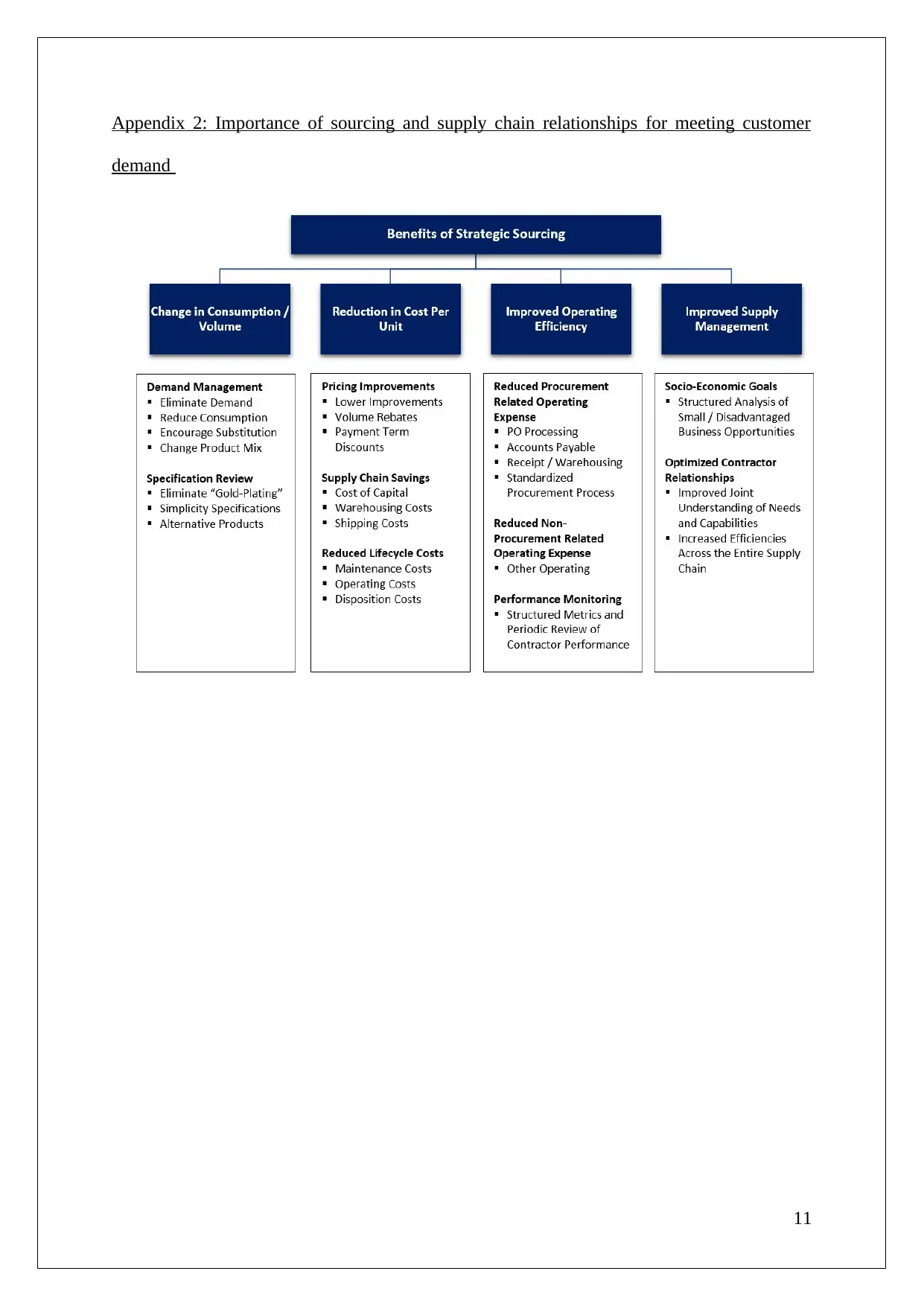
Appendix 2: Importance of sourcing and supply chain relationships for meeting customer
demand
11
demand
11
⊘ This is a preview!⊘
Do you want full access?
Subscribe today to unlock all pages.
Trusted by 1+ million students worldwide

1 out of 12


Related Documents


Your All-in-One AI-Powered Toolkit for Academic Success.
+13062052269
info@desklib.com
Available 24*7 on WhatsApp / Email
![[object Object]](/_next/static/media/star-bottom.7253800d.svg)
Unlock your academic potential
Copyright © 2020–2026 A2Z Services. All Rights Reserved. Developed and managed by ZUCOL.