Reflections on Providing Care: Homelessness and Nursing Practice
VerifiedAdded on  2023/06/03
|5
|1506
|140
Essay
AI Summary
This essay explores a nursing student's reflections on providing care to a homeless patient struggling with depression. The student discusses their initial feelings of sadness, fear, and being overwhelmed, and how they developed therapeutic communication skills to provide effective care. The essay highlights the importance of empathy, professional boundaries, and awareness of available resources for homeless individuals. The student acknowledges the need for further knowledge and education to better serve this vulnerable population, emphasizing the significance of continuous learning and skill development in nursing practice. The essay concludes by reinforcing the nursing student's commitment to helping those in need and improving their ability to provide comprehensive care for homeless patients. Desklib provides a platform for accessing similar solved assignments and resources for students.
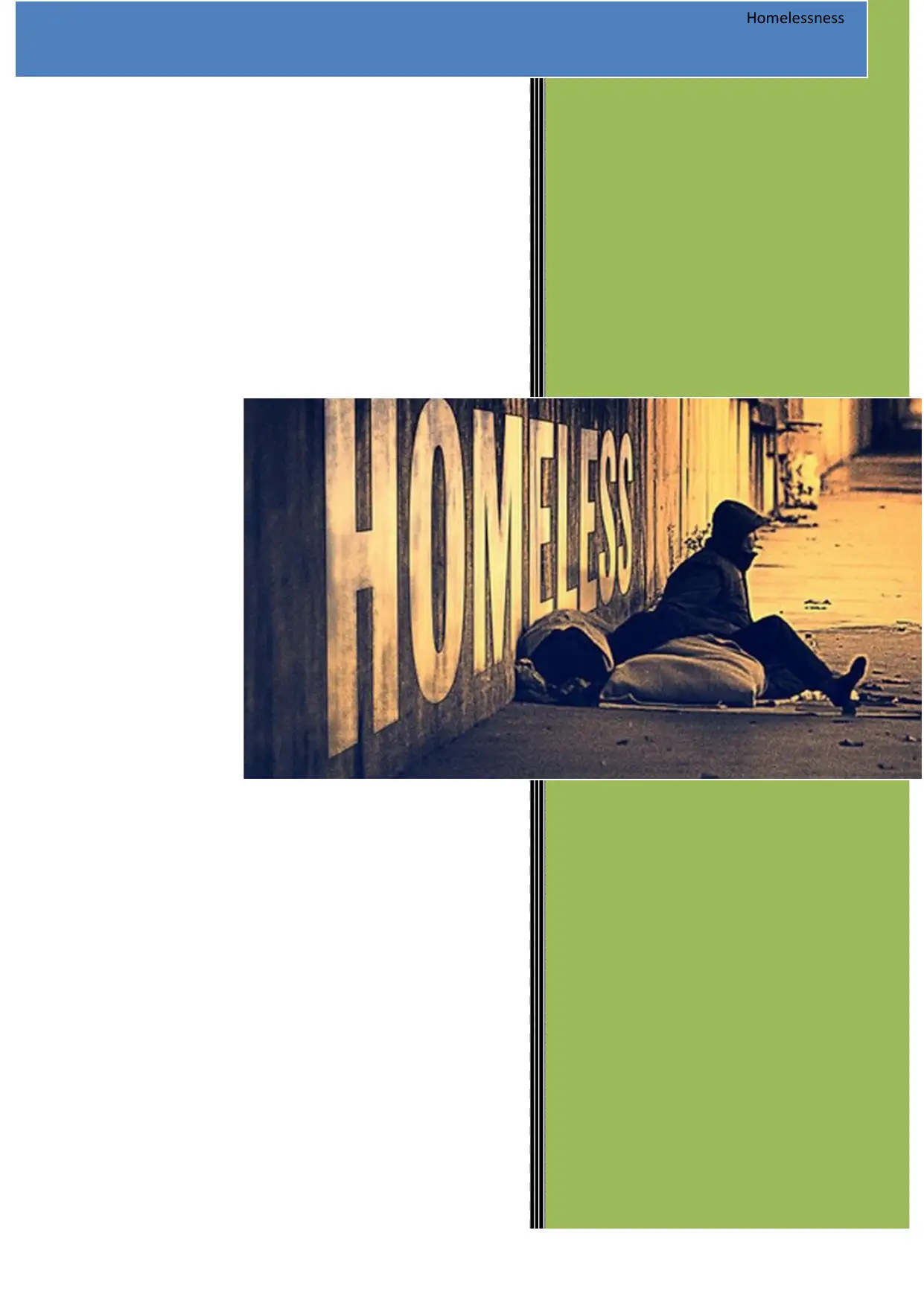
Running Head: HOMELESSNESS 0
Homelessness
Homelessness
Paraphrase This Document
Need a fresh take? Get an instant paraphrase of this document with our AI Paraphraser

HOMELESSNESS 1
Homelessness
Homelessness is the situations of circumstances when individuals do not have any
permanent residence such as apartment, room or house. Homelessness is one of the major
issues that are affecting people from all around the world. Since 2002, this issue has become
a noticeable issue particularly in Australia that needs the focus of Australian Government
(Mission Australia, 2017). Yesterday I provided care to the patient who does not have a
home, was feeling alone, and depressed. He had to live in public areas such as roadside and
parks. In this particular essay, I will discuss the feelings about the issue, evaluation, and
association with my nursing profession.
Homelessness is not restricted to a specific country, city, religion, or community. It
has been affecting people from all around the world for many years. Nearly 105, 000
individuals are homeless each night particularly in Australia and among all the homeless
people nearly fifteen percent is the rough sleeper (Fazel, Geddes, & Kushel, 2014). Most of
the people have homelessness due to poor economic status, domestic violence, substance
abuse and family breakdown (Zufferey, & Horsell, 2017). This problem remains the main
issue among the indigenous people of Australia. However, these problems also occur due to
the individual's own unfavorable habits such as taking illegal drugs (Mallett, Rosenthal, &
Keys, 2005), alcohol consumption in public places, and (Chamberlain, Johnson, & Robinson,
2014).
Tomorrow was my first day in the outpatient department. I was thinking about the
patient to whom i would provide care. He was suffering from depression and there were
possibilities that he may develop other issues associated with this disorder. I really felt sad
and overwhelmed when i found that he does not have a home or apartment to live. It was
completely a new experience for me as I was dealing with the patient have such issues. This
patient reminds me all the people I met daily at the roadsides and in the parks. I never thought
Homelessness
Homelessness is the situations of circumstances when individuals do not have any
permanent residence such as apartment, room or house. Homelessness is one of the major
issues that are affecting people from all around the world. Since 2002, this issue has become
a noticeable issue particularly in Australia that needs the focus of Australian Government
(Mission Australia, 2017). Yesterday I provided care to the patient who does not have a
home, was feeling alone, and depressed. He had to live in public areas such as roadside and
parks. In this particular essay, I will discuss the feelings about the issue, evaluation, and
association with my nursing profession.
Homelessness is not restricted to a specific country, city, religion, or community. It
has been affecting people from all around the world for many years. Nearly 105, 000
individuals are homeless each night particularly in Australia and among all the homeless
people nearly fifteen percent is the rough sleeper (Fazel, Geddes, & Kushel, 2014). Most of
the people have homelessness due to poor economic status, domestic violence, substance
abuse and family breakdown (Zufferey, & Horsell, 2017). This problem remains the main
issue among the indigenous people of Australia. However, these problems also occur due to
the individual's own unfavorable habits such as taking illegal drugs (Mallett, Rosenthal, &
Keys, 2005), alcohol consumption in public places, and (Chamberlain, Johnson, & Robinson,
2014).
Tomorrow was my first day in the outpatient department. I was thinking about the
patient to whom i would provide care. He was suffering from depression and there were
possibilities that he may develop other issues associated with this disorder. I really felt sad
and overwhelmed when i found that he does not have a home or apartment to live. It was
completely a new experience for me as I was dealing with the patient have such issues. This
patient reminds me all the people I met daily at the roadsides and in the parks. I never thought

HOMELESSNESS 2
about the people who used to live in these places and from where they came. This patient
realizes me that how painful it is not having a home or permanent place to live. I realized
about the people who lost their homes in natural disasters such as tsunamis, tornados, storms,
and earthquakes. I was afraid about how would I deal with this person and how would I
provide him good care so that he can achieve good mental health. The circumstances he was
facing were not that easy, therefore I had to deal with patience and communicate well. I really
wanted to provide him good health care; therefore, I developed therapeutic communication
with the patient by using my effective communication skills that are helpful to provide good
care (Partis, 2003).
Initially, I felt sad, afraid and overwhelmed to provide care to this complex patient.
Then handled the situation effectively and now I think gave my best and did a favourable job
taking care of my patient tomorrow. Firstly, I was afraid and overwhelmed that he might
develop other disorder associated with this disorder that might affect him more negatively. I
was aware of that I have to be very calm, observant for any changes, and professional to
provide him a good care (Fitzpatrick-Lewis, Ganann, Krishnaratne, Ciliska, Kouyoumdjian,
& Hwang, 2011). I think I used my strength and skills very well. I made therapeutic
communication with the patient to make him feel that he is not alone and somebody cares for
him. I knew my professional boundaries while dealing with the patient and used all my skills
like good listening skills while communicating with him. The therapeutic communication I
built with the patient help me to observe the patient more effectively as the trust has been
build and thinking that we are here to help him. However, I still need to be very careful,
patient and calm taking care of the patients that do not have the home and educate them about
the policies and programs started by the Australian government and how to care of
themselves (Parsell, Jones, & Head, 2013).
about the people who used to live in these places and from where they came. This patient
realizes me that how painful it is not having a home or permanent place to live. I realized
about the people who lost their homes in natural disasters such as tsunamis, tornados, storms,
and earthquakes. I was afraid about how would I deal with this person and how would I
provide him good care so that he can achieve good mental health. The circumstances he was
facing were not that easy, therefore I had to deal with patience and communicate well. I really
wanted to provide him good health care; therefore, I developed therapeutic communication
with the patient by using my effective communication skills that are helpful to provide good
care (Partis, 2003).
Initially, I felt sad, afraid and overwhelmed to provide care to this complex patient.
Then handled the situation effectively and now I think gave my best and did a favourable job
taking care of my patient tomorrow. Firstly, I was afraid and overwhelmed that he might
develop other disorder associated with this disorder that might affect him more negatively. I
was aware of that I have to be very calm, observant for any changes, and professional to
provide him a good care (Fitzpatrick-Lewis, Ganann, Krishnaratne, Ciliska, Kouyoumdjian,
& Hwang, 2011). I think I used my strength and skills very well. I made therapeutic
communication with the patient to make him feel that he is not alone and somebody cares for
him. I knew my professional boundaries while dealing with the patient and used all my skills
like good listening skills while communicating with him. The therapeutic communication I
built with the patient help me to observe the patient more effectively as the trust has been
build and thinking that we are here to help him. However, I still need to be very careful,
patient and calm taking care of the patients that do not have the home and educate them about
the policies and programs started by the Australian government and how to care of
themselves (Parsell, Jones, & Head, 2013).
⊘ This is a preview!⊘
Do you want full access?
Subscribe today to unlock all pages.

Trusted by 1+ million students worldwide

HOMELESSNESS 3
As I discussed firstly I was overwhelmed afraid and sad when dealing with the
patient, however with the time I got used to these type of patient and I was capable of using
them to provide care to the patient same as we learned in the classes. At the time when I have
been taught about the patient with homelessness, I have noticed that I was not retained as I
was expected to and I am going to review that information I received during the classes.
Because this patient reminds me, all the homeless people living at the roadside and in the
public parks. Being a nurse, I am aware of my duties and responsibilities that I have for the
patient and every person seeks for help. I always wanted to help people who cannot help
themselves as it works as a motivation for me to provide a good care to the patient and help
me to give my best. As the nursing student, I should acquire more data and information,
about the patient with homelessness and depression that would have been effective in dealing
with this type of patient. I have done a lot for the person and I need to make more efforts and
educate him about how he can take care of himself in the adverse circumstances.
Homelessness is considered as the circumstances an individual face due to not having
a permanent residence such as home, flats or apartment to live. Nearly 105,000 people are
still homeless each night specifically in Australia. I have dealt with the patient with this
problem my experience was good and it increases my knowledge and understanding towards
the people with such problems. Dealing with such people is not that easy. You have to be
very observant, polite, and professional and concern about the person. The patient I dealt with
had depression as he does not have his own permanent house. I should gain more knowledge
and information about how to deal with such people so that I can encourage the person and
provide care that is more effective. I can take help from the patient's family to gain more
information about the person, by reading books and using the skills, that I learned in the
classes and become specialized in this area.
As I discussed firstly I was overwhelmed afraid and sad when dealing with the
patient, however with the time I got used to these type of patient and I was capable of using
them to provide care to the patient same as we learned in the classes. At the time when I have
been taught about the patient with homelessness, I have noticed that I was not retained as I
was expected to and I am going to review that information I received during the classes.
Because this patient reminds me, all the homeless people living at the roadside and in the
public parks. Being a nurse, I am aware of my duties and responsibilities that I have for the
patient and every person seeks for help. I always wanted to help people who cannot help
themselves as it works as a motivation for me to provide a good care to the patient and help
me to give my best. As the nursing student, I should acquire more data and information,
about the patient with homelessness and depression that would have been effective in dealing
with this type of patient. I have done a lot for the person and I need to make more efforts and
educate him about how he can take care of himself in the adverse circumstances.
Homelessness is considered as the circumstances an individual face due to not having
a permanent residence such as home, flats or apartment to live. Nearly 105,000 people are
still homeless each night specifically in Australia. I have dealt with the patient with this
problem my experience was good and it increases my knowledge and understanding towards
the people with such problems. Dealing with such people is not that easy. You have to be
very observant, polite, and professional and concern about the person. The patient I dealt with
had depression as he does not have his own permanent house. I should gain more knowledge
and information about how to deal with such people so that I can encourage the person and
provide care that is more effective. I can take help from the patient's family to gain more
information about the person, by reading books and using the skills, that I learned in the
classes and become specialized in this area.
Paraphrase This Document
Need a fresh take? Get an instant paraphrase of this document with our AI Paraphraser

HOMELESSNESS 4
References
Chamberlain, C., Johnson, G., & Robinson, C. (Eds.). (2014). Homelessness in Australia.
NSW, Australia: UNSW Press.
Fazel, S., Geddes, J. R., & Kushel, M. (2014). The health of homeless people in high-income
countries: descriptive epidemiology, health consequences, and clinical and policy
recommendations. The Lancet, 384(9953), 1529-1540.
Fitzpatrick-Lewis, D., Ganann, R., Krishnaratne, S., Ciliska, D., Kouyoumdjian, F., &
Hwang, S. W. (2011). The effectiveness of interventions to improve the health and
housing status of homeless people: a rapid systematic review. BMC Public
Health, 11(1), 638.
Mallett, S., Rosenthal, D., & Keys, D. (2005). Young people, drug use and family conflict:
Pathways into homelessness. Journal of adolescence, 28(2), 185-199.
Mission Australia (2017). What is homelessness?. Retrieved from:
https://www.missionaustralia.com.au/what-we-do/homelessness-social-housing/what-
is-homelessness
Parsell, C., Jones, A., & Head, B. (2013). Policies and programmes to end homelessness in
Australia: Learning from international practice. International Journal of Social
Welfare, 22(2), 186-194.
Partis, M. (2003). Hope in homeless people: a phenomenological study. Primary Health Care
Research & Development, 4(1), 9-19.
Zufferey, C., & Horsell, C. (2017). Homelessness in Australia. In Faces of Homelessness in
the Asia Pacific (pp. 147-159). Routledge.
References
Chamberlain, C., Johnson, G., & Robinson, C. (Eds.). (2014). Homelessness in Australia.
NSW, Australia: UNSW Press.
Fazel, S., Geddes, J. R., & Kushel, M. (2014). The health of homeless people in high-income
countries: descriptive epidemiology, health consequences, and clinical and policy
recommendations. The Lancet, 384(9953), 1529-1540.
Fitzpatrick-Lewis, D., Ganann, R., Krishnaratne, S., Ciliska, D., Kouyoumdjian, F., &
Hwang, S. W. (2011). The effectiveness of interventions to improve the health and
housing status of homeless people: a rapid systematic review. BMC Public
Health, 11(1), 638.
Mallett, S., Rosenthal, D., & Keys, D. (2005). Young people, drug use and family conflict:
Pathways into homelessness. Journal of adolescence, 28(2), 185-199.
Mission Australia (2017). What is homelessness?. Retrieved from:
https://www.missionaustralia.com.au/what-we-do/homelessness-social-housing/what-
is-homelessness
Parsell, C., Jones, A., & Head, B. (2013). Policies and programmes to end homelessness in
Australia: Learning from international practice. International Journal of Social
Welfare, 22(2), 186-194.
Partis, M. (2003). Hope in homeless people: a phenomenological study. Primary Health Care
Research & Development, 4(1), 9-19.
Zufferey, C., & Horsell, C. (2017). Homelessness in Australia. In Faces of Homelessness in
the Asia Pacific (pp. 147-159). Routledge.
1 out of 5
Related Documents
Your All-in-One AI-Powered Toolkit for Academic Success.
 +13062052269
info@desklib.com
Available 24*7 on WhatsApp / Email
Unlock your academic potential
Copyright © 2020–2025 A2Z Services. All Rights Reserved. Developed and managed by ZUCOL.