Access to HE Diploma: Homeostasis, Excretion, and Regulation Report
VerifiedAdded on 2022/08/24
|11
|1822
|25
Report
AI Summary
This report delves into the concept of homeostasis, the body's mechanism for maintaining internal stability. It explores the principles of homeostasis, emphasizing the role of receptors and negative feedback in regulating various physiological processes. The report discusses the structure of the skin and its function in temperature regulation, explaining how the skin interacts with the hypothalamus to maintain body temperature. Furthermore, it examines blood glucose control through negative feedback, highlighting the roles of insulin and glucagon. The report also investigates the excretion process, focusing on the structure and function of the kidney, including ultrafiltration and reabsorption within the nephron. It concludes by discussing the interplay of the kidney, hypothalamus, and pituitary gland in controlling water content, thereby emphasizing the importance of homeostasis in overall body function and regulation. The report is a comprehensive overview of key biological processes related to maintaining a stable internal environment.
Running head: HOMEOSTASIS
HOMEOSTASIS
Name of the Student
Name of the University
Author Note
HOMEOSTASIS
Name of the Student
Name of the University
Author Note
Paraphrase This Document
Need a fresh take? Get an instant paraphrase of this document with our AI Paraphraser

1
HOMEOSTASIS
Introduction
Biological system is developed with the consideration of several biochemical and
physiological processes. Hence, the balance of every function or stability is one of the most
important factors for maintenance of the total functionality of the body. On this context it can be
found that the stability and the balance are maintained in every cell and subsequently in the
tissues as well. This process is termed with the phenomenon of homeostasis. It has been seen that
the body tends to balance or stabilise by maintaining the every stimulus and biological materials.
On this context it can be seen that the receptors and the negative feedbacks of the receptors have
an important effect in order to maintain the homeostasis of the body. In the following section the
function of the receptors and the importance of the negative feedback for maintaining the
homeostasis along with the excretion process for the homeostasis would be discussed in details.
Homeostasis and Negative Feedback
Principles of homeostasis
Homeostasis is basically the process of maintaining equilibrium or the stability of the
body systems for effective functionality. On this context it can be seen that if a body system is
deviating from its normal condition for the workability of the body the corrective mechanism
triggered. After the trigger the mechanism focuses on triggering the mechanism which can
negate the overwhelming condition or enhance the lacks as well. On this context it can be found
that the effective negative response of the receptors generally triggered and subsequently the
situation tends to normalise. For example, if glucose level rises in the blood then the negative
feedback of the hypothalamus will spread the signal to produce insulin and thus the glucose level
will normalise. Hence, it can be stated that the homeostasis is the process of maintain the
HOMEOSTASIS
Introduction
Biological system is developed with the consideration of several biochemical and
physiological processes. Hence, the balance of every function or stability is one of the most
important factors for maintenance of the total functionality of the body. On this context it can be
found that the stability and the balance are maintained in every cell and subsequently in the
tissues as well. This process is termed with the phenomenon of homeostasis. It has been seen that
the body tends to balance or stabilise by maintaining the every stimulus and biological materials.
On this context it can be seen that the receptors and the negative feedbacks of the receptors have
an important effect in order to maintain the homeostasis of the body. In the following section the
function of the receptors and the importance of the negative feedback for maintaining the
homeostasis along with the excretion process for the homeostasis would be discussed in details.
Homeostasis and Negative Feedback
Principles of homeostasis
Homeostasis is basically the process of maintaining equilibrium or the stability of the
body systems for effective functionality. On this context it can be seen that if a body system is
deviating from its normal condition for the workability of the body the corrective mechanism
triggered. After the trigger the mechanism focuses on triggering the mechanism which can
negate the overwhelming condition or enhance the lacks as well. On this context it can be found
that the effective negative response of the receptors generally triggered and subsequently the
situation tends to normalise. For example, if glucose level rises in the blood then the negative
feedback of the hypothalamus will spread the signal to produce insulin and thus the glucose level
will normalise. Hence, it can be stated that the homeostasis is the process of maintain the

2
HOMEOSTASIS
equilibrium of the body components in set point for the normalisation when the condition deviate
from the set point (Cgp Books. 2016).
Role of skin in temperature regulation
Skin is the layer of body which can be marked as the shield from external negative
factors. Hence, it has an important role in the homeostasis of the body system. The skin is
primarily responsible for the thermoregulation of the body. In terms of this it has been seen that
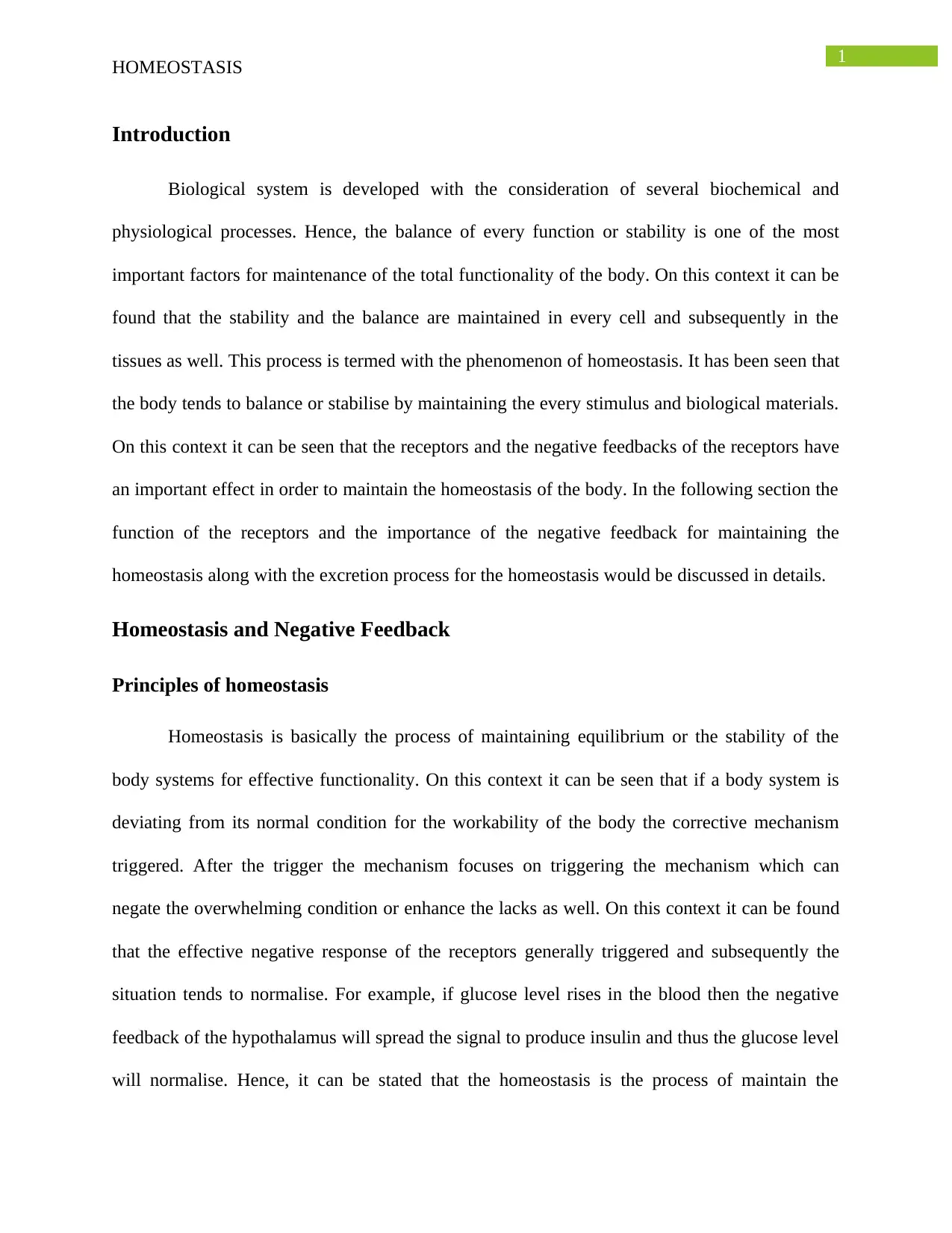
the skin has three distinct layers such as epidermis, dermis and hypodermis. The outer layer of
that is epidermis is comprising of blood vessels and it is also cutaneous which provides water
proof properties to the body. The dermis is the middle layer which comprises of sweat glands,
connective tissues and hair follicles. Finally, the epidermis contains the fat layer and connective
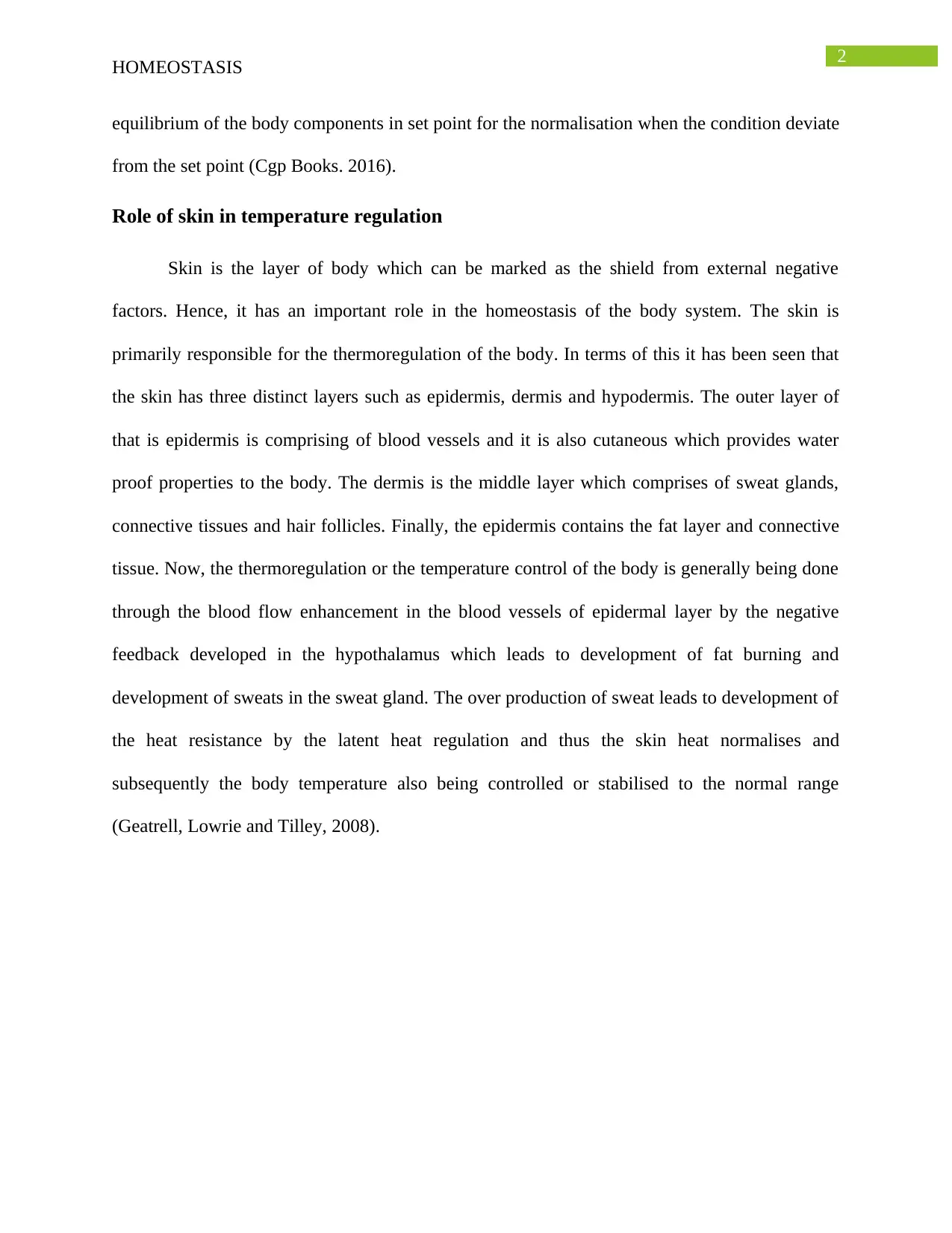
tissue. Now, the thermoregulation or the temperature control of the body is generally being done
through the blood flow enhancement in the blood vessels of epidermal layer by the negative
feedback developed in the hypothalamus which leads to development of fat burning and
development of sweats in the sweat gland. The over production of sweat leads to development of
the heat resistance by the latent heat regulation and thus the skin heat normalises and
subsequently the body temperature also being controlled or stabilised to the normal range
(Geatrell, Lowrie and Tilley, 2008).
HOMEOSTASIS
equilibrium of the body components in set point for the normalisation when the condition deviate
from the set point (Cgp Books. 2016).
Role of skin in temperature regulation
Skin is the layer of body which can be marked as the shield from external negative
factors. Hence, it has an important role in the homeostasis of the body system. The skin is
primarily responsible for the thermoregulation of the body. In terms of this it has been seen that
the skin has three distinct layers such as epidermis, dermis and hypodermis. The outer layer of
that is epidermis is comprising of blood vessels and it is also cutaneous which provides water
proof properties to the body. The dermis is the middle layer which comprises of sweat glands,
connective tissues and hair follicles. Finally, the epidermis contains the fat layer and connective
tissue. Now, the thermoregulation or the temperature control of the body is generally being done
through the blood flow enhancement in the blood vessels of epidermal layer by the negative
feedback developed in the hypothalamus which leads to development of fat burning and
development of sweats in the sweat gland. The over production of sweat leads to development of
the heat resistance by the latent heat regulation and thus the skin heat normalises and
subsequently the body temperature also being controlled or stabilised to the normal range
(Geatrell, Lowrie and Tilley, 2008).
⊘ This is a preview!⊘
Do you want full access?
Subscribe today to unlock all pages.

Trusted by 1+ million students worldwide

3
HOMEOSTASIS
Figure 1: Skin Structure
Figure 2: Heat regulation
HOMEOSTASIS
Figure 1: Skin Structure
Figure 2: Heat regulation
Paraphrase This Document
Need a fresh take? Get an instant paraphrase of this document with our AI Paraphraser

4
HOMEOSTASIS
Blood glucose control by negative feedback
Blood glucose level is one of the most important factors for the maintenance of the body
functions properly. The glucose in the blood is delivered to the cells for burning the glucose and
produce enough energy to work properly. However, the level of glucose should be in check as it
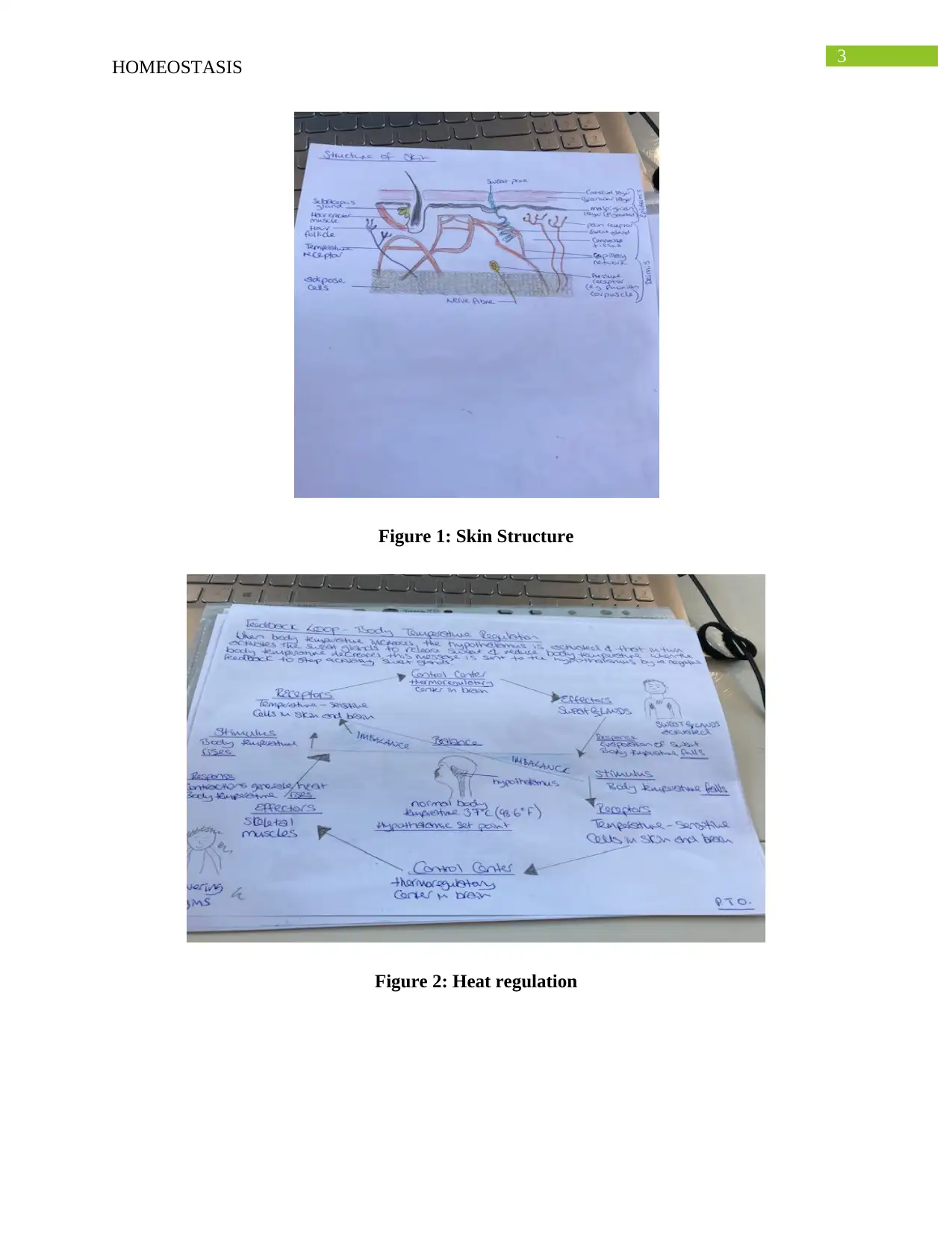
can also affect the organs. Hence, if the level of blood glucose level is higher than normal then
the hypothalamus develops a negative response or feedback which then triggers the pancreas to
activate the beta cells to produce insulin and subsequently the blood sugar level tends to
normalise or being stabilised. On the contrary the same process occurs when the blood glucose
level tends to lower from the normal level then the negative feedback of hypothalamus triggers
the pancreas to produce glucagon from the alpha cells. Thus, the glucose level again stabilises to
the normal level. However, the GLUT 1, GLUT 2, GLUT 3, GLUT 4 and GLP 1 are the
receptors which have a large role in the glucose level control as these are the receptors which
helps in the insulin and glucagon production and transport in the blood after the negative
feedback comes into action (Kent 2000).
HOMEOSTASIS
Blood glucose control by negative feedback
Blood glucose level is one of the most important factors for the maintenance of the body
functions properly. The glucose in the blood is delivered to the cells for burning the glucose and
produce enough energy to work properly. However, the level of glucose should be in check as it
can also affect the organs. Hence, if the level of blood glucose level is higher than normal then
the hypothalamus develops a negative response or feedback which then triggers the pancreas to
activate the beta cells to produce insulin and subsequently the blood sugar level tends to
normalise or being stabilised. On the contrary the same process occurs when the blood glucose
level tends to lower from the normal level then the negative feedback of hypothalamus triggers
the pancreas to produce glucagon from the alpha cells. Thus, the glucose level again stabilises to
the normal level. However, the GLUT 1, GLUT 2, GLUT 3, GLUT 4 and GLP 1 are the
receptors which have a large role in the glucose level control as these are the receptors which
helps in the insulin and glucagon production and transport in the blood after the negative
feedback comes into action (Kent 2000).

5
HOMEOSTASIS
Figure 3: Glucose control
Excretion Process
Importance of removal of waste
The human body or any biological system develop waste as the systems require food to
generate energy and oxygen to digest those food and generate energy. As a result, the carbon
dioxide and the food wastes develop in the body. Moreover, the water intake is also important
and after the use of those water leads to the development of water biproducts as the water is used
in almost every biochemical mechanism of the body. Hence, the development of these wastes is
natural and for these wastes the body has significant storages. However, the storage organs have
a limit and thus the wastes should be excreted from the body other wise the overload will affect
the biochemical mechanisms. Moreover, the wastes sometimes found with negative or toxic
elements as well which can affect the body receptors or sensors and tend to affect the circulatory
and the nervous systems. On this context it can be found that the process of the waste excretion
is very much important to properly controlling or balancing the body processes thus the excretion
process can also be marked as the homeostasis (Williams 2000).
HOMEOSTASIS
Figure 3: Glucose control
Excretion Process
Importance of removal of waste
The human body or any biological system develop waste as the systems require food to
generate energy and oxygen to digest those food and generate energy. As a result, the carbon
dioxide and the food wastes develop in the body. Moreover, the water intake is also important
and after the use of those water leads to the development of water biproducts as the water is used
in almost every biochemical mechanism of the body. Hence, the development of these wastes is
natural and for these wastes the body has significant storages. However, the storage organs have
a limit and thus the wastes should be excreted from the body other wise the overload will affect
the biochemical mechanisms. Moreover, the wastes sometimes found with negative or toxic
elements as well which can affect the body receptors or sensors and tend to affect the circulatory
and the nervous systems. On this context it can be found that the process of the waste excretion
is very much important to properly controlling or balancing the body processes thus the excretion
process can also be marked as the homeostasis (Williams 2000).
⊘ This is a preview!⊘
Do you want full access?
Subscribe today to unlock all pages.

Trusted by 1+ million students worldwide

6
HOMEOSTASIS
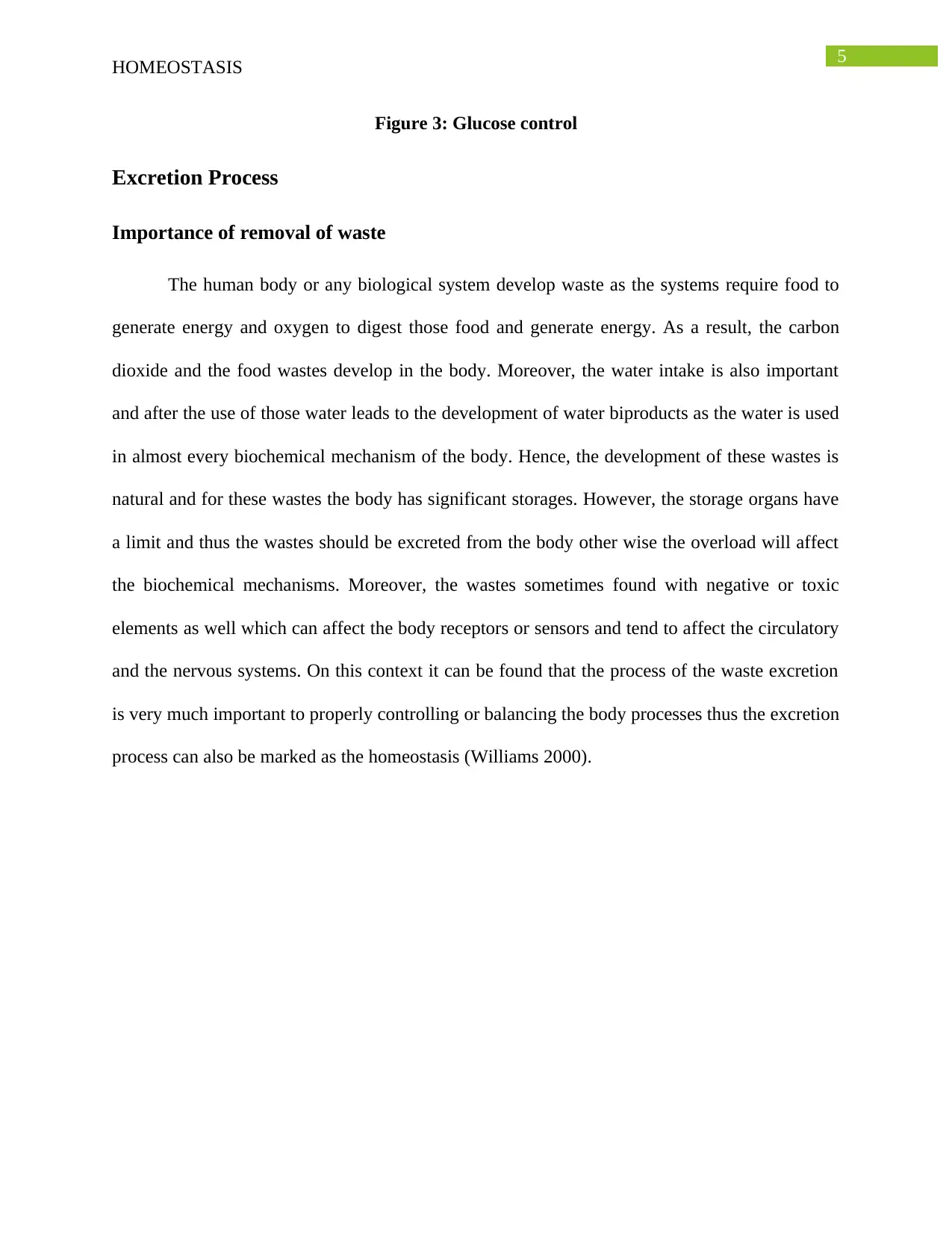
Figure 4: CO2 waste control
Structure and function of Kidney
Kidney is the bean shaped filtration organ of the human body which regulates the water
content of the body and excretes the water waste. The primary function of the kidney is to filter
the water waste and re-absorb the water from the waste and send the useful water trough the
blood vessels to the body parts again. Moreover, it also excretes the unwanted or the waste water
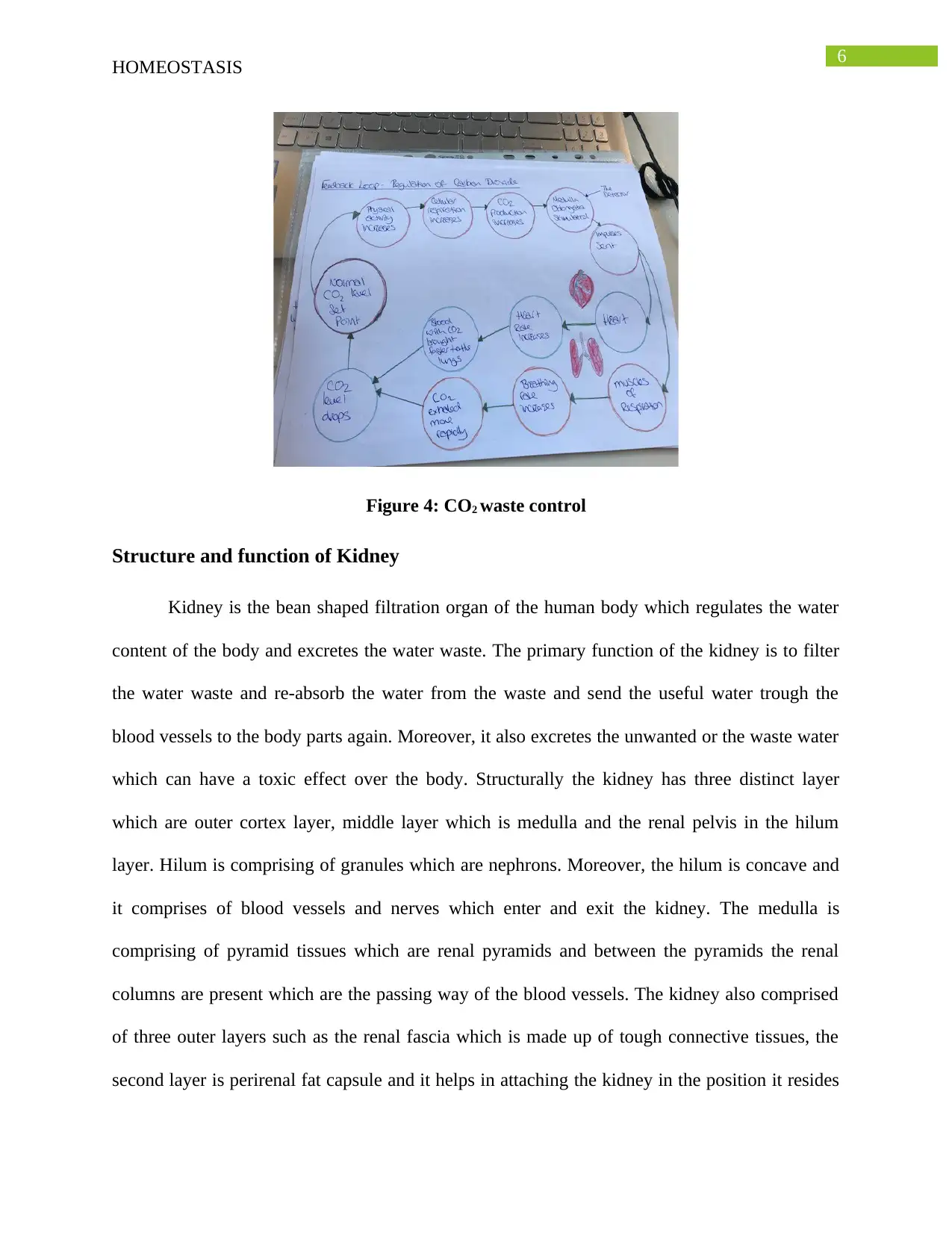
which can have a toxic effect over the body. Structurally the kidney has three distinct layer
which are outer cortex layer, middle layer which is medulla and the renal pelvis in the hilum
layer. Hilum is comprising of granules which are nephrons. Moreover, the hilum is concave and
it comprises of blood vessels and nerves which enter and exit the kidney. The medulla is
comprising of pyramid tissues which are renal pyramids and between the pyramids the renal
columns are present which are the passing way of the blood vessels. The kidney also comprised
of three outer layers such as the renal fascia which is made up of tough connective tissues, the
second layer is perirenal fat capsule and it helps in attaching the kidney in the position it resides
HOMEOSTASIS
Figure 4: CO2 waste control
Structure and function of Kidney
Kidney is the bean shaped filtration organ of the human body which regulates the water
content of the body and excretes the water waste. The primary function of the kidney is to filter
the water waste and re-absorb the water from the waste and send the useful water trough the
blood vessels to the body parts again. Moreover, it also excretes the unwanted or the waste water
which can have a toxic effect over the body. Structurally the kidney has three distinct layer
which are outer cortex layer, middle layer which is medulla and the renal pelvis in the hilum
layer. Hilum is comprising of granules which are nephrons. Moreover, the hilum is concave and
it comprises of blood vessels and nerves which enter and exit the kidney. The medulla is
comprising of pyramid tissues which are renal pyramids and between the pyramids the renal
columns are present which are the passing way of the blood vessels. The kidney also comprised
of three outer layers such as the renal fascia which is made up of tough connective tissues, the
second layer is perirenal fat capsule and it helps in attaching the kidney in the position it resides
Paraphrase This Document
Need a fresh take? Get an instant paraphrase of this document with our AI Paraphraser

7
HOMEOSTASIS
in the body and the inner renal capsule. The renal pelvis is the exit way of the kidney to the
ureter (Geatrell, Lowrie and Tilley, 2008).
Figure 5: Kidney
Ultra-filtration and Re-absorption in Nephron
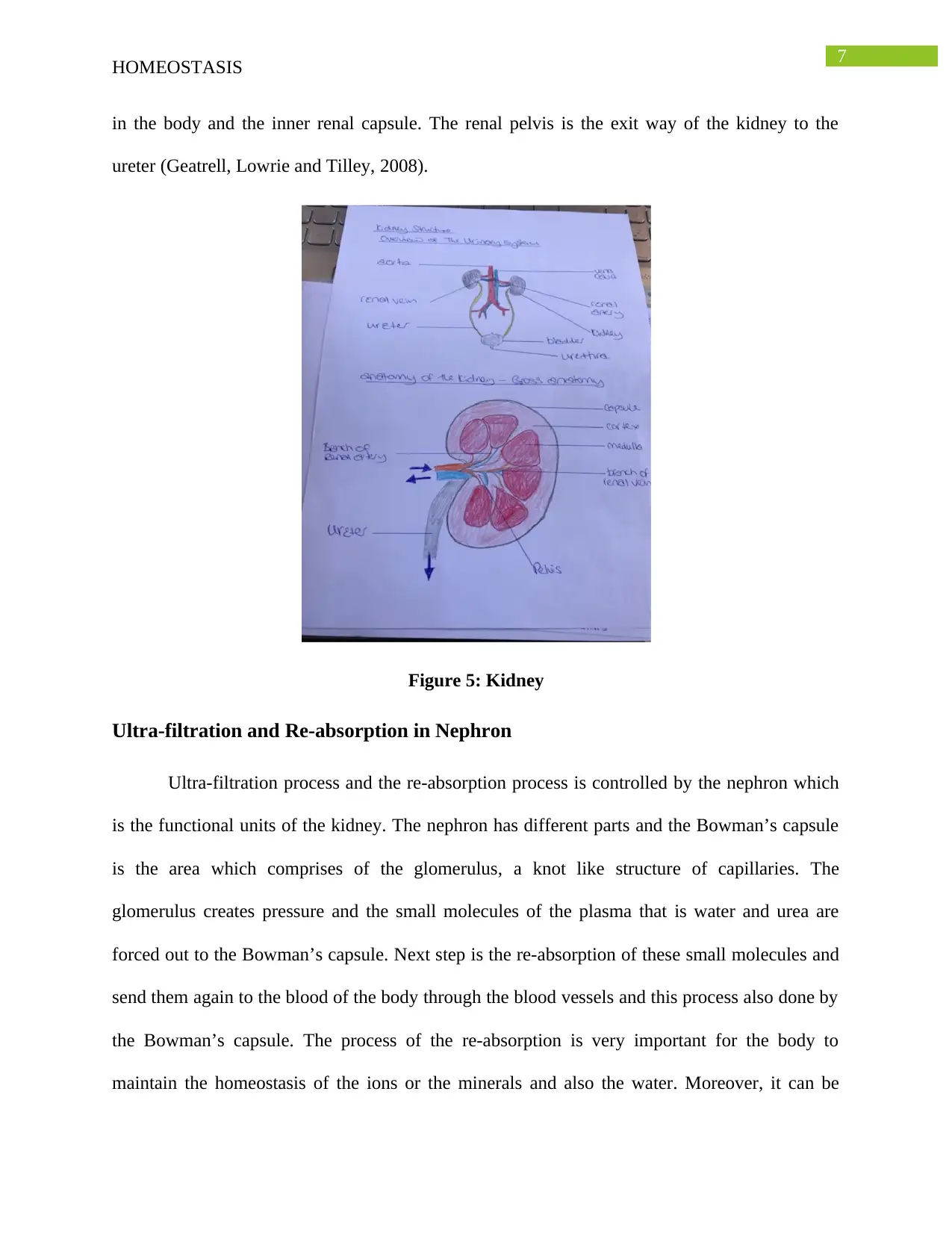
Ultra-filtration process and the re-absorption process is controlled by the nephron which
is the functional units of the kidney. The nephron has different parts and the Bowman’s capsule
is the area which comprises of the glomerulus, a knot like structure of capillaries. The
glomerulus creates pressure and the small molecules of the plasma that is water and urea are
forced out to the Bowman’s capsule. Next step is the re-absorption of these small molecules and
send them again to the blood of the body through the blood vessels and this process also done by
the Bowman’s capsule. The process of the re-absorption is very important for the body to
maintain the homeostasis of the ions or the minerals and also the water. Moreover, it can be
HOMEOSTASIS
in the body and the inner renal capsule. The renal pelvis is the exit way of the kidney to the
ureter (Geatrell, Lowrie and Tilley, 2008).
Figure 5: Kidney
Ultra-filtration and Re-absorption in Nephron
Ultra-filtration process and the re-absorption process is controlled by the nephron which
is the functional units of the kidney. The nephron has different parts and the Bowman’s capsule
is the area which comprises of the glomerulus, a knot like structure of capillaries. The
glomerulus creates pressure and the small molecules of the plasma that is water and urea are
forced out to the Bowman’s capsule. Next step is the re-absorption of these small molecules and
send them again to the blood of the body through the blood vessels and this process also done by
the Bowman’s capsule. The process of the re-absorption is very important for the body to
maintain the homeostasis of the ions or the minerals and also the water. Moreover, it can be

8
HOMEOSTASIS
stated that the reabsorption should be almost 99 per cent if the nephrons are working properly
(Waugh and Grant 2010).
Figure 6: Nephron
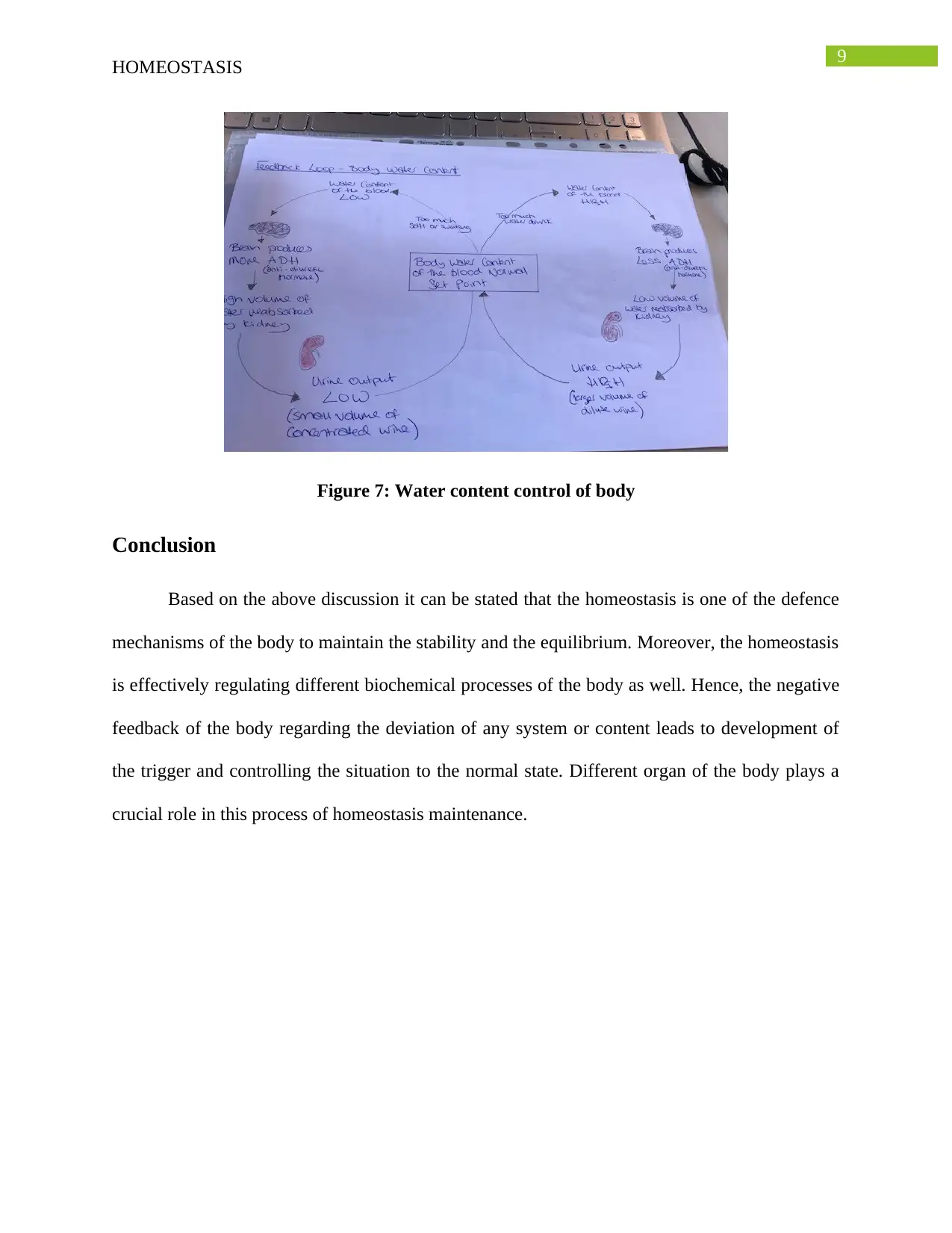
Role of kidney, hypothalamus and pituitary gland in controlling water content
The water context of the body should be maintained as human body is comprising of
almost 70 per cent water and the water has a large functional impact over the body as well.
Hence, the equilibrium of water is one of the most important factors in terms of physiology and
the homeostasis of water is the most prominent factors as well. On this context lack of water
develops a negative response in the hypothalamus which then triggers the pituitary gland and
subsequently it activates the ultra-filtration of kidney and reabsorption process. Hence, it leads to
the reabsorption of the water and maintain the water content in the body properly. Thus, the
negative feedback of hypothalamus and the homeostasis process effectively regulate the water
content in the body (Collins 2006).
HOMEOSTASIS
stated that the reabsorption should be almost 99 per cent if the nephrons are working properly
(Waugh and Grant 2010).
Figure 6: Nephron
Role of kidney, hypothalamus and pituitary gland in controlling water content
The water context of the body should be maintained as human body is comprising of
almost 70 per cent water and the water has a large functional impact over the body as well.
Hence, the equilibrium of water is one of the most important factors in terms of physiology and
the homeostasis of water is the most prominent factors as well. On this context lack of water
develops a negative response in the hypothalamus which then triggers the pituitary gland and
subsequently it activates the ultra-filtration of kidney and reabsorption process. Hence, it leads to
the reabsorption of the water and maintain the water content in the body properly. Thus, the
negative feedback of hypothalamus and the homeostasis process effectively regulate the water
content in the body (Collins 2006).
⊘ This is a preview!⊘
Do you want full access?
Subscribe today to unlock all pages.

Trusted by 1+ million students worldwide

9
HOMEOSTASIS
Figure 7: Water content control of body
Conclusion
Based on the above discussion it can be stated that the homeostasis is one of the defence
mechanisms of the body to maintain the stability and the equilibrium. Moreover, the homeostasis
is effectively regulating different biochemical processes of the body as well. Hence, the negative
feedback of the body regarding the deviation of any system or content leads to development of
the trigger and controlling the situation to the normal state. Different organ of the body plays a
crucial role in this process of homeostasis maintenance.
HOMEOSTASIS
Figure 7: Water content control of body
Conclusion
Based on the above discussion it can be stated that the homeostasis is one of the defence
mechanisms of the body to maintain the stability and the equilibrium. Moreover, the homeostasis
is effectively regulating different biochemical processes of the body as well. Hence, the negative
feedback of the body regarding the deviation of any system or content leads to development of
the trigger and controlling the situation to the normal state. Different organ of the body plays a
crucial role in this process of homeostasis maintenance.
Paraphrase This Document
Need a fresh take? Get an instant paraphrase of this document with our AI Paraphraser

10
HOMEOSTASIS
References
Cgp Books. (2016). New 2015 a-level Biology Exam Board: AQA. Complete Revision and
Practice. Coordination Group Public.
Collins, W. (2006). AS Revision Notes Biology; Harper Collins Publishers
Geatrell, B., Lowrie, P. and Tilley, A. (2008). Human Biology Harlow; Heinemann
Kent, M. (2000) Advanced Biology Oxford; Oxford University Press
Waugh, A. and Grant, A (2010) Ross and Wilson Anatomy and Physiology in Health and Illness
(11th edition) Edinburgh; Churchill Livingstone
Williams, G. (2000) Advanced Biology for You Cheltenham; Nelson Thornes
HOMEOSTASIS
References
Cgp Books. (2016). New 2015 a-level Biology Exam Board: AQA. Complete Revision and
Practice. Coordination Group Public.
Collins, W. (2006). AS Revision Notes Biology; Harper Collins Publishers
Geatrell, B., Lowrie, P. and Tilley, A. (2008). Human Biology Harlow; Heinemann
Kent, M. (2000) Advanced Biology Oxford; Oxford University Press
Waugh, A. and Grant, A (2010) Ross and Wilson Anatomy and Physiology in Health and Illness
(11th edition) Edinburgh; Churchill Livingstone
Williams, G. (2000) Advanced Biology for You Cheltenham; Nelson Thornes
1 out of 11
Related Documents
Your All-in-One AI-Powered Toolkit for Academic Success.
+13062052269
info@desklib.com
Available 24*7 on WhatsApp / Email
Unlock your academic potential
Copyright © 2020–2025 A2Z Services. All Rights Reserved. Developed and managed by ZUCOL.