Trend Analysis: Positive and Negative Impacts on Hospitality Industry

Verified

Added on  2023/06/04

|11
|2197
|159
Essay
AI Summary
This essay provides an in-depth analysis of the positive and negative impacts of current and future trends on the hospitality industry, with a specific focus on health foods, sustainability, and technology within the Australian context. It examines ongoing trends such as the increasing demand for health foods, the implementation of sustainability strategies, and the integration of technology like mobile applications and digital cards. The analysis covers the positive impacts, including cost efficiency, enhanced customer experience, and improved health benefits, as well as the negative impacts, such as data theft risks, implementation costs, and potential health issues related to certain food trends. Furthermore, the essay explores future trends like meat reduction, greener substitutes, virtual reality, and medicinal foods, evaluating their potential benefits and drawbacks. The essay concludes with recommendations for capitalizing on business opportunities while minimizing risks, emphasizing the importance of government support, robust data protection, and strategic implementation of new technologies and food trends. The study highlights the necessity for the hospitality sector to adapt to these evolving trends to maintain competitiveness and sustainability.
Document Page
POSITIVE AND NEGATIVE IMPACT ON THE HOSPITALITY
INDUSTRY
0
tabler-icon-diamond-filled.svg

Paraphrase This Document

Need a fresh take? Get an instant paraphrase of this document with our AI Paraphraser
Document Page
Table of Contents
Introduction................................................................................................................................2
Present and future trends analysis for hospitality industry........................................................2
On-going trends (health foods, sustainability and technology).................................................2
Trend.......................................................................................................................................2
Positive impacts......................................................................................................................3
Negative impacts.....................................................................................................................3
Future trends (health foods, sustainability and technology)......................................................3
Trend.......................................................................................................................................3
Positive impacts......................................................................................................................4
Negative impacts.....................................................................................................................4
Recommendations......................................................................................................................5
Conclusion..................................................................................................................................5
Reference list..............................................................................................................................6
1
Document Page
Introduction
Hospitality industry sustains the major scale within the global industrial aspects present.
Within this industry, practical advancements are undertaken within every ongoing second.
For such, there are existent several factors such as health foods along with technological
developments along with sustainability aspects. Favouring such, the following content would
be dealing with on-going along with future trends for the hospitality industry of Australia.
For the present as well as future hospitality trends, positive along with negative impact
would be also formulated. Apart from such, a recommendation would also be followed
regarding the capitalisation of business opportunities with risk aversion. The thesis statement
hence would be regarding analysis of trends for the hospitality industry with evaluative
context and a conclusive portion at the end.
Present and future trends analysis for hospitality industry
On-going trends (health foods, sustainability and technology)
Trend
2
Document Page
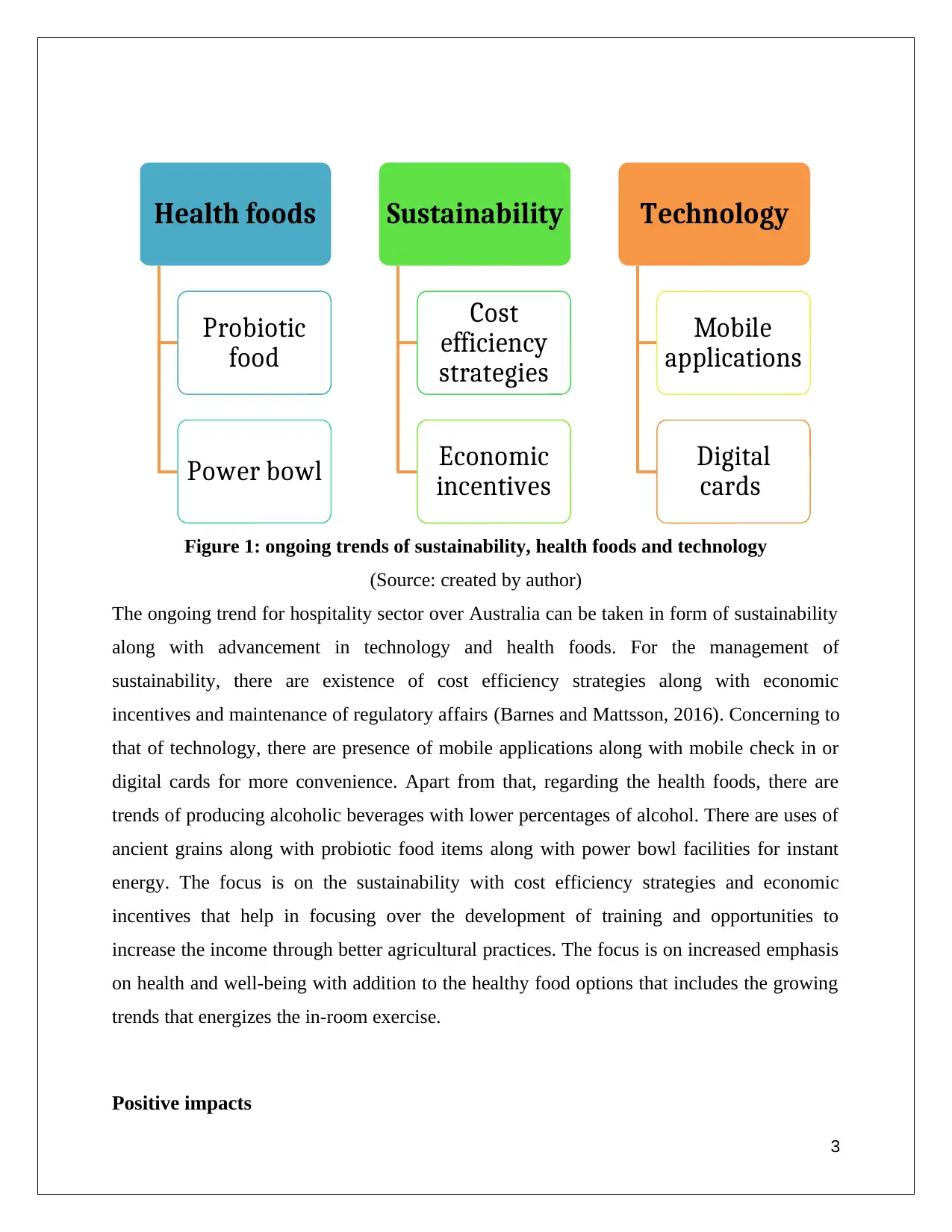
Figure 1: ongoing trends of sustainability, health foods and technology
(Source: created by author)
The ongoing trend for hospitality sector over Australia can be taken in form of sustainability
along with advancement in technology and health foods. For the management of
sustainability, there are existence of cost efficiency strategies along with economic
incentives and maintenance of regulatory affairs (Barnes and Mattsson, 2016). Concerning to
that of technology, there are presence of mobile applications along with mobile check in or
digital cards for more convenience. Apart from that, regarding the health foods, there are
trends of producing alcoholic beverages with lower percentages of alcohol. There are uses of
ancient grains along with probiotic food items along with power bowl facilities for instant
energy. The focus is on the sustainability with cost efficiency strategies and economic
incentives that help in focusing over the development of training and opportunities to
increase the income through better agricultural practices. The focus is on increased emphasis
on health and well-being with addition to the healthy food options that includes the growing
trends that energizes the in-room exercise.
Positive impacts
3
Health foods
Probiotic
food
Power bowl
Sustainability
Cost
efficiency
strategies
Economic
incentives
Technology
Mobile
applications
Digital
cards
tabler-icon-diamond-filled.svg

Paraphrase This Document

Need a fresh take? Get an instant paraphrase of this document with our AI Paraphraser
Document Page
For the sustainability aspect, cost efficiency would be duly effective for reduction along with
improvisation of efficiency through implementation of better working strategic processes.
Apart from such, economic incentives from the government side are beneficial for producing
green environment for reducing environmental impacts. Also the new regulatory affairs are
effective to manage the ill-health products along with enhance the band image of hospitality
sector (Cheng, 2016).
Technological trends regarding the use of the mobile applications have greater impact.
Through use of such, hassle free booking can be catered to a greater extent. Also the use of
the digitised cards for check in and out caters to more security to the customers while being
engaged within the hospitality industry. The technology continues to evolve and interconnect
with the expectation to see that there are more ordering and better delivery of the services
through the applications. The websites like Trip Advisor and the Airbnb are dabbling in the
reviewing of restaurants and the check-ins.
Health food trends comprise the probiotic foods and ancient grains that are effective to
provide higher supplement for the body with greater energy. The concerned power bowls are
effective to produce more amounts of vitamins along with other nutrients within a shorter
amount consumption (Kandampully, Zhang and Bilgihan, 2015). Apart from such, alcoholic
beverages with less alcohol percentage are effective to produce similar flavours with less
effect over the body.
Negative impacts
For the sustainability trends, concerning towards the economic incentives, the factor stays
with the deployment of incentives to every working individual that sustains difficulty. Apart
from such, the implementations of strategic approaches for green environment are taken to
be more cost engulfing. For such, any hospitality sector lower yield would face difficulty
(Zaitseva et al. 2016).
Technological trends sustaining the use of mobile applications are effective to procure data
thefts along with produce transaction issues. For the use of digitised cards regarding check
4
Document Page
in/outs, any malfunctioning can either lock the customer inside or might restrain from
entering the room. Such aspects are a major disadvantage (Ali, Amin and Cobanoglu, 2016).
Use of probiotic foods are inefficient to many ages while might be efficient for athletes.
Probiotics are negative towards digestive system for ordinary body along with has negative
impact over the blood pressures. Further, overdoses of power bowls are effective to produce
bodily constraints.
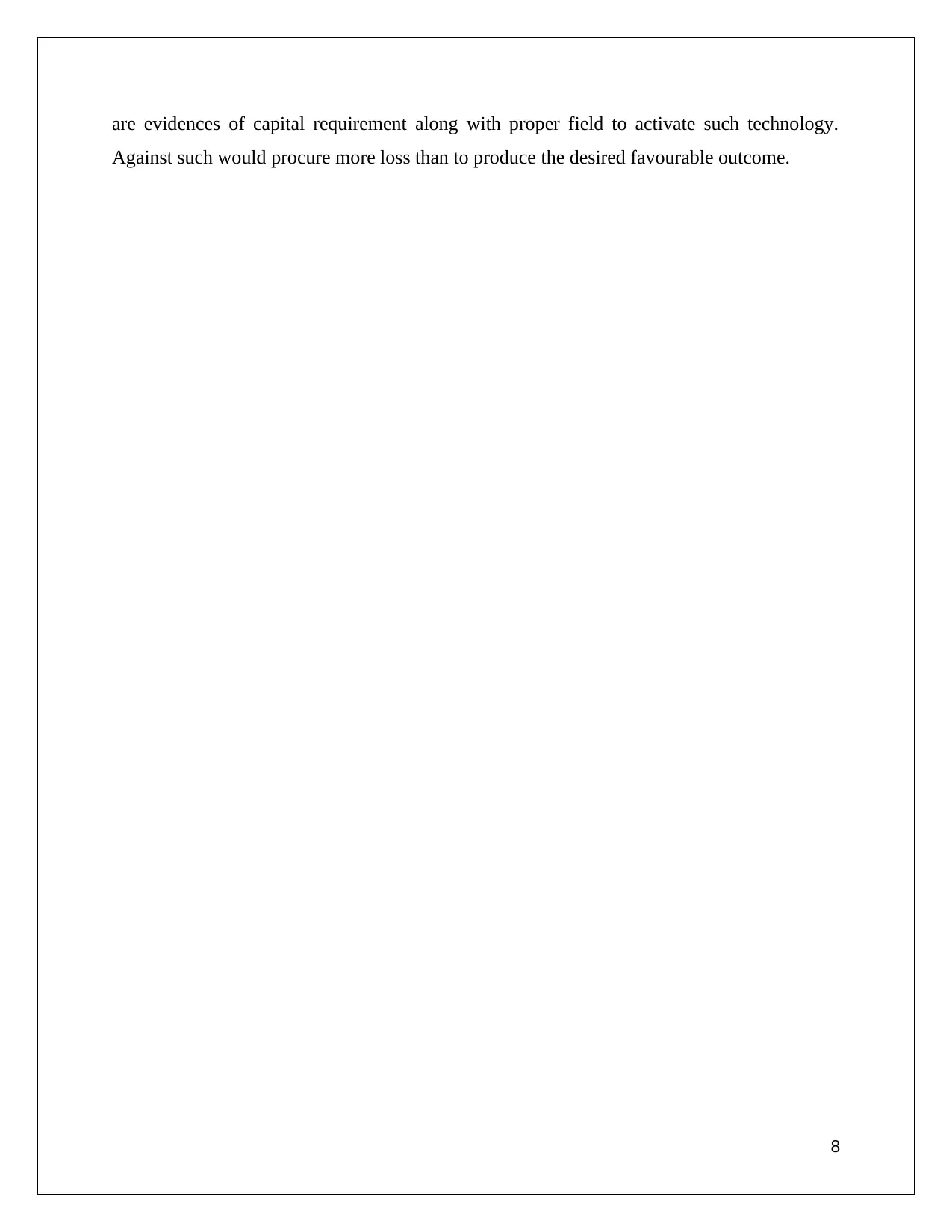
Future trends (health foods, sustainability and technology)
Trend
Figure 2: Future trends of sustainability, health foods and technology
(Source: created by author)
The future trends of the hospitality industry seek to produce greener substitutes for
production of energy to run the hospitality industry. Apart from such, the future also seeks to
have highly trained officials to cater the customers toward a widened information section.
For health food, the trends subjects to meat reduction along with implementation of
medicinal foods. Concerning to that of future technological trend, it sustains the
5
Health foods
Meat
reduction
Medicinal
foods
Sustainability
Greener
substitutes
Trained
officials
Technology
Virtual
reality
Robotics
and chat
bots
Document Page
implementation of virtual reality along with use of robotics and chat bots (Yeoman and
Meethan, 2015).
Positive impacts
For the sustainability aspect, through having greener substitutes can be efficient for
managing the environmental degradation caused by the hotel activities. Apart from such, the
use of highly educative hospitality officials can cater and produce better information to the
seekers (Schuckert, Liu and Law, 2015). Through such, educative as well as informative
approach can be taken into consideration for the incoming travellers.
For the concern of health reduction, medicinal foods with customisation can produce both
tastes along with healthier procurements for the user. Apart from such, the medicinal foods
would be effective for all kinds of user starting from infants to adults. Apart from such,
customising the plant products against the animal products would be effective to produce
proper diet (Dredge, Airey and Gross, 2014).
For the technological trend, use of virtual reality can cater to produce the hospitality scenario
with similarity to real situation giving live experience. Further the pros of virtual reality
would produce effective communication with a group of communicators/customers. Through
use of chat boxes, customer services at a faster rate can be entailed.
Negative impacts
For the management of greener initiatives along with having highly educative official within
the hospitality sector, there are requirement of huge amount of capital that might entail
difficulty. Without proper capital, initiatives cannot be undertaken. Apart from such, it would
only be limited to upper class sectors with fewer binds over capital (Oskam and Boswijk,
2016).
For the health foods, medicinal foods would procure higher capital investment for production
along with have sufficient expense for the user. Apart from such, the synthesis of medicinal
foods would entail difficulties in stages of processing. Devouring the animal product would
also produce imbalances within the diet of the user.
6
tabler-icon-diamond-filled.svg

Paraphrase This Document

Need a fresh take? Get an instant paraphrase of this document with our AI Paraphraser
Document Page
For the technological trend, the virtual reality is ineffective to produce the real scenario that
subjects the real condition to be experienced. Larger use of the virtual reality can produce
higher capital investments. For the chat boxes, there stays the con of limited customer
responses being a reason for business downfall (Boella, 2017).
Recommendations
Concerning to that of sustainability, a recommendation can be produced for the use of
governmental aspects for the implementation of greener substitutes to be used. Apart from
that, the strategies are to be made in accordance to the economic and other existing factors in
order to cater the requirements of the industry.
For the technological trend, use of mobile application can be treated with more security
patches with sufficient stronger level of data protection. Apart from such, the virtual reality
can be taken into higher performative areas and not for lower areas where the cost factor
won't be compensating with the demand.
For the probiotics usages, there are to be entailed limitations for the dosages in order to
restrain any sort of damage to the body. Apart from that, use of medicinal foods should only
be catered to the needy and not applying to every incoming customer. Through such, any sort
of disadvantages effect of the medicinal food can be taken into consideration.
Conclusion
From the above content, various conclusions can be derived. Regarding the sustainability,
there can be found several enhancements for both the current along with future trends but are
with significant side effects. Further the use of high calorific food such as the power bowls or
probiotics can produce harm to the consumer if not restrained to a limited consumption.
Further the use of alcoholic beverages is taken to be reduced to a certain level so as to not
provoke any sort of health issues. For the technological advancement, it is evident that there
are existent several advancements both for present as well as future. For catering such, there
7
Document Page
are evidences of capital requirement along with proper field to activate such technology.
Against such would procure more loss than to produce the desired favourable outcome.
8
Document Page
Reference list
Ali, F., Amin, M. and Cobanoglu, C., 2016. An integrated model of service experience,
emotions, satisfaction, and price acceptance: an empirical analysis in the Chinese hospitality
industry. Journal of Hospitality Marketing & Management, 25(4), pp.449-475.
Barnes, S.J. and Mattsson, J., 2016. Understanding current and future issues in collaborative
consumption: A four-stage Delphi study. Technological Forecasting and Social
Change, 104, pp.200-211.
Boella, M., 2017. Human resource management in the hotel and catering industry.
Routledge.
Cheng, M., 2016. Current sharing economy media discourse in tourism. Annals of Tourism
Research, 60(C), pp.111-114.
Dredge, D., Airey, D. and Gross, M.J. eds., 2014. The Routledge handbook of tourism and
hospitality education. Routledge.
Kandampully, J., Zhang, T. and Bilgihan, A., 2015. Customer loyalty: a review and future
directions with a special focus on the hospitality industry. International Journal of
Contemporary Hospitality Management, 27(3), pp.379-414.
Lin, C.S.K., Koutinas, A.A., Stamatelatou, K., Mubofu, E.B., Matharu, A.S., Kopsahelis, N.,
Pfaltzgraff, L.A., Clark, J.H., Papanikolaou, S., Kwan, T.H. and Luque, R., 2014. Current
and future trends in food waste valorization for the production of chemicals, materials and
fuels: a global perspective. Biofuels, Bioproducts and Biorefining, 8(5), pp.686-715.
Oskam, J. and Boswijk, A., 2016. Airbnb: the future of networked hospitality
businesses. Journal of Tourism Futures, 2(1), pp.22-42.
Schuckert, M., Liu, X. and Law, R., 2015. Hospitality and tourism online reviews: Recent
trends and future directions. Journal of Travel & Tourism Marketing, 32(5), pp.608-621.
Yeoman, I. and Meethan, K. eds., 2015. The future of food tourism: foodies, experiences,
exclusivity, visions and political capital (Vol. 71). Channel View Publications.
Zaitseva, N.A., Larionova, A.A., Mekush, G.E., Mayorova, A.N. and Povorina, E.V., 2016.
Methodological aspects of the financial justification of development strategies of hotel
9
tabler-icon-diamond-filled.svg

Paraphrase This Document

Need a fresh take? Get an instant paraphrase of this document with our AI Paraphraser
Document Page
industry enterprises. International Electronic Journal of Mathematics Education, 11(7),
pp.2559-2570.
10
chevron_up_icon
1 out of 11
circle_padding
hide_on_mobile
zoom_out_icon
[object Object]