HR Controlling: Practices in Small and Medium-Sized Enterprises
VerifiedAdded on 2020/10/05
|36
|12632
|387
Report
AI Summary
This report examines personnel controlling within small and medium-sized enterprises (SMEs). It begins with an introduction outlining the problem of effective employee management and the goals of the research, including the research aim, objectives, and questions. The methodology section details the research philosophy (interpretivism), approach (inductive), and strategy (qualitative with secondary data). The literature review explores HR controlling in general and in the context of SMEs, defining key terms, discussing HR functions, instruments, and legal aspects. Empirical findings, based on expert interviews, are presented, followed by a discussion comparing HR controlling in different organizational sizes and managerial implications. The report concludes with recommendations for HR controlling in SMEs and suggestions for future research. The study emphasizes the importance of effective HR management for achieving business objectives and addresses challenges faced by SMEs in this area. It includes various strategies and practices of human resource controlling and management and its importance within organization.
Personnel
controlling in small
and medium-sized
enterprises
controlling in small
and medium-sized
enterprises

Paraphrase This Document
Need a fresh take? Get an instant paraphrase of this document with our AI Paraphraser
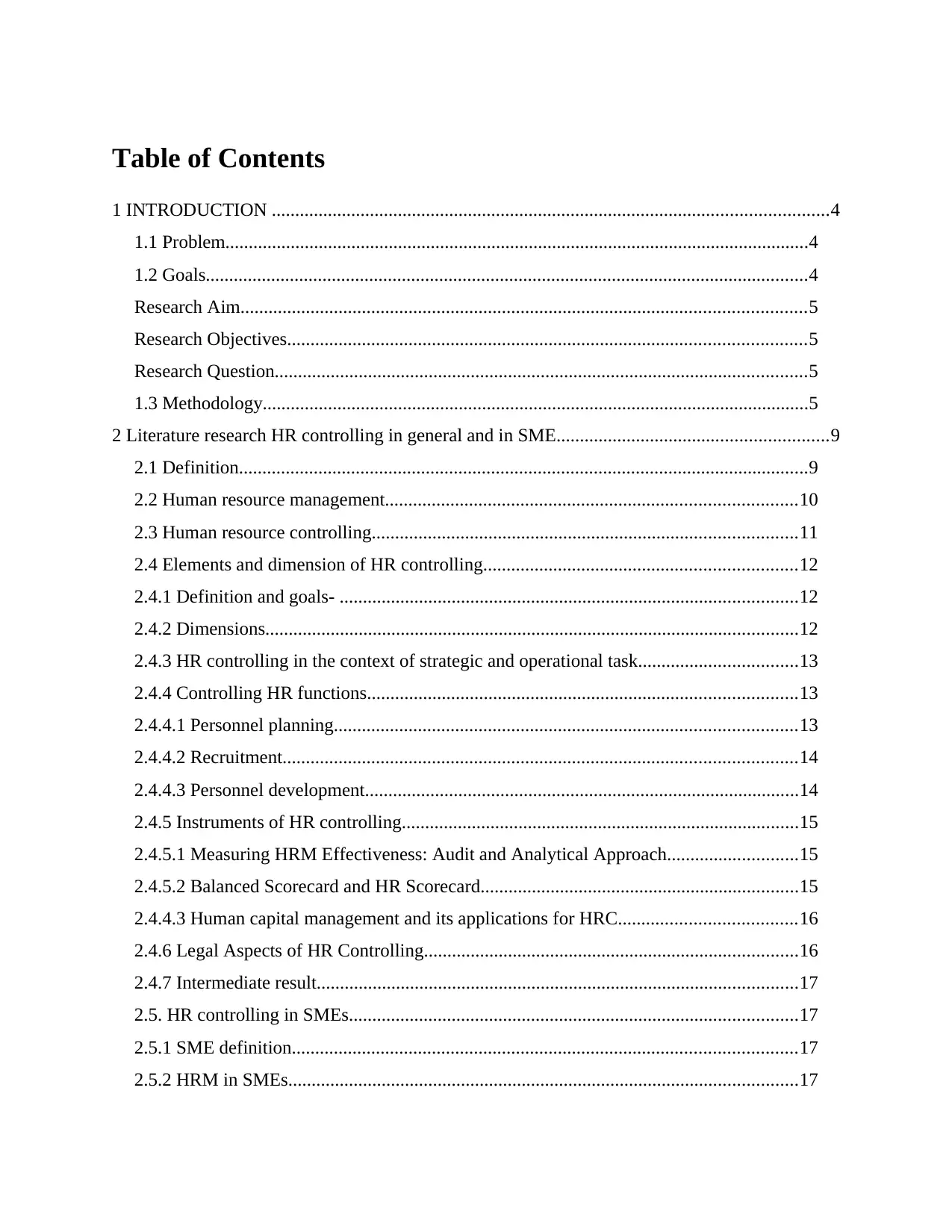
Table of Contents
1 INTRODUCTION .......................................................................................................................4
1.1 Problem.............................................................................................................................4
1.2 Goals.................................................................................................................................4
Research Aim.........................................................................................................................5
Research Objectives...............................................................................................................5
Research Question..................................................................................................................5
1.3 Methodology.....................................................................................................................5
2 Literature research HR controlling in general and in SME..........................................................9
2.1 Definition..........................................................................................................................9
2.2 Human resource management........................................................................................10
2.3 Human resource controlling...........................................................................................11
2.4 Elements and dimension of HR controlling...................................................................12
2.4.1 Definition and goals- ..................................................................................................12
2.4.2 Dimensions..................................................................................................................12
2.4.3 HR controlling in the context of strategic and operational task..................................13
2.4.4 Controlling HR functions............................................................................................13
2.4.4.1 Personnel planning...................................................................................................13
2.4.4.2 Recruitment..............................................................................................................14
2.4.4.3 Personnel development.............................................................................................14
2.4.5 Instruments of HR controlling.....................................................................................15
2.4.5.1 Measuring HRM Effectiveness: Audit and Analytical Approach............................15
2.4.5.2 Balanced Scorecard and HR Scorecard....................................................................15
2.4.4.3 Human capital management and its applications for HRC......................................16
2.4.6 Legal Aspects of HR Controlling................................................................................16
2.4.7 Intermediate result.......................................................................................................17
2.5. HR controlling in SMEs................................................................................................17
2.5.1 SME definition............................................................................................................17
2.5.2 HRM in SMEs.............................................................................................................17
1 INTRODUCTION .......................................................................................................................4
1.1 Problem.............................................................................................................................4
1.2 Goals.................................................................................................................................4
Research Aim.........................................................................................................................5
Research Objectives...............................................................................................................5
Research Question..................................................................................................................5
1.3 Methodology.....................................................................................................................5
2 Literature research HR controlling in general and in SME..........................................................9
2.1 Definition..........................................................................................................................9
2.2 Human resource management........................................................................................10
2.3 Human resource controlling...........................................................................................11
2.4 Elements and dimension of HR controlling...................................................................12
2.4.1 Definition and goals- ..................................................................................................12
2.4.2 Dimensions..................................................................................................................12
2.4.3 HR controlling in the context of strategic and operational task..................................13
2.4.4 Controlling HR functions............................................................................................13
2.4.4.1 Personnel planning...................................................................................................13
2.4.4.2 Recruitment..............................................................................................................14
2.4.4.3 Personnel development.............................................................................................14
2.4.5 Instruments of HR controlling.....................................................................................15
2.4.5.1 Measuring HRM Effectiveness: Audit and Analytical Approach............................15
2.4.5.2 Balanced Scorecard and HR Scorecard....................................................................15
2.4.4.3 Human capital management and its applications for HRC......................................16
2.4.6 Legal Aspects of HR Controlling................................................................................16
2.4.7 Intermediate result.......................................................................................................17
2.5. HR controlling in SMEs................................................................................................17
2.5.1 SME definition............................................................................................................17
2.5.2 HRM in SMEs.............................................................................................................17
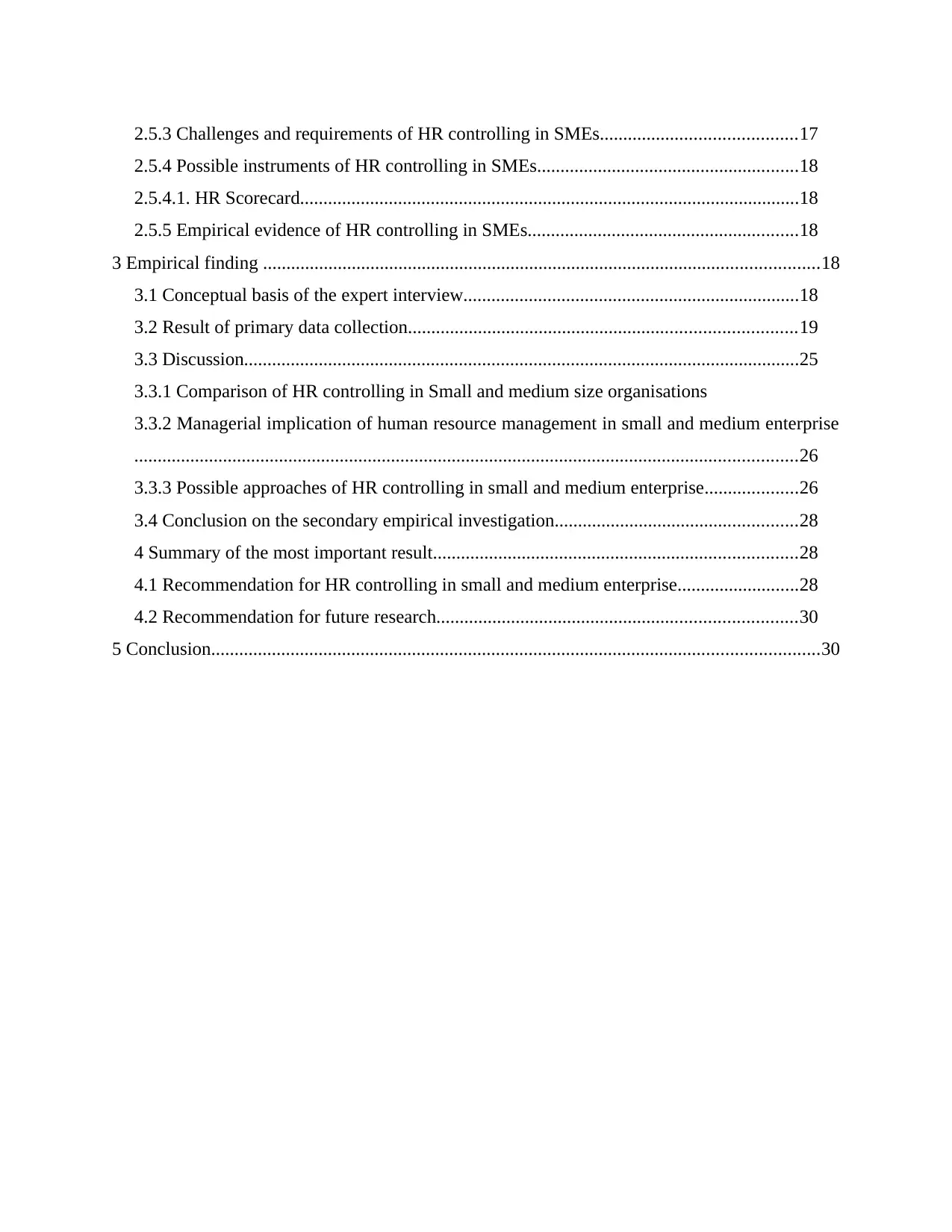
2.5.3 Challenges and requirements of HR controlling in SMEs..........................................17
2.5.4 Possible instruments of HR controlling in SMEs........................................................18
2.5.4.1. HR Scorecard...........................................................................................................18
2.5.5 Empirical evidence of HR controlling in SMEs..........................................................18
3 Empirical finding .......................................................................................................................18
3.1 Conceptual basis of the expert interview........................................................................18
3.2 Result of primary data collection...................................................................................19
3.3 Discussion.......................................................................................................................25
3.3.1 Comparison of HR controlling in Small and medium size organisations
3.3.2 Managerial implication of human resource management in small and medium enterprise
..............................................................................................................................................26
3.3.3 Possible approaches of HR controlling in small and medium enterprise....................26
3.4 Conclusion on the secondary empirical investigation....................................................28
4 Summary of the most important result..............................................................................28
4.1 Recommendation for HR controlling in small and medium enterprise..........................28
4.2 Recommendation for future research.............................................................................30
5 Conclusion..................................................................................................................................30
2.5.4 Possible instruments of HR controlling in SMEs........................................................18
2.5.4.1. HR Scorecard...........................................................................................................18
2.5.5 Empirical evidence of HR controlling in SMEs..........................................................18
3 Empirical finding .......................................................................................................................18
3.1 Conceptual basis of the expert interview........................................................................18
3.2 Result of primary data collection...................................................................................19
3.3 Discussion.......................................................................................................................25
3.3.1 Comparison of HR controlling in Small and medium size organisations
3.3.2 Managerial implication of human resource management in small and medium enterprise
..............................................................................................................................................26
3.3.3 Possible approaches of HR controlling in small and medium enterprise....................26
3.4 Conclusion on the secondary empirical investigation....................................................28
4 Summary of the most important result..............................................................................28
4.1 Recommendation for HR controlling in small and medium enterprise..........................28
4.2 Recommendation for future research.............................................................................30
5 Conclusion..................................................................................................................................30
⊘ This is a preview!⊘
Do you want full access?
Subscribe today to unlock all pages.

Trusted by 1+ million students worldwide
1 INTRODUCTION
1.1 Problem
In an organisation, employees play a very crucial role for achieving business objectives in
an effective manner. Personnels are main assets of a company which carry out business activities
and functions. Hence, it is very important for an organisation to manage and motivate employees
in such a manner by which they can retain within organisation for long time
Effective management of Human Resource is very significant within company because
sometime employees face several problems regarding work. It is very important for HR
management department to identify various issue and problems of employees and adopt effective
strategies to control and overcome it (Davidson and Wang, 2011). In addition to this, HR
manager is also responsible to recruit high skilled and talented staff members to improve its
business performance and productivity. The current thesis provides detailed knowledge and
understanding about human resource controlling and its significant practices and approaches
within company. It is very essential for an organisation to control and manage employees so as it
can achieve determined targets within time period.
In an organisation, personnel controlling and effective management of HR is significant
because with help of it, company can achieve its determined objectives and goals. With the help
of systematic planning of human resources and controlling, company can easily increase its
progress and growth of business. By identify employees requirements related to working at
workplace, company can effectively manage and control workforce.
1.2 Goals
The current research study’s main aim is to conduct study on personnel’s controlling in
small and medium sized enterprises. For this objective, scholar has focused upon several
objectives regarding the personnel controlling and handling within small and medium size
organisation. With help of this study, researcher wants to identify and acknowledge the
significance of employees controlling and its impact upon the small and medium business
enterprise. Researcher actually desires to acknowledge and identify various strategies and
practices of the human resource controlling and management and its importance within
organisation.
This thesis focuses on identifying possible approaches of human resource controlling in
SME's. In addition to this, functions and activities of the HRM department in order to control
1.1 Problem
In an organisation, employees play a very crucial role for achieving business objectives in
an effective manner. Personnels are main assets of a company which carry out business activities
and functions. Hence, it is very important for an organisation to manage and motivate employees
in such a manner by which they can retain within organisation for long time
Effective management of Human Resource is very significant within company because
sometime employees face several problems regarding work. It is very important for HR
management department to identify various issue and problems of employees and adopt effective
strategies to control and overcome it (Davidson and Wang, 2011). In addition to this, HR
manager is also responsible to recruit high skilled and talented staff members to improve its
business performance and productivity. The current thesis provides detailed knowledge and
understanding about human resource controlling and its significant practices and approaches
within company. It is very essential for an organisation to control and manage employees so as it
can achieve determined targets within time period.
In an organisation, personnel controlling and effective management of HR is significant
because with help of it, company can achieve its determined objectives and goals. With the help
of systematic planning of human resources and controlling, company can easily increase its
progress and growth of business. By identify employees requirements related to working at
workplace, company can effectively manage and control workforce.
1.2 Goals
The current research study’s main aim is to conduct study on personnel’s controlling in
small and medium sized enterprises. For this objective, scholar has focused upon several
objectives regarding the personnel controlling and handling within small and medium size
organisation. With help of this study, researcher wants to identify and acknowledge the
significance of employees controlling and its impact upon the small and medium business
enterprise. Researcher actually desires to acknowledge and identify various strategies and
practices of the human resource controlling and management and its importance within
organisation.
This thesis focuses on identifying possible approaches of human resource controlling in
SME's. In addition to this, functions and activities of the HRM department in order to control
Paraphrase This Document
Need a fresh take? Get an instant paraphrase of this document with our AI Paraphraser
and manage human resources have been also included. It is based on the secondary research so
as relevant information has included in the literature review section. Furthermore, comparison of
the application level of human resource controlling in large corporations and small medium size
organisations have been also included in this dissertation. (Dent and Whitehead, 2013) The
major aim to conduct this is to analyse the significance of human resource controlling and
managing strategies and approaches within small and medium size organisations. Various
effective recommendations and suggestions regarding strategies and approaches control and
manage employees within the small and medium size organisation that has been also discussed
by researcher. In the present research study, researcher is going to conduct study on personnel
controlling in the small and medium enterprise.
Research Aim
To study on practices and approaches of personnel controlling in small and medium size
organisation.
Research Objectives
To identify the goal of human resource controlling
To identify functions of human resource controlling in small and medium size
organisation
To determine the instrument and analytical approaches of human resource controlling
To recommend strategies and practices of controlling and managing human resource in
the small and medium size organisation
Research Question
What is the objective of Human Resource Controlling?
What are the functions of Human Resource Controlling?
What are several strategies and practices to control Human Resource within small and
medium size of organisation?
1.3 Methodology
Research methodology is one of the essential aspects in the investigation by which
scholar can address determined objectives in an effective manner. It is a procedure of collecting,
analyzing and interpreting information for finding out the best solution to research problems.
The major objective of implementing research methodology within investigation is to
as relevant information has included in the literature review section. Furthermore, comparison of
the application level of human resource controlling in large corporations and small medium size
organisations have been also included in this dissertation. (Dent and Whitehead, 2013) The
major aim to conduct this is to analyse the significance of human resource controlling and
managing strategies and approaches within small and medium size organisations. Various
effective recommendations and suggestions regarding strategies and approaches control and
manage employees within the small and medium size organisation that has been also discussed
by researcher. In the present research study, researcher is going to conduct study on personnel
controlling in the small and medium enterprise.
Research Aim
To study on practices and approaches of personnel controlling in small and medium size
organisation.
Research Objectives
To identify the goal of human resource controlling
To identify functions of human resource controlling in small and medium size
organisation
To determine the instrument and analytical approaches of human resource controlling
To recommend strategies and practices of controlling and managing human resource in
the small and medium size organisation
Research Question
What is the objective of Human Resource Controlling?
What are the functions of Human Resource Controlling?
What are several strategies and practices to control Human Resource within small and
medium size of organisation?
1.3 Methodology
Research methodology is one of the essential aspects in the investigation by which
scholar can address determined objectives in an effective manner. It is a procedure of collecting,
analyzing and interpreting information for finding out the best solution to research problems.
The major objective of implementing research methodology within investigation is to
find out solution to research problem (Gruman and Saks, 2011). The generic research
methodology is based on the Research Onion Model.
There are various methods and techniques of research methodology such as research
approach, research philosophies, research strategy, research design, research techniques, data
collection, data analysis, sampling etc. In the current research study, the major objective is to
conduct study on practices and approaches of personnel controlling in small and medium size
organization. Thus, to address this objective, scholar have used various methods and techniques
of research methodology which are discussed below-
1.3.1 Research Philosophy- The research philosophy is the first layer of the Onion model which
represents the study analysis. Researcher can easily conduct study with help of this research
method. Research philosophy helps scholar in addressing the research objectives in more
effective and efficient manner. With the help of research philosophy, researcher can easily
conduct study and find out solution to research problem. There are major two kinds of research
philosophy that is positivism and interpretvitism. In the current research study, researcher has
used interpretvitism research philosophy, for conducting the study on practices and approaches
of personnel controlling in small and medium size organisation. With help of this technique, a
researcher can analyse study and find out effective solution to research problem.
1.3.2 Research Approach- This is another one of the effective techniques in the research
methodology that allows researcher to carry out objectives of study for achieve objective. It
assists researcher in analyzing information about subject and finding out better solutions to
research problem. Deductive and inductive are major two kinds of research approaches in
research methodology.
In the current research study, the major objective is to conduct study on practices and
approaches of personnel controlling in small and medium size organization. Thus, for addressing
this objective, scholar have used inductive approach by which various theories and models can
be implemented within study to find out solutions to research issue.
1.3.3 Research Strategy- This is major part in the research methodology that helps researcher in
collecting data about study. An effective investigation can conduct on the basis of five steps that
is observed, plan, and act, reflect. It assists scholar in understanding actual objectives of research
and finding out solution to research issue. There are major two kinds of research strategy that is
qualitative and quantitative method. It is very important for scholar to use the best and
methodology is based on the Research Onion Model.
There are various methods and techniques of research methodology such as research
approach, research philosophies, research strategy, research design, research techniques, data
collection, data analysis, sampling etc. In the current research study, the major objective is to
conduct study on practices and approaches of personnel controlling in small and medium size
organization. Thus, to address this objective, scholar have used various methods and techniques
of research methodology which are discussed below-
1.3.1 Research Philosophy- The research philosophy is the first layer of the Onion model which
represents the study analysis. Researcher can easily conduct study with help of this research
method. Research philosophy helps scholar in addressing the research objectives in more
effective and efficient manner. With the help of research philosophy, researcher can easily
conduct study and find out solution to research problem. There are major two kinds of research
philosophy that is positivism and interpretvitism. In the current research study, researcher has
used interpretvitism research philosophy, for conducting the study on practices and approaches
of personnel controlling in small and medium size organisation. With help of this technique, a
researcher can analyse study and find out effective solution to research problem.
1.3.2 Research Approach- This is another one of the effective techniques in the research
methodology that allows researcher to carry out objectives of study for achieve objective. It
assists researcher in analyzing information about subject and finding out better solutions to
research problem. Deductive and inductive are major two kinds of research approaches in
research methodology.
In the current research study, the major objective is to conduct study on practices and
approaches of personnel controlling in small and medium size organization. Thus, for addressing
this objective, scholar have used inductive approach by which various theories and models can
be implemented within study to find out solutions to research issue.
1.3.3 Research Strategy- This is major part in the research methodology that helps researcher in
collecting data about study. An effective investigation can conduct on the basis of five steps that
is observed, plan, and act, reflect. It assists scholar in understanding actual objectives of research
and finding out solution to research issue. There are major two kinds of research strategy that is
qualitative and quantitative method. It is very important for scholar to use the best and
⊘ This is a preview!⊘
Do you want full access?
Subscribe today to unlock all pages.
Trusted by 1+ million students worldwide
appropriate methods for research technique. Wrong selection of research technique can
negatively affect the outcomes of research study.
In the qualitative research technique, a researcher can conduct research study in easy and
effective manner. In this aspect, information can represent in graphical and tabular format. On
the other hand in the quantitative research technique, researcher can use SPSS, T- test for
analysing and interpreting information. It depends upon the study to select techniques of research
in methodology. With help of an effective selection of research technique, researcher can solve
issues and finds out the best solution to research problem. In the present study, researcher has
used qualitative research technique along with secondary data collection method.
1.3.4 Research Choice- The fourth layer in the research onion model is research choice that is
concerned with the application of a mono method. The research choice reflects an extent on
qualitative and quantitative or mixed approach is used. The quantitative approach focuses on
testing of theories and data gathered is quantified. It depends upon the type of study to select
research technique.
1.3.7 Sampling method- Sampling is the procedure which is utilized by researcher in order to
achieve objectives of research. With help of sampling, scholar can select some group of people
from the entire population. This approach essentially use the vast populace test which relies upon
various sorts of diagnostic being played out, this method helps to researcher in selecting
individuals from large population. With help of sampling method, researcher can easily collect
information from some group of people and achieve target of investigation. The example is
whole populace portrayal; this is the reason it is critical to consider before picking the example.
The portrayal test must conduct according to application of research techniques.
Efficient inspection utilizes arbitrary focuses for starting determination of things for various
examples. Sampling helps in deciding the record adjust exactness and in various thought in
before beginning up of any new errand. After settle consistent interim is being chosen it can
additionally encourage the choice of member. It is the method for choosing target respondents
who will take interest in the review and from whom information will be extricated by the
researcher. In the current research study, researcher has selected 5 managers of Small and
medium size organisation that is large corporation for interview. With help of interview,
researcher has conducted primary data collection.
negatively affect the outcomes of research study.
In the qualitative research technique, a researcher can conduct research study in easy and
effective manner. In this aspect, information can represent in graphical and tabular format. On
the other hand in the quantitative research technique, researcher can use SPSS, T- test for
analysing and interpreting information. It depends upon the study to select techniques of research
in methodology. With help of an effective selection of research technique, researcher can solve
issues and finds out the best solution to research problem. In the present study, researcher has
used qualitative research technique along with secondary data collection method.
1.3.4 Research Choice- The fourth layer in the research onion model is research choice that is
concerned with the application of a mono method. The research choice reflects an extent on
qualitative and quantitative or mixed approach is used. The quantitative approach focuses on
testing of theories and data gathered is quantified. It depends upon the type of study to select
research technique.
1.3.7 Sampling method- Sampling is the procedure which is utilized by researcher in order to
achieve objectives of research. With help of sampling, scholar can select some group of people
from the entire population. This approach essentially use the vast populace test which relies upon
various sorts of diagnostic being played out, this method helps to researcher in selecting
individuals from large population. With help of sampling method, researcher can easily collect
information from some group of people and achieve target of investigation. The example is
whole populace portrayal; this is the reason it is critical to consider before picking the example.
The portrayal test must conduct according to application of research techniques.
Efficient inspection utilizes arbitrary focuses for starting determination of things for various
examples. Sampling helps in deciding the record adjust exactness and in various thought in
before beginning up of any new errand. After settle consistent interim is being chosen it can
additionally encourage the choice of member. It is the method for choosing target respondents
who will take interest in the review and from whom information will be extricated by the
researcher. In the current research study, researcher has selected 5 managers of Small and
medium size organisation that is large corporation for interview. With help of interview,
researcher has conducted primary data collection.
Paraphrase This Document
Need a fresh take? Get an instant paraphrase of this document with our AI Paraphraser
1.4 Structure- In the research study there are several chapters which assist in attaining the
objective of study. These chapters are discussed in the following manner-
Chapter 1- Introduction- In the principal part, aim and objective designed by researcher.
With the help of presentation, a scientist can incorporate all pertinent data which will
incorporate into exposition. In addition, in the presentation, aim and objective can
design. In addition, it included point-by-point portrayal of exposition alongside all parts
like research philosophy, information examination and elucidation and so forth. Along
these lines, one might say that presentation part is fundamental in thesis which gives
points, goal, importance and basis of the examination.
Part 2-Literature Audit- Once the introduction is effectively designed by researcher
then in the next chapter, literature review can design. It is another imperative part in the
paper which gives the profound learning and comprehension about subject of exposition.
In the present examination, specialist concentrates on few subjects for addressing writing
audit, for example, human asset administration idea, components and measurement of HR
controlling, work forces arranging, enrolment, staffs improvement, lawful parts of HR
controlling, transitional outcome, conceivable instrument of HR controlling in private
venture undertaking and so on.
Section 3-Research Philosophy- Once the writing audit has been encircled in thesis
alongside few topics then specialist will be on the exploration procedure. It is a standout
amongst the most critical section in thesis which conveys a noteworthy result of the
examination. Research strategy includes different techniques like research approach,
reasoning, information investigation and accumulation, explore configuration, testing and
so forth which helps in achievement of examination objectives. The real goal of
examination system is to legitimize the determination of specific strategy of exploration.
Part 4-Data examination and translation- Once the exploration technique has
effectively finished in the exposition then specialist must pick up thoughts regarding
determination of proper instrument of exploration. In the following section, agent collect
the information from the sources like reviews, meet and so on. It is essential section in
research to obtain the facts that without this part scholar cannot dissect and acquire
examination results.
objective of study. These chapters are discussed in the following manner-
Chapter 1- Introduction- In the principal part, aim and objective designed by researcher.
With the help of presentation, a scientist can incorporate all pertinent data which will
incorporate into exposition. In addition, in the presentation, aim and objective can
design. In addition, it included point-by-point portrayal of exposition alongside all parts
like research philosophy, information examination and elucidation and so forth. Along
these lines, one might say that presentation part is fundamental in thesis which gives
points, goal, importance and basis of the examination.
Part 2-Literature Audit- Once the introduction is effectively designed by researcher
then in the next chapter, literature review can design. It is another imperative part in the
paper which gives the profound learning and comprehension about subject of exposition.
In the present examination, specialist concentrates on few subjects for addressing writing
audit, for example, human asset administration idea, components and measurement of HR
controlling, work forces arranging, enrolment, staffs improvement, lawful parts of HR
controlling, transitional outcome, conceivable instrument of HR controlling in private
venture undertaking and so on.
Section 3-Research Philosophy- Once the writing audit has been encircled in thesis
alongside few topics then specialist will be on the exploration procedure. It is a standout
amongst the most critical section in thesis which conveys a noteworthy result of the
examination. Research strategy includes different techniques like research approach,
reasoning, information investigation and accumulation, explore configuration, testing and
so forth which helps in achievement of examination objectives. The real goal of
examination system is to legitimize the determination of specific strategy of exploration.
Part 4-Data examination and translation- Once the exploration technique has
effectively finished in the exposition then specialist must pick up thoughts regarding
determination of proper instrument of exploration. In the following section, agent collect
the information from the sources like reviews, meet and so on. It is essential section in
research to obtain the facts that without this part scholar cannot dissect and acquire
examination results.
Section 5-Conclusion and Recommendations-Once the gathered data has effectively broke
down and deciphered, then in the following part, the last conclusion and suggestions has been
made for the association. This section gives the effective summary of the examination and
furthermore gives compelling suggestions which will be reasonable for association.
2 Literature research HR controlling in general and in SME
2.1 Definition
According to the view of Booth and van Ours, (2013) Human Resource is a significant
asset and part of an organisation to carry out all activities and functions of business. In the
absence of employees, company cannot achieve its outcome and determined objectives.
Personnel controlling is a systematic procedure of planning, assessment and control of Human
Resource performance. HR controlling ensures that competitive advantage can be developed and
risks should be identified early and avoided in the organisation.
With the help of effective controlling of human resource performance, corporation can
easily carry out its business activities, functions in smooth manner, and address objectives within
time period. In the business, human resource controls are that focus on employee's behaviour,
employees’ performance, developing and upholding policies and procedure of business unit.
There are several human resource controls that are used within the organisation to meet the
objective such as performance appraisal, disciplines policies, employees’ observations and
employees training. With the help of systematic human resource controlling, corporation can
identify several HR issues and make strategies to resolve them. It also helps in enhancing
productivity and performance of business because while company employees effectively carried
out their work and activities then automatically productivity of business will enhance.Boxall and
Purcell, (2011) stated that human resource controlling in activities and other aspects helps in
meeting its objective and improve quality of business. By adopting the practices of human
resource controlling it significant impact upon employee’s motivation and encouragement.
2.2 Human resource management
According to the perspective of Boxall and Purcell, (2011) Human Resource
Management is a process of recruiting, selecting, motivating, managing employees in such a
manner as they can achieve targeted business within specific time period. In an organisation, a
systematic HR management is very important by which functioning of business can carry out in
smooth manner.
down and deciphered, then in the following part, the last conclusion and suggestions has been
made for the association. This section gives the effective summary of the examination and
furthermore gives compelling suggestions which will be reasonable for association.
2 Literature research HR controlling in general and in SME
2.1 Definition
According to the view of Booth and van Ours, (2013) Human Resource is a significant
asset and part of an organisation to carry out all activities and functions of business. In the
absence of employees, company cannot achieve its outcome and determined objectives.
Personnel controlling is a systematic procedure of planning, assessment and control of Human
Resource performance. HR controlling ensures that competitive advantage can be developed and
risks should be identified early and avoided in the organisation.
With the help of effective controlling of human resource performance, corporation can
easily carry out its business activities, functions in smooth manner, and address objectives within
time period. In the business, human resource controls are that focus on employee's behaviour,
employees’ performance, developing and upholding policies and procedure of business unit.
There are several human resource controls that are used within the organisation to meet the
objective such as performance appraisal, disciplines policies, employees’ observations and
employees training. With the help of systematic human resource controlling, corporation can
identify several HR issues and make strategies to resolve them. It also helps in enhancing
productivity and performance of business because while company employees effectively carried
out their work and activities then automatically productivity of business will enhance.Boxall and
Purcell, (2011) stated that human resource controlling in activities and other aspects helps in
meeting its objective and improve quality of business. By adopting the practices of human
resource controlling it significant impact upon employee’s motivation and encouragement.
2.2 Human resource management
According to the perspective of Boxall and Purcell, (2011) Human Resource
Management is a process of recruiting, selecting, motivating, managing employees in such a
manner as they can achieve targeted business within specific time period. In an organisation, a
systematic HR management is very important by which functioning of business can carry out in
smooth manner.
⊘ This is a preview!⊘
Do you want full access?
Subscribe today to unlock all pages.
Trusted by 1+ million students worldwide
In the opinion of Chang, Gong and Shum, (2011) human resource management is the
process of induction, training and development, assessment of personnel, providing
compensation benefits and motivation, maintaining effective relationship with employees and
their safety welfare, healthy measures etc. Effective human resource management is a process of
proper and maximise utilisation of available limited skilled workforce that helps in developing
effective outcome of business.
The major objective of Human Resource Management is to make efficient use of existing
human resource in the corporation by which determined objectives can be achieved within time
period. The nature of Human Resource Management includes procurement, development,
maintenance of human resource, team spirit, teamwork, continuous process etc.
In the opinion of Currie, Finn and Martin, (2010) process of hiring and developing
employees is also known as human resource management procedure. While HR department
within company effectively performs function of HRM then it becomes easy to increase
productivity and profitability of business. An effective management of human resource can help
in achieving objectives in easier manner. Human asset administration have different sort of
business practices, choices and exercises which specifically execute for enhancing the execution
of individuals in a company. Then again work force administration manages keeping up
regulatory records and working al the business activity. In the opinion of Guest, (2011)
Human and asset administration regards workers as significant resource association. Then again
work force administration regards representatives as a machine or apparatuses. Human asset
administration is an extremely fundamental viewpoint in an association through which they can
oversee work force to accomplish decided goals. It is a procedure of contracting and creating
workers with a goal that they turn out to be more important to business endeavour. HR arranging
is the capacity of HRM investigate is imperative through which data is gathered and interprete to
recognize present and future human asset necessities and to estimate evolving qualities, states of
mind and conduct of work force and their affects in business association. HR arranging help with
distinguishing effective views of workforce keeping in mind the end goal to achieve determined
objective. Getting sorted out is another capacity, undertakings are designated among its
individuals, connections are recognized and exercises are coordinated toward shared objective.
In this angle, administration can disseminate different tasks between workforce and set business
work as indicated by objectives. Coordinating means actuating workers at different levels in
process of induction, training and development, assessment of personnel, providing
compensation benefits and motivation, maintaining effective relationship with employees and
their safety welfare, healthy measures etc. Effective human resource management is a process of
proper and maximise utilisation of available limited skilled workforce that helps in developing
effective outcome of business.
The major objective of Human Resource Management is to make efficient use of existing
human resource in the corporation by which determined objectives can be achieved within time
period. The nature of Human Resource Management includes procurement, development,
maintenance of human resource, team spirit, teamwork, continuous process etc.
In the opinion of Currie, Finn and Martin, (2010) process of hiring and developing
employees is also known as human resource management procedure. While HR department
within company effectively performs function of HRM then it becomes easy to increase
productivity and profitability of business. An effective management of human resource can help
in achieving objectives in easier manner. Human asset administration have different sort of
business practices, choices and exercises which specifically execute for enhancing the execution
of individuals in a company. Then again work force administration manages keeping up
regulatory records and working al the business activity. In the opinion of Guest, (2011)
Human and asset administration regards workers as significant resource association. Then again
work force administration regards representatives as a machine or apparatuses. Human asset
administration is an extremely fundamental viewpoint in an association through which they can
oversee work force to accomplish decided goals. It is a procedure of contracting and creating
workers with a goal that they turn out to be more important to business endeavour. HR arranging
is the capacity of HRM investigate is imperative through which data is gathered and interprete to
recognize present and future human asset necessities and to estimate evolving qualities, states of
mind and conduct of work force and their affects in business association. HR arranging help with
distinguishing effective views of workforce keeping in mind the end goal to achieve determined
objective. Getting sorted out is another capacity, undertakings are designated among its
individuals, connections are recognized and exercises are coordinated toward shared objective.
In this angle, administration can disseminate different tasks between workforce and set business
work as indicated by objectives. Coordinating means actuating workers at different levels in
Paraphrase This Document
Need a fresh take? Get an instant paraphrase of this document with our AI Paraphraser
association and making them persuaded goal to accomplish desired objective. An organization
directs and manages the workers so as they can successfully play out their activities. Controlling
is another capacity of HRM that is the process under which organization administration control
and screen the genuine execution of representatives. In this capacity, execution of workers is
checked, confirmed and contrasted the plans.
HRC controls mainly the behavior of an employee, and developing policies and procedures. It is
a part of Human Resource Management (HRM) to plan, recruit and provide training to
employees to meet organizational needs. There are certain human resource controls used in HRM
to manage the organizational needs:
Appraisal of performance
Training employees
Discipline policy
Observing employees
HRC includes combination of controlling and HR functions. It includes operational and strategic
controlling tasks and therefore is a planning oriented, integrated evaluation device for the
enhancement of HR activities.
It mainly involves planning, assessment and control of performance of employees and staff
working in human resources. HRC ensures competitive advantages which can be achieved and
risks must be identified early and avoided for firm. It ensures a high quality reporting,
improvements in efficiency, creating transparency and determines value added to all HR
measures. There are many HR controlling instruments.
2.4 Elements and dimension of HR controlling
2.4.1 Definition and goals-
According to the view of Stone and et.al., (2015) Human resource controlling is a process of
planning, assessment and identifying practices and approaches to measure, manage and maintain
human resources in such a manner through which determined objectives can address in effective
manner.
The concept of human resource planning is to increase the value of the company and
which is particularly intended on planning and budgeting, evaluating the pursuance of the
financial plan. A systematic human resource planning helps an organisation in performing all
directs and manages the workers so as they can successfully play out their activities. Controlling
is another capacity of HRM that is the process under which organization administration control
and screen the genuine execution of representatives. In this capacity, execution of workers is
checked, confirmed and contrasted the plans.
HRC controls mainly the behavior of an employee, and developing policies and procedures. It is
a part of Human Resource Management (HRM) to plan, recruit and provide training to
employees to meet organizational needs. There are certain human resource controls used in HRM
to manage the organizational needs:
Appraisal of performance
Training employees
Discipline policy
Observing employees
HRC includes combination of controlling and HR functions. It includes operational and strategic
controlling tasks and therefore is a planning oriented, integrated evaluation device for the
enhancement of HR activities.
It mainly involves planning, assessment and control of performance of employees and staff
working in human resources. HRC ensures competitive advantages which can be achieved and
risks must be identified early and avoided for firm. It ensures a high quality reporting,
improvements in efficiency, creating transparency and determines value added to all HR
measures. There are many HR controlling instruments.
2.4 Elements and dimension of HR controlling
2.4.1 Definition and goals-
According to the view of Stone and et.al., (2015) Human resource controlling is a process of
planning, assessment and identifying practices and approaches to measure, manage and maintain
human resources in such a manner through which determined objectives can address in effective
manner.
The concept of human resource planning is to increase the value of the company and
which is particularly intended on planning and budgeting, evaluating the pursuance of the
financial plan. A systematic human resource planning helps an organisation in performing all
tasks in more systematic and effective manner. Human Resource Controlling is divided into
strategic and operational controlling.
In contradicting view of Rowold, (2015) personnel controlling in small and medium
organisation is a process to motivate, monitor, manage, maintain employees in such a manner as
each and every organisational activities can accomplish within a specified time period.
2.4.2 Dimensions
Organizational Culture
It is the collection of values, working norms, company vision and beliefs that a firm adopts. The
HR management plays a crucial role in shaping the organizational structure. Setting policies,
procedures and company standards to employee behavior that are acceptable at workplace. It
affects the way people work and interact with one another and with customers.
strategic and operational controlling.
In contradicting view of Rowold, (2015) personnel controlling in small and medium
organisation is a process to motivate, monitor, manage, maintain employees in such a manner as
each and every organisational activities can accomplish within a specified time period.
2.4.2 Dimensions
Organizational Culture
It is the collection of values, working norms, company vision and beliefs that a firm adopts. The
HR management plays a crucial role in shaping the organizational structure. Setting policies,
procedures and company standards to employee behavior that are acceptable at workplace. It
affects the way people work and interact with one another and with customers.
⊘ This is a preview!⊘
Do you want full access?
Subscribe today to unlock all pages.
Trusted by 1+ million students worldwide

1 out of 36


Related Documents


Your All-in-One AI-Powered Toolkit for Academic Success.
+13062052269
info@desklib.com
Available 24*7 on WhatsApp / Email
![[object Object]](/_next/static/media/star-bottom.7253800d.svg)
Unlock your academic potential
Copyright © 2020–2026 A2Z Services. All Rights Reserved. Developed and managed by ZUCOL.