Hospitality Business Toolkit: HR Life Cycle, Finance & Legalities
VerifiedAdded on 2023/06/13
|18
|3815
|168
Report
AI Summary
This report provides a comprehensive overview of key aspects within the hospitality industry, focusing on The Landmark London as a case study. It examines financial transactions, including recording processes, cost management, and the significance of accurate accounting principles. The report also delves into the HR life cycle, evaluating each stage from recruitment to separation, and discusses HR's role in talent acquisition, retention, and development. Furthermore, it addresses the legal and ethical considerations impacting business decisions, such as data protection and workplace safety, emphasizing the importance of compliance and effective coordination across different departments within a hospitality organization. The analysis includes a performance management plan and justifications for process improvements, offering a holistic view of managing a successful hospitality business.

Hospitality Business Toolkit

Paraphrase This Document
Need a fresh take? Get an instant paraphrase of this document with our AI Paraphraser
Table of Contents
Introduction......................................................................................................................................3
PART B...........................................................................................................................................3
Different stages of HR life cycle applied in terms of acquisition and retention of talent within
food & beverage industry.............................................................................................................3
Evaluate each stage of the HR life cycle and discuss the HR plays in supporting, growing and
retaining talent applied to the specific job role............................................................................4
Performance management plan....................................................................................................4
Justifications to improve process and documents at each stage of HR life cycle........................6
Legislations need to comply by hospitality organization to adhere daily transactions of
business........................................................................................................................................6
Discuss how employment law and contract law impact decision-making of business................7
References........................................................................................................................................8
Introduction......................................................................................................................................3
PART B...........................................................................................................................................3
Different stages of HR life cycle applied in terms of acquisition and retention of talent within
food & beverage industry.............................................................................................................3
Evaluate each stage of the HR life cycle and discuss the HR plays in supporting, growing and
retaining talent applied to the specific job role............................................................................4
Performance management plan....................................................................................................4
Justifications to improve process and documents at each stage of HR life cycle........................6
Legislations need to comply by hospitality organization to adhere daily transactions of
business........................................................................................................................................6
Discuss how employment law and contract law impact decision-making of business................7
References........................................................................................................................................8
Introduction
Hospitality industry is growing rapidly and also plays a crucial role in economic growth
of the country. This sector provides job opportunities to ample of people. The hospitality
industry of UK plays a significant role in employment generation. Nearly 3.2 million people are
employed within the hospitality industry of the country. The sector generates nearly 130 billion
economic activities (Bilro, Loureiro and Guerreiro, 2019). The present study is based on The
Landmark London which is a prestigious hotel of UK. It was founded in 1899 and headquartered
at Britain. They offer various services such as dining, meeting & events, spa, and more. The
company is well-known for the friendly nature of its staff. Well-qualified people and efficient
people hold leadership positions within the organization. The report is majorly classified in two
activities where activity 1 will cover finance and numeric transaction activities to maintain cost
within the organization. On the other side, activity 2 includes HR life cycle, impact of legal
considerations on business, importance of coordinating and integrating various functions of
different departments within the hospitality sector. Moreover, the report is based on HR
strategies, legal & ethical functions and its importance in managing a hospitality organization.
PART A
Discuss the financial transactions of hospitality business by identifying types of sources and
recording process
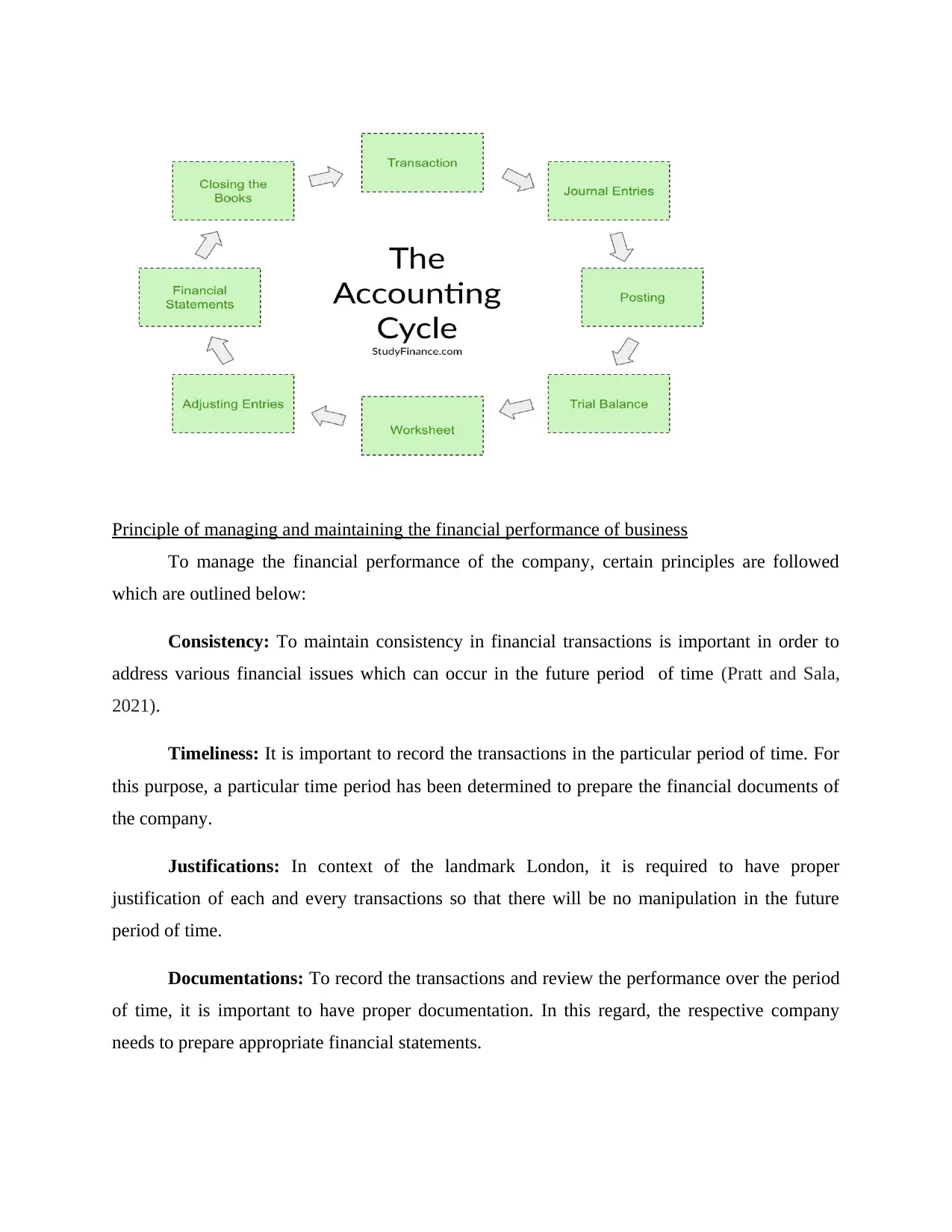
Every organization has some kind of financial transactions which are based on inflow and
outflow of funds. To record such financial transactions, there is requirement to follow a
particular procedure. For this purpose, various documents are used by the company in order to
keep a proper record in an efficient manner. While recording the transactions, principles of
accounting are followed appropriately (Kim and Im, 2018). In context of the landmark London,
ample of customers visit to the hotel on daily basis. Here, they keep proper record of each and
every transaction of the buyers in order to make necessary financial estimations efficiently.
Hospitality industry is growing rapidly and also plays a crucial role in economic growth
of the country. This sector provides job opportunities to ample of people. The hospitality
industry of UK plays a significant role in employment generation. Nearly 3.2 million people are
employed within the hospitality industry of the country. The sector generates nearly 130 billion
economic activities (Bilro, Loureiro and Guerreiro, 2019). The present study is based on The
Landmark London which is a prestigious hotel of UK. It was founded in 1899 and headquartered
at Britain. They offer various services such as dining, meeting & events, spa, and more. The
company is well-known for the friendly nature of its staff. Well-qualified people and efficient
people hold leadership positions within the organization. The report is majorly classified in two
activities where activity 1 will cover finance and numeric transaction activities to maintain cost
within the organization. On the other side, activity 2 includes HR life cycle, impact of legal
considerations on business, importance of coordinating and integrating various functions of
different departments within the hospitality sector. Moreover, the report is based on HR
strategies, legal & ethical functions and its importance in managing a hospitality organization.
PART A
Discuss the financial transactions of hospitality business by identifying types of sources and
recording process
Every organization has some kind of financial transactions which are based on inflow and
outflow of funds. To record such financial transactions, there is requirement to follow a
particular procedure. For this purpose, various documents are used by the company in order to
keep a proper record in an efficient manner. While recording the transactions, principles of
accounting are followed appropriately (Kim and Im, 2018). In context of the landmark London,
ample of customers visit to the hotel on daily basis. Here, they keep proper record of each and
every transaction of the buyers in order to make necessary financial estimations efficiently.
⊘ This is a preview!⊘
Do you want full access?
Subscribe today to unlock all pages.

Trusted by 1+ million students worldwide
Principle of managing and maintaining the financial performance of business
To manage the financial performance of the company, certain principles are followed
which are outlined below:
Consistency: To maintain consistency in financial transactions is important in order to
address various financial issues which can occur in the future period of time (Pratt and Sala,
2021).
Timeliness: It is important to record the transactions in the particular period of time. For
this purpose, a particular time period has been determined to prepare the financial documents of
the company.
Justifications: In context of the landmark London, it is required to have proper
justification of each and every transactions so that there will be no manipulation in the future
period of time.
Documentations: To record the transactions and review the performance over the period
of time, it is important to have proper documentation. In this regard, the respective company
needs to prepare appropriate financial statements.
To manage the financial performance of the company, certain principles are followed
which are outlined below:
Consistency: To maintain consistency in financial transactions is important in order to
address various financial issues which can occur in the future period of time (Pratt and Sala,
2021).
Timeliness: It is important to record the transactions in the particular period of time. For
this purpose, a particular time period has been determined to prepare the financial documents of
the company.
Justifications: In context of the landmark London, it is required to have proper
justification of each and every transactions so that there will be no manipulation in the future
period of time.
Documentations: To record the transactions and review the performance over the period
of time, it is important to have proper documentation. In this regard, the respective company
needs to prepare appropriate financial statements.
Paraphrase This Document
Need a fresh take? Get an instant paraphrase of this document with our AI Paraphraser
Principle of double entry bookkeeping system
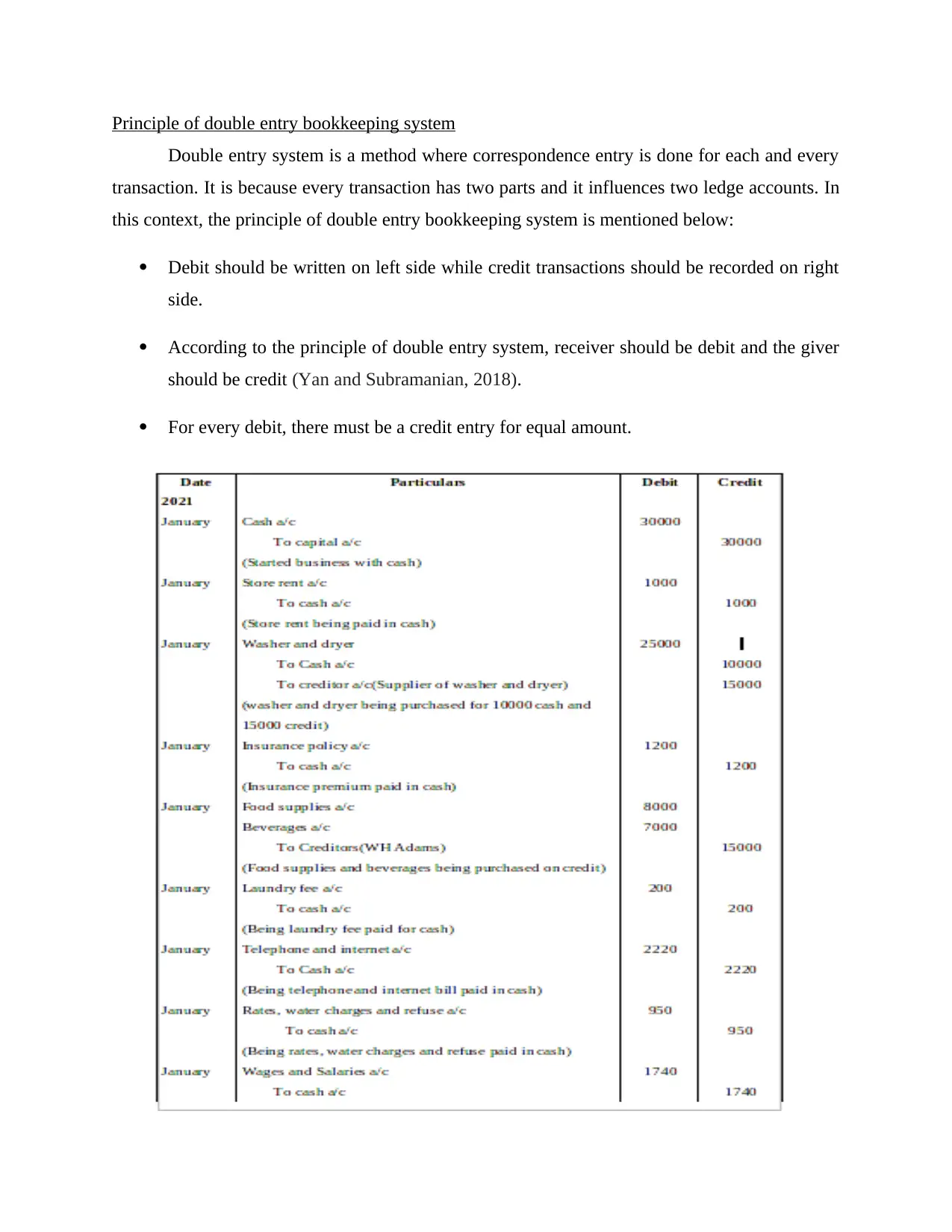
Double entry system is a method where correspondence entry is done for each and every
transaction. It is because every transaction has two parts and it influences two ledge accounts. In
this context, the principle of double entry bookkeeping system is mentioned below:
Debit should be written on left side while credit transactions should be recorded on right
side.
According to the principle of double entry system, receiver should be debit and the giver
should be credit (Yan and Subramanian, 2018).
For every debit, there must be a credit entry for equal amount.
Double entry system is a method where correspondence entry is done for each and every
transaction. It is because every transaction has two parts and it influences two ledge accounts. In
this context, the principle of double entry bookkeeping system is mentioned below:
Debit should be written on left side while credit transactions should be recorded on right
side.
According to the principle of double entry system, receiver should be debit and the giver
should be credit (Yan and Subramanian, 2018).
For every debit, there must be a credit entry for equal amount.
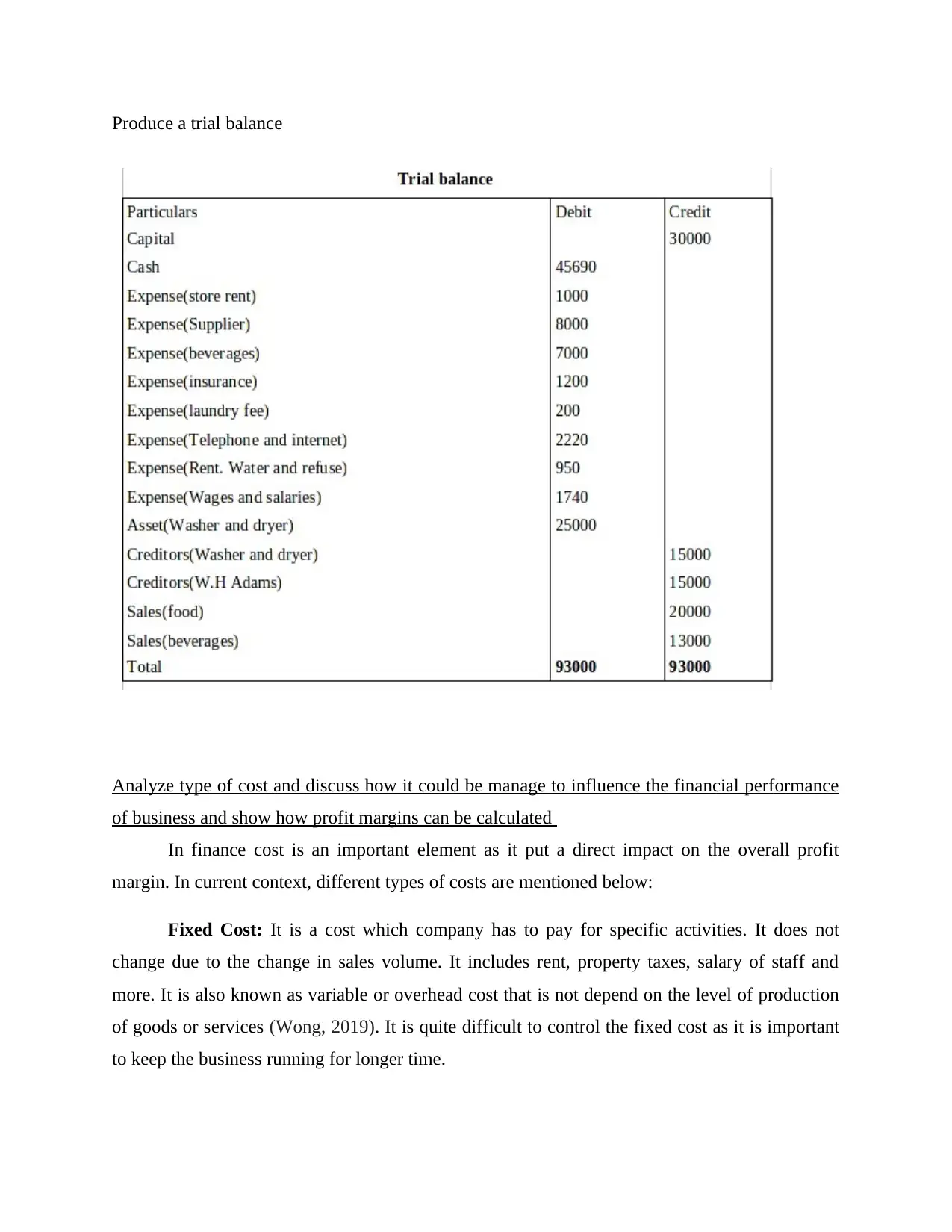
Produce a trial balance
Analyze type of cost and discuss how it could be manage to influence the financial performance
of business and show how profit margins can be calculated
In finance cost is an important element as it put a direct impact on the overall profit
margin. In current context, different types of costs are mentioned below:
Fixed Cost: It is a cost which company has to pay for specific activities. It does not
change due to the change in sales volume. It includes rent, property taxes, salary of staff and
more. It is also known as variable or overhead cost that is not depend on the level of production
of goods or services (Wong, 2019). It is quite difficult to control the fixed cost as it is important
to keep the business running for longer time.
Analyze type of cost and discuss how it could be manage to influence the financial performance
of business and show how profit margins can be calculated
In finance cost is an important element as it put a direct impact on the overall profit
margin. In current context, different types of costs are mentioned below:
Fixed Cost: It is a cost which company has to pay for specific activities. It does not
change due to the change in sales volume. It includes rent, property taxes, salary of staff and
more. It is also known as variable or overhead cost that is not depend on the level of production
of goods or services (Wong, 2019). It is quite difficult to control the fixed cost as it is important
to keep the business running for longer time.
⊘ This is a preview!⊘
Do you want full access?
Subscribe today to unlock all pages.
Trusted by 1+ million students worldwide
Variable cost: This type of cost is likely to change with change in the level of
production. It increases or decrease based on the production volume of the organization. It incurs
during purchase of raw material, wages & commission payment and more. Variable cost can be
controlled by preparing an effective budget.
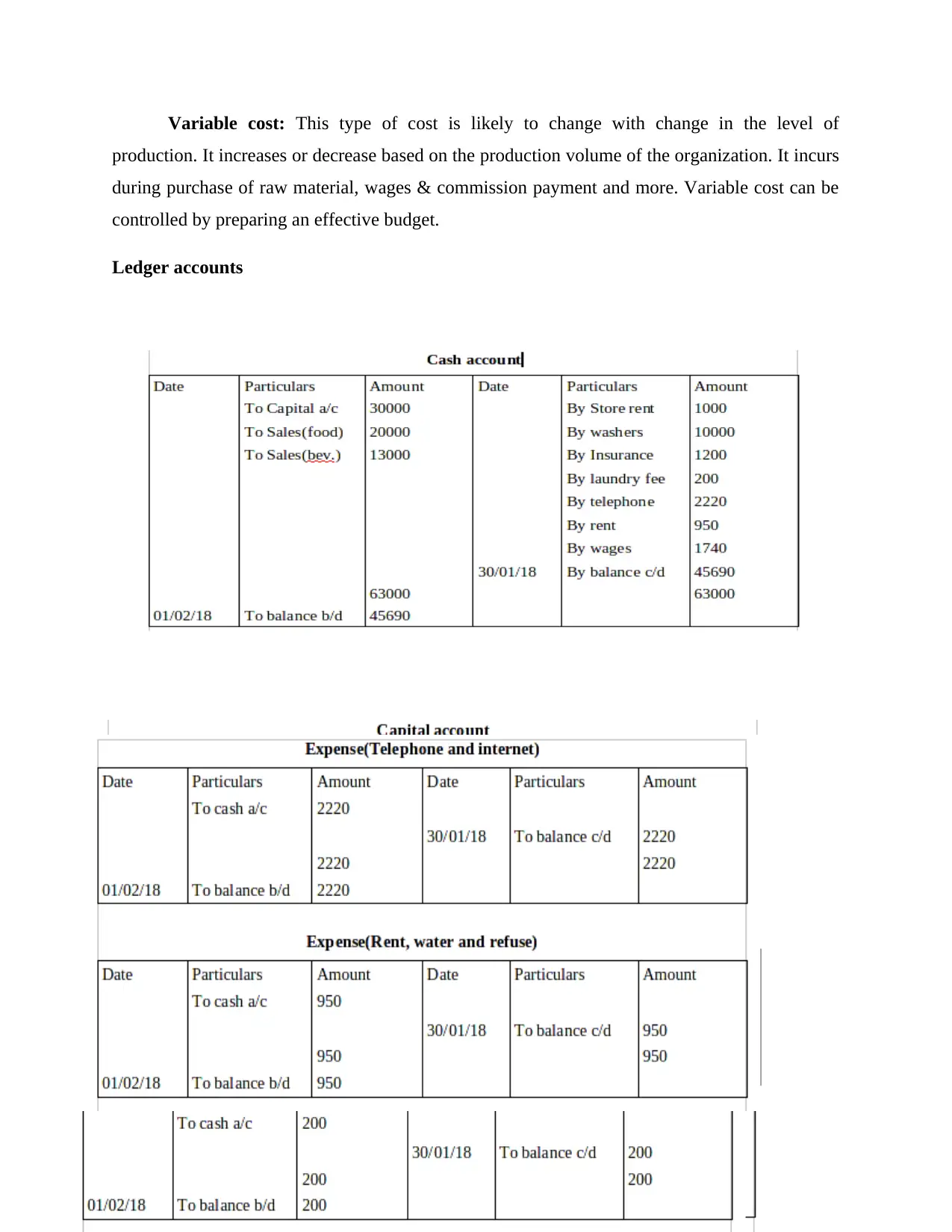
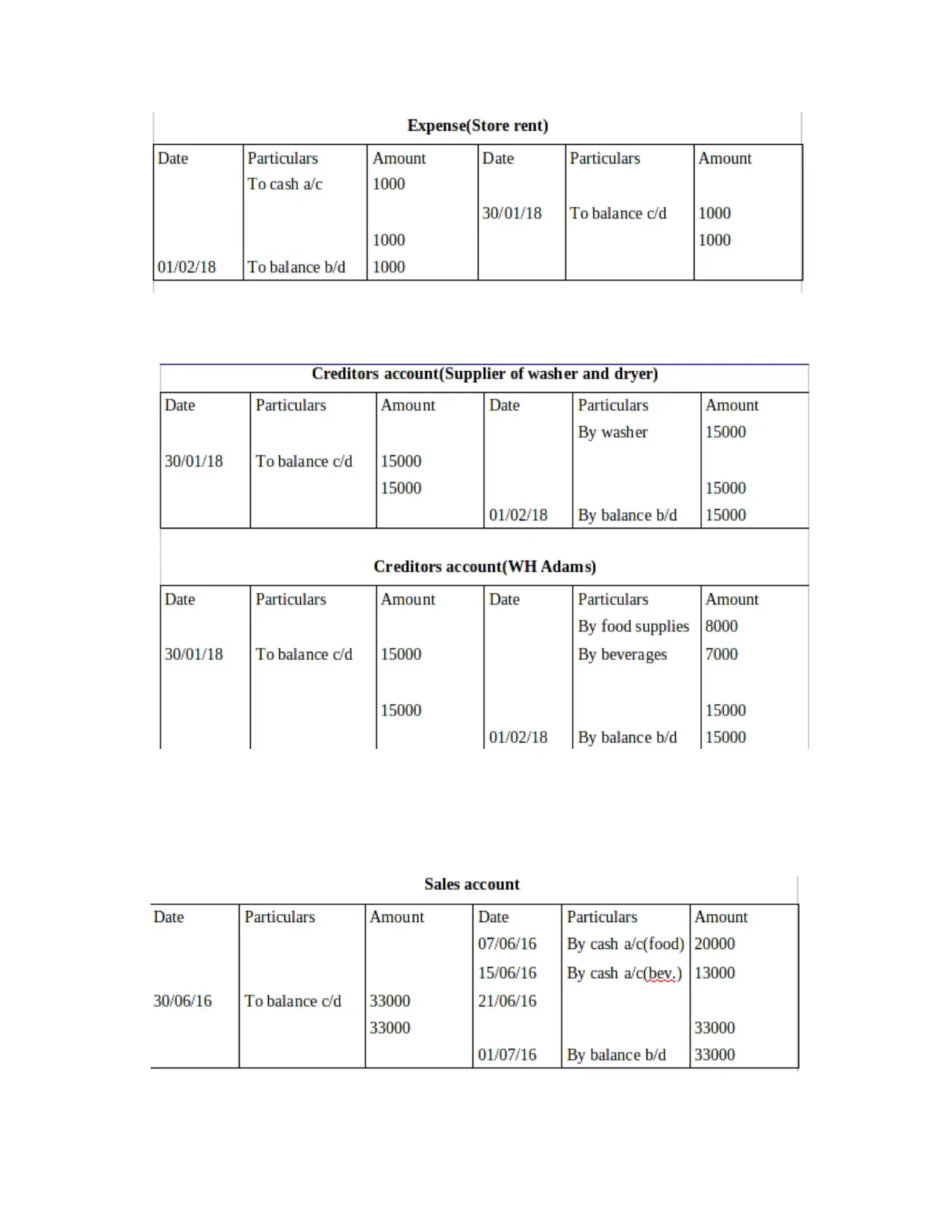
Ledger accounts
production. It increases or decrease based on the production volume of the organization. It incurs
during purchase of raw material, wages & commission payment and more. Variable cost can be
controlled by preparing an effective budget.
Ledger accounts
Paraphrase This Document
Need a fresh take? Get an instant paraphrase of this document with our AI Paraphraser
Significance of accurate recording of transactions in line with basic accounting principles
Recording the financial transactions is important as it helps in making meaningful
financial assumptions in the future period of time. To record the transactions appropriately, there
are ample of documents maintain by a company in terms of journal book, ledger, balance sheets
and more (Brych and et. al., 2021). While recording the transactions, it is crucial to follow the
basic accounting principles. For this purpose, there is requirement to make proper entry of debit
and credit transactions in order to reach at meaningful conclusion.
PART B
Different stages of HR life cycle applied in terms of acquisition and retention of talent within
food & beverage industry
Recruitment and selection: It is the first stage where HR managers are likely to create a
pool of talented candidates by accepting the applications of more and more candidates. After
creating a pool of candidate, they select potential and capable individuals via interview.
On boarding: Here, both employees and employer discuss the expectations of each
other. In this, HR managers of the landmark London, make the employees familiar to the
culture, values of the company by welcoming them in a new environment (Gretzel, U., 2017)
Career planning and development: When the employee is established in the company,
the next step is to provide them opportunity to grow and enrich. In this regard, HR managers of
the respective company rewarded their employees & also acknowledge their efforts in the
success.
Retention: At this stage, HR managers need to ensure that they are able to retain talented
people. It can be done by motivating the employees constantly and providing them such an
environment where they can grow in an efficient manner. Positive working conditions play a
major role in retaining the workforce for longer duration.
Separation and termination phase: It is the last phase of HR life cycle where they need
to understand why people are living their company (Benson and et. al., 2020). In this regard, HR
Recording the financial transactions is important as it helps in making meaningful
financial assumptions in the future period of time. To record the transactions appropriately, there
are ample of documents maintain by a company in terms of journal book, ledger, balance sheets
and more (Brych and et. al., 2021). While recording the transactions, it is crucial to follow the
basic accounting principles. For this purpose, there is requirement to make proper entry of debit
and credit transactions in order to reach at meaningful conclusion.
PART B
Different stages of HR life cycle applied in terms of acquisition and retention of talent within
food & beverage industry
Recruitment and selection: It is the first stage where HR managers are likely to create a
pool of talented candidates by accepting the applications of more and more candidates. After
creating a pool of candidate, they select potential and capable individuals via interview.
On boarding: Here, both employees and employer discuss the expectations of each
other. In this, HR managers of the landmark London, make the employees familiar to the
culture, values of the company by welcoming them in a new environment (Gretzel, U., 2017)
Career planning and development: When the employee is established in the company,
the next step is to provide them opportunity to grow and enrich. In this regard, HR managers of
the respective company rewarded their employees & also acknowledge their efforts in the
success.
Retention: At this stage, HR managers need to ensure that they are able to retain talented
people. It can be done by motivating the employees constantly and providing them such an
environment where they can grow in an efficient manner. Positive working conditions play a
major role in retaining the workforce for longer duration.
Separation and termination phase: It is the last phase of HR life cycle where they need
to understand why people are living their company (Benson and et. al., 2020). In this regard, HR
⊘ This is a preview!⊘
Do you want full access?
Subscribe today to unlock all pages.
Trusted by 1+ million students worldwide
of the landmark London maintains proper communication with staff members to minimize the
termination issue efficiently.
Evaluate each stage of the HR life cycle and discuss the HR plays in supporting, growing and
retaining talent applied to the specific job role
HR life cycle includes ample of steps to recruit, onboard, motivate and retain the
workforce for longer period of time. Recruitment is the first stage wherein well-qualified and
potential employees are hired to perform the organizational tasks efficiently. Further, they
provide inductions to new appointed employees so that they get familiar with the culture, values
and working practices of the company. Proper communication between employees and employer
is important to maintain positive work culture. In the next step, HR managers provide career
growth opportunities to workforce by arranging necessary training & development programs. For
this purpose, they provide support and assistance to the employees. Also, motivate them through
intrinsic and extrinsic motivation approaches (Mehraliyev, Chan and Kirilenko, 2021). To retain
the individuals, HR managers provide them various offers and incentives. In addition, they also
maintain positive culture so that the employees stay with them for longer duration. At the final
stage, HR of the respective company take suitable steps so that talented employees stay in their
organization significantly. Therefore, HR plays a crucial role in supporting, retaining workforce
throughout different stages of HR life cycle.
Performance management plan
In hospitality organization, several people work together to accomplish the pre-defined
goals. Here, the major job roles are of front office manager, Housekeeping manager, supervisor,
floor managers and more. In context of the landmark London, performance management plan for
front office manager is outlined below:
Skills/ Behavior to
improve
Actions to be taken Development
opportunities
Date to be completed
Communication
skills
To improve
communication skills,
there is requirement to
By improving
communication skills,
front office manager
31 March 2022
termination issue efficiently.
Evaluate each stage of the HR life cycle and discuss the HR plays in supporting, growing and
retaining talent applied to the specific job role
HR life cycle includes ample of steps to recruit, onboard, motivate and retain the
workforce for longer period of time. Recruitment is the first stage wherein well-qualified and
potential employees are hired to perform the organizational tasks efficiently. Further, they
provide inductions to new appointed employees so that they get familiar with the culture, values
and working practices of the company. Proper communication between employees and employer
is important to maintain positive work culture. In the next step, HR managers provide career
growth opportunities to workforce by arranging necessary training & development programs. For
this purpose, they provide support and assistance to the employees. Also, motivate them through
intrinsic and extrinsic motivation approaches (Mehraliyev, Chan and Kirilenko, 2021). To retain
the individuals, HR managers provide them various offers and incentives. In addition, they also
maintain positive culture so that the employees stay with them for longer duration. At the final
stage, HR of the respective company take suitable steps so that talented employees stay in their
organization significantly. Therefore, HR plays a crucial role in supporting, retaining workforce
throughout different stages of HR life cycle.
Performance management plan
In hospitality organization, several people work together to accomplish the pre-defined
goals. Here, the major job roles are of front office manager, Housekeeping manager, supervisor,
floor managers and more. In context of the landmark London, performance management plan for
front office manager is outlined below:
Skills/ Behavior to
improve
Actions to be taken Development
opportunities
Date to be completed
Communication
skills
To improve
communication skills,
there is requirement to
By improving
communication skills,
front office manager
31 March 2022
Paraphrase This Document
Need a fresh take? Get an instant paraphrase of this document with our AI Paraphraser
enroll in online
courses and practice
of communication
with other people.
can easily interact
with the guest.
Presentation skills Presentation skills can
be enhanced by
attending necessary
workshops and
seminars. In addition,
guidance of
experience people
also helps in
developing
presentation skills.
With this, front office
manager can represent
the company in front
of guest in an efficient
manner. Additionally,
it will also make them
enable to put a better
first impression on
guests.
30-June 2022
Active listening To develop listening
skills, there is
requirement to
improve the overall
personality. Also, it is
required to maintain
eye contact with
speaker during the
conversation.
Through this skill, one
can easily resolve the
issues faced by guests.
Further, it will also
help in assisting and
supporting the
customers in the best
possible way.
30-November 2022
Justifications to improve process and documents at each stage of HR life cycle
It is suggested that HR managers of the landmark London are required to attract more and
more applicants to apply for the vacant positions. It will help them to broaden the criteria
of employee selection that will eventually help in onboarding an efficient candidate. This
will allow the company to escalate business growth in the future period of time.
courses and practice
of communication
with other people.
can easily interact
with the guest.
Presentation skills Presentation skills can
be enhanced by
attending necessary
workshops and
seminars. In addition,
guidance of
experience people
also helps in
developing
presentation skills.
With this, front office
manager can represent
the company in front
of guest in an efficient
manner. Additionally,
it will also make them
enable to put a better
first impression on
guests.
30-June 2022
Active listening To develop listening
skills, there is
requirement to
improve the overall
personality. Also, it is
required to maintain
eye contact with
speaker during the
conversation.
Through this skill, one
can easily resolve the
issues faced by guests.
Further, it will also
help in assisting and
supporting the
customers in the best
possible way.
30-November 2022
Justifications to improve process and documents at each stage of HR life cycle
It is suggested that HR managers of the landmark London are required to attract more and
more applicants to apply for the vacant positions. It will help them to broaden the criteria
of employee selection that will eventually help in onboarding an efficient candidate. This
will allow the company to escalate business growth in the future period of time.
There is requirement to maintain proper interaction with staff members throughout the
HR cycle. As, it helps in strengthening the bond of managers and the employees in an
efficient manner.
Training is important to enhance the efficiency of workforce. In this regard, the HR
managers of the respective company need to arrange necessary training & development
sessions. Here, training and development programs will make the company enable to
uplift the skills of the employees significantly.
To retain workforce, there is requirement to offer monetary and non-monetary benefits.
For this purpose, they can offer monetary incentives such as bonus, enhancement in
salary, profit sharing and more. In addition, they also need to provide rewards and
recognition to the staff members so that they contribute towards success of the company
profoundly.
Legislations need to comply by hospitality organization to adhere daily transactions of business
Data protection act: Under this act, it is the responsibility of the respective organization
to protect the personal credentials of the customers. Following this law is important in order to
keep the information confidential and protected (Wiltshier and Griffiths, 2019).
Health and safety at work act, 1974: This law protects the staff members who work in
hotels, restaurants, motels to serve the guest. For this purpose, hoteliers need to take care of the
safety and well-being of staff members by providing them better work environment. There is
requirement of proper repair and maintenance of the equipments and tools to provide safe &
secure environment to the employees.
Work time regulations 1998: This act dictated time for lunch break, shift patterns,
annual leaves and more. It helps in maintaining a proper environment at workplace. There is also
provision to handle absenteeism and illness of workers. In this context, the landmark London
follows this law in order to manage the working of the employees in an efficient manner.
Discuss how employment law and contract law impact decision-making of business
Employment Laws: Employment laws are formulated to regulate the relationship of
employees and employers. It ensures that employee get a better and positive environment at
HR cycle. As, it helps in strengthening the bond of managers and the employees in an
efficient manner.
Training is important to enhance the efficiency of workforce. In this regard, the HR
managers of the respective company need to arrange necessary training & development
sessions. Here, training and development programs will make the company enable to
uplift the skills of the employees significantly.
To retain workforce, there is requirement to offer monetary and non-monetary benefits.
For this purpose, they can offer monetary incentives such as bonus, enhancement in
salary, profit sharing and more. In addition, they also need to provide rewards and
recognition to the staff members so that they contribute towards success of the company
profoundly.
Legislations need to comply by hospitality organization to adhere daily transactions of business
Data protection act: Under this act, it is the responsibility of the respective organization
to protect the personal credentials of the customers. Following this law is important in order to
keep the information confidential and protected (Wiltshier and Griffiths, 2019).
Health and safety at work act, 1974: This law protects the staff members who work in
hotels, restaurants, motels to serve the guest. For this purpose, hoteliers need to take care of the
safety and well-being of staff members by providing them better work environment. There is
requirement of proper repair and maintenance of the equipments and tools to provide safe &
secure environment to the employees.
Work time regulations 1998: This act dictated time for lunch break, shift patterns,
annual leaves and more. It helps in maintaining a proper environment at workplace. There is also
provision to handle absenteeism and illness of workers. In this context, the landmark London
follows this law in order to manage the working of the employees in an efficient manner.
Discuss how employment law and contract law impact decision-making of business
Employment Laws: Employment laws are formulated to regulate the relationship of
employees and employers. It ensures that employee get a better and positive environment at
⊘ This is a preview!⊘
Do you want full access?
Subscribe today to unlock all pages.
Trusted by 1+ million students worldwide

1 out of 18


Related Documents


Your All-in-One AI-Powered Toolkit for Academic Success.
+13062052269
info@desklib.com
Available 24*7 on WhatsApp / Email
![[object Object]](/_next/static/media/star-bottom.7253800d.svg)
Unlock your academic potential
Copyright © 2020–2026 A2Z Services. All Rights Reserved. Developed and managed by ZUCOL.