Evaluating HRM Practices' Impact on Civil Service Performance in Nepal
VerifiedAdded on 2023/04/23
|190
|72227
|435
Thesis and Dissertation
AI Summary
This PhD thesis evaluates the impact of Human Resource Management (HRM) practices on the re-organisation and performance of the civil service in Nepal. It begins by highlighting the importance of motivation in modern organizations and its direct correlation with employee performance. The study explores the historical context of Nepal's civil service, particularly after the transition to a republic, and examines the challenges of political instability and its effects on public welfare. It delves into the rationale for the study, focusing on the drawbacks of the civil service in terms of transparency, efficiency, and productivity. The research incorporates a literature review covering HRM in Nepal's civil services, incentive-based motivation, and the civil service work environment. A conceptual framework is presented, addressing HRM practices, factors affecting employee motivation, performance management, and relevant motivation theories. The methodology includes research philosophy, approach, strategy, and techniques. The thesis further includes data analysis, discussion, conclusion and recommendations for improving HRM practices to enhance civil service performance in Nepal, emphasizing the need for effective management of human resources to meet the changing needs of society.
PhD Thesis
Evaluating the Impact of Human Resource Management Practices on
the Re-organisation and Performance of the Civil Service in Nepal
1
Evaluating the Impact of Human Resource Management Practices on
the Re-organisation and Performance of the Civil Service in Nepal
1

Paraphrase This Document
Need a fresh take? Get an instant paraphrase of this document with our AI Paraphraser
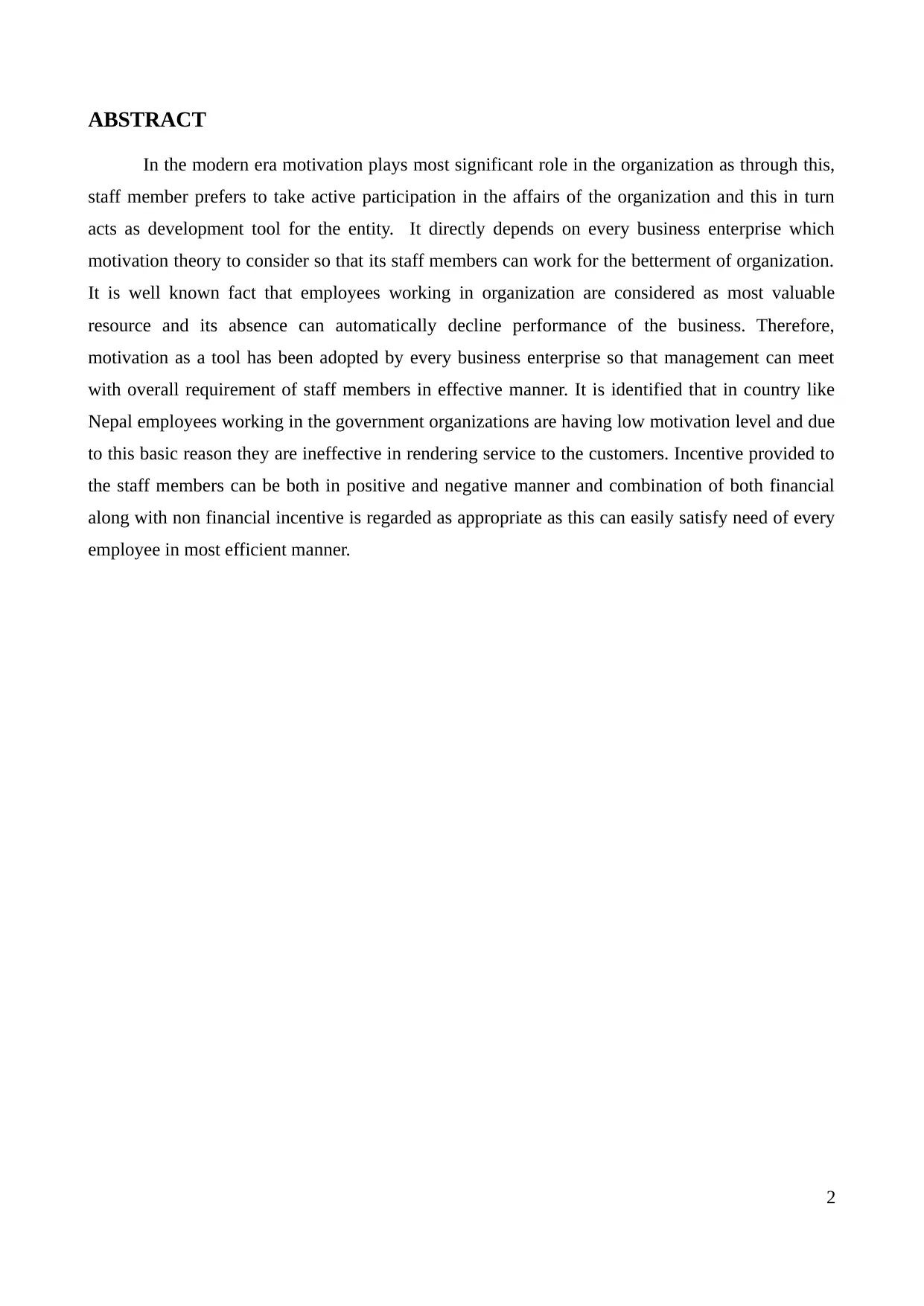
ABSTRACT
In the modern era motivation plays most significant role in the organization as through this,
staff member prefers to take active participation in the affairs of the organization and this in turn
acts as development tool for the entity. It directly depends on every business enterprise which
motivation theory to consider so that its staff members can work for the betterment of organization.
It is well known fact that employees working in organization are considered as most valuable
resource and its absence can automatically decline performance of the business. Therefore,
motivation as a tool has been adopted by every business enterprise so that management can meet
with overall requirement of staff members in effective manner. It is identified that in country like
Nepal employees working in the government organizations are having low motivation level and due
to this basic reason they are ineffective in rendering service to the customers. Incentive provided to
the staff members can be both in positive and negative manner and combination of both financial
along with non financial incentive is regarded as appropriate as this can easily satisfy need of every
employee in most efficient manner.
2
In the modern era motivation plays most significant role in the organization as through this,
staff member prefers to take active participation in the affairs of the organization and this in turn
acts as development tool for the entity. It directly depends on every business enterprise which
motivation theory to consider so that its staff members can work for the betterment of organization.
It is well known fact that employees working in organization are considered as most valuable
resource and its absence can automatically decline performance of the business. Therefore,
motivation as a tool has been adopted by every business enterprise so that management can meet
with overall requirement of staff members in effective manner. It is identified that in country like
Nepal employees working in the government organizations are having low motivation level and due
to this basic reason they are ineffective in rendering service to the customers. Incentive provided to
the staff members can be both in positive and negative manner and combination of both financial
along with non financial incentive is regarded as appropriate as this can easily satisfy need of every
employee in most efficient manner.
2

ACKNOWLEDGEMENT
I owe my deepest gratitude to my mentor who inspired and guided me with his wisdom and
knowledge. His commitment to the highest standards motivated me to carry out the entire
dissertation in the right manner. I would express sincere thanks to my family members and friends
who provided me immense support throughout the entire research work. I would also like to thank
my colleagues and team members who helped me in gathering the data for the study and its
analysis.
3
I owe my deepest gratitude to my mentor who inspired and guided me with his wisdom and
knowledge. His commitment to the highest standards motivated me to carry out the entire
dissertation in the right manner. I would express sincere thanks to my family members and friends
who provided me immense support throughout the entire research work. I would also like to thank
my colleagues and team members who helped me in gathering the data for the study and its
analysis.
3
⊘ This is a preview!⊘
Do you want full access?
Subscribe today to unlock all pages.

Trusted by 1+ million students worldwide

4
Paraphrase This Document
Need a fresh take? Get an instant paraphrase of this document with our AI Paraphraser
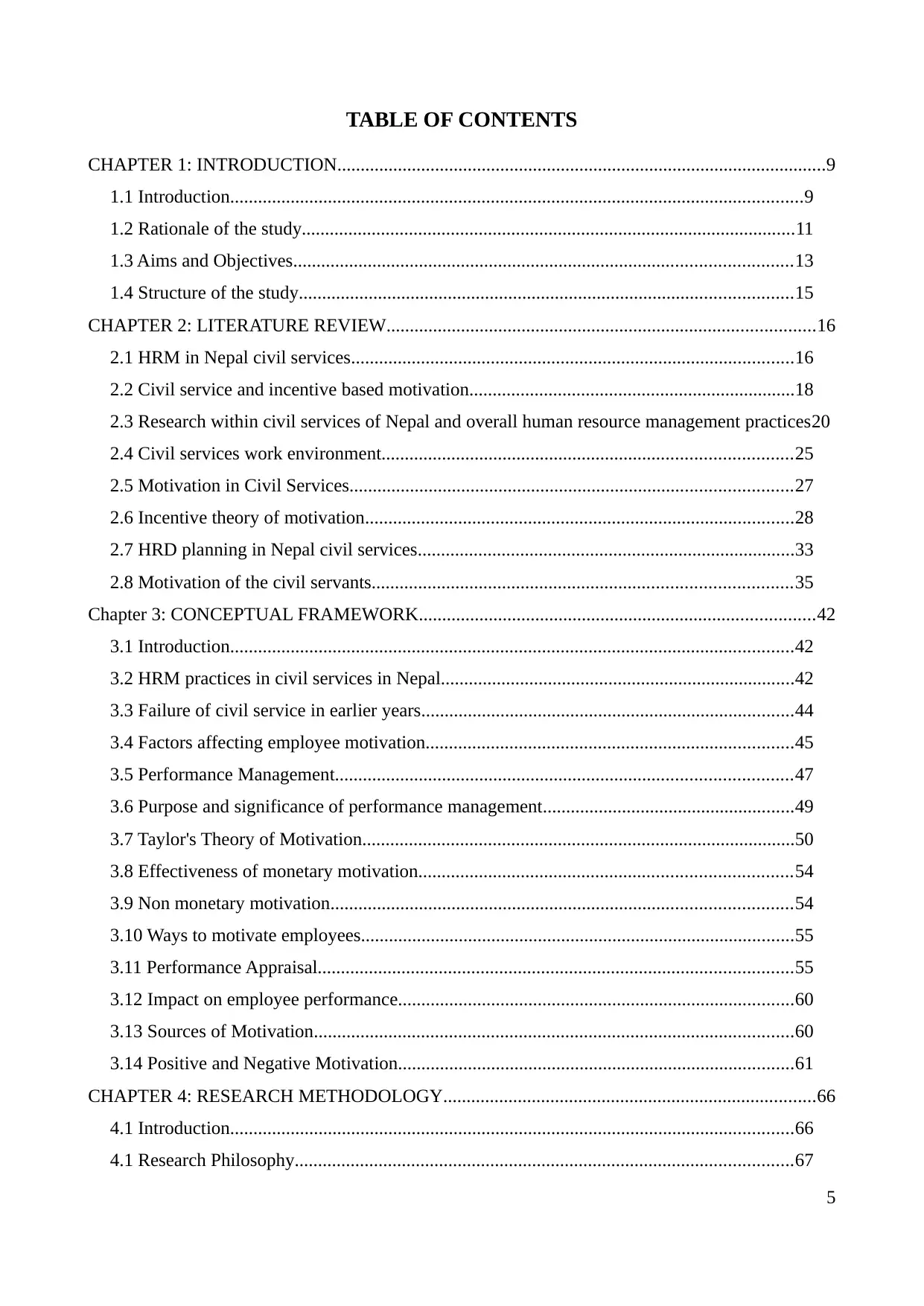
TABLE OF CONTENTS
CHAPTER 1: INTRODUCTION.........................................................................................................9
1.1 Introduction...........................................................................................................................9
1.2 Rationale of the study..........................................................................................................11
1.3 Aims and Objectives...........................................................................................................13
1.4 Structure of the study..........................................................................................................15
CHAPTER 2: LITERATURE REVIEW............................................................................................16
2.1 HRM in Nepal civil services...............................................................................................16
2.2 Civil service and incentive based motivation......................................................................18
2.3 Research within civil services of Nepal and overall human resource management practices20
2.4 Civil services work environment........................................................................................25
2.5 Motivation in Civil Services...............................................................................................27
2.6 Incentive theory of motivation............................................................................................28
2.7 HRD planning in Nepal civil services.................................................................................33
2.8 Motivation of the civil servants..........................................................................................35
Chapter 3: CONCEPTUAL FRAMEWORK.....................................................................................42
3.1 Introduction.........................................................................................................................42
3.2 HRM practices in civil services in Nepal............................................................................42
3.3 Failure of civil service in earlier years................................................................................44
3.4 Factors affecting employee motivation...............................................................................45
3.5 Performance Management..................................................................................................47
3.6 Purpose and significance of performance management......................................................49
3.7 Taylor's Theory of Motivation.............................................................................................50
3.8 Effectiveness of monetary motivation................................................................................54
3.9 Non monetary motivation...................................................................................................54
3.10 Ways to motivate employees.............................................................................................55
3.11 Performance Appraisal......................................................................................................55
3.12 Impact on employee performance.....................................................................................60
3.13 Sources of Motivation.......................................................................................................60
3.14 Positive and Negative Motivation.....................................................................................61
CHAPTER 4: RESEARCH METHODOLOGY................................................................................66
4.1 Introduction.........................................................................................................................66
4.1 Research Philosophy...........................................................................................................67
5
CHAPTER 1: INTRODUCTION.........................................................................................................9
1.1 Introduction...........................................................................................................................9
1.2 Rationale of the study..........................................................................................................11
1.3 Aims and Objectives...........................................................................................................13
1.4 Structure of the study..........................................................................................................15
CHAPTER 2: LITERATURE REVIEW............................................................................................16
2.1 HRM in Nepal civil services...............................................................................................16
2.2 Civil service and incentive based motivation......................................................................18
2.3 Research within civil services of Nepal and overall human resource management practices20
2.4 Civil services work environment........................................................................................25
2.5 Motivation in Civil Services...............................................................................................27
2.6 Incentive theory of motivation............................................................................................28
2.7 HRD planning in Nepal civil services.................................................................................33
2.8 Motivation of the civil servants..........................................................................................35
Chapter 3: CONCEPTUAL FRAMEWORK.....................................................................................42
3.1 Introduction.........................................................................................................................42
3.2 HRM practices in civil services in Nepal............................................................................42
3.3 Failure of civil service in earlier years................................................................................44
3.4 Factors affecting employee motivation...............................................................................45
3.5 Performance Management..................................................................................................47
3.6 Purpose and significance of performance management......................................................49
3.7 Taylor's Theory of Motivation.............................................................................................50
3.8 Effectiveness of monetary motivation................................................................................54
3.9 Non monetary motivation...................................................................................................54
3.10 Ways to motivate employees.............................................................................................55
3.11 Performance Appraisal......................................................................................................55
3.12 Impact on employee performance.....................................................................................60
3.13 Sources of Motivation.......................................................................................................60
3.14 Positive and Negative Motivation.....................................................................................61
CHAPTER 4: RESEARCH METHODOLOGY................................................................................66
4.1 Introduction.........................................................................................................................66
4.1 Research Philosophy...........................................................................................................67
5
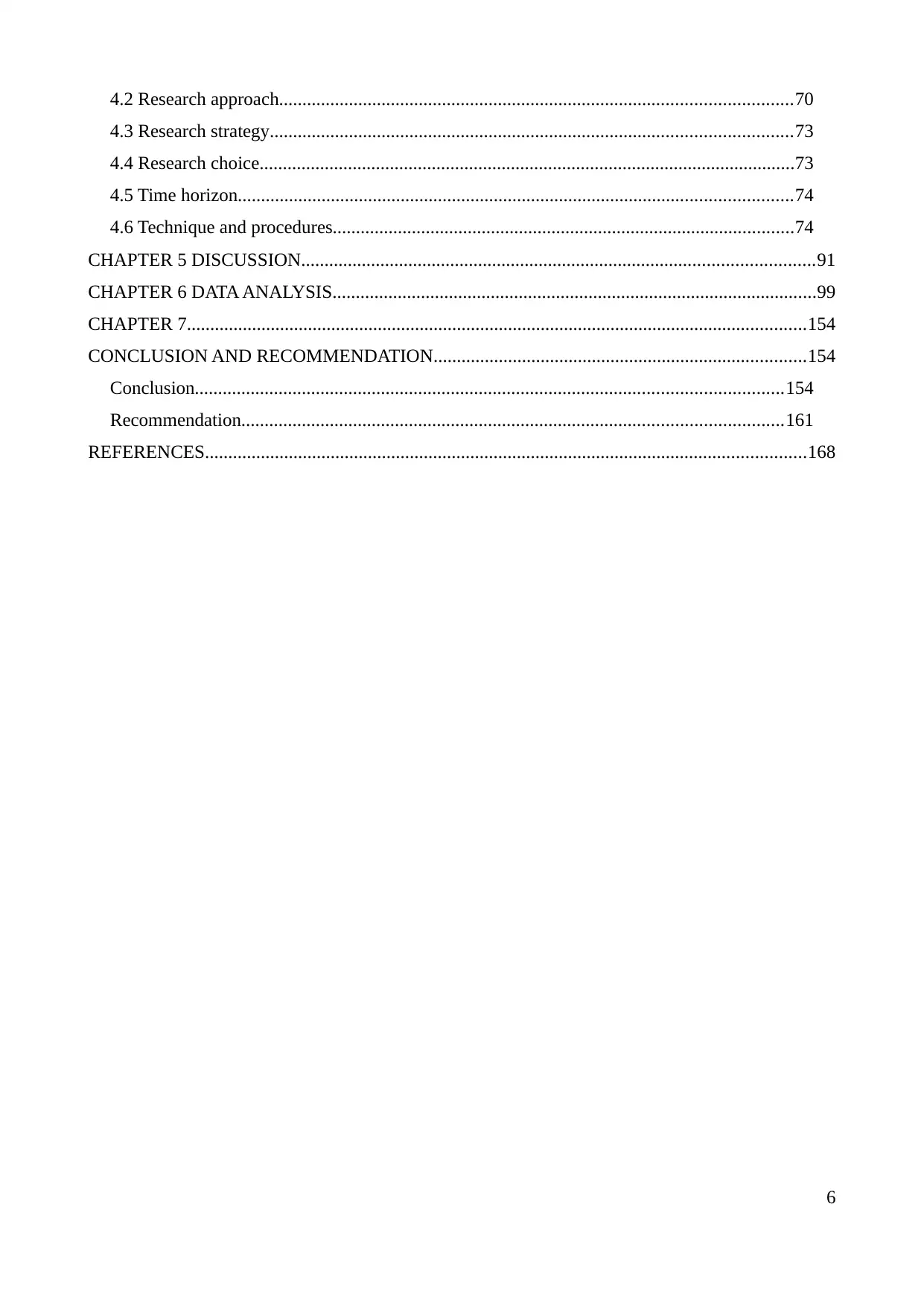
4.2 Research approach..............................................................................................................70
4.3 Research strategy................................................................................................................73
4.4 Research choice...................................................................................................................73
4.5 Time horizon.......................................................................................................................74
4.6 Technique and procedures...................................................................................................74
CHAPTER 5 DISCUSSION..............................................................................................................91
CHAPTER 6 DATA ANALYSIS........................................................................................................99
CHAPTER 7.....................................................................................................................................154
CONCLUSION AND RECOMMENDATION................................................................................154
Conclusion..............................................................................................................................154
Recommendation....................................................................................................................161
REFERENCES.................................................................................................................................168
6
4.3 Research strategy................................................................................................................73
4.4 Research choice...................................................................................................................73
4.5 Time horizon.......................................................................................................................74
4.6 Technique and procedures...................................................................................................74
CHAPTER 5 DISCUSSION..............................................................................................................91
CHAPTER 6 DATA ANALYSIS........................................................................................................99
CHAPTER 7.....................................................................................................................................154
CONCLUSION AND RECOMMENDATION................................................................................154
Conclusion..............................................................................................................................154
Recommendation....................................................................................................................161
REFERENCES.................................................................................................................................168
6
⊘ This is a preview!⊘
Do you want full access?
Subscribe today to unlock all pages.
Trusted by 1+ million students worldwide

INDEX OF TABLES
Table 1: Aims, objectives & questions.................................................................................................9
7
Table 1: Aims, objectives & questions.................................................................................................9
7
Paraphrase This Document
Need a fresh take? Get an instant paraphrase of this document with our AI Paraphraser

ILLUSTRATION INDEX
Illustration 1: Conceptual Framework................................................................................................38
Illustration 2: Research onion.............................................................................................................63
8
Illustration 1: Conceptual Framework................................................................................................38
Illustration 2: Research onion.............................................................................................................63
8
CHAPTER 1: INTRODUCTION
1.1 Introduction
Nepal became Republic in the year 2008, after the monarchs who has ruled the entire nation
for most of its modern history (Aladwan, Bhanugopan and D'Netto, 2015). In Nepal, the monarchy
of King Gyanendra is known to abolish in the year 2006 after the occurrence of war that took place
between Maoist rebel and Monarchy (Albrecht, 2000). This directly led to the dominance of new
government by Maoists, that was developed in the year 2008 (Hodder, 2015). The entire history of
the country has been influenced due to political instability by together suffering the civil services of
the country from the poor corporations. Further, after the introduction of new system, the main
priorities of the new regulatory authority were management of human resources and overall
development of the civil services. As per the view of Budhwar and Debrah (2013), various efforts
were made to reform the civil services of Nepal. However, despite of such initiatives, the officials
of regulatory authorities did not have the power to re-organise and introduce civil service reforms
on result oriented basis (Budhwar and Debrah 2013). Further, in the year 1990's, the government of
Nepal established an administrative Restructuring Commission to effectively re-organise the civil
services in Nepal (Shakya, 2009).
At present, Nepal is facing large number of challenges to gain the recognition of a federal,
secular and democratic state. Further, a federal approach can make regulatory authorities more
receptive towards the changing needs and requirements of the people living in the nation. According
to Duff and Bull (2011), there exists a direct relationship between the quality of services that is
basically related to the overall motivation level of the employees who are rendering civil services
(Duff and Bull, 2011). As in case, when the staff members are highly motivated, then it enhances
their capability to deliver high quality services to the local people which goes beyond their
expectations. Moreover, it is a well-known fact that every individual living in the society has some
sort of expectations from the local authorities for nation’s development (Sinha, 1992).
Further, an efficient civil service is necessarily required for improved effectiveness of the
country where it also leads to provide better services to the public. However, Rana (2011) argued
that, main objective of Nepal civil service is to serve the state in enhancing the state of public
welfare by maintaining peace with a properly ordered society (Rana, 2011). Moreover, their lies a
main stress on an effective distribution of economic resources that are available within the country
to carry out a wide range of developmental activities for socio-economic growth. Further,
importance of managing human resources that are linked with civil services is increasing at a faster
pace where it also contributes in an overall development of the economy as well as the nation
9
1.1 Introduction
Nepal became Republic in the year 2008, after the monarchs who has ruled the entire nation
for most of its modern history (Aladwan, Bhanugopan and D'Netto, 2015). In Nepal, the monarchy
of King Gyanendra is known to abolish in the year 2006 after the occurrence of war that took place
between Maoist rebel and Monarchy (Albrecht, 2000). This directly led to the dominance of new
government by Maoists, that was developed in the year 2008 (Hodder, 2015). The entire history of
the country has been influenced due to political instability by together suffering the civil services of
the country from the poor corporations. Further, after the introduction of new system, the main
priorities of the new regulatory authority were management of human resources and overall
development of the civil services. As per the view of Budhwar and Debrah (2013), various efforts
were made to reform the civil services of Nepal. However, despite of such initiatives, the officials
of regulatory authorities did not have the power to re-organise and introduce civil service reforms
on result oriented basis (Budhwar and Debrah 2013). Further, in the year 1990's, the government of
Nepal established an administrative Restructuring Commission to effectively re-organise the civil
services in Nepal (Shakya, 2009).
At present, Nepal is facing large number of challenges to gain the recognition of a federal,
secular and democratic state. Further, a federal approach can make regulatory authorities more
receptive towards the changing needs and requirements of the people living in the nation. According
to Duff and Bull (2011), there exists a direct relationship between the quality of services that is
basically related to the overall motivation level of the employees who are rendering civil services
(Duff and Bull, 2011). As in case, when the staff members are highly motivated, then it enhances
their capability to deliver high quality services to the local people which goes beyond their
expectations. Moreover, it is a well-known fact that every individual living in the society has some
sort of expectations from the local authorities for nation’s development (Sinha, 1992).
Further, an efficient civil service is necessarily required for improved effectiveness of the
country where it also leads to provide better services to the public. However, Rana (2011) argued
that, main objective of Nepal civil service is to serve the state in enhancing the state of public
welfare by maintaining peace with a properly ordered society (Rana, 2011). Moreover, their lies a
main stress on an effective distribution of economic resources that are available within the country
to carry out a wide range of developmental activities for socio-economic growth. Further,
importance of managing human resources that are linked with civil services is increasing at a faster
pace where it also contributes in an overall development of the economy as well as the nation
9
⊘ This is a preview!⊘
Do you want full access?
Subscribe today to unlock all pages.
Trusted by 1+ million students worldwide
(Budhwar and Debrah, 2013).
Political instability and overall changes taking in Nepal are adversely affecting the entire
nation. This is due to the undertaken initiatives for public welfare, that are not at all effective and is
referred to be one of the reason behind slow economic growth of the country (Baer, 2014). The civil
services of Nepal comprise a total strength of 105, 510 positions, with around 0.4 percent of staff
members from its total population and 1.2 percent of total economic labour force which depicts the
population of 10 years old and above. This strength is rendering services to around 27.0 million
population of the country that is increasing at a faster pace of 2.25 percent. As per the view of
Moideenkutty, Lamki and Murthy (2011), an overall administrative reform being a significant part
of civil services is known to make huge efforts (Moideenkutty, Lamki and Murthy, 2011). Further,
the services that are rendered to the local public directly depends upon the employees who have
been assigned the responsibility by the government to work for the welfare of the society. It is well
known fact that managing human resources is not an easy task. It is due to several number of factors
that are present and on whose basis, the actual needs of the employees who are rendering civil
services can be satisfied in an effective manner (Bockel and Noordegraaf, 2006). Managing staff
members in an appropriate manner is quite important to help them deliver effective services for
society’s wellbeing. Further, human resource is regarded as one of the most valuable asset of the
organization, whose presence is necessary with a special consideration of those who are into civil
services (Prabhu, 2004). This resource takes those individuals into consideration who possess a
wide variety of skills, knowledge, attitude and are expected to make maximum possible
contribution to perform the job activities for the wellbeing of the society.
In short, the employees are critical to the success of the business enterprise where the HR
department is mainly concerned about handling the stress to enhance the efficiency of the
employees to perform more effectively and give productive results. According to Hondeghem and
Vandermeulen (2000), motivational techniques are regarded to be more effective. It is especially at
the time of managing the human resources, as, through these techniques, staff members actively
participate in the affairs of the enterprise that in turn acts as a developmental tool. Due to this basic
reason, government organisation has also adopted various incentive schemes to effectively manage
the workforce (Brewer, Selden and Facer II, 2000). The practices that are being employed for
managing the human resources has a direct impact on the performance of the firm. It is basically
due to the fact where the employees are considered as the key resources of the organisation. So,
without their proper management, it is not possible to respond to the changing needs of the society
in an efficient manner (Duff and Bull, 2011). However, Kessler, Heron and Gagnon (2006) argued
that rendering effective civil services is not an easy task and requires proper participation of the
10
Political instability and overall changes taking in Nepal are adversely affecting the entire
nation. This is due to the undertaken initiatives for public welfare, that are not at all effective and is
referred to be one of the reason behind slow economic growth of the country (Baer, 2014). The civil
services of Nepal comprise a total strength of 105, 510 positions, with around 0.4 percent of staff
members from its total population and 1.2 percent of total economic labour force which depicts the
population of 10 years old and above. This strength is rendering services to around 27.0 million
population of the country that is increasing at a faster pace of 2.25 percent. As per the view of
Moideenkutty, Lamki and Murthy (2011), an overall administrative reform being a significant part
of civil services is known to make huge efforts (Moideenkutty, Lamki and Murthy, 2011). Further,
the services that are rendered to the local public directly depends upon the employees who have
been assigned the responsibility by the government to work for the welfare of the society. It is well
known fact that managing human resources is not an easy task. It is due to several number of factors
that are present and on whose basis, the actual needs of the employees who are rendering civil
services can be satisfied in an effective manner (Bockel and Noordegraaf, 2006). Managing staff
members in an appropriate manner is quite important to help them deliver effective services for
society’s wellbeing. Further, human resource is regarded as one of the most valuable asset of the
organization, whose presence is necessary with a special consideration of those who are into civil
services (Prabhu, 2004). This resource takes those individuals into consideration who possess a
wide variety of skills, knowledge, attitude and are expected to make maximum possible
contribution to perform the job activities for the wellbeing of the society.
In short, the employees are critical to the success of the business enterprise where the HR
department is mainly concerned about handling the stress to enhance the efficiency of the
employees to perform more effectively and give productive results. According to Hondeghem and
Vandermeulen (2000), motivational techniques are regarded to be more effective. It is especially at
the time of managing the human resources, as, through these techniques, staff members actively
participate in the affairs of the enterprise that in turn acts as a developmental tool. Due to this basic
reason, government organisation has also adopted various incentive schemes to effectively manage
the workforce (Brewer, Selden and Facer II, 2000). The practices that are being employed for
managing the human resources has a direct impact on the performance of the firm. It is basically
due to the fact where the employees are considered as the key resources of the organisation. So,
without their proper management, it is not possible to respond to the changing needs of the society
in an efficient manner (Duff and Bull, 2011). However, Kessler, Heron and Gagnon (2006) argued
that rendering effective civil services is not an easy task and requires proper participation of the
10
Paraphrase This Document
Need a fresh take? Get an instant paraphrase of this document with our AI Paraphraser
staff members as a way of safeguarding the interest of local public in an effective manner. Due to
this specific reason, training, motivation and overall development is significant in every
organization. This is apparent to assist the staff members to effectively contribute in the company
affairs (Budhwar and Debrah, 2013).
The government of Nepal has designed institutional and organisational structures for
carrying out some crucial activities that involve operating public administration and delivery related
services to the local public (Aladwan, Bhanugopan and D'Netto, 2015). Large number of firms are
structured from centre down to local level for rendering services to people living in the society
which has also contributed in the economic development of the nation. The overall administrative
system in Nepal is effective in nature and involves at regional, central, zonal and district level areas.
Further, people living in the society have to face several number of issues, due to which, the
government of nation has positioned area level offices that builds close contract between the
government and the local public (Burgess and Ratto, 2003). Employees who are rendering civil
services have to be managed properly to enable them to easily resolve the queries of the people.
1.2 Rationale of the study
Despite of many efforts and measures that are being recognized to motivate employees to
improve their performance and productivity, the civil services in Nepal is still far behind the
expectations. Moreover, it is suffering from several number of drawbacks in terms of transparency,
inefficiency, lack of responsibility and low productivity (Cintas, Gosse and Vatteville, 2013). In
comparison with other nations, Nepal took a very longer time period than other nations to adopt
changes in their undertaken governmental structure from monarchy to a democratic and federal
structure. Followed by the governmental reforms, significant efforts are made to bring improvement
in the civil services of Nepal (Van Rijckeghem and Weder, 2001). There are commendable steps
taken by the first and second Nepalese Constituent Assembly in the year 2008 and 2013. The most
notable was the abolition of monarchy and establishment of democratic republic form of
government. There were also challenges faced by the new assemblies but the republican structure
remained in place (Delves, 2011). Efforts of new constitution heads were duly recognized at the
international level as they focussed on serving the citizens. The Prime Minister, soon after taking
charge, issued special directions for the top governmental heads. He instead requested to consider
rewarding the civil servants in an equal manner with no discrimination and it should be solely based
on the carried performance (Francois, 2000). This can be understood by the focus of the Prime
Minister towards bringing equality among the public servants.
The reason behind preparing this study is to understand the way in which the HRM practices
11
this specific reason, training, motivation and overall development is significant in every
organization. This is apparent to assist the staff members to effectively contribute in the company
affairs (Budhwar and Debrah, 2013).
The government of Nepal has designed institutional and organisational structures for
carrying out some crucial activities that involve operating public administration and delivery related
services to the local public (Aladwan, Bhanugopan and D'Netto, 2015). Large number of firms are
structured from centre down to local level for rendering services to people living in the society
which has also contributed in the economic development of the nation. The overall administrative
system in Nepal is effective in nature and involves at regional, central, zonal and district level areas.
Further, people living in the society have to face several number of issues, due to which, the
government of nation has positioned area level offices that builds close contract between the
government and the local public (Burgess and Ratto, 2003). Employees who are rendering civil
services have to be managed properly to enable them to easily resolve the queries of the people.
1.2 Rationale of the study
Despite of many efforts and measures that are being recognized to motivate employees to
improve their performance and productivity, the civil services in Nepal is still far behind the
expectations. Moreover, it is suffering from several number of drawbacks in terms of transparency,
inefficiency, lack of responsibility and low productivity (Cintas, Gosse and Vatteville, 2013). In
comparison with other nations, Nepal took a very longer time period than other nations to adopt
changes in their undertaken governmental structure from monarchy to a democratic and federal
structure. Followed by the governmental reforms, significant efforts are made to bring improvement
in the civil services of Nepal (Van Rijckeghem and Weder, 2001). There are commendable steps
taken by the first and second Nepalese Constituent Assembly in the year 2008 and 2013. The most
notable was the abolition of monarchy and establishment of democratic republic form of
government. There were also challenges faced by the new assemblies but the republican structure
remained in place (Delves, 2011). Efforts of new constitution heads were duly recognized at the
international level as they focussed on serving the citizens. The Prime Minister, soon after taking
charge, issued special directions for the top governmental heads. He instead requested to consider
rewarding the civil servants in an equal manner with no discrimination and it should be solely based
on the carried performance (Francois, 2000). This can be understood by the focus of the Prime
Minister towards bringing equality among the public servants.
The reason behind preparing this study is to understand the way in which the HRM practices
11
are being implemented in the private organizations for improving the motivational level of the
employees. There is a huge difference in the structure and system of public and private form of
organizations. The attitude and work procedures of employees are also significantly different (Shah,
2007). This study will evaluate the impact of HRM practices in the re-organization and restructuring
of performances carried out by the workers employed to provision civil services in the nation.
The below par efficiency and performance of civil servants requires an in-depth research
into the supervision and satisfaction level of the employees. There is a direct and close relationship
between the efficiency and performance level of the workers that together links with their
satisfaction level. It is basically on considering the fact of its implementation that is apparent to
assist in the determination of success achieved by the efforts made by the employees (Dixit, 2002).
The aims and objectives of this study also demand to identify and analyse the factors that are
influencing the structure of public service commission and actions of civil servants in Nepal. The
researcher shall highlight these factors that are largely deterring a successful implementation of
civil services in Nepal (Easterly, 2001). This study is conducted to assess the effects of earlier
recommendation proposed by the reform commissions in the civil services of Nepal. It will also
consider investigating some recent improvements in Nepal’s civil services. Along with it,
interpretations and impacts of the data procured from different sources will be taken into
consideration (Doig, Watt and Williams, 2007). The information will serve as a potent tool in
acknowledging specific strengths of HRM practices that are applied on the civil services of other
nations. This study could be used as a benchmark for other under developed and developing
countries as well as developed economies who are struggling with such similar issues of civil
services (Rauch and Evans, 2000). This study has emphasised on the incentive based motivation
aspect which is a critical tool used to improve the level of satisfaction among the civil servants by
positively influencing both their productivity and efficiency levels.
Considering all these points with a special contemplation of low efficiency and productivity,
there is much to be researched about various aspects of HRM in civil services. It is due to a close
relationship between the objectives of civil services and motivation level of employees (Duff and
Bull, 2011). The degree of success to which the employees are motivated is significant in
determining the success of broad objectives (Van and et. al., 2002). More particularly, among the
two common type of motivation theories, the incentive motivation is more preferred to achieve a
higher level of satisfaction.
There are studies undertaken on the reform of civil administration in Nepal, failure of civil
services, restructuring of state and human resource planning in civil services. There were no
research and studies focused on the impact of HRM practices on the re-organization and
12
employees. There is a huge difference in the structure and system of public and private form of
organizations. The attitude and work procedures of employees are also significantly different (Shah,
2007). This study will evaluate the impact of HRM practices in the re-organization and restructuring
of performances carried out by the workers employed to provision civil services in the nation.
The below par efficiency and performance of civil servants requires an in-depth research
into the supervision and satisfaction level of the employees. There is a direct and close relationship
between the efficiency and performance level of the workers that together links with their
satisfaction level. It is basically on considering the fact of its implementation that is apparent to
assist in the determination of success achieved by the efforts made by the employees (Dixit, 2002).
The aims and objectives of this study also demand to identify and analyse the factors that are
influencing the structure of public service commission and actions of civil servants in Nepal. The
researcher shall highlight these factors that are largely deterring a successful implementation of
civil services in Nepal (Easterly, 2001). This study is conducted to assess the effects of earlier
recommendation proposed by the reform commissions in the civil services of Nepal. It will also
consider investigating some recent improvements in Nepal’s civil services. Along with it,
interpretations and impacts of the data procured from different sources will be taken into
consideration (Doig, Watt and Williams, 2007). The information will serve as a potent tool in
acknowledging specific strengths of HRM practices that are applied on the civil services of other
nations. This study could be used as a benchmark for other under developed and developing
countries as well as developed economies who are struggling with such similar issues of civil
services (Rauch and Evans, 2000). This study has emphasised on the incentive based motivation
aspect which is a critical tool used to improve the level of satisfaction among the civil servants by
positively influencing both their productivity and efficiency levels.
Considering all these points with a special contemplation of low efficiency and productivity,
there is much to be researched about various aspects of HRM in civil services. It is due to a close
relationship between the objectives of civil services and motivation level of employees (Duff and
Bull, 2011). The degree of success to which the employees are motivated is significant in
determining the success of broad objectives (Van and et. al., 2002). More particularly, among the
two common type of motivation theories, the incentive motivation is more preferred to achieve a
higher level of satisfaction.
There are studies undertaken on the reform of civil administration in Nepal, failure of civil
services, restructuring of state and human resource planning in civil services. There were no
research and studies focused on the impact of HRM practices on the re-organization and
12
⊘ This is a preview!⊘
Do you want full access?
Subscribe today to unlock all pages.
Trusted by 1+ million students worldwide

1 out of 190


Related Documents


Your All-in-One AI-Powered Toolkit for Academic Success.
+13062052269
info@desklib.com
Available 24*7 on WhatsApp / Email
![[object Object]](/_next/static/media/star-bottom.7253800d.svg)
Unlock your academic potential
Copyright © 2020–2026 A2Z Services. All Rights Reserved. Developed and managed by ZUCOL.