BizOps Strategic Change: HRM Report, Analysis & Management Plan
VerifiedAdded on 2023/06/09
|18
|3245
|116
Report
AI Summary
This report analyzes the strategic changes needed for BizOps, an Australian organization, to achieve its objectives and gain a competitive advantage. It identifies change requirements using PEST and SWOT analyses, prioritizing them to meet organizational goals. The report includes a gap analysis, cost-benefit analysis, and risk analysis to evaluate the impact of the selected change. A change readiness assessment, including force field analysis, identifies driving and restraining forces, with strategies to enhance the former and reduce the latter. The report also develops a change mission statement, communication methods to motivate staff, and a change strategy with guiding principles and broad tactics. Finally, it outlines a change project management plan and methods for embedding new behaviors to ensure successful change implementation. Desklib provides access to similar solved assignments and AI-powered study tools for students.

1
HUMAN RESOURCE MANAGEMENT
HUMAN RESOURCE MANAGEMENT

Paraphrase This Document
Need a fresh take? Get an instant paraphrase of this document with our AI Paraphraser
2
Table of Contents
Introduction......................................................................................................................................4
1. Strategic change needs according to the objective and competitive advantage of the
organisation......................................................................................................................................4
2.Identifying change requirements..................................................................................................6
a) PEST analysis is impacting on the new strategic objectives...................................................6
b) SWOT analysis of the objectives and competitive strategies..................................................7
c) List of prioritised change requirements to meet the objectives...............................................8
3) Selecting the highest priority change requirement and analysing the impact of the change.....10
a) Findings from a gap analysis of the current and ideal future situation..................................10
b) Findings from a cost-benefit analysis....................................................................................10
c) Conclusions of a risk analysis...............................................................................................10
4) Conducting a change readiness assessment...............................................................................10
b) Forcefield analysis of the driving and restraining forces for change....................................11
c) Providing a list of strategies for increasing the driving forces and reducing the restraining
effects.........................................................................................................................................12
5) Developing the change mission statement and identifying the methods he will be used to
communicate the vision to motivate staff......................................................................................12
6) Formulating the change strategy, identifying the guiding principles and high level or broad
tactics to realise the benefits of the change...................................................................................13
7) Developing the change project management plan.....................................................................15
Methods identified for new behaviours to ensure change is embedded....................................16
Conclusion.....................................................................................................................................17
References......................................................................................................................................18
Table of Contents
Introduction......................................................................................................................................4
1. Strategic change needs according to the objective and competitive advantage of the
organisation......................................................................................................................................4
2.Identifying change requirements..................................................................................................6
a) PEST analysis is impacting on the new strategic objectives...................................................6
b) SWOT analysis of the objectives and competitive strategies..................................................7
c) List of prioritised change requirements to meet the objectives...............................................8
3) Selecting the highest priority change requirement and analysing the impact of the change.....10
a) Findings from a gap analysis of the current and ideal future situation..................................10
b) Findings from a cost-benefit analysis....................................................................................10
c) Conclusions of a risk analysis...............................................................................................10
4) Conducting a change readiness assessment...............................................................................10
b) Forcefield analysis of the driving and restraining forces for change....................................11
c) Providing a list of strategies for increasing the driving forces and reducing the restraining
effects.........................................................................................................................................12
5) Developing the change mission statement and identifying the methods he will be used to
communicate the vision to motivate staff......................................................................................12
6) Formulating the change strategy, identifying the guiding principles and high level or broad
tactics to realise the benefits of the change...................................................................................13
7) Developing the change project management plan.....................................................................15
Methods identified for new behaviours to ensure change is embedded....................................16
Conclusion.....................................................................................................................................17
References......................................................................................................................................18
3
Introduction
The study reflects on the strategic changes required for the organisation BizOps in Australia. The
switch includes the plan to apply the new changes and the issues to become a successful
organisation.
1. Strategic change needs according to the objective and competitive
advantage of the organisation
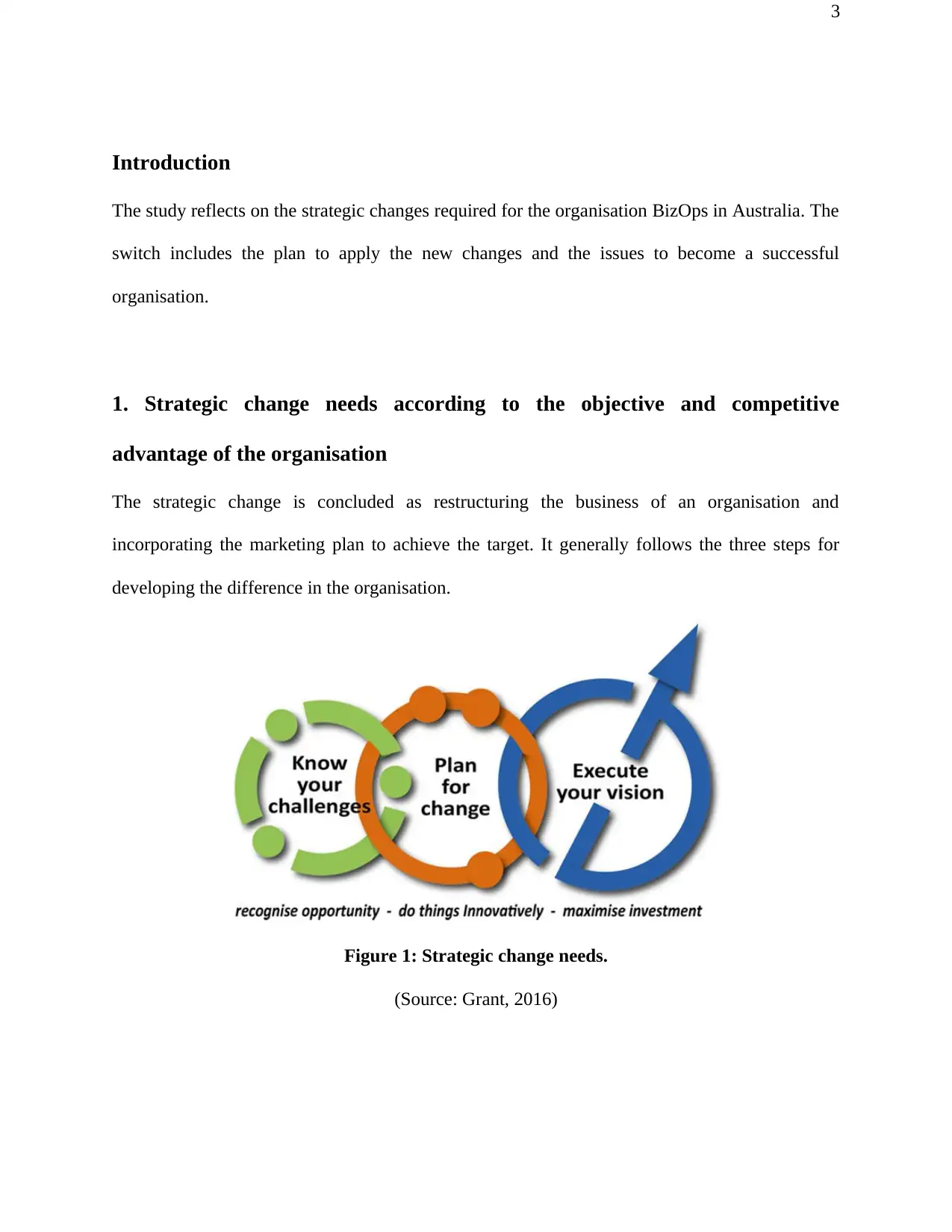
The strategic change is concluded as restructuring the business of an organisation and
incorporating the marketing plan to achieve the target. It generally follows the three steps for
developing the difference in the organisation.
Figure 1: Strategic change needs.
(Source: Grant, 2016)
Introduction
The study reflects on the strategic changes required for the organisation BizOps in Australia. The
switch includes the plan to apply the new changes and the issues to become a successful
organisation.
1. Strategic change needs according to the objective and competitive
advantage of the organisation
The strategic change is concluded as restructuring the business of an organisation and
incorporating the marketing plan to achieve the target. It generally follows the three steps for
developing the difference in the organisation.
Figure 1: Strategic change needs.
(Source: Grant, 2016)
⊘ This is a preview!⊘
Do you want full access?
Subscribe today to unlock all pages.

Trusted by 1+ million students worldwide
4
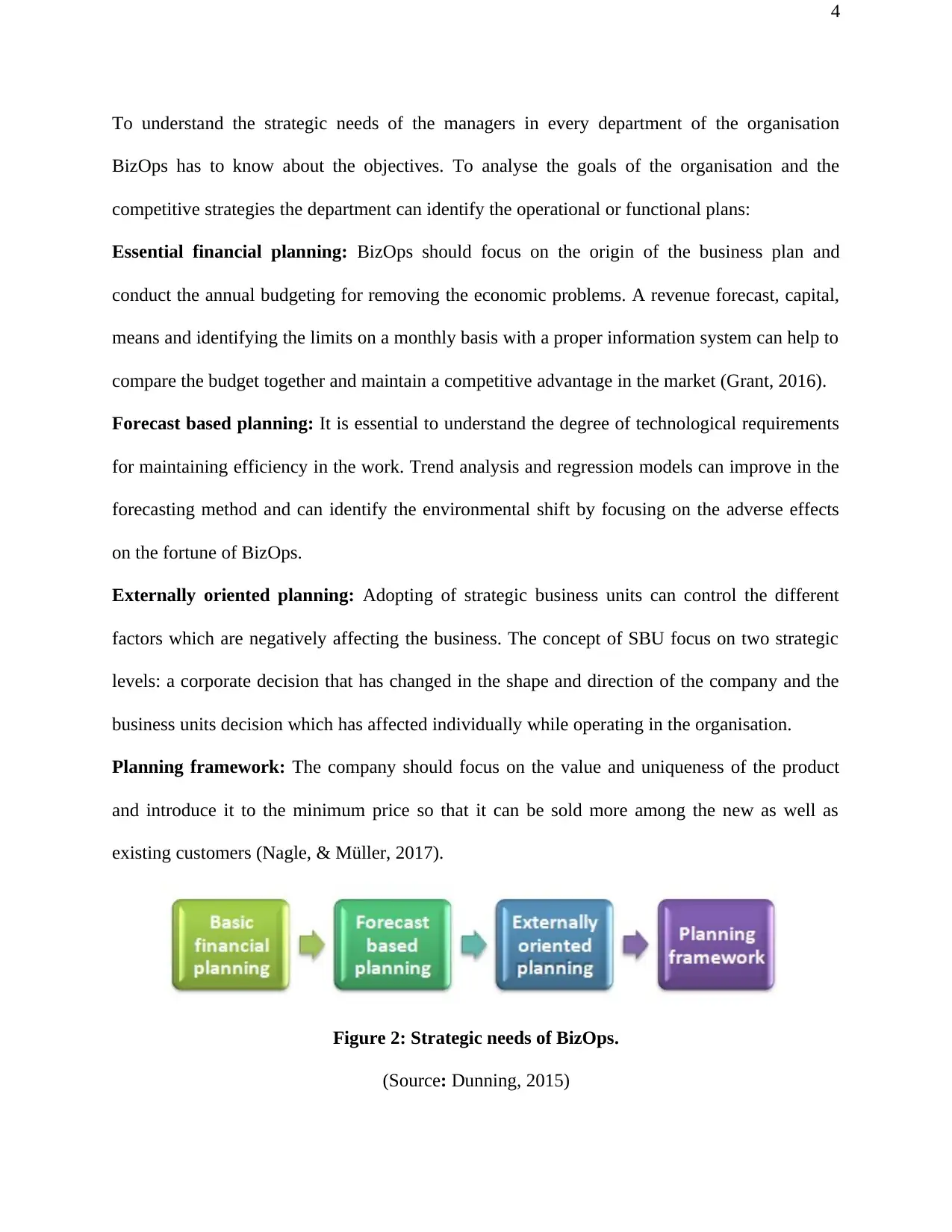
To understand the strategic needs of the managers in every department of the organisation
BizOps has to know about the objectives. To analyse the goals of the organisation and the
competitive strategies the department can identify the operational or functional plans:
Essential financial planning: BizOps should focus on the origin of the business plan and
conduct the annual budgeting for removing the economic problems. A revenue forecast, capital,
means and identifying the limits on a monthly basis with a proper information system can help to
compare the budget together and maintain a competitive advantage in the market (Grant, 2016).
Forecast based planning: It is essential to understand the degree of technological requirements
for maintaining efficiency in the work. Trend analysis and regression models can improve in the
forecasting method and can identify the environmental shift by focusing on the adverse effects
on the fortune of BizOps.
Externally oriented planning: Adopting of strategic business units can control the different
factors which are negatively affecting the business. The concept of SBU focus on two strategic
levels: a corporate decision that has changed in the shape and direction of the company and the
business units decision which has affected individually while operating in the organisation.
Planning framework: The company should focus on the value and uniqueness of the product
and introduce it to the minimum price so that it can be sold more among the new as well as
existing customers (Nagle, & Müller, 2017).
Figure 2: Strategic needs of BizOps.
(Source: Dunning, 2015)
To understand the strategic needs of the managers in every department of the organisation
BizOps has to know about the objectives. To analyse the goals of the organisation and the
competitive strategies the department can identify the operational or functional plans:
Essential financial planning: BizOps should focus on the origin of the business plan and
conduct the annual budgeting for removing the economic problems. A revenue forecast, capital,
means and identifying the limits on a monthly basis with a proper information system can help to
compare the budget together and maintain a competitive advantage in the market (Grant, 2016).
Forecast based planning: It is essential to understand the degree of technological requirements
for maintaining efficiency in the work. Trend analysis and regression models can improve in the
forecasting method and can identify the environmental shift by focusing on the adverse effects
on the fortune of BizOps.
Externally oriented planning: Adopting of strategic business units can control the different
factors which are negatively affecting the business. The concept of SBU focus on two strategic
levels: a corporate decision that has changed in the shape and direction of the company and the
business units decision which has affected individually while operating in the organisation.
Planning framework: The company should focus on the value and uniqueness of the product
and introduce it to the minimum price so that it can be sold more among the new as well as
existing customers (Nagle, & Müller, 2017).
Figure 2: Strategic needs of BizOps.
(Source: Dunning, 2015)
Paraphrase This Document
Need a fresh take? Get an instant paraphrase of this document with our AI Paraphraser
5
2. Identifying change requirements
a) PEST analysis is impacting on the new strategic objectives
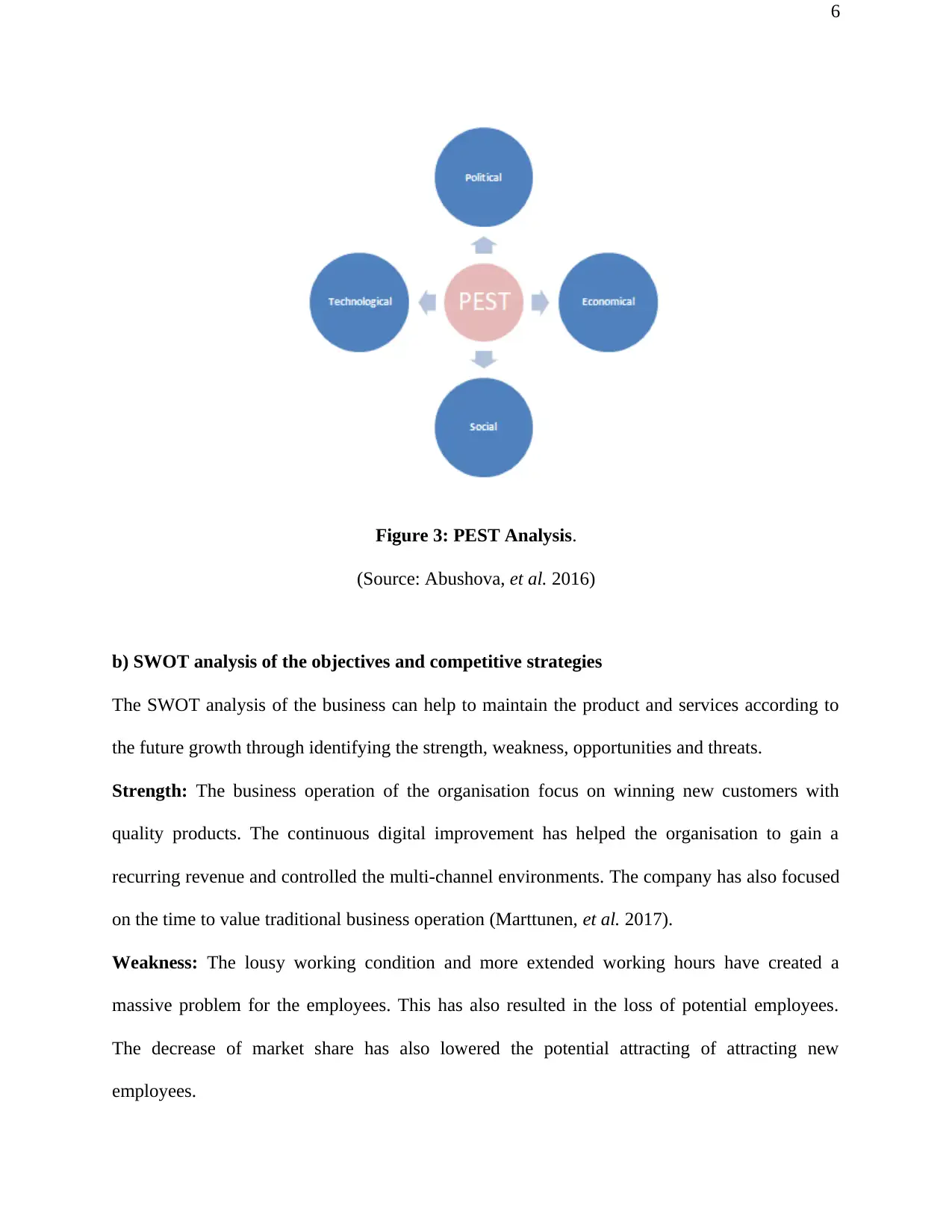
The pestle analysis describes the different framework of macro-environmental factors that are
used in the organisation to achieve the strategic management effectively.
The impact of the new strategies objective in BizOps can be demonstrated through PEST
analysis:
Political: The new approach can help to decrease the rate of taxes and conduct the government
regulations without issue in the foreign trade regulations. However, the political stability is very
low so that the organisation may get an effect on the bottom line of the business operation. The
employment laws will help the organisation to attract more employees and become more
successful with less number of attrition (Dunning, 2015).
Economical: The availability of proper strategic decisions can help to increase the availability of
the goods and meet the customer's demand effectively. In this way, the economy can be
downtown, and we company can grow more in the market of Australia.
Social: The increasing number of the population in different countries can help the organisation
to grow its production. This will help to Downturn the economic situation and can help to
increase the stability of the environment.
Technological: Adopting of new models and technologies can improve in the circulation of their
products to the market. These will also keep track of financial as well as operational level in the
organisation.
2. Identifying change requirements
a) PEST analysis is impacting on the new strategic objectives
The pestle analysis describes the different framework of macro-environmental factors that are
used in the organisation to achieve the strategic management effectively.
The impact of the new strategies objective in BizOps can be demonstrated through PEST
analysis:
Political: The new approach can help to decrease the rate of taxes and conduct the government
regulations without issue in the foreign trade regulations. However, the political stability is very
low so that the organisation may get an effect on the bottom line of the business operation. The
employment laws will help the organisation to attract more employees and become more
successful with less number of attrition (Dunning, 2015).
Economical: The availability of proper strategic decisions can help to increase the availability of
the goods and meet the customer's demand effectively. In this way, the economy can be
downtown, and we company can grow more in the market of Australia.
Social: The increasing number of the population in different countries can help the organisation
to grow its production. This will help to Downturn the economic situation and can help to
increase the stability of the environment.
Technological: Adopting of new models and technologies can improve in the circulation of their
products to the market. These will also keep track of financial as well as operational level in the
organisation.
6
Figure 3: PEST Analysis.
(Source: Abushova, et al. 2016)
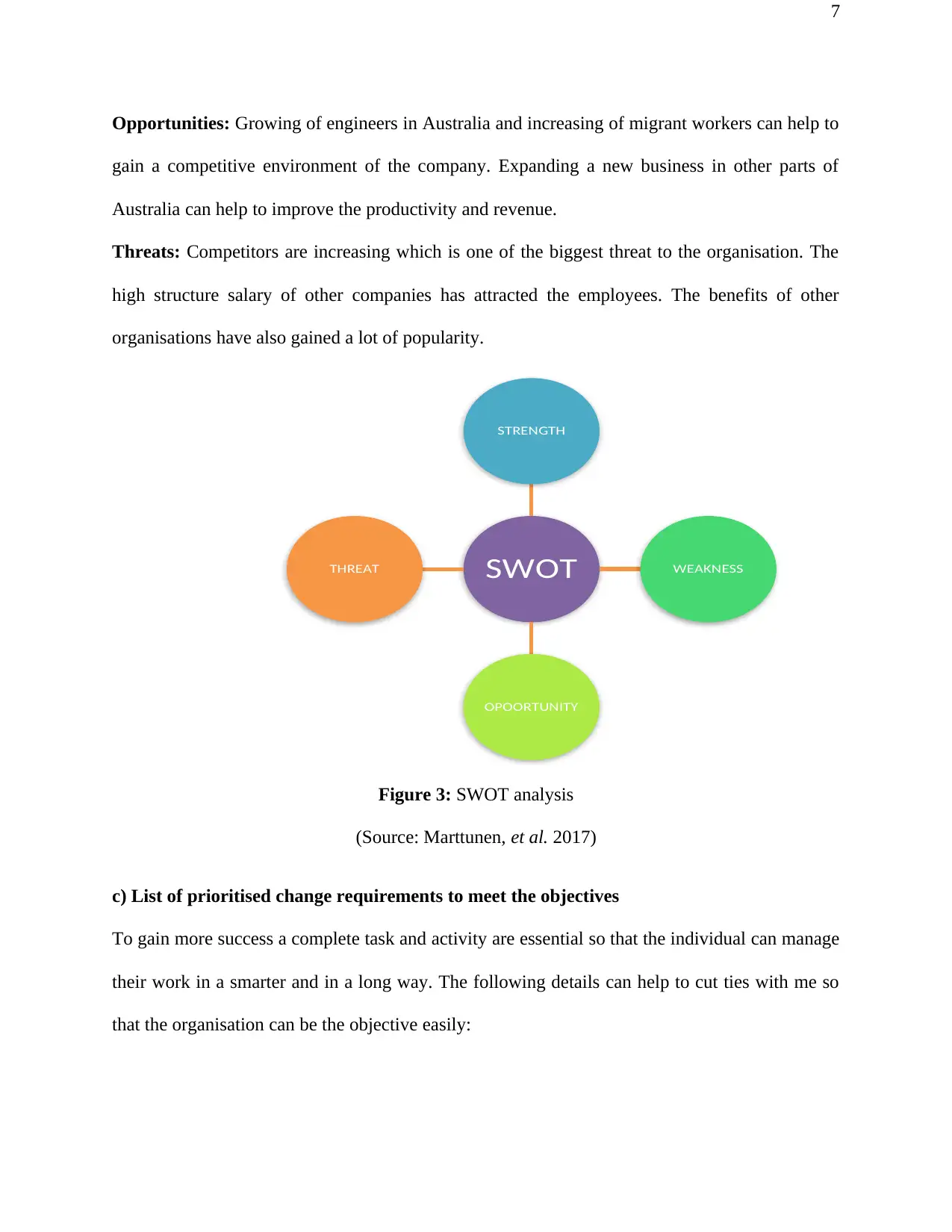
b) SWOT analysis of the objectives and competitive strategies
The SWOT analysis of the business can help to maintain the product and services according to
the future growth through identifying the strength, weakness, opportunities and threats.
Strength: The business operation of the organisation focus on winning new customers with
quality products. The continuous digital improvement has helped the organisation to gain a
recurring revenue and controlled the multi-channel environments. The company has also focused
on the time to value traditional business operation (Marttunen, et al. 2017).
Weakness: The lousy working condition and more extended working hours have created a
massive problem for the employees. This has also resulted in the loss of potential employees.
The decrease of market share has also lowered the potential attracting of attracting new
employees.
Figure 3: PEST Analysis.
(Source: Abushova, et al. 2016)
b) SWOT analysis of the objectives and competitive strategies
The SWOT analysis of the business can help to maintain the product and services according to
the future growth through identifying the strength, weakness, opportunities and threats.
Strength: The business operation of the organisation focus on winning new customers with
quality products. The continuous digital improvement has helped the organisation to gain a
recurring revenue and controlled the multi-channel environments. The company has also focused
on the time to value traditional business operation (Marttunen, et al. 2017).
Weakness: The lousy working condition and more extended working hours have created a
massive problem for the employees. This has also resulted in the loss of potential employees.
The decrease of market share has also lowered the potential attracting of attracting new
employees.
⊘ This is a preview!⊘
Do you want full access?
Subscribe today to unlock all pages.
Trusted by 1+ million students worldwide
7
Opportunities: Growing of engineers in Australia and increasing of migrant workers can help to
gain a competitive environment of the company. Expanding a new business in other parts of
Australia can help to improve the productivity and revenue.
Threats: Competitors are increasing which is one of the biggest threat to the organisation. The
high structure salary of other companies has attracted the employees. The benefits of other
organisations have also gained a lot of popularity.
Figure 3: SWOT analysis
(Source: Marttunen, et al. 2017)
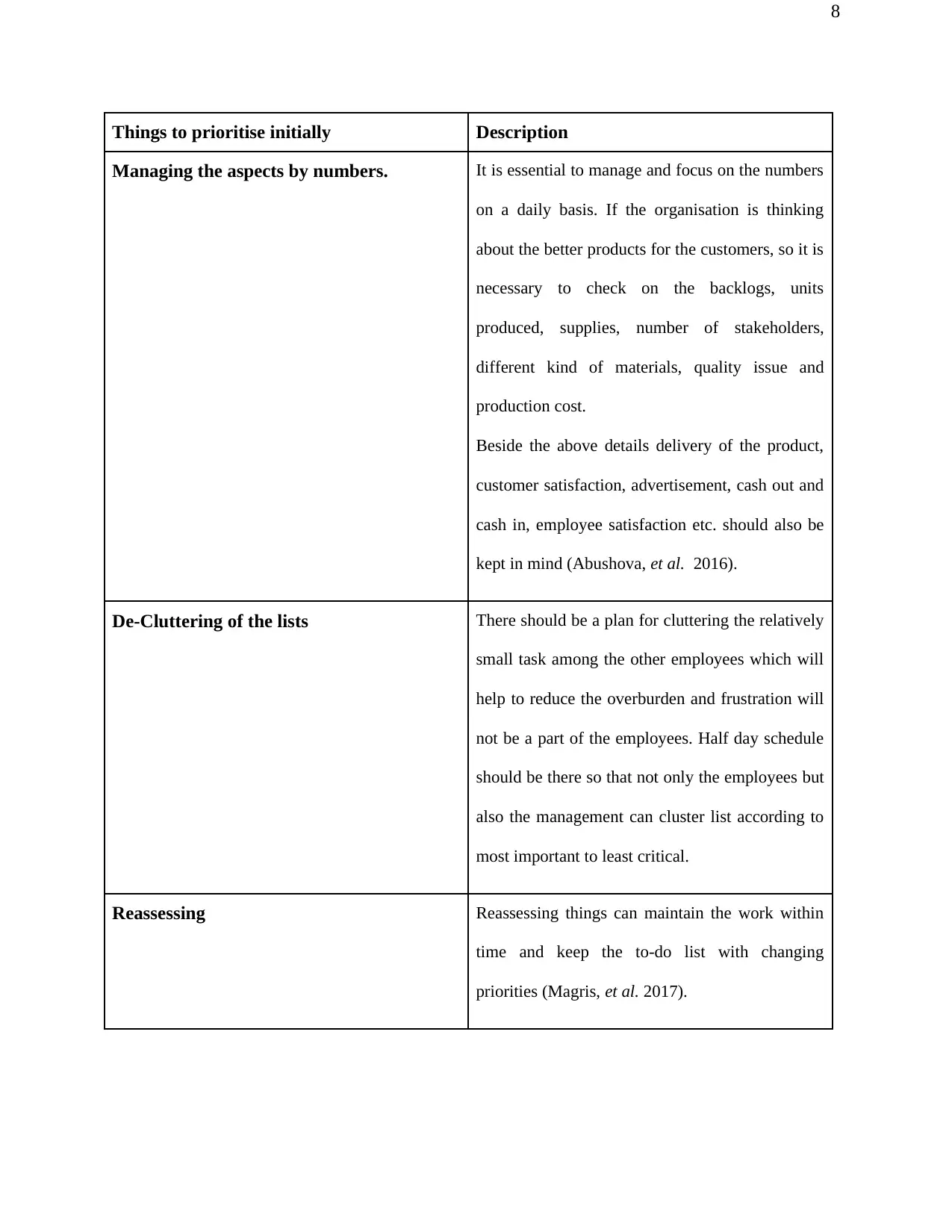
c) List of prioritised change requirements to meet the objectives
To gain more success a complete task and activity are essential so that the individual can manage
their work in a smarter and in a long way. The following details can help to cut ties with me so
that the organisation can be the objective easily:
SWOT
STRENGTH
WEAKNESS
OPOORTUNITY
THREAT
Opportunities: Growing of engineers in Australia and increasing of migrant workers can help to
gain a competitive environment of the company. Expanding a new business in other parts of
Australia can help to improve the productivity and revenue.
Threats: Competitors are increasing which is one of the biggest threat to the organisation. The
high structure salary of other companies has attracted the employees. The benefits of other
organisations have also gained a lot of popularity.
Figure 3: SWOT analysis
(Source: Marttunen, et al. 2017)
c) List of prioritised change requirements to meet the objectives
To gain more success a complete task and activity are essential so that the individual can manage
their work in a smarter and in a long way. The following details can help to cut ties with me so
that the organisation can be the objective easily:
SWOT
STRENGTH
WEAKNESS
OPOORTUNITY
THREAT
Paraphrase This Document
Need a fresh take? Get an instant paraphrase of this document with our AI Paraphraser
8
Things to prioritise initially Description
Managing the aspects by numbers. It is essential to manage and focus on the numbers
on a daily basis. If the organisation is thinking
about the better products for the customers, so it is
necessary to check on the backlogs, units
produced, supplies, number of stakeholders,
different kind of materials, quality issue and
production cost.
Beside the above details delivery of the product,
customer satisfaction, advertisement, cash out and
cash in, employee satisfaction etc. should also be
kept in mind (Abushova, et al. 2016).
De-Cluttering of the lists There should be a plan for cluttering the relatively
small task among the other employees which will
help to reduce the overburden and frustration will
not be a part of the employees. Half day schedule
should be there so that not only the employees but
also the management can cluster list according to
most important to least critical.
Reassessing Reassessing things can maintain the work within
time and keep the to-do list with changing
priorities (Magris, et al. 2017).
Things to prioritise initially Description
Managing the aspects by numbers. It is essential to manage and focus on the numbers
on a daily basis. If the organisation is thinking
about the better products for the customers, so it is
necessary to check on the backlogs, units
produced, supplies, number of stakeholders,
different kind of materials, quality issue and
production cost.
Beside the above details delivery of the product,
customer satisfaction, advertisement, cash out and
cash in, employee satisfaction etc. should also be
kept in mind (Abushova, et al. 2016).
De-Cluttering of the lists There should be a plan for cluttering the relatively
small task among the other employees which will
help to reduce the overburden and frustration will
not be a part of the employees. Half day schedule
should be there so that not only the employees but
also the management can cluster list according to
most important to least critical.
Reassessing Reassessing things can maintain the work within
time and keep the to-do list with changing
priorities (Magris, et al. 2017).
9
3) Selecting the highest priority change requirement and analysing the impact
of the change
a) Findings from a gap analysis of the current and ideal future situation
Gap analysis is considered as a method for assessing the performance of the business information
system and its differences. By using this process, the organisation can easily identify the
differences between ideal future situation and the current situation of the organisation. The
method of using the gap analysis process successfully works for analysing the space between the
target state and present state.
b) Findings from a cost-benefit analysis
The cost-benefit analysis is considered as a method which is used by businesses for analysing the
decisions. Using this process include sums of various beneficial situations or actions and the cost
for doing the actions or subtract from the benefits. By using this process the leaders able to take
future decisions for the organisation.
c) Conclusions of a risk analysis
Risk analysis is a process of reviewing various risk which can appear, during different
circumstances or organisational activities. Risk analysis is considered as a part of the risk
management process. This process usually helps in understanding the strategic risk analysis and
minimising it for the future risk damage or probability.
4) Conducting a change readiness assessment
a,) Methods used to gather information relating to change readiness
3) Selecting the highest priority change requirement and analysing the impact
of the change
a) Findings from a gap analysis of the current and ideal future situation
Gap analysis is considered as a method for assessing the performance of the business information
system and its differences. By using this process, the organisation can easily identify the
differences between ideal future situation and the current situation of the organisation. The
method of using the gap analysis process successfully works for analysing the space between the
target state and present state.
b) Findings from a cost-benefit analysis
The cost-benefit analysis is considered as a method which is used by businesses for analysing the
decisions. Using this process include sums of various beneficial situations or actions and the cost
for doing the actions or subtract from the benefits. By using this process the leaders able to take
future decisions for the organisation.
c) Conclusions of a risk analysis
Risk analysis is a process of reviewing various risk which can appear, during different
circumstances or organisational activities. Risk analysis is considered as a part of the risk
management process. This process usually helps in understanding the strategic risk analysis and
minimising it for the future risk damage or probability.
4) Conducting a change readiness assessment
a,) Methods used to gather information relating to change readiness
⊘ This is a preview!⊘
Do you want full access?
Subscribe today to unlock all pages.
Trusted by 1+ million students worldwide
10
To Collect the information about the change readiness of the organisation a systematic review
based on qualitative and quantitative measures were used.
The qualitative interview Data Collection was conducted by taking the five years data from
2012-2017. 20 individuals were taken a meeting for the improvement in the work culture for a
different purpose in the organisation. Out of 20, 8 were females, and 12 were Men. The interview
session was conducted with the range of different experiences and the complex problems in the
organisation. It also highlights that about the improvement shortly with innovative ideas. In the
quantitative survey, data each interviewee was asked to fill the survey form, and everyone was
happy to fill it with different comments (Shah et al. 2017). Again 20 members, when chosen for
this survey within the organisation and most of them, have completed the form, and the response
rate was 92.6%.
b) Forcefield analysis of the driving and restraining forces for change
The force field analysis adopted by Lewin has analysed attitude towards change and people
resisting to the changes for understanding the values and experiences. The adoption of this model
has helped to provide an overview of the problems in the organisation and has divided the factors
into the forces for and against change. It has investigated the balance of power that is involved
with an issue and identified the main vital stakeholders with opponents and allies. Also, it has
influenced the group of people in the market through internal and external forces. The conflict
between the departments with greater flexibility in the structure has increased the effective
communication and relationship (Shrivastava et al. 2017). The external forces have helped to
compete with competitors in the globalisation market and have adopted the changes in the
technology by changing the composition of the workforce. However, restraining forces are not
much success as it has increased the biases among the employees.
To Collect the information about the change readiness of the organisation a systematic review
based on qualitative and quantitative measures were used.
The qualitative interview Data Collection was conducted by taking the five years data from
2012-2017. 20 individuals were taken a meeting for the improvement in the work culture for a
different purpose in the organisation. Out of 20, 8 were females, and 12 were Men. The interview
session was conducted with the range of different experiences and the complex problems in the
organisation. It also highlights that about the improvement shortly with innovative ideas. In the
quantitative survey, data each interviewee was asked to fill the survey form, and everyone was
happy to fill it with different comments (Shah et al. 2017). Again 20 members, when chosen for
this survey within the organisation and most of them, have completed the form, and the response
rate was 92.6%.
b) Forcefield analysis of the driving and restraining forces for change
The force field analysis adopted by Lewin has analysed attitude towards change and people
resisting to the changes for understanding the values and experiences. The adoption of this model
has helped to provide an overview of the problems in the organisation and has divided the factors
into the forces for and against change. It has investigated the balance of power that is involved
with an issue and identified the main vital stakeholders with opponents and allies. Also, it has
influenced the group of people in the market through internal and external forces. The conflict
between the departments with greater flexibility in the structure has increased the effective
communication and relationship (Shrivastava et al. 2017). The external forces have helped to
compete with competitors in the globalisation market and have adopted the changes in the
technology by changing the composition of the workforce. However, restraining forces are not
much success as it has increased the biases among the employees.
Paraphrase This Document
Need a fresh take? Get an instant paraphrase of this document with our AI Paraphraser
11
c) Providing a list of strategies for increasing the driving forces and reducing the
restraining effects
Completing the force field analysis can help the decision-making process among the
management in the organisation. Identifying the forces that are strengthening the changes is one
of the key strategies for increasing the driving forces as well as reducing the restraining effects.
The powers that are taken into the constitution of the organisation Will be performed through
analysis of the resources with the organisation in a traditional way. Technology can also be used
to understand about it so that it can reduce the restraining forces immediately. The regulations,
relationships, institutional policies and norms can also be achieved with the decision which will
help in the driving forces and restraining forces (Dunning, 2015).
5) Developing the change mission statement and identifying the methods he
will be used to communicate the vision to motivate staff
Three methods can be used to motivate the employees in the organisation according to the
changes:
Communicating through various sources: Appreciating and communicating through email,
forum, and meetings can solve the issues that are underlying in the organisation and can also
make the employees happy. Rewarding them for the performance can be a huge benefit for the
organisation as most of the employees will be motivated easily according to the situation.
Development skill with thorough learning: Facility employee learning with practical
knowledge can improve the capabilities of the employees as well as can motivate them to work.
Also collecting ideas from them can be a good idea to grow in the business.
c) Providing a list of strategies for increasing the driving forces and reducing the
restraining effects
Completing the force field analysis can help the decision-making process among the
management in the organisation. Identifying the forces that are strengthening the changes is one
of the key strategies for increasing the driving forces as well as reducing the restraining effects.
The powers that are taken into the constitution of the organisation Will be performed through
analysis of the resources with the organisation in a traditional way. Technology can also be used
to understand about it so that it can reduce the restraining forces immediately. The regulations,
relationships, institutional policies and norms can also be achieved with the decision which will
help in the driving forces and restraining forces (Dunning, 2015).
5) Developing the change mission statement and identifying the methods he
will be used to communicate the vision to motivate staff
Three methods can be used to motivate the employees in the organisation according to the
changes:
Communicating through various sources: Appreciating and communicating through email,
forum, and meetings can solve the issues that are underlying in the organisation and can also
make the employees happy. Rewarding them for the performance can be a huge benefit for the
organisation as most of the employees will be motivated easily according to the situation.
Development skill with thorough learning: Facility employee learning with practical
knowledge can improve the capabilities of the employees as well as can motivate them to work.
Also collecting ideas from them can be a good idea to grow in the business.
12
Change process in the organisation: The changes that they're taking place in the market can be
applied in the culture of the organisation to understand the Strategies and human resource
management (Fullan, 2014). This will help to motivate the employees through change rest and to
create an environment with high spirits and personal empowerment.
6) Formulating the change strategy, identifying the guiding principles and
high level or broad tactics to realise the benefits of the change
The changes in the organisation, in the management and the employees with the transformation,
have changed the landscape of the business. The challenges and identifying the problems is very
sensitive and plays a vital role in the success of the company. Few guiding principles can be
adopted to understand the change strategy and the benefits:
Leading with the culture: Culture plays 70% growth in the organisation with an effort from
every part. Changing with the decision and lifestyle can help to build a strong emotional
connection with every department. This can boost the change initiative and Karnataka of the
attention of the people for more improvement (Bryson, 2018).
Addressing the human side of change systematically: Upbringing and uplinking of new skills
and capabilities can develop the decision making of the organisation and produce free issues that
are at risk.
Change process in the organisation: The changes that they're taking place in the market can be
applied in the culture of the organisation to understand the Strategies and human resource
management (Fullan, 2014). This will help to motivate the employees through change rest and to
create an environment with high spirits and personal empowerment.
6) Formulating the change strategy, identifying the guiding principles and
high level or broad tactics to realise the benefits of the change
The changes in the organisation, in the management and the employees with the transformation,
have changed the landscape of the business. The challenges and identifying the problems is very
sensitive and plays a vital role in the success of the company. Few guiding principles can be
adopted to understand the change strategy and the benefits:
Leading with the culture: Culture plays 70% growth in the organisation with an effort from
every part. Changing with the decision and lifestyle can help to build a strong emotional
connection with every department. This can boost the change initiative and Karnataka of the
attention of the people for more improvement (Bryson, 2018).
Addressing the human side of change systematically: Upbringing and uplinking of new skills
and capabilities can develop the decision making of the organisation and produce free issues that
are at risk.
⊘ This is a preview!⊘
Do you want full access?
Subscribe today to unlock all pages.
Trusted by 1+ million students worldwide

1 out of 18


Related Documents


Your All-in-One AI-Powered Toolkit for Academic Success.
+13062052269
info@desklib.com
Available 24*7 on WhatsApp / Email
![[object Object]](/_next/static/media/star-bottom.7253800d.svg)
Unlock your academic potential
Copyright © 2020–2026 A2Z Services. All Rights Reserved. Developed and managed by ZUCOL.