Analysis of Employee Downsizing: HRM Project, Semester 1, University
VerifiedAdded on 2020/07/23
|23
|7656
|41
Report
AI Summary
This report analyzes a case study on employee downsizing, a prevalent practice in the early 21st century, examining its impact on employees and organizations. The report explores the background of downsizing, its negative effects, and the reasons behind its adoption, particularly in response to economic downturns and global competition. It delves into the challenges and opportunities associated with downsizing, including the use of various strategies such as compulsory termination, attrition, and voluntary retirement. The analysis covers theories and approaches like leadership, communication, training, and motivation, utilized to facilitate effective downsizing processes. The report identifies the major reasons for downsizing, its impact on organizations and employees, and the various theories and approaches used in the process. It also discusses best practices and suggests solutions to mitigate the negative consequences of downsizing, such as the loss of skilled employees and decreased productivity, and also includes a detailed table of contents and executive summaries for each project section.

Human Resource Management

Paraphrase This Document
Need a fresh take? Get an instant paraphrase of this document with our AI Paraphraser
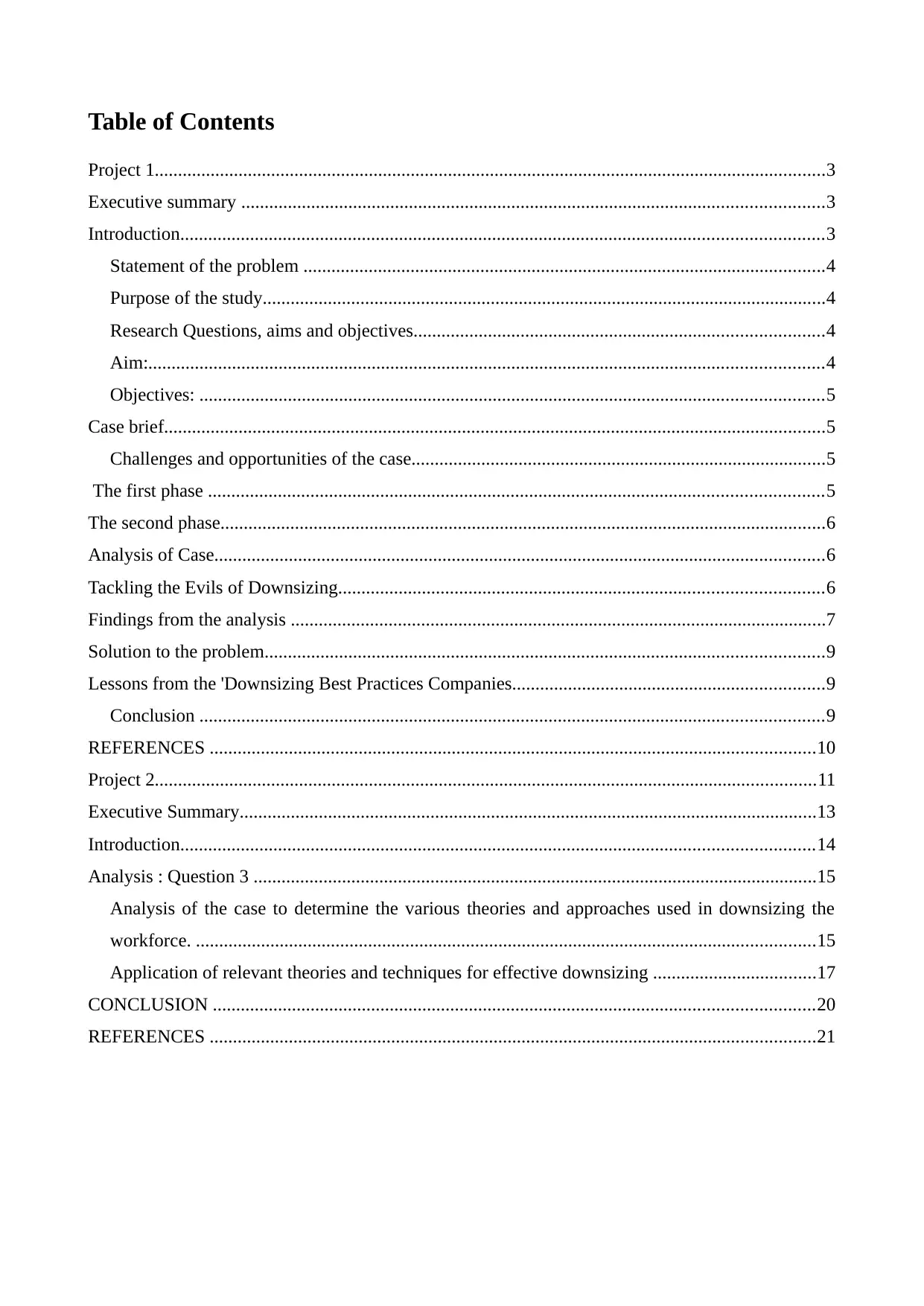
Table of Contents
Project 1................................................................................................................................................3
Executive summary .............................................................................................................................3
Introduction..........................................................................................................................................3
Statement of the problem ................................................................................................................4
Purpose of the study.........................................................................................................................4
Research Questions, aims and objectives........................................................................................4
Aim:.................................................................................................................................................4
Objectives: ......................................................................................................................................5
Case brief..............................................................................................................................................5
Challenges and opportunities of the case.........................................................................................5
The first phase ....................................................................................................................................5
The second phase..................................................................................................................................6
Analysis of Case...................................................................................................................................6
Tackling the Evils of Downsizing........................................................................................................6
Findings from the analysis ...................................................................................................................7
Solution to the problem........................................................................................................................9
Lessons from the 'Downsizing Best Practices Companies...................................................................9
Conclusion ......................................................................................................................................9
REFERENCES ..................................................................................................................................10
Project 2..............................................................................................................................................11
Executive Summary............................................................................................................................13
Introduction........................................................................................................................................14
Analysis : Question 3 .........................................................................................................................15
Analysis of the case to determine the various theories and approaches used in downsizing the
workforce. .....................................................................................................................................15
Application of relevant theories and techniques for effective downsizing ...................................17
CONCLUSION .................................................................................................................................20
REFERENCES ..................................................................................................................................21
Project 1................................................................................................................................................3
Executive summary .............................................................................................................................3
Introduction..........................................................................................................................................3
Statement of the problem ................................................................................................................4
Purpose of the study.........................................................................................................................4
Research Questions, aims and objectives........................................................................................4
Aim:.................................................................................................................................................4
Objectives: ......................................................................................................................................5
Case brief..............................................................................................................................................5
Challenges and opportunities of the case.........................................................................................5
The first phase ....................................................................................................................................5
The second phase..................................................................................................................................6
Analysis of Case...................................................................................................................................6
Tackling the Evils of Downsizing........................................................................................................6
Findings from the analysis ...................................................................................................................7
Solution to the problem........................................................................................................................9
Lessons from the 'Downsizing Best Practices Companies...................................................................9
Conclusion ......................................................................................................................................9
REFERENCES ..................................................................................................................................10
Project 2..............................................................................................................................................11
Executive Summary............................................................................................................................13
Introduction........................................................................................................................................14
Analysis : Question 3 .........................................................................................................................15
Analysis of the case to determine the various theories and approaches used in downsizing the
workforce. .....................................................................................................................................15
Application of relevant theories and techniques for effective downsizing ...................................17
CONCLUSION .................................................................................................................................20
REFERENCES ..................................................................................................................................21
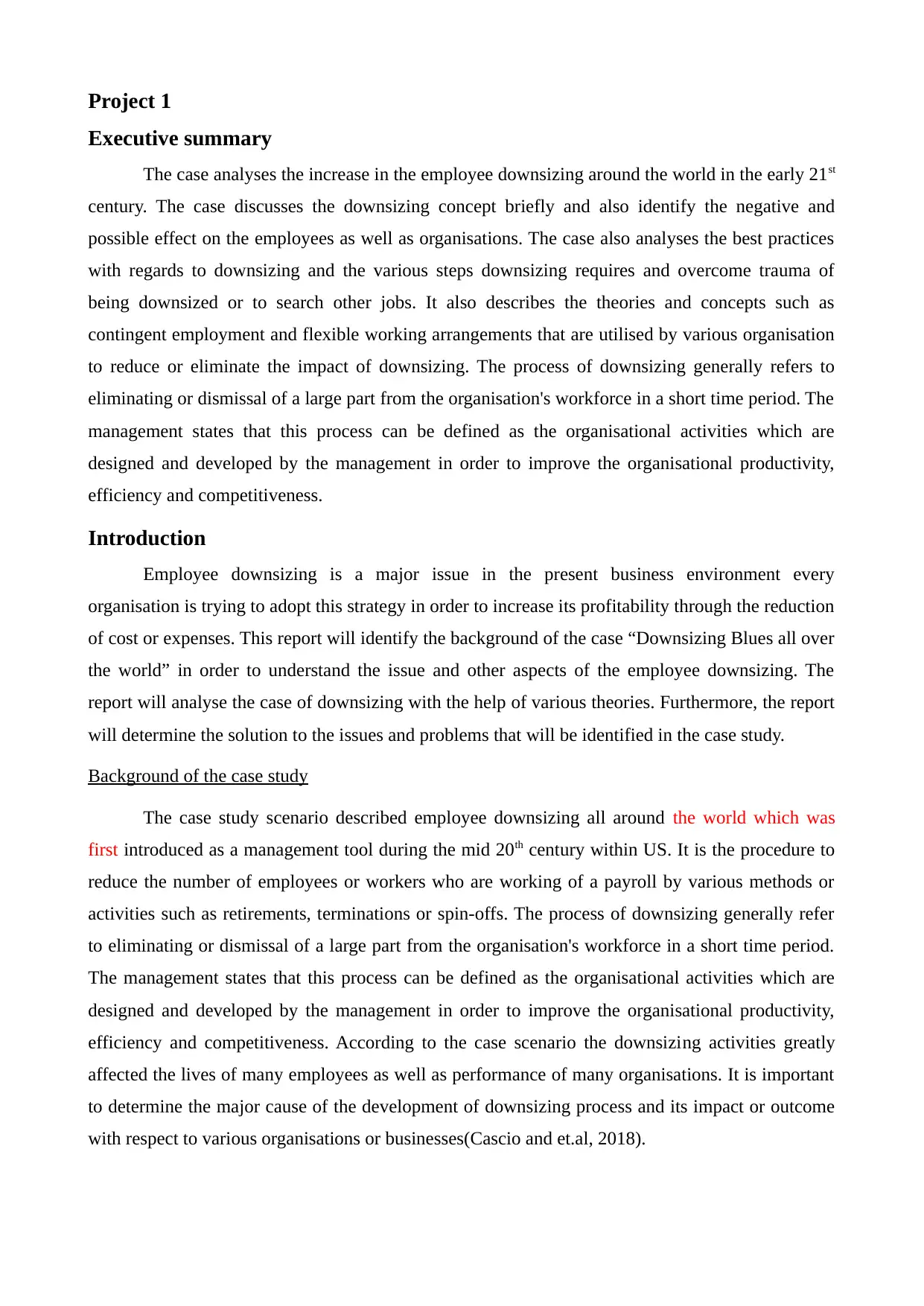
Project 1
Executive summary
The case analyses the increase in the employee downsizing around the world in the early 21st
century. The case discusses the downsizing concept briefly and also identify the negative and
possible effect on the employees as well as organisations. The case also analyses the best practices
with regards to downsizing and the various steps downsizing requires and overcome trauma of
being downsized or to search other jobs. It also describes the theories and concepts such as
contingent employment and flexible working arrangements that are utilised by various organisation
to reduce or eliminate the impact of downsizing. The process of downsizing generally refers to
eliminating or dismissal of a large part from the organisation's workforce in a short time period. The
management states that this process can be defined as the organisational activities which are
designed and developed by the management in order to improve the organisational productivity,
efficiency and competitiveness.
Introduction
Employee downsizing is a major issue in the present business environment every
organisation is trying to adopt this strategy in order to increase its profitability through the reduction
of cost or expenses. This report will identify the background of the case “Downsizing Blues all over
the world” in order to understand the issue and other aspects of the employee downsizing. The
report will analyse the case of downsizing with the help of various theories. Furthermore, the report
will determine the solution to the issues and problems that will be identified in the case study.
Background of the case study
The case study scenario described employee downsizing all around the world which was
first introduced as a management tool during the mid 20th century within US. It is the procedure to
reduce the number of employees or workers who are working of a payroll by various methods or
activities such as retirements, terminations or spin-offs. The process of downsizing generally refer
to eliminating or dismissal of a large part from the organisation's workforce in a short time period.
The management states that this process can be defined as the organisational activities which are
designed and developed by the management in order to improve the organisational productivity,
efficiency and competitiveness. According to the case scenario the downsizing activities greatly
affected the lives of many employees as well as performance of many organisations. It is important
to determine the major cause of the development of downsizing process and its impact or outcome
with respect to various organisations or businesses(Cascio and et.al, 2018).
Executive summary
The case analyses the increase in the employee downsizing around the world in the early 21st
century. The case discusses the downsizing concept briefly and also identify the negative and
possible effect on the employees as well as organisations. The case also analyses the best practices
with regards to downsizing and the various steps downsizing requires and overcome trauma of
being downsized or to search other jobs. It also describes the theories and concepts such as
contingent employment and flexible working arrangements that are utilised by various organisation
to reduce or eliminate the impact of downsizing. The process of downsizing generally refers to
eliminating or dismissal of a large part from the organisation's workforce in a short time period. The
management states that this process can be defined as the organisational activities which are
designed and developed by the management in order to improve the organisational productivity,
efficiency and competitiveness.
Introduction
Employee downsizing is a major issue in the present business environment every
organisation is trying to adopt this strategy in order to increase its profitability through the reduction
of cost or expenses. This report will identify the background of the case “Downsizing Blues all over
the world” in order to understand the issue and other aspects of the employee downsizing. The
report will analyse the case of downsizing with the help of various theories. Furthermore, the report
will determine the solution to the issues and problems that will be identified in the case study.
Background of the case study
The case study scenario described employee downsizing all around the world which was
first introduced as a management tool during the mid 20th century within US. It is the procedure to
reduce the number of employees or workers who are working of a payroll by various methods or
activities such as retirements, terminations or spin-offs. The process of downsizing generally refer
to eliminating or dismissal of a large part from the organisation's workforce in a short time period.
The management states that this process can be defined as the organisational activities which are
designed and developed by the management in order to improve the organisational productivity,
efficiency and competitiveness. According to the case scenario the downsizing activities greatly
affected the lives of many employees as well as performance of many organisations. It is important
to determine the major cause of the development of downsizing process and its impact or outcome
with respect to various organisations or businesses(Cascio and et.al, 2018).
⊘ This is a preview!⊘
Do you want full access?
Subscribe today to unlock all pages.

Trusted by 1+ million students worldwide
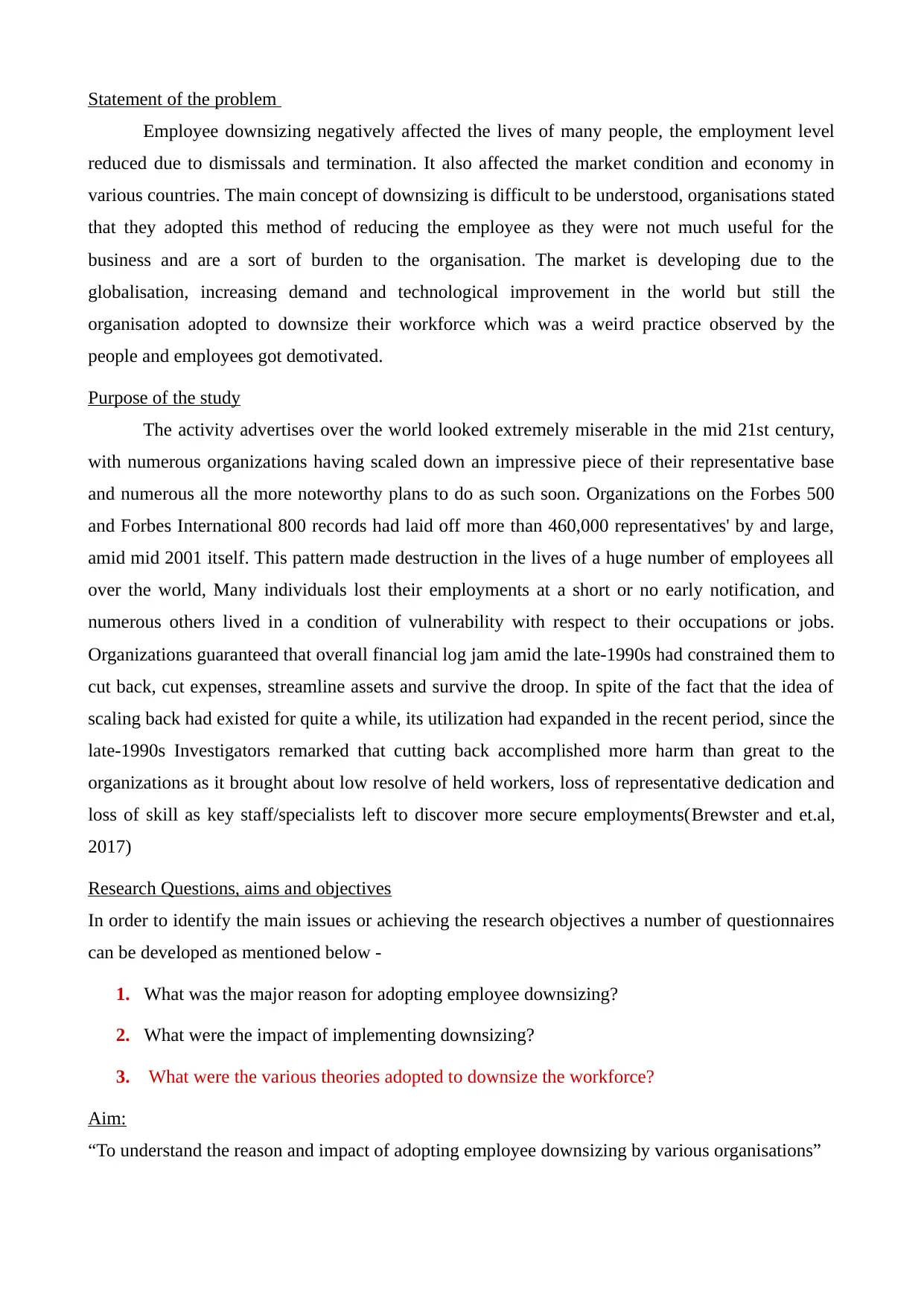
Statement of the problem
Employee downsizing negatively affected the lives of many people, the employment level
reduced due to dismissals and termination. It also affected the market condition and economy in
various countries. The main concept of downsizing is difficult to be understood, organisations stated
that they adopted this method of reducing the employee as they were not much useful for the
business and are a sort of burden to the organisation. The market is developing due to the
globalisation, increasing demand and technological improvement in the world but still the
organisation adopted to downsize their workforce which was a weird practice observed by the
people and employees got demotivated.
Purpose of the study
The activity advertises over the world looked extremely miserable in the mid 21st century,
with numerous organizations having scaled down an impressive piece of their representative base
and numerous all the more noteworthy plans to do as such soon. Organizations on the Forbes 500
and Forbes International 800 records had laid off more than 460,000 representatives' by and large,
amid mid 2001 itself. This pattern made destruction in the lives of a huge number of employees all
over the world, Many individuals lost their employments at a short or no early notification, and
numerous others lived in a condition of vulnerability with respect to their occupations or jobs.
Organizations guaranteed that overall financial log jam amid the late-1990s had constrained them to
cut back, cut expenses, streamline assets and survive the droop. In spite of the fact that the idea of
scaling back had existed for quite a while, its utilization had expanded in the recent period, since the
late-1990s Investigators remarked that cutting back accomplished more harm than great to the
organizations as it brought about low resolve of held workers, loss of representative dedication and
loss of skill as key staff/specialists left to discover more secure employments(Brewster and et.al,
2017)
Research Questions, aims and objectives
In order to identify the main issues or achieving the research objectives a number of questionnaires
can be developed as mentioned below -
1. What was the major reason for adopting employee downsizing?
2. What were the impact of implementing downsizing?
3. What were the various theories adopted to downsize the workforce?
Aim:
“To understand the reason and impact of adopting employee downsizing by various organisations”
Employee downsizing negatively affected the lives of many people, the employment level
reduced due to dismissals and termination. It also affected the market condition and economy in
various countries. The main concept of downsizing is difficult to be understood, organisations stated
that they adopted this method of reducing the employee as they were not much useful for the
business and are a sort of burden to the organisation. The market is developing due to the
globalisation, increasing demand and technological improvement in the world but still the
organisation adopted to downsize their workforce which was a weird practice observed by the
people and employees got demotivated.
Purpose of the study
The activity advertises over the world looked extremely miserable in the mid 21st century,
with numerous organizations having scaled down an impressive piece of their representative base
and numerous all the more noteworthy plans to do as such soon. Organizations on the Forbes 500
and Forbes International 800 records had laid off more than 460,000 representatives' by and large,
amid mid 2001 itself. This pattern made destruction in the lives of a huge number of employees all
over the world, Many individuals lost their employments at a short or no early notification, and
numerous others lived in a condition of vulnerability with respect to their occupations or jobs.
Organizations guaranteed that overall financial log jam amid the late-1990s had constrained them to
cut back, cut expenses, streamline assets and survive the droop. In spite of the fact that the idea of
scaling back had existed for quite a while, its utilization had expanded in the recent period, since the
late-1990s Investigators remarked that cutting back accomplished more harm than great to the
organizations as it brought about low resolve of held workers, loss of representative dedication and
loss of skill as key staff/specialists left to discover more secure employments(Brewster and et.al,
2017)
Research Questions, aims and objectives
In order to identify the main issues or achieving the research objectives a number of questionnaires
can be developed as mentioned below -
1. What was the major reason for adopting employee downsizing?
2. What were the impact of implementing downsizing?
3. What were the various theories adopted to downsize the workforce?
Aim:
“To understand the reason and impact of adopting employee downsizing by various organisations”
Paraphrase This Document
Need a fresh take? Get an instant paraphrase of this document with our AI Paraphraser
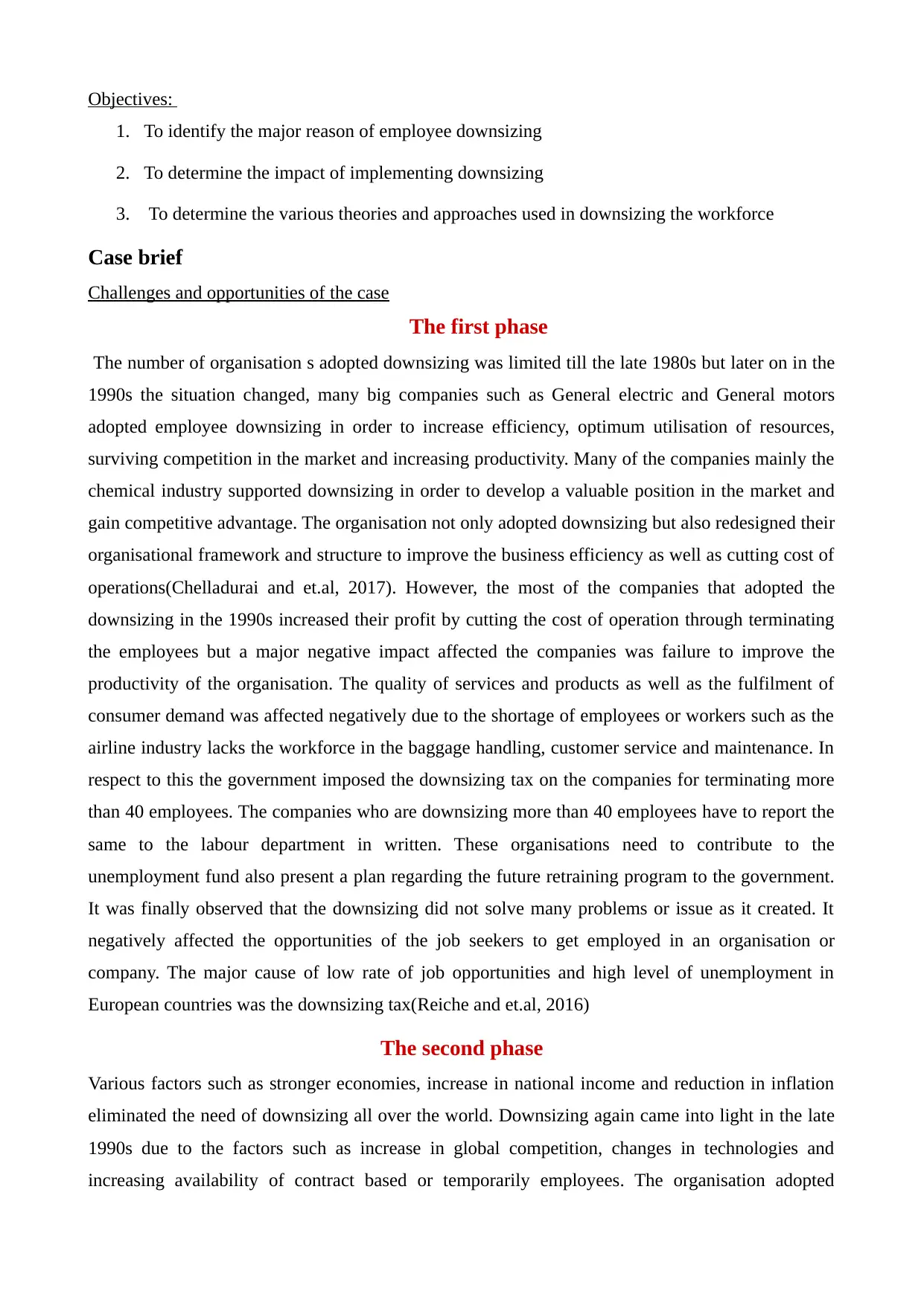
Objectives:
1. To identify the major reason of employee downsizing
2. To determine the impact of implementing downsizing
3. To determine the various theories and approaches used in downsizing the workforce
Case brief
Challenges and opportunities of the case
The first phase
The number of organisation s adopted downsizing was limited till the late 1980s but later on in the
1990s the situation changed, many big companies such as General electric and General motors
adopted employee downsizing in order to increase efficiency, optimum utilisation of resources,
surviving competition in the market and increasing productivity. Many of the companies mainly the
chemical industry supported downsizing in order to develop a valuable position in the market and
gain competitive advantage. The organisation not only adopted downsizing but also redesigned their
organisational framework and structure to improve the business efficiency as well as cutting cost of
operations(Chelladurai and et.al, 2017). However, the most of the companies that adopted the
downsizing in the 1990s increased their profit by cutting the cost of operation through terminating
the employees but a major negative impact affected the companies was failure to improve the
productivity of the organisation. The quality of services and products as well as the fulfilment of
consumer demand was affected negatively due to the shortage of employees or workers such as the
airline industry lacks the workforce in the baggage handling, customer service and maintenance. In
respect to this the government imposed the downsizing tax on the companies for terminating more
than 40 employees. The companies who are downsizing more than 40 employees have to report the
same to the labour department in written. These organisations need to contribute to the
unemployment fund also present a plan regarding the future retraining program to the government.
It was finally observed that the downsizing did not solve many problems or issue as it created. It
negatively affected the opportunities of the job seekers to get employed in an organisation or
company. The major cause of low rate of job opportunities and high level of unemployment in
European countries was the downsizing tax(Reiche and et.al, 2016)
The second phase
Various factors such as stronger economies, increase in national income and reduction in inflation
eliminated the need of downsizing all over the world. Downsizing again came into light in the late
1990s due to the factors such as increase in global competition, changes in technologies and
increasing availability of contract based or temporarily employees. The organisation adopted
1. To identify the major reason of employee downsizing
2. To determine the impact of implementing downsizing
3. To determine the various theories and approaches used in downsizing the workforce
Case brief
Challenges and opportunities of the case
The first phase
The number of organisation s adopted downsizing was limited till the late 1980s but later on in the
1990s the situation changed, many big companies such as General electric and General motors
adopted employee downsizing in order to increase efficiency, optimum utilisation of resources,
surviving competition in the market and increasing productivity. Many of the companies mainly the
chemical industry supported downsizing in order to develop a valuable position in the market and
gain competitive advantage. The organisation not only adopted downsizing but also redesigned their
organisational framework and structure to improve the business efficiency as well as cutting cost of
operations(Chelladurai and et.al, 2017). However, the most of the companies that adopted the
downsizing in the 1990s increased their profit by cutting the cost of operation through terminating
the employees but a major negative impact affected the companies was failure to improve the
productivity of the organisation. The quality of services and products as well as the fulfilment of
consumer demand was affected negatively due to the shortage of employees or workers such as the
airline industry lacks the workforce in the baggage handling, customer service and maintenance. In
respect to this the government imposed the downsizing tax on the companies for terminating more
than 40 employees. The companies who are downsizing more than 40 employees have to report the
same to the labour department in written. These organisations need to contribute to the
unemployment fund also present a plan regarding the future retraining program to the government.
It was finally observed that the downsizing did not solve many problems or issue as it created. It
negatively affected the opportunities of the job seekers to get employed in an organisation or
company. The major cause of low rate of job opportunities and high level of unemployment in
European countries was the downsizing tax(Reiche and et.al, 2016)
The second phase
Various factors such as stronger economies, increase in national income and reduction in inflation
eliminated the need of downsizing all over the world. Downsizing again came into light in the late
1990s due to the factors such as increase in global competition, changes in technologies and
increasing availability of contract based or temporarily employees. The organisation adopted
downsizing negatively affected by the process, they lost some of their best employees which
affected the productivity and quality of services. It also developed many issues and problem such as
increased workload for the existing employees, uneven distribution of workforce, reduced
productivity etc. In order to resolve both the issue of increased global competition and reduced
productivity or quality of services the organisations got attracted towards recruiting temporarily or
contract based employees. This helped them to control the operating cost and obtaining
effectiveness within the business operations or activities. The organisations also increased the
expenditure on the overtime and decrease in the bonuses provided to the top level managers and
employees to cut down the cost.
Analysis of Case
Tackling the Evils of Downsizing
Performance management system
Downsizing was adopted by many organisations or countries all around the world, these
organisations used various strategies to adopt the downsizing as analysed by many researchers.
These strategies can be described as below -
Compulsory termination, in which leaving representatives are given no decision, is the last
downsize methodology also, is common place of planned terminations and the discount
disposal of divisions or on the other hand speciality units. Despite the fact that it is, of
course, unappealing to workers, the supervisors who settle on the choices do have the
chance to outline and actualize criteria in view of the necessities of the business. Eliminating
employments or whole special units additionally makes it more outlandish that workers will
win in claims charging discrimination.
Attrition, in which firms don't supplant a man who leaves, the least difficult strategy. With
this approach, representatives have the opportunity to practice free decision in choosing
regardless of whether to stay or leave, and consequently the potential for struggle and
emotions of frailty is limited. At a similar time, be that as it may, wearing down may cause
major issues for administration, since it is spontaneous and not in control.
Leave without pay, this strategy is a methodology in which the leaves without any pay is
granted to the employees with fewer benefits but with a guarantee of job whenever they
return after the completion of leave period. This strategy was beneficial for the organisations
as they can cut down the cost of operations rather than reducing the workforce.
Voluntary retirement and buyout benefits – The Voluntary retirement benefits motivates and
encourage workers to get early retirement with reduced or full pension benefits before the
affected the productivity and quality of services. It also developed many issues and problem such as
increased workload for the existing employees, uneven distribution of workforce, reduced
productivity etc. In order to resolve both the issue of increased global competition and reduced
productivity or quality of services the organisations got attracted towards recruiting temporarily or
contract based employees. This helped them to control the operating cost and obtaining
effectiveness within the business operations or activities. The organisations also increased the
expenditure on the overtime and decrease in the bonuses provided to the top level managers and
employees to cut down the cost.
Analysis of Case
Tackling the Evils of Downsizing
Performance management system
Downsizing was adopted by many organisations or countries all around the world, these
organisations used various strategies to adopt the downsizing as analysed by many researchers.
These strategies can be described as below -
Compulsory termination, in which leaving representatives are given no decision, is the last
downsize methodology also, is common place of planned terminations and the discount
disposal of divisions or on the other hand speciality units. Despite the fact that it is, of
course, unappealing to workers, the supervisors who settle on the choices do have the
chance to outline and actualize criteria in view of the necessities of the business. Eliminating
employments or whole special units additionally makes it more outlandish that workers will
win in claims charging discrimination.
Attrition, in which firms don't supplant a man who leaves, the least difficult strategy. With
this approach, representatives have the opportunity to practice free decision in choosing
regardless of whether to stay or leave, and consequently the potential for struggle and
emotions of frailty is limited. At a similar time, be that as it may, wearing down may cause
major issues for administration, since it is spontaneous and not in control.
Leave without pay, this strategy is a methodology in which the leaves without any pay is
granted to the employees with fewer benefits but with a guarantee of job whenever they
return after the completion of leave period. This strategy was beneficial for the organisations
as they can cut down the cost of operations rather than reducing the workforce.
Voluntary retirement and buyout benefits – The Voluntary retirement benefits motivates and
encourage workers to get early retirement with reduced or full pension benefits before the
⊘ This is a preview!⊘
Do you want full access?
Subscribe today to unlock all pages.
Trusted by 1+ million students worldwide
retirement age. The Buyout is a same method that consist offering a small amount of
payment to motivate the employees(Brewster and et.al, 2016)
The downsizing methods were used differently by each and every organisations, the involvement of
top level or senior employees assisted in achieving the objective sand goals with a little loss of
quantity and quality of services. The organisations used various theories and approaches such as
Leadership, Communication, Trainings, Motivation etc which in order to adopt effective
downsizing process. These approaches can be described as below -
1. Leadership – The HR. managers and other top level managers of the companies took an
effective part in the entire downsizing activities, they started developing plan in order to
downsize the employees or workforce. This helped in identifying the skills needed by the
employees
2. Communication – The various modes of communication were used in order to interact with
the employees, guiding them with their roles as well as identifying their need or wants. This
helped in successfully performing the downsizing strategies.
3. Training – The employees who need development in their skills and knowledge are provided
effective training to perform various tasks and duties effectively in order to avoid the
duplication of work or need of different employees to perform a particular task or activity.
4. Motivation – The employees were encouraged and motivated to understand the benefits of
downsizing strategies, the employees were provided special benefits to support the
organisation in adopting downsizing practices.
Reason for employees downsizing in organisation-
This term affects the working of enterprise in large manner, as there are many causes due to
which there is issue in relation to downsizing the employees in firm. It is defined in following
manner as are-
Cost reduction- The one of the reasons for employee downsizing is due to reduction in cost. Thus, it
can be said that employees pay roll is liability on the balance sheet of entity as it also reduced the
owner equity.
Productivity- it can be done by company in relation to downsize the employees base in manner to
have increment in productivity.
Value- in the organisation there is essential to have the changes in regard to restructuring. This kind
of variation will be helpful in order to have increment in profitability of enterprise. Thus, it os
happen to increase company perceived value.
payment to motivate the employees(Brewster and et.al, 2016)
The downsizing methods were used differently by each and every organisations, the involvement of
top level or senior employees assisted in achieving the objective sand goals with a little loss of
quantity and quality of services. The organisations used various theories and approaches such as
Leadership, Communication, Trainings, Motivation etc which in order to adopt effective
downsizing process. These approaches can be described as below -
1. Leadership – The HR. managers and other top level managers of the companies took an
effective part in the entire downsizing activities, they started developing plan in order to
downsize the employees or workforce. This helped in identifying the skills needed by the
employees
2. Communication – The various modes of communication were used in order to interact with
the employees, guiding them with their roles as well as identifying their need or wants. This
helped in successfully performing the downsizing strategies.
3. Training – The employees who need development in their skills and knowledge are provided
effective training to perform various tasks and duties effectively in order to avoid the
duplication of work or need of different employees to perform a particular task or activity.
4. Motivation – The employees were encouraged and motivated to understand the benefits of
downsizing strategies, the employees were provided special benefits to support the
organisation in adopting downsizing practices.
Reason for employees downsizing in organisation-
This term affects the working of enterprise in large manner, as there are many causes due to
which there is issue in relation to downsizing the employees in firm. It is defined in following
manner as are-
Cost reduction- The one of the reasons for employee downsizing is due to reduction in cost. Thus, it
can be said that employees pay roll is liability on the balance sheet of entity as it also reduced the
owner equity.
Productivity- it can be done by company in relation to downsize the employees base in manner to
have increment in productivity.
Value- in the organisation there is essential to have the changes in regard to restructuring. This kind
of variation will be helpful in order to have increment in profitability of enterprise. Thus, it os
happen to increase company perceived value.
Paraphrase This Document
Need a fresh take? Get an instant paraphrase of this document with our AI Paraphraser
Major issues and challenges identified in the employee downsizing process
Identification and communication of the reason to the employees of the firm is hard because
see change as dislocating and upsetting the worker of firm.
The team leader need to be sensitive about the choosing of team, in this they need to take
care of cultural differences, lead the change process, and retain and motivate key employees.
Evaluate the impacts of employee downsizing to the corporate strategy.
The term downsizing refers to the permanent reduction of a company's workforce and it is related
with the associated corporate reorganization which works as to creating a "leaner, meaner"
company. Downsizing may be called as reorganizing, re-engineering, restructuring or right sizing.
The fundamental objective in workforce reduction is to get rid of unneeded positions which leads to
step-down in head count of number of employee so there can be impact in relation to productivity
of firm.
Findings from the analysis
A. Identification of issues – Employee retention and decline profitability
Investigators commented that reducing achieved more negative impact than positive ones to
the organisations as it realized low purpose of held labourers, loss of delegate devotion and loss of
aptitude as key staff/masters left to find more secure jobs. Likewise, the flawed action condition
made by decreasing unfavourably influenced the idea of the work made. Inspectors moreover felt
that most associations held onto downsizing correspondingly as a 'me-too' methodology despite
when it was not required. Disregarding these stresses, the amount of associations that downsized
their labourer base extended in the mid-21st century. Downsizing framework was developed by
each huge industry, for instance, dealing with a record, automobiles, substance, information
advancement, surfaces, FMCG, air transportation and oil. In mid-2002, a bit of the genuine
associations that pronounced downsizing designs including endless included Jaguar (UK), Boeing
(US), Charles Schwab (US), Alactel (France), Dresdner (Germany), Lucent Technologies (US),
Identification and communication of the reason to the employees of the firm is hard because
see change as dislocating and upsetting the worker of firm.
The team leader need to be sensitive about the choosing of team, in this they need to take
care of cultural differences, lead the change process, and retain and motivate key employees.
Evaluate the impacts of employee downsizing to the corporate strategy.
The term downsizing refers to the permanent reduction of a company's workforce and it is related
with the associated corporate reorganization which works as to creating a "leaner, meaner"
company. Downsizing may be called as reorganizing, re-engineering, restructuring or right sizing.
The fundamental objective in workforce reduction is to get rid of unneeded positions which leads to
step-down in head count of number of employee so there can be impact in relation to productivity
of firm.
Findings from the analysis
A. Identification of issues – Employee retention and decline profitability
Investigators commented that reducing achieved more negative impact than positive ones to
the organisations as it realized low purpose of held labourers, loss of delegate devotion and loss of
aptitude as key staff/masters left to find more secure jobs. Likewise, the flawed action condition
made by decreasing unfavourably influenced the idea of the work made. Inspectors moreover felt
that most associations held onto downsizing correspondingly as a 'me-too' methodology despite
when it was not required. Disregarding these stresses, the amount of associations that downsized
their labourer base extended in the mid-21st century. Downsizing framework was developed by
each huge industry, for instance, dealing with a record, automobiles, substance, information
advancement, surfaces, FMCG, air transportation and oil. In mid-2002, a bit of the genuine
associations that pronounced downsizing designs including endless included Jaguar (UK), Boeing
(US), Charles Schwab (US), Alactel (France), Dresdner (Germany), Lucent Technologies (US),
Ciena Corp. (US) and Goldman Sachs Group (US). To be sure, even in associations' developing
nations, for instance, India, Indonesia, Thailand, Malaysia and South Korea were going in for
downsizing(Drzensky and Heinz,2016).
B. Recruitment and Section – In order to control the downsizing, organisation needs to
improve its recruiting and selection process. Recruiting skilled employees according to the
requirement will help in minimising employee downsizing. It will also help in increasing the
performance of the organisation leading to the achievement of goals and objectives
C. Job analysis – The downsizing of employees negatively affects employees as observed or
analysed from the case, the employees lose their jobs due to the act of downsizing by organisations.
This is the huge problem faced by the employees who are been terminated by an organisation,
whereas organisation can sometime gets benefit in reducing cost of the organisation.
The analysis of the case identified that the organisations were highly influenced by the
downsizing concept. The various factors such as increased global competition, low profitability and
enhanced operation cost encouraged many organisations in the world to adopt various strategies of
downsizing. These strategies were somewhat helpful for the organisation in cutting down the cost of
operations but also have various negative impacts on the organisation's service quality and quantity.
The theories based ion the analysis can be described as below -
Leadership – The leadership theory helped the employees to understand the need and effectiveness
of downsizing, it also helped them internal working environment. In organisation leadership is one
of the most important part and make some changes in overall working environment(Nègre and et.al,
2017).
Communication :- In internal working environment communication is improved working
environment and remove any barrier between two parties and make some changes in overall work
place. This is help to identify need and wants of organisation and improve overall working
environment.
D. Training and development
Training :- It is most important for new employees in organisation. With the help of training is to be
provided by worker for future improvement in market share and make some changes in overall
working environment. This is help to future development of organisation and make some changes in
growth rate.
Motivation :- In this context motivation of employees is help to improve working environment and
make some changes in overall development. Motivate each and every employees is most important,
it is strategies to improve overall performance in working environment(Storey and et.al, 2014).
nations, for instance, India, Indonesia, Thailand, Malaysia and South Korea were going in for
downsizing(Drzensky and Heinz,2016).
B. Recruitment and Section – In order to control the downsizing, organisation needs to
improve its recruiting and selection process. Recruiting skilled employees according to the
requirement will help in minimising employee downsizing. It will also help in increasing the
performance of the organisation leading to the achievement of goals and objectives
C. Job analysis – The downsizing of employees negatively affects employees as observed or
analysed from the case, the employees lose their jobs due to the act of downsizing by organisations.
This is the huge problem faced by the employees who are been terminated by an organisation,
whereas organisation can sometime gets benefit in reducing cost of the organisation.
The analysis of the case identified that the organisations were highly influenced by the
downsizing concept. The various factors such as increased global competition, low profitability and
enhanced operation cost encouraged many organisations in the world to adopt various strategies of
downsizing. These strategies were somewhat helpful for the organisation in cutting down the cost of
operations but also have various negative impacts on the organisation's service quality and quantity.
The theories based ion the analysis can be described as below -
Leadership – The leadership theory helped the employees to understand the need and effectiveness
of downsizing, it also helped them internal working environment. In organisation leadership is one
of the most important part and make some changes in overall working environment(Nègre and et.al,
2017).
Communication :- In internal working environment communication is improved working
environment and remove any barrier between two parties and make some changes in overall work
place. This is help to identify need and wants of organisation and improve overall working
environment.
D. Training and development
Training :- It is most important for new employees in organisation. With the help of training is to be
provided by worker for future improvement in market share and make some changes in overall
working environment. This is help to future development of organisation and make some changes in
growth rate.
Motivation :- In this context motivation of employees is help to improve working environment and
make some changes in overall development. Motivate each and every employees is most important,
it is strategies to improve overall performance in working environment(Storey and et.al, 2014).
⊘ This is a preview!⊘
Do you want full access?
Subscribe today to unlock all pages.
Trusted by 1+ million students worldwide
Solution to the problem
Lessons from the 'Downsizing Best Practices Companies
The issue was a major concern for the governments as employment rate was also decreasing
giving rise to poverty and negative impact on the economic conditions of the country. Therefore,
many researchers conducted investigations and studies related to this case for analysing and
identified the real cause for downsizing -
Treat employees with respects in working environment and companies follow one expiration
process, no substance the reason for the worker termination.
To be honest at work place is one of the best recommendation provided by me. This is help
to improve internal working environment and make some changes in growth rate.
Incentivizing them on regular basis can help in building up their interest in such a manner
that employees are motivated enough to maintain a long-term relationship with the employer
can help in motivating and retaining them for longer period of time. It also helps in maintain
retention ratio as well.
Providing an effective and positive environment to work can also help in retaining them for
longer period of time. It motivates them to work in the best possible manner and remain
associated with it as well.
Initiation of growth in the environment is such a way that personal objectives of the
employees is not hampered. It also helps in ensuring higher level of satisfaction from the
side of employees.
Sometimes downsizing becomes important for the organization due to losses and inadequate
profits earned by it. In such cases, adequate amount of time must be given to the employees
so that they can search for some other jobs. Management can also involve in recommending
employees to some other organizations or sister concerns for attaining better outputs.
Conclusion
Form the above report is based on concept of downsizing is difficult to be understood,
organisations stated that they adopted this method of reducing the employee as they were not much
useful for the business and are a sort of burden to the organisation. As per the above report is focus
on increased global competition, low profitability and enhanced operation cost encouraged many
organisations in the world to adopt various strategies of downsizing.
Lessons from the 'Downsizing Best Practices Companies
The issue was a major concern for the governments as employment rate was also decreasing
giving rise to poverty and negative impact on the economic conditions of the country. Therefore,
many researchers conducted investigations and studies related to this case for analysing and
identified the real cause for downsizing -
Treat employees with respects in working environment and companies follow one expiration
process, no substance the reason for the worker termination.
To be honest at work place is one of the best recommendation provided by me. This is help
to improve internal working environment and make some changes in growth rate.
Incentivizing them on regular basis can help in building up their interest in such a manner
that employees are motivated enough to maintain a long-term relationship with the employer
can help in motivating and retaining them for longer period of time. It also helps in maintain
retention ratio as well.
Providing an effective and positive environment to work can also help in retaining them for
longer period of time. It motivates them to work in the best possible manner and remain
associated with it as well.
Initiation of growth in the environment is such a way that personal objectives of the
employees is not hampered. It also helps in ensuring higher level of satisfaction from the
side of employees.
Sometimes downsizing becomes important for the organization due to losses and inadequate
profits earned by it. In such cases, adequate amount of time must be given to the employees
so that they can search for some other jobs. Management can also involve in recommending
employees to some other organizations or sister concerns for attaining better outputs.
Conclusion
Form the above report is based on concept of downsizing is difficult to be understood,
organisations stated that they adopted this method of reducing the employee as they were not much
useful for the business and are a sort of burden to the organisation. As per the above report is focus
on increased global competition, low profitability and enhanced operation cost encouraged many
organisations in the world to adopt various strategies of downsizing.
Paraphrase This Document
Need a fresh take? Get an instant paraphrase of this document with our AI Paraphraser
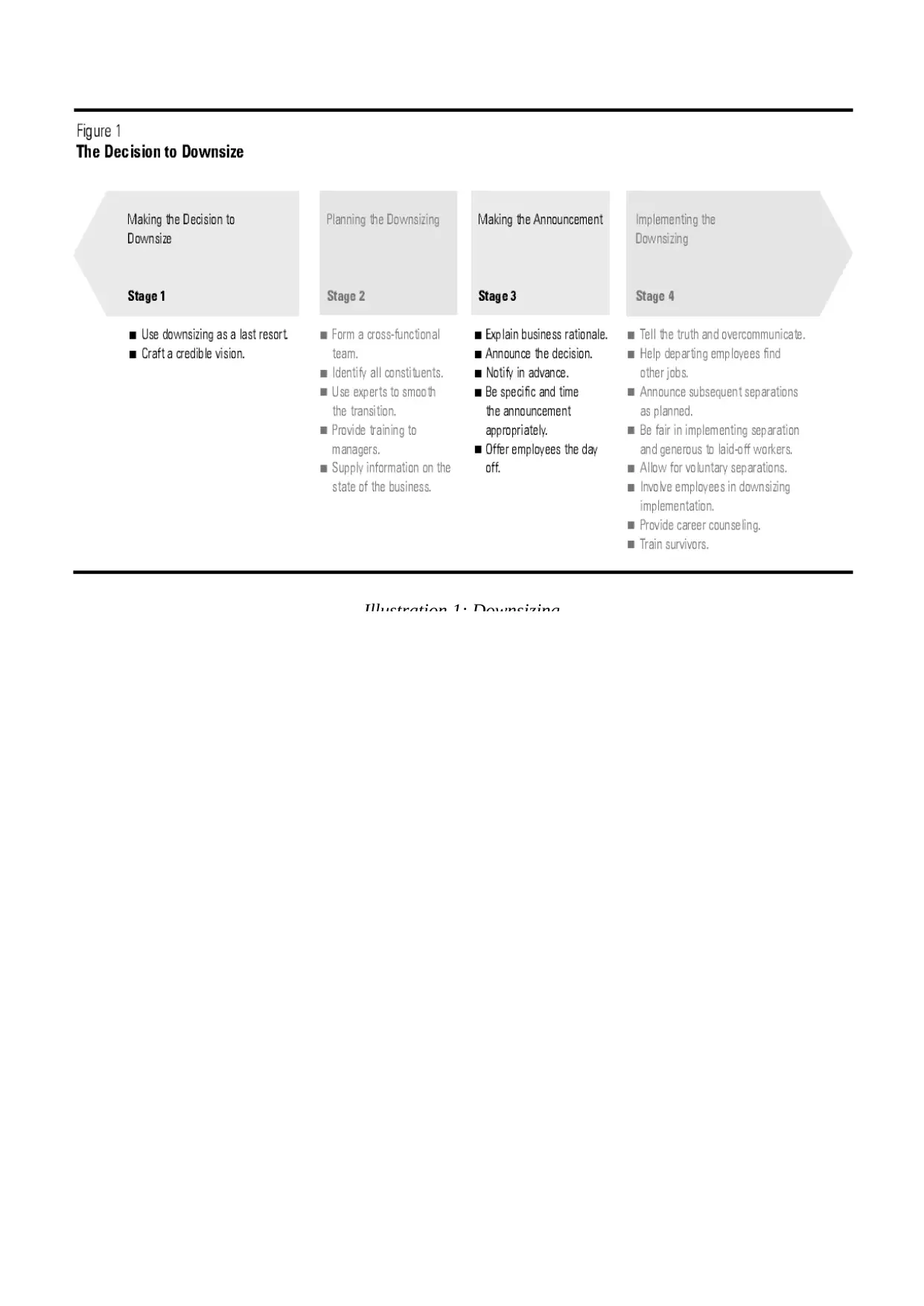
Illustration 1: Downsizing
REFERENCES
Books and Journal
Cascio, W., 2018. Managing human resources. McGraw-Hill Education.
Brewster, C., 2017. The integration of human resource management and corporate strategy.
In Policy and practice in European human resource management (pp. 22-35). Routledge.
Chelladurai, P. and Kerwin, S., 2017. Human resource management in sport and recreation. Human
Kinetics.
Reiche, B.S., Stahl, G.K., Mendenhall, M.E. and Oddou, G.R. eds., 2016. Readings and cases in
international human resource management. Taylor & Francis.
Brewster, C., Houldsworth, E., Sparrow, P. and Vernon, G., 2016. International human resource
management. Kogan Page Publishers.
Storey, J., 2014. New Perspectives on Human Resource Management (Routledge Revivals).
Routledge.
Books and Journal
Cascio, W., 2018. Managing human resources. McGraw-Hill Education.
Brewster, C., 2017. The integration of human resource management and corporate strategy.
In Policy and practice in European human resource management (pp. 22-35). Routledge.
Chelladurai, P. and Kerwin, S., 2017. Human resource management in sport and recreation. Human
Kinetics.
Reiche, B.S., Stahl, G.K., Mendenhall, M.E. and Oddou, G.R. eds., 2016. Readings and cases in
international human resource management. Taylor & Francis.
Brewster, C., Houldsworth, E., Sparrow, P. and Vernon, G., 2016. International human resource
management. Kogan Page Publishers.
Storey, J., 2014. New Perspectives on Human Resource Management (Routledge Revivals).
Routledge.
⊘ This is a preview!⊘
Do you want full access?
Subscribe today to unlock all pages.
Trusted by 1+ million students worldwide

1 out of 23


Related Documents


Your All-in-One AI-Powered Toolkit for Academic Success.
+13062052269
info@desklib.com
Available 24*7 on WhatsApp / Email
![[object Object]](/_next/static/media/star-bottom.7253800d.svg)
Unlock your academic potential
Copyright © 2020–2026 A2Z Services. All Rights Reserved. Developed and managed by ZUCOL.